Proceedings Podcast EP. 351: USCG Pacific Area Commander on Maritime Governance

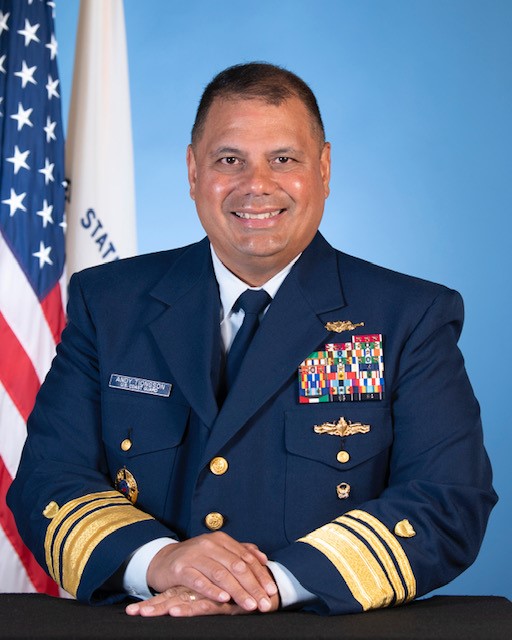
Vice Adm. Andrew J. Tiongson, Commander Coast Guard Pacific Area
The US Naval Institute has a pod cast interview of the PACAREA Commander.

Initially, there were questions about the Coast Guard’s response to the fires on Maui and Tropical Storm Hillary’s landfall in Southern California.

There was a lot of talk about the Coast Guard being a trusted partner, both internally and internationally, and the cooperative relationship the Coast Guard has developed with island nations in the Pacific, that have resulted in 13 bilateral agreements including some “enhanced” ship-rider agreements that permit the Coast Guard to act on behalf of island nations, even if there are none of their citizens aboard.

He said Harriet Lane should be in the Pacific before the end of the year.

He also talked about his potential role as Commander, Defense Force, West, under NorthCom.

There were some of surprises.

  • The Canadian Coast Guard has leased a commercial vessel and the USCG is providing a law enforcement detachment. I presume they are operating in the Western Pacific because there would be no reason to use a USCG LEDET in Canadian Waters.
  • That the House version of the budget includes four additional Webber class FRCs, three more for Guam and another for Honolulu.
  • The Coast Guard is opening a “Center for Excellence,” a regional activity center, in Hawaii, that will provide training in fisheries enforcement and environmental response for friendly nations. Should help form cooperative relationships across the Pacific.

I was also pleased to learn that VAdm. Tiongson had had a tour on USS NORMANDY (CG-60) as part of the U.S. Coast Guard – U.S. Navy exchange program. Apparently, it did not hurt his career.

The interviewer, Host Bill Hamblet, said he presumed PACAREA had the lion’s share of Coast Guard assets. VAdm. Tiongson did not answer that, but I can’t let it pass, because in my view the Coast Guard is still underrepresented in the Pacific.

About 84% of the US EEZ is in PACAREA, but LANTAREA will have 55% of the National Security Cutters. LANT has 81.5% of the WMECs (22 out of 27, counting Harriet Lane as in the Pacific), and 76% of the current 54 FRCs. Current plans are for PACAREA to have only 18 of the 65 FRC currently funded, less than 28%.

The situation may not be quite as bad as it looks, because LANTAREA assets are actually closer to the Eastern Pacific drug transit zones than PACAREA assets, so LANTAREA assets to operate frequently in the Eastern Pacific, but the asset distribution is still off, and PACAREA’s workload has been increasing with the emphasis on IUU fishing in the Pacific.

United States Exclusive Economic Zone – Pacific centered NOAA map

Three Articles About the Webber Class FRC

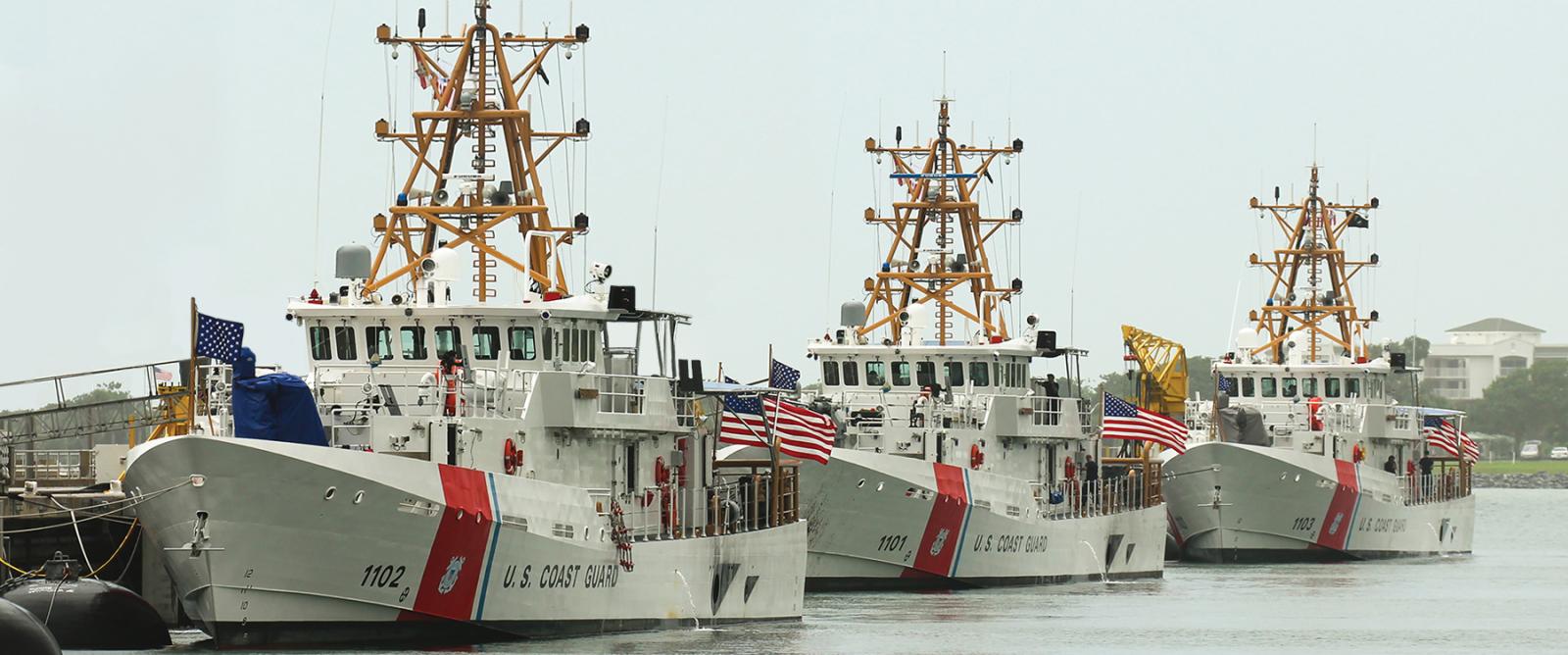
The first three fast response cutters—the USCGC Richard Etheridge (WPC-1102), Bernard C. Webber (WPC-1101), and William Flores (WPC-1103).
U.S. COAST GUARD

The September issue of US Naval Institute Proceedings has two articles about the Webber class WPCs that are currently featured articles online.

MSN shared a 1945 article by James Holmes, J. C. Wylie Chair of Maritime Strategy at the Naval War College, that seconds Cdr. Hulse proposal, “The U.S. Navy Needs Sentinel-Class Cutters to Serve as Missile Patrol Craft,”

These are the right ships to help carry out U.S. maritime strategy in congested coastal terrain such as the Western Pacific, in wartime and times of tense peace alike. Denying an antagonist like China’s navy access to waters around and between Pacific islands is the strategy’s beating heart. Swarms of small, cheap, lethal surface and subsurface warships working with aircraft overhead and troops on the islands can close the straits along the first island chain, laying fields of overlapping fire that imprison Chinese sea and air forces within the island chain and bar the return home to units plying the Western Pacific. For self-defense, small surface combatants can mingle with merchant traffic amid East Asia’s cluttered maritime geography. In so doing they obscure their whereabouts and turn ambient conditions to tactical advantage. Let Chinese rocketeers try to distinguish friend from foe.

The first article by Lt. Chan suggests, 

Continuing production of fast response and national security cutters and transferring early hulls to regional allies would improve deterrence and interoperability.

This may not seem to make sense from the Coast Guard’s point of view in that USCGC Bernard C. Webber was commissioned in 2012 and the last of the 65 funded vessels of the class will be commissioned in about three years at which point the Webber will be only about 14 years old, still pretty new for a Coast Guard vessel. But looking at this from a whole of government perspective it looks a bit different. State Department hopes to gain or maintain influence with friendly nations that may not be able to afford adequate resources to patrol their waters. We also have an interest in the health of our ship building industry. There is presidency for this. Australia has twice built new patrol boats for their Western Pacific neighboring island nations. The Coast Guard would, of course, be much more receptive to the idea if funding for the replacement craft came out of someone else’s budget.

If the Navy did choose to build vessels of this class, and keep the production line going, then transfers of early model FRCs might be more readily accepted as they reach 20 or more years old.

The Second Article by Cdr. Hulse suggests,

“…the FRC’s Mk IV over-the-horizon cutter boat weighs 8,700 pounds and is stored in a notch near the stern. While this boat is highly capable for a variety of Coast Guard missions, it would not play a role for the Navy in conflict. Instead, a Navy FRC could mount a Naval Strike Missile box launcher with four tubes (8,600 pounds) at the stern, making it a formidable surface combatant. In addition, the deck forward of the pilothouse has considerable space for launching and recovering unmanned aerial vehicles (UAVs), enabling aerial surveillance and targeting. In fact, a Coast Guard FRC launched and recovered an Aerovel Flexrotor UAV while operating with the U.S. Navy’s Task Force 59 in Bahrain…with the current production line delivering four new FRCs per year to the Coast Guard at $65 million each. At that rate, the Navy could field 20 FRCs in just five years for the price of one Constellation-class frigate, which is projected to cost $1.3 billion per hull.”

The article goes into considerable detail about how the class has exceeded expectations along with cautions about what was required to make them succeed. It also suggests that the FRC could be the basis for an unmanned surface vessel.

Boots on the Ground, Navy Style:

City police forces have found they need patrolmen walking the beat who know the neighborhood and the people who live there to effectively fight crime. Armies need infantry to control and hold territory.

High end combatants can defeat their hostile counterparts to make sea control possible, but effective sea control is not possible without craft that can get into shallow water and enter every port. As Julian Corbett would said, Naval Control is not exercised by battleships.

The US Navy, forever focused on winning the big battle, has never had much enthusiasm for the craft that are the “boots on the ground” of a naval war. They tend to assume that allies and/or the Coast Guard will fill that role, or if not, they can build them when they need them and to some extent it has worked. Even so, it might have worked better if we had built and operated more of the vessels of the type before the shooting started.

In World War I, the US built hundreds of subchasers and 1000 ton destroyers. In WWII it was hundreds of PT boats that proved largely ineffective as torpedo boats but essential for the destruction of coastal traffic in both the Pacific and the Mediterranean. They were supplemented by the original LCS, Landing Craft Support, heavily armed shallow draft landing craft, nearly the same size as the FRCs. For Vietnam the Navy called on the Coast Guard and also built 170 Swift Boats and 718 Patrol Boat, River.

The U.S. Navy destroyer USS William D. Porter (DD-579) sinking after she was near-missed by a “Kamikaze” suicide aircraft off Okinawa, 10 June 1945. USS LCS(L)(3)-86 and McCool‘s LCS(L)(3)-122 are alongside, taking off her crew. Though not actually hit by the enemy plane, William D. Porter received fatal underwater damage from the near-by explosion.

Why would the Navy want these Patrol Craft?:

  • To enforce blockades
  • To counter kamikaze UAS and USV.
  • To support UAS, USV, and UUVs
  • To counter covert mine laying, arms smuggling, and intelligence agent or special forces transportation by boat.
  • To escort landing craft into an amphibious objective area. To rescue personnel from craft that are sunk. To tow disabled craft to safety. If properly equipped, to provide short range direct Naval fire support.

    Strait of Hormuz, august 6, USS Thomas Hudner, the Navy’s Lewis and Clark class cargo ship USNS Amelia Earhart and the U.S. Coast Guard’s Sentinel class cutter USCGC Charles Moulthrope, L3Harris Arabian Fox uncrewed surface vessel (USV)

If assigned to 5th Fleet, it would be logical to equip them with Hellfire/JASM or APKWS to counter Iranian drones and swarm tactics. In the Western Pacific arming with Naval Strike Missile is logical as would using the same air-search radars being used on the FRCs based in Bahrain. It might be possible to fit a Sea RAM forward, but if not, one or two remote weapon stations with an AAW capability might be enough.

A Final Note:

There is another reason we might want to have other nations to have FRCs. Since my cell phone has facial recognition, I think US Navy ships will have a hard time hiding among the traffic, particularly at the start of a conflict when their satellites are operational, and their fishing boats and merchant ships seem to be everywhere. But telling a USN FRC from a Vietnamese, Philippine, or Malaysian FRC would be quite difficult. It would complicate targeting.

“End of NASSE Operation 2023” –Sea Waves

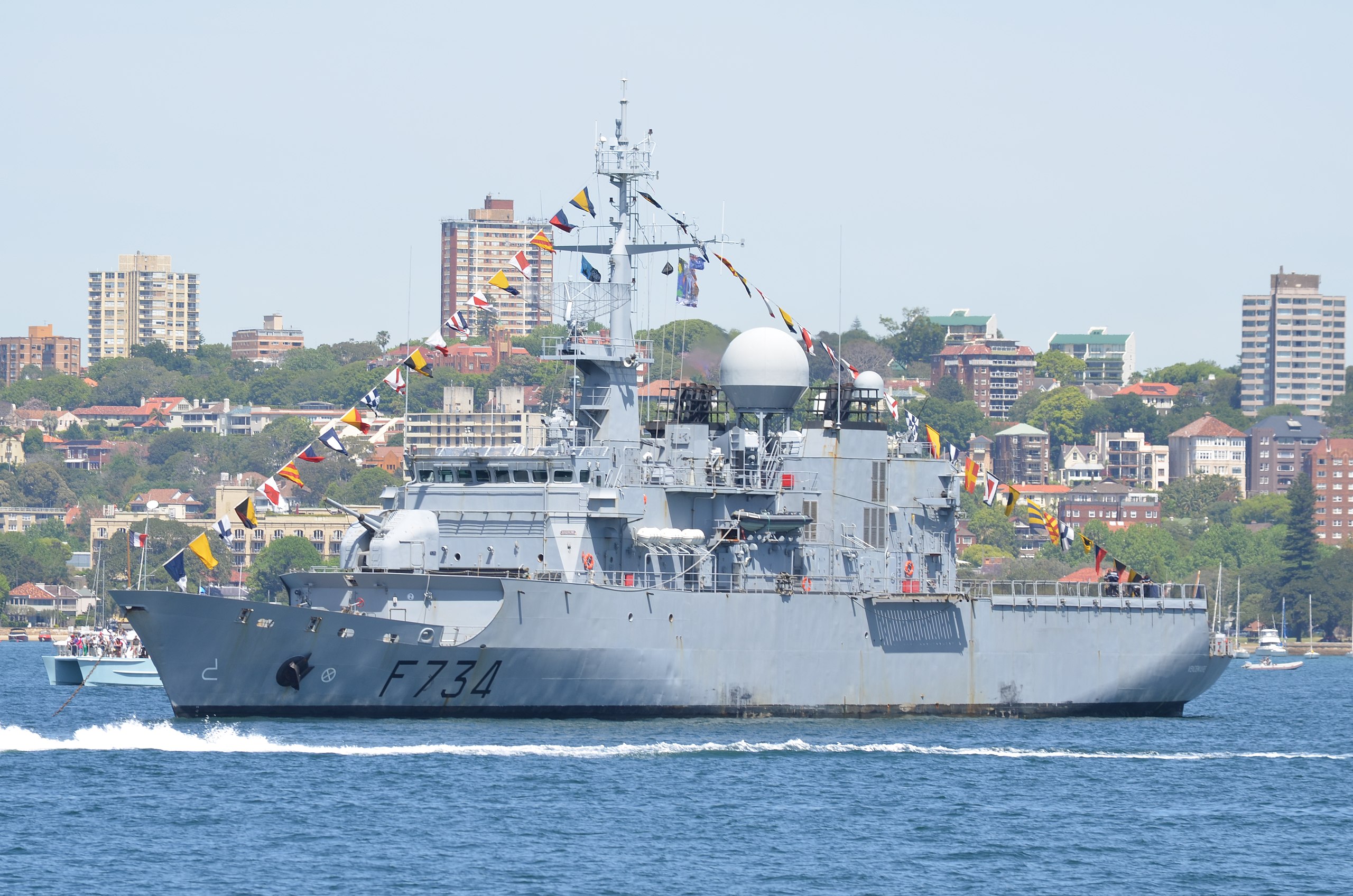
French frigate Vendemiaire, moored in Sydney Harbour. This 20 knot ship of the Floréal class looks a lot like a coast guard cutter. Photo by Saberwyn

Sea Waves reports the completion of a multi-national Fisheries Management exercise involving the US, Australia, New Zealand, France, and Fiji, from 20 June to 15 August.

The US Coast Guard deployed a C-130 to participate in the exercise. US vessels were involved but they were not identified. I am a bit surprised I have seen nothing from the USCG on this exercise.

The Sea Waves report appears to be a French news release. There is a New Zealand Defense Force view of the exercise here.

More on the developing relationship between Australia and France here. including an explanation of the “Pacific quadrilateral defense coordinating group* (PQUAD),” e.g., Australia, France, New Zealand, and the US, referred to in the post, as opposed to the “Quad,” e.g., Australia, India, Japan, and the US.

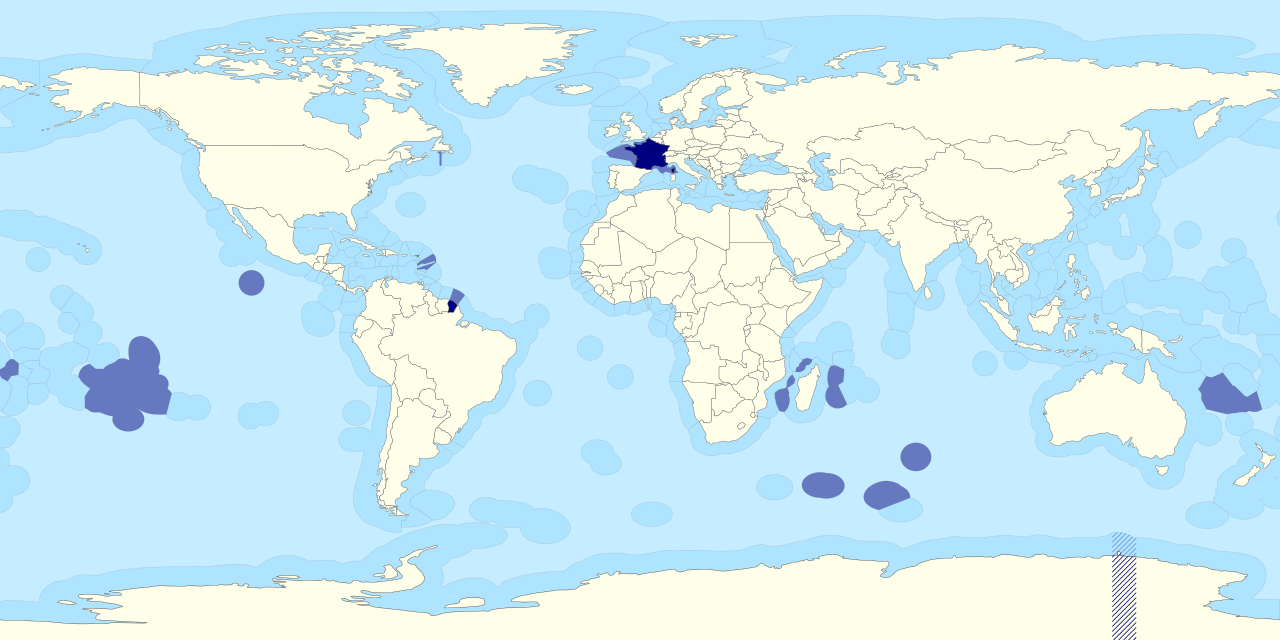
The French don’t normally have a lot of military assets in the Pacific. Much of what they have looks like coast guard, but they have the largest EEZ in the world and great strategic geography.

French Exclusive Economic Zone. Photo credit: B1mbo via Wikipedia.

This exercise is another step along the way to what appears to be inevitable international fisheries management and enforcement.

“New office reduces the logistics burden for remote expeditions” –MyCG

ARABIAN GULF (Oct. 20, 2011) Logistics Specialist Seaman Krystal K. Weed inventories supplies in a storeroom aboard the aircraft carrier USS George H.W. Bush (CVN 77). George H.W. Bush was deployed to the U.S. 5th Fleet area of responsibility on its first operational deployment conducting maritime security operations and support missions as part of Operations Enduring Freedom and New Dawn. (U.S. Navy photo by Mass Communication Specialist Seaman Jessica Echerri/Released) 111020-N-JD217-003

Below is a story from MyCG.

This marks a significant change in Coast Guard operations. Not only are there now more distant operations. Operations “halfway around the world” are expected to continue and perhaps increase. Such operations are no longer one off or special. They are becoming routine.

Presumably this is based in Alameda because most of these new distant operations are expected to be in the Pacific, but it will also support Atlantic Area operations.


Aug. 30, 2023

New office reduces the logistics burden for remote expeditions

By Cmdr. Jeff Henderson, Deputy Office Chief, Office of Expeditionary Logistics (DOL-X)

Talk about logistics to any Coast Guard operator deployed to a remote region and they may share a common frustration – getting what they need, when they need it, and in the right location, can be difficult and all-consuming.

The Office of Expeditionary Logistics (DOL-X), the Coast Guard’s solution to relieve the remote logistics burden, celebrated reaching its full operational capability with a ribbon cutting ceremony Aug. 14 in Alameda, Calif.

“DOL-X represents our unwavering commitment to the development and execution of Coast Guard expeditionary logistics,” said Rear Adm. Carola List, Director of Operational Logistics (DOL), during the milestone ceremony.

Without question, expeditionary operations demand more from our existing mission support enterprise. The deputy commandant for Mission Support’s, Mission Support Action Plan, designed DOL-X to reduce logistical burdens for crews operating in remote environments and initial prototype tests have demonstrated real-time, measurable impacts. Expeditionary operations demand innovative solutions that extend operational reach while leveraging support from interagency and joint partners, coalition forces, and host nations. As DOL-X continues to mature, efforts will continue to ensure end-to-end synchronization and reliability and most importantly, lighten the load from the backs of our deployed shipmates.

Before becoming fully operational, DOL-X tested its capabilities with assigned DOL-X personnel providing dedicated logistical support for Coast Guard Cutter Mohawk’s deployment to U.S. Africa Command, two fast response cutters deployed to Patrol Forces Southwest Asia, and Coast Guard Cutter Midgett’s deployment to the Western Pacific. The downrange logisticians successfully integrated into the U.S. Navy’s Fifth, Sixth and Seventh fleets to act as in-theatre logistical integrators. In doing so, DOL-X created first-class partnerships at the fleet and task force level for logistics support.

These initial tests were so successful that DOL-X will now be supporting Coast Guard Cutter Stratton and Munro’s Western Pacific patrols. The former patrol included the completion of a historic Taiwan Strait transit and the first trilateral exercise between the Philippines, Japan, and the U.S. Both deployments were unique and dynamic opportunities to refine DOL-X’s in-theatre deployment support and further enhance interoperability with DoD and partner nations.

Resources:

“CHINA’S MARITIME GRAY ZONE TACTICS AND SEALIGHT WITH RAY POWELL AND GAUTE FRIIS” –CIMSEC Podcast

CRASH AVERTED This photo taken on April 23, 2023 shows BRP Malapascua (right) maneuvering as a Chinese coast guard ship cuts its path at Second Thomas Shoal in the Spratly Islands. AFP PHOTO.

CIMSEC has a podcast discussing China’s “gray zone” tactics.

Perhaps more importantly they provide links to a series of short posts on specific gray zone tactics with examples.

There is also another post, “Gray Zone Tactics Playbook: Going Dark.” by Miao Shou, SeaLight, August 16, 2023.

Those bulbous bows probably make pretty good rams. 

Hulai II WPC, China Coast Guard’s FRC

Philippine Coast Guard resupply mission encounters China Coast Guard

Philippine attempts to resupply Second Thomas Shoal, and Chinese effort to block those efforts have become common. Apparently, the Philippines succeeded recently. There was, in fact, a US Navy P-8 maritime patrol aircraft flying low overhead providing overwatch.

US Navy P-8 observing Philippine resupply mission

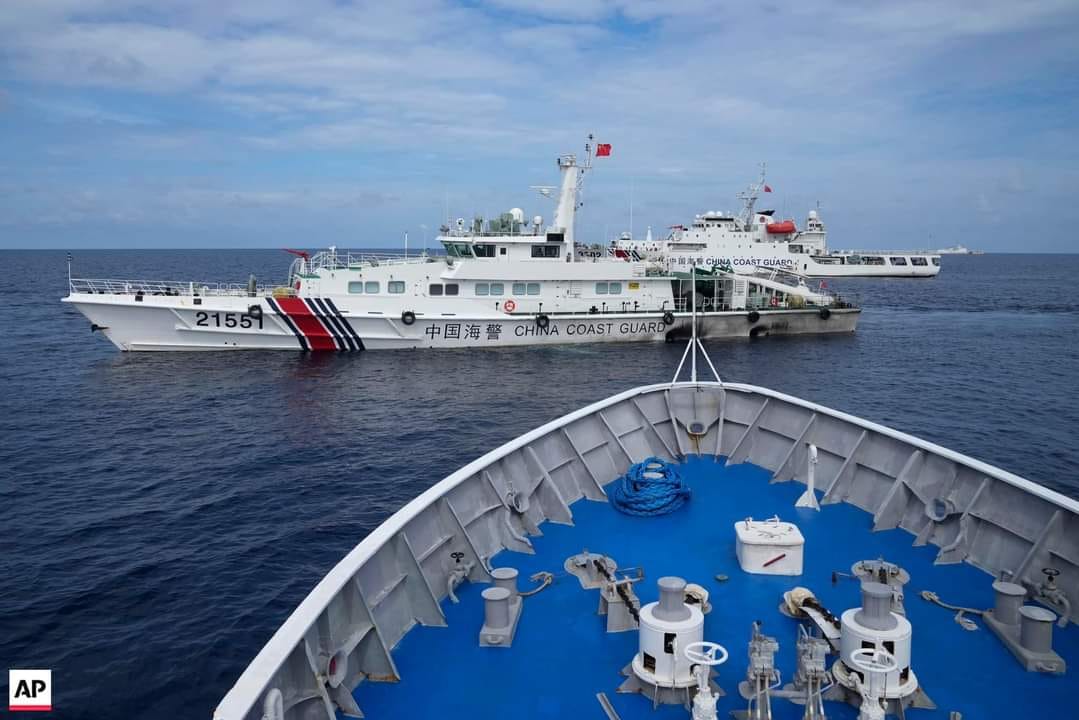
The resulting confrontation provided a lot of photos including ships of a class of China Coast Guard cutters that look a bit like US Coast Guard Webber class cutters.

China Coast Guard cutter attempts to block passage of Philippine supply vessel.

The only thing I have been able to find out about these little ships was from the Office of Naval Intelligence’s (ONI) Chinese People’s Liberation Army Navy, Coast Guard, Ship Identification Guide, which to my eye identifies them as the Hulai II class, which is reportedly 54 meters (177′) in length, with 30 units in the class. The length sounds right. They appear to be a bit longer than the Fast Response Cutters (47m/154′). I haven’t been able to locate any other information on the class.

Previously, China Coast Guard cutters guarding Second Thomas Shoal all seemed to be relatively large. Perhaps the Chinese realized their larger ships could be outmaneuvered and brought in these smaller ships as backup. Still the Philippines has again succeeded in resupplying the small garrison.

“Papua New Guinea leads joint maritime operations with U.S. Coast Guard” –Coast Guard News

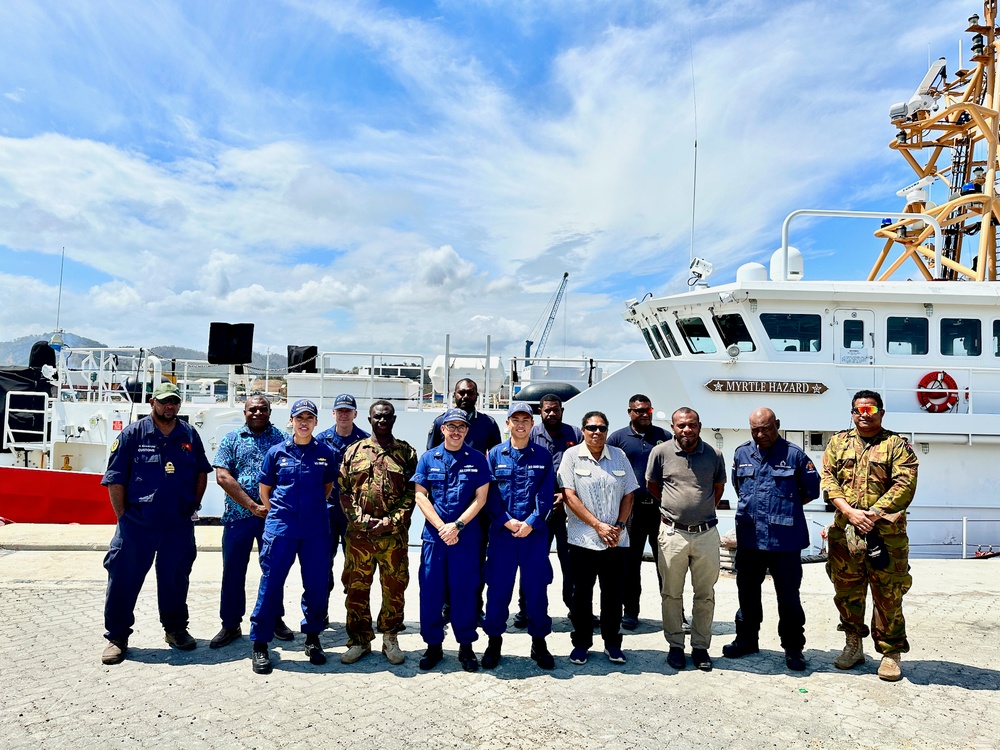
USCGC Myrtle Hazard (WPC 1139) hosts operational planning and subject matter exchange with partners in Port Moresby, Papua New Guinea

The USCGC Myrtle Hazard (WPC 1139) command stand for a photo with partners from the Papua New Guinea Defense Forces, Customs Services, National Fisheries Authority, and Department of Transport’s maritime security division following an operational planning and subject matter exchange with partners in Port Moresby, Papua New Guinea on Aug. 22, 2023. The U.S. Coast Guard is in Papua New Guinea at the invitation of the PNG government to join their lead in maritime operations to combat illegal fishing and safeguard maritime resources following the recent signing and ratification of the bilateral agreement between the United States and Papua New Guinea. (U.S. Coast Guard photo by Chief Warrant Officer Sara Muir) 

Passing along this from Coast Guard News. Like the fact that the Papua New Guinea government is taking the lead on this. We are helping them build capacity not doing the job for them.


Aug. 23, 2023

Papua New Guinea leads joint maritime operations with U.S. Coast Guard

Editor’s Note: For more images, please click here. 

PORT MORESBY, Papua New Guinea — Papua New Guinea (PNG) has invited the USCGC Myrtle Hazard (WPC 1139) to join their lead in maritime operations to combat illegal fishing and safeguard maritime resources during August 2023.

This collaborative effort marks the first time a joint patrol effort will be executed at sea since the signing and ratification of the recent bilateral defense agreement between PNG and the United States, which allows the U.S. to embark shipriders from PNG agencies aboard the ship to conduct at sea boardings on other vessels operating in the exclusive economic zone (EEZ) under their national agency authority. This is the U.S. Coast Guard vessel deployment first announced during Secretary of Defense Austin’s engagement with Prime Minister James Marape in July.

PNG’s lead in this mission aligns with their sovereign rights to protect the EEZ and emphasizes the country’s commitment to maritime domain awareness, fisheries regulation enforcement, and sovereignty protection. The PNG government requested the U.S. Coast Guard’s participation to utilize the platform and crew of the Guam-based 154-foot Fast Repones Cutter, currently on an expeditionary patrol, to expand coverage of the heavily trafficked maritime EEZ.

“Through our recent operational planning and subject matter exchange, the partnership between the Papua New Guinea Defence Force and the U.S. Coast Guard reached new heights. The spirit of collaboration and shared mission to ensure regional maritime security reflects our nations’ aligned values and commitment. This initiative fosters growth in our bilateral relationship and paves the way for innovative approaches to safeguard our waters and the sustainable use of our ocean resources. Working alongside the U.S. Coast Guard is an honor, and PNGDF eagerly anticipates our cooperative efforts’ continued growth and success,” said Commodore Philip Polewara, the Acting Chief of the PNG Defence Force.

The PNG-led patrol aims to observe activity and conduct boardings to reduce illegal fishing and illicit maritime activities in PNG’s EEZ. It’s part of a long-term effort to counter illegal maritime activity and safeguard the sustainable use of maritime resources.

This collaboration is vital to Operation Blue Pacific and augments ongoing efforts by the Pacific Islands Forum Fisheries Agency and Western and Central Pacific Fisheries Commission. It underscores the recent bilateral agreement, signed in May and ratified in the last few weeks, enabling the Myrtle Hazard crew to work collaboratively within PNG’s legal framework and strengthen relations with agencies with shared objectives.

The USCGC Oliver Henry (WPC 1140) crew was the first U.S. Coast Guard Fast Response Cutter to call on port in Papua New Guinea during their southern expeditionary patrol in the fall of 2022 to build relations, conduct engagements, and resupply.

The USCGC Myrtle Hazard’s crew is building on the work of their colleagues – already engaging with the PNG Defense Force through exchanges in the northern part of the country on this patrol, bolstering cooperation and understanding. This activity included subject matter exchanges with the PNG Defense Force Patrol Vessel Ted Diro crew and a port call in Rabaul, where the team engaged with the local community at the Rabaul Yacht Club. Additionally, the advance team and cutter crew conducted operations planning and subject matter exchanges across agencies in Port Moresby and ship tours for the embassy team and partners.

“We are deeply honored to collaborate with the Papua New Guinea Defense Force, Papua New Guinea Customs Services, Papua New Guinea National Fisheries Authority, and the Department of Transport’s Maritime Security Division at the invitation of the Papua New Guinea Government,” said Lt. Jalle Merritt, commanding officer of the USCGC Myrtle Hazard. “Our shared mission reflects PNG’s leading role in regional security, and we are committed to supporting their goals in this significant undertaking.”

For more information about this patrol and other related activities, please contact Chief Warrant Officer Sara Muir at sara.g.muir@uscg.mil or the respective agencies in Papua New Guinea.

“USNI News Fleet and Marine Tracker: Aug. 21, 2023”

USCGC Munro (WMSL-755) escorts USNS Fisher (T-AKR-301) in the East China Sea on Aug. 12, 2023. US Navy Photo

Looking at the latest US Naval Institute “Fleet and Marine Tracker,” I am a bit surprised to see there are still 3 Navy ships operating under 4th Fleet, presumably doing drug interdiction. This is an uptick.

Again, they report on atypical Coast Guard operations:

  • Legend-class National Security Cutter USCGC Munro (WMSL-755) departed South Korea last week and is in the Korea Strait. (As I mentioned earlier, there is a possibility, cutters may encounter the new North Korean corvettes.)
  • Coast Guard Cutter USCGC Healy (WAGB-20) continues its work in the Beaufort Sea. Healy is on a five-month deployment in partnership with ONR and the National Science Foundation.
  • Coast Guard Cutter USCGC Forward (WMEC-911) is currently supporting Operation Nanook. Operation Nanook is an annual Canadian-led exercise that fosters international cooperation and shared responsibility in the Arctic and the northern Atlantic Regions. The cutter recently made a port call in Nuuk, Greenland.

You can use Control F “USCGC” if you want to quickly find the Coast Guard cutters mentioned in the USNI posts.

PATFORSWA is mentioned again.

The link in the Healy entry, “U.S., Canadian Icebreakers Conduct Operation, Rendezvous en Route to Arctic Ocean” is interesting, plus there is more in the USNI post including an “adorable” polar bear photo.

“‘Strategic’ Cruise Missile Tested From North Korea’s New Corvette” (Corvette with Nuclear Capable Cruise Missile?) –The Drive

The Drive reports.

“North Korea’s state-run media has released new photos of the country’s most modern surface combatant, known in the West as the Amnok class corvette, which is also the largest operated by the Korean People’s Navy. Of particular interest is that the warship is armed with cruise missiles, which can likely be fitted with nuclear warheads, adding yet another platform to North Korea’s diverse and growing strategic arsenal.”

Cutters doing UN sanctions enforcement in the East China Sea might run into one of these.

This coast guard cutter sized vessel, one of four being built, which is reportedly 77 meters (253′) in length, is interesting for its combination of possible nuclear capability with old tech.

Aside from the cruise missiles, which may not have been accurate, this corvette includes four heavy gatling style machine guns (two 30mm and two 14.5mm) which would be very dangerous at short range. For mid-range, the mid 20th century 100mm gun looks rather crude, but it does throw a 34.4 lbs. (15.6 kg) projectile up to 24,323 yards (22,241 m). That is almost seven times heavier and about 6,000 yards further than the 57mm.

The portholes look out of place and may mean the ship is not fully airconditioned.

“U.S. Coast Guard Forces Micronesia Sector/Guam’s Fast Response Cutters bolster Pacific Partnership Strategy and strengthen Pacific Island Country relations” –USCG Forces Micronesia/Sector Guam

The Sentinel-class fast response cutter USCGC Oliver Henry (WPC 1140) crew arriving in Port Moresby for a port visit on Aug. 23, 2022, following a patrol in parts of the Coral Sea, the Solomon Islands and PNG Exclusive Economic Zones. The U.S. Coast Guard was conducting a routine deployment in Oceania as part of Operation Blue Pacific, working alongside Allies, building maritime domain awareness, and sharing best practices with partner nation navies and coast guards. (U.S. Coast Guard photo by USCGC Oliver Henry)

Below is a news release from U.S. Coast Guard Forces Micronesia/Sector Guam. Webber class cutters there are developing a new norm for Coast Guard assistance to Pacific Island nations. It is not clear if this is now the norm, or if this was an unusual period, but from June 21 to August 3, there was only one day (June 17) that they did not have an FRC underway for at least part of the day. This is what I believe should be the norm and probably the reason FRCs are so frequently based in groups of three or six. Typically three ships would be, one underway, one in maintenance, and one in workup/standby (I don’t know if they are employing standby). 

On the other hand, none of these patrols was more than 16 days long and the shortest only five, which suggest why, given the long transit distances, we need some cutters with greater endurance in the Western Pacific (I would say three to have one underway at all times and be able to surge two when needed).

Thanks to Paul for bringing this to my attention.

Aug. 18, 2023

U.S. Coast Guard Forces Micronesia Sector/Guam’s Fast Response Cutters bolster Pacific Partnership Strategy and strengthen Pacific Island Country relations

SANTA RITA, Guam — In a robust display of maritime commitment, U.S. Coast Guard Forces Micronesia/Sector Guam’s Fast Response Cutters conducted four patrols over 44 days, enhancing safety and prosperity in the Pacific Islands region while combatting illicit maritime activity, including illegal, unregulated, and unreported fishing and the illegal and unsafe transport of passengers.

The crews of USCGC Frederick Hatch (WPC 1143), USCGC Myrtle Hazard (WPC 1139), and USCGC Oliver Henry (WPC 1140):

– Conducted seven boardings and five observation reports.
– Completed over 20 training evolutions.
– Qualified 18 new shipboard members.
– Supported the investigation into the transport of 11 people aboard an overloaded vessel transiting to Guam from the Commonwealth of the Northern Mariana Islands on an illegal charter following their rescue by DoD partners.
– Supported operations such as Operation Blue Pacific, Operation Rematau, Operation Nasse, and Operation Koa Moana.

“Our Fast Response Cutter crews exhibit both efficacy and presence as a consistent and trusted partner in the region. Our Pacific Island Country partners’ warmth and regard for the Coast Guard is a testament to the strong connections we have nurtured over the years. It is our commitment to the people of the Pacific Island Countries to protect Oceania and its resources for them from undue strategic competition that would undermine those relationships and destabilize the region,” said Cmdr. Greg Sickels, deputy sector commander of U.S. Coast Guard Forces Micronesia/Sector Guam.

Operational Achievements and Highlights

– USCGC Frederick Hatch (June 21 – July 2 and July 18 – Aug. 3): Enhanced international relations, streamlined boarding processes, qualified new personnel, and improved communication with FSM Maritime Police.

– USCGC Myrtle Hazard (July 3 – 16): Strengthened connection with CNMI, ensured maritime law enforcement presence in less patrolled areas, and enhanced collaboration with customs and public safety departments.

– USCGC Oliver Henry (July 18 – 23): Increased U.S. presence, enforced fishing regulations, and fostered crew readiness with weapons proficiency and collaboration.

These accomplishments underscore the U.S. Coast Guard’s pivotal role in promoting maritime governance, ensuring good relations, and fostering strategic competition in the Pacific Islands region. The U.S. Coast Guard remains a consistent and reliable partner, working collaboratively with Pacific Island Countries to achieve shared objectives and bolster regional security.

Operation Rematau, an integral part of Operation Blue Pacific, is spearheaded by the U.S. Coast Guard Forces Micronesia/Sector Guam. This initiative fosters security, safety, sovereignty, and economic prosperity throughout Oceania. Rematau translates to “people of the deep sea” and embodies the Coast Guard’s unwavering commitment to safeguarding the people of this region.

The U.S. Coast Guard actively exercises 12 bilateral maritime law enforcement agreements with Pacific Island Countries, reinforcing maritime law enforcement operations and domain awareness in the region. In October 2022, the Service, on behalf of the U.S., signed the first enhanced bilateral agreement with the Federated States of Micronesia. This landmark agreement builds on the existing shiprider arrangement, allowing the U.S. Coast Guard to conduct boardings in the FSM’s exclusive economic zone with prior approval working with the FSM National Police, but without an FSM officer physically present. This expansion significantly amplifies the FSM’s capacity to protect its sovereignty and resources across an area spanning 1 million square miles and more than 600 islands. Boardings have already been conducted under this enhanced shiprider agreement, attracting interest in similar arrangements from other nations in the area.

In May 2023, the U.S. signed a new bilateral agreement with Papua New Guinea, richly endowed with natural resources like gold, copper, oil, and natural gas. While its formal sector focuses on exports of these commodities, most of its people rely on subsistence agriculture. As of 2020, agriculture, forestry, and fishing reportedly account for nearly 19 percent of PNG’s GDP. The agreement aligns with the PNG government’s efforts to safeguard their islands and 1.2 million square miles of EEZ, which are vital to their economic well-being. Recently ratified by their parliament, this partnership, at the request of the Papua New Guinea government, further extends the reach and impact of maritime law enforcement efforts. In line with this initiative, a U.S. Coast Guard cutter from Guam will be collaborating with Papua New Guinea to enact their new agreement shortly, continuing to foster security and collaboration across the Pacific.

U.S. Coast Guard Forces Micronesia/Sector Guam comprises more than 300 members based in Guam and the Commonwealth of the Northern Mariana Islands spread across shoreside and afloat units committed to maritime safety, security, and stewardship in Oceania.

For more information on the U.S. Coast Guard Forces Micronesia Sector/Guam’s operations and achievements, please visit the official DVIDS account at https://www.dvidshub.net/unit/USCG-FMSG.