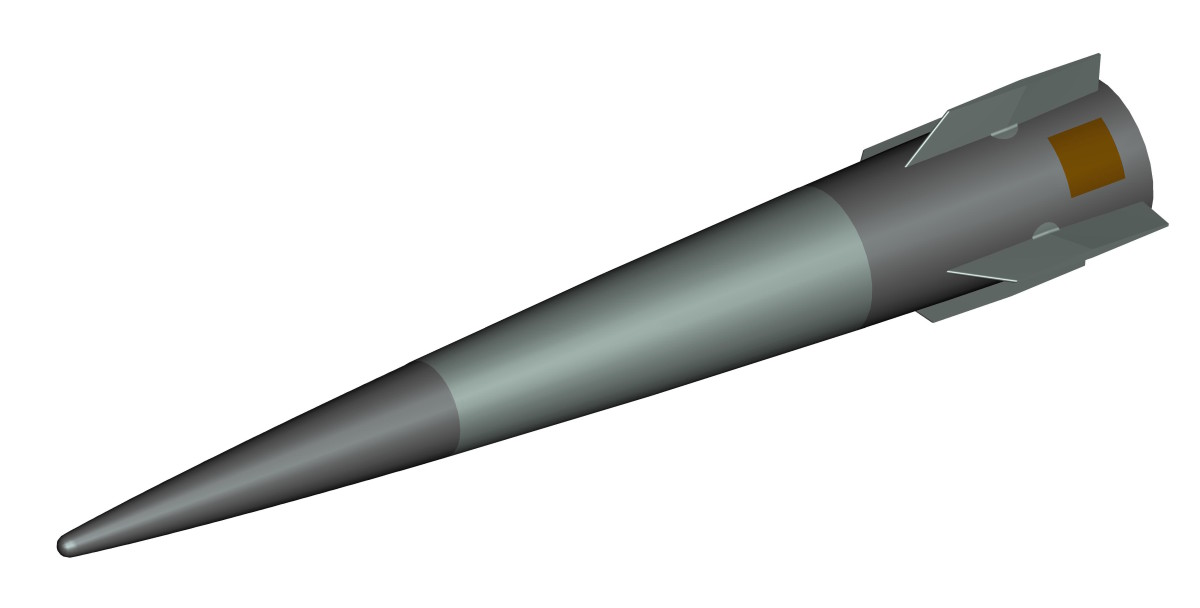
26 foot UAS Shoots Down Supersonic Fighter, Can Air Defense for Even Small Cutters Be So Hard?

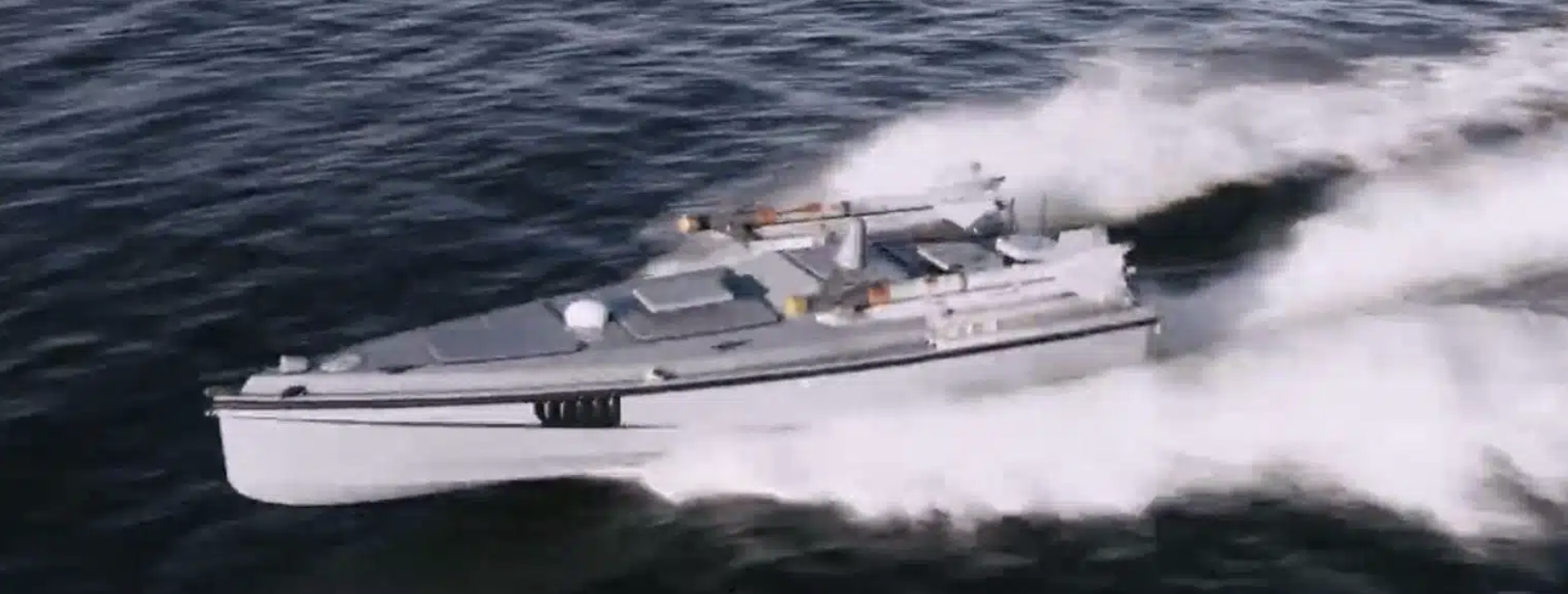
Click to enlarge. Magura V7 surface drone (USV) armed with two Sidewinder missiles. Note that the missiles have yellow protective covers over their seekers, indicating that it is on a test run.

Naval news has a couple of reports about the recent shoot downs here and here. We also have a report from The War Zone.

You have to hand it to the Ukrainians–they think outside the box.

This is another example of what the Coast Guard might face from an unconventional attack using USVs, but it also suggests that it should not be too hard to give even small cutters an effective short range AAW weapon.

The Russian aircraft were SU-30s, relatively high tech, high performance aircraft. It appears they were being used in a low tech way, attacking from relatively low altitude.

Attacks on cutters by aircraft are likely to be from at least medium altitudes with missiles or  glide bombs. Short range surface to air weapons are not likely to take down an aircraft at altitude, but they might be effective against stand-off weapons and would at least make strafing dangerous.

Precision Guided 70mm Rockets–APKWS and LOGIR, Poniard Low-Cost Guided Imaging Rocket

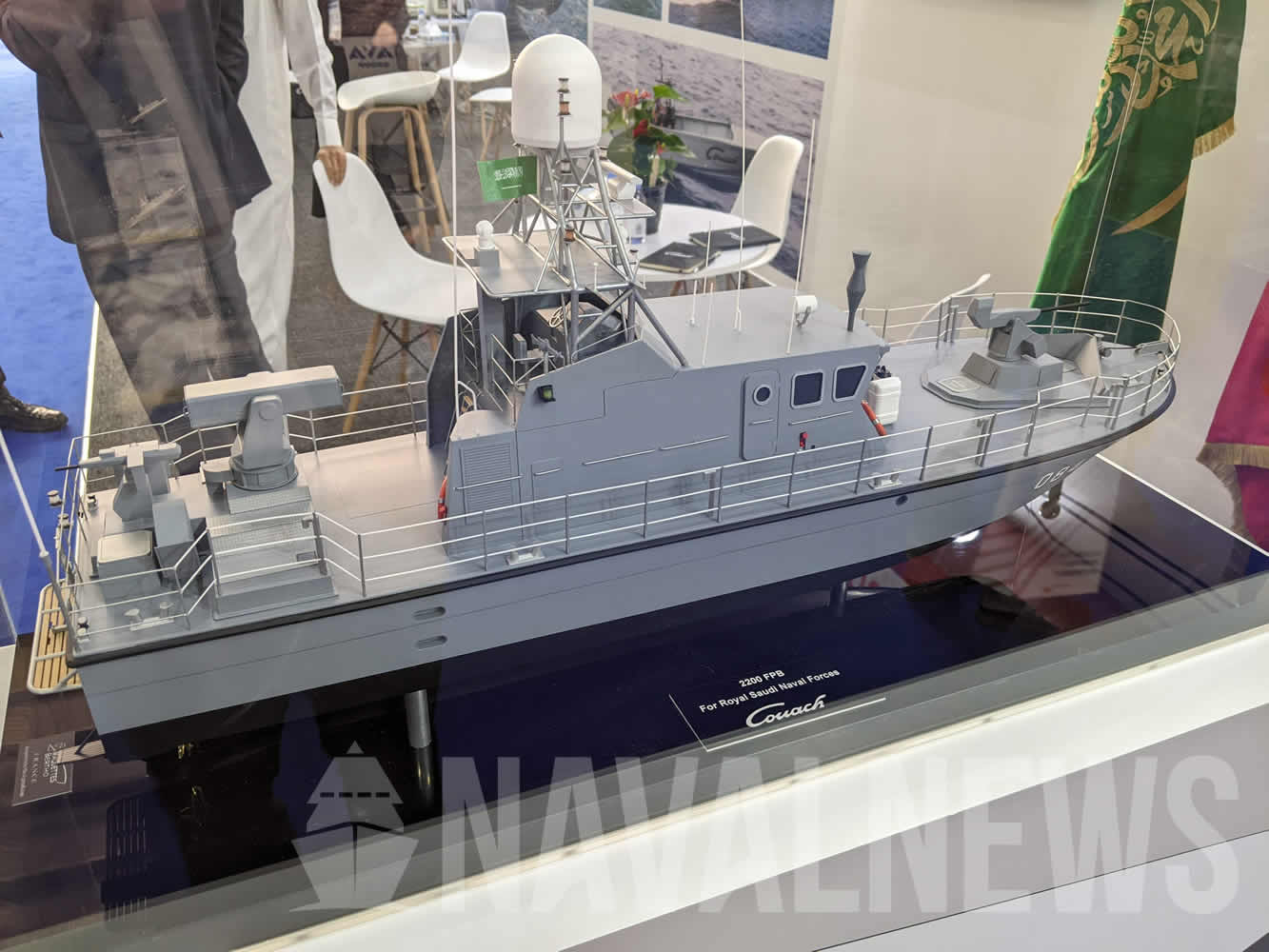
Couach 2200FPB Fast Patrol Boat. 12 being built for Royal Saudi Navy, armed with multiple rocket launchers by LIG Nex1 fitted at the stern.

Lately I have been seeing a lot of news about various developments related to guided 70mm (2.75 inch) rockets, particularly since an APKWS took down a cruise missile less than two weeks ago.

I probably don’t need to say this again, but I think these are extremely appropriate weapons for the Coast Guard because of their light weight, minimum training and maintenance requirements, low cost, and their range, accuracy, and effectiveness against the range of threats the Coast Guard is most likely to encounter from small drones to merchant ships.

The CUSV seen in the video and below is only 12 meters, 39′ in length.

Textron USV fitted with LIG Next1’s Poniard guided rocket. Textron photo.

South Korean Guided Rocket Test-Fired from USV at RIMPAC 2024

LIG Nex1’s K-LOGIR / Poniard guided rocket successfully finished a Foreign Comparative Testing (FCT) during RIMPAC 2024.

“A launch system for the 2.75-inch guided rocket was developed to be mounted on ships. Currently, it is installed on the Royal Saudi Navy’s 2200 Fast Patrol Boat (FPB) and HSI-32 interceptors, The UAE Navy new Gowind corvettes and is planned to be installed on the UAE Navy’s Falaj 3-class OPV.

Installing LIG Nex1’s Poniard launcher on Textron’s CUSV for the live fire test during RIMPAC. (ROK Navy Photo)

Infrared Seeker For APKWS Guided Rockets Is In The Works

“Advanced Precision Kill Weapon System II, better known simply as APKWS, is slated to be demonstrated with a passive infrared seeker. The news came in the 2025 Marine Aviation Plan, which states that “Additional demonstrations are also in [the] work[s] with the Army and Air Force to determine [the] feasibility of adding additional guidance methods to the APKWS family, including passive infrared seekers.”

“While little is known about this initiative, such a capability could potentially offer a far cheaper solution with independent targeting capabilities compared to existing missiles, while also increasing magazine depth on certain platforms dramatically.”

OKSI Awarded USSOCOM and AFRL Contracts for Precision Guidance Seeker for Munitions

“July 23, 2024 /PRNewswire/ — OKSI has been awarded multiple contracts totaling nearly $6 million from USSOCOM and the Air Force Research Laboratory (AFRL) for their ARMGDN seeker. ARMGDN is a capability enhancement to BAE Systems’ APKWS® laser-guidance kit, providing passive target acquisition and tracking for precision engagements. APKWS is a guidance kit for the 2.75 inch Hydra-70 rocket. Together, the APKWS with OKSI’s ARMDGN seeker will facilitate rapid engagements of multiple air or ground targets via ripple fire of multiple precision- guided rockets in rapid succession.”

U.S. F-16 Fighters Shot Down Drones with Laser-Guided Rockets in Combat

“The U.S. Navy also announced in late 2023 that it was about to deliver a new proximity-fused warhead for APKWS II rockets, optimized for use against drones, albeit developed ostensibly for the surface-to-air role. However, further developing an air-to-air capability out of these older rockets is another impressive feat for the U.S. Air Force, that has now the possibility to engage targets at a very small fraction of the cost of other existing missiles.”

Marines to give air-to-ground missile new counter-drone capabilities

“APKWS II continues to provide a reliable, high-capacity precision guided munition for both the rotary wing and fixed wing communities. The program has now completely transitioned to the Single Variant Block Upgrade (SVBU) that will enable the same guidance unit to be used for any platform, as well as increasing the overall employment envelope. To improve performance against UAS, certification of a suitable proximity fuse is in work for fielding to the fleet with current guidance and warhead combinations. Additional demonstrations are also in work with the Army and Air Force to determine feasibility of adding additional guidance methods to the APKWS family, including passive infrared seekers,” officials wrote.

“Navy To Explore Arming Other Ships With Missiles Amid Constellation Frigate Woes” –Coast Guard, Raise Your Hand

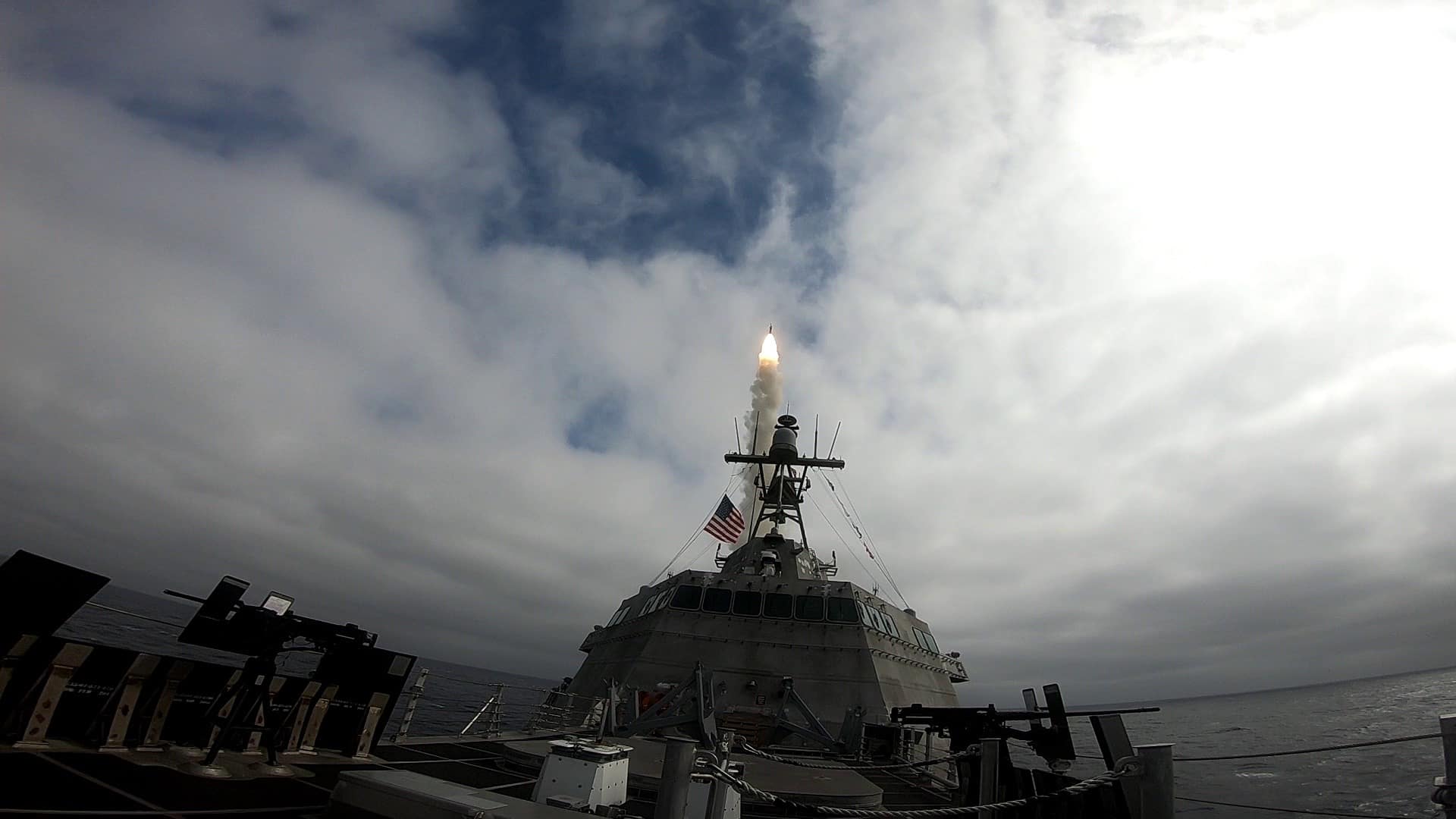
USS Savannah (LCS 28) conducts a live-fire demonstration in the Eastern Pacific Ocean utilizing a containerized launching system that fired an SM-6 missile from the ship at a designated target. 

The War Zone reports,

“Congress has demanded the U.S. Navy look into buying a new class of small warships loaded with missiles or adding bolt-on launchers to existing vessels…to help increase its combat capacity. Lawmakers ordered the study in response to major delays in work on the Navy’s future Constellation class frigates…”

The problem is simple. The Navy has been shrinking. Without a replacement in sight, they are rapidly decommissioning cruisers, each of which has 122 Vertical Launch Missile (VLS) tubes and eight Harpoon missile launch tubes. New DDGs, equipped with 96 VLS cells are coming online slowly and the new class of frigates, each of which has 32 VLS and 16 launchers for Naval Strike Missiles are long delayed and will also come out slowly.

Put simply, too few ships, with too few launch tubes.

It has been frequently proposed that missiles be mounted on Navy auxiliary ships. This is not likely to happen. These ships are not even armed for self-defense, beyond occasional crew served machinegun mounts. Most are limited to 20 knots, and they are busy scuttling supplies.

Few of the Navy’s MSC civilian manned auxiliary ships, are as well equipped for fitting into a Surface Action Group as the ten (soon to be eleven) National Security Cutters, with their higher speed, secure communication systems, data links, and Sensitive Compartmented Information Facility (SCIF). The Offshore Patrol Cutters will be only slightly less appropriate for the role.

The Coast Guard alone can’t fix this problem, but the Coast Guard can certainly help. It may not be necessary to mount missile launchers all the time. The Navy could build kits that could be quickly mounted on cutters. There are at least two options already available:

The Navy has already demonstrated use of the Mk70 containerized missile launcher on the flight deck of a Littoral Combat Ship.

The cutters would probably need a cooperative engagement capability (CEC), but that is probably also true of other platforms that might be used.

Each cutter could carry three or four containerized systems providing 12 or 16 launch tubes. Mk41 VLS mounted forward of the bridge, either conventionally or as Adaptable Deck Launchers could add eight more. Upon mobilization, there is potential for Navy or Marine Reservist to augment the cutter crews and operate the missile systems.

USS Savannah (LCS 28) Independence-variant littoral combat ship leaving San Diego with a U.S. Army MK 70 missile launcher on its deck – September 18, 2023. Photo Credit: WarshipCam.

When is a Flight Deck Not a Flight Deck?

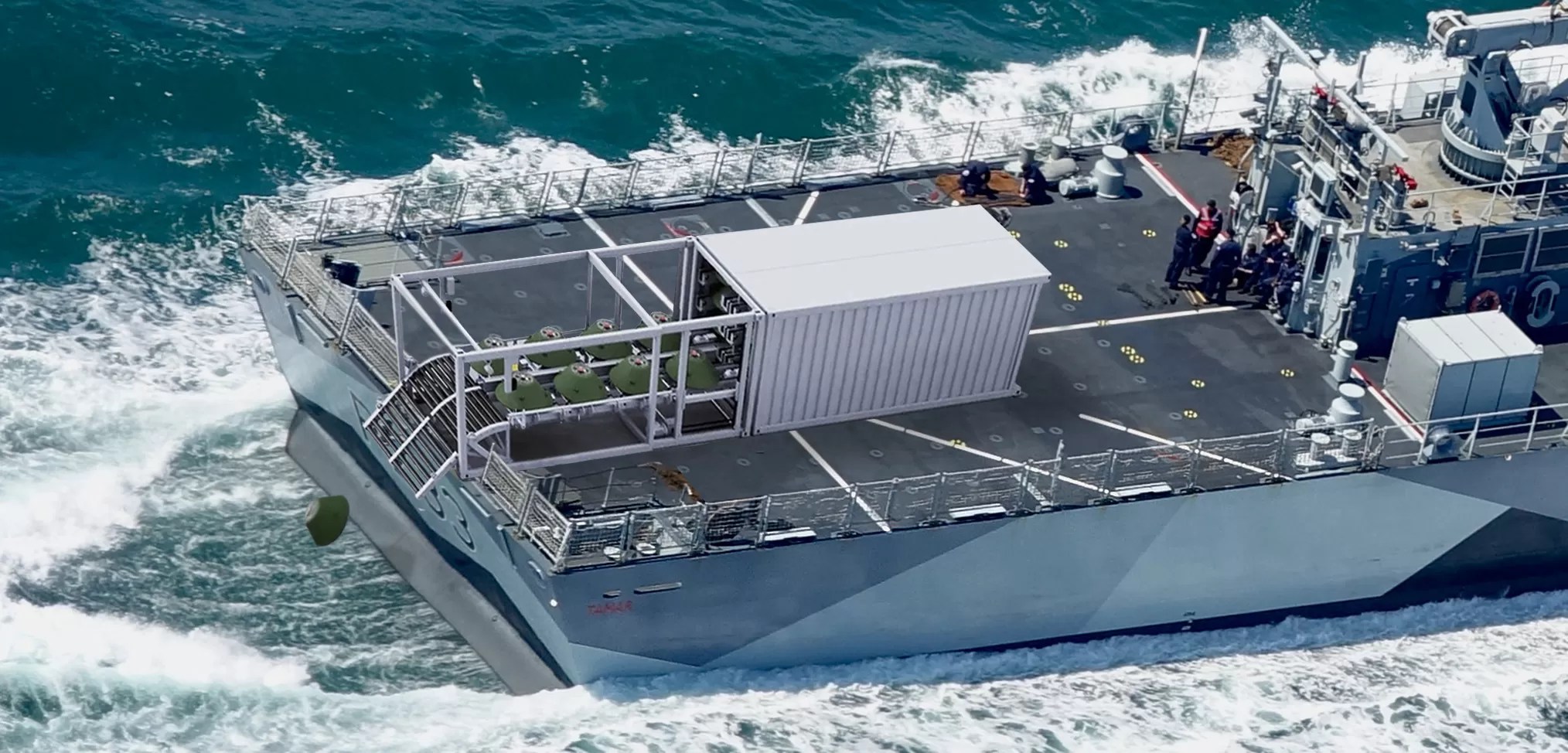
Containerized minelaying system on a River Batch 2 Offshore Patrol Vessel

It has been said that aircraft carriers are the ultimate modular warships because their primary weapons (aircraft) are interchangeable.

A flight deck on an Offshore Patrol Vessel (OPV) certainly offers a degree of aviation options. General purpose, cargo, ASW, and ASuW helicopters and a range of Unmanned Air Systems, but it appears our allies, the UK and particularly Australia may be looking at other ways to use this large open space.

Royal Navy:

Navy Lookout had a post that talked about restoring a naval mining capability in the Royal Navy. There was no specific reference to using flight decks or to Offshore Patrol Vessels.

The RN does not need dedicated minelaying vessels. The SSNs have a theoretical minelaying capability but XLUUVs are a much lower risk and stealthier solution for covert and sensitive missions. Where stealth is less important, containerised minelaying solutions are being developed that can be secured to the deck and dispense mines over the stern. (emphasis applied–Chuck)

But the photo, above, definitely got my attention. There we see an SH Defence “CUBE” containerized mine laying system developed by RWM Italia S.p,A. (Rheinmetall). on the flight deck of a River Batch 2 Offshore Patrol Vessel (HMS TAMAR).

Australian Navy:

Australia is planning to produce up to 14 flight deck equipped Arafura class OPVs including two intended specifically for Mine Counter Measures (MCM). These ships were always intended to accept containerized mission loads. It appears they are now planning what these ships will do in wartime.

Missile Launcher:

We already saw “Australia Considering Modular C-Dome For Arafura OPVs” –Naval News

Australia Considering Modular C-Dome For Arafura OPVs
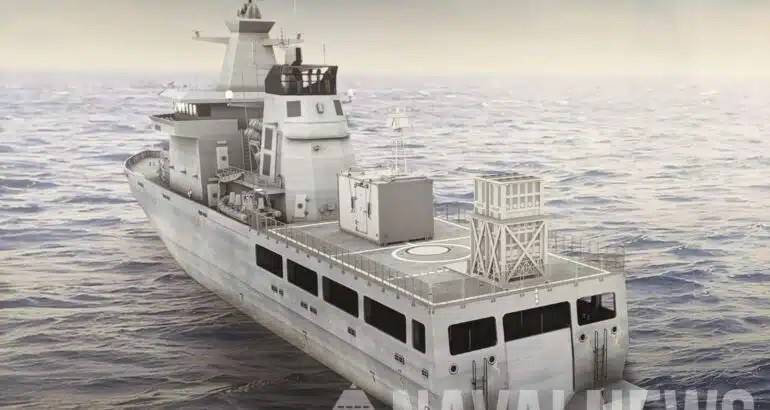
Illustration of Arafura-class OPV fitted with C-DOME

Mine Layer:

As noted in the Navy Lookout, Australia is planning to buy and produce large numbers of mines. Naval News reports,

“Australia is set to accelerate the procurement of sea mines as part of Project SEA 2000…The decision to rapidly procure the capability, reportedly from a European supplier, will deliver a ‘significant’ deterrent effect according to Defence…it’s understood that the government has budgeted approximately $500 million to 1 billion Australian dollars for the acquisition…the weapons being brought are smart mines, able to disseminate between civilian vessels and a variety of military targets, allowing a strategic anchorage to be denied to hostile forces, all the while preserving access for aligned vessels(emphasis applied–Chuck)

This all points to large numbers of mines being used in defensive fields. Such minefields will almost certainly be laid by surface vessels. Australia does have some civilian crewed support ships that might be used for mine laying, but as the Arafura class comes online, they will be the most likely surface minelayers.

SURTASS-E:

SURTASS-E. (U.S Department of Defense)

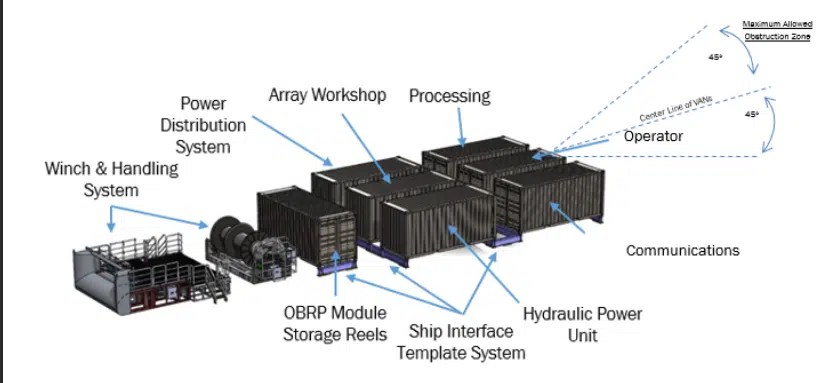
Then there is these reports from Naval News and The Drive that Australia is getting SURTASS-E systems.

SURTASS-E is expected to provide long range detection and cuing for tactical weapons, against both diesel- and nuclear-powered submarines. Again, the Arafura class seems a likely host, because the system is intended for military crew manning and, unlike the civilian manned National Support Squadron ships, these ships are armed and have communication systems that include tactical data link.

Now About the Coast Guard:

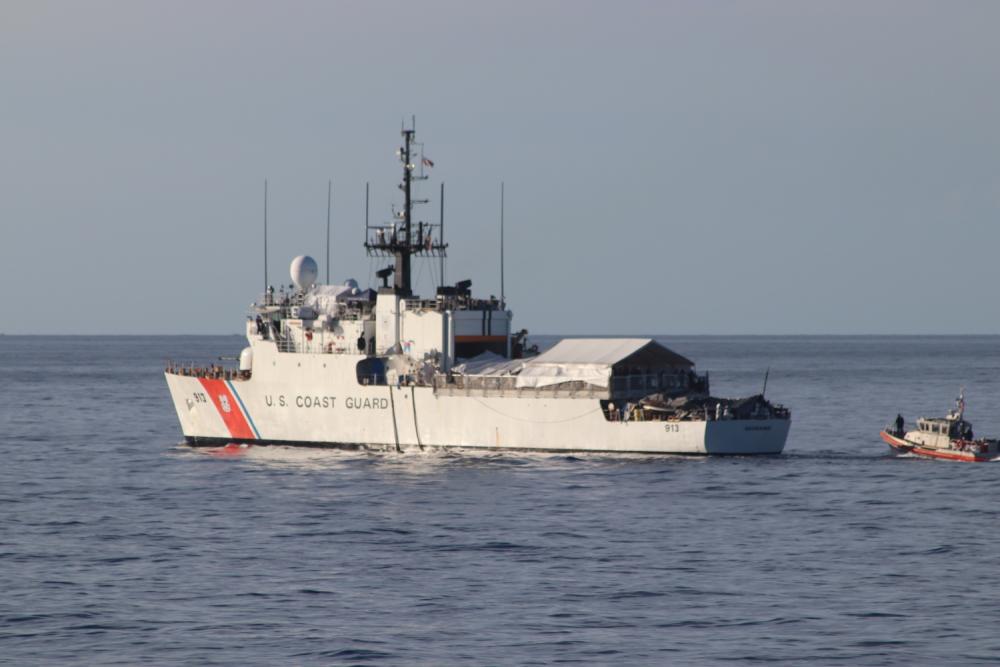
Using a flight deck for non-aviation purposes is not a foreign idea to the Coast Guard. They do it all the time to provide a holding area for migrants. 

USCGC Mohawk’s (WMEC 913) crew patrols the South Florida Straits during Operation Vigilant Sentry, Jan. 5, 2023. Mohawk’s crew patrolled the Florida Straits and Caribbean Sea in support of Homeland Security Task Force—Southeast and Operation Vigilant Sentry in the Coast Guard Seventh District’s area of operations for a 46-day patrol. (U.S. Coast Guard photo by USCGC Legare (WMEC 912)

“Hellfire Missile With Roughly Three Times More Range Tested…” –The Drive

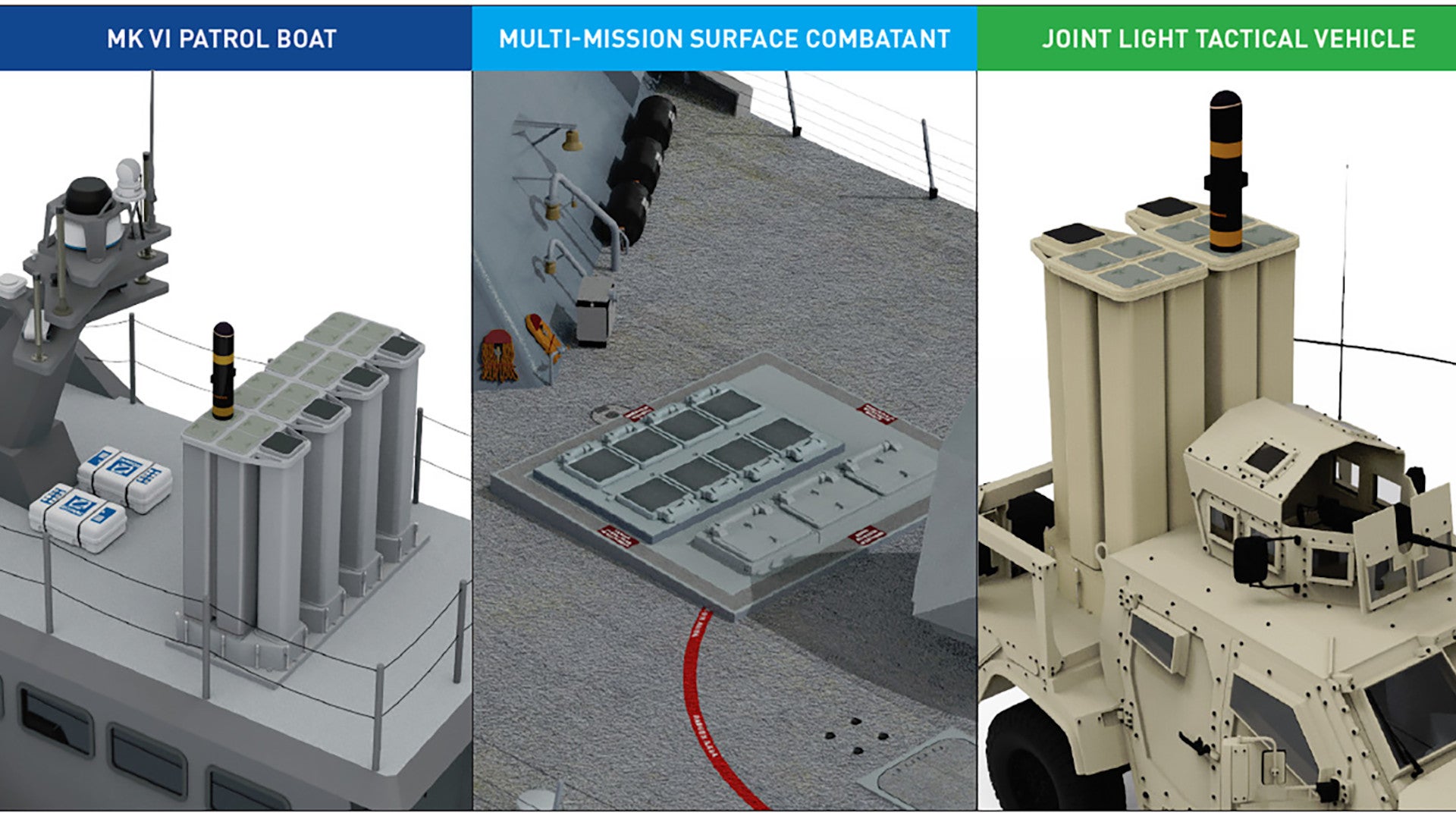
New Lockheed Hellfire/JASM launcher discussed earlier

The Drive reports an exercise that claimed to employ an enhanced version of Hellfire with a range about three times as great as that of the previous versions. Hellfire’s replacement, JASM, perhaps more accurately an upgraded Hellfire, has now been approved for full rate production and there have been reports that a longer range version was in the works.

Beyond the air-launched advantages, this missile would be hugely beneficial for sea-launched applications, such as the LCS. Beyond that, it could be extremely beneficial in servicing Hellfire’s growing surface-to-air role, as well.

Since the typically reported surface to surface range of the Hellfire is 8 km, three times that would be 24 km or over 26,000 yards (equal to the longest ranged battleship hit in WWII). In most cases, that means it can reach anything within the visual horizon. It would also mean, it would out range our 57 and 76mm guns. If this longer ranged Hellfire/JASM is mounted on the new 30 mm Mk38 Mod4, it could mean even Polar Security Cutters will have a potentially more potent weapon than the 57mm Mk110, with a much smaller footprint and lower maintenance requirements.

The weapon would certainly be a welcomed addition to the Webber class patrol craft of PATFORSWA because it would give them greatly enhanced capability against swarming small inshore attack craft, helicopters, and UAS, threats common in their operating area.

As I noted earlier, JASM could provide Coast Guard vessels as small as patrol boats, with a much more accurate, more powerful, and longer ranged response to the need to be able to forcibly stop vessels both small and large, while also providing counter UAS, a degree of anti-aircraft protection, and should it ever be required, a naval fire support ashore capability.

A Modest Proposal for a Containerized Weapon System

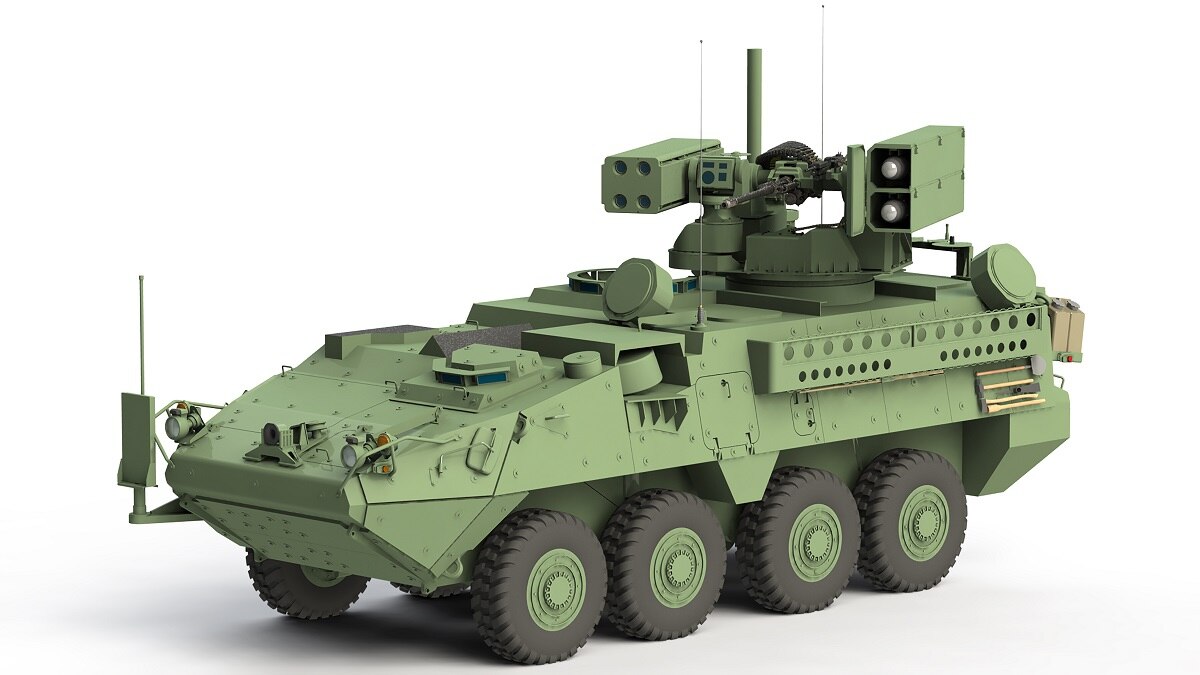
Leonardo DRS has been chosen to provide the mission equipment package (rendering pictured) atop a Stryker combat vehicle to serve as the Interim Maneuver-Short-Range Air Defense system for the U.S. Army. (Courtesy of Leonardo DRS)

     After the recent report of Russia containerizing anti-air missile systems I got to thinking about containerized systems the Coast Guard might use. There are many systems that might be containerized–sonars, torpedo countermeasures, cruise missiles, drones, 120mm mortars, medical facilities, but there is one combination I found particularly appealing.
     We could tie into the Army’s attempt to develop a new short range air defense system (SHORAD) by mounting a marinized version of the SHORAD turret on a container.  The systems are meant to fire on the move, so they should be able to deal with ship’s movement. The container might be armored to some extent to protect it from splinters and small arms. The container could be equipped to provide power (external connection, generator, and battery), air conditioning, air filtration, etc as the supporting vehicle would have in the Army system.  It looks like the planned interim SHORAD system will include Stinger, Hellfire, an M230 30mm gun and a 7.62mm coaxial machine gun. If we could mount some additional vertical launch Hellfire in the container, so much the better.
     For the Coast Guard these might be used on icebreakers and buoy tenders when they go into contested areas. They might be mounted on the stern of FRCs in lieu of the over the horizon boat using an adapter over the stern ramp, when additional firepower is required. 
     The Army and Marines might also use these containerized systems as prefab base defense systems. As fixed ground defenses, the containers might be buried leaving only the turret above ground level.
     They could also be used on Military Sealift Command and Merchant ships to provide a degree of self defense.

“Russian navy to receive container air defence system” –Navy Recognition

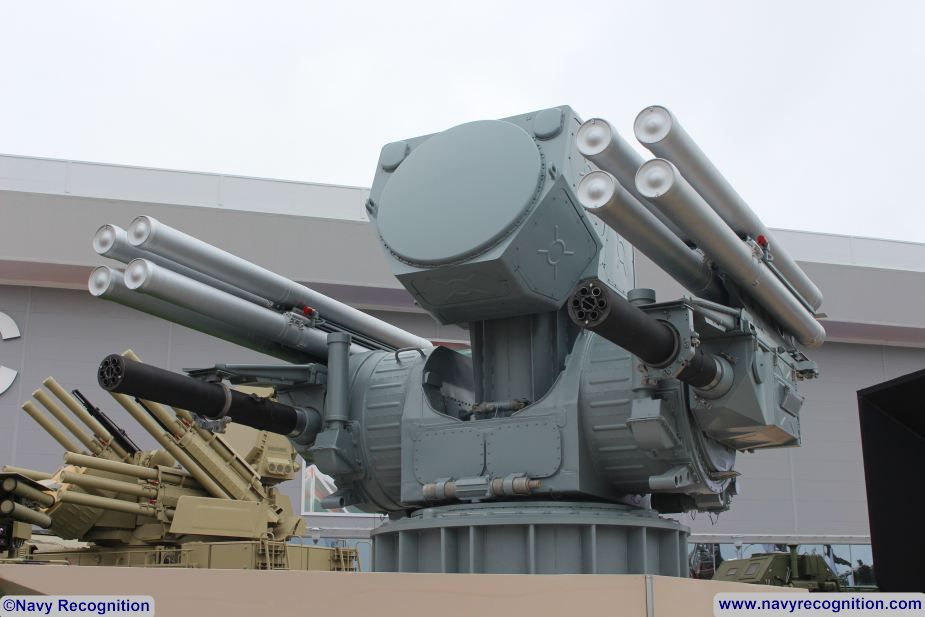
The Pantsir- M presented at Army 2017

NavyRecognition is reporting that the Russians are planning to package air defense systems in standard containers.

Specifically they refer to possible use on the project 20386 corvettes and project 22160 patrol ships. One of the two systems discussed is a missile and gun “Close In Weapon System” (CIWS) but the other system is a much longer ranged system.

This is a significant departure from the container packaged cruise missile systems we have heard about before.

The Pantsir-M CIWS (photo above) would also be effective against surface targets, at close range. In addition to the two 30mm gatling guns, the missiles may also have an anti-surface capability.

In time of war, we might see these, or something similar, on naval auxiliaries or even merchant ships as well as the naval vessels mentioned above. Encountering them on a terrorist controlled vessel is far less likely, but not impossible.

The other way to look at this is, could we do something similar, to make it easy for our icebreakers or perhaps other ships, to go from armed, to unarmed, and back again relatively easily?

Surface Navy Association 2019 –Virtual Attendance

Like many of you, I was unable to attend the Surface Navy Association Conference, but I did find a number of videos which may provide some of the information that would have been available there. The Coast Guard Commandant had been scheduled to speak but cancelled, apparently in response to the partial government shutdown.

I have provided three videos, each about ten minutes, that may be of general interest, and links to four others, typically 20-25 minutes. The descriptions are from their respective YouTube pages.

The second and third videos have specific Coast Guard content, which I have identified by bold typeface with the beginning time in parenthesis. Some of the other equipment may have Coast Guard applications in the future.

Day 1 video coverage at SNA 2019, the Surface Navy Association’s national symposium. In this video we cover:
– Austal latest frigate design for FFG(X)
– Raytheon DART Variable Depth Sonar (VDS)
– Raytheon / Kongsberg Naval Strike Missile (NSM)
– Lockheed Martin Long Range Anti Ship Missile (LRASM)

Day 2 video coverage at SNA 2019, the Surface Navy Association’s national symposium.
In this video we cover:
– Fincantieri Marine Group FREMM frigate design for FFG(X)
– General Dynamics NASSCO John Lewis-class T-AO (New Oiler)
– Raytheon SM-2 restart
– Raytheon SM-3
– Leonardo DRS Hybrid Electric Drive for U.S. Coast Guard’s Offshore Patrol Cutter (OPC) (time 11:10)

Day 3 video coverage at SNA 2019, the Surface Navy Association’s national symposium. In this video we cover:
– Atlas North America’s solutions for mine counter measures, harbor security and unmanned surface vessels
– Lockheed Martin Canadian Surface Combatant (Type 26 Frigate, Canada’s Combat Ship Team)
Insitu ScanEagle and Integrator UAS (time 4:30)
– Raytheon SPY-6 and EASR radar programs

NAVSEA’s Moore on Improving Ship Repair, McCain & Fitzgerald, Ford, LCS

Vice Adm. Tom Moore, USN, the commander of the Naval Sea Systems Command, discusses US Navy efforts to increase public and private ship repair capabilities, lessons learned from repairing USS John S. McCain and Fitzgerald, the new Ford-class aircraft carrier, getting the Littoral Combat Ship on regular deployments and more with Defense & Aerospace Report Editor Vago Muradian at the Surface Navy Association annual conference and tradeshow in Northern Virginia.

GE Marine’s Awiszus on LM2500 Engine Outlook, Future Shipboard Power

George Awiszus, military marketing director of GE Marine, discusses the outlook for the company’s LM2500 engine that drives warships in more than 30 nations and the future of shipboard power with Defense & Aerospace Report Editor Vago Muradian at the Surface Navy Association’s annual conference and tradeshow in Northern Virginia.

US Navy’s Moran on Improving the Surface Force, Culture, Ship Repair & Information Sharing

Adm. Bill Moran, USN, the vice chief of naval operations, discusses dialogue with China, improving the surface force in the wake of 2017’s deadly accidents, refining Navy culture, increasing ship repair capabilities, harnessing data, improving information sharing across the force and the new Design for Seapower 2.0 with Defense & Aerospace Report Editor Vago Muradian at the Surface Navy Association’s annual conference and tradeshow in Northern Virginia.

US Navy’s Coffman on New Expeditionary Warfighting Concepts, Organizations, Unmanned Ships

Maj. Gen. David “Stretch” Coffman, USMC, the US Navy’s director of expeditionary warfare (N95), discusses new expeditionary warfighting concepts, the recent deployment of Littoral Combat Group 1 — composed of USS Wayne E Meyer (DDG-108) and USS Somerset (LPD-25) — to South America, new formations to replace the current Amphibious Ready Group and Marine Expeditionary Unit, unmanned ships, the performance of the F-35B Lightning II and more with Defense & Aerospace Report Editor Vago Muradian.

Something for the Coast Guard as “Navy Squeezing Costs Out of FFG(X) Program as Requirements Solidify”–USNI


The US Naval Institute News Service has provided an update on the FFG(X) program, based on a Jan. 15, 2019 presentation at the Surface Navy Association Symposium, by Regan Campbell, Program Executive Office, Unmanned and Small Combatants, which provides both a projected lower unit cost approaching $800M for follow on units (not a lot more than the Coast Guard was paying for its National Security Cutters) and a list of minimal equipment to be included in each ship

There is one particular item on the list of equipment that may be significant for the Coast Guard, “57mm gun (with ALaMO)”. That means the Advanced Low Cost Munition Ordnance” or ALaMO program to provide guided projectiles for the 57mm Mk110 gun is still on track. Apparently ALaMO uses the same guidance system developed for the Hyper-Velocity Round

The FFG(X) will also share, in common with all the NSCs, the Mk160 Gun Fire Control System, and with the later NSCs, the Mk20 Electro-Optic Sensor System (Mods may be different). This means we can expect continued Navy support of these systems over the long-term.

Request for Proposal is to be issued Q4FY2019. Contract award is expected Q4FY2020.

I note there is still no image available for Huntington Ingalls proposal which may be based on the National Security Cutter.

Below is a list of equipment for the FFG(X) found on page three of the presentation. I can not claim to recognize all the acronyms. Interestingly there is space and weight reservation for a 150 kW Laser Weapon.

Guided Missile Frigate (FFG(X)) Capabilities

AW

3x3x3 fixed-face EASR (Enterprise Air Surveillance Radar)
Mk41 VLS (32 cell)
SM-2 Blk IIIC
ESSM Blk 2
21 cell RAM launcher (Rolling Airframe Missile)
UPX-29 IFF
CEC (Cooperative Engagement Capability)

EW/IO

SLQ-32(V)6 (SEWIP Blk II) w/ HGHS and Specific Emitter
Identification (SEI)
Spectral (Follow on to SSEE Inc F)
AOEW (on airborne asset)
SWAP-C reservation for SLQ-32C(V)7 (SEWIP Blk III Lite)
SWAP-C reservation for 150kw laser

WATERCRAFT

7m RHIB (x2)

SUW

57mm gun (with ALaMO)
Mk160 GFCS
Mk20 Mod 1EOSS
OTH fire control system
OTH 2x4 (T)/ 2x8 (Obj)
50 caliber machine guns
iStalker w/3600 coverage
NGSSR

AVIATION
Organic MH-60R (x1)
Organic MQ-8C (x1)
Secure & Traverse Aircraft Handling
System
Horizon Reference System
Night Vision Device Compatibility

ASW
AN/SQS-62 Variable Depth Sonar
or Low Band Hull Array
TB-37 MFTA w/ TACI
AN/SQQ-89(V)15
USW-DSS
AN/SLQ-61 Lightweight Tow or
SLQ-25 NIXIE
ADC (Torp CM)
Mk41 VLS supports VLA (Vertical Launch ASROC) for allwx stand-off ASW weapon
(future)
SVTT – Shipboard Torpedo
Launch (Obj)

C4I/ CMS
CANES
ICOP
Link-11/22
Link-16
LOS/STJ/JRE
HF/VHF/UHF LOS
UHF/SHF/EHF
SATCOM
NTCDL
Frigate Weapon
System (FWS)
Advanced Cyber
Design
GPNTS & ECDIS

The New Hyper-Velocity Round and an Old Five Inch Gun Make a Revolutionary Combo

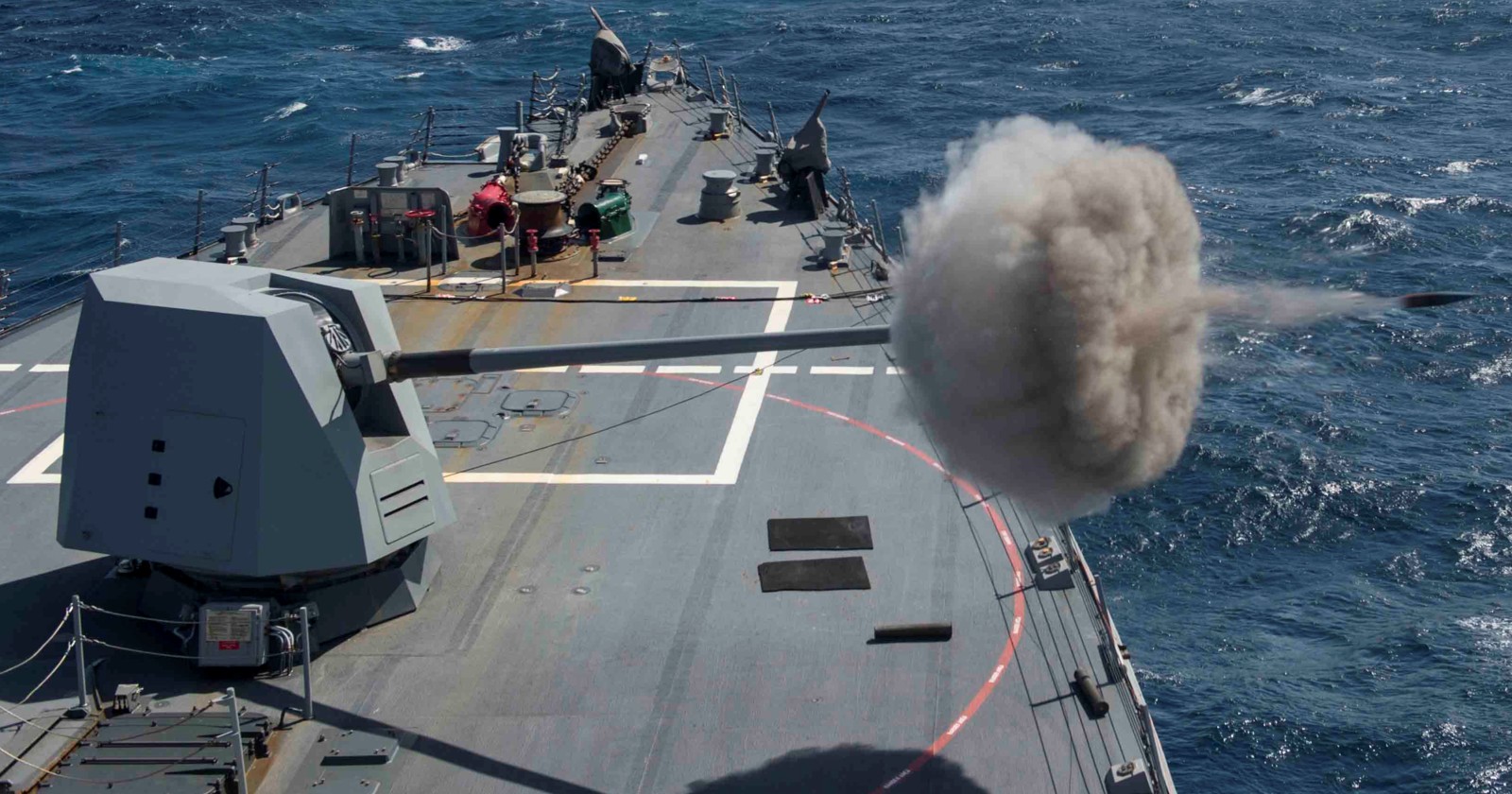
Mk45 Mod4, a 5″ gun 62 calibers in length

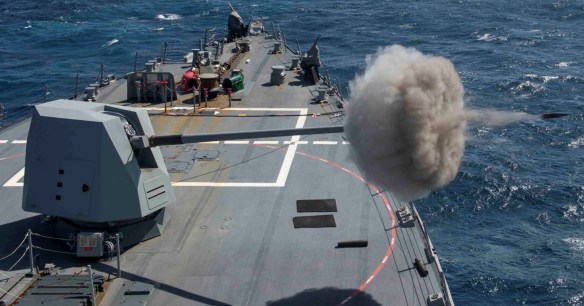
The US Naval Institute reports that during an unclassified exercise as part of RIMPAC USS Dewey (DDG-105) fired 20 hyper velocity projectiles (HVP). The rounds were fired from a 5″/62 Mk45 Mod4.

Back in 2012, I published a post “Case for the Five Inch Gun.” My conclusion was

In choosing the Mk110 57mm because it was seen as a better AAW weapon, a better anti-swarm weapon, as lighter, cheaper, easier to maintain or man, for whatever reason, the Coast Guard will have a weapon that is at best only marginally more capable, perhaps even less capable, of performing the most likely missions–stopping/sinking a surface target or performing NSFS–than the weapons of 60 to 90 years ago.

While the size, toughness, and survivability of merchant ships has increased dramatically, the Coast Guard has not provided its ships with a significantly improved capability to stop or sink a ship since the introduction of the 5″/51 in 1921. I still think the Coast Guard should add a light weight anti-surface vessel torpedo to its inventory as the cheapest way to have a truly effective ship stopper that can be made widely available. But until such a weapon becomes available, the Mk45 5″ is the best alternative available.

The 5″ Mk45 is a versatile weapon. Equipping the OPCs with this weapon make the ships more capable of performing both the PWCS and probable wartime mission and significantly enhances the NSFS capability of US Naval forces in a major conflict.

I think the argument for the 5″ just got a lot stronger. The test involved shooting guided rounds at a target of cruise missile size and speed. That has got to mean extreme accuracy against even moving targets.

Adding this capability to Cutters would increase both their survivability and their offensive capability. In addition it would substantially increase their capability to forcibly stop a vessel of almost any size since the projectiles, about seven times heavier than an 57mm round, would be traveling at near hypersonic speeds, they would likely disable any engine it hits by kinetic energy alone.
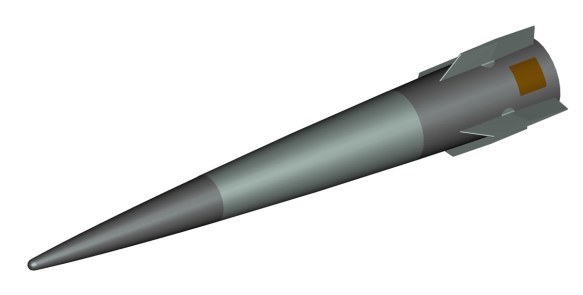
An artist’s conception of BAE Systems’ Hyper Velocity Projectile. BAE Systems Image

I have not seen any particular kind of guidance identified for this test. The illustration above does appear to show a panel, presumably one of four, between the fins at the base of the projectile.

“So if you think about the kinds of threats you might face in the Middle East, the lower-end cruise missiles or a larger UAV, now you have a way to shoot them down that doesn’t require you use a $2 million ESSM or $1 million RAM because a hyper velocity projectile – even in the highest-end estimates have it in the $75,000 to $100,000 range, and that’s for the fanciest version of it with an onboard seeker,” he said.

An added benefit of using HVP in powder guns is the gun’s high rate of fire and a large magazine capacity.

The projectiles apparently weigh about 45 pounds, and may cost as little as $25,000, far less than even the relatively cheap RAM short range anti-air missile at about $1M each. Range is expected to be about 40 miles when fired from a 5″ gun.

The Mk45 Mod4 was first installed on the USS Winston Churchill (DDG-81) commissioned in 2001, superseding the earlier 5″/54 Mk45 mods. Since then it has been the standard USN 5″ gun. It is also in service with the Australian, South Korean, Japanese, and Danish Navies, and they will arm the British Type 26 frigate. Earlier models of the 5″ Mk45 also serve in the Navies of New Zealand, Greece, Spain, Turkey and Thailand.

The gun mount is not a lot larger than the 5″/38 Mk30 mounts that were used on over 50 Coast Guard cutters (255s, 311s, 327s, 378s, and icebreakers) between the early 1940s and their removal from the 378s in the late ’80s and early 90s. In fact the early models of the Mk45 were designed as a drop in replacement for the 5″/38.

Earlier 5″/38 mounts used by the Coast Guard were highly manpower intensive requiring 14 to 15 to fully man the mount and pass projectiles and powder. Full manning for a Mk45 Mod4 is only six, a Gun Captain, Panel Operator and four ammunition Ioperators, all below deck. It can fire up to twenty rounds before the four ammunition operators arrive on station, allowing relatively easy Condition III manning.

The 5″/38 mount weighed about 41,000 pounds. The Mk45 Mod4 is estimated to weigh 50,456 lbs. (22,886 kg) without a lower hoist and 54,398 lbs. (24,674 kg) with a four-flight lower hoist. that is at most a 33% increase.

Time to Think about an OPC “B class” 

What the Soviets used to call the correlation of forces is changing. The Navy’s top surface warfare officer told a gathering at the Surface Navy Association Seminar, For the ship crews, “we need to have them prepared on a moment’s notice to turn the readiness we are building into lethality,” that they had to be ready to fight now.

It is time for the Coast Guard to start reasserting its military nature. Hopefully we have at least a few years to rebuild the Coast Guard’s capability as a naval force which was discarded after the Soviet Union fell apart

It is not too early to start thinking about a “B class” OPC. Replace the 57mm with the 5″/62 Mk45 mod4, replace the 25mm Mk38 with SeaRAM. Add the sensors from the LCS ASW mission module at the stern. Add some Anti-Ship Cruise Missiles Forward. Make sure we have space to support MH-60R ASW helos it is supposed to be able to hangar with torpedoes and sonobuoys. That is not a whole lot different from the systems we had on the FRAM 378s, and the OPC is a third again as large.
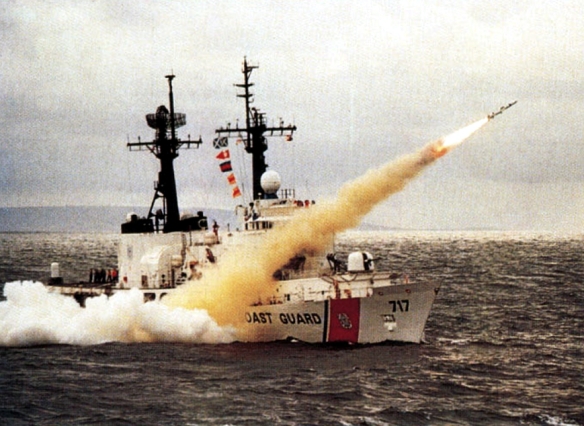
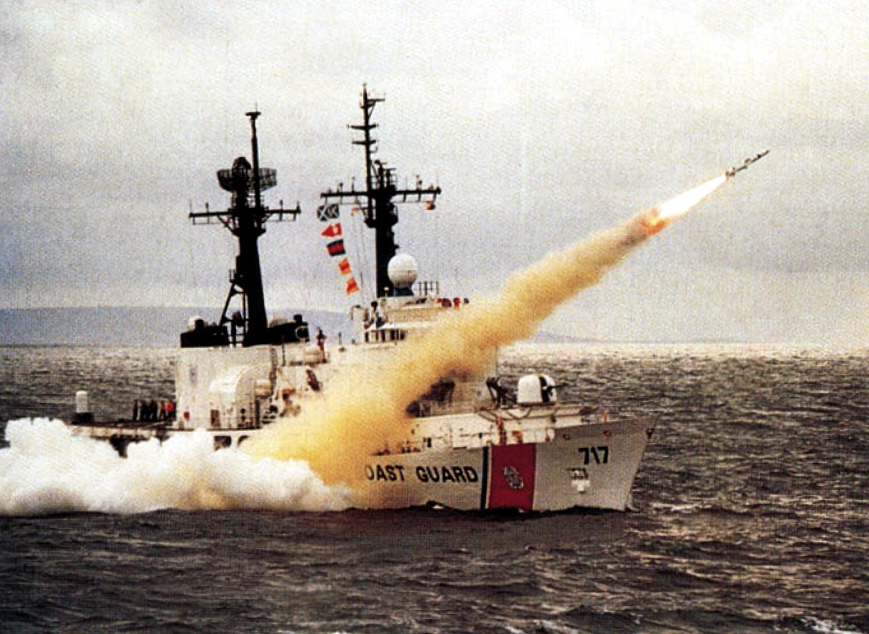
USCGC Mellon seen here launching a Harpoon anti-ship cruise missile in 1990.