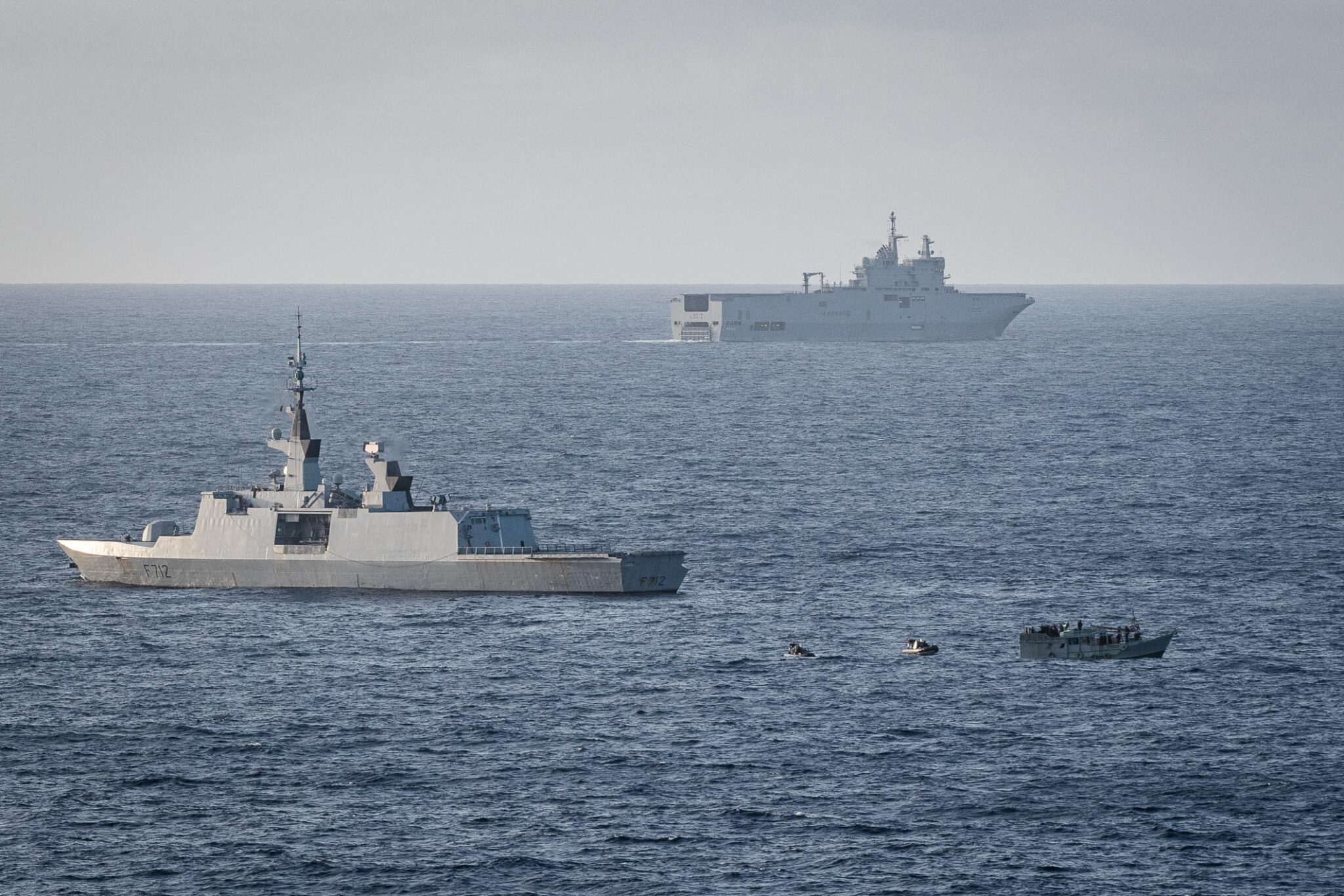
“U.S. Coast Guard Cutter Terrell Horne returns to home port following a 52-day multi-mission patrol in the Eastern Pacific” –CG News

PERU, 10.06.2023, Courtesy Photo, USCG District 11
The crew of the U.S. Coast Guard Cutter Terrell Horne conducts a patrol in the Eastern Pacific Ocean in support of Operation Southern Shield 2023, October 2023. The Coast Guard recently completed the first high-seas boardings and inspections off the coast of Peru under a newly adopted multi-lateral agreement to monitor fishing and transshipment operations within the South Pacific Regional Fisheries Management Organization (SPRFMO) Convention Area. (U.S. Coast Guard photo)

Below is a news release from Coast Guard News. This patrol was unusual enough to draw some special attention. It is not a typical patrol craft mission. It involved the pairing of a buoy tender with a “Fast Response Cutter” (FRC) to put two units far from their homeports. The Pacific Area has done this before in the Western Pacific, but I think this may be the first time it has been done in the Eastern Pacific off the West coast of South America. Pacific Area Webber class FRCs have previously conducted drug enforcement missions in the Eastern Pacific at least as far South as Central America. We talked about portions of this multiunit deployment earlier, “Buoy Tender, FRC, C-130 Used for International Fisheries Enforcement–Operation Southern Shield.” USCGC Alder, homeported in San Franciso, was the buoy tender involved.

The emphasis of the operation was international fisheries enforcement, but USCGC Terrell Horne still managed to do a bit of drug enforcement. I look forward to seeing the report of USCGC Alder’s portion of the operation.
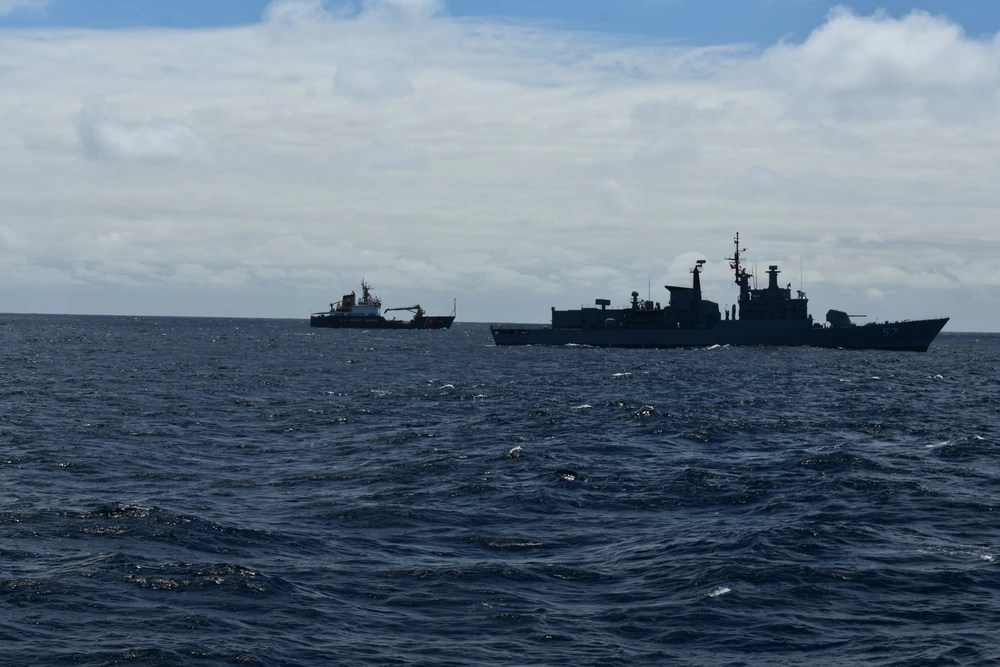
09.25.2023, Courtesy Photo, USCG District 11
U.S. Coast Guard Cutter Alder (background) transits in formation alongside Peru BAP (Buque Armada Peruana) Bolognesi (FM-57) as it prepares for the next exercise during GALAPEX 2023, Sept.25, 2023. GALAPEX is a recurring multi-national maritime exercise led by Ecuador and included participation of delegates from Argentina, Brazil, Chile, Colombia, Costa Rica, the European Union, France, Italy, Mexico, Panama, Peru, the United Kingdom, and the United
States. (U.S. Coast Guard photo)

Nov. 8, 2023

U.S. Coast Guard Cutter Terrell Horne returns to home port following a 52-day multi-mission patrol in the Eastern Pacific

Coast Guard District Eleven

SAN PEDRO, Calif. — The U.S. Coast Guard Cutter Terrell Horne and crew returned to their home port in Los Angeles/Long Beach Tuesday after a 52-day patrol across the Eastern Pacific.

The crew of the Terrell Horne deployed in support of multiple missions, including Operations Green Flash, Albatross, Martillo, and Southern Shield, within the 11th Coast Guard District’s area of responsibility. During the patrol, Terrell Horne’s crew conducted a range of missions encompassing law enforcement, counter-drug operations, illegal, unreported, and unregulated fishing enforcement, and search and rescue operations.

“The crew of the Terrel Horne lived up to the cutter’s namesake in every way during this patrol. Operation Southern Shield allowed the cutter to showcase the versatility of the Fast Response Cutter. This operation brought a patrol boat and a buoy tender almost 4,000 nautical miles from home, conducting operations and international engagements with Mexico, Ecuador, Peru, and Costa Rica, said Chief Warrant Officer Jason Bussell, the commanding officer of the Coast Guard Cutter Terrell Horne. “The crew excelled in counter-illegal fishing missions, search and rescue, and counter-drug operations. Working alongside other Coast Guard assets, the crew was able to interdict a drug smuggling vessel and assisted in the seizure of nearly 2,000 lbs of contraband.”

The Coast Guard commissioned the Terrell Horne as the 31st Fast Response Cutter on March 22, 2019. Coast The cutter is named for Senior Chief Terrell Horne III, who died from injuries sustained while conducting maritime law enforcement operations off the California coast in December 2012. He was the executive petty officer aboard the Coast Guard Cutter Halibut at the time. For his heroic actions, the Coast Guard posthumously promoted Horne to senior chief petty officer.

For information on how to join the U.S. Coast Guard, visit GoCoastGuard.com to learn about active duty, reserve, officer and enlisted opportunities. Information on how to apply to the U.S. Coast Guard Academy can be found here.
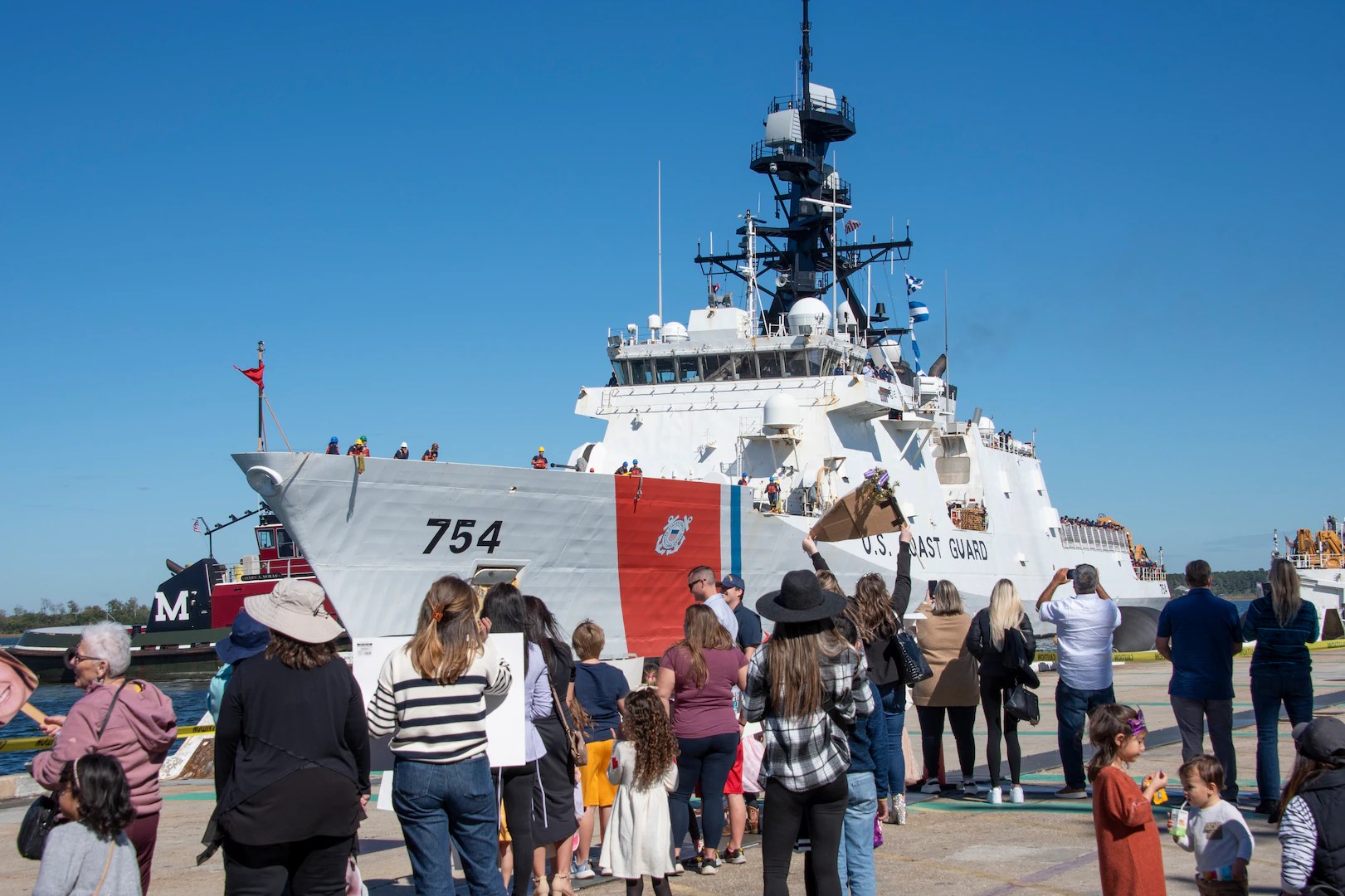
“U.S. Coast Guard Cutter James returns from Eastern Pacific patrol after interdicting 12,909 kilograms of cocaine, 7,107 pounds of marijuana” –CG News

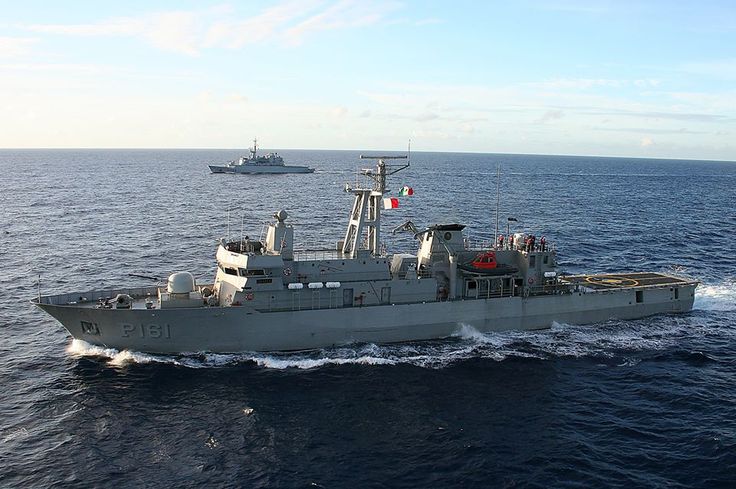
Below is a Coast Guard News release. The Mexican “Panther” Helicopter mentioned in the release is closely related to the Coast Guard’s MH-65. A sister ship of the Offshore Patrol Vessel they exercised with is pictured below.

Mexican Navy Oaxaca class patrol vessel, ARM Oaxaca, sister ship of ARM Chiapas, the Mexican Navy OPV that USCGC James exercised with. Mexican Navy photo.


Nov. 7, 2023

U.S. Coast Guard Cutter James returns from Eastern Pacific patrol after interdicting 12,909 kilograms of cocaine, 7,107 pounds of marijuana

Charleston, S.C. – The crew of the U.S. Coast Guard Cutter James (WMSL 754) returned home to Charleston, Saturday, following a 113-day patrol in the Eastern Pacific Ocean.

Patrolling in support of Joint Interagency Task Force-South, James worked alongside other Coast Guard cutters, Department of Defense and Department of Homeland Security units, and international partners to conduct counter-drug operations.

During the patrol, James’ crew disrupted illegal narcotics smuggling, interdicting 12,909 kilograms of cocaine and 7,107 pounds of marijuana valued at over $380 million. While in theater, James interdicted eight drug-smuggling vessels and apprehended 23 suspected traffickers, including one low-profile vessel laden with contraband. The efforts by the crew of the James directly contributed to U.S. Coast Guard objectives to combat transnational criminal organizations and enhance regional stability and security.

James’ crew conducted multiple joint operations with foreign partner nations such as Ecuador and Mexico. James conducted a passing exercise with the Mexican navy’s ARM Chiapas. During the exercise, James practiced close quarters tactical maneuvering and landed the Chiapas’ Panther helicopter on deck. This exercise with the Mexican navy was particularly important to promote interoperability and enhance ongoing and focused partnership efforts.

While in the Eastern Pacific Ocean, James interdicted an Ecuadorian go-fast vessel laden with illicit narcotics. James executed a complex at-sea rendezvous with Isla Darwin (ECU) and transferred three suspected narcotics traffickers and 73 bales (1,742 kilograms) of cocaine. The evolution enhanced cooperation with Ecuadorian partners and supported the home-country prosecution of international crimes.

James is a 418-foot National Security Cutter. The cutter’s primary missions are counter-drug operations, and defense readiness in support of U.S. Coast Guard operations. The National Security Cutters fall under the command of the U.S. Coast Guard Atlantic Area. Based in Portsmouth, Virginia, U.S. Coast Guard Atlantic Area oversees all Coast Guard operations east of the Rocky Mountains to the Arabian Gulf. In addition to surge operations, Atlantic Area also allocates ships to deploy to the Caribbean and Eastern Pacific to combat transnational organized crime and illicit maritime activity.

For information on how to join the U.S. Coast Guard, visit GoCoastGuard.com to learn about active duty, reserve, officer, and enlisted opportunities. Information on how to apply to the U.S. Coast Guard Academy can be found here.
-USCG-

“Royal Marines snipers shoot out engines to bring drug-runners’ boat to a halt” –Forces.Net

HMS Dauntless has a Wildcat helicopter and Royal Marines sniper team from 42 Commando who provide reconnaissance, surveillance, and aerial support (Picture: Royal Navy).

Looks like the Royal Navy now has their own “Airborne Use of Force” Team to do the same sorts of things the Coast Guard has been doing.

Forces.Net reports,

A Royal Marines sniper team has brought a Caribbean drug-runners’ power boat to a “juddering halt” after shooting out its engines.

US Coast Guard personnel, working alongside the sailors and marines on board Royal Navy destroyer HMS Dauntless, were then able to seize £60m worth of cocaine, which the smugglers had been attempting to throw overboard.

Read on in the linked report. HMS Dauntless has been doing good work in cooperation with a US Coast Guard Law Enforcement Detachment. HMS Dauntless is the second of six Type 45 Guided Missile Destroyers, roughly the Royal Navy counterpart of the Burke class DDGs and almost twice as large as the National Security Cutters.

HMS Dauntless (foreground) and HMS Daring. Photo: LA(Phot) Ian Simpson/MOD

Thanks to David for bring this to my attention.

“USNI News Fleet and Marine Tracker: Oct. 30, 2023” / “U.S. Naval Forces in Middle East Interdict $29 Million in Illegal Drugs”

Total Battle Force Deployed Underway
291
(USS 232, USNS 59)
107
(USS 74, USNS 33)
85
(57 Deployed, 28 Local)

The US Naval Institute’s news service’s latest Fleet and Marine Tracker only mentions two Coast Guard Units, The USCGC Healy and Patrol Forces Southwest Asia (PATFORSWA). They are respectively reported in the Western Atlantic and the Persian Gulf. Healy is pictured stopped in Reykjavík, Iceland on Oct. 24, 2023. From there, looks like she headed SW. No info on where she will stop next. They do have a photo from a drug bust by PATFORSWA cutter Charles Moulthrope (WPC 1141) on Oct. 12 that I have not seen reported elsewhere. I have included the news release I found as a result below.

The usual data indicating how many Navy units are operating under the various Fleet Commanders was not included, so we don’t know how many Navy ships are operating under 4th fleet.

It does look like the Navy is busier than usual with five carrier strike groups underway including four deployed, two in the Med and two in the Pacific.


U.S. Naval Forces in Middle East Interdict $29 Million in Illegal Drugs

13 October 2022

From U.S. Naval Forces Central Command Public Affairs

MANAMA, Bahrain – A U.S. Coast Guard fast response cutter seized an estimated $29 million worth of illicit narcotics from a fishing vessel while patrolling the Gulf of Oman, Oct. 12, two weeks after another sizable interdiction.

USCGC Charles Moulthrope (WPC 1141) confiscated 2,980 kilograms of opium and 400 kilograms of methamphetamines as the fishing vessel transited international waters. The Coast Guard cutter was operating in support of Combined Task Force 150, which oversees maritime security operations for Combined Maritime Forces in the Arabian Sea, Gulf of Oman and Gulf of Aden.

“A success like this is a team effort. I am proud of each and every member of our crew,” said Lt. Cmdr. Stephen Hills, Charles Moulthrope’s commanding officer. “We remain committed to countering the flow of illegal contraband and promoting security and stability across the region.”

Hills’ crew previously interdicted another fishing vessel Sept. 27 while patrolling the Gulf of Oman, which led to the seizure of $85 million worth of illegal drugs.

Charles Moulthrope arrived in the Middle East in May and operates from the U.S. Navy base in Bahrain where U.S. Naval Forces Central Command, U.S. 5th Fleet and Combined Maritime Forces are headquartered.

“CTF 150, U.S. Coast Guard Seize $25 Million in Illegal Drugs” –NAVCENT

A U.S. Navy L3 Harris Arabian Fox MAST-13 drone boat and the U.S. Coast Guard cutters USCGC John Scheuerman and USCGC Charles Moulthrope transit the Strait of Hormuz on Wednesday, April 19, 2023. (Information Systems Technician 1st Class Vincent Aguirre/U.S. Coast Guard)

Below is a news release by U.S. Naval Forces Central Command Public Affairs, October 11, 2023.


MANAMA, Bahrain —

The U.S. Coast Guard Sentinel-class fast response cutter USCGC John Scheuerman (WPC 1146) seized about $25 million worth of illegal drugs from a stateless vessel while operating in the international waters of the Gulf of Oman, Oct. 3.

The cutter, working under the command of Combined Task Force (CTF) 150, seized 360 kilograms of methamphetamines, 107 kilograms of heroin and 1,961 kilograms of hashish from the vessel during an interdiction operation.

This event marks the second time in a month that CTF 150 has interdicted illicit narcotics at sea. Last month, the Royal Navy frigate HMS Lancaster (F229) seized more than 450 kilograms, or approximately $9.5 million, of illegal drugs including heroin and hashish during a CTF 150 operation in the Arabian Sea.

“This new seizure, the second since the French Navy took command of CTF 150 last July, again shows the commitment of Combined Maritime Forces working together to enhance maritime security in the Arabian Sea and Indian Ocean,” said French Navy Capt. Yannick Bossu, commander of CTF 150.

CTF 150 is one of five task forces under Combined Maritime Forces, the largest multinational naval partnership in the world. CTF 150 focuses on maritime security operations outside the Arabian Gulf.

Since 2021, Combined Maritime Forces has seized more than $1 billion in illegal drugs while patrolling waters across the Middle East.

The 38-nation naval partnership upholds the international rules-based order by promoting security and stability across 3.2 million square miles of water encompassing some of the world’s most important shipping lanes.

“French-Led Combined Task Force 150 seized more illegal narcotics in the Arabian Sea” –NAVCENT

ARABIAN SEA (Sept. 7, 2023) United Kingdom Royal Navy Sailors assigned to frigate HMS Lancaster (F 229) inventory illicit drugs seized in the Arabian Sea, Sept. 7. (Photo by Courtesy photo)

Below is a news release from US Naval Forces Central Command.

5th Fleet (NAVCENT) has been doing some interesting stuff. They have assembled a coalition called “Combined Maritime Forces” that might serve as a model for operations in the South China Sea, Western Pacific, and the Eastern Pacific/Caribbean drug transit zones. Of course, the US Coast Guard is playing a part here and here.


MANAMA, Bahrain —On September 7, UK warship HMS Lancaster (F229), operating in support of the French-led Combined Task Force (CTF) 150 seized more than 450kg of illegal drugs including heroin and hashish in the Arabian Sea.

With a street value of approximately $9.5 million this is the first narcotics seizure since the French Navy took over command of CTF 150 from the UK in July. The Combined Maritime Forces (CMF) remain committed to disrupting criminal and terrorist activities by restricting their freedom of maneuver in the maritime environment.

Capt Yannick Bossu, CTF 150 Commanding officer said, “This seizure demonstrates once again the operational effectiveness of CTF 150 and illustrates the UK and France’s commitment to maritime security alongside their regional and international partners.”

Cmdr Chris Sharp, HMS Lancaster Commanding Officer remarked, “This success again demonstrates how international partners can work together in stopping illegal maritime activity which funds terrorist activity. This was a great success shared by all those involved.”

CTF 150 is one of the five operational forces of CMF, a 38-nation maritime partnership headquartered in Bahrain. CMF strengthens the maritime security in this strategic area, by countering activities that finance terrorism and international crime. This is the twelfth time that France commanded CTF 150.

WMEC 210 Makes Three Drug Busts, Seizing 11,550 Pounds of Cocaine–Additional Observations on Eastern Pacific Drug Interdiction

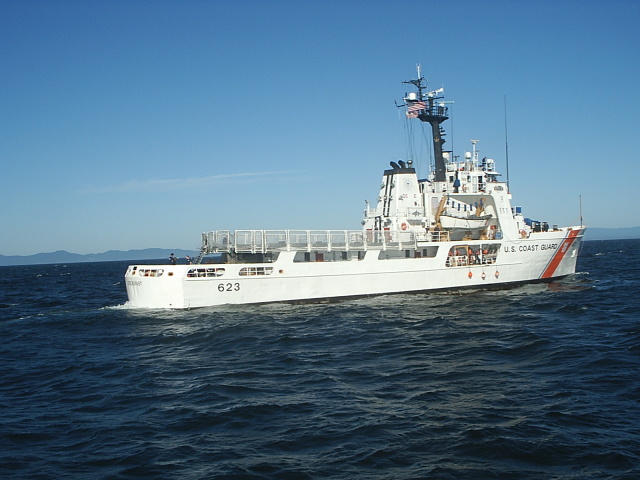
USCGC Steadfast (WMEC-623)

Below is a Coast Guard News Release. It is in fact a pretty typical news release. There are lots of these, and I usually don’t bother to publish them, but this one has prompted me to make some observations.

USCGC Steadfast had a very successful patrol. In fact, she did as well as any National Security cutter might have done despite the fact, she is less than a quarter the size of an NSC. Despite her age, size, and relatively slow speed, she has the critical assets necessary for success–good boats, an airborne use of force helicopter, and a crew that knew how to use them. Conclusion: It is a numbers game. Not every cutter needs to be 4500 tons, because we need numbers and smaller cutters can do the job. (I do like the fact that the newer cutters are faster.)

Looking back on six months’ worth of Coast Guard News reports (60 pages) it looks like a disproportionate part of the Eastern Pacific drug interdiction patrols are being done by PACAREA cutters. It is counter intuitive, but LANTAREA ships are actually much closer to the patrol areas and LANTAREA has many more large patrol cutters (NSCs and MECs: LANT 25 / PAC 9).

PACIFIC AREA CUTTERS: 

ATLANTIC AREA CUTTERS:

LANT Cutters do all the drug interdiction in the Caribbean and Migrant interdiction as well but, in addition to the 25 large ships, LANTAREA also has something like 35 Webber class cutters (in addition to the six in PATFORSWA), with 19 or 20 in the 7th District alone. By comparison, PAC AREA, with 84% of the entire US EEZ, has only 13 Webber class, four in the 11th District, six in the geographically huge 14th District that must also assist the nations of the Compacts of Free Association, and three in the 17th District (Alaska). The 13th District, where PACAREA’s three 210s, that are apparently doing most of the Eastern Pacific drug interdiction work are based, has not a single Webber class. Conclusion: PACAREA needs more ships than currently assigned or planned. The Webber class have probably made it possible to move more MECs to the Pacific. In the meantime, LANTAREA should be sending more ships to the Eastern Pacific drug transit zone.


July 23, 2023

U.S. Coast Guard Cutter Steadfast returns home after 70-day counternarcotics patrol in Eastern Pacific

ASTORIA, Ore. – The U.S. Coast Guard Cutter Steadfast (WMEC 623) and crew returned to homeport, Friday, after a 70-day counternarcotics patrol in the Eastern Pacific.

Steadfast’s crew disrupted the flow of illegal narcotics on three separate occasions during their patrol, preventing a combined total of more than 11,550 pounds of cocaine from reaching the U.S.

The crew steamed more than 16,000 nautical miles conducting training, law enforcement missions, providing search-and-rescue coverage, and conducting helicopter operations while patrolling the waters between their Astoria homeport and the international waters off the coasts of Central and South America.

While patrolling in the Eastern Pacific, June 9, Steadfast’s cutter boat crew detected a suspected narcotics-smuggling panga-style vessel. Coast Guard personnel conducted a boarding on the vessel, resulting in the interdiction of 2,200 pounds of cocaine.

On June 18, Steadfast was notified by a Customs and Border Protection Maritime Patrol Aircraft and crew (MPA) of another suspected narcotics-smuggling vessel. Steadfast personnel launched the helicopter, which was able to visually detect the target. Steadfast’s boarding team interdicted the 50-foot low profile vessel (LPV), a type of vessel specifically designed for avoiding radar detection, which make them difficult to detect. Steadfast personnel were able to interdict and seize 6,864 pounds of cocaine from the vessel.

During routine operations on July 9, Steadfast personnel were notified by MPA crew of a suspected narcotics-smuggling vessel transiting international waters. Steadfast launched a cutter boat with a boarding team and HITRON helicopter and aircrew to interdict the vessel. The target vessel attempted to evade the pursuit crew and began jettisoning suspected packaged narcotics overboard. The gunner aboard the HITRON helicopter used disabling fire to stop the engines of the smuggling vessel, ending the pursuit. Steadfast personnel recovered the jettisoned contraband, resulting in the seizure of another 2,464 pounds of cocaine.

The seized contraband was offloaded in San Diego during Steadfast’s transit home.

The ongoing battle against drug cartels in the Eastern Pacific theater demands united efforts on all fronts. Between initial detection, gathering intelligence, interdiction, and case prosecution, the Coast Guard works closely with partner nations and other U.S. agencies to interrupt the flow of illegal narcotics and chip away at the influence of cartels.

“This patrol marked another epic adventure for the crew of Steadfast,” said Cmdr. Brock Eckel, Steadfast’s commanding officer. “The crew’s teamwork and dedication were key to our operational success and their camaraderie made memories of a lifetime at sea and in exotic foreign ports. In keeping with the traditions of the sea services, I am also proud to have inducted 55 pollywogs into the glorious realm of Neptunus Rex’s Kingdom as Honorable Shellbacks.”

Notably, Steadfast became the second known U.S. military vessel to cross the equator on the 4th of July, earning 55 crew members the title of “Star-Spangled Shellbacks.” Steadfast’s crew was able to participate in a line crossing ceremony that solidified crew camaraderie and upheld the long-practiced traditions of seagoing services.

In addition to the ship’s successes in the counternarcotics arena, Steadfast and crew enjoyed several new and exciting experiences in other areas. During their port call in Panama City, Steadfast crew members spent time bolstering relationships with the Panamanian Navy, participating in a volleyball tournament and a barbeque. One of the ship’s small boat crews also rescued a sea turtle that had been entangled in fishing gear, cutting it free and releasing it back to the sea.

Commissioned in 1968, Steadfast is a 210-foot Reliance-class medium endurance cutter homeported on the Oregon coast. The cutter and crew deploy along the western seaboard from North America to South America conducting missions such as living marine resource law enforcement, counter-narcotics and migrant smuggling, and search-and-rescue operations.

“US Navy ‘operationalizes’ drones in 4th Fleet’s UNITAS event” –Defense News

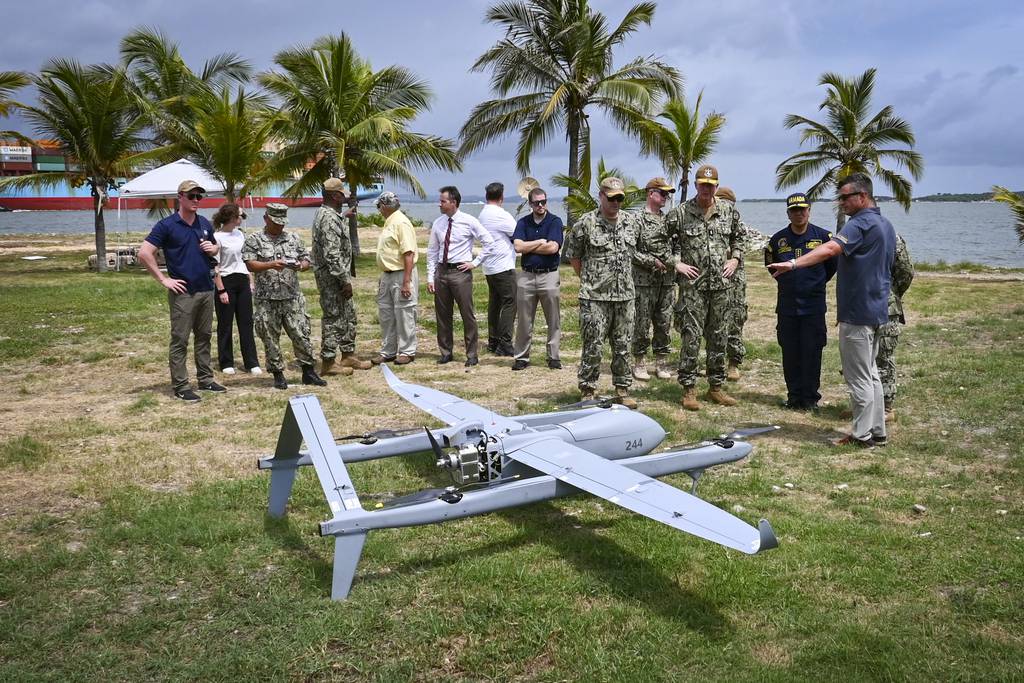
Personnel from the U.S. and Colombian navies attend a demonstration of Aerosonde MK4.7 Hybrid Quad drone during UNITAS on July 16, 2023. (MC1 Hunter Harwell/U.S. Navy)

Defense News reports,

“The U.S. Navy leveraged air and surface drones throughout its two-week UNITAS 2023 naval exercise near Latin America, the first major event since service leadership announced the region would host the sea service’s second unmanned operations hub.”

The Coast Guard certainly has an interest in 4th Fleet’s use of unmanned systems since their area of responsibility (AOR) includes the Eastern Pacific drug transit zones and the Caribbean.

Apparently, not all the systems are in place yet.

“Some of the same systems will return this fall for operations and exercises in the Caribbean and Eastern Pacific Ocean, he added.”

Importantly 4 Fleet is developing a “mesh network that compiles a detailed common operating picture of the region — then AI tools could help flag areas where potentially problematic activities are happening.”

Hopefully we will see video of the SINKEX as recorded by the UAS.

“As it helps combat unlawful fishing internationally, NGA is ‘posturing’ for an AI-driven future” –DefenseScoop

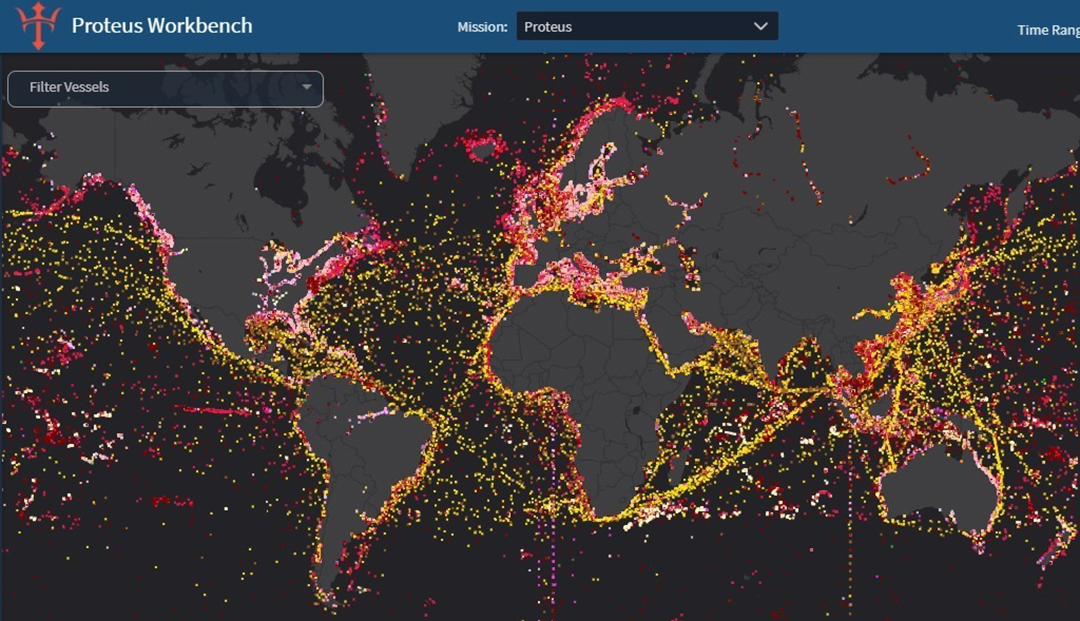
DefenseScoop reports that the National Geospatial-Intelligence Agency (NGA) is using AI to sort data for an application called Enhanced Domain Awareness (EDA) to provide maritime domain awareness information to US and partner countries to help them deal with Illegal, Unregulated, Unreported (IUU) fishing.

“Just to give you a sense of the scale and how much we’re talking about — there’s around 470 U.S. own space-based remote sensing systems that are available today. And that’s going to expand to around 1,400 by 2030, we expect. So globally, there’s about a seven-fold increase in those systems. So the limiting factor isn’t how much of the Earth we can observe or how often — it’s how quickly we can derive insights from that data. And so that’s where, of course, AI and automation comes in. It helps us increase the speed and our capability to react to military and human humanitarian response efforts,” he explained.

This grew out of a SOUTHCOM effort and isn’t limited to IUU.

“When you log into EDA, whether it is on the U.S. side or the partner-nation side, many of the projects that you’ll see in there revolve around different priority lines of effort,” Kurey explained. For Southcom, besides IUU “you’ll find other things like counter-narcotics missions, and things like that. But it’s all encompassing, and you’ll find information and data and projects that I mentioned before will support a tactical environment, operational environment, or strategic messaging,” he said.

The system is being extended to other users.

As the platform continues to mature and blossom, now other combatant commands — including U.S. Northern Command, European Command and Indo-Pacific Command — are beginning to explore how they can integrate it into their own initiatives for data organization and support.

French Warship Makes Four Indian Ocean Drug Seizures in 30 days

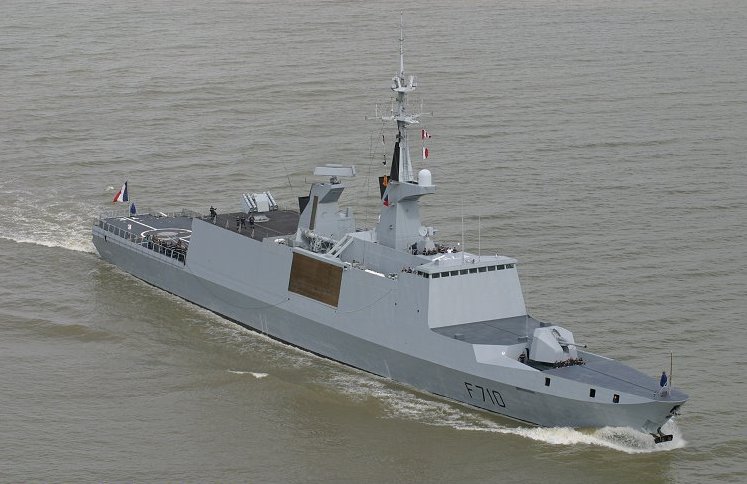
The frigate La Fayette going up the Seine river (2nd of July 2003, prior to its recent renovation). Photo credit: Guillaume Rueda

Below is a NAVCENT news release. I was a little surprised it did not include the name of the French ship. I have been unable to find the name of the ship, but it appears probable that this was done by the ships engaged in the French Navy’s annual training cruise, “MISSION JEANNE D’ARC 2023” including amphibious warship FS Dixmude (L9015) and frigate FS La Fayette (F710).

The French are not new at this, and their drug interdiction operations are frequently carried out by La Fayette class frigates. FS La Fayette probably made the interdictions, but FS Dixmude may have helped by flooding the area with search aircraft. Previous “MISSION JEANNE D’ARC” voyages have also resulted in drug interdictions. “MISSION JEANNE D’ARC 2021” resulted in a spate of five drug seizures by three French ships in six days in the same area. “MISSION JEANNE D’ARC 2022” resulted in at least one drug seizure in the Gulf of Guinea.

The crew of the frigate Courbet, supported by LHD Mistral, seized 1.7 tons of cocaine from a fishing vessel in the Gulf of Guinea, May 22, 2022. ©Marine Nationale/Défense

(US Coast Guard PATFORSWA cutters also frequently operate as part of Combined Task Force 150.)


May 24, 2023

French Warship Seizes $108 Million in Drugs during Indian Ocean Seizures

By U.S. Naval Forces Central Command Public Affairs

A French warship operating in support of Combined Task Force (CTF) 150 conducted four illegal drug seizures between April 19 and May 18 worth a total estimated U.S. street value of $108 million from fishing vessels transiting international waters in the Indian Ocean.

The warship seized 2,265 kilograms of heroin and 242 kilograms of methamphetamine from four different vessels while patrolling regional waters. CTF 150 is one of five task forces under Combined Maritime Forces, the largest multinational naval partnership in the world.

In 2023, maritime forces supporting CTF 150 have seized illegal drugs worth a combined estimated U.S. street value of $203 million, adding to record-breaking drug interdictions by U.S. and international naval units in 2021 and 2022 totaling more than $1 billion in value.

“It’s been a pleasure working with the French sailors to achieve our mission’s aims together,” said United Kingdom Royal Navy Lt. Francis Henry, a CTF 150 staff officer responsible for coordinating the task force’s counter-narcotics efforts.

CTF 150 conducts maritime security operations in the Gulf of Oman, Arabian Sea and Indian Ocean to disrupt destabilizing activity, promote international rules-based order and help ensure the free flow of commerce.

The task force is headquartered in Bahrain with Combined Maritime Forces, which is led by the commander of U.S. Naval Forces Central Command and U.S. 5th Fleet.