Russian and Chinese Coast Guards Exercise Together and Form Combined Task Force / The CCG Cutters

Recently the China Coast Guard and the Russian Coast Guard held joint exercises in the Peter the Great Gulf near Vladivostok. After the exercise, they formed a joint task force. 

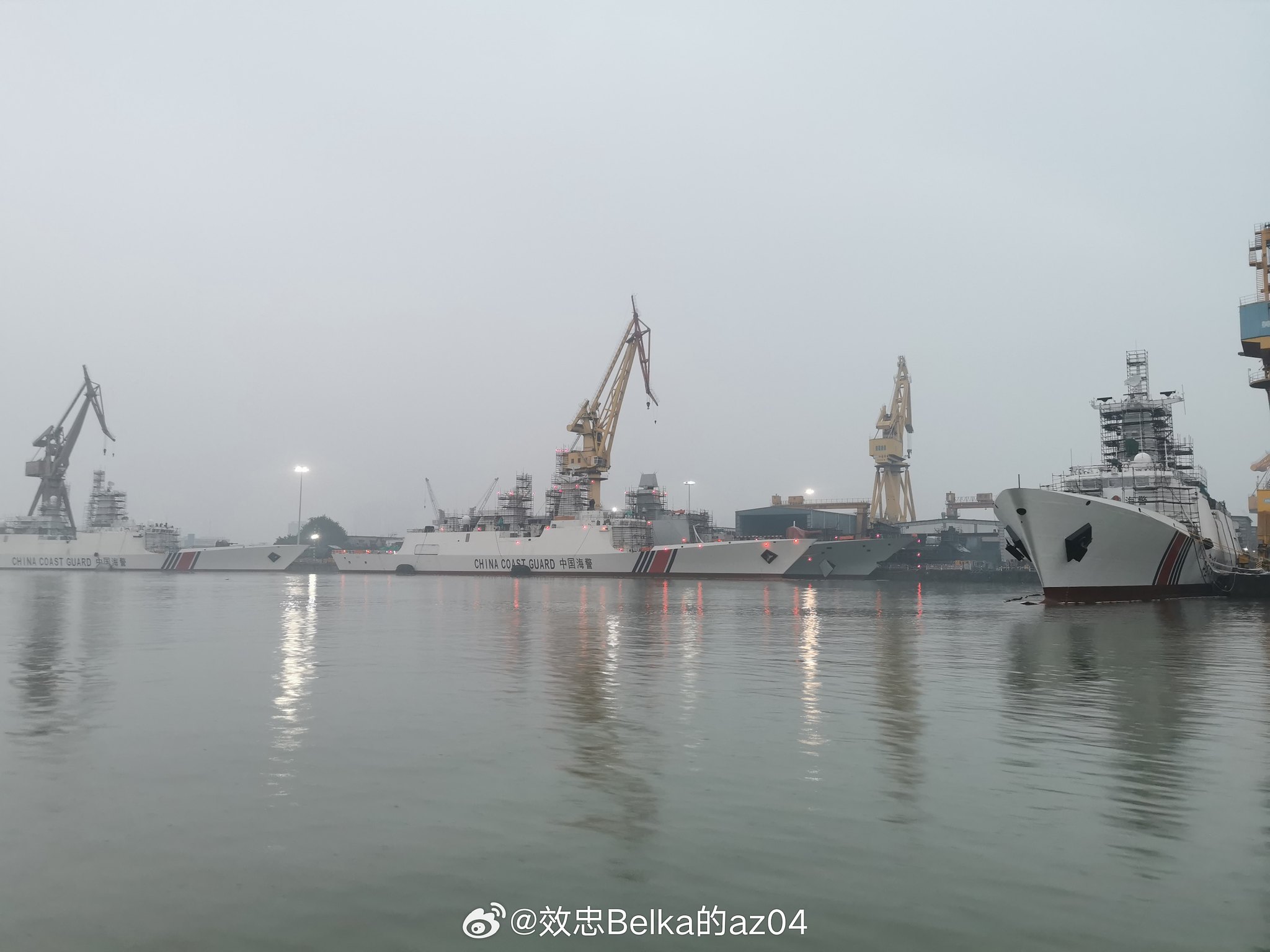
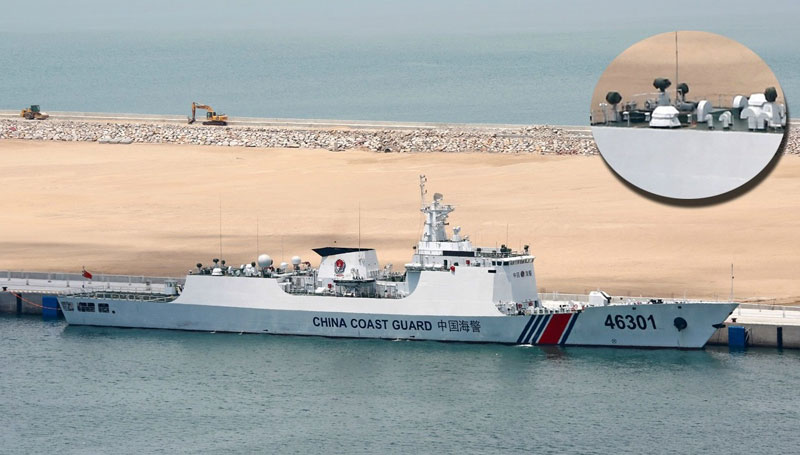
Also wanted to identify the China Coast Guard Cutters seen in the video.

They are Zhaoduan class Type 818, derived from the PLAN Type 054A frigates. According to the Office of Naval Intelligence, (lots of information at the link. The China Coast Guard has the largest coast guard fleet in the world) there are at least six of the class. They are almost as large as National Security Cutters (NSC), reportedly 4,000 tons full load, 134 meters (440′) in length, 16 meters (52.5′) of beam, speed 27 knots, range 8,000 miles.

In addition to the 76mm gun, they have a pair of 30mm Gatling guns. It is not clear if they have a fire control system that would make the 30mm guns effective as CIWS, but they could certainly do serious damage to surface targets at close range in a very short time.

“MQ-9B SeaGuardian Showcased at RIMPAC 2024” –News Release

An MQ-9 Sea Guardian unmanned maritime surveillance aircraft system flies over the Pacific Ocean during U.S. Pacific Fleet’s Unmanned Systems Integrated Battle Problem (UxS IBP) 21, April 21. UxS IBP 21 integrates manned and unmanned capabilities into challenging operational scenarios to generate warfighting advantages. US Navy Photo

The Coast Guard has an unfilled requirement for a shore based Uncrewed Air System (UAS) to provide Maritime Domain Awareness.

Below is a news release from General Atomics Aeronautical Systems, Inc.

Reading the news release, I see the system incorporated an “integrated Minotaur Mission System.” Minotaur is a system currently being installed on all Coast Guard fixed wing search aircraft as well as US Navy and Marine Corps platforms. It went on to say “For RIMPAC, the MQ-9B effectively passed ISR&T (Intelligence, surveillance, reconnaissance, and targeting–Chuck) information to various surface and air units, such as the Nimitz-class carrier USS Carl Vinson, Guided Missile Destroyers (DDGs), Littoral Combat Ships (LCS), frigates, patrol boats, P-8s, P-3s, and numerous other U.S. and foreign units that took part in the exercise.” Could that have included Midgett and her task force? The use of the MQ-9B to drop sonobuoys for the task force and their embarked ASW helicopters would have been an interesting experiment.


GA-ASI’s MQ-9B SeaGuardian® Showcased at RIMPAC 2024

Sonobuoy Dispensing System and LRASM Among the New Capabilities Featured

SAN DIEGO – 14 August 2024 – With the completion of the U.S. Navy’s Rim of the Pacific (RIMPAC) flight operations on July 28, 2024, the MQ-9B SeaGuardian® Unmanned Aircraft System (UAS) supplied by General Atomics Aeronautical Systems, Inc., self-deployed back to its home base in El Mirage, Calif., but only after introducing an array of new capabilities. The flight home followed close to 100 flight hours supporting RIMPAC 2024 over the four-week exercise in and around the Hawaiian Islands.

RIMPAC is the world’s largest international maritime exercise. RIMPAC 2024 featured 29 nations, 40 surface ships, three submarines, 14 national land forces, more than 150 aircraft, and 25,000 personnel.

SeaGuardian provided real-time Intelligence, Surveillance, and Reconnaissance (ISR) data feeds to the U.S. Pacific Fleet Command Center using Signals Intelligence (SIGINT) parametrics and full-motion video to the watch floor and intelligence centers for real-time dynamic tasking — just as it did for the RIMPAC 2022 exercise. This year, SeaGuardian delivered some new features and capabilities, including Long Range Anti-Ship Missile (LRASM) targeting and a new Sonobuoy Dispensing System (SDS) to support its Anti-Submarine Warfare capability. SeaGuardian was configured with a prototype SDS pod capable of deploying 10 A-size sonobuoys per pod (SeaGuardian can carry up to four SDS pods or up to 40 sonobuoys) and the SeaVue Multi-role radar from Raytheon, an RTX business. Upon dispensing, the sonobuoys were successfully monitored and controlled by the SeaGuardian’s onboard Sonobuoy Monitoring and Control System (SMCS).

SeaGuardian is a maritime derivative of the MQ-9B SkyGuardian® and remains the first UAS that offers multi-domain Intelligence, Surveillance, Reconnaissance, and Targeting (ISR&T) as an internal payload that can search the ocean’s surface and depths in support of Fleet Operations. At RIMPAC 2024, SeaGuardian showcased all operational payloads, which includes the SeaVue, SNC’s Electronic Support Measures (ESM) solution, an Automatic Identification System (AIS), and a self-contained Anti-Submarine Warfare (ASW) system.

SeaGuardian’s multi-domain capabilities allow it to flex from mission to mission and pass real-time sensor data directly to the Fleet. For RIMPAC 2024, SeaGuardian added Link 16 Joint Range Extension Application Protocol (JREAP) “C” (internet protocol) and an integrated Minotaur Mission System to provide real-time sensor data for the various Maritime Operations Centers, ships, and aircraft with Minotaur nodes.

“For RIMPAC, the MQ-9B effectively passed ISR&T information to various surface and air units, such as the Nimitz-class carrier USS Carl Vinson, Guided Missile Destroyers (DDGs), Littoral Combat Ships (LCS), frigates, patrol boats, P-8s, P-3s, and numerous other U.S. and foreign units that took part in the exercise,” said GA-ASI President David R. Alexander.

On July 31, 2024, SeaGuardian self-deployed back to GA-ASI’s Desert Horizon Flight Operations Facility in El Mirage, Calif.

About GA-ASI

General Atomics Aeronautical Systems, Inc. (GA-ASI), an affiliate of General Atomics, is a leading designer and manufacturer of proven, reliable RPA systems, radars, and electro-optic and related mission systems, including the Predator® RPA series and the Lynx® Multi-mode Radar. With more than eight million flight hours, GA-ASI provides long-endurance, mission-capable aircraft with integrated sensor and data link systems required to deliver persistent situational awareness. The company also produces a variety of sensor control/image analysis software, offers pilot training and support services, and develops meta-material antennas.

For more information, visit www.ga-asi.com     

Avenger, Lynx, Predator, SeaGuardian, and SkyGuardian are registered trademarks of General Atomics Aeronautical Systems, Inc.

 

“U.S. Coast Guard Cutters return home after successful Central American deployment” –D11 News Release

USCGC Forrest Rednour (WPC 1129) and Blackfin (WPB 87317) in Costa Rica

Below is a District 11 news release. Did an earlier post on this unusual deployment.

The 800 operational hours claimed for each vessel works out to 33.3 operational days out of 49 deployed, so I presume that means about 16 days in transit, there and back.

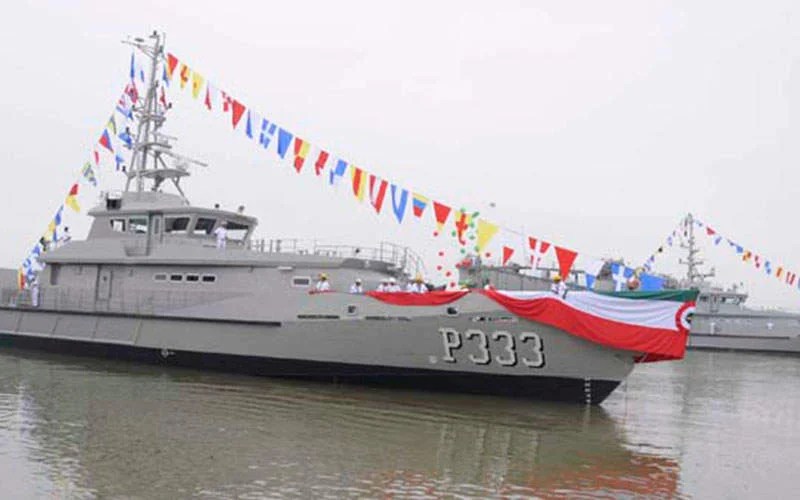
The Mexican Navy vessel mentioned, ARM PALENQUE, the third of ten Tenochtitlan-class patrol vessels, looks a lot like a Webber class Fast Response Cutter. It is also a Damen design, but a bit smaller (a Stan Patrol 4207 vs 4708 for the FRC). Damen has been very successful with this design. More than 50 have been built for more than a dozen agencies. (USCGC Blackfin and the other Marine Protector class patrol boats are also based on a Damen design.)

Mexican Navy ARM Palenque (PC-333) at launching March 2014. Credit Secrtaria de Marina.


June 10, 2024

U.S. Coast Guard Cutters return home after successful Central American deployment

SAN PEDRO, Calif. — U.S. Coast Guard cutters Forrest Rednour and Blackfin have returned to their homeports after a 49-day deployment in Central America, where they played a crucial role in multiple operations.

During this period, both cutters demonstrated outstanding readiness and operational capability, significantly contributing to international cooperation, search and rescue missions, and efforts to combat criminal activities. This deployment was part of a broader strategy to enhance regional security and strengthen partnerships. Throughout the mission, Forrest Rednour covered over 8,200 miles and logged 800 operational hours, while Blackfin covered over 8,300 miles and also logged 800 operational hours.

“The amount of effort and commitment from both crews during this 49-day deployment was remarkable,” said Rear Adm. Andrew Sugimoto, commander, Coast Guard District 11. “Their readiness and professional exchanges provided an invaluable experience to our partner nations and crews. The enthusiasm to lead multiple engagements with several international maritime organizations helped strengthen ties and fortify continued collaboration between all.”

Key Achievements:

Search and Rescue Exercises (SAREX):

  • Manzanillo, Mexico: Blackfin led a successful SAR operation, including helicopter rescue exercises with the Mexican Navy.
  • Puerto Quetzal, Guatemala: Hosted tours and conducted SAR exercises with the Guatemalan Navy, building stronger maritime partnerships.
  • La Union, El Salvador: Rednour led a SAR exercise and joint operations with the Salvadoran Navy, marking the first U.S. vessel visit to this port in two years.

Partnership and Training:

  • Amapala, Honduras: Engaged in discussions and training on maritime law enforcement and security with the Honduran Navy and Merchant Marine.
  • Golfito, Costa Rica: Shared knowledge on maritime governance with the Costa Rican Coast Guard, enhancing mutual understanding.
  • Rodman, Panama: Provided damage control and medical evacuation training to Panamanian forces, marking the first U.S.-Panama Coast Guard engagement in over two years.
  • PASSEX with ARM PALENQUE: Forrest Rednour and Blackfin conducted a passage exercise (PASSEX) with the Mexican Navy’s ARM PALENQUE. This included formation steaming, code exercises, and a crew exchange to enhance mutual operational understanding and cooperation.

“This patrol was truly an amazing experience and a testament to the incredible devotion to duty that the crews of the Forrest Rednour and Blackfin have,” said Lt. Kevin Ng, commanding officer of Coast Guard Cutter Forrest Rednour. “Both crews adapted and overcame several challenges leading up to and during the patrol, but never took their eyes off the main objective. As a result, the Coast Guard was able to strengthen the valuable relationships that the United States has with our international partners throughout Central America and unify our efforts to address critical maritime security initiatives in the Eastern Pacific. Thank you to crews on a job well done, District 11 and Sector Los Angeles/Long Beach for the coordination, and the families and friends of the crew for all of the support; the success of this historic patrol could not have been accomplished without them all.”

“I could not be prouder of both crews for the incredible amount of hard work they have dedicated to making this historic patrol possible. The success of this Surface Action Group is a testament to the Coast Guard’s ability to overcome dynamic challenges in the completion of unprecedented mission sets. It also signifies the Coast Guard’s steadfast commitment to advancing our vital maritime partnerships in the Eastern Pacific. The international relationships formed and strengthened during this deployment have set the groundwork for future engagements which I look forward to watching,” said Lt. j.g. James Morrison, commanding officer of Coast Guard Cutter Blackfin.

Commissioned in 2018, the Coast Guard Cutter Forrest Rednour is one of the Coast Guard’s Sentinel-class fast response cutters homeported in San Pedro, California. Sentinel-class cutters are 154 feet long and 25 feet wide and have a 353 long-ton displacement. They have a top speed in excess of 28 knots and a range of 2,500 nautical miles. They can hold a crew of up to 24. The namesake of the Forrest Rednour is Petty Officer 2nd Class Forrest O. Rednour, who heroically rescued survivors from the torpedoed USAT (US Army Transport–Chuck) Dorchester during World War II and was posthumously awarded the Navy and Marine Corps Medal.

Commissioned in 2000, the USCGC Blackfin is one of the Coast Guard’s Marine Protector-class patrol boats homeported in Santa Barbara, California. Marine Protector-class patrol boats are 87 feet long and 19.5 feet wide and have a 100 long-ton displacement. They have a top speed of 25 knots and a range of 900 nautical miles. They can hold a crew of up to 10. The Blackfin is equipped with advanced electronics and navigation systems for multi-mission operations, including search and rescue, law enforcement, and homeland security. The Blackfin shares the name of the USS Blackfin (SS-322), a submarine that participated in World War II and the Korean War.

“Unified Response: Joint Naval Drills in South China Sea” –MSN

Vessels from Australia, the USA, the Philippines, and Japan navigate in formation. (AFP Photo)

MSN reports,

The United States, Japan, Australia, and the Philippines … have announced preparations to perform cooperative naval exercises to preserve freedom of navigation and the rule of law as a display of unity…The combined forces of the participating nations will conduct a series of exercises aimed at improving interoperability and cooperation on April 7 as part of the joint naval and air drills.

Notably, there don’t seem to be any coast guard assets from any nation involved in this exercise.

There has been a lot of speculation about the timing of this exercise being so close to that of the trilateral summit which begins April 11, but the exercise is actually pretty small, with only one ship each from the US, Australia, and Japan. The exercise involves no aircraft carriers, submarines, or amphibious assault ships.

The largest ship participating is the Japanese Destroyer Akebono (DD-108) which is not an Aegis ship, and it is one of their smaller destroyers at 6200 tons full load. The US representative is a Littoral Combat Ship, USS Mobile (LCS-26) at 3,104 tons full load.

“JUST IN: Coast Guard Aims to Learn from Navy at RIMPAC” –National Defense

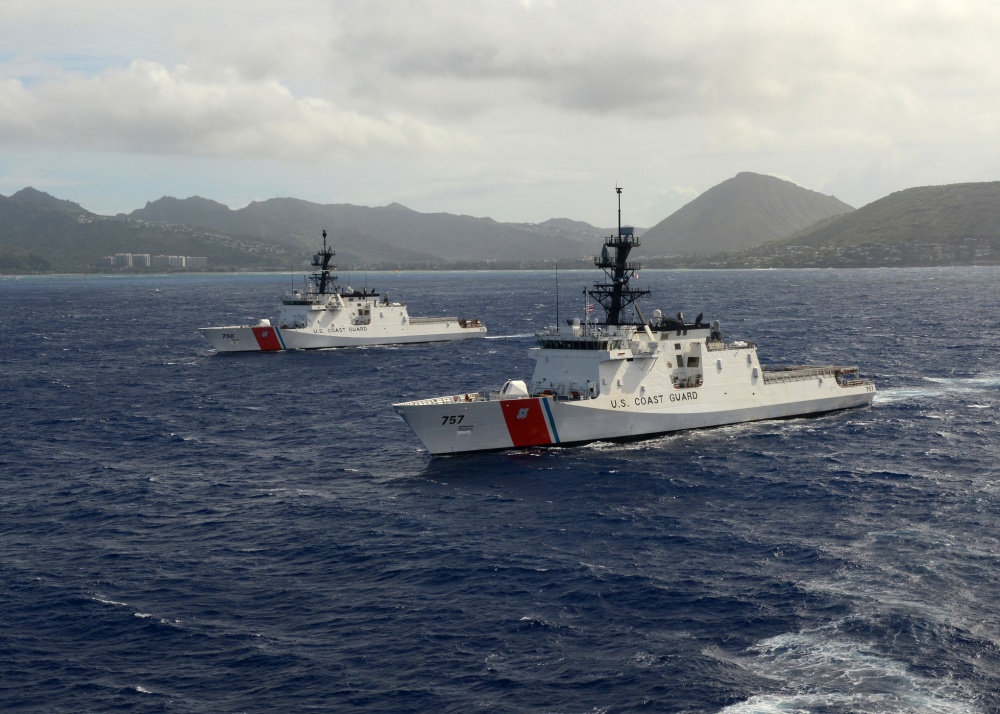
The crews of the Coast Guard Cutters Midgett (WMSL 757) and Kimball (WMSL 756) transit past Koko Head on Oahu, Hawaii, Aug. 16, 2019. The Kimball and Midgett are both homeported in Honolulu and two of the newest Coast Guard cutters to join the fleet. (U.S. Coast Guard photo by Petty Officer 3rd Class Matthew West/Released)

We are finally getting some information about the Coast Guard’s participation in RIMPAC 2022, and some of it may be a bit surprising.

A Coast Guard CO will command a task force,

Coast Guard Cutter Midgett is commanding Combined Task Force 175, which includes ships from France, Peru and the U.S. Navy, and is conducting air and missile defense, gunnery, mass rescue and anti-submarine warfare exercises.

The surprise, of course, is anti-submarine warfare. Midgett might simply simulate the high value unit to be protected, but Midgett will embark an MH-60R. The “Romeo” version is an ASW helicopter.

The 418-foot Midgett, a national security cutter and the largest class in the Coast Guard fleet, will also sail with a Navy MH-60R helicopter on board.

“Part of that is, how do you sustain that particular airframe? How do you support it for a long-range, two-month or three-month deployment?” he said. The Coast Guard is hoping to convert some of its airframes to ones used by the Navy going forward.

I might add, where do you store the sonobuoys, torpedoes, and other weapons?

(I have felt for a long time there are opportunities for attaching Navy Reserve units, that might include ASW Helicopters and their crews and sonar equipment and supporting personnel, to Coast Guard cutters as mobilization assets.)

Will the helicopter operate from Midgett as part of a Sink-Ex? Will Midgett get to participate in a Sink-Ex?

All the Sink-Exs seem to target ships of frigate size or larger. It would be good to have some smaller targets for less capable weapon systems.

What about the USCGC William Hart (WPC-1134), that will also be participating? Her only activity mentioned is to help set up a SAR exercise,

“As part of RIMPAC, the Hart will deploy two groups of mannequins at sea for the Midgett and a Japanese cutter to find and recover in a mass-rescue operation.”

Hope Hart and Midgett get to exercise against high speed small surface targets.

“The U.S. Sea Services (Navy, Marines, Coast Guard) Are Preparing For Great Power War” –1945

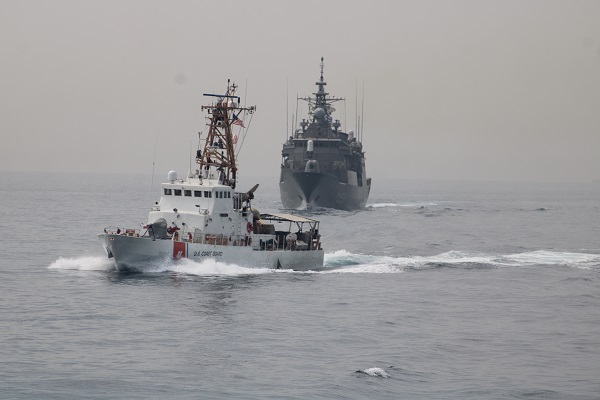
ARABIAN GULF (Feb. 25, 2021) The U.S. Coast Guard cutter USCGC Maui (WPB 1304) and the Greek navy guided-missile frigate HS Hydra (F452) participate in a passing exercise in the Arabian Gulf, Feb. 25, 2021. U.S. Coast Guard Patrol Forces Southwest Asia (PATFORSWA) is comprised of six 110-foot cutters, the Maritime Engagement Team, shore-side support personnel, and is the Coast Guard’s largest unit outside of the U.S. playing a key role in supporting Navy security cooperation, maritime security, and maritime infrastructure protection operations in the U.S. 5th Fleet area of operations. (U.S. Coast Guard photo)

James Holmes (a name worth remembering) discusses the Large Scale Exercise 2021 and war gaming in general.

This is the first indication I have seen that the Coast Guard was participating, though at least limited participation was expected. If anyone has any information about about Coast Guard’s actual participation, please provide a comment.

I’ve often thought we might learn a lot about drug interdiction by employing war gaming with an intelligent and aggressive “Red Cell.”

Finding someone who is trying not to be found is far different from doing SAR, finding someone who hopes to be found. I don’t know if we have begun to apply Operations Research developed search patterns for moving targets. I know when I was active duty it was an alien concept.

How The Fleet Forgot to Fight” –CIMSEC

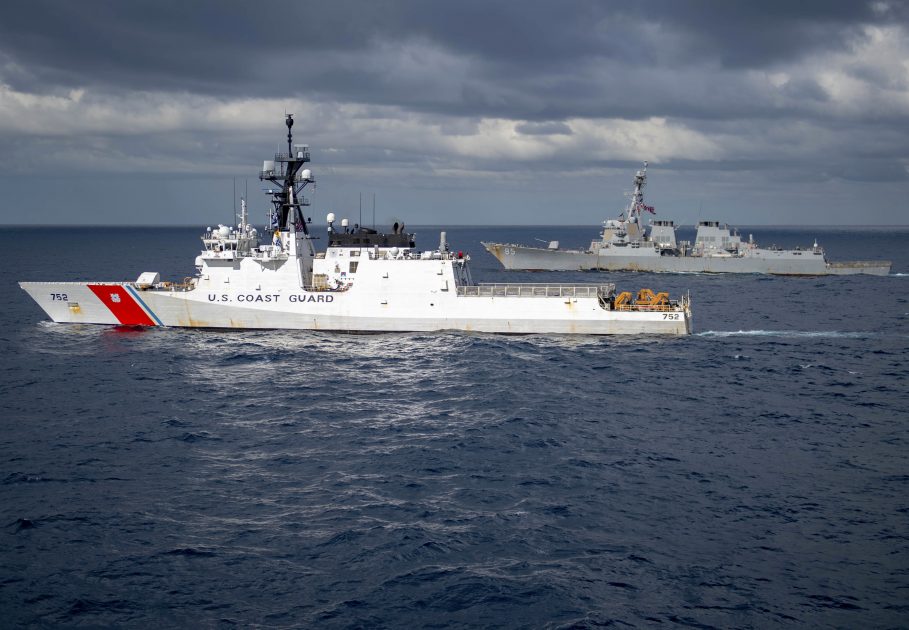
USCGC Stratton (WMSL-752), left, and the U.S. Navy Arleigh Burke-class guided-missile destroyer USS McCampbell (DDG-85) maneuver in formation during Talisman Sabre 2019 on July 11, 2019. US Navy Photo

Currently the CIMSEC web site is migrating to a new server so it is off line, but they have provided something a shorthand critique of how some think the Navy has fallen short, since the collapse of the Soviet Union.

The Coast Guard still has Defense Readiness as one of its eleven missions. We in the Coast Guard are highly dependent on the Navy helping us know what needs doing, but I don’t think we should fail to think for ourselves.

This short five page outline of what the Navy has been doing wrong may be helpful because we have probably been making some of the same mistakes, not just in our preparation to fight a “near peer” major conflict, but in our response to the terror threat, and perhaps in our on-going war with drug smugglers.

Exercise Obangame Express 2019 –Capacity Building in West Africa

Coast Guardsmen assigned to U.S. Coast Guard Cutter Thetis (WMEC-910) approach a stranded fishing vessel to render assistance in the Gulf of Guinea, March 14, 2019. Thetis, homeported in Key West, Florida, is on its first patrol to support operations with U.S. Africa Command and U.S. 6th Fleet. (U.S. Coast Guard photo by Petty Officer 2nd Class Jonathan Lally/Released)

Coast Guardsmen assigned to U.S. Coast Guard Cutter Thetis approach a stranded fishing vessel to render assistance in the Gulf of Guinea. (U.S. Coast Guard photo by Petty Officer 2nd Class Jonathan Lally)

USCGC Thetis (WMEC-910) has been participating in a capacity building exercise in the Gulf of Guinea. I would not have known that except that the cutter rescued a couple of fishermen already given up for dead.

Looking for news of the wrap up, Adm. James G. Foggo III, commander, Allied Joint Force Command Naples, and commander, U.S. Naval Forces Europe-Africa, did recognize the cutter.

More than 220 U.S. military personnel participated in OE19, including the crew of U.S. Coast Guard Cutter Thetis (WMEC 910). Specifically, United States forces conducted training in visit, board, search and seizure, maritime interdiction operations, legal, and surface warfare.

This was a pretty big exercise.

“We brought 33 countries together, [including] 95 ships, 12 high-performance aircraft, 19 maritime operations centers, [all] tied together in Obangame Express, and seven national military command centers for over 80 scenarios and exercises in the last two weeks,” said Foggo.

https://www.stripes.com/news/us-partners-work-to-strengthen-sea-policing-as-piracy-off-west-africa-surges-1.573639

This is the ninth iteration of the exercise.

“Obangame Express has grown in scope from a communications exercise to become what it is now — a comprehensive maritime security event that exercises the full spectrum of activities from command and control, to maritime force responses, and ultimately the handing and transfer of evidence to bring criminals to justice,” said Rear Adm. Heidi Berg. “Today, we face serious challenges at sea such as illegal fishing, trafficking of weapons, narcotics, people, and the ongoing threat of piracy. This illicit activity undermines rule of law, food security, and economic development. Our efforts here will help make the region a safer place for maritime commerce and help increase prosperity throughout the region.”

The 33 nations scheduled to participate include Angola, Belgium, Benin, Brazil, Cabo Verde, Cameroon, Canada, Cote d’Ivoire, Democratic Republic of Congo, Denmark, Equatorial Guinea, France, Gabon, Gambia, Germany, Ghana, Guinea, Guinea-Bissau, Liberia, Morocco, Namibia, Netherlands, Nigeria, Portugal, Republic of Congo, Sao Tome & Principe, Senegal, Sierra Leone, Spain, Togo, Turkey and the United States, as well as the Economic Community of West African States and the Economic Community of Central African States.

One of the highlights of the event was the opening of a Maritime training school in Nigeria.

As part of the events to open the 2019 Obangame Express, Consul General Bray and Vice Admiral Ibas commissioned the Nigerian Navy’s Maritime Domain Awareness (MDA) Training School in Apapa. The training school was built by the Nigerian Navy and equipped by the United States Navy.


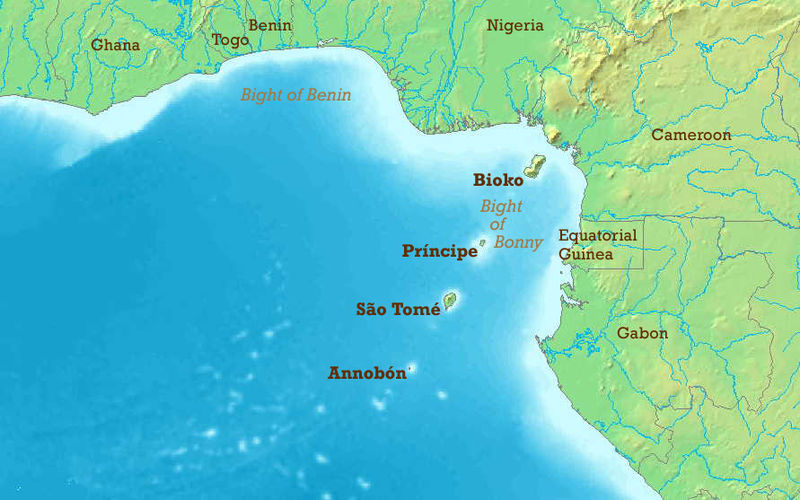
Gulf of Guinea, from Wikipedia

If you look at the Gulf of Guiana you can see that a fleeing pirate can quickly transit from one jurisdiction to another. They need cooperation between neighboring states.

Obangame Express is part of a comprehensive strategy by U.S. Africa Command and U.S. Naval Forces Europe-Africa to provide collaborative opportunities among African forces and international partners that address maritime security concerns. The Nigerian Navy is hosting the 2019 exercise from March 14 to 22.

The word ‘Obangame’ comes from the Fang language of southern Cameroon and other parts of Central Africa. It means “togetherness.”

This area still needs a lot of help. Five crew members were recently kidnapped off of an Offshore Support Vessel despite protection of an armed Nigerian Navy escort. One Nigerian Navy Guard was killed in the exchange of gun fire.

“According to the International Maritime Bureau, the number of piracy incidents reported in the Gulf of Guineas in 2018 in surged to 201 incidents, including six hijackings, marking a steep rise from 180 incidents in 2017 and 191 in 2016. Among the 201 incidents reported, there were 13 ships were fired upon, 130 hostages taken, and 78 seafarers kidnapped for ransom. To make matters worse, some experts estimate that some 40% of incidents in the region go unreported, so the number of actual incidents is likely much higher. “

They do seem to be making some progress in achieving greater coordination helped by these exercises.

COMMODORE OLISEMENOGOR: “… Within the last three months in Western Naval command areas, I think we have arrested over fifty-something vessels based on this collaboration with other nations.”