Littoral Operations Center, a Coast Guard Role?

MarineLink is reporting,

“The Naval Postgraduate School (NPS)in Monterey has established a new Littoral Operations Center (LOC) to focus on these threats and opportunities and is hosting a series of workshops this week to examine littoral operations…The LOC will conduct and promote the study of U.S. Navy and allied partner nation policy, strategy and technology necessary to deal with conventional, irregular and criminal threats in these crowded and cluttered coastal waters and their adjacent lands,” said LOC Director, NPS Senior Lecturer Dr. Kalev Sepp.”

This looks like something the Coast Guard should be involved in.

Decommissioning the 110s

File:USCGC Mustang (WPB-1310).jpg

Photo: USAF photo, USCGC MUSTANG (WPB 1310), underway at Port Valdez, Alaska, while providing harbor security during Exercise NORTHERN EDGE 2002.

The Coast Guard recently commissioned its eighth Webber Class Fast Response Cutter, and it has accepted the ninth. Since these are replacements for the 110 foot Island class, we should not be surprised that Island class cutters are being decommissioned.

This is the first I have heard about since the decommissioning of the 123 conversions: USCGC Bainbridge Island (WPB-1343).

The FY2015 budget provides for decommissioning eight 110s.

The Coast Guard plans on 58 Webber class, so presumably they would want to retain enough 110s to provide a total of 58 larger patrol craft with the 110s filling in until replaced by the new ships. It does not look like this will happen. Since the decommissioning of eight Island class as a result of the failure of the 123 conversion, there have been 41 Island class WPBs. Adding the Webber class WPCs currently commissioned that gives the Coast Guard a total of 49 large patrol craft. It appears the total will not exceed 49 at any time in the foreseeable future.

If 110s are decommissioned at the same rate Webber class are built, the number may stabilize at 49. If on the other hand the Coast Guard is unable to keep these older vessels going, the total is likely to drop. If that happen, as little as I like the idea of multiple crews, perhaps it is time to look at multi-crewing the Webber Class. .

How to Create Enemies and Make People Hate You–China vs Indonesia

We have already talked about China’s difficulties with her neighbors Japan and the Philippines. Now we have a report of a confrontation with Indonesia. Apparently Indonesia had chosen to keep this quiet, but the Chinese have chosen to brag about it.

The Indonesian vessel involved was reportedly a Todak class, which is a German Lurssen “PB-57” design, a bit larger than the FRC at 447 tons fl, 58.1 meters long and 7.6 meters of beam, armed with a Bofors 57mm (like that on the NSC), a 40mm and two 20mm. Clearly if it had come to a fight, the Indonesian vessel would have enjoyed an advantage, at least until Chinese reinforcements arrived.

China is showing a complete disregard for the provisions of the UNCLOS treaty to which they are a party.

Making an enemy of Indonesia is a particularly bad idea for China, in that Indonesia potentially controls all the major straits through which the vast majority of Chinese trade must pass and all the alternatives are also in the hands of nations China seems intent on alienating.

New Zealand’s “OPC” (OPV) in Action

NavalToday reported on HMNZS Otago recently returned from an almost three month voyage doing Coast Guard style operations, including fisheries enforcement, in the Ross Sea, near Antarctica. Interesting they feel an obligation to do fisheries 2000 miles frim New Zealand.

HMNZS Otago is a ship similar in concept to the Offshore Patrol Cutter, being an ice strengthened medium sized (1,900 ton, 85 meter) offshore patrol vessel. The class was discussed along with a few other potential Arctic Patrol Cutters here and to a limited extent as the basis for a potential OPC design here.

The Chinese Coast Guard to Build World’s Largest Offshore Patrol Vessel–and More

This is a post I prepared for CIMSEC. It reiterates material we’ve already discussed, but also adds some additional thoughts.

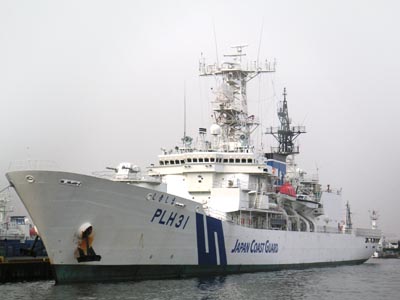
File:JapanCoastGuard Shikishima.jpg
Japanese Coast Guard Cutter Shikishima, this class of two are currently the largest offshore patrol vessels in the world. Photo from Japanese Wikipedia; ja:ファイル:JapanCoastGuard Shikishima.jpg
Since its formation in 2013 by the consolidation of four previously independent agencies into a single entity (notably excluding the SAR agency), the Chinese Coast Guard has been experiencing phenomenal growth and has become China’s instrument of choice in its “small stick diplomacy” push to claim most of both the South China Sea and the East China Sea.
They commissioned two 4,000 ton cutters in January alone. It appears the growth will continue. The Wuchang Shipbuilding Industry Company has just been awarded a contract for four new 5,000 ton cutters, and China Ship-building Industry Corporation has been contracted to build two additional surveillance ships, one of 10,000 tons and another of 4,000-tons.
The US Coast Guard’s largest patrol cutters are the 418 foot, 4,500 ton full load Bertholf Class National Security Cutters. The illustration that accompanies the story of the four new 5,000 ton cutters shows a ship, in many ways similar to the National Security Cutter. It appears there is a medium caliber gun on the bow. (This would be a significant but not unexpected change for the Chinese Coast Guard.) There is a frame over what appears to be a stern ramp not unlike that on the NSC. The hull shape also appears similar to the NSC.
The “10,000 ton” cutter is likely to look similar to the Japanese Coast Guard’s two 492 foot, 9,350 full load, Shikishima class high endurance helicopter carrying cutters seen in the illustration above, but they may actually be much larger. Comparing their new ship to the Japanese cutters, the displacement of the Japanese ships was quoted as 6,500 tons, their light displacement. If the 10,000 tons quoted for the Chinese cutter is also light displacement, it could approach 15,000 tons full load. As reported here the new Chinese OPV will have a 76mm gun, two 30mm, facilities to support two Z-8 helicopters, and a top speed of 25 knots.
The size of the helicopters is notable. The Z-8 is a large, three engine, 13,000 kg helicopter based on the Aérospatiale SA 321 Super Frelon. The transport version of this helicopter can transport 38 fully equipped troops. The same airframe is also used for SAR, ASW, and vertical replenishment.
Undoubtedly the new vessels tonnage would give it an advantage in any sort of “shoving match” with vessels of other coast guards, but why so large?
The original justification for the Japanese cutters was to escort plutonium shipments between Japan and Europe, but the second cutter was built long after that operation was suspended, so clearly the Japanese saw a different justification for the second ship of the class.
Even so the Chinese ship may prove larger still. Other than prestige, why so large? China’s EEZ is small (877,019 sq km) compared to that of the US (11,351,000 sq km) or even Japan’s (4,479,358 sq km). Even adding the EEZ of Taiwan and other areas claimed by China, but disputed by others (3,000,000 sq km), the total is only 3,877,019 sq km, and patrolling it does not require the long transits involved in patrolling the US or even the Japanese EEZ.
10,000 tons is about the size of a WWII attack transport, and with its potential to embark two large helicopters China’s new large cutter could certainly exceeds the capability of WWII destroyer and destroyer escort based fast transports (APD). Using its helicopters and boats it could quickly land at least an infantry company as could many of the smaller cutters. Chinese Coast Guard ships are already a common sight throughout the contested areas of the South China and East China Seas. Will Asia wake up some morning to learn there have been Chinese garrisons landed throughout the contested areas by the now all too familiar Chinese Coast Guard Cutters.

CG Cuts=30% Increase in Drugs

The US Naval Institute’s News Service has a summary of Admiral Papp’s testimony before the House’s Homeland Security Subcommittee on Border and Maritime Security. He outlines what he sees as the effect of budget cuts and sequestration.

He connected the cuts to a general decline in patrol activity,

“Papp acknowledged the sequestration’s impact in another way in answering a question about why the Coast Guard’s patrols in the air and on the water declined by more than 6,000 hours last year because of “asset failures,” in the words of a Department of Homeland Security inspector general’s report.”

Loaning LCS to the Coast Guard

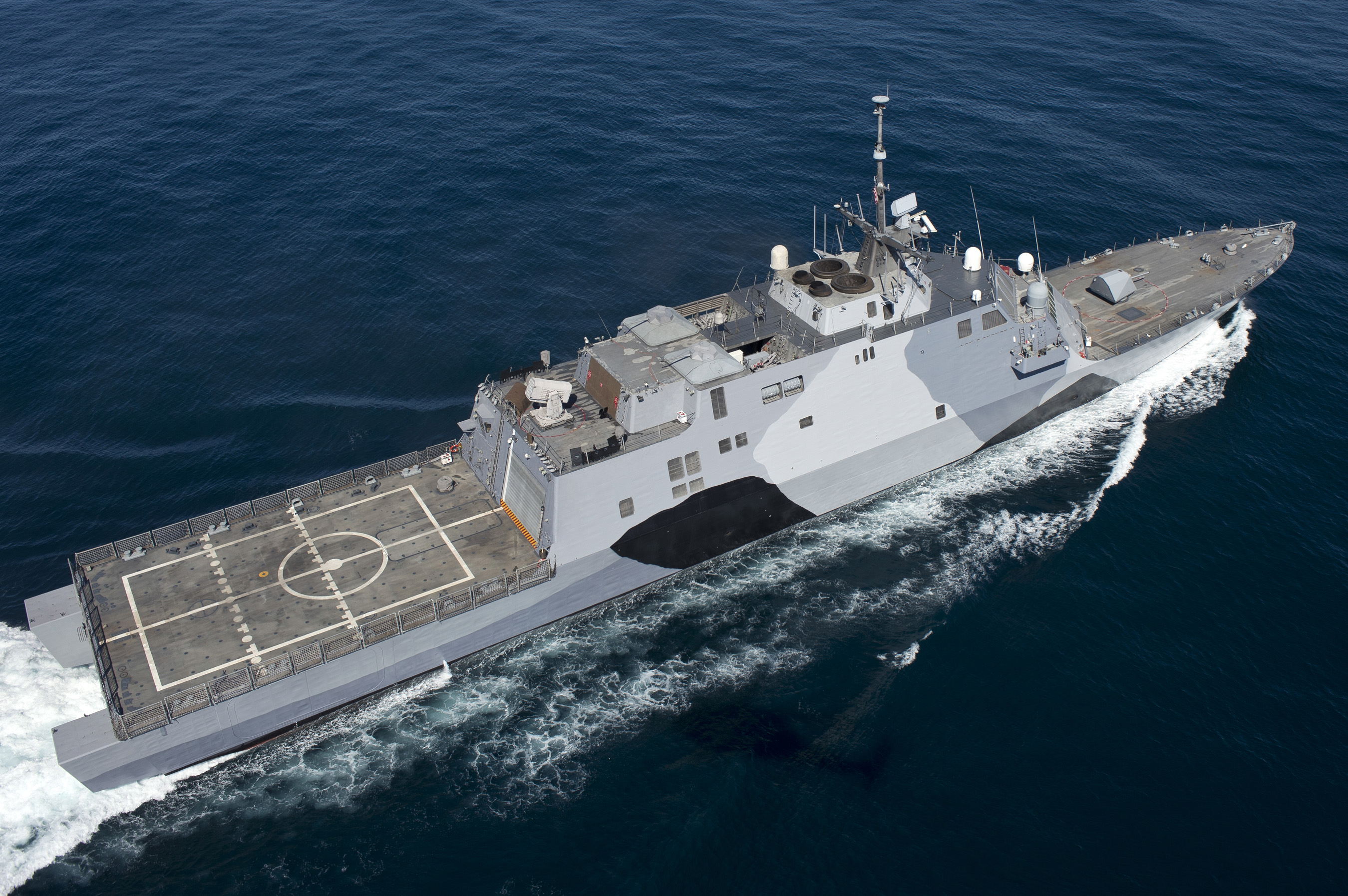
File:USS-Freedom-rear-130222-N-DR144-367.jpg

Photo: 130222-N-DR144-367 The littoral combat ship USS Freedom (LCS 1), Mass Communication Specialist 1st Class James R. Evans

This is a rather radical proposal, one that I never thought I would make, but the situation with the Coast Guard’s cutter fleet is almost certain to go from bad to worse as increasing age, budget cuts, and sequestration take effect. It is a long term problem and will take a long term solution.

The Eighth NSC should be funded in FY 2015 and hopefully, we will see this last ship of the class completed by 2019. But the NSCs only replace the 378 foot High Endurance Cutters (and only on an 8 for 12 basis). The Medium Endurance Cutters, some older than any of the 378s, still need replacement and the current plan is very slow to do so.

The first of the Offshore Patrol Cutters (OPCs), destined to replace the existing medium endurance cutters (WMECs), is not expected until 2020, followed by one in 2021, one in 2022, and two per year for the following years until a total of 25 are delivered, presumably in 2033.

The normal life for ships like WMECs is assumed to be 30 years. If we assume no change of plan, the last 210 should be replaced when the 14th OPC is completed. That will, presumably, be in 2028, and the last 210 will be at least 59 years old.

File:USCGC Reliance WMEC 615.jpg

USCG photo, USCGC Reliance (WMEC-615), 210 foot cutter

If we assume that the last 270 is decommissioned when the 25th OPC is delivered, about 2033, then the last 270 will be at least 43 years old at that time.

File:USCGC Harriet Lane (WMEC-903).jpg

USCG photo, USCGC Harriet Lane (WMEC-903), 270 foot cutter

I propose that the Navy start lending the Coast Guard half of their Littoral Combat Ships (LCSs) as they are completed. They would be used as interim replacements for the Coast Guard’s oldest medium endurance cutters, until there are sufficient Offshore Patrol Cutters (OPCs) to replace them all. There is ample precedence both for the Navy transferring ships to the Coast Guard and for Coast Guard manning of Navy ships.

I am not suggesting the Coast Guard keep them, because they are not the ship we want ultimately, but they would be an improvement over the ships we have now.

The LCS Program:

The Navy has already bought or contracted for 24 LCS. Multi-year contracts awarded in FY 2010 fund the building of 20 LCS of two classes, over five years, in addition to the four previously funded, two Freedom class and two Independence class annually. Originally the intention was to build 55, the Navy cut that to 52 and now it looks like DOD may stop the program at 32 ships. The jury is still out on the final number, and congressional support, particularly from the states where they are built has been strong. Even at only 32 that is an additional 28 ships yet to be completed.

Defense Industry Daily has an excellent summary of the LCS program you can access here.

The proposal:

Beginning as soon as possible, perhaps beginning with LCS 5, man half the LCSs with Coast Guard crews and put them under Coast Guard control, while continuing construction of the NSCs and OPCs as planned.

What’s in it for the Coast Guard:

Compared to the existing 210, 270, and 282 foot WMECs, the Coast Guard will be operating newer, larger, more capable ships, with much improved aviation facilities. LCSs are capable of hangaring and supporting both helicopters and UAVs, while the 270 is limited to a single helicopter in a retractable hangar and the 210s have no hangar at all. The LCSs are also much more capable of dealing with large numbers of Alien Immigrants, particularly if holding facilities are provided in the reconfigurable space. They are also much more capable of running down fleeing drug suspects in go-fast boats. The LCS are designed to operate with relatively small crews.  Currently the “core crew” is 50. In all probability, Coast Guards operating concepts would result in a crew similar in size to that of a 210 (75). So the crew costs should not be substantially different from those of the 210s, and might be lower than those of the 270s.

Most importantly, these newer ships will be supportable while this will become increasing difficult as the older cutters age.

What’s in it for the Navy:

The Navy will be able to call on the ship in wartime, but will not have the operating cost associated with running the ships on a daily basis.  The navy will save on manning, fuel, and maintenance. If they are looking for a way to reduce operating costs while preserving wartime capability, this is a viable option.

The  Navy already sees these ships as contributing to the counter narcotics effort. Handing them over to the Coast Guard would result in direct benefit to the drug enforcement effort without the Navy having to divert manpower and other resources.

The Timeline:

The program might work like this:

Vessels delivered to the CG:        Totals under Coast Guard control:     LCSs returned USN
FY                 LCS        OPC                    LCS        OPC
2016                 2                                       2
2017                 2                                       4
2018                 2                                       6
2019                 2                                       8
2020                 2          1                         10             1
2021                 2          1                         12             2
2022                 2          1                         14             3
2023                 2          2                         16             5
2024                 2          2                         18             7
2025                             2                         16             9                                        2
2026                             2                         14           11                                        2
2027                             2                         12           13                                        2
2028                             2                         10           15                                        2
2029                             2                           8           17                                        2
2030                             2                           6           19                                        2
2031                             2                           4            21                                       2
2032                             2                           2            23                                       2
2033                             2                           0            25                                       2

If this program were implemented as described, the last 210 could be replaced seven years earlier than currently planned, in 2021 instead of 2028, so that when replaced it will be “only” 52 years old. The last 270 could be replaced in 2024, instead of 2033, nine years earlier than planned, when the last 270 is 34 years old.

File:US Navy 100329-N-1481K-293 USS Independence (LCS 2) arrives at Mole Pier at Naval Air Station Key West.jpg

U.S. Navy photo by Naval Air Crewman 2nd Class Nicholas Kontodiakos, USS Independence (LCS-2) showing her large flight deck