
Keel Laying for OPC#3 hull number 917, July 2022. Presumably future 915 is to the right and future 916 to the left.
The recent cancellation of NSC#11, suspension of work on OPCs 3 &4, an FRI regarding towing something that sounds like an OPC–probably OPC#1, the President’s oft repeated desire for 40 icebreakers, the Force Design 2028 call for “A More Agile, Capable, Responsive Fighting Force,” and the significant changes in geopolitical environment all suggest a course change is in the offing for Coast Guard shipbuilding.
Offshore Patrol Cutters (OPC):
The contract for long lead time items for NSC#11 was announced at the same time as contracts for construction of OPC#1 and long lead time items for OPC#2--Sept. 2018.
It does appear more progress was made on OPC #2 than was made on NSC #11 but the fact that we still have not seen any evidence of Argus, OPC #1, on sea trial is very troubling. This is the primary reason I believe the FRI for towing and assessment is for OPC #1. If that is the case, then what will happen to OPC #2? It appears that the hull maybe complete (see the photo above). The RFI may just be for the first such tow.
The combination of ten NSCs and a few OPCs should give us more than enough large high endurance cutters to do legacy missions that the Hamilton class WHECs used to do, but while OPCs can do anything the old WMECs could do, the Coast Guard never intended to build one for one replacements, and perhaps most importantly they are not the type of ships required for the currently increasingly hostile geopolitical environment.
OPCs are much larger than the WMECs they are replacing and therefore expensive, in fact, displacement even increased substantially after the initial contract award, but the additional size has not given us corresponding much larger capabilities with regard to law enforcement, national defense, or even Ports, Waterways and Coastal Security.
The Coast Guard will want to continue to build OPCs until an alternative design is completed, but the search for an alternative should begin immediately. We certainly should be contracting for construction of a different design by FY2030. I expect the OPC program to be truncated at 10 to 15 ships.
It should have been unrealistic to expect that the Coast Guard would be building OPCs for over two decades, but that is what happened with the NSCs. I am not sure it was wise to extend procurement of ten ships over two decades without any significant redesign.
Fast Response Cutters (FRC):
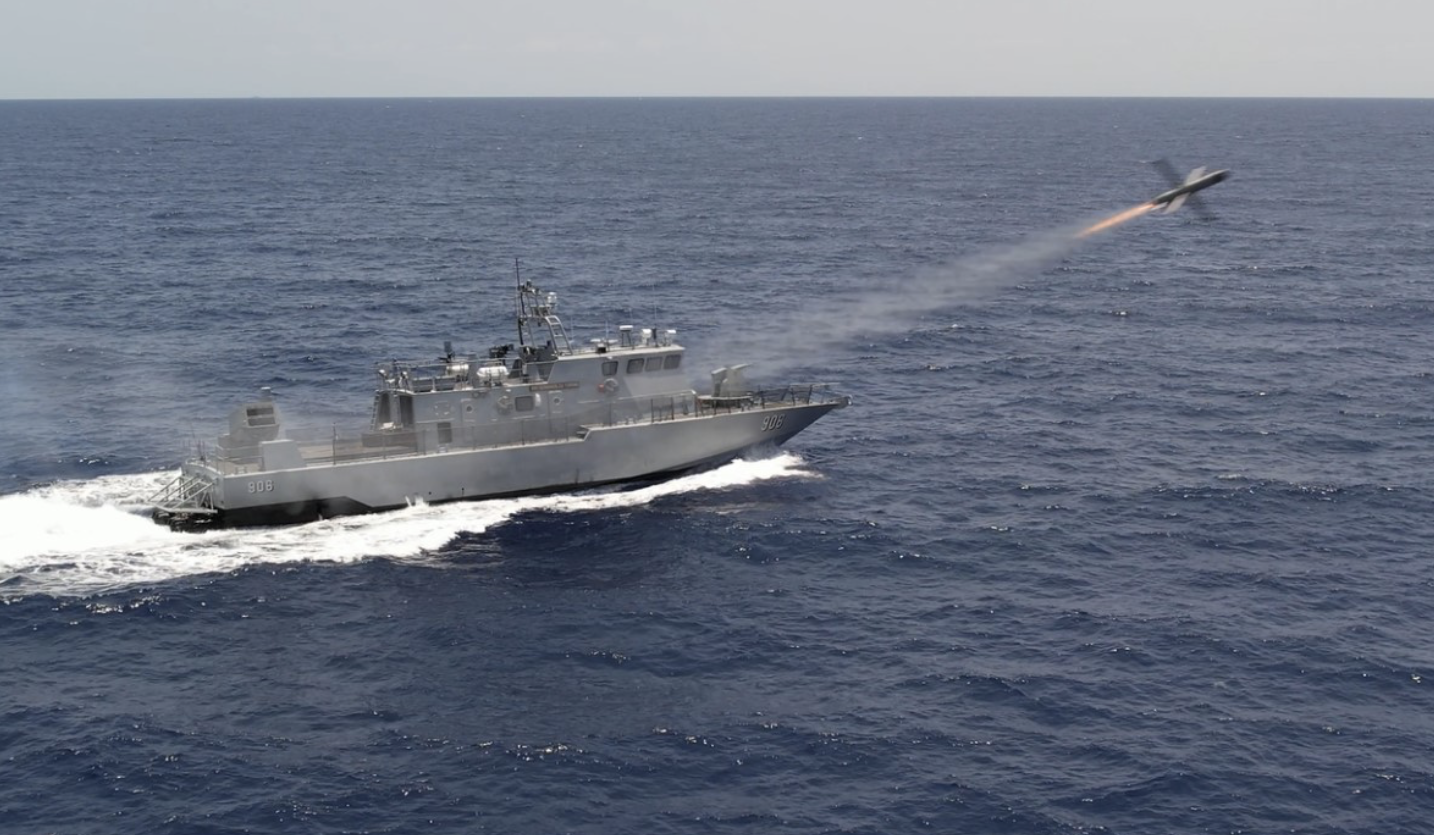
To some extent, the success of the FRCs has made up for the reduced number of larger cutters. The Coast Guard has been using them more like medium endurance cutter than like the preceding Island class patrol boats. They definitely are not being used as “fast response cutters,” sitting in port waiting for a call.
Still there are missions where greater endurance and seakeeping are essential or at least highly desirable. The Coast Guard is probably building more FRCs than they would have if a true medium endurance cutter design had been readily available.
This class has been a bright spot. The original plan was to build 58, 64 when the six for PATFORSWA were added. It now looks like a total of at 70 will be operational. Under normal circumstances that would probably be considered enough, but with the delays to the OPC program, an ever increasing demand signal, and increasing difficulties supporting over-age MECs we may see even more. It is not ideal, but it is the cutter we can have near term.
USCGC Webber was commissioned over 13 years ago. It is time to develop a mid-life refresh to make these little ships more capable. They need a capability against unmanned systems and an ability to forcibly stop ships regardless of size. There have been small running changes that have improved their endurance. There are probably other things that could be done to provide greater endurance.
Future classes:
Contracts have been let for three Polar Security Cutters. There was a Request for Information (RFI) in April as a first step toward procuring Arctic Security Cutters.
So far, I have seen no steps toward a replacement for the 87 foot WPBs, though some are essentially being replaced by 154 foot Fast Response Cutters and 45 foot Response Boat-Mediums (RB-M).
We were told the OPCs would be a bridge between the larger NSCs and the smaller FRC, but they turned out to be very nearly as large as the NSCs and almost as expensive.
We certainly need more than 35 large cutters, but they don’t all have to have the extreme endurance of the NSCs and OPCs.
To make an informed decision, the first step should be to make the new Fleet Mix Study public and ask for feedback. I am certain it would immediately justify at least one new class of cutters if not more.
In addition to the Polar Security Cutters (heavy polar icebreakers), Arctic Security Cutters (medium icebreakers), offshore patrol cutters, and Webber class patrol craft, we may need.
- a true medium endurance cutter, preferably one adaptable to wartime missions. It might be built in cooperation with the US Navy as a prototype for a low cost, rapidly producible ASW escort that could use containerized systems.
- an Arctic Offshore Patrol Cutter
- a true fast response cutter, a better armed replacement for the 87 foot WPBs in important ports, capable of forcibly stopping a ship regardless of size and providing point defense against unmanned air and surface craft.
- a small but very seaworthy replacement for the 87 foot WPBs in minor ports. These could be additional larger heavy weather MLBs like the ones being procured to replace 52 foot MLB.








 Chuck Hill's CG Blog