“China Will Use Antarctica For Its Ocean Monitoring Satellites” –gCaptain

gCaptain reports that China is setting up a satellite ground station at their Zhongshan research base in the Larsemann Hills by Prydz Bay (at about the 2:30 position (76°22′18″E) on the chart above). It is directly south of India. From Wikipedia,

“The bedrock of the Larsemann Hills contains an unusually high abundance of boron and phosphate minerals and is the location of discovery of four new species of mineral. In 2014, the Stornes Peninsula within the Larsemann Hills was declared an Antarctic Specially Protected Area due to its mineral diversity.”

The station is within a sector of Antarctica claimed by Australia. All claims are currently held in abeyance in accordance with the Antarctic Treaty System.

There is concern that the satellite monitoring technology will be dual use (civilian and military).

The station is relatively small now, reportedly with a population of 60 in the summer and 17 during the winter. Sounds like it will be growing.

“Coast Guard Expands Nation-Wide JROTC Program” –USCG HQ

Just passing this along. Unfortunately, opportunities to participate are still extremely limited geographically. What the country probably needs is a service agnostic, or perhaps sea service, JROTC program so that it could reach more than this very limited population.

Jan. 25, 2023

Coast Guard Expands Nation-Wide JROTC Program

USCG HQ, Washington, DCWASHINGTON — The Coast Guard is establishing four new Junior Reserve Officers’ Training Corps units for the 2023-2024 school year, bringing the national total from six to ten.

The new units will be located at:

  • Saraland High School in Saraland, Ala.
  • Aspira Business and Finance High School in Chicago
  • Clinton High School in Clinton, Miss.
  • Mission Bay High School in San Diego

The addition of the four JROTC units is the largest expansion in the program’s history, and the first time the Coast Guard will establish more than two of these units in a single year.

The Coast Guard established the JROTC program in 1989 at the MAST Academy in Miami. The program currently includes approximately 500 cadets across six high schools in the states of Delaware, North Carolina, South Carolina and Florida.

“Adding these JROTC units in four additional states demonstrates the nation-wide impact of our JROTC program,” said Rear Admiral Megan Dean, director of governmental and public affairs. “Our JROTC program provides a framework for personal and citizenship development, and the character formation we are seeing in these cadets is good for our schools, communities, the Coast Guard, and our nation as a whole.”

To participate in JROTC, students must be in grades 9-12, with some exceptions for eighth graders. They must be citizens, nationals of the United States or those lawfully admitted to the United States for permanent residence. Cadets must also maintain physical fitness, academic and personal conduct standards.

“The Coast Guard JROTC develops cadets using the COAST model, an acronym for our 5-fold pillars of Citizenship, Operations, Advancement, Service, and Teamwork,” said Cmdr. Clay Cromer, Coast Guard JROTC program manager. “These pillars guide our program mission of ‘Developing Service-Minded Citizens of Character’ and help our cadets achieve success both in the classroom and in their daily lives.”

The National Defense Authorization Act 2023 provided specific direction for the program’s future – the Coast Guard must establish and maintain at all times a JROTC unit in every Coast Guard District by December 31, 2025. The six JROTC units are currently located in only two of the Coast Guard’s nine Districts, with this year’s expansion adding three for a total of five Districts with active JROTC units.

For more information about the JROTC program visit https://www.uscg.mil/community/JROTC.

“HELGE INGSTAD REPORT ENGLISH 2021” –YouTube

A recent Marine Link report, “Norway Naval Officer Goes on Trial Over Oil Tanker Collision,” included the video above. Thought you might find it interesting.

Sure, there was a lot of sophisticated equipment that they apparently couldn’t get to work but it also looks like a lot of basics missing as well.

Was a collision alarm ever sounded?

The crew of 137 was extremely small for such a sophisticated ship. Did this mean there was no messenger and/or lookout assigned the bridge watch that might have been used to reestablish communications? It almost certainly means there was minimal redundancy in the skills of the crew.

Did the ship have sound powered phones for emergency communications?

There was a failure to close watertight fittings as spaces were evacuated.

The whole thing looks like a cautionary tale. Don’t put too much faith in high tech. Certainly use it, but don’t forget the basics of good damage control.

“USCGC Decisive returns home from Eastern Pacific Ocean deployment, completing final patrol”

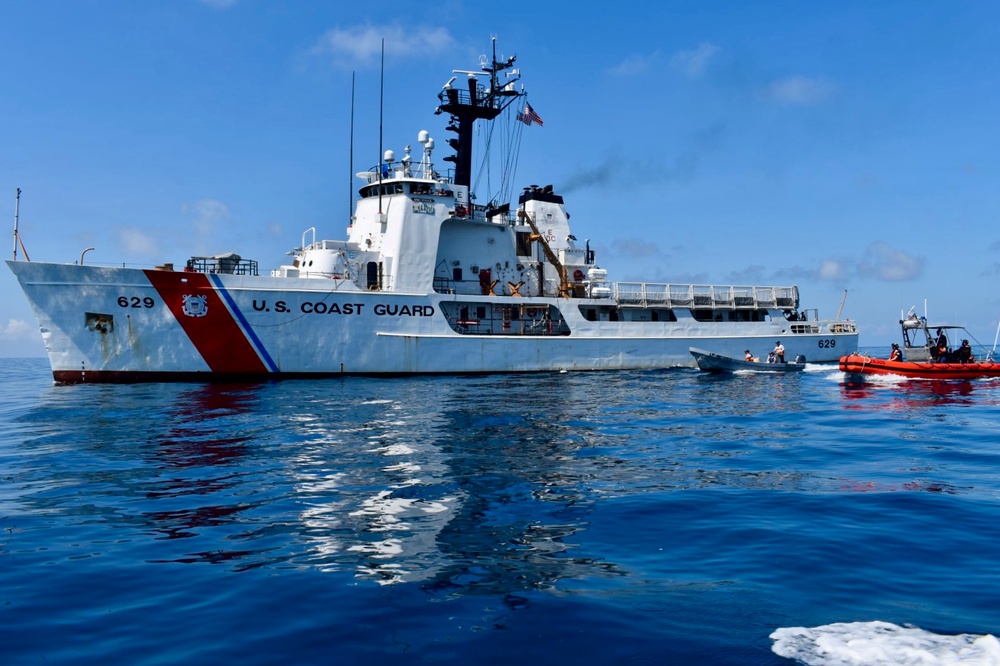
The Reliance-class medium endurance cutter USCGC Decisive (WMEC 629) conduct at sea engagements with the navy of Guatemala in the territorial seas of Guatemala on Oct. 25 – 26, 2021. The U.S. Coast Guard conducts routine deployments in the Southern Command area of responsibility, works alongside partners, builds maritime domain awareness, and shares best practices with partner nation navies and coast guards. (U.S. Coast Guard photo)

Below is a pretty standard East Pacific patrol news release, except for the fact that this is Decisive’s final patrol. The old girl, one of the newest of the 210s, is going out after a successful patrol.

I suppose after the numerous delays, this was inevitable, but the first Offshore Patrol Cutter, the future USCGC Argus, isn’t even in the water yet. With the loss of Decisive, we will be down to 36 patrol cutters of more than 1,000 tons, same as in the current program of record. (Original program of record would have given us 33 NSCs and OPCs plus 58 FRCs for a total of 91. Current total in commission is 84 or 85, NSCs, FRCs, and WMECs). With the OPC program extending 15 years into the future, we may see the number of large patrol cutters drop even further.

30 years ago:

The Coast Guard’s last spasm of patrol cutter construction ended in 1992 when the last 110 foot WPB was commissioned. The last 270 foot WMEC had been commissioned in 1991, but the program had still not replaced all the WWII construction. 30 years ago the Coast Guard had 47 large patrol cutters (12×378; 13×270; 16×210; 3×213; Storis; 1×205; 1×180 converted to MEC) in addition to 49 Island class for a total of 96.

I think we are now, and will be for the foreseeable future, seriously short of larger patrol cutters. Some of them may not have to be as big as OPCs, just need better range and seakeeping than the Webber class, but we will not have a good case unless we complete the new Fleet Mix study that reflects current mission requirement that Congress has been asking for. We really need to do this.

News Release

U.S. Coast Guard Atlantic Area


USCGC Decisive returns home from Eastern Pacific Ocean deployment, completing final patrol

Stock Image of USCGC Decisive

Editors’ Note: To view the stock image above or download high-resolution imagery, click on the photo.

PENSACOLA, Fla. — The crew of the USCGC Decisive (WMEC 629) returned to their homeport in Pensacola, Friday, following a 33-day patrol in the Eastern Pacific Ocean, concluding 55 years of service to the Nation.

Decisive patrolled the Eastern Pacific Ocean in the Coast Guard Eleventh District’s area of operations. While underway, the Decisive’s crew supported the Coast Guard’s drug interdiction and search and rescue missions to promote safety of life at sea and deter the flow of illegal narcotics into the United States.  

While deployed, Decisive’s crew collaborated with Coast Guard assets and foreign military aircraft to detect, deter, and interdict illegal narcotics voyages. At one point, Decisive disrupted two vessels suspected of drug trafficking in the same night. Decisive also collaborated with the USCGC Alert (WMEC 630) to safely transfer three suspected smugglers. While aboard Decisive, the detainees received food, water, shelter and medical attention.

“The crew’s remarkable professionalism, competence and determination were on full display as we met the diverse challenges of operations at sea,” said Cmdr. Aaron Delano-Johnson, commanding officer of Decisive. “Whether it was conducting simultaneous boardings or our skilled engineers conducting voyage repairs in Panama, the crew exceeded expectations at every turn. After a successful, final patrol for Decisive, we are looking forward to returning home to our family and friends on shore.”

During the patrol, Decisive traveled more than 6,000 miles and traversed through the Panama Canal. By transiting the historic waterway, Decisive’s crew earned their Order of the Ditch certificates, a time-honored nautical tradition recognizing mariners who have crossed the Panama Canal between the Atlantic and Pacific Oceans.

Decisive is a 210-foot, Reliance-class medium endurance cutter with a crew of 72. The cutter’s primary missions are counter drug operations, migrant interdiction, and search and rescue in support of U.S. Coast Guard operations throughout the Western Hemisphere.

For information on how to join the U.S. Coast Guard, visit GoCoastGuard.com to learn about active duty and reserve, officer and enlisted opportunities. Information on how to apply to the U.S. Coast Guard Academy can be found here.

For more, follow us on FacebookInstagram and Twitter.

“Coast Guard, partners tracking Russian vessel off Hawaiian Coast” –D14

Vishnya class intelligence ship Kareliya (Picture source: Russian MoD)

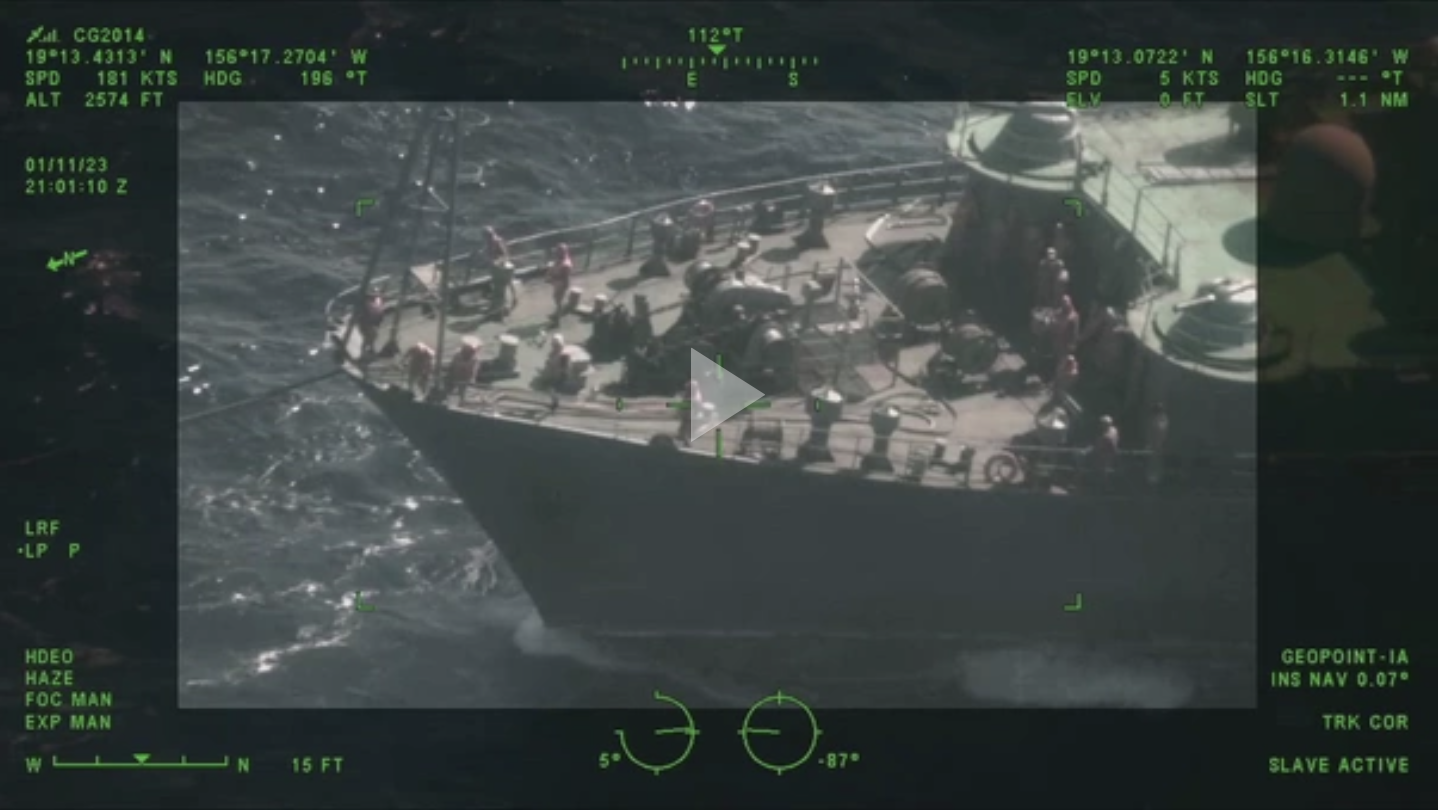
Below is a news release from D14. The subject is a bit unusual. The accompanying video shows two vessels. One is a Russian Navy Vishnya class intelligence ship, presumably Kareliya, being either towed or perhaps receiving fuel from a ship that appears to be a merchant tanker. The tanker does have some unusual structures forward and amidships. It is not the first time this particular intelligence ship has operated off the coast of Hawaii.

The intelligence vessel (AGI) is probably there to observe missile tests from Barking Sands.

News Release

U.S. Coast Guard 14th District Hawaii and the Pacific

Coast Guard, partners tracking Russian vessel off Hawaiian Coast

Russia Spy

Editors’ Note: Click on video to download a high-resolution version.

HONOLULU — In recent weeks, the U.S. Coast Guard has continued to monitor a Russian vessel, believed to be an intelligence gathering ship, off the coast of the Hawaiian Islands.
 
While foreign military vessels may transit freely through the U.S. economic exclusive zone (EEZ), as per customary international laws, foreign-flagged military vessels have often been observed operating and loitering within Coast Guard District Fourteen’s area of response.
 
The Coast Guard continues to coordinate with Department of Defense partners, providing updates to foreign vessel movements and activities and to appropriately meet presence with presence to encourage international maritime norms.  
 
“The U.S. Coast Guard is currently monitoring the Russian vessel operating in the vicinity of Hawaii,” said Cmdr. Dave Milne, chief of External Affairs. “As part of our daily operations, we track all vessels in the Pacific area through surface and air assets and joint agency capabilities.
The Coast Guard operates in accordance with international laws of the sea to ensure all nations can do the same without fear or contest. This is especially critical to secure freedom of movement and navigation throughout the Blue Pacific.” 
 
As a part of the Department of Homeland Security, the Coast Guard is the lead federal agency for at-sea enforcement of U.S. fisheries laws; additionally, the Coast Guard assists in the enforcement of laws on the high seas subject to the jurisdiction of the United States’ exclusive economic zone. Law and treaty enforcement account for approximately 1/3 of the Coast Guard’s annual budget. 

For breaking news follow us on twitter @USCGHawaiiPac

“USCGC Frederick Hatch (WPC 1143) completes expeditionary patrol in Oceania, home for Christmas” –Forces Micronesia / Sector Guam

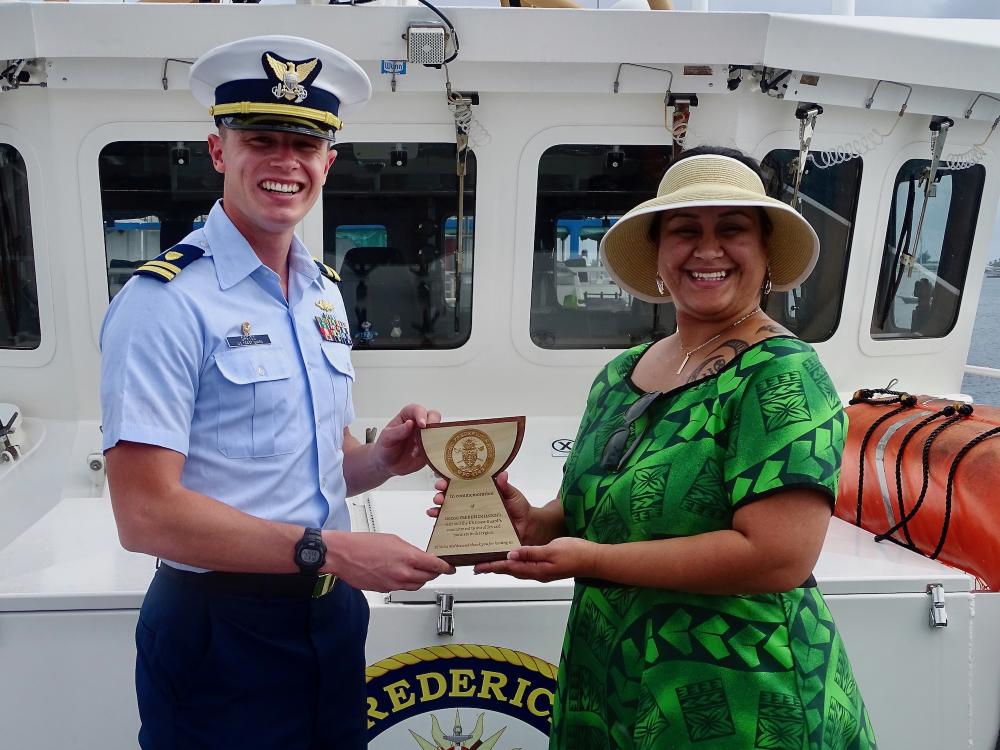
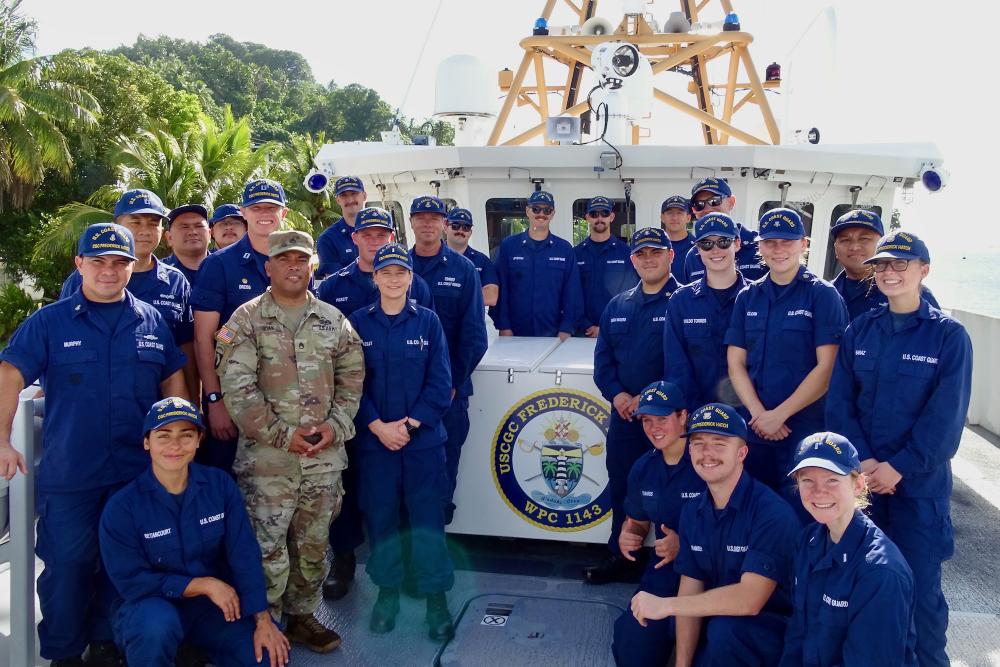
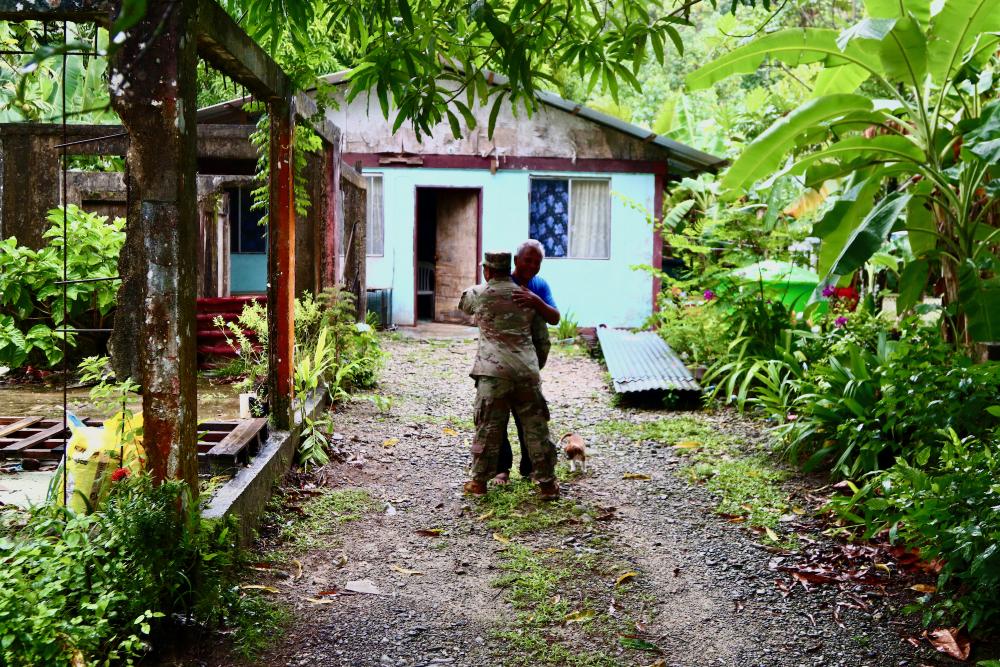
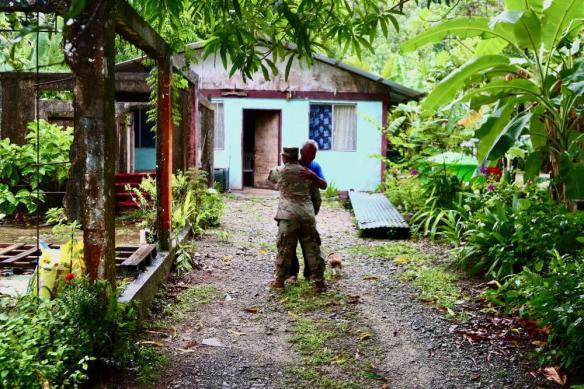
The crew of the USCGC Frederick Hatch (WPC 1143) arrive in Kosrae, Federated States of Micronesia, on Dec. 15, 2022, and also brought Staff Sgt. Gary Likiak, U.S. Army and part of the local FSM embassy team, home for the first time in six years. The Frederick Hatch crew completed a 41-day 7100-nautical mile expeditionary patrol throughout Oceania returning home in time for Christmas 2022. Under Operations Rematau and Blue Pacific, this patrol countered illegal, unreported, and unregulated fishing in the exclusive economic zones of the Federated States of Micronesia, the Republic of the Marshall Islands, and the Republic of Nauru by enforcing applicable laws, regulations, and individual countries’ sovereignty. The crew strengthened partnerships through established bilateral maritime law enforcement agreements, shiprider operations, subject matter exchanges, and community engagements. (U.S. Coast Guard photo)

Another Guam based WPC makes an extended patrol in the Western Pacific.

Apparently, this was the first patrol under an “Expanded Maritime Law Enforcement Agreement” with the Federated States of Micronesia (FSM).

“The expanded agreement builds on the existing bilateral shiprider agreement between the two countries. It establishes procedures for authorizing the U.S. to conduct maritime law enforcement boardings on behalf of FSM to combat illicit maritime activity when an FSM law enforcement officer is not present. More specifically, the agreement provides a coordinating mechanism and process for U.S. law enforcement personnel to work with the FSM National Police, Division of Border Control and Maritime Surveillance to receive approval from the FSM to act under the agreement.”

News Release

U.S. Coast Guard Forces Micronesia / Sector Guam

USCGC Frederick Hatch (WPC 1143) completes expeditionary patrol in Oceania, home for Christmas
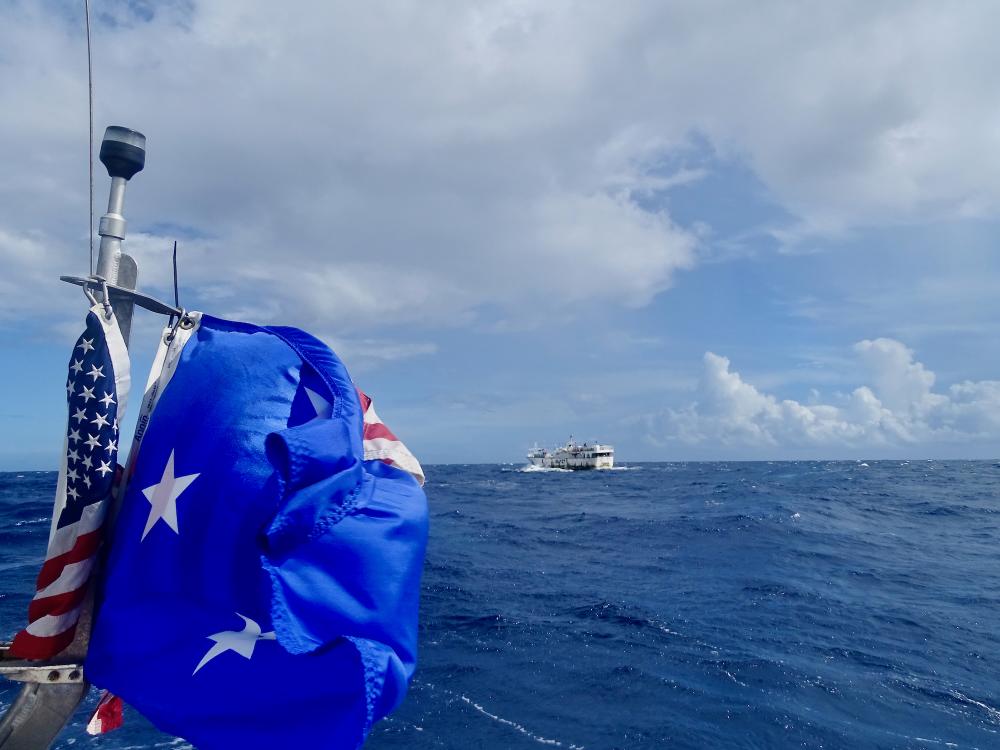
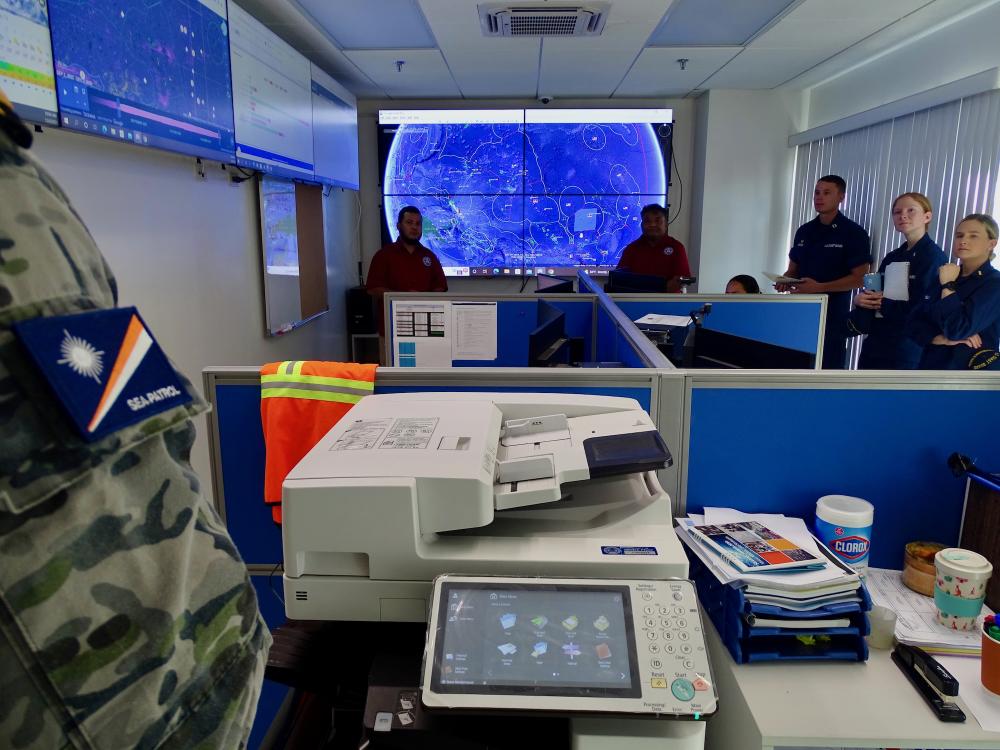
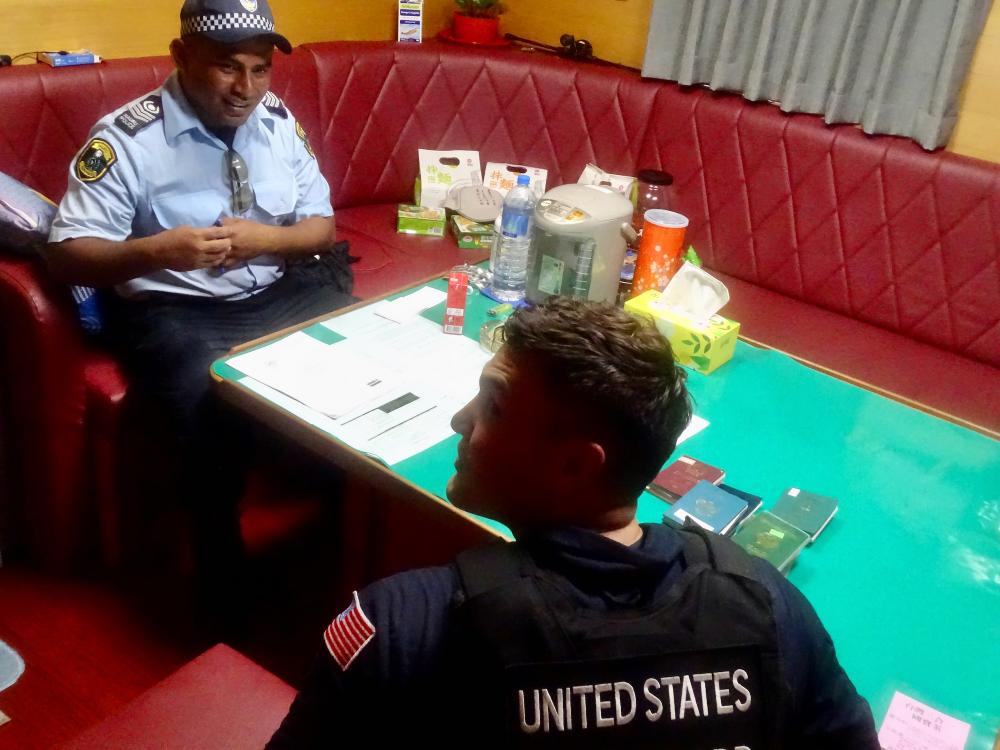
The USCGC Frederick Hatch (WPC 1143) crew conduct a fisheries boarding in the Federated States of Micronesia exclusive economic zone on Nov. 17, 2022 The command of the USCGC Frederick Hatch (WPC 1143) hosts Minister of Foreign Affairs and Trade Kitlang Kabua, and her team while in Majuro, Republic of the Marshall Islands, on Dec. 5, 2022.  The crew of the USCGC Frederick Hatch (WPC 1143) arrive in Kosrae, Federated States of Micronesia, on Dec. 15, 2022, and also brought Staff Sgt. Gary Likiak, U.S. Army and part of the local FSM embassy team, home for the first time in six years.
The USCGC Frederick Hatch (WPC 1143) crew visit the Republic of the Marshall Islands Sea Patrol Maritime Surveillance Administration on Dec. 5, 2022 Petty Officer 2nd Class Brandon Chapleau and a shiprider from the Nauru National Police conduct a boarding on the fishing vessel New Splendor off Nauru on Dec. 11, 2022.  Lt. j.g. Mary Sims of the USCGC Frederick Hatch (WPC 1143) sits with youth in Majuro, Republic of the Marshall Islands, on Dec. 5, 2022.

Editor’s Note: Click on the images above to view more or download high-resolution versions.

SANTA RITA, Guam — The crew of the USCGC Frederick Hatch (WPC 1143) completed a 41-day 7100-nautical mile expeditionary patrol throughout Oceania on Dec. 23, returning home in time for Christmas.

Under Operations Rematau and Blue Pacific, this patrol countered illegal, unreported, and unregulated fishing in the exclusive economic zones of the Federated States of Micronesia, the Republic of the Marshall Islands, and the Republic of Nauru by enforcing applicable laws, regulations, and individual countries’ sovereignty. The crew strengthened partnerships through established bilateral maritime law enforcement agreements, shiprider operations, subject matter exchanges, and community engagements.

“This patrol exemplified the operational advantage the Fast Response Cutter provides the Coast Guard in Oceania, displaying our ability to successfully complete fisheries enforcement and search and rescue missions over 1,800 nautical miles from home. Mixed with fantastic port calls and impactful community relations events, the last 41 days were a testament to the Hatch crew’s adaptability and diligence that made this patrol so successful. It has been an honor to sail with each of them. Making it home for Christmas is a great reward, especially after being away for Thanksgiving,” said Lt. Patrick Dreiss, USCGC Frederick Hatch’s commanding officer.

The crew hosted students from high schools and colleges as well as community members during their port calls to share the missions of the U.S. Coast Guard and provide a look at the ship itself. They also participated in local sporting events and cultural activities. When departing the Republic of the Marshall Islands, the team took on an additional temporary crewmember, Staff Sgt. Gary Likiak, U.S. Army, and part of the local embassy team. Likiak rode along to Kosrae, which is also home for him – the first time he’s been home in six years.

“Reinvigorating our bi-lateral agreements with our partners in the region after COVID-19 was the main objective of this patrol, and our successes with shipriders aboard and warm hospitality received at each island both allowed us to achieve this goal,” said Dreiss.

Of note, on this patrol, the Frederick Hatch team hosted shipriders from the maritime enforcement branches of the FSM, RMI, and Nauru governments. This activity was the first time shipriders could accompany U.S. Coast Guard crews in several years as Pacific Island partners resume normal operations after limiting travel as a COVID precaution.

The team conducted 16 boardings, issued five warnings, and found no significant violations. The fishing vessels were tuna longliners and purse seiners.

On Dec. 17, the Frederick Hatch crew, after departing Kosrae, enacted the newly expanded agreement for maritime law enforcement operations, conducting two boardings on licensed fishing vessels operating in the FSM exclusive economic zone.

“It was very fulfilling to have an opportunity to enact the Expanded Maritime Law Enforcement Agreement for the first time after watching the program develop over the last year,” said Dreiss. “It provides the U.S. Coast Guard with another avenue to support our regional partners and continues to lay the groundwork for increasing Illegal, Unregulated, and Unreported Fishing enforcement in the region.”

The expanded agreement builds on the existing bilateral shiprider agreement between the two countries. It establishes procedures for authorizing the U.S. to conduct maritime law enforcement boardings on behalf of FSM to combat illicit maritime activity when an FSM law enforcement officer is not present. More specifically, the agreement provides a coordinating mechanism and process for U.S. law enforcement personnel to work with the FSM National Police, Division of Border Control and Maritime Surveillance to receive approval from the FSM to act under the agreement.

“This was an excellent warm-up of our bilateral relations and fisheries enforcement process following COVID. It was great to have local experts with us again and provide services to our FSM, RMI, and Nauru partners,” said Capt. Nick Simmons, the commander of U.S. Coast Guard Forces Micronesia/Sector Guam. “The successful application of the expanded agreement now allows us to support our partners better. FSM occupies more than one million square miles of the Pacific Ocean and ranges 1,700 miles from West (Yap) to East (Kosrae) with the enforcement team in Pohnpei. This agreement allows us to help our partners overcome the logistics that limited enforcement in the past when it is difficult to get a shiprider out to the field.”

The U.S. Coast Guard flags IUU-F as one of the top threats to our oceans and a significant regional destabilizing factor. The United States continues to emphasize the ocean’s health and good governance, as evidenced by expanded measures to combat illegal fishing in the FY2023 National Defense Authorization Act. Notable items include an expanded High Seas Drift Net Act, improvements to NOAA’s Seafood Import Monitoring Program, programs aimed at reducing the impacts of ships and other vessels on marine mammals, and a federal ban on buying or selling shark fins in the U.S.

The U.S. Coast Guard regularly exercises 11 bilateral fisheries law enforcement agreements on behalf of the United States with countries throughout the Pacific islands. Shiprider agreements allow maritime law enforcement officers to observe, board, and search vessels suspected of violating laws or regulations within a designated EEZ or on the high seas. These law enforcement activities bolster maritime law enforcement operations and maritime domain awareness and provide a mechanism to conduct integrated operations within the Pacific. This expanded agreement is the first of its kind. It seeks to overcome the challenges of the Oceania region’s vast distances while leveraging limited enforcement resources and the trust built between nations over decades.

The U.S. Coast Guard maintains strong partnerships with the maritime forces in the region through extensive training and subject matter expert exchanges. FSM, also known as the Big Ocean State, has one of the world’s largest EEZs, with waters rich in sea life. RMI, located halfway between Hawaii and Australia north of the equator, is an archipelago of 29 atolls, five low coral islands, and 1,151 islets that shares maritime borders with FSM, Kiribati, and Nauru.

RMI’s exclusive economic zone of 1.2 million square kilometers (463,322 square miles). Nauru is the smallest island nation and the third smallest country in the world, with around 10,000 inhabitants. Fishing is essential to their food security. FSM and RMI are signatories to a Compact of Free Association with the United States. They are Pacific Islands Forum Fisheries Association members and party to the South Pacific Tuna Treaty, as is Nauru.

In addition to fisheries enforcement, the Frederick Hatch crew conducted a search and rescue case medically evacuating a 31-year-old Vietnamese fisherman to a higher level of medical care in Pohnpei on Nov. 20.

The cutter’s boarding team learned of the fisherman’s injuries while conducting a bilateral fisheries boarding with an FSM Marine Police Officer aboard the fishing vessel Ocean Galaxy 195 nautical miles (224 statute miles) south of Pohnpei. The ship is a 69.4-meter (227-foot) purse seiner flagged out of Nauru. The fisherman reportedly fell 12 feet earlier the same day, sustaining a head and possible spinal injury. He was conscious and talking but lost feeling and motion in his right arm and both legs, exhibiting severe concussion symptoms.

“It was an absolute team effort by every member of Frederick Hatch to medevac the injured crewmember from the Ocean Galaxy successfully. Witnessing each crewmember perform at the highest level after completing two boardings earlier the same day to help a fellow mariner was awesome to watch,” said Dreiss.

Operation Rematau is how U.S. Coast Guard Forces Micronesia/Sector Guam supports the overarching Coast Guard endeavor Operation Blue Pacific to promote security, safety, sovereignty, and economic prosperity in Oceania. Rematau means people of the deep sea. It recognizes the wisdom of the Pacific Island Forum leaders in that securing the future requires long-term vision and a carefully considered regional strategy for the Blue Pacific Continent. Op Rematau reinforces U.S. commitment to working together to advance Pacific regionalism based on the Blue Pacific narrative. This action supports U.S. national security objectives, bolstering regional maritime governance and security.

The Frederick Hatch is the 43rd 154-foot Sentinel-class fast response cutter named for a surfman and lighthouse keeper who was a two-time Gold Life Saving Medal recipient. The Service commissioned the ship along with its sister ships, Myrtle Hazard (WPC 1139) and Oliver Henry (WPC 1140), in Guam in July 2021. These cutters are a vital part of the U.S. Coast Guard’s enduring regional presence serving the people of the Pacific by conducting 10 of the Service’s 11 statutory missions with a focus on search and rescue, defense readiness, living marine resources protection, and ensuring commerce through marine safety and ports, waterways, and coastal security.

For more U.S. Coast Guard Forces Micronesia/Sector Guam news, visit us on DVIDS or subscribe! You can also visit us on Facebook or Instagram at @USCGForcesMicronesia or Twitter @USCGFMSG. 

Thanks for a Successful 2022 –Best Year to Date

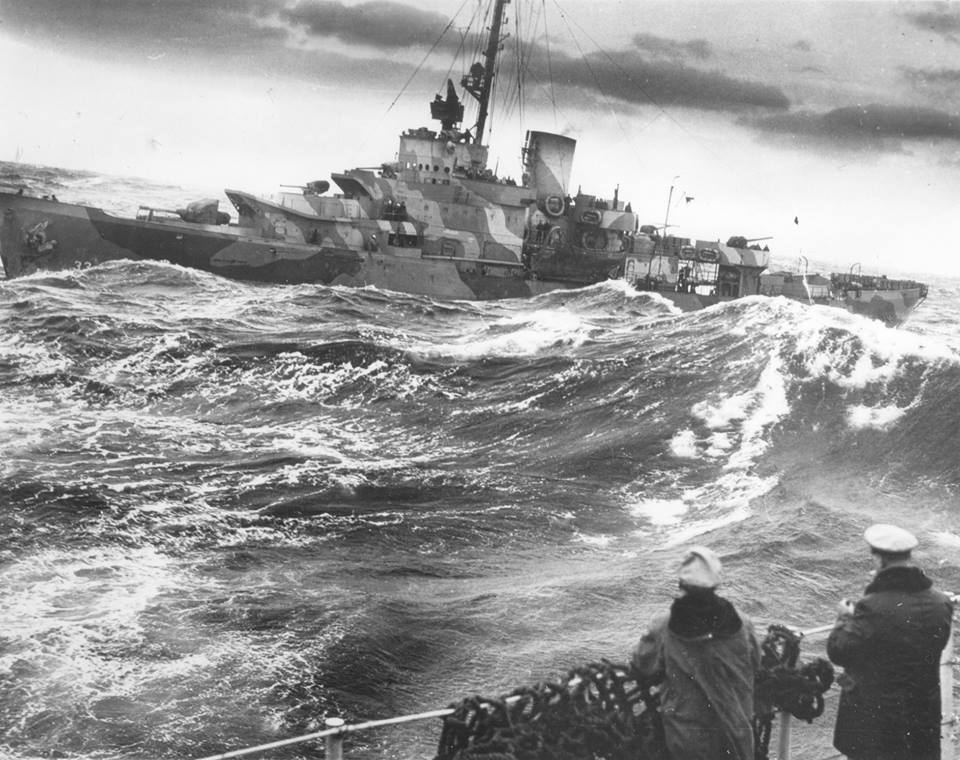
USCGC Duane on North Atlantic Convoy Duty

Thanks to all of you who have come by and made the writing worthwhile. Special thanks to those who have contributed by your comments or by simply pointing me to articles of interest.

Readership is at an all-time high with 260,989 views. and 103,295 visits.

Top ten posts of 2022

  1. “U.S. Navy’s New 40-Foot Defiant Patrol Boat” –Naval News, Plus FMS Patrol Boat (2022)
  2. A New 30mm Round –Maybe a Reason to Upgrade the Mk38 Mounts (2020)
  3. “Fixing the Coast Guard Academy’s Priorities” –USNI (2022)
  4. “Here Is What…Missiles Actually Costs” –The Drive (2020)
  5. 50mm Chain Gun, More Detail (2019)
  6. Top Ten Navies by Aggregate Displacement, 1 January 2022. Analysis and diagram by u/Phoenix_jz (2022)
  7. New 76mm Gun Mount Solves Frequent Siting Problems (2022)
  8. “Storm causes damage at beloved Portland Head Light in Maine” –WCVB5, Boston (2022)
  9. What Does It Take to Sink a Ship? (2011)
  10. Ukrainian Cutter, former USCGC Cushing, Reported Sunk (2022)

The blog has an international readership with about 30% of the views being from outside the US. Top ten nations, other than the US, in terms of views of the blog were the UK (8,563), Canada, Philippines, Australia, Germany, Singapore, Finland, New Zealand, The Netherlands, and Russia (1953). In all 33 nations had 500 or more views.

History of the blog:

The blog began in July 2012 as an offshoot of Dan Trimble’s CGBlog where I was a contributor. When Dan retired his blog, I began my own and Dan was kind enough to help me and transfer all my previous work to this blog. That is why you can still see my post that predate the blog. (Thanks Dan.)

Top ten posts of all time:

  1. What Does It Take to Sink a Ship? (2011) (24,796 views)
  2. Navy, this is Coast Guard, we need to talk (2019) (19,124)
  3. OPV to OPC (2012)
  4. Three Nations Share German OPV Design (2014) (11,061)
  5. The Navy’s New Patrol Boat (2012)
  6. Case for the Five Inch Gun (2012) (9,728)
  7. 50mm Chain Gun, More Detail (2019)
  8. Alternate Weapons for New Large Cutters? (2012)
  9. What Might Coast Guard Cutters do in Wartime? Part 2, Coast Guard Roles (2012)
  10. New 40 mm Gun (2016) (5,760 views)

(Last year’s recap here)

“2022 Hopley Yeaton Awards winners announced” –My CG

Below is an announcement from MyCG. I have added some photos.

Dec. 29, 2022

2022 Hopley Yeaton Awards winners announced

By Kathy Murray, MyCG Writer

Congratulations to the winners of the 2022 Hopley Yeaton Awards!

Named for legendary seafarer Capt. Hopley Yeaton, the first officer commissioned into the service, these annual awards recognize the individuals and crews who best exemplify what it means to be a Coast Guard cutterman.

The Douglas Munro Chapter of the Surface Navy Association announced this year’s recipients, who were selected from a highly competitive pool of nominees that a panel of 56 active duty and retired cuttermen reviewed.  By category, the winners include:

Excellence Awards  

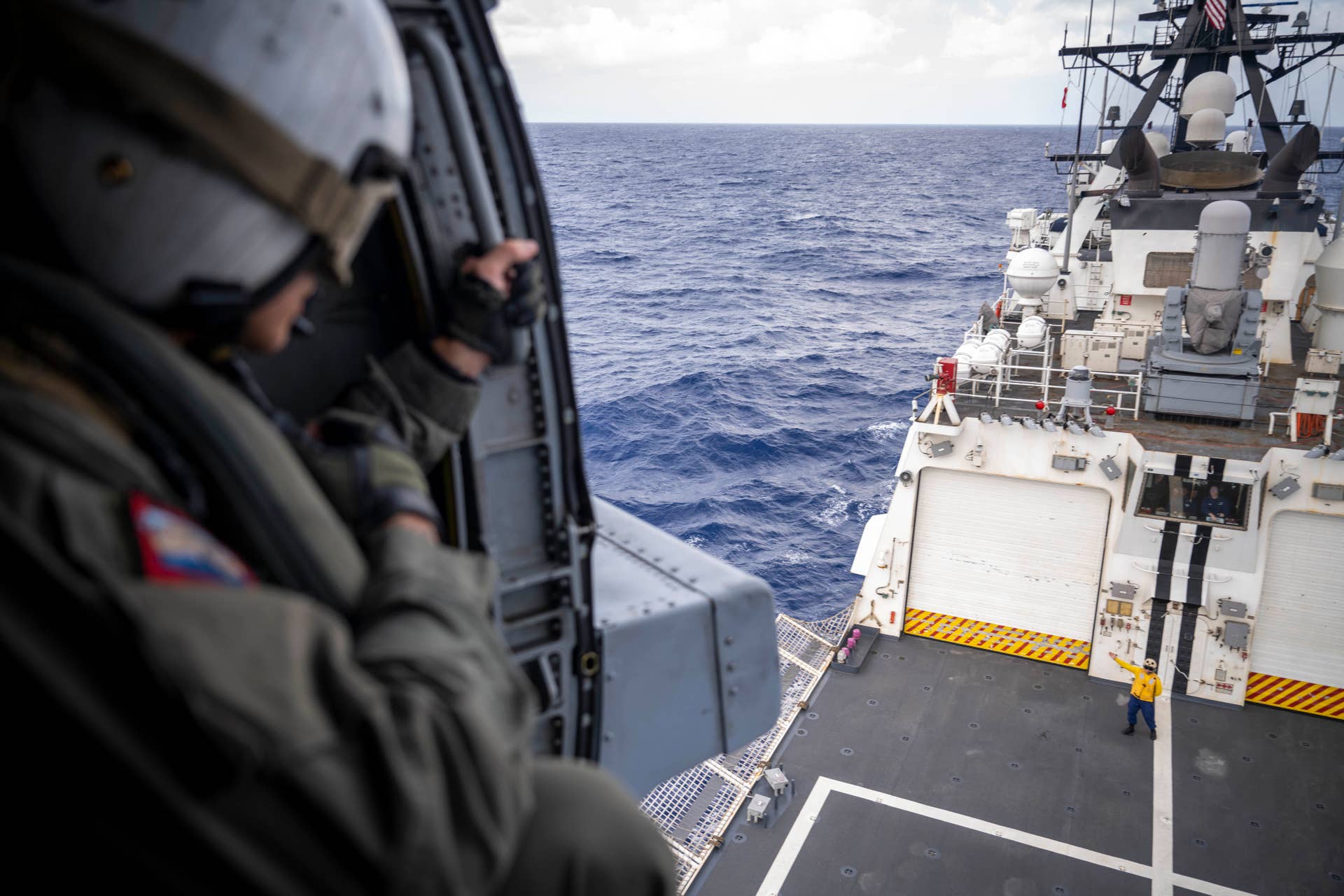
PACIFIC OCEAN (July 30, 2022) U.S. Navy Petty Officer 1st Class Humberto Alba, a naval aircrewman tactical-helicopter, attached to Helicopter Maritime Strike Squadron (HSM) 37, deployed on U.S. Coast Guard Legend-class cutter USCGC Midgett (WMSL 757), looks down at a USCGC crewmember after taking off during flight operations during Rim of the Pacific (RIMPAC) 2022. (U.S. Coast Guard photo by Petty Officer 3rd Class Taylor Bacon)

  • Large Cutter – Coast Guard Cutter Midgett. Honorable Mention: Coast Guard Cutters Hamilton and Kimball.

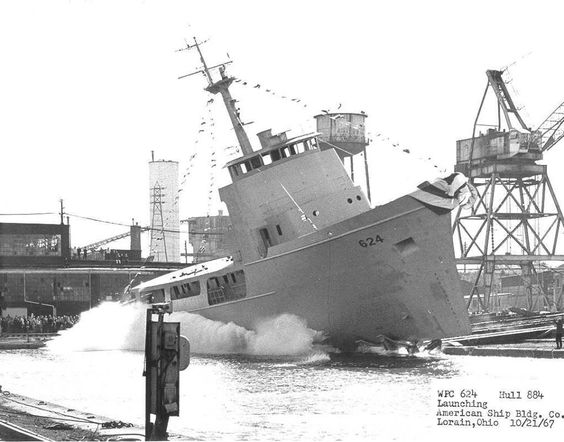
USCGC Dauntless being launched on 21 October 1967.

  • Medium Cutter – Coast Guard Cutter Dauntless. Honorable Mention: Coast Guard Cutters Alder and Diligence.

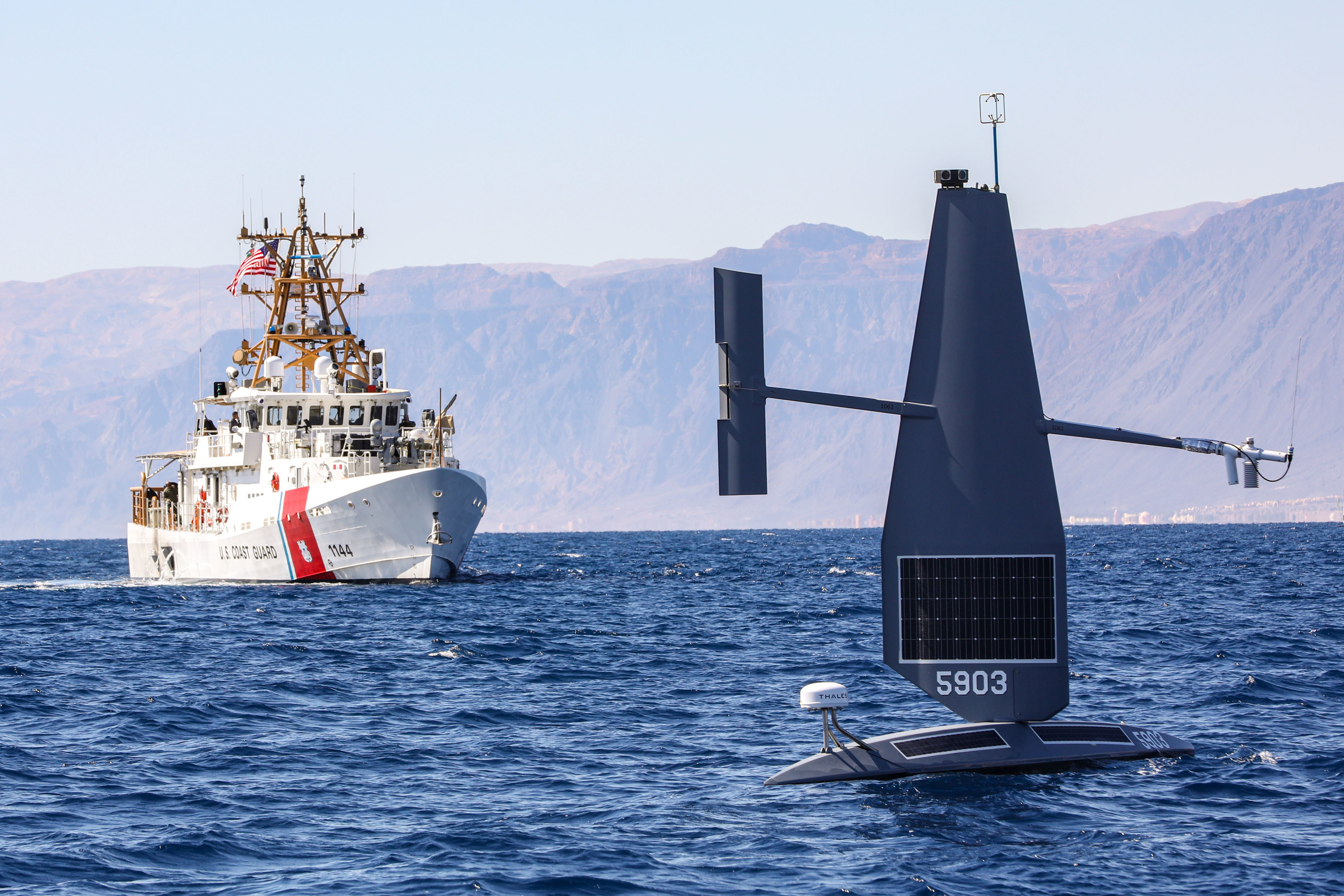
GULF OF AQABA (Feb. 13, 2022) The U.S. Coast Guard Sentinel-class cutter USCGC Glen Harris (WPC 1144) sails near a U.S sail drone explorer during the International Maritime Exercise/Cutlass Express (IMX) 2022, Feb. 13, 2022. IMX/CE 2022 is the largest multinational training event in the Middle East, involving more than 60 nations and international organizations committed to enhancing partnerships and interoperability to strengthen maritime security and stability. (U.S. Army photo by Cpl. DeAndre Dawkins)

  • Small Cutter –  Coast Guard Cutter Glen Harris. Honorable Mention: Coast Guard Cutters Emlen Tunnell.

Superior Cutterman Awards 

Katmai Bay (WTGB 101) is tied to the pier at Group Sault Saint Marie, Michigan, Sept. 2001. USCG photo by PA1 Harry C. Craft III

  • Officer:  Lt. Michael Overstreet – Coast Guard Cutter Katmai Bay. Honorable Mention: Lt. Jonathan Upton – Coast Guard Cutter Resolute and Chief Warrant Officer 2 Sean Campbell – Coast Guard Cutter Kimball.
  • EnlistedChief Petty Officer Collin Strange, an operations specialist – Coast Guard Cutter Charles Moulthrope. Honorable Mention: Petty Officer 1st Class Christian Jankuhn, a machinery technician – Coast Guard Cutter Raymond Evans and Chief Petty Officer Roberto LLamas, a boatswain’s mate – Coast Guard Cutter Dauntless.

During Rim of the Pacific (RIMPAC) 2022, the world’s largest international maritime warfare exercises, Coast Guard Cutter Midgett became the first cutter to command two combined task forces. The crew completed 33 sea events there and responded to a fire aboard a Peruvian naval vessel, saving the ship, and rescuing/arranging treatment for two severely burned crew members. While deployed with the Navy’s 7thFleet, the Midgett also successfully operated in and around some of the world’s most politically sensitive areas, including the Malacca Straits and the South China Sea.

Operating at reduced staff levels, the crew of the Coast Guard Cutter Dauntless interdicted 18 unseaworthy migrant vessels, held, processed, and repatriated 975 Cuban and Haitian migrants in two months, and heroically rescued 27 migrants from Monito Island in treacherous surf conditions.

Coast Guard Cutter Glen Harris completed the first ever South Atlantic crossing (from Florida to Bahrain) by a fast response cutter (FRC) and the first three drug interdictions in the Middle East by a Coast Guard vessel. Its crew also saved the lives of 107 migrants on a submerged raft off the coast near Morrocco, conducted military exercises with allies in the region, and defended assets traveling through the Strait of Hormuz.

Battling freezing temperatures and gale force winds Lt. Michael Overstreet led the diverted Katmai Bay on a challenging search and rescue mission. His team got the stricken passenger vessel Huron in a side tow and safely back to the pier, while averting a major environmental disaster from jagged underwater rocks. Under his leadership, the crew successfully evacuated a patient needing immediate medical care in harrowing conditions after two boiler explosions severely limited the Katmai Bay’s heating system.

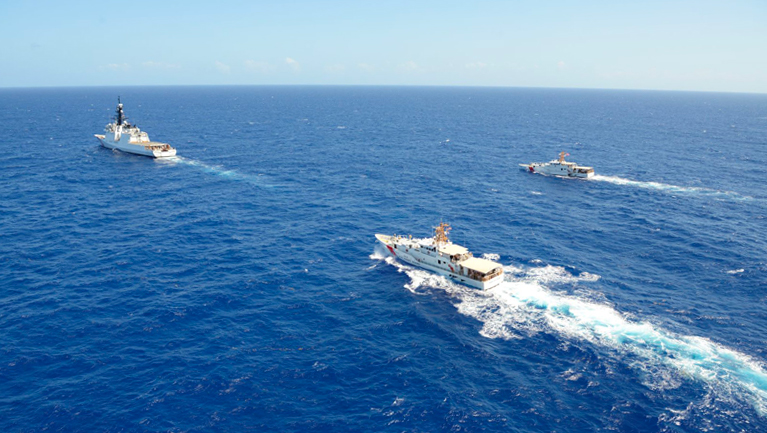
Coast Guard Cutter Hamilton leads the way for cutters Robert Goldman and Charles Moulthrope as they depart Puerto Rico April 1. National security cutter Hamilton is escorting the two fast response cutters (FRCs) across the Atlantic to Rota, Spain. From there, the FRCs will continue to their homeport of Manama, Bahrain. U.S. Coast Guard photo by Petty Officer 3rd Class Sydney Phoenix.

Acting as operations officer aboard the Charles Moulthrope for five months, Chief Petty Officer Collin Strange led planning for two large-scale international naval exercises, bolstering U.S. partnerships with the U.K., Oman, Pakistan, and the U.A.E. He also organized defense escorts through the Straits of Hormuz to protect strategic assets and counter malign Iranian activity, and led a team that collected video and evidence documenting unsafe maneuvers by Iran’s Navy in a near collision with coalition assets. In the Arabian Sea, he personally saved a ship-rider from choking, and demonstrated professionalism and technical prowess as a liaison aboard an Iraqi naval vessel during exercises with the Coast Guard, Navy, and Kuwaiti navy.

The awards will be presented at the SNA Conference awards luncheon on Jan. 11, 2023. For further details, see the ALCOAST 507/22 or email Lt. Luke Trautwein or Lt. Stephen Taylor.

Recent news: 

Resources: 

  • Winner of Hopley Yeaton 2022 cutter excellence and superior cutterman awards ALCOAST 507/22

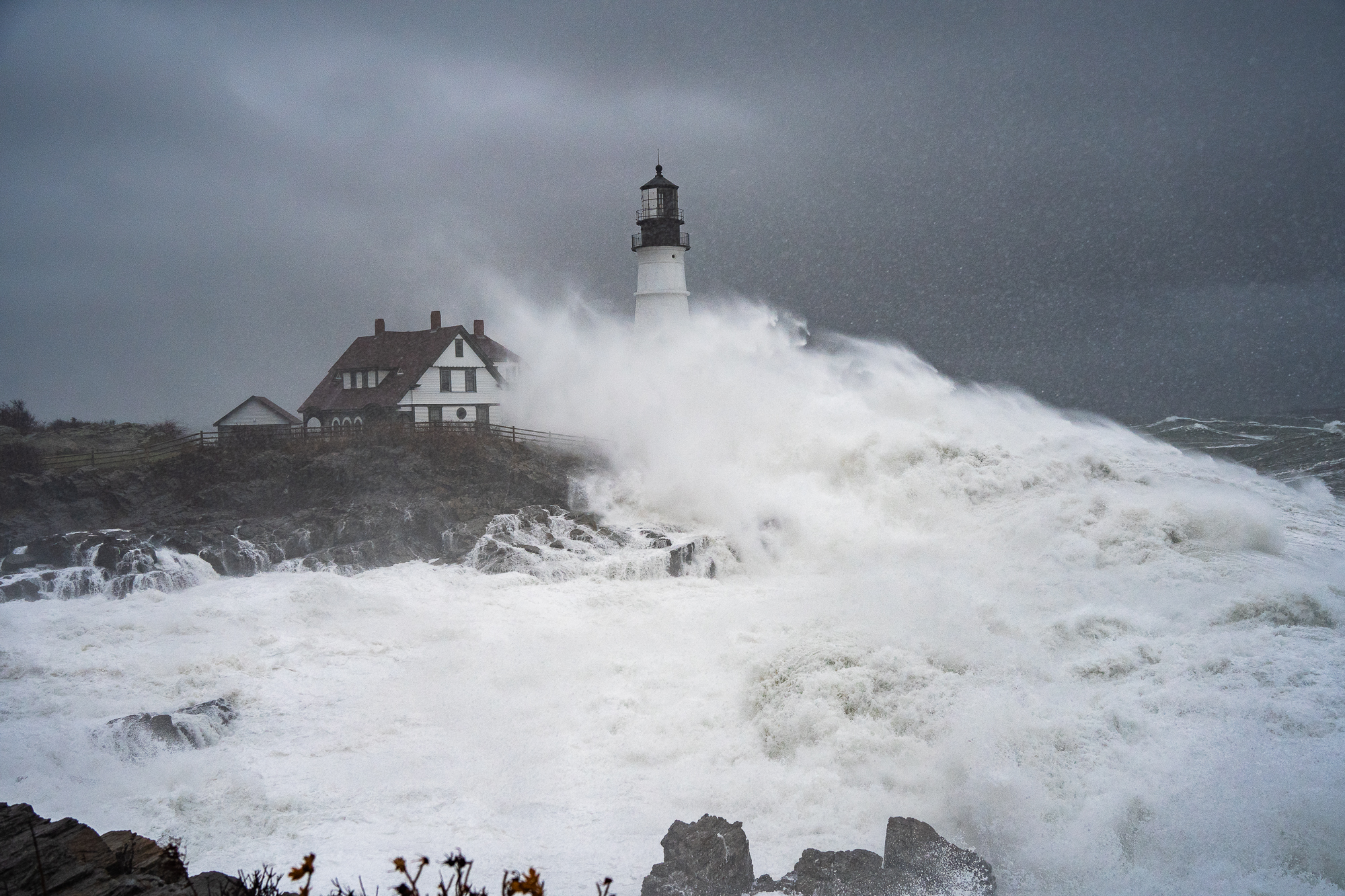
“Storm causes damage at beloved Portland Head Light in Maine” –WCVB5, Boston

The Wave -“After reviewing my images, I determined that I captured the wave that took out the door and window at Portland Head Lighthouse. I’m not happy about it, but I am in awe of the power of nature. I believe this is a historic capture.”
#mewx #maine #winterstorm #elliott
12:00 PM · Dec 23, 2022 Benjamin Williamson @photographmaine

A Boston television station reports damage to Portland Head Light in Portland, Maine. I pulled the photo above off Facebook earlier today.

I have a personal attachment to the light, since I sailed out of Portland for two years as XO of cutter Duane. The light was always first sight of home and visited the light several times.

Fortunately, it all looks repairable.

Thanks to Paul for bringing the TV report to my attention.

“Indian Navy inducts new containerized missile systems” –Navy Recognition

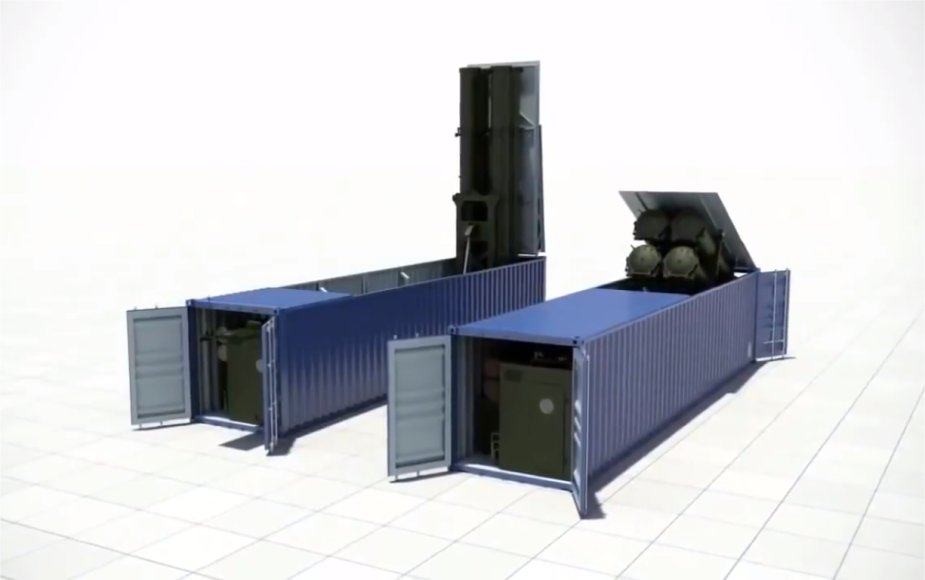
“Artist rendering of containerized missile system for the Indian Navy. (Picture source: Defence Decode)” Note this same illustration was used to portray a Russian system and later a Chinese system. 

NavyRecognition reports,

“According to information published by the Indian MoD on December 17, 2022, containerised missile systems are being inducted by the Indian Navy to enhance operational capability and augment flexibility in operations.”

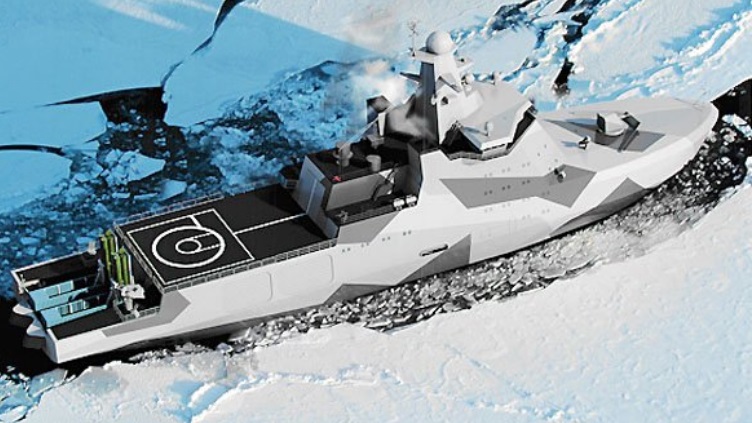
We have seen reports of similar containerized weapon systems before from China and Russia. We have seen artist concepts (and here) of containerized missile systems on Russia’s new Navy and Coast Guard icebreaker class (below), but we have not actually seen them mounted.

Project 23550, Ivan Papanin class icebreaking patrol vessel with towing capability and containerized cruise missiles.

This is the first time I have actually seen a Navy actually state explicitly that such a system was being procured.

Why should this be of interest to the Coast Guard?

  • Terrorist might use a similar system.
  • We have to worry that in the opening round of a near peer conflict, cruise missiles might be launched from apparently innocent looking container ships.
  • Containerized weapon systems might be a way to quickly improve the weapons capability of Coast Guard cutters should the need arise.

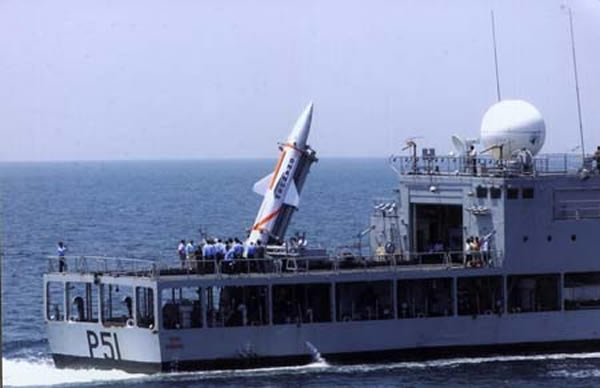
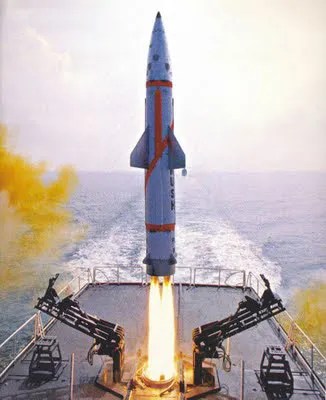
India has already demonstrated a willingness to mount missiles on their offshore patrol vessels, although it was essentially only a test.

Dhanush missile launching from INS Subhadra patrol vessel
(Picture: DRDO)

A Dhanush missile launching from a ship.