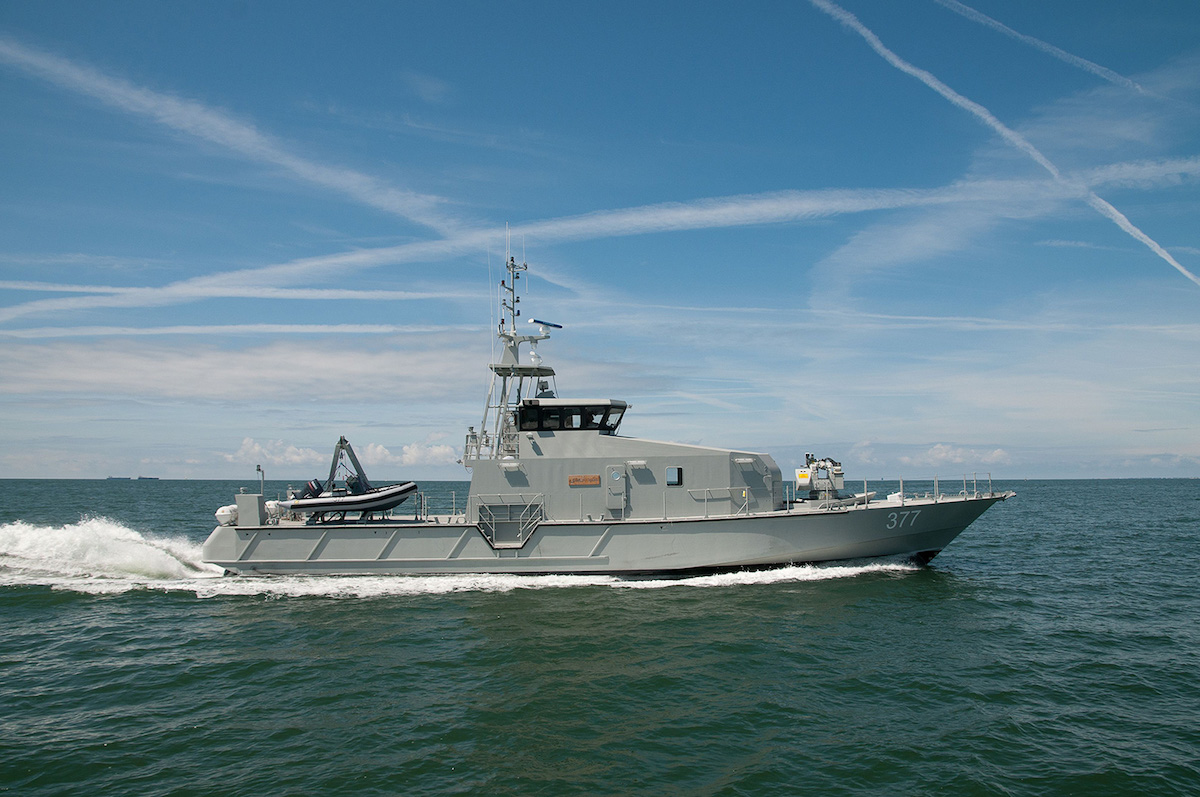
“SEAOWL TECHNOLOGY SOLUTIONS completes sea trials of its IPD aboard La Confiance-class patrol vessel” –Naval News

We talked about this device earlier here and here. I have to believe these devices have more uses than just target designation including navigation and man-overboard recovery. It quickly, quietly, and accurately passes information to the bridge, CIC, or remote weapons operator.

Both the text and video talk about 3D designation. I have to assume that means range and elevation as well as bearing. They also claim to have solved the potential parallax problem (differences in target bearing when taken from different locations on own ship).

This could be particularly useful for the Webber class going to PATFORSWA where they might be confronted with the asymmetric threat of large numbers of fast inshore attack craft.

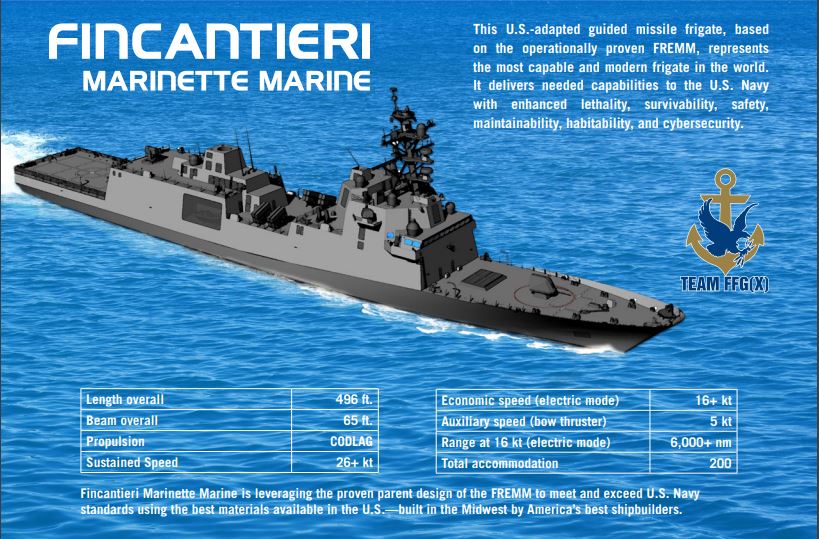
“Navy Frigate (FFG[X]) Program: Background and Issues for Congress,” Updated June 8, 2020, CRS

The Congressional Research Service has updated their analysis of the FFG(X) program. You can view the 38 page pdf here.

The FFG(X) equipment lists, which you might be better able to see here constitutes a list of possibilities for upgrades to the Polar Security Cutters, Coast Guard National Security Cutters, and Offshore Patrol Cutters.


SAAB’s Light Weight Torpedo

Dmitry Shulgin reports the successful testing of a new light weight torpedo from SAAB that offers some unique feature un-available on US Navy light weight torpedoes.

While American light weight torpedoes are explicitly anti-submarine weapons that at least, in the case of the Mk46 mod5, might have an incidental anti-surface capability, these are expressly identified as being for both anti-submarine and anti-surface use. Unlike USN light weight torpedoes, it has the option of wire guidance. It is designed specifically for operation in  difficult littoral environments while also being usable in deeper water.

This new torpedo is designated the Torped 47, it replaces an earlier type with similar characteristics, the Torped 45. Compared to the US Navy’s Mk54, they are longer (2.85 m (9.35′) vs (2.72m (8.91′), heavier (340 kg (750 lb) vs 276 kg (608 lb)), and of greater diameter (400mm (15.75″) vs 324mm (12.75″)).

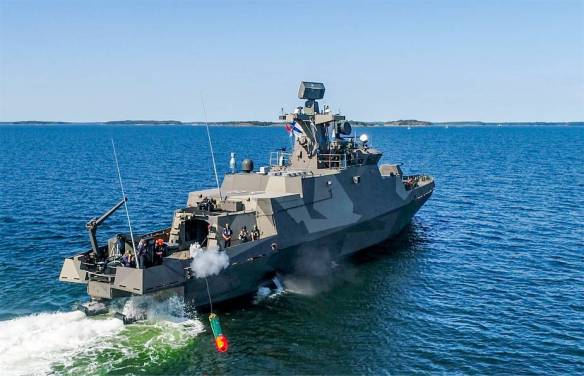
Finnish_Navy_conducts_first_torpedo_firing_from_Hamina-class_fast-attack_craft

Finnish Navy conducted its first torpedo firing from FNS Tornio Hamina-class fast-attack craft in the Archipelago Sea with a TP45 torpedo. (Picture source Finnish Navy)

They use a LiFPO4 battery which is rechargeable, so it is likely practice torpedoes can be used numerous times and quickly returned to service. Believe this is more difficult with the Otto fueled USN torpedoes.


“Navy Lasers, Railgun, and Gun-Launched Guided Projectile: Background and Issues for Congress Updated May 29, 2020”

Artist’s rendering of Lockheed Martin’s HELIOS system. Image courtesy Lockheed Martin.

The Congressional Research Service has updated information on the Navy’s development of Laser and Railgun systems and gun-launched guided projectile.

I was a bit disappointed to find that neither ALaMO or MAD-FIRES, being developed for the 57mm Mk110 mounted on new large cutters, were addressed.

The report’s summary is reproduced below:

Summary

Three new ship-based weapons being developed by the Navy—solid state lasers (SSLs), the electromagnetic railgun (EMRG), and the gun-launched guided projectile (GLGP), also known as the hypervelocity projectile (HVP)—could substantially improve the ability of Navy surface ships to defend themselves against surface craft, unmanned aerial vehicles (UAVs), and eventually antiship cruise missiles (ASCMs).

The Navy has been developing SSLs for several years, and in 2014 installed on a Navy ship its first prototype SSL capable of countering surface craft and UAVs. The Navy since then has been developing and installing additional SSL prototypes with improved capability for countering surface craft and UAVs. Higher-power SSLs being developed by the Navy are to have a capability for countering ASCMs. Current Navy efforts to develop SSLs include

  •  the Solid State Laser Technology Maturation (SSL-TM) effort;
  • the Optical Dazzling Interdictor, Navy (ODIN);
  • the Surface Navy Laser Weapon System (SNLWS) Increment 1, also known as the high-energy laser with integrated optical dazzler and surveillance (HELIOS); and
  • the High Energy Laser Counter-ASCM Program (HELCAP).

The first three efforts above are included in what the Navy calls the Navy Laser Family of Systems (NFLoS) effort. NFLOS and HELCAP, along with technologies developed by other parts of DOD, are to support the development of future, more capable shipboard lasers.

The Navy has been developing EMRG for several years. It was originally conceived as a naval surface fire support (NSFS) weapon for supporting Marines and other friendly forces ashore. Subsequently, it was determined that EMRG could also be used for air and missile defense, which strengthened Navy interest in EMRG development. The Navy is continuing development work on EMRG, but it is unclear when production-model EMRGs will be installed on Navy ships. The Navy’s FY2021 budget submission requests $9.5 million in FY2021 for continued development of EMRG, but does not appear to program any additional development funding for EMRG in FY2022-FY2025.

As the Navy was developing EMRG, it realized that the guided projectile being developed for EMRG could also be fired from powder guns, including 5-inch guns on Navy cruisers and destroyers and 155 mm artillery guns operated by the Army and Marine Corps. The concept of firing the projectile from powder guns is referred to as GLGP and HVP. One potential advantage of HVP/GLGP is that, once developed, it can be rapidly deployed on Navy cruisers and destroyers and in Army and Marine Corps artillery units, because the powder guns in question already exist.

In addition to the question of whether to approve, reject, or modify the Navy’s FY2021 funding requests for SSLs, EMRG, and HVP/GLGP, issues for Congress include the following: 

  • whether the Navy is moving too quickly, too slowly, or at about the right speed in its efforts to develop these weapons;
  • the Navy’s plans for transitioning these weapons from development to procurement and fielding of production models aboard Navy ships; and
  • whether Navy the Navy’s shipbuilding plans include ships with appropriate amounts of space, weight, electrical power, and cooling capacity to accommodate these weapons.

“BAE successfully tests ground-launched APKWS rockets for first time” –Defense News

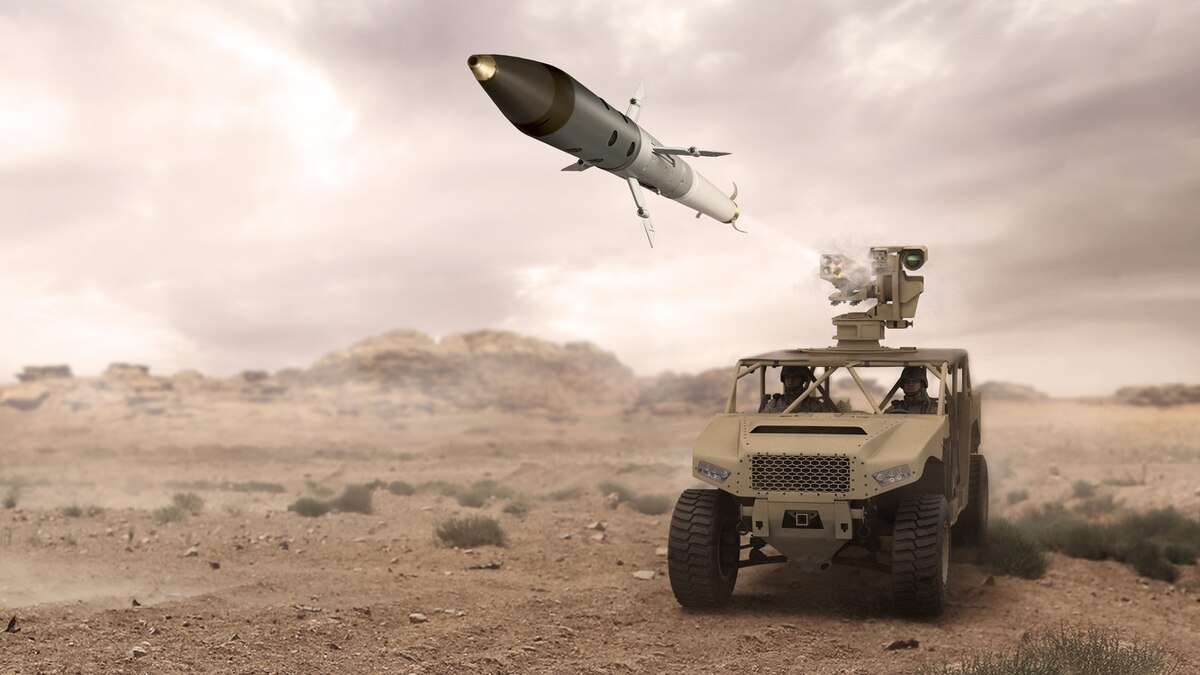
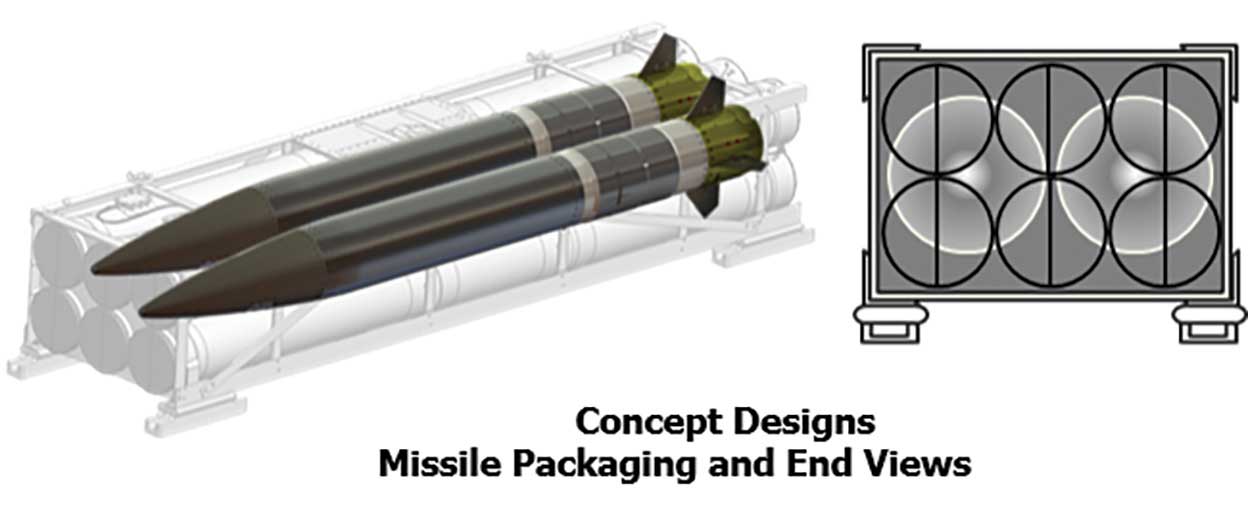
Concept art shows a ground vehicle launching an APKWS rocket. (BAE Systems)

Defense News is reporting that APKWS (Advanced Precision Kill Weapon System) has been successfully tested as a ground based weapon system. This is a small light weight missile produced by adding a guidance kit to the common and inexpensive 70 mm (2.75″) Hydra rocket. It has normally been used by helicopters.

As we have discussed previously, this looks like a weapon system that would give even relatively small Coast Guard craft a substantial punch, out to beyond 8,000 yards, with a minimal danger of collateral damage. And of course the Navy could use them against swarming fast inshore attack craft.

Notably:

The company delivered more than 35,000 APKWS units by the end of 2019 and expects to deliver 18,000 in 2020.

New Multi-Mission Very Light Weight Torpedo

Very Light Weight Torpedo

In 2013, when I first heard that the Navy was developing an Anti-Torpedo Torpedo, I had hopes it might be the basis for a ship stopping system for the Coast Guard. In 2019, we learned that the systems which had been deployed on five of the Navy’s aircraft carriers were being removed. It seemed the program was dead. In fact, it appears very much alive, and apparently the Navy has targets other that adversary torpedoes in mind. If the Coast Guard is ever to have this weapon it may be important to understand what the Navy might see in the system.

Northrop-Grumman press release quoted in part:

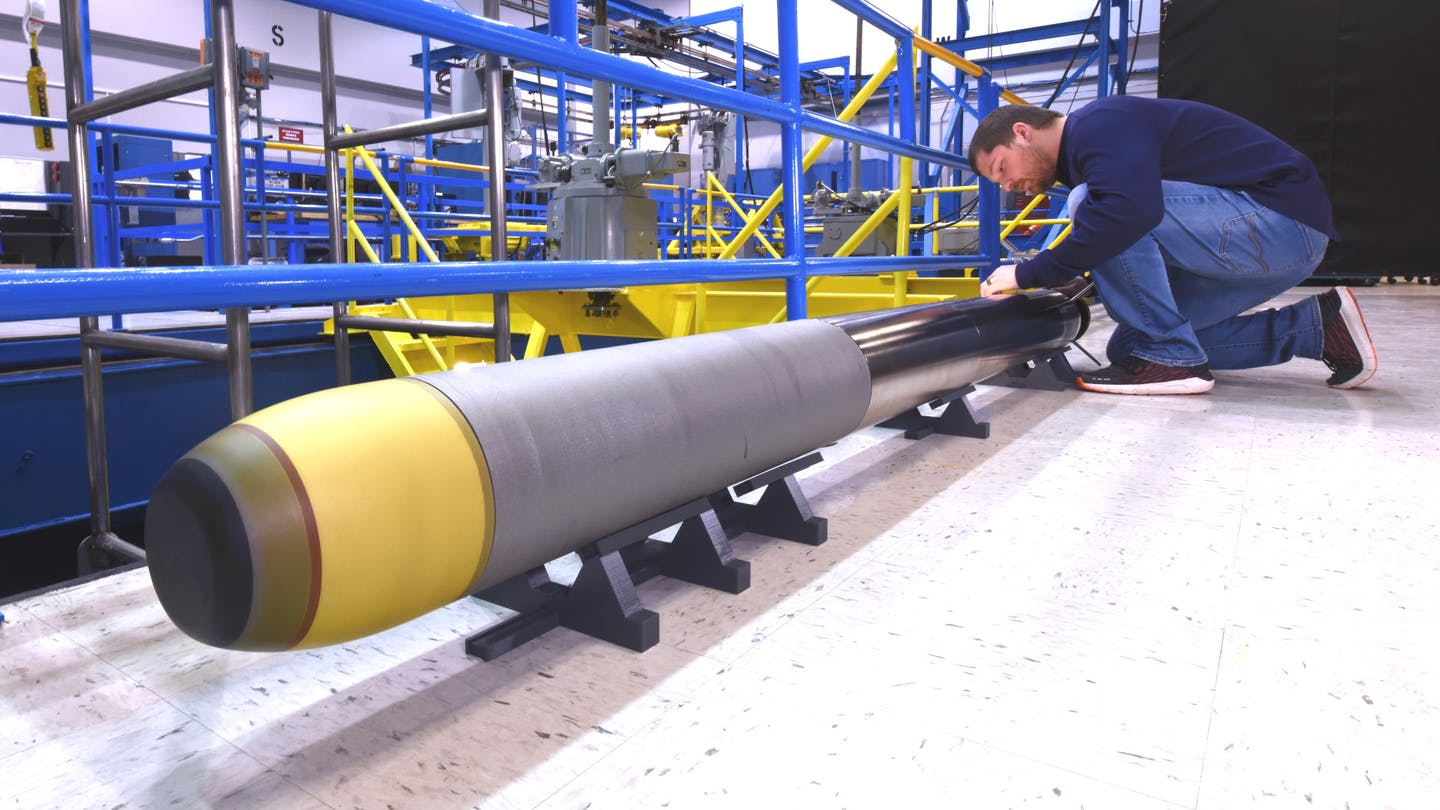
Northrop Grumman has successfully manufactured and tested the first industry-built Very Lightweight Torpedo (VLWT) for the U.S. Navy. The prototype torpedo is based on the Pennsylvania State University Applied Research Laboratory’s (PSU-ARL) design that was distributed to defense industrial manufacturers in 2016. Northrop Grumman, which independently funded the research and development, will offer the design-for-affordability improvements to this VLWT as Northrop Grumman’s response for the Navy’s Compact Rapid Attack Weapon program.

Applying its engineering and manufacturing expertise, Northrop Grumman improved upon the VLWT baseline design to replace high-cost components and drive overall affordability, reproducibility and reliability. Those altered sections were built and tested using PSU-ARL’s own test equipment for confidence.

“The successful testing of the torpedo nose on the first try is a testament to Northrop Grumman’s design-for-affordability approach, which will significantly reduce cost without sacrificing operational performance,” said David Portner, lead torpedo program manager, undersea systems, Northrop Grumman.

TheDrive dug into this a bit further and found the supporting FY2021 budget line items  and justification under the name Compact Rapid Attack Weapon (CRAW), significantly it is a program of record.

The thing I find interesting is, this is touted a multi-platform, multi-mission weapon. The primary capability being talked about is as a hard kill anti-torpedo weapon, but apparently it is a modular weapon that may be reconfigured for different missions.

There is more information in an earlier TheDrive article.

These weapons could offer added offensive firepower, as well as an all-new anti-torpedo defense interceptor capability. The mini-torpedoes use a common body and future variants might also arm unmanned ships or submarines, as well as flying drones, act as naval mines, and more.

A Navy briefing slide showing the internal components and describing the various features of the PSU_ARL Common Very Light Weight Torpedo (CVLWT) design

The Common Very Light Weight Torpedo design that the weapon is based upon is reportedly 6.75″ in diameter, about 85″ in length, and weighs about 220 pounds (100 kilos). If it is truly modular its length and weight may vary somewhat. It might be possible to make a version with an enlarged warhead.

The familiar Mk46 light weight torpedo is more than twice as large. The newer Mk 50 and Mk54 torpedoes are similarly sized.

  • Length: 8 ft 6 in (2.59 m), 102 in
  • Weight: 508 lb (230 kg) (warshot configuration)
  • Diameter: 12.75 in (323.8 mm)
  • Range: 12,000 yd (10,973 m)
  • Warhead: 96.8 lb (43.9 kg)

The Navy’s standard heavy weight torpedo, the Mk48, is 16 times larger than the Common Very Light Weight Torpedo design.

  • Length: 19 feet (5.8 meter) or 228 in
  • Weight: 3,695 lb (1,676 kg) (ADCAP)
  • Diameter: 21 in

Advantages of small size: Small size can convey several advantages.

  • More weapons
  • Smaller cross section
  • Lower noise
  • Use by smaller platforms

A smaller weapon allows a greater number of weapons in a given magazine space. Space for torpedoes on submarines is limited and the Mk48 costs $10M each, so there are good reasons not use too many on one target or to use them on small targets . The VLWT could be used to swarm larger targets or individually against small craft including unmanned surface and subsurface vessels. As a rough estimate it looks like about 14 of these smaller weapons could fit in the space currently required for one Mk48 torpedo.

A helicopter could probably carry at least twice as many VLWT compared to the current light weight torpedoes. 

The frontal area of a 6.75″ torpedo is only 10.3% that of a 21″ torpedo meaning that it would be harder to detect using active sonar.

The power required to propel such a small torpedo is significantly less that that of a 21″ torpedo. Consequently it should put much less noise in the water, making it harder to detect by passive means

Being harder to detect means these weapons could probably get closer to a target before it becomes aware it is under attack.

Light weight and small size also means these weapons might be deployed from platforms that currently cannot support heavier weapons. These might include the Common Unmanned Surface Vehicle (CUSV) or the MQ-8C Fire Scout drone helicopter. It might also arm the MQ-4C Triton.

Textron Systems’ CUSV with Surface Warfare payload at SAS 2019

Parallels from above water missiles: What we are seeing here has parallels to what has already happened in the field of guided missiles above water.

  • Smaller but more numerous missiles
  • Simultaneous or closely sequenced attack
  • Multi-Packed missiles
  • Anti-Radiation missiles

The Russian Navy is putting smaller missile on their ships but in greater numbers. We see them moving from four very large missiles to 16 smaller missile. It is perhaps less obvious, in the US Navy, but they are using the smaller Naval Strike Missile in applications where they would previously used the larger Harpoon missile, and it appears the new frigate will be equipped to carry 16 of these. The reasoning is understandable. With increasingly robust anti-missile defenses, there is a need to swam the defenses with numerous missiles arriving simultaneously or in closely sequenced attacks. As torpedo countermeasures become more effective there may be a similar move to launch a swarm of smaller torpedoes.

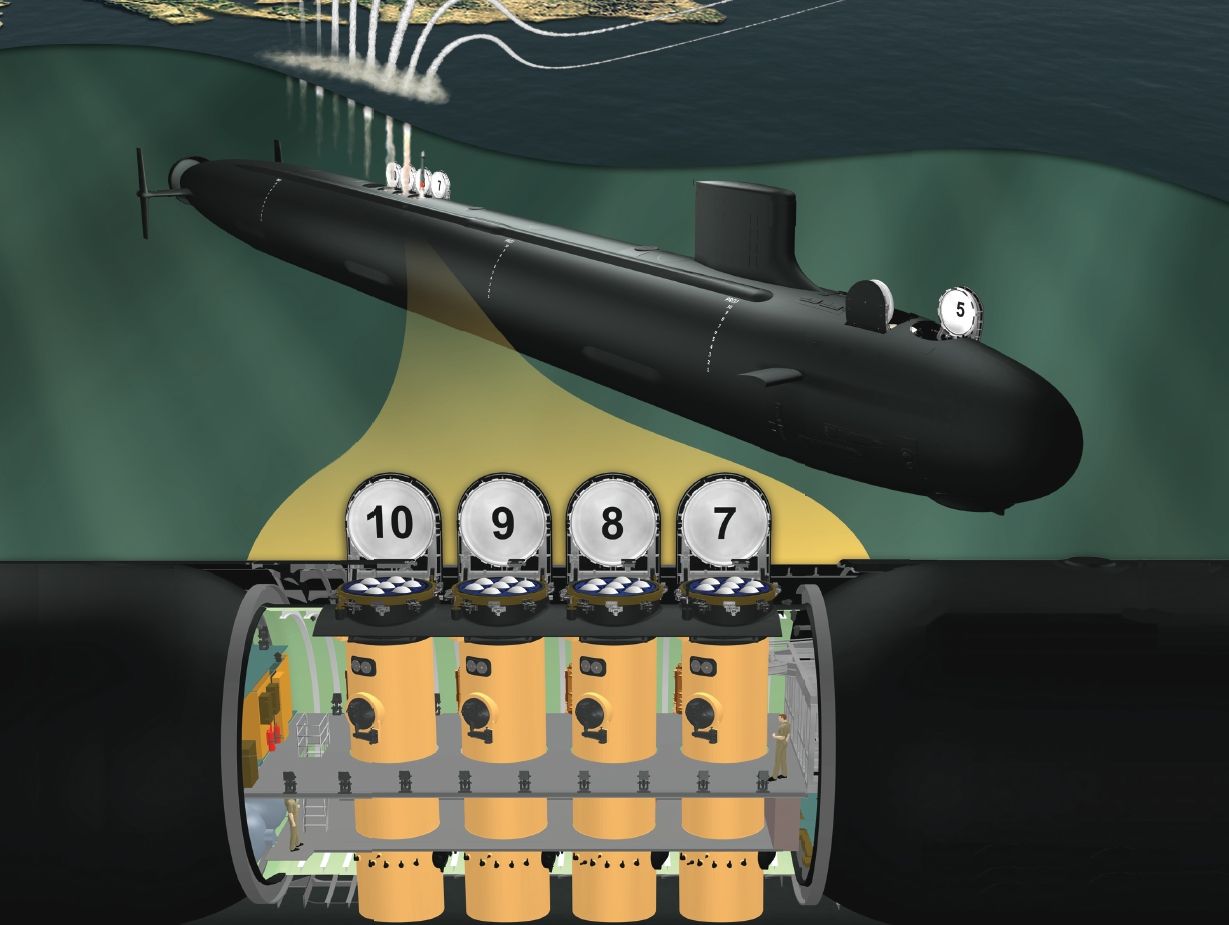
We have begun to see more than one missile housed in a single VLS. The Evolved Sea Sparrow Missile (ESSM) is commonly packed four to a canister in Mk41 VLS and the larger launch tubes like the Virginia Payload Module may house even more missile in a single tube. Similarly, it appears that it might be possible to use a canister to launch as many as seven of the VLWT from a single torpedo tube without the need to reload.

The concept of the Virginia Payload Module

Since at least the Vietnam war, we have seen anti-radiation missiles used to attack sensors controlling countermeasures systems including missile control radars. We may see the use of VLWT to attack active sonar systems that might cue torpedo countermeasures prior to arrival of a larger torpedo.

Submarine Attack on Surface Ship Scenario:

VLWT might be used as follows to attack a surface combatant.

The enemy vessel is, for the scenario, a Project 22350 Admiral Gorshkov class frigate with both hull mounted and towed active/passive sonars, a towed torpedo decoy system, and a PAKET-NK hard-kill anti-torpedo defense system.

The US submarine launches seven VLWT and a single Mk48 torpedo in a sequenced attack. The VLWT are launched first to arrive earlier than the Mk48. The first VLWT sacrificially destroys the towed decoy. The remaining six target first the active sonar sources and then the ship itself. With six targets inbound, the PAKET-NK hard kill system has only four ready rounds. If it works perfectly, it will destroy four of the six remaining VLWT, but the other two will destroy the two active sonars including the one in the bow. When the Mk48 arrives it will have no distractions to deal with and will detonate under the frigate, breaking its back.

For the Coast Guard:

It appears these Very Light Weight Torpedoes may be adequate for what I see as the Coast Guard’s requirement to be able to forcibly stop any vessel regardless of its size. It would need to be able to target the ships propellers, but this has been possible since WWII. Given their size and weight, and apparently relatively low cost, even WPCs and WPBs should be able to carry more than one or two to provide redundancy.

Coast Guard manned Destroyer Escort USS Menges, victim of a German Navy Acoustic Torpedo, 3 May, 1944

“Precision-Guided Munitions: Background and Issues for Congress” –CRS

The Congressional Research Service issued an update of their 42 page “Precision-Guided Munitions: Background and Issues for Congress” on February 27, 2020. This contains a lot of information on weapons we have discussed here, for potential Coast Guard applications to improve our ability to stop threats ranging from small fast highly maneuverable small craft to medium or large sized ships. The weapons that might be of interest to the Coast Guard include Hellfire (also discussed here and here) and its successor the Joint Air to Ground Missile (JAGM), the Precision Strike Missile, the Naval Strike Missile (NSM), and the Long Range Anti-Ship Missile (LRASM). Missing from the list is the Advanced Precision Kill Weapons System (APKWS) which is really a guidance kit used to provide semi-active laser homing for the 70 mm Hydra rocket.

For some reason the Coast Guard seems to be guided weapon phobic. Is it the Coast Guard not asking? or the Navy not supporting? No way to tell, but it does look like guided weapons could answer an unfulfilled need to be able to forcibly stop any vessel, regardless of their size, speed or maneuverability. Also unlike conventional naval guns they provide greater precision, minimizing the potential for collateral damage. This could be a significant advantage in view of the fact that the Coast Guard may be called upon to engage terrorists near population centers.

Yes, individual guided weapon rounds are more expensive than conventional gun projectiles, but the total cost to provide a given level of capability and train and provide supporting personnel is usually less. (The 57mm Mk110, its ammunition, and people to support it are not cheap. Reportedly the gun cost $7.2M and the rounds $1200 each.)

The ubiquity and sheer number of modern precision-guided weapons is staggering.

In FY2021, the Department of Defense (DOD) requested approximately $4.1 billion for more than 41,337 weapons in 15 munitions programs. DOD projects requesting approximately $3.3 billion for 20,456 weapons in FY2022, $3.9 billion for 23,306 weapons in FY2023, $3.9 billion for 18,376 weapons in FY2024, and $3.6 billion for 16,325 weapons in FY2025.

Below I will provide a brief description of the weapon and using the figures from the report provide an approximate unit cost.

ATLANTIC OCEAN—A Longbow Hellfire Missile is fired from Littoral Combat Ship USS Detroit (LCS 7) on Feb. 28 2017 as part of a structural test firing of the Surface to Surface Missile Module (SSMM). The test marked the first vertical missile launched from an LCS and the first launch of a missile from the SSMM from an LCS. (Photo by U.S. Navy)

AGM-114 Hellfire Missile: 

Originally designed as a helicopter launched anti-tank weapon, Hellfire is relatively small at about 110 pounds. It has a surface launch range of about eight kilometers or about 4.3 miles. The warhead is about 20 pounds. It could be highly effective against small, fast, highly maneuverable targets. Even multiple hits would be unlikely to sink a medium to large ship, but at least it has the possibility of disabling one.

These weapons are procured in very large quantity.

All three military departments procure Hellfire missiles. From 1998 through 2018, DOD procured more than 71,500 missiles at a cost of $7.2 billion. Congress appropriated nearly $484 million for approximately 6,000 missiles in FY2019. For FY2020, DOD requested approximately $730 million for 9,000 Hellfire missiles, and it plans to purchase 13,100 missiles at a cost of $1.2 billion between FY2021 and FY2024 (Table 3). In its FY2020 recent budget request, DOD states that it is requesting to procure the maximum production of Hellfire missiles.

Unit cost on the basis of the FY2020 request would be less than $83,000.

AGM-169 Joint Air-to-Ground Missile (JAGM):

JAGM is expected to replace the closely related Hellfire Missile, but there is as yet no firm timeline. In form, it is very similar to Hellfire but has various improvements.

“JAGM has a maximum effective range of 8.6 nautical miles when launched from a helicopter…” the surface launched range should be similar. It uses an existing AGM-114R rocket motor so presumably the range of the latest versions of Hellfire may be similar.

Requested and Programmed procurement for the JAGM for the six years from 2020 through 2025 amount to 4,771 missiles at a cost of $1,624.96M for a unit cost of about $341,000
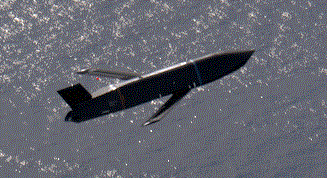
US Navy photo. A U.S. Navy Long Range Anti-Ship Missile (LRASM) in flight during a test event Dec. 8, 2017 off the Coast of California.

LRASM:

LRASM is a relatively large, very sophisticated anti-ship missile with a range of over 200 nautical miles. It weighs 4400 pounds in its surface launch configuration and has a 1000 pound warhead.

Requested and Programmed procurement for the LRASM for the six years from 2020 through 2025 amount to 356 missiles at a cost of $1,260,350,000 for a unit cost of about $3,540,309.

Precision Strike Missile: 

This is a ballistic missile rather than a sea-skimmer. It has a range “in excess of 400 kilometers.” It is intended to replace the ATACM artillery rocket which is being modified for use against naval targets. Since the missile is physically smaller than the ATACM, it is likely the warhead is smaller than the 500 pound warhead used on some versions of ATACM.

Requested and Programmed procurement for the Precision Strike Missile for the five years from 2021 through 2025 amount to 1,018 missiles at a cost of $1,073,410,000 for a unit cost of just over $1M.

Naval Strike Missile (NSM) :

The Naval Strike Missile (NSM) is smaller than the more familiar Harpoon missile. It is only 13 feet long and weighs only about 900 pounds. It has a 125 kg (276 lb) warhead. That is not large enough to sink most ships without multiple hits, but it is a smart missile and it may be possible to direct the missile precisely enough to do critical damage.

The CRS report indicates that the range for this missile is between 100 and 300 nautical miles depending on launch and cruise altitude. 100 for a low (launch altitude), low (cruise altitude), low (terminal approach) flight profile and 300 for a high, high, low profile. Assuming it can be programmed for a low, high, low, it might have a surface launched range considerably greater than 100 miles, which would increase it utility for the Coast Guard as this could allow more distant large cutters to target larger threat vessels, in cooperation with less well armed local units.

Requested and Programmed procurement for the NSM for the six years from 2020 through 2025 amount to 207 missiles at a cost of $366,010,000 for a unit cost of about $1.77M.

How much would it cost to equip the Coast Guard?

There are certainly a lot of unanswered questions here, but I think we could at least approximate the cost within an order of magnitude.

Such a program would extend over several years. This would reduce the annual impact.

While all the missiles mentioned above have potential Coast Guard applications, the Hellfire and Naval Strike Missiles also selected for installation on the Littoral Combat Ships and the new FFG are the most likely be supported by the Navy. After all, the new larger cutter share much in common with the LCS.

Hellfire: Just as a notional approximation, let us say we are going to put six Hellfire on each of the Webber Class FRCs, the Bertholf class NSCs, and the Argus class OPCs. That is 100 installations and 600 missiles. The missiles would cost about $50M. I would assume the launchers and control systems might double the cost to $100M. But this would be a multi-year program. The OPCs will not be finished until well into the 2030s so it would be unlikely the program would cost more than $20M/year.

Naval Strike Missile: Assuming an installation similar to that we are seeing on the LCSs, this would include two, four cell launchers. We probably would not necessarily routinely fill all eight cells, but if we did so equip eleven NSC and 25 OPCs that would be a total of 288 missile. The missiles would cost approximately $510M. Installation of launchers and control equipment might bump the total cost to about $1B, but again this would be spread over several years, continuing into the late 2030s as the OPCs are completed, and the Navy would be footing most of the bill. Installation on two ships a year would probably cost on the order of $50-60M/year.

New Thai Patrol Craft

Graphical rendering of the new patrol craft for the Royal Thai Navy (Image from Marsun)

MarineLog reports that the Thai Navy has chosen MAN 16V175D-MM, IMO Tier II engines, each rated at 2,960 kWm at 1,900 rpm, to power a new class of two Patrol Craft. With two engines for each vessel that is just under 8,000 HP.

This new class is only the latest in a string of patrol craft, indigenously built by Marsun. This class appear to be closely related to the T995 and T996 patrol gun boats. if so it should have a speed of about 27 knots.

It appears to be equipped with a small RHIB, but the boat handling equipment does not appear as convenient as a dedicated davit or stern ramp.

Recently, the Thais seem to have been providing more powerful weapons for their patrol vessels than do most other countries. They recently equipped an Offshore Patrol Vessel with Harpoon Anti-Ship Cruise Missiles in addition to a 76mm gun. The choice of gun for this class appears to be a departure from the weapons that equipped previous patrol craft. The caliber, 30mm, is the same, but the rate of fire and the origin of the weapon are different.

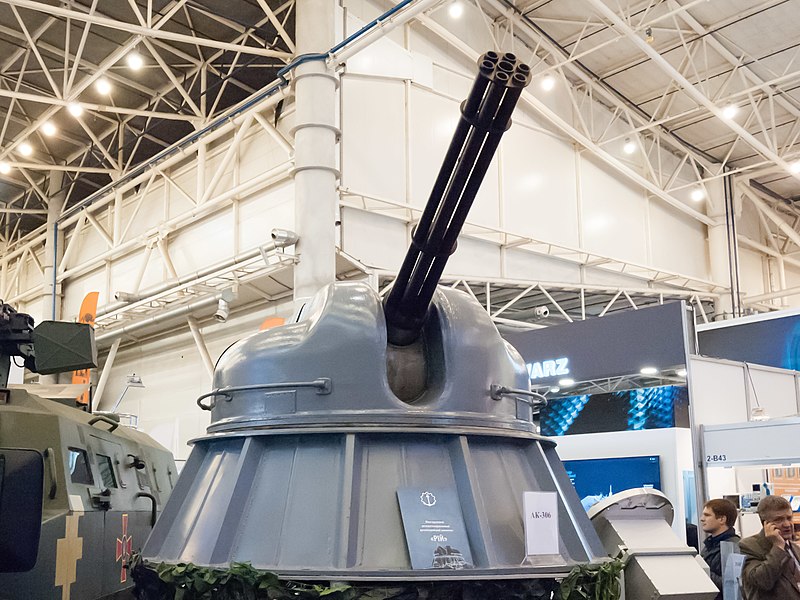
The gun appears to be a Russian 30mm AK-306 barrel rotary cannon, a lighter version of the ubiquitous AK630. Maximum rate of fire is 1,000 rounds per minute. It should be quite effective as a short range anti-surface weapon.

AK-306 rotary cannon, Zbroya ta Bezpeka military fair, Kyiv 2017, Photo from VoidWanderer via Wikipedia Commons


A New 30mm Round –Maybe a Reason to Upgrade the Mk38 Mounts

Military.com reports that Northrop Grumman is developing a proximity fuse for the 30mm gun that arms the San Antonio class LPDs and is part of the Surface Warfare module on the Littoral Combat Ship. The new round is being developed for use against drones, which are a difficult target to hit directly. It might also make the gun more effective against the small boat threat and should improve its chances against aircraft.

The Coast Guard also has an interest in being able to down drones, but this may also be of interest to the Coast Guard because it may provide the incentive needed to upgrade the guns used on Mk38 gun mounts, not just in the Coast Guard, but in the Navy as well. We have known for a long time that the 30mm round is much more effective than the 25mm round, but there has been no movement toward replacing the 25mm guns.

The Mk44 Bushmaster II, 30 mm chain gun is a derivative of the 25 mm M242 Bushmaster. They share a number of parts. All indications are that there would be no significant problem in replacing the M242 Bushmaster used in the Mk38 gun mounts with the more effective 30mm gun. The Mk38 gun mount is the primary armament of the 210 foot WMECs and Webber class Fast Response Cutters. It is expected to arm our Offshore Patrol Cutters and replace the 76mm on WMEC 270s that go through a planned Service Life Extension Program.

I really would rather see either the 50mm version of the Bushmaster III or the 40mm version of the Bushmaster II, but while none of these options are a complete answer to the Coast Guard’s need to be able to thwart a potential terrorist attack, any increase in projectile size allows both engagement at greater range and increases the probability of success against larger threats, while maintaining equal or better probability of success against smaller craft. The 30mm would be a significant improvement.

Three Missile Armed Cutter X for Senegal, 20 Patrol Boats for Ukraine

OPV 58 S from PIRIOU

Two posts from Naval News. French shipbuilders are doing well in the patrol vessel market.

First, “The Ministry of Armed Forces of Senegal and French shipbuilder PIRIOU signed November 17 a procurement contract for three OPV 58 S for the Navy of Senegal. The vessels will be fitted with missile systems, a first for this African navy.”

Second, “The Government of Ukraine gave its green light for the procurement of 20 FPB 98 patrol vessels made by French shipyard OCEA.”

The Senegalese OPVs:

The ships for Senegal fall into that class significantly larger than the Webber class, but significantly smaller than the OPCs. They will be even a little smaller than the 210s. It would be at the lower end of a type, I have called cutter X, vessels with a crew and equipment similar to that of a Webber class FRC, but with better sea keeping and longer endurance. Specifications are:

  • Length: 62.20 meters (204′)
  • Width: 9.50 meters (31.2′)
  • Draft: 2.90 meters (9.5′)
  • Speed: 21 knots
  • Range / Endurance: 25 days, 4,500 nautical miles @ 12 knots
  • Hull / Structure: Steel / Aluminum
  • Accommodations: 48 (24 crew + 24 mission personnel)
  • Stern ramp for two RHIBs

For an Offshore Patrol Vessel, it is very well armed with:

  • A 76mm main gun on the Foc’sle
  • 4x Marte MK2/N anti-ship missiles forward, between the gun and the bridge
  • 2x 12.7mm manned manchine guns on the bridge wings
  • 2x 20mm remote weapon stations (Narwhal by Nexter) at the back of the bridge
  • A SIMBAD-RC surface to air system

The Marte MK2/N missile weighs 310 kg (682#) and is 3.85 metres (12.6′) long. The warhead weighs 70 kilogram (154 pound). The missile, has “an effective range in excess of 30 km, is a fire and forget, all weather sea skimming missile with inertial mid-course navigation through way points and active radar terminal homing. These missiles give these boats a range almost double that of the 57mm or 76mm guns.

SIMRAD-RC is a remote weapons station for launch of two Mistral missiles. Developed as a shoulder launched, Man Portable Air Defense (MANPAD) system, Mistral is a short ranged (6km) IR homing missile. It is claimed to be capable against a range of air targets as well as small surface targets.

Ukrainean OCEA FPB 98 patrol boat:

OCEA FPB 98 patrol boat (Credit: OCEA)

This is a deal, we discussed in July, when it appeared likely. I will repeat the description here.

They have a GRP hull and are powered by two 3,660 HP Caterpillar diesels using waterjets. Specs for vessels of this type sold to Algeria.

  • Displacement: 100 tons
  • Length: 31.8 meters (104’4″)
  • Beam: 6.3 meters (20’8″)
  • Draft: 1.2 meters (3’11”)
  • Speed: 30 knots
  • Range: 900 nmi @ 14 knots
  • Crew: 13

They will probably be equipped with a 20 to 30mm gun.