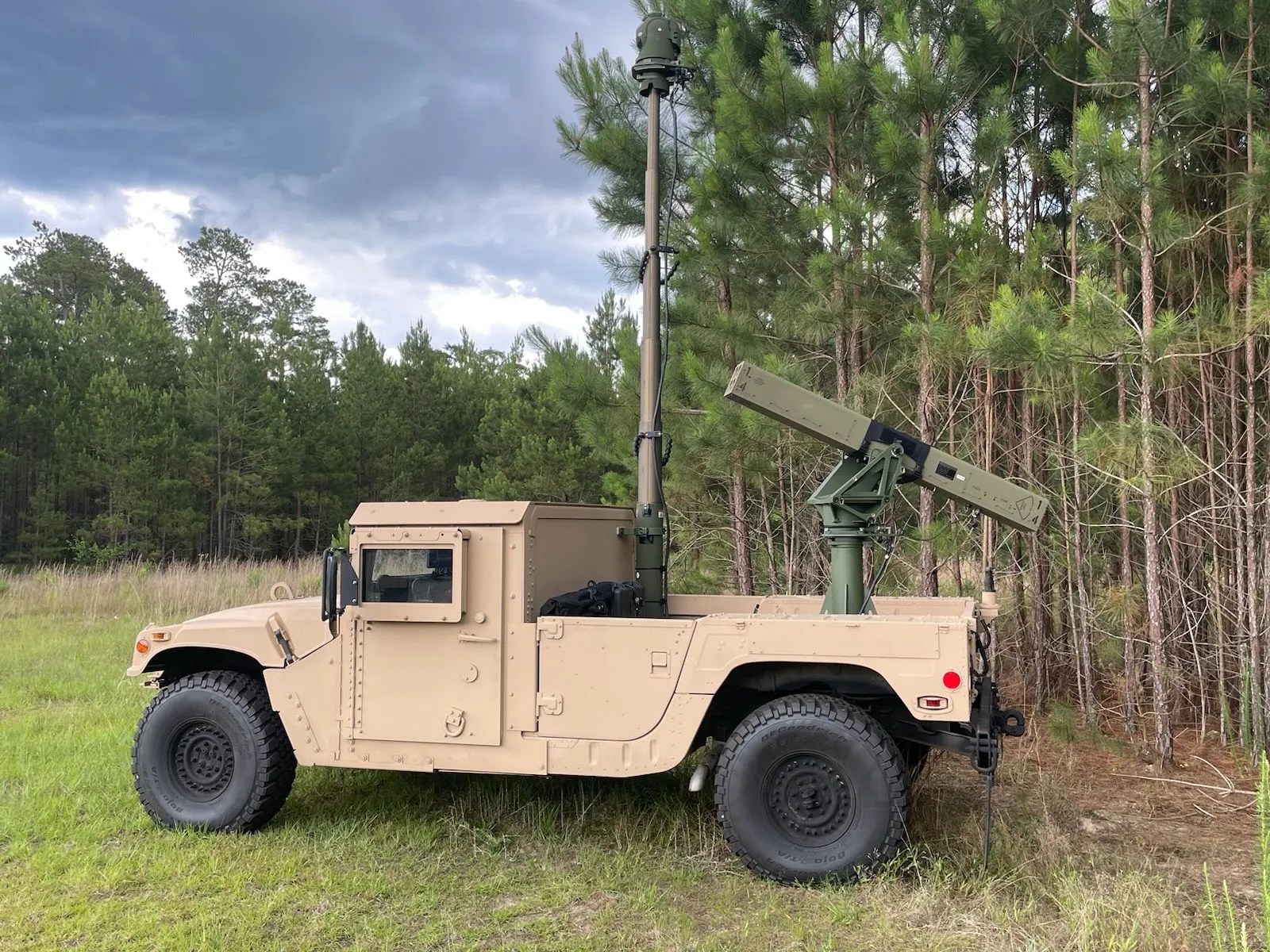
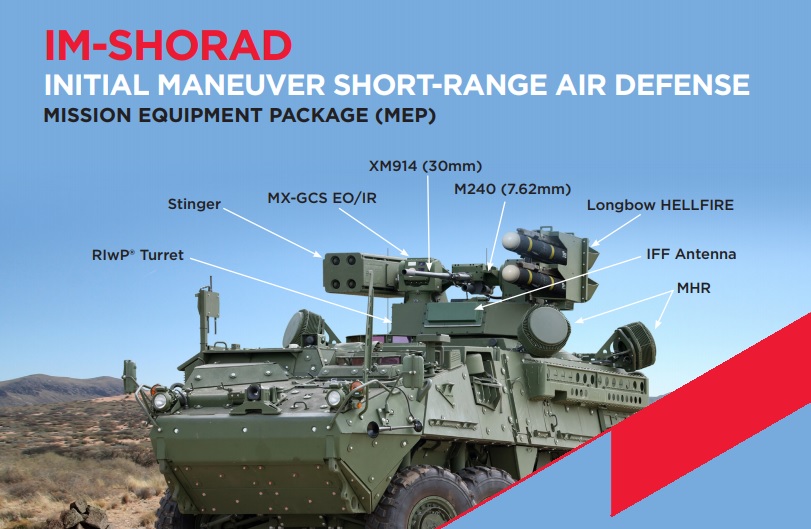
See the four fixed radar antenna on top of the cab? Look familiar?
From the Company web site: RPS-42 is an S-Band tactical hemispheric air surveillance radar system. It is a member of the non-rotating, solid-state, digital radar family Multi-mission Hemisphere Radar (MHR), developed by RADA Electronic Industries Ltd. The RPS-42 is a pulse Doppler, software-defined radar platform, that can detect, classify and track all types of aerial vehicles – including fighters, helicopters, UAVs, transport aircraft, etc. at tactical ranges. A single radar platform provides 90º azimuth coverage. Hemispheric coverage is achieved when four radars are employed as a system. Mobile or stationary, the system can be integrated with any C⁴I system and other radars and sensors. The software is able for On-the-Move (OTM) Operation. The radar can operate either as a stand-alone or as part of a large-scale surveillance system. The Antenna is an Active Electronically Scanned Array (AESA) based on Galliumnitrid (GaN) Amplifiers. Its diameter is 50.4 cm, the max width is 16.5 cm. The achievable range for detection of the smallest drones (known as Nano UAV) is 3.5 km.
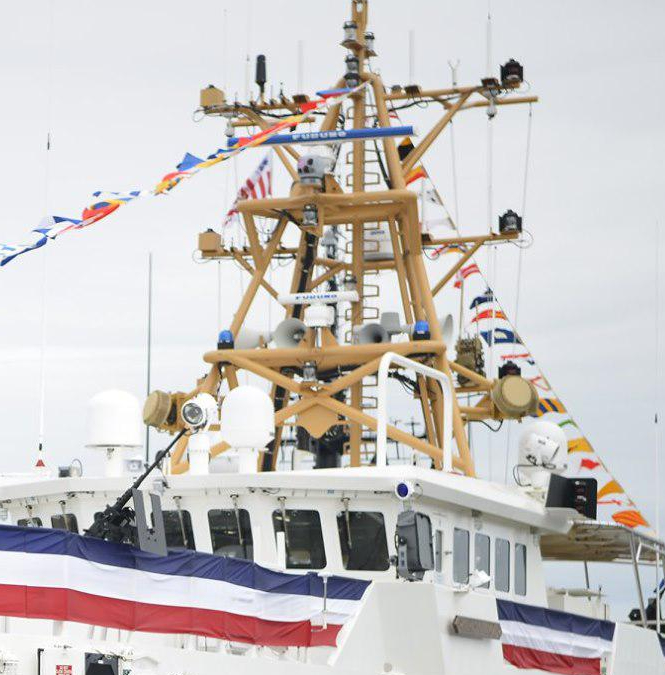
Looks like they or close cousins are on PATFORSWA cutters. (Click on the photo below to enlarge.) They are on the mast.
USCGC Charles Moulthrope (WPC-1141) prior to departure for PATFORSWA.
The TWZ post has a bit of cost comparison as well.
The laser-guided rockets are modular and low-cost, with the guidance section designed to slot in between existing standardized 70mm warheads and rocket motors. The unit cost of the APKWS II guidance section is around $25,000, with the warhead and rocket motor together typically only costing a few thousand dollars more depending on their exact types, according to Navy budget documents. For comparison, the cost of a single Coyote Block 2 interceptor, another counter-drone weapon currently deployed to help protect U.S. Forces in the Middle East, is reportedly roughly around $100,000. Current generation Stinger short-range heat-seeking surface-to-air missiles, which include new features to improve their effectiveness against drones, have a unit cost of around $400,000.
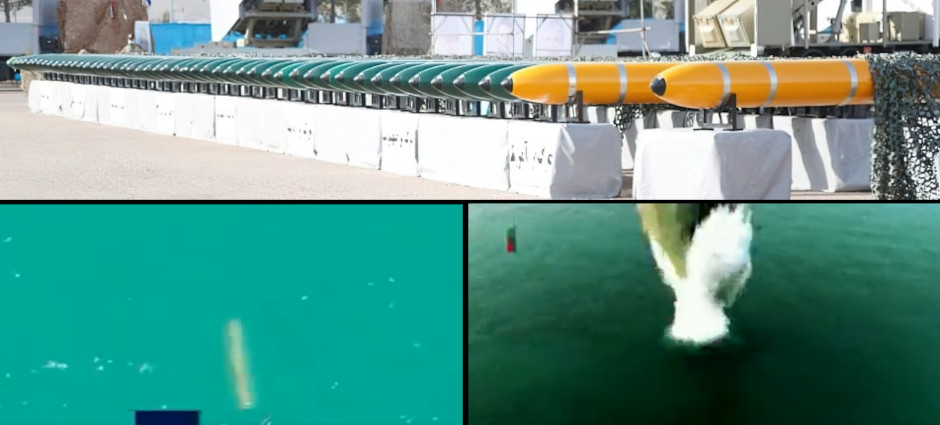
Rapid Acquisition Procurable Torpedo, or RAPTOR…early in the testing stages…could provide the service with quick-delivery and inexpensive submarine munitions that may be transferable to other platforms as well. (Emphasis applied–Chuck) Capt. Chris Polk, the Navy’s program manager for undersea weapons, detailed the effort …The goal…was to have a torpedo that costs $500,000 or less, with all components acquired and produced within a year. For comparison, the current unit cost of a Mk 48 Mod 7 torpedo is approximately $4.2 million…”
Why would the Coast Guard care?:
For quite a while, I have contended that Coast Guard cutters do not have a capability implicit in their mission set, the ability to forcibly stop vessels regardless of size. Simply put, we need a ship stopper.
With the increase in vessel size, it has become extremely unlikely we would be able to stop even a medium sized vessel, manned by a determined crew, in anything like a timely manner, using the guns being installed on cutters.
To stop a ship, the logical targets are rudder, propeller, or engines. All three are mostly or completely below the waterline, making a torpedo the logical weapon of choice. The last time I looked, we had 31 critical ports that needed protecting. Distributing enough of the US Navy’s only, very expensive, Mk48 heavy weight torpedoes to protect 31 ports was a non-starter, so I have suggested that we use lightweight torpedoes (the Navy has a lot more of them) with the idea that cutters would generally just serve as another place to store them since, if we are lucky, they would never be used. Even if an attack occurred, most would go unused. The ones issued to the Coast Guard could come out of the reserve stock until the Navy decides they need them in wartime.
The US Navy has not introduced a totally new heavy weight torpedo in more than 50 years. Some foreign surface combatants still carry heavy weight torpedoes, but the US Navy has not built surface combatants with heavy weight torpedo tubes since the 1960s. (Brooke and Garcia class Destroyer Escorts–later frigates–were the last classes.)
It seems, the Navy may have decided they need a way to sink ships, maybe a lot of ships, including large ships, that may not be top of the line combatants, without having to empty their magazines of expensive, exotic munitions.
If that is the case, hopefully they will make enough to allow placing some on cutters, including small cutters like the FRCs or the WPB replacement. FRCs are almost seven times larger than the PTs boats of WWII and the PTs carried four heavy weight torpedoes. I would be happy to see cutters carrying two.
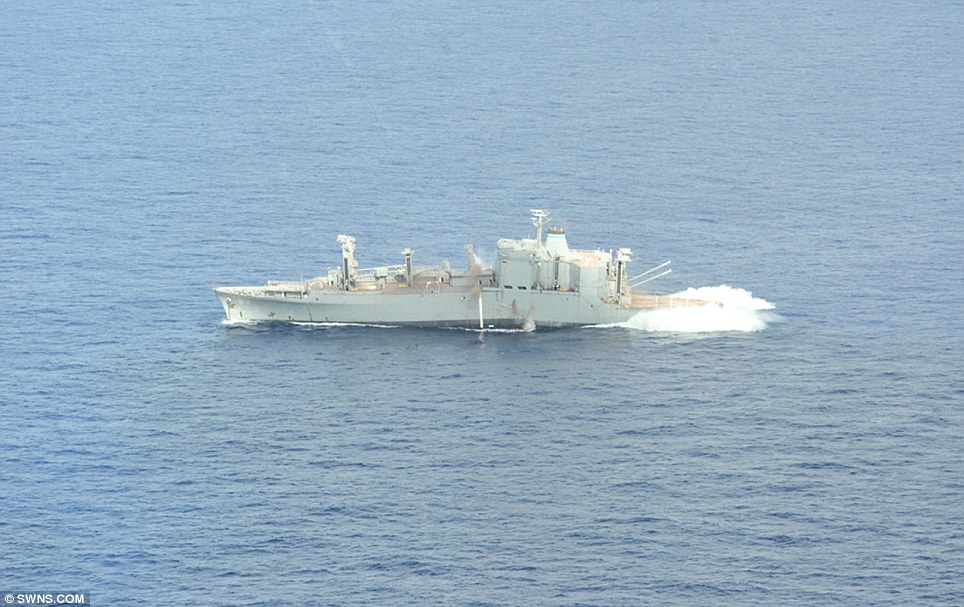
former USNS Kilauea breaks in half after being hit by the torpedo.
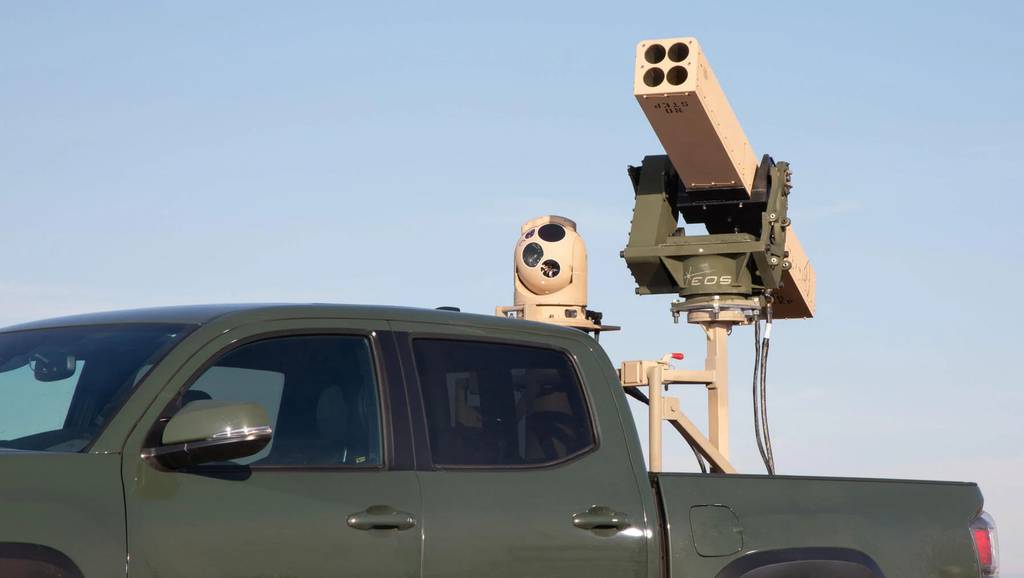
The VAMPIRE system can fit in almost any pickup or vehicle with a cargo bed. (Courtesy of L3Harris)
Below is an L3 Harris news release labeled as an editorial. If you are a regular reader of this blog, you know I have been a fan of APKWS since 2017. Tens of thousands of APKWS conversion kits are made annually. They are cheap at about $30,000. There is now a proximity fuse available. L3 Harris has integrated electro-optic sensors and fire control to create a complete system. It is combat proven against Unmanned Air Systems. It seems an almost ideal system for executing the Ports, Waterways, and Coastal Security mission against both surface and air asymmetric threats. Perhaps significantly, VAMPIRE is a Navy system.
ADAPTING LAND-BASED SYSTEMS FOR EFFECTIVE LOW-COST ENGAGEMENT SOLUTIONS AT SEA
In the ever-evolving landscape of maritime defense, innovation is paramount to staying ahead of emerging threats. L3Harris has been at the forefront of this mission, continually pushing the boundaries to enhance naval capabilities.
The VAMPIRE system, originally designed to address the emerging unmanned aerial systems (UAS) threat, has garnered acclaim for its precision and reliability in combat. Already proven on the ground in Ukraine, these effective, low-cost engagement capabilities can be extended to the seas, offering a transformative solution for maritime operations against UAS, fast inshore attack crafts and low-slow flyers.
The significance of the maritime system extends beyond its immediate capabilities. Its integration into naval operations redefines maritime security protocols, enhancing surveillance, reconnaissance, and deterrence capabilities. With the ability to swiftly detect and counter aerial and surface threats, naval forces can better safeguard maritime assets, ensure personnel safety, lower the weapons cost curve and maintain strategic superiority in contested environments.
The mission management system enables the integration onto manned and unmanned surface vessels featuring an advanced WESCAM MX™-10 MS targeting sensor with its weapons station, allowing a remote operator to engage targets quickly and accurately. Like its ground-based counterpart, maritime VAMPIRE employs the Advanced Precision Kill Weapon System (APKWS) paired with L3Harris’ proximity fuze to defend against surface and air threats, providing naval forces with an accurate, low-cost engagement capability.
The VAMPIRE system highlights L3Harris’ dedication to supporting the defense needs of nations across the globe. By extending this versatile solution to the maritime domain, L3Harris is providing naval forces with cost-appropriate options to adapt to evolving threats and safeguard waters effectively.
As the landscape of maritime security challenges undergoes constant evolution, forward-looking, full-scale production and low-cost solutions are needed to counter the wide range of dynamic challenges. L3Harris is committed to innovation and adaptability in addressing evolving security threats by leveraging and adapting existing technology like VAMPIRE for maritime use.
“US Coast Guard / CENTCOM released photo of weapons seized aboard an Iranian dhow…The seizure included UUV and USV components. The annotations, highlighting possible UUV parts, have been added.”
As reported earlier, on January 28,2023, USCGC Clarence Sutphin Jr. intercepted an arms shipment bound for Houthi controlled areas of Yemen. Somehow, I skipped over an aspect of the report.
The boarding team discovered over 200 packages that contained medium-range ballistic missile components, explosives, unmanned underwater/surface vehicle (UUV/USV) components, military-grade communication and network equipment, anti-tank guided missile launcher assemblies, and other military components. (emphasis added–Chuck)
H. I Sutton at “Covert Shores” amplifies on the story, identifying the likely UUV as a one-way attack system. An earlier post provides a bit more detail about the likely weapon.
It appears this weapon is slow, so it is more likely to be used against vessels that are anchored or moored. It might also be used against port infrastructure. It could be launched and/or controlled from any number of innocuous looking craft. Because the effects of an underwater explosion are amplified by the non-compressible nature of water, this weapon could cause very serious damage.
In addition to the Houthi, Iran and any of its client organizations may use this weapon.
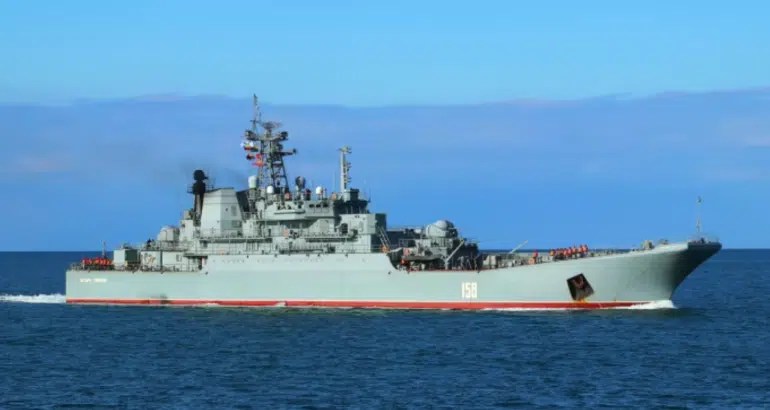
“Ukraine has claimed the destruction of another warship of the Russian Black Sea Fleet, the Ropucha class landing ship Cesar Kunikov (also written as Tsezar Kunikov) being the latest victim of explosives-laden naval drones off the coast of Crimea. Ukrainian officials claim that the landing ship was sunk in the overnight attack and available imagery shows the vessel capsized.”
I applaud what the Ukrainians are doing, but the Coast Guard needs to anticipate that we might someday be on the receiving end of this sort of attack. What are the Russians doing and could we do better?
So far, the Russian Black Sea Fleet has reportedly lost 24 surface units and a submarine to various forms of attack. But let’s look specifically at landing ships in the Black Sea which the Russians are using to transport supplies and reinforcements to Crimea.
Ropucha-I class landing ship Caesar Kunikov (Russian MoD photo)
Russia has been able to add some small combatants to the Black Sea Fleet using its River systems, but they are unable to add large ships, including landing ships because Turkey has closed access to the Black Sea by warships from the Mediterranean, so Russia cannot expect reinforcements. Apparently anticipating closure of the Dardanelles, the Russian Navy moved six additional landing ships into the Black Sea. Wikipedia reports,
In February 2022, prior to the full-scale Russian invasion of Ukraine, the landing ships Korolev, Minsk, Kaliningrad, Pyotr Morgunov, Georgy Pobedonosets, and Olenegorsky Gornyak from the Baltic Fleet and Northern fleets departed their bases and passed through the Dardanelles Strait for claimed Military exercise in the Black Sea.
In addition, a Ukrainian ship of this type was added to the Russian Black Sea Fleet when Russia occupied Crimea, but that ship is reportedly inactive. The Russians are apparently having difficulty maintaining these approximately 40 year old ships.
“According to Ukrainian Navy spokesperson Dmytro Pletenchuk, the Black Sea Fleet now has only fiveRopucha class ships remaining in service out of a previous total of 13 (additional units were transferred from the Baltic and Northern Fleets ahead of the full-scale invasion of Ukraine).” –This may refer to all types of LSTs, not just Rapucha class. They also lost a Tapir class LST.–Chuck
Ship Self-Defense:
Looking at this video, I could not help but think that the Ukrainians would have had a harder time if the Russian ship had enforced darken ship. At the very least the attackers might have had less time to coordinate their attack. The attacks are clearly made at night using electro optics, and a lighted target helps them. All that lighting also degrades the night vision of lookouts that might otherwise recognize that an attack is underway.
The Russian LST was well armed. The Rapucha class ship reported sunk, had two twin 57mm guns with a 200 round per minute rate of fire, so, theoretically, about four times the firepower provided by an NSC or OPC’s 57mm Mk110. You might think these would be effective against unmanned surface vessels, but I have yet to see any evidence in any of the videos of main gun systems being used against such attacks. They always seem to be pointed on the centerline.
It seems that in successful attacks, the target is late in recognizing it is under attack. I have to wonder if their weapons and sensors were manned and ready? Were lookouts posted? Were lookouts equipped with night vision devices?
Apparently, the attack occurred near the end of its voyage from Novorossiysk to Sevastopol. The ship was close enough to Sevastopol that smoke from wreck was visible on shore.
If you are intending to intercept a ship that may use evasive courses. The most logical place to intercept it would be near the known starting and ending points and in this case the ending point would have been an easier place to stage an ambush. It would also be the easiest place to provide protective units.
In an earlier attack, we saw the attacking USVs engaged by a helicopter. In this case, there seems to have been no overwatch.
Small boat escorts might help, even if all they did was provide eyes and ears away from the light and noise of the target vessel that could recognize the threat.
It would of course be critical that they escorting vessels not be fired upon by the targeted vessel, so recognition signal lights would probably be appropriate.
Pairs of boats ahead and on either side of the escorted vessel could alternately sprint and drift so as to minimize noise.
I would estimate escorting boats would want to patrol about 4,000 yards from the escorted vessel, but this is something that could be tested using watercraft with similar characteristics to the kamikaze USVs.
If armed with machine guns, escorting boats could attempt to engage the threats. If using tracer ammunition, even if unable to destroy the threat, they would be pointing out the threat to the target ship.
In many of these videos, it appears that the first hit which immobilizes the target occurs with USV in a pursuit curve coming up the stern of the vessel. An escorting boat in the wake of target vessel would be in a good position to prevent that first immobilizing hit.
The Ukrainian Navy’s press service recently released footage showcasing the combat effectiveness of their air defense units, marking the confirmed debut of a new Counter-Unmanned Air System (UAS) weapon system developed by L3Harris for Ukraine.
The video captured the moment when a Russian kamikaze drone, identified as the Shahed-136, was successfully shot down by an Advanced Precision Kill Weapon System (APKWS) laser-guided rocket launched from the Vampire weapon system.
It is probably less maintenance intensive than a .50 caliber machine gun.
It has a very small footprint and light weight.
Because it is a precision weapon, it minimizes the probability of collateral damage.
It is a proven counter Unmanned Air System.
It can employ a variety of warheads for different purposes including air burst with the M429 proximity fuse. It has even been tested successfully against cruise missiles.
It is effective against small, fast, highly maneuverable surface threats.
It has an effective range greater than that of our M38 gun mounts and a similar effective range to that of the 57mm and 76m guns.
While I would not count on its ability to stop medium to large ships, it can inflict damage at effective ranges beyond that of most weapons a terrorist organization might equip a vessel with. It is likely to be a lot more effective against small ships than the Mk38.
And it is cheap.
Without much additional effort, it could make Coast Guard assets much more capable in the Ports, Waterways & Coastal Security and Defense Readiness missions.
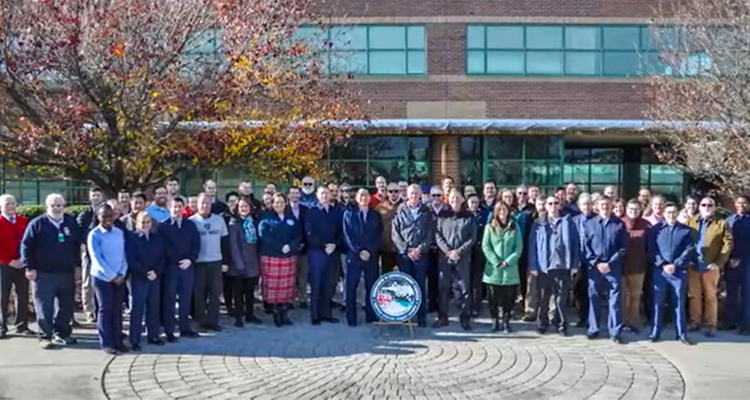
The Coast Guard Research and Development Center workforce is based in New London, Connecticut. U.S. Coast Guard photo.
Below is a news release from the Acquisitions Directorate (CG-9). If you follow the links there is a huge amount of information.
There is a lot of ongoing work, including cooperation with 4th Fleet in their efforts to operationalize unmanned systems. I had hoped the Coast Guard was doing that, and it’s gratifying to see they in fact are.
The projects listed are wide ranging and may potentially impact every mission area.
Perhaps the biggest surprise was that they are working on detect and avoid systems for small UAS. It appears they are looking at beyond visual line of sight UAS that could be used by the Fast Response Cutters and other vessels that do not have a flight deck. Apparently, they are also looking at using Unmanned Surface Vessels (USVs) to fire warning shots, presumably to stop drug runners. Would that mean they would also use USVs for disabling fire?
They are also looking at counter UAS alternatives, at ways to operate more effectively in polar regions, maritime domain awareness, and a lot more. It’s very impressive, especially when you consider how little the Coast Guard spends on R&D.
Feb. 7, 2024 —
In fiscal year 2023, the Coast Guard Research and Development Center in New London, Connecticut, supported a research portfolio of 54 projects, covering the full scope of the Coast Guard’s missions. This video highlights a few of those projects, including beyond visual line of sight unmanned aircraft system detect and avoid technology, cutter-based unmanned systems integration with the Ship Control and Navigation Training System, International Maritime Organization polar code validation through advanced simulation modeling, and laser corrosion removal.
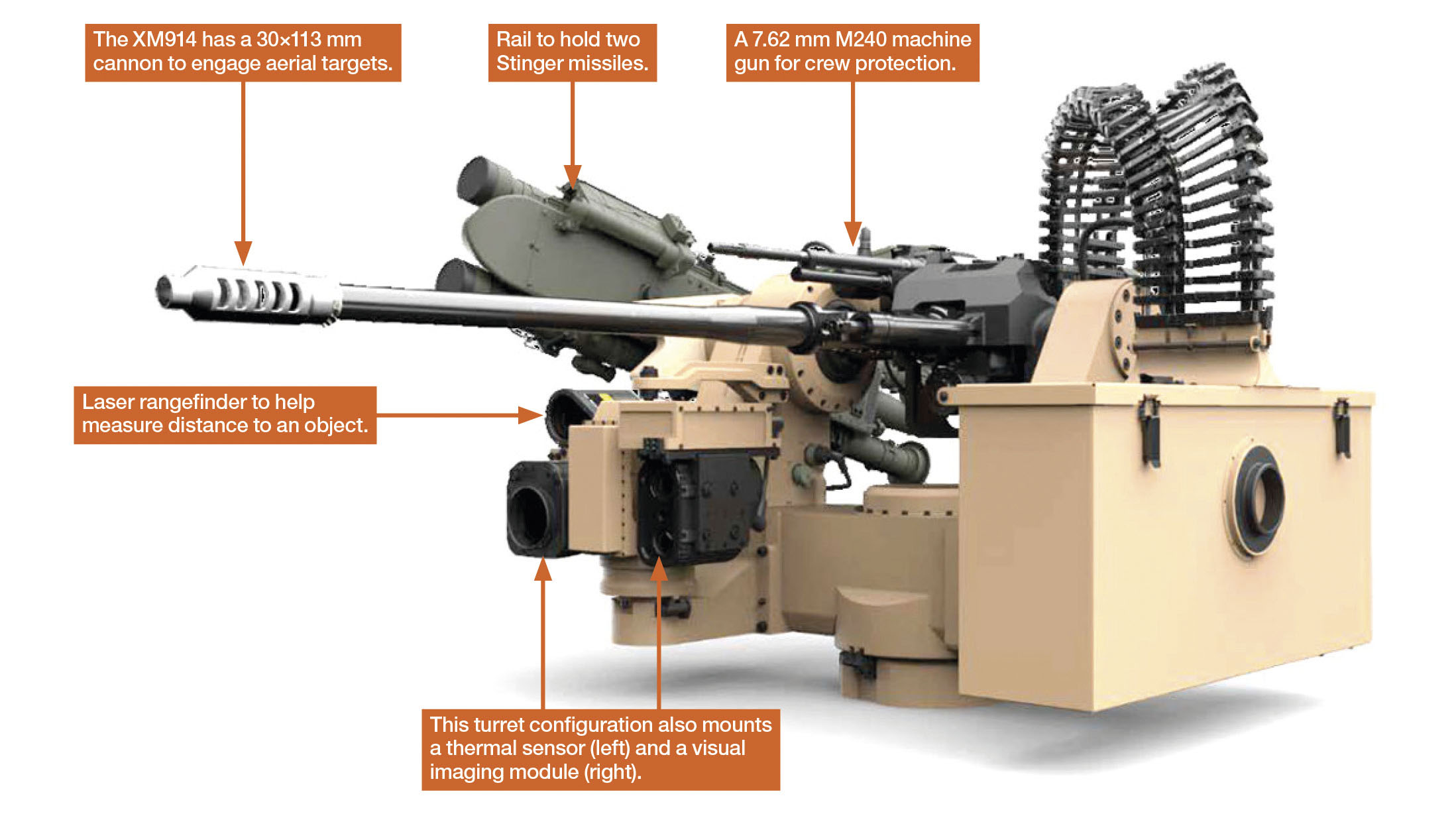
Interim Maneuver Short-Range Air Defense (IM-SHORAD). The sensors and remote weapon system used here looks like it might be a contender.
The Navy is looking for mature counter Unmanned Air Systems (c-UAS) that can be rapidly deployed. They have issued a Request For Information (FRI). Responses are due today, so we are talking near term if it happens.
Looks like it might be something the Coast Guard could use,
Marine Air Defense Remote Weapon Station. Use of this Remote Weapons Station would require an interface with cueing sensors.
Below is SECTION 3: [Requirements Overview]
PEO IWS 11.0 is looking for respondents to submit feasibility and capability information on innovative, mature solutions to counter Group 3-5 UAS from surface ships. System requirements include:
Mature systems that are in production and can be deployed in 1-6 months (preferred), or 6-12 months at the latest.
Demonstrated performance against Groups 3 to 5 UAS, with demonstrated capability against other classes of UAS’s being of interest.
Minimal integration requirements with Naval combat systems; with independent, self-contained capability highly desirable.
If the system is capable against Group 5 UAS (the largest UASs, over 1320 pounds (600 kg) and with no limit on their maximum speed) it’s likely the system will also have a capability against at least subsonic cruise missiles and manned aircraft and perhaps against winged smart bombs. After all, a Naval Strike missile fits the definition of a Group 4 UAS. Surface launched Harpoon or Tomahawk would be Group 5 UAS.
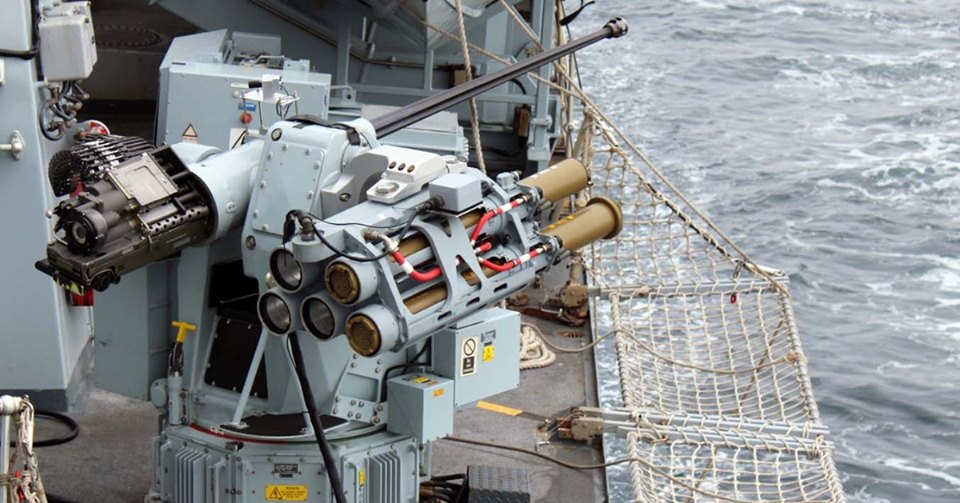
The War Zone has a fairly long post about this including discussion of alternatives. They seem to think these systems are destined for DDGs, but I think the need to equip other types, that do not have robust AAW capabilities, may be more urgent. If a C-UAS has an anti-surface capability, I could see such a system replacing Mk38 mounts. Alternately a 30mm Mk38 Mod4 mount that also mounts AAW missiles (like Stinger) might meet the requirement.
Martlet Light Multirole Missile launchers mounted on MSI 30mm gun mount that will be used in US Navy service as the 30mm Mk38 Mod4.
Mine Countermeasures Ships and MSC ships are currently essentially unarmed. They might be recipients.
“Minimal integration requirements with Naval combat systems; with independent, self-contained capability highly desirable” would certainly mean it should not be too difficult to add to a cutter.
A Phalanx Close-In Weapons system on the US destroyer Gravely downed an incoming Houthi cruise missile on Tuesday. This image shows the CIWS during a live-fire practice by a guided-missile cruiser in November 2023. MC2 Malachi Lakey/US Navy
“A Houthi anti-ship cruise missile fired into the Red Sea came within a mile of a US Navy destroyer (USS Gravely. DDG-107) on Tuesday, close enough that the American warship had to turn to its Close-In Weapon System (Phalanx)— a last line of defense.”
Nice to know it worked but bet the pucker factor was high. Gravely is not one of those Burke class destroyers that traded one of its Phalanx for SeaRAM.
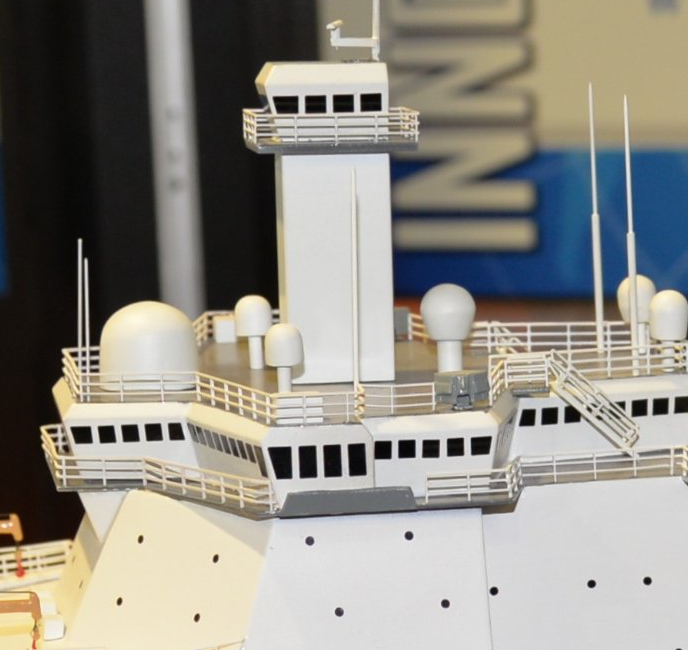
Photo of a model of Halter Marine’s Polar Security Cutter seen at Navy League’s Sea-Air-Space Exhibition have surfaced. Photo credit Chris Cavas.
Naval News reports on Coast Guard remarks about the Polar Security Cutter program at the Surface Navy Association annual symposium.
There is some good news. The Commandant says she is, “100% confident in the design…” The keel has not been laid, but “Welding work is commencing on three build units purchased for the first ship.” (That phraseology does sound a little strange to me.)
She goes on to say,
“I’m focused on fielding the Polar Security Cutters …. [and] getting that first one well into construction, with some predictability around when that ship will come to full operating capacity. We’re working hard with the yard, with the navy, and with the program office to bring some better certainty and clarity around that,” said Adm Fagan.
Which clearly means we do not yet have the predictability, certainty, and clarity the Commandant wants.
Explaining why this is not just an Icebreaker, Rear Admiral Chad Jacoby – USCG Assistant Commandant for Acquisition/Chief Acquisition Officer – told the symposium,
“The distinction there is the Polar Security Cutter is going to do way more than break ice. It will have National Security Cutter-level capabilities, sensors, and equipment on a hull that can go anywhere in the world in any season,” Rear Adm Jacoby continued. “So, we’re not just breaking ice, we’re not just having presence: we’re going to be able to execute almost all USCG missions up in the Arctic, down in the Antarctic, anywhere in the world.”
I look forward to learning what that actually means. It certainly isn’t in terms of installed armament. I don’t see an air-search radar on either the model presented (pictured above) or the illustrations I have seen.
Photo of a model of Halter Marine’s Polar Security Cutter seen at Navy League’s Sea-Air-Space Exhibition have surfaced. Photo credit Chris Cavas.
There do appear to be AN/SLQ-32 antennas on top of the bridge on the model (in gray). Could there also be a SCIF (Sensitive Compartmented Intelligence Facility) like there is on the National Security Cutter? There are also areas where containerized systems could be installed.
To me the most encouraging thing that has happened with regard to this class is that Bollinger took over the project when they purchased the shipyard that is building them. I wish them every success.






 Chuck Hill's CG Blog