“Fast Response Cutter Laydown, Report to Congress, November 15, 2023” –USCG

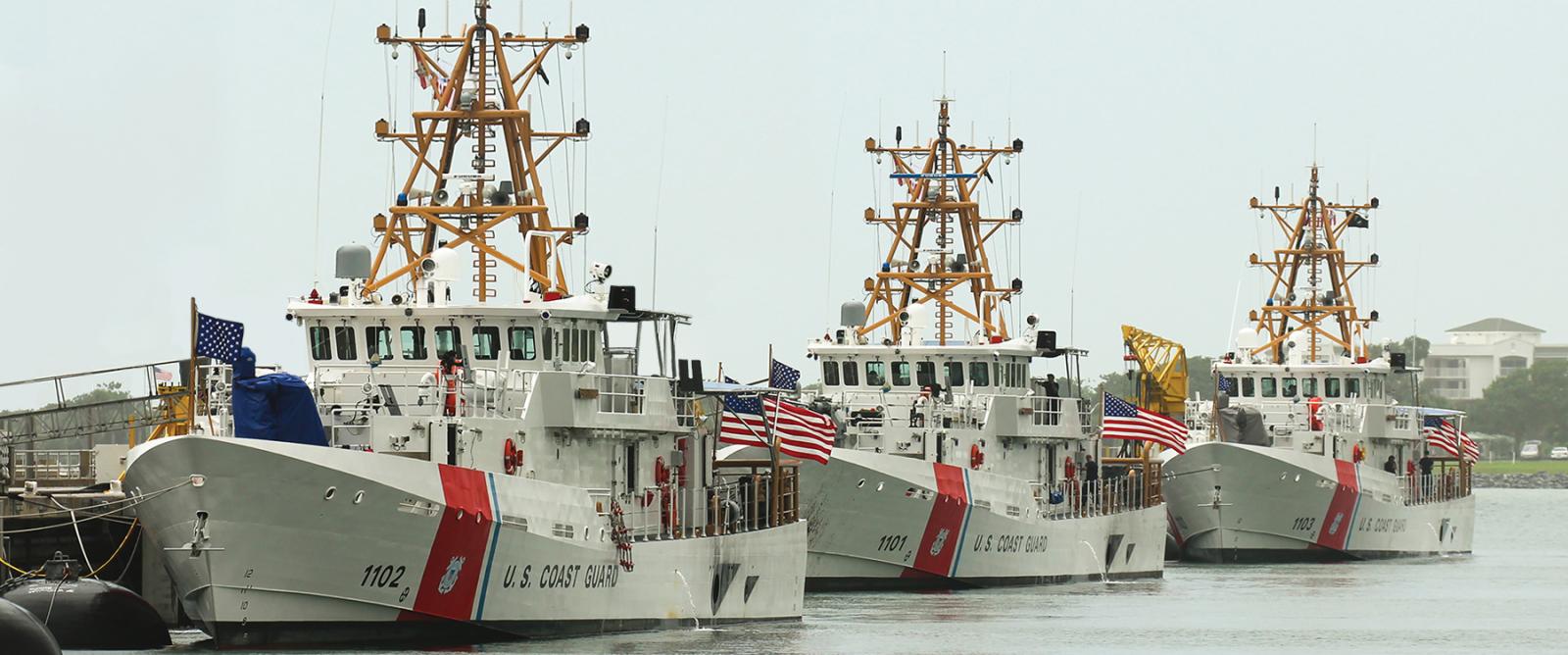
The first three fast response cutters—the USCGC Richard Etheridge (WPC-1102), Bernard C. Webber (WPC-1101), and William Flores (WPC-1103).
U.S. COAST GUARD

Just wanted to alert anyone interested to the existence of this document.

Don’t think there are any real surprises here, but homeports are a bit more complete than the Wikipedia information.

It does further clarify the fate of USCGC Benjamin Dailey (WPC-1123) that suffered a fire while in dry dock. The ship was found beyond economical repair, decommissioned, and is stored awaiting ultimate disposition. That means that the current plan is for 64 operational FRCs with a request outstanding for four more. It may mean at least one of the future FRCs will be based in Pascagoula, as a replacement.

“Anti-Ship Ballistic Missile Hits U.S.-Owned Container Ship In Gulf Of Aden” –The Drive

MV Gibraltar Eagle YouTube screencap

The Drive reports,

” A Marshall Islands-flagged, U.S. owned and operated container ship was struck by a Houthi anti-ship ballistic missile on Monday, U.S. Central Command said.

“There were no injuries or significant damage to the vessel, the M/V Gibraltar Eagle, which is continuing its journey. The vessel is a 200-meter long Ultramax container ship, according to its U.S. owner, Eagle Bulk Shipping.”

The Drive also offers an overview of the Houthi anti-ship capabilities, “The Anti-Ship Missile Arsenal Houthis Are Firing Into The Red Sea.

I believe this is the first time in history, a ship, underway, has been hit by a ballistic missile.

“No Injuries or significant damage”:

At about 200 meters in length, M/V Gibraltar Eagle, is not particularly large. I would say that it is medium sized.

This is one of those rare times like, the Tanker War, when we get to see how modern ships, at least merchant ships survive modern weapons.

So far, I don’t think any of these Houthi attacks has resulted in a mobility kill, much less a sinking.

Modern merchant ships are extremely resilient. A lot of their bulk is made up of non-critical space.

This has implication for the Coast Guard’s own Ports, Waterways, and Coastal Security mission. Explosions below the waterline, torpedoes and mines, remain the most effective way to forcibly stop a medium to large ship.

“Navy SEALs describe how boarding a ship is a team’s ‘sketchiest’ mission” –Task and Purpose

Members of the Coast Guard Cutter Waesche (WMSL-751) law enforcement boarding team inspect a self-propelled semi-submersible (SPSS) in international waters of the Eastern Pacific Ocean, Nov. 20, 2023. The interdiction of the SPSS yielded more than 5,500 pounds of cocaine. In November 2023, Waesche crewmembers seized approximately 18,219 pounds of cocaine, with an estimated street value of over $239 million, during four separate suspected drug smuggling vessel interdictions or events off the coasts of Mexico and Central and South America. (U.S. Coast Guard photo)

Task and Purpose reports,

“Two Navy SEALs went missing during a Visit, Board, Search and Seizure action near Somalia. Former SEALs say those VBSS missions were always among their most dangerous.”

Find it gratifying that Seals recognize the hazards of something the Coast Guard does routinely. Does seem they are more likely to do this in the dark.

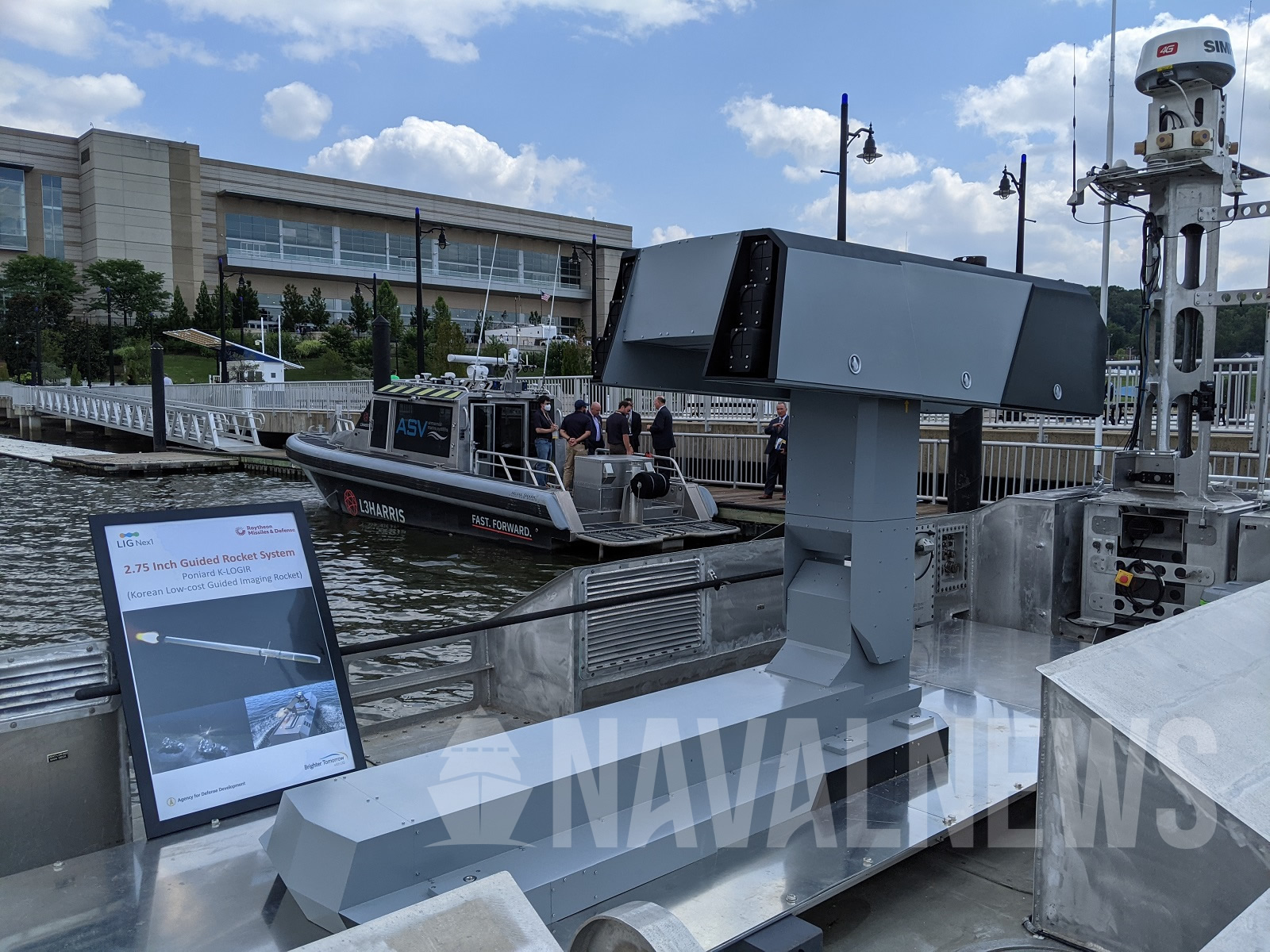
K-LOGIR, Korean Low cOst Guided Imaging Rocket and Launcher

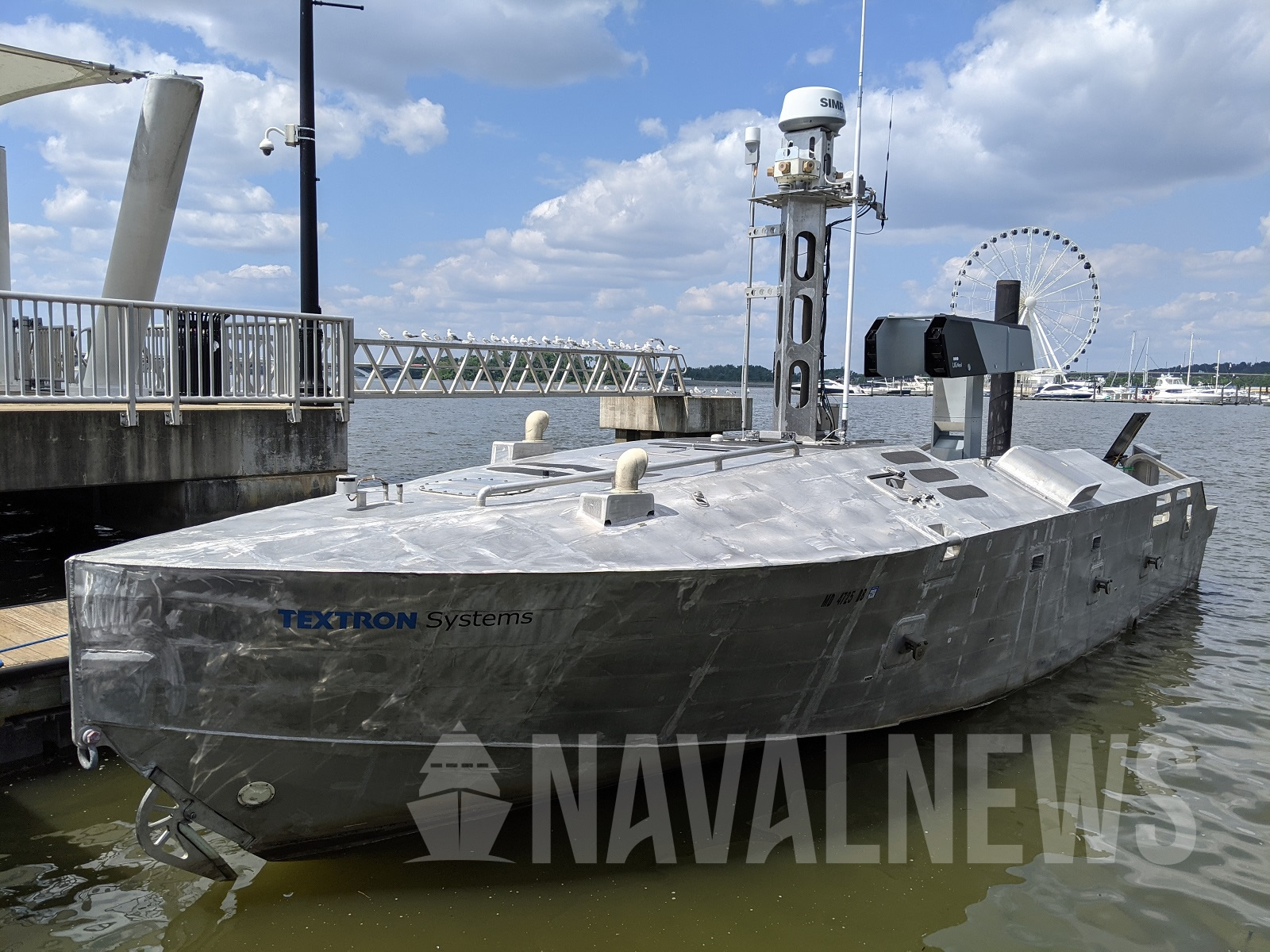
K-LOGIR launcher fitted on a Textron CUSV USV at Sea Air Space 2021. The system was showcased by Raytheon and LIG Nex1.

Naval News recently did a post highlighting a 4th Fleet live fire test combining a Korean developed fire and forget guided rocket system with the Common Uncrewed Surface Vessel (CUSV) cued to a target by a Radiosonde UAS for a fully uncrewed kill chain.

The “Poniard” Korean-Low cOst Guided Imaging Rocket (K-LOGIR) is closely related to the APKWS, both being based on the 70mm Hydra unguided rocket. Unlike the semi-active laser homing APKWS, the K-LOGIR is a fire-and-forget system allowing multiple simultaneous engagements.

Most of the reports I have read on this exercise are unclear if six missiles hit a single target or if six missiles hit six different targets, but this Defense Mirror report, “Textron’s Unmanned Boat Uses South Korean Weapon to Engage Multiple Targets.” makes it clear that multiple targets were engaged in a single salvo.

I don’t fully understand how they designate different targets for the missiles in the salvo, but it may be that they are sending them to different waypoints before they initiate their search.

The ability to engage several targets simultaneously makes this system attractive for countering surface swarm tactics like those that might be encountered by PATFORSWA, but for the Ports, Waterways, and Coastal Security mission, the APKWS’ semi-active laser homing might be a better solution, in that we are unlikely to have to engage numerous targets in a single salvo and we may want to target particular parts of an adversary’s vessel or perhaps engage low-level air targets such as UAS, helicopters, or general aviation aircraft. Presumably, APKS could be fired from the same launcher.

Textron USV fitted with LIG Next1’s Poniard guided rocket. Textron photo.

Take a look at the launcher above and below. Here it is mounted on an unmanned 39-foot boat. In the photo above you can see that it traverses and elevates. It appears to hold up to six rockets. It might be an appropriate way to arm Coast Guard patrol boats and larger cutters with APKWS, but “Vampire” might be even simpler.

K-LOGIR launcher fitted on a Textron CUSV USV at Sea Air Space 2021. The system was showcased by Raytheon and LIG Nex1.

I would really like to see 4th Fleet make more effort to publicize their experimentation efforts. I’m surprised I was not able to find a YouTube video that documented this test and I have seen no mention of it on the 4th Fleet website.

I am also curious to know if the Navy’s 39′ CUSV could be operated from the stern ramp of a National Security Cutter. Interoperability?

Very Interesting Questions: “Drone Warfare’s New Angle: Iran’s Shaheds Become Low-Cost Anti-Ship Missiles” –Covert Shores

Shahed-136One Way Attack Uncrewed Air Vehicle (), Source: Covert Shores

Covert Shores makes some interesting observations and asks pointed questions particularly in regard to the terminal homing phase of how the low-cost slow cruise missiles make their attacks on moving targets.

Hitting fixed target in Ukraine is very different from hitting a moving target hundreds of miles off the coast. Even an oil tanker is very small in the vastness of the ocean. The mission would need target location intelligence, and the drone would need targeting during its attack phase. The former is the same for any anti-ship weapon and can be achieved by patrol aircraft, fishing boats. Or, as possibly the case in the Chem Pluto attack, by the target broadcasting its position via AIS (automated information system).

The final phase targeting is more interesting. We do not know, at least in the public sphere, how the drones targeted the tankers. Whether it was a human-in-the-loop camera, or some form of automation.

Do they have satellite communications? Target recognition software? Home on AIS?

Presumably we have recovered at least one of the failed drones and can answer the question, but there is an even simpler solution.

Forward observers in one or more of the many Dhows that traffic the area, who call in a UAV when they have a target, and who can take over control of the drone when it arrives on scene, steering it into the target. This would be a continuation of what we saw with the Houthi remote control explosive motorboats, which unlike the USVs we are seeing in the Russo-Ukraine War, had no satellite link and were apparently steered by a second vessel within line of sight of the target and the attacking USV.  It is not unlikely the Iranians and Houthi have a network of such nondescript vessels. 

The slow speed of the UAVs does present something of a challenge in getting to the right place at the right time, but that is mitigated by the predictability of shipping lanes and the consistent speed of merchant vessels.

“Navy’s 4th Fleet sets sights on command center upgrades for drone ops” –Defense Scoop

Commercial operators deploy Saildrone Voyager Unmanned Surface Vessels (USVs) out to sea in the initial steps of U.S. 4th Fleet’s Operation Windward Stack during a launch from Naval Air Station Key West’s Mole Pier and Truman Harbor, Sept. 13, 2023. (U.S. Navy photo by Danette Baso Silvers/Released)

Defense Scoop reports,

“We have the robots and we’re making lots of progress there, but in terms of what we have at the headquarters and how we actually manage the command for it [and] how we manage that data — it’s overwhelming,” Rear Adm. Jim Aiken said.
I have been a bit disappointed, we have heard so little from 4th Fleet about their effort to integrate uncrewed systems into their operations.
4th Fleet is particularly important to the Coast Guard since it manages drug interdiction operations in the Caribbean and Eastern Pacific. There are also a significant number of Coast Guard personnel on the 4th Fleet staff, so there is an opportunity to learn a lot from their experience with uncrewed systems.
From what we had heard, 4th Fleet has had a good picture of drug smuggling traffic but were short of surface assets to do the actual intercepts and boardings. The uncrewed assets are obviously not helping with that. While they almost certainly provide some good data, they are also introducing a lot of noise into the system that 4th Fleet was not ready to filter out.

“Coast Guard reports fatality following counter drug mission in Caribbean Sea” –Coast Guard News

Below is a press release from Coast Guard news.

Coast Guard reports fatality following counter drug mission in Caribbean Sea

MIAMI – A Coast Guard crew’s airborne use of force to stop a non-compliant vessel suspected of smuggling illicit narcotics in the Caribbean Sea resulted in a fatality, Jan. 2, 2024.

Two other suspected smugglers were apprehended and face prosecution in U.S. federal courts by the Department of Justice. The seized contraband, approximately 385 kilograms of cocaine with an estimated wholesale value of $11.1 million, will be transferred ashore at a later date.

On Jan. 1, a U.S. Coast Guard law enforcement detachment deployed aboard a U.S. Navy ship in the Caribbean Sea for a counter drug patrol identified a vessel suspected of smuggling narcotics and attempted to stop the vessel. The vessel failed to stop and Coast Guard District Seven authorized airborne use of force in accordance with policy, including warning shots and disabling fire, for a non-compliant vessel suspected of smuggling illicit narcotics in international waters.

The law enforcement boarding team arrived on scene and identified that one of the crewmembers suffered an injury as a result of the use of force. Navy and Coast Guard members performed first aid and transferred the injured individual to the Navy ship before they were medically evacuated by a Navy helicopter to higher level care ashore in the Dominican Republic. The Coast Guard later received a report from Dominican authorities that the patient, a Dominican national, succumbed to their injuries.

“The critical homeland security missions the Coast Guard conducts every day as America’s primary maritime law enforcement agency are inherently dangerous,” said Lt. Cmdr. John W. Beal, Coast Guard District Seven public affairs officer. “The Coast Guard takes any loss of life seriously and is working to investigate the incident in accordance with Coast Guard policy.”

Detecting and interdicting illegal drug traffickers on the high seas involves significant interagency and international coordination. Once interdiction becomes imminent, the law enforcement phase of the operation begins and control of the operation shifts to the U.S. Coast Guard throughout the interdiction and apprehension phases. Interdictions in the Caribbean Sea are performed by members of the U.S. Coast Guard under the authority and control of the Coast Guard’s Seventh District, headquartered in Miami.

“US, Britain Blast Dozens of Houthi Targets in Yemen in Retaliatory Strikes” –Voice of America

Topographic map in English of the Red Sea, UTM projection (WGS84 datum). Author: Eric Gaba – Wikimedia Commons user: Sting

Voice of America reports,

U.S. Central Command late Thursday said the series of strikes hit more than 60 targets at 16 locations in Houthi-controlled parts of Yemen, including command and control nodes, munitions depots, launching systems, and production facilities.

“Russian and Chinese naval exercises: Reading between the lines” –The Watch

A Coast Guard Cutter Kimball crewmember observing a Russian Destroyer in the Bering Sea, September 19, 2022. Coast Guard Photo

The Watch provides an opinion piece by ADAM LAJEUNESSE, PHD, an associate professor in the public policy and governance program, at St. Francis Xavier University in Canada.

He discusses why the Russians and Chinese decided to extend their exercise into waters near Alaska, and what the US response should be to such demonstrations.

Managing the response is therefore a balancing act. These activities cannot be ignored or even downplayed, but emphasis should be put on short-circuiting adversary messaging. Beijing is anxious to paint U.S. FONOPs as shams. While the U.S. government has been disciplined in its messaging as it was during a similar voyage in 2021, more emphasis should be placed on the PRC’s right to be there. Though it may seem counterintuitive, there is a benefit to overtly recognizing Chinese ships’ right to be in the region. While that may be politically tricky, it should be possible to warn of the dangers posed by the PRC’s navy generally, while also emphasizing its right to be anywhere on the high seas.

Russia’s attempt to portray itself as a great power equal, capable of threatening the U.S. homeland can, likewise, be turned back upon itself. The reality is that Moscow’s weakness has forced it to increasingly rely on the PRC for economic and political support. Its naval partnership should be addressed more explicitly for what it is, the gradual replacing of Russian power in the North Pacific and, potentially, the Arctic by the PRC.

His evaluation is a perfect explanation of why having such exercises monitored by Coast Guard cutters, as had been done in 2021 and 2022, was a perfect response. (In fact, Chinese warships transited US territorial waters in 2015.)

Why the change in 2023?

To some extent at least, I think the Navy response, specifically sending DDGs to shadow the group, was because they were stung by unfair criticism, that we looked weak because there had been no obvious US Navy presence previously.

If NORTHCOM wanted to take out the Chinese/Russian surface action group (SAG), air assets could have done the job. That the US Navy SAG never exceeded four units, if anything does make us look weak.

Perhaps a USAF B-1 fly-over on a day when no live fire exercises were scheduled might have been an appropriate response. (B-1s with LRASM are a particularly deadly anti-ship combination.)

If there had been hostilities, putting a numerically inferior US Navy SAG close to a potentially hostile SAG, might have just resulted in a friendly fire incident, if the Air Force confused US units with Chinese or Russian units.

Also, we should never miss an opportunity to remind the Russians, they have reason to fear China more than the US. The Russian ships in the SAG were all either older or smaller than their Chinese counterparts, and I am sure the Chinese made it abundantly clear to the Russians, that they had outgrown any Russian tutoring.