“Navy’s 4th Fleet sets sights on command center upgrades for drone ops” –Defense Scoop

Commercial operators deploy Saildrone Voyager Unmanned Surface Vessels (USVs) out to sea in the initial steps of U.S. 4th Fleet’s Operation Windward Stack during a launch from Naval Air Station Key West’s Mole Pier and Truman Harbor, Sept. 13, 2023. (U.S. Navy photo by Danette Baso Silvers/Released)

Defense Scoop reports,

“We have the robots and we’re making lots of progress there, but in terms of what we have at the headquarters and how we actually manage the command for it [and] how we manage that data — it’s overwhelming,” Rear Adm. Jim Aiken said.
I have been a bit disappointed, we have heard so little from 4th Fleet about their effort to integrate uncrewed systems into their operations.
4th Fleet is particularly important to the Coast Guard since it manages drug interdiction operations in the Caribbean and Eastern Pacific. There are also a significant number of Coast Guard personnel on the 4th Fleet staff, so there is an opportunity to learn a lot from their experience with uncrewed systems.
From what we had heard, 4th Fleet has had a good picture of drug smuggling traffic but were short of surface assets to do the actual intercepts and boardings. The uncrewed assets are obviously not helping with that. While they almost certainly provide some good data, they are also introducing a lot of noise into the system that 4th Fleet was not ready to filter out.

“Coast Guard reports fatality following counter drug mission in Caribbean Sea” –Coast Guard News

Below is a press release from Coast Guard news.

Coast Guard reports fatality following counter drug mission in Caribbean Sea

MIAMI – A Coast Guard crew’s airborne use of force to stop a non-compliant vessel suspected of smuggling illicit narcotics in the Caribbean Sea resulted in a fatality, Jan. 2, 2024.

Two other suspected smugglers were apprehended and face prosecution in U.S. federal courts by the Department of Justice. The seized contraband, approximately 385 kilograms of cocaine with an estimated wholesale value of $11.1 million, will be transferred ashore at a later date.

On Jan. 1, a U.S. Coast Guard law enforcement detachment deployed aboard a U.S. Navy ship in the Caribbean Sea for a counter drug patrol identified a vessel suspected of smuggling narcotics and attempted to stop the vessel. The vessel failed to stop and Coast Guard District Seven authorized airborne use of force in accordance with policy, including warning shots and disabling fire, for a non-compliant vessel suspected of smuggling illicit narcotics in international waters.

The law enforcement boarding team arrived on scene and identified that one of the crewmembers suffered an injury as a result of the use of force. Navy and Coast Guard members performed first aid and transferred the injured individual to the Navy ship before they were medically evacuated by a Navy helicopter to higher level care ashore in the Dominican Republic. The Coast Guard later received a report from Dominican authorities that the patient, a Dominican national, succumbed to their injuries.

“The critical homeland security missions the Coast Guard conducts every day as America’s primary maritime law enforcement agency are inherently dangerous,” said Lt. Cmdr. John W. Beal, Coast Guard District Seven public affairs officer. “The Coast Guard takes any loss of life seriously and is working to investigate the incident in accordance with Coast Guard policy.”

Detecting and interdicting illegal drug traffickers on the high seas involves significant interagency and international coordination. Once interdiction becomes imminent, the law enforcement phase of the operation begins and control of the operation shifts to the U.S. Coast Guard throughout the interdiction and apprehension phases. Interdictions in the Caribbean Sea are performed by members of the U.S. Coast Guard under the authority and control of the Coast Guard’s Seventh District, headquartered in Miami.

“US, Britain Blast Dozens of Houthi Targets in Yemen in Retaliatory Strikes” –Voice of America

Topographic map in English of the Red Sea, UTM projection (WGS84 datum). Author: Eric Gaba – Wikimedia Commons user: Sting

Voice of America reports,

U.S. Central Command late Thursday said the series of strikes hit more than 60 targets at 16 locations in Houthi-controlled parts of Yemen, including command and control nodes, munitions depots, launching systems, and production facilities.

“Russian and Chinese naval exercises: Reading between the lines” –The Watch

A Coast Guard Cutter Kimball crewmember observing a Russian Destroyer in the Bering Sea, September 19, 2022. Coast Guard Photo

The Watch provides an opinion piece by ADAM LAJEUNESSE, PHD, an associate professor in the public policy and governance program, at St. Francis Xavier University in Canada.

He discusses why the Russians and Chinese decided to extend their exercise into waters near Alaska, and what the US response should be to such demonstrations.

Managing the response is therefore a balancing act. These activities cannot be ignored or even downplayed, but emphasis should be put on short-circuiting adversary messaging. Beijing is anxious to paint U.S. FONOPs as shams. While the U.S. government has been disciplined in its messaging as it was during a similar voyage in 2021, more emphasis should be placed on the PRC’s right to be there. Though it may seem counterintuitive, there is a benefit to overtly recognizing Chinese ships’ right to be in the region. While that may be politically tricky, it should be possible to warn of the dangers posed by the PRC’s navy generally, while also emphasizing its right to be anywhere on the high seas.

Russia’s attempt to portray itself as a great power equal, capable of threatening the U.S. homeland can, likewise, be turned back upon itself. The reality is that Moscow’s weakness has forced it to increasingly rely on the PRC for economic and political support. Its naval partnership should be addressed more explicitly for what it is, the gradual replacing of Russian power in the North Pacific and, potentially, the Arctic by the PRC.

His evaluation is a perfect explanation of why having such exercises monitored by Coast Guard cutters, as had been done in 2021 and 2022, was a perfect response. (In fact, Chinese warships transited US territorial waters in 2015.)

Why the change in 2023?

To some extent at least, I think the Navy response, specifically sending DDGs to shadow the group, was because they were stung by unfair criticism, that we looked weak because there had been no obvious US Navy presence previously.

If NORTHCOM wanted to take out the Chinese/Russian surface action group (SAG), air assets could have done the job. That the US Navy SAG never exceeded four units, if anything does make us look weak.

Perhaps a USAF B-1 fly-over on a day when no live fire exercises were scheduled might have been an appropriate response. (B-1s with LRASM are a particularly deadly anti-ship combination.)

If there had been hostilities, putting a numerically inferior US Navy SAG close to a potentially hostile SAG, might have just resulted in a friendly fire incident, if the Air Force confused US units with Chinese or Russian units.

Also, we should never miss an opportunity to remind the Russians, they have reason to fear China more than the US. The Russian ships in the SAG were all either older or smaller than their Chinese counterparts, and I am sure the Chinese made it abundantly clear to the Russians, that they had outgrown any Russian tutoring.

“Royal Bermuda Regiment hosts Caribbean overseas territories to improve SAR capability” –The Watch

British Overseas Territories in the Caribbean in blue. Credit: Bild der Karte:

Royal Bermuda Regiment hosts Caribbean overseas territories to improve SAR capabilities–Jan 5, 2024

Five British Overseas Territories recently took part in a two-week training session led by the United Kingdom Coast Guard and the Royal National Lifeboat Institute (RNLI), a nonprofit that trains coast guards globally, with the goal of improving the interoperability of Caribbean search and rescue (SAR) operations.

Anguilla, the British Virgin Islands, the Cayman Islands, Montserrat, and the Turks and Caicos Islands participated in water-based exercises and tabletop exercises at the Royal Bermuda Regiment’s Coast Guard headquarters in Sandys.

His Majesty’s Coastguard Cmdr. Callum Jarvis said one of the key elements of the training was to introduce new scenarios to the Caribbean coast guards.

A big part of this has been using the experiences of the guys — they’ve worked within their own organizations and had their own experiences, so we’ve been drawing those out of them but also exposing them to things that don’t happen so often, so not your usual type of cases but still a potential threat,” Callum said in a Royal Bermuda Regiment news release.

“We’ve looked at the general trend of what happens in Bermuda — lots of small leisure boats, that sort of thing — and we’ve also covered incidents with merchant vessels, for example, which guys here aren’t quite so used to. We focused on Bermuda as a location, but things can happen anywhere globally and hopefully now if there is something they’re less familiar with, they will be well prepared for it.”
The training scenarios included locating overdue vessels and setting up mayday relay protocols.

Dave Whiddon, a RNLI senior international programs manager, said, “The whole idea of our international work is to help organizations build their search and rescue capacity. We like to be able to share our expertise and knowledge, but also it’s a good opportunity for us to learn as well and bring back learning to our own organizations.”
Royal Bermuda Regiment Lance Cpl. Quinton Burgess said the value of the exercise is that he can now train others.

“They’ve been here training us to be trainers, to take the information and impart it to the rest of our teams. We’ve been doing lots of things: search and rescue coordination, search and rescue tasking, man overboard drills, docking drills, coming alongside, anchoring drills and a lot of class work as well,” said Burgess in the news release.

“These are skills that we will use and they’re also things that we will teach new recruits when they come to the Coast Guard.”

Midshipman Ericka Rockett-McBean of the Cayman Islands Coast Guard enjoyed the opportunity to learn next to crews from different jurisdictions.

“It’s nice to know and relate to people in other overseas territories.”

“Red Sea Convoy Clash: US Vessels Attacked | Iranian Spy Ship | Will China Shield You?”

This the latest in the series, “What’s Going on With Shipping?” The accompanying description is quoted below.

“In this episode, Sal Mercogliano – maritime historian at Campbell University (@campbelledu) and former merchant mariner – discusses the battle between the Houthi and US and Royal Navy forces of Operation Prosperity Guardian on Jan 9, 2024. A first-hand report of the battle, the role of an Iranian spy ship, and how China is promoting their flag as a defense.”

There is some very interesting discussion here regarding lack of communications between the merchant ships and the navy vessels, US and British.

“First Drug Interdiction of the Year for CMF French-led Combined Task Force 150” — Combined Maritime Forces Public Affairs

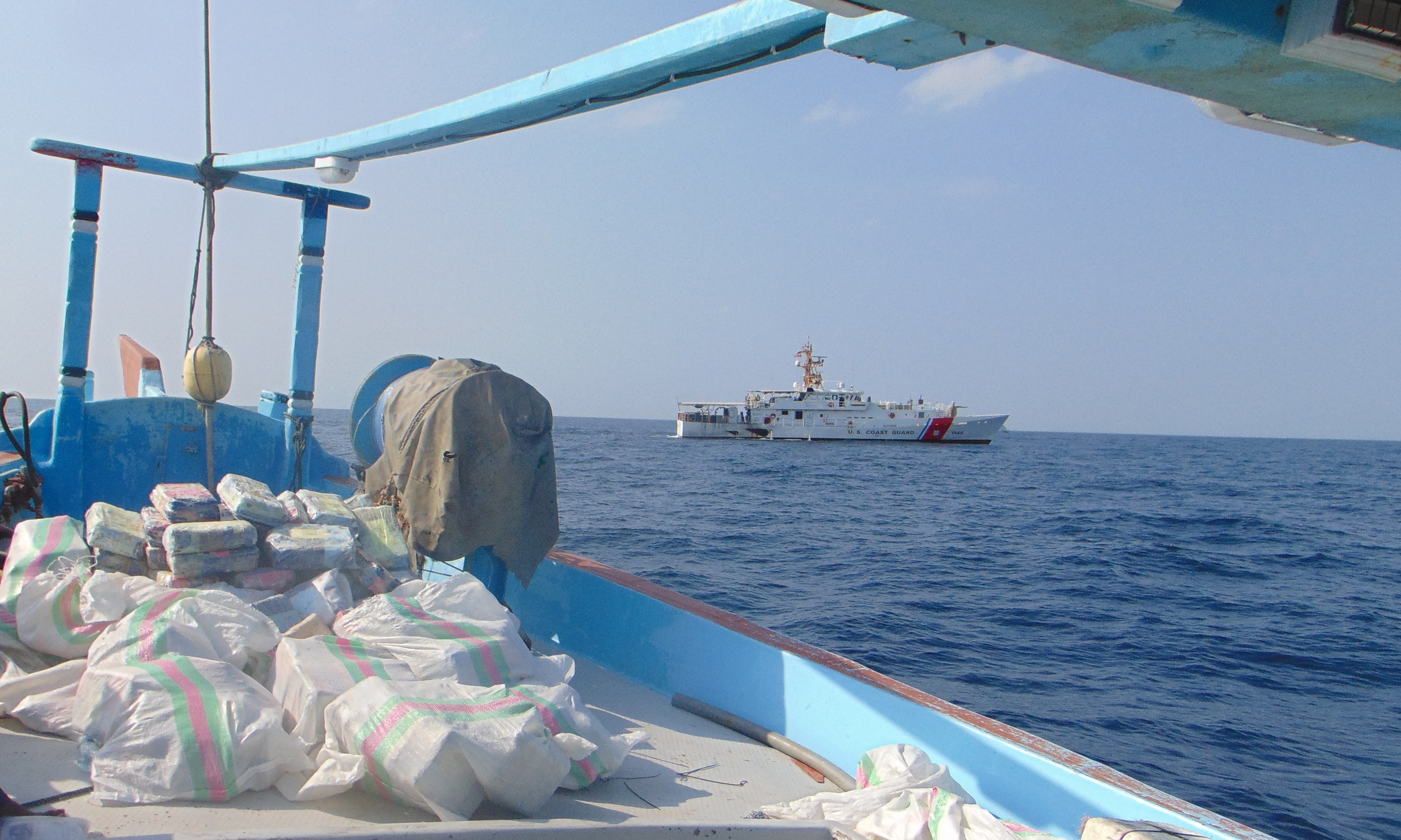
GULF OF OMAN (Jan. 5, 2024) U.S. Coast Guard Sentinel-class fast response cutter USCGC Emlen Tunnell (WPC 1145) seizes bags of illegal narcotics from a vessel in the Gulf of Oman, Jan. 5. Emlen Tunnell was operating under Combined Task Force 150, one of five task forces under Combined Maritime Forces, the largest multinational naval partnership in the world. CTF 150 focuses on maritime security operations outside the Arabian Gulf. (Photo by U.S. Coast Guard courtesy photo)

Below is a news release from Combined Maritime Forces Public Affairs.

MANAMA, Bahrain —January 08, 2024A U.S. Coast Guard cutter operating under the French-led Combined Task Force 150 of the Combined Maritime Forces seized about $11 million worth of illegal drugs from a vessel while operating in the international waters of the Gulf of Oman, Jan. 5.

Coast Guardsmen from the Sentinel-class fast response cutter USCGC Emlen Tunnell (WPC 1145), seized 37 kilograms of heroin, 187 kilograms of methamphetamine and five kilograms of cocaine from the vessel following a search. Following the seizure, the Emlen Tunnell team released the dhow and disposed of the illicit drugs.

Prior to the seizure, while in support to CTF 150, Royal Navy frigate HMS Lancaster gathered intelligence on the dhow, which had been identified as a vessel of interest. Information including imagery and location of the dhow was shared with the Emlen Tunnell and the French maritime patrol aircraft Wallaby, which allowed the Emlen Tunnell to track and execute the interdiction.

This interdiction marked the first seizure of the year for CTF 150 and follows on from a highly successful 2023, with 12 drug busts since the French assumed command in July 2023.

This latest seizure for CTF 150 demonstrated the value of CMF nations working together to share information, leading to another successful narcotics seizure.

CTF 150 is one of five task forces under Combined Maritime Forces, the world’s largest multinational naval partnership, and focuses on maritime security operations in the Gulf of Oman, Arabian Sea and Indian Ocean.

The 39-nation naval partnership is committed to disrupting criminal and terrorist activities by restricting freedom of maneuver across approximately 3.2 million square miles of international waters encompassing some of the world’s most important shipping lanes.

Since 2021, Combined Maritime Forces has seized more than $1 billion in illegal drugs while patrolling waters across the Middle East.

“FS Dumont d’Urville Makes First Visit to Florida” –SeaWaves

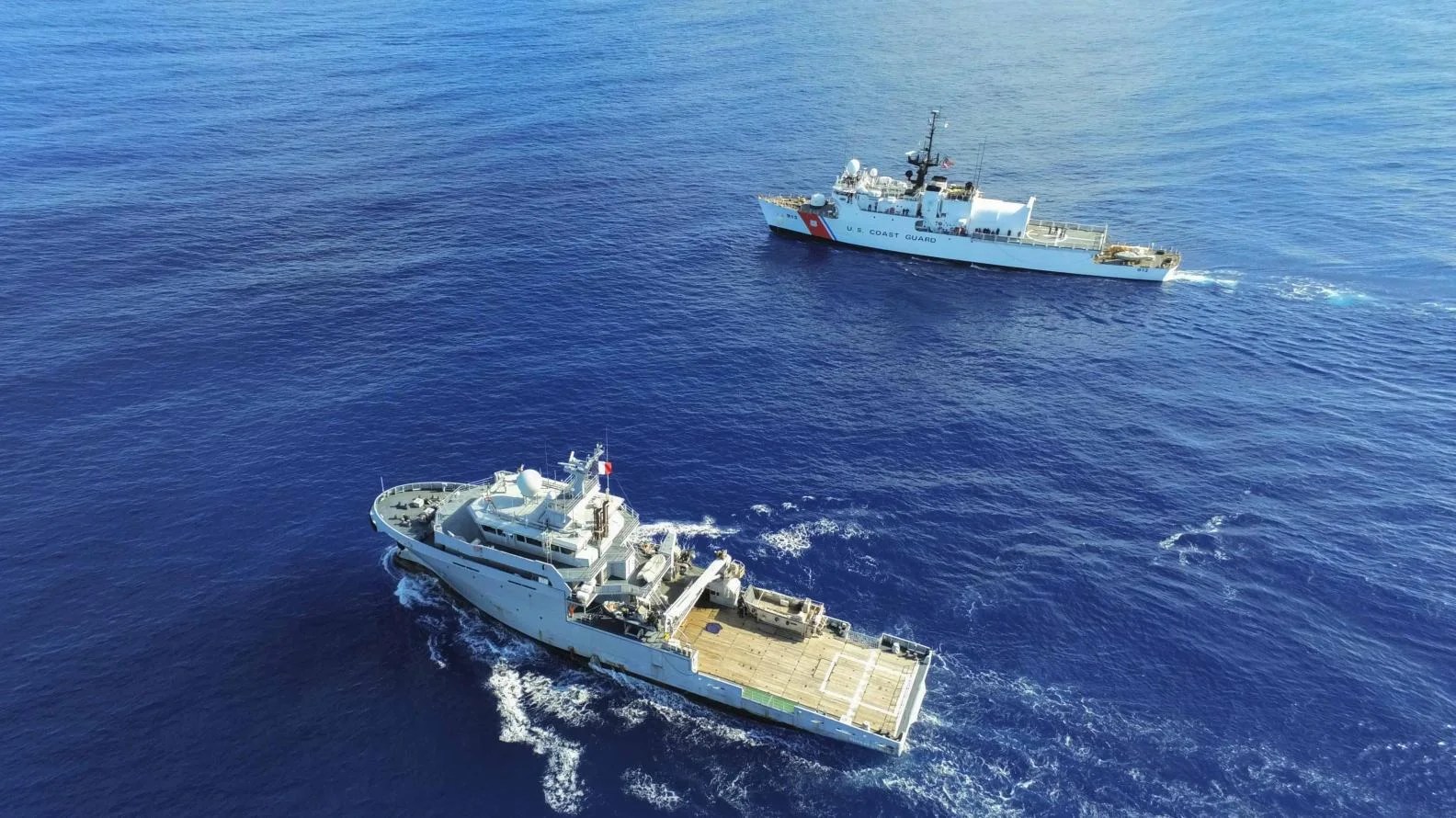
FS Dumont d’Urville and USCGC Mohawk conduct joint exercises, Dec. 6,2023

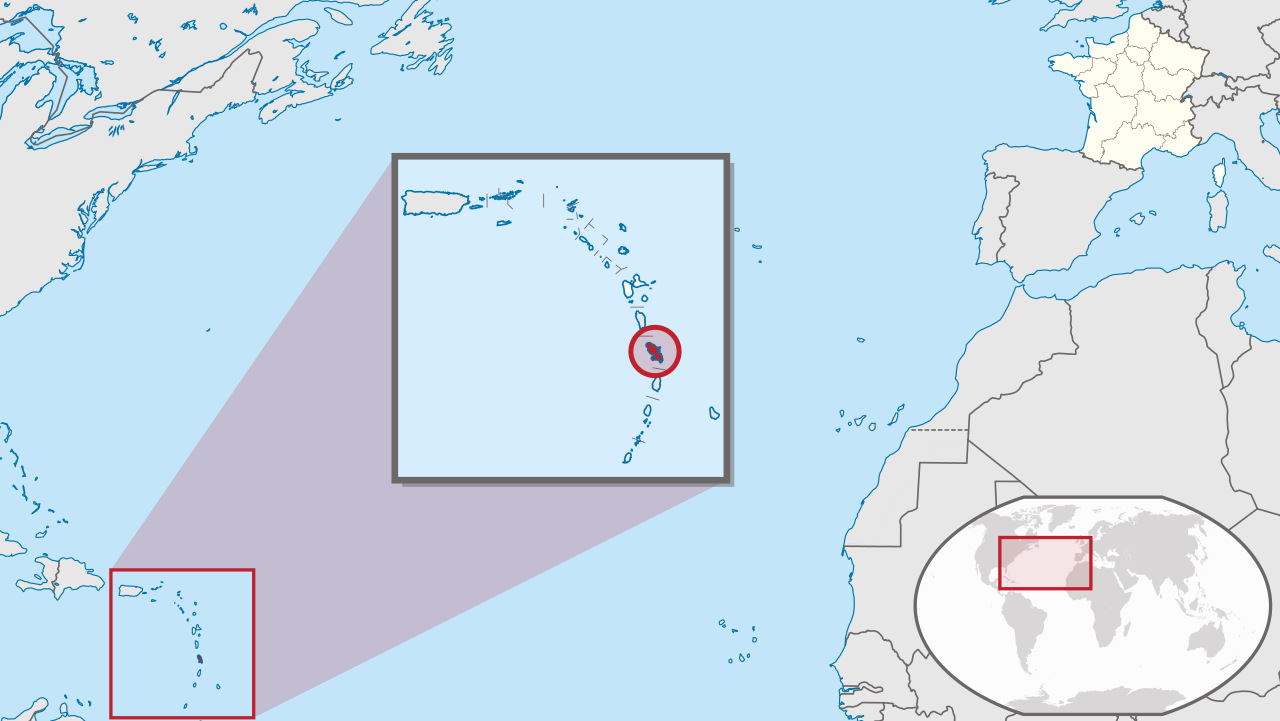
SeaWaves reports on a visit by the French “Overseas Support and Assistance Building” (BSAOM) ship Dumont d’Urville to Coast Guard Base Miami following its first operational mission. The ship is based in Fort-de-France, Martinique.

Location of Martinique, a department of France. Author: Tubs, via Wikipedia.

We talked about this class of four ships before. There is a lot of information, including additional links, in the comments.

d’Entrecasteux-class / BSAOM vessels main characteristics:

Length overall: 64.95 m (213′)
Breadth: 14 m (46′)
Draft: 4.20 m
Displacement (full load): 2,300 tons
Displacement (light): 1,500 tons
Speed (max): 13 knots (also reported as high as 15 knots)
Hull / superstructure: Steel
Amenities: 23 (crew) + 60 passengers
Cargo capacity: 200 tons (solid cargo) / 150 m3 of water / 180 m3 of fuel
Endurance: 30 days at sea

“China Protests as U.S. Carrier Goes on Patrol With Philippine Navy” –Maritime Executive

BRP Ramon Alcaraz (former USCGC Dallas) equipped with new Sea Giraffe multi-mode radar in Cebu.

Maritime Executive reports,

“This week, the Carl Vinson Carrier Strike Group will carry out a two-day joint patrol with Philippine forces…The carrier USS Carl Vinson leads the exercise, accompanied by cruiser USS Princeton and destroyers USS Sterett and USS Kidd. The Philippine contributions include the former U.S. Coast Guard cutters USCGC Hamilton and USCGC Dallas, which were transferred to the Philippine Navy and renamed.

USS Dewey (DDG-105), bottom, steams in formation with the Philippine Navy offshore patrol vessel BRP Gregorio del Pilar (PS 15, the former USCGC Hamilton) while conducting a bilateral sail in the South China Sea, Oct. 21, 2023. US Navy Photo

The following information is from Wikipedia, concerning their ongoing modernization.

The Philippine Navy plans to modernize the entire ship of the class, with an initial program to upgrade the ship’s sensors, and another program to improve its weapon systems.

Several systems were acquired through US Foreign Military Sales (FMS) and Foreign Military Financing (FMF), which includes the BAE Systems Mk. 38 Mod. 2 machine gun system, the SAAB AN/SPS-77 Sea Giraffe AMB 3D air/surface search radar, and the FLIR Systems SeaFLIR 230 Electro-Optical/Infra-Red Camera.[20]

Meanwhile, the Philippine Navy will launch a program to acquire, install and integrate several other sensors into the ship, as part of the Horizon 2 phase of the Revised AFP Modernization Program. Among those to be acquired are new Combat Management System (CMS), Hull Mounted Sonar (HMS), and a Radar Electronic Support Measures (R-ESM).

Future upgrades are planned to install defensive and offensive missile systems, as well as torpedo weapon system, although funding is still being secured and might only be included in the next phase of the Navy’s modernization program.

In 2020 October 14, Navy chief Giovanni Carlo Bacordo revealed the completion of the 3D modeling program for the entire ship class’ cabling systems to be used for their electronic upgrades (CMS + 4 sensors).