Thought I would share this video. Found it on a SeaWaves post, Patrolling Greenland on Denmark’s HDMS Triton. HMDS Triton a Thetis class patrol frigate. These ships do Coast Guard type work in or near the Arctic. It is a type of ship that you will not find in the Coast Guard fleet, but one that we may want to add in the future. It is ice strengthened. As a ship that operates in an area where icing is common. its ground tackle (anchor handling equipment) is below the foc’sle deck, and its boats and boat handling gear can be enclosed. The crew is relatively small (I think they are double crewed to get more underway time), but additional berthing is available, and weapons can be added using the Stanflex system.
Arctic (orthographic projection) with national borders and land highlighted. Credit Heraldry, Isochrone, via Wikipedia, 23 July 2023.
Below is the narrative that accompanied the YouTube video.
The Arctic region is the gateway to the North Atlantic. For NATO and its Allies, maintaining a strong presence here is vital to protect trade, transport and communication links between North America and Europe.
As climate change causes the polar ice caps to melt and the sea levels to rise, new sea routes are beginning to emerge, which could present a threat to Euro-Atlantic security. Greenland is considered by scientists to be ground zero for climate change. Along with the Faroe Islands, it forms part of the Kingdom of Denmark and is therefore under Danish military protection. That protection falls to the Joint Arctic Command, or JACO, a Danish-led operational command with a central headquarters in Nuuk, Greenland’s capital.
Join the Danish Armed Forces in Greenland, at sea, in the air and on land, to discover more about how security might be affected in this region and learn about the capabilities and experience NATO Ally Denmark has in the North Atlantic area.
What surprised me most in the new “The Drive” article was that the systems were developed my NAVAIR. That means this is a Navy developed system. Since the Coast Guard gets all of its weapons, other than small arms, from the Navy, that may mean the Coast Guard may be more likely to be able to get the system.
The Vampire combination of APKWS, Electro-Optic Sensors, and Firecontrol seems to be the easiest way for the Coast Guard to protect high value targets from potential air and surface suicide drone attacks without spraying bullets that may cause collateral damage. It is also flexible enough to be used against small, fast, highly maneuverable surface threats. It might even be useful against larger targets. It certainly seems to be exceptionally effective for its cost, weight, support requirements, and minimal footprint.
I would like to see them on all cutters, but getting this sort of capability for the cutters in PATFORSWA is most urgent.
A Coast Guard C-27J Spartan crew, assigned to Coast Guard Air Station Sacramento, flies over San Francisco, California, during area of responsibility familiarization training, Monday, Feb. 6, 2018. The C-27Js are outfitted with weather radar and communications equipment capable of supporting transport and other Coast Guard missions. Coast Guard photo by Lt. Scott Handlin
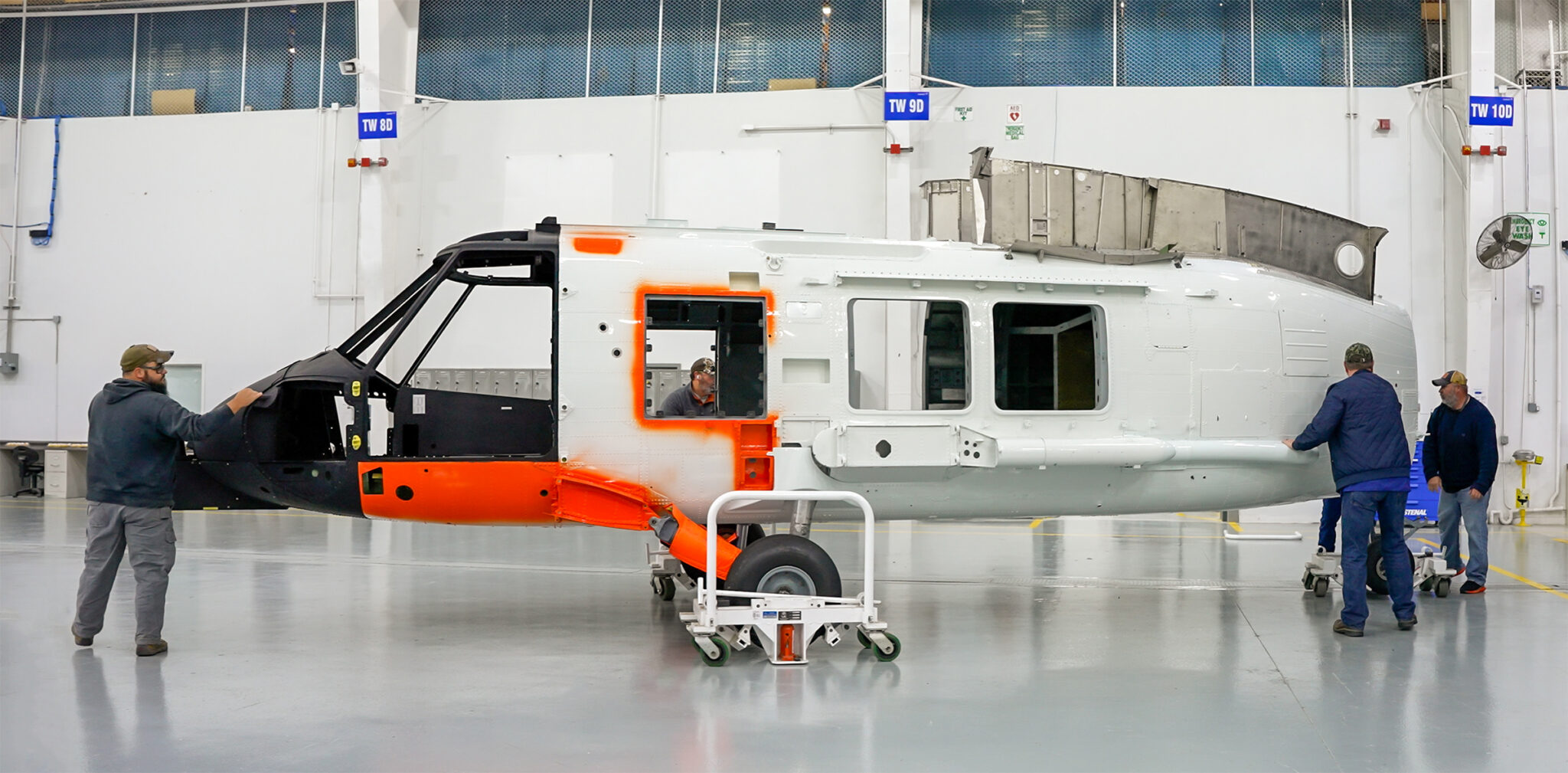
Coast Guard to SLEP, Expand MH-60T Helicopter Fleet as Sikorsky Delivers First New Airframe
The Navy Leagues on line magazine, Seapower, reports,
“The U.S. Coast Guard has confirmed plans to expand is MH-60T Jayhawk helicopter fleet and make it the standard service-wide helicopter. The service life-extension of the current MH-60T fleet is being highlighted as Sikorsky, a Lockheed Martin company, delivers the first of 45 replacement MH-60T airframes to the Coast Guard.”
There is a lot of information here.
The Coast Guard currently has 48 MH-60T.
Generally, six are being overhauled.
45 of these will receive new hulls.
12 new hulls will be delivered annually.
Electric tail folding will be added to MH-60s beginning in 2024.
That suggests the SLEP program for the existing Fleet will go through FY 2027, but there is also an intent to replace all H-65s with H-60s. Ultimately the Service expects to have 127 H-60s. That is 79 additional H-60s. Growth will involve both new construction and additional Navy conversions. Sounds like we may still be as much as 13 years from full conversion to a full H-60 fleet, about 2036, but perhaps earlier.
H-65s will continue to operate from cutters for some time.
So, what about the H-65s and the smaller cutters that may not be able to operate the H-60? The nine “B class” 270s should be able to operate H-60s, but the 210s and four “A Class” 270s cannot. The last of those will probably be decommissioned about 2032, certainly no later than 2035.
Aviation Logistics Center (ALC), CGAS Elizabeth City should be wrapping up the MH-65E SLEP program about now, having begun full rate production in November 2019 at a rate of 22 aircraft a year. The SLEP reportedly added 10,000 hours to the life of each aircraft, so the H-65s will probably outlast the cutters that can only operate the smaller helicopter.
Ever since the Nord Stream pipelines were damaged, in September 2022, there has been a lot of talk about the need to protect Critical Undersea Infrastructure (UCI) including concern about the possibility of damaging or surreptitiously tapping into undersea cables.
Some US agency is likely to get this job. Frankly I don’t see this as a job for the Coast Guard since we have very little underwater surveillance capability, but I may be wrong. The Coast Guard would probably at least be asked to report suspicious activity that might be recognized by Maritime Domain Awareness systems and if there is damage to a pipeline, the Coast Guard would certainly be called in to deal with the pollution.
Still, it may be interesting to see what the Europeans are doing. Navy Lookout reports,
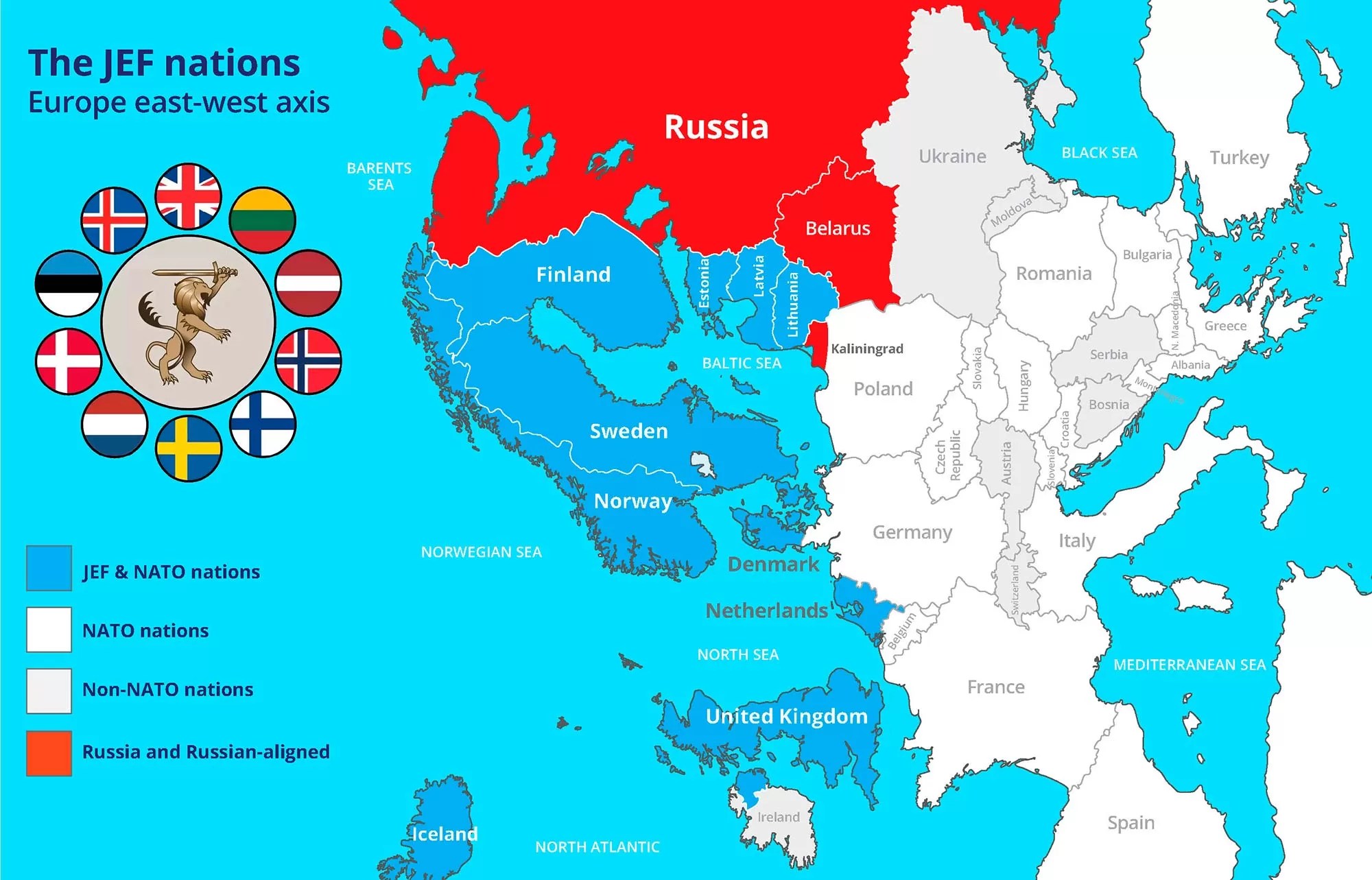
“On 28th November Defence Ministers from the Joint Expeditionary (JEF) nations agreed to activate a ‘Response Option’. This will take the form of a Royal Navy-led effort to bolster the security of undersea infrastructure and deter hybrid threats. Since the destruction of the NordStream pipeline in September 2022 and the attack on the Baltic Connector pipeline in October 2023, there has been increasing concern about underwater Russian activity. The Defence Secretary described this as “This historic and unprecedented agreement”. It has certainly been a long time since the UK conducted multi-lateral military activity in the European area that was not done under the auspices of NATO.”
Interestingly, the effort will include two Royal Navy River class Batch One Offshore Patrol Vessels, HMS Severn and HMS Tyne, that are the British equivalent of US Coast Guard Medium Endurance Cutters, except that they do not include flight decks. There was no mention of whether they might be equipped with Unmanned Undersea Vehicles.
Below is a news release from Coast Guard News. Once again, a new cutter is put to work even before commissioning.
Dec. 3, 2023
Coast Guard Cutter Calhoun arrives to new homeport in Charleston
NORTH CHARLESTON, S.C. — The crew of the U.S. Coast Guard Cutter Calhoun (WMSL 759) arrived at their homeport in North Charleston, Sunday, after delivery from Ingalls Shipbuilding and supporting missions throughout the Coast Guard’s Seventh and Eighth districts.
The Coast Guard accepted the delivery of the 10th national security cutter (NSC) on Oct. 13, 2023, after the initial christening ceremony in Pascagoula, Mississippi, June 4, 2022.
Calhoun is the fourth Legend-class NSC to be homeported in North Charleston, joining Coast Guard Cutters Hamilton (WMSL 753), James (WMSL 754), and Stone (WMSL 758).
Calhoun’s crew began deploying to Pascagoula in March 2023. Following an intense 37-day post-delivery period, Calhoun supported the Coast Guard’s Eighth District in response to an oil discharge approximately 20 miles northeast of the mouth of the Mississippi River in the Gulf of Mexico. Calhoun remained on scene for 48 hours, providing key offshore command and control capability to the multi-agency response.
“Our crew members have more than earned their time back home,” said Capt. Timothy Sommella, commanding officer of Calhoun. “Most of our crew has surged the past 18 months in support of other Coast Guard units to meet global commitments. The most recent deployment of over 120 days to the Gulf Coast for the cutter’s delivery and acceptance was particularly challenging but tremendously satisfying. We finally sailed away as a crew for the first time with the same commitment to excellence and determination that the ship’s namesake, the first Master Chief Petty Officer of the Coast Guard, Charles L. Calhoun, displayed during his distinguished Coast Guard career. We are incredibly thankful this time of year for the personal and professional support from our friends and loved ones who stood with us, and we will continue to forge those bonds, whether at sea or ashore.”
During the remainder of Calhoun’s first patrol, Calhoun provided a forward presence in support of Homeland Security Task Force-Southeast and Operation Vigilant Sentry within the Coast Guard Seventh District’s area of responsibility to deter irregular migration and save lives in the South Florida Straits while testing its vital equipment, systems, and completing required training.
“It is a privilege to be a part of such an amazing team of professionals,” said Senior Chief Petty Officer Aaron Deluca, Calhoun’s command senior enlisted leader. “Having completed the challenges of acceptance, training, and sailing one of the most technologically advanced assets in the Coast Guard, I am excited to bring cutter Calhoun to its homeport and the community of Charleston.”
Calhoun is named to honor the first Master Chief Petty Officer of the Coast Guard, Charles L. Calhoun, who was from Ocean City, Maryland. During Calhoun’s tenure, he was responsible for improving and developing many of the Coast Guard’s administrative and people-focused programs, resulting in better communications and retention efforts within the enlisted community.
Calhoun is the newest 418-foot, Legend-class cutter to join the Coast Guard fleet. The Legend-class cutter program leads the Coast Guard’s ongoing surface fleet recapitalization and, when combined with the future offshore patrol cutters, will comprise the Coast Guard’s offshore response capability for decades to come. The cutter’s primary missions are counterdrug operations, migrant interdiction, living marine resources, defense readiness, and command and control in support of U.S. Coast Guard operations worldwide and here at home.
For information on how to join the U.S. Coast Guard, visit GoCoastGuard.com to learn about active duty, reserve, officer, and enlisted opportunities. Information on how to apply to the U.S. Coast Guard Academy can be found here.
Israel Shipyards Shaldag MK V. Israel Shipyards Ltd. picture
For some time, I have thought that the Webber class, “Fast Response Cutter” (FRC), program was misnamed. Webber class cutters don’t generally sit in port waiting for some alarm to call them to rush to the scene. Rather they are used more like small Medium Endurance Cutters. This has proven especially fortuitous in view of the delays in replacing the existing WMECs. It is only because of the versatility of the Webber class that the Coast Guard will be able to maintain its drug and alien migrant interdiction efforts in the 7th District and extend fisheries protection and counter IUU efforts into the Western Pacific while decommissioning WMECs before their replacements are completed.
Still, I do believe there is a need for true Fast Response Cutters for those rapidly developing missions that require more range and capability than a Response Boat, Medium, for protection of high value units, and to respond in the event of a maritime terrorist attack–units for which SAR and particularly Ports, Waterways, and Coastal Security are their primary missions.
The “Marine Protector” 87-foot patrol boats have had this job, but they are approaching the end of their service life (the oldest are now 25 years old). Four of them are particularly tasks with protecting Fleet Ballistic Missile submarines during surface transit from their bases to open sea. They have never been well prepared to deal with terrorist threats and aren’t really particularly fast.
We have discussed characteristics for a WPB replacement, a true Fast Response Cutter, before (here and here) and why nothing we have currently is suitable for the mission. The Shaldag Mk. V looks like a good candidate for the job, but first let’s look at where and why we might need vessels of this type.
The Webber class as Fast Response Cutters:
In some places, the Webber class might take on the functions of a “fast response cutter.” Where there are three or more based in a single location, it should be possible to have one on standby virtually at all times. Though better armed than the 87 footers, they are not particularly well prepared to deal with the terrorist threat, but it is possible to increase their armament to make them more effective in the role.
Even if the Webber class could be used in the FRC role, their basing, concentrated as it is to improve maintenance, would leave many ports with no similar protection.
Where Do We Need Fast Response Cutters:
In an earlier post, “A Reevaluation, Ruminating on Homeports While Playing the Red Cell,” Part 1 and Part 2, I identified 31 critical ports that required protection from unconventional attack.
I will assume that if the Coast Guard recognizes the need for a true Fast Response Cutter, a well-armed interceptor, and does build such a class, that they will also increase the armament of at least some of the Webber class, so that they could also be effective in this role at critical ports where they are based.
Webber class are based in 9 of the 31 critical ports: Moorehead City/Atlantic Beach, NC; Miami; San Juan; Pascagoula; Galveston; LA/Long Beach/San Pedro; Honolulu; and Guam.
That leaves 22 port complexes without resident Fast Response Cutters:
CCGD1:
Bath, Me–Major Naval shipbuilder
Kittery, ME/Portsmouth, NH –Naval Shipyard
Groton, CT–Submarine base
Hudson River complex, New York, NY/Elizabeth and Bayonne, NJ–a major cultural target, #3 US Port by tonnage, #3 Container port, #4 Cruise ship port (NYC) and #13 cruise ship port (Cape Liberty, NJ)
CCGD5:
Chesapeake Bay Complex, VA–Base for aircraft carriers and submarines, Major naval shipbuilder, Strategic Port, #9 port by tonnage, #5 container port; plus water route to Washington, DC (major cultural target) and Baltimore, MD–#14 port by tonnage, #13 container port, #12 cruise ship port
Jacksonville complex, FL (including Kings Bay, GA)–SSBNs, Navy Base Mayport, #14 cruise ship port, Strategic Seaport/ Mayport, FL
Port Canaveral, FL–#3 Cruise Ship port/ Cape Canaveral, FL:
Port Everglades/Fort Lauderdale, FL–#11 container port, #2 Cruise Ship port
Tampa, FL–#7 Cruise Ship port/
CCGD8
Mobile, AL–major naval shipbuilder, #11 port by tonnage
Gulfport, MS–Strategic Seaport
Mississippi River Complex, LA–New Orleans #6 port by tonnage, #14 container port, +#10 Cruise Ship port; South Louisiana #1 port by tonnage; Baton Rouge #8 port by tonnage; Port of Plaquemines #13 port by tonnage.
Lake Charles, LA–#12 port by tonnage
Sabine Pass complex (Beaumont/Port Author/Orange, TX)–#4 port by tonnage (Beaumont), Strategic Seaport (both Beaumont and Port Author), It also has an LNG exporting terminal.
Corpus Christi, TX–#7 port by tonnage, Strategic Seaport
CCGD11:
San Diego, CA–Base for aircraft carriers and submarines, major naval shipbuilder (NASSCO), Strategic Seaport
San Francisco Bay complex,, CA–A major cultural target, #6 container port (Oakland), Strategic Seaport (Oakland and Concord)/Alameda, CA
CCGD13:
Puget Sound Complex, Seattle/Tacoma, WA–Base for aircraft carriers (Bremerton), SSBNs (Bangor), and submarines, major naval bases, #8 container port (Seattle), #10 container port (Tacoma), #8 Cruise ship port (Seattle), Strategic Seaport (Indian Island and Tacoma, WA)
CCGD17:
Anchorage, AK–Strategic Seaport
Assuming we need two boats to maintain one on standby or underway at all times this suggests we need 44 Fast Response Cutters. Fewer than the 73 patrol boats of the Marine Protector class.
The Shaldag MkV as a Fast Response Cutter:
Navy Recognition reports delivery of a third batch of Israeli built Shaldag Mk. V fast attack craft to the Philippine Navy. In the Philippine Navy, these are referred to as Acero class coastal patrol interdiction craft (CPIC).
The Shaldag Mk. V seems to be a true Fast Response Cutter that checks many (but not all) of the boxes that could make it effective in this role. The Shaldag Mk V shows what can be done on even a modest sized vessel. They are:
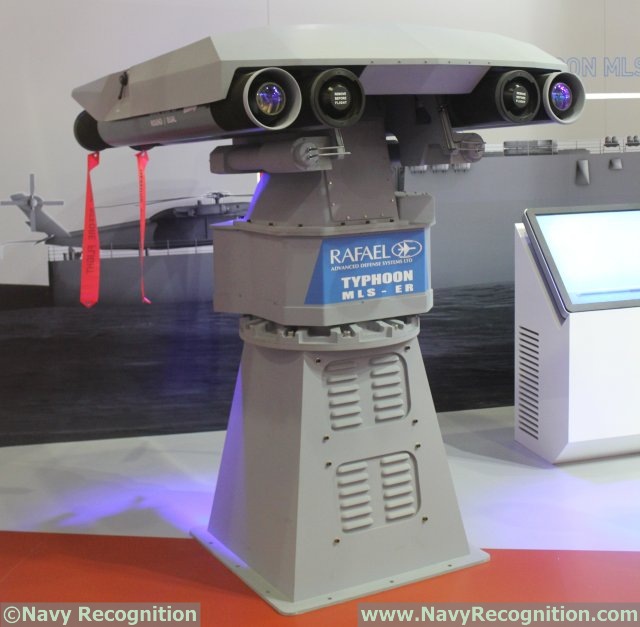
1 x Rafael Typhoon MLS-ER missile launcher for 4 x Spike ER surface-to-surface missiles, a weapon similar to Hellfire/JAGM (on at least four of the Acero class)
2 × M2HB Browning 12.7 mm/50-cal. heavy machine guns mounted on Rafael Mini Typhoon remote-controlled weapon stations
2 × M60 7.62 mm/30-cal. GP machine guns
What we might do differently:
The Shaldag Mk. V is certainly not the only possible solution for a true Fast Response Cutter, but its speed and equipment does represent some but not all the capabilities that should be incorporated in an FRC.
The Shaldag Mk. V has a capability against Unmanned Air Systems (UAS) and small, fast, highly maneuverable surface threats. As threat vessel increase in size their effectiveness diminishes substantially. They don’t need to sink large ships, but they do at least need to be able to immobilize them to keep terrorists from reaching their objective and to allow time for a DOD response.
The Shaldag’s boat handling facilities appear more difficult to use than those on the 87 foot cutters. We could do better, and it is likely we would need better boat handling equipment for day-to-day SAR missions.
The Missiles used on the Shaldag Mk. V are not used by the US Navy or Marine Corps, but comparable weapons–Hellfire, JAGM, or APKWS–could be used instead.
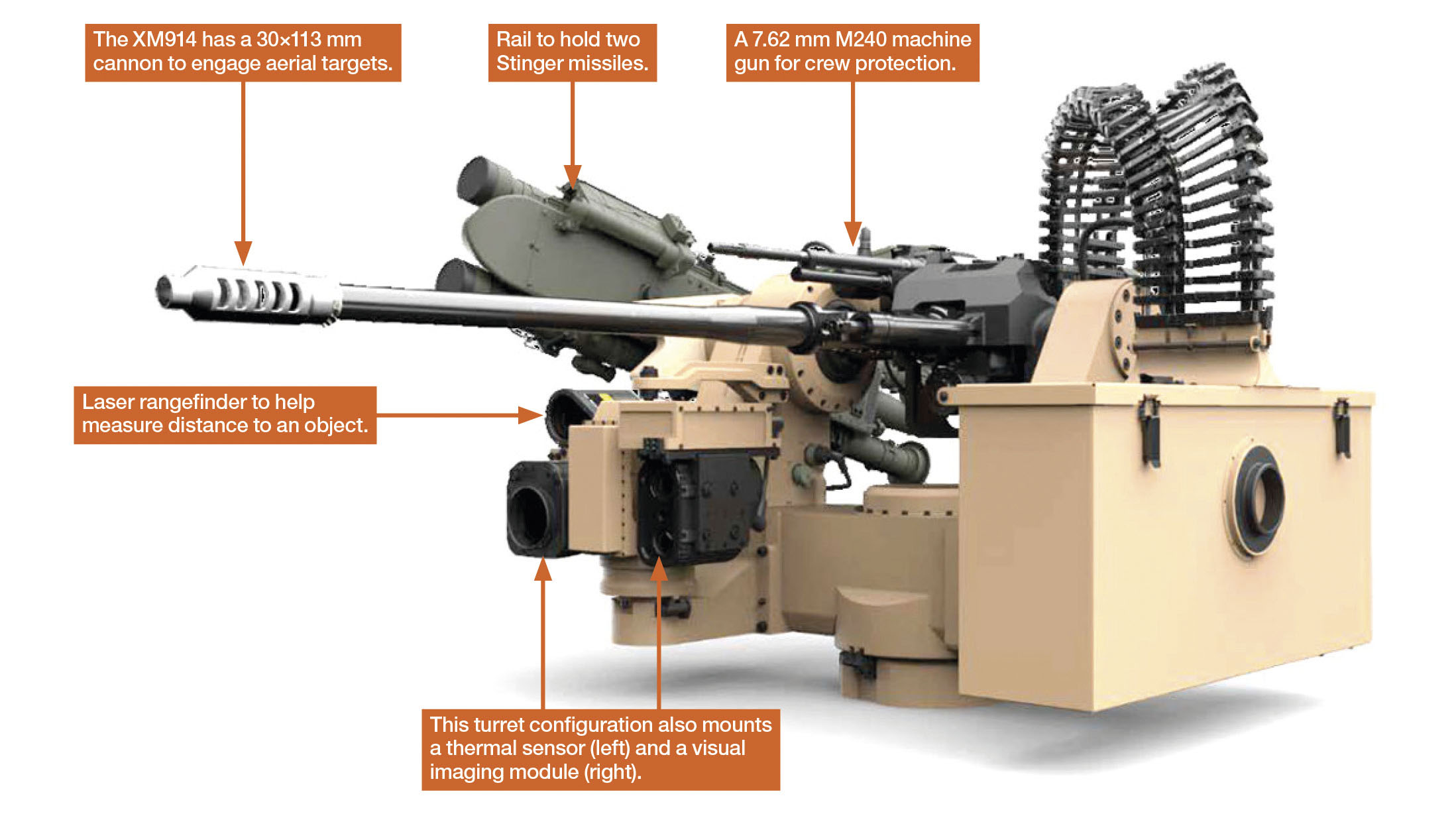
The 30mm Mk38 Mod4 would replace the Israeli 30mm Typhoon gun mount.
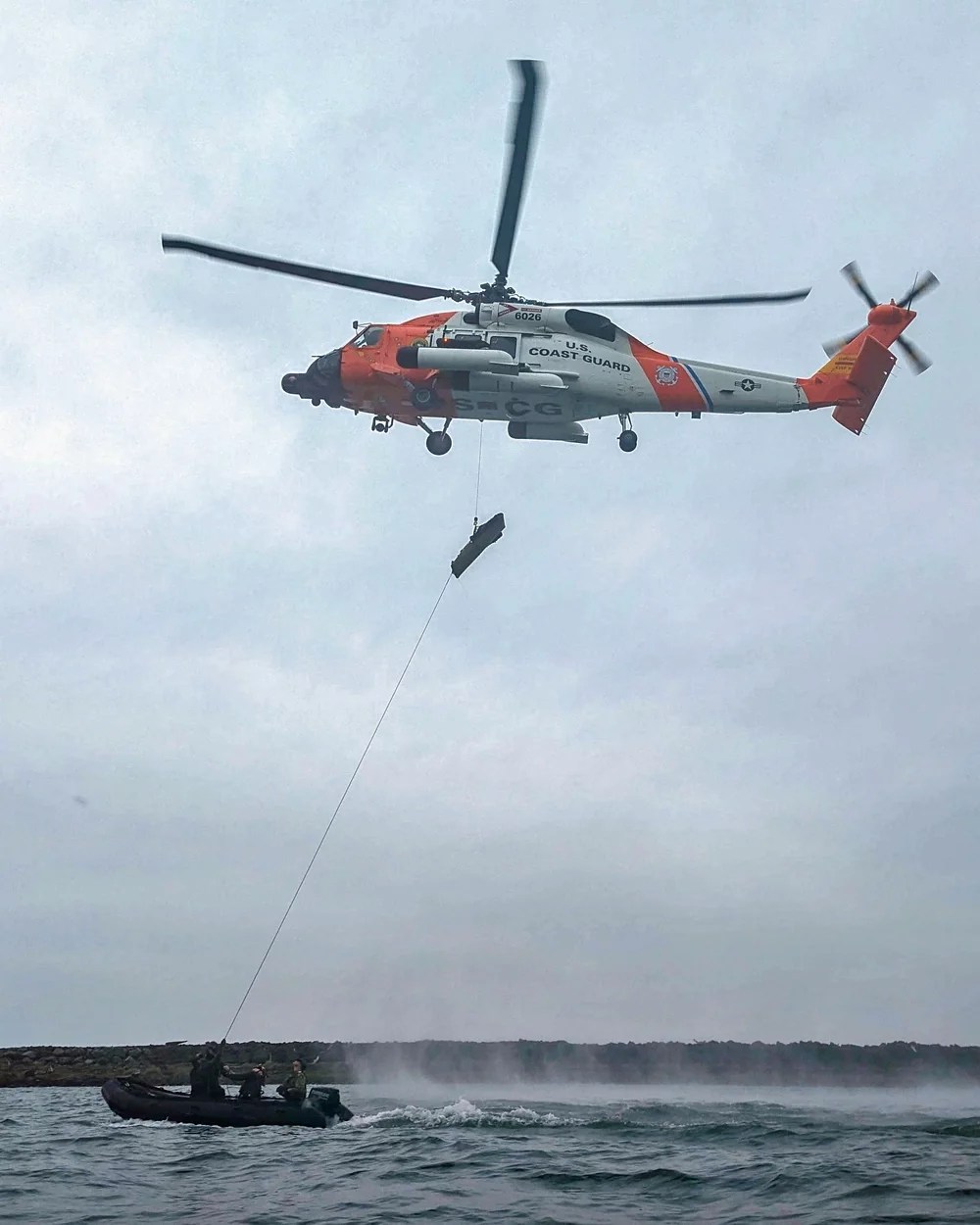
“Combat Divers assigned to the 10th Special Forces Group (Airborne) conducted maritime training in Astoria, Oregon, Oct. 30, 2023. The Green Berets partnered with Coast Guard Air Station Astoria and Coast Guard Station Cape Disappointment for multiple training events, preparing them for a two-week long scenario-based exercise.”
“THITU ISLAND, South China Sea (AP) — The Philippines inaugurated a new coast guard monitoring base Friday on an island occupied by Filipino forces in the disputed South China Sea and plans to expand joint patrols with the United States and Australia to counter China’s “pure bullying” in the strategic waterway, a Philippine security official said.”
The AP story includes 17 additional photos.
Thitu is the second largest of the naturally occurring island in Spratly Islands and has a civilian population of about 200.
Spratly Islands military settlements. Source: Cartothèque Spiridon Manoliu, via Wikipedia.
Thitu lies about 500 kilometers (310 mi) west of Puerto Princesa on the larger Island of Palawan so it is outside the larger contiguous Philippine EEZ.
Ownership of the Spratly Islands is disputed, not only between the Philippines and China, but also by Taiwan, Vietnam, Malasia, and Brunei.
Thanks to David S. for bringing this to my attention.
Below is a U.S. Coast Guard Forces Micronesia/Sector Guam news release.
–
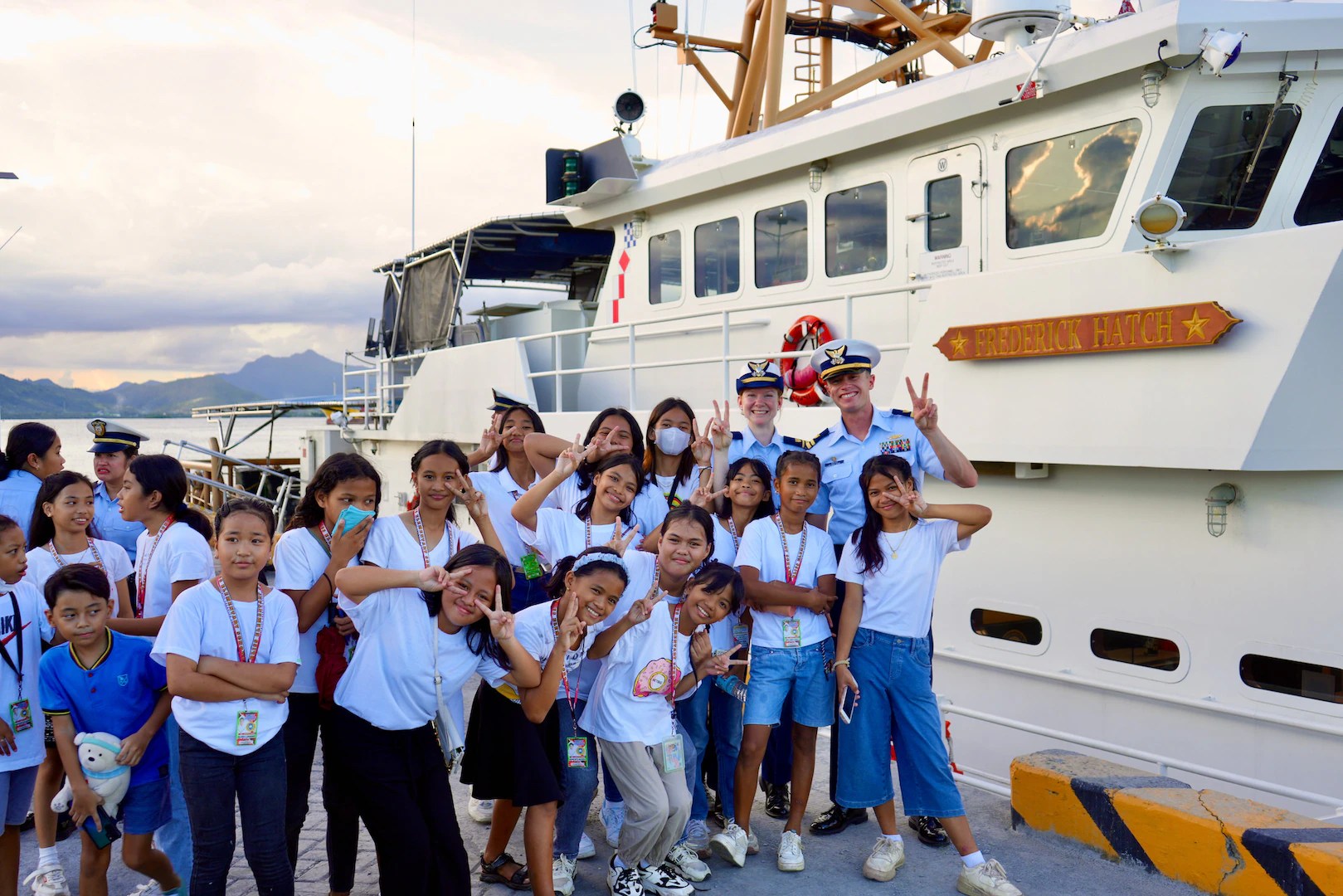
This is the first time a Webber class patrol craft has made it to the Philippines. This is all part of a renewed in interest in supporting Western Pacific Island nations, particularly in regard to fisheries and IUU enforcement.
USCGC Frederick Hatch concludes historic patrol with engagements in the Philippines, fisheries enforcement in Republic of Palau, Papua New Guinea
SANTA RITA, Guam — The USCGC Frederick Hatch (WPC 1143) successfully concluded a routine 47-day expeditionary patrol covering more than 8,200 nautical miles under Operation Blue Pacific, returning to Guam on Thanksgiving, distinguished by a series of historic and strategic engagements across the Western Pacific and Oceania.
“USCGC Frederick Hatch’s highly successful patrol is a testament to the diligence and expertise of the crew onboard, always remaining positive and overcoming numerous challenges to continually set the standard for Coast Guard operations in the Pacific. Their efforts to keep our equipment functioning properly, go over the rail regularly for boardings, and cook meals in heavy seas is what makes the U.S. Coast Guard’s commitment to the Indo-Pacific region so strong. Our people are the best at what they do and always ready to go above and beyond when asked, which is the basis for being a trusted partner and fostering strong international alliances,” said Lt. Patrick Dreiss, commanding officer of the Frederick Hatch.
Historic First Visit to Tacloban, Philippines
A highlight of the patrol was Frederick Hatch’s historic visit to Tacloban, Philippines, in mid-October, marking a significant milestone in U.S.-Philippines relations. The visit coincided with the 79th anniversary of the Battle of Leyte Gulf. In addition to the commemoration observance, the crew engaged in various activities, including a maritime law enforcement exchange supported by U.S. Coast Guard Maritime Security and Response Team West, community interactions, including a visit with the mayor, and cultural immersion.
Maritime Security and Fisheries Patrol
The second half of the patrol focused on countering illegal fishing and enhancing partnerships in the Republic of Palau and Papua New Guinea. While en route to Palau, the crew conducted critical observation reports highlighting potential threats to maritime governance and fishery management. These reports included observations of four Philippine-flagged fishing vessels at the boundary of Palau’s Exclusive Economic Zone (EEZ) and the high seas, with one vessel within the Palauan EEZ when detected. Notably, these vessels needed permits to operate under the Western and Central Pacific Fisheries Commission (WCPFC) on the high seas or Palau EEZ, and their Philippine permits expired. Their presence and activities represent potential serious violations under the WCPFC regulations.
The following day, the crew reported two additional Philippine-flagged vessels fishing without permits in WCPFC-governed waters again near the Palau EEZ, adding to the count of serious violations. Following a port call in Palau on a subsequent patrol of the Palau EEZ, the crew identified only one vessel actively fishing, recently boarded, and detected no further unauthorized incursions. In response to a request from the Palau Joint Operations Center, the crew also disposed of two fish aggregating devices found within the Palau EEZ, addressing concerns over illegal local fishing practices.
While en route to Papua New Guinea (PNG), Frederick Hatch’s crew conducted one boarding on the high seas under WCPFC authority, reporting three potential violations. The crew then welcomed two PNG boarding officers, one from the Customs Services and one from the National Fisheries Authority, and together, they conducted nine additional PNG-led boardings within their EEZ under the bilateral maritime law enforcement agreement. These boardings undertaken in the eastern EEZ resulted in 16 issued violations and two warnings, addressing a range of issues such as exceeding crew occupancy limits based on available berthing, improper crew compositions due to a lack of required PNG crew expired seafarers’ credentials, and poor vessel markings. The vessels’ flags include the People’s Republic of China, Vanuatu, and the Philippines.
“This proactive enforcement and monitoring underscore the importance of upholding good maritime governance and preserving sustainable fishing practices, critical for the ecological and economic health of the region,” said Capt. Nick Simmons. “The relationships we’re building in Oceania and the Western Pacific are crucial for our continued commitment to our allies. This patrol exemplifies our dedication to maintaining stability and security in these waters.”
Engagement and Cooperation in Papua New Guinea
Frederick Hatch’s visit to Papua New Guinea (PNG) exemplified increased bilateral defense and security cooperation, as highlighted by the recent signing and ratification of the Defense Cooperation Agreement. The crew’s interactions with PNG fisheries, customs officers, and the local community underscore the ongoing effort to strengthen regional relationships.
“This patrol was our crew’s first time working with PNG Customs and Fisheries, and we look forward to working with them again in the future. Thank you to our two shipriders, Mr. Roger Sivlanduo and Mr. Jeremy Nelson, both skilled professionals and great people to have onboard to enrich the relationship between our agencies. It was an important opportunity to learn from each other and develop new tactics to address the IUU-F threat throughout Melanesia in the future while also carrying out several very successful boardings counteracting those threats in the present,” said Dreiss.
Support from DOL-X Team
The U.S. Coast Guard’s newly created DOL-X team was pivotal in supporting the Frederick Hatch’s logistics, including repairs and maintenance, ensuring the cutter’s operational readiness throughout the patrol. The team met the cutter during two port calls, hand-carrying critical parts to address casualties and augmenting the cutter’s engineers to repair the issues.
-USCG-
About the U.S. Coast Guard in the Pacific Region:
The U.S. Coast Guard is vital to ensuring maritime safety, security, and stewardship across a vast Pacific expanse, spanning six continents, 71 countries, and 74 million square miles of ocean. U.S. Coast Guard Pacific Area leads coordination and integration efforts in this vast region, promoting collaboration with partners through the actions of the U.S. Coast Guard 14th District and U.S. Coast Guard Forces Micronesia/Sector Guam teams.
The Frederick Hatch is the 43rd 154-foot Sentinel-class fast response cutter named for a surfman and lighthouse keeper who was a two-time Gold Life Saving Medal recipient. They regularly patrol Oceania, fostering international cooperation and supporting maritime safety, security, and stewardship.








 Chuck Hill's CG Blog