“Arctic Operations: We Really, Really Need the Right Equipment and an Arctic Port” –EagleSpeak

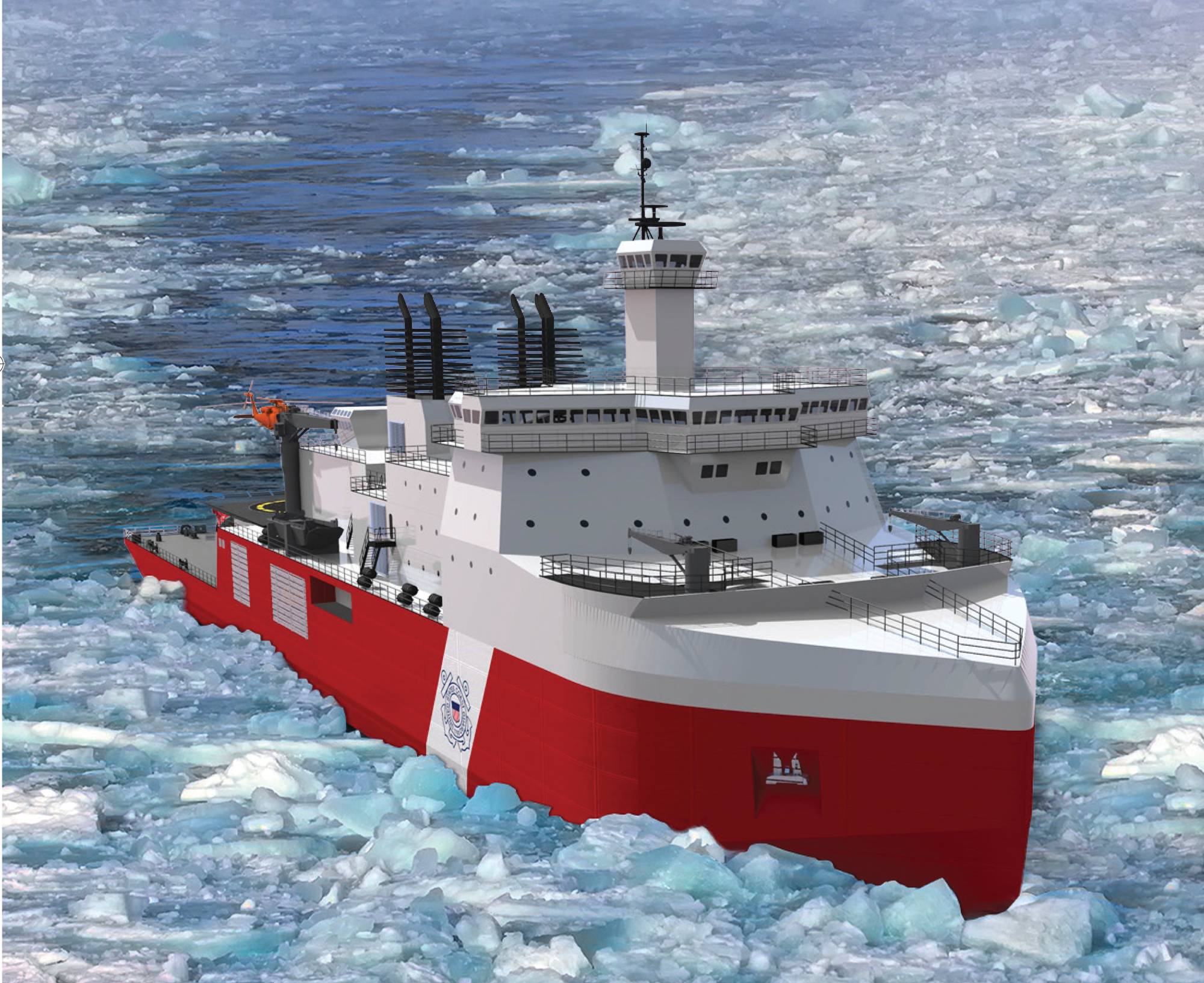
Conceptual illustration, Finland’s squadron 2020 corvette

Naval blog “EagleSpeak” decries our inability of operate surface warships in the Arctic, but this is his bottom line

“Fault finding will get us nowhere, the need is to look to our allies who operate in these waters and see if, among the hull types we need they have some ice-hardened ships whose designs we can obtain. Now.”

If we do want to do that, there is really only one choice, Finland’s new ice capable corvette we talked about here. The original post is now more than five years old, but updated information is in the comments, much of which I have linked below.

Fortunately they are already designed to us a great deal of familiar equipment much of it from US manufacturers.

They will use the same 57mm gun used by the NSC, OPC, and both classes of LCS.

They will use the Sea Giraffe radar common to the OPC and Independence class LCS.

They will use ESSM surface to air missiles, a standard item on most US surface combatants, apparently to be launched from Mk41 VLS.

The Finns will be using the Israeli Gabriel V as their surface to surface missile, but it should be relatively easy to substitute a standard US surface to surface missile, particularly the Naval Strike Missile, which is considerably smaller.

The sonars currently planned are from Kongsberg Maritime AS. If not replaced by US sourced units, they would be unique in the US fleet but the hull mounted “SS2030 sonars will be delivered to the Finnish Navy complete with hoistable hull units and ice protection to ensure safe and efficient operation in the often harsh conditions of the Baltic Sea.”  The variable depth “SD9500 is a light and compact over-the-side dipping sonar with outstanding horizontal and vertical positioning capabilities for diver detection, ASW duties and volumetric survey assignments in shallow, reverberation-limited waters.”

They would be unique among US warships in being able to both lay and counter mines.

Propulsion is CODLAG, combined diesel electric and gas turbine. Four diesel generators producing 7,700 KW (10326 HP) provide power for cruise (probably about 20 knots). A GE LM2500 gas turbine provides over 26 knot sprint speed. This is the same gas turbine that powers the NSC, Burke class destroyers, the new FFG, and numerous other ships. It is the most common gas turbine in the world.

The propellers were developed with the help of the US Navy.

“The propellers are a minor project on their own, and are set to be of a highly advanced design. This is due to the somewhat conflicting demands of high top-speed, small diameter (due to overall draught requirement), and low noise (and high cavitation margin). All this, while at the same time being strong enough to cope with ice.”

Its primary characteristics are reported to be:

  • Length: 114 m (374 ft)
  • Beam: 16 m (52 ft)
  • Displacement: 3,900 tonnes (3,800 long tons; 4,300 short tons)
  • Crew: 70 to 120 sailors
  • Speed: 26+ knots

This makes about 13% smaller than the OPC or NSC, but 30% larger than the 378s. First of class is expected to be completed 2024.

We could buy the plans and then compete procurement in a US shipyard. These might be built concurrently with the OPCs, possibly replacing some of them. Ten units could give a two squadrons, one for the Atlantic and one for the Pacific. In wartime that would almost guarantee the ability to keep three underway in either ocean.

“Swimming in Inequality” –USNI

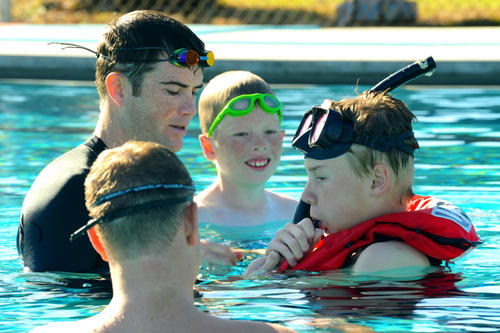
MOBILE, Ala. Ð Rescue swimmers from Coast Guard Aviation Center Mobile show Luke Wiedeman how to properly inflate his life jacket, Nov. 7, 2011. Crewmembers from ATC Mobile worked with the Mobile chapter of the Make-A-Wish Foundation to help Luke realize his dream of becoming a Coast Guard rescue swimmer. Luke was able to take part in training with the swimmers, navigate high-tech flight simulators and participate in a search and rescue demonstration. U.S. Coast Guard photo by Petty Officer 3rd Class Stephen Lehmann.

The US Naval Institute blog has a short entry that discusses what was, to me. an unrecognized barrier to more equal racial representation in the Coast Guard–the swim standard for OCS.

“… 70 percent of Black children are unable to swim and 60 percent of Latino children are unable to swim. Of the Black and Latino children that say they are able to swim, there also is a large portion that are self-taught swimmers. In comparison, it is estimated that only 40 percent of Caucasian children are unable to swim.”

Was also surprised to see the large disparity in representation between the Navy and Coast Guard.

“As it stands right now, 5.5 percent of commissioned Coast Guard officers are Black, and only 13.5 percent are minorities in total. It is possible that qualified minority candidates see the swimming standards as impossible obstacles to overcome.”

“As of 2017, the Navy reached 34 percent of minority officer representation.”

Sounds like we have a self imposed barrier to recruiting some good people. Certainly swimming is a desirable ability, but do we apply the same standard to all Coastguardsmen? Does the Navy apply it to their incoming personnel? Can we do something to provide this skill to those who do not come to us with the ability?

“Omnibus Spending Bill Funds Four Additional Fast Response Cutters” –Seapower

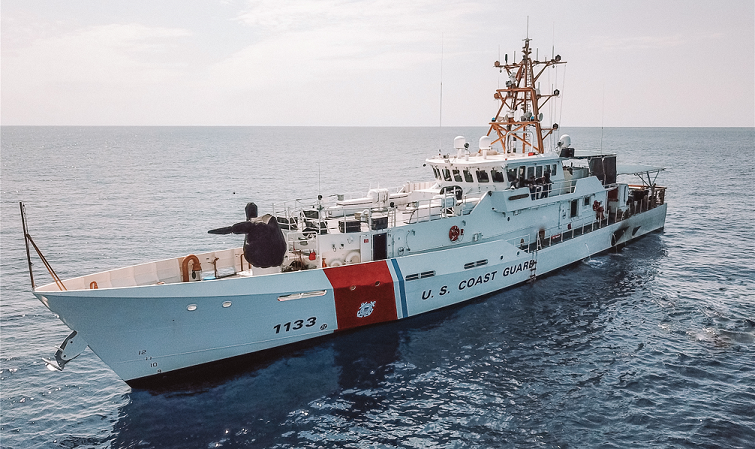
USCGC Joseph Doyle (WPC-1133)

The Navy League’s on line magazine, Seapower, reports,

President Trump on Dec. 27 signed into law the omnibus spending bill for fiscal Year 2021, which included funding for four more Sentinel-class Fast Response Cutters (FRCs), allowing Bollinger Shipyards to build and deliver four more FRCs to the U.S. Coast Guard, the company said in an Dec. 28 release. This increases the total number of funded boats to 64.

This would complete funding for both the 58 Fast Response Cutters (FRC) included in the Program of Record and the six required to replace the six Island Class 110 foot WPBs currently based in Bahrain, serving with the 5th Fleet as PATFORSWA.

There has been some discussion of basing FRCs in Palau. That could mean additional ships. We could conceivably replicate the PATFORSWA organization using three FRCs in Guam and three in Palau.

“U.S. presence in Palau could balance Beijing’s aggression, analysts say” –Indo-Pacific Defense Forum

The Indo-Pacific Defense Forum has a short article about the desirability of a US defense presence in Palau. Much of it is about Illegal, Unregulated, Unreported fishing, so it is largely concerning the Coast Guard.

There has already been some talk about basing Webber class WPCs in Palau.

The area may best be remembered for the Battle of Peleliu.

“Fresh from Shipyard and Quarantine, Coast Guard Cutter Stone Heads Out for Southern Atlantic Patrol” USNI

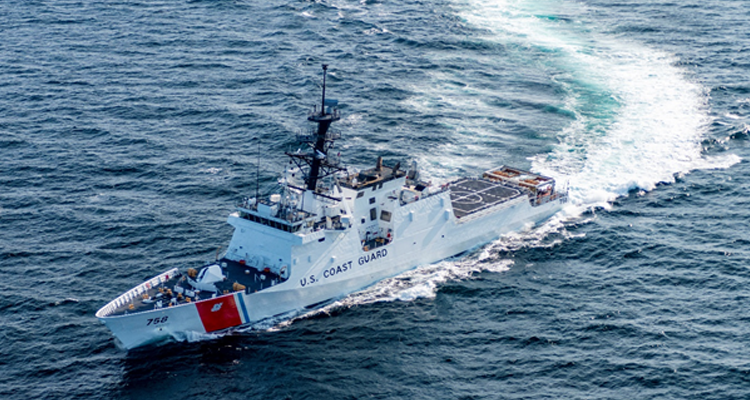
Ingalls Shipbuilding successfully completed acceptance trials for the Coast Guard’s ninth national security cutter (NSC), Stone, in October 2020. NSC Stone was accepted Nov. 9, 2020, by the Coast Guard in a socially distanced ceremony. Photo by Lance Davis of Huntington Ingalls Industries.

The US Naval Institute News Service reports that USCGC Stone is being sent on an unusual Latin American South Atlantic patrol, even before she is commissioned. To make a patrol of this length prior to commissioning is almost unheard of, and the location is also something we have not done in a very long time, outside of the UNITAS exercise format.

The inaugural deployment is “a multi-month deployment to the South Atlantic countering illegal, unregulated, and unreported fishing while strengthening relationships for maritime sovereignty and security throughout the region,” according to a Coast Guard news release. “This the service’s first patrol to South America in recent memory, engaging partners including Guyana, Brazil, Uruguay, Argentina, and Portugal.” An observer from the Portuguese navy embarked the cutter for the duration of Operation Southern Cross in the U.S. Southern Command region.

Certainly not the Coast Guard’s “first patrol to South America in recent memory,” but to this part of South America, perhaps.

“Minotaur – Creating a connected Coast Guard” –MyCG

New Minotaur operator workstations are being installed on all HC-144Bs. Minotaur provides dramatically improved data fusion and integrates installed sensors and radar. U.S. Coast Guard photo by Aviation Engineering Warrant Officer 3 Randy Jopp.

MyCG has a post about Minotaur (broken link, no longer available–Chuck). We have talked about this system before in relationship to installations on fixed wing aircraft, but the system apparently is more than I had previously understood. The links sited in the story are not all up to date. There is more current information below.

“Coast Guard delivers ninth Minotaur-missionized HC-144 to fleet” –CG-9 | Chuck Hill’s CG Blog

Coast Guard accepts missionized HC-130J aircraft > United States Coast Guard > Latest Acquisition News (uscg.mil)

“Navy to Field First New Torpedo in Decades” –National Defense

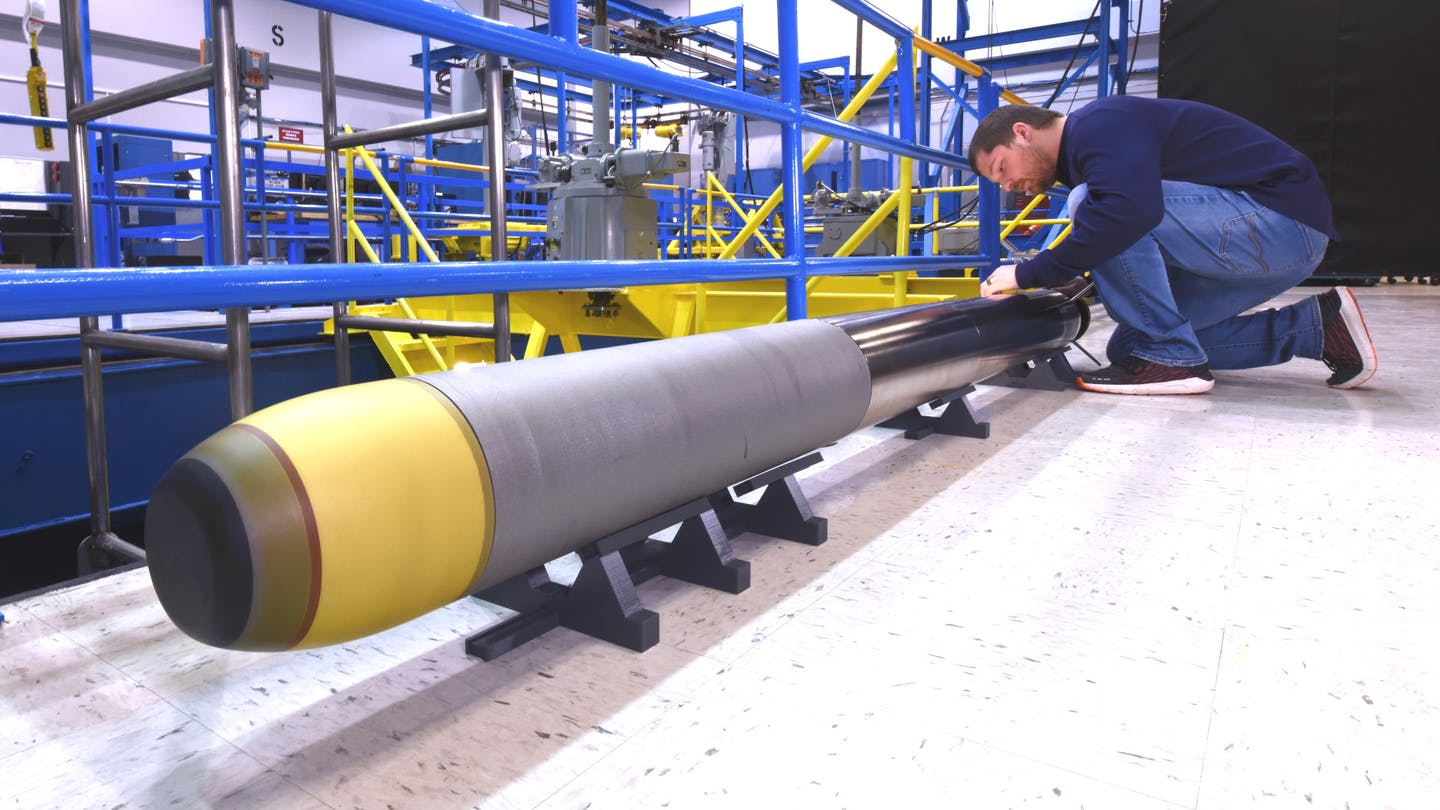
Very Light Weight Torpedo

National Defense reports,

The Navy in January is expected to release a request for proposals to field its first completely new torpedo since the 1990s.

Northrop Grumman has announced its intention to enter the compact rapid attack weapon program, which will seek to find a manufacturer for the prototype of a lightweight torpedo developed at Pennsylvania State University’s Applied Research Laboratory.

This is a weapon we talked about earlier. In that report we learned that the Navy had a program of record to develop the weapon under the name Compact Rapid Attack Weapon (CRAW) in the FY2021 budget. The earlier post also includes a full description of the weapon.

In this new report we learn there is interest in the use of this weapon by the submarine community, the aviation community, and as a weapon for unmanned systems.

It can be used offensively or defensively as a countermeasure anti-torpedo (CAT).

Operators will be able to instantly load software into the weapon, giving it defensive or offensive capabilities shortly before being fired, he said.

“The only difference fundamentally between the defensive capability of the very lightweight torpedo, which is CAT and the offensive capability, which is CRAW, is the software that gets loaded onto the weapon at time of launch.”

If these can be used to destroy incoming torpedoes, we are going to want them on virtually every ship.

Might be helpful if the Coast Guard told the Navy they were interested in these as well.