Britain Does Things a Little Differently

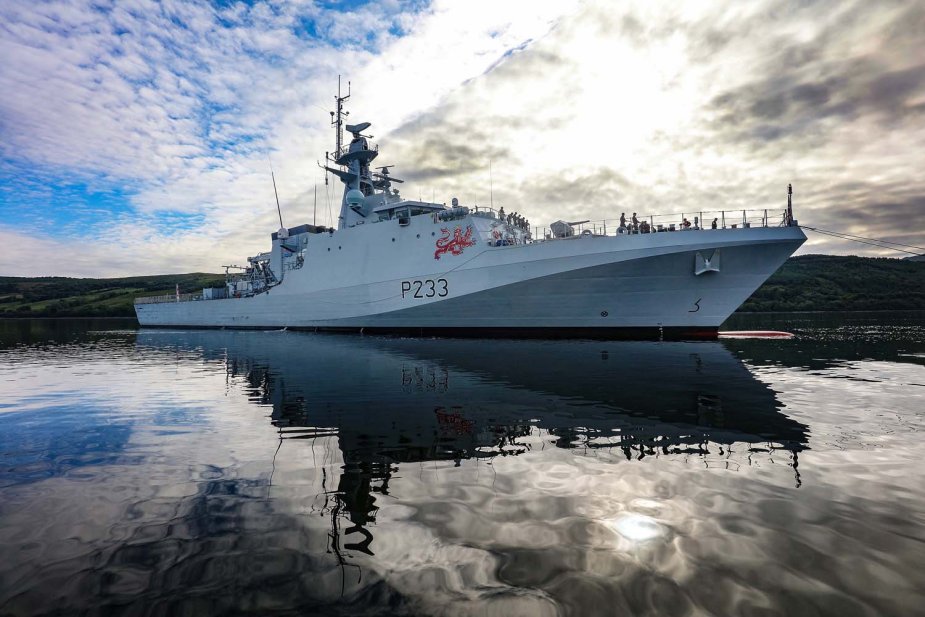
Royal Navy’s new patrol vessel HMS Tamar is ready for action and will be based in Portsmouth. An offshore patrol vessel, similar in many respects to a Coast Guard cutter. (Picture source: Royal Navy)

Many other countries do not have a coast guard that serves as a maritime law enforcement agency. Their solutions for maritime law enforcement frequently fall on their navies. Recently Great Britain has seen a need for a change.

Thanks to Brymar Consulting for bringing this to my attention.


Published 17 December 2020, from Ministry of Defence

Statutory Instrument on Royal Navy Police enforcement powers

A Regulation has been introduced to the Policing and Crime Act 2017 to provide Royal Navy Police with enforcement powers as the transition period for Britain’s exit from the EU comes to an end.

The Ministry of Defence has laid a Statutory Instrument in Parliament to introduce a Regulation under the Policing and Crime Act 2017. This will provide Royal Navy Police with additional law enforcement powers as the transition period for Britain’s exit from the EU comes to an end. Additional powers would come into effect on Thursday 07 January 2021 and will apply to England and Wales territorial waters only.

The Government is determined to ensure the security of UK waters from a range of threats under all circumstances. Contingency work for the end of the EU Transition Period has identified that there may be an operational requirement to extend law enforcement powers to Royal Navy Police.

Royal Navy personnel already routinely conduct enforcement activity in UK waters and Royal Navy Police are specially trained to conduct a range of enforcement activity safely and in line with civilian policing procedures. Currently, any interventions at sea are joint operations between the police and military. However, the deployment of civilian police officers to a maritime incident may be impractical in some circumstances. Providing extra powers will give greater flexibility to authorities to act effectively.

Royal Navy Police will only use these powers if requested to do so by civilian police forces. No decisions on the use of enforcement will be taken independently by military personnel, and the new powers are only extended to Royal Navy Police, a specific branch of the Royal Navy with trained military police officers.

The extension of enforcement powers to Royal Navy Police will be reviewed in six months.

Space Force Personnel to be Called “Guardians,” Their Boss Has Seat on JCS

An illustration of HawkEye 360’s first satellite constellation, called Pathfinder, orbiting Earth. HawkEye 360/UTIAS Space Flight Laboratory

DefenseOne reports that, “Two days before the U.S. Space Force’s first birthday, its troops received their collective name: Guardians.”

Also that “Since its standup on Dec. 20, 2019, the Space Force has grown to about 2,400 active-duty personnel, mostly Air Force personnel who were responsible for the military’s space mission before the new service was created. In 2021, the Space Force is expected to grow to about 6,400 active-duty Guardians, as Army and Navy personnel start transferring into the new service…”

And that, Gen. Jay Raymond, the Chief of Space Operations, will officially become a member of the Joint Chiefs of Staff (JCS).

The JCS members are the Chairman of the Joint Chiefs of Staff, the Vice Chairman, the Army Chief of Staff, the Chief of Naval Operations, the Air Force Chief of Staff, the Commandant of the Marine Corps, the Chief of the National Guard Bureau and, now, the Chief of Space Operations.

From time to time, Coast Guardsmen have been called Guardians. Presumably that will stop. I don’t think it ever really caught on. Still I don’t think it will stick for the Space Force either, although it is better than some names that might have been chosen. (Feel free to offer alternatives in the comments.)

Space Force, even if grown to 6,400, will still be by far the smallest US military force. The Coast Guard will still be six or seven times as large. Presumably they will get a relatively larger budget, but still it suggests that, perhaps the Commandant has at least as much reason to be a JCS member. Not sure he would really want to attend all their meetings, but the Coast Guard has become an important tool in US “whole of government” foreign relations organization. Plus the JCS Chairman is probably less likely to fully understand the Coast Guard than any other military service.

Sea Services’ Strategy–CG News Release

Below is the Coast Guard’s news release regarding the new Tri-Service Strategy

united states coast guard

 News Release

U.S. Coast Guard Headquarters
Contact: Headquarters Public Affairs
Office: (202) 372-4630
mediarelations@uscg.mil
Headquarters online newsroom

Navy, Marine Corps and Coast Guard Release Maritime Strategy

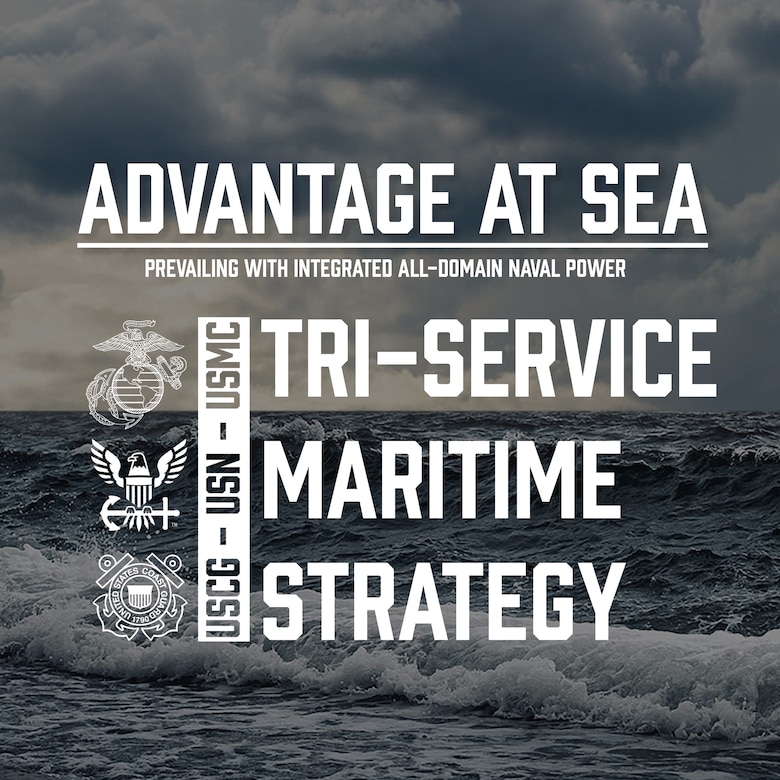
WASHINGTON ̶ The U.S. Navy, Marine Corps, and Coast Guard released a new tri-Service maritime strategy today, entitled Advantage at Sea.

The document provides strategic guidance on how the sea services will prevail in day-to-day competition, crisis, and conflict over the next decade. It also directs the services to deepen tri-service integration, aggressively pursue force modernization, and continue robust cooperation with allies and partners.

“Our integrated Navy, Marine Corps, and Coast Guard must maintain clear-eyed resolve to compete with, deter, and, if necessary, defeat our adversaries while we accelerate development of a modernized, integrated all-domain naval force for the future,” wrote Chief of Naval Operations Adm. Michael M. Gilday, Marine Corps Commandant Gen. David H. Berger, and Coast Guard Commandant Adm. Karl L. Schultz in the strategy’s forward. “Our actions in this decade will shape the maritime balance of power for the rest of this century.”

Advantage at Sea places particular focus on China and Russia due to their increasing maritime aggressiveness, demonstrated intent to dominate key international waters and clear desire to remake the international order in their favor.

“China’s and Russia’s revisionist approaches in the maritime environment threaten U.S. interests, undermine alliances and partnerships, and degrade the free and open international order,” the document states. “Moreover, China’s and Russia’s aggressive naval growth and modernization are eroding U.S. military advantages.”

The strategy also emphasizes the maritime domain is integral not only to America’s security and prosperity but to those of all nations. The oceans connect global markets, provide essential resources, and link societies and businesses. Shared interests create opportunities for greater cooperation with allies and partners.

“As Sailors, we are on the leading edge of Great Power Competition each and every day,” said Gilday. “Sea control, power projection and the capability to dominate the oceans must be our primary focus. Our forces must be ready today, and ready tomorrow, to defend our nation’s interests against potential adversaries at any time. This strategy helps us do exactly that.”

The strategy directs the Services to pursue an agile and aggressive approach to force modernization and experimentation. The future fleet will combine legacy assets with new, smaller ships, lighter amphibious ships, modernized aircraft, expanded logistics, resilient space capabilities, and optionally manned and unmanned platforms. To succeed in a dynamic operating environment, the Services will also invest in warfighter development, delivering innovative training and education to ensure our Sailors, Marines, and Coast Guardsmen remain the world’s premier naval force.

Advantage at Sea also reflects the dual roles of the Service Chiefs: advising on the employment of forces in day-to-day competition, crisis and conflict, and developing a modernized future force that deters potential adversaries and advances and defends U.S. interests.

“The Marine Corps is conducting a sweeping force design transformation to fulfill our role as the Nation’s expeditionary force-in-readiness while simultaneously modernizing the force in accordance with the operating environment described in the National Defense Strategy and the tri-Service maritime strategy. We must embrace new ways of operating within the concepts of integrated U.S. naval power to deter future adversaries and generate better strategic choices,” said Berger.

As the Services pursue greater integration, to include training and education; capabilities and networks; plans, exercises, and experiments; analysis and wargaming; investments and innovation; and force design, Advantage at Sea states they will collaborate with allies and partners to build capability, enhance interoperability, and generate unity of effort. Alongside allies and partners, the Services will be able to establish sea denial and sea control where and when needed, project power, and hold critical adversary targets at risk.

“As the only military service in the Department of Homeland Security, the U.S. Coast Guard provides unique multi-mission and intelligence capabilities to complement the ability of our Marines and Navy to protect our national interests when necessary and deliver lethality across the globe,” said Schultz. “Our hallmark is working daily with partner agencies, sister sea services, and international navies and coast guards to counter maritime coercion and uphold the rules-based order – partnerships work.”

To read the full strategy, please visit: https://www.uscg.mil/tsms

Authorization (not money) for Six Icebreakers and Better Comms in the Arctic

The Coast Guard Research, Development, Test, and Evaluation Program, in partnership with the Department of Homeland Security Science and Technology Directorate, launched two 6U CubeSats from Vandenberg Air Force Base, California, as part of the Polar Scout project. Photo courtesy of SpaceX.

Breaking Defense reports the National Defense Authorization Act (NDAA) includes six icebreakers for the Coast Guard and better satellite communications for the polar regions.

Not really a reason to get too excited yet. Authorization does not include any money. There was already general bipartisan acceptance of the idea that the Coast Guard needs new icebreakers with the 3 heavy and 3 mediums apparently seen as reasonable. Funding ($555M) for the second Polar Security Cutter was requested by the administration and agreed to by both Senate and House oversight committees, so should be in the FY2021 budget.

The addition of better comms may be the best news in the NDAA for the Coast Guard. It has been a major problem in US Arctic operations.

“Defense Health Primer: U.S. Coast Guard Health Services” –CRS

New Orleans, September 5, 2005 – A Disaster Medical Assistance Team member (left) assures a rescued man that the trip to the airport will be safe. Thousands of people are airlifted from the Ernest N. Morial Convention Center pickup site to the New Orleans Airport every day. Photo by Win Henderson / FEMA photo.

The Congressional Research Service has another Coast Guard related “primer,” a two page basic explanation, written for congressmen and their staffers, to provide basic understand. This one is on healthcare, “Defense Health Primer: U.S. Coast Guard Health Services.”

It covers mission, organization, budget, USCG healthcare personnel, USPHS support to the USCG, USCG health services, interaction with TriCare, and current challenges including electronic health records, USPHS support, and the disability evaluation system.

Thanks to Bryant’s Maritime Consulting for bringing this to my attention.

Maybe the Largest Self Right Motor Surfboat in the World

Intermarine Launches New SAR Patrol Boat for Italian Coast Guard

Naval News Reports that, “Italian shipbuilder Intermarine launched the longest self-righting and unsinkable boat ever built in Italy.” At 33.6 meters (110′), length overall, this may be the largest self-righting rescue craft in the world.

Our own 52′ Motor lifeboats are becoming unsupportable, as made clear by the recent withdrawal of Victory, now 64 years old, from service. Our 87′ patrol boat are approaching the end of their service life. It may be time to look at what others have done and procure a larger, more powerful, and  extremely seaworthy self righting boat capable of replacing both the 87 footer and the 52 foot MLB, at least in ports where a maritime terrorist threat is extremely unlikely. 

Specifications here: Scheda nave nuova classe cp 420 Natale De Grazia (slideshare.net) (Thanks to W B Young)


A Google Translation: 

Ship board new class cp 420 Natale De Grazia
1. New Naval Unit class CP 420 Technical Sheet CP 420 – Christmas Ship DE GRAZIA…………………………………. (delivery expected December 2020) CP 421 – Ship Roberto ARINGHIERI………………… (delivery expected December 2021) Classification RINA C (✠) Rescue and Maritime Police Self-thinning and Unsinkable – Navigation Unrestricted Length 33.60 m. Width 8.15 m. Draw 1.34 m. Full load displacement ~ 150 tons Max speed 31 knots > 1000 nm. (28 knots) Construction material Aluminum Alloy Propulsion Hydrojet n.2 KONGHSBERG 2 x MTU : 16V2000M96 (2 X 1790 KW / 2 X 2490HP) Electrical generation 2 DDGG Deutz/Koelmo (2 x 85 KW)
2. Boarding capacity 200 people including 50 hospitalized and sitting in the room shipwrecked with adjacent decontamination area and infirmary Crew 10 (logistics accommodations: (2 x 2pl) + (2 x 4pl) T.V. Command (CP) Operating and communication systems no. 2 GPS – no. 2 RADAR (X and S band) – ECDIS – VSAT – VHF/FM – n.2 HF 500/150W RodeSwarts – Warship AIS NAVNET system – Optronic system – Ecosounder Other operating capacities Sea holding 6 – wind F9 Service boat on fly bridge Dedicated area for operations such as Vertrep/Medevac 0.5 ton feeding table crane for shipwreck recovery 75 mc/h high pressure fire monitor Fendering perimeter system: profile “D” (80×40) expanded polyethylene core (closed cell density 33 Kg/mc) coated the polyurea with differentiated thickness with high resistance (to fire 175°C) orange color RAL2004 Capacity : Water Crates 3.6 mc (in addition to the dissalators) Diesel Crates : 55 mc Construction site INTERMARINE spa La Spezia – Shipyard of Messina


31 knots would be remarkably fast for a vessel of this size with the power indicated, faster than either the 87 footers or the 110s with less power than either. 

“Here Is What…Missiles Actually Costs” –The Drive

The Drive brings us estimates of the per round price for several types of missiles in the US inventory, “ship launched” here and “air launched” here. The “air launched” list includes a couple of missiles that can also be surface launched, LRASM and Hellfire. I have pulled out info on those systems that could someday up-arm Coast Guard cutters.

These numbers might look quite scary at first glimpse, but if you consider the cost of an operating day, for a ship like the $650M National Security Cutter, (I don’t really know, but a very rough estimate would be on the order of –don’t quote me– $250,000/operational day, see foot of the post for how I got this) it does not look that much out of line. (Reportedly the 57mm Mk110 gun cost $7.2M and the rounds $1200 each. The fire control systems, maintenance, training, and support personnel are additional cost.) By comparison, the Hellfire looks like an absolute bargain. We could probably mount a set of up to eight on an FRC for less than the cost of a 25mm Mk38 mod3.

Keep in mind, that if the Navy sees a need to arm Coast Guard cutters, the Navy pays for the systems. (I do believe the Navy does not really understand or appreciate our counter terrorism needs, maybe the Coast Guard does not either.)

We had some earlier estimates of the cost to arm cutters here, here, and here.


Evolved Sea Sparrow Missile (ESSM) – $1,795,000 (average for the entire projected Fiscal Year 2021 purchase, which includes ESSM Block I and Block II versions).

Mk49 “SeaRAM launcher for Rolling Airframe Missiles.

Rolling Airframe Missile (RAM) – $905,330 – This unit price is an average across the full projected Fiscal Year 2021 order, which includes multiple RAM variants, including the Block II and IIA.

Tactical Tomahawk (TACTOM) Block V – $1,537,645 (base land-attack variant). Conversion kits to transform Block V missiles in Block Va Maritime Strike Tomahawk (MST) anti-ship missiles approximately $889,681.

The U.S. Navy littoral combat ship USS Gabrielle Giffords (LCS-10) launches a Naval Strike Missile (NSM) during exercise “Pacific Griffin” on 2 October 2019. The NSM is a long-range, precision strike weapon that is designed to find and destroy enemy ships. Pacific Griffin is a biennial exercise conducted in the waters near Guam aimed at enhancing combined proficiency at sea while strengthening relationships between the U.S. and Republic of Singapore navies. U.S. Navy photo by Mass Communication Specialist 2nd Class Kenneth Rodriguez Santiago

Naval Strike Missile (NSM) – $2,194,000 (Navy only requested funds to purchase 15 of these missiles in the 2021 Fiscal Year budget).

ARABIAN GULF (Sept. 16, 2018) A MK-60 Griffin surface-to-surface missile is launched from coastal patrol ship USS Thunderbolt (PC 12). Ships attached to U.S. 5th Fleet’s Task Force 55 are conducting missile and naval gun exercises against high speed maneuvering targets to advance their ability to defend minesweepers and other coastal patrol ships. U.S. 5th Fleet and coalition assets are participating in numerous exercises as part of the greater Theater Counter Mine and Maritime Security Exercise to ensure maritime stability and security in the U.S. Central Command area of responsibility, connecting the Mediterranean and the Pacific through the western Indian Ocean and three strategic choke points. (Photo by MC2 Kevin Steinberg)

Griffin – None included in current budgets, but  2019 Fiscal Year unit cost  $127,333. 

ATLANTIC OCEAN—A Longbow Hellfire Missile is fired from Littoral Combat Ship USS Detroit (LCS 7) on Feb. 28 2017 as part of a structural test firing of the Surface to Surface Missile Module (SSMM). The test marked the first vertical missile launched from an LCS and the first launch of a missile from the SSMM from an LCS. (Photo by U.S. Navy)

Hellfire (AGM-114):  A number of different costs were reported. This is apparently due to the large number of different versions of the missile. The average price for the Navy was reported as $45,409, for the Air Force $70,000, and for the Army $213,143.

Long Range Anti-Ship Missile (LRASM)

LRASM (Long Range Anti-Ship Missile): AGM-158C Long Range Anti-Ship Missile (LRASM) for the Air Force – $3.960 million, for the Navy – $3.518 million


How I got a very approximate cost for an operational day for a National Security Cutter.

Annual Coast Guard budget approximately $12M, divide by 40,000 (approximate number of uniformed active duty Coasties, about $300,000 each), multiply by 150 (approximate number of crew members ($45M/year), divide by 180 operating day/year=$250,000/day. (Back in the 1980s I figured a 378 cost forty or fifty thousand per op day. Forget what it was exactly but the higher cost of today’s NSC sounds about right.)

“WINNER ANNOUNCEMENT – 2020 HOPLEY YEATON CUTTER EXCELLENCE AND SUPERIOR CUTTERMAN AWARDS” –ALCOAST

Coast Guard’s 270-foot medium endurance cutter Bear underway in Africa. (Ensign Connor Brown, U.S. Coast Guard)

Commandant Notice below announces this year’s Hopley Yeaton Cutter Excellence and Superior Cutter Awards. The stories show the resilience and adaptability of our cutter crews.

united states coast guard

R 150718 DEC 20
FM COMDT COGARD WASHINGTON DC//CG-DCO//
TO ALCOAST
UNCLAS //N01650//
ALCOAST 451/20
COMDTNOTE 1650
SUBJ:  WINNER ANNOUNCEMENT – 2020 HOPLEY YEATON CUTTER EXCELLENCE AND SUPERIOR CUTTERMAN AWARDS
1. The Douglas Munro Chapter of the Surface Navy Association is honored to
announce and congratulate the recipients of the 2020 Hopley Yeaton Cutter
Excellence and Superior Cutterman Awards. This year’s nominations were
absolutely impressive, and were a testament to the hard work being done
by the cutter fleet every day. As nearly half of all USCG personnel serve
afloat in their first four years in the USCG, the cutter fleet is entrusted
with the important task of developing and molding the USCG of the future.
Continue to strive for excellence, while at the same time identifying and
encouraging the future leaders of our fleet.
2. This year’s winners are:
    a. Cutter Excellence Award (Large Cutter): CGC POLAR STAR (WAGB 10)
    b. Cutter Excellence Award (Medium Cutter): CGC BEAR (WMEC 901)
    c. Cutter Excellence Award (Small Cutter): CGC CHEYENNE (WLR 75405)
    d. Superior Cutterman Award (Officer): LCDR Ian Starr – CGC ALEX HALEY (WMEC 39)
    e. Superior Cutterman Award (Enlisted): EMC Dimitri Brisker – CGC WAESCHE (WMSL 751)
3. Hopley Yeaton Cutter Excellence Award (Large) – CGC POLAR STAR (WAGB 10):
    a. POLAR STAR, throughout 325 Day Away from Homeport (DAFHP) in 2020,
completed a remarkable 122 day deployment in support of Operation Deep Freeze
(ODF). During ODF, POLAR STAR established and groomed a 22nm channel through
10 foot thick Antarctic ice to resupply McMurdo Station, conducted a three ship
escort into Winter Quarter’s Bay for a sealift of 8M gallons of life sustaining
fuel, 900 containers, and $480M in materials and supplies for infrastructure
recapitalization. During ODF, POLAR STAR also facilitated the State Department’s
historic treaty inspections of Chinese, Italian, and South Korean facilities,
cementing U.S. leadership and influence in the region. Returning home amidst a
global pandemic, the cutter successfully completed their $7.9M, four month dry
dock. POLAR STAR’s unique people plan required few crewmembers to need to spend
more than 215 DAFHP. Lastly, POLAR STAR’s prototyping of Deployment Based Training
(vice TSTA) is setting well-founded precedents for future cutter training models.
    b. Honorable Mentions for the Large Cutter Award are:
        CGC HAMILTON (WMSL 753)
        CGC BERTHOLF (WMSL 750)
        CGC MUNRO (WMSL 755)
4. Hopley Yeaton Cutter Excellence Award (Medium) – CGC BEAR (WMEC 901):
    a. In 2020 BEAR executed a very high OPTEMPO of 218 DAFHP in a 242 day period,
exhibiting great flexibility in the execution of an unexpected deployment to West
Africa. Initially slated to patrol in the Eastern Pacific, while on patrol BEAR’s
crew responded admirably to a hole in the engine room, battling flooding at sea
for nearly 16 hours. Over a 5 day period BEAR conducted emergency repairs and
requested $250K in parts and supplies for an Out of Hemisphere (OOH) deployment
3,500 miles away from depot level support. BEAR sailed across the Atlantic to
exercise US-Cabo Verde bilateral agreements during 25 LE exchanges, numerous
exercises, and interdiction of a 280 foot freighter. BEAR’s preparations allowed
for completion of a major at-sea shaft seal replacement and replacement of a 1,200
pound fire pump while in AFRICOM. BEAR also completed a 48 day D7 patrol which
included a 4-day boarding of a 300 foot Haitian Freighter, and a 75 day, $2.4M
drydock during the height of the uncertainty surrounding the COVID-19 pandemic.
BEAR hosted three cutterman calls, including an event supporting the search for
USRC BEAR, was published in the CG Compass and the Maritime Executive, conducted
an information operations campaign earning the attention of the National Security
Council, and prototyped the Abbott Now COVID test machine to mitigate COVID risk.
    b. Honorable Mentions for the Medium Cutter Award are:
        CGC VENTUROUS (WMEC 625)
        CGC CAMPBELL (WMEC 909)
        CGC RESOLUTE (WMEC 620)
5. Hopley Yeaton Cutter Excellence Award (Small) – CGC CHEYENNE (WLR-75405):
    a. In remarkable fashion, the 54 year old CHEYENNE, stationed in St. Louis, MO,
serviced over 1,185 buoys and 150 shore aids in FY20. This high optempo across 576
river miles on the Mississippi river and three Sectors, combined with record-high
water, flooding, and other cutter casualties, meant CHEYENNE had more underway
hours than any of the other 33 ATON cutters in D8. Despite the cutter’s age, and
numerous significant casualties including loss of the #1 MDE and cancellation of
the cutter’s drydock, the hard work of CHEYENNE’s crew meant that the cutter only
had 9 days of unscheduled availability, achieving a Ready for Operations rating
of 99%. Despite CHEYENNE’s primary ATON mission, the crew responded to a person
in the water SAR case on June 4th. The watch-stander overheard a “Pan Pan” for a
person in the water near the Gateway Arch, 2.5 miles away. A volunteer boat crew
quickly assembled and launched a small boat, arriving on scene within minutes.
The crew discovered a woman clinging to floating debris up river from a fleet of
barges and moments away from being pulled under by the swift river current. The
boat crew quickly maneuvered through the extreme conditions and rescued the woman,
saving her life. Once onboard the boat crew brought her back to the cutter where
medical personnel provided treatment. This was an especially noteworthy occurrence
because the CHEYENNE does not maintain a SAR ready posture.
    b. Honorable Mentions for the Small Cutter Award are:
        CGC BRISTOL BAY (WTGB 102)
        CGC ISAAC MAYO (WPC 1112)
        CGC NATHAN BRUCKENTHAL (WPC 1128)
6. Hopley Yeaton Superior Cutterman Award (Officer) – LCDR Ian Starr:
    a. As Executive Officer of USCGC ALEX HALEY (WMEC 39), LCDR Starr
exemplifies the qualities and characteristics of a Coast Guard Cutterman.
Through his positive engagement with his crew at a remote unit in AK during
a global pandemic, LCDR Starr has been critical to ALEX HALEY’s success in
FY2020. Despite COVID-19, under LCDR Starr’s leadership the overall esprit
de corps of the ALEX HALEY has improved dramatically. Working with HSWL SC
and a broad network of D17 POCs, LCDR Starr was a critical liaison for providing
care to crewmembers suffering from mental health crises during the pandemic,
to include short-notice MEDEVAC of five personnel from the most remote corners
of the D17 AOR. Relying on experience and initiative, LCDR Starr also developed
procedures, later adopted fleet-wide, to expedite testing for individuals underway
in a remote AOR. A caring individual dedicated to crew proficiency, LCDR Starr
also created an extensive JO PRODEV program involving practical shipdriving, a
“speed mentoring” event, and in-depth leadership discussions, including a revival
of ALEX HALEY’s LDAC through engagement of the Chief and First Class messes onboard.
Lastly, LCDR Starr is an expert shipdriver who led the cutter through CART, TSTA,
AVCERT, and Finance and Administration inspections with superb results.
    b. Honorable Mentions for the Superior Cutterman Award (Officer) are:
        LCDR Nolan Cuevas – CGC SPENCER (WMEC 905)
        LCDR Adam Gercon – CGC RICHARD SNYDER (WPC 1127)
        LCDR Nicholas Galati – CGC POLAR STAR (WAGB 10)
7. Hopley Yeaton Superior Cutterman Award (Enlisted) – EMC Dimitri Brisker:
    a. EMC Dimitri Brisker’s is a cutterman to the core. While WAESCHE was
transiting across the Pacific Ocean, 700NM from nearest land, the cutter
experienced a major class bravo fire on one of the MDEs that rapidly climbed
8 decks and spread to the interior bulkhead of the ammunition magazine.
Displaying incredible bravery and forEsightedness as a member of the Rapid
Response Team, EMC Brisker managed initial response efforts. At great risk
to his own personal safety, EMC Brisker then led an attack team topside to
the O-3 level to combat the fire immediately adjacent to several ammunition
magazines, preventing cascading casualties from exploding ordnance. He then
cleared hot spots, overhauled damaged spaces, dewatered compartments, and
enacted makeshift repairs to restore propulsion for avoidance of a fast-approaching
tropical storm. EMC Brisker has been able to pioneer CG-wide changes, including
creation of class-wide MPC cards to address bow thruster start problems and a
class-wide JQR for the Diesel Generator. When WAESCHE also experienced a
crippling casualty to all modes of propulsion, EMC Brisker and his team also
trouble shot the MRG for 10 hours to identify and replace a faulty module
card. EMC Brisker’s list of responsibilities displays the breadth of his
devotion to the crew. He is the Command Chief, the senior EOW, a DCTT &
ETT member, Cutterman qualification program manager, and an advanced Motor
Turbine technician.
    b. Honorable Mentions for the Superior Cutterman Award (Enlisted) are:
        EMCS Theodore Compton – CGC HERBIERTO HERNANDEZ (WPC 1114)
        ET1 Michael Clements – CGC BEAR (WMEC 901)
        BM1 Jason Drexler – CGC MUNRO (WMSL 755)
8. The SNA will coordinate with OPCONs to recognize this year’s winners.
By 10 December, winners in cutter and individual categories are requested
to send a cutter image (can include entire crew) or a professional photo to
LCDR Paul Ledbetter (paul.a.ledbetter@uscg.mil) for inclusion in this year’s
SNA National Symposium. Some level of virtual winner participation will be
requested at this year’s events: https://www.navysnaevents.org/national-symposium/.
9. Bravo Zulu and great work to this year’s Hopley Yeaton Award recipients
and nominees. This year’s nominees were selected by panels consisted of 32
Active Duty and Retired Permanent cuttermen from the ranks of O8 to E7 who
collectively amassed 341 years of sea time. The sheer volume of praiseworthy
nominees, as well as the high quality award write-ups continues to impress.
Thank you to all commands for submitting and reviewing nominations.
10. VADM Scott Buschman, Deputy Commandant for Operations, sends.
11. Internet release is authorized.

“Boost Coast Guard Fleet For Pacific Partnerships” –Breaking Defense

The crew of USCGC Joseph Gerczak (WPC 1126) prepare to moor at the port of Pago Pago, American Samoa, Aug. 3, 2019. They will conduct a joint fisheries patrol with NOAA Fisheries and American Samoa Marine Police members. (U.S. Coast Guard photo by Chief Petty Officer Sara Muir/Released)

Breaking Defense has an oped from Bollinger President and CEO Ben Bordelon, who also serves as chairman of the Shipbuilders Council of America. We all know, he has a financial interest in additional cutter construction, but that does not mean he is not right. After decades of neglect, the Coast Guard can use some influential support, and the mission is important. With permission from Bollinger, I am publishing it in full below.


Boost Coast Guard Fleet For Pacific Partnerships

By: Ben Bordelon

For decades, China has deployed its fishing fleet – the largest in the world – as a maritime militia, systematically asserting and expanding Beijing’s influence throughout the Indo-Pacific.

The fleet routinely operates in areas where there is little to no enforcement and willfully engages in aggressive, predatory practices to intimidate lawful local fishermen, undermine maritime governance, and destabilizing the global blue economy.

China is not alone in these actions. Illegal, Unreported and Unregulated (IUU) fishing occurs under a number of flags. The practice is so pervasive, in fact, that one in five fish caught around the world –  between 11 million and 26 million metric tons of fish – is done illegally, robbing legal fishermen of tens of billions of dollars every year. But IUU is first and foremost a maritime and national security threat. The erosion of global norms and standards by the Chinese is a direct affront to global stability and threatens the ability of sovereign nations to manage and defend their resources. (One of the most easily understood examples for Americans would be the predations that occur in Bahamian waters by fishermen from the Dominican Republic and other countries.)

The Coast Guard is uniquely positioned for this and similar missions, not just in the Pacific, but across the globe. The Coast Guard occupies the sweet spot on the diplomatic spectrum between the State Department on one end and the Department of Defense on the other. The distinctive white hulls and red racing stripe of the Coast Guard are able to move through international waters and Exclusive Economic Zones without being viewed as overly aggressive or provocative, making them a prime candidate for cooperative policing and security. They can deescalate and mitigate, without their simple presence escalating the situation. They symbolize safety, maritime order and the protection of economic and environmental resources.

Across Asia, as China continues to grow economically and militarily, we’ve seen countries shy away from traditional joint naval operations in the region for fear of drawing Beijing’s ire – or worse armed conflict. White hulls, however, have been embraced as a much better alternative with an intrinsic freedom for positive cooperation that cannot be confused or conflated with aggression.

IUU fishing has replaced piracy as the leading global maritime threat and often is connected with other illegal activities, including human trafficking, forced labor and narcotics trafficking. Last year, U.S. Coast Guard Pacific Area Commander Vice Admiral Linda Fagan stated that Washington intends to engage in “law enforcement and capacity-building in the fisheries enforcement realm.” Earlier this month, the Coast Guard made good on its commitment and released its first IUU Fishing Strategic Outlook, which outlines its efforts to combat IUU fishing over the next decade.

The Coast Guard identifies enhanced enforcement operations and expanded multilateral cooperation as the keys to countering IUU. To successfully conduct this mission, the Coast Guard will be relying heavily on its growing fleet of small and medium high-endurance vessels.

Earlier this year, the first of three 154’ Sentinel Class Fast Response Cutters were sent to Santa Rita, Guam where they will be stationed in support of Operation Aiga in an effort to strengthen island nations in Oceania, including through fishery patrols and enforcement. Commandant of the Coast Guard Adm. Karl Schultz has acknowledged the importance of this homeporting, saying, “by placing an ocean-going Coast Guard buoy tender and FRCs, we will promote ‘rules-based order,’ build capacity and affirm the United States’ positive and enduring role in the region.” Schultz has also said that “you’re going to see more of those vessels in those parts of the world.” This is in line with and affirms the emphasis the United States set in its 2018 National Defense Strategy on countering U.S. strategic competitors and adversaries.

The Coast Guard has the opportunity to establish itself as the preferred partner in the region. Already it has successfully embarked on a number of joint initiatives, such as its Theater Security Cooperation effort and Shiprider program, that combine efforts with partner nations to build cooperation and goodwill with defense and security capacity building, while simultaneously meeting development goals and furthering the strategic objectives of the United States and its allies. In a dynamic global arena, the Coast Guard continues to successfully demonstrate that white hull diplomacy should be looked to more and more as a complementary arrow in the whole-of-government quiver.

Should the Coast Guard’s mission continue to expand, the maritime defense industrial base stands ready to construct and deliver the high-quality and high-endurance vessels necessary to carry out and perform the mission at hand. This community is dedicated and available to modernize, maintain and expand the U.S. fleet.

Patrolling the vast reaches of the Pacific, as well as patrolling its home waters, may require a larger fleet as the expanded presence of white hulls around the globe helps further the regional partnerships and alliances necessary to curb the creeping influence of America’s strategic competitors and adversaries and reaffirm its leadership and commitment to rules-based order and maritime governance around the world.