“The Long Blue Line: Warren Gill—Oregon’s forgotten Navy Cross hero” –Coast Guard Compass

LT Warren Gill’s official portrait in dress uniform photographed by the U.S. Coast Guard. (The Gill Family)

Coast Guard Compass has a short article about a World War II Coast Guard Reserve Navy Cross, Legion of Merit, and Purple Heart recipient that I had not been aware of. This is all the more remarkable because he got the Legion of Merit for actions while an Ensign and the Navy Cross for actions as a Lt (jg). After leaving the Coast Guard, he went on to lead an exemplary life of public service including leadership in the Coast Guard Auxiliary.

This is another hero we might want to name a ship after.

“”Narcosubmarine” a First for Europe -Spanish Officials” –Marine Link

Marine Link reports.

“The discovery of a submarine carrying 3,000 kg (3.3 tons) of cocaine off the coast of Spain marks a “historic” turning point in the battle against drug trafficking, Spanish authorities said on Wednesday.”

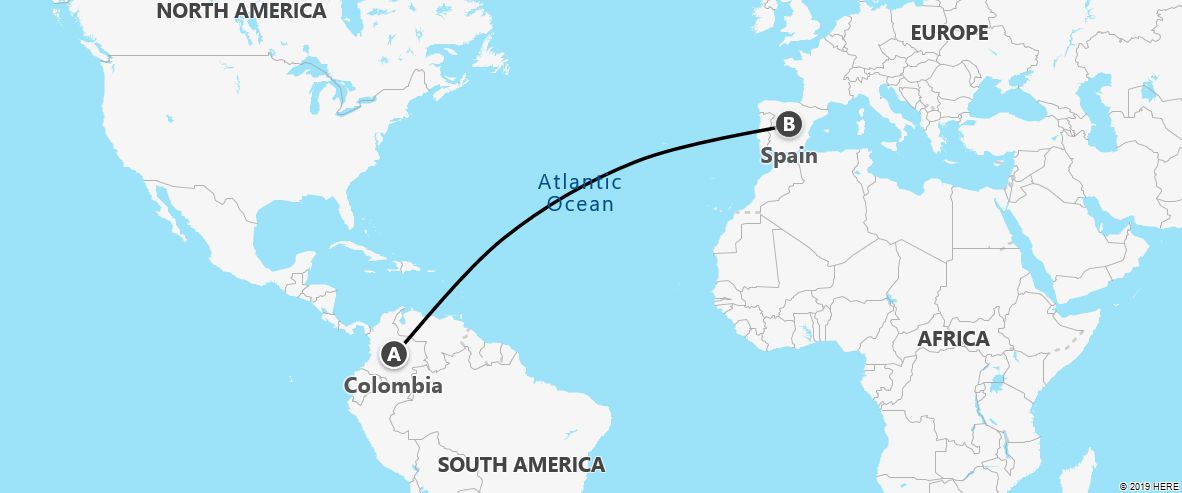
That looks like an awful long way for a Self Propelled Semi-Submersible (SPSS), about 4,000 nautical miles. Have to wonder if the goods were not shipped first to Africa and perhaps the SPSS was built there? Alternately could the SPSS have been transported part of the way by a larger vessel?

NarcoSPSStoSpain

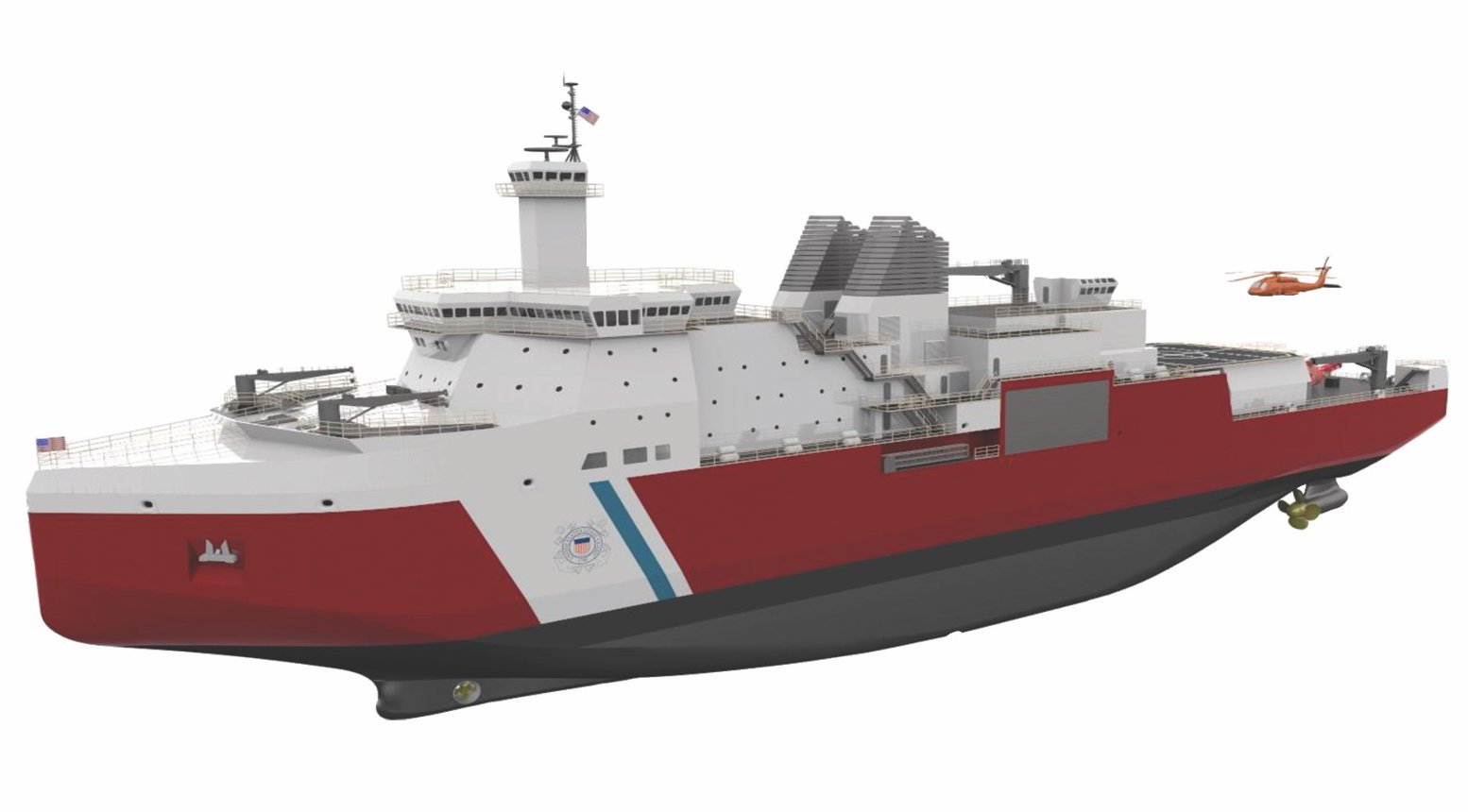
Polar Star Sails for McMurdo, and We Need Six PSC

Below is quoted a press release about the departure of the Polar Star for the annual McMurdo resupply mission.

I may be reading too much into this, but the paragraph regarding the Polar Security Cutter program seems to represent a change from previous pronouncements.

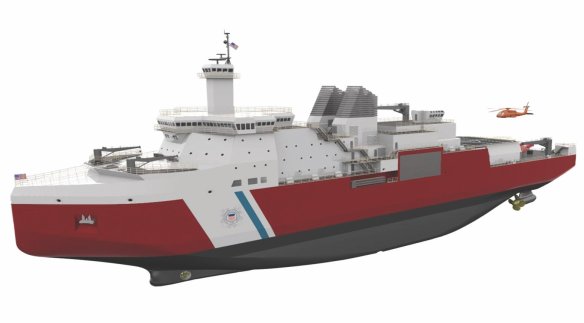
The Coast Guard … is seeking to increase its icebreaking fleet with six new polar security cutters in order to ensure continued national presence and access to the Polar Regions.

The same message is now on the Acquisitions Directorate Polar Security Cutter page, “The Coast Guard needs six new PSCs to ensure national year-round access to the polar regions and to provide self-rescue capability.”

The High Latitude study that the number six was based upon, said the Coast Guard needed three heavy icebreakers and three medium icebreakers. The heavy icebreaker became the Polar Security Program. Are medium icebreakers also being called Polar Security Cutters? It does not seem so. There is no mention of this second type.

There is logic to simply building only a single class. It would save the development costs of a new, second class. The cost of the PSC is less than originally estimated and with the cost potentially dropping as the shipyard continues the learning curve with each new ship, building three less capable ship may not save much. Having instead six of the more capable ships would increase flexibility, and commonality pays dividends in logistics and training. Six more capable ship could allow a Northern Hemisphere winter deployment of two ships to McMurdo, while a second pair of ships could alternate, one on patrol in the Arctic, and the other on standby in Seattle, while a third pair are in the yard for maintenance to be ready for deployment during summer months.

Of course for any mission requiring an icebreaker, a heavy icebreaker Is more likely to get there quicker and be capable of doing more than a smaller ship when it gets there.

The Press Release

united states coast guard

News Release

Nov. 26, 2019
U.S. Coast Guard Pacific Area
Contact: Coast Guard Pacific Area Public Affairs
Office: (510) 437-3319
After Hours: (510) 333-6297
D11-DG-M-PACAREA-PA@uscg.mil
Pacific Area online newsroom

Nation’s only heavy icebreaker departs for Antarctic military operation

Coast Guard Cutter Polar Star Departs Seattle for Operation Deep Freeze 2020
USCGC Polar Star crew departs Seattle for Operation Deep Freeze 2020 https://www.dvidshub.net/image/5941169/uscgc-polar-star-crew-departs-seattle-operation-deep-freeze-2020 USCGC Polar Star crew departs Seattle for Operation Deep Freeze 2020

Editors’ Note: Click on images to download high resolution version.

SEATTLE — The crew aboard the U.S. Coast Guard Cutter Polar Star (WAGB 10) departed Tuesday commencing their annual deployment to Antarctica where the cutter and crew will support Operation Deep Freeze 2020, a joint military service mission to resupply U.S. interests in Antarctica.

“We set out today on an important mission, saying goodbye to the friends and families who have supported us and our ship for the past seven-months since we returned from Operation Deep Freeze 2019,” said Capt. Gregory Stanclik, commanding officer of the Polar Star. “We are looking forward to this year’s mission to McMurdo Station with a ship that is running the best it has since reactivation. This mission is critical to the United States and our continued strategic presence on the Antarctic Continent and I have the best crew possible to ensure we safely accomplish our goal.”

Homeported in Seattle, the 43-year-old Coast Guard cutter is the United States’ last remaining operational heavy icebreaker. This is the cutter’s seventh deployment in as many years to directly support the resupply of McMurdo Station – the United States’ main logistics hub in Antarctica.

Each year, the crew aboard the 399-foot, 13,000-ton Polar Star create a navigable path through seasonal and multi-year ice, sometimes as much as 21-feet thick, to allow a resupply vessel to reach McMurdo Station. The supply delivery allows Antarctic stations to stay operational year-round, including during the dark and tumultuous winter.

Commissioned in 1976, the Polar Star is showing its age. Reserved for Operation Deep Freeze each year, the Polar Star spends the winter breaking ice near Antarctica, and when the mission is complete, the cutter returns to dry dock in order to complete critical maintenance and repairs in preparation for the next Operation Deep Freeze mission.

The Coast Guard has been the sole provider of the nation’s polar icebreaking capability since 1965, and is seeking to increase its icebreaking fleet with six new polar security cutters in order to ensure continued national presence and access to the Polar Regions.

In the fiscal year 2019 budget, Congress appropriated $655 million to begin construction of a new polar security cutter this year, with another $20 million appropriated for long-lead-time materials to build a second.

The Coast Guard and U.S. Navy, working through an integrated program office, awarded VT Halter Marine Inc., a fixed price incentive contract in April for the detail design and construction of the Coast Guard’s lead polar security cutter, including options for the construction of two additional PSCs.

“The Coast Guard greatly appreciates the strong support from both the Administration and Congress for funding the polar security cutter program,” said Adm. Karl Schultz, the commandant of the Coast Guard. “These new cutters are absolutely vital to achieving our national strategic objectives in the Polar Regions – presence equals influence, and we must be present to meet the Nation’s national security and economic needs there in the future.”


“Coast Guard releases draft statement of work for Offshore Patrol Cutter Program Industry Studies” –CG-9

OPC “Placemat”

The Acquisitions Directorate, CG-9, has issued a draft statement of work for Offshore Patrol Cutter Program Industry Studies.

The deadline for comments is short.

A draft statement of work (SOW) was released by the Coast Guard Nov. 22 in support of the Offshore Patrol Cutter (OPC) Program. The service is seeking industry feedback; responses to the draft SOW will be used to inform a future solicitation for industry studies to support OPC follow-on production.

The draft SOW can be found here.

The deadline to submit responses to this request is Dec. 6 at noon EST.

For more information: Offshore Patrol Cutter program page

Looking at the draft statement of work, one of the first things I noticed is that it describes the OPC as “360ft LOA and 4500LT.” I think that displacement should be full load. Even at that, it is significantly larger than previously stated. I had previously noted that dimensions and displacement did not seem to correspond, that the dimension for the OPC was larger than the Holland class OPV which are 3750 tons full load, but previous statements indicated that the ships would be 3730 tons full load. This was repeated in the Congressional Research Service Reports. If their full load displacement is actually 4500 tons, that means they are almost exactly the same size as the National Security Cutters which have been variously reported as 4500 or 4600 tons full load.

The draft SOW indicates, “The re-competed contract scope will be to complete the OPC Detail Design and to construct an initial OPC using that Detail Design, with options for constructing up to 10 additional OPCs.”

Section 2.2.2.2 does at least mention the possibility of a block buy.

 “The impact of block buys of OPCs as a cost reduction strategy shall be addressed in this section.”

The draft SOW states:

“References Available at Award.  The following references will be made available not later than award of the Industry Studies contract.

1. Updated draft OPC System Specification

2. List of Long Lead Time Materials (LLTM)

3. Selected Detail Design Deliverables for information only, including Functional Design artifacts, ABS design review information, Transitional (3D) Design artifacts, Production Design artifacts, Schedules, Test Procedures, and Test Reports.  The maturity of the Functional Design artifacts exceeds 95%.

4. Selected Construction Deliverables for information only, including: Equipment Configuration List, Test results, Engineering Change documents, and schedules

5. Selected Non-Proprietary Management Planning Deliverables for information only

6. USCG Notional OPC Detail Design and Construction (DD&C) Schedule

7. Placemat summarizing OPC Functional Design “

Frankly, I don’t see how you could bid on the contract without having this information first.

The notional schedule does not appear to have changed, meaning, if followed, the contract will not be awarded until the end of FY2022, and the first ship (OPC#5) will not be delivered until near the end of FY2026 and the last ship of the class will not be delivered until near the end of FY2037, three years after the previous plan. At that time the youngest 270 would be 56 years old. We will not have fourteen OPCs to replace the 210s until 2032, by which time the youngest 210 will be 63 years old. This is starting to look ridiculous, but it does looks like there may be some flexibility.

“Contractors will evaluate the referenced design artifacts and propose their most cost effective and schedule efficient plan to transition the Functional Design into a Production Design and to construct OPCs per the contract scope described above. “

This has to be very frustrating. We already went through a year of proposal evaluations, a year of competing preliminary designs, and a year of detail design, and now it looks like we are starting over almost from ground zero.

I anticipate these ships are going to cost considerably more than the original Eastern contract or the original benchmark cost. That, and the considerable delay, are a good argument for funding a 12th NSC in FY2020.

Hopefully the contractors would offer options that would depart from the notional timeline and allow earlier completion of the program as a cost reduction strategy.

On the other hand, if we are going to take this much time, maybe we could make the  ship a bit faster and better armed, since it appears we are firmly back in the great power competition mode.

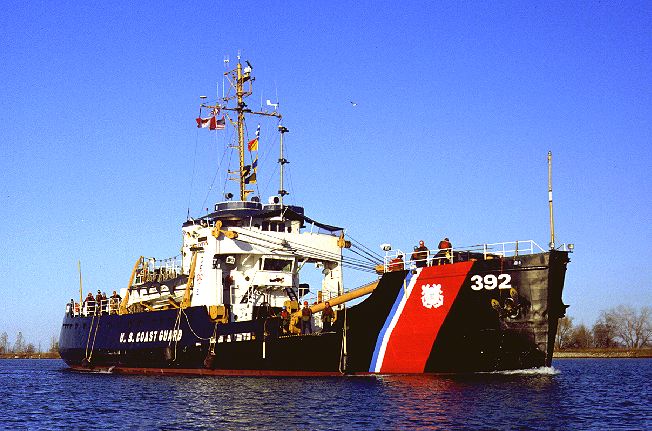
ex-USCGC Bramble Arrested, Now Up for Sale, Dec. 4

USCGC Bramble (WLB-392), USCG photo

Maritime Executive has as a short article about what has become of the former USCGC Bramble, a buoy tender that transited the North West Passage in 1957 along with USCGC Spar and USCGC Storis.

Museum ships are certainly desirable, but they are very hard to keep in presentable condition. Two very significant and unique museum ships, USS Olympia and USS Texas, have been constantly on the brink of failure. In addition to a fairly large number of light ships, we are fortunate to have Taney at the Baltimore Maritime Museum, in Baltimore, Maryland, and Ingham in Key West.

Thanks to Paul for bringing this to my attention. 

US Naval Institute General Essay Contest

Wanted to pass this along, and encourage participation. Note eligibility for USNI membership is essentially unlimited, so that should not be a barrier to participation. Deadline 31 Dec. The USNI page about the contest is here.

united states coast guard

R 211703 NOV 19
FM COMDT COGARD WASHINGTON DC//CG-5R//
TO ALCOAST
UNCLAS//N05700//
ALCOAST 366/19
COMDTNOTE 5700
SUBJ:  DEADLINE FOR U.S. NAVAL INSTITUTE’S 2019 GENERAL PRIZE ESSAY CONTEST
A. Coast Guard External Affairs Manual, COMDTINST M5700.13 (series)
1. This ALCOAST announces the U.S. Naval Institute’s 2019 General Prize Essay Contest.
2. Overview. Located at the U.S. Naval Academy in Annapolis, MD, the U.S. Naval Institute (USNI),
a private, non-profit, non-partisan organization, has provided an open forum for honest debate,
informed discussion, and professional development for members of the Naval Services since 1873.
The vision and mission of the USNI is to give a voice to those who seek the finest Navy, Marine
Corps, and Coast Guard by providing an independent forum for those who dare to read, think,
speak, and write to advance the professional, literary, and scientific understanding of sea
power and other issues critical to global security. USNI is known for its flagship magazine
Proceedings and a variety of historical and professional books.
3. USNI General Prize Essay Contest. Dating back to 1879, the General Prize is the Naval
Institute’s premier essay contest. Winning authors this year will join a long line of
great naval thinkers and innovators, including Commander Alfred Thayer Mahan, Rear
Admiral Stephen B. Luce, Lieutenant Ernest J. King, Lieutenant Commander James Stavridis,
and Commander James Winnefeld. This year’s General Prize Essay Contest invites you to
“dare to write to advance the professional, literary, and scientific understanding of sea
power and other issues critical to national defense.” Participate in this open annual essay
contest to discuss the most compelling issues, ideas, and solutions impacting the sea services.
There is no restriction on topic. All essays are judged in the blind by the Naval Institute’s
Editorial board composed of serving Sea Service professionals.
    a. Eligibility: Open to all persons eligible for membership (including existing members)
in the Institute (to include U.S. Navy, U.S. Marine Corps, and U.S. Coast Guard). The essay
must be original and not published or being considered for publication elsewhere.
    b. Length: 3,000 words maximum, excluding notes and sources.
    c. Prizes: First prize – $6,000. Second prize – $3,000. Third prize – $2,000.
    d. Submission Deadline: The deadline for entries is 31 December 2019. The winners will be
announced and published in the May 2020 Proceedings. Note: essays are submitted directly to
USNI and the U.S. Coast Guard plays no role in selecting the winning essays. Applicants shall
ensure entries conform to Chapter 6, sections (A) through (C) of REF (A).
    e. Additional details: submit the essay as a word attachment to essay@usni.org with “General
Prize Essay Contest” in the subject line. Include word count on the title page but do not
include your name on the title page or within the essay. Provide a bio and contact information
in a separate attachment.
4. Other Essay Contests and Writing Opportunities:
    a. Essay Contests. USNI hosts essay contests throughout the year on a variety of topics
including: Coast Guard, Cyber, Emerging and Disruptive Technology, Enlisted Perspectives,
Innovation & Risk, International Navies, Leadership, Marine Corps, Naval History, Naval
Intelligence, Naval Mine Warfare, and Naval Postgraduate School Foundation/USNI. For details
see: https://www.usni.org/essay-contests.
    b. Other Writing Opportunities. Authors can also submit articles for publication in
Proceedings or Naval History magazines, USNI Today (online), and USNI’s Blog (online).
For details see: https://www.usni.org/periodicals/proceedings-magazine/submission-guidelines.
5. RDML Douglas M. Fears, Assistant Commandant for Response Policy, sends.
6. Internet release is authorized.

“Maslow’s “Hierarchy of Needs” Rule and the Coast Guard During a Lapse in Appropriation” –USNI

U.S. Coast Guard photo by Petty Officer 1st Class Matthew S. Masaschi.

US Naval Institute has a short article discussing how delay of pay can undermine our efforts to inspire and retain good people, written by an active duty USCG commander.

This comes at a time when neither the DHS FY2020 budget nor legislation to guarantee continued pay for the Coast Guard in case of a government shutdown has been passed.

Three Missile Armed Cutter X for Senegal, 20 Patrol Boats for Ukraine

OPV 58 S from PIRIOU

Two posts from Naval News. French shipbuilders are doing well in the patrol vessel market.

First, “The Ministry of Armed Forces of Senegal and French shipbuilder PIRIOU signed November 17 a procurement contract for three OPV 58 S for the Navy of Senegal. The vessels will be fitted with missile systems, a first for this African navy.”

Second, “The Government of Ukraine gave its green light for the procurement of 20 FPB 98 patrol vessels made by French shipyard OCEA.”

The Senegalese OPVs:

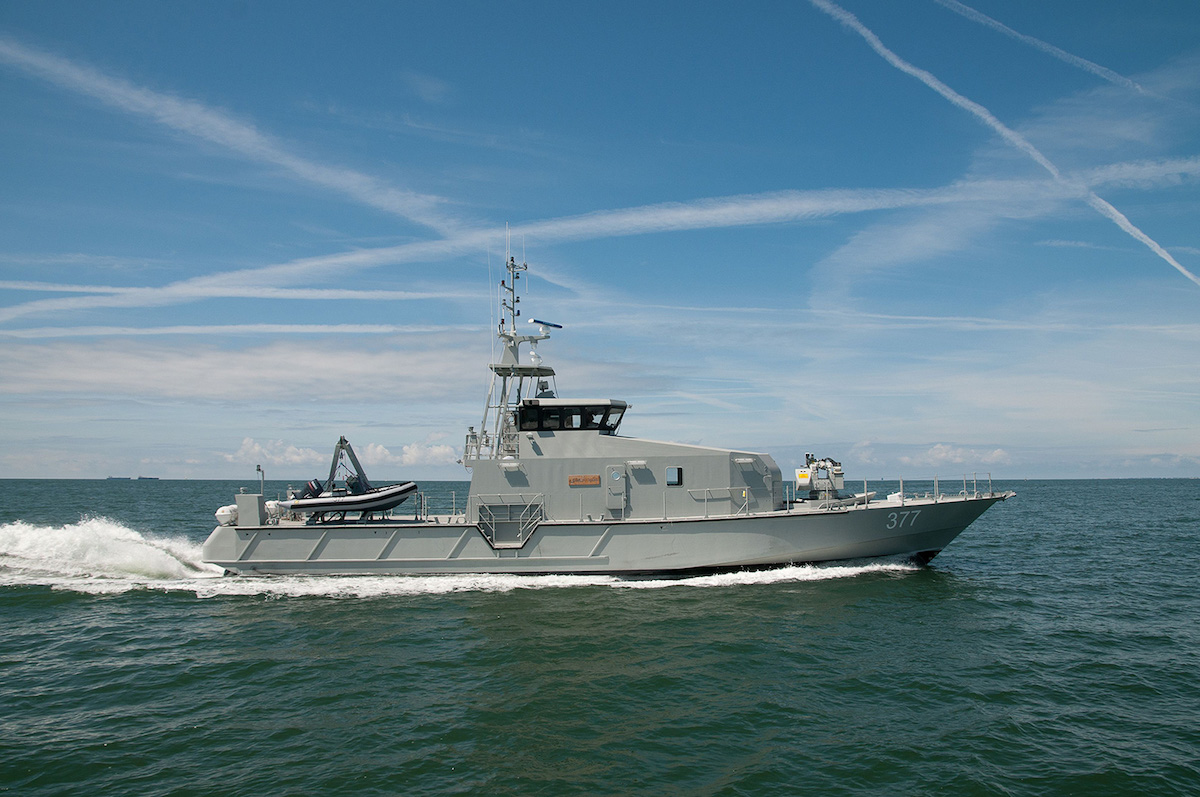
The ships for Senegal fall into that class significantly larger than the Webber class, but significantly smaller than the OPCs. They will be even a little smaller than the 210s. It would be at the lower end of a type, I have called cutter X, vessels with a crew and equipment similar to that of a Webber class FRC, but with better sea keeping and longer endurance. Specifications are:

  • Length: 62.20 meters (204′)
  • Width: 9.50 meters (31.2′)
  • Draft: 2.90 meters (9.5′)
  • Speed: 21 knots
  • Range / Endurance: 25 days, 4,500 nautical miles @ 12 knots
  • Hull / Structure: Steel / Aluminum
  • Accommodations: 48 (24 crew + 24 mission personnel)
  • Stern ramp for two RHIBs

For an Offshore Patrol Vessel, it is very well armed with:

  • A 76mm main gun on the Foc’sle
  • 4x Marte MK2/N anti-ship missiles forward, between the gun and the bridge
  • 2x 12.7mm manned manchine guns on the bridge wings
  • 2x 20mm remote weapon stations (Narwhal by Nexter) at the back of the bridge
  • A SIMBAD-RC surface to air system

The Marte MK2/N missile weighs 310 kg (682#) and is 3.85 metres (12.6′) long. The warhead weighs 70 kilogram (154 pound). The missile, has “an effective range in excess of 30 km, is a fire and forget, all weather sea skimming missile with inertial mid-course navigation through way points and active radar terminal homing. These missiles give these boats a range almost double that of the 57mm or 76mm guns.

SIMRAD-RC is a remote weapons station for launch of two Mistral missiles. Developed as a shoulder launched, Man Portable Air Defense (MANPAD) system, Mistral is a short ranged (6km) IR homing missile. It is claimed to be capable against a range of air targets as well as small surface targets.

Ukrainean OCEA FPB 98 patrol boat:

OCEA FPB 98 patrol boat (Credit: OCEA)

This is a deal, we discussed in July, when it appeared likely. I will repeat the description here.

They have a GRP hull and are powered by two 3,660 HP Caterpillar diesels using waterjets. Specs for vessels of this type sold to Algeria.

  • Displacement: 100 tons
  • Length: 31.8 meters (104’4″)
  • Beam: 6.3 meters (20’8″)
  • Draft: 1.2 meters (3’11”)
  • Speed: 30 knots
  • Range: 900 nmi @ 14 knots
  • Crew: 13

They will probably be equipped with a 20 to 30mm gun.


“Russia Is Eying More Armed Icebreakers After Launching Missile-Toting Arctic Patrol Ship” –The Drive

The Drive reports that Russia is looking at building more icebreaker warships.

A Russian shipbuilding industry official says that the country’s plans for fleets armed icebreakers, such as the Project 23550 Ice class corvettes, are growing and that they may be able to carry more even weapons depending on their exact configuration.

When I originally posted on the Project 23550 class, I questioned whether we would ever actually see these vessels armed with missiles. After all, adding containerized missiles may be an option, but so far, the Russian Navy has not seemed enthusiastic about putting missiles on ships that do not also have defensive systems like electronic warfare and close in weapon systems. That is why, when this report talked about installation the Russian Pantsir-EM gun and missile defense system, it seemed to take on additional significance. But on reading it more carefully this was just speculation. The only upgrade actually mentioned by the “Russian shipbuilding industry official” was that the “This ship and others in its class may ultimately have a 100mm main gun, instead of a 76mm one as originally planned,”

Even with only a 76mm gun, this is the most heavily armed icebreaker in the world, but only because everyone else is virtually unarmed.

Both this ship and the Polar Security Cutter have space and weight provision for containers. The only real difference is that the Russians have a containerized missile system they are trying to sell, and it has been pictured on this class.

If we start actually seeing cruise missiles, electronic warfare systems, and hard kill self defense systems like Pantsir-EM on Russian (or Chinese) icebreakers it will be real wake up call. But so far, the way these ships are armed is not significantly different from the Soviet era Ivan Susanin class naval and coast guard icebreakers.

I would note that if we start to see conflict over Antarctica, these ships could be useful there. Not against the US since we could put an aircraft carrier within striking distance, but perhaps against some of the other claimants.

I really don’t think we need to mirror the Russian capability to put containerized missiles on our icebreakers, but the Polar Security Cutters will be valuable, almost irreplaceable auxiliaries, and unlike the Russians, we have very few icebreakers, so we need to be able to quickly upgrade their defensive capabilities