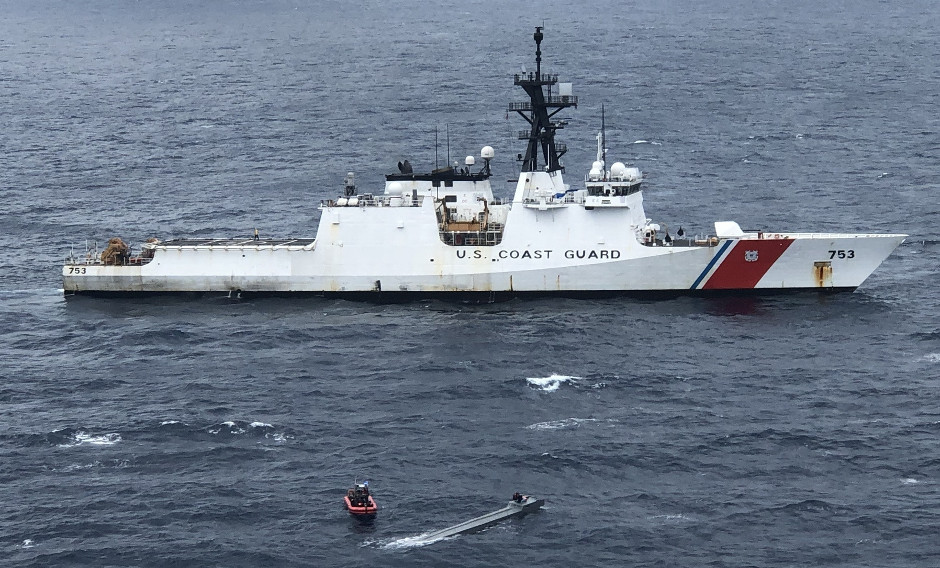
Future USCGC Midgett Underway

Just wanted to pass this along because the ship looked so good in the video. Future USCGC Midgett (WMSL-757) is headed to her planned homeport in Honolulu. She is to be commissioned in August.

This does not mean the current USCGC Midgett (WHEC-726) will be decommissioned before the new Midgett is commissioned. In fact WHEC-726 has already been renamed USCGC John Midgett. We had a similar situation when the new USCGC Munro was commissioned while USCGC Munro (WHEC-724) continued to serve.

(Incidentally there was a Navy destroyer escort named after Munro, USS Douglas A. Munro (DE-422).)

Thanks to Lee for bringing the video to my attention. 

“Exclusive: ACLU Alleges Coast Guard Detained and Abused Fishermen” –The Atlantic

Photo source: ACLU

The Atlantic reports on a suit filed by the ACLU against the Coast Guard. I will make no comments on the merits. This is not the first time Coast Guard prisoner detention procedures have been questioned.

If the ACLU wins this case it could adversely effect our ability to perform the drug interdiction mission. This criticism is not going to go away. Any thing we could do to dull the criticism would probably be helpful.

“U.S. Bulks Up Coast Guard in Pacific to Counter China Fleet” –Bloomberg

USCGC Stratton moored in San Diego, California. Photo by BryanGoff

Bloomberg reports indication USCGC Stratton is following USCGC Bertholf’s example, voyaging to the Western Pacific to help allies and provide a counter to Chinese aggressive maritime behavior. Other cutters likely to follow. Looks like this may be the new normal.

Coast Guard Sea-Air-Space “Power Point” Presentations

USCGC Smilax (WLIC-315)

The Acquisitions Directorate (CG-9) Website has copies of Presentation graphics used at the Navy League’s Sea-Air-Space Exposition.

They cover six topics:


Does Atlantic Fleet Need an Icebreaker Capability?

USCGC Southwind Commissioning.

This post is going to be a little strange, because it starts with a question no one has ask and it will not provide any real answer. It is more the start of a thought process about possibilities. 
Does the Atlantic Fleet need icebreakers to support high latitude operations? Particularly US military icebreakers? And if so, could this support be provided by icebreakers that might also provide icebreaking services in the Great Lakes during peacetime?
I don’t know, but we do know that the Coast Guard’s first icebreakers were not based in the Pacific and they were not intended for Antarctic. They were used during World War Two in the Atlantic, particularly around Greenland.
We also know that NORAD and NORTHCOM are going to need to start replacing the Dew Line Systems with more modern systems that are need to protect against, not just ballistic missiles and high altitude strategic bombers, but also surface skimming cruise missiles.
LANTFLT may not have considered the question  They only recently operated a carrier strike group North of the Arctic Circle for the first time in almost three decades. The question may not have come up, or they may have assumed that when the Coast Guard gets new icebreakers some of them will operate in the Atlantic.
If the Coast Guard persists in its current pattern, all icebreakers, except small icebreaking tugs and those in the Great Lakes, will be homeported in the Pacific. Of course that makes some sense. The US Arctic coast is all in Alaska and most readily accessible from the Pacific. The US Antarctic base at McMurdo Sound is also most accessible from the Pacific.
Atlantic Area’s only icebreaking requirement for assets more capable than the 140 foot icebreaking tugs and the 2,000 ton, 6,200 HP, 225 foot Juniper class buoy tenders is in the Great Lakes.
What kind of icebreaker might both operate in the Great Lakes and be available to support LANTFLT?
In World War II this was impossible. The Saint Lawrence Seaway was not opened to ocean going traffic until 1959. The Saint Lawrence Seaway currently admits ship up to a length 740 ft (225.6 m), a beam of 78 ft (23.8 m) and a draft of 26.5 ft (8.1 m) (SeawayMax). Clearly, it is the beam and draft which are the limiting parameters for any icebreaker design that is intended to operate alternately in both the Great Lakes and the Atlantic. The Polar Security Cutters with a beam of 88 feet are clearly too large, as would be the 13,623 ton Polar Star, with its 83 ft 6 in (25.45 m) beam and the Healey with its 82 foot beam.
In looking at what sorts of icebreaker might be usable in both the Great Lakes and the Atlantic, we have to recognize that draft will increase in fresh water because it is up to about 3% less dense but on the other hand the icebreaker could transit the locks in a lightened condition, at less than full load, reducing their draft. There may be a bit more flexibility relative to draft. 
The newer USCGC Mackinaw (WLBB-30) is not limited by the locks, with a displacement of 3,500 tons, it has a beam of only 58.5 ft (17.8 m) and a draft of 16 ft (4.9 m). Even the much larger original Mackinaw would have fit, (Displacement:5,252 long tons (5,336 t), Length: 290 ft (88 m), Beam: 74.3 ft (22.6 m), Draft: 19.5 ft (5.9 m)) as would the Wind class.

Norwegian Coast Guard Vessel Svalbard. Photo by Marcusroos

A couple of modern military classes that might be available to aid in the Arctic are the Norwegian Coast Guard Cutter Svalbard and the very similar Canadian Arctic Offshore Patrol Ship (AOPS). Both could easily transit the Saint Lawrence Seaway, but, with 12,000 to 13,410 HP, neither could be considered a medium icebreaker. Even so they are more powerful than the Mackinaw.

USCGC Glacier (WAGB-4)

USCGC Glacier (WAGB-4) (8,449 long tons (8,585 t) full load) would be considered a medium icebreaker due to her 16,000 MW (21,000 HP) motors. Her draft appears too deep at 29 ft (8.8 m), but since her beam 74 ft (23 m) was well within the SeawayMax, it should be possible to make an at least comparably capable ship that could navigate the Seaway. Additional length over and above Glacier’s 309 ft 6 in (94.34 m) could provide space to meet additional requirements. 
Conclusion: 
It should be possible to make a reasonably capable class of medium icebreakers that could be homeported in the Great Lakes and also be available to support any LANTFLT operation requiring icebreaker support.
These ships might be seen as overkill relative to the requirements of the Great Lakes, but if they wish to extend the navigational season, the additional capability might be useful.
An ability to support naval operations might provide additional justification for these vessels. For peacetime operations on the Lakes, armament is unnecessary and might be seen as a treaty violation, but provision for adding armament in case of a future conflict might be a good hedge against an uncertain future.
Could the same design also serve as the Medium Icebreakers currently planned? This is less clear. There is also the possibility that the best course to provide the six icebreakers currently being discussed is to simply build six of the current design Polar Security Cutters.

“VIDEO: Russian Destroyer Put U.S. Cruiser at Risk with ‘Unsafe’ Maneuver” USNI

US Naval Institute brings us a report on an encounter between a US cruisers, USS Chancellorsville and a Russian Udaloy class large anti-submarine vessel (destroyer).

Both are large surface combatants, with the Russian nearly as large as the cruiser. Both are gas turbine powered and about 30 years old.

Looking at the wakes of the ships, it appears to me the Russian did in fact change course to close the Chancellorsville and veered away only at the last moment. I do not see in the video the crash stop by Chancellorsville that was reported. Looks almost like they are ready to conduct a highline drill. Maybe the Russian would like to trade movies. 

With Coast Guard cutters operating in the South China Sea we can probably expect that they may encounter similar behavior from the Chinese and Russians.

SECNAV Names Future Destroyer in Honor of US Coast Guard, World War II Navy Cross Recipient

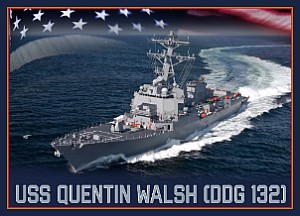
190606-N-DM308-001 Cherbourg, France(June 6, 2019) A graphic illustration of the future Arleigh-Burke class guided-missile destroyer USS Quentin Walsh (DDG 132). (U.S. Navy photo illustration by Mass Communication Specialist 1st Class Paul L. Archer/Released)

The Secretary of Navy Public Affairs has announced the intention to name a Burke Class DDG after a Coast Guard officer, Quentin Walsh, who played an important part in the invasion of Normandy and the subsequent expansion of the beachhead to include the port of Cherbourg. I have quoted the press release below. (Thanks to a former dirt dart for bringing this to my attention.)
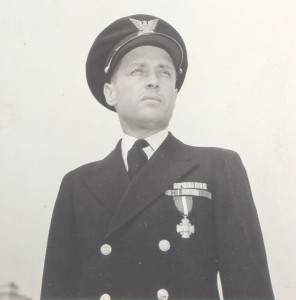
Cherbourg, France (NNS) — Secretary of the Navy Richard V. Spencer named a future Arleigh Burke-class guided-missile destroyer, DDG 132, in honor of Coast Guard Capt. Quentin Walsh, who was awarded the Navy Cross for his service during World War II.

“Capt. Walsh was a hero whose efforts during World War II continue to inspire, and his leadership in securing the French port of Cherbourg had a profound effect on the success of the amphibious operations associated with Operation Overlord,” Spencer said.

“For over two centuries, the Navy and Marine Corps team and the Coast Guard have sailed side by side, in peacetime and war, fair weather or foul. I am honored the future USS Quentin Walsh will carry Capt. Walsh’s legacy of strength and service throughout the world, and I am proud that for decades to come, this ship will remind friends and adversaries alike of the proud history of our services and the skill and professionalism of all those who stand the watch today.”

Spencer made the announcement alongside Adm. Karl Schultz, the commandant of the U.S. Coast Guard, in a ceremony aboard the U.S. Coast Guard Cutter Eagle in Cherbourg, France.

“We are grateful to the U.S. Navy and Sec. Spencer for honoring one of our Coast Guard heroes, Capt. Quentin Walsh,” Schultz said. “Naming a future Navy destroyer after Capt. Walsh, the first Arleigh Burke-class ship to be named after a Coast Guard legend, highlights not only his courageous actions but the bravery of all U.S. service members involved in the D-Day Invasion of Normandy.

“The U.S. Navy and Coast Guard legacies are interwoven as reflected in the heroic actions of Capt. Walsh and the Navy Sailors under his command during the liberation of Cherbourg,” the commandant continued. “We will remain always ready to stand with our brothers and sisters in the U.S. Navy.”

During World War II, while serving on the staff of the Commander, U.S. Naval Forces, Europe, then Cmdr. Walsh was given command of a 53-man special task force assigned to capture the vital port of Cherbourg. Despite heavy casualties, his small force seized the port facilities and took control of the harbor the day after they entered the city.

After he discovered that the remaining German garrison at Fort du Homet held 52 U.S. Army paratroopers as prisoners, Walsh, under a flag of truce, exaggerated the strength of the forces under his command and persuaded the commanding officer of the remnants of the German garrison to surrender. These actions earned him the Navy Cross and, all told, he accepted the surrender of over 700 German soldiers. Walsh died May 18, 2000.

Arleigh Burke-class destroyers conduct a variety of operations, from peacetime presence and crisis response to sea control and power projection. The future USS Quentin Walsh (DDG 132) will be capable of fighting air, surface and subsurface battles simultaneously and will contain a combination of offensive and defensive weapon systems to support maritime warfare, including integrated air and missile defense and vertical launch capabilities.

USS Quentin Walsh will be constructed at Bath Iron Works, a division of General Dynamics in Bath, Maine. The ship will be 509 feet long, have a beam of 59 feet and be capable of operating in excess of 30 knots.
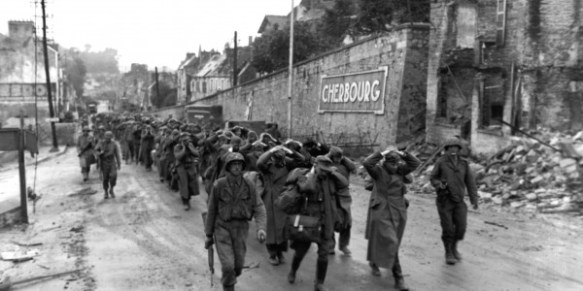
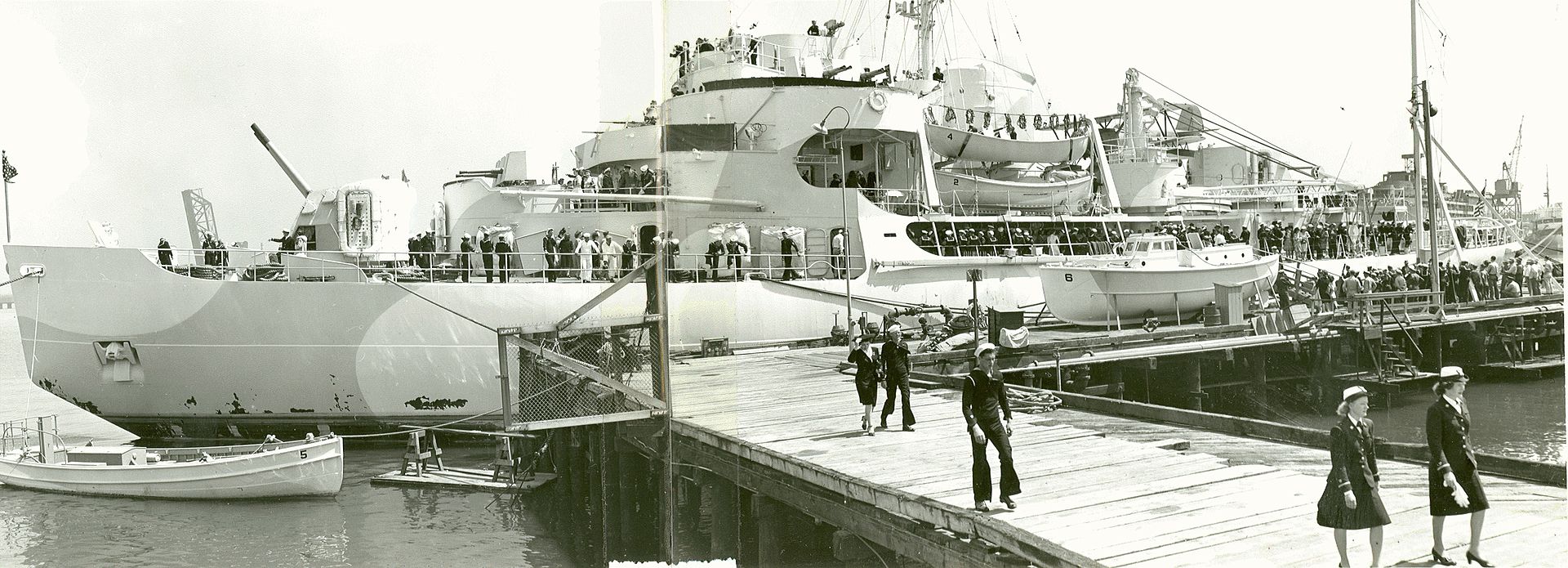
German prisoners march out of surrendered Cherbourg under U.S. Army guard. U.S. Navy photo.

“The U.S. Navy-Coast Guard Partnership Is Heading For Trouble: Here’s How To Fix It” –Forbes

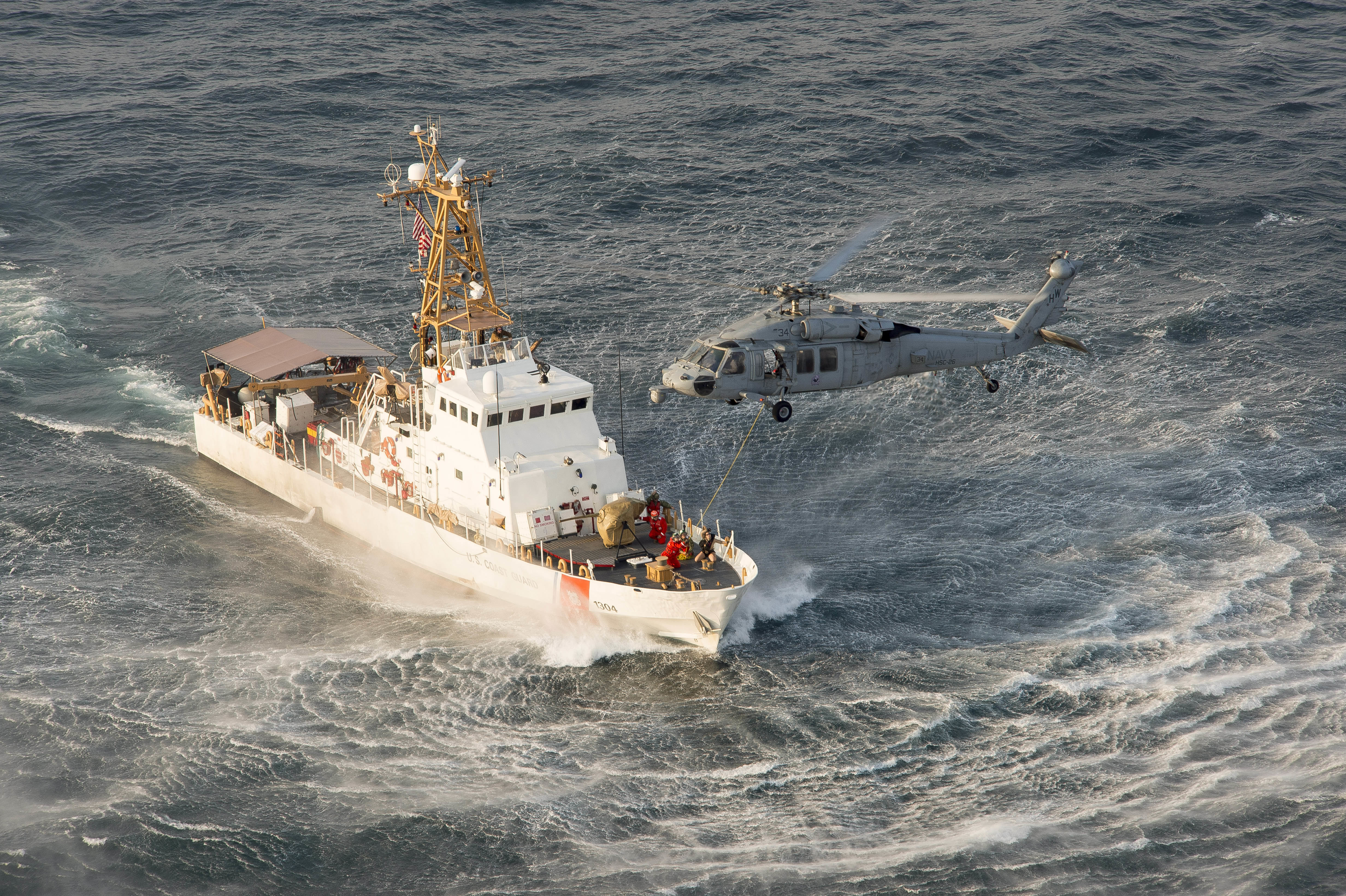
141219-N-DX365-258
BAHRAIN (Dec. 19, 2014) Helicopter Sea Combat Squadron (HSC) 26, Det. 1, conducts a vertical onboard delivery with the U.S. Coast Guard Cutter Maui (WPB 1304). HSC-26 is a forward deployed naval force asset attached to Commander, Task Force 53 to provide combat logistics and search and rescue capability throughout the U.S. 5th Fleet area of responsibility. (U.S. Navy photo by Mass Communication Specialist 1st Class Joan E. Jennings/Released)

Forbes points to growing strain in the Navy/Coast Guard relationship as defense focus shifts from counter terrorism to near peer conflict.

The author, Craig Hooper, points to limits on reimbursement of Coast Guard costs in support of DOD, limited Navy support for drug interdiction and law enforcement efforts, a push for more Coast Guard assets in the Western Pacific, a need to recapitalize the Coast Guard Yard as a national asset, and possible deployment of Navy personnel and assets, particularly rotary wing, to aid in the execution of missions.

“Reorienting the Coast Guard to address “new” state-based threats is a complex problem that will require patient investment and a lot of  preparatory work to be successful. The Coast Guard is part of America’s large National Fleet, and the tighter integration of Coast Guard forces—along with the U.S. Merchant Marine, NOAA’s research fleet and other Federal maritime assets—into the U.S. national security mission space merits thoughtful consideration…”

The topic raises a number of issues.

The Coast Guard is simply underfunded. If the Coast Guard’s defense related missions were properly recognized and funded as part of our very day missions, no reimbursement would be necessary. Certainly fisheries patrols in the US Western Pacific EEZ are a real everyday Coast Guard mission.

As cutters go increasingly into harms way, maybe they need to be better equipped for the possibility of combat.

Mobilization planning really should address how Navy Reserve Personnel and equipment, notably ASW helicopters, LCS mission modules, and ASW, EW, and Weapons operators and support personnel, could augment cutters and bring them up to a wartime compliment.