Waterways Commerce Cutter

a music video dedicated to the men of USCGC BLUEBELL, a “hidden jewel” in the coast guard. the black hull sailors who got things done, “if we go unnoticed then it just simply means we’ve done our job right”.

If you haven’t seen it yet, the Acquisitions Directorate has some excellent graphics on the current and future inland and river tender fleet, or as the program is now known, the Waterways Commerce Cutter.

If you would like to take a look start here, and check out the “Resources” and “In the News” tabs at the bottom of the page.

USCGC Wyaconda stationed out of Dubuque, IA

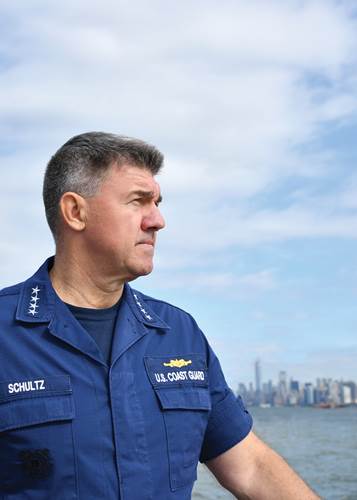
“Interview: Admiral Karl Schultz, Commandant, United States Coast Guard” –MarineLink

Coast Guard Commandant Adm. Karl Schultz visits with Coast Guard crews stationed in New York City. U.S. Coast Guard photo illustration by Petty Officer 1st Class Jetta Disco.

MarineLink has a wide ranging interview with the Commandant dated 4 Dec., 2018. The interview is from a Marine Industry prospective, so the flavor is a bit different from what we see from Defense oriented interviewers, more about the prevention side, still a lot of interest in the Polar Security Cutter program. Perhaps the most informative section concerns cyber and what the Coast Guard is doing about cyber threats.

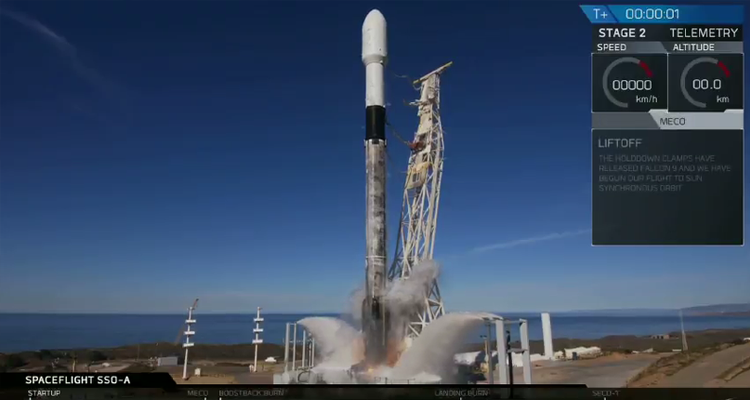
“Coast Guard, DHS S&T Venture into Space with Polar Scout Launch” –CG-9

The Coast Guard Research, Development, Test, and Evaluation Program, in partnership with the Department of Homeland Security Science and Technology Directorate, launched two 6U CubeSats from Vandenberg Air Force Base, California, as part of the Polar Scout project. Photo courtesy of SpaceX.

The following is a release from the Acquisitions Directorate

Coast Guard Research, Development, Test, and Evaluation (RDT&E) Program, in partnership with the Department of Homeland Security (DHS) Science and Technology Directorate (S&T), today launched two 6U CubeSats from Vandenberg Air Force Base, California. The launch is part of the Polar Scout project to evaluate the effectiveness of space-based sensors in support of Arctic search and rescue missions. Knowledge gained from this demonstration will be used to inform satellite technology recommendations for many potential applications within the Coast Guard and across DHS.

Jim Knight, the Coast Guard deputy assistant commandant for acquisition, said in ceremonies leading up to the launch, “The Polar Scout project presents an opportunity to evaluate the most efficient way to ensure that the United States can project surface presence in the Arctic when and where it is needed while filling an immediate Search and Rescue capability gap in these remote areas.”

The CubeSats, dubbed Yukon and Kodiak, were launched into a low-earth polar orbit on a rideshare with other spacecraft from 17 different countries. This economical alternative to a costly single-mission launch ensured dozens of spacecraft from various organizations reached orbit. Success of the mission was due to public and private sector collaboration throughout the process, from developing the CubeSats to propelling them into space.

“In order to demonstrate, test and evaluate the viability and utility of CubeSats for Coast Guard missions, the Coast Guard RDT&E Program has partnered with DHS S&T to conduct on-orbit testing of CubeSats using the Mobile CubeSat Command and Control (MC3) ground network,” said Holly Wendelin, command, control, communications, computers, intelligence, surveillance and reconnaissance domain lead.

Developed as a potential capability bridge between the current 20-year-old international search-and-rescue architecture and its future successor, “CubeSats serve as a much smaller, more cost-efficient solution that can be easily implemented over a short period of time. Each are only about the size of a shoebox,” said John McEntee, director of Border Immigration and Maritime at S&T.

In the 18 months leading up to the launch, DHS S&T handled the fabrication of Yukon and Kodiak, which are tailored specifically to detect 406 MHz emergency distress beacons. At the same time, the Coast Guard Research and Development Center (RDC) deployed two ground stations – one at the Coast Guard Academy in New London, Connecticut, and one at University of Alaska Fairbanks – using the MC3 architecture and network. The ground stations will receive all of the signals from the CubeSats during the demonstration.

DHS will begin testing and demonstrations using emergency distress beacons in the Arctic beginning in early 2019 and continuing through the summer. “The demonstrations will include downlinking 406 MHz emergency distress beacon data from the CubeSats using the deployed MC3 ground stations,” Wendelin said. “We will set the beacons off, the satellite should detect it and send signals back to the ground station.” The testing period is expected to provide critical knowledge on how CubeSat technology can be used to enhance Coast Guard and DHS mission performance.

The Polar Scout project is providing valuable insight on the process, cost and feasibility of acquiring and using organic satellites. The Coast Guard and DHS will use the knowledge gained from Polar Scout and the MC3 installs, market research and space mission design and assessments to develop satellite technology recommendations.

As Coast Guard missions become more challenging and complex, the use of small and inexpensive satellites has the potential for great impact. Potential uses for satellites include improving communication in the arctic environment, monitoring large areas for illegal activity and helping to locate persons lost at sea. Additionally, the use of satellites has the potential to reduce the time and resources spent on intensive aircraft searches as well as the risks associated with placing personnel in hazardous situations that only need sensors and communications on scene.

“Undoubtedly, the results and knowledge gained by the Polar Scout Satellite Project will lead to force-multiplying solutions for the Department, which is a big priority in this age of complex threat cycles,” said Bill Bryan, senior official performing the duties of undersecretary for the Science and Technology Directorate.

Through Polar Scout’s robust search-and-rescue satellite solution, the Coast Guard may be empowered to respond to maritime disasters with unprecedented speed, preserving lives and even cargo, along trade routes in the Arctic Circle.

“Building the Fleets of the Future: Coast Guard and NOAA Fleet Recapitalization”–Senate Hearing

Congress is back in session. It is likely the current Congress will attempt to complete the Department of Homeland Security (DHS) Budget before the new Congress is seated in January.

On October 11, 2018, the Senate Subcommittee on Oceans, Atmosphere, Fisheries, and Coast Guard held a public hearing entitled,  “The Future of the Fleets: Coast Guard and NOAA Ship Recapitalization.” I feel I have been remiss in not talking about this earlier, but the topics are still in question and it appears all the major players in the sub-committee will be returning next year, although committee assignments may change. Despite the name of the hearing, the NOAA representative was unable to attend, so the entire hearing was about Coast Guard programs.

Unfortunately the hearing video was not posted on YouTube so I was unable to post it here. The Commerce Committee website with the video of the hearing, list of witnesses, and links to the prepared statements is here.

I’d like to call attention to the Congressional Research Service’s evaluation of the Coast Guard’s shipbuilding programs in the form of Mr. Ronald O’Rourke’s prepared testimony for the hearing. It is relatively short at 21 pages, and covers the Waterways Commerce Cutter (Inland tenders) and Polar Security Cutter (Heavy Polar Icebreaker) as well as the National Security Cutter (NSC), Offshore Patrol Cutter (OPC), and Fast Response Cutter (FRC) programs.

As he has done frequently in the past, he makes the case for procuring cutters using Block Buy or Multi-Year Procurement as the Navy has done in some of its most successful Program. I have a hard time understanding why the Coast Guard has not taken advantage of this option. We had an opportunity to do it with the NSC, another with the FRC. Now we have the option of using Block Buy for the Polar Security Cutter (heavy polar icebreaker) and Offshore Patrol Cutter (OPC). The recent Coast Guard Authorization Bill includes authorization to use Block Buy.

Conducting the hearing were:

The video does not actually begin until about time 9:30

Senator Baldwin pushes “Made in America Shipbuilding Act” advocating that components as well as the ships themselves be made in America.

20:30 Admiral Haycock’s prepared statement begins.

26:00 GAO Ms. Marie Mak Director, Contracting and National Security Acquisitions, Government Accountability Office began her prepared statement.

Mrs Mak of GAO is again saying we have not made a good business case for the new icebreaker and that our planning is short term. Pointed to the Navy 30 year shipbuilding plan as a good example of long term planning.

29:30 Mr. Ronald O’Rourke Specialist in Naval Affairs, Congressional Research Service began his prepared statement

An illustration of how useful long term planning can be is found in this quote from Mr. O’Rourke’s written submission, p.3:

“As one example of how…Congress has exercised its constitutional power to set funding levels and determine the composition of federal spending, during the period FY2008-FY2015, when the Navy’s shipbuilding account averaged about $14.7 billion per year in then-year dollars, there was recurring discussion about the challenge of increasing the account to the substantially higher annual funding levels that would soon be needed to begin implementing the Navy’s 30-year shipbuilding plan. Projections were prepared by CBO showing the decline in the size of the Navy that would occur over time if funding levels in the shipbuilding account did not increase substantially from the average level of about $14.7 billion per year. Congress, after assessing the situation, increased the shipbuilding account to $18.7 billion in FY2016, $21.2 billion in FY2017, $23.8 billion in FY2018, and $24.2 billion in FY2019. These increasing funding levels occurred even though the Budget Control Act, as amended, remained in operation during those years. At the most recent figure of $24.2 billion, the Navy’s shipbuilding account is now 74% greater in then-year dollars than it was as recently as FY2010.”

Mr. O’Rourke pointed out that using Multi-Year contracting to procure the Offshore Patrol Cutters could save us $1B, enough to pay for the Polar Security Cutter (PSC or Polar Icebreaker) or the entire Waterways Commerce Cutter program.

He discussed increasing rate of OPC procurement.

He noted that there had been a reduction in the estimated cost of the Polar Icebreaker from an initial estimate of $1B to a projected cost of $2.1B for three ships. From pages three and four of his prepared statement.

Coast Guard’s Non-Use of Multiyear Contracting

In connection with my work on ship acquisition, I maintain the CRS report on multiyear procurement (MYP) and block buy contracting. In both that report and in testimony I have given to other committees in recent years on Coast Guard ship acquisition, I have noted the stark contrast between the Navy— which uses multiyear contracting (in the form of MYP or block buy contracting) extensively to reduce its ship- and aircraft-procurement costs by billions of dollars—and the Coast Guard, which to date has never used multiyear contracting in one of its ship or aircraft acquisition programs.

The Navy in recent years, with congressional approval, has used multiyear contracting for, among other things, all three of its year-to-year shipbuilding programs—the Virginia-class attack submarine program, the DDG-51 destroyer program, and the Littoral Combat Ship (LCS) program. The Navy has been using multiyear contracting for the Virginia-class and DDG-51 programs more or less continuously since the 1990s. Savings from the use of MYP recently have, among other things, helped Congress and the Navy to convert a nine-ship buy of DDG-51 class destroyers in FY2013-FY2017 into a 10-ship buy, and a nine ship buy of Virginia-class attack submarines in FY2014-FY2018 into a 10-ship buy. The Navy is also now using block buy contracting in the John Lewis (TAO-205) class oiler program, and is considering or anticipating using them for procuring LPD-17 Flight II amphibious ships, FFG(X) frigates, and Columbia-class ballistic missile submarines. The Navy’s use or prospective use of multiyear contracting for its year-to-year shipbuilding programs is arguably now almost more of a rule than an exception in Navy shipbuilding. For Congress, granting approval for using multiyear contracting involves certain tradeoffs, particularly in connection with retaining year-to-year control of funding. In the case of Navy shipbuilding, Congress has repeatedly accepted these tradeoffs.

In contrast with Navy practice, the Coast Guard often uses contracts with options in its ship-procurement programs. Contracts with options can be referred to as multiple-year contracts, but they are not multiyear contracts. Instead, contracts with options operate more like annual contracts, and they cannot achieve the kinds of savings that are possible with multiyear contracts. Like the other military services, the Coast Guard has statutory authority to use MYP contracting and can be granted authority by Congress to use block buy contracting.

Questioning began time 33:00 I will try to summarize some of the discussion, but this is in no way complete.

Senator Sullivan

33:30 questioned how the CG could meet increasing challenges with nearly 14,000 fewer major cutter OP Hours.

RAdm Haycock says new assets are more capable. (He might have noted that FRCs are more capable than Island class and can conduct some missions previously conducted only by major cutters.) He did favorably compare FRCs with existing 110s in Alaska, but perhaps missed an opportunity to push for more assets and/or higher rate of construction.

37:30 Senator Sullivan push to use shipyard in Ketchikan.

Senator Baldwin

42:30 Why are we using predominately foreign made outboards rather than Mercury or Evinrude which are made Wisconsin?

Ans. We want to use American made products, but we also employ competition. We could create a demand signal that is not sustainable. Builders choose components, but must comply with Buy American requirements.

49:30 Senator Sullivan:

Suggestion that perhaps we could lease.

Ans. Design time has decreased as has price due to Navy assistance and use of parent design. Ship and power plant can be smaller than previously thought without loss of capability. Icebreaker will be based on Parent design. Cooperation with the Canadians. This has shortened time line and cost has come down. There are still some risks.

59:30 We have looked exhaustively at foreign designs. Our missions are very different. Our design will be based on yet unbuilt Canadian design (CCGS Diefenbaker).

1:01:30 Baldwin:

Great Lakes Icebreaker–not enough resources, push to build a Great Lakes Icebreaker at least as capable as Mackinaw, some funding provided for design of a Great Lakes icebreaker, what are we doing?

We are looking at requirements. 140s are going through service life extension.

1:04:40 More on made in American requirements.

Ans. Sometime foreign made components can be problematic over lifecycle. 

1:07:00 Senator Wicker

The Senator pushing for 12th NSCs.

NSCs are having a profound impact as we push border south

1:09:00 Polar Security Cutter, what about the fact funding is not included in House budget?

Ans. Will impact scheduling and the interest of the industrial base.

1:12:00 Senator Blumenthal

Concern about opioids, what additional assets do we need?

Talked about Unmanned Air Systems but really did not specifically address opioids intel which I would assume has more to do with importation by merchant ships through our ports.

1:15:00 CG museum. Committed to location at New London.

1:16:30 Admissions at the CG Academy–concern about possible discrimination

1:17:30 Senator Baldwin

1:18:00 More on “Made in America” components

1:20:00 Specifically referenced need to buy propulsion pods for Polar Security Cutter from Scandinavia.

1:21:30 Timeline for Inland tenders? Possibility of using parent craft?

Our needs are different. Have to have more people because of our missions, we need more range, mixed gender birthing. Probably nine months to complete analysis and a year before we start to contract. In service 2023. We are moving as fast as we can.

(Was pleased to note that RAdm Haycock made a strong witness and appeared both competent and cooperative.)


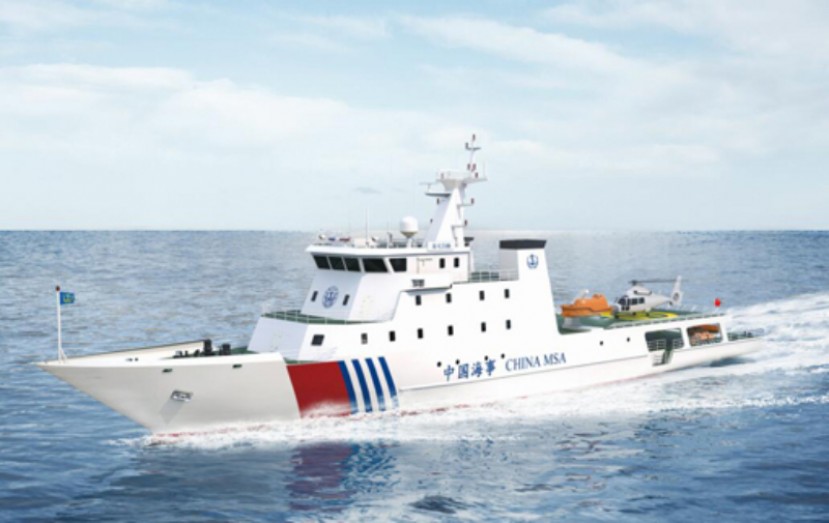
China to build their first Battery Powered Cutter

Huangpu Wenchong to build China’s first all-electric government vessel

BairdMaritime reports the Chinese are building an all electric vessel for their Maritime Safety Administration, to be used as a command ship for use in emergency pollution response, particularly in instances of pollution involving dangerous gases at sea.”

Specs are:

  • Length: 78 meters (256 feet)
  • Beam: 12.8 meters (42 feet)
  • Design speed: 18 knots
  • Range 1,000 nautical miles

Reportedly ower is to be provided by two sets of 650kWh high-performance lithium battery packs.

Maybe there is an error here? That only amounts to 1,743.3 HP/hours. My estimate would be that that would allow only about a half hour at 18 knots, an hour at 14, and two hours at 10, perhaps four hours at six. Appears it would take about 75,000kWh to go 1000 miles at 10 knots. Why would it even have a stack if there is no diesel engine?

Join the Commandant, MCPOCG for a Virtual Town Hall Tuesday

Just in case you may have missed it. (Or your command did not tell you.) I am passing this along from Coast Guard All Hands. 

Coast Guard Adm. Karl Schultz

Please join me and Master Chief Petty Officer of the Coast Guard Jason Vanderhaden for a “Virtual Coast Guard Town Hall” on my Facebook page, @CommandantUSCG, Tuesday at 2 p.m. If you don’t have access to Facebook, you can watch it here.

We’ll discuss our service’s recent successes, the Coast Guard Strategic Plan 2018-2022 and take questions from the field. You can submit questions in advance of the Facebook event on my page or tweet them to me at @ComdtUSCG on Twitter. We’ll also be taking questions live during the Town Hall, and I encourage all active duty, reserve, civilian, and auxiliary Coast Guard members to watch, share and ask questions.

Coast Guard leaders at all levels should afford crews the opportunity to participate in this event as a group or individually as operations allow. It’s important that we take time to focus on readiness and ensure our workforce has the information and tools they need to be successful.

I look forward to talking with all of you. Semper Paratus!

Instagram/Facebook: @CommandantUSCG
Twitter: @COMDTUSCG

New 7 meter RHIB

Metal Craft Marine seven meter RHIB with inboard-outboard diesel drive by Volvo Penta, Volvo-Penta Photo

MarineLink reports that Volvo Penta has been contracted to provide power and control systems for seven meter, 26 foot, “Cutter Boat, Large” being built by Metal Craft Marine of Cape Vincent, New York. The engines are “Volvo Penta three-liter 220 hp diesel Aquamatic sterndrive systems with HD controls.”

The RIBs are designed for a top speed of 35+ knots carrying up to 13 passengers with an operating range of 200 nautical miles in up to four-meter wave heights.

A Sept. 6, 2018 Press release announced the award of the contract to Metal Craft Marine.

The Coast Guard awarded a firm-fixed price indefinite delivery, indefinite quantity contract Aug. 30, to MetalCraft Marine U.S. Incorporated of Cape Vincent, New York, for a fleet of cutter boats-large (CB-L).

The contract has a maximum value of $20 million and allows for the acquisition of more boats over an ordering period of five years. The initial delivery order for two CB-Ls, trailers, delivery, training and associated logistics documentation was placed for approximately $590,000.

The CB-L will replace the current fleet of 24-foot cutter boats in service onboard 210-foot medium endurance cutters, 225-foot seagoing buoy tenders, and Coast Guard Cutters Alex Haley and Mackinaw. The boats will support operations on the East, West, and Gulf Coasts, as well as in Hawaii, Guam and Alaska.

“We are very excited about getting this asset out to the fleet,” said Cmdr. David Obermeier, deputy program manager for boats acquisition. “A single boat class for multiple cutter classes will provide enhanced operational flexibility.”

Photos added 18 Feb.2022:

MetalCraft Marine 7 meter “Cutter Boat, Large”

2018 HURRICANE LESSONS LEARNED –ALCOAST 398/18

Just passing this along in case someone with something to add may have missed it. 

ALCOAST 398/18 – NOV 2018 2018 HURRICANE LESSONS LEARNED

R 280722 NOV 18
FM COMDT COGARD WASHINGTON DC//DCO/DCMS//
TO ALCOAST
UNCLAS//N16466//
ALCOAST 398/18
COMDTNOTE 16466
SUBJ:  2018 HURRICANE LESSONS LEARNED
1. Recent hurricanes have underscored our imperative to be ready to respond in times of
crisis. To remain ready, relevant, and responsive in an environment of ever-changing
priorities and emerging needs, we must collect candid and detailed lessons learned.
2. To improve future incident response and recovery efforts, the Deputy Commandant for
Operations (DCO) and Deputy Commandant for Mission Support (DCMS) have opened a
discussion on CG_Ideas@Work to quickly capture this information. Please use the
following link to share your lessons learned. We are eager to receive your input,
regardless of rate, rank, or grade:
https://cg-ideasatwork.ideascale.com/a/ideas/recent/campaigns/23679.
3. This discussion is not intended to supersede the official Hurricane Lessons Learned
collection on CGPortal, but rather provide a means to rapidly share ideas,
innovations, and lessons learned directly from the field to allow for accelerated
collaboration and communication across geographic areas and mission domains, while
knowledge is still fresh.
4. Preserving and institutionalizing the lessons learned from these major response
efforts will be invaluable to Coast Guard operations in future times of crisis.
All members are encouraged to participate!
5. For any questions please contact the Coast Guard Innovation Program Manager,
COMDT (CG-926), CDR Michael O’Neil at Michael.P.O’Neil@uscg.mil or 202-475-3049.
6. VADM Daniel B. Abel, Deputy Commandant for Operations, and VADM Michael F. McAllister,
Deputy Commandant for Mission Support, send.
7. Internet release is authorized.

Coast Guard Authorization Bill Forwarded to President

US Capital West Side, by Martin Falbisoner

Congress has completed action on the Coast Guard Authorization Bill and forwarded it to the President. Note this is an authorization, not a budget. Frequently the budget does not include everything authorized.

An aside: Only our Congress would call the US Coast Guard Authorization bill, “S.140 – A bill to amend the White Mountain Apache Tribe Water Rights Quantification Act of 2010 to clarify the use of amounts in the WMAT Settlement Fund.” Its a mystery how they ever get anything done.

This is the summary of the bill as provided. I will add some more detail below.

Title I reorganizes title 14, Coast Guard, United States Code, the section of the code pertaining to the operation and administration of the U.S. Coast Guard. This section of the code was last reorganized in 1949, and this action will make it easier for the public and the Congress to find the governing laws of the Coast Guard.
Title II authorizes funds for the Coast Guard in fiscal years 2018 and 2019 to provide support for Coast Guard personnel, as well as asset acquisition programs.

Title III makes several changes to laws governing the Coast Guard. It improves training competencies, promotes the use of unmanned technology, and enhances accountability in acquisitions.
Title IV codifies port safety and security together in one chapter of the code.
Title V makes changes to several shipping and navigation laws to improve maritime safety and enhance the efficiency of the maritime transportation system.
Title VI standardizes the rules governing the operations of the Coast Guard’s eight national advisory committees, and authorizes each committee for ten years.
Title VII authorizes funds for the Federal Maritime Commission for fiscal years 2018 and 2019, and amends the Ocean Shipping Act to restrict or prohibit the ability of international shipping alliances from negotiating collectively with U.S. port services providers, unreasonably reducing competition for port services, and participating in multiple agreements that magnify the impact of the use maritime anti-trust exemptions.
Title VIII includes miscellaneous provisions, including a National Academy of Sciences review of existing and emerging unmanned, autonomous, or remotely controlled maritime domain awareness technologies and recommendations on how these technologies can assist the Coast Guard in its mission performance and in more effectively and efficiently allocating its vessels, aircraft, and personnel.
Title IX establishes a regulatory regime to govern discharges incidental to the operation of vessels.
Title X reauthorizes the Hydrographic Services Improvement Act of 1998.

Below are some of the more significant items I found looking through the Senate response to the House version of the Coast Guard authorization bill which was subsequently accepted by the House and forwarded to the President. All references are to that document.

  • For the operation and maintenance of the Coast Guard, not otherwise provided for, $7,914,195,000 for fiscal year 2019.
  • For the procurement, construction, renovation, and improvement of aids to navigation, shore facilities, vessels, aircraft, and systems, including equipment related thereto, and for maintenance, rehabilitation, lease, and operation of facilities and equipment, $2,694,745,000 for fiscal year 2019. This appears to be enough to include the requested $750M for the first Polar Security Cutter and long lead time items for the second, but the Polar Security Cutter is not mentioned anywhere in the bill. Other specific Shipbuilding is also not mentioned.

Section 204, on page 71 authorizes six additional Fast Response Cutter, over and above the 58 in the program of record, three in FY2018 and three in FY2019.

Section ‘‘§1137. Contracting for major acquisitions programs” on page 86 specifically authorizes Block Buys as an approved method of contracting.

Page 87 beginning at line 20

(f) MULTIYEAR CONTRACTS.—The Secretary of the department in which the Coast Guard is operating is authorized to enter into a multiyear contract for the procurement of a tenth, eleventh, and twelfth National Security Cutter and associated government-furnished equipment.

There is also a requirement that the Commandant submit a prioritized “Unfunded Priorities” List within 60 days of budget approval. Beginning p235

SEC. 818. NATIONAL SECURITY CUTTER. 6 (a) STANDARD METHOD FOR TRACKING.—The Commandant of the Coast Guard may not certify an eighth National Security Cutter as Ready for Operations before the date on which the Commandant provides to the Committee on Transportation and Infrastructure of the House of Representatives and the Committee on Commerce, Science, and Transportation of the Senate— (1) a notification of a new standard method for tracking operational employment of Coast Guard major cutters that does not include time during which such a cutter is away from its homeport for maintenance or repair; and (2) a report analyzing cost and performance for different approaches to achieving varied levels of operational employment using the standard method required by paragraph (1) that, at a minimum— (A) compares over a 30-year period the average annualized baseline cost and performances  for a certified National Security Cutter that operated for 185 days away from homeport or an equivalent alternative measure of operational tempo— (i) against the cost of a 15 percent increase in days away from homeport or an equivalent alternative measure of operational tempo for a National Security Cutter; and (ii) against the cost of the acquisition and operation of an additional National 10 Security Cutter; and (B) examines the optimal level of operational employment of National Security Cutters to balance National Security Cutter cost and mission performance.

Looks like there is a requirement to revisit the Fleet Mix Study. Beginning on page 232.

SEC. 817. FLEET REQUIREMENTS ASSESSMENT AND STRATEGY. (a) REPORT.—Not later than 1 year after the date of enactment of this Act, the Secretary of the department in which the Coast Guard is operating, in consultation with interested Federal and non-Federal stakeholders, shall submit to the Committee on Commerce, Science, and Transportation of the Senate and the Committee on Transportation and Infrastructure of the House of Representatives a report including— (1) an assessment of Coast Guard at-sea operational fleet requirements to support its statutory missions established in the Homeland Security Act of 2002 (6 U.S.C. 101 et seq.); and (2) a strategic plan for meeting the requirements identified under paragraph (1). (b) CONTENTS.—The report under subsection (a) shall include— (1) an assessment of— (A) the extent to which the Coast Guard at- sea operational fleet requirements referred to in subsection (a)(1) are currently being met; (B) the Coast Guard’s current fleet, its operational lifespan, and how the anticipated changes in the age and distribution of vessels in the fleet will impact the ability to meet at-sea operational requirements; (C) fleet operations and recommended improvements to minimize costs and extend operational vessel life spans; and (D) the number of Fast Response Cutters, Offshore Patrol Cutters, and National Security Cutters needed to meet at-sea operational requirements as compared to planned acquisitions under the current programs of record; (2) an analysis of— (A) how the Coast Guard at-sea operational fleet requirements are currently met, including the use of the Coast Guard’s current cutter fleet, agreements with partners, chartered vessels, and unmanned vehicle technology; and (B) whether existing and planned cutter programs of record (including the Fast Response Cutter, Offshore Patrol Cutter, and National Security Cutter) will enable the Coast Guard to meet at-sea operational requirements; and (3) a description of— acquisition; and (B) how such acquisitions will change the extent to which the Coast Guard at-sea operational requirements are met.

They are apparently serious about building another Great Lakes icebreaker. Beginning page 238.

SEC. 820. GREAT LAKES ICEBREAKER ACQUISITION. (a) ICEBREAKING ON THE GREAT LAKES.—For fiscal years 2018 and 2019, the Commandant of the Coast Guard  may use funds made available pursuant to section 4902 of title 14, United States Code, as amended by this Act, for the construction of an icebreaker that is at least as capable as the Coast Guard Cutter Mackinaw to enhance icebreaking capacity on the Great Lakes.  (b) ACQUISITION PLAN.—Not later than 45 days after the date of enactment of this Act, the Commandant shall submit a plan to the Committee on Commerce, Science, and Transportation of the Senate and the Committee on Transportation and Infrastructure of the House of Representatives for acquiring an icebreaker described in subsections (a) and (b). Such plan shall include— (1) the details and schedule of the acquisition activities to be completed; and (2) a description of how the funding for Coast Guard acquisition, construction, and improvements that was appropriated under the Consolidated Appropriations Act, 2017 (Public Law 115–31) will be allocated to support the acquisition activities referred to 7 in paragraph (1).

There is also a requirement for study of Strategic assets in the Arctic that might be included in a new Fleet Mix Study. Beginning page 242.

SEC. 822. STRATEGIC ASSETS IN THE ARCTIC. (a) DEFINITION OF ARCTIC.—In this section, the term ‘‘Arctic’’ has the meaning given the term in section 112 of the Arctic Research and Policy Act of 1984 (15 U.S.C. 16 4111). (b) SENSE OF CONGRESS.—It is the sense of Congress that— (1) the Arctic continues to grow in significance to both the national security interests and the economic prosperity of the United States; and (2) the Coast Guard must ensure it is positioned to respond to any accident, incident, or threat with appropriate assets. (c) REPORT.—Not later than 1 year after the date of enactment of this Act, the Commandant of the Coast Guard, in consultation with the Secretary of Defense and taking into consideration the Department of Defense 2016 Arctic Strategy, shall submit to the Committee on Commerce, Science, and Transportation of the Senate and the Committee on Transportation and Infrastructure of the House of Representatives a report on the progress toward implementing the strategic objectives described in the United States Coast Guard Arctic Strategy dated May 2013.

(d) CONTENTS.—The report under subsection (c) shall include— (1) a description of the Coast Guard’s progress toward each strategic objective identified in the United States Coast Guard Arctic Strategy dated May 2013; (2) an assessment of the assets and infrastructure necessary to meet the strategic objectives identified in the United States Coast Guard Arctic Strategy dated May 2013 based on factors such as— (A) response time; (B) coverage area; (C) endurance on scene; (D) presence; and (E) deterrence; (3) an analysis of the sufficiency of the distribution of National Security Cutters, Offshore Patrol Cutters, and Fast Response Cutters both stationed in various Alaskan ports and in other locations to meet the strategic objectives identified in the United States Coast Guard Arctic Strategy, dated May 2013; (4) plans to provide communications throughout the entire Coastal Western Alaska Captain of the Port zone to improve waterway safety and mitigate close calls, collisions, and other dangerous interactions between the shipping industry and subsistence hunters; (5) plans to prevent marine casualties, when possible, by ensuring vessels avoid environmentally sensitive areas and permanent security zones; (6) an explanation of— (A) whether it is feasible to establish a vessel traffic service, using existing resources or otherwise; and (B) whether an Arctic Response Center of Expertise is necessary to address the gaps in experience, skills, equipment, resources, training, and doctrine to prepare, respond to, and recover spilled oil in the Arctic; and (7) an assessment of whether sufficient agreements are in place to ensure the Coast Guard is receiving the information it needs to carry out its responsibilities.

There is also reference to the establishment of a backup terrestrial based timing service, but it is to established through the Department of Commerce as a Public/Private cooperation and it appears that the only Coast Guard involvement will be in handing over remaining former LORAN facilities.

New Navy Patrol Boat and Diesel Outboard

40 PB

Marine Log brings us news of a new Navy Patrol Boat, Autonomous Control, and a new 300 HP V-8 Diesel outboard.

Delivering 300 horsepower at the propeller, the CXO300 is the world’s highest power density diesel outboard engine. The four stroke V8 diesel CXO300 offers up to 25% more range compared to gasoline outboards and is designed to last up to three times longer. The engine combines the simplicity and economy of an outboard installation with greatly improved safety and reliability achieved by eliminating the need for highly volatile gasoline.

This is what I reported about the patrol boat in January 2018

MarineLog reports the award of a contract for up to 50 new 40 foot (12 meter) patrol boats for the Navy.

Subject to annual appropriations, the Navy intends to replace approximately 100 to 160 of its existing 25-foot and 34-foot CRF (Coastal Riverine Forces –Chuck) patrol boats with the larger and more modern PB(X) platform over the next fifteen years.
The Navy has placed an initial, immediate order for eleven of the new vessels. Under the terms of the award, potentially worth over $90 million, Metal Shark will build up to 50 PB(X) vessels for the Navy, along with trailers, spares and training packages, and technical support.

This is what was reported here in February 2017 about the diesel outboard.

MarineLink reports,

“The US Coast Guard has entered into a Cooperative Research and Development Agreement (CRADA) with British diesel engine innovator, Cox Powertrain. The CRADA will evaluate and test the advantages, disadvantages, required technology enhancements, performance, costs and other issues associated with diesel outboard engine technology.
 –
“There a been a big swell of interest in diesel outboards since NATO introduced its single fuel policy, with the military and naval forces of member countries keen to phase out petrol-fuelled outboards in favour of cleaner diesel alternatives.”
 –
Obvious advantages if we do not need to deal with two different fuels, in addition to the additional range advantage. Reading the rest of the post, sounds like this is close to realization.