ALCOAST 268/18 – AUG 2018 SOLICITATION FOR CUTTER NAMING SUGGESTIONS

First Lieutenant, Frank H. Newcomb, USRCS

Would like to call attention to an ALCOAST that solicits names for future Coast Guard cutters which I have reproduced at the end of the post. It refers specifically to naming cutters for people but I have to believe they will consider names of previous cutters for the Offshore Patrol Cutters as well.

Of the planned 58 Webber class WPCs, 54 have been named. That leaves at least four to be named, plus an additional six if they are built additional boats to replace the 110s in Bahrain.

Of the 25 Offshore Patrol Cutters, only eleven names have been identified.

Of the Bertholf class “National Security Cutters”, only nine names have been identified for the eleven funded, with the possibility of a twelfth, opening the possibility of two or three names.

Noticeably missing from the list are:

Newcomb, Frank H, captain of the cutter Hudson when it rescued the Navy torpedo boat Winslow.  The man was so respected the Navy named a destroyer after him. That destroyer managed to torpedo a Japanese battleship at the Battle of Surigao Strait and  subsequently survived five Kamikaze hits.

USS Newcomb (DD-586), awarded eight battlestars, was struck by five Kamikazes off Okinawa, but survived.

Cutter Hudson, itself

BREWSTER, Caleb, Revolutionary War/War of 1812 (One of the characters on the television series “Turn, Washington’s Spies.) Revolutionary War Spy, 20 years in the Revenue Cutter Service, and CO of the Revenue cutter Active during the War of 1812. http://coastguard.dodlive.mil/2014/07/caleb-brewster-revolutionary-war-hero/ also https://en.wikipedia.org/wiki/Caleb_Brewster
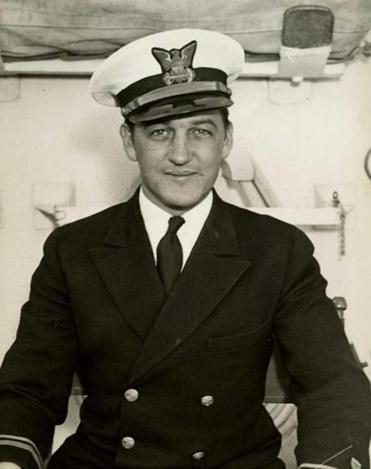
Lt. Thomas Crotty

CROTTY, Lt Thomas James Eugene, WWII, Mine warfare expert. Captured by the Japanese on Corregidor and died in POW Camp.

DEXTER, Dwight, CO of NOB Cactus, (Guadalcanal, WWII). Silver Star, “In action against an armed enemy as commanding officer of the Naval Local Defense Force and Anti-Submarine Patrol, Guadalcanal-Gavutu, Lieut. Comdr. Dexter landed with the Marines on August 7, 1942, and established and administered the Naval Local Defense Forces in these occupied islands until November 5, 1942, on which date he was evacuated due to illness. During the three months while he was in command of this unit, he was subjected to almost daily aircraft bombing attack and, for many weeks, to an almost nightly naval bombardment. Throughout this entire period, his courage, determination and zeal made it possible to maintain in operation a signal station and a boat operating organization which was essential to the successful unloading.”

WALSH, Quentin R., CDR, (Retired as Captain) USCG, Navy Cross, For heroism as Commanding Officer of a U.S. Naval party reconnoitering the naval facilities and naval arsenal at Cherbourg June 26 and 27, 1944. While in command of reconnaissance party, Commander Walsh entered the port of Cherbourg and penetrated the eastern half of the city, engaged in street fighting with the enemy. He accepted the surrender and disarmed 400 of the enemy force at the naval arsenal and later received unconditional surrender of 350 enemy troops and at the same time released 52 captured U.S. Army paratroopers.

There are a whole slew of candidate names listed here.
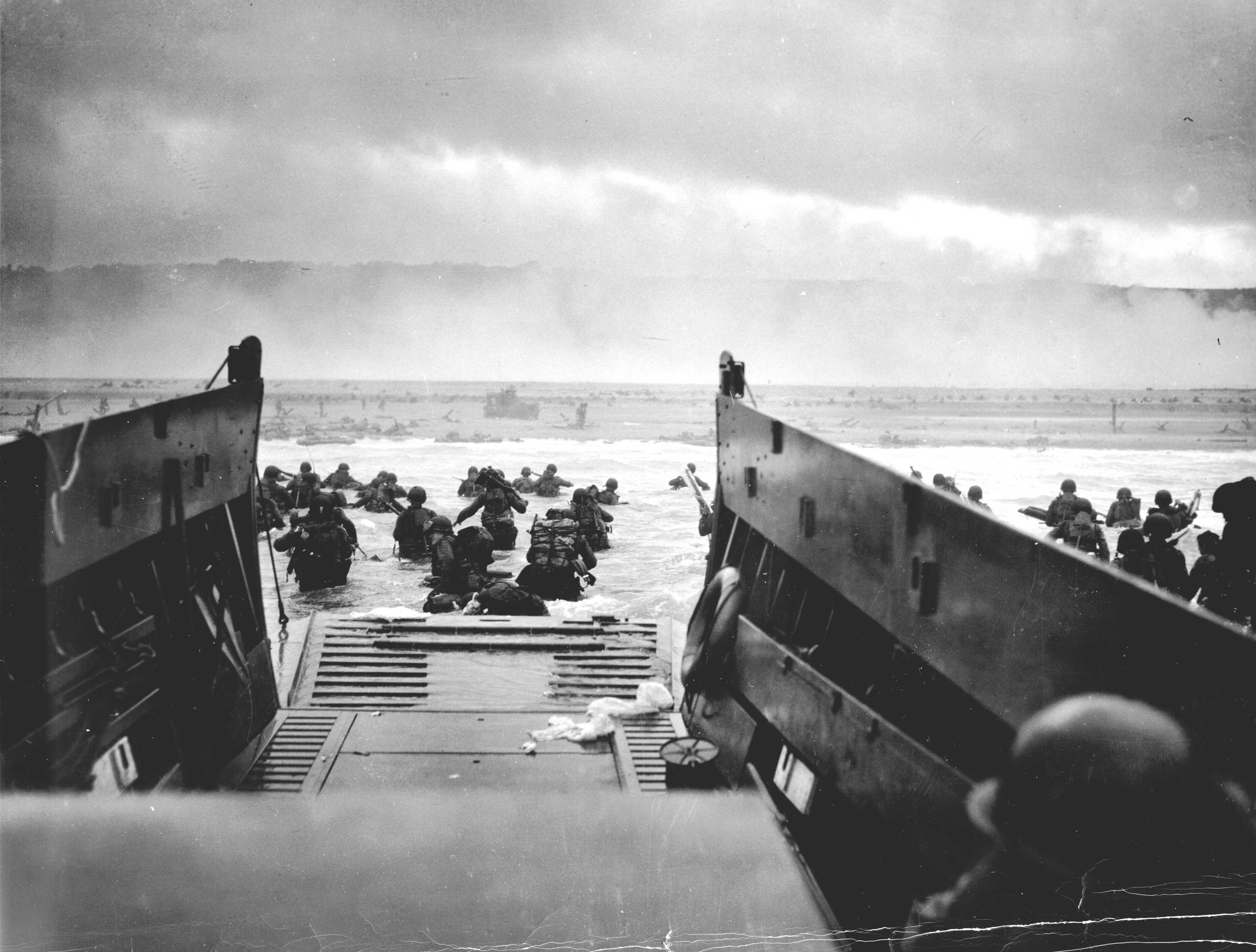
A LCVP (Landing Craft, Vehicle, Personnel) from the U.S. Coast Guard-manned USS Samuel Chase disembarks troops of Company E, 16th Infantry, 1st Infantry Division (the Big Red One) wading onto the Fox Green section of Omaha Beach (Calvados, Basse-Normandie, France) on the morning of June 6, 1944. American soldiers encountered the newly formed German 352nd Division when landing. During the initial landing two-thirds of Company E became casualties.

Along with cutter names, it might also be appropriate to reprise names of Navy ships that were Coast Guard manned. Reference (a) para 5.b.(1) does state cutters may be named after “… other service ships that were manned by Coast Guard personnel.” Examples would include USS Wakefield (AP-21), USS Samuel Chase (APA-26), USS Hunter Liggett (APA-14), USS Leopold (DE-319) (sunk after being hit by an acoustic homing torpedo, 9 Mar. ’44, 171 dead), USS Menges (DE-320) (hit by an acoustic homing torpedo but survived), or USS Lowe  (DE-325/WDE-425) (which sank U-866 under CG command and was later transferred to the CG), USS Serpens (AK-97) (14,250 tons, destroyed as a result of an apparent internal explosion of its cargo, 29 Jan. ’45, 196 CG fatalities. Largest single loss of CG personnel)

I urge you to respond with your recommendations. It certainly would not hurt for the board to see the same name(s) recommended more than once.

—–

ALCOAST 268/18 – AUG 2018 SOLICITATION FOR CUTTER NAMING SUGGESTIONS

R 011457 AUG 18
FM COMDT COGARD WASHINGTON DC//CG-092//
TO ALCOAST
UNCLAS//N05700//
ALCOAST 268/18
COMDTNOTE 5700
SUBJ: SOLICITATION FOR CUTTER NAMING SUGGESTIONS
A. Policy for Naming of Cutters and Shore Facilities, COMDTINST 5726.10 (series)
1. The Coast Guard is recapitalizing its cutter fleet, continuing a process now entering its second decade. Each new cutter requires a name.
2. The Standing Board for the Naming of Cutters and Shore Facilities is soliciting nominations for worthy names of these new cutters. The Naming Board requests submissions from across the spectrum of Coast Guard stakeholders, including active, reserve, auxiliary, civilian, retired, family members, commercial maritime industry, and port partners.
3. Guidelines for acceptable submissions are outlined in REF (A). Specifically, “the actions of the individual must reflect Honor, Respect, Devotion to Duty, and must be in keeping with the highest traditions of the Coast Guard. The individual must be considered a distinguished Coast Guard person or someone who had a great influence on Coast Guard history. The individual must be deceased with sufficient time lapsed to ensure that the name will withstand the ‘test of time.’”
4. Such namesake submissions should have distinguished themselves and brought great credit upon the service by their actions. Others may have served as important leaders or as significant role models, path-reakers or trailblazers for those who might otherwise be underrepresented. The Naming Board encourages the submission of possible namesakes from across the spectrum of Coast Guard history, to include the junior ranks and less well known figures in Coast Guard history who have made important contributions to the service.
5. The Naming Board looks for submissions that will resonate with today’s Coast Guard personnel. Prospective cutter names should represent the diversity of our service and our rich heritage.
6. Please submit your nominations to Mr. Joshua Buck at Joshua.M.Buck@uscg.mil. Your nomination should include the individual’s name and a brief narrative summary of why you believe the individual would merit this honor. Please limit the summary to one page. The deadline for submissions is October 31, 2018.
7. The Naming Board encourages those who have already submitted names to resubmit their nominations for this latest cutter naming effort under this ALCOAST.
8. The Naming Board will publish a list of all names submitted in a future ALCOAST. Names not selected for the latest round of new cutters will be kept on file for future use.
9. For a list of names recently selected, please see:
https://content.govdelivery.com/accounts/USDHSCG/bulletins/1cbb0e6
10. For more information please see REF (A) at:
https://media.defense.gov/2017/Mar/14/2001716387/-1/-1/0/CI_5726_10C.PDF
11. For questions please contact Scott Price, Chief Historian, at Scott.T.Price@uscg.mil or
call (202) 372-4653.
12. RDML Melissa Bert, Director of Governmental and Public Affairs, sends.
13. Internet release authorized.

 

Coast Guard Cutter Maria Bray Crew Helps Create Underwater Reef Habitat

Something a bit unusual.

Caption from YouTube,

“Coast Guard Cutter Maria Bray crew members deploy concrete reef balls and old navigation anchors, July 18, 2018, off the coast of northeast Florida. The Maria Bray crew assisted in the deployment of reef balls, built by Mandarin High School students, and old navigation anchors for Think It, Sink It, Reef It, or TISIRI in order to create an underwater reef habitat. (U.S. Coast Guard photo by Petty Officer 3rd Class Ryan Dickinson)”

Thanks to Lee for bringing this to my attention. 

National Defense Authorization Act, 2019 Authorizes Six Icebreakers

USCGC Polar Sea

The National Defense Authorization Act has been passed and forwarded to the President. It is too early for anyone to get too excited about this, since it is an authorization rather than an approved budget, but it does authorize up to six polar icebreakers.

SEC. 153. AUTHORITY TO PROCURE ADDITIONAL POLAR-CLASS ICEBREAKERS. Section 122 of the National Defense Authorization Act for Fiscal Year 2018 (Public Law 115–91) is amended— (1) in the section heading, by striking ‘‘ICE-BREAKER VESSEL’’ and inserting ‘‘AUTHORIZA-TION TO PROCURE UP TO SIX POLAR-CLASS ICEBREAKERS’’;  (2) by striking subsections (a) and (b); (3) by inserting before subsection (c) the following new subsection: ‘‘(a) AUTHORITY TO PROCURE ICEBREAKERS.—The Secretary of the department in which the Coast Guard is operating may, in consultation with the Secretary of the Navy, enter into a contract or contracts for the procurement of up to six polar-class icebreakers, including— ‘‘(1) polar-class heavy icebreakers; and ‘‘(2) polar-class medium icebreakers.’’; (4) by redesignating subsections (c) and (d) as subsections (b) and (c), respectively; and (5) in paragraph (1) of subsection (b), as redesignated by paragraph (4) of this section, by striking ‘‘subsection (a)(1)’’ and inserting ‘‘subsection (a)’’.

The bill also provides for a Selected Reserve end strength of 7000 Coast Guard Reservists, almost $40.9M for Coast Guard weapons, $40.7M for other Electronic support, $24.1M for Mobilization Support, $165M for Coast Guard mobilization support (presumably PATFORSWA?). There may actually be more that I may have missed. The bill is huge. I just used the “Control F” function to search for Coast Guard.

Thanks to the Bryant’s Maritime Consulting Blog for bringing this to my attention.

Call for Articles: Bringing Back Sea Control–CIMSEC

Center for International Maritime Security (CIMSEC) had issued a call for articles on the topic of bringing back sea control. Here is a copy of their post.

By Dmitry Filipoff

Articles Due: September 3, 2018
Week Dates: September 10-14, 2018

Article Length: 1000-3000 words 
Submit to: Nextwar@cimsec.org

Great power competition is back, and with it new demands for capability and deterrence. After years of focusing on power projection and low-end missions, many first rate navies have allowed high-end skillsets to erode. As security priorities shift, navies too must change.

One vital mission for winning and deterring great power conflict is sea control, the ability to secure command of the seas. Today sea control has morphed into something of enormous complexity. It can be a convoluted contest, with platforms and payloads projecting influence across multiple domains. Navies are ever more reliant on electronic effects for warfighting functions, turning cyberspace and electronic warfare into pivotal battlegrounds for sea control. Sea control is the sum of many elements of oceanic warfare, requiring diverse skills and tactics.

In spite of technological change, sea control will remain an important mission so long as the oceans remain crucial to human progress. It is the vital prerequisite for projecting power and securing access via the maritime domain. It can enable blockades and commerce raiding, allowing a navy to exert tremendous pressure on a nation’s vitality. Sea control is a mission as timeless as naval power itself, and one deserving of thorough preparation.

How can the navies of today revitalize their sea control capabilities? How can they become proficient in high-end missions and tactics? What will achieving sea control require, and how best to use it once attained? Authors are encouraged to consider these questions and more as navies around the world reconsider their development in the context of renewed great power competition.

Dmitry Filipoff is CIMSEC’s Director of Online Content. Contact him at Nextwar@cimsec.org

This is an opportunity for some of our readers here to express their opinions and practice their writing skills.

Does the Coast Guard have a role? I think so. Sea Control first has to be won and the USN is prepared for that fight, but it also has to be exercised. That requires a lot of low tech grunt work, not unlike boarding fishing boats. It requires separating good guys from bad guys who may try to conceal their true nature. We did this off Vietnam as part of Operation MarketTime. The Navy really has few units capable of this sort of work, but it is the sort of work the Coast Guard does every day.

I have worked with Dmitry Filipoff and he is a good guy. Time to start writing.

Reviewing the Status of Cutter Procurement

Belatedly, I have taken a look at the July 6, 2018 edition of the Congressional Research Service’s Naval Expert, Ronald O’Rourke’s Coast Guard Cutter Procurement: Background and Issues for Congress. It was published less than seven weeks after the previous edition.

Thought perhaps a short review of the status of the three programs addressed might be welcome.

NSC: The program of record was eight ships, but eleven ships have been funded through FY2018. Six have been commissioned. One additional delivery is expected each year, 2018, 2019, 2020 and presumably 2021 and 2022. The Senate sub-committee has expressed its intention to procure a twelfth NSC, but the FY2019 budget request did not include funding for an addition NSC. FY2020 would not be too late to fund NSC#12 and keep the delivery schedule at one per year.

OPCstarboardbow

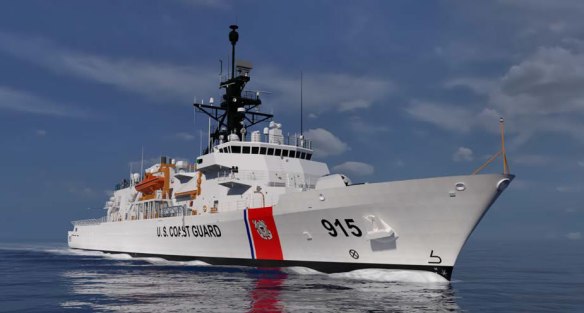
OPC: The program of record is for 25 ships. The First ship was funded in FY2018. The Second ship is in the FY2019 budget request along with long lead time items for OPC#3. If all contract options are exercised, we should see one ship delivered each year 2021, 2022, and 2023. Beginning in 2024 the program anticipates delivery of two ships per year. If they hold to that modest rate, as planned, the last OPC will not be delivered until at least 2033 at which time the newest 270 will be 42 years old. Also at that rate, the newest 210 will be 60 years old when presumably, the last of the class is replaced in 2029. (If you think keeping 40 and 50 year old cutters operational is challenging, wait until you try a 60 year old. Particularly since the Coast Guard plans no major life extension work on the 210s.) 

FRC: The program of record is for 58 vessels. There is also a requirement for six more to replace the six Island class 110 foot cutters currently homeport in Bahrain as part of PATFORSWA, that are not included in the program of record. 50 Webber class have been funded through FY2018, with 28 currently in commission. Funding for four additional vessels was included in the FY2019 budget request. The Coast Guard is commissioning Webber class at the rate five vessels annually. The remaining 28 vessel will presumably be commissioned by 2024. Six additional for PATFORSWA would extend that through 2025. Apparently the Congress intends the DOD to fund the six that would go to FATFORSWA so presumably the last Coast Guard funding would be in the FY2020 budget.

If my understanding is correct, it is likely that major funding for the NSC and FRC programs will be complete in FY2020, the same year the third OPC should be funded. At some point, in the not too distant future, we will need to start the process of replacing the 87 foot WPBs, but hopefully we will find a way to accelerate the OPC procurement to something more than two a year.

Photo Journal: RDC Arctic Technology Evaluation 2018

USV&drone

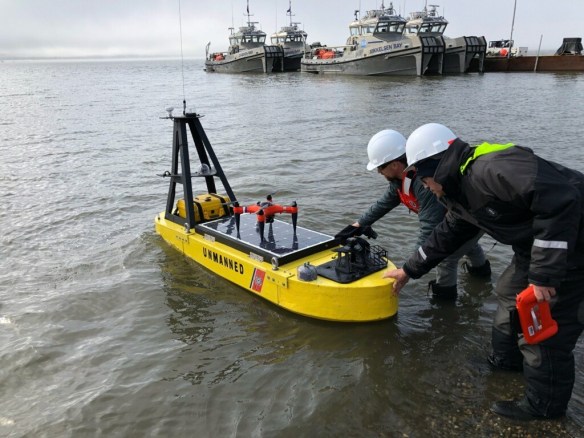
RDC researchers test the effectiveness of pairing the USV and the Splash Drone on a mission. U.S. Coast Guard photo by Alexandra Swan.

The Acquisitions Directorate (CG-9) web site is running a series to show the R&D Centers activities in the Arctic.

The Coast Guard Research and Development Center is conducting its annual operation in the Arctic, Arctic Technology Evaluation 2018, in Prudhoe Bay, Alaska, July 21 to Aug. 3. This year’s research will focus on evaluating how unmanned aircraft systems (UAS), unmanned surface vehicles (USV) and an aerostat balloon can work together as a network, and includes search and rescue and environmental mission scenarios.

“New Coast Guard Leader Focusing on Readiness”–National Defense

File:Adm. Karl L. Schultz.jpg

National Defense Magazine reports and interview with the new Commandant, Admiral Karl L. Schultz.

These two paragraphs pretty much sum up his stance.

““My intention would be to not deviate too much,” he said. “Obviously, every change brings some different thinking, different ideas, but at our core it’s … steady as you go with trying to pick up speed a little bit.”

“As part of his guiding principles over the next four years, Schultz — who took over in June — said he is focusing on making the Coast Guard a ready, relevant and responsive service.”

He intends to push readiness in terms of operating budget.

“While the service is replacing many of its aging assets, it still has 50-year-old cutters in operation, he noted. Those vessels are expensive to maintain and the newer ships coming down the pipeline will be costly as well, he added.”

Of the new cutters, only National Security Cutters look like they might actually cost less to run than the vessels they replace, based on their smaller crew, but even that is questionable. The Webber class and the Offshore Patrol Cutters are much larger, more powerful, and have larger crews than the 110s and WMECs they will replace. While we may end up with fewer NSCs than 378s (10 v 12) and fewer OPCs than WMEC (25 v 28) it looks like we will have substantially more FRCs than 110s (only 41 WPB 110s were operational when the FRC program began and it looks like we will get at least 58).

The piece goes on to discuss icebreakers and the “waterways commerce cutter” (inland tenders). Additionally, don’t expect any change in the Coast Guard’s commitment to drug interdiction, “…we’re all in.”

Officer Promotion System Gets a Make-Over

MilitaryTimes is reporting Congress is expected to authorize much greater flexibility in the Officer promotion system.

Specifically, the changes would include:
  • Ending some of the up-or-out rules that force officers to leave military service if they fail to be promoted along rigid timelines.

  • Allowing for mid-career civilians with high-demand skills to enter the military up to the rank of O-6.

  • Allowing promotion boards to move high-performing officers higher on the promotion list regardless of their time in service.

  • Allowing service secretaries to create “an alternative promotion process” for specific career fields.

None of this is mandatory, but it will give the services more options for Officer Personnel Management.

We will have to wait and see if application of the new latitude will be for good or evil.

Report to Congress on U.S. Coast Guard Polar Icebreaker Program, July 9, 2018

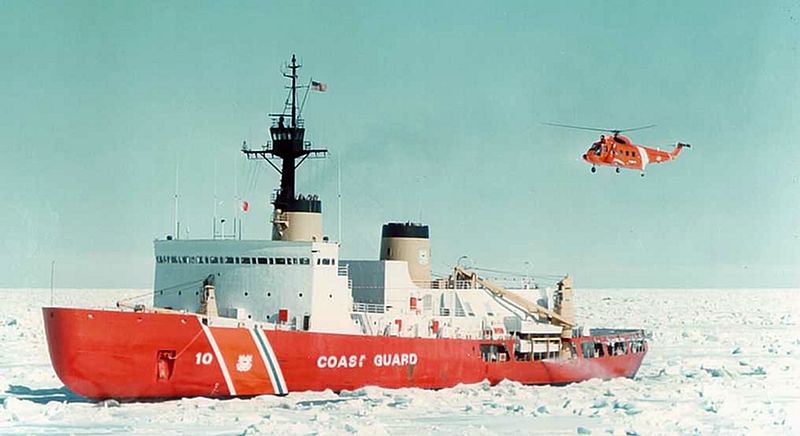
USCGC Polar Star. An old USCG photo, note the HH-52.

The Congressional Research Service has issued a new edition of its Report to Congress on U.S Coast Guard Polar Icebreaker Program by specialist in naval affairs Ronald O’Rourke, this one dated July 9, 21018. You can see it here. 

I have reproduced the summary immediately below.  

The Coast Guard polar icebreaker program is a program to acquire three new heavy polar icebreakers, to be followed years from now by the acquisition of up to three new medium polar icebreakers. The Coast Guard wants to begin construction of the first new heavy polar icebreaker in FY2019 and have it enter service in 2023. The polar icebreaker program has received about $359.6 million in acquisition funding through FY2018, including $300 million provided through the Navy’s shipbuilding account and $59.6 million provided through the Coast Guard’s acquisition account. The Coast Guard’s proposed FY2019 budget requests $750 million in Coast Guard acquisition funding for the program.

The acquisition cost of a new heavy polar icebreaker had earlier been estimated informally at roughly $1 billion, but the Coast Guard and Navy now believe that three heavy polar icebreakers could be acquired for a total cost of about $2.1 billion, or an average of about $700 million per ship. The first ship will cost more than the other two because it will incorporate design costs for the class and be at the start of the production learning curve for the class. When combined with the program’s $359.6 million in prior-year funding, the $750 million requested for FY2019 would fully fund the procurement of the first new heavy polar icebreaker and partially fund the procurement of the second.

The operational U.S. polar icebreaking fleet currently consists of one heavy polar icebreaker, Polar Star, and one medium polar icebreaker, Healy. In addition to Polar Star, the Coast Guard has a second heavy polar icebreaker, Polar Sea. Polar Sea, however, suffered an engine casualty in June 2010 and has been nonoperational since then. Polar Star and Polar Sea entered service in 1976 and 1978, respectively, and are now well beyond their originally intended 30-year service lives. The Coast Guard has used Polar Sea as a source of spare parts for keeping Polar Star operational.

A Department of Homeland Security (DHS) Mission Need Statement (MNS) approved in June 2013 states that “current requirements and future projections … indicate the Coast Guard will need to expand its icebreaking capacity, potentially requiring a fleet of up to six icebreakers (3 heavy and 3 medium) to adequately meet mission demands in the high latitudes….”

The current condition of the U.S. polar icebreaker fleet, the DHS MNS, and concerns among some observers about whether the United States is adequately investing in capabilities to carry out its responsibilities and defend its interests in the Arctic, have focused policymaker attention on the question of whether and when to acquire one or more new heavy polar icebreakers as replacements for Polar Star and Polar Sea.

On March 2, 2018, the U.S. Navy, in collaboration with the U.S. Coast Guard under the polar icebreaker integrated program office, released a request for proposal (RFP) for the advance procurement and detail design for the Coast Guard’s heavy polar icebreaker, with options for detail design and construction for up to three heavy polar icebreakers.

Issues for Congress for FY2019 for the polar icebreaker program include, inter alia, whether to approve, reject, or modify the Coast Guard’s FY2019 acquisition funding request; whether to use a contract with options or a block buy contract to acquire the ships; whether to continue providing at least some of the acquisition funding for the polar icebreaker program through the Navy’s shipbuilding account; and whether to procure heavy and medium polar icebreakers to a common basic design.