Worth Reading–25 May, 2018

Ince Inebolu missile attack

Photo: Damage to the Turkish-flagged bulk carrier Ince Inebolu after last weeks missile attack. –Reuters

Ran across a number of post of interest to Coast Guard readers. Nothing I felt I needed to comment on, but perhaps interesting.

“IMO approves new Inmarsat advance in maritime safety services”–MarineLink”

“Pirate Attacks Grow in South America and Caribbean” MarineLink

“INMARSAT Faces US Chinese Competition in Maritime Safety” MarineLink

“Missile Struck Turkish Ship Off Yemen, EU NAVFOR Official Says” gCaptain

“Canada Announces New Measures to Enhance Safety of Marine Navigation” gCaptain

“Pence Warns Coast Guard Graduates of the Perils Facing the US” Navy Times

“Saildrones Voyage Into Remote Waters” Baird Maritime

“IMO Okays US-Russian Bering Strait Routing Plan” MarineLink

“Sinking of the US Cargo Vessel El Faro, Illustrated Digest” NTSB pdf

A couple of new boats.:


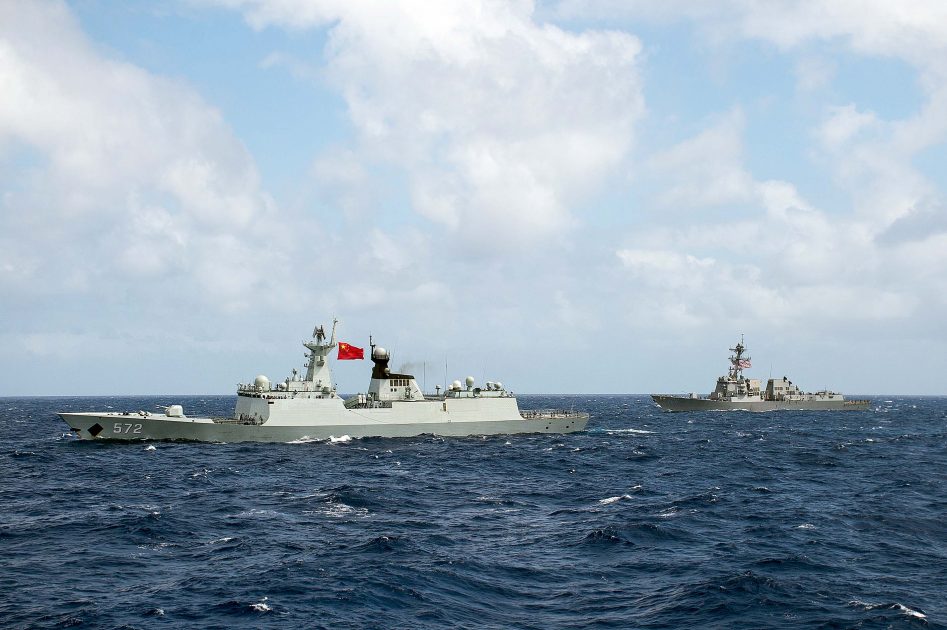
China Disinvited from Participating in 2018 RIMPAC Exercise–USNI

The People’s Republic of China Chinese Navy multi-role frigate Hengshui (572) and the guided-missile destroyer USS Stockdale (DDG 106) transit in formation during Rim of the Pacific 2016 on July 28, 2016. US Navy photo.

The US Naval Institute news service is reporting that the Chinese have been “disinvited” to participate in the 2018 RIMPAC exercises.

Citing actions in the South China Sea that run counter to international norms and a pursuit of free and open seas, Department of Defense spokesman Marine Lt. Col. Christopher Logan said the People’s Liberation Army Navy (PLAN) would not be participating in the exercise despite its participation in submarine safety and other non-warfighting components of the exercise in previous years.

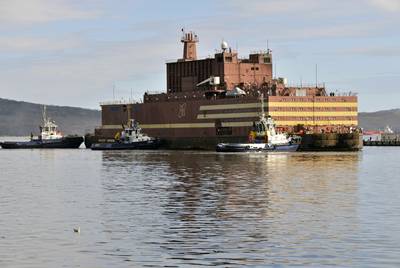
Russia to Have Floating Nuclear Power Plant Near Alaska

CORRECTION: The MarineLink report this was based on, and the virtually identical report at gCaptain, is misleading. The town, Pevek, population less than 5,000, is not “across the Bering Strait from Alaska.” It is on the North coast of Siberia. The entire region, Chukotka, has a population of about 50,000. The Russian town on Bering Strait is Uelen, population about 720. 

An interesting note from MarineLink. The Russians are deploying a floating nuclear power plant to a small community, the town of Pevek, on their side of the Bering Strait, 53 miles  (86 km) from Alaska.

Greenpeace is concerned.

“Nuclear reactors bobbing around the Arctic Ocean will pose a shockingly obvious threat to a fragile environment which is already under enormous pressure from climate change,” Jan Haverkamp, nuclear expert for Greenpeace Central and Eastern Europe, said in a statement last month.


Will the OPC have Water Cannon?

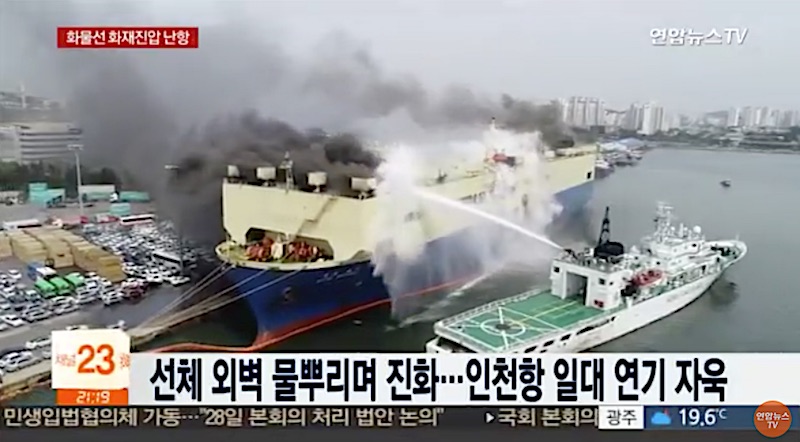
A screengrab from Yonhap News video (below) showing the fire on board the Panama-registered Auto Banner at the Port of Incheon, May 21, 2018. Credit: Yonhap News

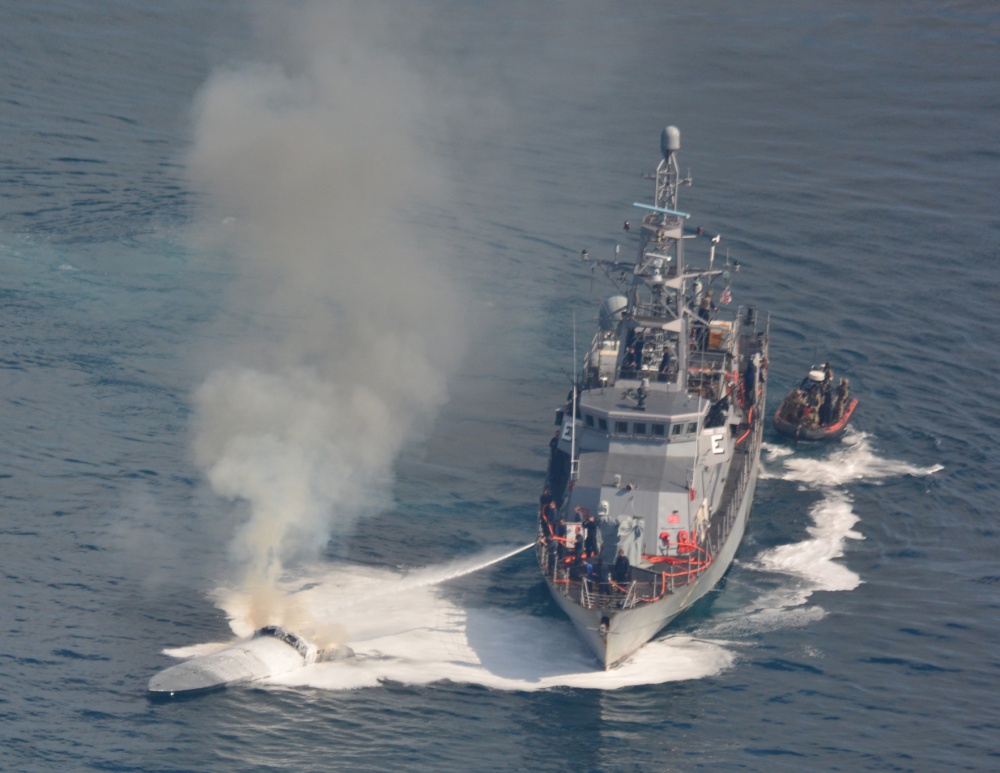
Cyclone-class patrol coastal USS Zephyr (PC 8) crew conducts ship-to-ship firefighting to extinguish a fire aboard a low-profile go-fast vessel suspected of smuggling in international waters of the Eastern Pacific Ocean April 7, 2018. Photo by Petty Officer 1st Class Mark Barney

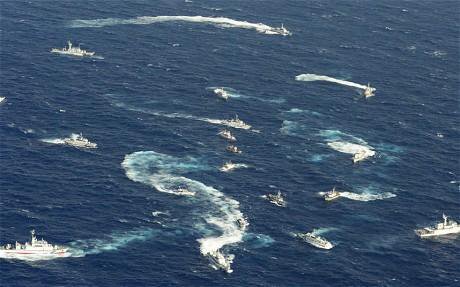
A water cannon battle between Taiwanese and Japanese Coast Guard vessels.

Above we see some examples of water cannon in use by S. Korean, Indian, Taiwanese, and Japanese coast guard vessels and a Navy patrol craft supporting a Coast Guard mission, attempting to extinguish a fire.  Looks like water cannon might be a handy thing to have.

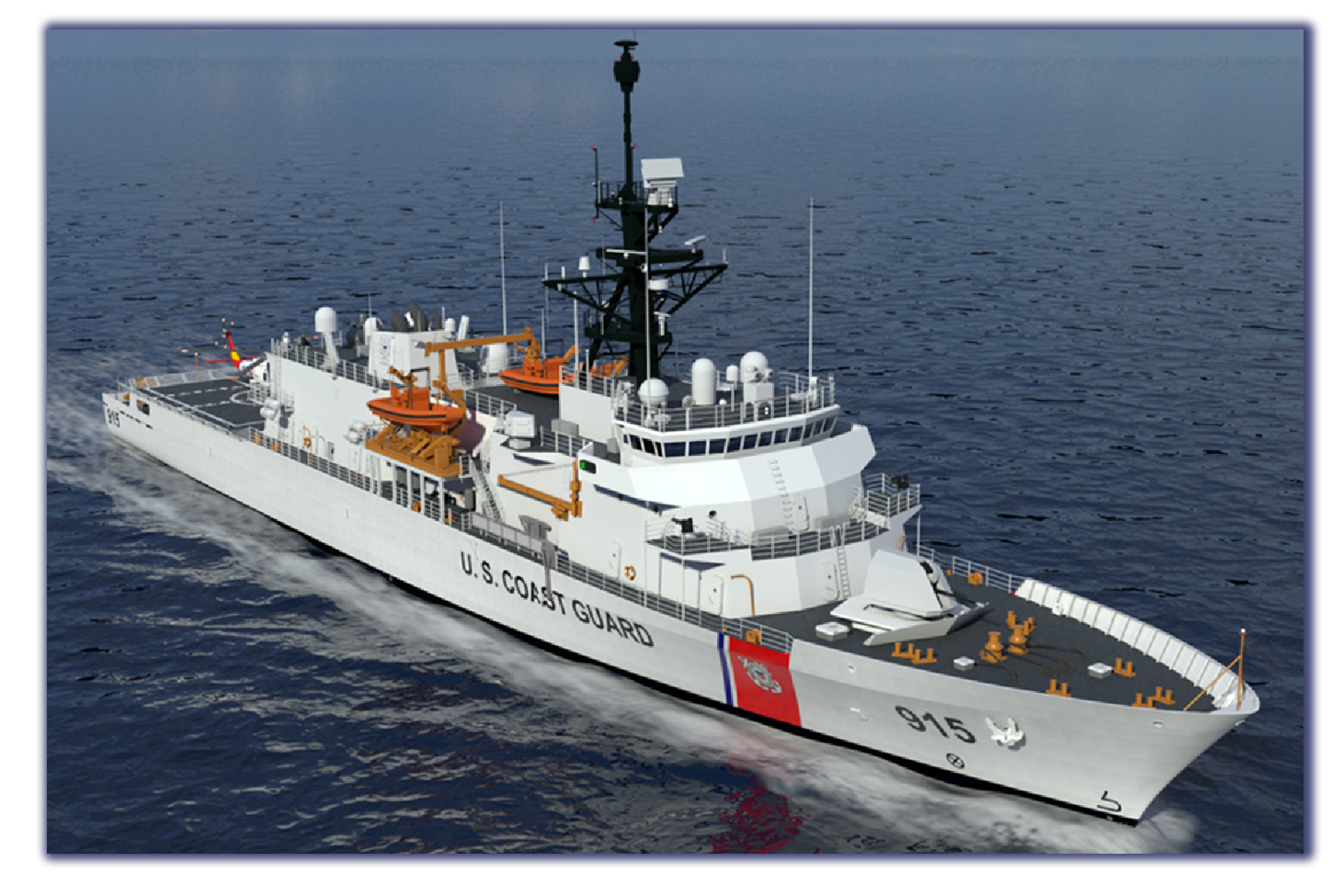
On this original concept model of the Offshore Patrol Cutter there are four water cannon, two on the roof of the hangar and two on top of the superstructure between the Mast and the stack.

On later illustrations, the water cannon seem to have disappeared.

OPC “Placemat”

Am I missing something?

Icebreaker Communications Requirement

A 4ISRnet report confirms that the Coast Guard intends to have a full range of communications equipment on the new Heavy Polar Icebreaker, up to an including military secure satellite communications.

“Communication is severely degraded at higher latitudes, beyond 65 degrees north and south,” said Eric Nagel, a spokesman for the Coast Guard’s acquisition directorate. “Coast Guard polar icebreakers need to be able to communicate in Polar Regions with a wide range of groups from commercial shipping and recreational boaters to scientific researchers. The polar icebreakers also need to maintain network connectivity with the Department of Homeland Security, Department of Defense and other federal and international partners.”


“Should the USCG Transition to DoD?” USNI Blog

The US Naval Institute blog has a post recommending that the Coast Guard be moved into the Department of Defense.

The most significant part of the post appears to me to be that this concept has been put forward by Representative Duncan Hunter (R-CA), who is the Chair of the Sub-Committee that has oversight of the Coast Guard. Representative Hunter is a Marine Reserve Major who served two tours in Iraq and one in Afghanistan. Having watched him perform in several sub-committee meetings, I have a great deal of respect for his opinions. He would like to see a stronger and better armed Coast Guard.

Personally I see still unrealized potential for the Coast Guard in the Department of Homeland Security and potential problems as well as opportunities in the Department of Defense.

How would the Coast Guard be funded within the DOD? Would it be a separate agency or would it be budgeted with the Department of the Navy?

The Department of Defense (DoD) is responsible for providing the military forces needed to deter war and protect the security of the United States (U.S.). The major elements of these forces are the Army, Navy, Air Force, and Marine Corps. The President is the Commander-in-Chief, while the Secretary of Defense exercises authority, direction, and control over the Department. This includes the Office of the Secretary of Defense, Organization of the Chairman of the Joint Chiefs of Staff, the three Military Departments, the Combatant Commands, the Office of the Inspector General, 17 Defense Agencies, 10 DoD Field Activities, and other organizations, such as the National Guard Bureau (NGB) and the Joint Improvised Explosive Device Defeat Organization (JIEDDO)., Department of Defense organizational chart (December 2013)

Within the DHS budget, the Coast Guard is the third largest component behind FEMA and Customs and Border Protection. It has significant visibility.

In the DOD organization above, I cannot even find the National Guard Bureau. We might do well because we would be a very small part of the overall budget, or we might simply be too small to attract any attention. I think there is a real possibility that if we were transferred into the Navy Department, the Coast Guard might end up as little more than a Master at Arms Corps.

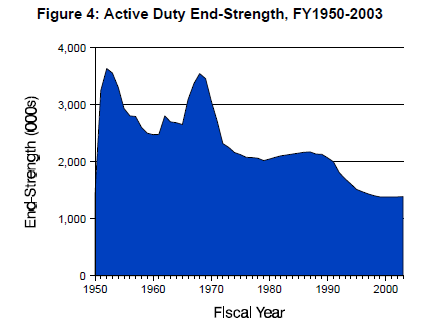
We should remember that in terms of personnel, while the US Navy (and the DOD) is now much smaller than it was 50 years ago, the Coast Guard is larger.  I can recall when the Navy was about 25 times as large as the Coast Guard and the Marine Corps about 8 times as large. Now the Navy is less than eight times as large. The Marine Corps is only 4.4 times as large.

We can talk about how the Congress has not been kind to us, but at least funding has been relatively consistent, and of late there seems to be a recognition of greater need for capital improvements.

If our personnel end strength had followed the trend of the DOD we would now have fewer than 20,000 active duty rather than over 40,000.

In short, be careful what you wish for.


“Build a Great White Fleet For the 21st Century”–USNI Proceedings

The US Naval Institute Proceedings May 2018 edition has an article, “Build a Great White Fleet for the 21st Century,” that recommends greater Coast Guard funding to support Combatant Commanders. It is written by Captain David Ramassini, USCG. The accompanying bio states,

“Captain Ramassini is an Operation Iraqi Freedom veteran and cutterman who has served in the Pentagon as Coast Guard Liaison on the Joint Staff and also in the Office of Secretary of Defense. Captain Ramassini is slated to assume his fifth command as the plankowner commanding officer of the national security cutter Kimball (WMSL-756).”

Unfortunately the article is “members only.” If you are a regular reader of my blog, you probably should also be a US Naval Institute member, but for those who are not, I’ll try to summarize his argument, including some quotations. After reviewing the article, I’ll offer some thought on how, and where, we might provide some assistance to the Combatant Commanders.

The Article

Captain Ramassini contends improved maritime governance and suppressing transnational crime is in the US interest where ever it occurs.

“As the line between terrorist and criminal activities continues to blur, the transactional connections between a wide range of unlawful organizations is likely to cloud the distinction between law enforcement and military operations.”

The Geographic Combatant Commanders (GCC) need afloat assets to aid in dealing with these problems.
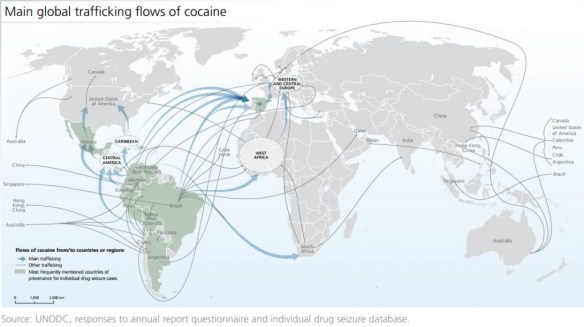
Source: UNODC, responses to annual questionnaire and individual drug seizure database

The Coast Guard is uniquely qualified to leverage “vast authorities; capabilities; and interservice, interagency, intelligence community, and international partnerships” in support of Geographic Combatant Commanders (GCC).

There are not enough Coast Guard assets to do this now.

To provide additional assets funding for the fleet needs to be rebalanced, moving money from the Navy to the Coast Guard.

Rebalancing the national fleet composition would improve relationships and provide the United States and our partners advantages in a complex world filled with threats that go beyond the nation-state.

Recognizing the Coast Guard for the unique national, international, diplomatic, economic, and intelligence power that it is, the current administration has the opportunity to turn this tide and make the national fleet great again by directing a smart business decision. Specifically, prioritize Coast Guard cutter production to grow the fleet and provide a more cost-effective and adaptable instrument for the nation. A 21st-century Great White Fleet of Coast Guard cutters would begin a new era of sea power better suited to promote rule of law through cooperative partnership and distributed lethality, and allow the U.S. Navy to refocus its efforts on high-intensity conflict. It is time to rethink international engagement using the Coast Guard—an armed force at all times, but a more cooperative power known for its olive-branches-over-arrows approach.

Coast Guard national security, offshore patrol, and fast response cutters could serve as powerful instruments for GCCs. They are large enough to operate globally, yet small enough to gain access and foster cooperative partnerships. In addition, these more affordable naval assets could be produced more expediently than Navy surface combatants to build a credible national fleet. The goal of a 355-ship Navy needs to be expanded to a 400+ ship national fleet with utility across civil and military disciplines and a better return on investment.

It is time to change the costly Navy-centric approach toward peace and security and focus on restoring the underpinnings of rule of law to regain the trust and confidence of partner nations. The Coast Guard is capable of more finely tuned and less costly persistent presence. It is an affordable, accountable, and reliable instrument of national power well equipped to execute international engagement. Bolstering white hull numbers within the national fleet by doubling the number of cutters could provide a 21st century advantage to the United States and our international partners in this ever-evolving global environment.

Captain Ramassini suggests that large cutters could be upgraded so that they can fill the frigate role.

One approach worth examining is up-arming the Coast Guard’s fleet with a vertical-launch system (Mk-41 VLS) and SeaRAM close-in weapon system to provide increased warfare interoperability. Imagine a forward-deployed “international security cutter” capable of operating with a carrier strike group and/or surface action group and assuming a role historically filled by a Navy frigate.

Commentary

There are currently six Unified Combatant Commands. Two, NORTHCOM and SOUTHCOM already have substantial Coast Guard assets available, although SOUTHCOM could use more. CENTCOM has the six WPBs of PATFORSWASIA. Three Unified Combatant Commands, PACOM, EUCOM, and AFRICOM, have no regular Coast Guard representation.

EUCOM (European Command) probably has far less need for a US Coast Guard presence, since they already have several sophisticated coast guard organizations among allied nations.

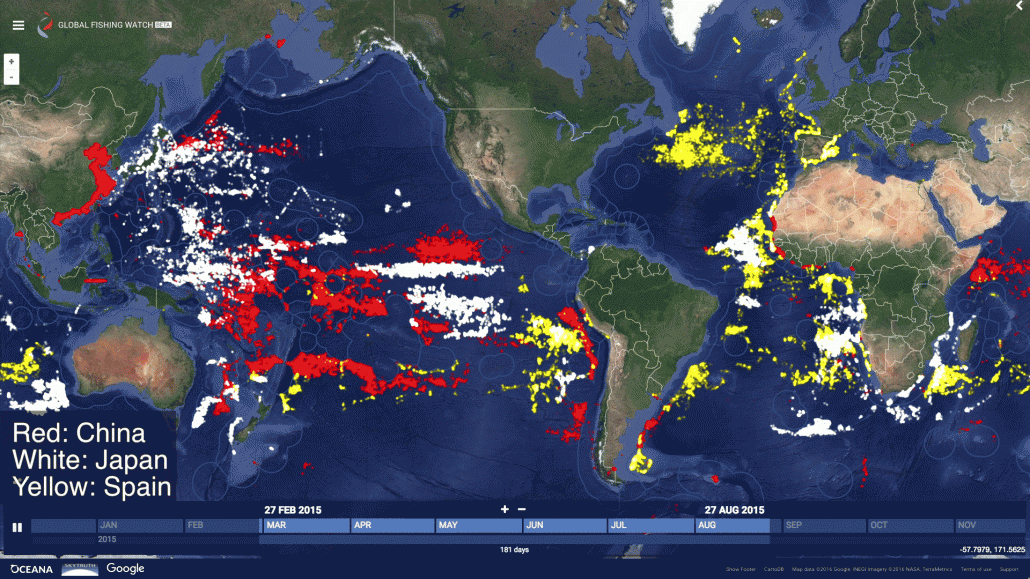
PACOM probably could use more Coast Guard assets for capacity building and suppression of Illegal, Unregulated, and Unreported (IUU) fishing in the Western Pacific. Seventh Fleet has already asked for more Coast Guard presence to confront Chinese white hulls.

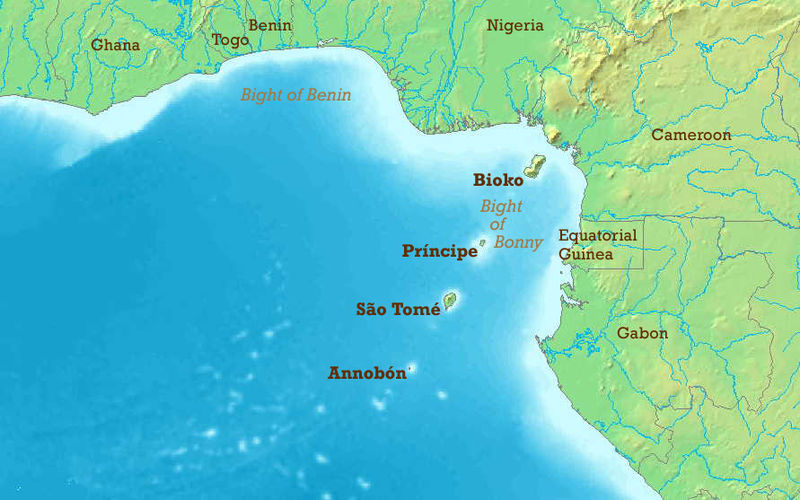
Africa has a serious problem with Maritime crime and could use training, capacity building, and more international inter-agency cooperation. The Coast Guard has sent ships to the area intermittently, but the area has been largely neglected. China is making serious inroads in Africa. We need a presence, but gray hulls are not what we need. The six boats of Patrol Force South West Asia (PATFORSWA) could help address the problem in East Africa, but that would require some sharing by CENTCOM. There is an unrealized opportunity to do a lot of good in West Africa, particularly in the Gulf of Guinea where piracy, kidnapping, IUU fishing, and other marine crimes are common.

Gulf of Guinea, from Wikipedia

To maintain a single large cutter off the West coast of Africa or in the Western Pacific would require three ships in rotation, assuming they are homeported in the US. Larger ships are more difficult to homeport in foreign ports, smaller vessels are likely more feasible.

It appears more likely we could replicate the six boat PATFORSWA organization with similar organizations in East Africa and the Western Pacific. There are several ports in each area that might be worth considering.

Obviously we would not send more now overage 110s, we would be sending Webber class WPCs. This would require extending the current program beyond the 58 in the program of record. There is already discussion about six additional WPCs to replace the six 110s assigned to CENTCOM. Adding six for AFRICOM and six for PACOM would extend the current program by two or three years. The shipbuilding costs for 12 more WPCs are on the order of $700M spread over two or three years, not much more than a single NSC. Basic personnel requirements for 12 vessels with a crew of 24 are 288 crew members. Rotational crews and supporting personnel would probably push this up to about 500, a notable increase for the Coast Guard, but “small change” in the defense budget. The PATFORSWA costs are paid for from the DOD budget, so I would expect a similar arrangement for similar squadrons assigned to AFRICOM and PACOM.

Perhaps at some point. we should also consider a similar forward deployed squadron for SOUTHCOM.


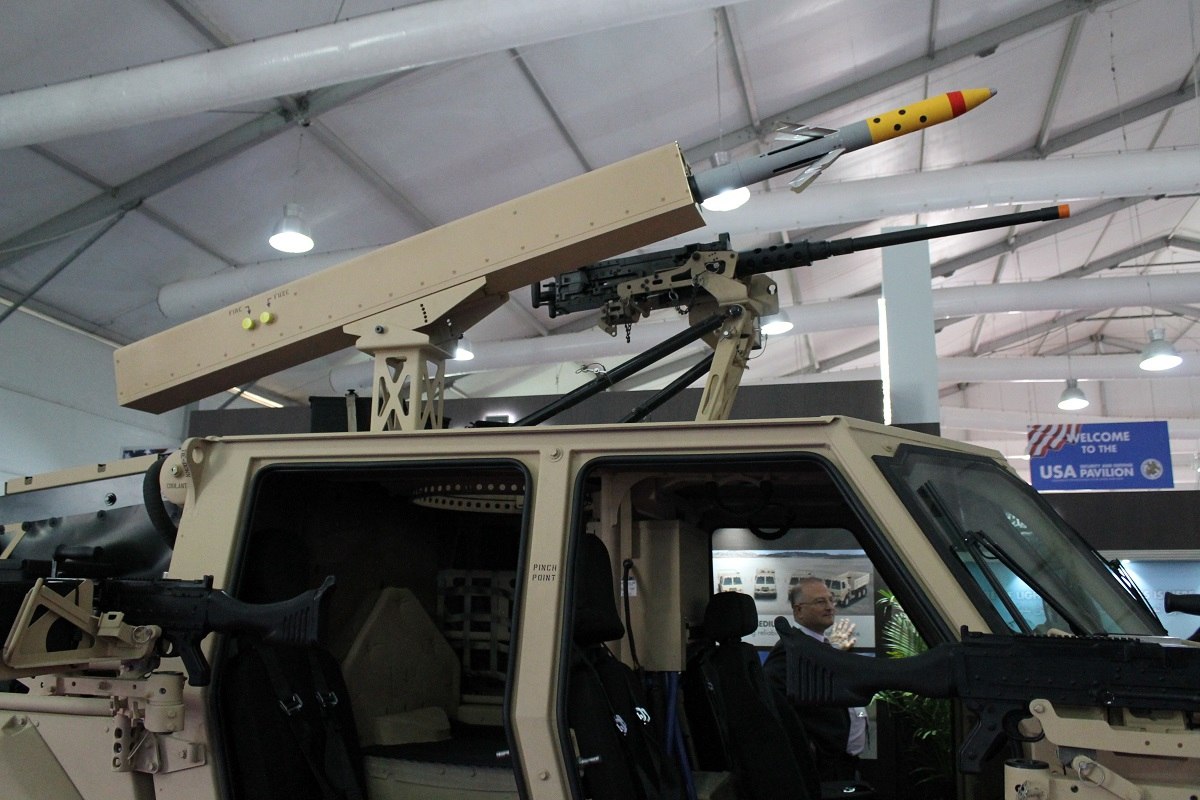
Fletcher/APKWS, a Pocket Missile System, Made in America

Fletcher Launcher for Advanced Precision Kill Weapon System (APKWS)–Arnold Defense showcased its new rocket launcher for non-air applications at SOFEX 2018 on an Oshkosh S-ATV. (Jen Judson/Staff)

Defense News brings us another report of the new four round surface launch system for the BAE Advanced Precision Kill Weapon System (APKWS) made by Arnold Defense of St. Louis, MO.

I did a post on this system earlier, Guided Weapons Made Easy, but I had almost forgotten about it, and that would be a shame, because this may be exactly what we need give our small units both precision and a much heavier punch.

APKWS is an upgrade to the long serving (and very numerous) 70 mm Hydra rocket, that adds passive laser homing. Reportedly BAE is working up to providing 20,000 APKWS kits a year.

Current range for this system is about eight kilometer, probably enough for us, but there is also mention of an improved motor to extend the range. Reportedly the seeker is good for up to 14 km, so a motor upgrade might push the range out that far.

The launcher seems to have similar footprint to a .50 caliber machine gun. The empty launcher weighs only 30 pounds and the individual missiles 32 pounds. If it can fit on a light land vehicle, its likely it will fit on many of the Coast Guard’s smaller patrol assets.