EU Charters Fisheries Enforcement Vessel

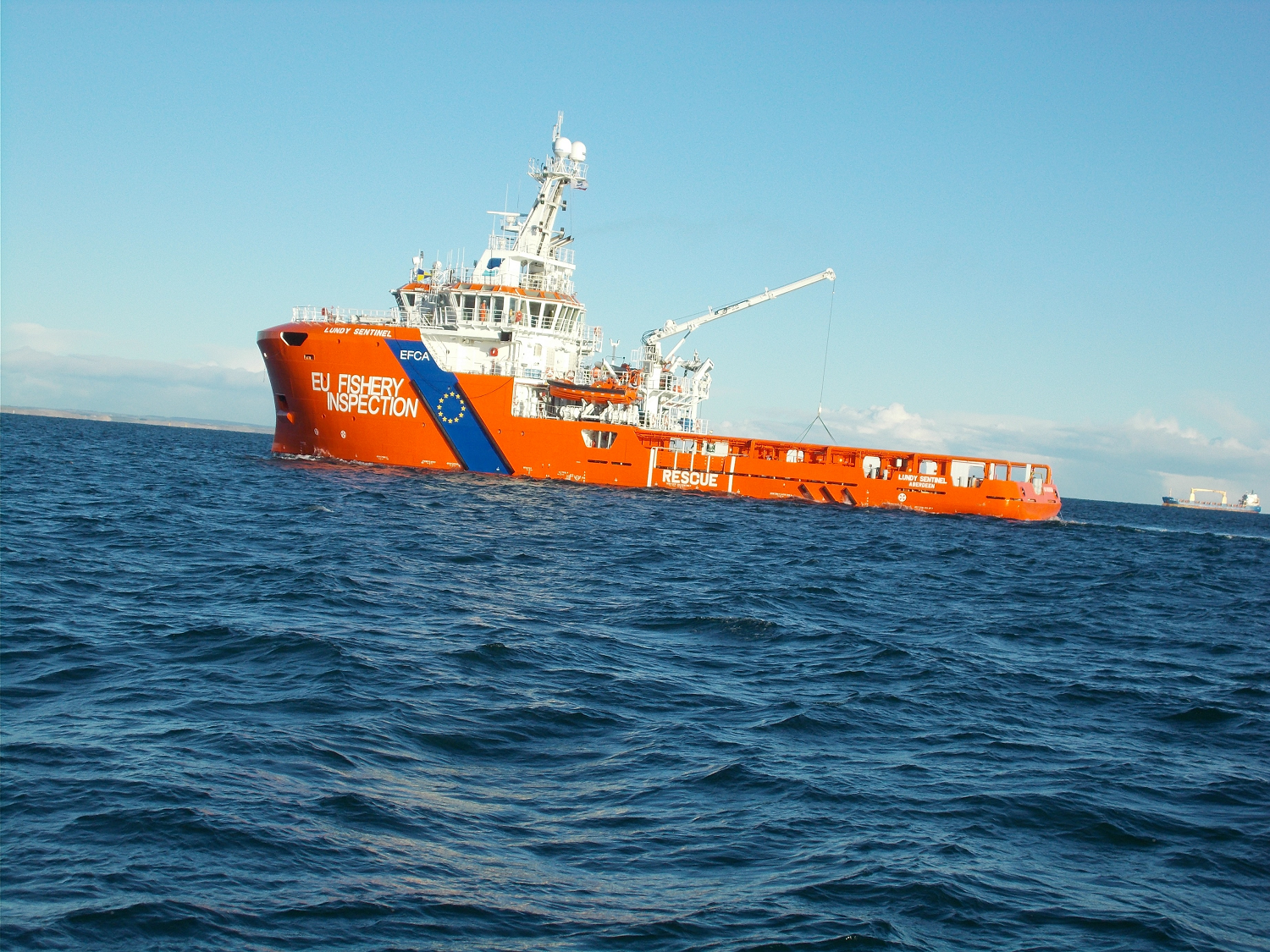
MarineLink reports the European Fisheries Control Agency (EFCA) has chartered a 61 meter (200 foot) multi-role emergency response and rescue vessel to perform fisheries enforcement.

“It is possible that Lundy Sentinel will also be used for other operations besides fisheries control, in the framework of the European coastguard cooperation, including search and rescue, border control, disruption of trafficking routes, detection of criminal activities and enforcement of EU and national legislations.”

China unveils vision for ‘Polar Silk Road’ across Arctic–Reuters

Chinese icebreaking research vessel Xue Long (Snow Dragon), Photo by Bahnfrend

Reuters has an interesting short article about China’s interest in the Arctic. Initially this will probably be primarily concerned with shipment of Russian LNG, but it appears we can expect other activities as well, including fishing. Certainly we should expect more traffic through the Bering Strait, bringing with it the possibility of SAR and Marine Environment Protection incidents.

“The white paper said China also eyes development of oil, gas, mineral resources and other non-fossil energies, fishing and tourism in the region. It said it would do so “jointly with Arctic States, while respecting traditions and cultures of the Arctic residents including the indigenous peoples and conserving natural environment”. “

“U.S. Coast Guard Hurricane Response 2017”–DefenseMediaNetwork

Houston rescues

Coast Guard Air Station Houston responds to search and rescue requests after Hurricane Harvey in Houston, Texas, Aug. 27, 2017. U.S. Coast Guard photo by Petty Officer 3rd Class Johanna Strickland.

DefenseMediaNetwork has a great article about the Coast Guard’s response to Hurricanes Harvey, Irma, and Maria.

“Remarkably, Harvey was merely the first major hurricane to strike the United States in what would become one of the most active Atlantic hurricane seasons in history, one of only six seasons on record to feature multiple Category 5 hurricanes. It was also the first season on record to feature three Atlantic hurricanes making landfall in U.S. territory at Category 4 intensity or stronger. Incredibly, these three hurricanes – Harvey, Irma, and Maria – all landed within a one-month window, from Aug. 25 to Sept. 20, making September 2017 the busiest month of U.S. hurricane activity on record. Before September, the U.S. mainland had never before endured two Category 4 hurricanes in the span of a year.”


Coast Guard Releases Request For Proposal For New Cutter Boats–CG-9

The Acquisitions Directorate has released the following:

Coast Guard Releases Request For Proposal For New Cutter Boats
Jan. 24, 2018

The Coast Guard released a request for proposal (RFP) Jan. 16 for design, construction and support of a new fleet of cutter boats-large (CB-L). The CB-Ls will replace the current fleet of 36 cutter boats that currently operate aboard the Service’s 210-foot medium endurance cutters, 225-foot seagoing buoy tenders, and Coast Guard cutters Alex Haley and Mackinaw.

The Coast Guard plans to award one firm fixed-price indefinite delivery, indefinite contract that includes a minimum initial delivery order of two CB-Ls and associated outfit, parts and logistics information. The contract allows for the acquisition of up to 46 boats over five years, including potential foreign military sales, and is worth a total maximum value of $20 million. The RFP is available here.

Proposals are due March 2 at noon Eastern time, with boat delivery required within one year from the date of the delivery order.

Prior to releasing the RFP, the Coast Guard conducted extensive market research, including inviting potential offerors to make presentations on their ability to compete for the CB-L award.  “The existing boats on these four classes of cutters are no longer sustainable, since the manufacturer went out of business. The new CB-L will meet this operational need,” said Cmdr. David Obermeier, deputy program manager for boats acquisition.

For more information: Cutter Boats program page


Whistle Blower Gets Lockheed to Fix NSC Radios

NSC 5 James on builders trials in the Gulf of Mexico March 30, 2015.

BreakingDefense reports, 

“WASHINGTON: A Lockheed Martin engineer risked much claiming his company knew the radio system it was building for the Coast Guard didn’t work as advertised. The company settled the suit, agreeing to pay $2.2 million in fines and to fix the radios on the National Security Cutters, which should cost another $2.2 million.

“The whistleblower, Stu Rabinowitz, may not be able to work for Lockheed anymore, but he is receiving a $990,000 payment. The statement by the US Attorney’s Office in Northern California says he’s a former employee.

The defect affected the cutters ability to communicate simultaneously on more than one frequency.


News Conference–San Diego, 25 Jan.

Following is a news release quoted in its entirety. 

———–

Media Advisory: U.S., Canadian officials to address emerging threat from drug traffickers (photos available)

united states coast guard

News Release

January 23, 2018

U.S. Coast Guard 11th District PA Detachment San Diego
Contact: Coast Guard PA Detachment San Diego
Office: (619) 278-7025
After Hours: (619) 252-1304
PA Detachment San Diego online newsroom

Media Advisory: U.S., Canadian officials to address emerging threat from drug traffickers (photos available) 

Coast Guard Cutter Steadfast boarding team members intercept a suspected Low Profile Vessel with approximately 3,203 pounds of cocaine onboard in the Eastern Pacific Ocean, Nov. 30, 2017. LPVs are designed to be low profile and colored to blend in with the ocean, making them difficult for law enforcement to detect. U.S. Coast Guard photo. Coast Guard Cutter Steadfast boarding team members intercept a suspected Low Profile Vessel with approximately 3,203 pounds of cocaine onboard in the Eastern Pacific Ocean, Nov. 30, 2017. Steadfast was patrolling the waterways supporting the Joint Interagency Task Force –South with the primary mission of detecting and interdicting illegal drug traffickers. U.S. Coast Guard photo.

To view and download photos, please click the above thumbnails

WHAT: U.S. forces and international partners continue to see new smuggling tactics by transnational organized crime networks in the eastern Pacific Ocean including vessels specifically constructed for purposes of smuggling narcotics and other illicit contraband.

WHO: Senior officials from the U.S. Coast Guard, U.S. Southern Command and the Canadian Armed Forces will be available to discuss the tactics of transnational crime networks and international efforts to combat the threat posed by these criminal organizations. These senior officials include:

  • U.S. Coast Guard Vice Adm. Fred Midgette, commander, Pacific Area
  • Royal Canadian Navy Rear Adm. Art McDonald, commander, Maritime Forces Pacific 
  • Mr. Adam Braverman, U.S. Attorney, Southern District California
  • U.S. Navy Rear Adm. Daniel B. Hendrickson, director, Network Engagement Team, U.S. Southern Command

WHEN: Jan. 25, 2018, at 9:30 a.m. Attending media is requested to arrive by 8:30 a.m. to gain access to the facility. Government-Issued ID and media credentials are required. To RSVP, please contact Public Affairs Detachment San Diego at 619-252-1304.

WHERE: B-Street Pier (Cruise Ship Terminal) in San Diego, 1140 N. Harbor Drive, San Diego, CA 92101.

WHY: On the heels of a record year of drug interdiction, the U.S. Coast Guard and its international partners are seeing historic drug flow from cocaine producing countries in South America coupled with new tactics and varying smuggling routes. Gangs vying over drug smuggling routes and influence have led to epidemic murder rates in Central America. The Centers for Disease Control reported another rise in drug overdose deaths in the U.S. with more than 64,000 people reportedly killed by drug overdose in 2017. Of those, over 10,000 were killed by cocaine overdose, an approximately 35 percent rise from 2016.

HOW: Transnational organized crime networks smuggle more than 97 percent of cocaine bound for the U.S. and Canada via some kind of illicit maritime conveyance in the first stage of movement from the source zone. The drugs are smuggled in large quantities from source countries in South America to transshipment points in Central America and southern Mexico. The cocaine is then broken down into smaller loads for secondary and tertiary transits to smuggle across the U.S. Southern Border.

U.S. and international forces have seen the emergence of a variety smuggling vessels specially designed and constructed by transnational organized crime groups like self-propelled semisubmersibles and, more recently, low profile go fast vessels, which are a variant design from traditional go fast vessels. These smuggling vessels are designed to elude authorities using a low profile radar signature, camouflage and, in the case of low profile go fast vessels, speed. These vessels also carry massive quantities of illicit cargo. For example, an SPSS can carry up to 16,000 pounds of cocaine. A network of international and interagency partners constantly patrol the approximately six million square mile drug transit zone used by smugglers using aircraft and vessels. 

Asbestos Exposure Question

For some reason this comment did not show up on the Comments list as it should have, but it really deserves more attention anyway.

This was asked in response to an earlier post, “MEDICAL DOCUMENTATION OF ASBESTOS AND LEAD EXPOSURES ON COAST GUARD CUTTERS CONSTRUCTED PRIOR TO 1991.” I hope someone can help with this.

I was able to find 2 of the ships I was stationed on which were listed in HSWLSCTD 2017-009 where can I find the ships Prior to 1988. I was on stationed on the CGC Leguare W144 a 125 ft vessel and the CGC Rockaway W377 a 311. I have asbestosis in both lungs which is terminal . I received the major exposure to asbestos on the Rockaway on the clean up crew from the fires on board. We were covered in Asbestos fiber and dust . Can you help me find the for those ships listing . Thank You, Glenn A Mushett USCG RMC RET

How much would it cost to weaponize a cutter?

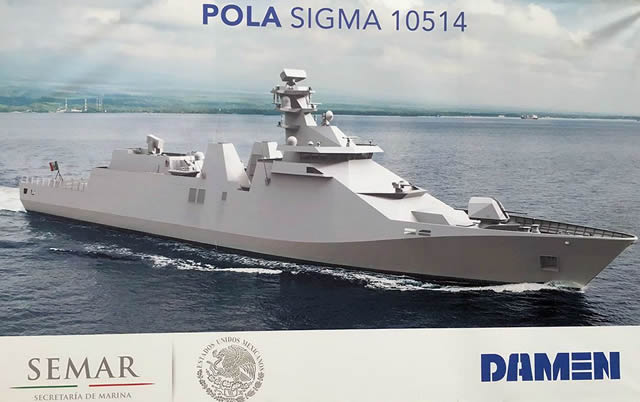
Photo: Sigma 10514 in Mexican Navy configuration, fitted with a BAE Systems Bofors 57Mk3 57mm main guna 12.7mm remote weapon system right behind it. The Mexican Navy opted for the Smart Mk2 radar by Thales. The Mexican “Long Range Patrol Vessel” will not be fitted with VLS cells but a Raytheon RAM launcher will be fitted on top of the helicopter hangar.

How much would it cost to turn one of our new construction cutters into a minimally capable frigate with at least some capability for anti-submarine, anti-surface, and self defense anti-air warfare?

I don’t have a definitive answer but we did get a good indication along with more information about Mexico’s new long range patrol vessel, a Damen 10514 design, that is close enough to our own Offshore Patrol Cutter requirements, that I thought it might have been an OPC contender.

Earlier we had an indication regarding the addition of VLS and  Evolved Sea Sparrow Missiles (ESSM) when Chile ordered $140.1M worth of equipment to arm three ships. Plus we had an earlier post based on a 2009 Congressional Budget Office study (apparently no longer available on line) that suggested costs to replace the Phalanx on NSCs with SeaRAM and to add 12 Mk56 VLS and associated equipment, which could have provided up to 24 ESSM ($68M/ship).

The Defense Security Cooperation Agency has issued a news release concerning the sale of weapons for the new Mexican patrol vessel, and the shopping list is a pretty extensive, including anti-surface, anti-air, and anti-submarine weapons.

Mexico –Harpoon Block II Missiles, RAM Missiles and MK 54 Torpedoes

Media/Public Contact: pm-cpa@state.gov
Transmittal No: 17-63

­­­WASHINGTON, Jan. 5, 2018 – The State Department has made a determination approving a possible Foreign Military Sale to Mexico of RGM-84L Harpoon Block II surface launched missiles, Block II Rolling Airframe Missile (RAM) tactical missiles and MK 54 Mod 0 lightweight torpedoes for an estimated cost of $98.4 million.  The Defense Security Cooperation Agency delivered the required certification notifying Congress of this possible sale today.

The Government of Mexico has requested to buy six (6) RGM-84L Harpoon Block II surface launched missiles, twenty-three (23) Block II Rolling Airframe Missile (RAM) tactical missiles and six (6) MK 54 Mod 0 lightweight torpedoes.  Also included are eight (8) MK 825 Mod 0 RAM Guided Missile Round Packs (GMRP) tri-pack shipping and storage containers; RAM Block 2 MK 44 Mod 4 Guided Missile Round Pack (GMRP); two (2) MK 32 Surface Vessel Torpedo Tubes (SVTT) triple tube launchers; two hundred and fifty (250) rounds of AA98 25 mm high explosive and semi-armor piercing ammunition; seven hundred and fifty (750) rounds A976 25mm target practice and tracer ammunition; four hundred and eighty (480) rounds of BA22 57mm high explosive programmable fuze ammunition; nine hundred and sixty (960) rounds of BA23 57mm practice ammunition; containers; spare and repair parts; support and test equipment; publications and technical documentation; personnel training and training equipment; U.S. Government and contractor representatives’ technical assistance; engineering and logistics support services; installation services; associated electronics and hardware to control the launch of torpedoes; and other related elements of logistics and program support.  The estimated cost is $98.4 million.

This proposed sale will support the foreign policy and national security of the United States by helping to improve the security of a strategic partner.  Mexico has been a strong partner in combating organized crime and drug trafficking organizations.  The sale of these ship-based systems to Mexico will significantly increase and strengthen its maritime capabilities.  Mexico intends to use these defense articles and services to modernize its armed forces and expand its existing naval and maritime support of national security requirements and in its efforts to combat criminal organizations.

Mexico intends to use the weapon systems on its Mexican Navy Sigma 10514 Class ship.  The systems will provide enhanced capabilities in effective defense of critical sea lanes.  The proposed sale of these systems and support will increase the Mexican Navy’s maritime partnership potential and align its capabilities with existing regional navies.  Mexico has not purchased these systems previously.  Mexico will have no difficulty absorbing this equipment into its armed forces.

The proposed sale of this equipment will not alter the basic military balance in the region.

The equipment will be provided from U.S. stocks.  There are no known offset agreements proposed in connection with this potential sale.

Implementation of this proposed sale will require annual trips to Mexico involving U.S. Government personnel and contractor representatives for technical reviews, support, and oversight for approximately two years.

There will be no adverse impact on U.S. defense readiness as a result of this proposed sale.

This notice of a potential sale is required by law and does not mean the sale has been concluded.

All questions regarding this proposed Foreign Military Sale should be directed to the State Department’s Bureau of Political Military Affairs, Office of Congressional and Public Affairs, pm-cpa@state.gov.

The big ticket items certainly made the head lines, but the ammunition for the 57mm is not cheap.

Fortunately for the Coast Guard, the Navy generally pays for our ammunition and weapon systems. The cost to the Coast Guard is installation and integration, plus primarily long term personnel and training costs.

Metal Shark to Build Navy’s New PB(X)

Navy’s new PB(X) to be built by Metal Shark

MarineLog reports the award of a contract for up to 50 new 40 foot (12 meter) patrol boats for the Navy.

Subject to annual appropriations, the Navy intends to replace approximately 100 to 160 of its existing 25-foot and 34-foot CRF (Coastal Riverine Forces –Chuck) patrol boats with the larger and more modern PB(X) platform over the next fifteen years.
The Navy has placed an initial, immediate order for eleven of the new vessels. Under the terms of the award, potentially worth over $90 million, Metal Shark will build up to 50 PB(X) vessels for the Navy, along with trailers, spares and training packages, and technical support.