The US Naval Institute has the best report I have seen on the recent award of five contracts to five different vendors for development of conceptual designs for the projected FFG (X).
I’ll look at the parent craft and offer some speculation about what Huntington Ingalls might be doing to make their NSC based offering more attractive.
There are five venders but actually only four shipyards involved since Fincantieri Marinette Marine in Marinette, Wisc. is both the primary for an offer based on the Fincantieri Italian FREMM, and the build yard for Lockheed’s offer of a Freedom class LCS design.
Parent Designs:
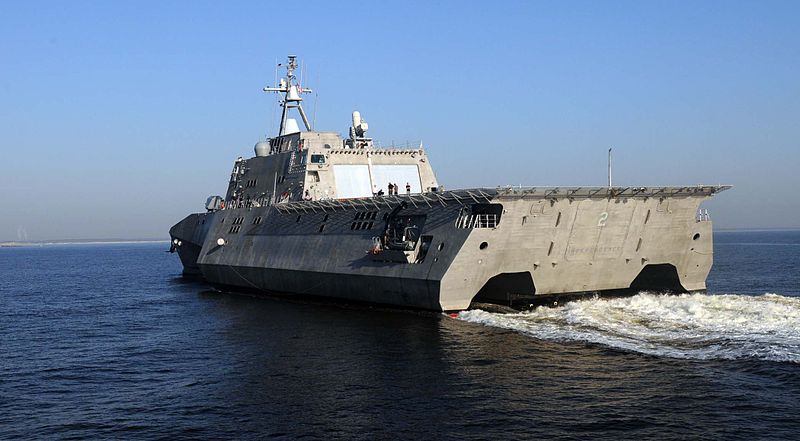
Independence-class Littoral Combat Ship:
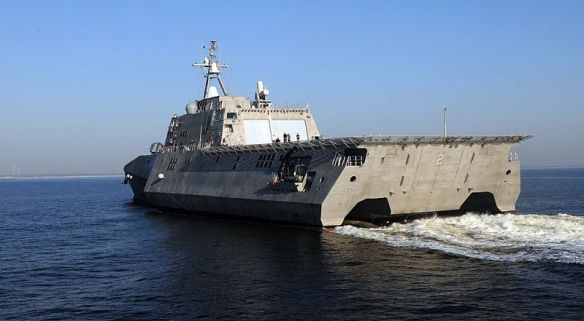
USS Independence (LCS-2)
The Littoral Combat Ship (LCS) derived designs are the light weights in the competition. They both come with large open spaces that might be converted, but as built, they have limited crew accommodations. They will likely take substantial redesign to serve as FFGs. This class has exceptional aviation facilities, and functionally I find it preferable to the monohull Freedom class. Still it seems to have a fatal flaw, in that many do not like the aluminum hull and superstructure, but the Navy has not ruled out the design.
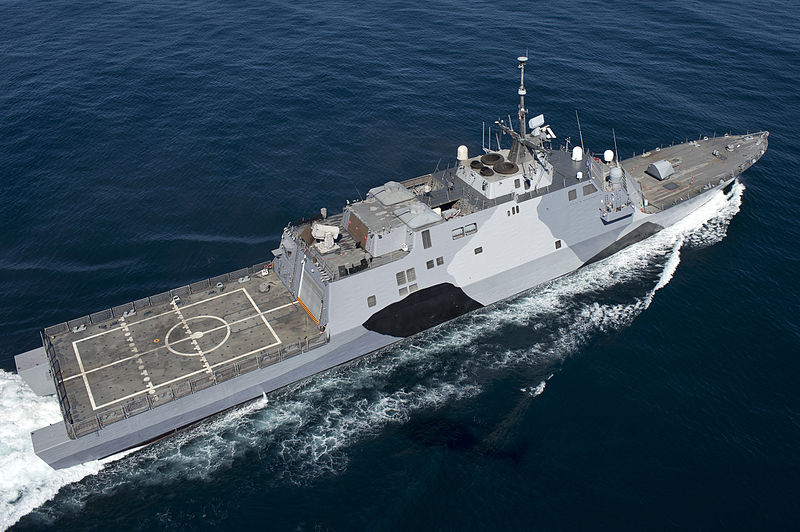
Freedom-class Littoral Combat Ship:

USS Freedom (LCS-1)
My primary problem with this class is its short range. Their engineering spaces are crowded and their seakeeping has been criticized. There is a good chance that their FFG(X) variant may have a lengthened hull. What that will mean for the ships’ range is unclear. This class, with its semi-planning hull, may not take kindly to the additional weight envisioned for the FFG.
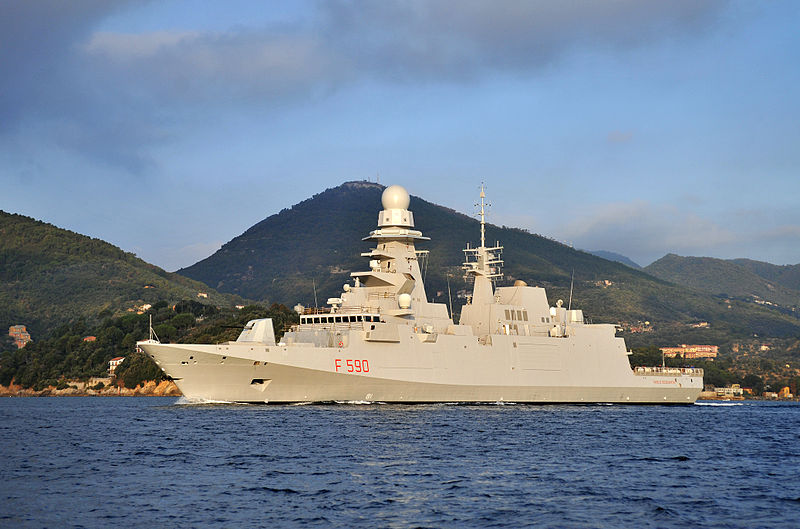
Fincantieri Italian FREMM:

Italian FREMM Bergamini. photo by Fabius1975
These and the Navantia F-100 are the high end candidates. At about 6,700 tons full load the FREMM is about twice as large as the LCS derived designs. The FREMM comes in several versions, ASW, General Purpose, and AAW. Some of them have capabilities for land attack and Anti-Ballistic Missile Defense (ABMD). The Italian versions have an active electronically scanned array radar, but this would likely be replaced by an American system. They have a double helicopter hangar. While the Italian version has at most 16 VLS, the French version of the same ship, which do not have the 5″64 gun have up to 32 VLS cells. The latest versions have a 20 knot cruise on diesels. In addition they have two 3,000 HP electric motors which can provide very quiet slow cruise (my guess, about 15 knots). It also means they have substantial reserves of electrical power for future weapons like lasers and rail guns. Neither the French or Italian versions have more than eight anti-ship cruise missiles (ASCM) but the Italian ASCMs are bulkier than likely American counterparts. The speed has been variously reported as 27 and 30 knots, but given that they only have LM2500 gas turbine, 27 knots is probably a realistic expectation. Because these ships’ systems are European, they may require substantial redesign. If these ships have a weakness it is likely that their cost will likely be near the but still under the Navy’s declared upper limit of $950M.
Navantia Álvaro de Bazán-class F100 Frigate:

HMAS Hobart, photo by Nick-D
There are actually three versions of this ship, Spanish, Norwegian, and Australian. The Australian ships are the latest version, so I would assume the offering is based most closely on these. These ships already use primarily American equipment including the Aegis system and a 48 cell Mk41 VLS. At 6,250 tons full load, they approach the size of many countries’ destroyers, and, in fact, that is the way the Australians and Spanish classify them. This already looks like an American design. The propulsion is CODOG with two 7,580 HP diesels and two LM2500 gas turbines for a max speed of 28+ knots. As currently configured all three versions of the design have hangars for only one H-60. All three versions are also equipped with no more than eight ASCMs. The likely stumbling block for this class is cost. When the Hobart class was constructed in Australia the three ships cost total was $9.1 B Australian, so they cost more than Burke class DDGs. The cost of the last of five F100s built by the more experienced Spanish shipyard was probably more representative, but even there the cost was $1B US. The US shipyard offering this is Bath Iron Works, a yard known more for quality than for low cost. There is perhaps the option of building a version of the smaller 5,290 ton Norwegian version of this design which mounts only a 16 cell Mk41 VLS.
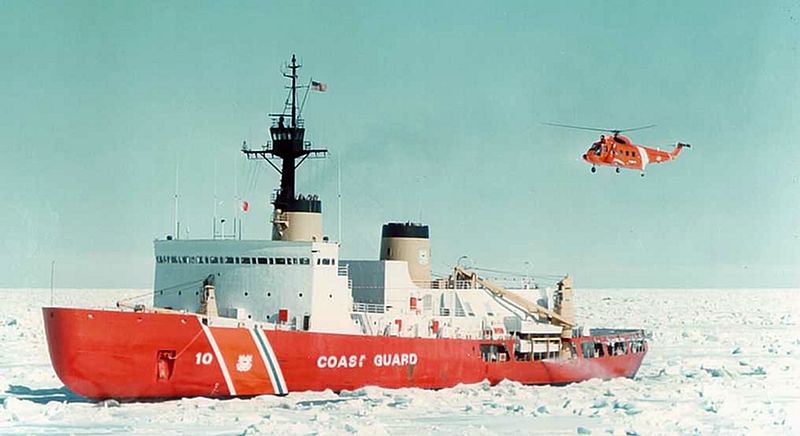
The Bertholf class National Security Cutter:
Interestingly the USNI post reports, “Out of the competitors involved in the competition, HII was the only company that did not present a model or a rendering of its FFG(X) at the Surface Navy Association symposium in January.”
HII has already shown several models of NSC based frigates so perhaps they are doing something a bit different.
I suppose it is possible HII could build a stripped down version of the Burke class DDG or perhaps some other frigate design, but I will presume they will base their frigate on the Bertholf class cutter, but why the mystery?
I will speculate that they plan to make some significant changes relative to their previous presentation and they did not want to tip their hand. I’ll get to the likely changes in a moment.
The post has a short summary of the systems expected to be included in the FFG(X), I have noted the systems already included on the Bertholf class by having them in bold face.
“Many of the required weapons systems are pulled from the previous FF requirements: the COMBATSS-21 Combat Management System, which pulls software from the same common source library as the Aegis Combat System on large surface combatants; the SeaRAM anti-ship missile defense system (currently a Phalanx, but the SeaRAM is a drop in replacement–Chuck); a canister-launched over-the-horizon missile; the surface-to-surface Longbow Hellfire missile; the Mk53 Nulka decoy launching system; the Surface Electron Warfare Improvement Program (SEWIP) Block 2 program with SLQ-32(V)6; and a slew of undersea warfare tools such as the AN/SLQ-61 light weight tow, AN/SQS-62 variable depth sonar and AN/SQQ-89F undersea warfare/anti-submarine warfare combat system. It also requires use of the MK 110 57mm gun with the Advanced Low Cost Munition Ordnance (ALaMO) projectile being developed for the LCS and frigate,”
An NSC derived frigate may occupy the sweet spot between the too small LCS derived designs and the too expensive FREMM and F100 designs that are about the largest combatants (other than flat tops and amphibs) in their respective navies. .
In order to make it more competitive with the high end frigates, I suspect HII is making some changes. Here is a list of things that might be done.
- Increase the length to make room for additional features, but keeping it under 5,000 tons full load.
- Using the additional length provide for more VLS, perhaps 48, or even 64.
- Provide for 16 canister launched anti-ship cruise missiles.
- Increase the generator power to allow future use of systems such as rail guns and lasers.
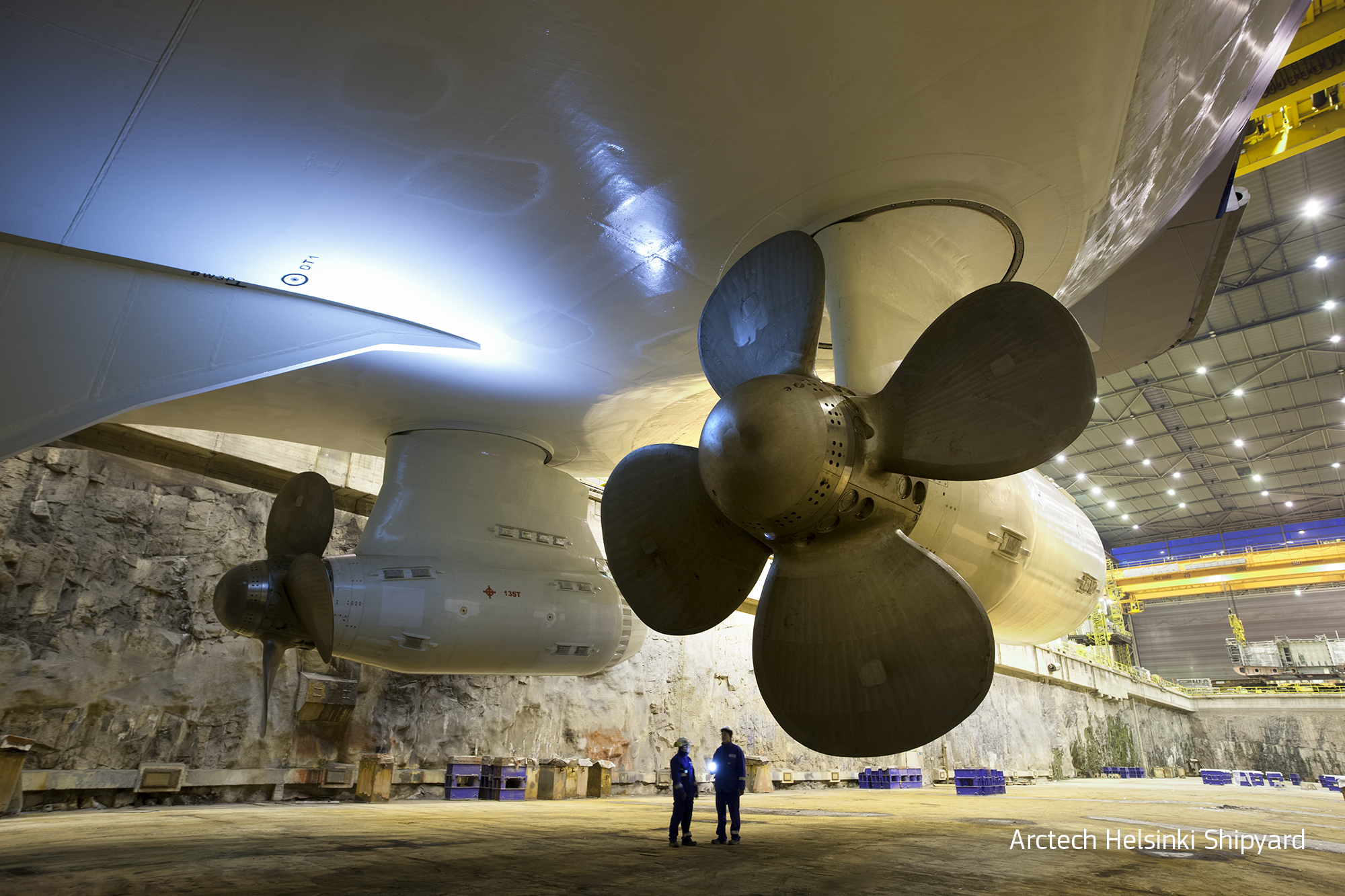
- Provide electric motors for quiet and economical cruise and loiter (which would also use the additional generator capacity. (HII put two 5,000HP/3,700kW auxiliary propulsion motors on USS America and some other big amphibs.)
- Use an active electronically scanned radar array.
- Use the extra length to put another davit amidships and free the fantail and stern for ASW systems.