“The United States Ratifies Central Arctic Ocean Fisheries Agreement” –DOS

The Arctic, note the US includes the Aleutians and the Bearing Sea as part of the Arctic

Department of State announced ratification of an agreement to prevent unregulated fishing in the Central Arctic Ocean (I am assuming this means in the areas outside the Arctic nations’ EEZ). This may mean, at some point, the CG will be conducting fisheries enforcement in the central Arctic Ocean. The State Department announcement is reproduced below. (Thanks to Bryant’s Maritime Consulting Blog for bringing this to my attention.)

—-

The United States is the fourth party to ratify the Agreement to Prevent Unregulated High Seas Fisheries in the Central Arctic Ocean after Canada, the Russian Federation, and the European Union. The Agreement will enter into force once all ten Signatories ratify.

There are currently no commercial fisheries in the Arctic high seas, with most of the region covered by ice year round. However, with an ever-increasing ice-free area in the summer for an increasingly lengthy portion of the year, parties anticipate that commercial fishing will be possible in the foreseeable future. This Agreement is the first multilateral agreement of its kind to take a legally-binding, precautionary approach to protect an area from commercial fishing before that fishing has even begun.

Signed in Greenland on October 3, 2018, there were ten participants in the negotiation of the Agreement: Canada, the People’s Republic of China, the Kingdom of Denmark (in respect of the Faroe Islands and Greenland), the European Union, Iceland, Japan, the Kingdom of Norway, the Republic of Korea, the Russian Federation, and the United States of America. The Agreement has two principal objectives: the prevention of unregulated fishing in the high seas portion of the central Arctic Ocean and the facilitation of joint scientific research and monitoring.

Recognition for the Coast Guard’s contributions to the Office of Strategic Services during World War II

Just passing this along. Always nice to be appreciated.

U.S. Coast Guard Headquarters
Contact: Headquarters Public Affairs
Office: (202) 372-4630
mediarelations@uscg.mil
Headquarters online newsroom

US Coast Guard event to recognize the service’s contributions to the Office of Strategic Services during World War II, presentation of medal to the Coast Guard 

WASHINGTON —  Media are invited to attend a ceremony Sept. 12, 2019, in Washington, D.C., when the Office of Strategic Services Society will recognize the U.S. Coast Guard’s contributions to the OSS — the precursor to the Central Intelligence Agency — during World War II.

President Franklin D. Roosevelt signed a directive in 1941 to stand up the office of the Coordinator of Information, which became the OSS in 1942. The Coast Guard’s support to the OSS on covert, counter-intelligence, espionage and sabotage operations in the maritime environment was a unique instrument for national security policy during World War II domestically and abroad, and it helped lay the foundation for future Coast Guard operations. Because the information was classified for so long, the public is not fully aware of the relationship between the OSS and the Coast Guard, including Coast Guardsmen attached to the OSS in Europe and the China-Burma-India Theatre.

The OSS Society was founded in 1947 by Gen. William Donovan. It honors the historic accomplishments of the OSS during World War II and educates the American public regarding the continuing importance of strategic intelligence and special operations to the preservation of freedom.

Event details:

What: Presentation of medal to the Coast Guard by the Office of Strategic Services Society

Who:

  • Commandant of the Coast Guard Adm. Karl Schultz
  • Vice Commandant of the Coast Guard Adm. Charles Ray
  • Master Chief Petty Officer of the Coast Guard Jason Vanderhaden
  • Mr. Charles Pinck, president of the Office of Strategic Services Society

When: Tuesday, Sept. 10, 2019, from 6 p.m. to 8 p.m. Eastern

Where: U.S. Coast Guard Headquarters, Douglas Munro Building, U.S. Department of Homeland Security St. Elizabeths Campus, Washington, D.C.

Advance registration is required for any media wishing to attend the event — there will be no same-day registration. Please reply to mediarelations@uscg.mil by Sept. 4, 2019, for instructions on registering.

A Modest Proposal for a Containerized Weapon System

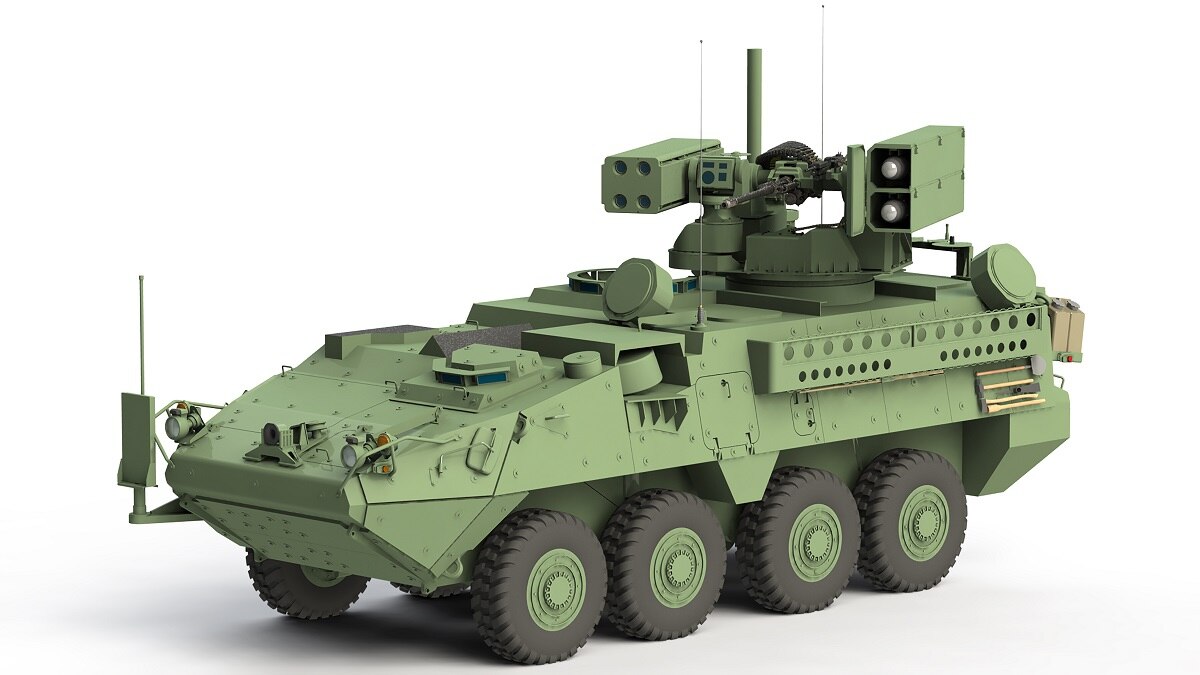
Leonardo DRS has been chosen to provide the mission equipment package (rendering pictured) atop a Stryker combat vehicle to serve as the Interim Maneuver-Short-Range Air Defense system for the U.S. Army. (Courtesy of Leonardo DRS)

     After the recent report of Russia containerizing anti-air missile systems I got to thinking about containerized systems the Coast Guard might use. There are many systems that might be containerized–sonars, torpedo countermeasures, cruise missiles, drones, 120mm mortars, medical facilities, but there is one combination I found particularly appealing.
     We could tie into the Army’s attempt to develop a new short range air defense system (SHORAD) by mounting a marinized version of the SHORAD turret on a container.  The systems are meant to fire on the move, so they should be able to deal with ship’s movement. The container might be armored to some extent to protect it from splinters and small arms. The container could be equipped to provide power (external connection, generator, and battery), air conditioning, air filtration, etc as the supporting vehicle would have in the Army system.  It looks like the planned interim SHORAD system will include Stinger, Hellfire, an M230 30mm gun and a 7.62mm coaxial machine gun. If we could mount some additional vertical launch Hellfire in the container, so much the better.
     For the Coast Guard these might be used on icebreakers and buoy tenders when they go into contested areas. They might be mounted on the stern of FRCs in lieu of the over the horizon boat using an adapter over the stern ramp, when additional firepower is required. 
     The Army and Marines might also use these containerized systems as prefab base defense systems. As fixed ground defenses, the containers might be buried leaving only the turret above ground level.
     They could also be used on Military Sealift Command and Merchant ships to provide a degree of self defense.

“Russian navy to receive container air defence system” –Navy Recognition

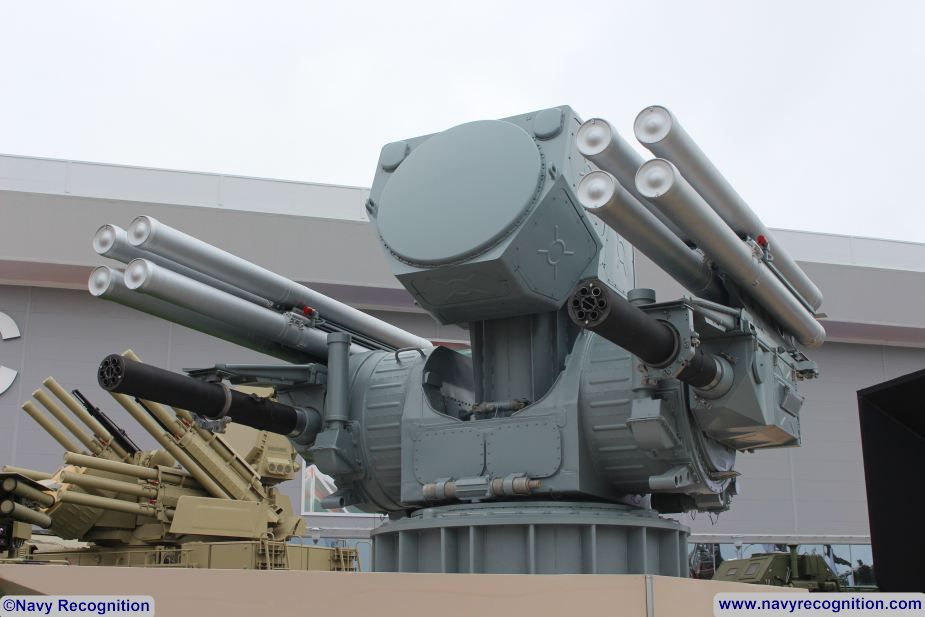
The Pantsir- M presented at Army 2017

NavyRecognition is reporting that the Russians are planning to package air defense systems in standard containers.

Specifically they refer to possible use on the project 20386 corvettes and project 22160 patrol ships. One of the two systems discussed is a missile and gun “Close In Weapon System” (CIWS) but the other system is a much longer ranged system.

This is a significant departure from the container packaged cruise missile systems we have heard about before.

The Pantsir-M CIWS (photo above) would also be effective against surface targets, at close range. In addition to the two 30mm gatling guns, the missiles may also have an anti-surface capability.

In time of war, we might see these, or something similar, on naval auxiliaries or even merchant ships as well as the naval vessels mentioned above. Encountering them on a terrorist controlled vessel is far less likely, but not impossible.

The other way to look at this is, could we do something similar, to make it easy for our icebreakers or perhaps other ships, to go from armed, to unarmed, and back again relatively easily?

Coast Guard patrols North Pacific in support of international fisheries

Below is a news release in full. USCGC Mellon is in the North Pacific, but this is not a typical ALPAT (Alaska Patrol). In addition to working with US authorities, she is working with, “five Pacific Rim countries and three regional fisheries management organizations (RFMO).” This is, I presume, the Coast Guard helping nations of the Western Pacific deal with those who would steal their livelihood and deplete their environment.  

News Release

U.S. Coast Guard 17th District Alaska
Contact: 17th District Public Affairs
Office: (907) 463-2065
After Hours: (907) 209-6509
17th District online newsroom

Coast Guard patrols North Pacific in support of international fisheries

A boarding team aboard an over-the-horizon cutter boat from Coast Guard Cutter Mellon (WHEC-717) transits toward a fishing vessel to conduct an at-sea boarding in the North Pacific Ocean, Aug. 13, 2019. Mellon is patrolling in support of Operation North Pacific Guard (NPG) 2019. U.S. Coast Guard courtesy photo by Coast Guard Cutter Mellon. 

Coast Guard Cutter Mellon (WHEC-717) patrols nearby as a boarding team conducts an at-sea inspection aboard Panamanian-flagged transshipment vessel Yung Da Fa 102, in the North Pacific Ocean, July 10, 2019. Mellon is patrolling in support of Operation North Pacific Guard (NPG) 2019. U.S. Coast Guard courtesy photo by Coast Guard Cutter Mellon. A boarding team aboard an over-the-horizon cutter boat from Coast Guard Cutter Mellon (WHEC-717) transits toward Chinese-flagged fishing vessel Lurong Yuan Yu 899 as it offloads catch onto the Russian-flagged transshipment Vessel Pamyat in the North Pacific Ocean, July 15, 2019. Mellon is patrolling in support of Operation North Pacific Guard (NPG) 2019, conducting boardings to detect and deter all types of illegal, unreported, and unregulated (IUU) fishing activity. U.S. Coast Guard courtesy photo by Coast Guard Cutter Mellon.

Editor’s Note: Click on images to download high resolution version.

JUNEAU, Alaska — The crew of Coast Guard Cutter Mellon (WHEC 717) continues their North Pacific patrol in support of Operation North Pacific Guard (NPG) 2019, protecting living marine resources, enforcing international fisheries agreements and conducting global security missions.

Since June, Mellon’s crew has conducted 40 boardings and issued 61 violations. Twenty-five were serious violations because of their potential to severely impact fisheries and/or blatant disregard for conservation and management measures. Their most frequent violations were improper vessel marking (9), illegal shark finning (4), and improper use of or intentional tampering with the vessel monitoring system (2).

“These fisheries patrols are vital to demonstrating the U.S.’s commitment to our regional partnerships while strengthening regional maritime governance and promoting sustainability of living marine resources,” said Capt. Jonathan Musman, commanding officer of cutter Mellon. “I’m extremely proud of the work we’ve done this patrol, and it’s a direct result of the hard work of this crew as well as the continued support of our international partners. Together, we’ve put in a lot of hours and a lot of work, and we’ve seen impressive results because of it.”

Mellon’s deployment is in support of U.S. goals for the conservation and management of high seas fisheries resources to eliminate illegal, unreported and unregulated (IUU) fishing activity from the North Pacific. NPG 2019 showcases a multi-mission effort between the Coast Guard, NOAA, Alaska Department of Fish and Game, five Pacific Rim countries and three regional fisheries management organizations (RFMO). Unlike previous years’ operations, Mellon has conducted high seas boardings and inspections on the North Pacific Fisheries Commission (NPFC) fishing vessels, while continuing to conduct Western and Central Pacific Fisheries Commission (WCPFC) boardings.

“We’ve seen a 344 percent increase in boardings and 867 percent increase in violations compared to last year’s operation,” said Lt. Cdr. Kristen Caldwell, living marine resource program manager, Pacific Area. “This increase highlights the significance of employing differing authorities all aimed at mitigation of IUU fishing, capitalizing on a highly capable resource to maximize time on scene and the targeting of IUU vessels.”

NPG 2019 was designed to conduct law enforcement operations in support of RFMO in the North Pacific Ocean. Through the North Pacific Coast Guard Forum (NPCGF) and North Pacific Anadromous Fish Commission’s (NPAFC) enforcement coordination process, each partner nation contributes to this at-sea enforcement effort by providing surface patrols and/or air surveillance.

This operation is in direct support of the National Security Strategy as it aligns with the tenant of “achieving better outcomes in multilateral forums,” as well as by addressing the risks to sovereignty of developing nations by China identified in the Indo-Pacific Region. The 2018 National Defense Strategy (NDS) also has identified China as a “strategic competitor using predatory economics to intimidate its neighbors while militarizing features in the South China Sea.” A goal of the NDS is to “support U.S. interagency approaches and work by, with, and through our allies and partners to secure U.S. interests and counteract this coercion.”

Due to the increasing threat, complexity and diversity of tactics in IUU fishing, it is critical to ensure oversight and enforcement in regions in which the United States has jurisdiction and authority to mitigate the rapidly developing influence of specified fleets known to engage in IUU fishing. Efforts to increase the ability of the United States to check the threat of IUU fishing in the Pacific Ocean have been continuous, with the recent success of the adoption of high-seas boarding inspections (HSBI) for the Northern Pacific Fisheries Commission and continued efforts in the Western and Central Pacific Fisheries Commission (WCPFC) and North Pacific Anadromous Fish Commission’s (NPFAC) Convention Areas.

During NPG 2019, Mellon embarked two Canadian shipriders from the Canadian Department of Fisheries and Oceans as well as two aircrews from Coast Guard Air Station North Bend.

Mellon, a 378-foot high endurance cutter with a crew of 150, is homeported in Seattle and routinely deploys in support of counter-drug and alien migrant interdiction, living marine resources and search and rescue missions.

Philippines Awards Contract for Upgrade of Former WHECs

BRP Andrés Bonifacio (FF-17), the former USCGC Boutwell.

Updates added below

NavyRecognition is reporting that the Philippines has awarded a PHP1.5 billion ($28.6M) contract to a South Korean firm for upgrades to their Del Pilar Class Frigates. These are the former cutters Hamilton, Boutwell, and Dallas.

“The project has an approved budget of PHP1.5 billion which will be sourced from the Armed Forces of the Philippine Modernization Trust Fund. The upgrade seeks to enhance the ships’ combat management systems, electronic support and sonar capability to make it capable of operating with incoming and more modern naval assets like the two Jose Rizal-class missile frigates being completed by Hyundai Heavy Industries in South Korea.”

The AN/SPS-40 air search radar, SLQ-32 Electronic Warfare System, 25 mm Mk38 guns, and the Phalanx CIWS were removed before the vessels were transferred to the Philippines.

Presumably in addition to sonar, this upgrade will include torpedo tubes and Korean manufactured torpedoes (Update: apparently not–not included in this contract). The EW system will likely also include countermeasures. An air search capable radar like the Hensoldt TRS-3D Baseline D multi-mode phased array C-band radar being installed on the Jose Rizal-class frigates, to replace the AN/SPS-40 will almost certainly be included (Update: Sea Giraffe multi-role radar had been purchased from the US for this purpose, this is the same radar being purchased for the OPCs). Provision for anti-ship cruise missiles is a possibility, but at this point the full extent of modernization is not clear. I would assume the former WHECs will share some systems with the new frigates. 

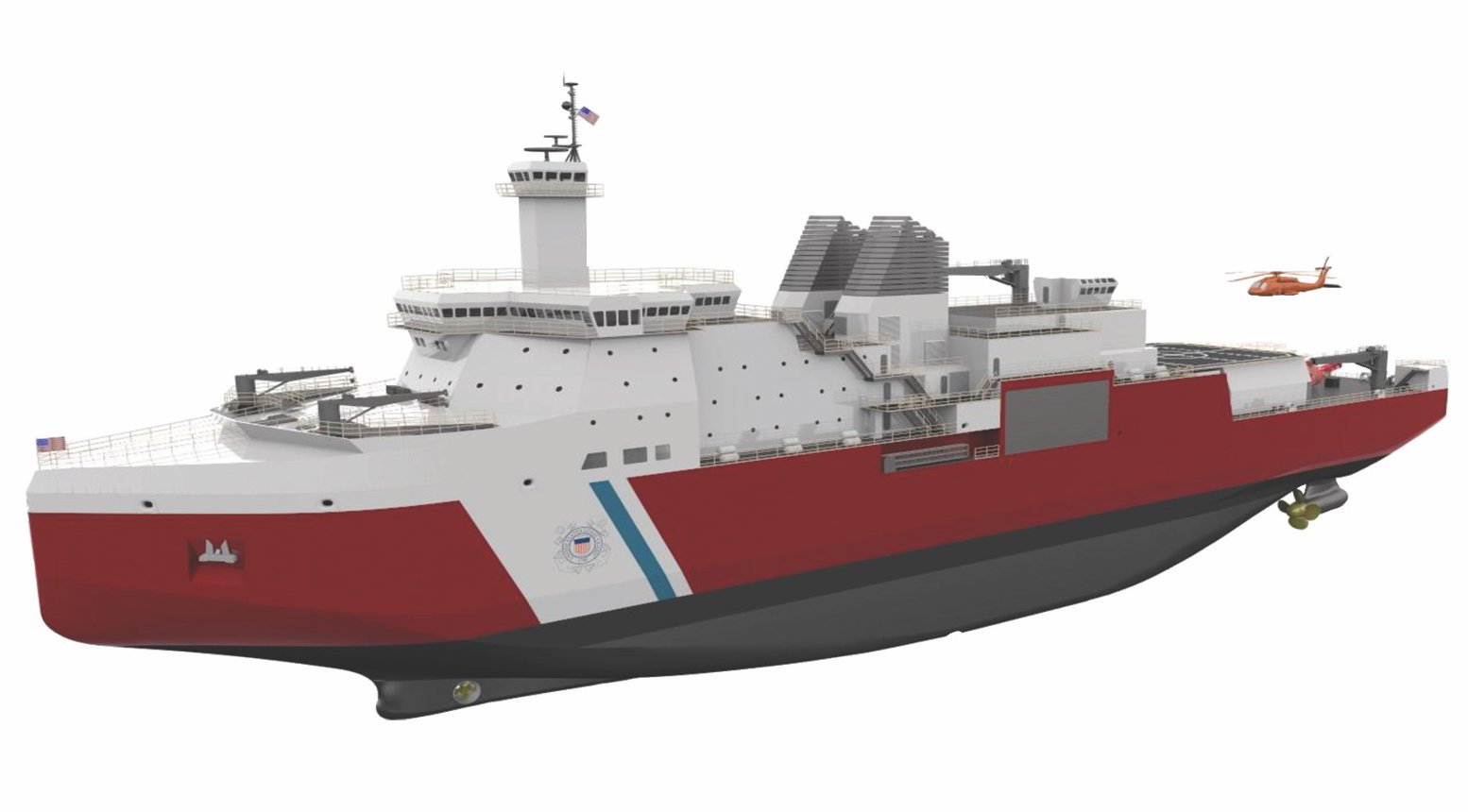
CRS: “Coast Guard Polar Security Cutter (Polar Icebreaker) Program: Background and Issues for Congress”/ Plus a Note on Great Lakes Icebreaker Procurement

The Congressional Research Service his issued a revised “Coast Guard Polar Security Cutter (Polar Icebreaker) Program: Background and Issues for Congress” updated 9 August 2019.

It includes a short appendix (Appendix E, pp 63-66) on the issue of a potential new Great Lakes icebreaker. The final paragraph of that appendix states:

“An examination of procurement costs for Mackinaw, the National Science Foundation’s ice-capable research ship Sikuliaq, new oceanographic research ships being procured for NOAA, and OPCs suggests that a new Mackinaw-sized heavy Great Lakes icebreaker built in a U.S. shipyard might have a design and construction cost between $175 million and $300 million, depending on its exact capabilities and the acquisition strategy employed. The design portion of the ship’s cost might be reduced if Mackinaw’s design or the design of some other existing icebreaker were to be used as the parent design. Depending on the capabilities and other work load of the shipyard selected to build the ship, the construction time for a new heavy Great Lakes icebreaker might be less than that of a new heavy polar icebreaker.”

If you would like a quick, only slightly out of date (May 2017), summary of world icebreaker fleets, take a look at Fig. B-1, page 40.

“UK Maritime and Coast Guard Agency wants drones for its SAR missions” –Naval News

QinetiQ recently collaborated with MCA for assessing UAV capability for SAR missions (Credit: QinetiQ)

Naval News reports the UK’s Maritime and Coastguard Agency’s (MCA) experimentation with Small Unmanned Air Systems (sUAS).

While the USCG has started using sUAS aboard ship and has been experimenting with shore based larger UAS, it sounds like the UK is looking at a niche, the USCG may not have explored.

“Requirements include ability to search for a missing person or vessel up to 10 km away from shore in low-light, misty and/or windy conditions. According to the tender document, potential uses of the UAV also include pollution assessment and law enforcement support.”

A similar use by the USCG could mean equipping units down to the SAR station level with UAS. The UK has, of course, encountered the same problem the US has in providing a sense and avoid capability for its unmanned system to prevent airspace conflicts between manned and unmanned aircraft.

“The MCA vows to « address and remove the regulatory issues and barriers to allow Beyond Visual Line of Sight (BVLOS) flight in unsegregated and uncontrolled UK airspace.”

The US FAA has deconflicted use of private (hobby) drones by allowing virtually unrestricted use five miles or more beyond airports and at latitudes of no more than 400 feet above ground level. 400 feet might be adequate for this type of small UAS, in that it provides a horizon distance of over 20 miles.

Coast Guard Commander Craig Allen talks about challenges with national security cutter connectivity.

HMAS Success (AOR-304) refuelling probe goes in for a hook-up with the US Coast Guard Cutter USCGC Waesche (WMSL-751) as the Royal Australian Navy Auxilliary Oiler Replenishment Ship conducts a dual RAS (Replenishment at Sea) off the coast of Hawaii during the Sea Phase of Exercise RIMPAC 2014, 19 July 2014. (RAN Photo by Leading Seaman Brenton Freind RAN)

The 8 Aug. 2019 US Naval Institute podcast features Cdr. Craig Allen, currently XO of USCGC Waesche discussing the topic of his winning USNI Coast Guard Essay contest.

Despite the title, connectivity on other Coast Guard platforms was also discussed.

The discussion on cutter connectivity doesn’t actually start until about time 10:05. Earlier in the podcast they talk about the Midshipmen and Cadets Essay Contest (deadline 31 Oct. 2019).

He mentions specifically difficult to share UAS data and images. Even so it sounds like the most significant difficulty is that operational data is crowding out administrative data that now can no longer be done offline. 

Sounds like there are three paths that might be pursued that might ease the situation.

First of course is to increase band width, but if that were easy I presume it would have already been done.

There was not discussion of tactical data links, like Link 16, but this is one way to a common shared tactical picture. Reportedly Link16 “supports the exchange of text messages, imagery data and provides two channels of digital voice (2.4 kbit/s and/or 16 kbit/s in any combination).” I am pretty sure the NSC has Link 16, but most Coast Guard units including Webber class, aircraft, and District and Area Commands do not. Moving the tactical information to data links could free bandwidth for administrative tasks. In addition if we ever want our district and area commands to be able to call on DOD assets to respond to a terrorist attack, having access to data link could make it a lot easier.

Third, it sounds like we may have shot ourselves in the foot by eliminating previously acceptable ways to handle administrative matters. Sounds like we are forcing operational units to make it easy for administrative support units, instead of the other way around, as it should be. The extreme measures he describes as required to get the job done should be an embarrassment to the Coast Guard. The administrative system worked before internet. It can work without it. There are ways around these problems.