“Sea Serpent ASW system successfully used by US Navy” –Navy Recognition

Sea Serpent system deployed from a boat (MIND photo)

Navy Recognition reports,

“On September 27, 2022, MIND Technologies Inc., a Texas/U.S.-based company providing underwater research solutions, announced the successful demonstration of its Sea Serpent ASW system during the U.S. Navy’s Coastal Trident 2022 exercise.”

The Sea Serpent system is described by Mind Technologies as,

  • “…based on COTS Seismic Arrays, applicable for Anti-Submarine Warfare (ASW), Maritime Domain Awareness (MDA), and Waterside Security (WSS) applications.
  • “…designed for rapid deployment from USV platforms or as a ‘clip-on’ capability to existing light- and medium-weight Coast Guard (emphasis appkied–Chuck) or Naval vessels
  • “…modular and scalable, with lengths from 50 m to over 12,000 m acoustic aperture available
  • “Processing uses a scalable, app-based architecture and includes multiple beamforming options,  as well as broadband, narrowband/LOFAR, and DEMON processing
  • “Other apps will include Automatic Detection and Tracking (ADT) and Target Motion Analysis (TMA)
  • “The architecture is fully open to allow third-party/government processing and supports private cloud operation for distributed tracking, multi-static processing, and data fusion.”

All the reports I have seen were based on the company’s news release so we don’t have an independent evaluation of its success.

An exercise with the United States Coast Guard’s Maritime Security Response Team-West was leveraged to conduct Advanced Naval Technology Exercise experiments with wearable sensors and remote physiological monitoring.

Coastal Trident is a series of annual exercises conducted by Naval Surface Warfare Center’s Port Hueneme Division. Apparently the Coast Guard has participated in the exercise in the past. It certainly seems to be something the CG should be interested in.


“The Long Blue Line: LANTAREA’s PATFORSWA Managers—over 15 years of leadership!”

MyCG has a new post that reports on the history of an element of Atlantic Area staff that has been manned by reservists, but it is more than that. It charts the history of Coast Guard efforts in support of Central Command over more than 16 years. It also reports that the Reservists are being releaved by an Active Duty/Civilian staff.

It is an interesting read.

“COAST GUARD Workforce Planning Actions Needed to Address Growing Cyberspace Mission Demands” –GAO

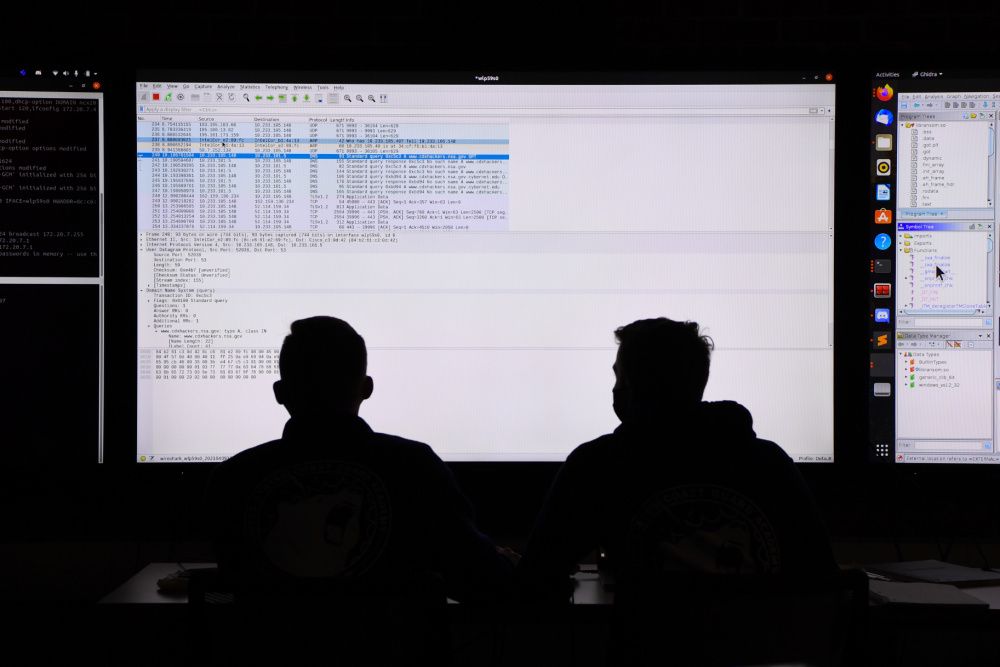
A team from the U.S. Coast Guard Academy participated in the National Security Agency’s 20th annual National Cyber Exercise (NCX), a three-day cyber competition that tests the offensive and defensive cybersecurity skills virtually, April 8-10, 2021. The Coast Guard Academy recently instituted a Cyber Systems degree to meet the needs of the services cyber security strategy of defending cyber space, enabling operations, and protecting infrastructure. (U.S. Coast Guard photo by Petty Officer 2nd Class Hunter Medley)

The GAO has issued a report that finds the Coast Guard is not doing all GAO thinks Coast Guard should be doing, to manage its cyber work force. You can see the one page summary here, it has a nice bar graph. I have reproduced most of the summary below. You can see the entire 40 page report here.

The most striking thing for me, was to see how many Coast Guard people are now employed in cyber. 4507 positions are authorized and 4095 are filled. That is a big chunk of the Coast Guard’s total manpower. It is totally justified considering they are protecting not just the Coast Guard, but the entire maritime transportation system.

A recent US Naval Institute Proceedings article, “Cyber Warfare Is a Navy Mission” discusses why cyber has become so important and also suggests that the Navy needs to take larger role in maritime economic cyber. Apparently the Navy has not been paying much attention to this, but the potential is there, that they may.


What GAO Found

The Coast Guard is increasingly dependent upon its cyberspace workforce to
maintain and protect its information systems and data from threats. As of
September 2021, the Coast Guard determined it had 4,507 authorized
cyberspace workforce positions (i.e., funded positions that could be vacant or
filled), consisting of military and civilian personnel.

Coast Guard guidance calls for the service to use its Manpower Requirements
Determination process to assess and determine necessary staffing levels and
skills to meet mission needs. However, GAO found that the service had not used
this process for a large portion of its cyberspace workforce. For example, as of
February 2022, the Coast Guard had not used this process for three
headquarters units that collectively represent 55 percent of its cyberspace
workforce positions. Until such analysis is completed, the Coast Guard will not
fully understand the resources it requires, including those to protect its
information systems and data from threats.

Of 12 selected recruitment, retention, and training leading practices, the Coast
Guard fully implemented seven, partially implemented three, and did not
implement two. By fully implementing these leading practices, the Coast Guard
could better manage its cyberspace workforce. For example, it has not
developed a strategic workforce plan for its cyberspace workforce. According to
leading recruitment practices, such a plan should include three elements: (1)
strategic direction, (2) supply, demand, and gap analyses, and (3) solution
implementation, along with monitoring the plan’s progress to address all
cyberspace competency and staffing needs. Without having such a plan, the
Coast Guard will likely miss opportunities to recruit for difficult to fill cyberspace
positions.

“U.S. Coast Guard supports Pacific Partnership 2022 in Solomon Islands” –D14

A D14 news release.

News Release

U.S. Coast Guard 14th District Hawaii and the Pacific

U.S. Coast Guard supports Pacific Partnership 2022 in Solomon Islands

123

Editors’ Note: Click on images to download a high-resolution version.

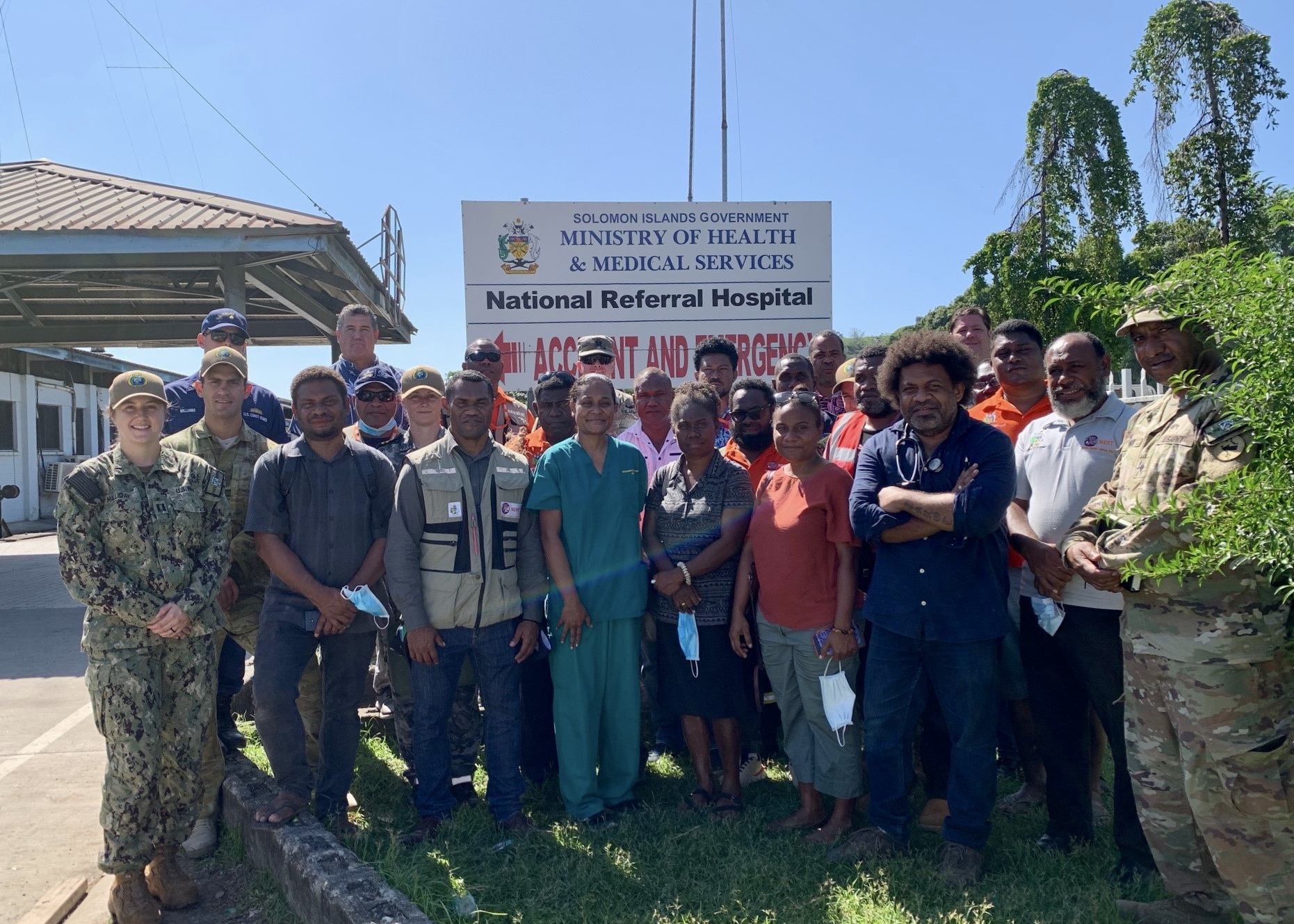
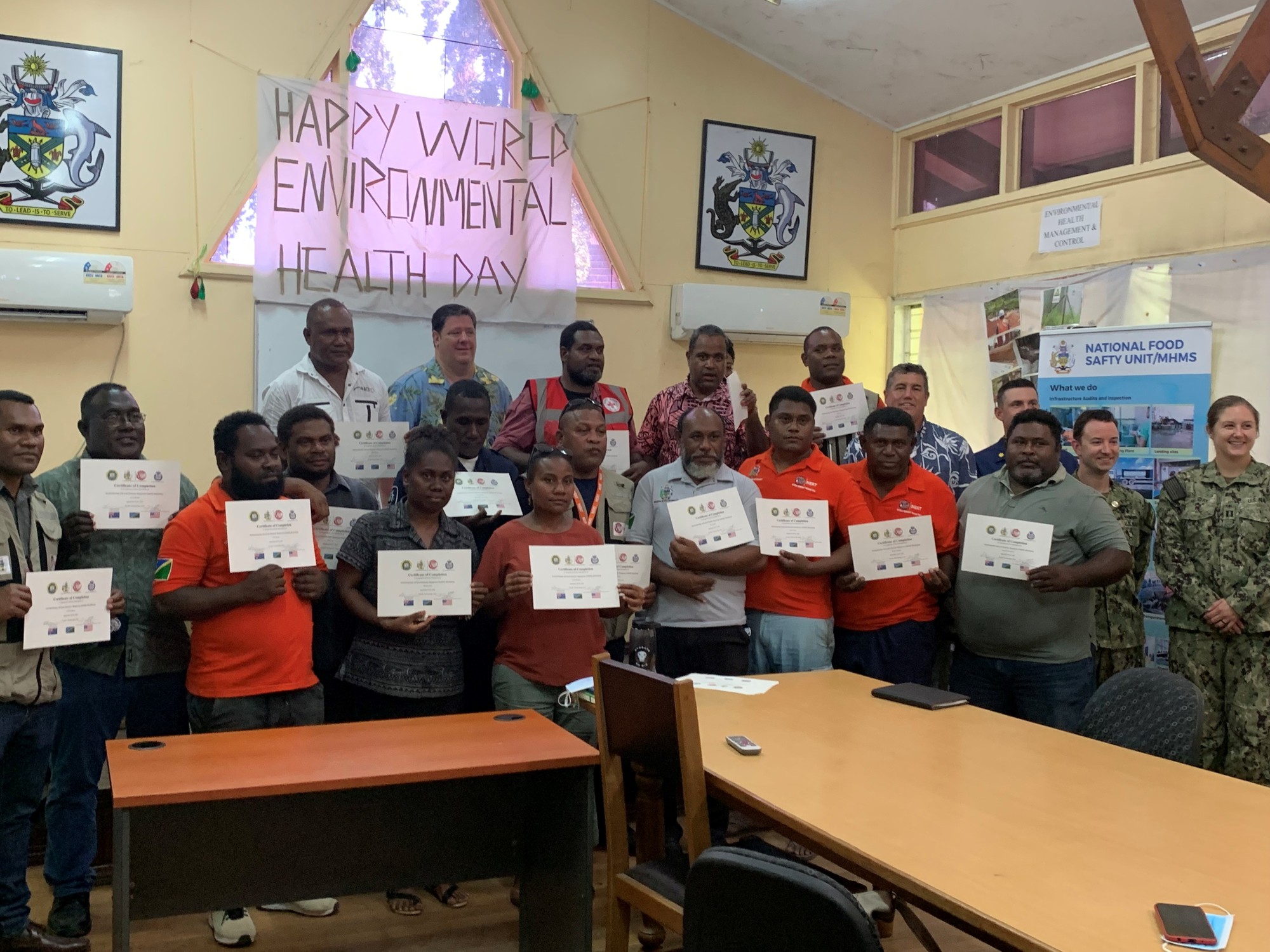
HONIARA, Solomon Islands The Solomon Islands hosted the Pacific Partnership’s Humanitarian Assistance Response Training (HART), a multi-day international humanitarian aid and disaster relief workshop and exercise, in early September.

Coast Guard District Fourteen emergency management response experts partnered with Indo-Pacific Command (INDOPACOM) Center of Excellence in Disaster Management (CFE-DM), USNS Mercy, Solomon Island’s National Disaster Management Office (NDMO), Royal Solomon Islands Police and Fire, and the Solomon Islands National Emergency Response Team (NERT) to corroborate efficient response and coordination for natural disasters, oils spills, and search and rescue (SAR) situations.

The Pacific Partnership originated after the 2004 tsunami in the Indian Ocean and the unprecedented multi-national relief efforts that followed. This incident identified the need for international partnership to prepare for and respond to all traditional natural and man-made disasters as well as non-traditional security threats such as scarcity of critical resources and environmental degradation.

“Pacific Partnership ’22 mission was critical in working with the Solomon Islands National Disaster Management Office to build knowledge, strength and resiliency,” said James Garland, the Coast Guard District Fourteen emergency management expert. “This crucial mission helps each country to strengthen their capabilities and capacity for disaster response and management.” 

Coast Guard District Fourteen subject matter experts shared their technical knowledge on incident command system fundamentals including the command structure utilized to guide and prepare nations and government agencies for efficient incident responses. Coast Guard members also provided an international and joint rescue coordination brief regarding search and rescue (SAR) capabilities in Oceania. The workshop also included discussions on foreign military aid in disaster response, coordination mechanisms to maximize inclusivity, and multi-national roles in humanitarian assistance.

Pacific Partnership is a U.S. Pacific Fleet led mission furthering regional resiliency, interoperability, and security with various partner nations in SE Asia and Oceania. The U.S. Coast Guard looks forward to a continued working relationship and future engagement opportunities with Solomon Island agency partners.

For more U.S. Coast Guard Hawaii Pacific news, visit us on DVIDS or subscribe. You can also follow us on Facebook at @USCGHawaiiPacific, Instagram at @uscghawaiipacific, and Twitter @USCGHawaiiPac.

“Coast Guard ready for Hurricane Ian” –D7

Yahoo News

News Release from District 7 (HQ Miami).

Coast Guard ready for Hurricane Ian

News Release

U.S. Coast Guard 7th District Southeast

Coast Guard ready for Hurricane Ian

Editor’s Note: Click on images to download high-resolution version.

MIAMI — Crews across the Seventh Coast Guard District are prepared to support the State of Florida’s rescue, response and recovery needs following Hurricane Ian’s anticipated arrival, Tuesday.

Hurricane Ian is projected to make landfall as a Category 4 storm with winds estimated to reach between 130 and 156 miles per hour. Additional severe weather risks include storm surge, heavy seas, and rain leading to flooding, and high winds which can cause tornadoes.

Since the start of hurricane season in June, Coast Guard units from South Carolina to the Florida Panhandle, Puerto Rico and the U.S. Virgin Islands have been training and preparing to face any storms this season. Incident Management Teams are stood up at District Seven in Miami, Sector St. Petersburg and Sector Key West, with additional Incident Command System elements activated for Sector Miami and Sector Jacksonville.

This past weekend, Rear Adm. Brendan C. McPherson, commander of the Seventh Coast Guard District and director of Homeland Security Task Force – Southeast, visited the islands of Puerto Rico, St. Thomas and St. Croix in the wake of Hurricane Fiona to ensure the local government and Coast Guard units were supported in storm recovery. Today, McPherson conducted a joint press conference with the State of Florida Governor’s Office in Tallahassee to express the Coast Guard is prepared to support Floridians in facing Hurricane Ian.

“The Coast Guard is here and ready to fully support the State of Florida in our shared response to Hurricane Ian,” said Capt. Nicolette Vaughan, chief of prevention for the Seventh Coast Guard District and IMT Area Commander for the Hurricane Ian incident response team. “Our primary focus is to rescue those in distress. Our next focus will be to reopen the ports affected as soon as possible to ensure vital resources and supplies are delivered where they are most needed.”

At the same time, HSTF-SE units are maintaining an active presence in the Caribbean and Florida Straits to prevent and deter irregular, illegal maritime migration, which can prove even more dangerous and deadly during hurricane season. 

To date, District Seven has repositioned and prepositioned hurricane response units across the State of Florida, pre-staged to surge into impacted areas for lifesaving search and rescue resources, port reconstitution teams and any other maritime infrastructure and emergency respond needs the Coast Guard can provide. These include the following:  

  • Aircraft: 21 rotary wing and 9 fixed wing aircraft able to locate and rescue persons in distress.
  • Cutters: 31 multi-mission search and rescue ships, 4 buoy tenders and 3 construction tenders to service aids to navigation.
  • Flood Response Teams: 40 shallow water response teams able to access those stranded by the storm surge and heavy rain.
  • Personnel: Surging in additional support from across the United States to provide resiliency for continuous operations.

Additional coordination with the Coast Guard Atlantic Area Command, the Eighth Coast Guard District, the Department of Homeland Security and the Federal Emergency Management system, along with other federal, state and local departments like the National Oceanic and Atmospheric Association and the Army Corps of Engineers, will ensure continuous hurricane response support to the State of Florida and other impact areas following the storm. Post storm, crews will take to the water, assessing port conditions, identifying safety concerns to protect mariners and restore the maritime commerce and tourism industries that Florida depends upon.

Residents of Georgia and South Carolina are reminded to remain vigilant as Hurricane Ian’s track may cross the Florida Peninsula and continue up the eastern sea

Up-to-date weather information can be found at https://www.weather.gov/.  If you are in an evacuation or flood zone, follow the instructions from local emergency managers, who work closely with federal, state, local, tribal and territorial agencies and partners. They will provide the latest recommendations based on the threat to your community and appropriate safety measures. Visit https://www.ready.gov/hurricanes for more information on how to prepare for hurricane season. 

Para mantenerse actualizado sobre la Huracán Ian en Españoloprima aquí

Updated port conditions for hurricanes and tropical storms can be found at https://homeport.uscg.mil/. For more information about hurricanes and hurricane preparedness, visit NOAA’s and FEMA’s websites where you can find widgets that provide hurricane tracks and other updates. These can be found at www.ready.gov/hurricaneswww.nhc.noaa.gov, and www.fema.gov.  

As a reminder, people in distress should use 911 to request assistance whenever possible, or VHF radio channel 16 for mariners. Social media should not be used to report distress. 

“Media Advisory: First New England-based Fast Response Cutter to arrive in Boston” –D1/Six FRCs Coming to Boston

The 50th fast response cutter, William Chadwick, was delivered to the Coast Guard Aug. 4 2022, in Key West, Florida. It will be homeported in Boston. U.S. Coast Guard photo.

A news release from First District. The big news here is that there will be six FRCs assigned to Boston. Wikipedia had already identified five as going to Boston. (Incidentally the photo in the news release is not of USCGC William Chadwick, it is USCGC Oliver Henry (WPC 1140) arriving in Port Moresby.)

News Release

U.S. Coast Guard 1st District Northeast

Media Advisory: First New England-based Fast Response Cutter to arrive in Boston

U.S Coast Guard conducts port visit in Port Moresby, Papua New Guinea

Editors note: Media interested in attending the ship’s arrival are requested to RSVP with d1publicaffairs@uscg.mil no later than 4 p.m. Wednesday.

BOSTON — Coast Guard Cutter William Chadwick (WPC-1150) is scheduled to arrive Thursday following a transit from Key West, Fla. The newly-built William Chadwick was accepted by the Coast Guard on August 4, and will be the first of six Fast Response Cutters homeported in Boston.

The cutter’s arrival will include a water salute from the Boston Fire Department and air escort by an Air Station Cape Cod, Mass., MH-60 Jayhawk crew. Crew families, and Coast Guard personnel will be providing a pier side welcoming party for their arrival.

WHO: Lt. Cmdr. Tyler Kelley, commanding officer of the William Chadwick, along with the ship’s crew.

WHAT: Arrival of USCGC William Chadwick to Boston

WHEN: Thursday September 29, 2022, at 1:00 p.m. Media are requested to arrive by 12:30 p.m. to clear security and be escorted to the pier

WHERE: Coast Guard Base Boston, 427 Commercial St., Boston, MA 02109

The Sentinel-class fast response cutter (FRC) is designed for multiple missions, including drug and migrant interdiction; ports, waterways and coastal security; fishery patrols; search and rescue; and national defense. The Coast Guard has ordered 65 FRCs to replace the 1980s-era Island-class 110-foot patrol boats. The FRCs feature advanced command, control, communications, computers, intelligence, surveillance and reconnaissance equipment; over the horizon cutter boat deployment to reach vessels of interest; and improved habitability and seakeeping.

The ship’s commissioning ceremony will be held November 10, 2022 at Base Boston.

Born in Dover, New Jersey, the cutter’s namesake was a keeper of the Green Island Lifeboat Station in New Jersey and recipient of the Congressional Gold Lifesaving Medal for his rescue of the crew of the schooner George Taulane on Feb. 3, 1880. Chadwick remained keeper of Green Island Station until his retirement in August 1886.

“U.S. Coast Guard decommissions Bahrain-based USCGC Baranof” –LANTAREA

220926-A-EQ028-1234 MANAMA, Bahrain Seaman Alexander Moyes lowers the Union Jack aboard USCGC Baranof (WPB 1318) during the ship’s decommissioning ceremony in Manama, Bahrain, Sept. 26, 2022. Baranof decommissioned after 34 years of service. (U.S. Army photo by Spc. Frederick Poirier)

A bitter sweet day. End of an era. The last of six Island class cutters assigned to PATFORSWA is now decommissioned. The force has now been reequipped with six Webber class Fast Response Cutters.

News Release

U.S. Coast Guard Atlantic Area

U.S. Coast Guard decommissions Bahrain-based USCGC Baranof

U.S. Coast Guardsmen conduct a decommissioning ceremony for USCGC Baranof (WPB 1318) in Manama, Bahrain, Sept. 26, 2022.

ice Adm. Kevin E. Lunday, commander of Coast Guard Atlantic Area, arrives at the decommissioning ceremony for USCGC Baranof (WPB 1318) in Manama, Bahrain, Sept. 26, 2022. USCGC Baranof (WPB 1318) is moored pierside in Manama, Bahrain, Sept. 26, 2022, prior to its decommissioning.

Editors’ Note: To view more or download high-resolution imagery, click on the photos above.

MANAMA, Bahrain — The USCGC Baranof (WPB 1318) was decommissioned during a ceremony aboard Naval Support Activity Bahrain, Monday.

Vice Adm. Kevin Lunday, commander of U.S. Coast Guard Atlantic Area, presided over the ceremony.

“USCGC Baranof’s exemplary service to our nation is a testament to both the Island-class platform and the crews that have manned Baranof over the past 34 years,” said Lunday. “Whether it was conducting law enforcement and search and rescue in the Caribbean, or deploying to the present-day homeport of Bahrain to support U.S. Central Command, those that have manned Baranof have continually met the needs of America.”

Baranof was commissioned into service on May 20, 1988 at Coast Guard Base Miami Beach in Miami. The 18th of 49 Island-class patrol boats, Baranof received orders to the U.S. Fifth Fleet area of operations in support of Operation Iraqi Freedom in 2002. Shortly after their arrival in Bahrain, Baranof’s crew was underway conducting maritime interdiction operations in the North Arabian Gulf.

Baranof was replaced by the USCGC Clarence Sutphin Jr. (WPC 1147), which arrived at NSA Bahrain on Aug. 23, 2022. As part of the Coast Guard’s fast response cutter program, the service is acquiring 65 Sentinel-class fast response cutters, with six of those assigned to U.S. Coast Guard Patrol Forces Southwest Asia.

PATFORSWA, the Coast Guard’s largest unit outside of the United States, oversees the cutters in Bahrain. The ships are forward deployed to U.S. Fifth Fleet to help ensure maritime security and stability across the Middle East. The 154-foot long vessels feature advanced communications systems, and improved surveillance and reconnaissance equipment.

PATFORSWA, which is operationally attached to Fifth Fleet’s Commander Task Force 55, is composed of six FRCs, shoreside mission support personnel and a maritime engagement team. The unit plays a crucial role in maritime security, maritime infrastructure protection, and regional theater security cooperation. The unit also supports other U.S. Coast Guard deployable specialized forces operating throughout the Middle Eastern region.

Coast Guard Cutter Kimball encounters Russia and People’s Republic of China military naval presence in Bering Sea” –D17

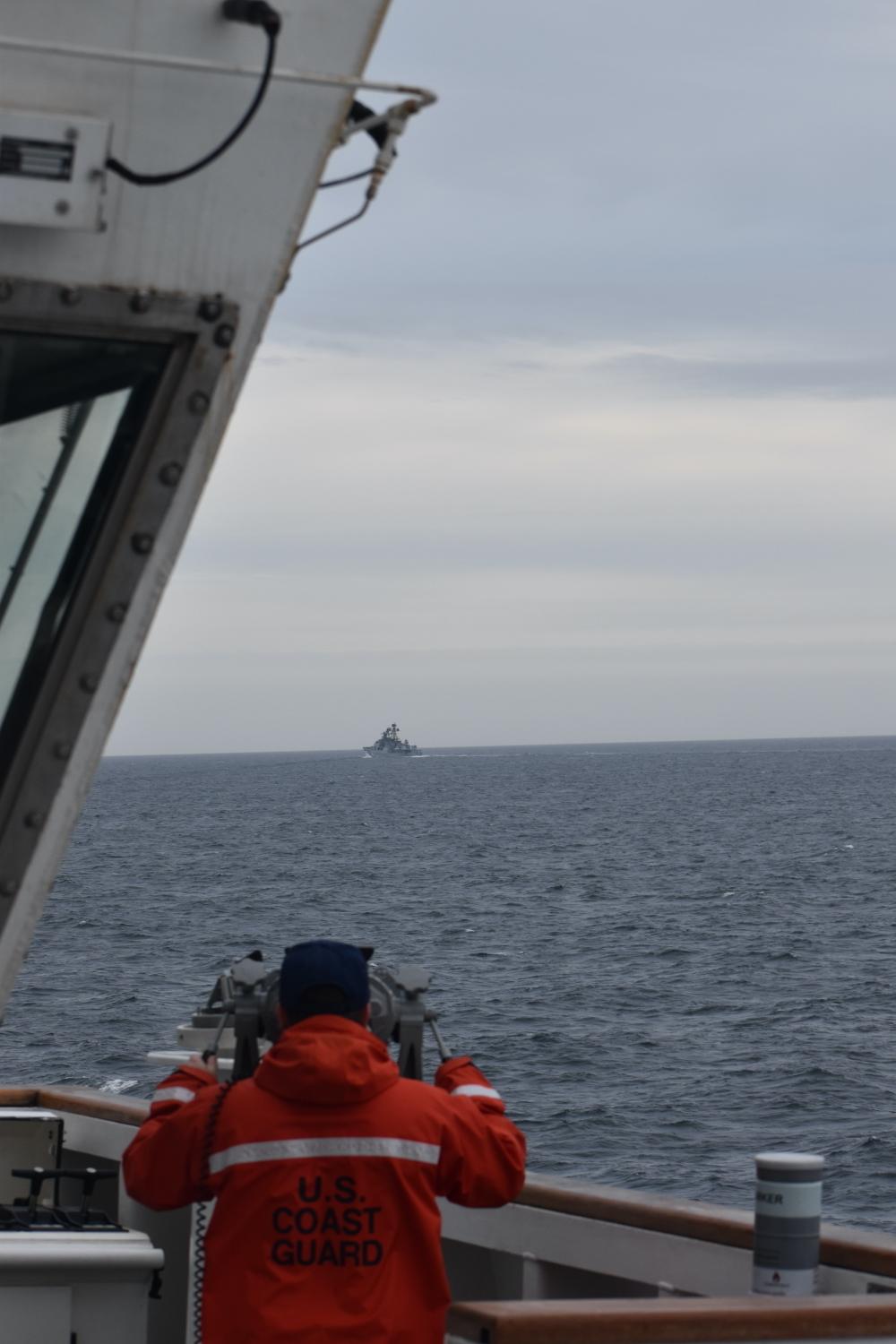
A Coast Guard Cutter Kimball crewmember observing a foreign vessel in the Bering Sea, September 19, 2022. (I believe it is a Russian Udaloy class destroyer–Chuck)
The Coast Guard Cutter Kimball crew on a routine patrol in the Bering Sea encountered a People’s Republic of China Guided Missile Cruiser, Renhai CG 101, sailing approximately 75 nautical miles north of Kiska Island, Alaska.

Below is a District 17 news release (HQ Juneau). The Chinese cruiser referred to is a Type 055, NATO designation Renhai class. The USN considers it a cruiser, but it is considered by many a large destroyer.

News Release

U.S. Coast Guard 17th District Alaska

Coast Guard Cutter Kimball encounters Russia and People’s Republic of China military naval presence in Bering Sea

Editors’ Note: Click on images to download high resolution version.

JUNEAU, Alaska – The Coast Guard Cutter Kimball crew on a routine patrol in the Bering Sea encountered a People’s Republic of China Guided Missile Cruiser, Renhai CG 101, sailing approximately 75 nautical miles north of Kiska Island, Alaska, September 19, 2022.

The Kimball crew later identified two more Chinese naval vessels and four Russian naval vessels, including a Russian Federation Navy destroyer, all in a single formation with the Renhai as a combined surface action group operating in the U.S. Exclusive Economic Zone (EEZ). 

As a result, the Kimball crew is now operating under Operation Frontier Sentinel, a Seventeenth Coast Guard District operation designed to meet presence with presence when strategic competitors operate in and around U.S. waters. The U.S Coast Guard’s presence strengthens the international rules-based order and promotes the conduct of operations in a manner that follows international norms. While the surface action group was temporary in nature, and Kimball observed it disperse, the Kimball will continue to monitor activities in the U.S. EEZ to ensure the safety of U.S. vessels and international commerce in the area. A Coast Guard Air Station Kodiak C-130 Hercules air crew provided support to the Kimball’s Operation Frontier Sentinel activities.    

In September 2021, Coast Guard cutters deployed to the Bering Sea and North Pacific Ocean also encountered Chinese naval vessels, including a surface action group transiting approximately 50 miles off the Aleutian Island chain. 

 “While the formation has operated in accordance with international rules and norms,” said Rear Adm. Nathan Moore, Seventeenth Coast Guard District commander, “we will meet presence-with-presence to ensure there are no disruptions to U.S. interests in the maritime environment around Alaska.”

 Kimball is a 418-foot legend-class national security cutter homeported in Honolulu, Hawaii.

The Air Force’s New Ship Killer (QuickSink) with Torpedo Like Effects

The first Air Force Research Lab video above talks about a new weapon, but it is also recognition of a new threat.

Let’s talk about what is wrong with the scenario in the video, how the Coast Guard could use this new weapon, along with the “Rapid Dragon” delivery system, and why the Coast Guard not only could, but should be the agency to use this weapon against this particular threat.

The Scenario:

NORTHCOM is worried about the cruise missile threat to the continental US, including the possibility of large numbers of missiles launched against priority targets.

“Conventional cruise missiles or hypersonic cruise missiles, low-radar cross-section cruise missiles, cruise missiles from Russia, cruise missiles from China, potentially other countries. Cruise missiles that can be launched from undersea, from 100 miles-plus off the coast. Cruise missiles from on the sea. … Cruise missiles from the air. Cruise missiles from commercial vehicles launched out of a container that can be masked as part of the commercial ship. (emphasis applied–Chuck)

The video shows a ballistic missile being preped for launch from a container. That is possible, but cruise missiles are more likely. In any case, potential actions to stop the launch would be the same.

In the video we see a Navy P-8 Maritime Patrol Aircraft monitoring the activities of a suspicious container ship. Presumably the war has not started since they don’t call for an Air Force fighter to bring in the weapon until the P-8 sees a launcher being elevated for missile launch. This is really too late to call the Air Force. Before the Air Force can get a fighter on scene, the missiles will have been launched. The aircraft monitoring the ship’s activity should be able to immediately initiate countermeasure. The P-8 Poseidon is capable of carrying Anti-Ship Cruise missiles of 725 kg (1,598 lb). It might be able to deploy the QUICKSINK weapon seen in the video which is based on a 2,000 pound bomb. It could certainly deploy a similar weapon based on the 1000 pound bomb. The problem is that, at this stage in the run-up to war, P-8s should be looking for submarines that might also launch cruise missiles, and fighter aircraft don’t have the endurance to loiter on scene waiting for something to happen. They would also be needed to intercept any cruise missiles that are launched.

The Weapon:

In the actual sinking, this was a big bomb used against a small ship, but the key to its effectiveness what where it exploded.

The weapon is discussed here, “Air Force destroys target vessel with ship-killing JDAM.” It clearly is intended to exploit the non-compressibility of water to allow a weapon that would not normally immediately sink a ship, if it hit above the waterline, to break the ship in half.

“In a September 2021 interview with Military.com, Meeks said one of the bomb’s modifications was a redesigned nose plug. This is intended to keep the bomb from veering off in an unintended direction if it hits the water before the target, which Meeks likened to skipping a stone across the surface of a pond.”

There is additional information about the seeker here, including how it works (GPS to get to the general area, then radar, and imaging IR), expected cost (substantially less than $1M for the all up rounds bought in quantity), and range (15 miles, potentially more with range extending wing kits).

As I have pointed out numerous times, no other non-nuclear weapon equals a modern torpedo’s ability to sink a ship. Apparently the Air Force agreed and decided to develop a weapon that would kill a ship in the same way a modern torpedo does, by detonating under water, preferably below the keel, rather than by directly hitting the target above the waterline. Looking at the videos, it appears the bomb enters the water, almost vertically, close to the port side. We see the familiar lift of the center section as we have seen many times when a Mk48 torpedo is used against a surface target, after which the ship breaks in half. For comparison, here is a destroyer hit by a Mk48, and a Mk48 torpedo’s warhead contains far less explosive than a 2000 pound bomb.

The Launch Platforms:

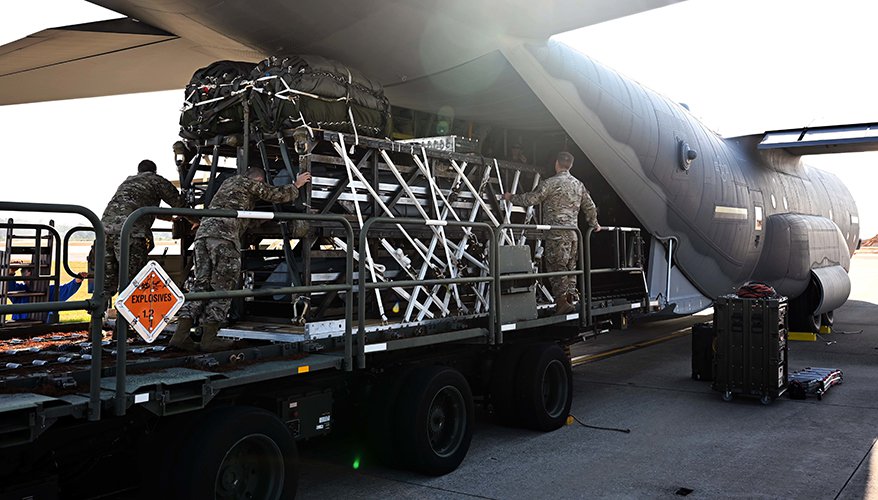
The weapon can be used on a wide variety combat aircraft. The video shows and F-35 and the actual test was done with an F-15, but there is no reason this could not In fact be dropped from a Coast Guard fixed wing using the “Rapid Dragon” concept.

Rapid Dragon hardware being loaded on a C-130. USAF photo.

Why Coast Guard?:

It is not that the Coast Guard will necessarily be the only ones doing this mission, but the Coast Guard does seem to be particularly well suited for the purpose.

If we are to keep watch on vessels off the US coast in the run up to war, you want aircraft with long endurance. You want excellent communications. You want good electro optics so that you can watch what is happening on a ship from outside the range of shoulder launched air defense systems (MANPAD). You get all that with Coast Guard fixed wing aircraft equipped with the Minotaur system. Using Air Force’s QUICKSINK modified JDAM from the Rapid Dragon launcher means we can have a single unit that can remain on station for an extended period, observe the actions of target of interest, communicate effectively, and if necessary promptly eliminate a threat while freeing other assets like the P-8 and fighters to do jobs only they can do.

It would not be necessary for the Coast Guard to store the weapons or arm the aircraft if a agreement could be reached allowing DOD facilities to load the Rapid Dragon and weapons. Actually targeting would be done by DOD assets anyway. It appears this mission could be performed, even to our smallest fixed wing, the HC-144.

Is it doable?:

A recent report suggests that it is. Lt. Gen. James Slife, who leads Air Force Special Operations Command said, “It doesn’t require any aircraft modifications, it doesn’t require any special aircrew training.”

Might be of interest to compare the amount of ordanance used in this SINKEX. It should be recognized that this retired USN frigate was probably a larger, more resilient target than the one used in the “QUICKSINK” demonstration, but I suspect, if QUICKSINK had been used agains the frigate, the results would have been the same, though it probably would have taken the two halves of the ship longer to sink.

What is an Ideal Coast Guard Military Readiness Mission? We Provide the Truck and Driver, Navy Provides the Load

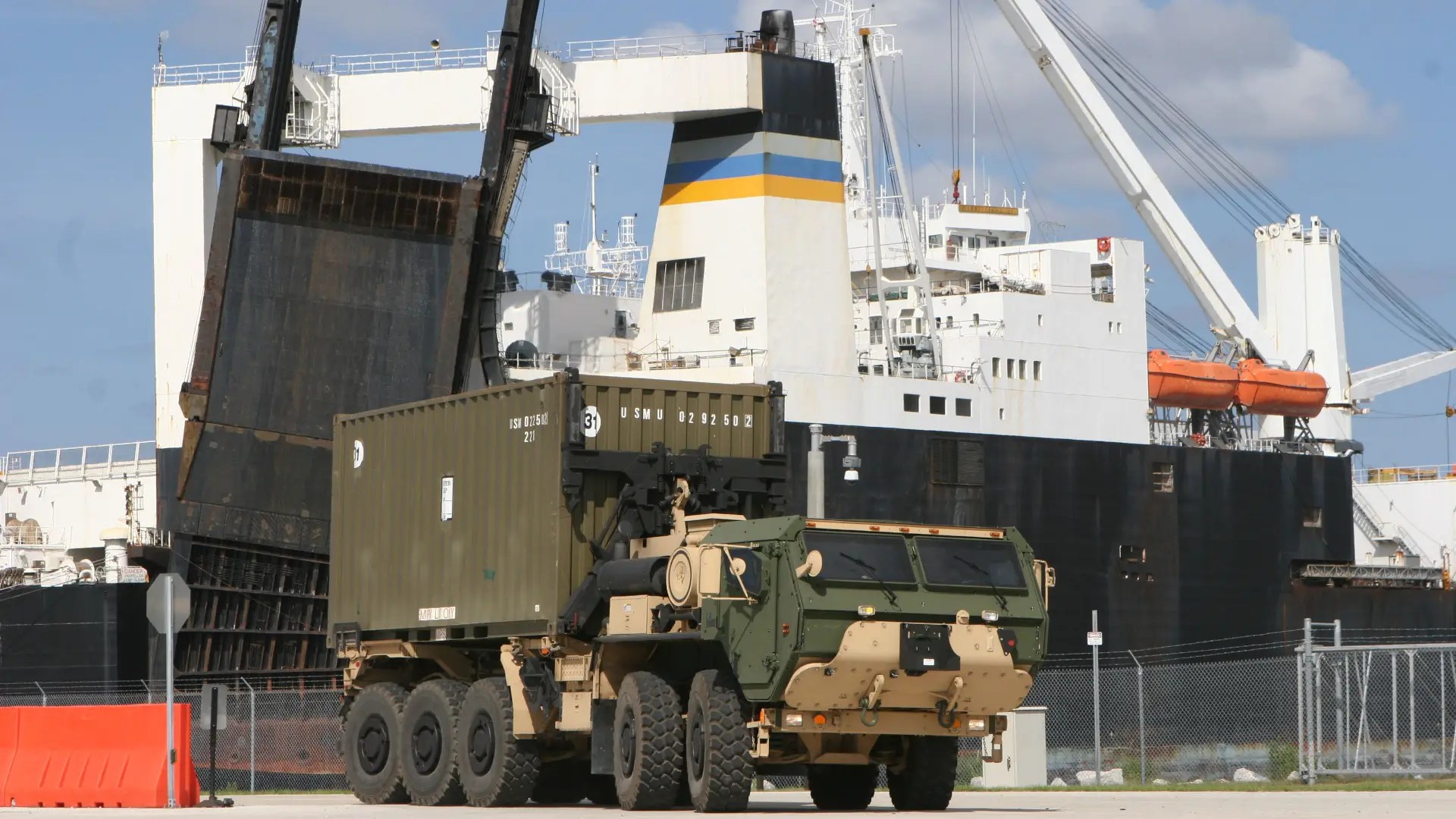
A US Marine Corps Logistics Vehicle System Replacement truck carrying a standard shipping container with a Navy logistics vessel in the background. The Navy is now working on a project to develop a containerized electronic warfare and electronic intelligence system that will work on various naval, air, and ground platforms. USMC / Lance Cpl. Shawn Valosin

The US Coast Guard has had a long history of participation in almost every armed conflict the US Navy has engaged in. But there has always been a tension between peacetime economy and effectiveness and readiness for war.

Some military systems are essential for our peacetime missions, like minimal deck guns or muti-mode radars, we would probably have them, even if we had no wartime missions.

Some military equipment we would be unlikely to have, if we had no military missions, can enhance performance of peacetime missions, like data links and electronic warfare systems. These systems are welcome.

Then there are systems that would enhance our wartime effectiveness that have little or no utility in peacetime. If they require significant training and maintenance time, they can adversely effective peacetime economy and effectiveness. There is an argument to be made that these still offer good return on investment compared with making a similar investment in DOD assets, but diverting DHS assets to support DOD missions can be a hard sell.

Ideally, we would want Coast Guard assets to do their peacetime missions without having to think about wartime missions until mobilization, but when needed, DOD would quickly and easily add capabilities and trained operating personnel.

That is not always possible, but in some cases we might be able to come close to that.

The Danes showed how to make modular naval weapon and sensor systems with their SanFlex system. Now we regularly see announcement of some new modular system. Here, here, here, here, here, here, here, here, and  here.

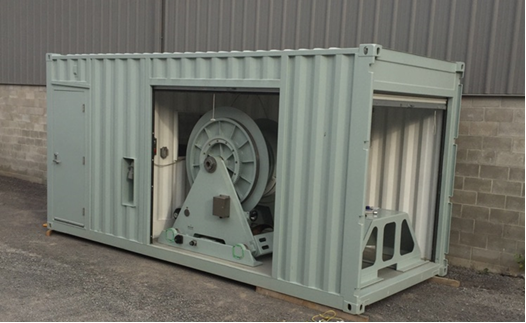
TRAPS containerized active/passive towed array from GeoSpectrum Technologies.

Towed sonars can be containerized, here, here, and here.

I even proposed a containerized weapon system.

What I think we need, after determining the most appropriate mission set for Coast Guard units is a determination of what:

  • must be permanently installed and operated by Coast Guard personnel at all times,
  • what can be quickly installed and operated in the event of a crisis, and
  • what can be added in the form of modular equipment maintained by the Navy and to be operated by Navy Reserve personnel upon mobilization.

A primary example of the latter would be an ASW helicopter. Unmanned systems also look like likely candidates for systems that could be quickly added to Coast Guard vessels.

Unmanned mine hunting and destruction equipment might be based on Coast Guard buoy tenders to allow them to look for mines in US waters, including those around Alaska, Hawaii, Guam and Saipan. In fact the Navy is making some extra LCS Mine CounterMeasures (MCM) for ships of opportunity.

If the Navy wanted Coast Guard cutters to augment Navy ASW forces, a likely mission if we have a war with China, they could become useful units by the addition of a modular version of the Navy’s towed array sonar systems and assignment of experienced ASW personnel and an MH-60R aviation detachment. We would need to have identified where we would store torpedoes, sonobuoys, and other support equipment, but those spaces could have other uses in peacetime.