“Guam’s second Fast Response Cutter arrives in Apra Harbor” –D14

Below is a D14 news release. Congratulations to the crew of the Oliver Henry. 10,620 nautical miles, a drug seizure, and a SAR case enroute. Sounds like quite an adventure. I’m sure CWO Henry would be proud. 

united states coast guard

News Release

U.S. Coast Guard 14th District Hawaii and the Pacific
Contact: 14th District Public Affairs
Office: (808) 535-3230
After Hours: HawaiiPacific@uscg.mil
14th District online newsroom

Guam’s second Fast Response Cutter arrives in Apra Harbor

USCGC Oliver HenryUSCGC Oliver HenryUSCGC Oliver Henry

Editors’ Note: Click on images to download a high-resolution version.

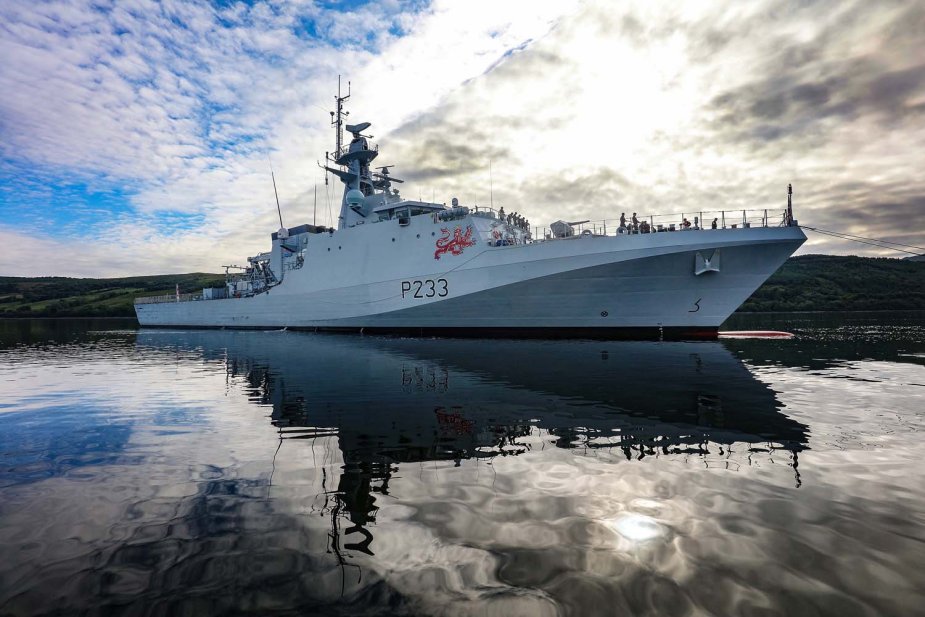
SANTA RITA, Guam — The Coast Guard Cutter Oliver Henry (WPC 1140) arrived at its new homeport in Santa Rita, Guam on Monday, following a 10,620 nautical mile journey from Florida.

During the voyage to its new homeport the crew of the Oliver Henry participated in drug interdiction operations in the Eastern Pacific while also assisting in a search for an overdue fishing vessel off Saipan.

“I am extremely proud of the crew, who did an exceptional job preparing and sailing the cutter nearly 11,000 nautical miles from Key West, Florida, to Santa Rita, Guam, during the global COVID-19 pandemic,” said Lt. John Hamel, the Oliver Henry’s Commanding Officer. “Not only did we deliver the highly capable Fast Response Cutter to our new operational area in the Western Pacific but we also conducted operations while transiting the Eastern Pacific, seizing a cocaine shipment worth $26.7M in support of the United States Southern Command’s Operation Martillo.”

The Oliver Henry is the second of three scheduled Fast Response Cutters (FRC) to be stationed in Guam. The FRCs are replacing the 30-year old 110-foot Island Class Patrol Boats and are equipped with advanced command, control, communications, computers, intelligence, surveillance, and reconnaissance systems and boast greater range and endurance.

Like the Island Class Patrol Boats before them the FRC’s are designed as multi-mission platforms ranging from maritime law enforcement to search and rescue. The new cutters represent the Coast Guard’s commitment to modernizing service assets to address the increasingly complex global Maritime Transportation System.

“Oliver Henry will significantly increase the capabilities of the Coast Guard throughout the region,” said Capt. Christopher Chase, commander, Coast Guard Sector Guam. “I am excited to welcome the crew of the Oliver Henry home and look forward to them conducting operations with our partners in the near future.”

The cutter is named after Oliver T. Henry, Jr., an African American Coast Guardsman who enlisted in 1940 and was the first to break the color barrier of a then-segregated Service. During World War II, Henry served under Lt. Cmdr. Carlton Skinner who later became the first civilian Governor of Guam and played a critical role in developing the Organic Act in 1950. Henry blazed a trail for minorities in the U.S. military as he climbed from enlisted ranks while serving on 10 different Coast Guard cutters, finally retiring as a Chief Warrant Officer in 1966.

Each FRC has a standard 24-person crew. This will bring over 70 new Coast Guard members to Guam, along with a projected 100 family members. In addition to the crews of the three ships additional Coast Guard support members and their families will also be in Guam.

“Coast Guard college student pre-commissioning program offers opportunities for future leaders” –News Release

Just passing this along for any who might be interested or who know someone who might be:


united states coast guard

News Release

U.S. Coast Guard 14th District Hawaii and the Pacific
Contact: 14th District Public Affairs
Office: (808) 535-3230
After Hours: HawaiiPacific@uscg.mil
14th District online newsroom

Coast Guard college student pre-commissioning program offers opportunities for future leaders

CSPI 

Editors’ Note: Click on images to download a high-resolution version.

In today’s modern world, it’s not enough to just have a college degree; every year, the number of formally educated workers is growing.

Students all over the country are looking for ways to beef up their resumes and set themselves apart from their peers. The college student pre-commissioning program (CSPI) combines military work experience with education opportunities provided through the United States Coast Guard for students attending college.

The CSPI scholarship is designed for college juniors and seniors who demonstrate superior academic and leadership capabilities. Students who are accepted into the program are enlisted into the U.S. Coast Guard, complete basic training during the summer, and receive full funding to include payment of tuition, fees, books, a full-time Coast Guard salary as an E-3, housing allowance, and medical benefits.

“I discovered the CSPI program by researching the different military opportunities that pay for college,” said Heather Slaninka, a former marine science technician in the Coast Guard and a senior at the University of Hawaii enrolled in the CSPI program. “I was drawn to the Coast Guard over any other branch because it is the only branch that deals with environmental response, a field I have always wanted to work in since I was a little girl.”

To take part in the program, students must be enrolled in a full-time bachelor’s degree program at a minority serving accredited college or university; a historically Black college or university, a Hispanic serving institute, a tribal college or university. Locally, the University of Hawaii at Manoa, Hilo, and West Oahu have CSPI opportunities.

While in school, officer trainees report to their local recruiting office where they complete a minimum of 16 hours per month of Coast Guard duty. After finishing their junior year of school, CSPI students attend a three-week leadership training course in New London, Connecticut, followed by a full-time summer as active duty training at a new unit.

“The CSPI Program is beneficial to students’ academic and professional careers,” said Chief Petty Officer Alvan Welch, Recruiting Office Honolulu Recruiter in Charge. “In particular, it allows students to excel academically by not worrying about college’s financial burden and guarantees a job upon graduation.”

After graduating college, officer trainees attend officer candidate school, a 17-week long course in New London. Upon completion, graduates commission as a Coast Guard ensign, and an initial assignment in one of the officer operational specialties: aviation, afloat, prevention or response.

“I’m most looking forward to earning my commission and returning to the fleet as an ensign,” said Jesse Sceppe, a former operations specialist in the Coast Guard and officer trainee currently enrolled in the CSPI program at the University of Hawaii. “Hopefully I’ll be conducting intelligence or prevention missions throughout the Coast Guard.

Both active duty Coast Guard members and civilians are able to apply for the program if they meet the requirements.

The next CSPI application deadline is Dec. 28, 2020, and applicants are encouraged to meet with their recruiter two months prior to the application due date.

To learn more about the CSPI program and other Coast Guard opportunities, contact your local Coast Guard recruiting office or visit gocoastguard.com.

“Our Integrated Naval Expeditionary Combat Force” –Navy.Mil

A discussion of the close coordination between Navy, Marine, and Coast Guard elements within Navy Expeditionary Combat Command (NECC).

“Currently the Coast Guard provides approximately 50 reservists to NECC’s Maritime Expeditionary Security Groups 1 and 2, and Maritime Security Squadrons (MSRON). These Coast Guardsmen deployed with the MSRONs to Djibouti as integrated members of the staff since 2013. The integration in the MESF has been so seamless that the commander of the next MSRON unit deployed to Djibouti will be a Coast Guard officer.”

“2020 Naval & Maritime Photo Contest” –USNI, a Coast Guard Sweep

The Eagle and the Alidade, by LCDR Ian Starr, USCG, A bald eagle catches its breath on the bridge wing of the USCGC Alex Haley (WMEC-39) during operations off the Aleutian Islands on 19 March 2020.

The US Naval Institute reports the results of their annual photo contest. This year, Coast Guard photographers and/or subjects took first, second, and third place and were also well represented among the “Honorable Mentions.”

“Bangladesh, U.S. and regional organizations discuss shared maritime domain awareness goals” –IndoPacificDefenseForum

A report from IndoPacificDefenseForum about an aspect of the CARAT exercise with Bangladesh, with emphasis on Maritime Domain Awareness and Illegal, Unregulated, Unreported fishing.

There is no mention of the Coast Guard, but you can be sure Coast Guardsmen were involved and the vessel, seen in the distance, in the accompanying photo (above) is a former USCG 378, BNS Somudra Avijan, the former USCGC Rush, one of two Hamilton class now serving in the Bangladesh Navy.

“Renew the Coast Guard Greenland Patrol” –USNI

Orthographic projection of Greenland. Credit Connormah via Wikipedia

The US Naval Institute blog has a proposal from Ensign Philip Kiley, U.S. Coast Guard Reserve that the Coast Guard reestablish a “Greenland Patrol.” This seems to have been prompted by the recent deployments of WMECs Tahoma and Campbell to participate in Canadian sponsored Exercise Nanook.

I agree Greenland is strategically important. I also believe that if we build three heavy and three medium icebreakers, we will have one or two of the medium icebreakers on the Atlantic side, maybe all three. Its just that a Greenland Patrol, as discussed, is not an adequate rationale. At least, the thesis is not adequately developed to support the proposal.

What would the Coast Guard do that the Danes are not already doing?

Thetis-class ocean patrol vessel belonging to the Royal Danish Navy. Source: konflikty.pl, Author: Łukasz Golowanow

The Danish Navy already does a “Greenland Patrol” and they may be better equipped to do it than the US Coast Guard. They certainly have more reason to be there. The have seven ice-strengthened patrol ships, four ships of the 368 foot Thetis class and three of the 236 foot Knud Rasmussen class.

P570 Knud Rasmussen. The first of the Danish Navy Knud Rasmussen-class ocean patrol crafts. Commisioned in 2008. Photo from Flemming Sørensen

The US Coast Guard currently has no ice-strengthened patrol ships, and has no plans to build any, unless we consider the proposed medium icebreakers, aka “Arctic Security Cutter.”

When US Coast Guard was doing the Greenland Patrol in WWII, it included ice-strengthened ships with significant armaments, including ultimately Wind class icebreakers with four 5″ guns. The Danish ships are armed with 76mm guns and the ability to add StanFlex modules that might include surface to surface and surface to air missiles.

If the “Arctic Security Cutters” could fit through the St. Lawrence Seaway, they could break ice in the Great Lakes in the winter and support DOD construction in the Arctic during the Summer. Presumably, when the High Latitude study determined that the Coast Guard needed three heavy and three medium icebreakers they had enough missions planned to justify their construction without adding a Greenland patrol.

On the other hand, its entirely possible we still have much to learn from the Danes.

This May Be the Launcher We Need

Scale model of a MK VI patrol boat launching a pair of JAGM missiles. This was displayed on Lockheed Martin’s booth during Sea Air Space 2021 This illustration replaced the original 8/19/2021.

Lockheed has new vertical launchers for JAGM, the missile that is replacing the Hellfire. Presumably it can also use the Hellfire. They seem particularly appropriate for Coast Guard applications, being small enough to mount 16 missiles atop the deckhouse of the Navy’s 85 foot MkVI patrol boat. They have a small foot print and are probably pretty light. They can be mounted in multiples of quad missile launchers; each quad launcher appears to be no more than 2′ x 3′ x 8′ tall. (That is my estimate, but I think if anything they are probably smaller. The missile itself is 7.1″ in diameter and 71″ long. For reference beam of the MkVI is only 20’6″.)

The Hellfire/JASM can successfully engage a large spectrum of potential maritime terrorist threats from small fast highly maneuverable craft (with one hit) to larger ships (assuming multiple hits), helicopters, drones, and some fixed wing aircraft.

There are two naval versions, one for mounting directly on deck and one for mounting below decks with just the muzzles above deck.

These would be an excellent addition to the Webber class being sent to replace the 110s in PATFORSWA. Probably could fit one or two quad launchers forward of the deckhouse on the Webber class on either side of the 25mm Mk38.

Thanks to Malph for brining this to my attention. 

“Coast Guard completes 30 day test of unmanned surface vehicles off Hawaii” –D14

Three of six saildrones getting ready for deployment from Dutch Harbor, AK, on the 2019 Arctic mission. Photo Credit: Saildrone, Inc.

Below is a 14th District news release discussing a recent month long experiment with using unmanned surface systems for maritime domain awareness (MDA), particularly in regard to Illegal, Unregulated, Unreported (IUU) fishing. Sounds like they had some success.

“These vessels proved to be very effective across a variety of mission areas. The results of this study will help shape how the Coast Guard, and our partners, incorporate USVs into our future operations.”

united states coast guard

News Release

U.S. Coast Guard 14th District Hawaii and the Pacific
Contact: 14th District Public Affairs
Office: (808) 535-3230
After Hours: HawaiiPacific@uscg.mil
14th District online newsroom

Coast Guard completes 30 day test of unmanned surface vehicles off Hawaii

USV USV Test USV

Editors’ Note: Click on images to download a high-resolution version.

HONOLULU — The Coast Guard completed a 30 day demonstration and evaluation of unmanned surface vehicles (USVs) off Oahu, early November.

The focus of the test was to explore how current and emerging technologies might be used to enhance maritime domain awareness in remote regions. The test also showed ways USVs with assorted sensor capabilities might support the Coast Guard’s many missions around the globe ranging from search and rescue, to law enforcement.

“It’s clear that autonomous technology is a growing industry, and has great potential to enhance Coast Guard operations,” said Cmdr. Blair Sweigart, the demonstration’s director from the Coast Guard Research and Development Center. “Combined with artificial intelligence algorithms, unmanned systems could be a game changer.”

During the test the Coast Guard examined USVs from Saildrone and Spatial Integrated Systems to understand their capabilities and effectiveness. The USVs participated in a variety of operational simulations to detect and alert the Coast Guard to both legitimate and nefarious behavior.

As outlined in the Coast Guard’s Strategic Plan 2018-2022, one of the service’s main goals is to “evaluate emerging technologies, such as unmanned platforms, artificial intelligence, machine learning, network protocols, information storage, and human-machine collaboration for possible use in mission execution.”

These tests represent a commitment to those goals, allowing the Coast Guard to identify how USVs could be used to support search and rescue operations, improve Marine Environmental response, enhance Port Security, aid in the fight against illegal maritime smuggling, and identify vessels engaged in illegal, unreported, and unregulated fishing.

“The demonstration helped us understand what these technologies currently are, and are not, capable of,” said Sweigart. “These vessels proved to be very effective across a variety of mission areas. The results of this study will help shape how the Coast Guard, and our partners, incorporate USVs into our future operations.”

With their long endurance, USVs can provide persistent domain awareness in remote regions of the U.S. Exclusive Economic Zone. By conducting the demonstrations off Hawaii, the teams gained a firsthand understanding of how these assets could help protect the islands, and the critical resources and habitats throughout Oceania.

Many of the Coast Guard’s missions require close coordination with federal, state, local, and international partners and during the tests the Coast Guard worked closely with NOAA, DHS partners, the Navy, and agencies from several partner nations who face similar issues to protect the global maritime and fishing industries.

“JAPAN BOOSTS ASIA’S MARITIME FORCES IN PURSUIT OF REGIONAL SECURITY BALANCE” –Baird Maritime

Baird Maritime reports on Japanese efforts to boost Maritime Security capabilities of nations of South East Asia. Check out their report. Below I provide some pictures and informational links.

The Japanese are assisting in two ways. They are providing older ships from their own inventory, and they are providing very long term, low interest loans for ships built in Japanese shipyards which helps their ship building industry.

The US could do something similar. Yes we have passed along several older cutters, but the US Coast Guard holds on to ships so long, only very limited life remains. We could help our allies, help our shipbuilding industry, and have a more up to date Coast Guard, by limiting our own use of the ships to no more than 30 years and then passing them on to our friends before they get too old to be viable in the hands of navies or coast guards where labor for maintenance is cheaper and new ships prohibitively expensive.

Japan Coast Guard(JCG) Aso class cutter Dewa PL42. 79.0 m (259 ft 2 in) oa. Six similar ships to be built for Vietnam, financed by a 40 year loan. Photo credit: Wikipedia. Sizuru~commonswiki assumed (ba,ed on copyright claims).

According to the report, unlike the Aso class, the Vietnamese ships will have a helo deck.

Rendering of a 94-metre offshore patrol vessel, two of which are slated for the Philippine Coast Guard (Photo: Mitsubishi Shipbuilding)

Japan Coast Guard patrol vessel PL82 Nagura, a sister ship of the former Japan Coast Guard cutter Erimo, now the Malaysian CG cutter KM Pekan.  Entered service 1991, 2,006 tons fl, 87 meter, 91.40 m (299 ft 10 in) oa, Photo from Wikipedia Commons, by Yasu

Japan Coast Guard Cutter Oki PL-1 now the Malaysian Coast Guard cutter KM Arau completed 1989, 1500 tons fl, 87 m (285 ft 5 in)

UNITAS LXI Concludes

USCGC Legare in the foreground. Directly behind her is the Peruvian Italian built Lupo class frigate BAP Bolognesi (FM-57). To the right is a Colombian Fassmer designed 80 meter OPV (see links on photo below). To the left is an Italian built Ecuadorian Esmeraldas class corvette. US Navy photo by Naval Aircrewman 2nd Class Joseph Aubrey

We noted USCGC Legare’s participation in the 61st UNITAS exercise earlier. The exercise concluded Nov. 11. Below is a news release.

I am really surprised that I have not seen any Coast Guard public affairs information about this.

The exercise included a SINKEX. Would really like to know how that went. Did the Legare shot? Visible damage?

There is no specific mention of submarines in the news release, but it did say there were ASW exercises. Several of the participating nations have subs. Bet, somewhere there is a photo of Legare in the cross hairs of a periscope.


UNITAS LXI, the world’s longest running multinational maritime exercise concluded with a closing ceremony in Manta, Ecuador, Nov. 11.

For this year’s iteration of UNITAS, Ecuador served as the host nation, joined by forces from Argentina, Brazil, Chile, Colombia, Dominican Republic, Peru, Uruguay, and the United States.

Partner nations used 13 warships and 12 aircraft to conduct scenario-driven joint and combined operations and training to enhance interoperability, flexibility, and increase maritime, air, and ground-domain awareness in the Western Hemisphere.

Events included: surface tactical maneuvers, a sinking exercise (SINKEX), a live-fire exercise, a replenishment-at-sea, search and rescue exercises, anti-submarine warfare exercises, air defense exercises, amphibious landing, reconnaissance, assault, security, and humanitarian assistance/disaster relief response training.

The at-sea phase culminated in a multi-threat, multi-day scenario that allowed participants to work together, further increasing preparedness for real-world crises that would require a multi-national force response effort.

Additionally, U.S. Marine Corps Forces South hosted partner-nations at Marine Corps Base Camp Lejeune, North Carolina, to integrate with Special Purpose Marine Air-Ground Task Force – Southern Command and conducted further interoperability training for humanitarian assistance and disaster relief situations.

“Congratulations to all participants on the successful execution of UNITAS LXI,” said Brig. Gen. Phillip Frietze, commander, U.S. Marine Corps Forces, South. “Your efforts and performance have contributed to building the capacity and strength of our nations to rise together and achieve common goals.”

Peru will host UNITAS LXII next year to celebrate the bicentennial of the country and the Peruvian navy.

For 61 years, the United States has built upon commonalities and increased capabilities within the Western Hemisphere through exercise UNITAS. Different countries host the exercise each year, facilitating the opportunity to gain experience leading a multinational force through complex joint and combined maritime warfare scenarios and exercises.

UNITAS, Latin for “unity,” was conceived in 1959, first executed in 1960 and has been held every year since. This year marks the 61st iteration of UNITAS. The exercise continues to develop and sustain relationships that improve the capacity of our emerging and enduring partners’ joint and combined maritime forces to achieve common desired effects and fosters friendly cooperation and understanding between participating military forces.

U.S. Naval Forces Southern Command/U.S. 4th Fleet is responsible for U.S. Naval forces in the U.S. Southern Command area of responsibility, including the Caribbean, Central and South America.

For more information and news from U.S. Naval Forces Southern Command & U.S. 4th Fleet, visit http://www.navy.mil/local/cusns/, https://www.facebook.com/NAVSOUS4THFLT, and https://twitter.com/NAVSOUS4THFLT.

201104-N-N3674-011 MANTA, Ecuador (November 4, 2020) Naval ships from Ecuador, Colombia, Peru and the United States conduct naval formations during a training exercise for UNITAS LXI (U.S. Navy photo by Damage Controlman Fireman Isaiah Libunao/Released) The two ships leading are Columbian. The ship in the foreground right is a FASSMER designed 80 meter OPV ARC 7 de Agosto (PZE-47)