RIMPAC Preparation

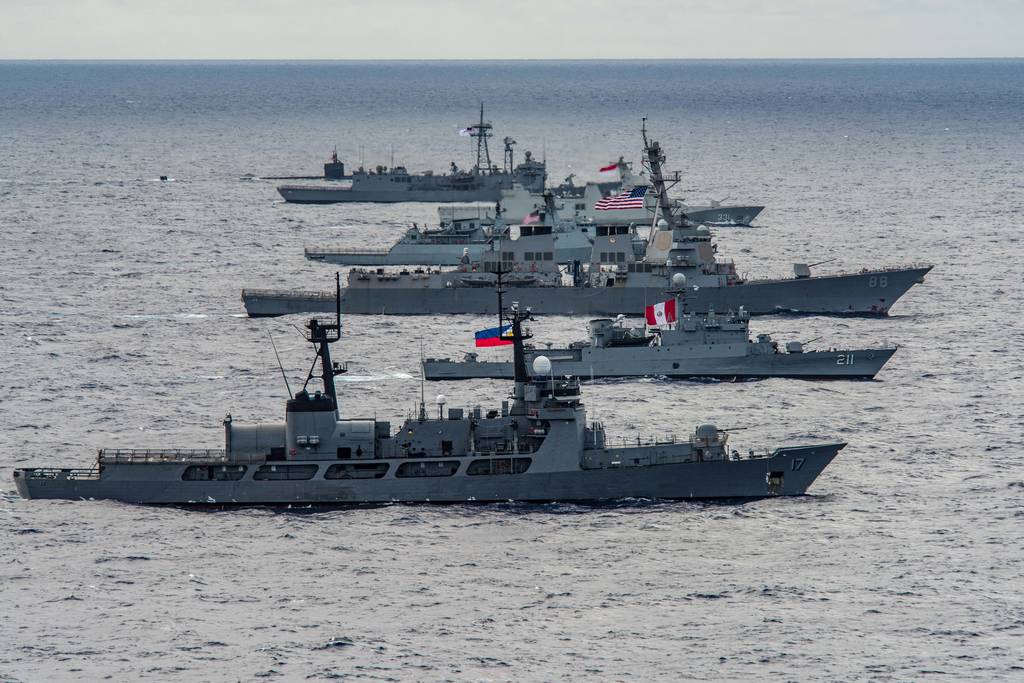
Navy ships assemble to form a multinational fleet for a photo exercise off the coast of Hawaii during the Rim of Pacific (RIMPAC) exercise on July 26, 2018. Twenty-six nations, more than 45 ships and submarines, about 200 aircraft and 25,000 personnel are participating in RIMPAC. (MC3 Dylan Kinee/U.S. Navy)

The biannual RIMPAC exercise is regularly the largest naval exercise in the world, and the Coast Guard is a regular participant. During the last two RIMPACs National Security Cutters did some interesting stuff, including commanding a task force and hosting Navy MH-60R and MH-60S Helicopters.

In addition, the Coast Guard will have a role in securing the safety of participating units.

It is almost certain we will see some former US Coast Guard cutters participating since they are now in the navies or coast guards of Colombia, Sri Lanka, Nigeria, the Philippines, Vietnam, and Bangladesh.

I hold out hope that Coast Guard units may be able to participate in a SINK-EX. even if the target is a former Coast Guard patrol boat, but it’s not likely.

Using the comments section, I will use this post to pass along information on preparation for the exercise. Below are posts that give us some previews of what to expect.

“Media Advisory: U.S. Coast Guard Cutter Harriet Lane is scheduled to return to home port following inaugural Operation Blue Pacific Patrol in Oceania” –CG News

Australian Royal Navy personnel stand in formation on a pier as the U.S. Coast Guard Cutter Harriet Lane (WMEC-903) and crew prepare to moor at HMAS Cairns, Queensland, Australia, March 7, 2024. The Harriet Lane and crew had a five-day port call in Cairns during its inaugural 2024 Operation Blue Pacific patrol in Oceania. (U.S. Coast Guard photo by Petty Officer 2nd Class Ty Robertson)

Below is a Coast Guard News release. The release has some videos including interaction with children in Port Vila, Vanuatu (very cute).

One thing that caught my eye was the use of the plural in this statement, “The Coast Guard plans to use medium endurance cutters (emphasis applied–Chuck) for responsibilities in Hawaiian waters, as well as an increase Coast Guard presence throughout the Indo-Pacific and Oceania.”

Was this just a misstatement by the PAO or does this mean we will see more WMECs in 14th District?

I would also note that Harriet Lane apparently made this patrol without a helicopter. Barbers Point does fly H-65s, but last I heard, they only have three. Did the cutter at least have a Scan Eagle?


April 4, 2024

Media Advisory: U.S. Coast Guard Cutter Harriet Lane is scheduled to return to home port following inaugural Operation Blue Pacific Patrol in Oceania

Editor’s Note:  Media should RSVP by Monday, April 8 by 4 p.m. to Petty Officer 2nd Class Ryan Fisher at ryan.m.fisher@uscg.mil
Imagery of Harriet Lane’s patrol can be found here: Operation Blue Pacific 

Who: U.S. Coast Guard Rear Adm. Michael Day, commander U.S. Coast Guard Fourteenth District, and Cmdr. Nicole Tesoniero, commanding officer U.S. Coast Guard Cutter Harriet Lane (WMEC 903).

What: U.S. Coast Guard Cutter Harriet Lane and crew are expected to return to home port after their inaugural Operation Blue Pacific patrol in Oceania. Media are invited to watch Harriet Lane and crew moor at Pearl Harbor and families be reunited after being away for more than 70 days. Media will be able to hear remarks from Day and Tesoniero regarding Operation Blue Pacific and the increased Coast Guard presence in Oceania.

Where: Joint Base Pearl Harbor-Hickam, 1000 North Rd, Honolulu, Hawaii, 96860

When: Tuesday, April 9 at 10 a.m.  

Harriet Lane and crew partnered alongside allies and several Pacific Island countries from January to April 2024. Among those countries were Samoa, Fiji, Vanuatu, Australia, Papua New Guinea, Nauru and Marshall Islands. The focus was on advising and sharing best practices, along with bolstering our partners’ capabilities to promote and model good maritime governance in the region.

Harriet Lane and crew expanded U.S. Coast Guard presence in Oceania alongside Pacific Island countries exercising bilateral maritime law enforcement agreements with shiprider provisions to strengthen maritime domain awareness and support efforts to combat illegal fishing activities with partners with whom we have existing relationships.

The Harriet Lane is U.S. Coast Guard Pacific Area’s newest Indo-Pacific support cutter and spent more than 15 months in a Service Life Extension Program (SLEP) in Baltimore, Maryland, to prepare for the transition in missions and operations.

The Coast Guard plans to use medium endurance cutters for responsibilities in Hawaiian waters, as well as an increase Coast Guard presence throughout the Indo-Pacific and Oceania. The ship is especially suited for longer-range six-to-eight week joint operational and training patrols in the Pacific, taking pressure off shorter range Hawaii-based cutters more suited to service closer to home port.

Commissioned in 1984, Harriet Lane is a 270-foot medium endurance cutter homeported in Pearl Harbor, Hawaii, to support Coast Guard missions in the Pacific region. The service’s medium endurance cutter fleet supports a variety of Coast Guard missions including search and rescue, law enforcement, maritime defense, and protection of the marine environment.

Canadian Coast Guard Multi-Purpose Vessel Recapitalization

Canadian CG MPV. Credit Aker Arctic.

Below is a press release from Seaspan Shipyards regarding a contract awarded for the Canadian Coast Guard’s Multi-Purpose Vessel program. We talked about these ships earlier. I am going to repeat some of that earlier post here. Much like USCG Juniper class buoy tenders or the Great Lakes Icebreaker Mackinaw, these Canadian ships are made to both tend buoys and break ice. But these ships will be a lot bigger than the Mackinaw and it appears they can also support a helicopter and probably UAS.

CHARACTERISTICS:

  • Displacement: about 8,500 tons
  • Length, overall: 99.9 meters (328′)
  • Beam: 20.3 meters (66.7′)
  • Draft: 6.2 meters (20’4″)
  • Propulsion: diesel-electric; two azimuthing propulsion units
  • Range 12,000 nautical miles

The relatively shallow draft was a design requirement. 

Canadian CG MPV. Credit Aker Arctic.

ICE CLASS: 

These ships will be Canadian Ice Class 4, meaning they will have the capability to maintain a speed of 3 knots through ice 4 feet thick. The Canadian Coast Guard will consider these heavy icebreakers. We don’t have any figures on horsepower, but they probably will have less than 20,000 HP which, in the USCG system, would classify them as light icebreakers.

Compared to the US Coast Guard’s “heavy” Great Lakes icebreaker, Mackinaw (3,500 tons and 73m), these will be more powerful and more than twice as large. These might be a good design for the planned second USCG Great Lakes icebreaker.

IMPLICATIONS FOR THE USCG:

Aside from possible use of the design for Great Lakes icebreaker, these might be pretty close to what the USCG needs for their planned medium icebreakers. Certainly, consultation with Canadian counterparts will sharpen the focus of the US design effort. We might also have reasons to limit beam and/or draft.

I might add that, ships like these could make good companions (tenders/mother ships) for support of distant FRC operations, carrying fuel, supplies, and air assets.


Seaspan Shipyards Progresses to Next Phase of Designing and Building Multi-Purpose Vessels for the Canadian Coast Guard

 March 26, 2024 – North Vancouver, BC – Seaspan Shipyards (Seaspan) has been awarded the Construction Engineering (CE) and Long Lead Items (LLI) contracts for the pre-construction work of the Canadian Coast Guard’s (CCG) first six Multi-Purpose Vessels (MPV).

Following the successful completion of the vessel’s Basic Design review in late 2023, Seaspan was awarded the CE and LLI contracts to complete the design and engineering work and to procure long lead-time material and equipment to ensure readiness to proceed with the construction of the first six ships of the up to 16 vessel fleet.

“This milestone demonstrates the tremendous capabilities in marine design and engineering that have been developed through the National Shipbuilding Strategy.  Our team, along with our partners from coast to coast, are excited to move to the next phase of this program, and ultimately provide the Canadian Coast Guard with the vessels they need to manage and safeguard Canada’s coastlines. A long run of ships like the MPV program enables Seaspan to continue to drive improvement and generate greater efficiencies, while ensuring we have stability for the next generation of shipbuilders, marine engineers and designers and supply chain in Canada,” said John McCarthy, Chief Executive Officer, Seaspan Shipyards.

“The designers and the ship builders of Seaspan Vancouver Shipyard – are playing key roles in taking the Canadian Coast Guard’s new multi-purpose vessels (MPVs) out of the drawing room and into the open ocean. The contracts announced today are an important milestone to getting these ships completed and represent an important investment in North Vancouver. This will secure good jobs while advancing the delivery of the MPVs to significantly expand the operational capacity of our Coast Guard for years to come.” – The Honourable Jonathan Wilkinson, Minister of Energy & Natural Resources and MP for North Vancouver.

The MPVs will be Polar Class 4 vessels, allowing them to carry out multiple missions including icebreaking in moderate ice conditions and assisting in shipping and flood control, search and rescue, environmental response, as well as maintaining Canada’s marine navigation system composed of approximately 17,000 aids to navigation. The new fleet of MPVs will replace the existing fleet of High Endurance Multi-Tasked Vessels and Medium Endurance Multi-Tasked Vessels.

“The Canadian Coast Guard saves lives at sea, maintains waterways open and safe for the movement of goods and services, protects the marine environment and supports Canadian sovereignty and security. The Multi-Purpose Vessels will be key assets for the Canadian Coast Guard’s future fleet, giving our personnel the modern, reliable tools they need to continue their vital work from coast to coast to coast,” said Mike Kelloway, Parliamentary Secretary to the Minister of Fisheries, Oceans and the Canadian Coast Guard.

Seaspan has already gained significant experience designing and building Polar Class vessels including three Offshore Fisheries Science Vessels which are now in service with the Canadian Coast Guard; an Offshore Oceanographic Science Vessel that is currently under construction; and a heavy Polar Icebreaker, the first of its kind to be designed and constructed in Canada in 60 years. Seaspan is preparing to cut steel on the Polar Icebreaker in late 2024 with the recent completion of a prototype block, ensuring that proper processes, procedures, and equipment are in place to build a vessel of this complexity.

QUICK FACTS ABOUT THE MULTI-PURPOSE VESSELS

  • With a displacement of 8,500 tonnes, the Multi-Purpose Vessels will be 99.9 metres long and 20.3 metres wide, and able to accommodate up to 50 personnel.
  • The area of operation for the MPV will include:
    • Year-round operations in Canada’s eastern and western seaboards, within Canada’s Exclusive Economic Zone (EEZ)
    • Year-round operations in the Gulf of St. Lawrence, the St. Lawrence River, and the Great Lakes
    • Seasonal (summer) operations in the western and lower Arctic
  • Under the NSS, Seaspan has become a major economic and job creation engine. According to an economic analysis conducted by Deloitte, Seaspan has contributed $5.7 billion to Canada’s GDP since 2012, while also creating or sustaining more than 7,000 jobs annually.

SOCIAL MEDIA

Twitter: @Seaspan
LinkedIn: Seaspan ULC
Instagram: @SeaspanULC
Facebook: Seaspan

ABOUT SEASPAN

Seaspan, a division of Seaspan ULC, is a leader in Canada’s ship design, engineering, building and ship repair industry. With modern facilities and a dedicated workforce of approximately 3,900 in North Vancouver and Victoria, the company has proven itself to be a trusted and strategic partner on a range of complex projects for both government and the private sector.

“BOLLINGER SHIPYARDS DELIVERS US COAST GUARD CUTTER DAVID DUREN (FRC 1156) TO U.S. COAST GUARD” –Bollinger News Release

USCGC David Duren is the first of three FRCs to be homeported in Astoria, OR

Below is a Bollinger news release.

This delivery is a little more than 16 weeks after the delivery of USCGC Melvin Bell (WPC-1155) on November 16, 2023. There are still nine more on order, and the FY 2025 budget request asks for two more. The Coast Guard has said all 65 on order will be delivered by 2025, but that seems unrealistic. Delivery rates have generally been five per year or less, and it appears there will be only three in 2024. Looks like deliveries will extend into at least 2026.

The next Fast Response Cutter, the future USCGC Florence Finch (WPC-1157) will also go to Astoria and is expected to be delivered June 13, 2024. Sector Columbia River will have to wait a bit for their third FRC since WPC-1158 is expected to go to Kodiak with delivery expected October 24, 2024.

As noted below, deliveries are made at Key West. Typically, it has been about three months from delivery to commissioning of units this class.


LOCKPORT, La., — (March 18, 2024) – Bollinger Shipyards (“Bollinger”) recently delivered the USCGC David Duren to the U.S. Coast Guard in Key West, Florida. This is the 182nd vessel Bollinger has delivered to the U.S. Coast Guard over a 35-year period and the 56th Fast Response Cutter (“FRC”) delivered under the current program.

“We’re incredibly proud to deliver the USCGC David Duren, the first of three Fast Response Cutters to be homeported in Astoria, Oregon,” said Bollinger President & CEO Ben Bordelon. “We’re confident that pound for pound, the quality and capabilities of the FRC platform are unmatched and that this vessel will outperform its mission requirements and expectations in the challenging conditions where it will operate in the Pacific Northwest. Our unique experience building for the Coast Guard is unparalleled and has shown time and time again that we successfully deliver the highest quality vessels on a reliable, aggressive production schedule. We look forward to continuing our historic partnership with the U.S. Coast Guard.”

The USCGC David Duren will be the first of three FRCs to be homeported in Sector Columbia River, which is known as “The Protectors of the Pacific Northwest.” The sector is responsible for coastal safety, security, and environmental protection, as well as protecting and securing vital infrastructure, rescuing mariners in peril at sea, enforcing federal law, maintaining navigable waterways, and responding to all hazards impacting the maritime transportation system along the Oregon coast.

As the U.S. Congress continues to debate Fiscal Year 2024 government funding, the future of the Fast Response Cutter Program remains uncertain. While the House Homeland Security Appropriations Bill included funding for four new FRCs, the Senate bill did not include funding for any new vessels. The prospect for a year-long Continuing Resolution (CR) at last year’s funding level introduces a critical level of uncertainty, as funding levels continue to lag behind the meteoric rise in raw material and input costs. The Coast Guard’s Fiscal Year 2025 Budget to Congress includes procuring two more FRCs to provide increased Coast Guard presence and engagement with allied and partner countries in the Indo-Pacific region. Last year, Adm. Linda Fagan, the Commandant of the U.S. Coast Guard, said, “The Indo-Pacific is clearly a consequential region for America’s future. The United States Indo-Pacific Strategy identifies an expanded role for the U.S. Coast Guard as a top Administration priority as we seek to ensure a region that is free and open. The U.S. Coast Guard will continue its long history of operational presence in the region with additional cutter patrols and deployable specialized forces.”

Each FRC is named for an enlisted Coast Guard hero who distinguished themselves in the line of duty. Boatswain’s Mate Master Chief David N. Duren was one of the most iconic figures in the history of Coast Guard surfmen. Considered perhaps the finest boat driver in the history of the modern Coast Guard, he is remembered by his shipmates and mentees not only for his expertise in seamanship, but also for his leadership and character. Between 1979 and 1983, Duren deployed on search and rescue cases more frequently than any other officer-in-charge and, in one year, executed over 250 cases. During this tour, Duren received two Coast Guard Medals for exceptional heroism, and the Douglas A. Munro Inspirational Leadership Award. Perhaps more remarkable was the fact that the personnel under his watch at Depoe Bay earned a total of 24 medals and awards.

ABOUT THE FAST RESPONSE CUTTER PLATFORM

The FRC is an operational “game changer,” according to senior Coast Guard officials. FRCs are consistently being deployed in support of the full range of missions within the United States Coast Guard and other branches of our Armed Services due to its exceptional performance, expanded operational reach and capabilities, and ability to transform and adapt to the mission. FRCs have conducted operations as far as the Marshall Islands—a 4,400 nautical mile trip from their homeport. Measuring in at 154 feet, FRCs have a flank speed of 28 knots, state of the art C4ISR suite (Command, Control, Communications, Computers, Intelligence, Surveillance, and Reconnaissance), and stern launch and recovery ramp for a 26-foot, over-the-horizon interceptor cutter boat.

ABOUT BOLLINGER SHIPYARDS

Bollinger Shipyards (www.bollingershipyards.com) has a 78-year as a leading designer and builder of high-performance military patrol boats and salvage vessels, research vessels, ocean-going double hull barges, offshore oil field support vessels, tugboats, rigs, lift boats, inland waterways push boats, barges, and other steel and aluminum products from its new construction shipyards as part of the U. S. industrial base. Bollinger has 13 shipyards, all strategically located throughout Louisiana and Mississippi with direct access to the Gulf of Mexico, the Mississippi River and the Intracoastal Waterway. Bollinger is the largest vessel repair company in the Gulf of Mexico region.

“The huge, resource rich territory China will snatch while the West dithers” –The Telegraph

The Telegraph has an opinion piece by retired Royal Navy Commander and former CO of the Ice Patrol Vessel HMS Endurance, Tom Sharpe OBE.

He feels, as I do, that we are headed for conflict over claims to Antarctica. It is after all, the last land area on earth where no nation exercises sovereignty.

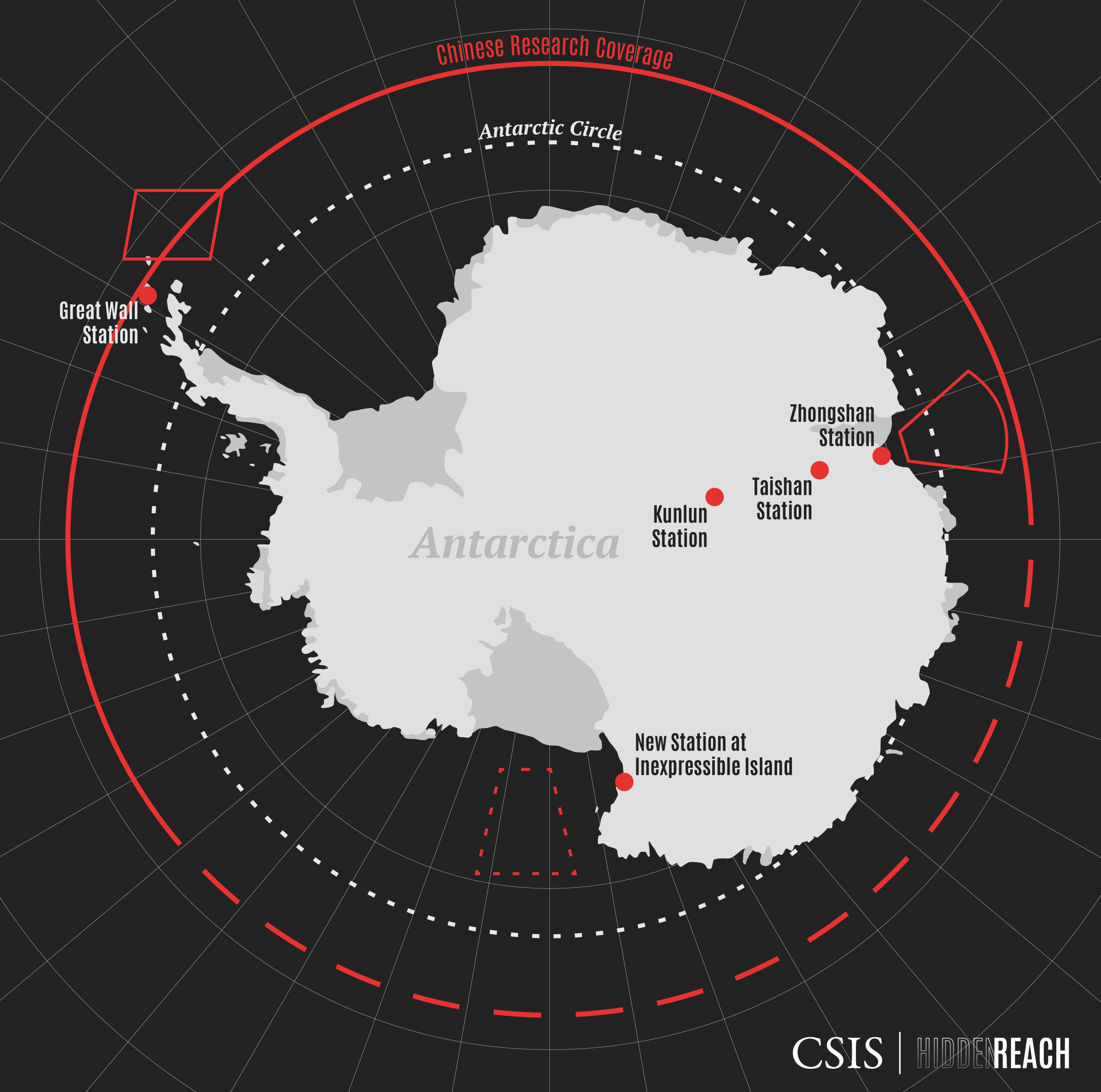
China’s presence in the Antarctic is growing rapidly and, as they have shown in the South China Sea, they may choose not to accept the decisions of international courts.

Adapted from a 2021 Chinese environmental evaluation report submitted to the Secretariat of the Antarctic Treaty. Source CSIS

What this boils down to is that, after courts make their decisions, we may have to fight in Antarctic to make those decisions stick.

We don’t seem to have given much thought to the possibility of combat in and around Antarctica, but I believe it is a real possibility, perhaps not soon, but beginning in 2048 when the Antarctic Treaty comes up for renegotiation. 24 years may seem to be a long way off, but we are building now the assets that will be available in 2048.

By then the rapidly growing Chinese presence in Antarctic, as well as their Navy are likely to be in a very strong position. We are already seeing the Chinese apparently establishing dual use (civilian and military) facilities in Antarctica.

In the interim, we can expect China and perhaps others to try to skirt the rules to strengthen their presence. We need to monitor and challenge any gray zone operations.

Command Structure:

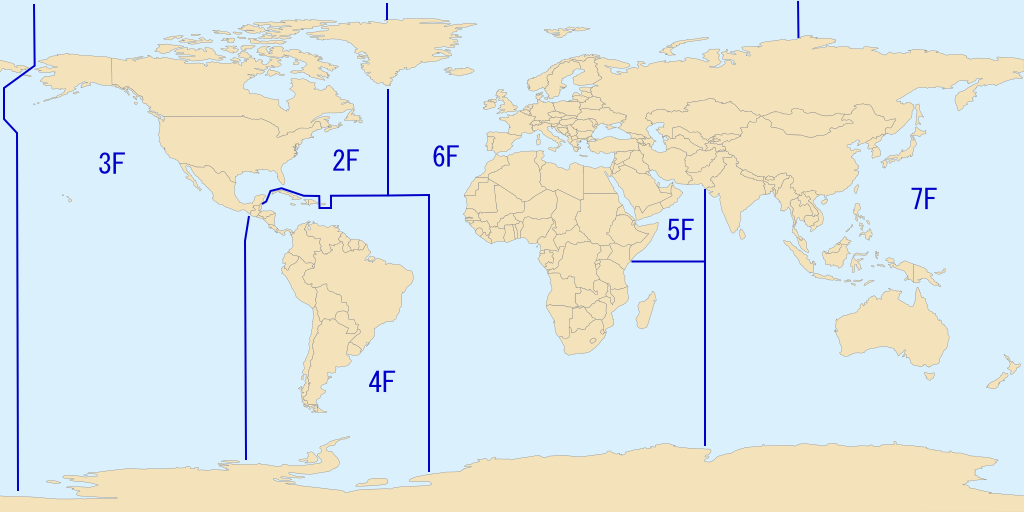
These are the Unified Combatant Commander’s Areas of Responsibility.

There is an obvious reason that Antarctica does not seem to be on anyone’s radar. Looking at who is potentially responsible for operations in the Antarctic, it is a hodgepodge. Various parts of the Continent might fall under SOUTHCOM, AFRICOM, and INDO-PACOM.

US Navy Fleet Organization

3rd Fleet, 4th Fleet, 6th Fleet, and 7th Fleet all have a nominal slice, but none of these commands consider the area their primary concern.

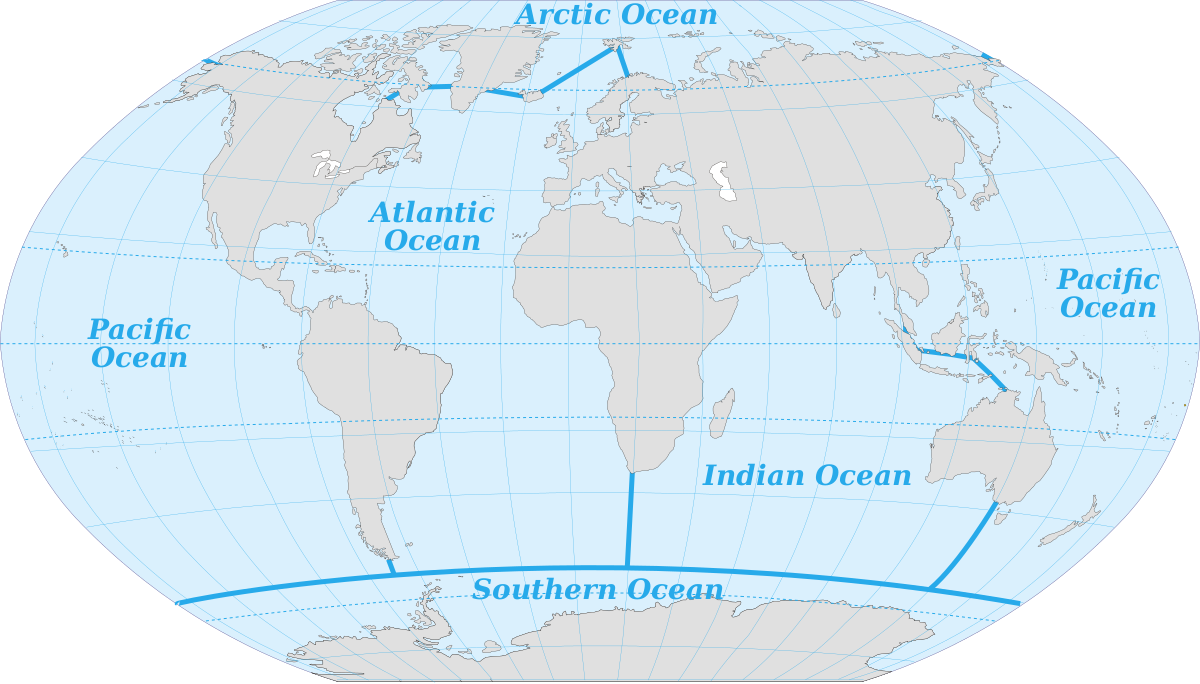
World map of oceans : English version. By Pinpin via Wikipedia.

There is no single national command authority that covers all of Antartica or the Southern Ocean. Really no one is in responsible for the area below 60 degrees South.

It seems likely that in the near term, Southern Ocean fisheries will require some protection. The only nation I have heard of doing fisheries protection in the Southern Ocean outside their own EEZ is New Zealand.

The Coast Guard currently operates the only US polar icebreakers. At some point the Coast Guard may become involved in fisheries protection in the Southern Ocean. If there is conflict in Antarctica, Coast Guard assets will likely be needed to gain access.

Related: 

“DHS Center for Countering Human Trafficking Year-in-Review” –MyCG

A Coast Guard Cutter Campbell law enforcement crew stopped a grossly overloaded, unsafe vessel near Turks and Caicos, May 9, 2022. (U.S. Coast Guard photo by Petty Officer 3rd Class Erik Villa-Rodriguez)

Below is a news release from MyCG regarding a new DHS report. 


March 19, 2024

DHS Center for Countering Human Trafficking Year-in-Review

By DHS Center for Countering Human Trafficking

In FY 2023, the Coast Guard screened 257 unaccompanied children for human trafficking after encountering them during migrant interdictions at sea. The children were then referred to interagency partners as part of our service’s efforts to address human trafficking in collaboration with the U.S. Department of Homeland Security (DHS)

You can learn more about these and similar efforts in the DHS Countering Human Trafficking: Year-in-Review, just released by the DHS Center for Countering Human Trafficking (CCHT). The report is designed to help readers understand DHS’s multifaceted work, and to use the many available resources to support their own counter-trafficking work.

Employees of DHS and its components work every day to end sex trafficking and forced labor through a wide range of efforts, including:

  • Identification and screening for victims of human trafficking
  • Victim protection and assistance
  • Criminal investigations of human trafficking crimes
  • Enforcement of laws related to the importation of goods produced with forced labor and
  • Training, outreach and engagement with law enforcement, government, industry, non-governmental organizations, and the public.

In 2023, approximately 13,000 Coast Guard personnel completed the DHS Blue Campaign Human Trafficking Awareness Training module to ensure they were prepared to identify potential indicators of human trafficking while conducting maritime operations.

Coast Guard Pacific Area went further during its third Forced Labor and Human Trafficking tabletop exercise. During this training, participants honed interagency response to the discovery of forced labor during inspection of a foreign fishing vessel outside of the U.S. Exclusive Economic Zone. The exercise included representatives from the National Oceanic and Atmospheric Administration, Department of State, Department of Justice, and DHS, and DOJ. Lessons learned from this exercise were leveraged to create a curriculum for a first-of-its-kind multinational maritime labor seminar.

Every year, nearly 25 million men, women, and children are trafficked worldwide – including here in the United States. DHS is a global leader in this fight and works with partners at every level to prevent this heinous crime, identify and protect victims, and bring perpetrators to justice.

The DHS Center for Countering Human Trafficking (CCHT) integrates the efforts of 16 Agencies and Offices within DHS that carry out our anti-trafficking mission. These efforts range from criminal investigations, victim assistance, and combating forced labor in exports destined for the United States to external outreach and public education, intelligence, and training.

All Coast Guard members are encouraged to read the report here.

Why the “J-model” C-130s Make Such a Difference

LIMA, PERU, 10.06.2023, Courtesy Photo, USCG District 11
The aircrew of the Coast Guard 2007, an HC-130 based out of U.S. Coast Guard
Air Station Barbers Point, Hawaii, poses for a picture with observers from the Peruvian Navy and Air Force, in Lima Peru, October 2023. During the course of two weeks, Peruvian observers accompanied the USCG aircrew as they conducted overflights of the fishing fleet on the high seas during Operation Southern Shield 2023. (U.S. Coast Guard photo by pilot-in-charge, Lt. Zachary Hunter.) Note the six bladed props that identify the C-130J. 

Below is a news release, “Coast Guard accepts 16th missionized HC-130J into fleet,” from the Acquisitions Directorate (CG-9). There is more here than the announcement of a newly missionized aircraft. The post goes on to talk about the advantages the C-130Js bring to the service, particularly in the Pacific.

The C-130Js provide a 20 percent increase in speed and a 40 percent increase in range over the HC-130H, as well as much improved avionics. The Coast Guard is moving to a fleet of 22 HC-130Js and retiring all their C-130Hs.

The Coast Guard also has 14 HC-27Js and 18 HC-144s all being equipped with Minotaur.

HC-130J Characteristics

  • Length: 97 feet 9 inches
  • Wingspan: 132 feet 7 inches
  • Height: 38 feet 11 inches
  • Maximum Weight: 175,000 pounds
  • Cruise Speed: 320 knots true airspeed
  • Range: 4,900 nautical miles
  • Endurance: 20+ hours

HC-130J Features

  • Standardized Minotaur mission system across all Coast Guard fixed-wing aircraft
  • Real-time tracking and Rescue 21 integration to enhance common operating picture and maritime domain awareness
  • Advanced radar and electro-optical/infrared sensors for search and rescue, law enforcement and intelligence gathering missions; the Coast Guard’s Super Hercules is the first HC-130 aircraft in the world with a 360-degree, belly-mounted, multimode surface search radar
  • Commonality of command, control, communication, computers, cyber, intelligence, surveillance and reconnaissance components and capabilities with those on the Coast Guard’s medium range surveillance aircraft

Minotaur Features

  • Commonality of command, control, communications, computers, cyber, intelligence, surveillance and reconnaissance components and capabilities across all Coast Guard fixed-wing surveillance aircraft
  • Interoperability with multiple Defense and Homeland Security department platforms
  • Real-time tracking and Rescue 21 integration to enhance common operating picture and maritime domain awareness
  • Automatic Dependent Surveillance – Broadcast technology to receive traffic and weather broadcasts and information about other aircraft, including identification, position and altitude
  • Tactical screen replay to review a target’s entire flight in seconds and track the target via its trajectory, even if the target stops broadcasting information or otherwise evades the sensors

The Coast Guard has nine air stations operating fixed wing search aircraft. There are six in the Atlantic Area, which includes the Gulf of Mexico.

  • Cape Cod, MA (C-144)
  • Elizabeth City, NC (C-130, C-27, C-144)
  • Miami, FL (C-144)
  • Clearwater, FL (C-130)
  • Mobile, AL (C-144)
  • Corpus Christi, TX (C-144)

There are only three Coast Guard air stations operating fixed wing search aircraft in the Pacific Area.

  • Sacramento (C-27)
  • Barbers Point, HI (C-130)
  • Kodiak, AK (C-130)

Kodiak and Barbers Point certainly needed the additional range and on-station time that the C-130Js provide.

Barbers Point is the only Coast Guard air station in the 14th District, despite the fact that the 14th District includes 48% of the entire US’s Exclusive Economic Zone (EEZ), and has additional responsibilities to assist the Federated States of Micronesia (FSM), the Republic of the Marshall Islands (RMI), and the Republic of Palau under the Compact of Free Association which together have an EEZ total equal to more than 49% that of the US.


Coast Guard accepts 16th missionized HC-130J into fleet

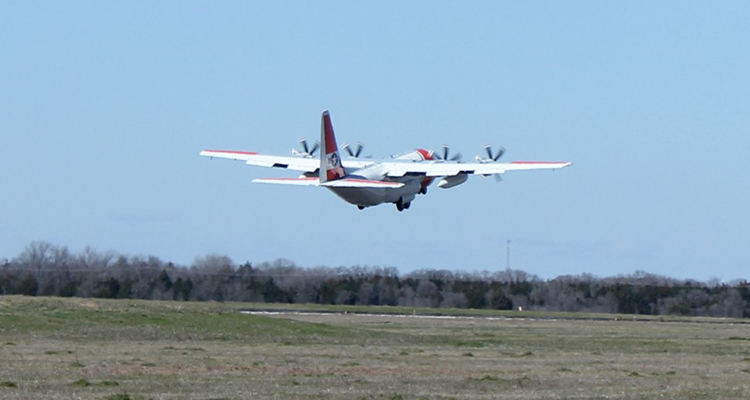
The Coast Guard’s 16th fully missionized HC-130J takes off for its first test flight following the year-long missionization and Block Upgrade 8.1 modification at L3Harris in Waco, Texas. U.S. Coast Guard photo.


The Coast Guard accepted delivery of its 16th fully missionized HC-130J long range surveillance aircraft, CGNR 2016, Feb. 19 following completion of Minotaur mission system integration and Block Upgrade 8.1 installation at L3Harris in Waco, Texas.

The aircraft was delivered to Air Station Elizabeth City in Elizabeth City, North Carolina, returning that air station to its full complement of five HC-130J aircraft. The air station was temporarily operating with four aircraft while an Elizabeth City HC-130J was assigned to Air Station Barbers Point, Hawaii, to complete the transition of that facility to HC-130J operations.

The more advanced engines, six-blade propellors and Minotaur-integrated sensors of the HC-130J enable the Coast Guard to better respond to mariners in peril by improving response times, extending time on scene for search and rescue and law enforcement patrols, and increasing effectiveness and versatility. Regarding the latest air station transition, the improvements are ideally suited for Barbers Point’s vast jurisdiction – 12.2 million square miles of open ocean, atolls and island chains, which make up the Coast Guard’s Fourteenth District.

Three recent natural disasters in Air Station Barbers Point’s area of responsibility have highlighted the value of the improved aircraft, especially the 26% increase in patrol range over the legacy HC-130H.

  • A Barbers Point HC-130J flew 2,300 miles to be the first aircraft on scene after Typhoon Mawar struck Saipan in May 2023, performing overflight assessments and delivering critically needed relief supplies. Over a week, the aircraft flew over 97 flight hours and dispatched 400,000 pounds of cargo and 169 passengers.
  • Barbers Point aircrews responded when wildfires burned thousands of acres in Maui, Hawaii, in August 2023, providing search and rescue and damage assessment along with moving passengers and cargo for disaster relief.
  • Barbers Point HC-130J aircrews answered the call when Tropical Cyclone Lola slammed the island nation of Vanuatu in October 2023, assessing the damage to ports, airports and critical infrastructure. Aircrews also delivered over 80,000 pounds of relief supplies.

The HC-130J and its Minotaur system also play a vital role in identifying and monitoring illegal fishing by providing surveillance and gathering intelligence on suspicious fishing activities. That information is shared with local and national authorities and aids in determining what vessels need to be boarded for inspection.

The service’s Super Hercules aircraft carry out many Coast Guard missions, including search and rescue, drug and migrant interdiction, cargo and personnel transport, and maritime stewardship, as well as providing critical support to Department of Homeland Security partners. The aircraft also can serve as a command and control or surveillance platform capable of identifying and classifying objects and sharing that information with operational forces.

For more information: HC-130J Long Range Surveillance Aircraft Program page and Minotaur Mission System page

“Coast Guard Cutter Alert returns home to Astoria for the last time” / Change of Homeport –News Release

02.02.2024, Crewmembers of the Coast Guard Cutter Alert (WMEC 630) stand behind cocaine bales seized from a drug smuggling vessel in Eastern Pacific waters during the cutter’s last patrol out of its current homeport of Astoria, Oregon, Feb. 7, 2024. The 4,950 kg of cocaine seized is estimated to be valued at more than $143 million. (U.S. Coast Guard photo)

Note, I made an error in my original commentary. USCGC Active is still in commission and homeported in Port Angeles, Washington. I have made corrections to the text. 

Below is a U.S. Coast Guard Pacific Area news release. The news release is significant because it demonstrates that 210s are still doing useful work, despite being almost 55 years old in this particular case.

But the news release also notes that, “… the cutter will shift homeport in June to be stationed in Cape Canaveral, Florida.” After the transfer, Pacific Area will have only three WMECs, USCGC Alex Haley in Kodiak, the newly arrived 270 USCGC Harriet Lane in Hawaii, and USCGC Active in Port Angeles, WA.

When I retired in 1991 PACAREA had ten WHECs and I believe seven WMECs. With Alert’s departure, they will be down to 9 large patrol cutters, 6 NSCs and three MECs.

The first four Offshore Patrol Cutters are expected to be assigned to the Pacific Area, but they have been substantially delayed.

The next two Fast Response Cutters USCGC David Duren (WPC-1156) and USCGC Florence Finch (WPC-1157) will be homeported in Alert’s old homeport of Astoria. I would expect that the first will arrive in Astoria about the same time Alert departs.


Feb. 26, 2024

Coast Guard Cutter Alert returns home to Astoria for the last time

ASTORIA, Ore. – The U.S. Coast Guard Cutter Alert (WMEC 630) and its crew returned to their homeport, Monday, after a 59-day counter-narcotics patrol in the Eastern Pacific Ocean.

This patrol is scheduled to be the cutter’s last patrol out of its current homeport of Astoria, Oregon.

During the patrol, the Alert’s embarked helicopter crew from, the Helicopter Interdiction Tactical Squadron (HITRON), based out of Jacksonville, Florida, sighted a suspected “go-fast” vessel driving on a northerly course and alerted the cutters crew. The crew responded and launched both of its small-boat pursuit teams. Due to the vessel’s refusal to stop when ordered, the HITRON helicopter disabled the engines of the “go-fast” and monitored until the pursuit crew gained control of the vessel. Simultaneously, the second small boat team recovered dozens of bales of cocaine jettisoned into the ocean by the suspected smugglers. The crew then worked tirelessly through the night to haul in and account for all 4,950 kg of cocaine, valued at more than $143 million.

The interdiction is among the Coast Guard’s largest single interdictions in the Eastern Pacific and represents a major blow to the criminal organizations attempting to smuggle illicit narcotics through the maritime domain. Additionally, it serves as the capstone in Alert’s time in Coast Guard Pacific Area, as the cutter will shift homeport in June to be stationed in Cape Canaveral, Florida as part of the larger Coast Guard Force Alignment Initiative.

“The crew worked in the margins, and we won big in the margins,” said Cmdr. Lee Crusius, commanding officer Coast Guard Cutter Alert. “The return on investment from the Coast Guard to the American people continues to be demonstrated by our ability to project capabilities and rule of law within the maritime domain. Day in and day out, the women and men of our service are doing important business, protecting vital international interests from those who wish to subvert order.”

The smuggling of cocaine represents a large threat to not only the health of nations and rule of law, but destruction of fragile ecosystems in its manufacturing and movement.

The cutter Alert was commissioned in 1969 and is the newest of three 210-foot Reliance-class Medium Endurance cutters stationed on the West Coast. It performs a variety of missions to protect Americans and American interests in the Northern and Eastern Pacific Ocean.

For information on how to join the U.S. Coast Guard, visit GoCoastGuard.com to learn about active duty and reserve, officer, and enlisted opportunities. Information on how to apply to the U.S. Coast Guard Academy can be found at USCGA.edu.

“Embracing opportunities for resilient logistical infrastructure in the Arctic” –The Watch

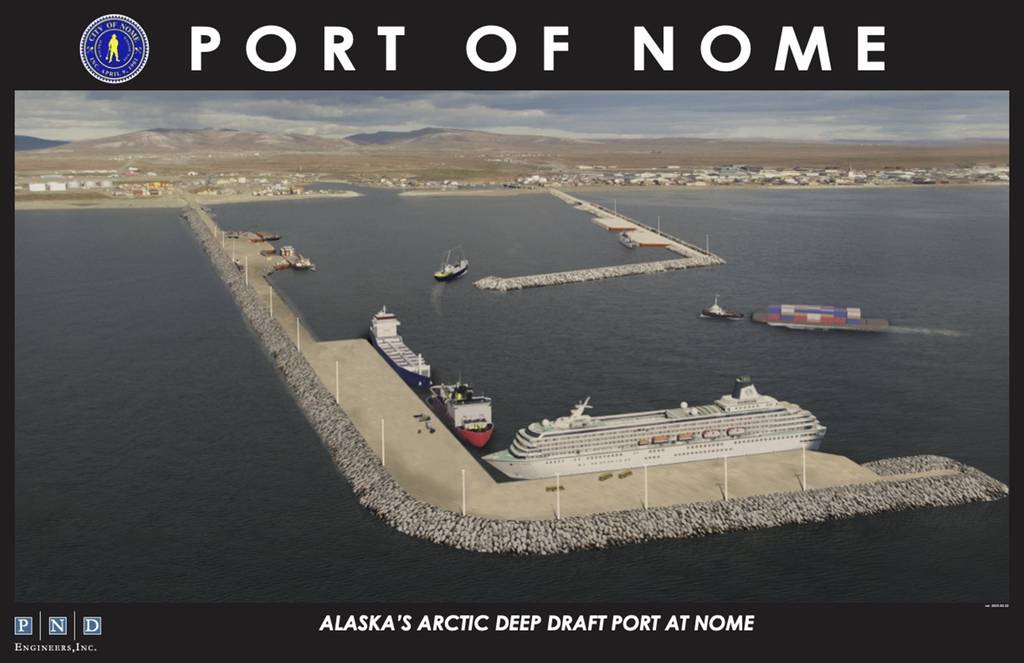
This rendering provided by the City of Nome shows how the Port of Nome, Alaska, will appear following an expansion project that will cost more than $600 million. Shipping lanes that were once clogged with ice for much of the year along Alaska’s western and northern coasts have relented thanks to global warming, and the nation’s first deep water Arctic port should be operational in Nome by the end of the decade. (PND Engineers Inc./City of Nome via AP)

Without offering much detail, the NORTHCOM on-line magazine “The Watch” reports the intention to invest in improvements in three Alaska ports, Port of Alaska (Anchorage), Valdez, and Nome.

None of these ports are above the Arctic Circle, but Nome is very close.

Only the development of a deepwater port at Nome appears to be driven by national security considerations, though modernization in Anchorage and Valdez may offer incidental logistical benefits.

We have been talking about a deepwater port in or near Nome since 2018.

I would not be surprised to see Nome as a future Coast Guard buoy tender homeport and seasonal air station.

Nome’s proximity to the Bering Strait and Russia, all within 150 miles, makes it strategically important.

Port of Alaska (Anchorage). Traveler photo submitted by 2013TravelinFool (Jul 2017)

Port of Alaska (Anchorage) is the only designated Strategic Port in Alaska.  It appears the upgrades are replacements for existing facilities including updated technology.

There is a comprehensive, 121-page plan for Valdez on-line here. It includes some upgrades of the container port but envisions minimal Corps of Engineers support and involvement. Most of the work seems to be in support of tourism, fishing, and local marine industry.

“Russian and Chinese naval exercises: Reading between the lines” –The Watch

A Coast Guard Cutter Kimball crewmember observing a Russian Destroyer in the Bering Sea, September 19, 2022. Coast Guard Photo

The Watch provides an opinion piece by ADAM LAJEUNESSE, PHD, an associate professor in the public policy and governance program, at St. Francis Xavier University in Canada.

He discusses why the Russians and Chinese decided to extend their exercise into waters near Alaska, and what the US response should be to such demonstrations.

Managing the response is therefore a balancing act. These activities cannot be ignored or even downplayed, but emphasis should be put on short-circuiting adversary messaging. Beijing is anxious to paint U.S. FONOPs as shams. While the U.S. government has been disciplined in its messaging as it was during a similar voyage in 2021, more emphasis should be placed on the PRC’s right to be there. Though it may seem counterintuitive, there is a benefit to overtly recognizing Chinese ships’ right to be in the region. While that may be politically tricky, it should be possible to warn of the dangers posed by the PRC’s navy generally, while also emphasizing its right to be anywhere on the high seas.

Russia’s attempt to portray itself as a great power equal, capable of threatening the U.S. homeland can, likewise, be turned back upon itself. The reality is that Moscow’s weakness has forced it to increasingly rely on the PRC for economic and political support. Its naval partnership should be addressed more explicitly for what it is, the gradual replacing of Russian power in the North Pacific and, potentially, the Arctic by the PRC.

His evaluation is a perfect explanation of why having such exercises monitored by Coast Guard cutters, as had been done in 2021 and 2022, was a perfect response. (In fact, Chinese warships transited US territorial waters in 2015.)

Why the change in 2023?

To some extent at least, I think the Navy response, specifically sending DDGs to shadow the group, was because they were stung by unfair criticism, that we looked weak because there had been no obvious US Navy presence previously.

If NORTHCOM wanted to take out the Chinese/Russian surface action group (SAG), air assets could have done the job. That the US Navy SAG never exceeded four units, if anything does make us look weak.

Perhaps a USAF B-1 fly-over on a day when no live fire exercises were scheduled might have been an appropriate response. (B-1s with LRASM are a particularly deadly anti-ship combination.)

If there had been hostilities, putting a numerically inferior US Navy SAG close to a potentially hostile SAG, might have just resulted in a friendly fire incident, if the Air Force confused US units with Chinese or Russian units.

Also, we should never miss an opportunity to remind the Russians, they have reason to fear China more than the US. The Russian ships in the SAG were all either older or smaller than their Chinese counterparts, and I am sure the Chinese made it abundantly clear to the Russians, that they had outgrown any Russian tutoring.