“Top Ten Navies by Aggregate Displacement, 1 January 2024” –Analysis and diagram by Phoenix_jz

Two years ago, I did a post with a similar title from the same source. Somehow, I missed the 2023 edition. As I said in the earlier post, I don’t know , but the data appears to be credible, and it looks like readers are checking his figures. 

It is very difficult to read the tonnages at the bottom of the graph unless you are using a computer and click on the graph to see it in a larger size. 

The creator’s notes and some additional comments are below. 


Hello all!

Well, 2024 is upon us, and as such so is the third edition of my top ten navy list. For those unfamiliar, here are links to 2022 and 2023, with a general explainer of the whole concept in the 2022 version.

The long and short of it is that this graph reflects a personal tracker I keep of almost every large and moderately sized navy, and calculates the aggregate displacement of these navies. It’s not a perfect way to display the size of navies – far from it in fact – but it is at least more representative than counting numbers of hulls alone, in my opinion.

To break down what each of these categories mean;

  • Surface Warships is an aggregate of all above-water warships and major aviation and amphibious assault platforms. This category includes CVNs, CVs, CVLs, LHDs, LHAs, LPDs, CGs, DDGs, FFGs, corvettes, OPVs, CPVs, lighter patrol craft, and MCM vessels.
  • Submarines is what it says on the tin – SSBNs, SSGNs, SSNs, SSKs, and for select nations where applicable (and where information is available), special purpose submarines. Please note dedicated training submarines are counted separately.
  • AORs includes all major fleet replenishment vessels (coastal vessels do not count, however).
  • Other Auxiliaries is a very wide net that essentially captures everything else. Special mission ships, support vessels, minor amphibious assault vessels (LSDs, LSTs, LCAC’s, LCM’s, LCU’s), training vessels, tugs, coastal support vessels, hydrography ships – all essential parts of navies, but generally often paid less attention to as they’re not as flashy as the warships proper.

Interesting trends in data that I thought I would share for various navies, and thoughts and observations otherwise;

The USN is, unsurprisingly, still top dog by a huge margin. In spite a net decommissioning of five ships this year, the USN has grown overall by about 32,000 tons – four ‘cruisers’, two SSNs, four LCS, and five patrol craft decommissioned against the introduction of three destroyers, an SSN, five LCS, and a replenishment ship. It is worth noting that 2023 is the first year since 2010 that the USN has commissioned three destroyers in a year, though a repeat performance in the next couple years is unlikely – these ships were launched in 2020 and 2021, and only one destroyer per year was launched in 2022 and 2023.

No one will be surprised to hear that the PLAN has grown for the nth consecutive year, adding the final Type 055 batch I and the remaining Type 054A Batch V, for almost 50,000 tons of new surface combatants. Much of the remaining increase in displacement for this year (which totaled nearly 90,000 tons) reflected a steady pace of modernization in mine warfare, landing forces, and logistical support/other auxiliaries. As with last year, the number of minor patrol craft continue to plummet as the PLAN continues to divest many of its obsolescent brown-water combatants, or relegates them to training duties.

Moving on to ongoing construction, progress on the new destroyer batches continues at pace. At least two Type 055 Batch II appear to be under construction, and the overall number of Type 052D Batch IV appears to be at least ten. The first ship actually launched at the very end of 2022 (at Jiangnan), and two further have been launched by the same yard as well as three at Dalian. Two more remain under construction at each yard. The first of these ships to be launched appears to be on trials and will likely commission this coming year. The Type 054A program of the navy appears to have finally wrapped up (construction of the hull for the China Coast Guard continues), and the Type 054B program has continued at pace if not scale – two ships were launched this year, but modules of further units have been scarce. Rounding things out for major surface vessels, a new Type 075 LHD was launched this past December. Conspicuously absent has been sightings of any modules for new carriers. Considering Fujian (Type 003) began construction at some point from 2015 to 2017, one has to wonder if we will see China launch another carrier before the end of the decade.

Perhaps most consequential of all, however, has been the completion of new production facilities at Bohai and a resumption of Type 093 SSN launches. The first of the new Type 093B launched in 2022, and has been followed up by two more launches this year (possibly up to three). A sustained pace of two submarines a year, or even just three submarines every two years, would quickly add up could see anywhere from nine to eleven new SSNs launched by the end of 2027, and in service by early 2030s. Only time will tell what the actual drumbeat of production will be.

Russia’s VMF woes in the Black Sea have continued unabated, except less at sea and largely fueled by the Franco-British SCALP cruise missile. The most dramatic loss by far was the destruction of the Project 636.3 ‘Improved’ Kilo Rostov-on-Don in drydock at Sevastopol, but similar attacks claimed the destruction or constructive loss of a Karakurt-class corvette (under construction, not in service) and two Ropucha-class LSTs. The infamous TB-2 made a brief return to destroy a Serna-class LCU, and two other LCU’s may have finally become the first victims of Kamikaze USVs this past November, for a total of 11,407 tonnes lost.

In regards to the more regular cycle of commissioning and decommissioning, one frigate, one MCM vessel, and three corvettes were brought into service, as well as a new SSGN, SSBN, and SSK each. Against this a corvette, SSGN, SSBN, and SSK were decommissioned. Overall, in spite of losses the VMF managed a net gain of 6,324 tonnes of surface warships and submarines. Anyone who checks against my figures from last year will note that the increase in the VMF’s overall tonnage this year is far more substantial, due to the auxiliary category. Though some of this was from new vessels, this was mostly down to a badly needed overhaul and reorganization of that part of my tracker, particularly for the tug fleet. Did you know the Russian navy tug fleet displaces more than either the Argentine or Canadian navies? Now you do! Seriously – it would be the 20th largest navy in the world by itself.

As a final note on the VMF – it is worth remembering that ships commissioned in the Russian navy are not always actually in service, as ships can often languish in near-terminal refits or simply be left inactive without a formal decommissioning. Almost half the remaining Projekt 877 Kilo’s, for example, appear to be inactive at this point (5 of 10).

(In comments the author noted the following, “Russian naval losses during the war have totalled 13 vessels for 29,870 tonnes. Quite a bit – but also only about 1.4% of their current overall tonnage.” –Chuck)

The British Royal Navy observes a second year of marginal reduction in overall tonnage (-2,640t, or -0.3%), losing another Type 23 frigate as well as the last Echo-class survey ship. Against this the RFA brought into service the first MROSS, ProteusProteus represents a considerable increase in subsurface capability, though the loss of a frigate with no replacement ship to replace it for another thee to four years is painful, especially given how many of the remaining eleven ships are deep in LIFEX/Post-LIFEX refits. With that said, their new frigate programs are moving on steadily. Steel was cut on two new frigates this year – the future HMS Birmingham (4th Type 26) and HMS Active (2nd Type 31), bringing the total construction volume to five frigates building and one fitting out.

The JMSDF continues to grow, albeit at a more moderate pace this year (+6,530t, or +0.9%), inducting a new Mogami-class frigate and Taigei-class attack submarine, while shifting another Oyashio-class from the active fleet to a training role. Two more FFM were launched this year, though surprisingly they have not started construction on the next pair. This past November, it was announced that the Mogami-class FFM would be curtailed at 12 units (of 22 planned), and followed on by an evolution of the design known as FMF-AAW. The FMF-AAW will feature greater air and surface warfare capabilities. Twelve such ships are planned.

The Indian Navy’s growth in 2023 was far less dramatic than in 2022, but still noteworthy (+9,200t, or +1.5%), as adding a new conventional attack submarine and destroyer to the fleet has finally pushed them over the 600,000-tonne line.

The Marine Nationale grew by almost 9,000 tonnes (2.1%) this year, largely down to the retirement and replacement of a patrol ship, nuclear attack submarine, and tugs with an equal number of replacements. Though it is worth noting that the new attack submarine is not fully operational yet – that will happen in 2024 – so technically the MN’s attack submarine fleet is really four boats at this point in time.

The saga of eight and ninth place swapping around continues, as the ROKN has managed to move back to the position of eighth largest navy in the world. In 2023 they added a net 15,374t (+4.3%), commissioning four Daegu-class frigates, a second KSS-III class attack submarine, an MCM vessel and a pair of LCACs, against the decommissioning of two corvettes and five PKM’s.

In contrast, the Marina Militare continues to feel the bite from the two FREMM sold to Egypt, as well as delays in brining the LHD Trieste into service – intended for 2023 but again pushed back, now to the spring of 2024. The first PPA ‘Light+’, Raimondo Montecuccoli, was brought into service in 2023 – an OPV on paper, but light frigate in practice. Against this one of the elderly Maestrale-class frigates, Zeffiro, was retired, as was one of the fleet’s AORs (Vesuvio) and a water tanker (Bormida), resulting in a real drop of 7,073 tonnes (-1.9%). The drop seen versus the chart versus last year is more dramatic (totals 16,632 tonnes), which reflects both cleaning up data on old auxiliary platforms for which information is scarce, and correcting some minor sheet errors, which totaled 9,559 tonnes.

The outlook should be looking up in the future – as previously mentioned, the LHD Trieste should enter service this year, as should the fourth and fifth PPA. The first of two replacement FREMM (GPe) was launched in late 2023 and a second will follow this spring, with both being slated to enter service in 2025 alongside the sixth PPA and second Vulcano-class replenishment ship – barring any delays.

Finally, the Indonesian Navy saw another year of growth, adding a net 9,930 tonnes (+3.1%), with another hospital ship commissioned, a new survey ship, corvette, and two new MCM vessels and FACs each, as well as several patrol boats. The TNIAL continues a steady program of domestic construction of patrol craft, and construction is ongoing on two Iver Huitfelt derivative frigates, with the keel of the first vessel laid down this past August. They have also cut steel on a new hydrography ship, which will launch in Indonesia and complete fitting out in Germany.

What comes next in terms of major platforms for the TNIAL is somewhat up in the air. As with the year prior, there has been no progress made on the procurement of six FREMM from Italy, despite a contract being signed two and a half years ago (June 2021). In spite of this, they have expressed interest in procuring two PPA to bolster their patrol fleet. In the interest of expediting procurement, they are looking at two ‘Light+’ configuration vessels currently fitting out at Muggiano – Marcantonio Colonna (due for delivery to the MMI in the latter half of 2024) and Ruggiero di Lauria (due for delivery to the MMI in mid-2025). According to the General Manager of Fincantieri’s Naval Vessels Division, Dario Deste, a contract for the two vessels could be signed in the first half of 2024.

(In answer to a question the author added this in the comments–Chuck)

No.11 to 20 are as follows for 1 January 2024;

  • 11: Turkey – 297,298t
  • 12: Taiwan – 268,958t
  • 13 Egypt – 232,046t
  • 14: Spain- 229,373t
  • 15: Germany – 226,655t
  • 16: Australia – 224,074t (decided to add the National Support Squadron, which added about 30kt)
  • 17: Greece – 189,184t
  • 18: Brazil – 162,29t
  • 19: Chile – 161,404t
  • 20: Argentina – 138,620t
(A reader, , added this–Chuck)

Listed by ranking for this year:

Nation Change from 2023 (tonnes) 2023 Ranking Change from 2022 (tonnes) 2022 Ranking
United States +55,658 1st +250,308 1st
China +93,567 2nd +99,299 2nd
Russia + 211,333 3rd +166,682 3rd
United Kingdom -2,640 4th -5,815 4th
Japan +6,530 5th +23,790 5th
India +9,200 6th +62,349 6th
France +8,925 7th +12,145 7th
South Korea +15,374 9th +7,153 8th
Italy -16,632 8th -3,452 9th
Indonesia -70 10th +17,709 10th

Probably not surprising given all these nations are competing more or less with each other, but the rankings have basically remained the same except for Italy and South Korea trading places in 2023, then reverting to their 2022 places again this year. Nobody previous top 10 navy has left the club either.

However, do note that not all of the year-to-year tonnage differences are due to actual changes in fleet size/composition. As Phoenix mentioned in his post, the Russians in particular got a huge tonnage jump this year because he changed the way he counts auxiliaries, and given the discrepancy between his reported +32k figure for the USN and the numbers, there’s probably some math correction involved there too.


“Inside the U.S. Coast Guard patrols off Peru in mission to stop overfishing” –NBC News

NBC News reports on Coast Guard efforts to counter Illegal, Unregulated, Unreported fishing off Peru. The report is not really very clear in that it states the Chinese vessels are outside Peru’s territorial waters but is not clear if they are saying they are outside the 12 mile limit or they are outside the EEZ. The way it was phrased it sounded like they were referring to the 12 mile limit, but the distinction is frequently poorly understood by the media.

Previous Operation: PERU, 10.07.2023, Courtesy Photo, USCG District 11
The Coast Guard Cutter Alder approaches a squid fishing vessel while CG-2007, a C-130 from Air Station Barbers Point in Hawaii, flies over (upper left) during Operation Southern Shield 2023, October 2023. The Coast Guard recently completed the first high-seas boardings and inspections off the coast of Peru under a newly adopted multi-lateral agreement to monitor fishing
and transshipment operations within the South Pacific Regional Fisheries Management Organization (SPRFMO)Convention Area. (U.S. Coast Guard photo)

It is clear that USCGC Alder is off Peru. This is the second time the Pacific Area has used this buoy tender to conduct a distant fisheries patrol, having completed a previous similar patrol 29 November 2023. During the earlier patrol, enforcement was under the auspices of the South Pacific Regional Fisheries Management Organization (SPRFMO). That is probably the case here as well.

Thanks to Paul for bringing this to my attention.

UK Deploys OPV to Guyana, gCaptain/Reuters

The River-class offshore patrol vessel HMS Trent (P224) passes the Vorontsov Lighthouse while arriving in Odesa, Ukraine to participate in Exercise Sea Breeze 2021, July 2, 2021. Exercise Sea Breeze is a multinational maritime exercise cohosted by the U.S. Sixth Fleet and the Ukrainian Navy since 1997. Sea Breeze 2021 is designed to enhance interoperability of participating nations and strengthens maritime security and peace in the region. (U.S. Navy photo by Damon Grosvenor/Released)

gCaptain reports,

Britain will deploy a naval ship off Guyana later this month, its ministry of defense said on Sunday, as the South American nation faces a border dispute with neighbor Venezuela over the oil-rich Essequibo region.

The deployment follows a visit by a British junior foreign minister to Guyana earlier this month, intended to offer the UK’s support for the country, an ally and former British colony.

We have talked about Venezuela’s claim on territory internationally recognized as part of Guyana. There is a recent BBC report here.

I found it interesting that the Royal Navy is sending an Offshore Patrol Vessel to this region of potential conflict. HMS Trent is about the size of a 270 and is armed with a 30mm gun in what is essentially the same mount the US Navy is calling the Mk38 Mod4.

It is likely 4th Fleet will also have some units (probably CG cutters and maybe an LCS) in the area.

None of these ships is likely to be a match for the Venezuelan Navy, but the US could quickly have overwhelming amounts of airpower over the area.

USCGC Diligence with SOAR Little Bird Attack Helicopter –Remembering Operation Prime Chance

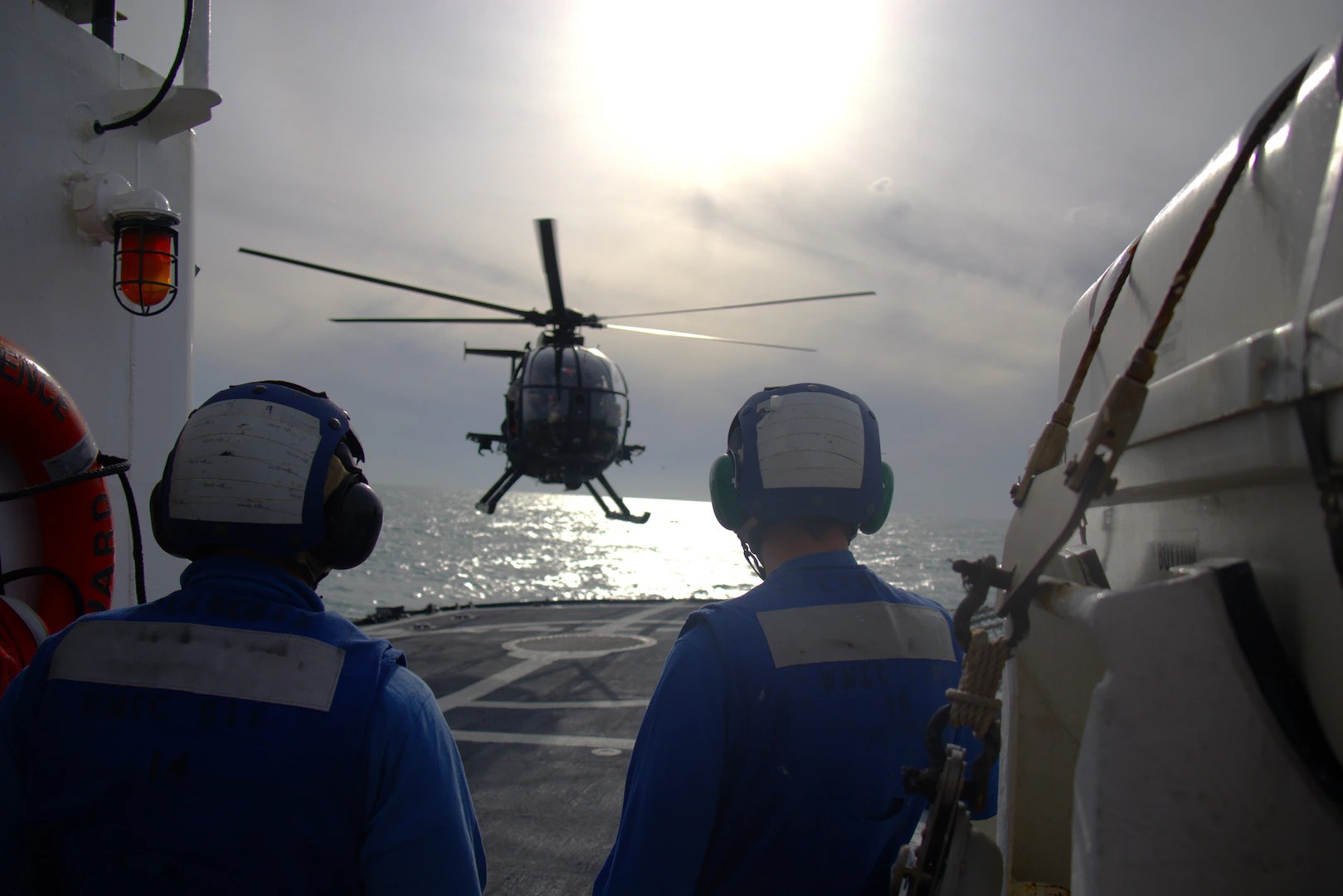
USCGC Diligence recently completed a 52-day counterdrug patrol in the Caribbean Sea. Mostly it was a typically successful patrol, but they did do something a bit unusual.

“Diligence also conducted a joint training exercise with the Army’s 160th Special Operations Aviation Regiment (SOAR). During the exercise, the Diligence crew and pilots from SOAR completed daytime and nighttime helicopter landing evolutions.”

The Helicopters were AH-6s. The 160th SOAR has a history of flying off of floating units.

Between 1987 and 1989 the U.S. Army’s 160th Special Operations Aviation Regiment, also known as “The Night Stalkers,” flew Little Bird helicopters from barges and Navy frigates in the Persian Gulf. Operation Prime Chance paired the U.S. Army helicopters with Navy SEALs, Marines, and Special Boat Units in an undeclared war against Iranian Revolutionary Guards units harassing civilian shipping. Six Little Birds, both MH-6 utility and AH-6 attack versions equipped with SEAL snipers, rockets, and machine guns, flew patrols as low as thirty feet.

This might be a reminder that Army and Marine helicopters could be operated from Coast Guard Cutters for limited periods for Special Operations, particularly in areas where there are few Navy assets such as the high North and 4th Fleet.

Wikipedia’s report on Operation Prime Chance here.

More photos of Diligence’s operation with AH-6 here.

Thanks to Peter for prompting me to write about this. 

“Unusual AC-130J Gunship Caribbean Training Video Released” –The Drive

As noted recently, there is increased tension in an area where the Coast Guard routinely operates. Also noticed that in a very unusual move, the US Navy expects to have a Carrier operating with 4th Fleet.

Now we have this report of another unusual exercise/demonstration.

Included in the report was this reference to the Coast Guard.

“Yesterday, U.S. SOF [special operations forces] carried out a joint training evolution in the Southern Caribbean which included elements from the Air Force, Navy and Coast Guard,” one post on December 8 on SOCSOUTH’s official account on X, formerly Twitter, read. “The event not only honed readiness and interoperability skills but also demonstrated capability and security for the region.”

It would not be unusual for the Coast Guard to play the opposition force in an exercise, but it may have been more than that. The US Naval Institute Fleet and Marine Tracker has stopped showing how many Navy ships are operating with each fleet, but normally. most of the available naval vessels in 4th Fleet are in fact Coast Guard.

Previous Guyana / Venezuela related posts:

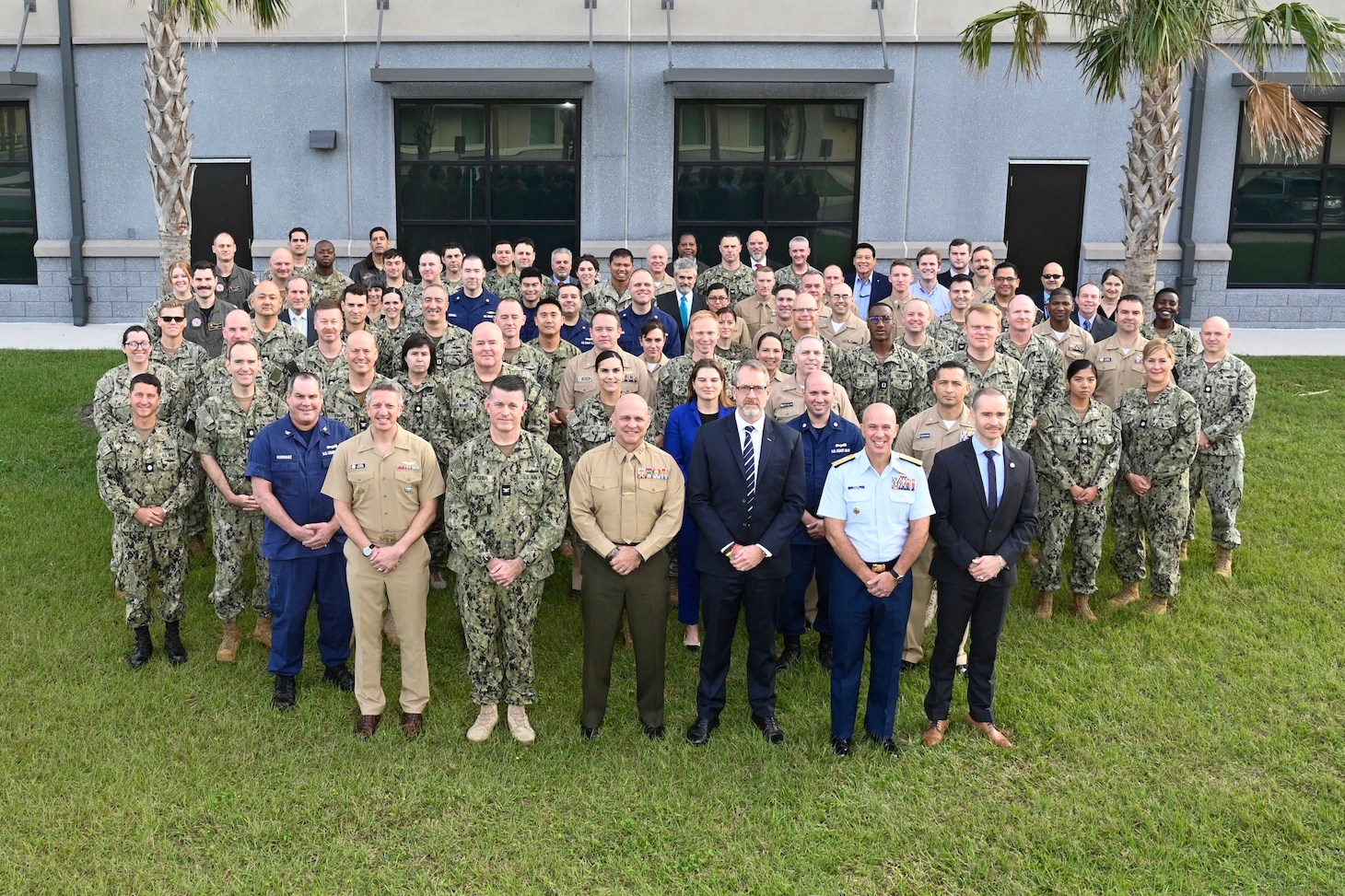
“U.S. 4th Fleet’s Maritime Synchronization Symposium: Focus on China and Scaling the Hybrid Fleet”

U.S. 4th Fleet’s Maritime Synchronization Symposium: Focus on China and Scaling the Hybrid Fleet

Below is a USNAVSOUTH/4TH FLEET PUBLIC AFFAIRS news release.

It does not mention the Coast Guard specifically, but the uniforms are recognizable in the photo above.

Surprising news is that USS George Washington (CVN 73) will deploy to the area next year. Presumably some escorts will come with her. Maybe they will do some drug interdiction along the way. (Wonder if this might be a signal to Venezuela.)

Significantly, 4th Fleet is now a center for experimentation with manned/unmanned hybrid operations that hopefully will ultimately also benefit the Coast Guard.


Dec. 12, 2023
U.S. Navy Attachés and U.S. Navy Section Chiefs serving in partner nations in the Caribbean, Central and South America gathered at Naval Station Mayport Dec. 5-8, 2023, for the annual U.S. Naval Forces Southern Command/U.S. 4th Fleet Maritime Synchronization Symposium.

This year’s symposium featured four guest speakers, expert panels, and question-and-answer sessions for the region’s Foreign Area Officers (FAOs) to discuss mutual challenges and opportunities, get the latest information on strategy, operations and exercises, and learn more about the Navy’s strategic competition with the People’s Republic of China and U.S. 4th Fleet’s campaign to inform the hybrid fleet.

The first guest speaker was Ambassador James Story, who most recently served as U.S. Ambassador for the Venezuela Affairs Unit, located at the United States Embassy in Bogotá, Colombia, and is currently a State Department Fellow at Georgetown University. Other guest speakers included Dr. Miles Yu, Professor of East Asia and Military History at the U.S. Naval Academy, Lt. Gen. David Bellon, Commander, U.S. Marine Corps Forces Reserve and U.S. Marine Corps Forces South, and Mr. Chris Diaz, Secretary of the Navy Carlos Del Toro’s Chief of Staff.

“We brought in dynamic speakers who gave our Navy Foreign Area Officers (FAOs) much to think about as they return to their respective countries,” said Cmdr. Stephanie Lastinger, U.S. 4th Fleet Theater Security Cooperation (TSC) Director. “They serve on the front lines of strategic competition and are successfully advancing American interests abroad.”

Participants were able to learn more about and provide input to staffers planning the upcoming Southern Seas and Continuing Promise deployments, which will feature USS George Washington (CVN 73) and USNS Burlington (T-EPF 10) deploying to the region next year. They also heard from Cmdr. David Edwards, U.S. 4th Fleet’s Technology and Innovation Director, who briefed Operation Windward Stack, the Fleet’s current operation in the Caribbean.

We are operationalizing technology in a campaign of learning where sometimes we win and sometimes we learn,” said Cmdr. Edwards. “We are sharing our results with the other fleets already and look forward to integrating hybrid fleet information with our partners.”

“This year’s symposium provided all of our FAOs, service providers, and stakeholders an opportunity to spend time together and develop relationships which will help them get better as members of their respective U.S. country teams,” said Rear Adm. Rich Lofgren, USNAVSOUTH/FOURTHFLT Reserve Vice Commander. “We know the critical work our FAOs perform in making the U.S. the maritime partner of choice in the Caribbean, Central and South America.”

U.S. Naval Forces Southern Command/U.S. 4th Fleet supports U.S. Southern Command’s joint and combined military operations by employing maritime forces in cooperative maritime security operations to maintain access, enhance interoperability, and build enduring partnerships in order to enhance regional security and promote peace, stability and prosperity in the Caribbean, Central and South American region.

Learn more about USNAVSOUTH/4th Fleet at https://www.fourthfleet.navy.mil, https://www.facebook.com/NAVSOUS4THFLT and @NAVSOUS4THFLT.

“Venezuela’s Border Dispute with Guyana Explained” –gCaptain

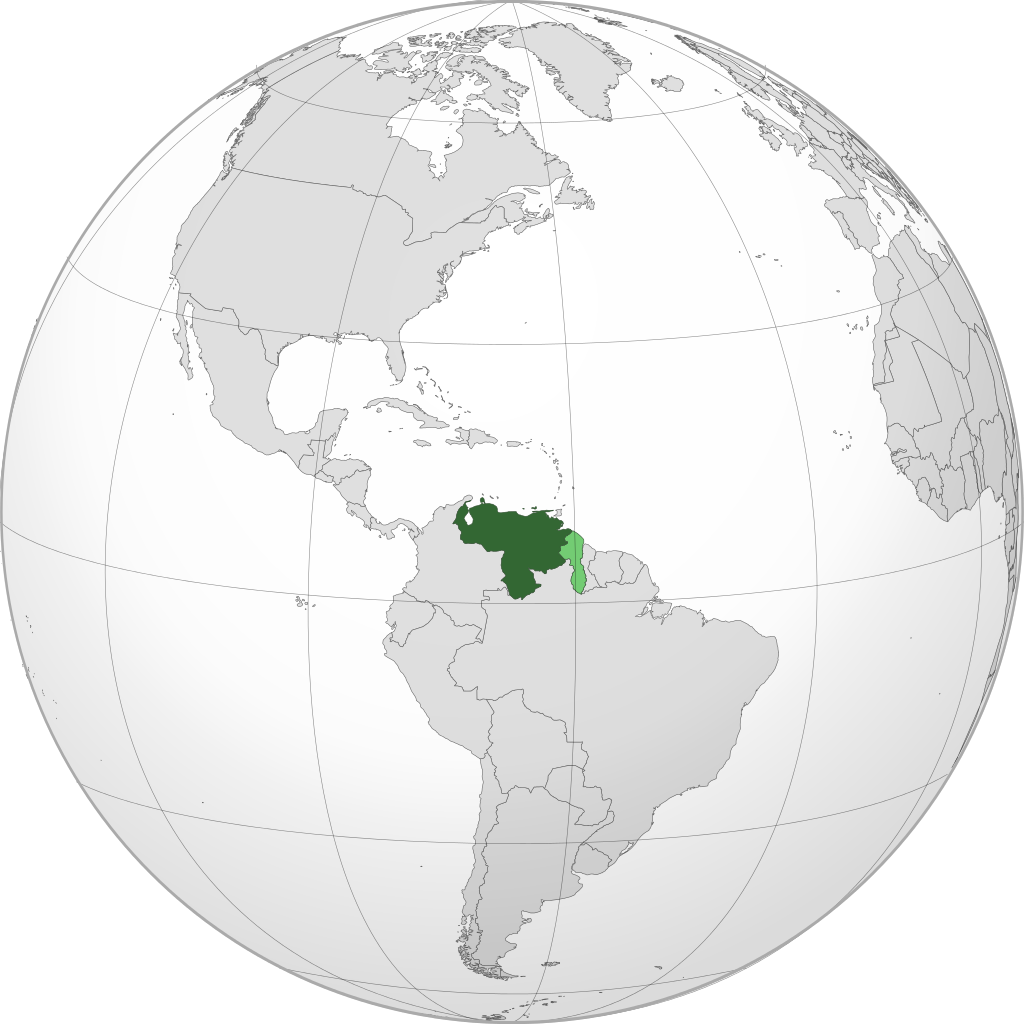
Orthographic map of Venezuela centered on Caracas Controlled territory in dark green. Claimed territory in light green.
From Wikipedia, author: Addicted04

gCaptain reports,

Tensions between neighbors Venezuela and Guyana have ratcheted up in recent weeks over a long-running territorial dispute.

At issue is a 160,000-square-km (62,000-square-mile) border territory around the Esequibo river, which is mostly jungle, and an offshore area where massive discoveries of oil and gas have been made.

The area in question has been recognized as part of Guyana since 1899, but Venezuela is making threatening noises. “A consortium by Exxon Mobil, China’s CNOOC and U.S. Hess began oil production in Guyana in 2019,” so the US has both economic and political interests in maintaining the status quo.

Since Coast Guard units routinely operate in the area and constitute the bulk of immediately available 4th Fleet assets, the Coast Guard may want to follow events there.

Footwear Fashion for Boarding Drug Subs

Members of the Coast Guard Cutter Waesche (WMSL-751) law enforcement boarding team inspect a self-propelled semi-submersible (SPSS) in international waters of the Eastern Pacific Ocean, Nov. 20, 2023. The interdiction of the SPSS yielded more than 5,500 pounds of cocaine. In November 2023, Waesche crewmembers seized approximately 18,219 pounds of cocaine, with an estimated street value of over $239 million, during four separate suspected drug smuggling vessel interdictions or events off the coasts of Mexico and Central and South America. (U.S. Coast Guard photo)

It is a small thing but must be slippery boarding one of these at sea. Took a close look at their footwear. Was a bit surprised, but this would make sense. (Click on the photo to enlarge)

Shaldag Mk. V — What a True “Fast Response Cutter” Might Look Like

Israel Shipyards Shaldag MK V. Israel Shipyards Ltd. picture

For some time, I have thought that the Webber class, “Fast Response Cutter” (FRC), program was misnamed. Webber class cutters don’t generally sit in port waiting for some alarm to call them to rush to the scene. Rather they are used more like small Medium Endurance Cutters. This has proven especially fortuitous in view of the delays in replacing the existing WMECs. It is only because of the versatility of the Webber class that the Coast Guard will be able to maintain its drug and alien migrant interdiction efforts in the 7th District and extend fisheries protection and counter IUU efforts into the Western Pacific while decommissioning WMECs before their replacements are completed.

Still, I do believe there is a need for true Fast Response Cutters for those rapidly developing missions that require more range and capability than a Response Boat, Medium, for protection of high value units, and to respond in the event of a maritime terrorist attack–units for which SAR and particularly Ports, Waterways, and Coastal Security are their primary missions.

The “Marine Protector” 87-foot patrol boats have had this job, but they are approaching the end of their service life (the oldest are now 25 years old). Four of them are particularly tasks with protecting Fleet Ballistic Missile submarines during surface transit from their bases to open sea. They have never been well prepared to deal with terrorist threats and aren’t really particularly fast.

We have discussed characteristics for a WPB replacement, a true Fast Response Cutter, before (here and here) and why nothing we have currently is suitable for the mission. The Shaldag Mk. V looks like a good candidate for the job, but first let’s look at where and why we might need vessels of this type.

The Webber class as Fast Response Cutters:

In some places, the Webber class might take on the functions of a “fast response cutter.” Where there are three or more based in a single location, it should be possible to have one on standby virtually at all times. Though better armed than the 87 footers, they are not particularly well prepared to deal with the terrorist threat, but it is possible to increase their armament to make them more effective in the role.

Even if the Webber class could be used in the FRC role, their basing, concentrated as it is to improve maintenance, would leave many ports with no similar protection.

Where Do We Need Fast Response Cutters:

In an earlier post, “A Reevaluation, Ruminating on Homeports While Playing the Red Cell,” Part 1 and Part 2, I identified 31 critical ports that required protection from unconventional attack.

I will assume that if the Coast Guard recognizes the need for a true Fast Response Cutter, a well-armed interceptor, and does build such a class, that they will also increase the armament of at least some of the Webber class, so that they could also be effective in this role at critical ports where they are based.

Webber class are based in 9 of the 31 critical ports: Moorehead City/Atlantic Beach, NC; Miami; San Juan; Pascagoula; Galveston; LA/Long Beach/San Pedro; Honolulu; and Guam.

That leaves 22 port complexes without resident Fast Response Cutters:

CCGD1:

  • Bath, Me–Major Naval shipbuilder
  • Kittery, ME/Portsmouth, NH –Naval Shipyard
  • Groton, CT–Submarine base
  • Hudson River complex, New York, NY/Elizabeth and Bayonne, NJ–a major cultural target, #3 US Port by tonnage, #3 Container port, #4 Cruise ship port (NYC) and #13 cruise ship port (Cape Liberty, NJ)

CCGD5:

  • Chesapeake Bay Complex, VA–Base for aircraft carriers and submarines, Major naval shipbuilder, Strategic Port, #9 port by tonnage, #5 container port; plus water route to Washington, DC (major cultural target) and Baltimore, MD–#14 port by tonnage, #13 container port, #12 cruise ship port
  • Cape Fear River–Strategic Seaport, Wilmington, NC

CCGD7:

  • Charleston, SC–#7 container port, #15 cruise ship port, Strategic Seaport
  • Savannah, GA–#4 container port, Strategic Seaport
  • Jacksonville complex, FL (including Kings Bay, GA)–SSBNs, Navy Base Mayport, #14 cruise ship port, Strategic Seaport/ Mayport, FL
  • Port Canaveral, FL–#3 Cruise Ship port/ Cape Canaveral, FL:
  • Port Everglades/Fort Lauderdale, FL–#11 container port, #2 Cruise Ship port
  • Tampa, FL–#7 Cruise Ship port/

CCGD8

  • Mobile, AL–major naval shipbuilder, #11 port by tonnage
  • Gulfport, MS–Strategic Seaport
  • Mississippi River Complex, LA–New Orleans #6 port by tonnage, #14 container port, +#10 Cruise Ship port; South Louisiana #1 port by tonnage; Baton Rouge #8 port by tonnage; Port of Plaquemines #13 port by tonnage.
  • Lake Charles, LA–#12 port by tonnage
  • Sabine Pass complex (Beaumont/Port Author/Orange, TX)–#4 port by tonnage (Beaumont), Strategic Seaport (both Beaumont and Port Author), It also has an LNG exporting terminal.
  • Corpus Christi, TX–#7 port by tonnage, Strategic Seaport

CCGD11:

  • San Diego, CA–Base for aircraft carriers and submarines, major naval shipbuilder (NASSCO), Strategic Seaport
  • San Francisco Bay complex,, CA–A major cultural target, #6 container port (Oakland), Strategic Seaport (Oakland and Concord)/Alameda, CA

CCGD13:

  • Puget Sound Complex, Seattle/Tacoma, WA–Base for aircraft carriers (Bremerton), SSBNs (Bangor), and submarines, major naval bases, #8 container port (Seattle), #10 container port (Tacoma), #8 Cruise ship port (Seattle), Strategic Seaport (Indian Island and Tacoma, WA)

CCGD17:

  • Anchorage, AK–Strategic Seaport

Assuming we need two boats to maintain one on standby or underway at all times this suggests we need 44 Fast Response Cutters. Fewer than the 73 patrol boats of the Marine Protector class.

The Shaldag MkV as a Fast Response Cutter:

Navy Recognition reports delivery of a third batch of Israeli built Shaldag Mk. V fast attack craft to the Philippine Navy. In the Philippine Navy, these are referred to as Acero class coastal patrol interdiction craft (CPIC).

The Shaldag Mk. V seems to be a true Fast Response Cutter that checks many (but not all) of the boxes that could make it effective in this role. The Shaldag Mk V shows what can be done on even a modest sized vessel. They are:

  • 95 tons full load displacement
  • 32.65 m (107.1 ft) length overall,
  • with a beam of 6.2 m (20 ft),
  • speed of more than 40 knots,
  • range of 1,000 miles at 15 knots.
  • crew of 12

These craft are armed with:

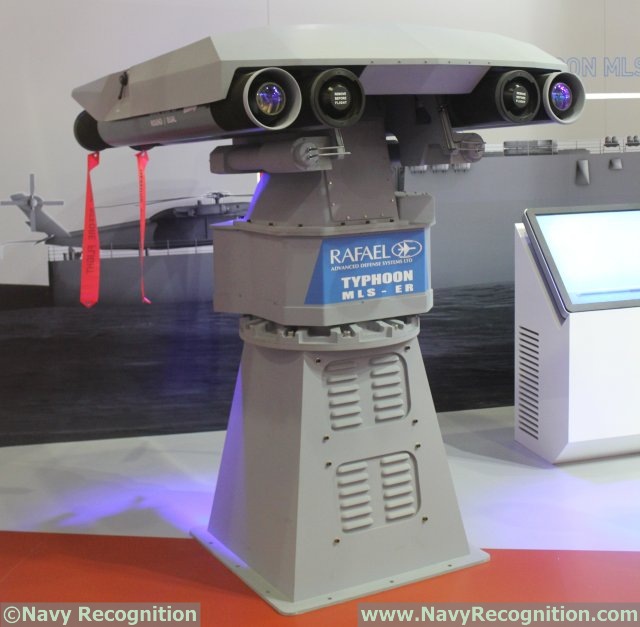
Photo: Typhoon MLS-ER (Missile Launch System–Extended Range)

  • 1 x Rafael Typhoon MLS-ER missile launcher for 4 x Spike ER surface-to-surface missiles, a weapon similar to Hellfire/JAGM (on at least four of the Acero class)
  • 1 × Mk.44 Bushmaster II autocannon mounted on Rafael Typhoon Mk 30-C remote-controlled weapon station (Mk38 Mod 2/3 in US service but with a 30mm gun)
  • 2 × M2HB Browning 12.7 mm/50-cal. heavy machine guns mounted on Rafael Mini Typhoon remote-controlled weapon stations
  • 2 × M60 7.62 mm/30-cal. GP machine guns

What we might do differently:

The Shaldag Mk. V is certainly not the only possible solution for a true Fast Response Cutter, but its speed and equipment does represent some but not all the capabilities that should be incorporated in an FRC.

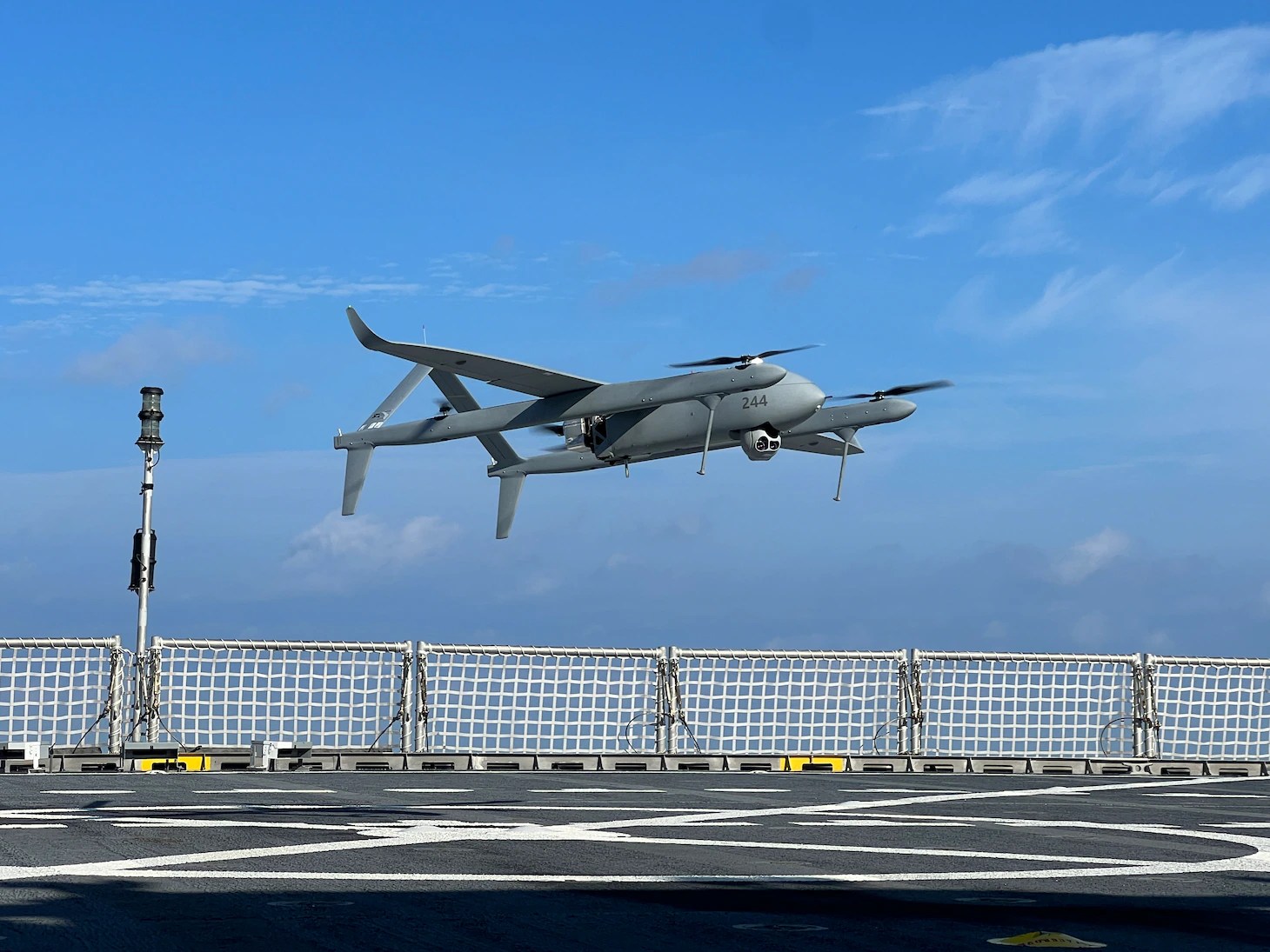
The Shaldag Mk. V has a capability against Unmanned Air Systems (UAS) and small, fast, highly maneuverable surface threats. As threat vessel increase in size their effectiveness diminishes substantially. They don’t need to sink large ships, but they do at least need to be able to immobilize them to keep terrorists from reaching their objective and to allow time for a DOD response.

The Shaldag’s boat handling facilities appear more difficult to use than those on the 87 foot cutters. We could do better, and it is likely we would need better boat handling equipment for day-to-day SAR missions.

The Missiles used on the Shaldag Mk. V are not used by the US Navy or Marine Corps, but comparable weapons–Hellfire, JAGM, or APKWS–could be used instead.

The 30mm Mk38 Mod4 would replace the Israeli 30mm Typhoon gun mount.

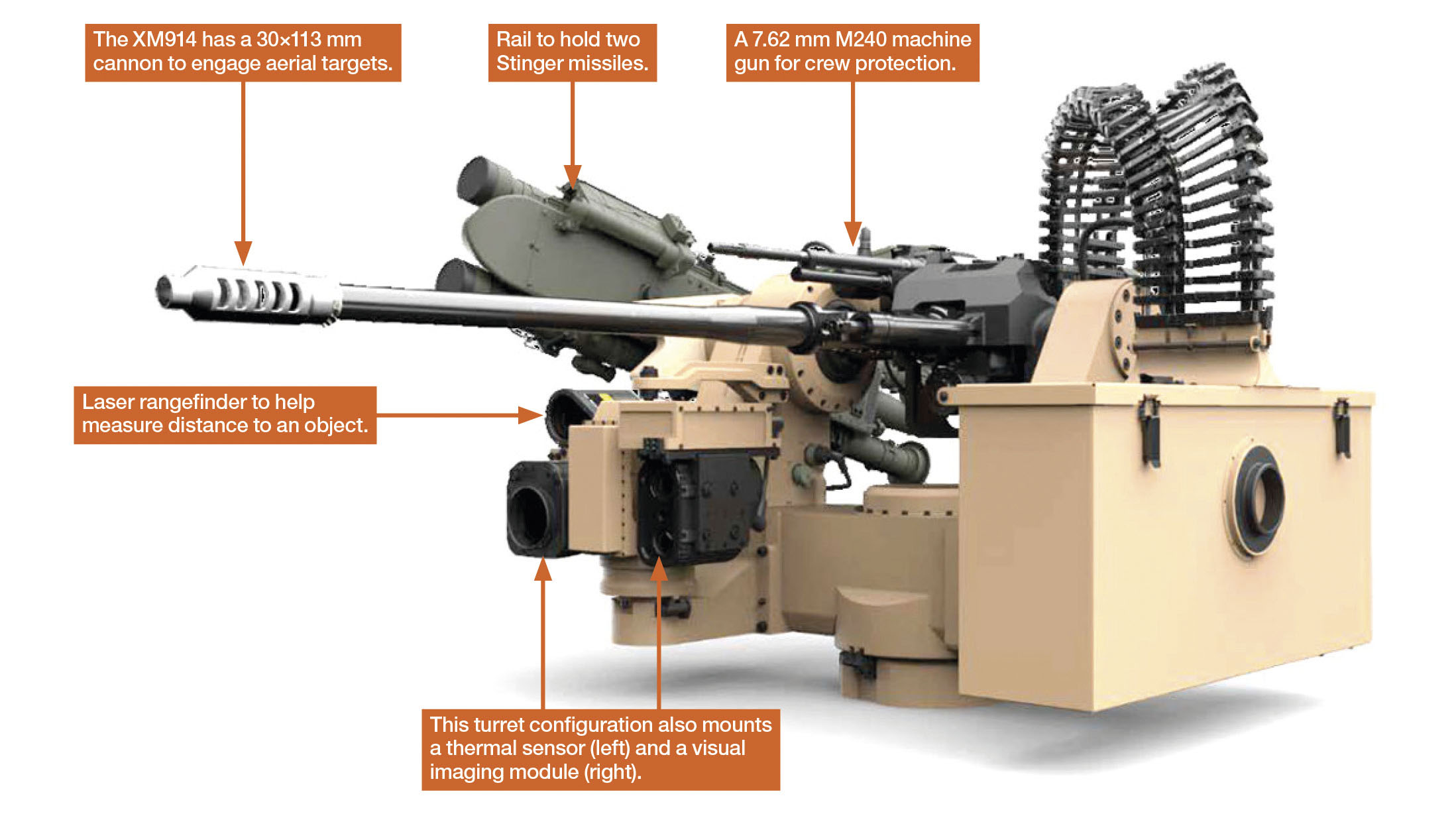
Marine Air Defense Remote Weapon Station

The Marine Air Defense Integrated System Remote Weapon Station, could replace the .50 caliber Mini Typhoon remote weapon stations.

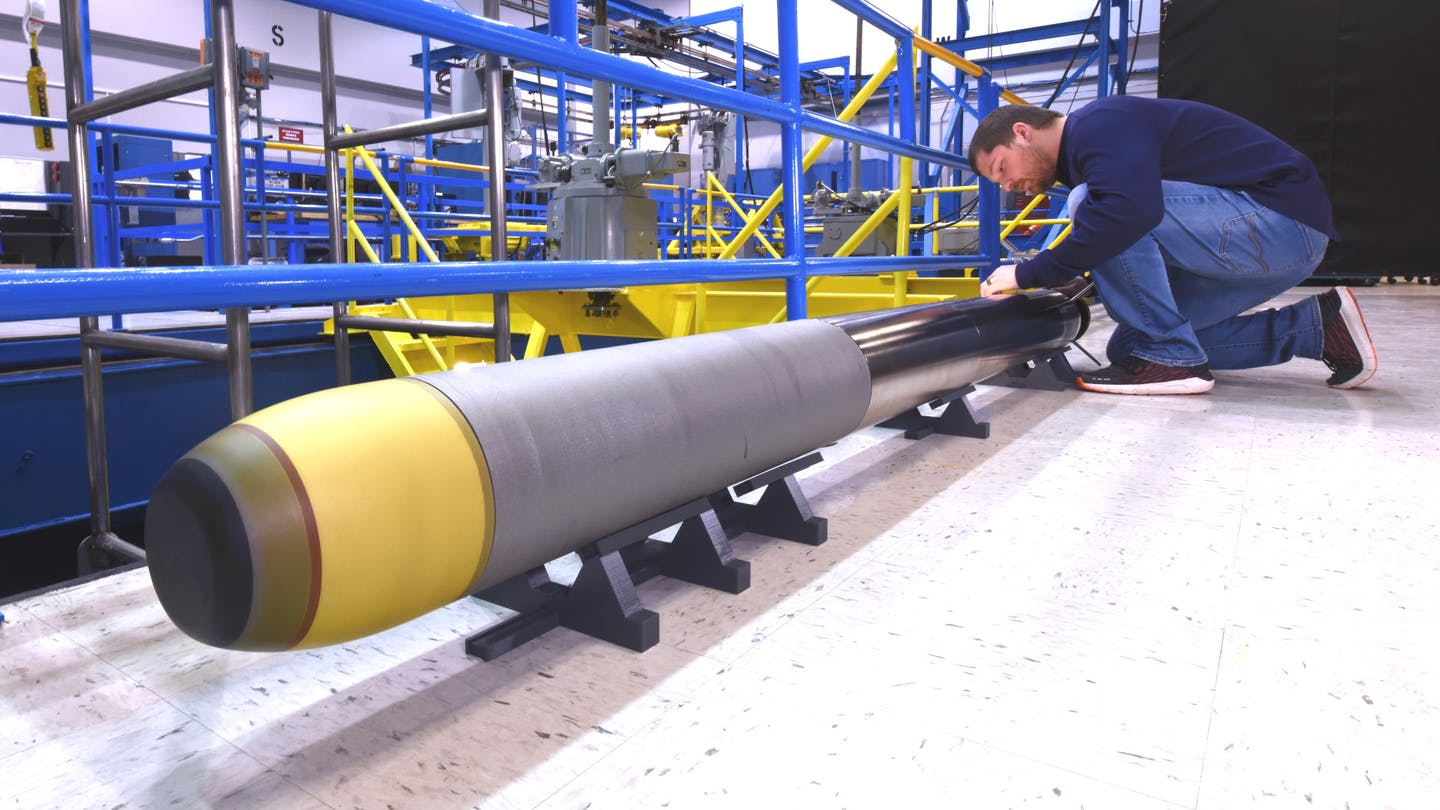
Very Light Weight Torpedo

To be able to immobilize even very large ships, the Very Light Weight Torpedo might be adequate.

“Hybrid Fleet Campaign Event Evaluates Technology For Future Operations” –4th Fleet

U.S. Naval Forces Southern Command/U.S. 4th Fleet demonstrated unmanned air and surface capabilities from expeditionary fast transport USNS Burlington (T-EPF 10) during the command’s Hybrid Fleet Campaign Event (HFCE) in Key West Oct. 4-13, 2023.

Below is a news release from 4th Fleet. Notably, 4th Fleet is approaching the problem of operationalizing unmanned systems in a different way from that of 5th Fleet.

“A key detail in SECNAV and CNO’s vision was that 4th Fleet would not stand up a separate task force like U.S. 5th Fleet did in Bahrain in 2021, but would develop the hybrid fleet from inside the staff already in place.”


 Oct. 20, 2023

Hybrid Fleet Campaign Event Evaluates Technology For Future Operations

By USNAVSOUTH/4TH FLEET PUBLIC AFFAIRS

U.S. Naval Forces Southern Command/U.S. 4th Fleet demonstrated unmanned air and surface capabilities from expeditionary fast transport USNS Burlington (T-EPF 10) during the command’s Hybrid Fleet Campaign Event (HFCE) in Key West Oct. 4-13, 2023.

This is the most recent event in U.S. 4th Fleet’s campaign to operationalize cutting edge technologies. After successful rollout of the Campaign at UNITAS in July 2023 and the beginning of operation WINDWARD STACK in September, the Science and Technology event in Key West this past week focused on the evaluation of unmanned systems in advanced kill chains, contested littoral operations, survivability, and sustainment at sea.  It served as both a proving ground for emerging technologies and an opportunity for senior leaders to see for themselves the capabilities of systems that could support the hybrid fleet.

“One of the best ways to change our force is to rapidly operationalize new technologies, new systems, and new tactics, techniques, and procedures,” said Adm. Lisa Franchetti, Vice Chief of Naval Operations. “Whether you’re talking about artificial intelligence, cyber, unmanned platforms, directed energy, or hypersonic missiles, we are on the cusp of technological breakthroughs that are going to define future conflict.”

“This week’s technology evaluation event will push boundaries and risk failure in order to allow us to evaluate unmanned technology and then move to operationalize that technology to inform the hybrid fleet,” Rear Adm. Jim Aiken, Commander U.S. Naval Forces Southern Command (USNAVSOUTH) & U.S. 4th Fleet, said in advance of the event. “We have many events scheduled and in some of those events we will win, and in some of them we will learn. In both cases, the Hybrid Fleet will be informed, and the Navy will continue to push forward at the speed of technology.”

The campaign to inform the hybrid fleet calls for the combination of manned and unmanned systems to allow U.S. 4th Fleet to execute its larger missions of defending the southern approaches to the United States, countering malign activity in the region with our partners, and supporting the detection and monitoring of illicit trafficking in the region.

“Broad partnership across DoD and industry partners has allowed 4th Fleet to mature operational capabilities rapidly fostering innovation and providing informed recommendations to the parties involved in creating the Disruptive Capabilities Office,” said Dr. Chris Heagney, the Naval Air Systems Command Fleet/Force Advisor to USNAVSOUTH/4th Fleet.

In April 2023 at the Navy League of the United States’ annual Sea Air Space Symposium, Secretary of the Navy (SECNAV) Honorable Carlos Del Toro and then Chief of Naval Operations Adm. Michael Gilday announced that USNAVSOUTH/4th Fleet would operationalize hybrid fleet operations. A key detail in SECNAV and CNO’s vision was that 4th Fleet would not stand up a separate task force like U.S. 5th Fleet did in Bahrain in 2021, but would develop the hybrid fleet from inside the staff already in place.

“This technology evaluation event is a continuation of the campaign we began in April,” said Cmdr. David Edwards, USNAVSOUTH/4th Fleet’s technology and innovation director. “We evaluate these technologies in focused events like this, then operationalized the technology quickly to fulfill operational requirements in the U.S. Southern Command Area of Responsibility (AOR). While we operate these systems to fulfil the 4th Fleet mission, the evaluation continues over months and years, not just hours and days. Those operational evaluations inform future acquisitions to ensure the Navy is ready to fight and win with these technologies.

HFCE was 4th Fleet’s largest technology event yet with 305 participants including VCNO and Master Chief Petty Officer of the Navy James Honea and 26 other U.S. government distinguished visitors, 10 foreign partners, 18 industry partners, and 47 Department of Defense Commands participating.

U.S. Naval Forces Southern Command/U.S. 4th Fleet supports U.S. Southern Command’s joint and combined military operations by employing maritime forces in cooperative maritime security operations to maintain access, enhance interoperability, and build enduring partnerships in order to enhance regional security and promote peace, stability, and prosperity in the Caribbean, Central and South American region.