“Indo-Pacific coast guards try to head off a troubling storm” –Asia Times

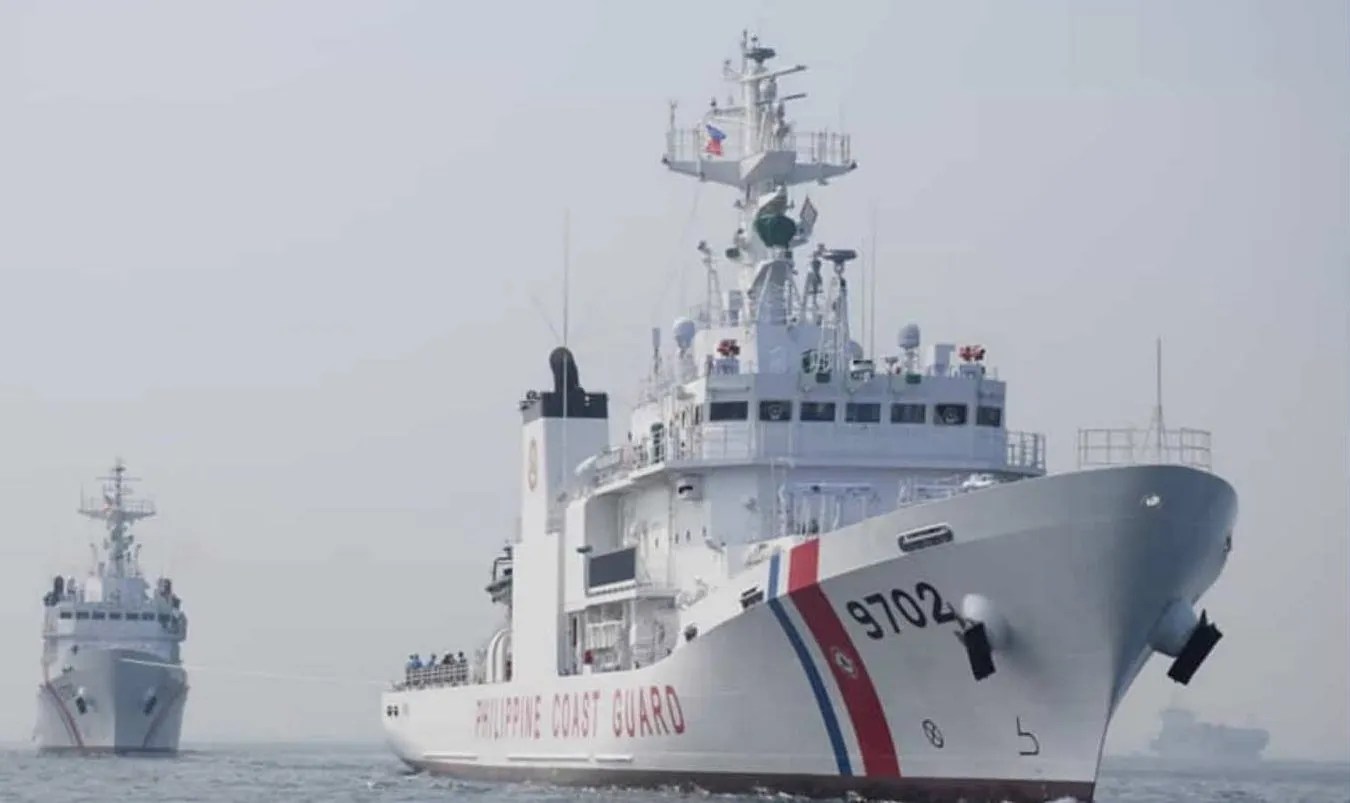
The Philippine Coast Guard conducted its first-ever trilateral maritime exercise with the United States Coast Guard (USCG) and the Japan Coast Guard (JCG) in waters off Mariveles, Bataan, from June 1-7, 2023. Photo: Philippine Coast Guard

The Asia Times reports, “Indo-Pacific coast guards and maritime law enforcement agencies are taking additional steps to improve their cooperation.”

We have frequently talked about US Coast Guard actions in the Western Pacific, but this gives us a better understanding of the leadership roles being taken by the Coast Guards of Japan, India, Indonesia, and the Philippines, working in cooperation with Vietnam, Malaysia, Singapore, Bangladesh, Cambodia, South Korea, Sri Lanka and the Maldives.

Perhaps someday we will see something like my proposed Combined Maritime Security Task Force Pacific.

The CENTCOM sponsored Combined Maritime Forces provides a good model.

“U.S., Philippine, Japan Coast Guards conduct trilateral engagements in the Philippines” –DVIDS

(From left) Japan Coast Guard Vessel Akitsushima (PLH 32), U.S. Coast Guard Cutter Stratton (WMSL 752), Philippine Coast Guard vessels BRP Gabriela Silang (OPV 8301) and BRP Melchora Aquino (MRRV-9702) conduct a trilateral engagement in the South China Sea June 5, 2023. Stratton deployed to the Western Pacific to conduct engagements with regional allies and partner nations, reinforcing a rules-based order in the maritime domain. (U.S. Navy photo by Chief Petty Officer Brett Cote)

Passing along the Coast Guard Pacific Area release below, distributed by the Defense Video Information Distribution Service (DVIDS). An earlier post, “Philippine Coast Guard Will Hold First-Ever Trilateral Exercise with U.S., Japan” –USNI, provided information on the participating ships.


Story by Chief Petty Officer Matthew Masaschi,

06.09.2023

MANILA, Philippines — The U.S. Coast Guard Cutter Stratton (WMSL 752) and crew departed the Philippines Thursday following the first trilateral engagements between the U.S., Philippine, and Japan Coast Guards.

Stratton’s crew conducted professional exchanges and joint operations in port and at sea with the Japan Coast Guard Vessel Akitsushima (PLH 32) and the Philippine Coast Guard during Stratton’s months-long Indo-Pacific deployment.

Stratton, the Akitsushima and Philippine Coast Guard vessels Gabriela Silang, and Melchora Aquino spent three days at sea off the coast of Bataan, Philippines, executing simulated search-and-rescue scenarios, maritime law enforcement boardings, passing exercises, and formation maneuvering drills. Additionally, they conducted communications and signaling drills, crew professional exchanges and joint boat and air operations following their Manila port visit.

While in Manila, members from the three services conducted combined damage control training, executed cooperative mission planning and table-top exercises ahead of at-sea combined operations. They conducted crew exchanges and toured partner vessels, participated in a women-in-law-enforcement discussion panel, played in a basketball tournament, volunteered at a beach cleanup, visited a children’s hospital and gathered for social receptions.

“It was an honor for Stratton to come together with our Philippine and Japan Coast Guard allies to learn from each other, work together to address common challenges and enhance our interoperability for joint maritime operations,” said U.S. Coast Guard Capt. Brian Krautler, Stratton’s commanding officer. “The experiences gained from our multi-mission trilateral operations underway, our professional exchanges in port and the relationships forged over the last week have been invaluable enablers for the U.S. Coast Guard and our allies to secure a continued free and open Indo-Pacific.”

The multi-day trilateral engagement was named “Kaagapay,” a Filipino word meaning “standing side by side.”

The relationship between the United States Coast Guard and Philippine Coast Guard was built over many years of partnership between the two services. The relationship flourished through the Philippine cadet exchange program at the U.S. Coast Guard Academy, U.S. Coast Guard mobile training team deployments to the Philippines, Philippine Coast Guard Officer enrollment in the U.S. Coast Guard’s Maritime Law Enforcement Academy, engagements by U.S. Coast Guard Cutter Midgett and U.S. Coast Guard Cutter Munro in Manila in recent years and Stratton’s subsequent participation in the first trilateral USCG, PCG, and JCG training operation. The U.S. and Philippine Coast Guard’s partnership has solidified the commitment of both services to upholding a rules-based order in the maritime domain.

The engagement was another SAPPHIRE touchpoint between the U.S. and Japan Coast Guards. In 2022, Operation SAPPHIRE was established through a memorandum of cooperation between the U.S. and Japan Coast Guards as a perpetual operation to strengthen relationships, increase bilateral engagements, and focus on maintaining a free and open Indo-Pacific.

Operating under the tactical control of Commander, U.S. 7th Fleet, Stratton’s crew will engage in professional and subject matter expert exchanges with partners and allies throughout the Indo-Pacific during their months-long patrol to the region.

The U.S. Coast Guard maintains steadfast partnerships and strives for persistent presence in the Indo-Pacific region. Stratton’s current Indo-Pacific patrol is the cutter’s second patrol in the region and one of seven national security cutter deployments to the Indo-Pacific since 2019.

The Coast Guard provides expertise in all aspects of maritime governance, within the mission sets of: search and rescue; illegal, unreported, and unregulated fishing; maritime environmental response; maritime security; maritime domain awareness; maritime aviation operations; and humanitarian assistance and disaster relief.

Commissioned in 2012, Stratton is one of four Coast Guard legend-class national security cutters homeported in Alameda, California. National security cutters are 418-feet long, 54-feet wide, and have a 4,600 long-ton displacement. They have a top speed in excess of 28 knots, a range of 12,000 nautical miles, endurance of up to 90 days and can hold a crew of up to 170.

National security cutters feature advanced command and control capabilities, aviation support facilities, stern cutter boat launch and increased endurance for long-range patrols to disrupt threats to national security further offshore.

U.S. Coast Guard Pacific Area is responsible for U. S. Coast Guard operations spanning across six of the seven continents, 71 countries and more than 74 million square miles of ocean. It reaches from the shores of the West Coast of the United States to the Indo-Pacific, Eastern Pacific, Arctic and Antarctic regions. Pacific Area strives to integrate capabilities with partners to ensure collaboration and unity of effort throughout the Pacific.

When is a Flight Deck Not a Flight Deck?

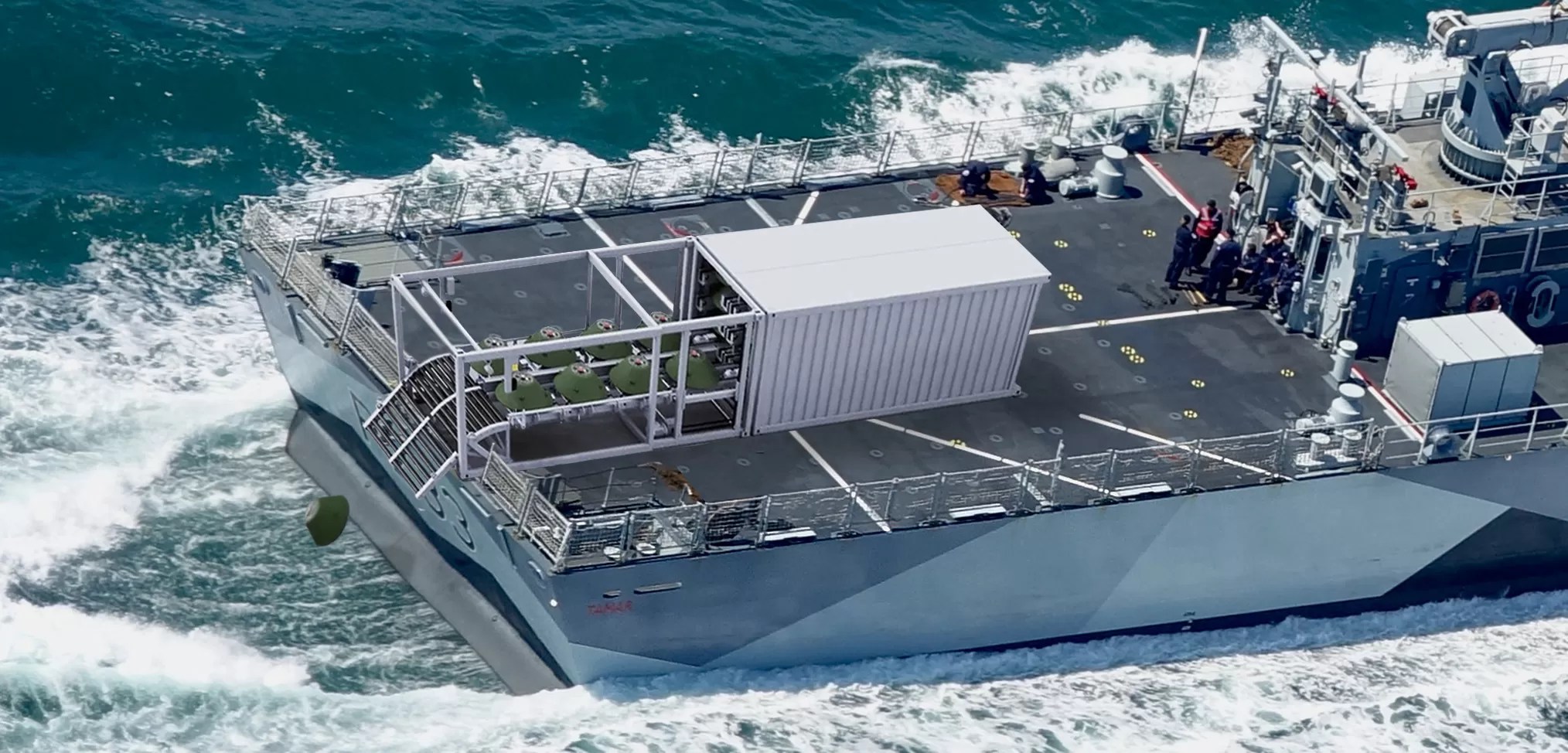
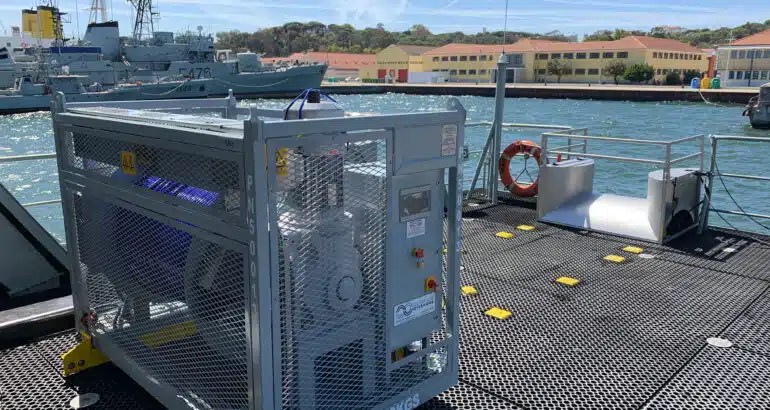
Containerized minelaying system on a River Batch 2 Offshore Patrol Vessel

It has been said that aircraft carriers are the ultimate modular warships because their primary weapons (aircraft) are interchangeable.

A flight deck on an Offshore Patrol Vessel (OPV) certainly offers a degree of aviation options. General purpose, cargo, ASW, and ASuW helicopters and a range of Unmanned Air Systems, but it appears our allies, the UK and particularly Australia may be looking at other ways to use this large open space.

Royal Navy:

Navy Lookout had a post that talked about restoring a naval mining capability in the Royal Navy. There was no specific reference to using flight decks or to Offshore Patrol Vessels.

The RN does not need dedicated minelaying vessels. The SSNs have a theoretical minelaying capability but XLUUVs are a much lower risk and stealthier solution for covert and sensitive missions. Where stealth is less important, containerised minelaying solutions are being developed that can be secured to the deck and dispense mines over the stern. (emphasis applied–Chuck)

But the photo, above, definitely got my attention. There we see an SH Defence “CUBE” containerized mine laying system developed by RWM Italia S.p,A. (Rheinmetall). on the flight deck of a River Batch 2 Offshore Patrol Vessel (HMS TAMAR).

Australian Navy:

Australia is planning to produce up to 14 flight deck equipped Arafura class OPVs including two intended specifically for Mine Counter Measures (MCM). These ships were always intended to accept containerized mission loads. It appears they are now planning what these ships will do in wartime.

Missile Launcher:

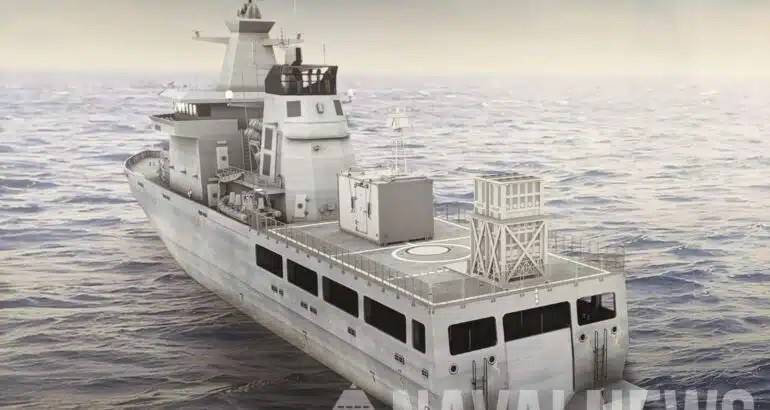
We already saw “Australia Considering Modular C-Dome For Arafura OPVs” –Naval News

Australia Considering Modular C-Dome For Arafura OPVs
Illustration of Arafura-class OPV fitted with C-DOME

Mine Layer:

As noted in the Navy Lookout, Australia is planning to buy and produce large numbers of mines. Naval News reports,

“Australia is set to accelerate the procurement of sea mines as part of Project SEA 2000…The decision to rapidly procure the capability, reportedly from a European supplier, will deliver a ‘significant’ deterrent effect according to Defence…it’s understood that the government has budgeted approximately $500 million to 1 billion Australian dollars for the acquisition…the weapons being brought are smart mines, able to disseminate between civilian vessels and a variety of military targets, allowing a strategic anchorage to be denied to hostile forces, all the while preserving access for aligned vessels(emphasis applied–Chuck)

This all points to large numbers of mines being used in defensive fields. Such minefields will almost certainly be laid by surface vessels. Australia does have some civilian crewed support ships that might be used for mine laying, but as the Arafura class comes online, they will be the most likely surface minelayers.

SURTASS-E:

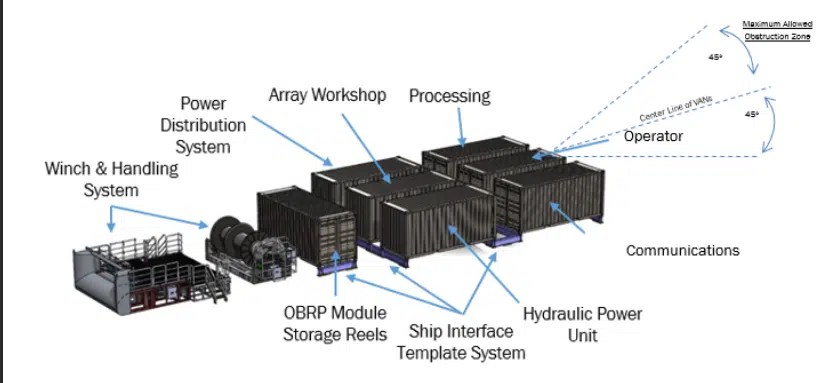
SURTASS-E. (U.S Department of Defense)

Then there is these reports from Naval News and The Drive that Australia is getting SURTASS-E systems.

SURTASS-E is expected to provide long range detection and cuing for tactical weapons, against both diesel- and nuclear-powered submarines. Again, the Arafura class seems a likely host, because the system is intended for military crew manning and, unlike the civilian manned National Support Squadron ships, these ships are armed and have communication systems that include tactical data link.

Now About the Coast Guard:

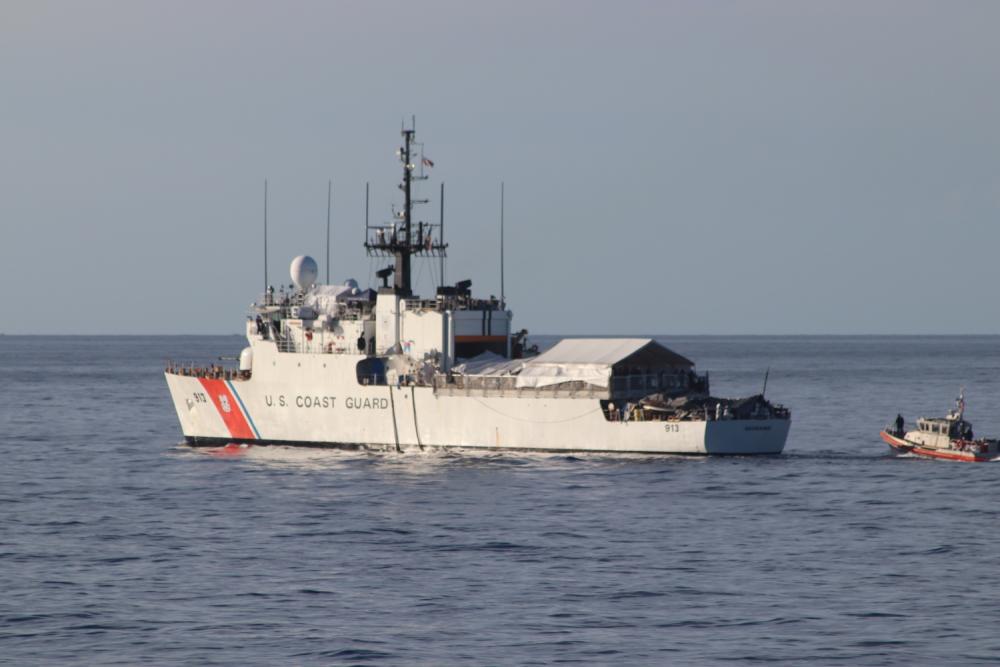
Using a flight deck for non-aviation purposes is not a foreign idea to the Coast Guard. They do it all the time to provide a holding area for migrants. 

USCGC Mohawk’s (WMEC 913) crew patrols the South Florida Straits during Operation Vigilant Sentry, Jan. 5, 2023. Mohawk’s crew patrolled the Florida Straits and Caribbean Sea in support of Homeland Security Task Force—Southeast and Operation Vigilant Sentry in the Coast Guard Seventh District’s area of operations for a 46-day patrol. (U.S. Coast Guard photo by USCGC Legare (WMEC 912)

“ASEAN Coast Guard Forum strengthens cooperation to combat maritime threats” –Indo-Pacific Defense Forum

Coast guard leaders and personnel from member states of the Association of Southeast Asian Nations participate in the June 2023 ASEAN Coast Guard Forum in Jakarta, Indonesia. IMAGE CREDIT: Indonesian Maritime Security Agency

Indo-Pacific Defense Forum reports on the second annual ASEAN Coast Guard Forum.

“Representatives of the coast guards of Brunei, Indonesia, Malaysia, the Philippines, Singapore and Thailand attended the meeting…The inaugural ACF was held in Bali, Indonesia, in November 2022. The next ACF will be held in the Philippines in 2024, with Thailand serving as host in 2025.”

Good to see growing regional international cooperation between coast guard agencies. Similar organizations include the North Pacific Coast Guard Agencies Forum initiated by the Japan Coast Guard in 2000 and the Arctic Coast Guard Forum established in 2015.

Coast Guard in Oceania in the News

The USCGC Oliver Henry (WPC 1140) crew arrives in Manus, Papua New Guinea, on Aug. 14, 2022, from Guam as part of a patrol headed south to assist partner nations in upholding and asserting their sovereignty while protecting U.S. national interests. The U.S. Coast Guard is participating with partners to support the Pacific Islands Forum Fisheries Agency-led Operation Island Chief and the larger Operation Blue Pacific through patrols in the Western Pacific in August and September 2022. (U.S. Coast Guard photo by SW3 Victor Villanueva, NMCB-FOUR)

A couple of recent articles about the US relations with Palau and Papua New Guinea.

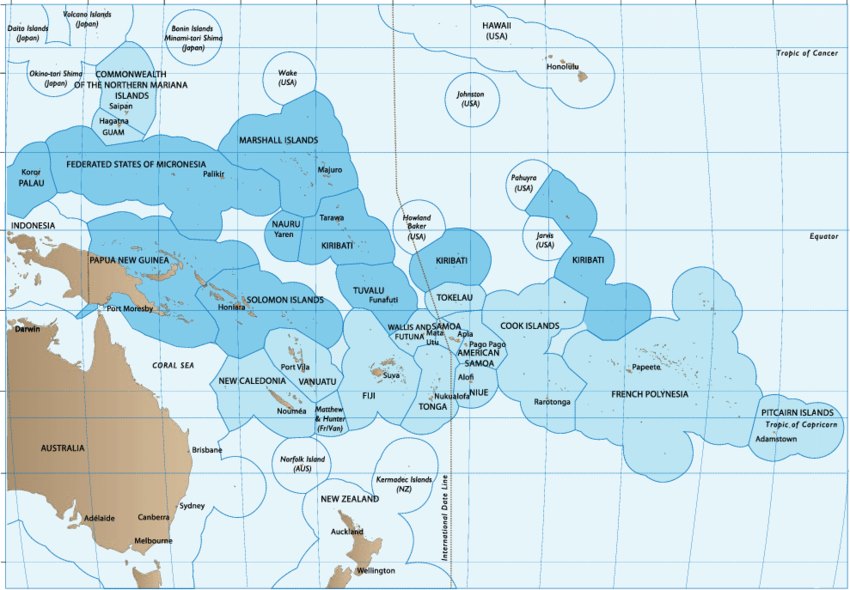
Map of the exclusive economic zones in the Pacific.

There has long been interest in a US base on Manus, Papua New Guinea, but this is politically sensitive. Basing cutters there that protect an important economic resource and occasionally rescue the locals when they get in trouble, would probably be most welcome.

On the map above, Manus and Guam do not look that far apart, but Manus is 1,737.88 km (938 nautical miles) SSE of Guam. That is about the distance from Miami to New York City. 

Cutters based in Manus would be closer to parts Freely Associated States (FAS) of Palau and Federated States of Micronesia than cutters based in Guam and much closer to most non-FAS Micronesian nations. It might also be a good place to site a fixed wing forward operating base (CGAS Honolulu DET).

I am beginning to think we will see two new bases in the Western Pacific, one in American Samoa and one in Manus.

If we do end up with additional Webber class based outside Hawaii and Guam, we might need a squadron support organization similar to, and perhaps even larger than, PATFORSWA, to support all FRCs based in the Pacific South and West of Hawaii, e.g. a PATFORSWPAC.

“The Compacts of Free Association and the Role of the U.S. Coast Guard” –CSIS

Estimated exclusive economic zones (EEZs) of Pacific Island countries and territories (PICTs). The EEZs of countries that are the Parties to the Nauru Agreement are shown in darker blue. Note that not all EEZs of PICTs have been officially delineated under the United Nations Convention on the Law of the Sea. Source: Patrick Lehodey

(Before we start, CSIS also has a great overview of what has been going on in the Western Pacific/Oceania, “STRATEGIC UPGRADES IN THE PACIFIC,” that includes an interactive map. You might want to take a look at it if you want an update on what has been happening in the Western Pacific.)

The Center for Strategic and International Studies has a study proposing,

“One way for the U.S. to show value to the relationship is by aiding the FAS (Freely Associated States–Chuck) in combating illegal maritime activities, building maritime law enforcement capacity, and working with local government and civilian partners to conduct a range of maritime domain training using the USCG as the interlocutor.”

This seems to be encouragement to do more of what the Coast Guard is already doing as part of the aid package negotiations. But to do more, the Coast Guard needs more. US EEZ South and West of Hawaii is equal to 181% the size of the entire Atlantic Area (AA) EEZ, where more than half of all Coast Guard assets are assigned.

If we add the Freely Associated States:

Without considering the other eleven additional island states with EEZs totaling 7.3 times that of the entire Atlantic Area EEZ, the US and Freely Associated States alone have a combined EEZ 4.85 times that of the entire Atlantic Area, e.g., East Coast, Gulf Coast, Puerto Rico, and the Virgin Islands. Permanently based in this huge area we have exactly three patrol craft and a buoy tender, and not a single Coast Guard aircraft.

Will the Coast Guard get the four additional Webber Class Fast Response Cutters on their Unfunded Priorities List? Will there be at least a fixed wing aviation support detachment?

A US Coast Guard base in one of the Freely Associated States could be a win-win.

Thanks to Paul for bringing this to my attention.

“SEA To Provide KRAITSENSE ASW System For A South-Asian Navy’s OPV Program” –Naval News

KRAITSENSE ASW System. Photo credit: SEA

Naval News reports,

“UK-based anti-submarine warfare (ASW) solutions provider SEA has been awarded a contract to supply two of its innovative ASW systems, KraitSense, to a South-East Asian Navy for a new offshore patrol vessel (OPV) programme.”

I found another photo, below, in an earlier report.

KraitSense low profile passive sonar system. SEA picture.

It these systems perform reasonably well; they would be an attractive mobilization option for giving OPVs an ASW role. Even if not equipped with ASW weapons, adding sensors that can be coordinated with other surface and air weapons carriers would be helpful.

The SE Asian Customer?

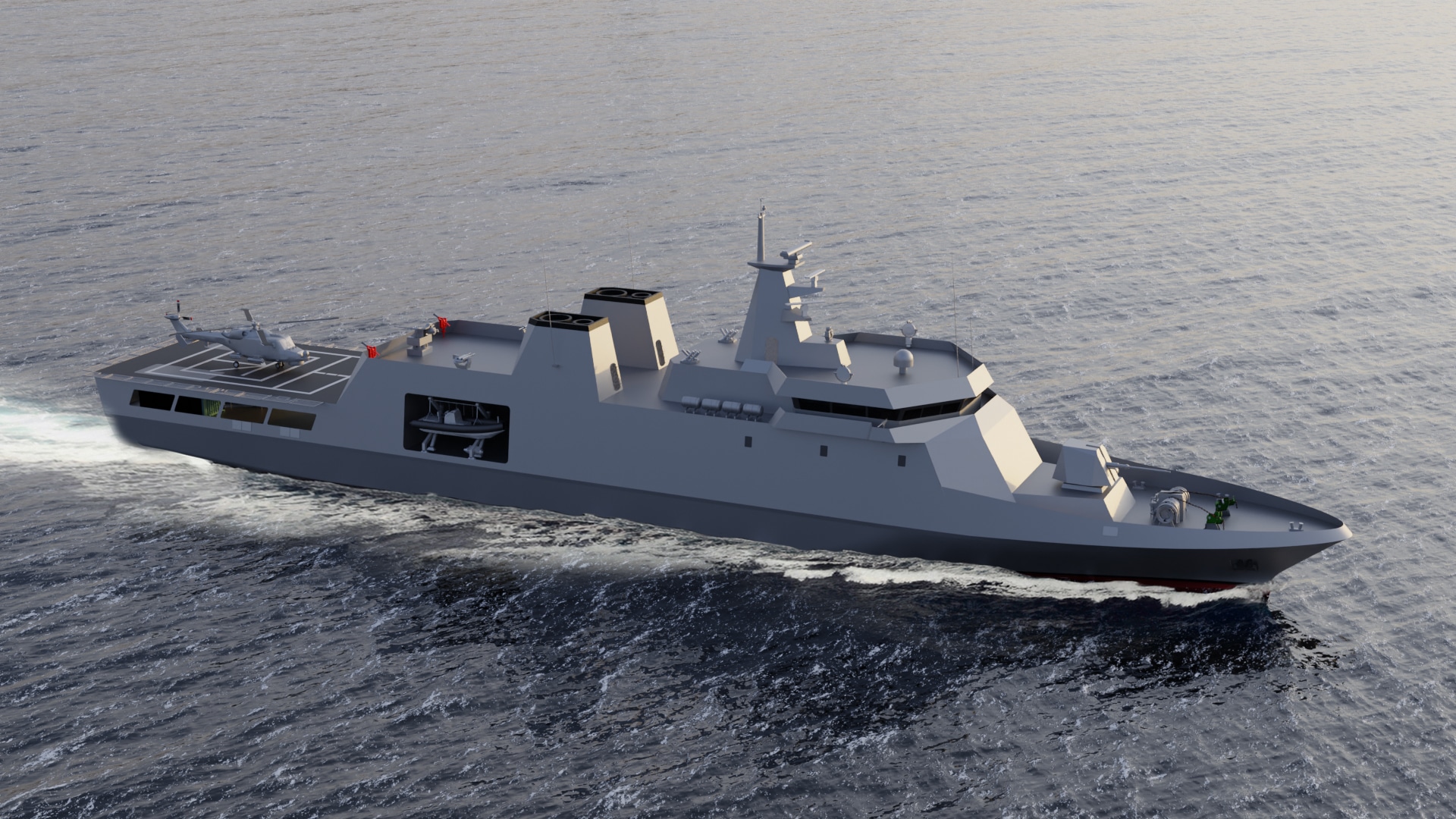
Artist impression of the future Philippine Navy OPV to be constructed by HHI. HHI image.

Who is the SE Asian country with, “With a vast coastline and high number of islands within their jurisdiction…” Think the Philippines may be most likely.

Hyundai Heavy Industries (HHI) is building six offshore patrol vessels (OPV) for the Philippine Navy (not their Coast Guard). At about 2400 tons, 94.4 meters (309 ft 9 in) in length, with a speed of 22 knots, they are pretty typical medium sized OPVs, except for one thing, Wikipedia reports that their armament, in addition to 76 and 30 mm guns, includes two sets of triple lightweight anti-submarine torpedo tubes. There is no indication of an ASW sensors. It is reported to have spaces for Multi-Mission Containerized Modules. The flight deck and hangar are sufficient for support of an ASW helicopter and/or UAS.

“Philippine, US, Japanese coast guards carry out anti-terror drill in disputed waters” –Radio Free Asia

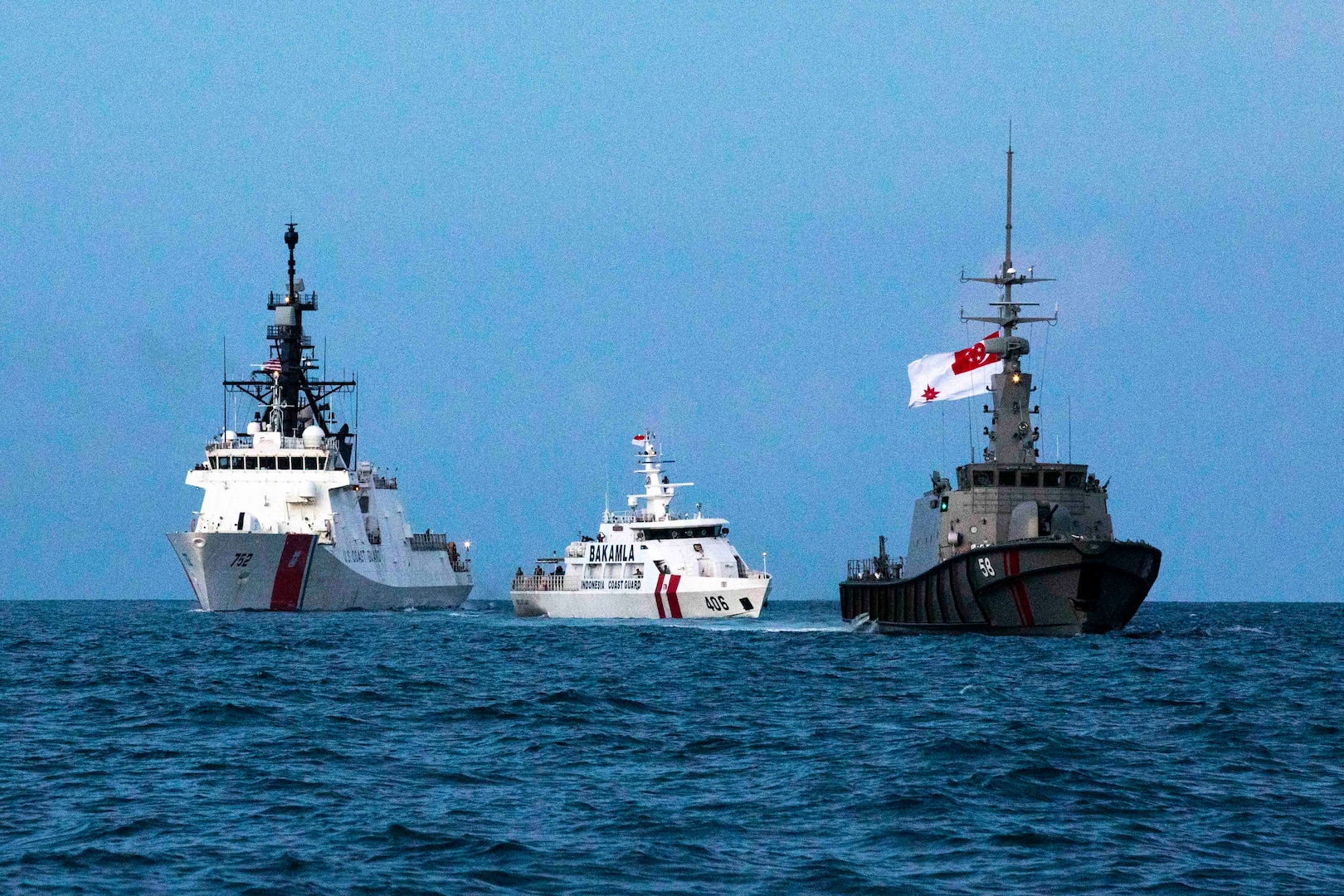
GlobalSecurity.Org has a report on a tri-lateral Counter-Terrorism exercise conducted by the US, Japan, and Philippine Coast Guards. This was part of an exercise discussed earlier. The USCGC Stratton was the USCG contingent. The photo above was taken a bit earlier and shows Stratton exercising with vessels from Indonesia and Singapore.

“NATO, partners promote rules-based Arctic, free and open sea lines of communication” –The Indo-Pacific Defense Forum

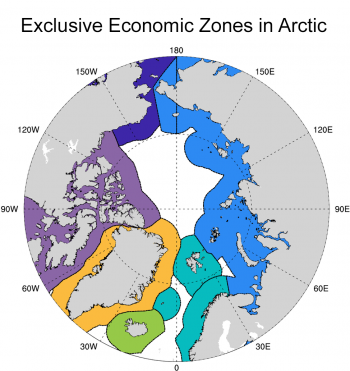
This map shows the exclusive economic zones (EEZs) within the Arctic: Canada (purple), Greenland (orange), Iceland (green), Norway (turquoise), Russia (light blue), and USA (dark blue).
Credit: DeRepentigny et al., 2020

The Indo-Pacific Defense Forum has a post which somewhat surprisingly talks about NATO concerns about the Arctic. I presume this is as a result of the recently concluded Shangri-La Dialog at which both the UK and Germany discussed future naval deployments to the Pacific. Canada pledged to increase its naval presence in the Pacific. Japan and S. Korea said they would put aside their differences and work more closely together. China also told “others” they should mind their own business and stay out of China’s backyard, defending their harassment of Western miliary units in the South China Sea.

We live in an interconnected world, and it appears the Arctic Ocean will become an important new connection between Europe and Asia. China, Russia, and Europe are particularly concerned about shaping the connection to their advantage and what that will mean in the long run is not yet clear.

An Arctic route could provide the US with an alternative to the Panama Canal for movement between the Atlantic and Pacific, but the US probably will not benefit as much from the opening of the Arctic Ocean as the Asians and Europeans. On the other hand, any traffic using the Arctic to pass between the Atlantic and Pacific will have to pass within about 32 nautical miles of the US at the Bering Strait and within less than 300 nautical miles of a US Aleutian Island. This puts the US in a good position to regulate any traffic using the Arctic for passage between the Atlantic and Pacific should we choose to do so.

The Indo-Pacific Forum post does not say much we have not heard before, but it did mention that the Chinese have, “…plans to build the world’s biggest icebreaker vessel.” Given the size of existing Russian nuclear powered icebreakers, that is going to be a very large ship.

There is a good possibility that Russian and Chinese aims in the Arctic may be in conflict. The Chinese are likely to want to transit the Arctic free of charge. The Russians will want them to pay for the privilege. The Chinese will want access to the resources of the Arctic while the Russians consider most of the Arctic to be Russian EEZ or continental shelf.

We have gotten along with the Russians pretty well in the Arctic, but we may be seeing an end to the Arctic as a zone of peace. Still, I don’t think the conflict will be between the US and Russia.

We should not forget that we may see that very large Chinese icebreaker in Antarctica.

“Indo-Pacific partners lead global fight against IUU fishing” –Indo-Pacific Defense Forum

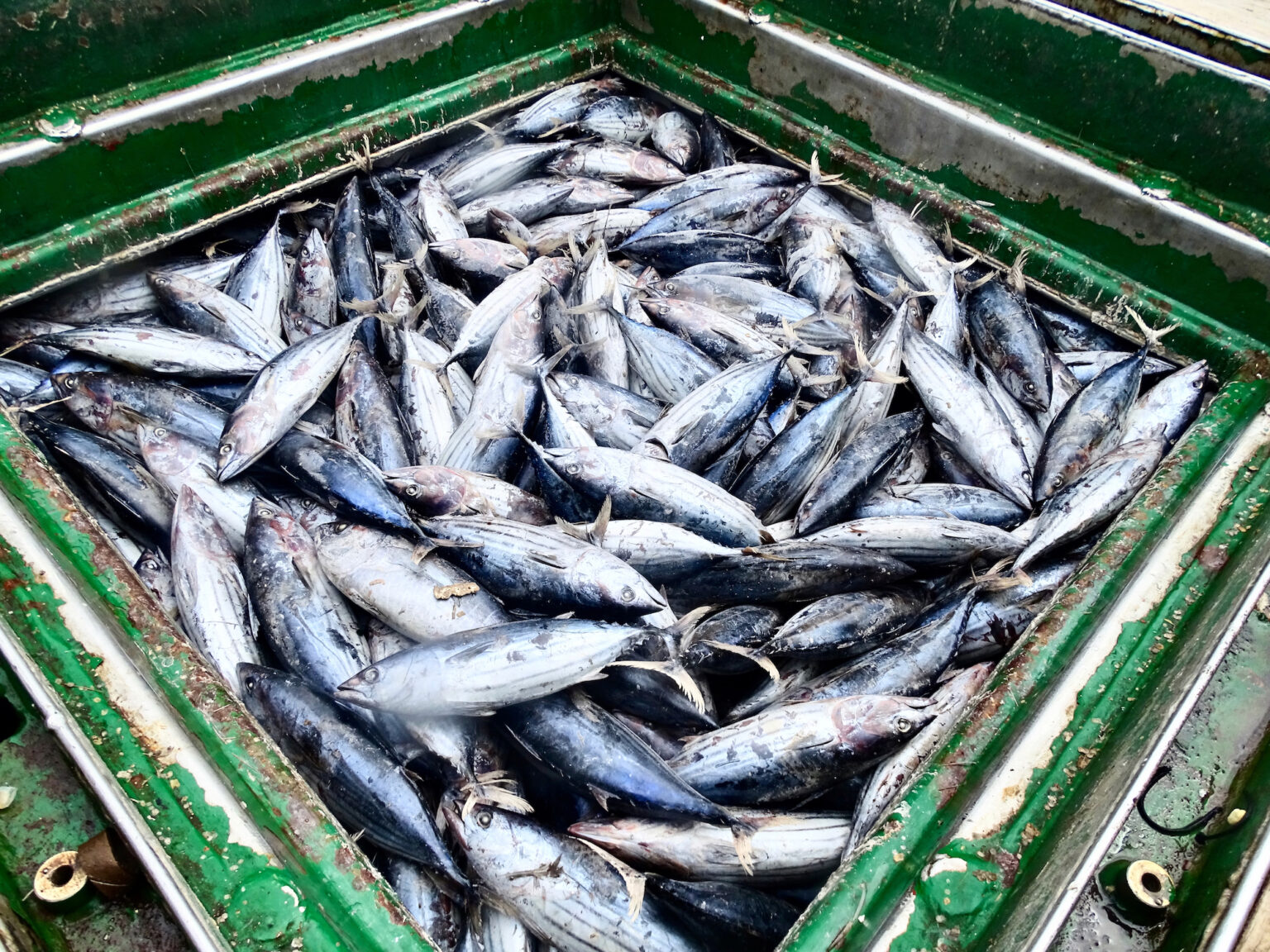
Catch is readied for inspection during a boarding by USCGC Frederick Hatch crew members and a local maritime officer in Micronesia’s EEZ. IMAGE CREDIT: PETTY OFFICER 2ND CLASS BRANDON CHAPLEA/U.S. COAST GUARD

The Indo-Pacific Defense Forum has a nice piece about cooperative efforts to curb Illegal, Unreported, Unregulated (IUU) fishing. USCG gets a lot of credit.