Buoy Tender, FRC, C-130 Used for International Fisheries Enforcement–Operation Southern Shield

PERU, 10.06.2023, Courtesy Photo, USCG District 11
San Francisco based USCGC Alder (WLB-216) raises the South Pacific Regional Fisheries Management Organization (SPRFMO) flag while patrolling the Eastern Pacific Ocean during Operation Southern Shield in October 2023. The Coast Guard recently completed the first high-seas boardings and inspections off the coast of Peru under a newly adopted multi-lateral agreement to monitor fishing and transshipment operations within the SPRFMO Convention Area, a region which encompasses nearly a quarter of the Earth’s high seas. (U.S. Coast Guard photo by Petty Officer 2nd Class Kenneth Honore)

Below is a District 11 news release. It came with 24 photos. I have included a few here. The captions are informative. I have edited some of the captions to include homeports and minimize duplication. I have also added a few links and the schematic below.

SPRFMO CONVENTION AREA
This schematic is available only to illustrate the Area of application of the SPRFMO Convention, which is described in legal terms in Article 5. The schematic is not part of the Convention text and has no legal status; it is not intended to reflect exactly the maritime spaces of adjoining coastal states.

PERU, 10.07.2023, Courtesy Photo, USCG District 11
The Coast Guard Cutter Alder approaches a squid fishing vessel while CG-2007, a C-130 from Air Station Barbers Point in Hawaii, flies over (upper left) during Operation Southern Shield 2023, October 2023. The Coast Guard recently completed the first high-seas boardings and inspections off the coast of Peru under a newly adopted multi-lateral agreement to monitor fishing
and transshipment operations within the South Pacific Regional Fisheries Management Organization (SPRFMO)Convention Area. (U.S. Coast Guard photo)

LIMA, PERU, 10.06.2023, Courtesy Photo, USCG District 11
The aircrew of the Coast Guard 2007, an HC-130 based out of U.S. Coast Guard
Air Station Barbers Point, Hawaii, poses for a picture with observers from the Peruvian Navy and Air Force, in Lima Peru, October 2023. During the course of two weeks, Peruvian observers accompanied the USCG aircrew as they conducted overflights of the fishing fleet on the high seas during Operation Southern Shield 2023. (U.S. Coast Guard photo by pilot-in-charge, Lt. Zachary Hunter)

There was a Webber Class WPC involved as well. This follows the pattern of pairing a WLB with an FRC for distant operations that we have also seen in the Western Pacific.

PERU, 10.06.2023, Courtesy Photo, USCG District 11
The crew of San Pedro based USCGC Terrell Horne (WPC-1131) conducts a patrol in the Eastern Pacific Ocean in support of Operation Southern Shield 2023, October 2023. (U.S. Coast Guard photo)

These operations followed an international exercise, GALAPEX 2023.

09.23.2023, Courtesy Photo, USCG District 11
Participants in GALAPEX 2023 pose for a group picture following a law enforcement boarding exercise during GALAPEX 2023, Sept. 23, 2023. Coast Guard Cutters Alder and Terrell Horne conducted a boarding of Ecuador Bae Isla Floreana as the first major exercise and introduction to GALAPEX, a recurring multi-national maritime exercise led by Ecuador and included participation with delegates from Argentina, Brazil, Chile, Colombia, Costa Rica, the European Union, France, Italy, Mexico, Panama, Peru, the United Kingdom, and the United States. (U.S. Coast Guard photo by Lt. j.g. Kimberly Byron)
09.25.2023, Courtesy Photo, USCG District 11
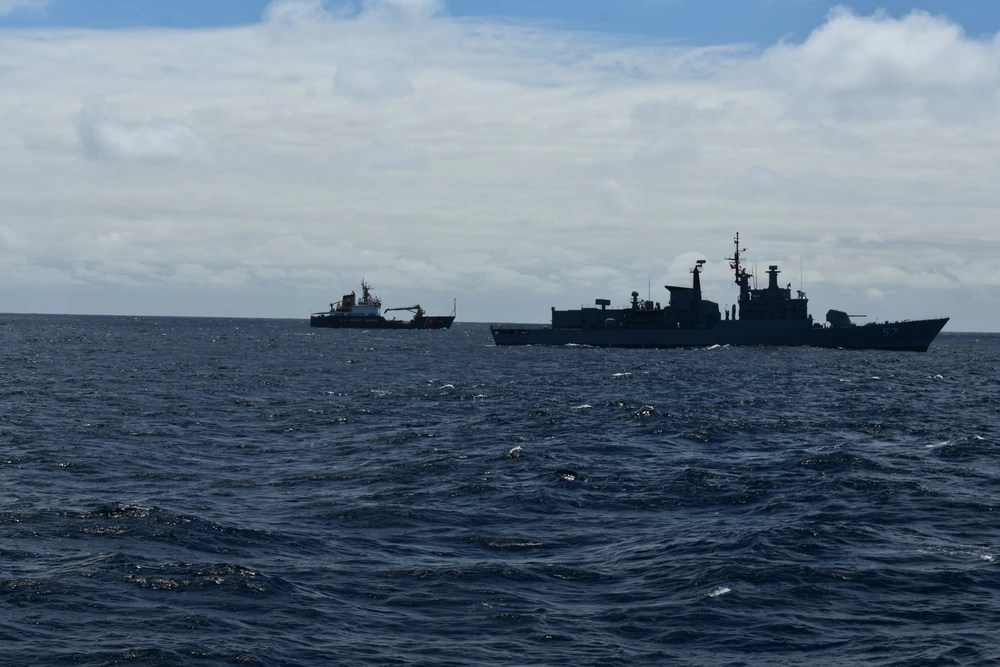
U.S. Coast Guard Cutter Alder (background) transits in formation alongside Peru BAP (Buque Armada Peruana) Bolognesi (FM-57) as it prepares for the next exercise during GALAPEX 2023, Sept.25, 2023. (U.S. Coast Guard photo)


 Oct. 16, 2023

Coast Guard Cutter crews conduct first high-seas boardings off the coast of Peru, under new SPRFMO measure

ALAMEDA, Calif. — The crews of the Coast Guard Cutters Alder, Terrell Horne and an HC-130 Hercules aircraft recently completed the first high-seas boardings and inspections, in the Eastern Pacific Ocean, under a newly adopted conservation and management measure to monitor and inspect fishing and transshipment operations at-sea in the South Pacific Regional Fisheries Management Organization (SPRFMO) Convention Area.

As part of Operation Southern Shield, the Coast Guard conducted boardings and overflights within the SPRFMO Convention Area on the high seas off the coast of Peru. For years, the Coast Guard has executed counter-illegal, unreported, or unregulated (IUU) fishing operations and participated in high seas boarding inspections (HSBI) around the globe. This operation was significant as it was timed to implement newly adopted rules in the SPRFMO Convention Area, which comprises nearly a quarter of the Earth’s high seas. The SPRFMO Commission consists of 17 members from Asia, Europe, the Americas, and Oceania, as well as two cooperating non-contracting parties. The primary species targeted in the Convention area are jack mackerel and jumbo flying squid.

Just prior to Operation Southern Shield, the Coast Guard participated in GALAPEX 2023, a recurring joint and multinational exercise hosted by Ecuador and executed in the vicinity of the Galapagos Islands. The Coast Guard conducted communications exercises, practiced counter-narcotics boarding scenarios, and hosted observers from Peru, Ecuador, and Brazil. GALAPEX culminated with full-scale exercises focused on a coordinated multinational response to counter IUU fishing. At the conclusion of the exercise, the Coast Guard patrolled south to focus on high seas boarding inspections off the coast of Peru.

“The U.S. Coast Guard remains committed to conducting combined maritime operations and exercises throughout the Eastern Pacific and will continue to capitalize on every opportunity to work with, learn from, and coordinate through our partners,” said Capt. James O’Mara, Chief of Enforcement for Coast Guard 11th District.  “The relationships our services build while planning and executing these operations are essential. The logistics required to enable these operations are significant, and it only happens with the tremendous support of partners like Ecuador and Peru.”

IUU fishing has replaced piracy as the leading global maritime security threat. Areas out on the high seas, beyond any country’s exclusive economic zone, can be exploited by fishermen engaged in IUU fishing, as they fish beyond the reach of most law enforcement entities. The Coast Guard’s actions provide inspection presence on the high seas among a distant water fishing fleet made up of more than 400 fishing and transshipment vessels. Much of the fishing in the Eastern Pacific is accomplished by these distant water fishing vessels, some which remain at sea for years at a time, and many of which are supported by transshipment vessels. The Coast Guard’s recent operation directly supported Central and South American partners and their desire to monitor and expand maritime domain awareness of fishing activity near their exclusive economic zones.

Each day during the operation a Coast Guard C-130 aircraft flew sorties over the fishing fleet on the high seas with observers from the Peruvian Navy and Air Force. The crew of the Coast Guard Cutter Terrell Horne also diverted to assist the Peruvian Navy in a search and rescue operation. The Terrell Horne located the vessel, then transported an injured fisherman back to shore to receive further medical care from local Peruvian officials.

“The U.S. Coast Guard is committed to working with our allies and partners to strengthen the international fisheries enforcement regime and stop the pervasive IUU fishing threat,” said Rear Adm. Andrew Sugimoto, commander, Coast Guard 11th District. “Operation Southern Shield is just the latest example of that commitment, and we will continue to model and support rules-based order. We applaud the SPRFMO Commission for adopting these latest inspection guidelines and hope to see additional management measures adopted in the future to ensure the sustainability of our ocean resources. Last year we operated off the Galapagos, this year off the coast of Peru, and we will continue to deploy aircraft, cutters, and personnel to support our partners and monitor these distant water fleets wherever they roam. These operations help bring like-minded countries closer together to protect vulnerable fish stocks, support the economic stability of coastal nations, the livelihoods of small-scale and artisanal fishermen, and safeguard ocean resources that fuel global populations and economies.”

“USNI News Fleet and Marine Tracker: Oct. 10, 2023” –USNI

A U.S. Coast Guard Cutter Healy (WAGB 20) crew member looks at Tromsø, Norway as the cutter departs Tromsø, Oct. 5, 2023. U.S. Coast Guard Photo

The US Naval Institute’s Fleet and Marine Tracker for 10 October again reports only two Navy ships operating with 4th Fleet.

I find their statistical information interesting. For instance, 23.1% of the Navy’s ships are underway and 33.1% are deployed. The fleet includes both regular Navy (USS) and Military Sealift Command (USNS) ships. 27.7% of regular Navy ships are deployed, while 54.2% of MSC ships are deployed. 33% of the fleet deployed are MSC even though MSC is only 20.3% of the total fleet. There is no USS/USNS breakdown for ships underway, but I would bet the MSC ships are disproportionately more likely to be underway than the regular Navy ships so probably less than 23% of regular Navy commissioned ships are underway. These numbers are pretty typical.

I would really like to see some comparable figures for US Coast Guard ships. I think we would look pretty good.

We frequently hear that the US Navy ships are overworked, and I would not say that they are not, but I don’t think it is because they are underway too much. Other things must be the problem.

USCGC Munro is wrapping up her 7th Fleet deployment, stopping in Honolulu before returning to homeport, Alameda, CA. Icebreaker USCGC Healy (WAGB-20) is in Copenhagen, a long way from her Seattle homeport.

Why Russia Should be Worried, “ARCTIC PRC’s 13th Arctic expedition creating concerns for Russia” –The Watch

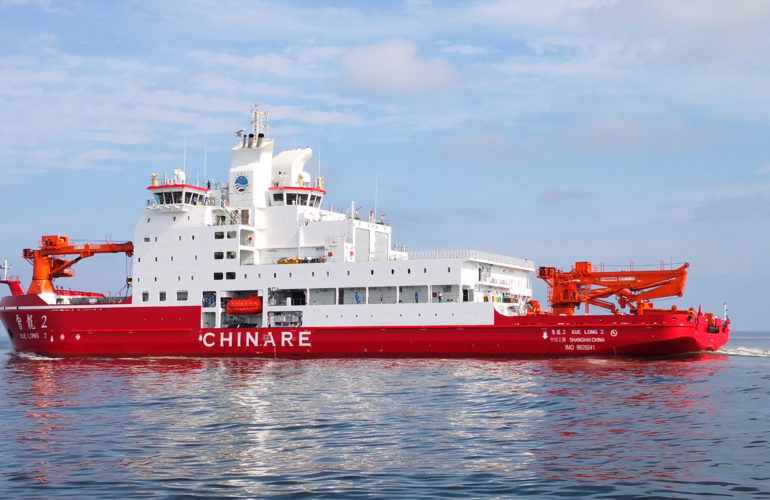
Xue Long 2 on sea trials. Photo by PRIC.

NORTHCOM’s online magazine, “The Watch,” gives us a balanced, non-alarmist, look at Chinese Arctic activity, but also tells us why maybe Russia should be worried.

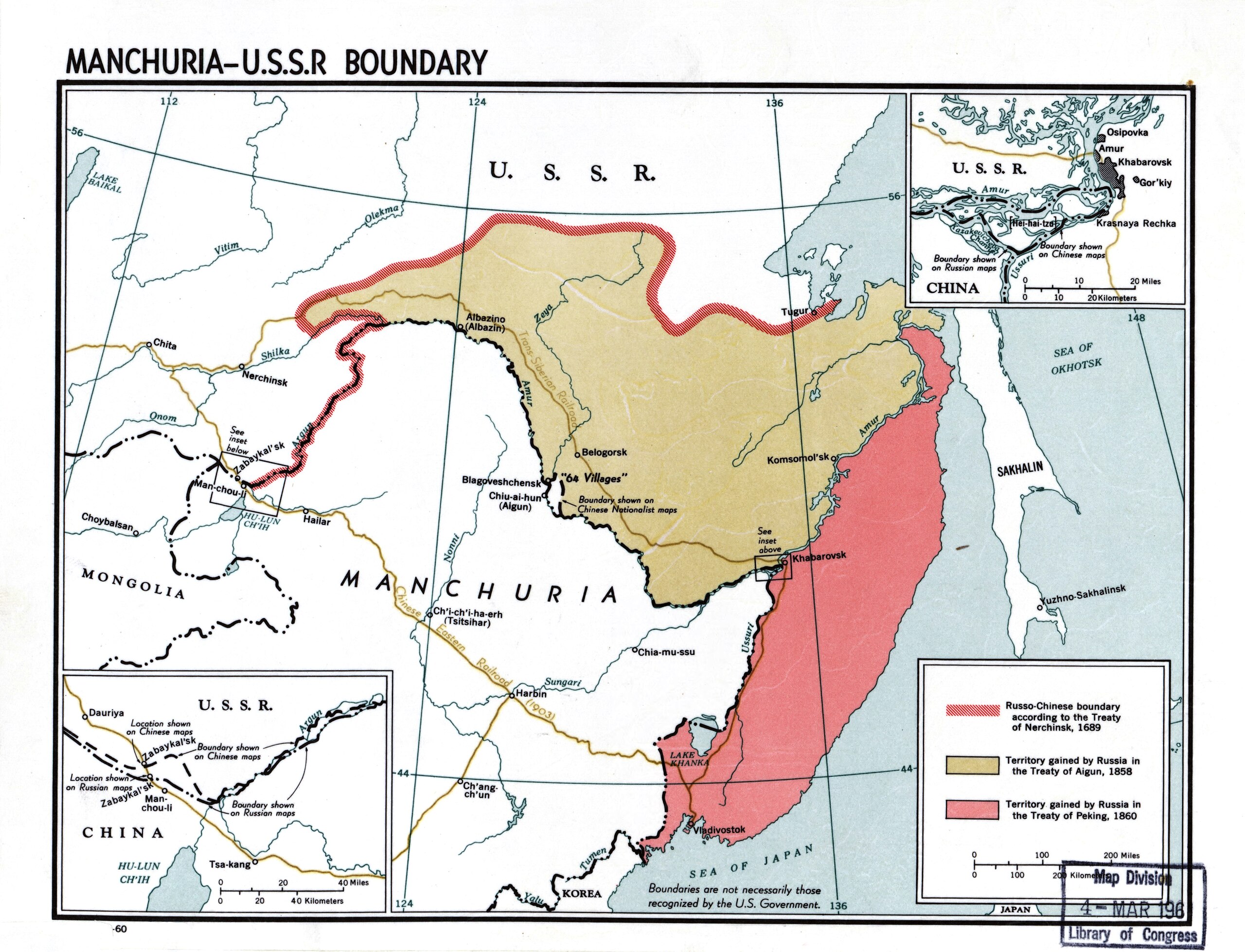
I have contended for a long time that sometime in the future, China will turn on Russia and recover those parts of China ceded to Russia as a result of unequal treaties (and here) in the 19th Century, during what China calls the Century of Humiliation, and while they are at it, maybe a bit more. They have neither forgotten nor forgiven.  

Library of Congress Geography and Map Division Washington, D.C. 20540-4650 USA
DIGITAL ID g7822m ct002999 http://hdl.loc.gov/loc.gmd/g7822m.ct002999

China and Russia have a long history of conflict (here, here, here and here), There was a border conflict between China and Russia (then the Soviet Union) in 1969, when China was clearly the weaker of the two, that lead to China opening to the West and Nixon’s trip to China.

Russia and China’s current partnership has mostly benefited China. China benefited from technology transfers and reverse engineered Soviet and Russian weapon systems.

Now China is clearly stronger than Russia in just about everything except nuclear weapons, and they are now rapidly growing their nuclear capability.

If China should decide retaking Taiwan, which has 215,000 active military and 2,310,000 reservists, a tech savvy population of about 24 million, and is protected by the 100-mile-wide Taiwan Strait and has potential help from powerful allies, may be too risky, they may decide recovery of Outer Manchuria is a good consolation prize.

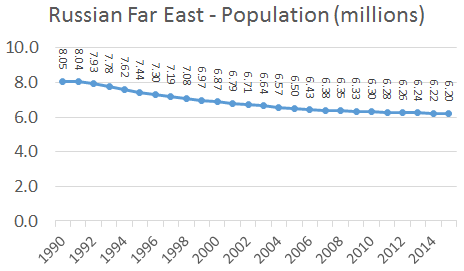
Population of the Russian Far East, 1990-2015 Data source: Fedstat. Author: Underlying lk. (About four million of these live in former Chinese territory.)

The Russian population in the Far East is small and declining. Russian infrastructure connecting industrialized European Russia with the FarEast is weak. Most of the Russian military is in Europe, and their weakness has been exposed in Ukraine.

If China attempted to retake land formerly part of China, they would want to cut Russia’s East/West logistics links. Taking out the few railroad links using airpower would be relatively easy. Air links can’t carry much in the way of heavy equipment. Most Russian supplies and material reinforcements would have to come by sea. Even if the Chinese did not interdict Russian traffic on the Norther Sea Route as suggested in the linked post, China’s Navy and Air Force could dominate Russian access to the Sea of Japan, including the primary Russian Pacific Fleet base in Vladivostok. Chinese submarines and their rapidly expanding force of aircraft carriers could probably cut off access to the Sea of Okhotsk and Petropavlovsk.

From a Chinese point of view recovery would be justified and perhaps far less costly than an amphibious invasion of Taiwan.

If the Russians can be made to see the righting on the wall, they might even be willing to sell the territory back to their friend at wholesale.

“USNI News Fleet and Marine Tracker: Oct. 2, 2023”

Royal Navy vessel HMS Spey (P234) (foreground) conducts coordinated ship maneuvers with U.S. Coast Guard Cutter Munro (WMSL 755) Sept. 17, 2023, in the South China Sea. US Navy Photo

Not much new in the US Naval Institute Oct, 2nd Fleet and Marine Tracker. Still only two Navy ships operating under 4th Fleet. I don’t expect that to change much if at all. With Jacksonville based LCS being decommissioned, it may actually get worse. But the Naval Institute did give us a couple of great photos.

USCGC Healy (WAGB-20) and the Norwegian Coast Guard Vessel Svalbard sail in formation while en route to conduct joint exercises in northern Norway in the Barents Sea. US Coast Guard Photo

USCGC Healy has a long way to go to get back to her homeport, Seattle. Incidentally Svalbard, like Healy has made it to the North Pole. In 2020, when Healy was having difficulty, Svalbard took over a mission for Healy.

“US Coast Guard Cutter Forward returns home following 78-day deployment in the high northern latitudes” –News Release + Second Look at Harriet Lane

Below is a news release reporting an unusual 270 foot East Coast WMEC deployment including a high latitude multi-national exercise, deployment of a Navy Unmanned Underwater Vessel (UUV), enforcing fisheries on behalf of an international organization, hosting 40 international guests at the 2023 U.S.-Pacific Island Country Summit, and helping U.S. Navy’s Afloat Training Group Atlantic develop their Arctic training program. (Note–more photos at the link above.)

In the photo above and particularly at the end of this video of the homecoming, you can also see USCGC Harriet Lane (WMEC-903), second from the left in the photo, fresh from its Service Life Extension Program (SLEP) refit, with its Mk92 firecontrol removed and her 76mm Mk75 replaced by a 25mm Mk38 (presume she did not get the newer 30mm). I think I was mistaken earlier, in thinking her AN/SLQ-32 electronic warfare system had been removed. I believe I see it still installed on the video. Harriet Lane is expected to assume duties as a dedicated Central and Western Pacific asset in the near future.

Sept. 26, 2023

US Coast Guard Cutter Forward returns home following 78-day deployment in the high northern latitudes

PORTSMOUTH, Va. – The crew of the U.S. Coast Guard Cutter Forward (WMEC 911) returned to their homeport in Portsmouth, Tuesday, following a 78-day deployment in the North Atlantic Ocean.

Throughout the deployment, Forward supported the U.S. Coast Guard’s Arctic Strategy and partnered with allied nations and agencies during Operation Nanook 2023, an annual Canadian-led military exercise to strengthen maritime objectives in the high northern latitudes.

Alongside Canadian and French forces navigating the waters of the North Atlantic Ocean, Forward’s crew performed training evolutions including towing and formation steaming, replenishment at sea, visual communications tactical signaling, and cross-deck exercises. In addition, an attached team from Coast Guard Tactical Law Enforcement Team Pacific conducted a boarding exercise with French Navy vessel BSAM Garonne to demonstrate at-sea capabilities and assist in enhancing partner training curriculums.

During the deployment, Forward also completed two living marine resources enforcement patrols. The first was carried out in support of the First Coast Guard District’s living marine resources mission. The second, conducted alongside international partners, was focused on commercial fishing vessels inspections as part of the Northwest Atlantic Fisheries Organization. The NAFO fisheries patrol ensured compliance with international fishing norms while safeguarding natural resources and preserving fish stocks, all reinforcing U.S. dedication to combatting illegal, unregulated, and unreported fishing.

Forward collaborated with embarked U.S. Navy personnel from the Unmanned Undersea Vehicle Flotilla-1 team to launch their Razorback UUV. The undersea vehicle, equipped with mapping and sonar capabilities, deployed deeper than any U.S. Navy submersible and traveled to a depth of nearly 2,000 feet (600 meters).

Members from the U.S. Navy’s Afloat Training Group Atlantic were also embarked aboard Forward to help build their service’s Arctic Vision Initiative, which will serve to inform U.S. Navy training entities of seamanship, navigation, engineering, and medical considerations necessary for operating naval vessels in the polar regions.

Forward sailed more than 10,500 nautical miles while the crew liaised with international partners through a series of port calls. Forward visited Halifax, Nova Scotia, Canada, during their Natal Day celebration to observe the province’s birthday. Crew members then traveled to Nuuk, Greenland, and completed a short visit to St. John’s, Newfoundland, Canada, before transiting back to the United States.

Forward ended the deployment by hosting several Indo-Pacific heads of state who were participating in the 2023 U.S.-Pacific Island Country Summit in Baltimore, Maryland. Approximately 40 international guests joined Forward for a tour and reception ahead of the transfer of U.S. Coast Guard Cutter Harriet Lane (WMEC 903) to a Pacific Ocean homeport.

“We had the opportunity to advance objectives of the Arctic Strategy and support the IUU Fishing Strategic Outlook,” said Cmdr. Staci Rutsch, commanding officer of Forward. “Acting as true ambassadors, we represented the nation in diplomatic engagements with NATO partners, reinforcing U.S. interests and solidifying the USCG as being the partner of choice. This crew’s ability to shift to perform highly in our non-standard missions leaves me impressed and motivated every day.”

For information on how to join the U.S. Coast Guard, visit www.GoCoastGuard.com to learn more about active duty and reserve officer and enlisted opportunities. Information on how to apply to the U.S. Coast Guard Academy can be found here.

For more, follow us on FacebookInstagram and Twitter.

“ASEAN kicks off its first-ever joint military drills in Indonesia” –Reuters

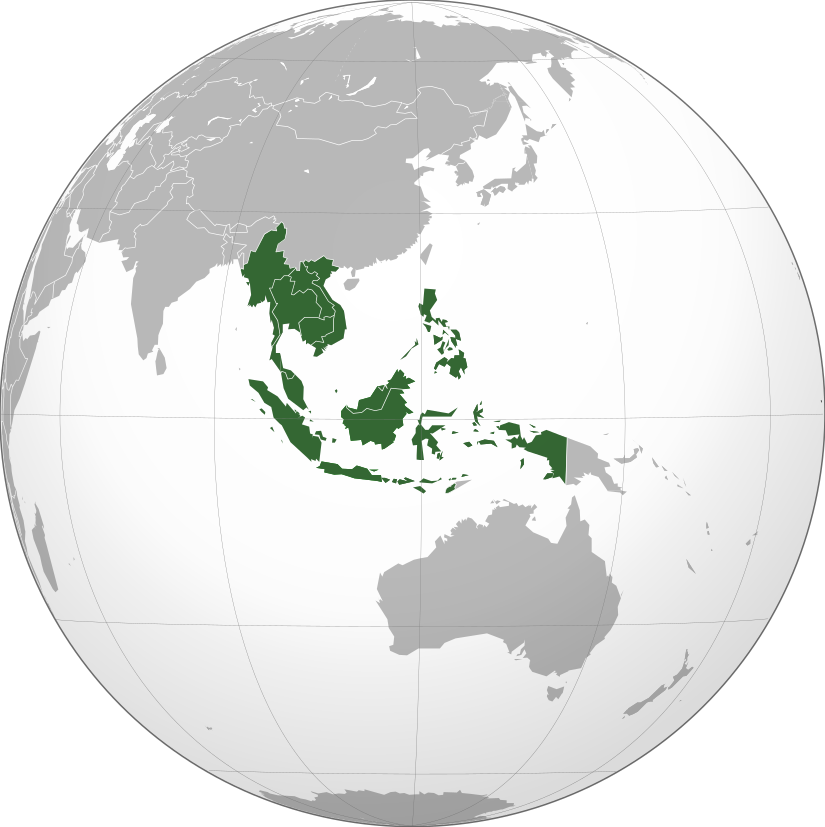
Association of Southeast Asian Nations in orthographic projection. Credit: Addicted04

Reuters reports,

“Units from the countries of ASEAN began their first ever joint military drills in Indonesia’s South Natuna Sea amid rising geopolitical tensions between major powers and protests against China’s activities in the South China Sea…The five-day non-combat operation is aimed at developing military skills, including maritime security and patrols, and the distribution of humanitarian assistance and disaster relief, the Indonesian military said in a statement.”

This is a step toward establishment of recognized norms and cooperative law enforcement by ASEAN members in the South China Sea.

Significantly Indonesia is taking a leadership role. Indonesia seems to be the most aggressive nation in ASEAN with regard to protecting their EEZ assets.

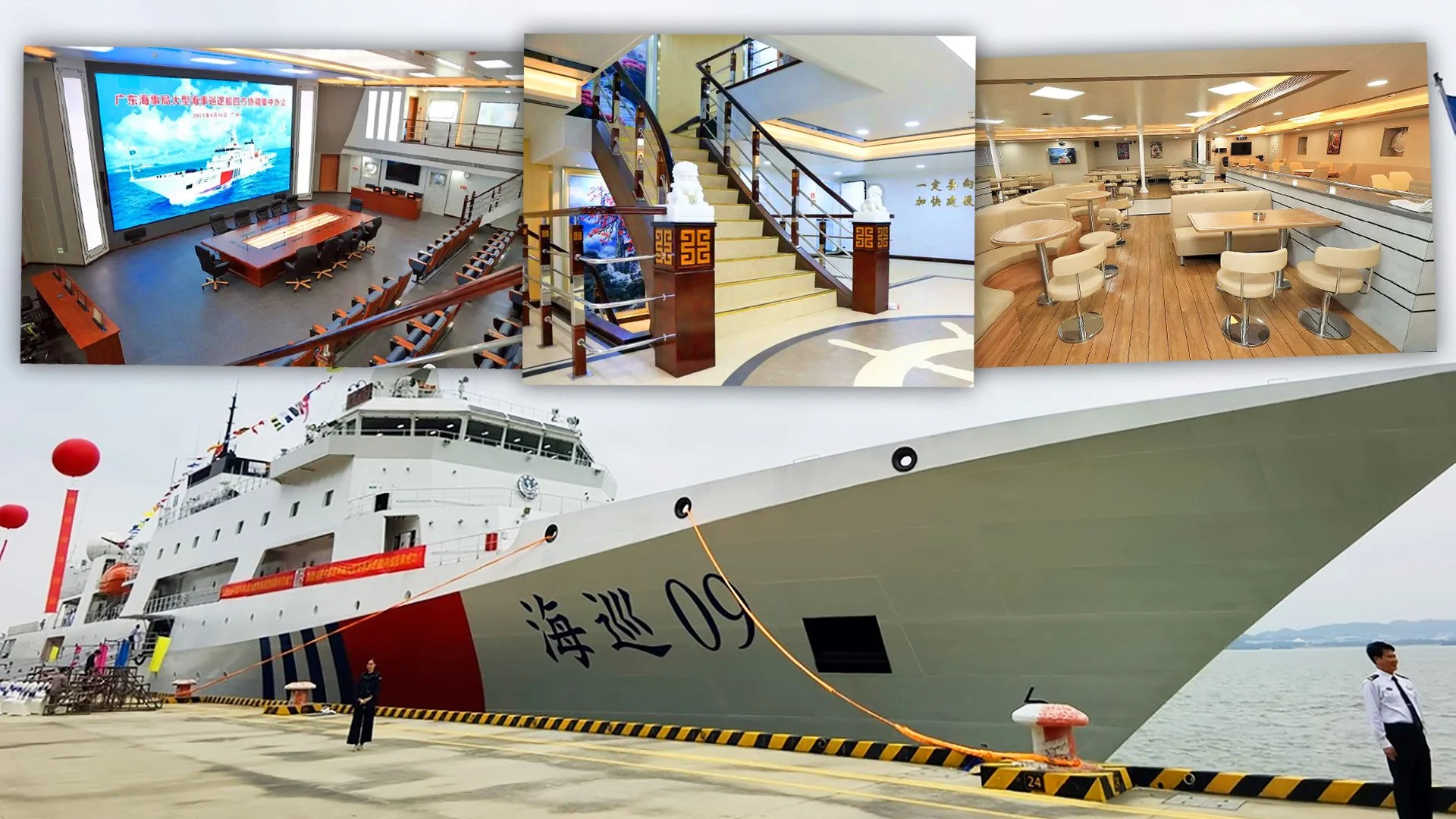
“China’s Massive New Maritime Patrol Ship Looks Like A Cruise Ship Inside” –The Drive

China Maritime Safety Administration’s Haixun-09

This came out in 2021. I missed it at the time, but it is still interesting. Have not heard any reports of the utilization of this massive ship since it was completed.

There is plenty of speculation within the post as to how the ship will be used. Note this is not China Coast Guard. The China Maritime Safety Administration was the only one of China’s five agencies with Coast Guard like missions that was not consolidated into the China Coast Guard.

Proceedings Podcast EP. 351: USCG Pacific Area Commander on Maritime Governance

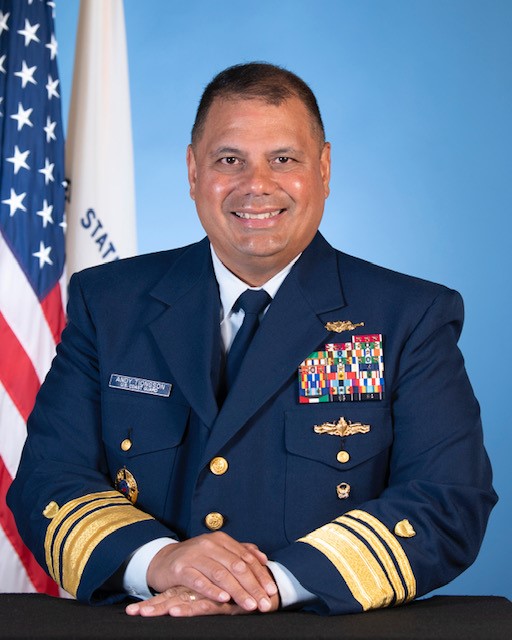
Vice Adm. Andrew J. Tiongson, Commander Coast Guard Pacific Area

The US Naval Institute has a pod cast interview of the PACAREA Commander.

Initially, there were questions about the Coast Guard’s response to the fires on Maui and Tropical Storm Hillary’s landfall in Southern California.

There was a lot of talk about the Coast Guard being a trusted partner, both internally and internationally, and the cooperative relationship the Coast Guard has developed with island nations in the Pacific, that have resulted in 13 bilateral agreements including some “enhanced” ship-rider agreements that permit the Coast Guard to act on behalf of island nations, even if there are none of their citizens aboard.

He said Harriet Lane should be in the Pacific before the end of the year.

He also talked about his potential role as Commander, Defense Force, West, under NorthCom.

There were some of surprises.

  • The Canadian Coast Guard has leased a commercial vessel and the USCG is providing a law enforcement detachment. I presume they are operating in the Western Pacific because there would be no reason to use a USCG LEDET in Canadian Waters.
  • That the House version of the budget includes four additional Webber class FRCs, three more for Guam and another for Honolulu.
  • The Coast Guard is opening a “Center for Excellence,” a regional activity center, in Hawaii, that will provide training in fisheries enforcement and environmental response for friendly nations. Should help form cooperative relationships across the Pacific.

I was also pleased to learn that VAdm. Tiongson had had a tour on USS NORMANDY (CG-60) as part of the U.S. Coast Guard – U.S. Navy exchange program. Apparently, it did not hurt his career.

The interviewer, Host Bill Hamblet, said he presumed PACAREA had the lion’s share of Coast Guard assets. VAdm. Tiongson did not answer that, but I can’t let it pass, because in my view the Coast Guard is still underrepresented in the Pacific.

About 84% of the US EEZ is in PACAREA, but LANTAREA will have 55% of the National Security Cutters. LANT has 81.5% of the WMECs (22 out of 27, counting Harriet Lane as in the Pacific), and 76% of the current 54 FRCs. Current plans are for PACAREA to have only 18 of the 65 FRC currently funded, less than 28%.

The situation may not be quite as bad as it looks, because LANTAREA assets are actually closer to the Eastern Pacific drug transit zones than PACAREA assets, so LANTAREA assets to operate frequently in the Eastern Pacific, but the asset distribution is still off, and PACAREA’s workload has been increasing with the emphasis on IUU fishing in the Pacific.

United States Exclusive Economic Zone – Pacific centered NOAA map

Three Articles About the Webber Class FRC

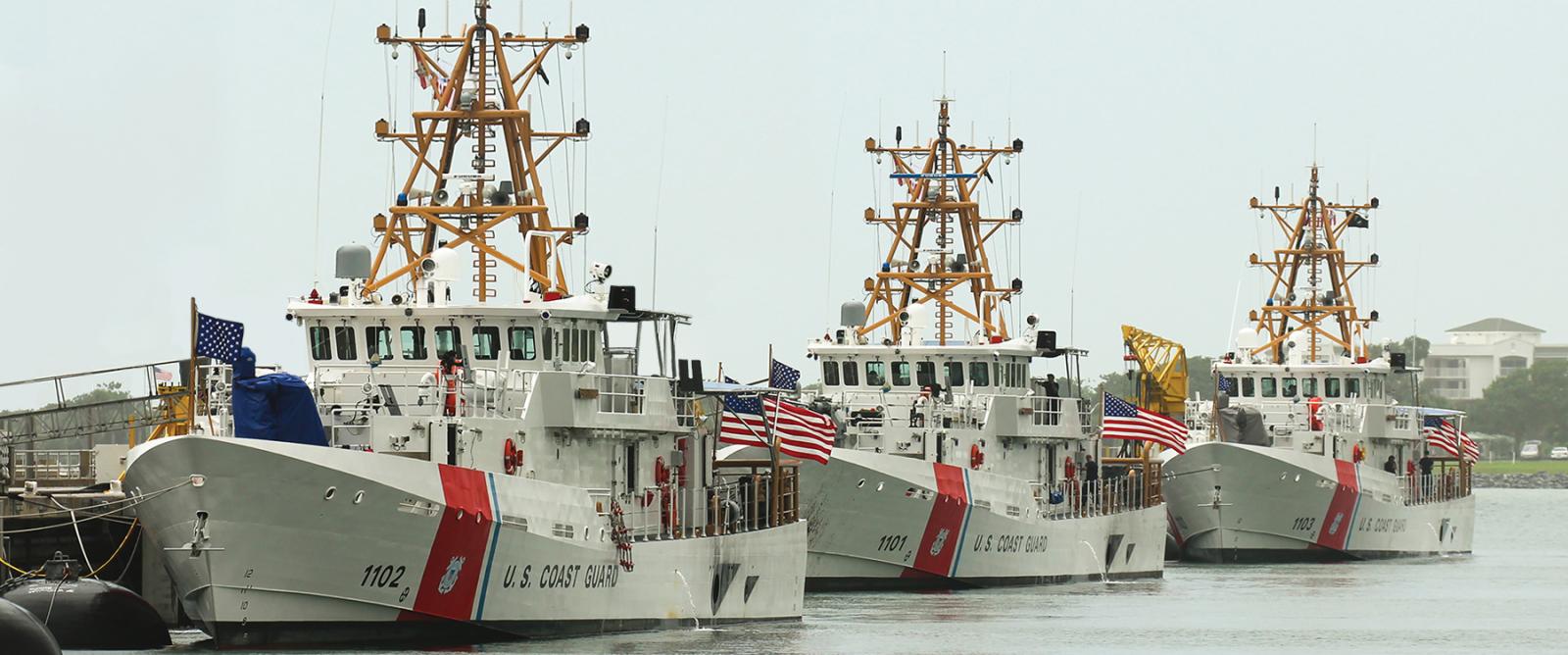
The first three fast response cutters—the USCGC Richard Etheridge (WPC-1102), Bernard C. Webber (WPC-1101), and William Flores (WPC-1103).
U.S. COAST GUARD

The September issue of US Naval Institute Proceedings has two articles about the Webber class WPCs that are currently featured articles online.

MSN shared a 1945 article by James Holmes, J. C. Wylie Chair of Maritime Strategy at the Naval War College, that seconds Cdr. Hulse proposal, “The U.S. Navy Needs Sentinel-Class Cutters to Serve as Missile Patrol Craft,

These are the right ships to help carry out U.S. maritime strategy in congested coastal terrain such as the Western Pacific, in wartime and times of tense peace alike. Denying an antagonist like China’s navy access to waters around and between Pacific islands is the strategy’s beating heart. Swarms of small, cheap, lethal surface and subsurface warships working with aircraft overhead and troops on the islands can close the straits along the first island chain, laying fields of overlapping fire that imprison Chinese sea and air forces within the island chain and bar the return home to units plying the Western Pacific. For self-defense, small surface combatants can mingle with merchant traffic amid East Asia’s cluttered maritime geography. In so doing they obscure their whereabouts and turn ambient conditions to tactical advantage. Let Chinese rocketeers try to distinguish friend from foe.

The first article by Lt. Chan suggests, 

Continuing production of fast response and national security cutters and transferring early hulls to regional allies would improve deterrence and interoperability.

This may not seem to make sense from the Coast Guard’s point of view in that USCGC Bernard C. Webber was commissioned in 2012 and the last of the 65 funded vessels of the class will be commissioned in about three years at which point the Webber will be only about 14 years old, still pretty new for a Coast Guard vessel. But looking at this from a whole of government perspective it looks a bit different. State Department hopes to gain or maintain influence with friendly nations that may not be able to afford adequate resources to patrol their waters. We also have an interest in the health of our ship building industry. There is presidency for this. Australia has twice built new patrol boats for their Western Pacific neighboring island nations. The Coast Guard would, of course, be much more receptive to the idea if funding for the replacement craft came out of someone else’s budget.

If the Navy did choose to build vessels of this class, and keep the production line going, then transfers of early model FRCs might be more readily accepted as they reach 20 or more years old.

The Second Article by Cdr. Hulse suggests,

“…the FRC’s Mk IV over-the-horizon cutter boat weighs 8,700 pounds and is stored in a notch near the stern. While this boat is highly capable for a variety of Coast Guard missions, it would not play a role for the Navy in conflict. Instead, a Navy FRC could mount a Naval Strike Missile box launcher with four tubes (8,600 pounds) at the stern, making it a formidable surface combatant. In addition, the deck forward of the pilothouse has considerable space for launching and recovering unmanned aerial vehicles (UAVs), enabling aerial surveillance and targeting. In fact, a Coast Guard FRC launched and recovered an Aerovel Flexrotor UAV while operating with the U.S. Navy’s Task Force 59 in Bahrain…with the current production line delivering four new FRCs per year to the Coast Guard at $65 million each. At that rate, the Navy could field 20 FRCs in just five years for the price of one Constellation-class frigate, which is projected to cost $1.3 billion per hull.”

The article goes into considerable detail about how the class has exceeded expectations along with cautions about what was required to make them succeed. It also suggests that the FRC could be the basis for an unmanned surface vessel.

Boots on the Ground, Navy Style:

City police forces have found they need patrolmen walking the beat who know the neighborhood and the people who live there to effectively fight crime. Armies need infantry to control and hold territory.

High end combatants can defeat their hostile counterparts to make sea control possible, but effective sea control is not possible without craft that can get into shallow water and enter every port. As Julian Corbett would said, Naval Control is not exercised by battleships.

The US Navy, forever focused on winning the big battle, has never had much enthusiasm for the craft that are the “boots on the ground” of a naval war. They tend to assume that allies and/or the Coast Guard will fill that role, or if not, they can build them when they need them and to some extent it has worked. Even so, it might have worked better if we had built and operated more of the vessels of the type before the shooting started.

In World War I, the US built hundreds of subchasers and 1000 ton destroyers. In WWII it was hundreds of PT boats that proved largely ineffective as torpedo boats but essential for the destruction of coastal traffic in both the Pacific and the Mediterranean. They were supplemented by the original LCS, Landing Craft Support, heavily armed shallow draft landing craft, nearly the same size as the FRCs. For Vietnam the Navy called on the Coast Guard and also built 170 Swift Boats and 718 Patrol Boat, River.

The U.S. Navy destroyer USS William D. Porter (DD-579) sinking after she was near-missed by a “Kamikaze” suicide aircraft off Okinawa, 10 June 1945. USS LCS(L)(3)-86 and McCool‘s LCS(L)(3)-122 are alongside, taking off her crew. Though not actually hit by the enemy plane, William D. Porter received fatal underwater damage from the near-by explosion.

Why would the Navy want these Patrol Craft?:

  • To enforce blockades
  • To counter kamikaze UAS and USV.
  • To support UAS, USV, and UUVs
  • To counter covert mine laying, arms smuggling, and intelligence agent or special forces transportation by boat.
  • To escort landing craft into an amphibious objective area. To rescue personnel from craft that are sunk. To tow disabled craft to safety. If properly equipped, to provide short range direct Naval fire support.

    Strait of Hormuz, august 6, USS Thomas Hudner, the Navy’s Lewis and Clark class cargo ship USNS Amelia Earhart and the U.S. Coast Guard’s Sentinel class cutter USCGC Charles Moulthrope, L3Harris Arabian Fox uncrewed surface vessel (USV)

If assigned to 5th Fleet, it would be logical to equip them with Hellfire/JASM or APKWS to counter Iranian drones and swarm tactics. In the Western Pacific arming with Naval Strike Missile is logical as would using the same air-search radars being used on the FRCs based in Bahrain. It might be possible to fit a Sea RAM forward, but if not, one or two remote weapon stations with an AAW capability might be enough.

A Final Note:

There is another reason we might want to have other nations to have FRCs. Since my cell phone has facial recognition, I think US Navy ships will have a hard time hiding among the traffic, particularly at the start of a conflict when their satellites are operational, and their fishing boats and merchant ships seem to be everywhere. But telling a USN FRC from a Vietnamese, Philippine, or Malaysian FRC would be quite difficult. It would complicate targeting.

“End of NASSE Operation 2023” –Sea Waves

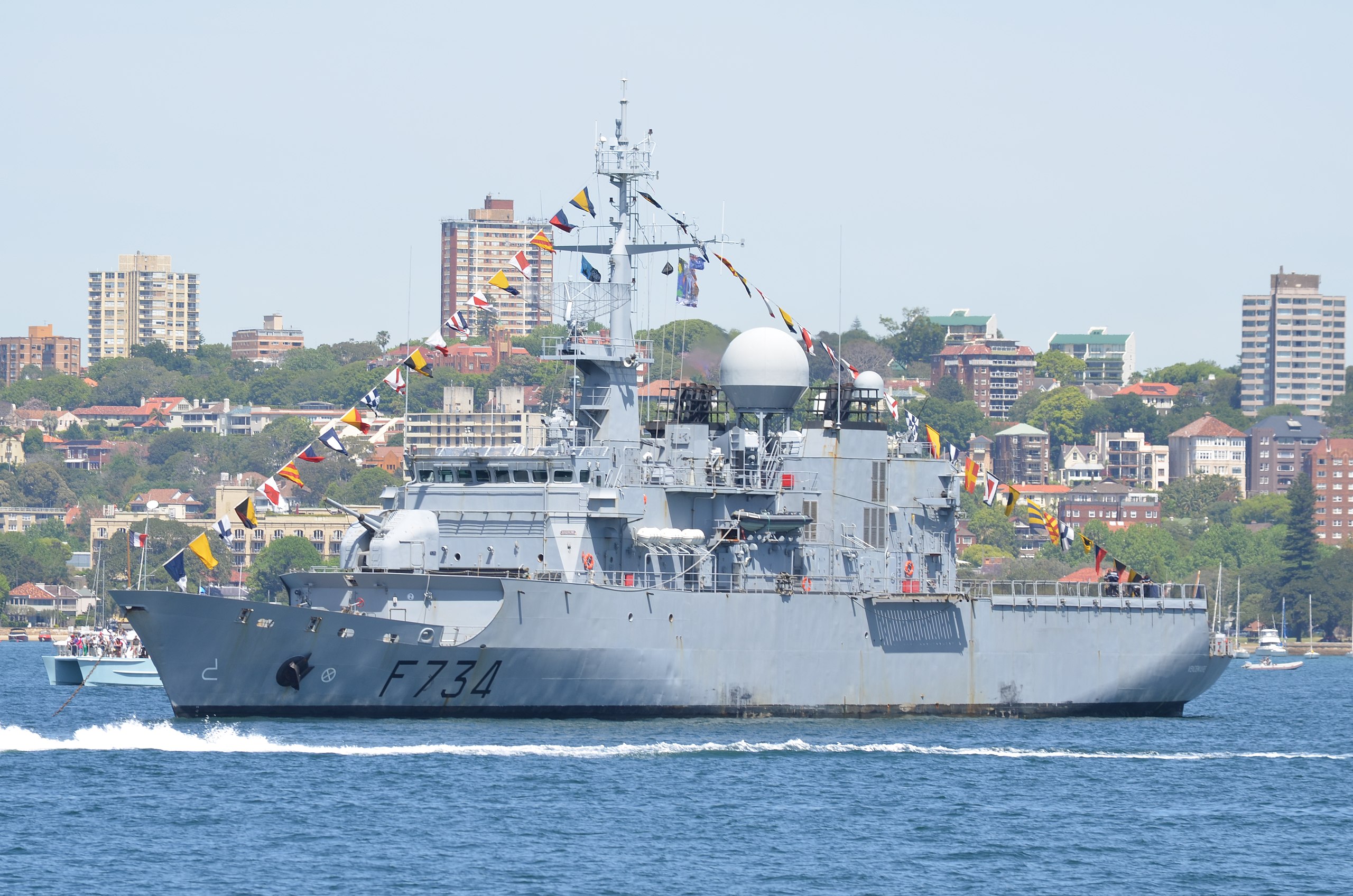
French frigate Vendemiaire, moored in Sydney Harbour. This 20 knot ship of the Floréal class looks a lot like a coast guard cutter. Photo by Saberwyn

Sea Waves reports the completion of a multi-national Fisheries Management exercise involving the US, Australia, New Zealand, France, and Fiji, from 20 June to 15 August.

The US Coast Guard deployed a C-130 to participate in the exercise. US vessels were involved but they were not identified. I am a bit surprised I have seen nothing from the USCG on this exercise.

The Sea Waves report appears to be a French news release. There is a New Zealand Defense Force view of the exercise here.

More on the developing relationship between Australia and France here. including an explanation of the “Pacific quadrilateral defense coordinating group* (PQUAD),” e.g., Australia, France, New Zealand, and the US, referred to in the post, as opposed to the “Quad,” e.g., Australia, India, Japan, and the US.

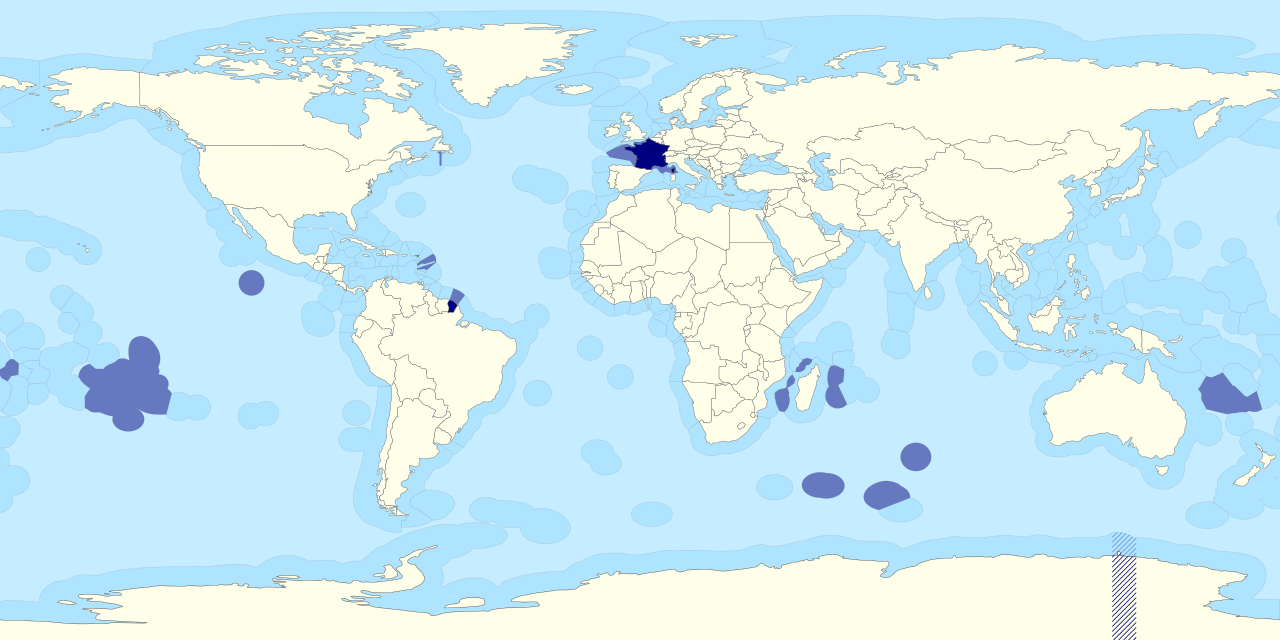
The French don’t normally have a lot of military assets in the Pacific. Much of what they have looks like coast guard, but they have the largest EEZ in the world and great strategic geography.

French Exclusive Economic Zone. Photo credit: B1mbo via Wikipedia.

This exercise is another step along the way to what appears to be inevitable international fisheries management and enforcement.