“Coast Guard Cutter Valiant offloads $141 million in illicit drugs interdicted in the Caribbean Sea” –News Release

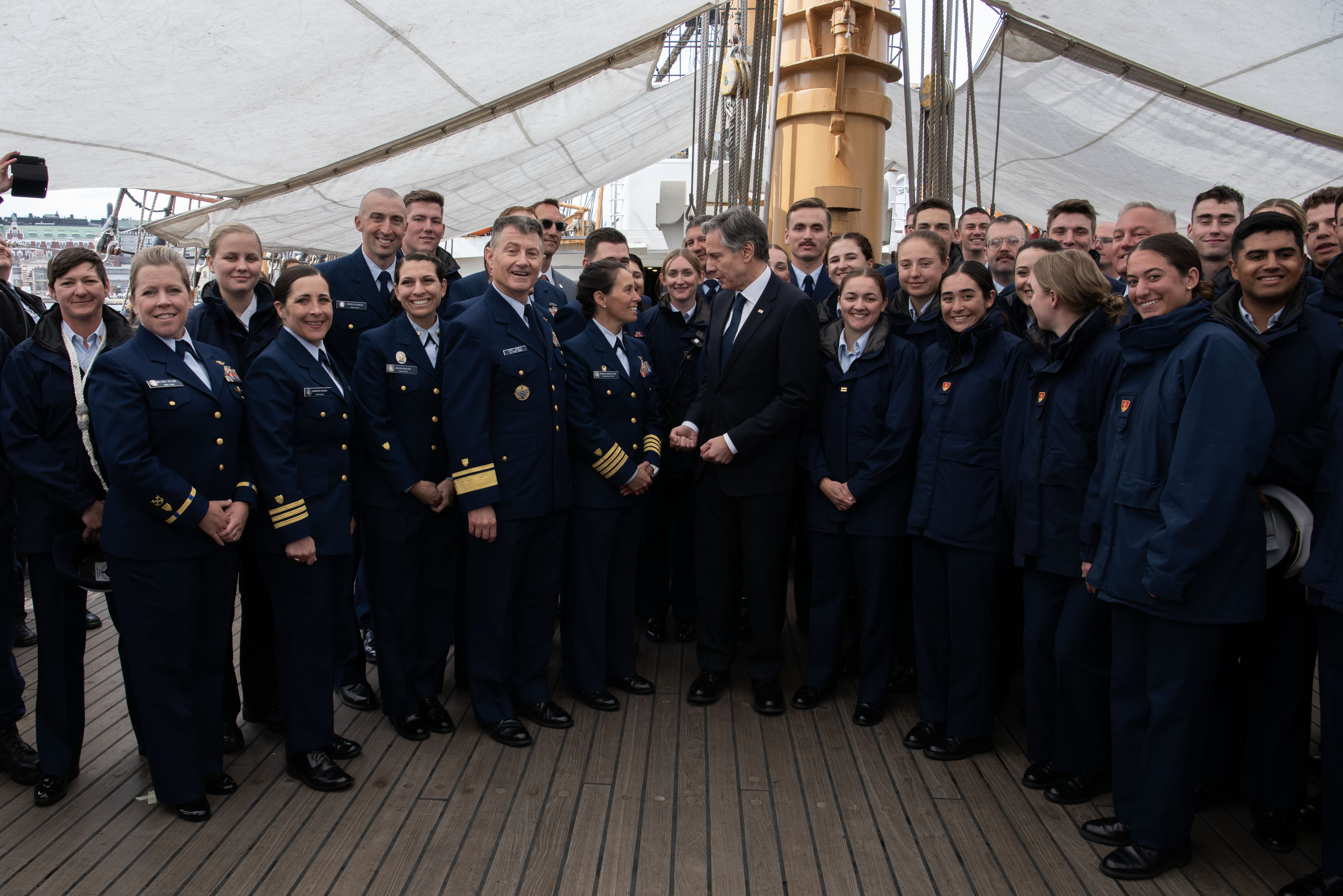
U.S. Coast Guard Cutter Valiant (WMEC 621) and French Navy Frigate FS Ventôse (F733) conduct joint exercises at sea, Sept. 29, 2024, while underway in the Windward Passage. The crew of Valiant conducted a 49-day migrant interdiction operations patrol in the region to protect life at sea and enforce U.S. maritime law. (Photo courtesy of FS Ventôse)

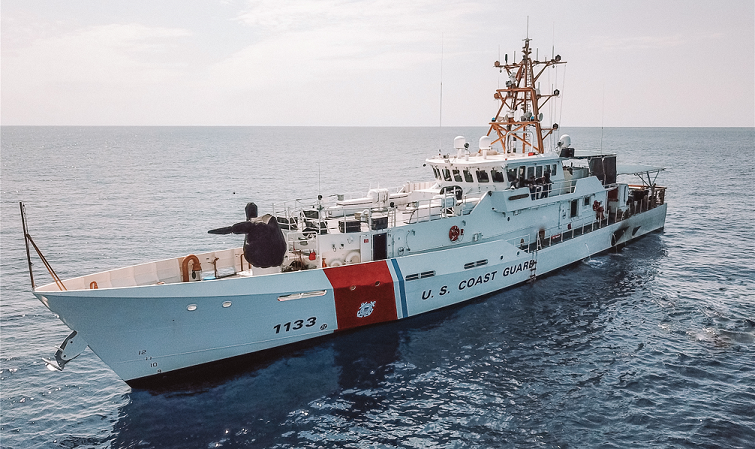
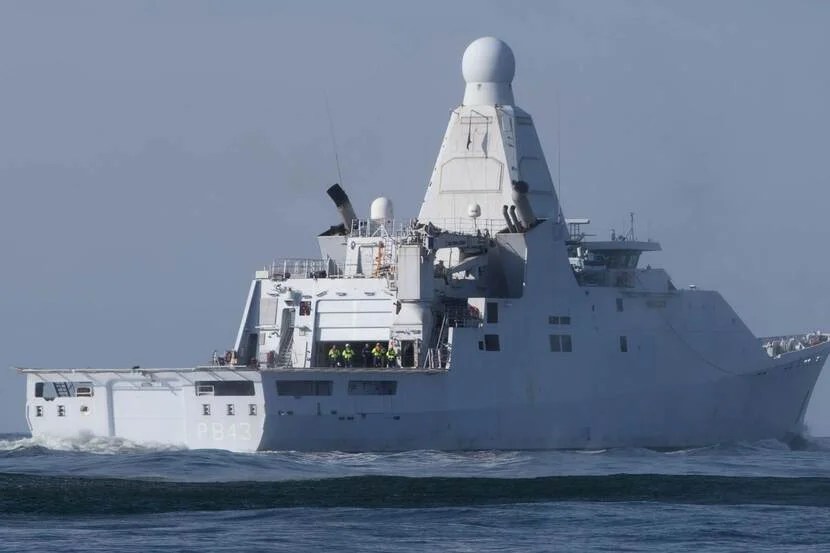
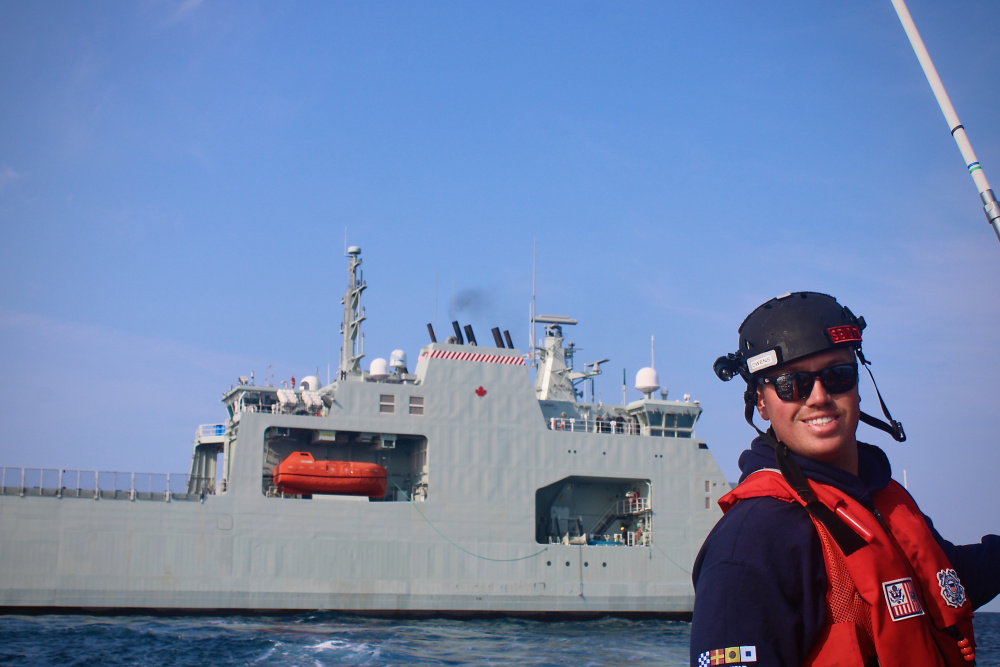
Below is a news release. It included no photos. I wanted to give some more credit to the other units and countries involved, so I have added photos of all four ships involved in the six interdictions. We get a lot of help from allies with territories in the Western Hemisphere–UK, France, and in this case Canada and the Netherlands.

USCGC Joseph Doyle (WPC-1133)

Netherlands OPV Groningen, 19 April 2017.

USCGC Richard Snyder (WPC 1127) participates in Operation Nanook in the Davis Strait on Aug. 4, 2021. Snyder worked alongside USCGC Escanaba (WMEC 907), the Royal Canadian Navy’s HMCS Harry Dewolf (AOPV 430), and HMCS Goose Bay (MM 707) in Operation Nanook to enhance collective abilities to respond to safety and security issues in the High North through air and maritime presence activities, maritime domain defense, and security exercises. (U.S. Coast Guard photo by USCGC Richard Snyder)


March 5, 2025

MEDIA ADVISORY: Coast Guard Cutter Valiant offloads $141 million in illicit drugs interdicted in the Caribbean Sea

MIAMI — Members of Coast Guard Cutter Valiant are scheduled to offload 12,471 pounds of illicit narcotics with a street value of more than $141 million.

WHO: Coast Guard Cutter Valiant, Seventh Coast Guard District

WHAT: The Coast Guard Cutter Valiant’s crew will offload 12,471 pounds of illicit narcotics with a street value of more than $141 million. Media are invited to interview a Coast Guard Cutter Valiant crew member in both Spanish and English.

WHEN: Thursday, March 6, at 9 a.m.

WHERE: Coast Guard Base Miami Beach, 100 MacArthur Cswy, Miami Beach, FL 33139

The offload is a culmination of six interdictions conducted by the crews of:

  • U.S. Coast Guard Valiant
  • U.S. Coast Guard Joseph Doyle
  • Royal Netherlands Navy HNLMS Groningen
  • Royal Canadian Navy HMCS Harry DeWolf
  • U.S. Coast Guard Tactical Law Enforcement Team Pacific
  • U.S. Customs and Border Protection Air and Marine Operations

Media are required to bring media credentials to get on Base Miami Beach. Media who do not have official credentials or do not RSVP will not be allowed entry. It is recommended to carpool due to space constraints. Plan to arrive at the front gate no later than 8:30 a.m. for escort to the pier.

“U.S. Coast Guard Cutters return home after successful Central American deployment” –D11 News Release

USCGC Forrest Rednour (WPC 1129) and Blackfin (WPB 87317) in Costa Rica

Below is a District 11 news release. Did an earlier post on this unusual deployment.

The 800 operational hours claimed for each vessel works out to 33.3 operational days out of 49 deployed, so I presume that means about 16 days in transit, there and back.

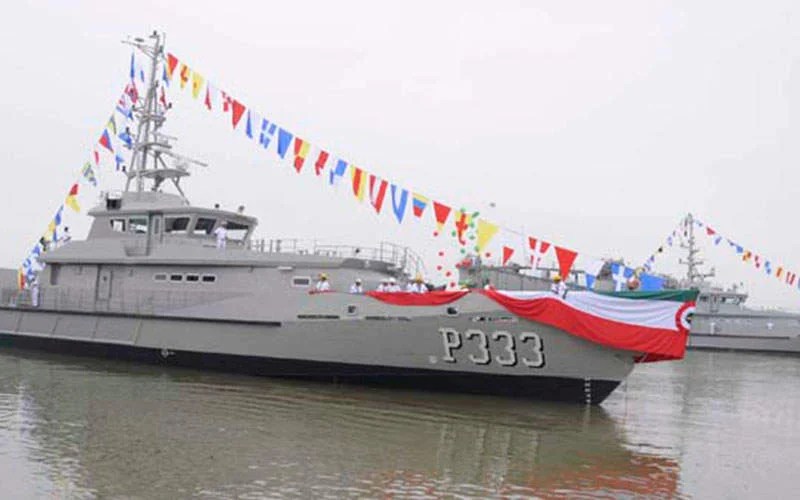
The Mexican Navy vessel mentioned, ARM PALENQUE, the third of ten Tenochtitlan-class patrol vessels, looks a lot like a Webber class Fast Response Cutter. It is also a Damen design, but a bit smaller (a Stan Patrol 4207 vs 4708 for the FRC). Damen has been very successful with this design. More than 50 have been built for more than a dozen agencies. (USCGC Blackfin and the other Marine Protector class patrol boats are also based on a Damen design.)

Mexican Navy ARM Palenque (PC-333) at launching March 2014. Credit Secrtaria de Marina.


June 10, 2024

U.S. Coast Guard Cutters return home after successful Central American deployment

SAN PEDRO, Calif. — U.S. Coast Guard cutters Forrest Rednour and Blackfin have returned to their homeports after a 49-day deployment in Central America, where they played a crucial role in multiple operations.

During this period, both cutters demonstrated outstanding readiness and operational capability, significantly contributing to international cooperation, search and rescue missions, and efforts to combat criminal activities. This deployment was part of a broader strategy to enhance regional security and strengthen partnerships. Throughout the mission, Forrest Rednour covered over 8,200 miles and logged 800 operational hours, while Blackfin covered over 8,300 miles and also logged 800 operational hours.

“The amount of effort and commitment from both crews during this 49-day deployment was remarkable,” said Rear Adm. Andrew Sugimoto, commander, Coast Guard District 11. “Their readiness and professional exchanges provided an invaluable experience to our partner nations and crews. The enthusiasm to lead multiple engagements with several international maritime organizations helped strengthen ties and fortify continued collaboration between all.”

Key Achievements:

Search and Rescue Exercises (SAREX):

  • Manzanillo, Mexico: Blackfin led a successful SAR operation, including helicopter rescue exercises with the Mexican Navy.
  • Puerto Quetzal, Guatemala: Hosted tours and conducted SAR exercises with the Guatemalan Navy, building stronger maritime partnerships.
  • La Union, El Salvador: Rednour led a SAR exercise and joint operations with the Salvadoran Navy, marking the first U.S. vessel visit to this port in two years.

Partnership and Training:

  • Amapala, Honduras: Engaged in discussions and training on maritime law enforcement and security with the Honduran Navy and Merchant Marine.
  • Golfito, Costa Rica: Shared knowledge on maritime governance with the Costa Rican Coast Guard, enhancing mutual understanding.
  • Rodman, Panama: Provided damage control and medical evacuation training to Panamanian forces, marking the first U.S.-Panama Coast Guard engagement in over two years.
  • PASSEX with ARM PALENQUE: Forrest Rednour and Blackfin conducted a passage exercise (PASSEX) with the Mexican Navy’s ARM PALENQUE. This included formation steaming, code exercises, and a crew exchange to enhance mutual operational understanding and cooperation.

“This patrol was truly an amazing experience and a testament to the incredible devotion to duty that the crews of the Forrest Rednour and Blackfin have,” said Lt. Kevin Ng, commanding officer of Coast Guard Cutter Forrest Rednour. “Both crews adapted and overcame several challenges leading up to and during the patrol, but never took their eyes off the main objective. As a result, the Coast Guard was able to strengthen the valuable relationships that the United States has with our international partners throughout Central America and unify our efforts to address critical maritime security initiatives in the Eastern Pacific. Thank you to crews on a job well done, District 11 and Sector Los Angeles/Long Beach for the coordination, and the families and friends of the crew for all of the support; the success of this historic patrol could not have been accomplished without them all.”

“I could not be prouder of both crews for the incredible amount of hard work they have dedicated to making this historic patrol possible. The success of this Surface Action Group is a testament to the Coast Guard’s ability to overcome dynamic challenges in the completion of unprecedented mission sets. It also signifies the Coast Guard’s steadfast commitment to advancing our vital maritime partnerships in the Eastern Pacific. The international relationships formed and strengthened during this deployment have set the groundwork for future engagements which I look forward to watching,” said Lt. j.g. James Morrison, commanding officer of Coast Guard Cutter Blackfin.

Commissioned in 2018, the Coast Guard Cutter Forrest Rednour is one of the Coast Guard’s Sentinel-class fast response cutters homeported in San Pedro, California. Sentinel-class cutters are 154 feet long and 25 feet wide and have a 353 long-ton displacement. They have a top speed in excess of 28 knots and a range of 2,500 nautical miles. They can hold a crew of up to 24. The namesake of the Forrest Rednour is Petty Officer 2nd Class Forrest O. Rednour, who heroically rescued survivors from the torpedoed USAT (US Army Transport–Chuck) Dorchester during World War II and was posthumously awarded the Navy and Marine Corps Medal.

Commissioned in 2000, the USCGC Blackfin is one of the Coast Guard’s Marine Protector-class patrol boats homeported in Santa Barbara, California. Marine Protector-class patrol boats are 87 feet long and 19.5 feet wide and have a 100 long-ton displacement. They have a top speed of 25 knots and a range of 900 nautical miles. They can hold a crew of up to 10. The Blackfin is equipped with advanced electronics and navigation systems for multi-mission operations, including search and rescue, law enforcement, and homeland security. The Blackfin shares the name of the USS Blackfin (SS-322), a submarine that participated in World War II and the Korean War.

“How Does Sweden and Finland Joining NATO Affect the U.S. Coast Guard?” –By Peter Ong

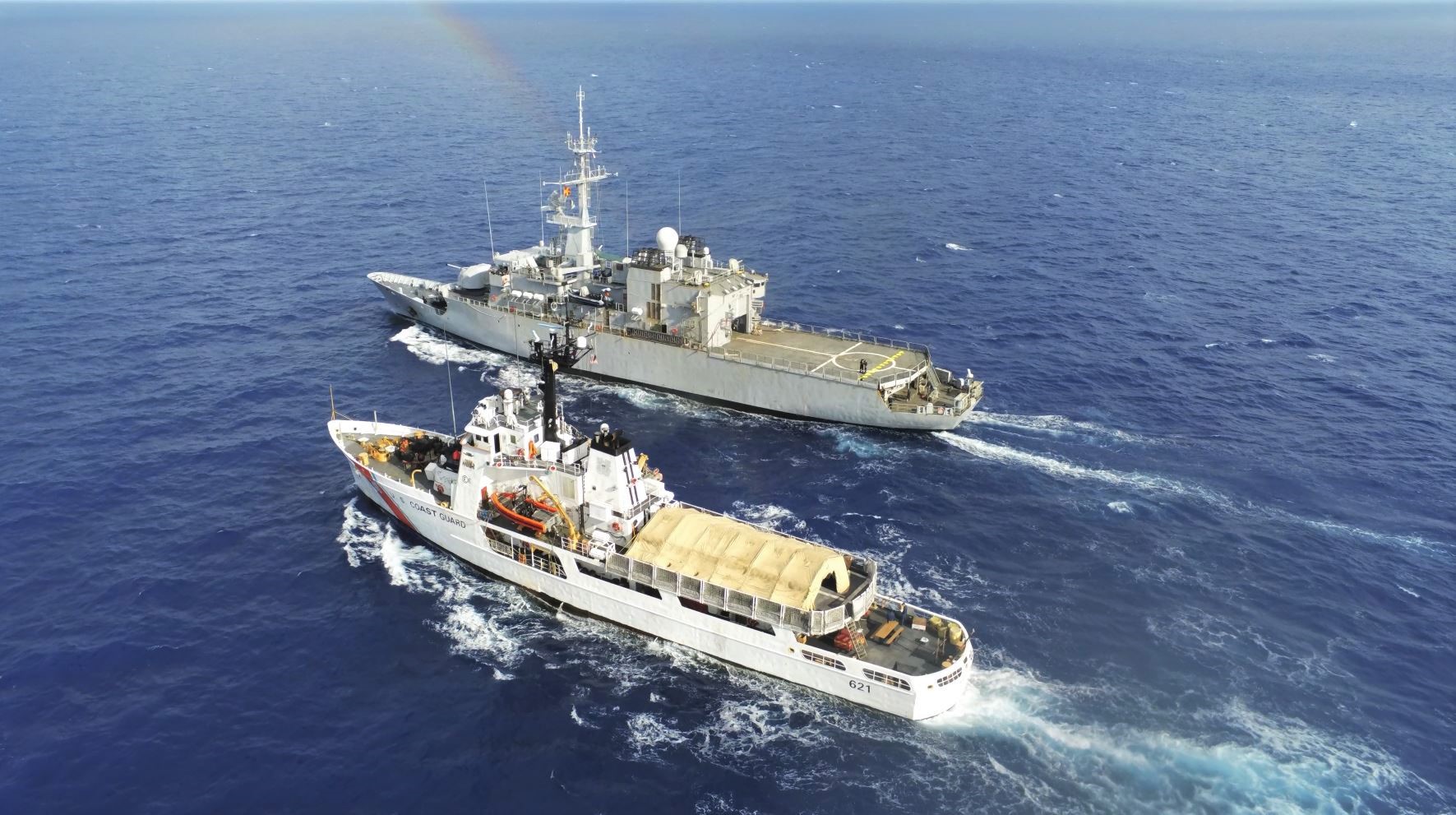
U.S. Secretary of State Antony Blinken, middle, takes a photo with the USCGC Eagle’s crew during a reception aboard the cutter, June 2, 2023, in Helsinki, Finland. Eagle is a tall ship used as a training platform for future Coast Guard Academy officers as well as a vessel utilized for establishing and maintaining domestic and international relationships. (U.S. Coast Guard photo by Petty Officer 3rd Class Carmen Caver)

Guest author Peter Ong provides a look at the continuing relationship between the Coast Guard and new NATO members Sweden and Finland. 

With the war in Ukraine affecting current economic and security situations in 2022-2024 Europe, the North Atlantic Treaty Organization (NATO) welcomed its two newest members, Finland and Sweden, both Arctic nations. Finland became a member of NATO on 4 April 2023. Sweden joined NATO on 7 March 2024.

NATO’s European members and when they joined the NATO alliance. Source: Wikipedia

I sent a media inquiry to the USCG’s Headquarters, Public Affairs Office, Washington D.C., asking how Sweden and Finland becoming NATO’s newest members might influence the U.S. Coast Guard in terms of icebreaking, cutter designs, exercises, training, enforcement, and maritime security.

The USCG replied, “From a regional perspective, this will increase cooperation and improve interoperability.  Information sharing, exercises, and operations will be much easier to coordinate with all the Nordics now in NATO.”


U.S. Coast Guard Petty Officer 1st Class Arthur Flaherty, a boatswain’s mate assigned to the USCGC Hamilton (WMSL 753), prepares to transfer Hamilton crewmembers onto the Swedish Coast Guard vessel Amfitrite in the Baltic Sea, Oct. 31, 2022. Hamilton was on deployment in the U.S. Naval Forces Europe area of operations. (U.S. Coast Guard photo by Petty Officer 3rd Class Alejandro Rivera)

The United States Coast Guard has a history of visiting and working with partner Baltic nations to improve relationships, training, interoperability, communications, intelligence, and coordination. Even before they entered NATO the US Coast Guard had a long-standing relationship with Sweden and Finland through the Arctic Coast Guard Forum.

U.S. Coast Guard Lt. Cmdr. Tanya Kuprak, engineering officer aboard USCGC Hamilton (WMSL 753), gives a tour of the engine room to Swedish Coast Guard members while underway in the Baltic Sea, Oct. 30, 2022. Hamilton was deployed with U.S. Naval Forces Europe and U.S. Sixth Fleet. (U.S. Coast Guard photo by Petty Officer 3rd Class Alejandro Rivera)

Recent interactions include:

United States’ relationship with Finland has benefitted in the area of model testing and consulting on the current Great Lakes icebreaker, Mackinaw, regarding its design and Azipod propulsion.

“Defending the Dutch Caribbean: An Assessment” –Geopolitical Monitor

Willemstad, Feb. 2022. The Netherlands the royal family was transported from Aruba to Curacao aboard the Holland-class offshore patrol vessel HNLMS Holland (P-84).

Geopolitical Monitor discusses the six islands of the Dutch Caribbean, part of the Kingdom of the Netherlands.

The Netherlands has been a good partner in drug interdiction operations in the Caribbean. The four ships of the Holland class are in many ways similar in size and characteristics to the Offshore Patrol Cutters. The Netherlands Navy tends to keep one of these ships in the Caribbean, and they frequently host US Coast Guard Law Enforcement teams. At least once they also hosted a Coast Guard H-65 airborne use of force helicopter.

The post talks about the Dutch Caribbean Coast Guard (DCCG, or Kustwacht Caribisch Gebied: KCG),

“…which has facilities in Aruba, Curaçao, and Sint Marteen. This agency carries out missions involving search and rescue, law enforcement, and maritime interdiction. The DCCG’s fleet includes three Damen Stan Patrol 4100 cutters (slightly smaller but similar to the Webber class–Chuck), Jaguar, Panther, and Puma, five Boston Whaler Justice 20 craft, and 12 Metal Shark Defiant interceptor vessels. In addition, in April 2022, the Dutch organization for defense equipment (Defensie Materieel Organisatie) announced that two helicopters were acquired from Bristow Helicopters and will be delivered in 2023. The DCCG currently operates two DHC-8 aircraft and two AgustaWestland AW139 helicopters.”

They even have had long range, medium altitude unmanned search aircraft assigned, something the US Coast Guard still does not have,

“The DCCG’s surveillance capabilities were expanded in late March 2022, with the arrival to Curaçao of three General Atomics MQ-9A Reaper unmanned aerial vehicles and two ground stations. The Reapers assist Dutch Caribbean military personnel in combating organized crime and illegal fishing, among other activities. They will remain in Curacao until 1 July 2023.”

The post alludes to Venezuelan’ threats to Dutch Caribbean islands that lay off the Venezuelan coast (Aruba, Curaçao, and Bonaire). While the Venezuelan military is far more powerful than the forces the Netherlands keeps in the Caribbean, it is hard to take these threats seriously since, an attack on even one of the islands, would be an attack on NATO.

On a personal note, really enjoyed a stopover in Aruba in the early 80s while it was snowing back in our Portland, Maine homeport–my wife will never let me forget.

Thanks to Lee for bringing this to my attention.