“Arctic Operations: We Really, Really Need the Right Equipment and an Arctic Port” –EagleSpeak

Conceptual illustration, Finland’s squadron 2020 corvette

Naval blog “EagleSpeak” decries our inability of operate surface warships in the Arctic, but this is his bottom line

“Fault finding will get us nowhere, the need is to look to our allies who operate in these waters and see if, among the hull types we need they have some ice-hardened ships whose designs we can obtain. Now.”

If we do want to do that, there is really only one choice, Finland’s new ice capable corvette we talked about here. The original post is now more than five years old, but updated information is in the comments, much of which I have linked below.

Fortunately they are already designed to us a great deal of familiar equipment much of it from US manufacturers.

They will use the same 57mm gun used by the NSC, OPC, and both classes of LCS.

They will use the Sea Giraffe radar common to the OPC and Independence class LCS.

They will use ESSM surface to air missiles, a standard item on most US surface combatants, apparently to be launched from Mk41 VLS.

The Finns will be using the Israeli Gabriel V as their surface to surface missile, but it should be relatively easy to substitute a standard US surface to surface missile, particularly the Naval Strike Missile, which is considerably smaller.

The sonars currently planned are from Kongsberg Maritime AS. If not replaced by US sourced units, they would be unique in the US fleet but the hull mounted “SS2030 sonars will be delivered to the Finnish Navy complete with hoistable hull units and ice protection to ensure safe and efficient operation in the often harsh conditions of the Baltic Sea.”  The variable depth “SD9500 is a light and compact over-the-side dipping sonar with outstanding horizontal and vertical positioning capabilities for diver detection, ASW duties and volumetric survey assignments in shallow, reverberation-limited waters.”

They would be unique among US warships in being able to both lay and counter mines.

Propulsion is CODLAG, combined diesel electric and gas turbine. Four diesel generators producing 7,700 KW (10326 HP) provide power for cruise (probably about 20 knots). A GE LM2500 gas turbine provides over 26 knot sprint speed. This is the same gas turbine that powers the NSC, Burke class destroyers, the new FFG, and numerous other ships. It is the most common gas turbine in the world.

The propellers were developed with the help of the US Navy.

“The propellers are a minor project on their own, and are set to be of a highly advanced design. This is due to the somewhat conflicting demands of high top-speed, small diameter (due to overall draught requirement), and low noise (and high cavitation margin). All this, while at the same time being strong enough to cope with ice.”

Its primary characteristics are reported to be:

  • Length: 114 m (374 ft)
  • Beam: 16 m (52 ft)
  • Displacement: 3,900 tonnes (3,800 long tons; 4,300 short tons)
  • Crew: 70 to 120 sailors
  • Speed: 26+ knots

This makes about 13% smaller than the OPC or NSC, but 30% larger than the 378s. First of class is expected to be completed 2024.

We could buy the plans and then compete procurement in a US shipyard. These might be built concurrently with the OPCs, possibly replacing some of them. Ten units could give a two squadrons, one for the Atlantic and one for the Pacific. In wartime that would almost guarantee the ability to keep three underway in either ocean.

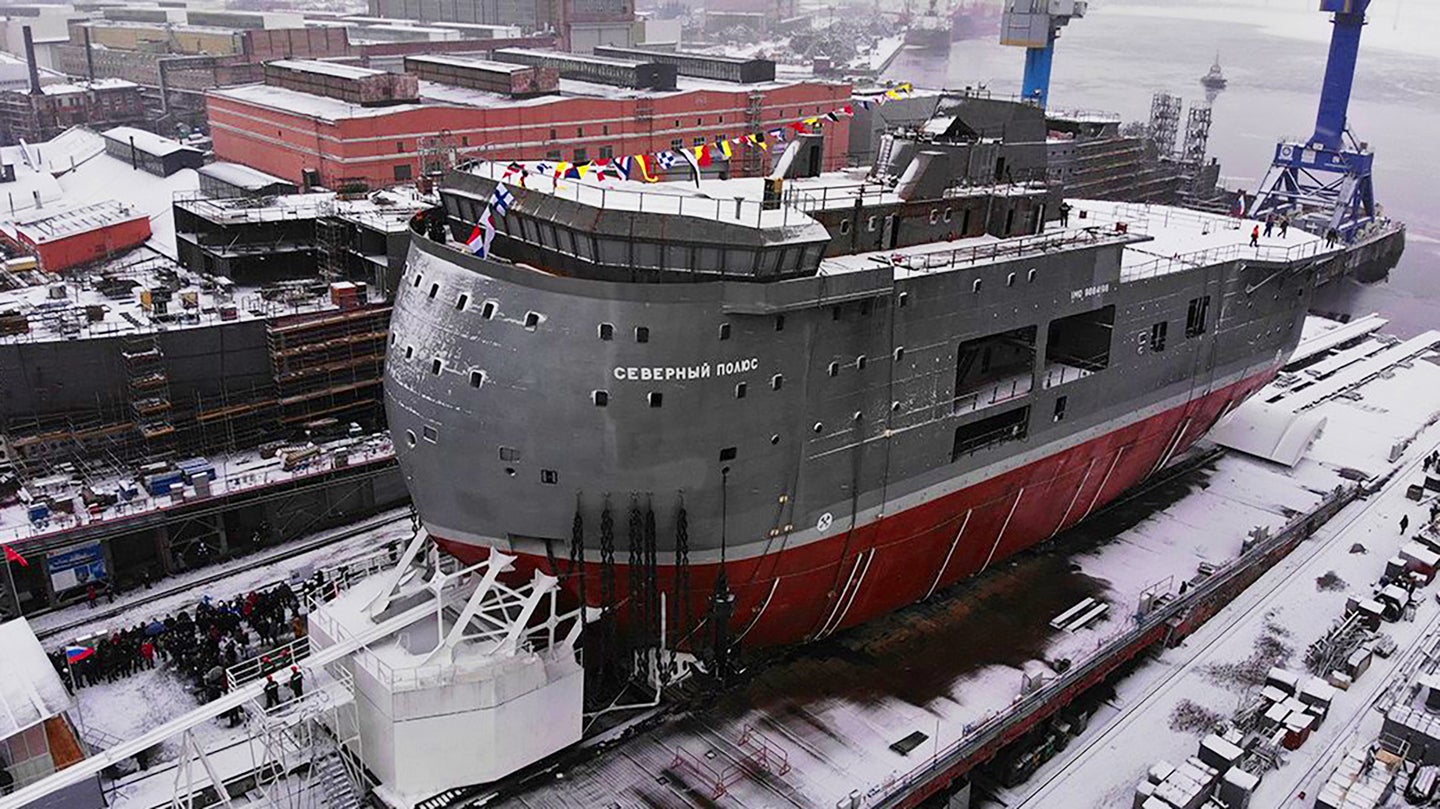
“Russia’s New Long-Endurance Arctic Research Vessel Might Be The Ugliest Ship We’ve Seen” –The Drive

Admiralty Shipyard in Saint Petersburg, part of Russia’s United Shipbuilding Corporation, launched the North Pole on December 18, 2020

The Drive reports the launch of a truly ugly, but interesting vessel. This may not really be Coast Guard related, but it is Arctic related. Think of this as similar to the recent use of the German Icebreaker Polarstern to winter over, drifting in the Arctic. Only this will not be for just for one year, but probably almost every winter for the rest of its life.

Thanks to Lee for bringing this to my attention.

Authorization (not money) for Six Icebreakers and Better Comms in the Arctic

The Coast Guard Research, Development, Test, and Evaluation Program, in partnership with the Department of Homeland Security Science and Technology Directorate, launched two 6U CubeSats from Vandenberg Air Force Base, California, as part of the Polar Scout project. Photo courtesy of SpaceX.

Breaking Defense reports the National Defense Authorization Act (NDAA) includes six icebreakers for the Coast Guard and better satellite communications for the polar regions.

Not really a reason to get too excited yet. Authorization does not include any money. There was already general bipartisan acceptance of the idea that the Coast Guard needs new icebreakers with the 3 heavy and 3 mediums apparently seen as reasonable. Funding ($555M) for the second Polar Security Cutter was requested by the administration and agreed to by both Senate and House oversight committees, so should be in the FY2021 budget.

The addition of better comms may be the best news in the NDAA for the Coast Guard. It has been a major problem in US Arctic operations.

“Coast Guard Icebreaker Polar Star Bound for the Arctic in December” –USNI

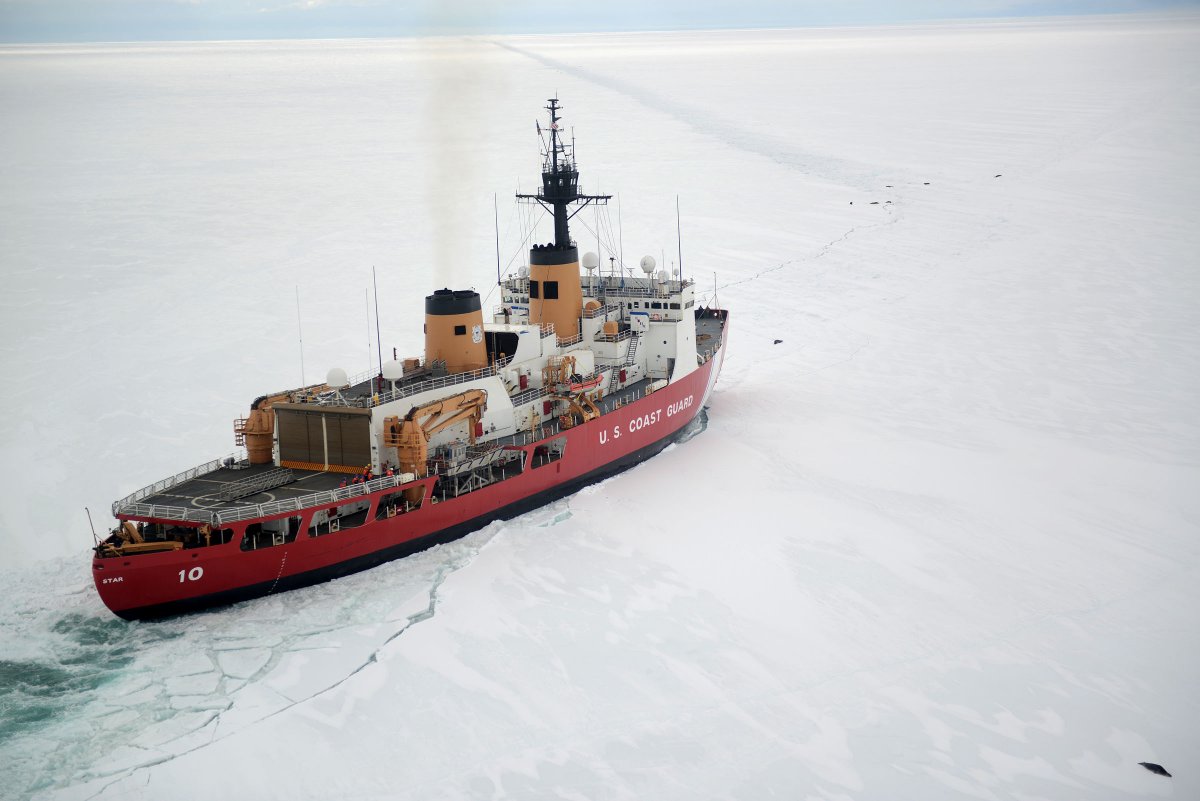
The Coast Guard Cutter Polar Star cuts through Antarctic ice in the Ross Sea near a large group of seals as the ship’s crew creates a navigation channel for supply ships, January 16, 2017. The resupply channel is an essential part of the yearly delivery of essential supplies to the National Science Foundation’s McMurdo Station.US Coast Guard photo by Chief Petty Officer David Mosley

US Naval Institute News Service reports Polar Star will deploy to the Arctic in December. We knew this was coming, but we have been short of details of when and for how long. This at least indicates it will begin in December. (I will speculate, she will be gone about three months, returning in March to provide a little inport time before going into the yard.)

There seem to be a couple of errors in the story.

“For the first time in almost five decades, the Coast Guard’s heavy icebreaker won’t be supporting Antarctic scientific missions in coming months…”

Coast Guard heavy icebreaker support has not been continuous over that period, at least once, and I believe more than once, the McMurdo break-in was done by non-Coast Guard icebreakers, either contracted foreign icebreakers or the National Science Foundation’s own smaller icebreaker.

“This would be the first Coast Guard operation in the Arctic Ocean since August 1994 when a now-deactivated heavy icebreaker with a Canadian Coast Guard heavy icebreaker reached the North Pole.”

This seems to be missing a qualifier. The Coast Guard has certainly operated in the Arctic since August 1994. There is better information on Polar class operations in the Arctic here, in a Military.com report.

“It will be the first deployment of a U.S. Polar-class icebreaker to the Arctic on a non-science mission (emphasis applied–Chuck) since August 1994, when the heavy icebreaker Polar Sea, now inactive, became one of the first two American surface ships to reach the North Pole.

“In 1998, Polar Star spent three months in the region on a science mission. And in 2009, the Polar Sea conducted a three-month Arctic deployment, also dedicated solely to science.”

“Military activity is picking up in the quiet waters between the US and Russia” and a Deep Water Port at Nome

Northeast Russia and Alaska are in close proximity and the U.S. Coast Guard will interact more and more as Russian maritime activity in the Arctic grows. Photo: Shutterstock

Business Insider gives us a post about the strategic importance of the Bering Sea and Aleutians. In addition, there is some news about the proposed “Arctic” deepwater port.

The US Army Corps of Engineers recently approved plans to expand the port of Nome, on Alaska’s Bering coast. That “will not only help from a national-security perspective but … help [local communities] to reduce the cost of living,” Alaska Sen. Lisa Murkowski said at another event in October.

CRS, “Coast Guard Polar Security Cutter (Polar Icebreaker) Program: Background and Issues for Congress Updated November 11, 2020”

Since our last look at this report, there have been four updates. (See the latest version here.)

We now have the Senate Appropriations Committee’s (SAC) views on this part of the FY2021 DHS Appropriations Act. The Senate committee, like its counterpart in the House, has recommended approval of the Administration request for $555M that would fund the second Polar Security Cutter.

I have reproduced the section on Senate Activity (page 25/26) below. Note there is also mention of renovation of the Polar Star and acquisition of a future Great Lakes icebreaker as well:


Senate

The Senate Appropriations Committee, in the explanatory statement for S. XXXX that the committee released on November 10, 2020, recommended the funding level shown in the SAC column of Table 2.

The explanatory statement states (emphasis added):

Full-Funding Policy.—The Committee again directs an exception to the administration’s current acquisition policy that requires the Coast Guard to attain the total acquisition cost for a vessel, including long lead time materials [LLTM], production costs, and postproduction costs, before a production contract can be awarded. This policy has the potential to make shipbuilding less efficient, to force delayed obligation of production funds, and to require post-production funds far in advance of when they will be used. The Department should position itself to acquire vessels in the most efficient manner within the guidelines of strict governance measures. The Committee expects the administration to adopt a similar policy for the acquisition of the Offshore Patrol Cutter [OPC] and heavy polar icebreaker.

Domestic Content.—To the maximum extent practicable, the Coast Guard is directed to
utilize components that are manufactured in the United States when contracting for new
vessels. Such components include: auxiliary equipment, such as pumps for shipboard
services; propulsion equipment, including engines, reduction gears, and propellers;
shipboard cranes; and spreaders for shipboard cranes. (Pages 71-72)

The explanatory statement also states:

Great Lakes Icebreaking Capacity.—The recommendation includes $4,000,000 for preacquisition activities for the Great Lakes Icebreaker Program for a new Great Lakes
icebreaker that is as capable as USCGC MACKINAW. The Coast Guard shall seek
opportunities to accelerate the acquisition and request legislative remedies, if necessary. Further, any requirements analysis conducted by the Coast Guard regarding overall Great Lakes icebreaking requirements shall not assume any greater assistance rendered by Canadian icebreakers than was rendered during the past two ice seasons and shall include meeting the demands of United States commerce in all U.S. waters of the Great Lakes and their harbors and connecting channels. (Page 72)

The explanatory statement also states:

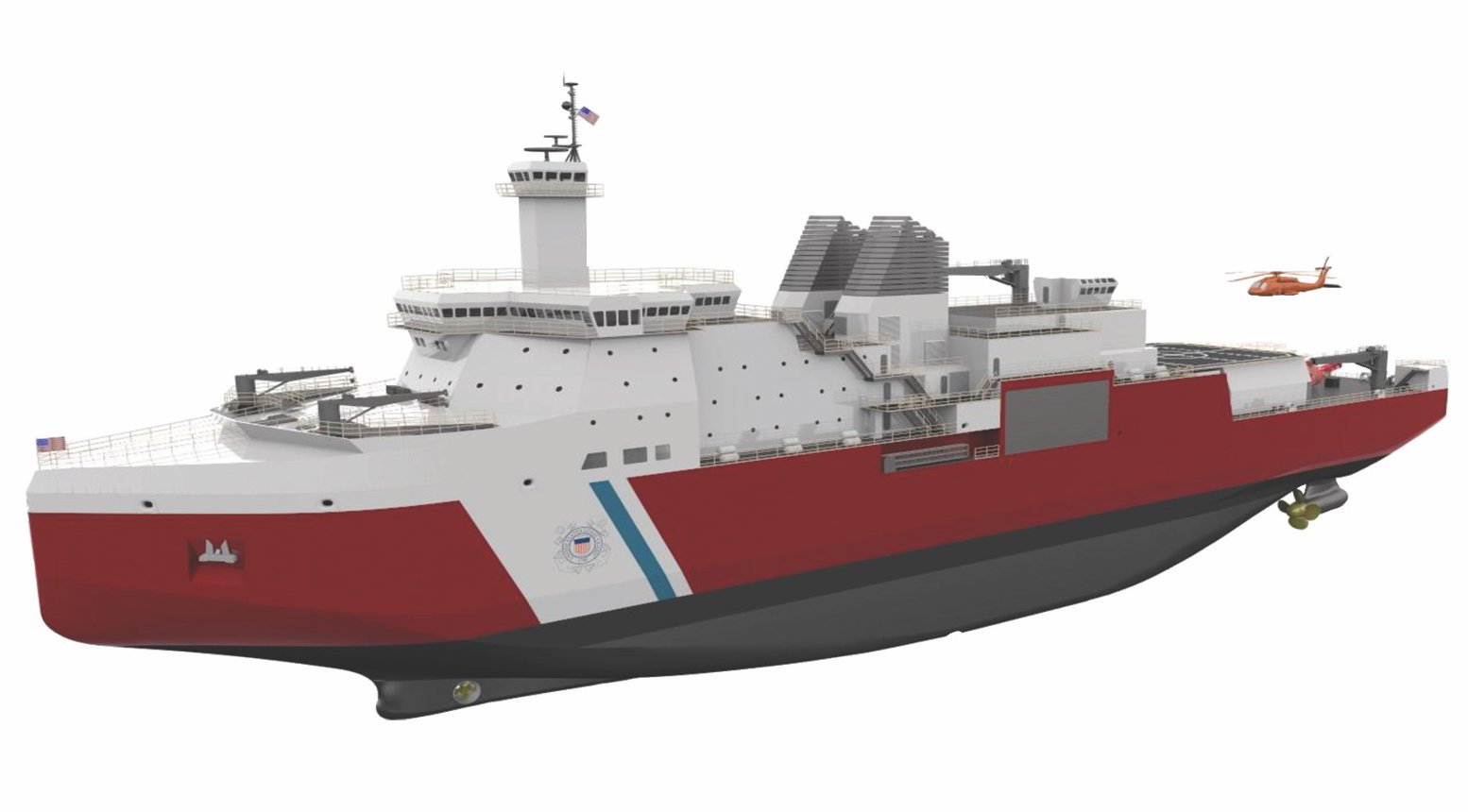
Polar Ice Breaking Vessel.—The Committee recognizes the value of heavy polar icebreakers in promoting the national security and economic interests of the United States in the Arctic and Antarctic regions and recommends $555,000,000, which is the requested amount. The total recommended for this program fully supports the Polar Security Cutter program of record and provides the resources that are required to continue this critical acquisition.
Polar Star.—The recommendation includes $15,000,000 to carry out a service life extension program for the POLAR STAR to extend its service life as the Coast Guard continues to modernize its icebreaking fleet. (Page 73)

“Beyond the Tip of the Iceberg Tech: RDT&E’s Annual Arctic Technology Evaluation” –MarineLink

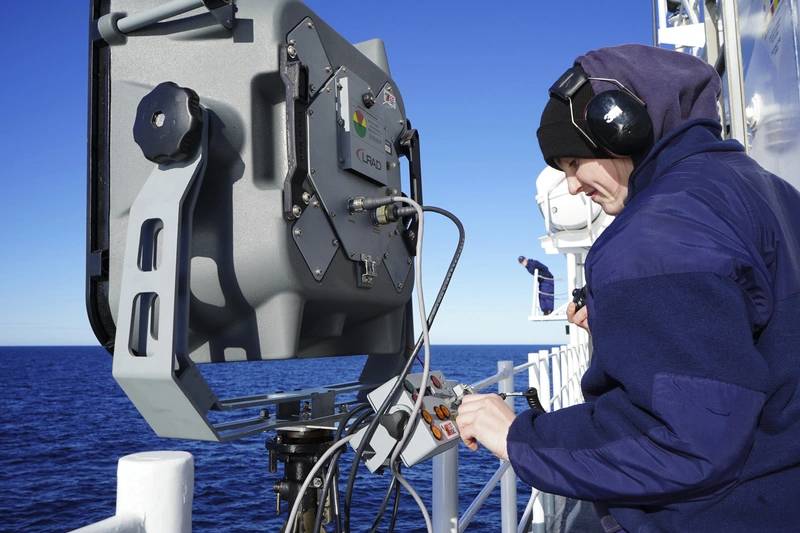
ENS Jordan Solseth runs a test for the Long Range Acoustic Device (LRAD) 500. U.S. Coast Guard photo by SN Kate Kilroy

Marine Link reports on the Coast Guard’s evaluation of five technologies during USCGC Campbell’s Arctic cruise. Five different technologies were evaluated. All were deemed successful:

  • Insight Mini Thermal Monocular (MTM) and AN/PSQ-20 Monoculars (enhanced night vision devices) for improved law enforcement and ice detection.
  • Handheld Glare Helios laser for stand-off hailing capabilities.
  • FiFish Remotely Operated Vehicle for underwater inspections in cold weather.
  • Long Range Acoustic Device 500X-RE for enhanced communication with vessels at longer distances.
  • Iridium Certus Terminal, which helped provide internet access for the crew to maintain communications with Atlantic Area.

These systems were referred to in the earlier linked post, but there is much more information in the Marine Link article.

I think that we are going to start seeing the Long Range Acoustic Device (LRAD) on all our cutters. We really should have them on our Webber class bound for PATFORSWA. In addition to its communications capabilities, it can be an effective less than lethal weapon for discouraging approach or breaking down resistance to a boarding. (Remember when we played rock music for Noriega down in Panama.)

The Iridium Certus Terminal helped communications that are always difficult in the Arctic, and probably provided in major morale boost for the crew.

While I see the utility of the night vision devices, for the larger ships I would really like to see us take a look at this. It appears it could do everything the night vision devices can do, plus allow transmission of bearing and elevation information, along with its nominal function of quickly bringing weapons to bear on a visually detected threat. Maybe another good addition for Webber class going to SW Asia.

CRS’s “Coast Guard Cutter Procurement: Background and Issues for Congress” –an Update

US Capital West Side, by Martin Falbisoner

It has been seven months since we last looked at this Congressional Research Service document. (Clicking on this link will always take you to the latest version of the report). Since then, there have been six revisions, with the latest Oct. 14, 2020.

Notable changes include report of the issuance of a draft RFP for the follow-on Offshore Patrol Cutter competition (page 12)

There is no report of any action by the Senate, but the House has been working on two bills that could effect Cutter procurement, the FY2021 DHS Appropriations Act (H.R. 7669) (page 23) and the FY2021 National Defense Authorization Act (H.R. 6395) (pages 23-26)

H.R. 7669, if made into law, would add four Fast Response Cutters to the FY2021 budget, bumping the FRC line item from $20M to $260M and would not include the proposed rescission of $70,000,000 of the $100,500,000 provided in fiscal year 2020 for the acquisition of long lead time materials for the construction of a twelfth National Security Cutter, leaving the door open for NSC#12.

Division H of H.R. 6395 is the Elijah E. Cummings Coast Guard Authorization Act of 2020:

  • Section 8004 (page 23) would authorize NSC #12,
  • Section 8012 (page 24) would authorize four Webber class Fast Response Cutters (page 24)
  • SEC. 9211 (page 24) addresses modification of acquisition process and procedures, specifically the “Extraordinary relief” granted Eastern.
  • SEC. 9422 (page 25) requires a report on the combination of Fast Response Cutters, Offshore Patrol Cutters, and National Security Cutters necessary to carry out Coast Guard missions not later than 90 days after the date of the enactment of this Act. Sounds like a revisit to at least parts of the “Fleet Mix Study.”
  • SEC. 11301. Directs that the Coast Guard better align its mission priorities  to direct more effort to the Arctic and develop capabilities to meet the growing array of challenges in the region; including providing a greater show of Coast Guard forces capable of providing a persistent presence. Additionally it directs that the Coast Guard must avoid overextending operational assets for remote international missions at the cost of dedicated focus on this domestic area of responsibility (meaning the Arctic).

“Nation’s sole heavy icebreaker to deploy to the Arctic this winter” –News Release

The Coast Guard Cutter Polar Star cuts through Antarctic ice in the Ross Sea near a large group of seals as the ship’s crew creates a navigation channel for supply ships, January 16, 2017. The resupply channel is an essential part of the yearly delivery of essential supplies to the National Science Foundation’s McMurdo Station.US Coast Guard photo by Chief Petty Officer David Mosley

Below is a press release from Pacific Area, making it official that Polar Star will not make the trip to Antarctica this Winter. Instead they will be going to the Arctic this winter. Winter deployments to the Arctic are unusual, but it is something the Coast Guard expects to do, once the planned fleet of six icebreakers is complete. Really I do not  know if we have ever done this before. It will certainly be a unique experience. Much of the time, there will be no sun at all. 

united states coast guard

News Release

U.S. Coast Guard Pacific Area
Contact: Coast Guard Pacific Area Public Affairs
Office: (510) 437-3375
After Hours: (510) 816-1700
Oct. 29, 2020
D11-DG-M-PACAREA-PA@uscg.mil
Pacific Area online newsroom

Nation’s sole heavy icebreaker to deploy to the Arctic this winter

The Coast Guard Cutter Polar Star (WAGB-10) is in the fast Ice Jan. 2, 2020, approximately 20 miles north of McMurdo Station, Antarctica. The 399-foot icebreaker is the only ship in U.S. service capable of clearing a path through the Antarctic ice to escort three refuel and resupply ships to McMurdo Station during Operation Deep Freeze. The ships deliver enough cargo and fuel to sustain year-round operations on the remote continent. U.S. Coast Guard photograph by Senior Chief Petty Officer NyxoLyno Cangemi


ALAMEDA, Calif. — The U.S. Coast Guard Cutter Polar Star (WAGB-10) will deploy to the Arctic this winter to help protect the nation’s maritime sovereignty and security in the region. 

The United States is an Arctic nation, and the Coast Guard has served as the lead federal agency for homeland security, safety, and environmental stewardship in the Arctic region for more than 150 years.  As the nation’s primary maritime presence in the polar regions, the Coast Guard advances U.S. national interests through a unique blend of polar operational capability, regulatory authority, and international leadership across the full spectrum of maritime governance.

In April 2019, the Coast Guard released the Arctic Strategic Outlook, which reaffirms the service’s commitment to American leadership in the region through partnership, unity of effort, and continuous innovation.

“The Arctic is no longer an emerging frontier, but is instead a region of growing national importance,” said Vice Adm. Linda Fagan, commander of U.S. Coast Guard Pacific Area. “The Coast Guard is committed to protecting U.S. sovereignty and working with our partners to uphold a safe, secure, and rules-based Arctic.”  

Typically, the Polar Star travels to Antarctica each year in support of Operation Deep Freeze, the annual military mission to resupply the United States’ Antarctic stations, in support of the National Science Foundation.

This year’s maritime resupply at McMurdo Station was cancelled due to COVID safety precautions, and a limited resupply will be conducted via aircraft.  However, Operation Deep Freeze is an enduring mission that requires a heavy icebreaker for a full resupply, and the Coast Guard anticipates resuming this critical deployment next year.

“Norwegian Coast Guard sails high-latitude Arctic voyage to Beaufort Sea” –The Barents Sea Observer

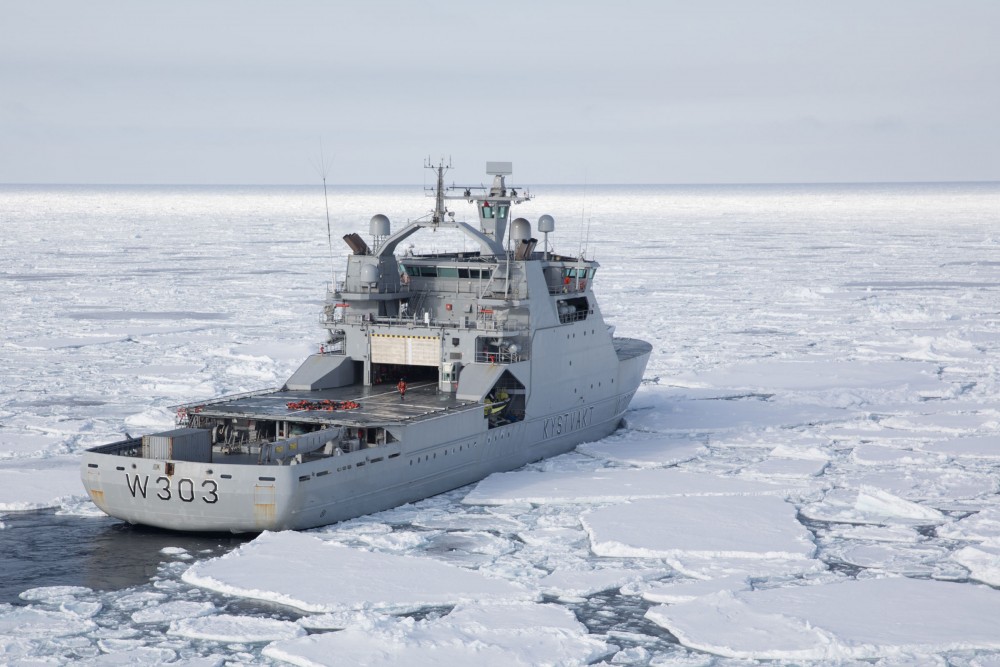
KV Svalbard is Norway’s largest Coast Guard vessel and has icebreaker capabilities. Photo: Marius Vågenes Villanger / Forsvaret

The Barents Sea Observer reports on Norwegian Coast Guard efforts to recover data from a study of Arctic under ice temperatures that might otherwise be lost as a result of the breakdown of USCGC Healy.

Seeing the performance of this ship, in recently reaching the North Pole, has to be good news for the Canadian Navy and Coast Guard, in that they are building eight similar Harry DeWolf class ships (6 RCN and 2 CCG).

Thanks to Tups for bringing this to my attention and for his many previous contributions.