“US, PH, Japan coast guards hold maritime law enforcement training” –The Manila Times

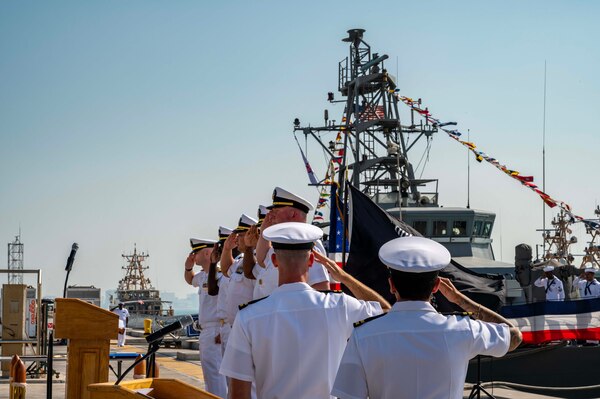
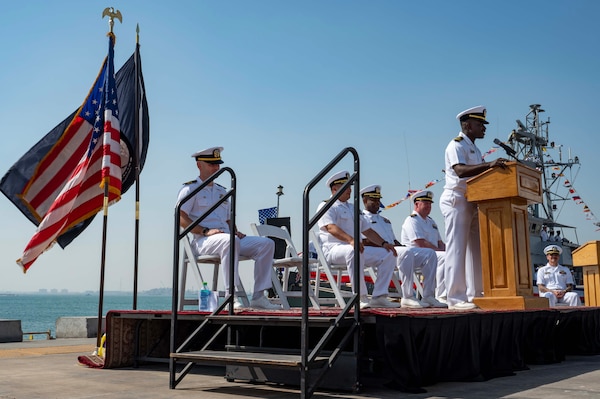
More than 30 participants from the Philippines, Malaysia, Thailand and Vietnam joined the Multinational Vessel Boarding Officer Course funded by the US Department of State’s Bureau of International Narcotics and Law Enforcement Affairs in Puerto Princesa City, Palawan on May 15-26, 2023. CONTRIBUTED PHOTO

The Manila Times reports on a US sponsored, Philippines hosted, boarding officer course that was also extended to officers from other ASEAN partners.

“Through this course, 33 participants from the PCG, Philippine National Police Maritime Group, Malaysia’s Maritime Enforcement Agency, Thailand’s Maritime Enforcement Command Center, and Vietnam’s Department of Fisheries enhanced their knowledge of the law of the sea and policy on the use of force.”

Thanks to Paul for bring this to my attention. 

“Philippine Coast Guard Will Hold First-Ever Trilateral Exercise with U.S., Japan” –USNI

BRP Teresa Magbanua, sister ship of BRP Melchora Aquino (MRRV-9702), during sea trials off Japan (Photo: Philippine Coast Guard)

https://news.usni.org/2023/05/29/philippine-coast-guard-will-hold-first-ever-trilateral-exercise-with-u-s-japanThe US Naval Institute News Service reports, beginning 1 June,

“BRP Melchora Aquino (MRRV-9702), BRP Gabriela Silang (OPV-8301), BRP Boracay (FPB-2401) and one 44-meter multi-role response vessel will conduct the exercise with National Security Cutter USGCC Stratton (WMSL-752) and Japanese patrol vessel Akitsushima (PLH-32).”

I will just provide some photos with links to the Wikipedia description of the vessels. Note none of the Philippine Coast Guard vessels have any permanently mounted weapons.

JCG_Akitsushima(PLH-32), 9,300 tons (full load), Port of Kobe, July 9, 2017. Photo credit: Hunini, via Wikipedia.

USCGC Stratton moored in San Diego, California. Photo by BryanGoff

BRP Gabriela Silang (OPV-8301) as it sails home to the Philippines. 3 May 2021. Photo: Philippine CG.

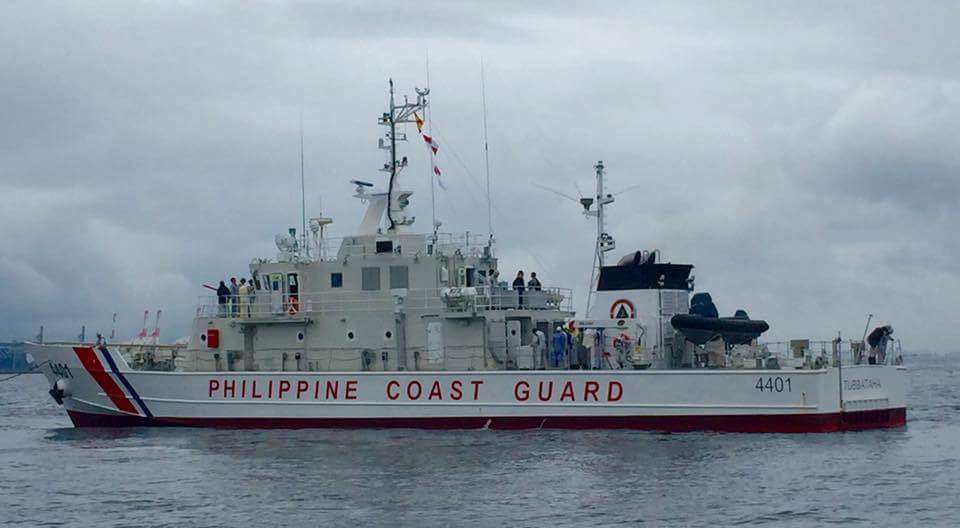
44-meter multi-role response vessel BRP Tubbataha during its delivery to the Philippine Coast Guard, Philippine CG PAO photo

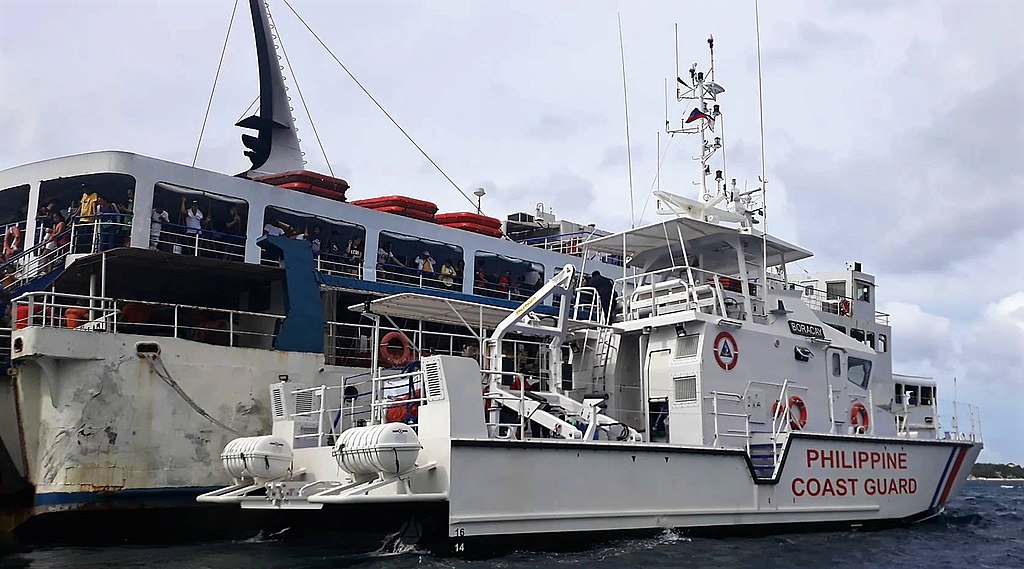
BRP Boracay (FPB-2401), 23 October 2018, Philippine CG photo.

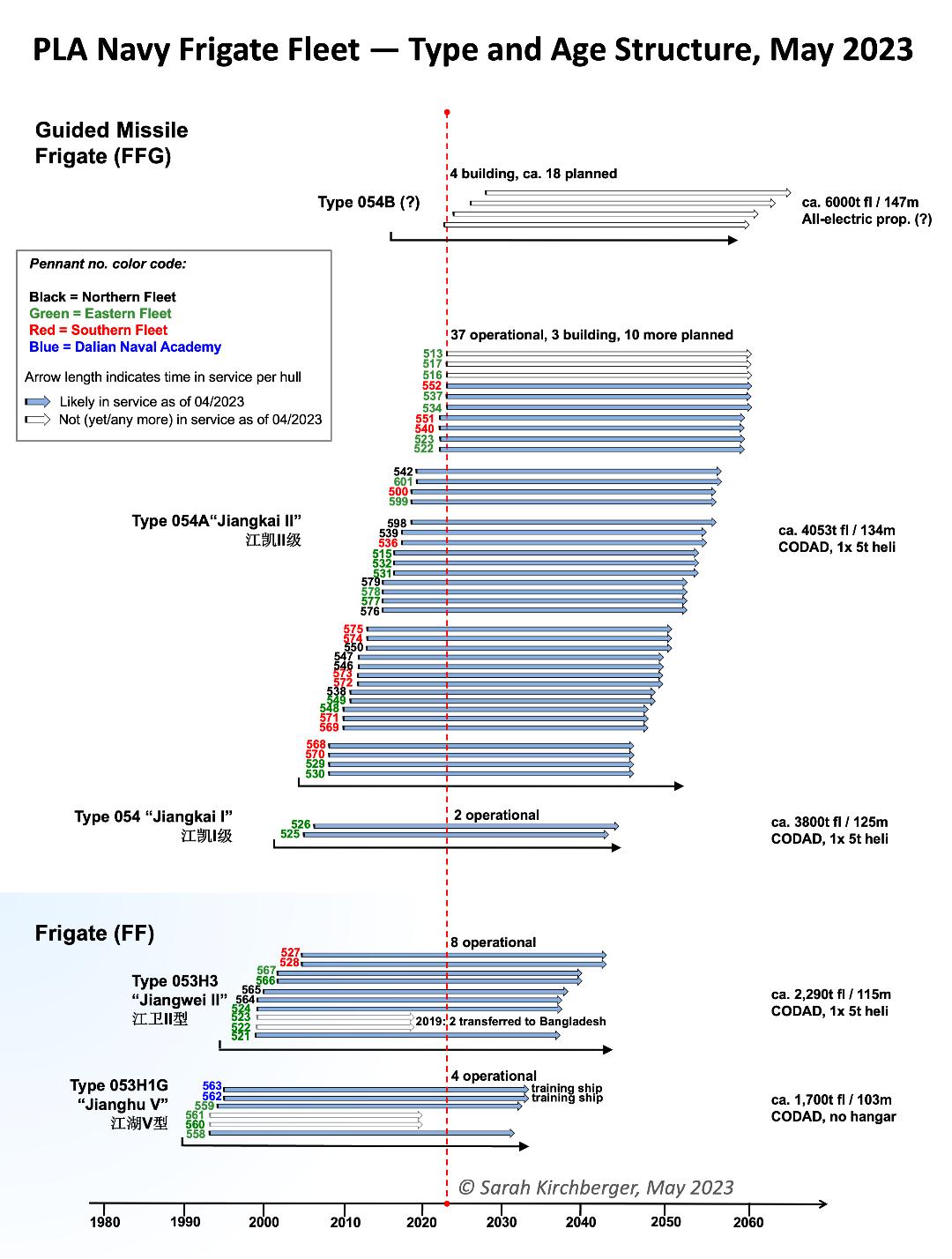
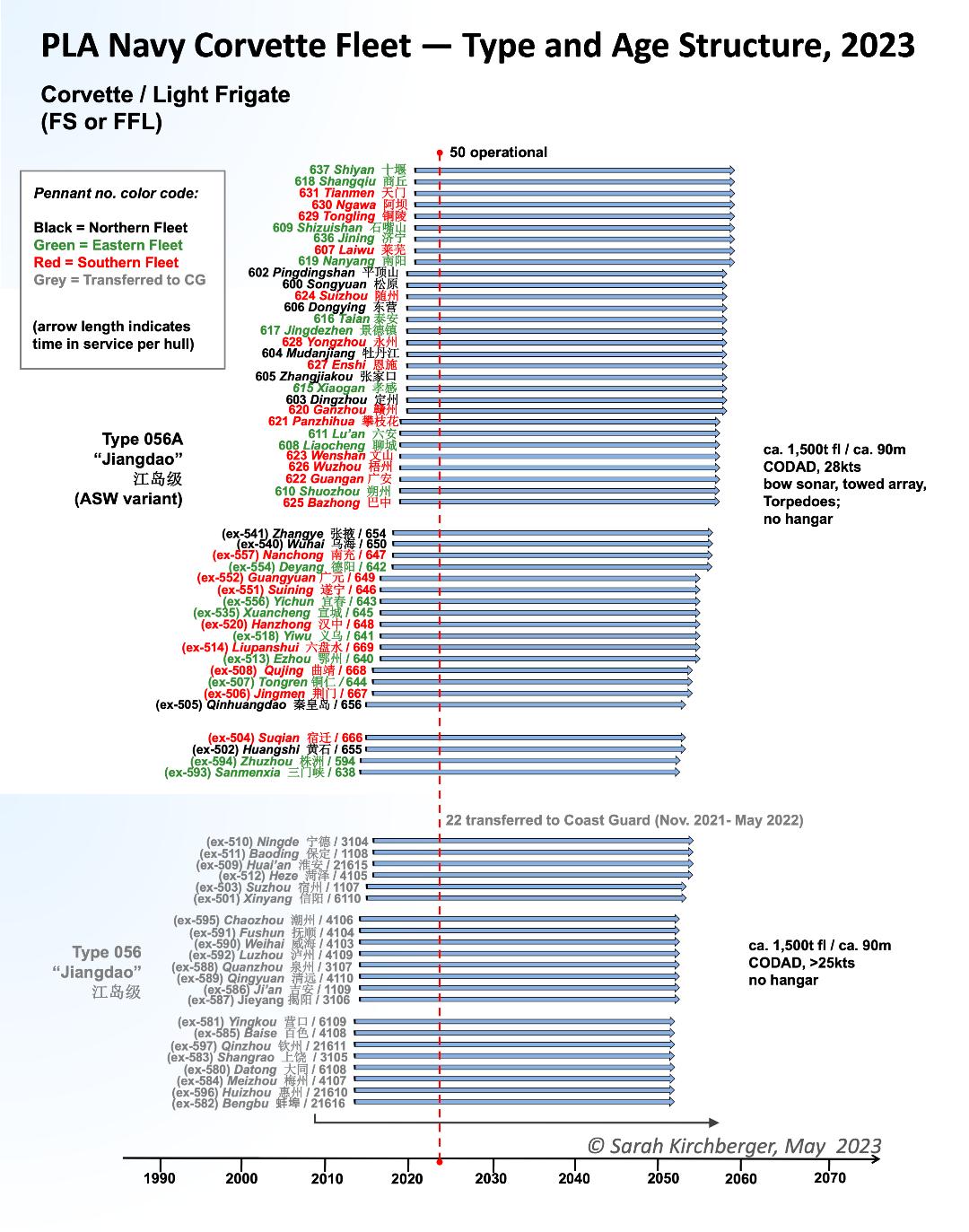
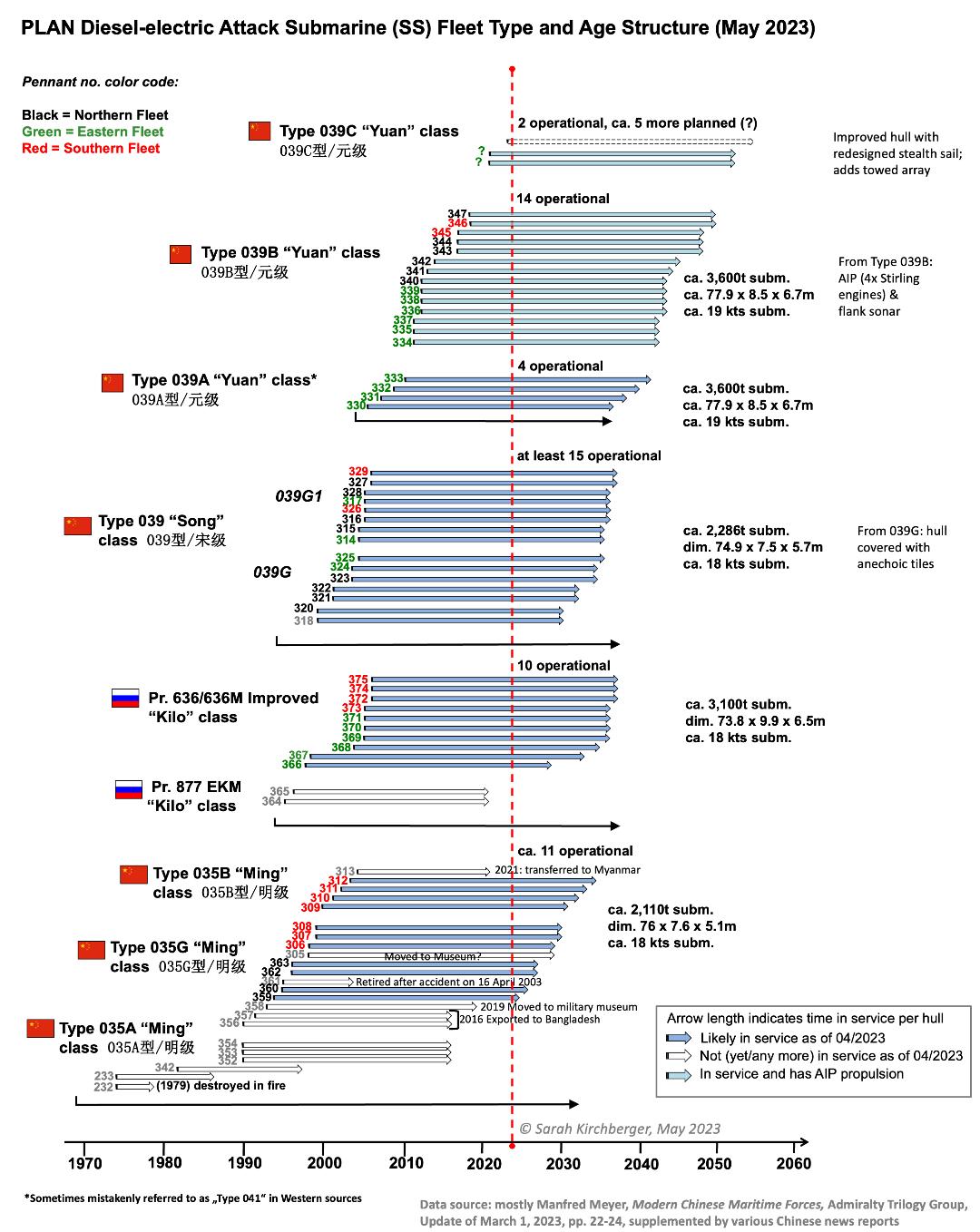
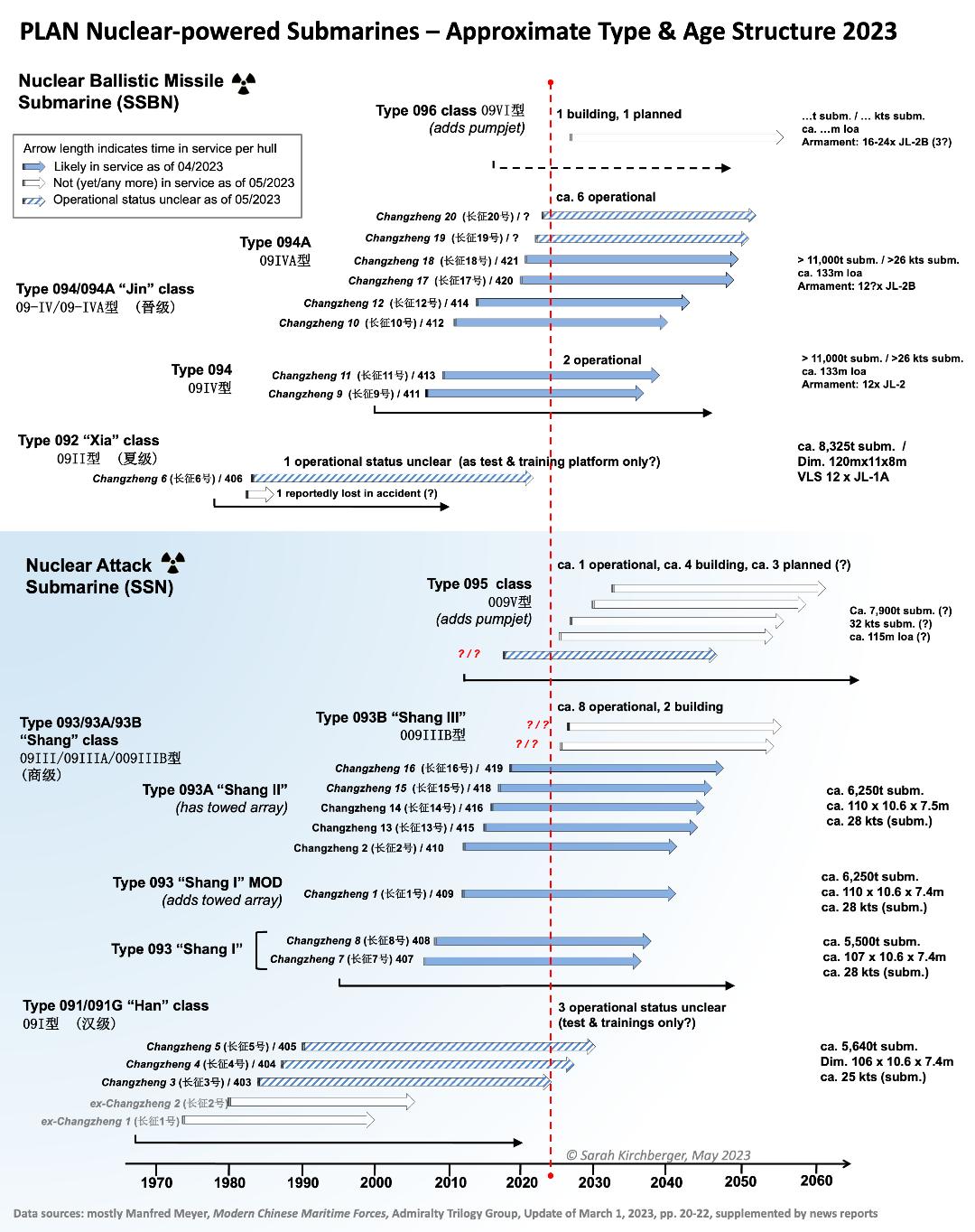
China’s PLAN Surface and Sub Order of Battle

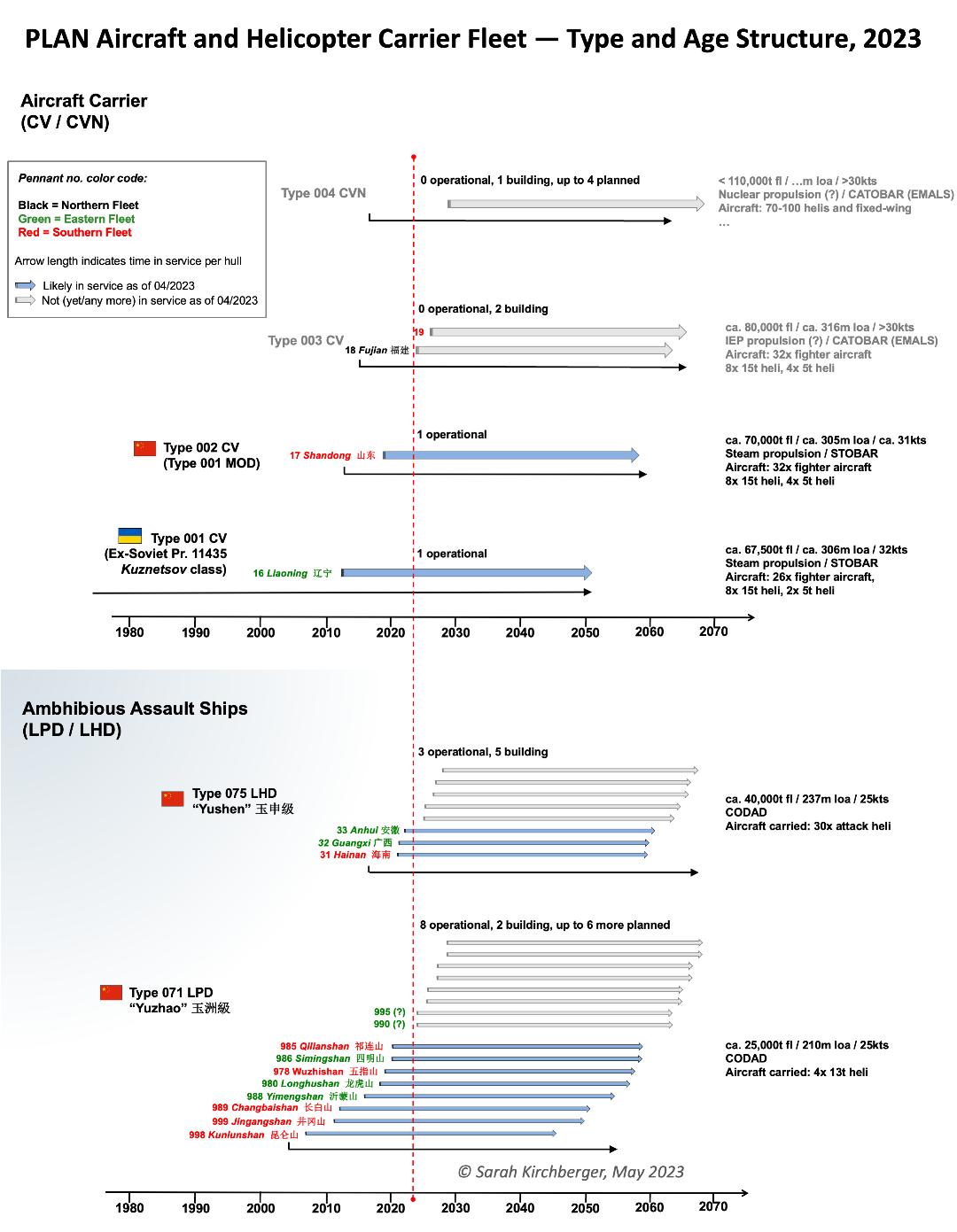
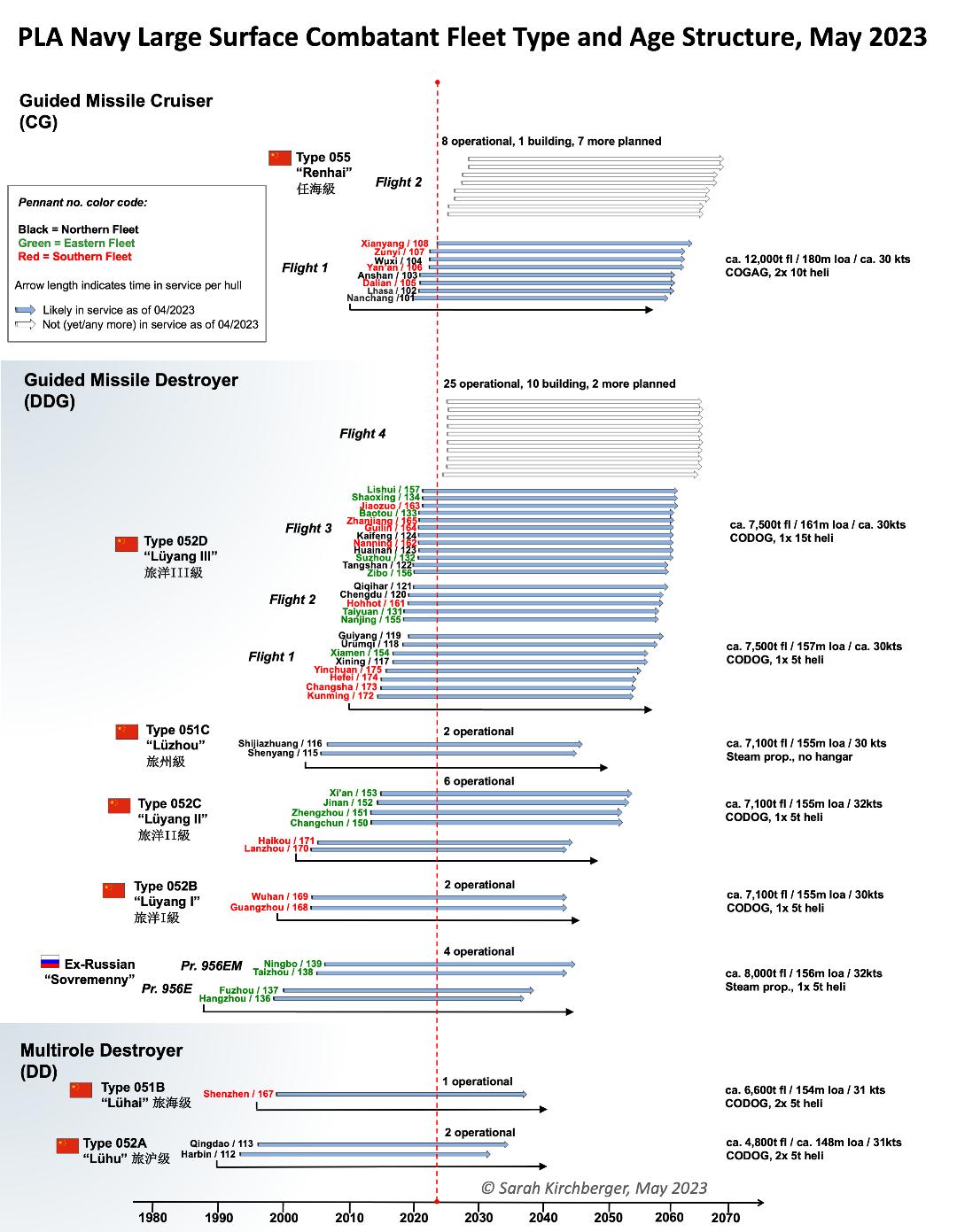
Earlier I published “Chinese Navy Submarine and Major Surface Ship Order of Battle,” that included three infographics prepared by Dr. Sarah Kirchberger that I found on the CIMSEC Internal Discussions Facebook page. At the time I noted that they did not include Chinese aircraft carriers, amphibs, and numerous frigates, corvettes, and other small combatants.

Dr. Kirchberger recently emailed me additional and updated infographics that provide a more complete picture of the People’s Liberation Army Navy’s rapid growth. I have included them all below, including updated versions of the three previously published.

Another resource available is the “Office of Naval Intelligence’s Chinese People’s Liberation Army Navy, Coast Guard, Ship Identification Guide.”

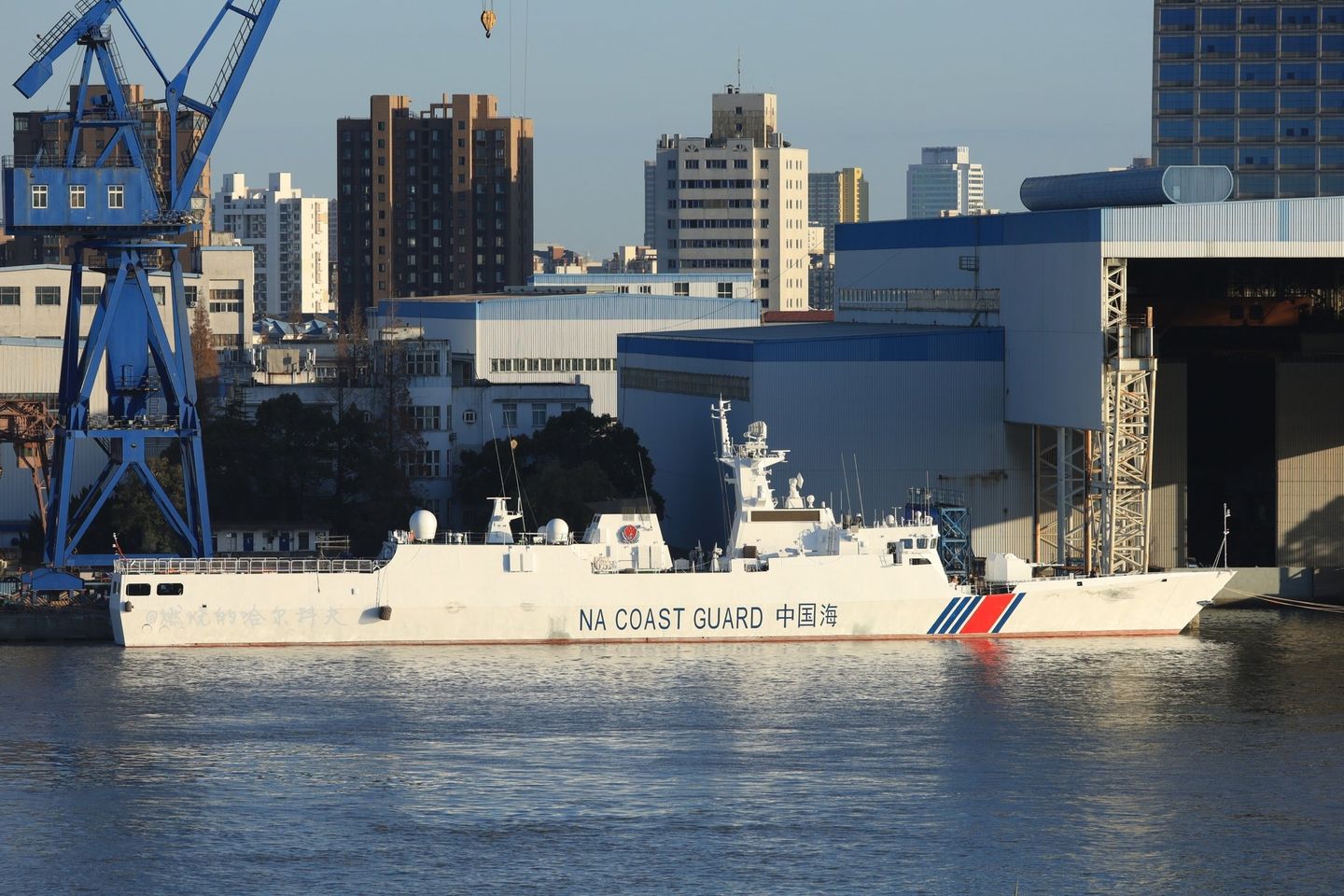
From a Coast Guard perspective, the most interesting development sighted below was the transfer of 22 Type 056 corvettes {photo above) from the Navy to the China Coast Guard. This follows the earlier transfer of four type 053H2G frigates (NATO designation Jiangwei I). In both cases heavier weapons were removed but significant gun armament remained. These added significantly to the China Coast Guard’s close in firepower. When the new China Coast Guard was formed in 2013, very few of their ships were armed with anything larger than 14.5mm machine guns.

Chinese H/PJ-17 30mm

That has changed, particularly since the China Coast Guard was absorbed into the country’s Central Military Commission (CMC), effective July 2018. The standard fit now seems to be a 76m gun and one or two 30mm H/PJ-17.

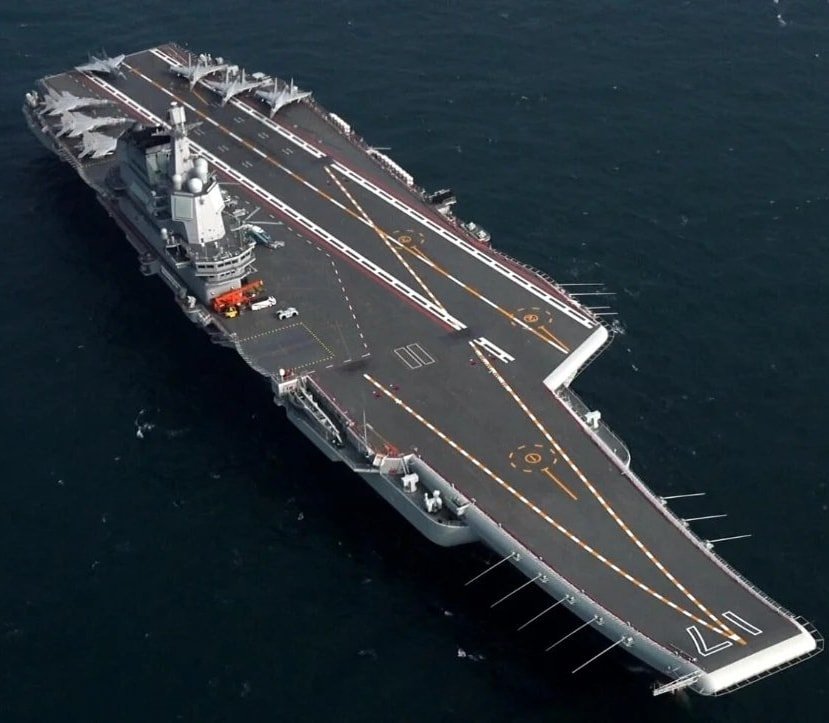
Undated photo of carrier Shandong. PLA Photo

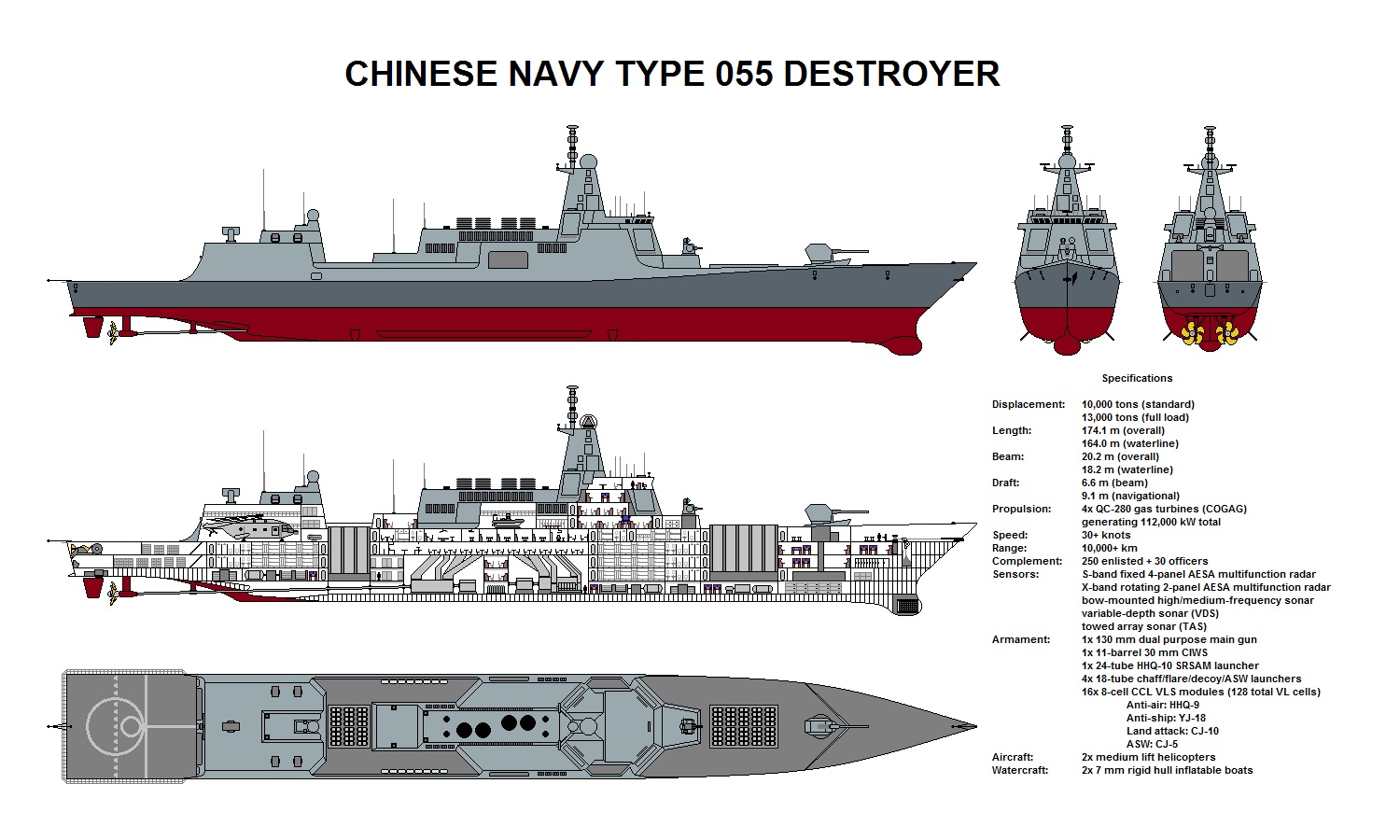
Type 055 Destroyer (Cruiser) SeaWave.com image

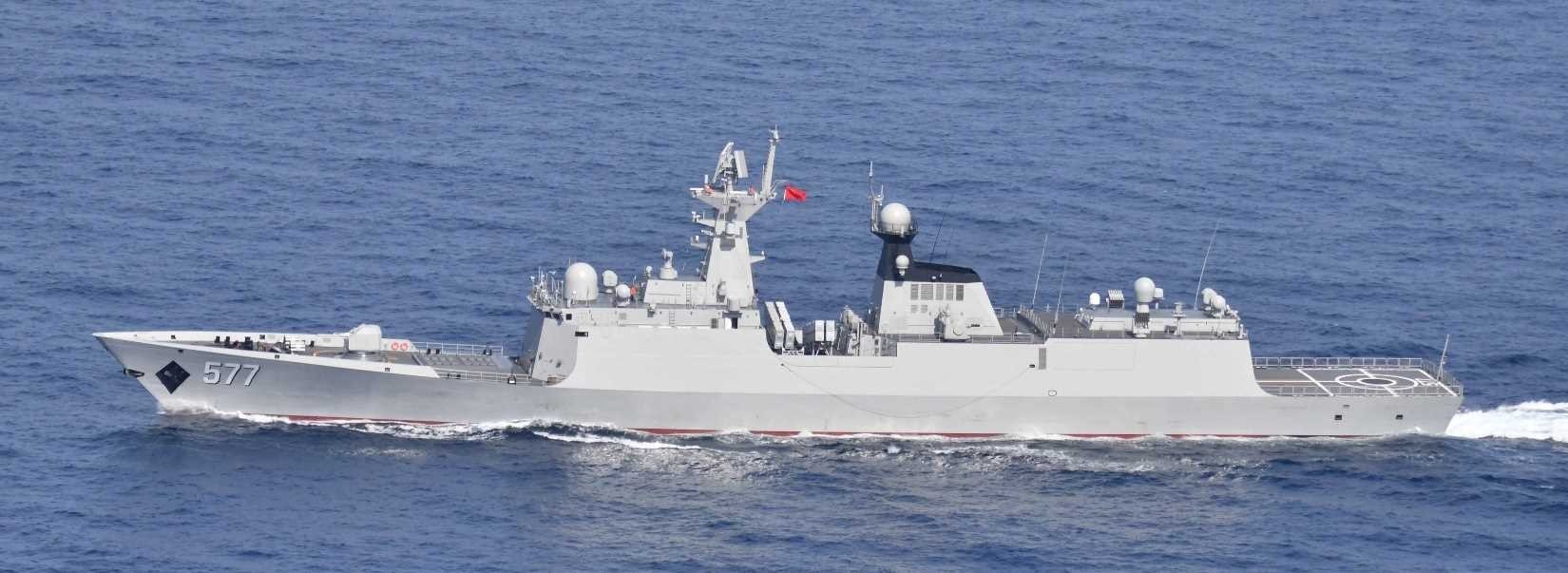
PLAN Type 054A Huanggang (FFG-577), Japanese Self Defense Force photo.

Type 056 corvette, credit 樱井千一

Image: Creative Commons.

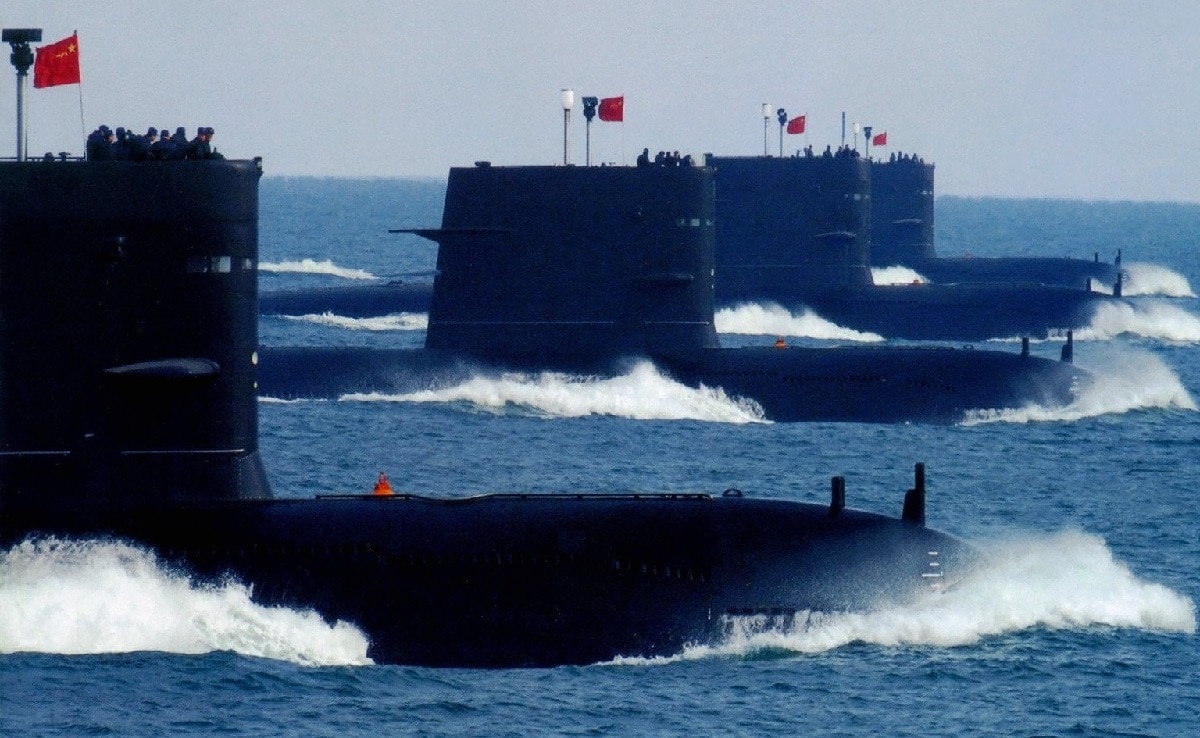
CSR Report RL33153 China Naval Modernization: Implications for U.S. Navy Capabilities—Background and Issues for Congress by Ronald O’Rourke dated February 28, 2014. Page 8 – Figure 1. Jin (Type 094) Class Ballistic Missile Submarine Source: Photograph provided to CRS by Navy Office of Legislative Affairs, December 2010.

PATFORSWA’s USCGC Glen Harris, 2 Busts, May 8 and May 10, Heroin and Meth

Below are a pair of news releases from NAVCENT.


NEWS | May 10, 2023

U.S. Seizes $80 Million Heroin Shipment in Gulf of Oman

By U.S. Naval Central Forces Command Public Affairs

A U.S. Coast Guard fast response cutter seized $80 million worth of heroin from a fishing vessel transiting the Gulf of Oman, May 10, during the ship’s second drug bust this week.

USCGC Glen Harris (WPC 1144) was operating in support of Combined Task Force (CTF) 150 when a boarding team discovered 1,964 kilograms of heroin on a vessel transiting international waters after departing Chah Bahar, Iran. Glen Harris also seized $30 million worth of methamphetamine and heroin two days ago from another fishing vessel that departed the same port.

“I’m very proud of my crew and all we’ve been able to accomplish as a team this week,” said Lt. Nick Jabs, Glen Harris’s commanding officer. “We’re out here to work with regional partners and disrupt any destabilizing maritime activity at sea. We will continue getting after it.”

Glen Harris’s previous seizure on May 8 included 580 kilograms of methamphetamine and 35 kilograms of heroin.

The ship arrived in the Middle East last year as part of a contingent of U.S. Coast Guard cutters that are forward-deployed to the region under Patrol Forces Southwest Asia.

CTF 150 is one of four task forces that form the world’s largest multinational naval partnership, Combined Maritime Forces. Naval forces supporting CTF 150 have now seized illegal drugs worth a combined estimated U.S. street value of more than $250 million in 2023. These efforts help ensure legitimate commercial shipping transits the region free from non-state threats.


NEWS | May 8, 2023

U.S. Coast Guard Seizes $30 Million in Drugs with International Task Force

By U.S. Naval Central Forces Command Public Affairs

A U.S. Coast Guard fast response cutter seized more than $30 million of heroin and methamphetamine from a fishing vessel transiting the Gulf of Oman, May 8.

Operating in support of Combined Task Force (CTF) 150, USCGC Glen Harris (WPC 1144) seized 580 kilograms of methamphetamine and 35 kilograms of heroin from a vessel transiting international waters after departing Chah Bahar, Iran.

CTF 150 is one of four task forces that form the world’s largest multinational naval partnership, Combined Maritime Forces. Naval forces supporting CTF 150 have seized illegal drugs worth a combined estimated U.S. street value of nearly $200 million in 2023.

Glen Harris arrived in the Middle East last year and operates from the U.S. Navy base in Bahrain where CMF is headquartered with U.S. Naval Forces Central Command and U.S. 5th Fleet.

The fast response cutter is part of a contingent of U.S. Coast Guard ships forward-deployed to the region under Patrol Forces Southwest Asia (PATFORSWA). PATFORSWA deploys Coast Guard personnel and ships alongside U.S. and regional naval forces throughout the Middle East.

“The dedication and expertise of Glen Harris’s leadership and crew embody our commitment to interdict and remove illicit narcotics from the sea, denying malign actors the ability to destabilize the region,” said Capt. Eric A. Helgen, PATFORSWA’s commander. “I could not be more proud of our fast response cutter crews.”

Currently led by the United Kingdom, CTF 150 conducts maritime security and counter-terrorism operations in the Gulf of Oman and Indian Ocean to disrupt criminal and terrorist organizations and their related illicit activities, including the movement of personnel, weapons, narcotics and charcoal. These efforts help ensure legitimate commercial shipping transits the region free from non-state threats.

U.S. and international naval units in the Middle East seized illegal drugs totaling $1 billion in value from 2021 to 2022.

“U.S. Looks To Transfer 4 Patrol Boats To The Philippines” –Naval News

Ukrainian Navy Island-class patrol boats, formerly of the U.S. Coast Guard, conduct maritime security operations in the Black Sea off the coast of Odesa, Ukraine. UKRAINIAN NAVY

Naval News reports,

“On Monday, the U.S. announced its intention to transfer four patrol boats to the Philippine Navy. The transfer intends to support the Armed Forces of the Philippines’ modernization plan, specifically the Philippine Navy’s maritime capabilities.”

Note these are to go to the Philippine Navy, not their Coast Guard.

They will be getting two 110 foot (33.5 m) Island class and two 87 foot (26.5 m) Marine Protector class patrol boats.

This may just be the first such transfer. There are still quite a few Island class that may be available for transfer. The Coast Guard 2023 “Asset” poster indicates there were nine Island class cutters still in service when the poster was created. There are probably others that have been decommissioned but have not yet been transferred or otherwise disposed of.

The Marine Protector class now 14 to 25 years old. There is no direct replacement planned for this class but several have been decommissioned as their role has been taken by the 45 foot Response Boat, Medium and the 154 foot Webber WPCs. 

Since these boats are going into the Philippine Navy rather than the Philippine Coast Guard, there is a possibility they may be armed with something larger than .50 cal. (12.7mm) machine guns. The Island class, in US Coast Guard service, were armed with crew served manual early models of the 25mm Mk38 gun mount. It is not clear if the boats will be transferred with their guns in place. When the 378 foot WHECs were transferred to the Philippine Navy, their 25mm Mk38 gun mounts were removed before transfer. The Philippine Navy has 25mm Mk38s of several marks including the remote weapon stations. They also have 20, 30, and 40mm guns that might equip the cutters.

These cutters will have a significant speed advantage over most China Coast Guard and maritime militia vessels. Maximum speeds are 25 knots for the 87 footers and 29 knots for the 110 foot cutters. The Island class also has sufficient range (2,900 nmi (5,400 km) to go anywhere in the South China Sea.

U.S. Navy Decommissions Last Patrol Craft Stationed in Bahrain –NAVCENT

DAHLGREN, Va. (Nov. 6, 2004) Coast Guard Cutter Shamal (WPC-13) patrols the Potomac River near the Naval Surface Warfare Center in Dahlgren, VA. On Sept. 29, 2004, USS SHAMAL was transferred to the U.S. Coast Guard in Little Creek, VA and placed in Commission Special status. After a two-month dockside availability at Integrated Support Command Portsmouth, SHAMAL will make itstransit to her new homeport of Pascagoula, MS., where it will be officially commissioned on December 6, 2004. SHAMAL’s planned major missions will be alien migrant and drug interdiction operations within the D7 and D8 AORs. MS. USCG photo by Joseph P. Cirone,USCGAUX

Below is a NAVCENT news release. More a Navy story than a Coast Guard one, but a class of ships the Coast Guard not only worked closely with, but also operated. Their departure puts an even greater load on the six Patrol Forces SW Asia Webber class cutters.

U.S. Navy Decommissions Last Patrol Craft Stationed in Bahrain

By U.S. Naval Forces Central Command Public Affairs | March 28, 2023

The U.S. Navy decommissioned the last two Cyclone-class patrol coastal ships stationed at Naval Support Activity Bahrain, March 28, during a pierside ceremony attended by U.S. 5th Fleet officials.

Leaders and crewmembers of USS Monsoon (PC 4) and USS Chinook (PC 9) marked the end of nearly three decades of U.S. naval service.

“I’m honored to be a part of the legacy on this waterfront,” said Lt. Cmdr. Dre Johnson, during the ceremony. “PC Sailors are a unique bunch, and only they can understand the amount of work they’ve done and the pride they have in what they’ve accomplished.”

Johnson is Monsoon’s last commanding officer. The U.S. Navy initially commissioned the ship in 1994 and then recommissioned it in 2008 after Monsoon served four years in the U.S. Coast Guard. Chinook was commissioned in 1995.

“With 28 years of crew covering multiple generations, each one was dedicated to the mission, adapting to rapidly changing mission sets, and working together as a team to accomplish whatever obstacle that came their way,” said Lt. Cmdr. David Hartmann, Chinook’s commanding officer.

Monsoon and Chinook are the last of a group of 10 ships designed for shallow-water operations that were stationed in Bahrain. The Middle East region includes 5,000 miles of coastline from the northern Arabian Gulf, around the Arabian Peninsula, through the Red Sea and Suez Canal.

Last year, the U.S. Navy decommissioned and transferred five patrol craft to the Royal Bahrain Naval Force: former ships USS Tempest (PC 2), USS Typhoon (PC 5), USS Squall (PC 7), USS Firebolt (PC 10) and USS Whirlwind (PC 11). Additionally, the U.S. Navy decommissioned and transferred former ships USS Hurricane (PC 3), USS Sirocco (PC 6) and USS Thunderbolt (PC 12) to the Egyptian Navy last week during a formal ceremony in Alexandria, Egypt.

Monsoon and Chinook are slated for transfer to the Philippine Navy. Officials from the Philippines attended the ceremony.

“I’m proud of our crews for reaching this milestone and representing our nation and Navy with utmost pride and professionalism,” said Capt. Anthony Webber, commander of Task Force 55, which oversees operations for U.S. 5th Fleet’s surface forces. “I’m also proud that we are turning over great ships to our Philippine partners.”

Bahrain, Egypt and the Philippines are members of the largest multinational naval partnership in the world called Combined Maritime Forces (CMF). Led by the United States, forces from the organization’s 38 nations operate across approximately 3.2 million square miles of international water space in the Middle East. The partnership ensures maritime security and stability in some of the world’s most important shipping lanes.

“Coast Guard to Send Additional Cutter to Hawaii” –Military.com

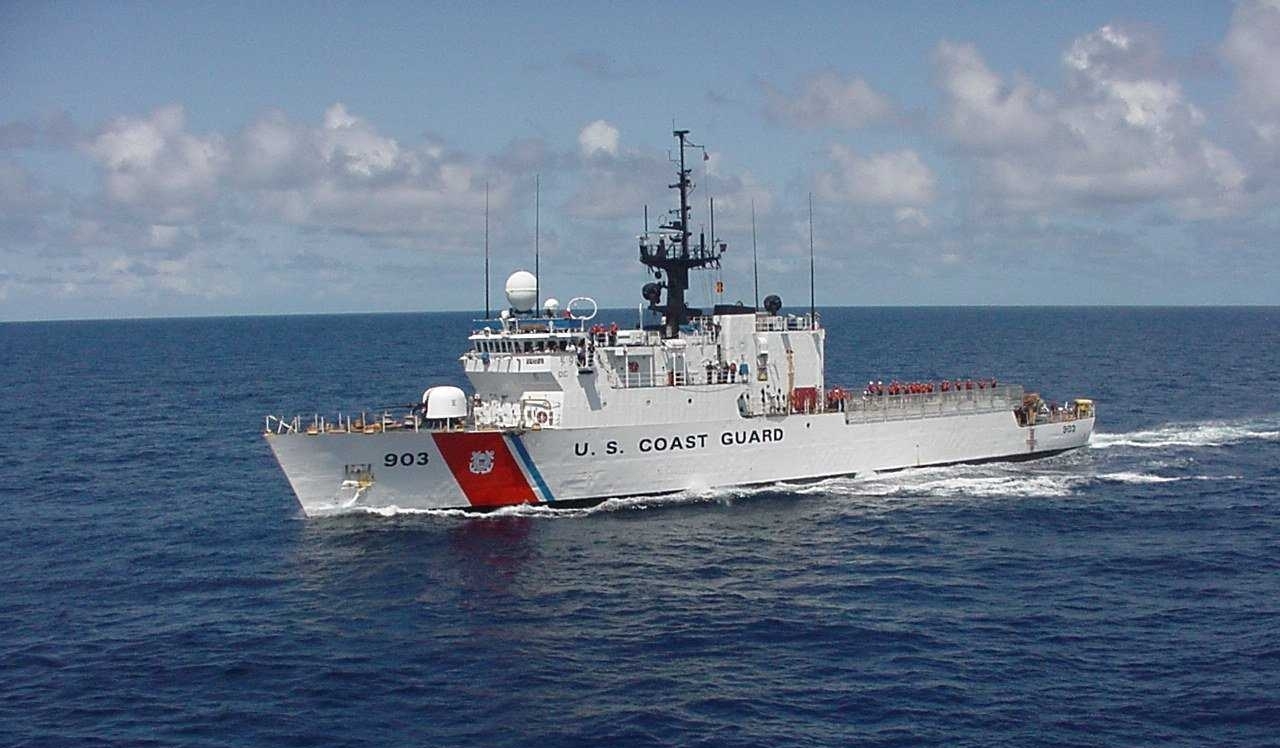
USCGC Harriet Lane (WMEC-903), March 17, 2009. US Coast Guard photo. She may look a little different now having gone through the Service Life Extension Program.

Military.com reports USCGC Harriet Lane is to be the new “Indo-Pacific Support Cutter,” and that she will be based in Honolulu beginning early FY2024. This is a change of homeport from Portsmouth, VA.

We knew this was coming, and Harriet Lane was the likely candidate. She will be the only WMEC 270 in the Pacific and will be used to counter Illegal, Unregulated, Unreported (IUU) fishing in the US EEZ and that of our friends and allies. They will also probably do a lot of training with friendly maritime law enforcement agencies. Her capabilities are a good match for the role. WMEC270s have been doing similar tasks off West Africa for years.

Thanks to Walter, a former dirt dart, for bringing this to my attention.

“Coast Guard Cutter Kimball returns home following Western Pacific patrol” –CG News

Following is from the Coast Guard News Page. Not only does this show the increasing cooperation between the US and Japan coast guards, it also explains how a Barbers Point H-65 made it to Guam. (“U.S. Coast Guard, Guam Fire Department conduct rescue hoist training in Guam” –Forces Micronesia / Sector Guam)

March 14, 2023

Coast Guard Cutter Kimball returns home following Western Pacific patrol

HONOLULU — The Coast Guard Cutter Kimball (WMSL 756) and crew returned to their Honolulu homeport, Friday, following a 42-day, 10,000 nautical mile Western Pacific patrol.

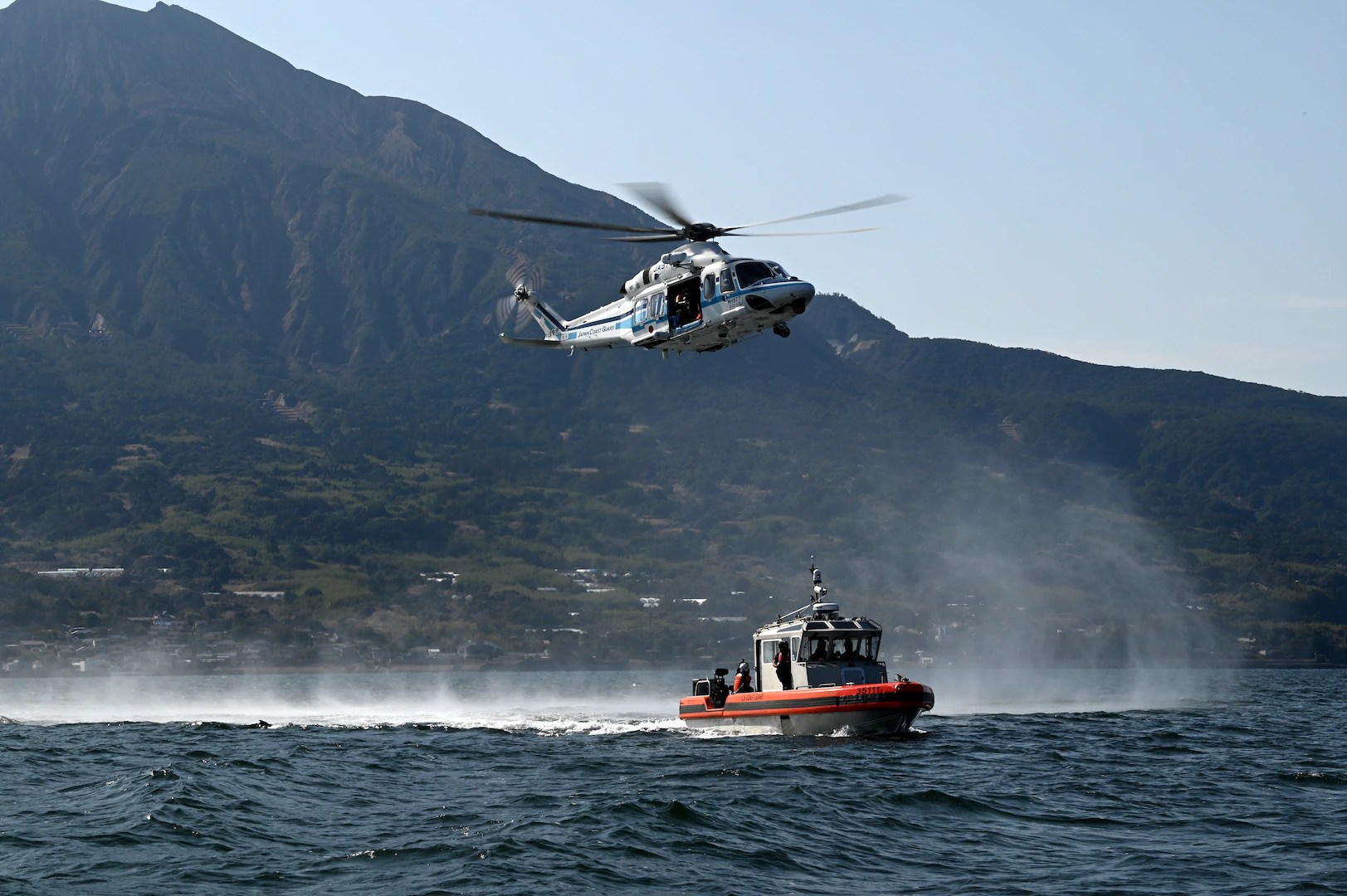
Kimball was the first U.S. military ship in recent history to visit the port city of Kagoshima, Japan, where the crew partnered with servicemembers from Japan Coast Guard’s 10th District to plan and conduct combined operations and search-and-rescue exercises.

Kimball’s crew met with Japan Coast Guard senior leadership and hosted Japan Coast Guard servicemembers, U.S. Consulate Fukuoka staff, community leaders and local media aboard the cutter during the port visit in support of Operation SAPPHIRE.

Operation SAPPHIRE is a joint agreement between the U.S. and Japan Coast Guards signed in 2022 for enhancing cooperation between the two sea services. SAPPHIRE is an acronym for the ‘Solid Alliance for Peace and Prosperity with Humanity and Integrity on the Rule of law-based Engagement.’

“By collaborating with Japan Coast Guard members and conducting evolutions that enhanced communication and inter-operability during the patrol, the crew continued to strengthen a solid foundation for the positive and productive relationship with the maritime service of a like-minded nation,” said Captain Tom D’Arcy, Kimball’s commanding officer.

Kimball’s crew demonstrated proficiency in the ship’s aviation program by working with an air operations inspection team to conduct a biennial Shipboard-Aviation Standardization Inspection (AVSTAN). By achieving their AVSTAN certification, Kimball can continue deploying with aviation detachments during future patrols.

Kimball also supported U.S. Coast Guard efforts to increase its presence in the Indo-Pacific. Kimball’s crew delivered a MH-65 Dolphin helicopter from Air Station Barber’s Point to Santa Rita, Guam, to enable forward operations that extend the service’s air coverage in the region.

During the patrol, the cutter’s engineering department was presented with the Rear Admiral R. S. Lucas Plaque Award for their outstanding contributions to the Coast Guard’s naval engineering program. Members from Kimball’s engineering department were cited for excellence and ingenuity during recent patrols and for completing three extensive industrial periods encompassing significant maintenance, contractual repair projects, and casualty repairs valued at over $4.4 million.

“I am extremely proud of our crew’s accomplishments,” said D’Arcy. “Kimball continues to remain on the front lines of the Coast Guard’s strategic plan. Our engagements in Japan strengthened our existing relationships with international partners who uphold good maritime governance. Kimball’s patrol re-affirmed the U.S. Coast Guard’s commitment to facilitating a free and open Indo-Pacific.”

Commissioned in 2019, Kimball is the Coast Guard’s seventh national security cutter and one of two homeported in Honolulu. National security cutters are 418-feet-long, 54-feet-wide and have a displacement of 4,500 long-tons. With a range of 12,000 nautical miles, the advanced technologies of Legend-class national security cutters are designed to support the national objective to maintain the security of America’s maritime boundaries and provide long range search-and-rescue capabilities.

“Philippine Coast Guard Set For Personnel Boost” –Naval News

BRP Teresa Magbanua during sea trials off Japan (Photo: Philippine Coast Guard)

Naval News reports,

“The Philippine Coast Guard (PCG) is set to receive an additional 4,000 personnel this year, in order to reach a total of 30,000 by year-end.”

Some things to note:

That is almost 75% the size of the US Coast Guard, while the Philippine EEZ is less than 20% of the US.

The Philippine Coast Guard will be considerably larger than the Philippine Navy which has 24,500 active-duty members including 8,300 Marines.

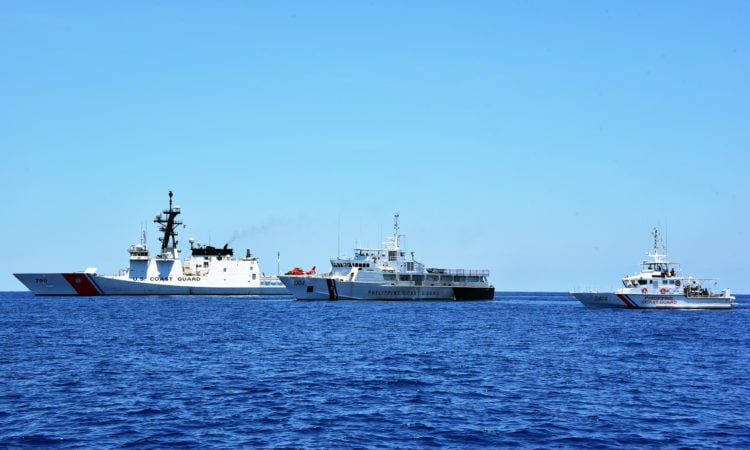
BRP Batangas (SARV-004) in between USCGC Bertholf (WMSL 750) and BRP Kalanggaman (FPB-2404) in an Exericse held in 2019. For many years, the Australian San Juan and Ilocos Norte vessels were the only major patrol assets in PCG service.
(U.S. Coast Guard photo by Chief Petty Officer John Masson)

Until 2020 the Philippine Coast Guard had no large patrol cutters. Their largest ships were two buoy tenders including the former USCGC Redbud, first commissioned in 1944. In fact, they mark the founding of their Coast Guard Fleet only as of 2007.

Beginning in 2020 the Philippine Coast Guard has obtained their first large patrol cutter, the 83 meter BRP Gabriela Silang. In 2022 they obtained two Japanese built 97 meter cutters of the Teresa Magbanua-class (see lead photo). They hope to get many more.

This build-up is obviously in response to Chinese intrusions into the Philippines’ Exclusive Economic Zone.

It appears the Philippine Coast Guard still has no weapons larger than .50 caliber machine guns. It will be interesting to see if this changes.

“Pakistan’s New OPV – PNS Yarmook – Is At NAVDEX 2023” –Naval News

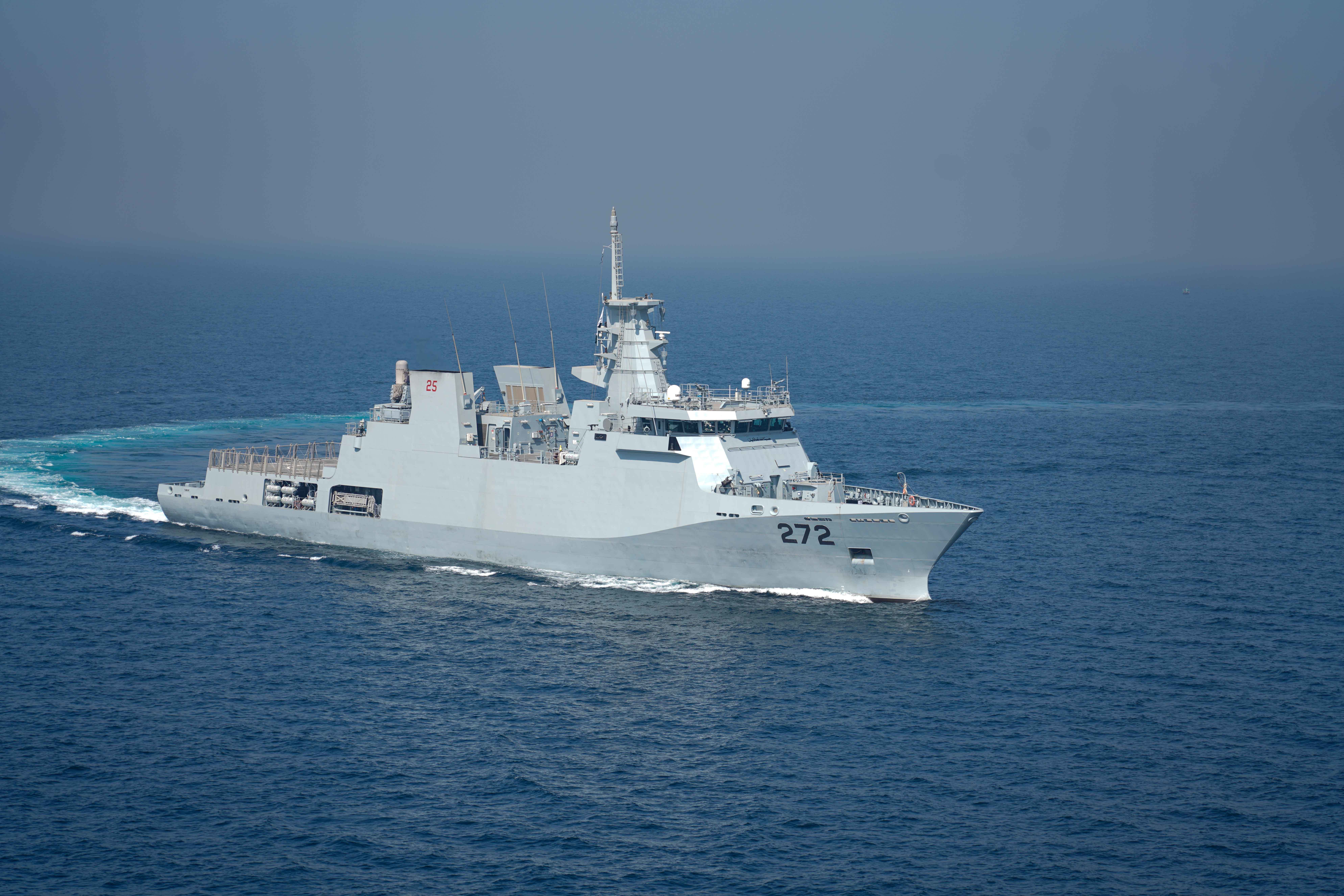
Sister ship: GULF OF OMAN (Nov. 11, 2021) Pakistani corvette PNS Tabuk sails alongside amphibious dock landing ship USS Pearl Harbor (LSD 52) during a passing exercise in the Gulf of Oman, Nov. 11, 2021. (U.S. Navy photo by Mass Communication Specialist 3rd Class Sang Kim)

Naval News reports on a tour of a recently completed Damen designed Offshore Patrol Vessel. The vessel itself, PNS Yarmook (271), is a very typical modern OPV. What is not typical is the way it is being armed.

A medium caliber gun (57-76mm) and a pair of auto-cannon (20-30mm) seems to be the norm. Instead, it is to be a 30 mm Aselsan SMASH remote weapon station, two Aselsan STAMP remote weapon systems, (presumably with .50 cal. machine guns) and a Phalanx Block 1B close-in weapon system, and eight Harbah sub-sonic, anti-ship cruise missiles (ASCM) with land attack capability. This missile, at 1350 kg, is about twice as large as Harpoon (1523 lbs / 691 kg) and 50 kg or 110 pounds heavier than the Tomahawk. It is more than three times larger than Naval Strike Missile.

Pakistan is building another, slightly larger class of OPVs. Presumably, they will also be armed with ASCM. These, like the Yarmook class, are being built by the Damen yard in Galati, Romania.