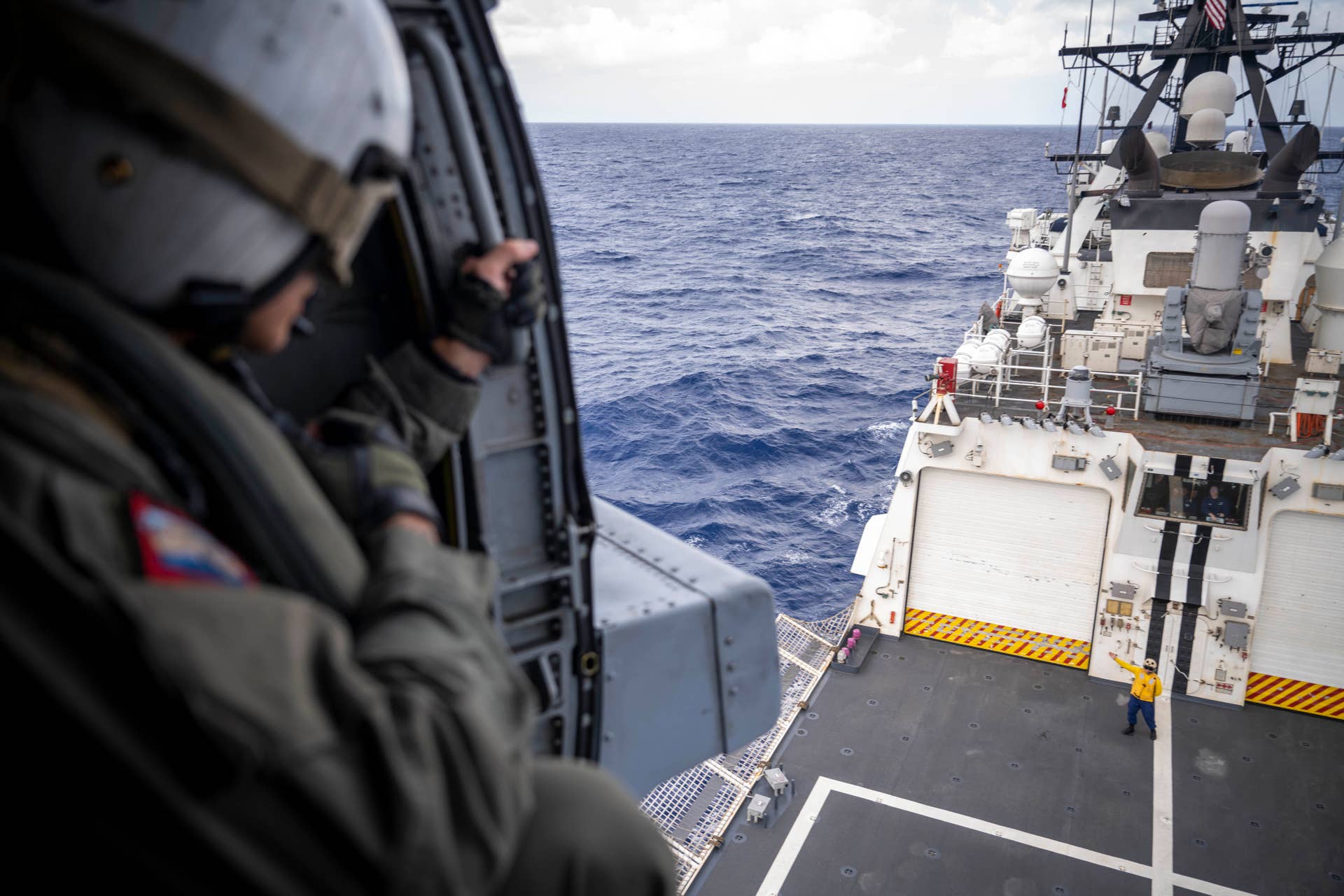
PACIFIC OCEAN (July 30, 2022) U.S. Navy Petty Officer 1st Class Humberto Alba, a naval aircrewman tactical-helicopter, attached to Helicopter Maritime Strike Squadron (HSM) 37, deployed on U.S. Coast Guard Legend-class cutter USCGC Midgett (WMSL 757), looks down at a USCGC crewmember after taking off during flight operations during Rim of the Pacific (RIMPAC) 2022. (U.S. Coast Guard photo by Petty Officer 3rd Class Taylor Bacon)
The U.S. Coast Guard is in line to get a new version of the H-60 helicopter based on the MH-60R Seahawk, which is in service with the U.S. Navy and other armed forces globally. The additional helicopters will supplement, at least initially, the Coast Guard’s aging MH-60T Jayhawks. The Coast Guard also plans to boost its overall capabilities by replacing its fleet of smaller MH-65s with H-60 variants.
Earlier this week, Naval Air Systems Command (NAVAIR) put out a contracting notice announcing its intent to award Lockheed Martin Rotary and Mission Systems a sole-source deal to design and produce an unspecified number of “MH-60R variant aircraft for the United States Coast Guard.”
The Contracting notice makes no commitment as to the numbers involved. One thing is clear. The Coast Guard is still also adding MH-60Ts so we are going to have a mixed fleet.
So how many of the new type, and how much of the Navy’s mission equipment will be retained? Will they be used much as the MH-60T or will they replace only the H-65s that provide air borne use of force (I can’t remember ever seeing a MH-60T deployed on a cutter for a drug enforcement patrol).
They could just not install any of the ASW and ASuW equipment. That would reduce weight and provide more interior room. It has a highly regarded radar that would be very useful for drug interdiction.
I think it is interesting that they chose the “Romeo” version rather than the MH-60S. The closely related MH-60S is the Navy’s combat search and rescue aircraft, but he MH-60S does not have radar that the “Romeo” has.
Probably not, but could this be a step in bringing back an ASW mission for the Coast Guard? In addition to operating from cutters, there is probably a good case to be made for giving Coast Guard Air Stations an ASW capability to keep submarines from being able to concentrate near US ports. Then we might actually guard the coast. Sorry, I couldn’t help myself.
The author, a submariner, also believes the equipment could help with peace time missions.
Important, ASW investment would offer immediate peacetime benefits. Enhancing the Coast Guard’s underwater surveillance capabilities would directly strengthen its border security and counternarcotics missions, improve boarding team safety, and extend interdiction range in the maritime domain. Many of the technologies necessary for submarine detection would be valuable in locating low-profile drug smuggling vessels, including go-fast boats and semisubmersibles. (See “Interdicting Narcotics at Sea,” pp. 10–11, August 2025.) These crafts’ minimal radar and visual signatures pose detection challenges similar to those of modern diesel-electric submarines.
There were good reasons ASW equipment was removed from the 378s in 1991 as the Soviet Union fell apart, but things have changed. I would expect the Chinese to use their conventional submarines to lie in wait for US submarines and aircraft carriers in the Western Pacific. They are unlikely to engage American subs with their own SSNs. I think they are more likely to engage US logistics with their SSNs. The US Navy does not want to divert highly capable AAW assets to convoy escort but currently those are the only type of escorts the Navy has.
The Mk 48 torpedo was intended for use in both submarines and surface ships, in the latter for the ASW role. Twin Mk 25 tubes for Mk 48 torpedoes were fitted in guided missile frigates (DLG/DLGN) in their after deckhouse and in escort ships (DE/DEG) in their stern counters. This photo shows a Mk 48 being launched from the USS Talbot (DEG-4). Lockheed Shipbuilding; US Navy
Looking back a couple of years, The War Zone had a post that argued that Heavy Weight Torpedoes (HWT) should be installed as anti-submarine weapons on surface ships.
The Navy once toyed with the idea of putting heavyweight anti-submarine torpedoes on its frigates, an idea that could be relevant again today. by KEVIN NOONAN, JUN 6, 2023
–
The argument is based on misgivings about the effectiveness of the Mk54 light weight torpedo (LWT)) and about reliance on only one weapon in general.
He specifically talks about problems with the Mk54 and the possibility of mounting at least one torpedo tube with reloads on the Constellation class guided missile frigates.
–
He also advocates adding a bow mounted active sonar to provide targeting for the HWT. From what I hear, the CAPTAS 4 sonar really does make the bow mounted sonar unnecessary.
—
His argument seems sound, but there are perhaps additional reasons for putting one or two heavy weight torpedo tubes on large Cutters, even if they don’t come with the very expensive Mk48 torpedoes.
Given the implicit requirement in the Coast Guard mission set that cutters should be able to forcibly stop any vessel regardless of size, a heavy weight torpedo could be a very effective ship stopper with relatively long range.
–
For Mobilization:
–
In case of a major conflict I would anticipate large cutters would be used to enforce blockades and/or escort logistics support ships.
–
The new generation of large cutters are armed adequately to enforce a blockade against clandestine shipments in small vessels for operations like Market Time, but to forcibly stop larger vessels we need something more than the 57mm. Since in most cases the desire would be to stop rather than to sink vessels like large tankers, we need something that can reliably disable propulsion, most probably a smart torpedo.
–
To escort logistics ships against either China or Russia, the minimum requirement would be a towed array like CAPTAS 4 (selected to equip FFG-62 class) or one of that family, an ASW helicopter, space for torpedoes and sonobuoys, and additional personnel (probably Navy Reserves) to operate and maintain them.
–
It would not be too difficult to add light weight torpedoes to large cutters, but unless there is major surgery, cutters will not have the vertical launch systems that allow Navy escort vessels to also have an organic longer ranged ASW weapon in the form of vertical launched ASROC for times when an ASW helicopter is not available. A heavy weight ASW torpedo could provide such a long range capability.
Wanted to share the US Naval Institute video above. Clearly, they were impressed.
We have certainly talked about these ships before, beginning in 2014: here and here with numerous comments on these posts, particularly the first. I thought it might make a good Cutter X, a cutter sized between the OPC and the FRCs.
Reviewing information on this class, most surprising was the small crew size–23–fewer than the Coast Guard is using to man the Fast Response Cutters, but this may not include the boarding party or helicopter deck crew. In some services, these are only added when required rather than being part of the crew. There are additional accommodations for 30 additional personnel, but even the max crew, 53, is significantly fewer than the normal crew of a WMEC210 (75) and about half the crew of a WMEC270 (100). The crews of the OPCs will be even larger.
Two 11 meter RIBs can be launched from ramps in the stern very much like those seen on the similar sized L’Adroit (now Agentine Navy ARA Bouchard (P-51) class, which also manages to include a helicopter hangar).
Also unusual for OPVs are the four container size mission module positions and the twelve cell VL MICA-M vertical launch anti-air system. (VL MICA-M is currently also used by the navies of Egypt, India, Indonesia, Morocco, Oman, Qatar, Saudi Arabia, and United Arab Emirates. It has also been selected for the navies of Bulgaria, Malaysia, the Philippines, and Ukraine.)
Ship Specifications
Length 80 meters
Beam 12 meters
Draught 3 meters
Displacement 1,250 tons
Speed in excess of 27 knots
Endurance 3,500 nautical miles (up to 14 days)
These ships appear to have essentially the same engines as the Webber Class Fast Response Cutters, but they have four of them.
I suspect the quoted displacement, 1,250 tons, may be a light displacement. Asian nations seem to prefer to prefer this measure. Certainly, it is considerably larger than a 210 (1,050 to 1127 tons) and only bit smaller than a 270 (1800 tons). For some missions, its small size and light draft might be advantages.
Navy Recognition (now Army Recognition, Navy News) had a very good virtual tour of one of the class. The accompanying text was very informative.
Interestingly, when Singapore decided to buy offshore patrol vessels, they went with a different design. I suspect because this Fassmer design is less complex while retaining a lot of flexibility and may be more seaworthy and have greater endurance.
If the Coast Guard (or Navy) were interested in a similar design, what would we want to keep and what would we want to change?
Crew size: We would want to keep the automation that allowed a smaller crew.
Boats: The boat handling facilities appear adequate and could also be used for launching and recovering unmanned systems.
Aviation Facilities: The lack of a hangar may be a problem, but if unmanned air systems (UAS) are considered adequate, they can be supported.
Range/Endurance: The Coast Guard would probably want a cruising range of more than the 3500 nautical miles reported for these ships, even though this is 1000 nautical miles more than reported for the FRCs, but this figure is reportedly for a speed of 18 knots. At 14 knots the range should be over 5000 nautical miles. If a greater range was needed, a cutter might get by with two similar or slightly more powerful engines and still make 24 knots. Electric motors attached to the shafts and powered by ship’s service generators might provide improved range at modest speeds as well as provide redundant get home power. This would also avoid the necessity of running diesels at slower than designed operating speeds to gain greater range.
Mission Modules: The provision for container sized mission modules seems good idea. It might be desirable that at least some mission modules have clear air space above them, but modules below the flight deck can still be used for increased endurance, holding cells, additional berthing, medical facilities, disaster relief, support of unmanned systems, mine countermeasures, anti-submarine warfare, and other purposes we may not have anticipated.
Armaments: With an increasingly hostile world, how might they be armed, either as built or in terms of future possibilities. Inevitably the Coast Guard will use weapon systems and sensors in the US Navy inventory. There are direct replacements in the US Navy inventory for the gun systems, the 57mm Mk110, the new 30mm Mk38 Mod4, and .50 caliber remote weapon stations. The US Navy currently has nothing the size and capability of the VL MICA-M. The Rolling Airframe Missile (RAM) is smaller. It would not be a bad choice, but because it is not a vertical launcher and superstructure blocks its sensor, it will always have a blind sector. Evolved Sea Sparrow Missile (ESSM) is much heavier than MICA (620 lb (280 kg) vs 112 kg) but it is not a lot bulkier. ESSM could be fitted using the Mk56 VLS, but Mk 41 VLS would provide more flexibility. Looks like the 76mm and 12 VL-MICA could be traded for eight Mk41 VLS and a second Mk38 Mod4, if it were necessary to give up the medium caliber gun to make room for the missiles. ESSM’s anti-surface capability alone would more than make up for the loss of the 76 or 57mm gun. Two 30mm Mk38 Mod4 would provide good protection against kamikaze UAS. The load out might be up to 32 quad-packed ESSMs or a mix of ESSM, vertical launch ASROC and surface to surface missiles.
Peacetime Missions: These would be adequate to handle Atlantic Area Coast Guard Missions currently handled by medium endurance cutters. In the Pacific they would be a major improvement over FRCs for countering IUU in the Western Pacific and could be effective in the Eastern Pacific drug transit zones.
Wartime: Thinking about possible wartime roles, with modifications and augmentation, Coast Guard patrol cutters might be able to provide ASW escort across the wide expanses of the Pacific where submarines are likely to be the only threat. For that mission, a hangar for an H-60 sized helicopter and greater range would be desirable. A few ESSMs would probably be adequate because over most of the Pacific, the air threat would be limited to relatively small numbers of submarine launched anti-ship missiles.
An MQ-9 Sea Guardian unmanned maritime surveillance aircraft system flies over the Pacific Ocean during U.S. Pacific Fleet’s Unmanned Systems Integrated Battle Problem (UxS IBP) 21, April 21. UxS IBP 21 integrates manned and unmanned capabilities into challenging operational scenarios to generate warfighting advantages. US Navy Photo
The Coast Guard has an unfilled requirement for a shore based Uncrewed Air System (UAS) to provide Maritime Domain Awareness.
Below is a news release from General Atomics Aeronautical Systems, Inc.
Reading the news release, I see the system incorporated an “integrated Minotaur Mission System.” Minotaur is a system currently being installed on all Coast Guard fixed wing search aircraft as well as US Navy and Marine Corps platforms. It went on to say “For RIMPAC, the MQ-9B effectively passed ISR&T (Intelligence, surveillance, reconnaissance, and targeting–Chuck) information to various surface and air units, such as the Nimitz-class carrier USS Carl Vinson, Guided Missile Destroyers (DDGs), Littoral Combat Ships (LCS), frigates, patrol boats, P-8s, P-3s, and numerous other U.S. and foreign units that took part in the exercise.” Could that have included Midgett and her task force? The use of the MQ-9B to drop sonobuoys for the task force and their embarked ASW helicopters would have been an interesting experiment.
GA-ASI’s MQ-9B SeaGuardian® Showcased at RIMPAC 2024
Sonobuoy Dispensing System and LRASM Among the New Capabilities Featured
SAN DIEGO – 14 August 2024 – With the completion of the U.S. Navy’s Rim of the Pacific (RIMPAC) flight operations on July 28, 2024, the MQ-9B SeaGuardian® Unmanned Aircraft System (UAS) supplied by General Atomics Aeronautical Systems, Inc., self-deployed back to its home base in El Mirage, Calif., but only after introducing an array of new capabilities. The flight home followed close to 100 flight hours supporting RIMPAC 2024 over the four-week exercise in and around the Hawaiian Islands.
RIMPAC is the world’s largest international maritime exercise. RIMPAC 2024 featured 29 nations, 40 surface ships, three submarines, 14 national land forces, more than 150 aircraft, and 25,000 personnel.
SeaGuardian provided real-time Intelligence, Surveillance, and Reconnaissance (ISR) data feeds to the U.S. Pacific Fleet Command Center using Signals Intelligence (SIGINT) parametrics and full-motion video to the watch floor and intelligence centers for real-time dynamic tasking — just as it did for the RIMPAC 2022 exercise. This year, SeaGuardian delivered some new features and capabilities, including Long Range Anti-Ship Missile (LRASM) targeting and a new Sonobuoy Dispensing System (SDS) to support its Anti-Submarine Warfare capability. SeaGuardian was configured with a prototype SDS pod capable of deploying 10 A-size sonobuoys per pod (SeaGuardian can carry up to four SDS pods or up to 40 sonobuoys) and the SeaVue Multi-role radar from Raytheon, an RTX business. Upon dispensing, the sonobuoys were successfully monitored and controlled by the SeaGuardian’s onboard Sonobuoy Monitoring and Control System (SMCS).
SeaGuardian is a maritime derivative of the MQ-9B SkyGuardian® and remains the first UAS that offers multi-domain Intelligence, Surveillance, Reconnaissance, and Targeting (ISR&T) as an internal payload that can search the ocean’s surface and depths in support of Fleet Operations. At RIMPAC 2024, SeaGuardian showcased all operational payloads, which includes the SeaVue, SNC’s Electronic Support Measures (ESM) solution, an Automatic Identification System (AIS), and a self-contained Anti-Submarine Warfare (ASW) system.
SeaGuardian’s multi-domain capabilities allow it to flex from mission to mission and pass real-time sensor data directly to the Fleet. For RIMPAC 2024, SeaGuardian added Link 16 Joint Range Extension Application Protocol (JREAP) “C” (internet protocol) and an integrated Minotaur Mission System to provide real-time sensor data for the various Maritime Operations Centers, ships, and aircraft with Minotaur nodes.
“For RIMPAC, the MQ-9B effectively passed ISR&T information to various surface and air units, such as the Nimitz-class carrier USS Carl Vinson, Guided Missile Destroyers (DDGs), Littoral Combat Ships (LCS), frigates, patrol boats, P-8s, P-3s, and numerous other U.S. and foreign units that took part in the exercise,” said GA-ASI President David R. Alexander.
On July 31, 2024, SeaGuardian self-deployed back to GA-ASI’s Desert Horizon Flight Operations Facility in El Mirage, Calif.
About GA-ASI
General Atomics Aeronautical Systems, Inc. (GA-ASI), an affiliate of General Atomics, is a leading designer and manufacturer of proven, reliable RPA systems, radars, and electro-optic and related mission systems, including the Predator® RPA series and the Lynx® Multi-mode Radar. With more than eight million flight hours, GA-ASI provides long-endurance, mission-capable aircraft with integrated sensor and data link systems required to deliver persistent situational awareness. The company also produces a variety of sensor control/image analysis software, offers pilot training and support services, and develops meta-material antennas.
“U.S. Coast Guard Maritime Security Response Team (MSRT) East, USCGC Stone (WMSL 758), and USCGC Angela McShan (WPC 1135) participated in numerous events alongside the Navy and Marine Corps team to train and increase proficiency.”
I think this is a bit unusual, so it raised some questions in my mind. Training for doing LE boardings is normal and using a Coast Guard patrol craft to play an opposing force would not be that unusual, but the presence of USCGC Stone, a national security cutter (NSC), seems out of the ordinary. Is this just a one off or is there significance for Coast Guard Defense Readiness planning? Was this an experiment?
This particular COMTUEX was also otherwise unusual because an Amphibious Ready Group (ARG) does not normally have a destroyer attached.
So why would an NSC be involved? There are several possibilities, some mundane, some perhaps groundbreaking.
The post reports the training included, “events such as live-fire exercises, strait transits, maritime security exercises, amphibious landings, maritime interdiction, non-combatant evacuation operations, foreign humanitarian assistance, and counter-unmanned aerial systems (C-UAS) engagements.”
We know Stone did an Underway Replenishment.
There was an opportunity for formation steaming.
It may have been an opportunity to do some cross deck helicopter operations.
If Stone is to be included in the upcoming RIMPAC exercise (June and July), this would have been a good tune-up.
Now I will offer a couple of more imaginative, some will say imaginary, possibilities.
If an amphibious operation is conducted, Coast Guard units might provide SAR in case any of the landing craft are sunk. An NSC with Helicopter(s) would make a good SAR commander, while FRCs could follow the landing craft close into the beach, just as cutters did during the Normandy invasion.
Until recently, ARGs have generally operated without escort vessels. While operating off the hostile shore of a near peer adversary would probably require more than one AAW escort, there may have been a recognition that even during long transits from the West Coast, there may be a submarine threat.
The destroyer in this case, USS Cole (DDG 67), was a Burke class Flight I. When they were designed, they were expected to accompany aircraft carriers that had both fixed and rotary wing ASW aircraft in their air wing, so their design did not include helicopter hangars. The carrier based fixed wing aircraft are no longer active, and an ARG does not normally include ASW helicopters. Having seen National Security Cutters hosting Navy H-60s during the last two RIMPAC exercises, perhaps pairing an NSC with a Flight I Burke class DDG could provide a roost for ASW helicopters near the center of the formation while allowing the DDG greater flexibility in its positioning. The cutter could also function as plane guard, following the big deck amphib the way an escort is normally assigned to follow a carrier in case an aircraft goes into the water.
(During the Second Gulf War a WHEC assigned to a Carrier Strike Group functioned as plane guard and also provided a TACAN beacon because the one on the carrier was inoperative. All the other escorts had departed the scene to be in position to launch a Tomahawk missile strike.)
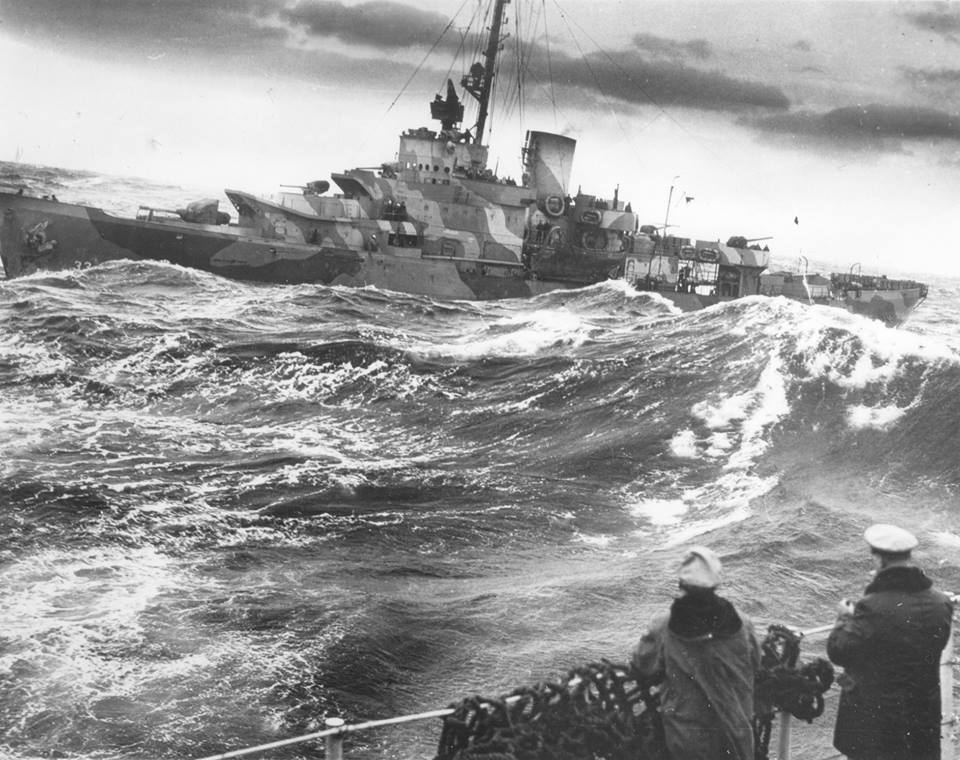
US Coast Guard crew of cutter Spencer watched as a depth charge exploded near U-175, North Atlantic, 500 nautical miles WSW of Ireland, 17 Apr 1943. Photo by Jack January
The US Naval Institute’s April 2024 edition of Naval History magazine has an excellent article about USCGC Spencer’s destruction of U-175 on 17 April 1943, A Nautical Knife Fight, written by CPO William A. Bleyer, USCG. I have added the link to my heritage page.
I have read several accounts of this action, and this is the best and most detailed.
USCGC Spencer (WPG-36) in 1942 or 1943. Spencer sank U-175 with assistance of USCGC Duane, on April 17, 1943.
Spencer was the Coast Guard’s most successful ASW ship, sinking at least two U-boats (U-633 on March 1943 and U-175 17 April 1943) and possibly a third.
USCG Cmdr Harold S. Berdine of cutter Spencer talking with US Navy Capt Paul Heineman of the Escort Group A-3 after sinking German submarine U-175, North Atlantic, 500 nautical miles WSW of Ireland, 17 Apr 1943. US Coast Guard photo by Jack January
Spencer was one of seven 327 foot Secretary class cutters. As a class they were extremely successful. Unfortunately, one was lost 29 January 1942, after being torpedoed. Another of the class, USCGC Campbell, famously rammed and sank U-606 on 22 February 1943, after the U-boat was forced to the surface by the Polish destroyer Burza. I had the privilege of being XO on one of the class, USCGC Duane, which assisted Spencer in the sinking of U-175 and rescuing survivors.
“Miami-class cutter USCGC Tampa photographed in harbour, prior to the First World War. Completed in 1912 as the U.S. Revenue Cutter Miami, this ship was renamed Tampa in February 1916. On 26 September 1918, while operating in the English Channel, she was torpedoed and sunk by the German Submarine UB-91. All 131 persons on board Tampa were lost with her, the largest loss of life on any U.S. combat vessel during the First World War.” Official U.S. Navy photo NH 1226 from the U.S. Navy Naval History and Heritage Command
Recently the United Kingdom’s Ministry of Defense, at the request of the U.S. Naval History and Heritage Command, recovered the bell from USS Jacob Jones (DD-61) the only US Navy destroyer sunk in World War I.
Perhaps if we ask politely, they might also recover the bell or some other significant artifact from USCGC Tampa. It would make a great centerpiece for the future Coast Guard Museum’s display regarding the Coast Guard’s participation in World War One.
The position of the wreck is known, 50°40′N6°19′W, and it is less than 50 miles off the UK coast.
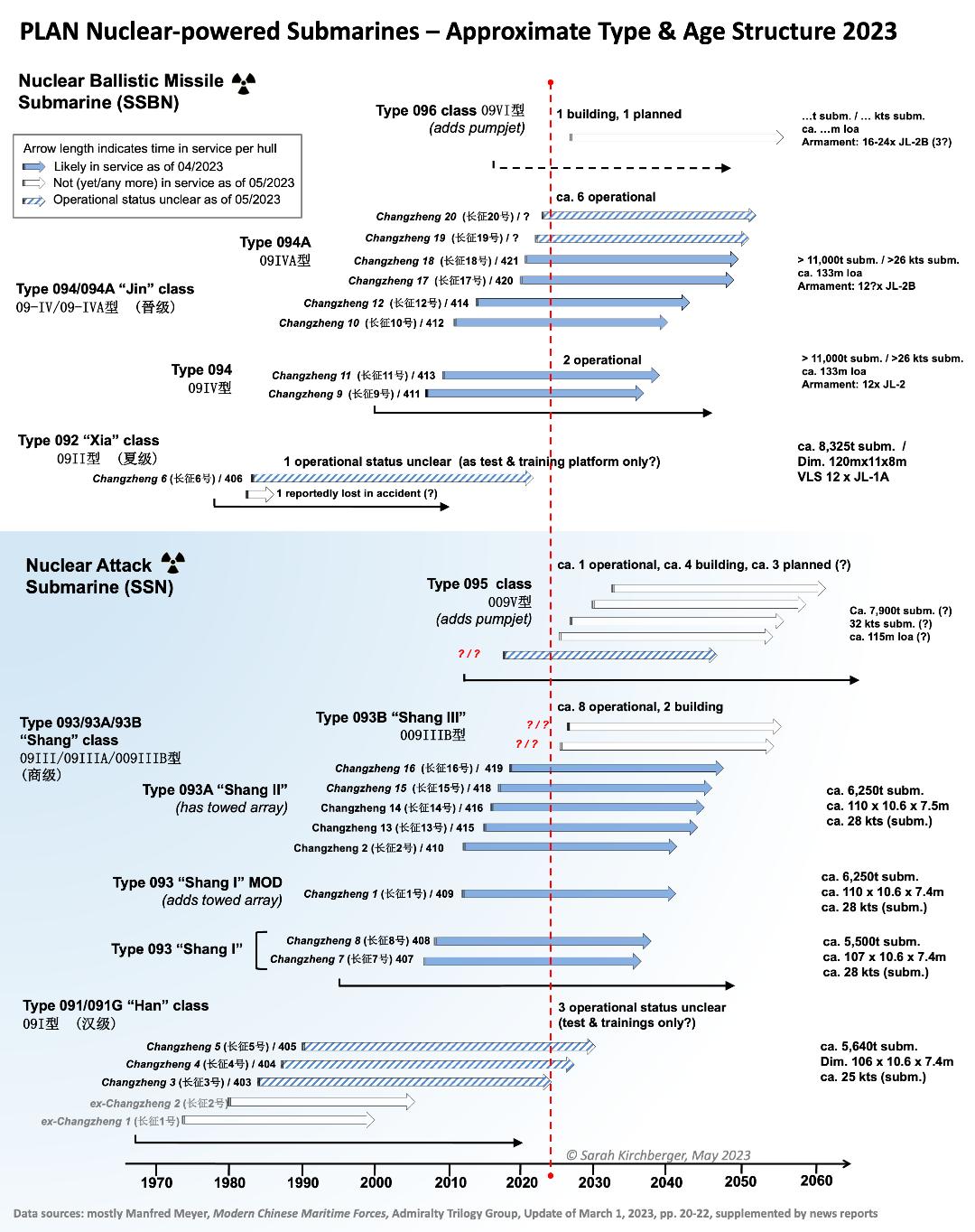
“China’s President Xi Jinping appointed a new Chief for the People’s Liberation Army Navy in a Monday ceremony in Beijing…Adm. Hu Zhongming…Hu was previously the PLAN Chief of Staff and is a submarine officer though details of his career are sparse, a Chinese media report in 2015 stated that Hu had a served in the PLA 92730 unit, which operates China’s nuclear submarine.”
I have not been able to confirm it, but as I recall the previous head of the PLAN was also a submariner.
It appears that the Chinese intend to match or exceed the US’s normal two nuclear submarine per year build rate, while continuing to build a substantial fleet of conventionally powered air-independent submarines.
It is becoming apparent, that in any future major conflict, submarines will be a threat, not just in distant waters, but in virtually any ocean right up to the US coast.
It is time for the Coast Guard and Navy to cooperate in redeveloping a Coast Guard role in ASW, whether it be permanently installed or containerized add-ons with Navy helicopter and personnel augmentation.
Two V-200 “Sea Falcon” VTOL UAV on the helideck of German Navy’s corvette Braunschweig. Note, this is a relatively small ship, about the size of a 270, with a beam of 13.28 m (43 ft 7 in), about the same as a Hamilton class 378′. Picture by Commander of the German Naval Aviation.
UMS SKELDAR and Ultra Maritime unveiled their jointly developed anti-submarine warfare (ASW) solution at DSEI 2023…The solution, a Rotary Wing UAS providing an ASW sonobuoy dispensing capability, is based on the SKELDAR V-200 Uncrewed Aircraft System (UAS) and was developed as part of a contract under the Canadian Department of National Defence’s (DND) Innovation for Defence Excellence and Security (IDEaS) program.
This is an interesting idea. By itself, without any weapon, it may not be very useful, but it might prove a useful addition to a mix that includes ASW helicopters on standby for prosecution and ships with gear for monitoring and interpreting sonobuoy transmissions.
The Skeldar doesn’t have the endurance of the Scan Eagle, used by the Coast Guard, but it does have a much higher payload weight, 40 kg (88 pounds) compared to Scan Eagle’s 5 kg (11 pounds) and Skeldar doesn’t require separate launch and recovery equipment. (As it seems in all aircraft, there is a tradeoff between payload and fuel.)
The extra payload weight may not make much difference if you can pack everything you want into that 5 kg on the Scan Eagle, but it does open up options, larger sensors, light logistics cargo runs, and the ability to drop things.
Other than sonobuoys and weapons there are a number of things we might want to be able to drop from a UAS: buoys to measure drift for a SAR case, radios or pumps to a vessel in distress, lifejackets, or inflatable rafts.
This is a Canadian program. The Canadian Navy uses Skeldar, CU-176 Gargoyle in Canadian service, on their DeWolf class Arctic Offshore Patrol Ships (AOPS). If the Canadian Navy chooses to continue development of this sonobuoy drop capability, presumably they will also use the UAS on some of their frigates, or perhaps they are working toward an ASW role for their AOPS.




 Chuck Hill's CG Blog