“UMS SKELDAR And Ultra Maritime Unveil UAS-Based ASW Solution At DSEI 2023” –Naval News

Two V-200 “Sea Falcon” VTOL UAV on the helideck of German Navy’s corvette Braunschweig. Note, this is a relatively small ship, about the size of a 270, with a beam of 13.28 m (43 ft 7 in), about the same as a Hamilton class 378′. Picture by Commander of the German Naval Aviation.

Naval News reports,

UMS SKELDAR and Ultra Maritime unveiled their jointly developed anti-submarine warfare (ASW) solution at DSEI 2023…The solution, a Rotary Wing UAS providing an ASW sonobuoy dispensing capability, is based on the SKELDAR V-200 Uncrewed Aircraft System (UAS) and was developed as part of a contract under the Canadian Department of National Defence’s (DND) Innovation for Defence Excellence and Security (IDEaS) program. 

This is an interesting idea. By itself, without any weapon, it may not be very useful, but it might prove a useful addition to a mix that includes ASW helicopters on standby for prosecution and ships with gear for monitoring and interpreting sonobuoy transmissions.

The Skeldar doesn’t have the endurance of the Scan Eagle, used by the Coast Guard, but it does have a much higher payload weight, 40 kg (88 pounds) compared to Scan Eagle’s 5 kg (11 pounds) and Skeldar doesn’t require separate launch and recovery equipment. (As it seems in all aircraft, there is a tradeoff between payload and fuel.)

The extra payload weight may not make much difference if you can pack everything you want into that 5 kg on the Scan Eagle, but it does open up options, larger sensors, light logistics cargo runs, and the ability to drop things.

Other than sonobuoys and weapons there are a number of things we might want to be able to drop from a UAS: buoys to measure drift for a SAR case, radios or pumps to a vessel in distress, lifejackets, or inflatable rafts.

Wikipedia reports, UMS Skeldar V-200 UAS is used by the militaries of six nations. It is used by the German Navy on their K130 Braunschweig class corvettes (pictured above), and will be used by the Belgian and Netherlands Navies on their City class mine countermeasures vessels.

This is a Canadian program. The Canadian Navy uses Skeldar, CU-176 Gargoyle in Canadian service, on their DeWolf class Arctic Offshore Patrol Ships (AOPS). If the Canadian Navy chooses to continue development of this sonobuoy drop capability, presumably they will also use the UAS on some of their frigates, or perhaps they are working toward an ASW role for their AOPS.

“Upgun Cutters to Meet Today’s Naval Threats” –USNI

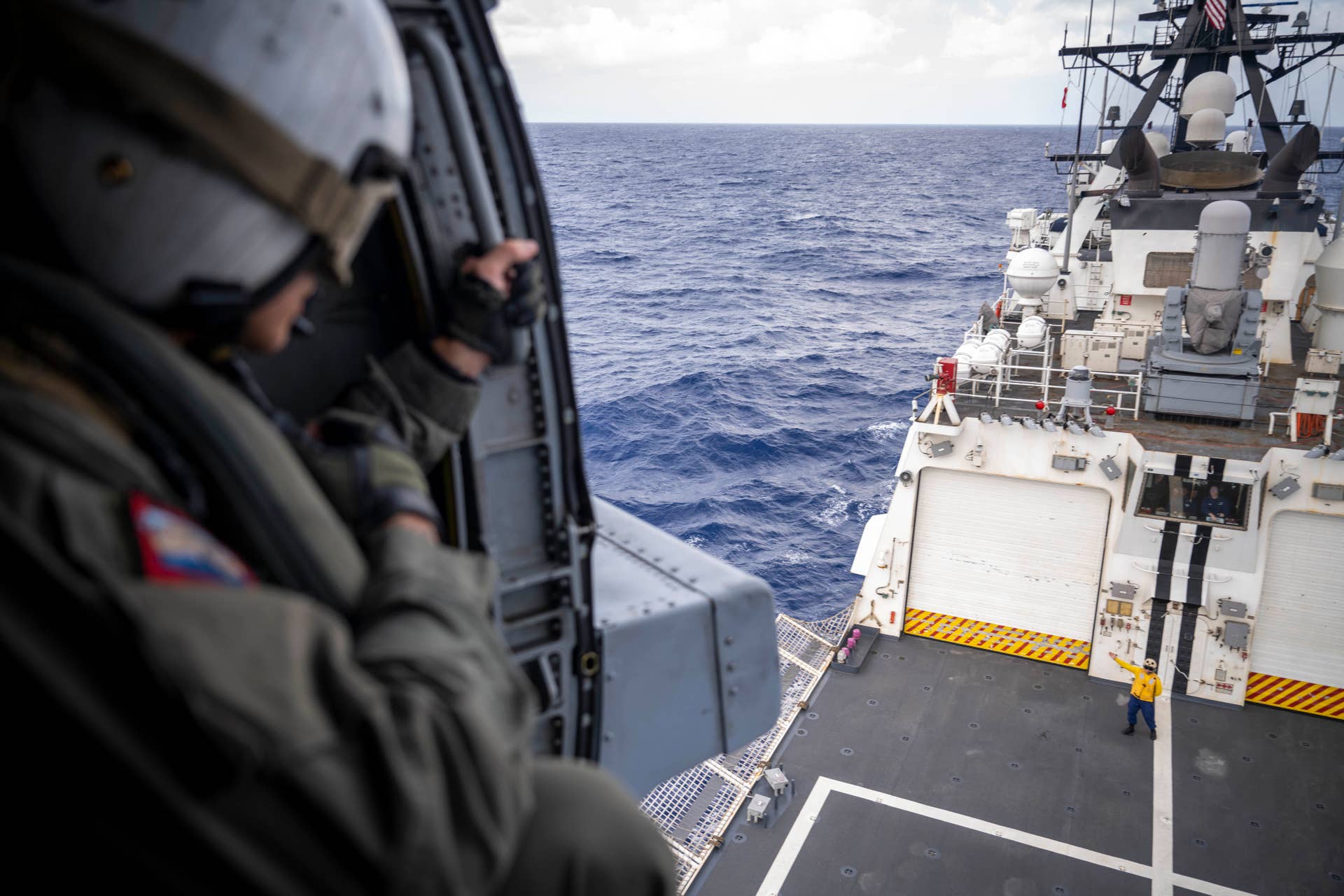
PACIFIC OCEAN (July 30, 2022) U.S. Navy Petty Officer 1st Class Humberto Alba, a naval aircrewman tactical-helicopter, attached to Helicopter Maritime Strike Squadron (HSM) 37, deployed on U.S. Coast Guard Legend-class cutter USCGC Midgett (WMSL 757), looks down at a USCGC crewmember after taking off during flight operations during Rim of the Pacific (RIMPAC) 2022. (U.S. Coast Guard photo by Petty Officer 3rd Class Taylor Bacon)

This essay from the July 2023 issue of Proceedings, is featured on the US Naval Institute Proceedings web site. It won Second Prize in the Midshipmen & Cadets Essay Contest—Sponsored by the U.S. Naval Institute.

This is just one of many such articles that have been published repeatedly over the years. The logic is clear,

If more heavily armed, Coast Guard cutters could better support the Navy and enhance defense readiness.

At small marginal cost, cutters could make a significant contribution to our nation’s naval strength, but it has not happened in the last 30+ years. Why not?

It seems the Leadership of both the Navy and Coast Guard have other priorities, and there is no sponsor in a position of power to push the program.

The Navy is in trouble. The Navy has been shrinking over most of the last 34 years, from down from 592 Sept. 30, 1989, to 299 as of this week. It began with the collapse of the Soviet Union. I’m sure it seemed like good idea at the time, but the “peace dividend” meant there was not much reason to build new ships. Teams that had developed a long string of successful ship designs ceased to exist. Shipyards closed. As a result, they have had difficulty fielding new classes of ships. Their new generation shipbuilding programs have been plagued with problems, while the Chinese navy has been building ships at a furious pace.

The Coast Guard has had its own troubled recapitalization program, beginning with “Deepwater” and while the NSC and FRC programs seem to have been successful, if long delayed, the Offshore Patrol Cutter and Icebreaker programs are still having significant difficulties. But perhaps more importantly, Coast Guard leadership sees the conventional model of a combat ready Coast Guard as counterproductive to other Coast Guard priorities.

Personally, I feel fears that a more heavily armed Coast Guard would not be welcome in many parts of the world is overblown, but the fear does exist and the conventional model of permanently installed weapon systems operated and maintained by Coastguardsmen would require a diversion of assets unless the budget is increased and more assets are provided. There is a cost to the Coast Guard in terms of training and maintenance time for both units and individuals, even if the Navy pays for the systems.

I think there is an alternative that would address the fears of the Coast Guard leadership and create a powerful sponsor in the Navy. 

The Navy Reserve could be that sponsor. It is a reservoir of trained talent, but where do they go upon mobilization? There are only so many ships. Their crews, while they may have some shortages, are essentially at war time manning levels. There are only so many helicopter landing spots on Navy ships. Many Navy Reservists have no really appropriate place to serve upon full mobilization.

Coast Guard units can provide a place where they can be used effectively. Navy helicopters and their crews can fly from Coast Guard cutters. Modularized versions of towed array sonar systems could be operated and maintained by Navy reservists on large cutters.

Initially at least, these reinforced cutters would be best used in the board reaches of the Pacific, beyond the effective range of enemy land based and air-launched anti-ship missiles, where the primary threat would be submarines, protecting the logistics ships that are essential for prosecuting a war in the Western Pacific.

In 2012, Admiral Jonathan W. Greenert, U.S. Navy, advocated,

“We need to move from ‘luxury-car’ platforms—with their built-in capabilities—toward dependable ‘trucks’ that can handle a changing payload selection.”

If the Navy can provide payloads, the Coast Guard can provide some trucks.

When is a Flight Deck Not a Flight Deck?

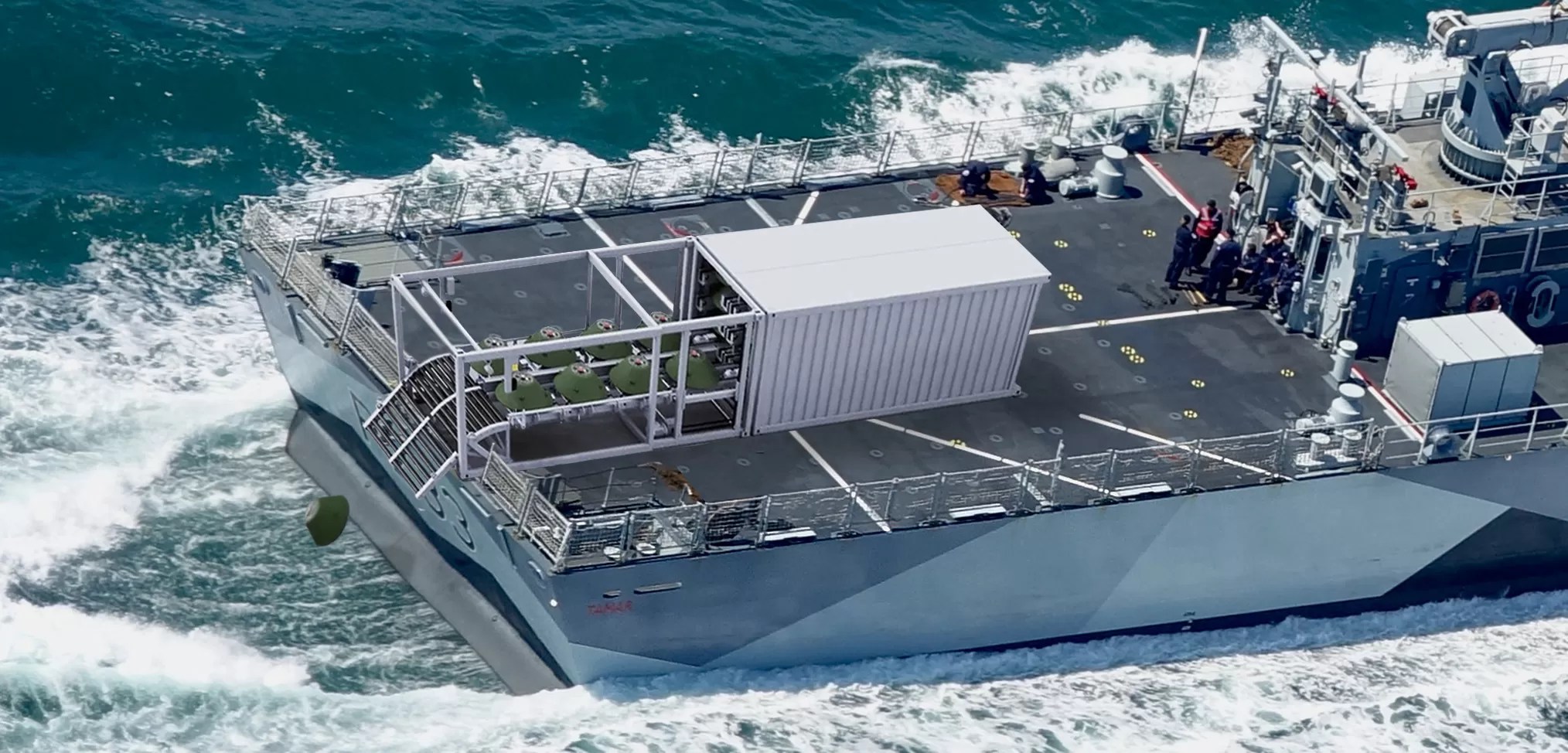
Containerized minelaying system on a River Batch 2 Offshore Patrol Vessel

It has been said that aircraft carriers are the ultimate modular warships because their primary weapons (aircraft) are interchangeable.

A flight deck on an Offshore Patrol Vessel (OPV) certainly offers a degree of aviation options. General purpose, cargo, ASW, and ASuW helicopters and a range of Unmanned Air Systems, but it appears our allies, the UK and particularly Australia may be looking at other ways to use this large open space.

Royal Navy:

Navy Lookout had a post that talked about restoring a naval mining capability in the Royal Navy. There was no specific reference to using flight decks or to Offshore Patrol Vessels.

The RN does not need dedicated minelaying vessels. The SSNs have a theoretical minelaying capability but XLUUVs are a much lower risk and stealthier solution for covert and sensitive missions. Where stealth is less important, containerised minelaying solutions are being developed that can be secured to the deck and dispense mines over the stern. (emphasis applied–Chuck)

But the photo, above, definitely got my attention. There we see an SH Defence “CUBE” containerized mine laying system developed by RWM Italia S.p,A. (Rheinmetall). on the flight deck of a River Batch 2 Offshore Patrol Vessel (HMS TAMAR).

Australian Navy:

Australia is planning to produce up to 14 flight deck equipped Arafura class OPVs including two intended specifically for Mine Counter Measures (MCM). These ships were always intended to accept containerized mission loads. It appears they are now planning what these ships will do in wartime.

Missile Launcher:

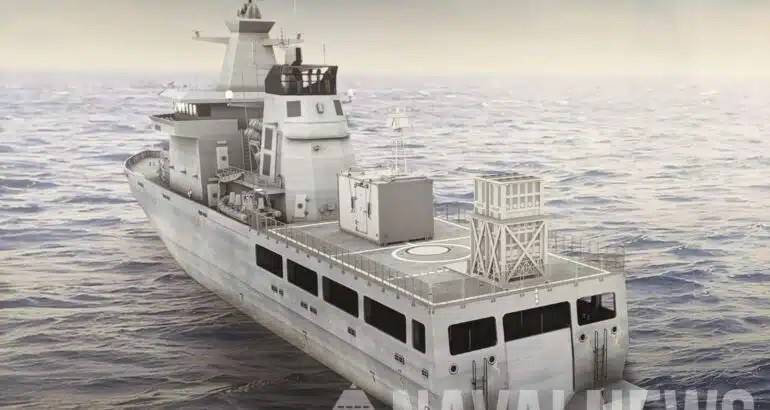
We already saw “Australia Considering Modular C-Dome For Arafura OPVs” –Naval News

Australia Considering Modular C-Dome For Arafura OPVs
Illustration of Arafura-class OPV fitted with C-DOME

Mine Layer:

As noted in the Navy Lookout, Australia is planning to buy and produce large numbers of mines. Naval News reports,

“Australia is set to accelerate the procurement of sea mines as part of Project SEA 2000…The decision to rapidly procure the capability, reportedly from a European supplier, will deliver a ‘significant’ deterrent effect according to Defence…it’s understood that the government has budgeted approximately $500 million to 1 billion Australian dollars for the acquisition…the weapons being brought are smart mines, able to disseminate between civilian vessels and a variety of military targets, allowing a strategic anchorage to be denied to hostile forces, all the while preserving access for aligned vessels(emphasis applied–Chuck)

This all points to large numbers of mines being used in defensive fields. Such minefields will almost certainly be laid by surface vessels. Australia does have some civilian crewed support ships that might be used for mine laying, but as the Arafura class comes online, they will be the most likely surface minelayers.

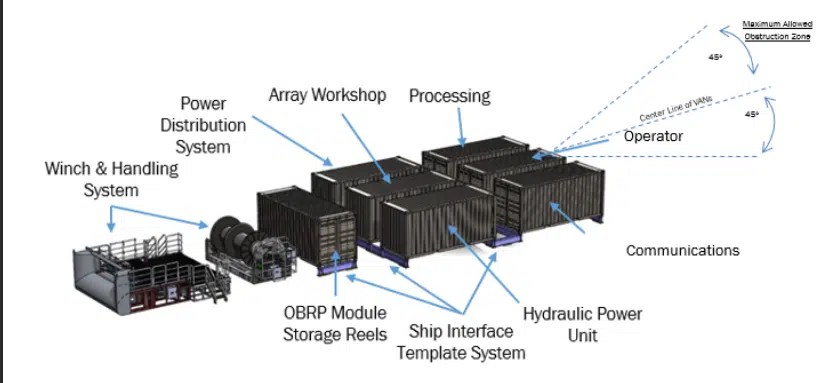
SURTASS-E:

SURTASS-E. (U.S Department of Defense)

Then there is these reports from Naval News and The Drive that Australia is getting SURTASS-E systems.

SURTASS-E is expected to provide long range detection and cuing for tactical weapons, against both diesel- and nuclear-powered submarines. Again, the Arafura class seems a likely host, because the system is intended for military crew manning and, unlike the civilian manned National Support Squadron ships, these ships are armed and have communication systems that include tactical data link.

Now About the Coast Guard:

Using a flight deck for non-aviation purposes is not a foreign idea to the Coast Guard. They do it all the time to provide a holding area for migrants. 

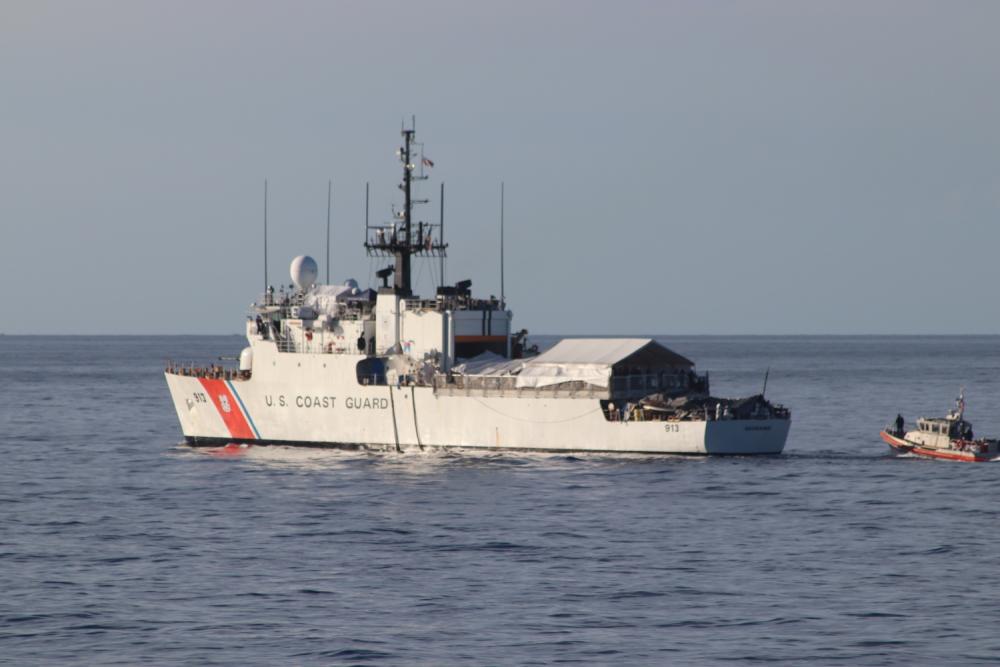
USCGC Mohawk’s (WMEC 913) crew patrols the South Florida Straits during Operation Vigilant Sentry, Jan. 5, 2023. Mohawk’s crew patrolled the Florida Straits and Caribbean Sea in support of Homeland Security Task Force—Southeast and Operation Vigilant Sentry in the Coast Guard Seventh District’s area of operations for a 46-day patrol. (U.S. Coast Guard photo by USCGC Legare (WMEC 912)

“SEA To Provide KRAITSENSE ASW System For A South-Asian Navy’s OPV Program” –Naval News

KRAITSENSE ASW System. Photo credit: SEA

Naval News reports,

“UK-based anti-submarine warfare (ASW) solutions provider SEA has been awarded a contract to supply two of its innovative ASW systems, KraitSense, to a South-East Asian Navy for a new offshore patrol vessel (OPV) programme.”

I found another photo, below, in an earlier report.

KraitSense low profile passive sonar system. SEA picture.

It these systems perform reasonably well; they would be an attractive mobilization option for giving OPVs an ASW role. Even if not equipped with ASW weapons, adding sensors that can be coordinated with other surface and air weapons carriers would be helpful.

The SE Asian Customer?

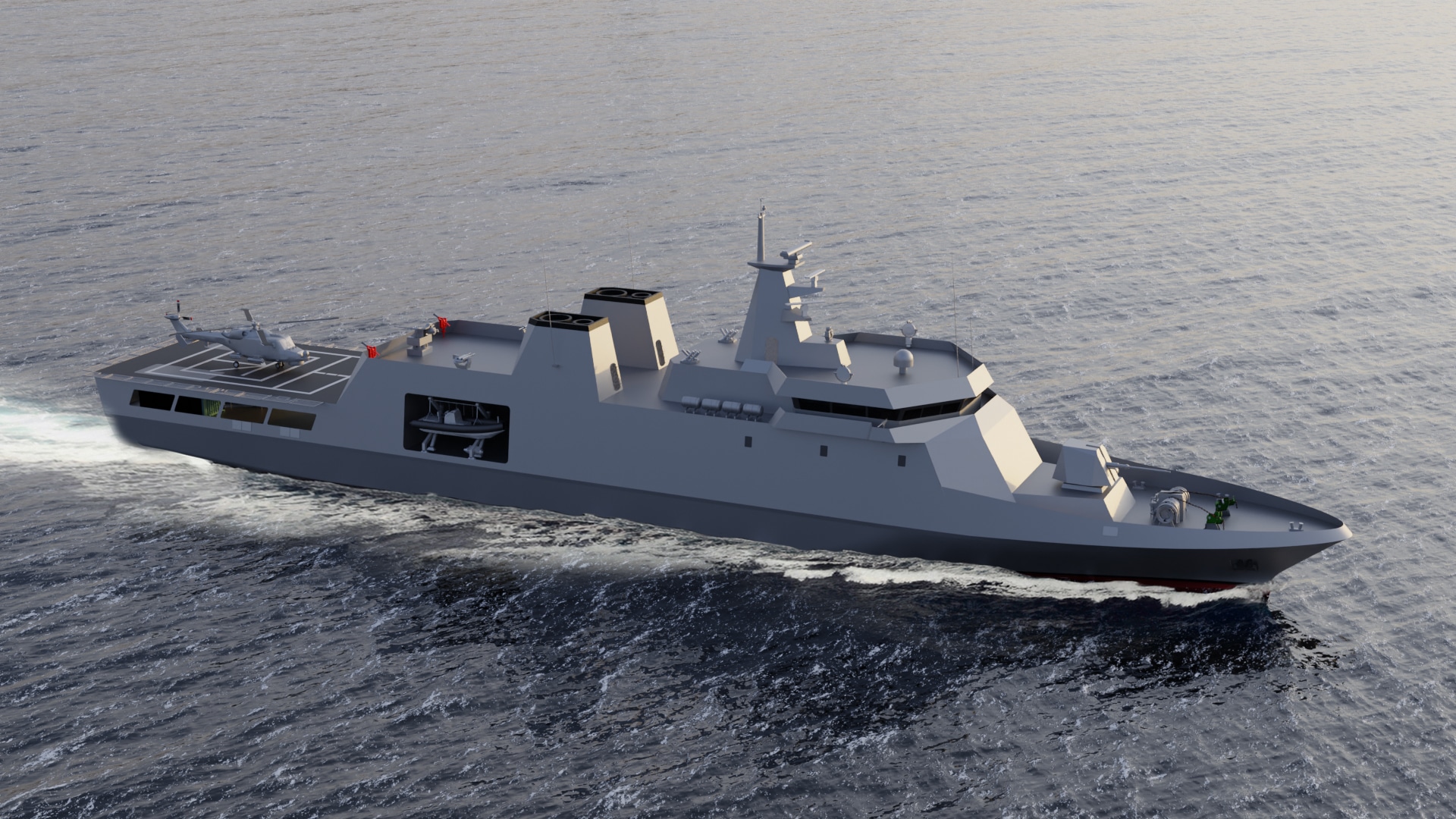
Artist impression of the future Philippine Navy OPV to be constructed by HHI. HHI image.

Who is the SE Asian country with, “With a vast coastline and high number of islands within their jurisdiction…” Think the Philippines may be most likely.

Hyundai Heavy Industries (HHI) is building six offshore patrol vessels (OPV) for the Philippine Navy (not their Coast Guard). At about 2400 tons, 94.4 meters (309 ft 9 in) in length, with a speed of 22 knots, they are pretty typical medium sized OPVs, except for one thing, Wikipedia reports that their armament, in addition to 76 and 30 mm guns, includes two sets of triple lightweight anti-submarine torpedo tubes. There is no indication of an ASW sensors. It is reported to have spaces for Multi-Mission Containerized Modules. The flight deck and hangar are sufficient for support of an ASW helicopter and/or UAS.

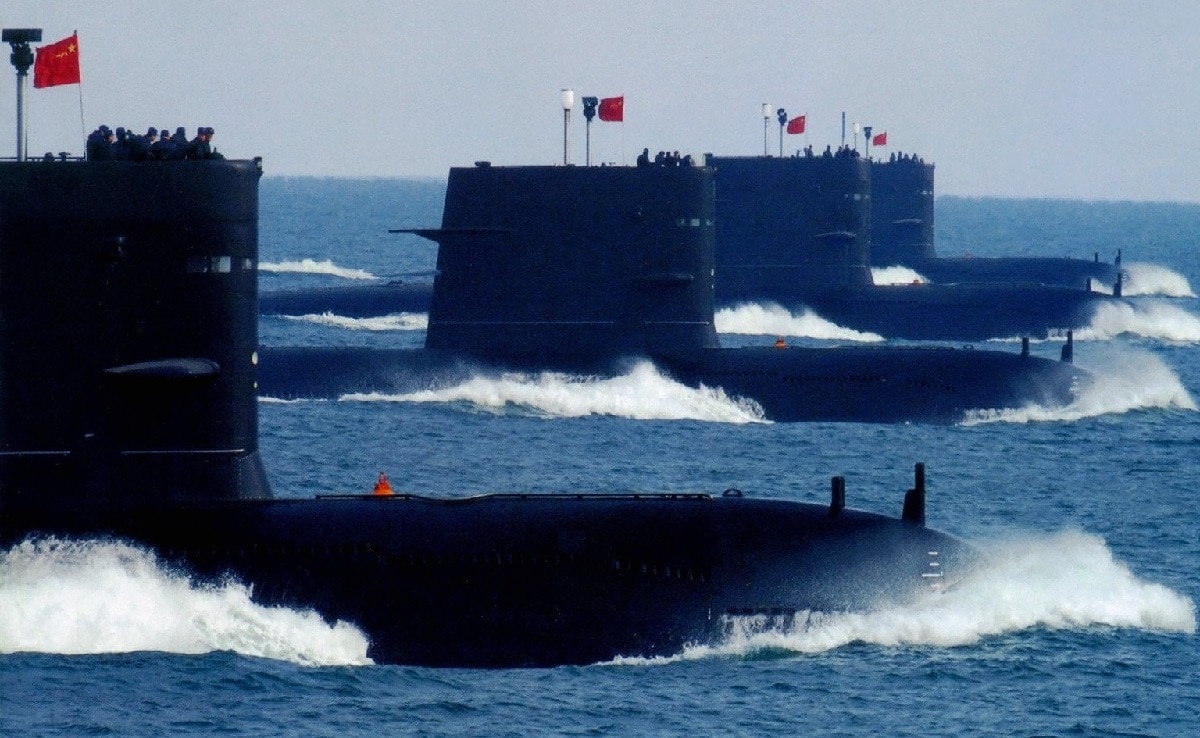
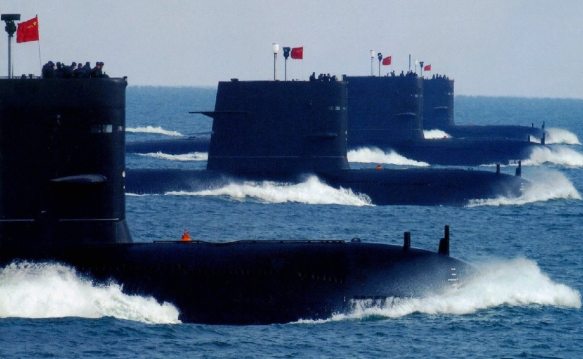
Chinese Navy Submarine and Major Surface Ship Order of Battle

Image: Creative Commons.

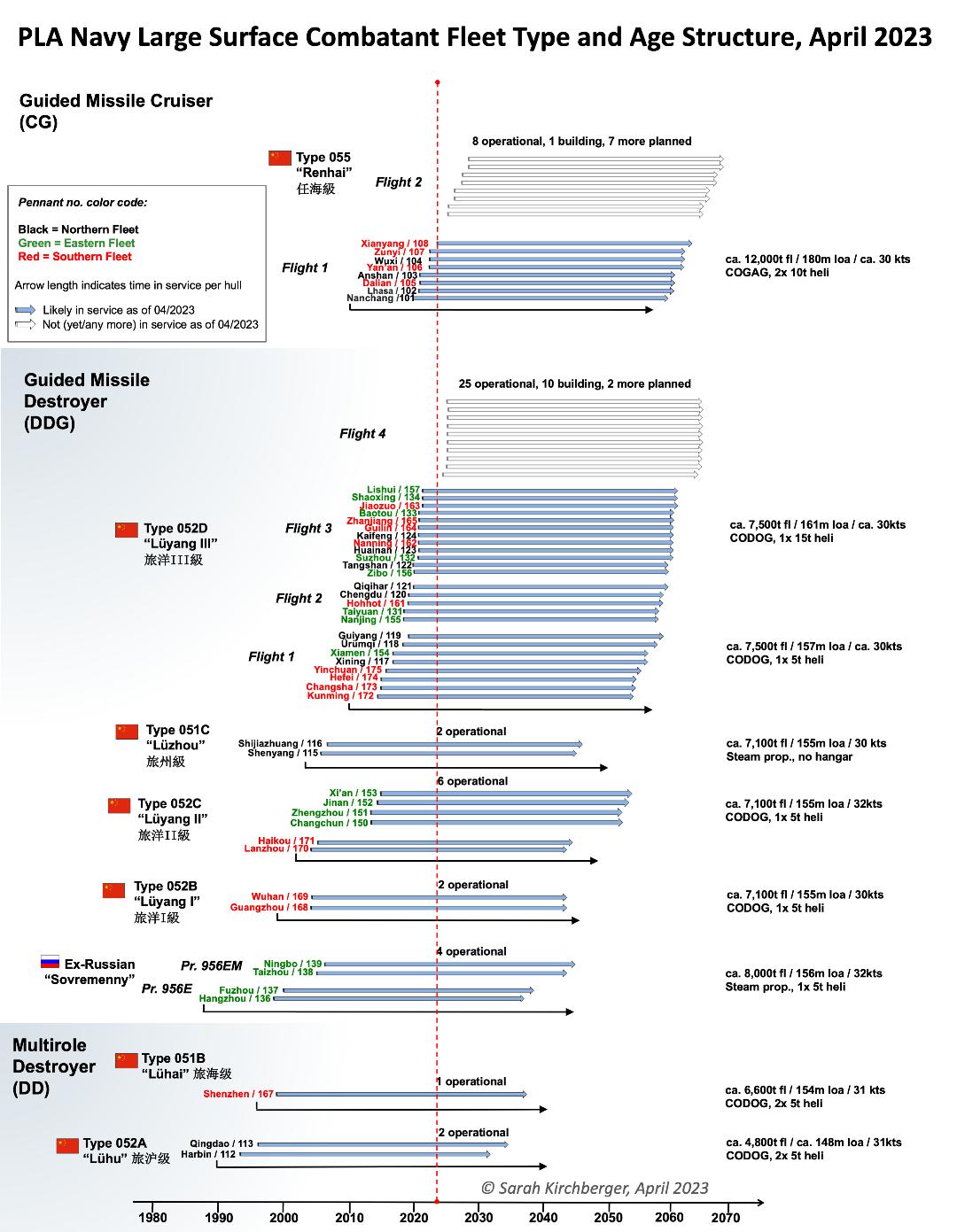
Below are some info-graphics provided by Sarah Kirchberger on the CIMSEC Internal Discussions Facebook page. I wanted to share them with you. (Not included in the listings are Chinese aircraft carriers, amphibs, and numerous frigates, corvettes, and other small combatants.) I have also provided her notes included with the three Facebook posts, but first some observations.

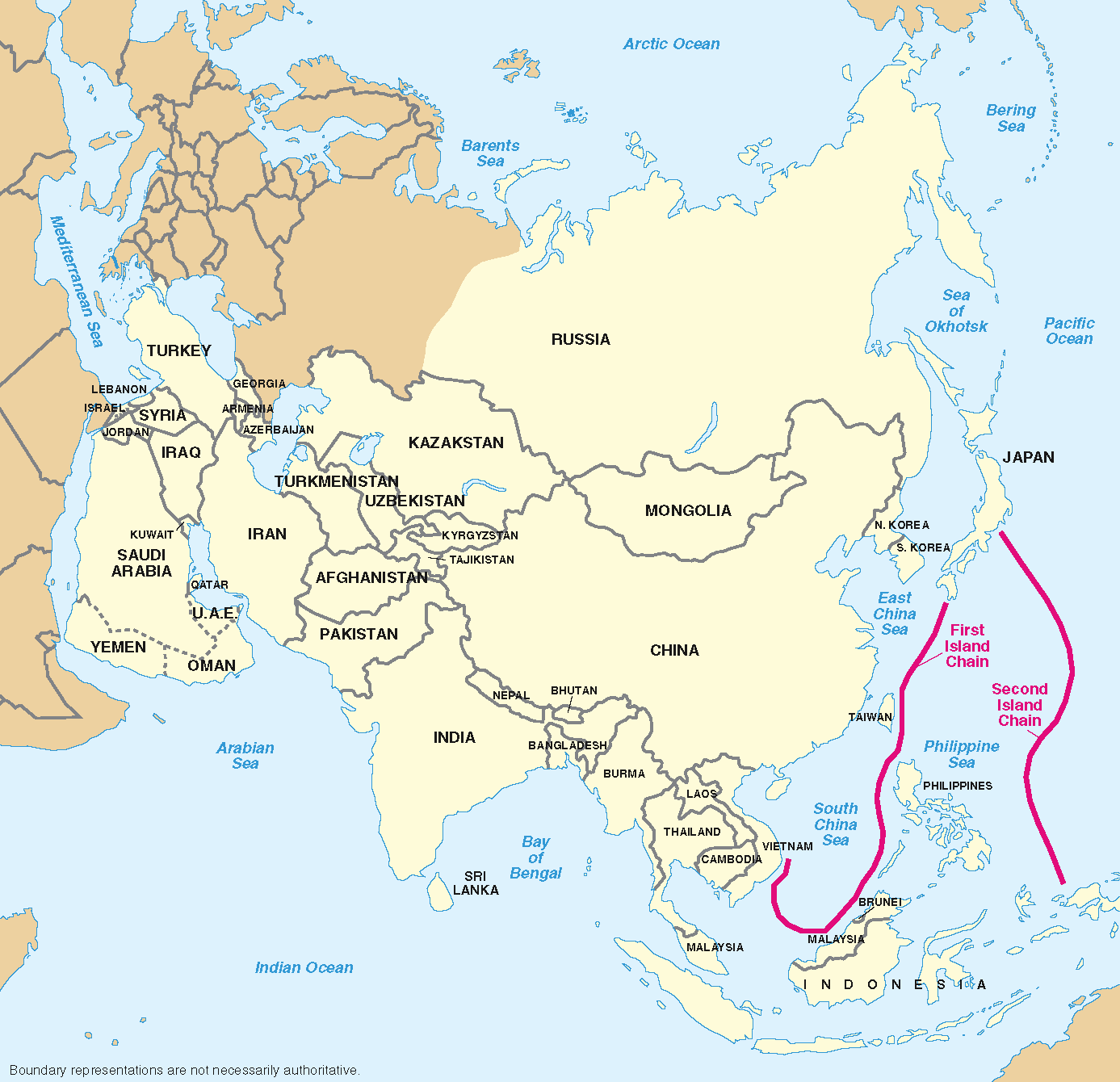
Geographic Boundaries of the First and Second Island Chains. Image:China Report 2006.pdf. DOD.

What does this have to do with the Coast Guard?

My expectation is that, if there is a major prolonged conflict with the Chinese, that the primary theater of operations will be inside and around the “First Island Chain” with Taiwan the critical center (Think Malta in the Mediterranean during WWII). The Chinese surface fleet is not likely to make significant operations outside this area. Chinese conventional submarines will also concentrate in this area but will also operate in the Straits that access the South and East China Seas.

The Chinese will make air and missile attack out to at least the “Second Island Chain,” including Guam.

The Chinese will want to attack US logistics and underway replenishment ships outside the Second Island Chain, both for the direct effect of reducing logistics available and for the secondary effect of drawing off units from the primary theater of action.

In the initial phase, the Chinese merchant and fishing fleets might be used to lay mines or even directly attack unarmed logistics and underway replenishment ships using containerized weapon systems supported by satellite targeting. (They might also launch cruise missiles into US ports as an opening salvo.) The Coast Guard Maritime Domain Awareness systems and cargo tracking programs will have a role in neutralizing the Chinese Merchant and distant fishing fleets.

The Chinese will operate at least some of their nuclear submarines (SSNs) (which would have difficulty dealing with USN SSNs) outside the Second Island Chain, perhaps as far East as the US West Coast. While MSC has been told not to expect escorts, the benefits of cutters with embarked Navy (probably Navy Reserve) ASW helicopters (and ultimately towed array systems) within effective helicopter range of a dispersed group of logistics ships to provide at least minimal ASW protection and rescue for the crews of the ships that are inevitably sunk, will quickly become evident. The cutters would hopefully be aided by Navy P-8 maritime patrol aircraft and any combatants making the transit trans-Pacific.

(None of the above reflects anything official, it is just the logic of the geography and the capability of the participants.)

Incidentally the format use below would be a good way for the Coast Guard to present its plans for major cutters.

Now to the Kirchberger posts:


After a long pause in making these info graphics, here is an overview of the *approximate* type and age structure of Chinese nuclear-powered submarines. I am decidedly less confident than with the surface fleet graphs about the accuracy of the information, which is why it took so long. Basically, I have decided to just visualize the data given in Manfred Meyer’s book ‘Modern Chinese Maritime Forces’ (March 2023 update) with some minor adjustments based on cross-checking with own research in Chinese newspaper reports. Despite the caveat, the graph might be useful to some, therefore posting it. I will periodically update as more information becomes available.

Blue arrow means boat is (most likely) in service as of April 2023, white means not yet or not any more in service, but may already be launched. Striped means: status unknown.

Feel free to use and republish (unaltered) with attribution. In case you find mistakes, I’d appreciate a note so I can make corrections during the next round!

Here is now also a visual overview of the PLA Navy’s conventionally powered submarine fleet. Blue arrow means boat is most likely in service as of April 2023, white arrow means not yet, or not any more, but may already be launched. The teal color indicates boats equipped with a (Stirling) AIP. Does not include test submarines (such as the Type 032), the unknown type sailless submarine, nor midget submarines.

Feel free to use and republish (unaltered) with attribution. In case you find mistakes, I’d appreciate a note so I can make corrections during the next round!

The speed of naval shipbuilding in China is such that it is easy to overlook that China has earlier this year commissioned the eighth and last of Flight 1 of its new cruiser, the Type 055 (never mind that the PLAN refers to it as a destroyer – at >12,000t full load, 180m length, and given its armament, it looks like a cruiser more than a destroyer).

Since the lead ship entered service in early 2020, China has commissioned altogether 8 of these Type 055 cruisers within a timespan of just 3 years! Further, 8 more are apparently already in the works, for a class of at least 16.
Here is an updated graphic overview of the type and age structure of China’s large surface combatants. Arrows indicate maximum time in service from commissioning until decommissioning – program start and build start is therefore not shown. 40 years per hull may be a bit long (30 years is common practice in most advanced navies), but in practice some navies have operated their surface combatants that long, so I choose to give the maximum conceivable length.
It is interesting to see how the arms embargo since 1989 initially disrupted naval shipbuilding, leading to multiple classes of just one or two hulls being built next to a Russian import, and how mass production finally took off from the Type 052D onward.
The Chinese official newspaper Global Times commented on the completion of the Type 055 class here: https://www.globaltimes.cn/page/202304/1289571.shtml
Feel free to use and reproduce this graph for non-commercial purposes (with attribution) and please let me know in case of mistakes so I can make corrections during the next iteration!

“Navy Expands Unmanned Operations to 4th Fleet” –Defense One

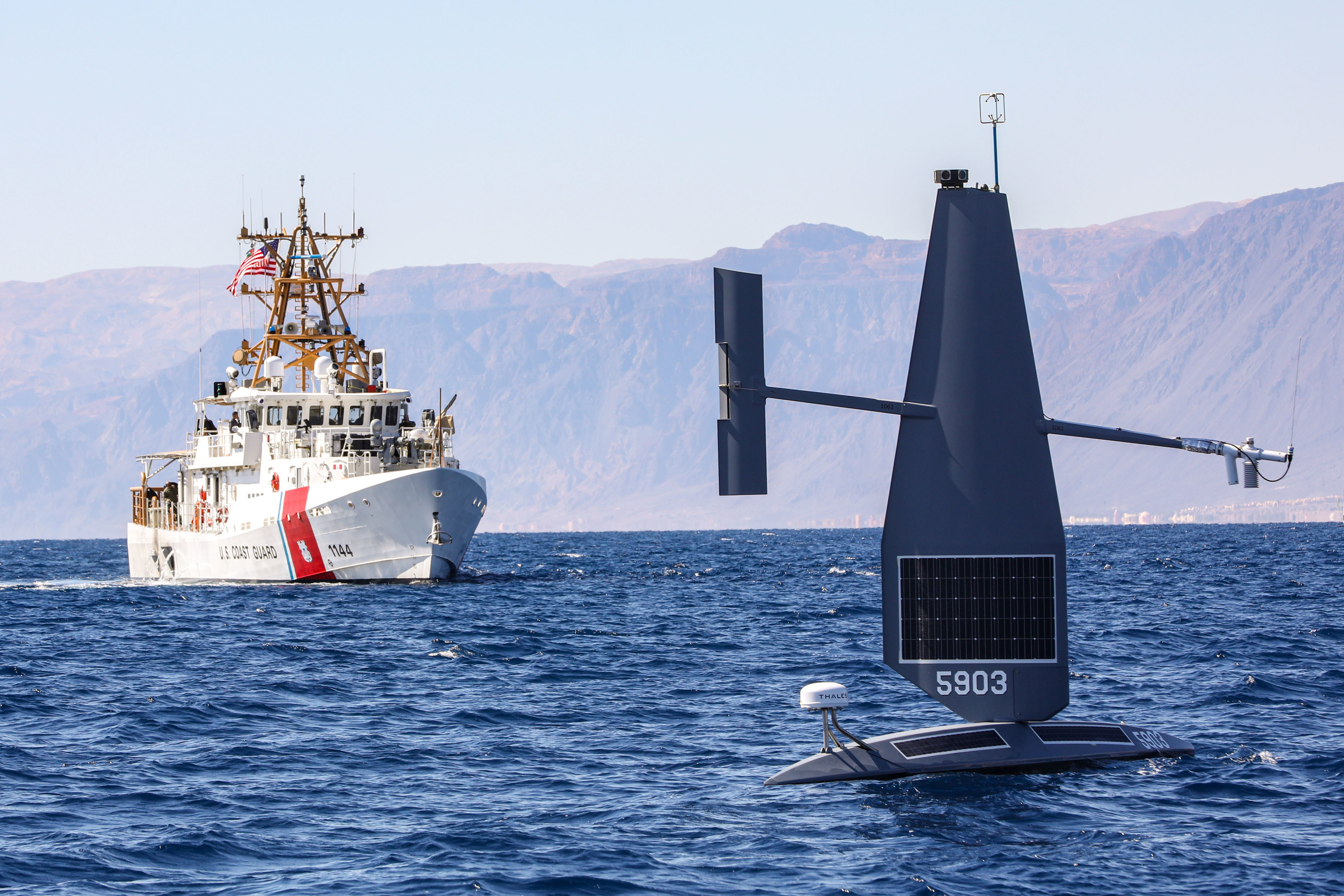
GULF OF AQABA (Feb. 13, 2022) The U.S. Coast Guard Sentinel-class cutter USCGC Glen Harris (WPC 1144) sails near a U.S sail drone explorer during the International Maritime Exercise/Cutlass Express (IMX) 2022, Feb. 13, 2022. IMX/CE 2022 is the largest multinational training event in the Middle East, involving more than 60 nations and international organizations committed to enhancing partnerships and interoperability to strengthen maritime security and stability. (U.S. Army photo by Cpl. DeAndre Dawkins)

Defense One reports,

“Drones are heading to the southern waters of 4th Fleet, which will follow 5th Fleet’s pioneering experiments with unmanned craft in the Middle East, Navy Secretary Carlos Del Toro announced Tuesday at the Navy League’s 2023 Sea-Air-Space Conference.”

This is great, and not unexpected, but I noted two things that concern me. First there was not mention of making this an international effort, as has been the case in 5th Fleet, and second, that they want to start in the Caribbean where we already have excellent maritime domain awareness, instead of the eastern Pacific drug transit zone where these are really needed.

Del Toro added, “it’s fair to say however, you want to start small and build upon it, obviously. And so you know, focus perhaps on the Caribbean Basin first, and then expand beyond that in the future.”

I can see that they would be more comfortable operating UxVs in the Caribbean, because it is closer to home, but in the Eastern Pacific we could look at Uncrewed Surface Vessels (USV) using acoustic sensors to help detect semisubmersibles. This is something that is not being done in 5th Fleet so it would provide a different sensor and target set and perhaps an opportunity to cross over some of the learning to ASW.

Of course, most of the 4th Fleet’s surface ships are Coast Guard Cutters.

“ARCIMS SeaSense: An Autonomous Anti-Submarine Warfare Solution” –Naval News

Naval News (sponsored content) reports,

ATLAS ELEKTRONIK UK (AEUK) have added an underwater surveillance system to their already established fleet of ARCIMS Uncrewed Surface Vessels (USVs). Integrated with a compact Variable Depth Sonar (VDS) ‘SeaSense’, this underwater threat detection capability has been designed to operate within confined and shallow waters, offering an alternative to the traditional ASW platform.

What we have here is a combination of two systems, both of which may be of interest, a lightweight sonar system and an optionally manned 11 meter boat that is essentially a maritime pickup truck that can handle alternative mission loads. Apparently, there is also a mine countermeasures system based on the same 11 meter uncrewed surface vessel.

ATLAS ELEKTRONIK is a long established, very experienced German electronics and defense company with subsidiaries worldwide, including the US. Among other products, they make the Sea Fox mine disposal system for the US Navy.

That the ARCIMS platform is an 11meter boat immediately piqued my interest because it is the same size as the Long Range Interceptor carried by National Security Cutters (NSC), suggesting the craft might be operated from NSC with minimal changes.

A couple of NSCs with MH-60R ASW helicopters and four of these sonar equipped optionally manned boats might make a pretty robust deployable ASW screen for an Amphibious Objective Area or a port of debarkation without major changes to the NSCs.

“New Sonar For Navy Frigates Could Turn Any Ship into Submarine Hunter, Maker Says” –Defense One

Combined Active Passive Towed Array Sonar, CAPTAS-4 in operation from a French Frigate. There are also smaller/lighter versions of the sonar. 

Defense One reports on a presentation at Surface Navy Association,

 “At the Surface Navy Association conference in Arlington, Virginia, this week, the company showed off a video of the technology being installed on a commercial ship within 48 hours, turning the vessel into an anti-submarine “asset,” Bock said.”

While mounting the sonar on merchant ships might be useful, wouldn’t it make sense to mount it first on Coast Guard National Security or Offshore Patrol Cutters that could also host an anti-submarine helicopter and are already equipped with Navy compatible secure communications?

On a cutter or a merchant ship there is the question of who would man it? Every year trained personnel, including sonar technicians and ASW helicopter flight crews, leave the active-duty Navy and become part of the Reserve. Upon mobilization, they can be recalled to active duty to man these systems.

“Sea Serpent ASW system successfully used by US Navy” –Navy Recognition

Sea Serpent system deployed from a boat (MIND photo)

Navy Recognition reports,

“On September 27, 2022, MIND Technologies Inc., a Texas/U.S.-based company providing underwater research solutions, announced the successful demonstration of its Sea Serpent ASW system during the U.S. Navy’s Coastal Trident 2022 exercise.”

The Sea Serpent system is described by Mind Technologies as,

  • “…based on COTS Seismic Arrays, applicable for Anti-Submarine Warfare (ASW), Maritime Domain Awareness (MDA), and Waterside Security (WSS) applications.
  • “…designed for rapid deployment from USV platforms or as a ‘clip-on’ capability to existing light- and medium-weight Coast Guard (emphasis appkied–Chuck) or Naval vessels
  • “…modular and scalable, with lengths from 50 m to over 12,000 m acoustic aperture available
  • “Processing uses a scalable, app-based architecture and includes multiple beamforming options,  as well as broadband, narrowband/LOFAR, and DEMON processing
  • “Other apps will include Automatic Detection and Tracking (ADT) and Target Motion Analysis (TMA)
  • “The architecture is fully open to allow third-party/government processing and supports private cloud operation for distributed tracking, multi-static processing, and data fusion.”

All the reports I have seen were based on the company’s news release so we don’t have an independent evaluation of its success.

An exercise with the United States Coast Guard’s Maritime Security Response Team-West was leveraged to conduct Advanced Naval Technology Exercise experiments with wearable sensors and remote physiological monitoring.

Coastal Trident is a series of annual exercises conducted by Naval Surface Warfare Center’s Port Hueneme Division. Apparently the Coast Guard has participated in the exercise in the past. It certainly seems to be something the CG should be interested in.


What is an Ideal Coast Guard Military Readiness Mission? We Provide the Truck and Driver, Navy Provides the Load

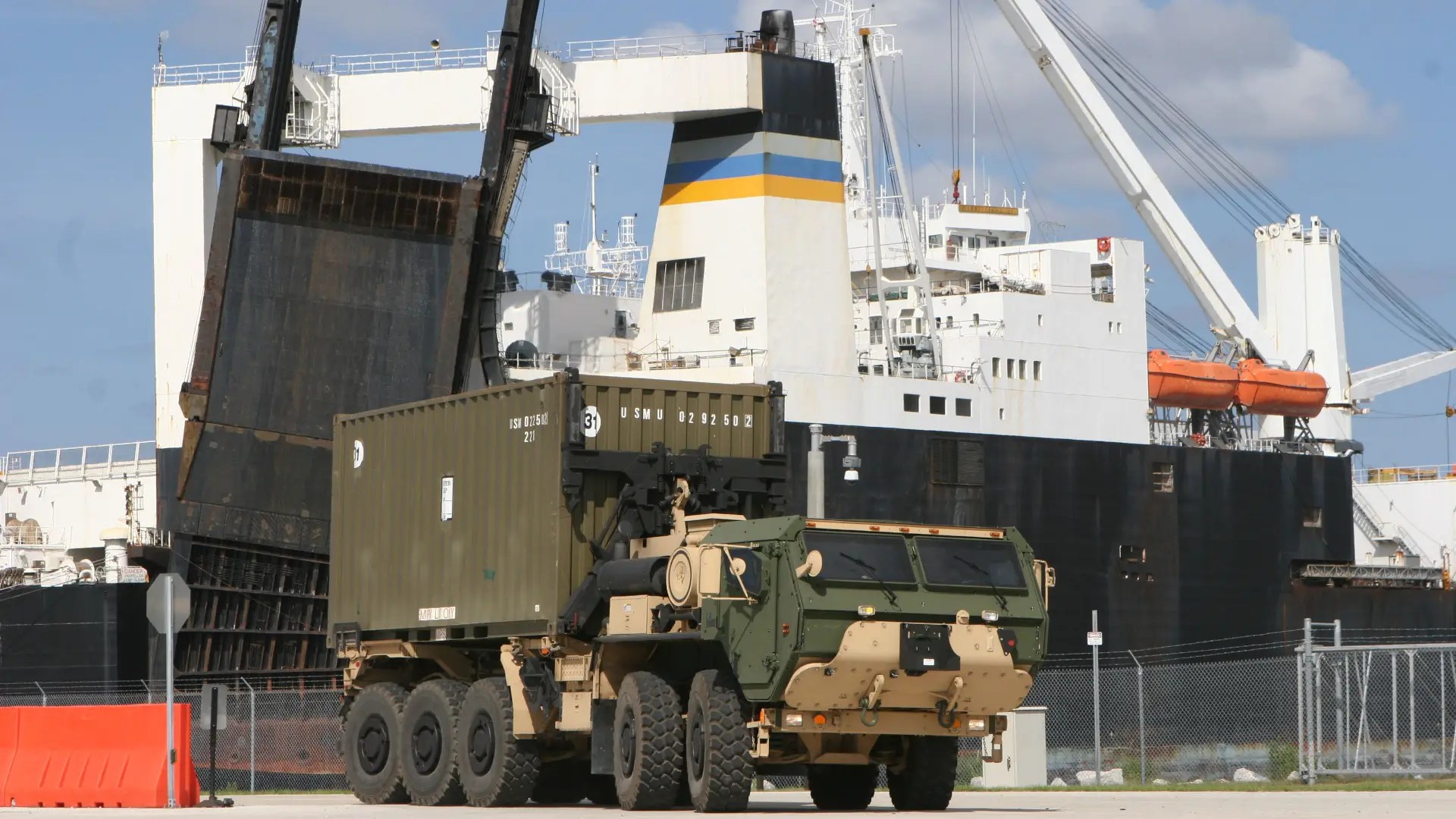
A US Marine Corps Logistics Vehicle System Replacement truck carrying a standard shipping container with a Navy logistics vessel in the background. The Navy is now working on a project to develop a containerized electronic warfare and electronic intelligence system that will work on various naval, air, and ground platforms. USMC / Lance Cpl. Shawn Valosin

The US Coast Guard has had a long history of participation in almost every armed conflict the US Navy has engaged in. But there has always been a tension between peacetime economy and effectiveness and readiness for war.

Some military systems are essential for our peacetime missions, like minimal deck guns or muti-mode radars, we would probably have them, even if we had no wartime missions.

Some military equipment we would be unlikely to have, if we had no military missions, can enhance performance of peacetime missions, like data links and electronic warfare systems. These systems are welcome.

Then there are systems that would enhance our wartime effectiveness that have little or no utility in peacetime. If they require significant training and maintenance time, they can adversely effective peacetime economy and effectiveness. There is an argument to be made that these still offer good return on investment compared with making a similar investment in DOD assets, but diverting DHS assets to support DOD missions can be a hard sell.

Ideally, we would want Coast Guard assets to do their peacetime missions without having to think about wartime missions until mobilization, but when needed, DOD would quickly and easily add capabilities and trained operating personnel.

That is not always possible, but in some cases we might be able to come close to that.

The Danes showed how to make modular naval weapon and sensor systems with their SanFlex system. Now we regularly see announcement of some new modular system. Here, here, here, here, here, here, here, here, and  here.

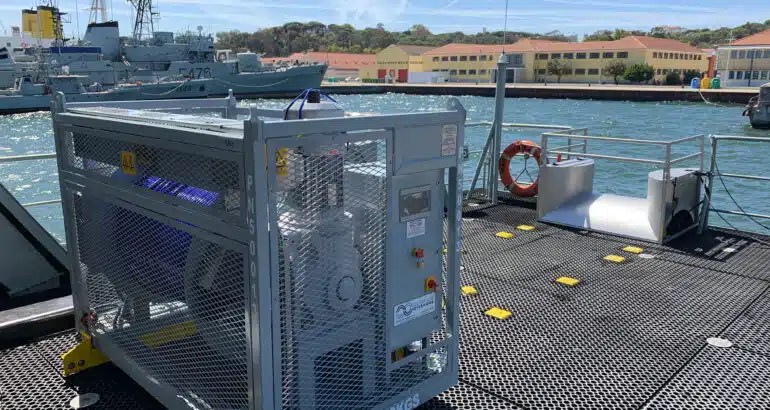
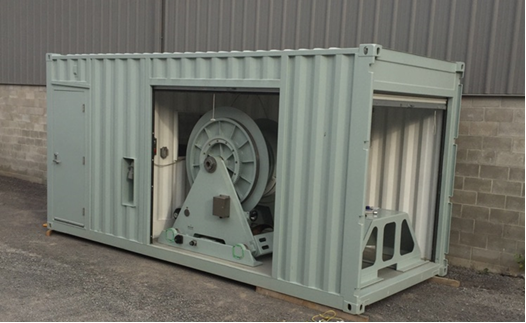
TRAPS containerized active/passive towed array from GeoSpectrum Technologies.

Towed sonars can be containerized, here, here, and here.

I even proposed a containerized weapon system.

What I think we need, after determining the most appropriate mission set for Coast Guard units is a determination of what:

  • must be permanently installed and operated by Coast Guard personnel at all times,
  • what can be quickly installed and operated in the event of a crisis, and
  • what can be added in the form of modular equipment maintained by the Navy and to be operated by Navy Reserve personnel upon mobilization.

A primary example of the latter would be an ASW helicopter. Unmanned systems also look like likely candidates for systems that could be quickly added to Coast Guard vessels.

Unmanned mine hunting and destruction equipment might be based on Coast Guard buoy tenders to allow them to look for mines in US waters, including those around Alaska, Hawaii, Guam and Saipan. In fact the Navy is making some extra LCS Mine CounterMeasures (MCM) for ships of opportunity.

If the Navy wanted Coast Guard cutters to augment Navy ASW forces, a likely mission if we have a war with China, they could become useful units by the addition of a modular version of the Navy’s towed array sonar systems and assignment of experienced ASW personnel and an MH-60R aviation detachment. We would need to have identified where we would store torpedoes, sonobuoys, and other support equipment, but those spaces could have other uses in peacetime.