CAPT Joseph L. Crowe Jr., USCG, a Tribute

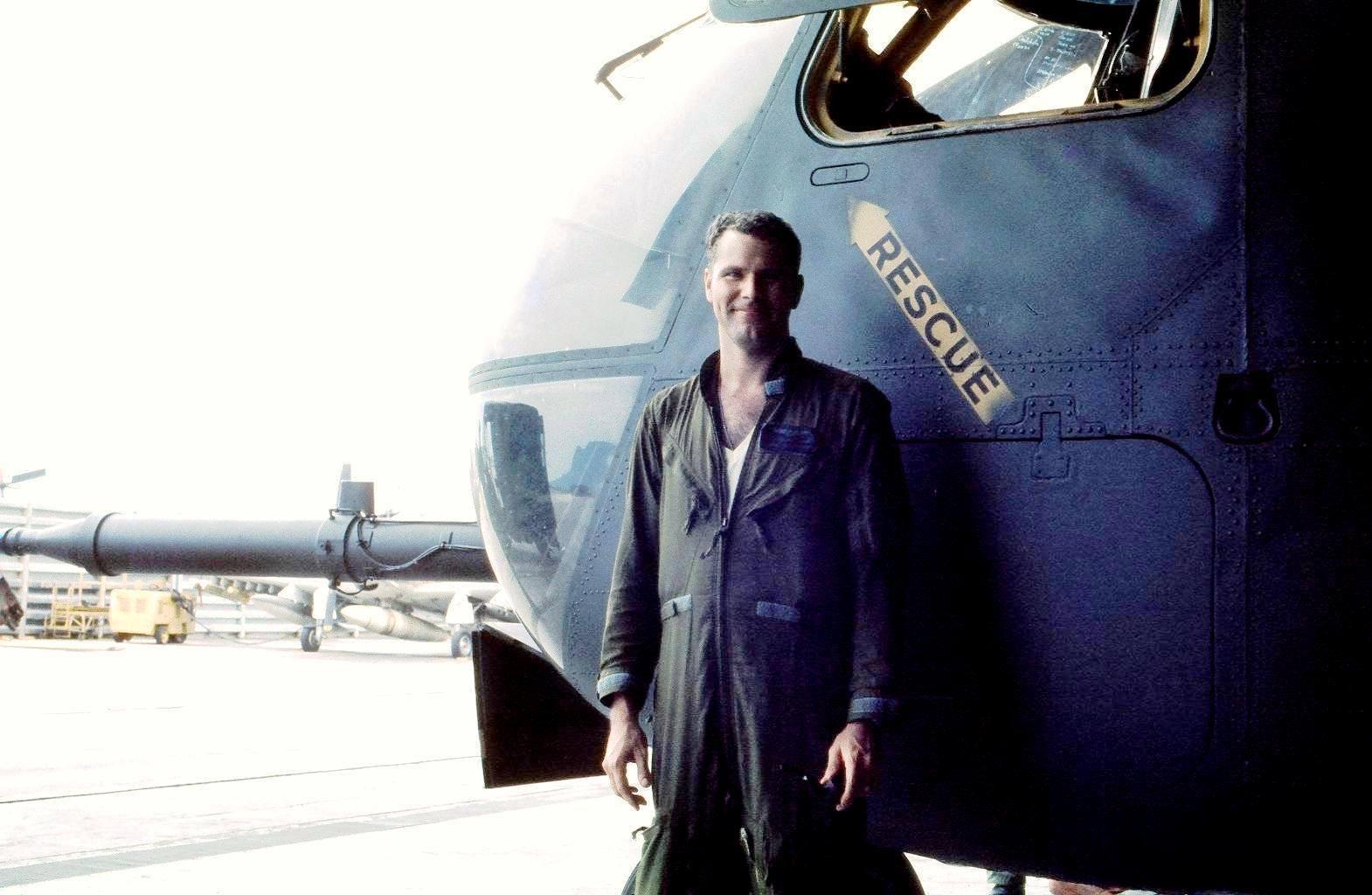
Joseph “Jay” Crowe

The tribute below was written by Captain Sean M. Cross, United States Coast Guard (Retired), son of a former shipmate who had a somewhat successful CG career, Vice Admiral Terry M. Cross, US Coast Guard (ret.).

Capt. Sean Cross has a regular presence on Facebook, regularly marking “Today in Coast Guard Aviation History.”

The following information about Captain Crowe is from “Special Forces Roll of Honour”:

Crowe​, Joseph Lawrence,Jr, Lieutenant Commander, 37 Aerospace Rescue and Recovery Squadron (3 A.R.R. Group) (US Coast Guard attached)​, Distinguished Flying Cross with oak leaf cluster, Cambodia 1971 and South Vietnam 1972.
Born 10.6.1940 Greensburg,Pennsylvania.
Son of Joseph Lawrence and Sara Jane (nee Griffith) Crowe.
Graduated USCG Academy,New London,Connecticut 6.6.1962.
Helicopter pilot.
CGAS, Cape Cod, Massachusetts 1975 (Lt Commander), awarded 2nd oak leaf cluster to DFC 1975 for sea rescue 145 miles south of Cape Cod.
Retired as Captain. 
Married Anne B. O’Mahony.
Died 22.2.2003 Port Angeles,Washington
Massachusetts National Cemetery, Bourne, Barnstable County, Massachusetts Section 28 Site 481

Cadet Joseph “Jay” Crowe, CGA class of 1962.

For more information on Coast Guard aviators’ role in the Vietnam War I recommend, The Coast Guard Flies in Vietnam 

For more Coast Guard history, check out my Heritage page.


 During his 30-year career with the Coast Guard, CAPT Crowe was recognized as a respected leader, a skilled aviator and a decorated hero during and after the Vietnam War.

Between 1968 and 1972, ten Coast Guard helicopter pilots were assigned to the 37th Aerospace Rescue and Recovery Squadron at Da Nang, South Vietnam as part of a service exchange program.  LCDR Crowe and his fellow Coast Guard aviators flew hundreds of rescue missions over enemy-infested jungles recovering downed American airmen. Their actions kept many pilots out of North Vietnamese prison camps.  During his tour in Vietnam, LCDR Crowe earned two Distinguished Flying Crosses and nine Air Medals.  One of LCDR Crowe’s combat search and rescue missions was immortalized in William C. Anderson’s famous book BAT-21 (also a very good movie–Chuck):
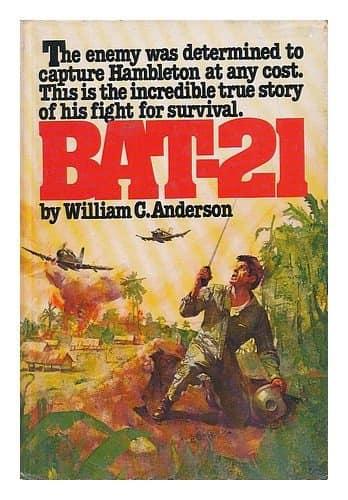
“Coast Guard Lieutenant Commander Jay Crowe, with additional aircraft cover, broke through the clouds and began a rapid descent towards the area where Lieutenant Colonel Hambleton waited. He was met by an immediate curtain of enemy fire, hurled against him with an intensity that defied belief. Enemy rounds literally shredded “Jolly Green 65”, and it was only the courage and flying skill of the Coast Guard pilot that enabled the chopper to stay airborne long enough to return to base.”

Finally, toward the end of his Vietnam tour, LCDR Crowe was moved into rescue planning because he excelled at it.  Following the 1972 Easter Offensive, LCDR Crowe planned the complex “Quang Tri Citadel” evacuation that saved 132 American advisors and South Vietnamese soldiers caught in the onslaught and surrounded by four North Vietnam Army divisions that were pounding the Citadel with artillery, mortars, and rockets for several weeks. The potential for disaster was as great as the potential for success – losses greater than 25% were expected.  Using elements from the Air Force, Army, Marine Corps and the Navy, all 132 people were evacuated without one bit of battle damage to any of the five HH-53C helicopters.

During his first tour at Air Station Cape Cod, LCDR Crowe earned notoriety as the 1976 recipient of the American Helicopter Society’s (AHS) Frederick L. Feinberg Award as the helicopter pilot who accomplished the most outstanding achievement that year.  LCDR Crowe rescued seven men stranded on the bow section of the stricken tanker Spartan Lady about 145 miles south of Martha’s Vineyard.  Thirty-five men were pulled from the tanker, which had broken in half in hurricane force winds, by four Coast Guard helicopters.  LCDR Crowe arrived on-scene after several attempts by other helicopter crews had failed to rescue the seven men.  According to eyewitness reports, it appeared the men were virtually unreachable.  Weather conditions included hurricane force winds, blowing snow, high seas and limited visibility.  For 45 minutes, LCDR Crowe and his crew improvised rescue methods to a very limited hoisting area until they were finally able to pull each man aboard.  In addition to the AHS award, LCDR Crowe was decorated with his third Distinguished Flying Cross.

Tanker MV Spartan Lady about 145 miles south of Martha’s Vineyard.

CAPT Crowe served two tours at Air Station Cape Cod.  His tour as Commanding Officer (1986 to 1988) was highlighted by marked increases in the unit’s operational and personnel support capabilities – capabilities that still benefit Air Station Cape Cod today.  Under CAPT Crowe’s leadership the unit extended its normal operating area to Canada, the Caribbean and the Bahamas, supporting a record 857 aircraft deployment days.  In addition, the unit also implemented its Rescue Swimmer program well ahead of schedule and led efforts in the advancement of night LE activities and secure communications gear. CAPT Crowe oversaw several quality of life and support improvements including the construction of a new hangar (Building 3172) that brought fixed-wing maintenance operations back from a loaned hangar and the opening of the Kaehler Memorial Clinic – which significantly increased the level of patient care available to Cape Cod military personnel.

CAPT Crowe is a Coast Guard hero.  The word “hero” is often overused, but CAPT Crowe earned the title several times over.  In times of war and peace, he demonstrated uncommon valor in the face of great personal risk.  CAPT Crowe made enduring contributions to the Coast Guard and our Nation.

CAPT Crowe passed away at age 62, in his home in Port Angeles, WA on 22 February 2003 from complications relating to lung-cancer that doctors linked his cancer to service in Vietnam.

Coast Guard’s FY2024 Unfunded Priority List

The crew USCGC Oliver Henry (WPC 1140) visit Ulithi Atoll on Oct. 31, 2022, the first time a fast response cutter visited the atoll and delivered 20 boxes of supplies, 50 personal floatation devices, and sporting equipment donated by the cutter crew, the extended U.S. Coast Guard Guam family, Ulithi Falalop Community Action Program, Guam Island Girl Power Foundation, and Ayuda Foundation. Ulithi was a central U.S. staging area during World War II, and home to a U.S. Coast Guard Loran-C communications station from 1944 to 1965 before operations relocated to Yap and ultimately shuttered in 1987. (U.S. Coast Guard photo by Petty Officer 3rd Class Zena Suzuki)

The Coast Guard has published its FY2024 Unfunded Priority List. The ten page document includes 26 line items totaling $1.6B. Much of it is infrastructure improvement, but there are also items to expand capabilities.

Four Additional Fast Response Cutters:

The single largest item is four additional Webber class WPCs. I think this will be approved and that this includes funding of facilities for a new base in American Samoa.

$400M “Funds the acquisition of four FRCs to further the Indo-Pacific Strategy of the United States through expanded presence and engagement to promote a free an open Indo-Pacific. Additional FRCs will begin to transform the Coast Guard from an organization which currently provides episodic presence, to be persistent and visible, strengthening coordination with Allied and partner nations to bolster regional security.”

Historically FRCs have been funded at about $65M each, and even that included support costs in addition to construction costs. There has been inflation, but the list gives us some information about that effect in a separate line item.

$34M “Fast Response Cutter (FRC) Economic Price Adjustment (EPA). Funding aids in reducing unfunded EPA growth resultant from the unprecedented rise in material and labor indices associated with contractual costs for production of hulls 1145 -1164 and procurement of spares. This amount provides the $34 million necessary for the projected EPA liability in FY 2024.

That is $34M spread over 20 ships or an increase of less than $2M per ship, so there is probably at least $120M for support costs over and above construction costs.

Aviation Improvements (note the third item indicates C-27Js will be assigned to CGAS Clearwater, FL, presumably replacing the C-130Hs there now)

  • $138.5M One Missionized HC-130J Aircraft. rovides funding to purchase one missionized HC-130J aircraft in the Block Upgrade 8.1 configuration, manufactured by Lockheed Martin, and currently missionized by L3 Technologies. This funding supports acquisition costs for one of the unfunded three missionized C-130Js required to achieve the Coast Guard’s current program of record of 22 airframes and initial sparing.
  • $113M Four MH-60T Aircraft. Provides funding to outfit and assemble 4 MH-60T aircraft that would facilitate a future Air Station transition from MH-65s to MH-60s in FY 2026. These aircraft would be assembled at the Coast Guard’s Aviation Logistics Center in Elizabeth City, NC.
  • $25M Sparing for Fixed-Wing Aircraft Transitions. Provides initial sparing to establish on-site inventory for HC-130J and HC-27J aircraft planned for delivery to Barbers Point, HI, ($10 million) and Clearwater, FL ($15 million). This funding includes spare parts for aircraft, sensor suites, depot maintenance material, and ground support equipment necessary for aircraft operations as well as LLTM required to accelerate the missionization of HC-27J aircraft. (Scalable)

Infrastructure improvements are requested for:

  • Polar Security Cutter (PSC) Homeport Seattle (Phase 1-2), $130M
  • FRC Homeport Astoria (Phase 2), $30M
  • Waterways Commerce Cutter (WCC) Homeports – Sault Ste Marie, MI and Memphis, TN, $48M
  • NSC and Ocean-Going Buoy Tender (WLB) Homeport – Honolulu, HI (Phase 2), $15M
  • Offshore Patrol Cutter (OPC) Homeport – NAVSTA Newport, RI (Phase 2), $100M
  • Training Center Cape May -Multipurpose Recruit Training Facility, $130M
  • Alaska Housing (Kodiak), $26M
  • Sector Facilities – Sector Sault Ste Marie, MI, $35M
  • Consolidated Base Facilities – Base Charleston, SC, $22.6
  • Coast Guard Yard Upgrade: Ship Handling Facility – Baltimore, MD (Phase 1), $60M
  • Sector Facilities – Sector Lower Mississippi River – Memphis, TN, $37M
  • Station Waterfront – Station Rockland, ME, $40.7M
  • Mission Support Facility (MSF) – Joint Base Andrews, MD (Phase 3), $20M

Miscellaneous:

  • Great Lakes Icebreaker – Long Lead Time Material (LLTM), $20M
  • Special Purpose Craft (MLB)– Heavy Weather Recapitalization, $24M
  • Mariner Credentialing Program, (Navita) Acquisition, $11M
  • National Security Cutter (NSC) –Follow-On Acquisition Funding, $50M
  • National Security Cutters Operational Support Initiatives, $9.7M
  • Operations and Defense Industrial Base, $42M
  • Recruiting & Retention, $9m
  • Modernized Learning Management System, $3M

What does it all mean:

None of these items are in the current budget request, but Congress has historically added to the Coast Guard request. The Coast Guard has been shy about providing an unfunded priority request in the past. Several years there was no unfunded priority list. This is the first time I have seen mention of the Coast Guard’s list in industry news publications (here and here). The new CG administration is making public a good case for increased funding.

We shouldn’t expect everything on the list to be approved, but I think we will definitely see the additional C-130 and at least three additional FRCs. Some of the other items will probably be approved as well. Those items not funded in FY2024 will likely be included in the FY2025 budget.

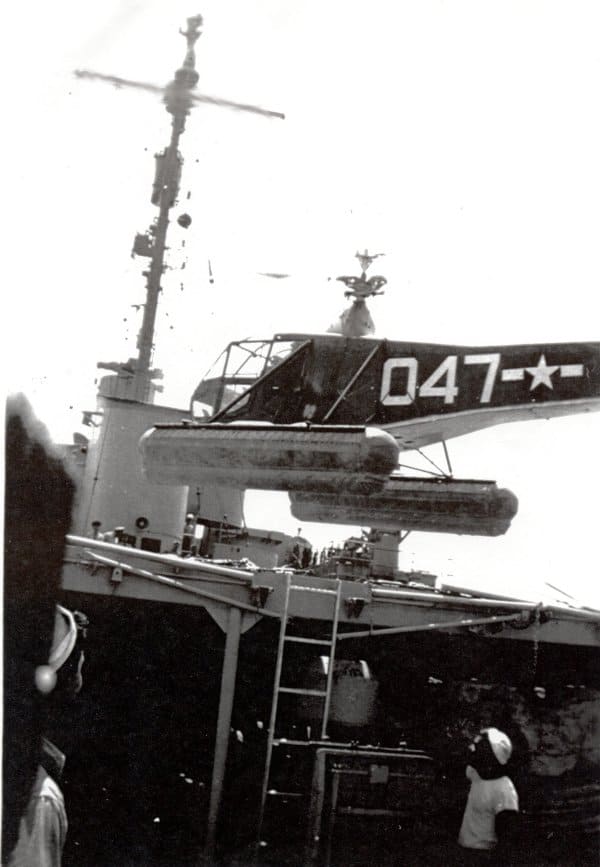
The Very First US Naval Helicopters and Their Coast Guard Pilot

CDR Frank Erickson, USCG, the first US Naval Aviation helicopter pilot.

I am sharing a post written by Coast Guard Aviator, Capt. Sean M. Cross, that appeared on his Facebook Page. Captain Cross’s Facebook page provides daily stories about Coast Guard aviation history. I have a bit of a personal connection, because his dad, former Vice Commandant, VAdm. Terry M. Cross, USCG (ret.), served with me, on my first active duty station, USCGC McCulloch. Even then, it was clear he was a standout.


TODAY IN COAST GUARD AVIATION HISTORY – 03 SEPTEMBER 1943: On 3 September, the U.S. Navy Chief of the Bureau of Aeronautics requested that Coast Guard CDR Frank Erickson, who was assigned to the Sikorsky Factory in Bridgeport, CT, prepare a weekly report for the Bureau outlining the progress made on various model helicopters, estimates of completion, trial and delivery dates; and in addition, such other technical information determined from time to time which had or may have a bearing on present or future operations of this type aircraft.
[Some excerpts from “1943: Coast Guard Assigned the Sea-going Development of the Helicopter” on the Coast Guard Aviation History website] This arrangement came about because U.S. Navy CDR Charles Booth, the naval aviator in the initial helicopter training class at Sikorsky, was involved in moving the Navy’s flight test facility from NAS Anacostia to the Naval Test Center at Patuxent River, Maryland and as a result had not followed through on his qualification. Erickson thus remained the only naval aviator qualified in the helicopter. Hence, in the summer of 1943 Erickson had taken charge of the Navy’s helicopter development program.
Erickson submitted his first report on 18 September. It noted that the YR-4s for the joint evaluation program were on schedule. The two British helicopters had been completed but had not yet been delivered because of rotor problems. He further stated the problems were being addressed. On 25 September a YR-4A was released to the British. On October 16, 1943 – the U.S. Navy accepted its first helicopter, a Sikorsky YR-4B, Navy designation XHNS-1, BuNo 46445, at Bridgeport, Connecticut. However, and this is rich, Coast Guard LCDR Frank Erickson, CGA ’31 flew the one-hour acceptance test flight because the Navy had no helicopter pilots. I will admit – they were pretty busy fighting WWII and winning.
Regardless, the Navy celebrates 16 October as the Birthday of Navy Helicopter Aviation^^^. CDR Charles T. Booth, USN, went to Bridgeport to qualify as a helicopter pilot and to fly the XHNS-1 to the Naval Air Test Center (NATC), NAS Patuxent River, MD. CDR Booth was the first U.S. Navy Officer to become qualified to fly helicopters.
With the acceptance of two additional helicopters at the end of October 1943, the Sikorsky facilities became very crowded. Erickson sought to transfer all operation to Coast Guard Air Station Brooklyn at Floyd Bennett Field. The Chief of Naval Operations approved and designated the Coast Guard Air Station Brooklyn as the Helicopter Training and Development Base. On 20 November, LCDR John Miller, USN and LTJG Stewart Graham, USCG completed flight training. Graham received Coast Guard Helicopter Pilot Designation Number Two.
[NOTE: the Coast Guard celebrates this anniversary on 15 June 1943 when LCDR Erickson was designated Coast Guard Helicopter Pilot #1 at the Sikorsky Aircraft plant]

“Congress Rips Into OMB Over Coast Guard Budget And Unfunded Priorities List” –Forbes

US Capital West Side, by Martin Falbisoner

Forbes’ Craig Hooper gives us a look at the Coast Guard’s unfunded priority list for FY2022, with an push to fully fund it, and a suggestion how the Coast Guard and DHS could provide a clearer picture of our funding requirements.

It’s all true, but I would note that, actually having an unfunded priority list, is an improvement. Not many years ago the Coast Guard repeatedly failed to submit an unfunded priority list.

From almost his first day as Commandant, Admiral Schultz has been talking about the infrastructure shortfall. Previously all the emphasis had been on the recapitalization of the Afloat units. The push to replace all H-65s with H-60s is an even more recent initiative.

I suspect, as has happened the last few years, Congress will provide an increase over the Administration request.

Thanks to Paul for bringing this to my attention. 

“The Long Blue Line: 100 years ago–Coast Guard opens Air Station #1 at Morehead City”

Aerial photo of an HS-2l airborne with crew member occupying forward cockpit. (Navy History & Heritage Command)

There is an interesting bit of Coast Guard history over at the Coast Guard Compass web site concerning the Coast Guard’s rocky start in aviation. “The Long Blue Line: 100 years ago–Coast Guard opens Air Station #1 at Morehead City

I have added a link to this on my “Heritage” page.

What Frustrates Me? –an Apparent Lack of Transparent Long Term Planning

A reader recently asked me, “What frustrates you, Chuck? … what is the one or two key areas that you think the USCG needs?  A new ship design, up-arming, or missiles?”
My answer, actually it is the apparent failure to plan.

Rant to Follow

Maybe there is a plan, but if there is, it has not been shared with the Congress or the public. Consequently there has been no opportunity to build support for the plan.

Despite direction from Congress to provide a 25 year shipbuilding plan, none has been provided. Is the hold up in the Coast Guard or the Department? Who knows.

Our shipbuilding “Program of Record” (POR) was last baselined in 2005, as part of the defuncted “Deepwater” program. It was based not on need, but on expected funding.

An examination of need was made, in the form of an “Offshore and Aviation Fleet Mix Study.” A report was completed in 2009. It was reevaluated in 2011, resulting in lower requirements that still indicated that we needed assets far in excess of the program of record. Results were not made public until 2012.
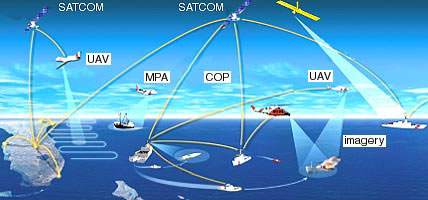
There has been no reexamination of our needs since then, in spite of the fact that the Fleet Mix Study was based on an assumption of the use of the “Crew Rotation Concept” on the National Security Cutter and Offshore Patrol Cutter. It also anticipated deployment of shore based Unmanned Air Systems (UAS), large vertical take off ship based UAS, and networking that would provide a common tactical picture. So far, no land based UAS, only a much smaller less capable ship based UAS, and no real common tactical picture. The only pleasant surprise has been the utility of the Webber class cutters.
I have a half assed Operations Research background. It pains me to see that we are apparently not using the planning tools that are available.
When we present a well considered and fact based plan, the Congress has been responsive. They have supported the program of record, and are funding icebreakers in response to the High Latitude Study.
  • We sorely need an updated Offshore and Aviation Fleet Mix Plan.
  • From this and consideration of other needs we need to develop a 30 year Shipbuilding and Aviation Procurement Plan.
  • We need to update these planning tools on a regular basis. We can expect that they will get better with each iteration.
Normally the leadership changes every four years. It is reasonable that we have a planning cycle that follows this pattern. We can give the new Commandant and his staff a year to work with his predecessor’s planning products before initiating a new cycle. A year in he should initiate a new Fleet Mix Plan. Using it and other inputs, a new 30 year Shipbuilding and Aviation Procurement Plan should be completed well before the new Commandant is selected. 
Only tangentially related, but a budget document we seldom see, is the Coast Guard’s unfunded priority list. Almost three years ago, I did one of my own. Not much has changed.
Thanks to Peter for kicking off this line of thought.