“GAO: Polar Security Cutter Design Won’t Complete Until 2024, Delivery of First Hull Estimated in 2028” –USNI

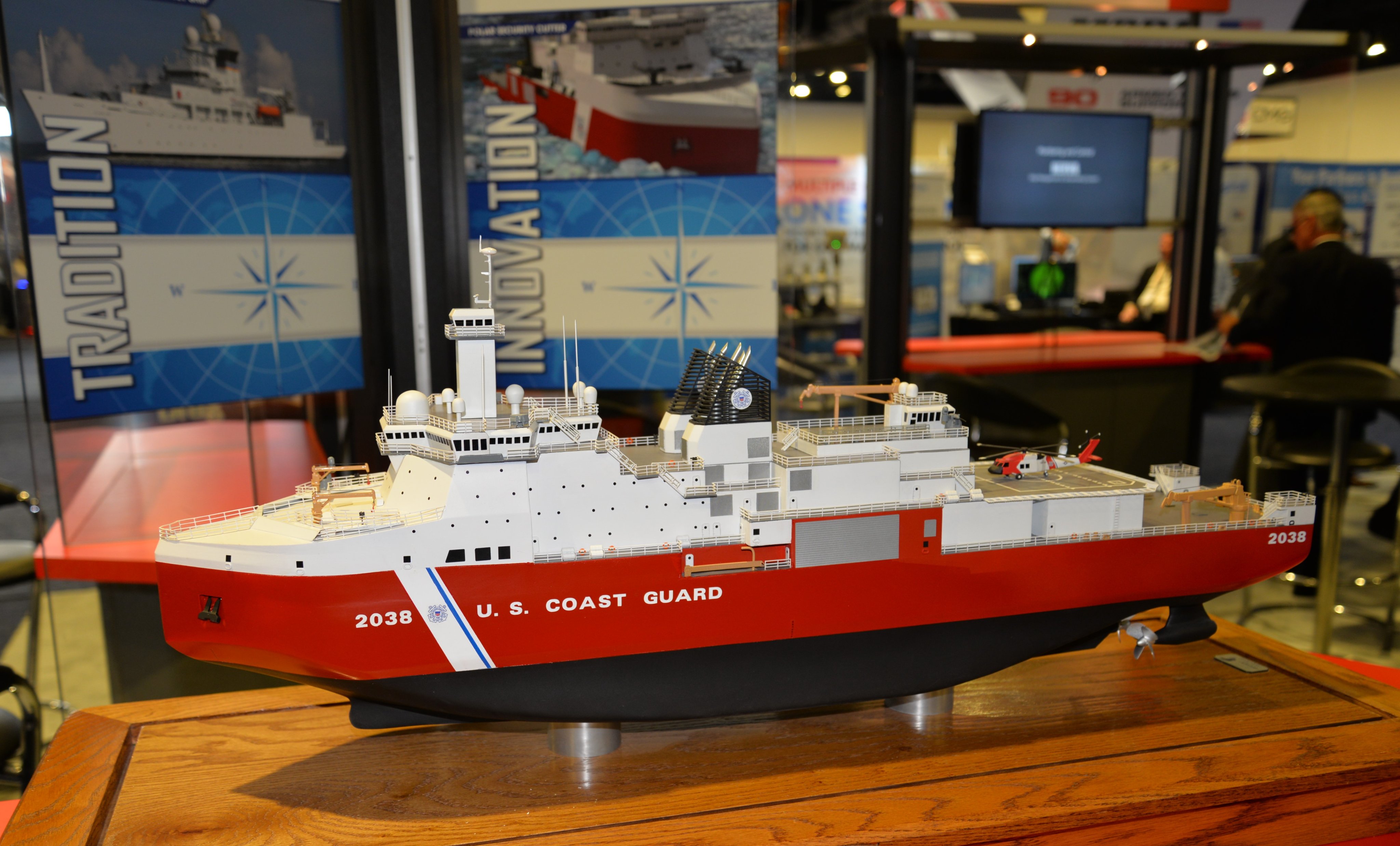
Photo of a model of Halter Marine’s Polar Security Cutter seen at Navy League’s Sea-Air-Space Exhibition have surfaced. Photo credit Chris Cavas.

The US Naval Institute news service reports,

According to the estimate from GAO, which cites Coast Guard and Navy officials, as well as shipbuilders – the final design for the 23,0000-ton ice breaker won’t be complete until next March. Construction is scheduled to start shortly after the design is approved. Coast Guard commandant Adm. Linda Fagan told Congress last month that the delivery of the first hull is expected in 2028.

This goes back to the fact that while the Polar Security Cutter was supposed to have been based on a proven design of a successful icebreaker, in fact the selected shipyard used a design that never got past the preliminary design stage.

But really, the problem goes back much further than that.

Polar Star was commissioned in 1976. A new class of ships typically takes ten years from concept to commissioning. 30 years is a generally expected lifespan for military ships. That suggests the program to replace the Polar class should have begun in 1996. Not even close. A replacement program was not initiated until 2012. By then the High Latitude Study had identified the need for three heavy and three medium icebreakers in 2010. Launching the Polar Security Cutter (PSC) program in 2012 should have given us an icebreaker in 2022. In 2016 a Polar Icebreaker Operational Requirements Document was issued. Arguably the High Latitude Study should have simultaneously launched both a heavy and a medium icebreaker procurement program.

13 years after the High Latitude Study identified the need, we have seen no movement in an effort to procure medium icebreakers.

In the movie “King Richard,” about Richard Dove Williams Jr., father of tennis players Venus Williams and Serena Williams, he is quoted as saying, “If you fail to plan, you plan to fail.”

This was not a problem with Congress.

We have failed to plan.

The only fleet mix plan we have ever done is now 12 years old. In the interim, much has changed.

There is not now, nor has there ever been, a 30 year ship building plan or any kind of comprehensive long range plan comparable to the Navy force structure and shipbuilding plans which the Navy revises every few years.

The first National Security Cutter was ordered in 2001 but was not commissioned until 2008. The first four were commissioned at essentially two year intervals, but even after that, it has taken nine years to complete next six. Looks like the eleventh ship will not be finished until 2025. When the first Hamilton Class WHEC was decommissioned, it was 44 years old. When the last one was decommissioned, it was almost 50 years old.

The Coast Guard currently has 27 WMECs, every single one of them is over 30 years old. 14 of them are over 50 years old. The average age is about 46.4 years. That is the fruit of poor planning.

We did not plan to run ships for 50 to 60 years, but we also have had no plan that defined when they would be decommissioned, that would have informed when replacements had to be completed.

Planning for the Offshore Patrol Cutters (OPC) began with the Deepwater Program. Concepts were revised in light of the terrorist attacks on Sept. 11, 2001. The acquisition process for the OPC began at least as early as 2010. At that time, we thought all would be delivered by 2027 (and here). The first ship was supposed to have been delivered in calendar year 2019. Now we plan on continuing to build them until 2038 meaning this acquisition program is supposed to run 28 years. 28 years building the same ship without looking at mission and technology changes?

We should decide right now that once we get some experience with the first OPCs, we will start looking at the next class of cutters. It might replace the OPC in future year budgets, or it might be built along with additional OPCs. We might even decide the OPC is exactly what we need to continue building, but we need to reevaluate. Cutter design should evolve. There should be improvements. There should be new capabilities.

The Coast Guard enjoys bipartisan Congressional support. We need to educate the administration, the Congress, and the GAO about our needs, but first we need to decide what they are, because we don’t really know.

We can start by identifying when ships will be decommissioned. The prospect of loss can be a strong incentive for funding their replacements.

We need a new Fleet mix analysis, one that actually looks at our missions, geographic distances and a range of possible solutions.

We also need a long term plan for our major capital resources, particularly the ships and aircraft.


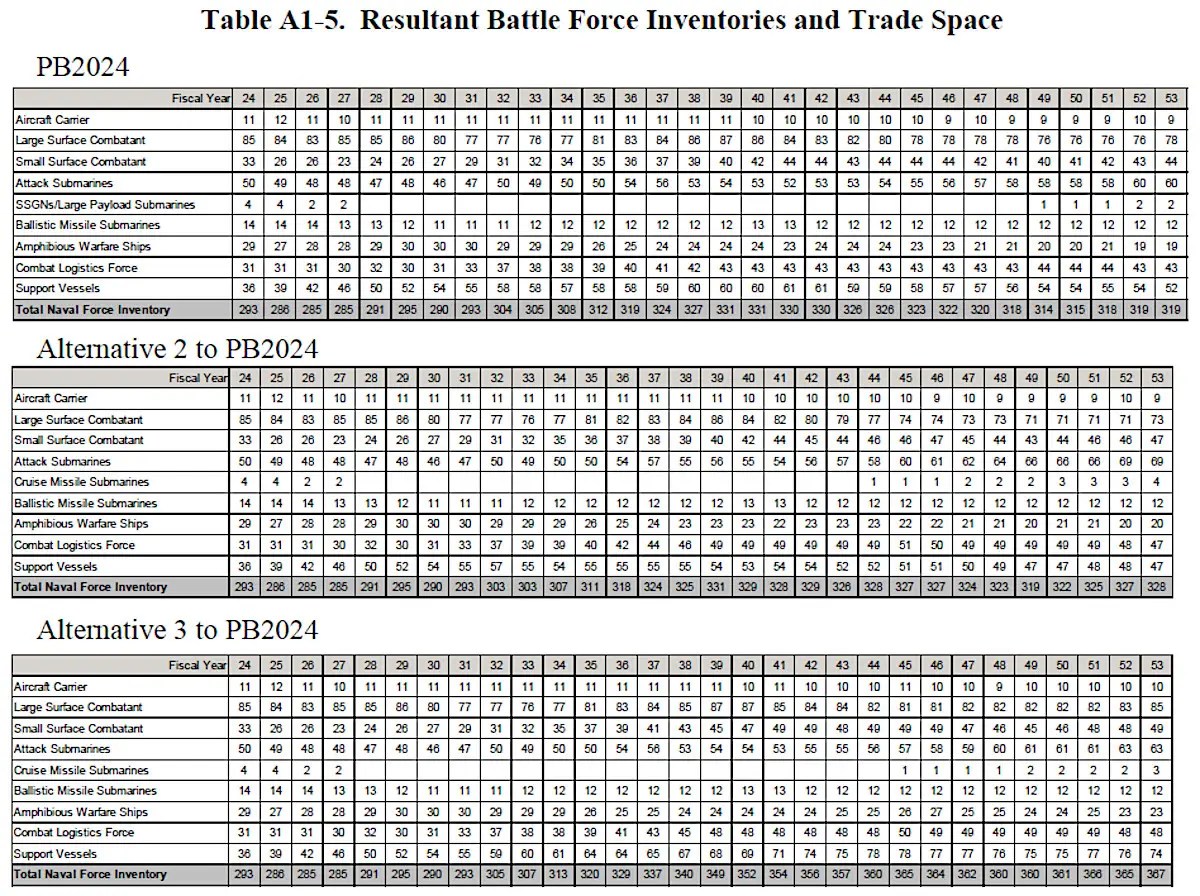
“Navy’s New 381-Hull Fleet Plan Recommits To Big Amphibious Warfare Ships” –The Drive

Five white 311-foot cutters of Coast Guard Squadron Three, assigned to support Operation MARKET TIME tied up alongside Navy repair ship USS Jason (AR-8) at Naval Station Subic Bay in the Philippines, 4 August 1967. From inboard to outboard:
USCGC Half Moon (WHEC-378);
USCGC Yakutat (WHEC-380);
USCGC Gresham (WHEC-387);
USCGC Barataria (WHEC-381) and
USCGC Bering Strait (WHEC-382)
U.S. Coast Guard Historian’s Office. Photo by CDR Richard Morse, USCG, Commanding Officer USCGC Barataria (WHEC-381)

The Drive has one of several posts reporting on the new Navy Fleet Plan and Shipbuilding projections. The US Naval Institute News report is here.

This brings to mind two of my favorite grips:

  • First that he Coast Guard has no similar long-term plans, and second,
  • Coast Guard assets are not considered in as part of the “Battle Force.”

A good part of the reason our ships soldier on long after they should have been replaced may be because we have not been informing the executive branch and congress about our long-term needs.

I can imagine an adverse reaction to my suggestion that cutters should be part of the “Battle Force”, but you need to understand what the Navy includes in that category. These are not all high-powered warships. Currently the US Navy “Battle Force” is 299 ships. Of those, 59 are USNS ships that are almost completely unarmed, have civilian crews, and no electronic countermeasures. They include oilers, logistics ships, expeditionary fast transports, towing salvage and rescue ships, and ocean surveillance ships. In addition, it includes some commissioned ships that are not really warships, like command ships and expeditionary base ships. The relatively small future Landing Ship Medium is expected to be included as well.

If we have a naval conflict with a major power (e.g., China) the Navy is going to need the Coast Guard’s help. Cutters will help enforce blockades, round up hostile merchant shipping and fishing vessels, rescue crews from sunken ships, play host to unmanned systems, provide harbor defense and force protection, and probably ultimately be equipped as second line warships.

Cutters count, so they should be counted.  

Vessels I would include in the count would include at least all the Icebreakers, National Security Cutters, Offshore Patrol Cutters, and Medium Endurance Cutters and possibly ocean-going buoy tenders and Webber class WPCs.

“Editor’s Notes: Why the Coast Guard Lags When It Comes to Unmanned Systems” –National Defense

Eagle Eye UAS, part of the “Deep Water” Coast Guard recapitalization plan.

National Defense has a post that traces the Coast Guard’s two-decade effort to put unmanned aircraft on cutters.

But here is where I confess that this article is not really about the Eagle Eye. Sorry to say that it was all a bit of misdirection, because this article is really about one of the nation’s greatest but chronically underfunded assets: the United States Coast Guard.

National Defense since the Eagle Eye’s cancellation has written dozens of articles about the service’s effort to deploy UAVs. Over and over again, the only reason cited for the Coast Guard being the “have-not” of the services when it comes to drones was funding.

It is a good article, but I think the conclusion of the article is wrong. To paraphrase Jimmy Buffett (“wasting away in Margaritaville”) it’s our own damn fault.

Too long we seemed to glory in doing more with less. Too many years we went without bothering to submit an unfunded priorities list. We really haven’t changed our program of record since the rethink prompted by 9/11 more than two decades ago. We fired the Deepwater program contractors in 2012, but we are still working on their program. There have been changes around the edges, more NSCs, more FRCs, but those changes were not the result of a Coast Guard masterplan. They were ad hoc and frequently driven by Congressional interests.

Congress keeps telling us our planning is out of date. We have not done a fleet mix study since 2011 and even that one only considered the types of platforms already in the program of record without any consideration of alternative types.

Despite repeated Congressional calls for a new Fleet Mix Study, there is none.

Despite repeated Congressional calls for a 20- or 30-year ship building plan, there is none.

We still have not reached the number of medium range fixed wing search aircraft that were in the Program of Record and apparently have not plan to do so.

The Coast Guard has not been transparent in publicly reporting their measures of effectiveness. We don’t see reports like this one anymore. I have not been able to make reports like these (here, here, and here) since 2010.

We have failed to field any shore based maritime search UAS system, a capability that was included in the Deep Water program, while Japan, Thailand, India, the Netherlands, Belgium, and the UK have already done so. This in spite of the fact that we have been piddling around with CBP’s MQ-9 program for well over a decade.

Regional Maritime Domain Awareness programs are being implemented all over the world, but if we have such a program with Mexico and Canada no one seems to know about it.

Planning for the medium Icebreakers could have proceeded in parallel with planning for the heavy icebreakers. We know we need them, but I have seen no indication that we have started looking seriously at the possibilities.

We have not talked about the possibly devastating effects the delays in the OPC program are going to have, that would justify increasing the pace of construction to more than two per year.

We still have not adequately addressed the water borne terrorist threat to our ports. Since we never have its easy to continue to ignore.

Despite demands for reports from field units, for whatever reason, the “puzzle palace” is not making public the kind of analytics required to justify significant departures from what we did last year, so we keep stumbling along from one budget to the next.


“Icebreakers, Pay Raise, New Cutters: House Adds $430M to Coast Guard Budget” –Military.com

FOUR WEBBER CLASS PATROL CRAFT. 220822-A-KS490-1182 STRAIT OF HORMUZ (Aug. 22, 2022) From the left, U.S. Coast Guard fast response cutters USCGC Glen Harris (WPC 1144), USCGC John Scheuerman (WPC 1146), USCGC Emlen Tunnell (WPC 1145) and USCGC Clarence Sutphin Jr. (WPC 1147) transit the Strait of Hormuz, Aug. 22. The cutters are forward-deployed to U.S. 5th Fleet to help ensure maritime security and stability across the Middle East. (U.S. Army photo by Spc. Noah Martin)

Military.com reports,

The House Appropriations Committee on Wednesday approved an increase to the Coast Guard’s fiscal 2024 budget, forwarding a bill to the full chamber that funds a 5.2% pay raise for members, a commercial icebreaker, four additional fast response cutters, and an extra HC-130J Super Hercules aircraft.

In addition to the projects in the original budget request, the committe has obviously, they have been looking at the Coast Guard’s FY2024 Unfunded Priority List.

The Unfunded Priority List included requests for an additional $1.6B.

The House Appropriations Committee recommendation would fund about $430M, including two big ticket items, four additional Webber class patrol craft and an additional C-130J. The unfunded priority list had listed the total price for the cutters and aircraft as $538.5M, so the markup may not include all the support costs for the cutters and missionization costs for the aircraft included in the Unfunded Priority list.

This still has a way to go before becoming law, but the Coast Guard has been receiving substantial bipartisan support and for the last few years Procurement, Construction, and Improvements budgets have been increased substantially over the requested amounts. There seems to be wide support for additional Webber class cutters to serve in the Western Pacific. As I noted in March,

We shouldn’t expect everything on the list to be approved, but I think we will definitely see the additional C-130 and at least three additional FRCs. Some of the other items will probably be approved as well. Those items not funded in FY2024 will likely be included in the FY2025 budget.

House Appropriations Committee FY2024 Budget Hearings

Note the video above does not actually start until about minute 17.

Above is a video of the Commandant’s testimony before the House Committee on Appropriations that occurred about two weeks ago. It may be worth noting that those present were not the full committee. The full committee includes 71 members, currently 34 Republican and 27 Democrat.

The Coast Guard enjoys bi-partisan support in Congress, and it was evident in this committee hearing.

Concerns identified included:

  • IUU fishing
  • Border security/drugs/immigrants
  • Recruiting problems
  • Chinese investments/influence in Mexico’s transportation systems
  • The effects of offshore wind farms

There was discussion about the Unfunded Priority list, including:

  • Funding of four additional Fast Response Cutters,
  • Improvements at the Coast Guard Yard that would allow a larger floating dry dock capable of servicing the Offshore Patrol Cutters (1:21:00),
  • and various infrastructure improvements. Charleston, Seattle, and Alaska in particular were mentioned.

There was a lot of concern about the influx of non-prescription fentanyl. This is a problem the Coast Guard has not had much of a role in countering, but there was hope that the Coast Guard might be able to work with the Mexican Navy on ways to track the distribution of precursor chemicals which are imported into Mexico legally.

There was discussion of the lack of progress on the Polar Security Cutters and questions about the waterways commerce cutters.

The Commandant was consistent with her previous statements that the Work Force is her highest priority. Increased recruiting capacity, additional recruiters and recruiting offices, has been funded.

Some comments that surprised me:

  • Indo-Pacific support cutter, Harriet Lane, to arrive in Honolulu before the end of the year, will operate out of there for a couple of years before going on to her final homeport. (49:00)
  • Maritime illegal immigration attempts peaked earlier in the year and are now decreasing.
  • A Maritime Domain Awareness data fusion center has been started. The CG is getting Saildrone USVs to assist in data collection. Scan Eagle was mentioned but there was no specific discussion about land based UAS.
  • Purchase of a commercially available icebreaker was included in the FY2023 budget but was delayed until FY2024. The CG is apparently now ready to proceed with that.

The Commandant also confirmed that the Coast Guard was ready to proceed with procurement of a Great Lakes icebreaker with capabilities similar to Mackinaw (1:10:00).

There is a report on the hearings by “Workboat” here. Thanks to Paul for making me aware of this article, that then led me to find the video above. 

USCG Posture Statement, 2024 Budget Overview

US Capital West Side, by Martin Falbisoner

The Coast Guard has published their FY2024 Budget Overview. It is a 40 page document but easily readable. It is much more than a tabular budget request. In fact you don’t get to the actual budget summary until page 26. It is, after all, an attempt to justify the budget. There is a lot of why the Coast Guard is needed, what we have done for you lately, and what we are going to do in the future. It is pretty impressive.

Bottom line. The budget request is for about $13.45B of which $12.05B is discretionary funding, of which $1.55 is Procurement, Construction, and Improvement (PC&I).

The PC&I budget request is actually down a bit.

Procurement, Construction, and Improvements (in thousands)

  • 2021 enacted        2,264,041
  • 2022 requested     1,639,100
  • 2022 enacted        2,030,100
  • 2023 requested     1,654,858
  • 2023 enacted      $2,080,100

You can see how Congress has tended to add to the amount requested, which is why I believe several of the items on the Unfunded Priorities List will ultimately be funded.

There is a more complete comparison with the enacted FY 2022 and 2023 budgets on page six of this document.

Coast Guard’s FY2024 Unfunded Priority List

The crew USCGC Oliver Henry (WPC 1140) visit Ulithi Atoll on Oct. 31, 2022, the first time a fast response cutter visited the atoll and delivered 20 boxes of supplies, 50 personal floatation devices, and sporting equipment donated by the cutter crew, the extended U.S. Coast Guard Guam family, Ulithi Falalop Community Action Program, Guam Island Girl Power Foundation, and Ayuda Foundation. Ulithi was a central U.S. staging area during World War II, and home to a U.S. Coast Guard Loran-C communications station from 1944 to 1965 before operations relocated to Yap and ultimately shuttered in 1987. (U.S. Coast Guard photo by Petty Officer 3rd Class Zena Suzuki)

The Coast Guard has published its FY2024 Unfunded Priority List. The ten page document includes 26 line items totaling $1.6B. Much of it is infrastructure improvement, but there are also items to expand capabilities.

Four Additional Fast Response Cutters:

The single largest item is four additional Webber class WPCs. I think this will be approved and that this includes funding of facilities for a new base in American Samoa.

$400M “Funds the acquisition of four FRCs to further the Indo-Pacific Strategy of the United States through expanded presence and engagement to promote a free an open Indo-Pacific. Additional FRCs will begin to transform the Coast Guard from an organization which currently provides episodic presence, to be persistent and visible, strengthening coordination with Allied and partner nations to bolster regional security.”

Historically FRCs have been funded at about $65M each, and even that included support costs in addition to construction costs. There has been inflation, but the list gives us some information about that effect in a separate line item.

$34M “Fast Response Cutter (FRC) Economic Price Adjustment (EPA). Funding aids in reducing unfunded EPA growth resultant from the unprecedented rise in material and labor indices associated with contractual costs for production of hulls 1145 -1164 and procurement of spares. This amount provides the $34 million necessary for the projected EPA liability in FY 2024.

That is $34M spread over 20 ships or an increase of less than $2M per ship, so there is probably at least $120M for support costs over and above construction costs.

Aviation Improvements (note the third item indicates C-27Js will be assigned to CGAS Clearwater, FL, presumably replacing the C-130Hs there now)

  • $138.5M One Missionized HC-130J Aircraft. rovides funding to purchase one missionized HC-130J aircraft in the Block Upgrade 8.1 configuration, manufactured by Lockheed Martin, and currently missionized by L3 Technologies. This funding supports acquisition costs for one of the unfunded three missionized C-130Js required to achieve the Coast Guard’s current program of record of 22 airframes and initial sparing.
  • $113M Four MH-60T Aircraft. Provides funding to outfit and assemble 4 MH-60T aircraft that would facilitate a future Air Station transition from MH-65s to MH-60s in FY 2026. These aircraft would be assembled at the Coast Guard’s Aviation Logistics Center in Elizabeth City, NC.
  • $25M Sparing for Fixed-Wing Aircraft Transitions. Provides initial sparing to establish on-site inventory for HC-130J and HC-27J aircraft planned for delivery to Barbers Point, HI, ($10 million) and Clearwater, FL ($15 million). This funding includes spare parts for aircraft, sensor suites, depot maintenance material, and ground support equipment necessary for aircraft operations as well as LLTM required to accelerate the missionization of HC-27J aircraft. (Scalable)

Infrastructure improvements are requested for:

  • Polar Security Cutter (PSC) Homeport Seattle (Phase 1-2), $130M
  • FRC Homeport Astoria (Phase 2), $30M
  • Waterways Commerce Cutter (WCC) Homeports – Sault Ste Marie, MI and Memphis, TN, $48M
  • NSC and Ocean-Going Buoy Tender (WLB) Homeport – Honolulu, HI (Phase 2), $15M
  • Offshore Patrol Cutter (OPC) Homeport – NAVSTA Newport, RI (Phase 2), $100M
  • Training Center Cape May -Multipurpose Recruit Training Facility, $130M
  • Alaska Housing (Kodiak), $26M
  • Sector Facilities – Sector Sault Ste Marie, MI, $35M
  • Consolidated Base Facilities – Base Charleston, SC, $22.6
  • Coast Guard Yard Upgrade: Ship Handling Facility – Baltimore, MD (Phase 1), $60M
  • Sector Facilities – Sector Lower Mississippi River – Memphis, TN, $37M
  • Station Waterfront – Station Rockland, ME, $40.7M
  • Mission Support Facility (MSF) – Joint Base Andrews, MD (Phase 3), $20M

Miscellaneous:

  • Great Lakes Icebreaker – Long Lead Time Material (LLTM), $20M
  • Special Purpose Craft (MLB)– Heavy Weather Recapitalization, $24M
  • Mariner Credentialing Program, (Navita) Acquisition, $11M
  • National Security Cutter (NSC) –Follow-On Acquisition Funding, $50M
  • National Security Cutters Operational Support Initiatives, $9.7M
  • Operations and Defense Industrial Base, $42M
  • Recruiting & Retention, $9m
  • Modernized Learning Management System, $3M

What does it all mean:

None of these items are in the current budget request, but Congress has historically added to the Coast Guard request. The Coast Guard has been shy about providing an unfunded priority request in the past. Several years there was no unfunded priority list. This is the first time I have seen mention of the Coast Guard’s list in industry news publications (here and here). The new CG administration is making public a good case for increased funding.

We shouldn’t expect everything on the list to be approved, but I think we will definitely see the additional C-130 and at least three additional FRCs. Some of the other items will probably be approved as well. Those items not funded in FY2024 will likely be included in the FY2025 budget.

Congressional Research Service Issues Revised Polar Security Cutter (heavy icebreaker) and Cutter Procurement Reports

US Capital West Side, by Martin Falbisoner

The Congressional Research Service issued updates to both their Polar Security Cutter (heavy icebreaker) program and Cutter Procurement reports on 22 December. (These links will always take you to the latest version of the reports.)

I haven’t really gotten into these revisions yet, but I would expect that any changes would likely be in the “Legislative Activity for FY2023” sections particularly the House-Senate (HAC-SAC) portion. Even a quick scan of the Cutter Procurement report shows how little guidance in the FY2023 National Defense Authorization Act (NDAA) meant to the actual budget negotiations.

The Polar Security Cutter report, of course, notes the sale of VT Halter to Bollinger.

Hopefully, I will have more commentary, but wanted to get the word out ASAP.

Some Posts of Interest

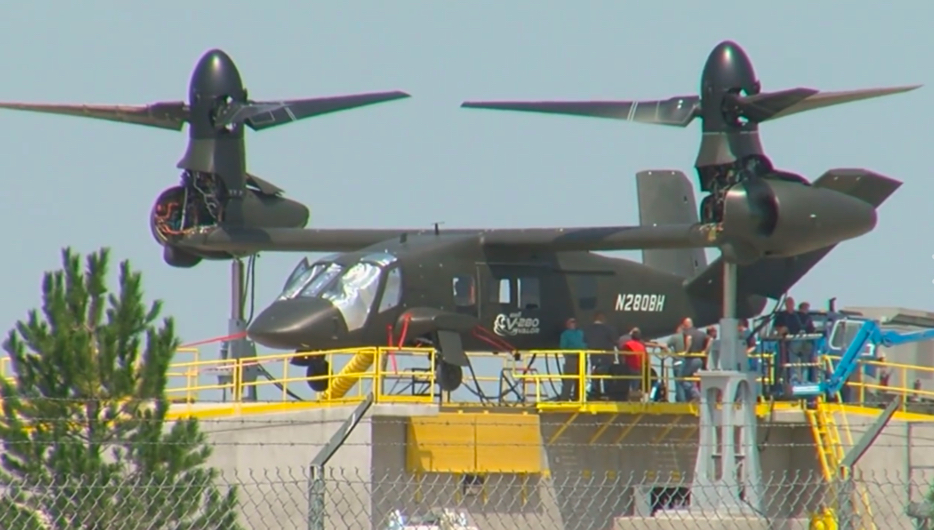
Bell’s V-280 prototype

There have been some posts that may be of interest published recently that I will point to below, with only brief comments.

“The New Coast Guard Funding Bill Is Really Good For The USCG” –Forbes There is a lot here, but you should recognize that this is the National Defense Authorization Act (NDAA), not an actual budget. It is not uncommon to have items in the authorization that are not included in the corresponding budget, so we have to wait a little longer to see what is actually funded.

The Coast Guard is directed to complete a number of studies. I hope they will be completed and delivered to Congress, but they may not be and if they are, we may never know. I have been told, a lot of reports get delivered late, because there is little penalty, and the committees don’t need to inform anyone else of whether they have received a report they requested.

“Some Fun Coast Guard Reads In Forbes” –Next Navy: This talks about the post above and a second post that suggests that the Coast Guard replace the C-27 with the Army’s recently selected V-280. I think the production version of the V-280 has a good chance of finding a place in the Coast Guard. Ultimately it might even replace all our land-based helicopters and all the fixed wing aircraft except the C-130, but that is many years in the future. It’s premature to consider replacing the C-27. (Thanks to Walter for bringing this to my attention.)

“Expand Seattle Coast Guard base without impacting working waterfront”: The local longshoremen’s union takes issue with the three proposals for expansion of Base Seattle. (Thanks to Mike for bringing this to my attention.)

“MOAA Interview: Coast Guard Commandant Charts the Path Forward” Admiral Zukunft emphasized the Cutter recapitalization. Admiral Schultz spent a lot of time talking about shoreside infrastructure. Admiral Fagan’s emphasis is on personnel issues, e.g., recruiting, incentives for afloat billets, afloat billets for women, and women the Coast Guard in general. There is also a nod to the Arctic.

“White House steps in as Navy, Pentagon feud over amphibious ship study” –Defense News/Analysis Paralysis

US Capital West Side, by Martin Falbisoner

Defense News reports, on the convoluted process that has blocked Congress from getting a report from the Marine Corps regarding how much amphibious lift they think they need.

Apparently, the Congress has taken steps to ensure that they don’t get stonewalled and that they get an answer directly from the source.

This does not look Coast Guard related except that it seems the same thing is happening to Congressionally mandated reports from the Coast Guard.

There have been other mandated reports that seem to have been ignored, but there is one I think particularly important. The original Fleet Mix Study was completed in 2009 but was not made public until 2012 after a revision in 2011. For years the Congress has been asking for an update. Like in the case of the Marines need for amphibious lift, this is a force structure question, and the silence has been deafening.

We have not had a new evaluation of Coast Guard force structure for over eleven years. Considering how Coast Guard operations have changed in the last decade, the emergence of new threats (like unmanned systems), new opportunities (like unmanned systems), and the experience we have gained with the National Security Cutters and the Fast Response Cutter operation, is that wise?

Congress needs to be equally assertive about hearing what the Coast Guard needs to do its missions and insist that the result not be filtered by the Department.

Once the desired level is established, certainly, questions will be raised. Limitations will emerge. Study assumptions will be questioned. Affordability will have to be addressed, but we need to start with an attempt at an honest and comprehensive assessment of requirements. We saw the GAO critique the Coast Guard’s shipbuilding program as unachievable because the required budget was larger than it had been historically. That is certainly a factor, but it needs to be considered in the light of objectives and a history of neglect.

Force study evaluations should be an iterative process repeated at least every four years to inform the actions of succeeding administrations both within the service and within government.