
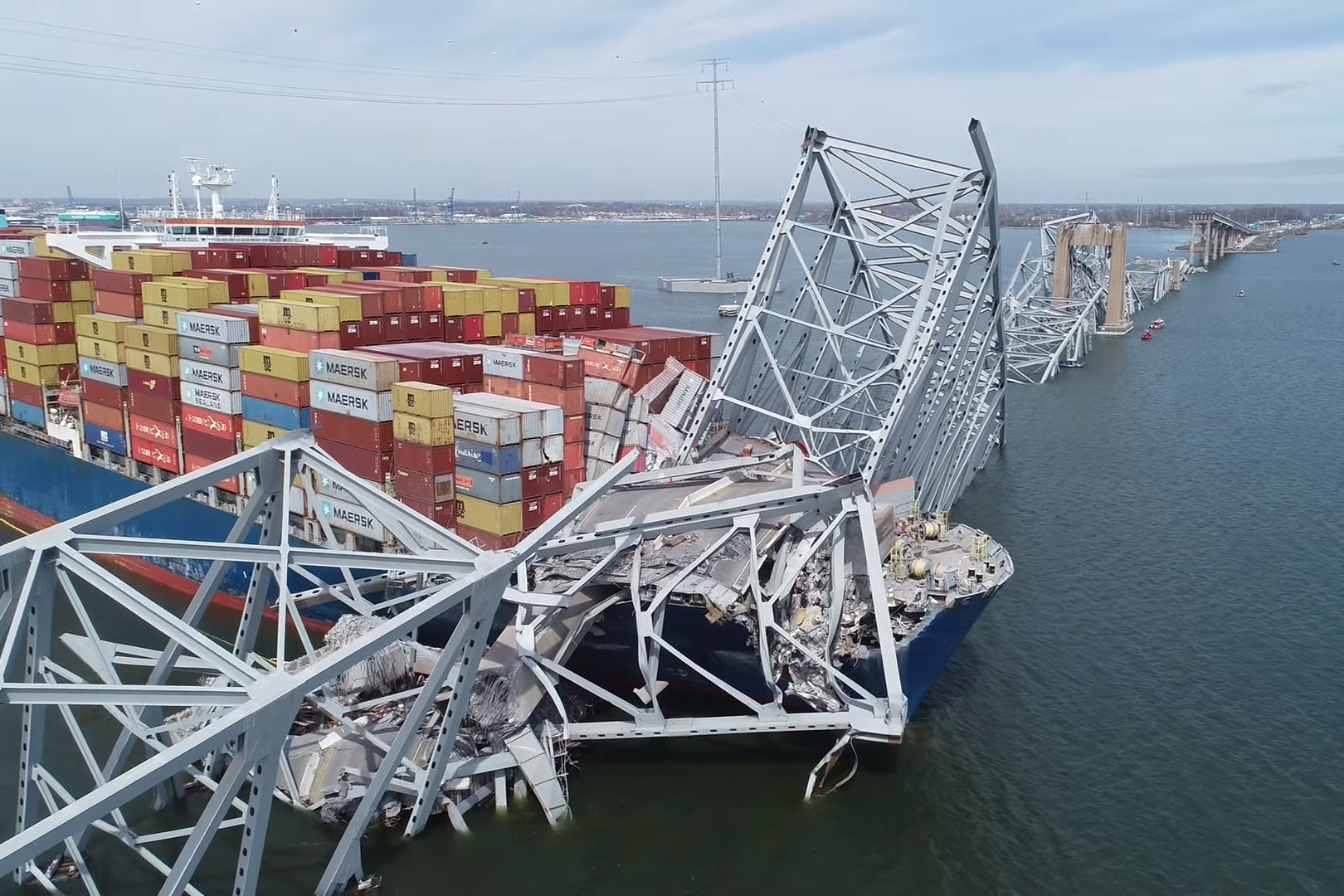
NTSB drone image of Francis Scott Key Bridge and Cargo Ship Dali, 26 March 2024
Defense News reports on the Coast Guard response to the allision that brought down the Key bridge in Baltimore and how it strained the service’s resources.
“…four Coast Guard cutters, at least 10 boats…27 Coast Guard civilians, 23 volunteers, 275 active duty service members and 82 reservists…These employees have been drawn from their home stations all over the country, including some as far as Alaska and California. That also means these stations are donating staff to the recovery effort in Maryland, and the Coast Guard’s operations lead said the service doesn’t have much to spare as it is.”
It is a story of an organization that, while under stress, responded successfully. It is also a cautionary tale that if we had two such emergency operations simultaneously, full response might not be possible.
It should also be seen as a testament to the Coast Guard’s agility, responsiveness, and resilience in spite of current personnel shortages.
There is also some encouraging news about steps being taken to close the Coast Guard’s current personnel shortages.
Congress has shown its intent to take action. The House cleared a bill on May 14 to authorize $12 million to fund recruiters and offices for the Coast Guard Recruiting Command and an additional $9 million for recruiting capability in fiscal 2025. That passed in a 376-16 vote.
The bill also aims to improve quality of life for Coast Guard service members, a factor that, like pay competitiveness and work-life balance, may give the private sector an edge.
With a particularly bad Hurricane season predicted, it’s good to remind the Administration and Congress that we have to be ready to do more than normal day to day operations. The Coast Guard is more than a first responder. The Coast Guard moves resources in anticipation of disaster.
Incidentally the bill linked in the quote above is H.R.7659 – Coast Guard Authorization Act of 2024. It is very interesting as evidence of Congress’s intentions. Take a look but be aware the Authorization is separate from the budget and even if signed into law, the authorization does not mean projects are actually funded.


 Chuck Hill's CG Blog