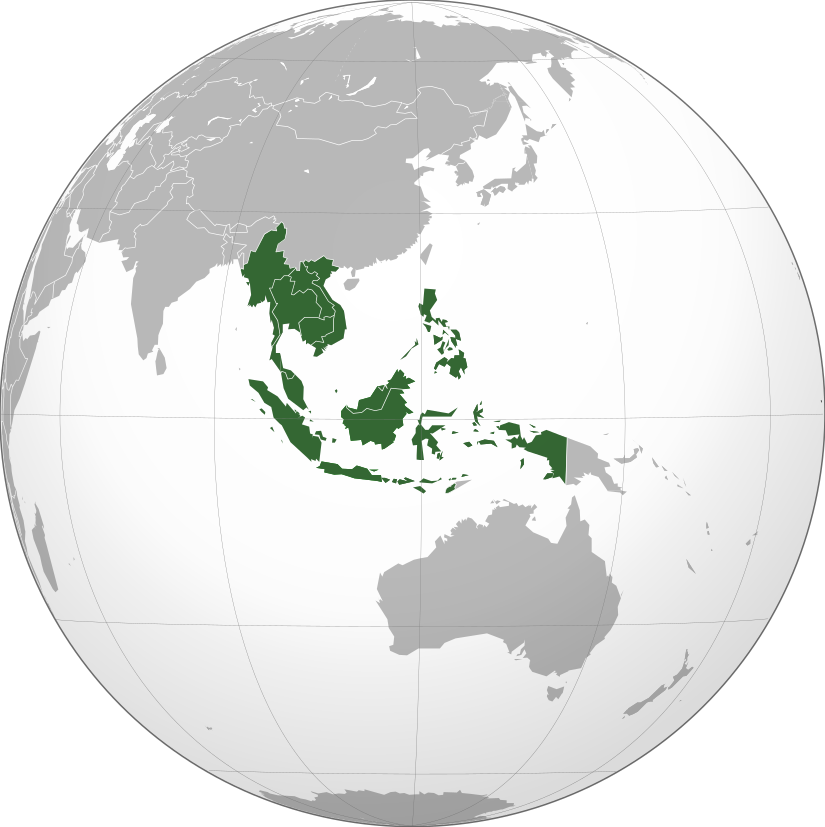
“ASEAN kicks off its first-ever joint military drills in Indonesia” –Reuters

Association of Southeast Asian Nations in orthographic projection. Credit: Addicted04

Reuters reports,

“Units from the countries of ASEAN began their first ever joint military drills in Indonesia’s South Natuna Sea amid rising geopolitical tensions between major powers and protests against China’s activities in the South China Sea…The five-day non-combat operation is aimed at developing military skills, including maritime security and patrols, and the distribution of humanitarian assistance and disaster relief, the Indonesian military said in a statement.”

This is a step toward establishment of recognized norms and cooperative law enforcement by ASEAN members in the South China Sea.

Significantly Indonesia is taking a leadership role. Indonesia seems to be the most aggressive nation in ASEAN with regard to protecting their EEZ assets.

“End of NASSE Operation 2023” –Sea Waves

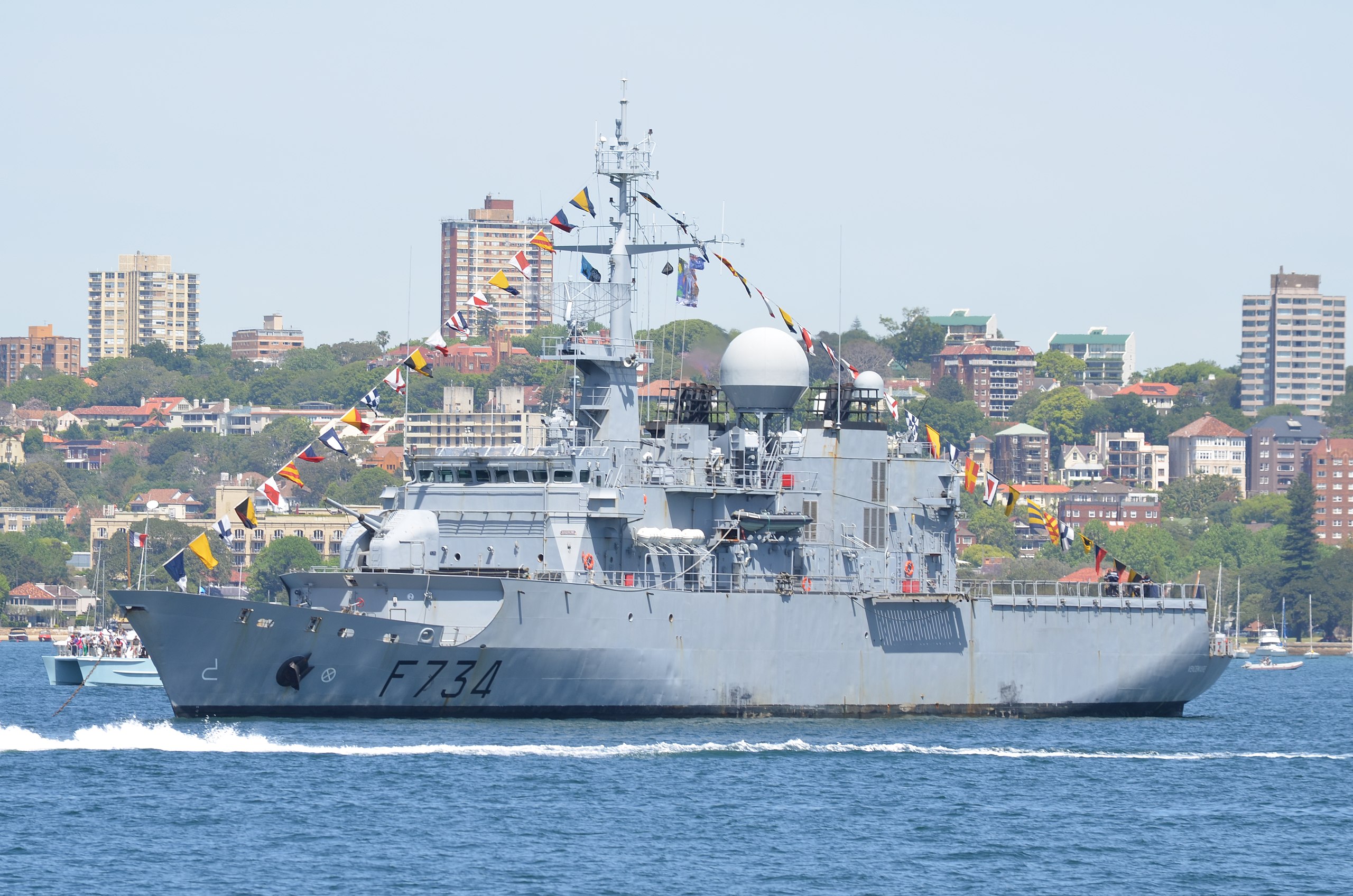
French frigate Vendemiaire, moored in Sydney Harbour. This 20 knot ship of the Floréal class looks a lot like a coast guard cutter. Photo by Saberwyn

Sea Waves reports the completion of a multi-national Fisheries Management exercise involving the US, Australia, New Zealand, France, and Fiji, from 20 June to 15 August.

The US Coast Guard deployed a C-130 to participate in the exercise. US vessels were involved but they were not identified. I am a bit surprised I have seen nothing from the USCG on this exercise.

The Sea Waves report appears to be a French news release. There is a New Zealand Defense Force view of the exercise here.

More on the developing relationship between Australia and France here. including an explanation of the “Pacific quadrilateral defense coordinating group* (PQUAD),” e.g., Australia, France, New Zealand, and the US, referred to in the post, as opposed to the “Quad,” e.g., Australia, India, Japan, and the US.

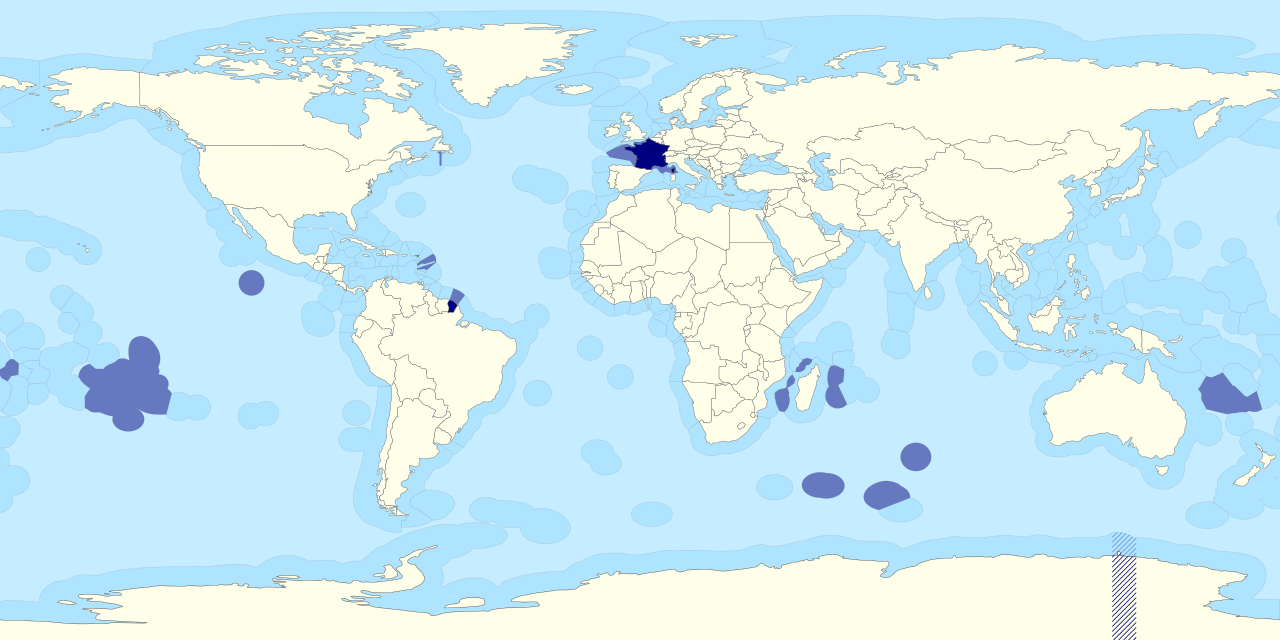
The French don’t normally have a lot of military assets in the Pacific. Much of what they have looks like coast guard, but they have the largest EEZ in the world and great strategic geography.

French Exclusive Economic Zone. Photo credit: B1mbo via Wikipedia.

This exercise is another step along the way to what appears to be inevitable international fisheries management and enforcement.

“US Coast Guard Seeks Bigger Role to Search, Board Vessels in Pacific” –gCaptain

The USCGC Oliver Henry (WPC 1140) crew arrives in Manus, Papua New Guinea, on Aug. 14, 2022, from Guam as part of a patrol headed south to assist partner nations in upholding and asserting their sovereignty while protecting U.S. national interests. The U.S. Coast Guard is participating with partners to support the Pacific Islands Forum Fisheries Agency-led Operation Island Chief and the larger Operation Blue Pacific through patrols in the Western Pacific in August and September 2022. (U.S. Coast Guard photo by SW3 Victor Villanueva, NMCB-FOUR)

gCaptain reports,

“The United States Coast Guard is in talks with Pacific Island countries to expand its maritime law enforcement role by allowing U.S. officers to board and search vessels suspected of illegal activity within their economic zones, officials said.”

This is about expanding and streamlining the shiprider program. In one case the Coast Guard already have permission to work with a national command center and act on behalf of another nation, Federated States of Micronesia, even if there is no shiprider physically aboard the cutter.

“More specifically, the agreement provides a coordinating mechanism and process for U.S. law enforcement personnel to work with the FSM National Police through command centers to receive approval from the FSM to act.”

Thanks to Lee for bringing this to my attention. 

“The Compacts of Free Association and the Role of the U.S. Coast Guard” –CSIS

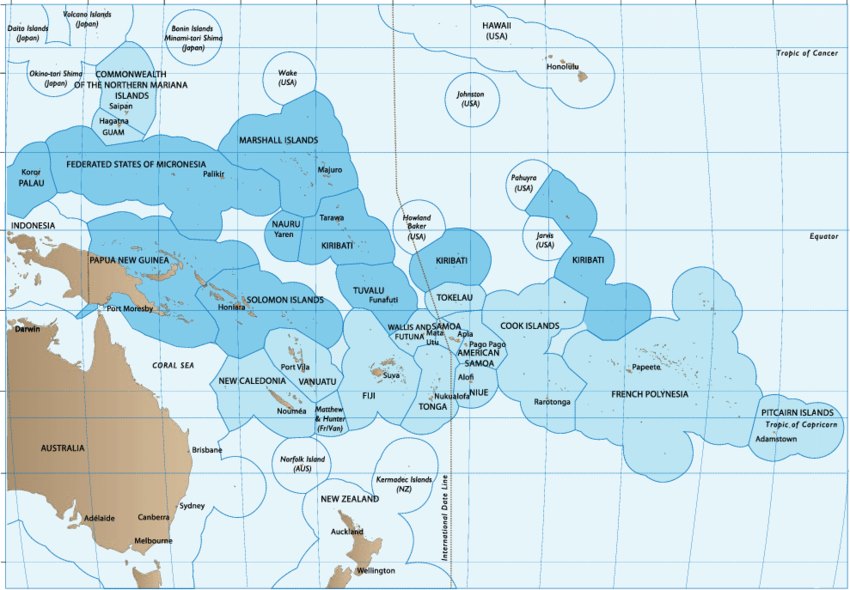
Estimated exclusive economic zones (EEZs) of Pacific Island countries and territories (PICTs). The EEZs of countries that are the Parties to the Nauru Agreement are shown in darker blue. Note that not all EEZs of PICTs have been officially delineated under the United Nations Convention on the Law of the Sea. Source: Patrick Lehodey

(Before we start, CSIS also has a great overview of what has been going on in the Western Pacific/Oceania, “STRATEGIC UPGRADES IN THE PACIFIC,” that includes an interactive map. You might want to take a look at it if you want an update on what has been happening in the Western Pacific.)

The Center for Strategic and International Studies has a study proposing,

“One way for the U.S. to show value to the relationship is by aiding the FAS (Freely Associated States–Chuck) in combating illegal maritime activities, building maritime law enforcement capacity, and working with local government and civilian partners to conduct a range of maritime domain training using the USCG as the interlocutor.”

This seems to be encouragement to do more of what the Coast Guard is already doing as part of the aid package negotiations. But to do more, the Coast Guard needs more. US EEZ South and West of Hawaii is equal to 181% the size of the entire Atlantic Area (AA) EEZ, where more than half of all Coast Guard assets are assigned.

If we add the Freely Associated States:

Without considering the other eleven additional island states with EEZs totaling 7.3 times that of the entire Atlantic Area EEZ, the US and Freely Associated States alone have a combined EEZ 4.85 times that of the entire Atlantic Area, e.g., East Coast, Gulf Coast, Puerto Rico, and the Virgin Islands. Permanently based in this huge area we have exactly three patrol craft and a buoy tender, and not a single Coast Guard aircraft.

Will the Coast Guard get the four additional Webber Class Fast Response Cutters on their Unfunded Priorities List? Will there be at least a fixed wing aviation support detachment?

A US Coast Guard base in one of the Freely Associated States could be a win-win.

Thanks to Paul for bringing this to my attention.

“Preserving Alaska’s living marine resources” –D17

USCGC Bertolf class National Security Cutter off Unimak Island, Aleutians, Alaska

Below is a summary of District 17’s Living Marine Resources conservation and management efforts. There is also information about the Magnuson-Stevens Fishery Conservation and Management Act (MSFCMA), 1976, that resulted in the expulsion of foreign fishing vessels from a 200 mile Exclusive Economic Zone even before the United Nations Convention on Law of the Sea and about the North Pacific Regional Fisheries Training Center (NPRFTC) (one of five such centers) that “teaches the enforcement of Conservation and Management Measures on behalf of four international fisheries commissions and 62 signatory nations across North and South America, Asia, Oceania, Europe, and Africa, covering over 80 percent of the Pacific Ocean​.”


April 20, 2023

Preserving Alaska’s living marine resources

ANCHORAGE, Alaska — Alaska supports some of the most abundant and diverse marine ecosystems in the world. With more than 46,000 miles of shoreline – more than all of the lower 48 U.S. states combined – the ocean is an integral part of Alaska’s ecosystems, economy, history and culture. According to National Marine Fisheries Service’s (NMFS) Fisheries of the United States 2020 report, U.S. commercial fisheries landed 8.4 billion pounds of seafood valued at 4.7 billion dollars, 199-million saltwater recreational fishing trips were taken, and recreational anglers caught one billion fish with 65 percent released alive. According to the 2019 report, commercial and recreational saltwater fishing supported 1.8 million. Alaska produces more than half the fish caught in waters off the U.S. coast, provides jobs and a stable food supply for the nation, and supports a traditional way of life for Alaska Natives and local fishing communities. Protection of the state’s 5.7-billion-dollar domestic fishery has never been more crucial.  

The living marine resources (LMR) mission is one of two missions focused on protecting fisheries in and outside U.S. waters. The Coast Guard is responsible for enforcing LMR regulations on domestic, commercial, recreational, and charter fishing vessels. Tasked with enforcing applicable fisheries laws in partnership with the NMFS, the Coast Guard’s goal is to provide the at-sea law enforcement presence necessary to reach national goals for LMR conservation and management. Vessel boardings are a critical component to accomplishing this mission providing an opportunity for teams to inspect a vessel’s catch, gear, and other items to ensure regulatory compliance as well as safety.

“The 17th Coast Guard District’s LMR mission is to promote a level playing field in Alaska’s extremely valuable commercial fisheries, protect resources, and ensure safety of life at sea,” said Lt. Cmdr. Jedediah Raskie, D17’s domestic fisheries enforcement chief. “The LMR enforcement mission is a complex operation requiring in-depth planning, multilateral partnerships and inter-agency collaboration. A continued at-sea presence is crucial, and this is only accomplished through dedication and teamwork with our enforcement partners.”

Those partners include:

Coast Guard – Coast Guard Cutters from Alaska, Washington, Hawaii, and California, Sector Anchorage, Sector Juneau, North Pacific Regional Fisheries Training Center, Maritime Safety and Security Teams (MSSTs)

State – Alaska State Troopers, Alaska Department of Fish and Game (ADF&G), local law enforcement

Other Federal – NOAA’s Office of Law Enforcement (OLE), Department of State, U. S. Drug Enforcement Administration, Customs and Border Protection (CBP)

Collectively in 2022, D17 patrolled 10,723 NMs, conducted 654 federal LMR enforcement boardings (11 on foreign-flagged vessels), detecting 30 violations on 26 vessels, and seizing catch on three fishing vessels. The top five fisheries violations include logbook discrepancies, no Individual Fishing Quota (IFQ) permit onboard, expired or no federal fisheries permit (FFP) onboard, sea-bird avoidance gear not onboard or improperly constructed, and improperly marked buoys on fishing gear.

“Right now, our teams are heavily involved with enforcement surrounding the opening of Pacific halibut and sablefish season,” said Lt. Cmdr. Jedediah Raskie. “The Pacific halibut and sablefish Individual Fishing Quota (IFQ) program is the largest catch share program in the U.S. and comprises 90 percent of D17’s total fisheries boardings.”

With the IFQ program, each fisherman has a catch quota that can be used during the open season from March to November. The North Pacific Fishery Management Council developed this program to address issues associated with the race-for-fish that had resulted from the open-access and effort control management of the halibut and sablefish fisheries. Top IFQ violations include: not having an official logbook onboard, no IFQ permit and/or FFP onboard, illegally retaining and/or mutilating halibut, and failure to retain and/or log retaining Pacific cod and rockfish.

Background

The Magnuson-Stevens Fishery Conservation and Management Act (MSFCMA) is the primary law governing mariner fisheries management in U.S. federal waters. The act’s keys objectives are to prevent overfishing, rebuild overfished stocks, increase long-term social and economic benefits, and ensure a safe and sustainable supply of seafood. Prior to the MSFCMA, waters beyond 12 NM were international waters and fished by fleets from other countries.

This 1976 law created eight regional fishery management councils responsible for the fisheries that require conservation and management in their region. The councils are charged with conserving and managing fishery resources from 3 to 200 miles off the coast while the State of Alaska manages fisheries that occur within 3 NM from shore. To learn more, visit  About the MSA — U.S. Regional Fishery Management Councils (fisherycouncils.org)).

The North Pacific Fishery Management Council (NPFMC) is one of the regional councils established to oversee fisheries in the 200-mile Exclusive Economic Zone (EEZ). With a jurisdiction of approximately 1,025,000 NM, the council manages more than 140 species within 47 stocks and stock complexes, primarily groundfish in the Gulf of Alaska, Bering Sea, and Aleutian Islands, targeting cod, pollock, flatfish, mackerel, sablefish, and rockfish species harvested by trawl, longline, jig, and pot gear. The council also makes allocation decisions for halibut in concert with the International Pacific Halibut Commission that biologically manages the resource for U.S.-Canada waters. Other large Alaska fisheries for salmon, crab, and scallops are managed jointly with the State of Alaska. More at North Pacific Fishery Management Council – Managing Our Nation’s Fisheries Off The Coast Of Alaska (menlosecurity.com).

To better enforce the fishery council’s management plans, the Coast Guard determined that region specific training was necessary to ensure boarding officers received adequate instruction in enforcing the increasingly complex laws that govern our nation’s living marine resources. The Coast Guard’s five fisheries training centers are dedicated to providing training in LMR and protected marine species law enforcement to eliminate natural resource degradation associated with recreational boating, recreational fishing, commercial fishing, and illegal incursions by foreign fishing vessels into our EEZ.

The North Pacific Regional Fisheries Training Center (NPRFTC) in Kodiak trains students operating across the vast and harsh environments of the Seventeenth Coast Guard District, to include the Arctic Ocean, Bering Sea, Aleutian Islands archipelago, Gulf of Alaska, and the Inside Passage, an area that encompasses 3,853,500 SQ NM of sea and more than 47,300 miles of coastline. NPRFTC also teaches the enforcement of Conservation and Management Measures on behalf of four international fisheries commissions and 62 signatory nations across North and South America, Asia, Oceania, Europe, and Africa, covering over 80 percent of the Pacific Ocean​. NPRFTC personnel provide instruction to surface and aviation law enforcement crews, command personnel and supporting staff, and deployable specialized forces units. Upon completion of the training, boarding officers are then charged with carrying out the LMR by performing at-sea boardings to ensure compliance.

The nation’s waterways and their ecosystems are vital to the country’s economy and health. The Coast Guard’s LMR mission is to assist in preventing the decline of marine proteced species populations, promote the recovery of marine protective species and their habitats, partner with other agencies and organizations to enhance stewardship of marine ecosystems and ensure internal compliance with appropriate legislation, regulations, and management practices.

“Navy, Coast Guard Begin Oceania Maritime Security Initiative Patrol” –DVIDS

USS Mobile (LCS 26), an Independence-class littoral combat ship, was commissioned in 2021 and is homeported in San Diego. (U.S. Navy photo by Eric Parsons/Released)

Below is a press release from the Defense Visual Information Distribution Service (DVIDS). This may not be much different from the previous times Coast Guard Law Enforcement Detachments (LEDETs) were assigned to Navy units transiting to the Western Pacific. It is not at all clear how long they will be doing IUU fisheries enforcement.

SAN DIEGO— The U.S. Navy and U.S. Coast Guard began their joint patrol in the Western Pacific under the Oceania Maritime Security Initiative (OMSI) to reduce and eliminate illegal, unregulated, unreported fishing, combat transnational crimes, and enhance regional security, March 20.

“OMSI is imperative to ensure that the Western and Central Pacific Fisheries Commission Convention (WCPFC) agreement is upheld within the Indo-Pacific region,” said Cmdr. Richard Skinnell, commanding officer of the Navy’s primary participating unit, the Independence-variant littoral combat ship USS Mobile (LCD 26). “This initiative allows us the opportunity to work jointly with other branches of the military as well as our allies and partners.”

OMSI, a Secretary of Defense program, improves maritime security and domain awareness by enabling Coast Guard law enforcement personnel to conduct maritime law enforcement operations from Navy ships. These joint and combined operations ensure the U.S. military honors its security commitments to allies, partners, and friends.
“Collaborating with our partners throughout Oceania is essential in ensuring a free and open Blue Pacific,” said Cmdr. Jeff Bryant, chief of enforcement, U.S. Coast Guard District Fourteen. It is a privilege and we are proud to support the Federated States of Micronesia through dedicated partnership in the effort to maintain maritime governance and preserve maritime sovereignty.”

The WCPFC international fisheries agreement prioritizes the long-term conservation and sustainable use of highly migratory fish stocks in the Western and Central Pacific Ocean.

“The U.S. Coast Guard is always ready and looking forward to executing the OMSI mission alongside our U.S. Navy partners,” said Bryant.

Independence-variant littoral combat ship USS Mobile (LCS 26), with an embarked Coast Guard law enforcement detachment from the Pacific Tactical Law Enforcement Team, supports maritime law with partner nations by enforcing the WCPFC agreement and by suppressing illicit activities. Independence-variant LCS is the platform of choice for this mission due to its fast and agile maneuvering capabilities, large flight deck with manned and unmanned aviation assets and surface warfare mission set.

An integral part of U.S. Pacific Fleet, U.S. 3rd Fleet operates naval forces in the Indo-Pacific and provides the realistic, relevant training necessary to flawlessly execute our Navy’s role across the full spectrum of military operations–from combat operations to humanitarian assistance and disaster relief. U.S. 3rd Fleet works together with our allies and partners to advance freedom of navigation, the rule of law, and other principles that underpin security for the Indo-Pacific region.

I only saw this press release because this was buried in this US Naval Institute News Service article, “Makin Island ARG Docks in Busan, 3 LCS Now Underway in Indo- PACOM,”

“Meanwhile, a third U.S. Littoral Combat Ship, USS Mobile (LCS-26), is now deployed to the Indo-Pacific, joining USS Charleston (LCS-18) and USS Oakland (LCS-24), according to a 3rd Fleet release on Thursday.

The LCSs are taking part in U.S. Navy and U.S. Coast Guard joint patrol in the Western Pacific under the Oceania Maritime Security Initiative (OMSI) to reduce and eliminate illegal, unregulated, unreported fishing, combat transnational crimes and enhance regional security with the patrol being conducted by Mobile with an embarked Coast Guard law enforcement detachment from the Pacific Tactical Law Enforcement Team. Charleston is currently operating around the Indian Ocean while Oakland is around the South China Sea.”

The USNI article may give the impression that all three LCS have Coast Guard LEDETs aboard and that all three are countering IUU, but the referenced news release only mentions USS Mobile. 

It may be significant that USS Mobile is conducting these operations under 3rd Fleet rather than 7th Fleet. Recently 3rd Fleet, which previously was primarily a training and readiness organization, has been taking on more operational responsibility. We may start seeing more of this kind of activity. 

“Brazil and the United States Partner to Combat Illegal Fishing as USCGC Stone arrives in Rio de Janeiro” –LANTAREA

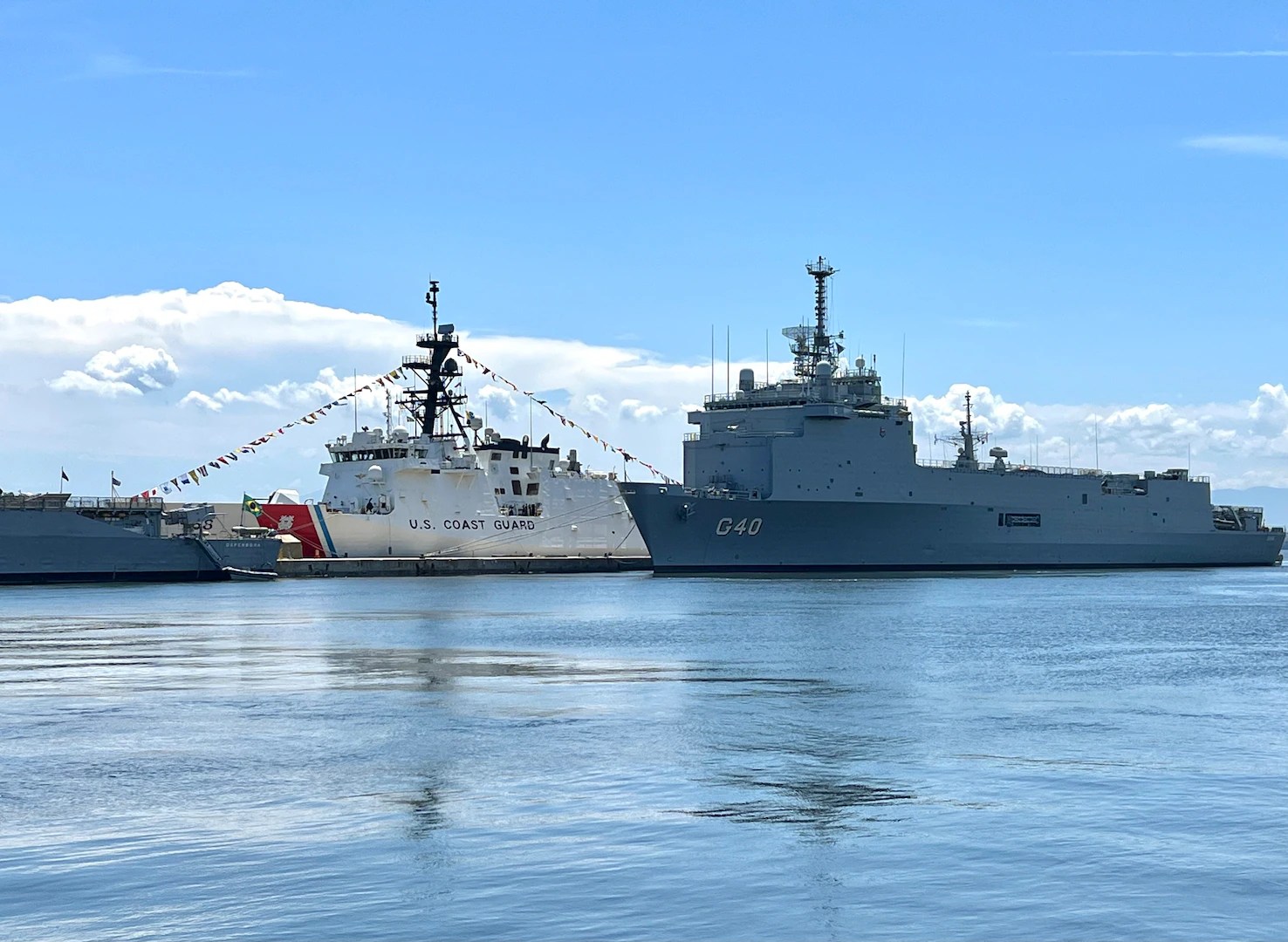
USCGC Stone in Rio de Janeiro

Below is a news release from Atlantic Area.

RIO DE JANEIRO — USCGC Stone (WMSL 758) arrived in the port of Rio de Janeiro, Brazil for a scheduled visit, Tuesday.

The visit is Stone’s second stop in Brazil as the cutter continues its multi-mission deployment in the South Atlantic Ocean, exhibiting the U.S. Coast Guard’s partnership with Brazil and strengthening the interoperability of the two nations’ maritime forces to counter illicit maritime activity and promote maritime sovereignty throughout the region.

“This deployment has already proven the effectiveness of our interagency and international partnerships,” said U.S. Coast Guard Capt. Clinton Carlson, Stone’s commanding officer. “On our first stop in Brazil in Recife in February 2023, we embarked representatives from the Brazilian Navy who have consistently provided invaluable insight and enhanced our capabilities, allowing us to more readily conduct maritime law enforcement to safeguard and protect international waters.”

Brazil and the United States’ naval services both use unmanned aerial systems to provide increased maritime domain awareness across a variety of mission sets.  The embarked Brazilian officers are part of Brazil’s first ship-based unmanned aerial systems squadron, and the embarkation of these officers aboard Stone highlights the robust partnership between the two nations and their shared commitment to upholding the rules-based international order at sea.

“While deployed with the Stone we have been working to counter illegal fishing,” said Brazil Navy Lt. Caio Cardinot. “It’s been a real pleasure to build this partnership, sharing knowledge and expertise with each other. With common UAS capabilities, a very robust communication center, and a hardworking crew, we have been very impressed during our time here.”

In recent years, the United States and Brazil have partnered to share and exchange maritime tactics, techniques, and procedures. Since 2009, the U.S. Coast Guard provided 34 mobile training team deployments and three resident training courses to Brazil in the areas of crisis management, mobile command systems, port security, maritime law enforcement, search and rescue, and disaster response. Additionally, Stone previously visited Rio de Janeiro in 2021 while conducting a South Atlantic Ocean deployment.

Both countries are dedicated to the responsible management of marine resources, demonstrating their shared commitment through the continued integration of their naval forces.

“This deployment is about partnerships,” Carlson said. “Not only have we embarked officers from the Brazilian Navy, but we’ve also embarked U.S. Navy and Marine Corps personnel augments as well. As we work with Brazil’s maritime forces, we’re strengthening our domestic partnerships as well, bringing both joint and combined capabilities to combat illegal, unreported, and unregulated fishing around the world. These partnerships create new opportunities for us to maintain free and sustainable access to maritime resources for all.”

Stone is the ninth Legend-class national security cutter in the Coast Guard fleet, homeported in Charleston, South Carolina. The national security cutters can execute the most challenging national security missions, including support to U.S. combatant commanders.

Stone is under the command of U.S. Coast Guard Atlantic Area. Based in Portsmouth, Virginia, U.S. Coast Guard Atlantic Area oversees all Coast Guard operations east of the Rocky Mountains to the Arabian Gulf. In addition to surge operations, they also allocate ships to work with partner commands and deploy to the Caribbean and Eastern Pacific to combat transnational organized crime and illicit maritime activity.

For information on how to join the U.S. Coast Guard, visit GoCoastGuard.com to learn about active duty and reserve, officer and enlisted opportunities. Information on how to apply to the U.S. Coast Guard Academy can be found here.

“USCGC Spencer (WMEC 905) completes multinational maritime security patrol, arrives in Dakar, Senegal” –U.S. Naval Forces Europe and Africa/U.S. Sixth Fleet

DAKAR, Senegal – U.S. Coast Guard Lt. Cmdr. Nicholas Forni, executive officer aboard USCGC Spencer (WMEC 905) and Lt. Jacob Balchikonis, operations officer aboard Spencer, meet with Lt. Col. Sam Kunst, U.S. Marine Corps Attaché to Dakar, Senegal, Jan. 17, 2023. Spencer is on a scheduled deployment in the U.S. Naval Forces Africa area of responsibility, employed by the U.S. Sixth Fleet, to carry out joint training, exercises, and maritime security operations alongside AFRICOM partners in support of U.S. interests abroad, regional partnerships, and to strengthen international maritime governance. (U.S. Coast Guard photo)

The activities reported in the news release below have become a fairly routine deployment for Atlantic Area 270 foot WMECs. I expect Spencer will also participate in Exercise Obangame Express 2023.

Jan. 19, 2023

USCGC Spencer (WMEC 905) completes multinational maritime security patrol, arrives in Dakar, Senegal

By U.S. Naval Forces Europe and Africa/U.S. Sixth Fleet

The Famous-class medium endurance USCGC Spencer (WMEC 905) arrived in Dakar, Senegal for a scheduled port visit following a multinational maritime security patrol, Jan. 17, 2023.

Spencer’s visit to Dakar included meetings with Capt. Karim Mara, Senegalese deputy chief of naval staff, as well as leaders from the Senegalese Navy and the U.S. Office of Security Cooperation. Prior to the port visit, Spencer embarked maritime counterparts from Cabo Verde, Senegal and The Gambia for a security patrol to identify and deter illegal, unreported, unregulated (IUU) fishing as well as build living marine resource enforcement capacity with African partner nations.

“We were able to build maritime domain awareness with our partners by establishing an offshore law enforcement presence that demonstrated Cabo Verde’s, Senegal’s, and The Gambia’s commitment to maritime security and living marine resource enforcement. We did this by conducting combined maritime law enforcement operations and effectively communicating and coordinating with each country’s Maritime Operations Center,” said Cmdr. Corey Kerns, Spencer’s commanding officer.

This deployment demonstrates NAVAF and the U.S. Coast Guard’s commitment and longstanding partnership to work with our African partners to counter illicit maritime activity in the Atlantic Ocean. The U.S. Coast Guard regularly integrates and operates within the NAVAF area of operations. The U.S. Coast Guard’s authorities and capabilities provide the Joint Force with unique tools that bridge the cooperation-to-conflict continuum.

Senegal and the United States share a proud history of promoting peace and security in Africa. Later this month, Senegal will participate in the NAVAF-led exercise Obangame Express 2023, the largest annual maritime security exercise in Western Africa. These types of exercises strengthen partnerships and allow countries to work more closely on shared transnational maritime challenges.

“The United States and Senegal enjoy an exceptional security partnership that bolsters our shared efforts to promote peace and security in West Africa, combat illegal, unreported, and unregulated fishing, and protect marine resources,” said Mike Raynor, U.S. Ambassador to Senegal. “The arrival of USCGC Spencer to Dakar reflects that robust partnership.”

The U.S. shares a common interest with African partner nations in ensuring security, safety, and freedom of navigation on the waters surrounding the continent, because these waters are critical for Africa’s prosperity and access to global markets.

U.S. Coast Guard Atlantic Area, headquartered in Portsmouth, Virginia, oversees all Coast Guard operations east of the Rocky Mountains to the Arabian Gulf, spanning across five Coast Guard districts and 40 states.

For over 80 years, U.S. Naval Forces Europe-U.S. Naval Forces Africa (NAVEUR-NAVAF) has forged strategic relationships with allies and partners, leveraging a foundation of shared values to preserve security and stability.

Headquartered in Naples, Italy, NAVEUR-NAVAF operates U.S. naval forces in the U.S. European Command (USEUCOM) and U.S. Africa Command (USAFRICOM) areas of responsibility. U.S. Sixth Fleet is permanently assigned to NAVEUR-NAVAF, and employs maritime forces through the full spectrum of joint and naval operations.

Damen 5009 for Falklands Fisheries Protection

New Fishery Patrol Vessel (FPV) for the Falkland Islands provided under a 15-year contract by Seagull Maritime Ltd to begin patrols next year.@damen

There is not a lot here, just a bit on Twitter and a photo you can click on at the bottom of the page here. I have quoted the Twitter below.

Navy Lookout@NavyLookout
New Fishery Patrol Vessel (FPV) for the Falkland Islands provided under a 15-year contract by Seagull Maritime Ltd to begin patrols next year.

Stan 5009 Axe-Bow vessel built in Vietnam. To be named ‘Lilibet’ in honour of the late Queen.

The Brits do things differently. They have different fisheries protection agencies in different areas and in some cases, it is done by the Royal Navy. A Royal Navy River Class Batch II Offshore Patrol Vessel, HMS Forth, also patrols the Falklands, South Georgia, and South Sandwich Islands.
The Damen Stan Patrol 5009 basically replaced their Stan Patrol 4708 that was the basis of the Webber class WPCs in their product portfolio. (The number represents nominal length and beam in meters.) The 5009 is 50.1 meters in length and 9.4 meters of beam, so slightly larger than the Webber class. (More info here.)
Weather around the Falklands is not unlike that on Alaska Patrol, typically nasty. The “axe bow” would reduce pitch, but the bow might tend to be wetter.
We saw this class in an earlier post that may give some insight into how these little ships might be equipped.

“Navy to establish additional unmanned task forces inspired by Task Force 59” –Defense Scoop

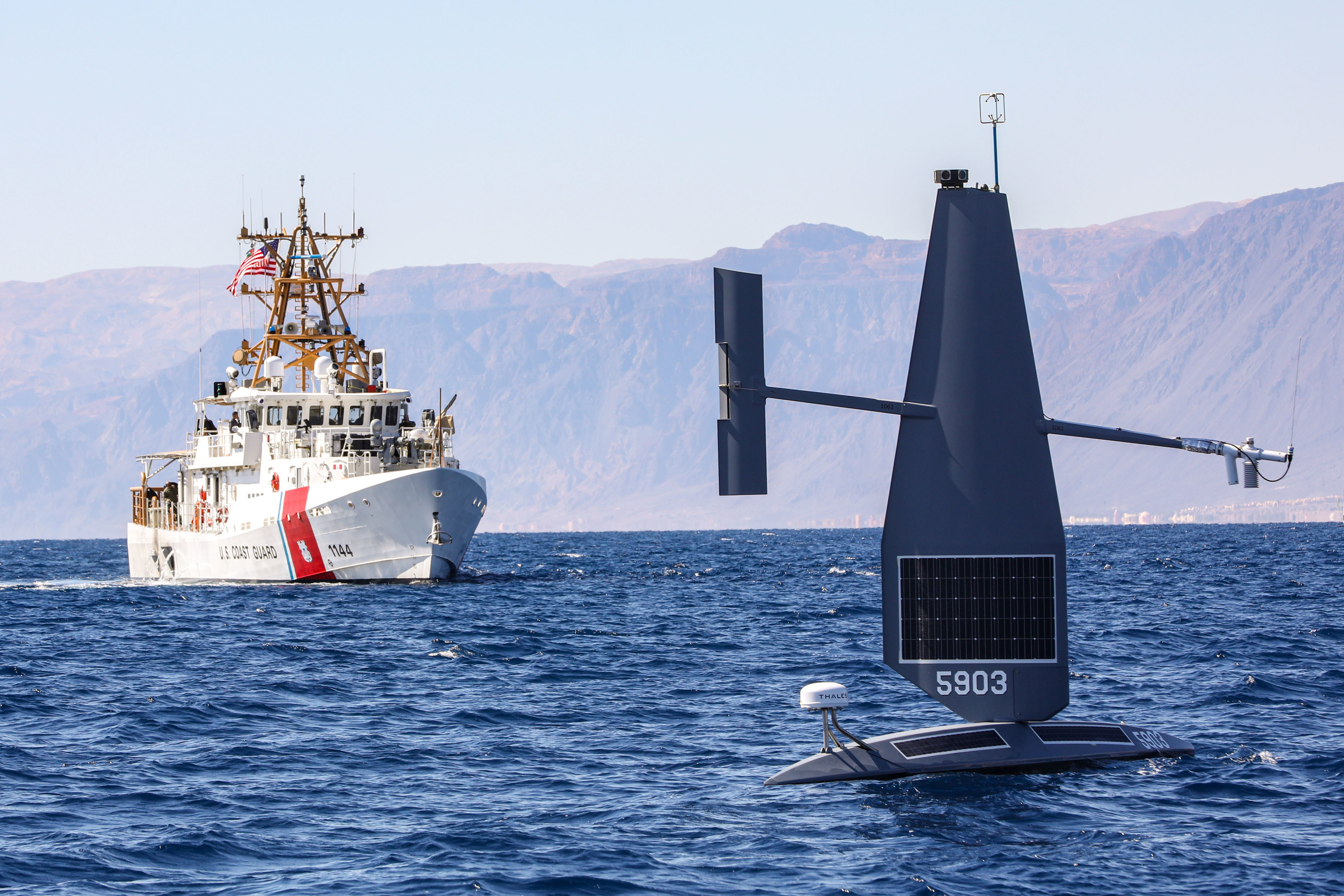
GULF OF AQABA (Feb. 13, 2022) The U.S. Coast Guard Sentinel-class cutter USCGC Glen Harris (WPC 1144) sails near a U.S sail drone explorer during the International Maritime Exercise/Cutlass Express (IMX) 2022, Feb. 13, 2022. IMX/CE 2022 is the largest multinational training event in the Middle East, involving more than 60 nations and international organizations committed to enhancing partnerships and interoperability to strengthen maritime security and stability. (U.S. Army photo by Cpl. DeAndre Dawkins)

Defense Scoop reports:

“The Navy plans to stand up additional unmanned task forces around the globe modeled after Task Force 59 in the Middle East, Navy Secretary Carlos Del Toro told reporters Saturday…“We’ve demonstrated with Task Force 59 how much more we can do with these unmanned vehicles — as long as they’re closely integrated together in a [command and control] node that, you know, connects to our manned surface vehicles. And there’s been a lot of experimentation, it’s going to continue aggressively. And we’re going to start translating that to other regions of the world as well,” Del Toro said during a media roundtable at the Reagan National Defense Forum.”

The report goes on to mention 4th Fleet and Oceana specifically, both regions of intense interest to the Coast Guard in regard to drug interdiction and Illegal, Unregulated, Unreported (IUU) fishing respectively.

This could be a big boost to our Maritime Domain Awareness. In the Eastern Pacific Drug Transit Zone we might need uncrewed surface vessels with passive acoustic sensors since the targets of interest are poor targets for radar and optical sensors. That could lead to practical experience that could improve our ASW capability.