Korean Built Ships for the Philippine Navy and Coast Guard –Naval News

Naval News has a new post, “HD HHI Pitches Horizon 3 Frigates, Corvettes and White Hulls to Manila” that includes the video above.

HD HHI has delivered two “frigates” to the Philippine Navy and has contracts for six offshore patrol vessels (OPV) and two corvettes. Hyundai apparently hopes to continue this successful collaboration with proposals to meet Philippines requirements for larger and more capable “Horizon 3” frigates and for Philippine Coast Guard cutters.
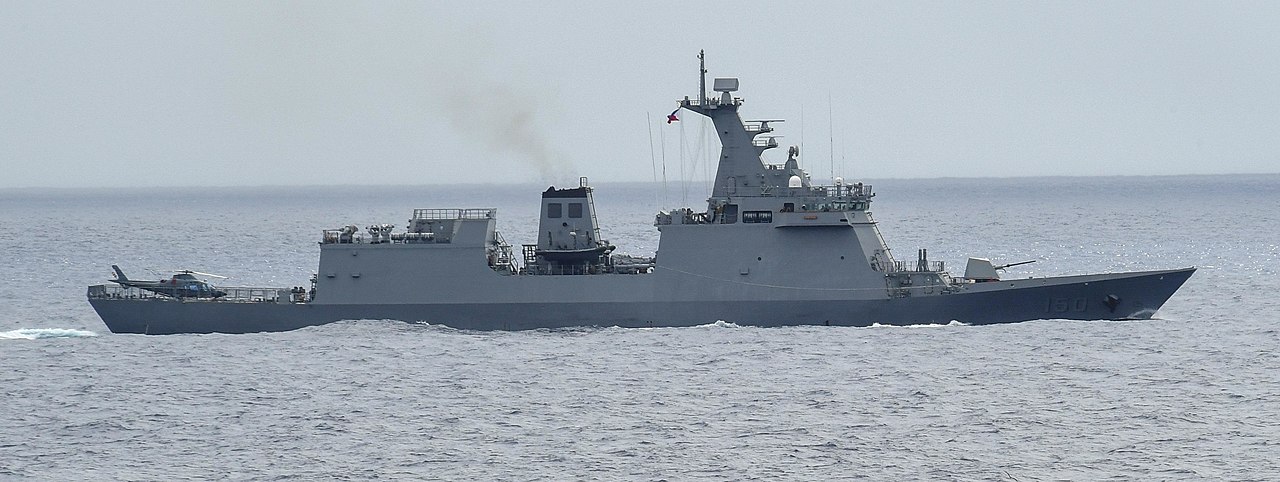
200820-N-TT059-2393 PACIFIC OCEAN (Aug. 20, 2020) Republic of the Philippines Navy ship BRP Jose Rizal (FF 150) participates in a tactical maneuvering drill with U.S. Coast Guard ship USCGC Munro (WMSL 755) and U.S. Navy guided-missile cruiser USS Lake Erie (CG 70) during exercise Rim of the Pacific (RIMPAC) 2020. (U.S. Navy photo by Mass Communication Specialist Seaman Lily Gebauer)

The two Philippine 2,600 ton Jose Rizal class frigates (pictured above) are smaller than the former USCG Hamilton class cutters (3200 tons). The follow-on (3,200 ton) Miguel Malvar class corvettes (or light frigates) will be larger and more capable. The Horizon 3 Frigate will be larger still.
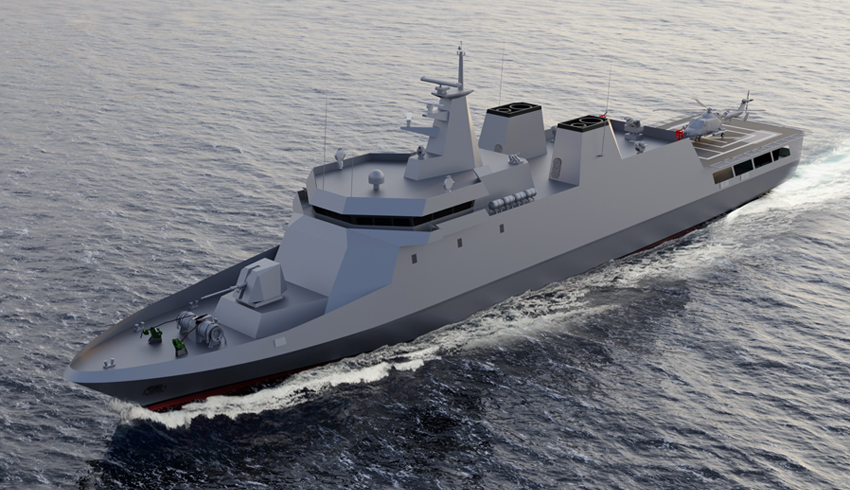
The six Philippine Navy Offshore Patrol Vessels (above) will be 2400 tons full load; 94.4 meters (310′) in length; 14.3 meter (47′) of beam; with a maximum speed of 22knots; and a maximum range of 5,500 nautical miles at 15 knots. It appears they will be armed with a 76mm gun, two 30mm guns, and two Simbad-RC twin-Mistral missile launchers. HHI is proposing cutters based on this design for the Philippine Coast Guard.

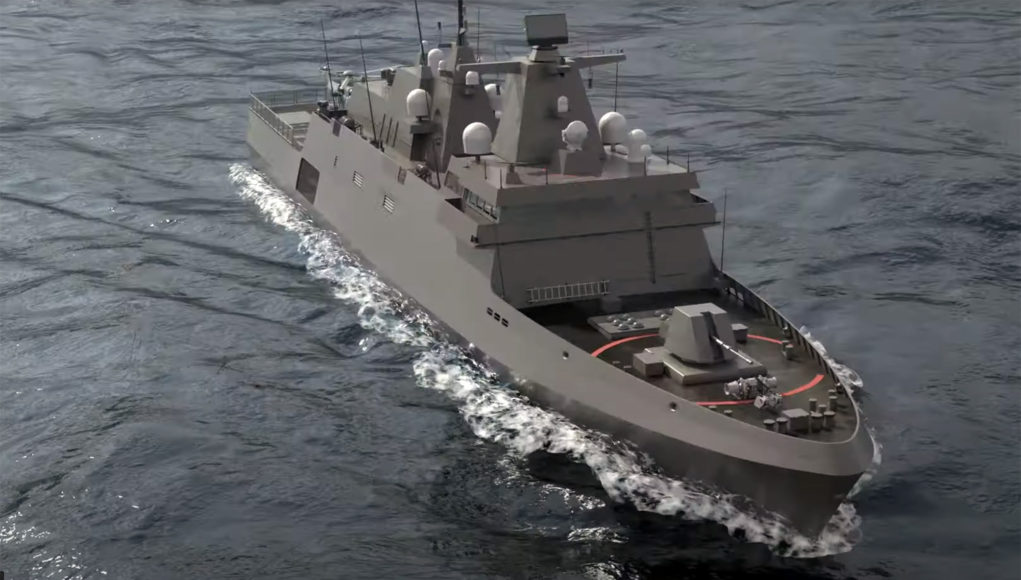
Will the Philippine Coast Guard arm its cutters? Currently no Philippine Coast Guard (PCG) vessels have any weapons larger than .50 caliber machine guns, but the models of possible future Philippine Coast Guard vessels all carried some type of installed weapons system, apparently 30mm, 40mm, or 76mm. Was this because the PCG intends to field larger weapons or just because that is the way South Korean CG cutters are armed? The twin 35mm Gökdeniz close-in weapon system (CIWS) mounted on the new corvettes and that appears on the model of the proposed Horizon 3 frigate would be very appropriate for the Philippine Coast Guard.

There is an interesting statement at the end of the post,

“HD HHI plans to realize its ‘Pacific-Rim Belt Vision’, establishing regional hubs in countries such as the Philippines, Peru, Australia, Saudi Arabia, and the United States (emphasis applied–Chuck) based on its advanced shipbuilding technologies.”
Cutter Size Ships Building in Latin America

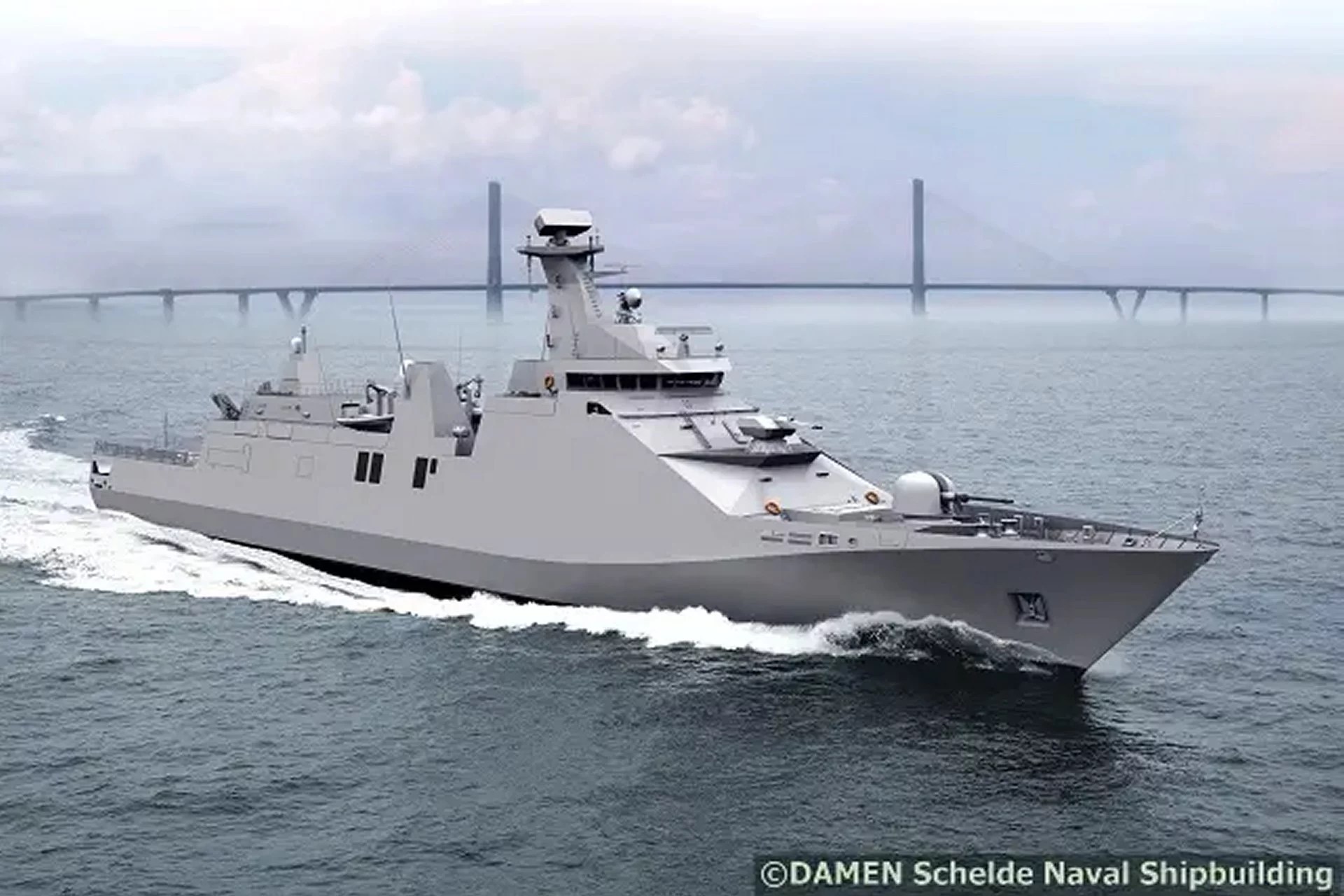
Damen SIGMA 10714 for Colombia

Always interesting to see what other countries are doing in terms of ships that will perform coast guard style missions. In some countries, these are their largest warships.

Two recent reports from Latin America.

In both cases they have chosen to build ships with the assistance of experienced European shipbuilders. Both are smaller than either the National Security Cutter or the Offshore Patrol Cutter.

Brazil has launched the first of a planned eight Tamandaré-Class Frigates, pictured above, designed by ThyssenKrupp Marine Systems of Germany. It is evolved from earlier MEKO designs that include the German K130 Braunschweig class corvettes and the Israeli Sa’ar 6.

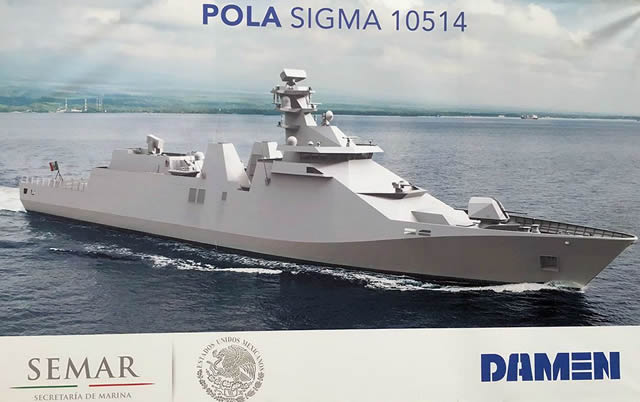
Colombia has contracted with Damen, designers of the USCG Fast Response Cutters, to help locally build the first of five planned light frigates that will replace four somewhat smaller sized Admirante Padilla class ships commissioned 1983/4. The design is a Damen SIGMA 10714 design, meaning it is 107 meters (353′) in length with a beam of 14 meters (46′). The design is closely related to ships built in Mexico (pictured below) and in Indonesia.

Mexico’s Damen SIGMA 10514, ARM Benito Juárez (POLA-101)

“AUSTAL USA EXPANDS MANUFACTURING CAPACITY WITH DESIGN FOR NEW FACILITY AND SHIPLIFT” –News Release

Austal’s planned new assembly building and ship lift. Ships featured in the illustration, Constellation class FFG, 496 ft (151.18 m) loa, and an Offshore Patrol Cutter, 360 ft (110 m), provide scale.

Below is a Austal USA news release.

June 2022 Austal was awarded a contract with options for up to eleven Offshore Patrol Cutters (OPCs #5 to #15). OPC #5 was in the FY2023 budget. It appears OPC #6 will be in the FY2024 budget. I expect we may see OPC #5 delivered in 2027, #6 in 2028, #7 in 2029 and both #8 and #9 in FY2030.

Eastern launched the future USCGC Argus, OPC #1, in Oct. 2023. Even so, it is not expected to be commissioned until 2025. Eastern has said they will deliver OPC#4 in 2026. I have a hard time being that optimistic. It might be more reasonable to expect delivery of one per year, #2 in 2025, #3 in 2026, and #4 in 2027.

If Eastern turns out a good product at a competitive price, a renegotiation of their contract options for five more cutters included in the original contract could accelerate procurement of these long-delayed ships, and reduce the resource shortfall that now seems inevitable.


FEBRUARY 6, 2024

MOBILE, Ala. – Austal USA announced the start of design for a new manufacturing facility signifying a major expansion of the company’s Mobile, Ala. shipyard capability.  The infrastructure expansion, which will be to the south of Austal USA’s current waterfront facility, will include a new assembly building, waterfront improvements, and a new shiplift system.  Start of construction on the project is planned for summer 2024.

The construction of this new building and waterfront support area, which includes a Pearlson-designed shiplift, continues the expansion Austal USA began in March 2021 with the groundbreaking of the steel panel line. In addition to the manufacturing capacity of the new buildings, the shiplift will provide a safe and reliable system to launch ships as they are completed in the assembly buildings. The system will also enable retrieving ships and bringing them back on the land-side facility.

“With the steel panel line in full production our expansion focus has shifted to the erection and launch facilities required to support our growing backlog,” commented Austal USA acting President Michelle Kruger.  “This new facility is continuing evidence of the close relationship we have with our local community including our community leaders; local, state and federal political leaders; and, regional organizations such as the Mobile Area Chamber of Commerce.”

Austal USA has partnered with Pearlson & Pearlson Inc, program manager and owner’s representative; Kiewit Infrastructure South Co., lead for design and construction; and, Pearlson Shiplift Corporation, designer and builder of the shiplift system, to execute the project.  The new assembly building will consist of three bays and enable erection of recently awarded steel ship contracts as well as provide the flexibility to manufacture modules for submarine and other surface ship programs.  The assembly building will be approximately 400 feet long by 480 feet wide providing over 192,000 square feet of covered manufacturing space occupying four and a half acres.

The Pearlson-designed shiplift system will feature an articulated lifting platform approximately 450 feet long by 125 feet wide, capable of lifting and launching vessels in excess of 18,000 long tons. This capacity will facilitate the launch and docking of the U.S. Navy Constellation-class Frigates, TAGOS-25 class Ocean Surveillance Ships, Independence-variant Littoral Combat Ships, and the U.S. Coast Guard Heritage-class Offshore Patrol Cutters.

When complete Austal USA’ s Mobile, Ala. facility will include a 117,000 square foot steel panel line, two module manufacturing facilities totaling over one million square feet of covered manufacturing space optimized for serial production, and seven assembly bays providing over 400,000 square feet of indoor erection space.  In all, the Mobile facility covers 180 acres and, when this project is complete, over 1.5 million square feet of indoor manufacturing space.

“Arctic Security: Patrolling NATO’s High North” –YouTube

Thought I would share this video. Found it on a SeaWaves post, Patrolling Greenland on Denmark’s HDMS Triton. HMDS Triton a Thetis class patrol frigate. These ships do Coast Guard type work in or near the Arctic. It is a type of ship that you will not find in the Coast Guard fleet, but one that we may want to add in the future. It is ice strengthened. As a ship that operates in an area where icing is common. its ground tackle (anchor handling equipment) is below the foc’sle deck, and its boats and boat handling gear can be enclosed. The crew is relatively small (I think they are double crewed to get more underway time), but additional berthing is available, and weapons can be added using the Stanflex system.

Arctic (orthographic projection) with national borders and land highlighted. Credit Heraldry, Isochrone, via Wikipedia, 23 July 2023.

The Thetis class ships are now over 30 years old. They are to be replaced by a new class, currently referred to as MPV-80 (multi-purpose vessel, 80 meter).

OMT MPV-80 technical specifications

Below is the narrative that accompanied the YouTube video.


The Arctic region is the gateway to the North Atlantic. For NATO and its Allies, maintaining a strong presence here is vital to protect trade, transport and communication links between North America and Europe.

As climate change causes the polar ice caps to melt and the sea levels to rise, new sea routes are beginning to emerge, which could present a threat to Euro-Atlantic security. Greenland is considered by scientists to be ground zero for climate change. Along with the Faroe Islands, it forms part of the Kingdom of Denmark and is therefore under Danish military protection. That protection falls to the Joint Arctic Command, or JACO, a Danish-led operational command with a central headquarters in Nuuk, Greenland’s capital.

Join the Danish Armed Forces in Greenland, at sea, in the air and on land, to discover more about how security might be affected in this region and learn about the capabilities and experience NATO Ally Denmark has in the North Atlantic area.

Cutter Size Combatants for Australia

Australia is seeing an urgent need to augment the Strike capability of their Navy. This is reflected in a requirement for light frigate/corvette sized combatants with strong anti-surface (ASuW) and self-defense as well as ASW capability.

The resulting ships are about the size of the latest large US Coast Guard patrol cutters, the 4,600 ton Bertholf class National Security Cutter (NSC) and the 4,500 ton Argus class Offshore Patrol Cutter (OPC), in fact two are smaller. While this may not be an exhaustive list of potential competitors, all three proposals I have seen, are discussed in the video above and outlined below. Each includes 16 to 32 vertical launch system (VLS) cells for a variety of missile types and 16 to 24 deck launchers for Anti-Ship Cruise Missiles (ASCM, presumably Naval Strike Missiles). (As these designs are about a decade newer than the OPC, the winning design might form the basis for a future cutter class.)

Navatia’s offer, the Tasman class corvette, is the same length as the Argus class Offshore Patrol Cutters (110 meters / 360′), but considerably lighter at 3,600 tons full load (vs 4500 tons). This class is to be based on a class built for Saudi Arabia, which is in turned based on a class of Offshore Patrol Vessels built for Venezuela. The proposal includes 16 VLS and 16 ASCM launch tubes. Presumably they will be diesel powered with a speed about the same as the parent designs, 25 knots.

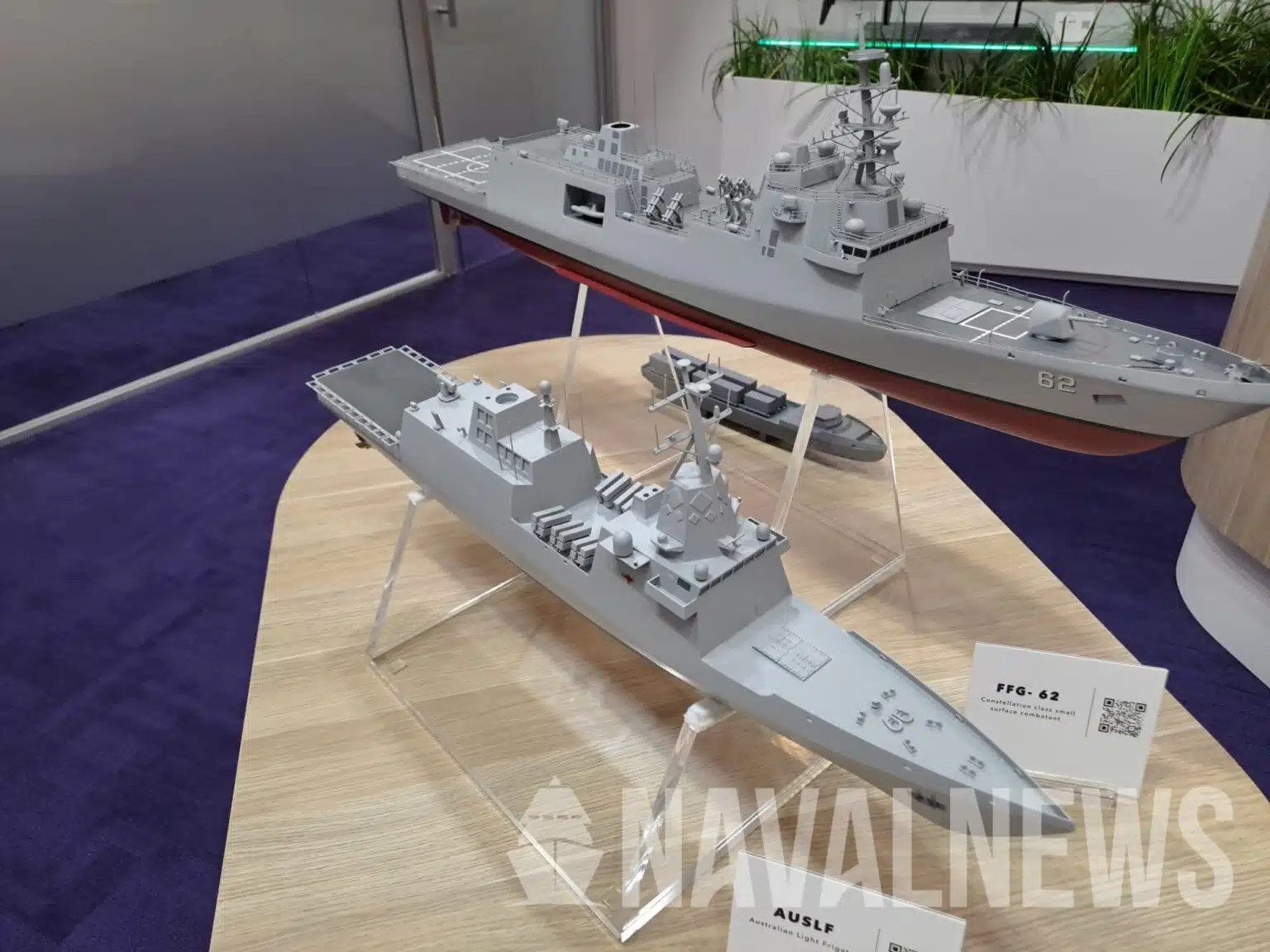
The Australian Light Frigate (foreground) and Constellation class (background) on the Gibbs and Cox stand during Indo Pacific 2023.

Gibbs and Cox proposal (pictured above), at 117 meters in length and 3,800 tons, this design is also smaller than the OPC by 700 tons. It takes the novel approach of deleting the usual main gun entirely in favor of 32 VLS and 24 ASCM launch tubes. CIWS would be provided by Phalanx or SeaRAM and close-in anti-surface and “shot across the bow” signaling would be provided by Mk38 gun mount or equivalent. (This may be taking the trend to smaller main guns to its logical conclusion.) Speed will be at least 30 knots using CODELAG GE LM2500+ propulsion.

TKMS offers MEKO A210 Frigate. This is a bit larger, at 4700 tons, 200 tons larger than the OPC and 100 tons larger than the National Security Cutter. The proposal includes 32 VLS and 16 ASCM. It is powered, like the earlier A200 frigates, by two diesels each driving conventional propellers and a gas turbine driving a central water jet, a system TKMS calls CODAG-WARP (WAter jet and Refined Propellers). Speed is likely 28-29 knots.

“New Drug Seizure By The French Navy In The Gulf Of Guinea” –Naval News

Naval News reports seizure of 1.7 tons of cocaine in an unusual place, the Gulf of Guinea, off the West coast of Africa. It was apparently incidental a normal French Navy deployment, not specifically a drug interdiction operation.

I found it a bit unusual that the cocaine did not appear to be well hidden. That might indicate how unlikely interception along this route may be.

Significantly this interception was conducted in cooperation with the Gulf of Guinea Interregional Network’s centers of the Yaoundé Process.

The “Landing Helicopter Dock” (LHD) Mistral, is certainly not the type vessel typically involved in drug interdiction.

The frigate involved, FS Courbet, is a Lafayette class frigate. This class always seemed similar in function to Coast Guard WHECs, because, as built, they had no ASW capability. Aside from the Anti-Ship Cruise Missiles they carried, in many respects their capabilities were similar, particularly after the WHECs were FRAMed. The French ships were built about aboout three decades after the Hamilton class. In some ways they apear to be as an intermediate design between the Hamilton class and the Bertholfs. FS Courbet is smaller (3600 tons full load), slower (25 knots), and has less range than the Bertholf class NSCs (7,000 nmi), but has been recently upgraded with a hull mounted sonar, improved point defense AAW systems, and later model Exocet ASCMs.

“First Images Of New Inlay Class Warship For Myanmar Navy” –Covert Shores

Myanmar UMS Inlay (54), 12 March 2018, Indian Navy Photo

Covert Shores reports sighting of a second Inlay class, a locally built offshore patrol vessel. This prompted a look at this class and the Myanmar Navy, which turns out to be surprisingly strong, with an apparently capable domestic shipbuilding capability.

Myanmar seems to have been in the news a lot lately, and it has not been “good news.” Like many other nations in Asia, particularly SE Asia, they have been building Offshore Patrol Vessels. Reportedly the Myanmar Coast Guard was established only months ago, in Oct. 2021, but it appears these OPVs will serve with their Navy. Myanmar Coast Guard floating units appear to be limited to four very old patrol boats.

Reportedly these Inlay class Offshore Patrol Vessels displace 1500 tons, but I suspect that is not their full load displacement. They are similar in size to the 1.800 ton 270 foot WMECs, slightly shorter, 265’9′ (81 meters vs 82.3) and a bit broader of beam (41′ vs 38’/12.5 vs 11.6 meters). Speed is essentially the same at 20 knots. The bridge does seem surprisingly large.

Reportedly the Myanmar vessels can hangar a Eurocopter AS365 Dauphin, that is essential the same as an H-65. Also, reportedly there is a launch ramp for a RIB in the stern. There might be a boat davit on the starboard side, but I have not seen a good photo of the starboard side. There is a large opening on the starboard side superstructure aft, that mirrors the one visible on the port side.

Apparently, the weapon forward of the bridge is a Soviet era twin 57mm. The weapon might be ancient, but it is probably still very effective at short ranges.

The Myanmar Navy is more impressive than I would have expected, and many of their ships are built locally. As noted in the headline post, they just got their second submarine, one Russian built via India and now one from China. They have a 12,400 ton S. Korean built LPD. They are building their fourth domestically built frigate, to add to two overage Chinese built frigates. They have three domestically built 1,100 ton corvettes. They have twenty vessels similar in size to the Webber class but much more heavily armed, including five armed with Anti-Ship Cruise Missiles, and two slightly larger, 500 ton Fast Attack Craft also armed with ASCMs. These are in addition to six older Chinese built Houxin class missile boats.

All total, they appear to have 21 surface combatants armed with Anti-Ship Cruise Missiles, primarily the Chinese made C-802, which is roughly equivalent to the US made Harpoon.

Myanmar has also begun to build 600 ton, 63 meter, high speed “sub chasers” to replace eight, now overage, Chinese built Hainan class. The new ships are equipped with the same twin 57mm mount that also equips the new OPVs.