“U.S. Coast Guard Cutters return home after successful Central American deployment” –D11 News Release

USCGC Forrest Rednour (WPC 1129) and Blackfin (WPB 87317) in Costa Rica

Below is a District 11 news release. Did an earlier post on this unusual deployment.

The 800 operational hours claimed for each vessel works out to 33.3 operational days out of 49 deployed, so I presume that means about 16 days in transit, there and back.

The Mexican Navy vessel mentioned, ARM PALENQUE, the third of ten Tenochtitlan-class patrol vessels, looks a lot like a Webber class Fast Response Cutter. It is also a Damen design, but a bit smaller (a Stan Patrol 4207 vs 4708 for the FRC). Damen has been very successful with this design. More than 50 have been built for more than a dozen agencies. (USCGC Blackfin and the other Marine Protector class patrol boats are also based on a Damen design.)
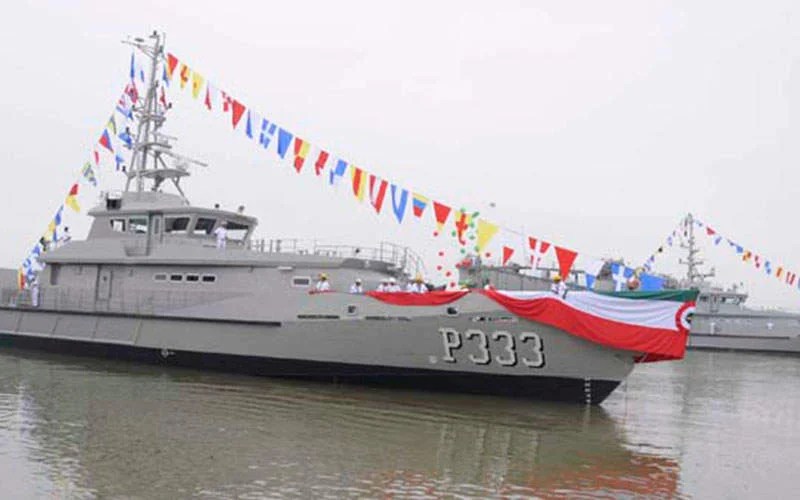
Mexican Navy ARM Palenque (PC-333) at launching March 2014. Credit Secrtaria de Marina.


June 10, 2024

U.S. Coast Guard Cutters return home after successful Central American deployment

SAN PEDRO, Calif. — U.S. Coast Guard cutters Forrest Rednour and Blackfin have returned to their homeports after a 49-day deployment in Central America, where they played a crucial role in multiple operations.

During this period, both cutters demonstrated outstanding readiness and operational capability, significantly contributing to international cooperation, search and rescue missions, and efforts to combat criminal activities. This deployment was part of a broader strategy to enhance regional security and strengthen partnerships. Throughout the mission, Forrest Rednour covered over 8,200 miles and logged 800 operational hours, while Blackfin covered over 8,300 miles and also logged 800 operational hours.

“The amount of effort and commitment from both crews during this 49-day deployment was remarkable,” said Rear Adm. Andrew Sugimoto, commander, Coast Guard District 11. “Their readiness and professional exchanges provided an invaluable experience to our partner nations and crews. The enthusiasm to lead multiple engagements with several international maritime organizations helped strengthen ties and fortify continued collaboration between all.”

Key Achievements:

Search and Rescue Exercises (SAREX):

  • Manzanillo, Mexico: Blackfin led a successful SAR operation, including helicopter rescue exercises with the Mexican Navy.
  • Puerto Quetzal, Guatemala: Hosted tours and conducted SAR exercises with the Guatemalan Navy, building stronger maritime partnerships.
  • La Union, El Salvador: Rednour led a SAR exercise and joint operations with the Salvadoran Navy, marking the first U.S. vessel visit to this port in two years.

Partnership and Training:

  • Amapala, Honduras: Engaged in discussions and training on maritime law enforcement and security with the Honduran Navy and Merchant Marine.
  • Golfito, Costa Rica: Shared knowledge on maritime governance with the Costa Rican Coast Guard, enhancing mutual understanding.
  • Rodman, Panama: Provided damage control and medical evacuation training to Panamanian forces, marking the first U.S.-Panama Coast Guard engagement in over two years.
  • PASSEX with ARM PALENQUE: Forrest Rednour and Blackfin conducted a passage exercise (PASSEX) with the Mexican Navy’s ARM PALENQUE. This included formation steaming, code exercises, and a crew exchange to enhance mutual operational understanding and cooperation.

“This patrol was truly an amazing experience and a testament to the incredible devotion to duty that the crews of the Forrest Rednour and Blackfin have,” said Lt. Kevin Ng, commanding officer of Coast Guard Cutter Forrest Rednour. “Both crews adapted and overcame several challenges leading up to and during the patrol, but never took their eyes off the main objective. As a result, the Coast Guard was able to strengthen the valuable relationships that the United States has with our international partners throughout Central America and unify our efforts to address critical maritime security initiatives in the Eastern Pacific. Thank you to crews on a job well done, District 11 and Sector Los Angeles/Long Beach for the coordination, and the families and friends of the crew for all of the support; the success of this historic patrol could not have been accomplished without them all.”

“I could not be prouder of both crews for the incredible amount of hard work they have dedicated to making this historic patrol possible. The success of this Surface Action Group is a testament to the Coast Guard’s ability to overcome dynamic challenges in the completion of unprecedented mission sets. It also signifies the Coast Guard’s steadfast commitment to advancing our vital maritime partnerships in the Eastern Pacific. The international relationships formed and strengthened during this deployment have set the groundwork for future engagements which I look forward to watching,” said Lt. j.g. James Morrison, commanding officer of Coast Guard Cutter Blackfin.

Commissioned in 2018, the Coast Guard Cutter Forrest Rednour is one of the Coast Guard’s Sentinel-class fast response cutters homeported in San Pedro, California. Sentinel-class cutters are 154 feet long and 25 feet wide and have a 353 long-ton displacement. They have a top speed in excess of 28 knots and a range of 2,500 nautical miles. They can hold a crew of up to 24. The namesake of the Forrest Rednour is Petty Officer 2nd Class Forrest O. Rednour, who heroically rescued survivors from the torpedoed USAT (US Army Transport–Chuck) Dorchester during World War II and was posthumously awarded the Navy and Marine Corps Medal.

Commissioned in 2000, the USCGC Blackfin is one of the Coast Guard’s Marine Protector-class patrol boats homeported in Santa Barbara, California. Marine Protector-class patrol boats are 87 feet long and 19.5 feet wide and have a 100 long-ton displacement. They have a top speed of 25 knots and a range of 900 nautical miles. They can hold a crew of up to 10. The Blackfin is equipped with advanced electronics and navigation systems for multi-mission operations, including search and rescue, law enforcement, and homeland security. The Blackfin shares the name of the USS Blackfin (SS-322), a submarine that participated in World War II and the Korean War.

“U.S. Coast Guard, U.S. Navy, Mexican Navy and Royal Canadian Navy participate in North American Maritime Security Initiative” –D11

Illustration of a Mexican Navy Oaxaca class Offshore Patrol Vessel. ARM Hidalgo is a vessel of this class.

Below is a news release from District 11 you can also see on the Coast Guard News website. There are additional photos there. I have put together photos to illustrate the type vessels involved.

190729-N-AD499-1166 SEATTLE (July 29, 2019) The Royal Canadian Navy Kingston-class coastal defence vessel HMCS Edmonton (MM 703) participates in a parade of ships in Elliott Bay during the 70th annual Seattle Fleet Week. Seattle Fleet Week 2019 is a time-honored celebration of the sea services and provides an opportunity for the citizens of Washington to meet Sailors and Coast Guardsmen, as well as witness firsthand the latest capabilities of today’s maritime services. (U.S. Navy photo by Mass Communication Specialist 3rd Class Victoria Foley/Released)

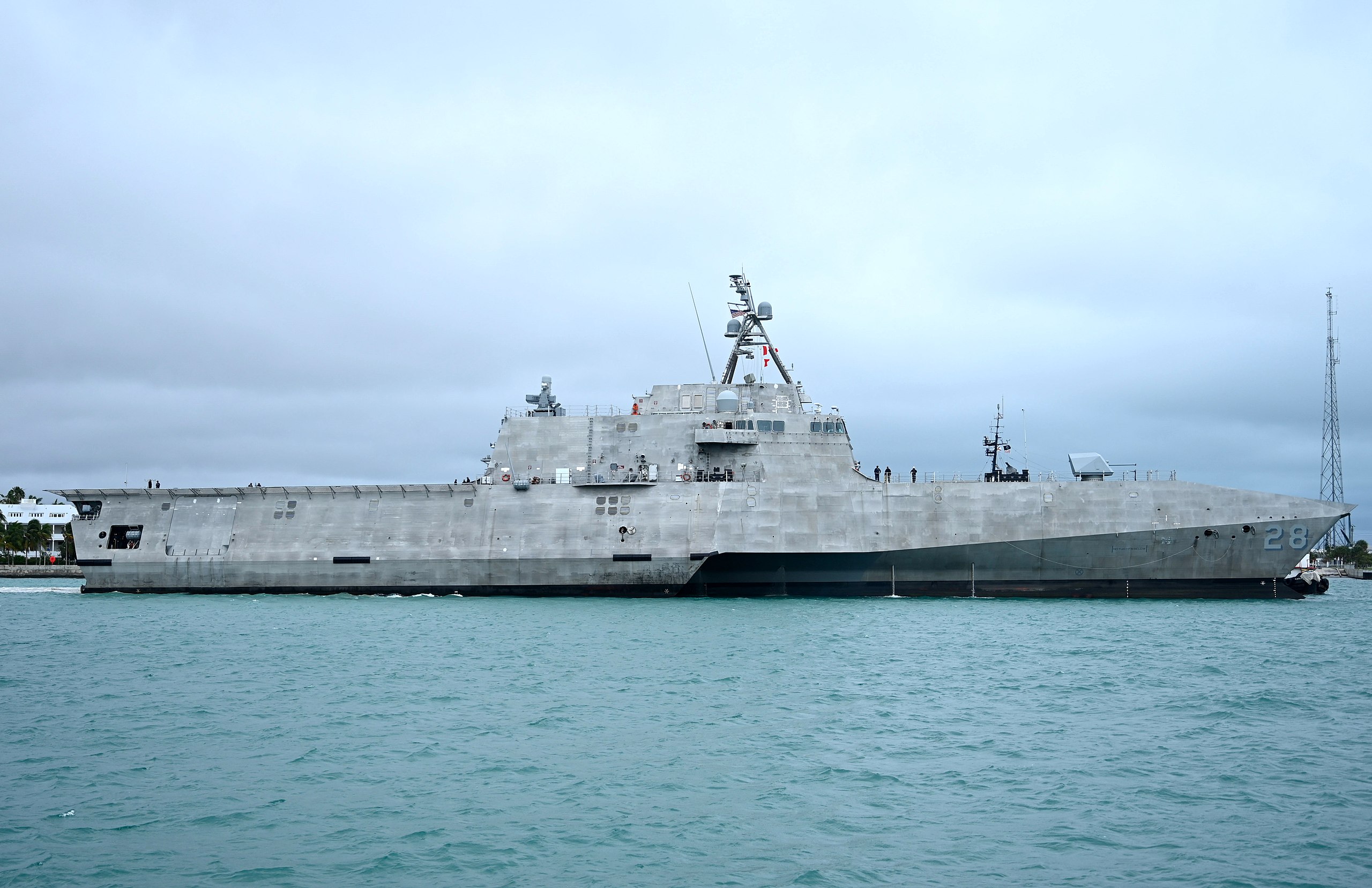
220209-N-IW125-1091 KEY WEST, Fla. (Feb. 9, 2022) The Navy’s 14th Independence-variant littoral combat ship, USS Savannah (LCS 28), pulls into Truman Harbor in Key West, Fla. Feb. 9, 2022. (U.S. Navy photo by Mass Communication Specialist 2nd Class Nicholas V. Huynh)

NEWPORT, OR, UNITED STATES
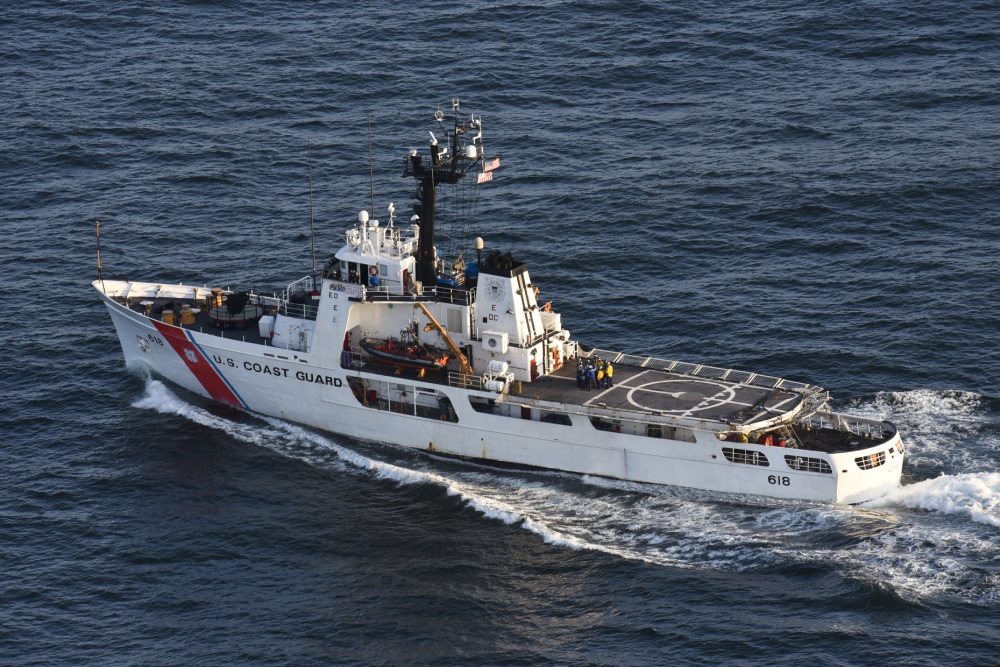
08.16.2019, Coast Guard Cutter Active (WMEC 618) transits across the Pacific Ocean near Newport, Ore., in support of Operation Pacific Fortune on Aug. 16, 2019. The Active is a 210-foot Medium Endurance based out of Port Angeles, Wash. (U.S. Coast Guard photo by Petty Officer 2nd Class Steve Strohmaier)

 April 6, 2023

U.S. Coast Guard, U.S. Navy, Mexican Navy and Royal Canadian Navy participate in North American Maritime Security Initiative

ALAMEDA, Calif. — The U.S. Coast Guard, along with the U.S. Navy, Mexican Navy (SEMAR) and the Royal Canadian Navy (RCN) participated in the North American Maritime Security Initiative (NAMSI) exercise off the coast of Manzanillo, Mexico March 27-31.

First instituted in 2008, NAMSI is an interagency and tri-lateral forum among U.S., Mexican and Canadian maritime commands intended to develop and refine maritime operations, as well as synchronize training and operational interoperability amongst forces of the three nations. The three participating nations actively seek opportunities to operate together and strengthen their cohesive approach to enhance regional maritime security in North America.

The U.S. Coast Guard District 11 and SEMAR collaborate extensively under NAMSI, conducting an average of four multinational passing exercises each year. The NAMSI Pacific Exercise (PACEX) 2023 is a full-scale Maritime Law Enforcement (MLE) based exercise that facilitates MLE operations with a SAR nexus built in. The exercise is intended to strengthen the crew’s knowledge in handling various situations and offers unique training scenarios like communication drills or maneuvering exercises.

“This exercise provides U.S., Mexico and Canada the opportunity to develop and refine our training and operations as partner nations,” said Rear Adm. Andrew Sugimoto, commander, U.S. Coast Guard District 11. “We take pride in our ability to strengthen partnerships and interoperability among the nations’ sea services.”

The U.S. Coast Guard Cutter Active and the U.S. Navy Independence-variant littoral combat ship USS Savannah (LCS 28), joined the SEMAR ship ARM Hidalgo and the RCN ship HMCS Edmonton, off the coast of Manzanillo in support of the NAMSI PACEX 2023. The operational units were supported by aviation assets from the U.S. Coast Guard and SEMAR, as well as the respective command centers in U.S. Coast Guard District 11, U.S. Navy 3rd fleet, SEMAR Tenth Naval Region and SEMAR headquarters.

The crews of Active and U.S. Coast Guard cutter Benjamin Bottoms also deployed in support of Operation GREEN FLASH (OGF). OGF is the operationalization of NAMSI procedures leveraging U.S., Canadian, and Mexican maritime forces, with the intent of disrupting transnational criminal organization activity that occurs in the shared maritime environment. U.S. Coast Guard District 11 organizes annual iterations of OGF which strengthens the relationship between the major stakeholders under NAMSI. Historically, there have been two iterations of OGF a year, averaging 30 days each.

“The cutter Active’s crew was excited to conduct this mission alongside our partners given its importance for the safety and security of the shared maritime environment,” said Cmdr. Brian Tesson, commanding officer, U.S. Coast Guard Cutter Active. “The partnerships between the U.S., Mexico and Canada strengthened our overall maritime security posture while reinforcing the mutual esprit de corps between our services.”

“Coast Guard Cutter Steadfast returns home following counternarcotics patrol” / Mexican Navy Assistance

Below is a CG News article. What makes this remarkable is the degree of cooperation with the Mexican Navy. It refers to a Mexican Navy MPA (maritime patrol aircraft). There is no indication of type, but the Mexican Navy acquired EADS CN-235 (C-144 in USCG) for use as MPA. The sale was coordinated through USCG Foreign Military Sales (see notes on the link). 

March 16, 2023

Coast Guard Cutter Steadfast returns home following counternarcotics patrol

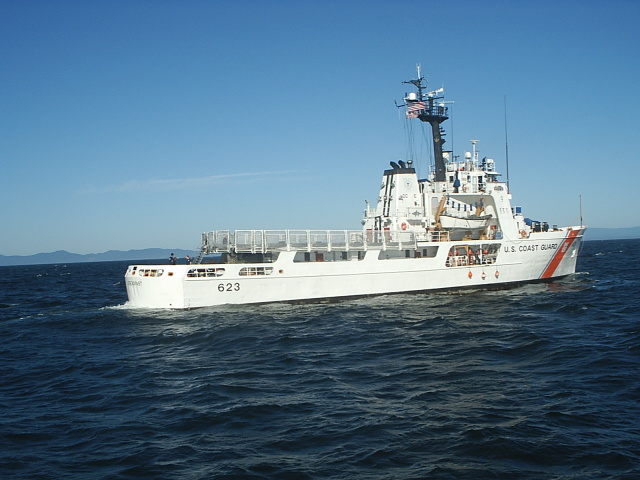
ASTORIA, Ore. — The Coast Guard Cutter Steadfast (WMEC 623) and crew returned to their Astoria homeport, Tuesday, following a 69-day counternarcotics patrol in the Eastern Pacific Ocean.

Steadfast’s crew disrupted the flow of illegal narcotics on three separate occasions during their patrol preventing a combined total of more than 7,500 pounds of cocaine, valued at $85.6 million, from reaching the U.S. maritime borders.

The crew steamed more than 12,000 nautical miles conducting training, law enforcement missions, providing search-and-rescue coverage, and conducting helicopter operations while patrolling the waters from their Astoria homeport to international waters off the coast of Central America.

The Steadfast deployed with a Jacksonville, Florida, based Helicopter Interdiction Tactical Squadron MH-65 Dolphin helicopter and aircrew along with temporarily assigned crewmembers from the Coast Guard Cutter Harriet Lane (WMEC 903) (getting a SLEP–Chuck), and soon-to-be-commissioned Coast Guard Cutter Argus (WMSM 915).

During nighttime patrol operations, Steadfast personnel were notified by a Maritime Patrol Aircraft (MPA) of a suspected narcotics-smuggling vessel transiting international waters. Steadfast personnel launched an Over-the-Horizon (OTH) crew and boarding team who interdicted the vessel after a multi-hour pursuit. The suspected smugglers jettisoned contraband, resulting in the disruption of 2,260 pounds of cocaine, valued at $25.6 million.

Additionally, Steadfast’s crew tracked another suspected narcotics-smuggling vessel with the assistance of a Mexican Navy (SEMAR) surveillance aircraft and aircrew. Steadfast personnel launched an OTH boat crew and HITRON helicopter aircrew while the Mexican MPA tracked the vessel. Steadfast’s small boat and helicopter crews interdicted the suspected narcotics-smuggling vessel and seized 3,300 pounds of cocaine valued at $37.5 million.

“The successful coordination between a U.S. Coast Guard cutter and Mexican MPA was a significant step in advancing our strategic partnerships in combatting the flow of illicit narcotics in Eastern Pacific,” said Cmdr. Brock S. Eckel, Steadfast’s commanding officer.

The next day, Steadfast crew launched an OTH boat crew and HITRON aircrew to intercept another suspected smuggling vessel. The aircrew located the suspected smuggling vessel and worked with a nearby Mexican Naval vessel to vector in a Mexican Naval helicopter. This multi-national effort resulted in the seizure of 1,984 pounds of cocaine valued at $22.5 million.

“From battling heavy seas off the Oregon and California coasts, to overcoming equipment casualties, and multiple smuggling vessel interdictions in the darkest of nights, the determination, resilience, and professionalism of the Steadfast crew was simply exceptional,” said Eckel. “The crew’s operational success was matched only by the strengthening of international and inter-agency relationships along the way. Steadfast’s crew once again proved their proficiency in working with partner nations jointly executing the counternarcotics mission successfully.”

The fight against drug cartels in the Eastern Pacific Ocean requires unity of effort in all phases from detection, monitoring, and interdictions, to criminal prosecutions for these interdictions by United States Attorney’s Offices throughout the country.

Commissioned in 1968, Steadfast is one of two 210-foot medium endurance cutters homeported in Astoria. The cutter and crew deploy along the western seaboard of North and Central America enforcing living marine resource laws and regulations, detecting and interdicting narcotics and migrant smuggling, and conducting search-and-rescue operations.

“Coast Guard sets record for illegal fishing vessel interdictions” –District 8

Below are photographs and a news release from CCGD8’s public affairs detachment Sector/CGAS Corpus Christi. Would not normally report something like this, but there seems to have been a noteworthy change in either the behavior of the Mexican Fishing Fleet, or Coast Guard operations. Incidentally, there are no Webber class homeported in Sector Corpus Christi, but they do have four 87 foot WPBs. Three FRCs are to be assigned to the neighboring Houston/Galveston Sector.

A launch crew is interdicted by Coast Guard law enforcement crews for engaging in illegal fishing in federal waters off the coast of southern Texas April 6, 2020. Coast Guard crews consisting of air support, a small boat crew, and a cutter stopped three lanchas approximately 50 miles north of the Maritime Boundary Line, with a total of thirteen lanchamen were engaged in illegal fishing. Twelve miles of longline gear, illegal fishing equipment, as well as 2,020 lbs of illegally-caught Red Snapper were seized. (U.S. Coast Guard photo)

Coast Guard law enforcement crews count the catch of five Mexican lancha boat crews illegally fishing in federal waters off southern Texas at Station South Padre Island in South Padre Island, Texas, Nov. 16, 2019. A total of 6,186 lbs of red snapper and shark was onboard the lanchas. U.S. Coast Guard photo by Sector/Air Station Corpus Christi.

A Station South Padre Island law enforcement boat crew stops a lancha crew engaged in illegal fishing in federal waters in the Gulf of Mexico April 30, 2020. Coast Guard law enforcement crews seized approximately 5,000 lbs of Red Snapper, 450 lbs of shark, and illegal fishing equipment from five lancha crews. (U.S. Coast Guard photo by Station South Padre Island)

Coast Guard sets record for illegal fishing vessel interdictions

CORPUS CHRISTI, Texas — Coast Guard law enforcement crews interdicted a record-setting number of lanchas throughout the Gulf of Mexico for fiscal year 2020.

Since October 2019, Coast Guard assets and personnel detected a total of 326 lanchas and interdicted 136.

Since the first recorded lancha interdiction in the late 1980s, the Coast Guard has seen a significant uptick in the detection of the vessels, particularly in the past two years, recording 74 lancha interdictions in the previous fiscal year.

The Coast Guard utilizes a layered approach for operations through aircraft, small boats, and cutters, as well as improved technology on those assets, resulting in the drastic increase in lancha interdictions.

“This past year, we applied an unprecedented level of effort along the Maritime Boundary Line towards countering this threat to our natural resources, and the result speaks for itself,” said Lt. Cmdr. Joseph Prado, Coast Guard Sector/Air Station Corpus Christi enforcement chief. “However, we will not be content until we see an end to this affront on our maritime sovereignty. We will continue to leverage all available technology and partnerships to increase our effectiveness. The boating public can play a key role in assisting the Coast Guard. Successful interdictions are oftentimes the result of timely reports from the maritime community. We encourage all boaters to continue to report all suspected illegal fishing.”

A lancha is a fishing boat used by Mexican fishermen that is approximately 20-30 feet long with a slender profile. They typically have one outboard motor and are capable of traveling at speeds exceeding 30 mph. Lanchas pose a major threat, usually entering the United States’ Exclusive Economic Zone near the U.S.-Mexico border in the Gulf of Mexico with the intent to smuggle people, drugs, or poach the United States natural resources.

If you witness suspicious activity or illegal fishing in state waters (out to 9 miles offshore), please contact the Texas Parks and Wildlife Department’s “Operation Game Thief” at 1-800-792-GAME (4263). For all suspicious activity or illegal fishing occurring in federal waters (out to 200 miles offshore), please contact the U.S. Coast Guard at 361-939-0450.

For more information follow us on Facebook and Twitter.

Mexico Naval Upgrades–Eight MH-60R

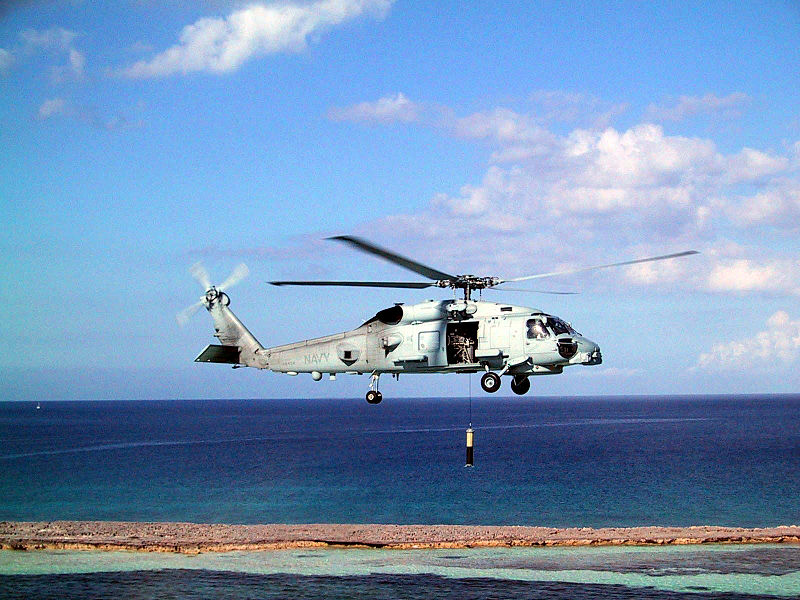
Navy photo. MH-60R “Knighthawk” helicopters conducts an airborne low frequency sonar (ALFS) operation during testing and evaluation

The Defense Security Cooperation Agency has released the following notice of approval for the sale of eight MH-60R ASW helicopters with associated equipment and weapons for the Mexican Navy valued at $1.2B.

Media/Public Contact:
pm-cpa@state.gov
Transmittal No:
18-06

­­­WASHINGTON, Apr. 19, 2018 – The State Department has made a determination approving a possible Foreign Military Sale to Mexico of MH-60R Multi-Mission Helicopters for an estimated cost of $1.20 billion.  The Defense Security Cooperation Agency delivered the required certification notifying Congress of this possible sale on April 18, 2018.

The Government of Mexico has requested to buy eight (8) MH-60R Multi-Mission Helicopters, equipped with:  twenty (20) T-700 GE 401 C engines (16 installed and 4 spares); sixteen (16) APS-153(V) Multi-Mode radars (8 installed, 8 spares); ten (10) Airborne Low Frequency Systems (ALFS) (8 installed and 2 spares); fourteen (14) AN/APX-123 Identification Friend or Foe transponders (8 installed and 6 spares); twelve (12) AN/AAS-44C Multi-Spectral Targeting Systems Forward Looking Infrared Systems (8 installed, 4 spares); twenty (20) Embedded Global Positioning System/Inertial Navigation Systems (EGI) with Selective Availability/Anti-Spoofing Module (16 installed and 4 spares); thirty (30) AN/AVS-9 Night Vision Devices; one thousand (1,000) AN/SSQ-36/53/62 Sonobuoys; ten (10) AGM-114 Hellfire missiles; five (5) AGM-114 M36-E9 Captive Air Training missiles; four (4) AGM-114Q Hellfire training missiles; thirty eight (38) Advanced Precision Kill Weapons System (APKWS) II rockets; thirty (30) Mk -54 Lightweight Hybrid Torpedoes (LHTs); twelve (12) M-240D machine guns; twelve (12) GAU-21 Machine Guns (an improved .50 cal. evolved from the M2–Chuck).  Also included are twelve (12) AN/ARC-220 High Frequency radios; spare engine containers; facilities study, design, and construction; spare and repair parts; support and test equipment; communication equipment; ferry support; publications and technical documentation; personnel training and training equipment; U.S. Government and contractor engineering, technical and logistics support services; and other related elements of logistical and program support.  The total estimated value is $1.20 billion.

This proposed sale will support the foreign policy and national security of the United States by helping to improve the security of a strategic regional partner.  Mexico has been a strong partner in combating organized crime and drug trafficking organizations.  The sale of these aircraft to Mexico will significantly increase and strengthen its maritime capabilities.  Mexico intends to use these defense articles and services to modernize its armed forces and expand its existing naval and maritime support of national security requirements and in its efforts to combat criminal organizations.

The proposed sale will improve Mexico’s ability to meet current and future threats from enemy weapon systems.  The MH-60R Multi-Mission Helicopter will enable Mexico to perform anti-surface and anti-submarine warfare missions and secondary missions including vertical replenishment, search and rescue, and communications relay.  Mexico will use the enhanced capability as a deterrent to regional threats and to strengthen its homeland defense.  Mexico will have no difficulty absorbing this equipment into its armed forces.

The proposed sale of this equipment and support will not alter the basic military balance in the region.

The principal contractor will be Lockheed Martin Rotary and Mission Systems in Owego, New York.  There are no known offset agreements in connection with this potential sale.

Implementation of this proposed sale will require the assignment of additional U.S. Government and/or contractor representatives to Mexico.

There will be no adverse impact on U.S. defense readiness as a result of this proposed sale.

This notice of a potential sale is required by law and does not mean the sale has been concluded.

All questions regarding this proposed Foreign Military Sale should be directed to the State Department’s Bureau of Political Military Affairs, Office of Congressional and Public Affairs, pm-cpa@state.gov.

How much would it cost to weaponize a cutter?

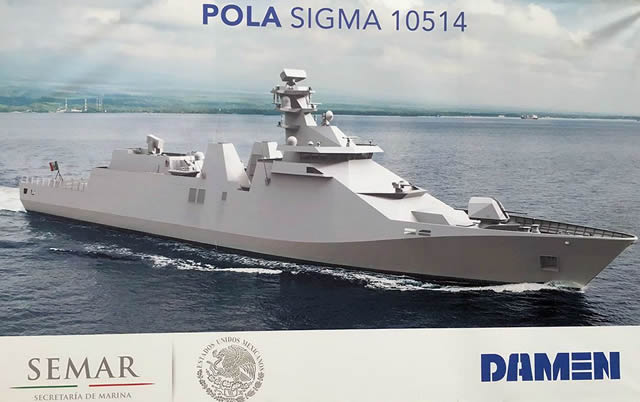
Photo: Sigma 10514 in Mexican Navy configuration, fitted with a BAE Systems Bofors 57Mk3 57mm main guna 12.7mm remote weapon system right behind it. The Mexican Navy opted for the Smart Mk2 radar by Thales. The Mexican “Long Range Patrol Vessel” will not be fitted with VLS cells but a Raytheon RAM launcher will be fitted on top of the helicopter hangar.

How much would it cost to turn one of our new construction cutters into a minimally capable frigate with at least some capability for anti-submarine, anti-surface, and self defense anti-air warfare?

I don’t have a definitive answer but we did get a good indication along with more information about Mexico’s new long range patrol vessel, a Damen 10514 design, that is close enough to our own Offshore Patrol Cutter requirements, that I thought it might have been an OPC contender.

Earlier we had an indication regarding the addition of VLS and  Evolved Sea Sparrow Missiles (ESSM) when Chile ordered $140.1M worth of equipment to arm three ships. Plus we had an earlier post based on a 2009 Congressional Budget Office study (apparently no longer available on line) that suggested costs to replace the Phalanx on NSCs with SeaRAM and to add 12 Mk56 VLS and associated equipment, which could have provided up to 24 ESSM ($68M/ship).

The Defense Security Cooperation Agency has issued a news release concerning the sale of weapons for the new Mexican patrol vessel, and the shopping list is a pretty extensive, including anti-surface, anti-air, and anti-submarine weapons.

Mexico –Harpoon Block II Missiles, RAM Missiles and MK 54 Torpedoes

Media/Public Contact: pm-cpa@state.gov
Transmittal No: 17-63

­­­WASHINGTON, Jan. 5, 2018 – The State Department has made a determination approving a possible Foreign Military Sale to Mexico of RGM-84L Harpoon Block II surface launched missiles, Block II Rolling Airframe Missile (RAM) tactical missiles and MK 54 Mod 0 lightweight torpedoes for an estimated cost of $98.4 million.  The Defense Security Cooperation Agency delivered the required certification notifying Congress of this possible sale today.

The Government of Mexico has requested to buy six (6) RGM-84L Harpoon Block II surface launched missiles, twenty-three (23) Block II Rolling Airframe Missile (RAM) tactical missiles and six (6) MK 54 Mod 0 lightweight torpedoes.  Also included are eight (8) MK 825 Mod 0 RAM Guided Missile Round Packs (GMRP) tri-pack shipping and storage containers; RAM Block 2 MK 44 Mod 4 Guided Missile Round Pack (GMRP); two (2) MK 32 Surface Vessel Torpedo Tubes (SVTT) triple tube launchers; two hundred and fifty (250) rounds of AA98 25 mm high explosive and semi-armor piercing ammunition; seven hundred and fifty (750) rounds A976 25mm target practice and tracer ammunition; four hundred and eighty (480) rounds of BA22 57mm high explosive programmable fuze ammunition; nine hundred and sixty (960) rounds of BA23 57mm practice ammunition; containers; spare and repair parts; support and test equipment; publications and technical documentation; personnel training and training equipment; U.S. Government and contractor representatives’ technical assistance; engineering and logistics support services; installation services; associated electronics and hardware to control the launch of torpedoes; and other related elements of logistics and program support.  The estimated cost is $98.4 million.

This proposed sale will support the foreign policy and national security of the United States by helping to improve the security of a strategic partner.  Mexico has been a strong partner in combating organized crime and drug trafficking organizations.  The sale of these ship-based systems to Mexico will significantly increase and strengthen its maritime capabilities.  Mexico intends to use these defense articles and services to modernize its armed forces and expand its existing naval and maritime support of national security requirements and in its efforts to combat criminal organizations.

Mexico intends to use the weapon systems on its Mexican Navy Sigma 10514 Class ship.  The systems will provide enhanced capabilities in effective defense of critical sea lanes.  The proposed sale of these systems and support will increase the Mexican Navy’s maritime partnership potential and align its capabilities with existing regional navies.  Mexico has not purchased these systems previously.  Mexico will have no difficulty absorbing this equipment into its armed forces.

The proposed sale of this equipment will not alter the basic military balance in the region.

The equipment will be provided from U.S. stocks.  There are no known offset agreements proposed in connection with this potential sale.

Implementation of this proposed sale will require annual trips to Mexico involving U.S. Government personnel and contractor representatives for technical reviews, support, and oversight for approximately two years.

There will be no adverse impact on U.S. defense readiness as a result of this proposed sale.

This notice of a potential sale is required by law and does not mean the sale has been concluded.

All questions regarding this proposed Foreign Military Sale should be directed to the State Department’s Bureau of Political Military Affairs, Office of Congressional and Public Affairs, pm-cpa@state.gov.

The big ticket items certainly made the head lines, but the ammunition for the 57mm is not cheap.

Fortunately for the Coast Guard, the Navy generally pays for our ammunition and weapon systems. The cost to the Coast Guard is installation and integration, plus primarily long term personnel and training costs.

Mexican Navy’s New Helicopters

Mexican Navy AS365 MBe helicopter, by AIRBUS.

NavyRecognition reports that the Mexican Navy has taken delivery of ten new helicopters. They might look a bit familiar. These are the latest development of the AS365 family of aircraft.

As we have noted, the Mexican Navy parallels the USCG in many ways, including missions and equipment (here and here). They also are in the process of procuring a fleet of patrol craft that are smaller, 42 meters vice 47 meters over all, but closely related to the Coast Guard’s Webber Class cutters.