Three Missile Armed Cutter X for Senegal, 20 Patrol Boats for Ukraine

OPV 58 S from PIRIOU

Two posts from Naval News. French shipbuilders are doing well in the patrol vessel market.

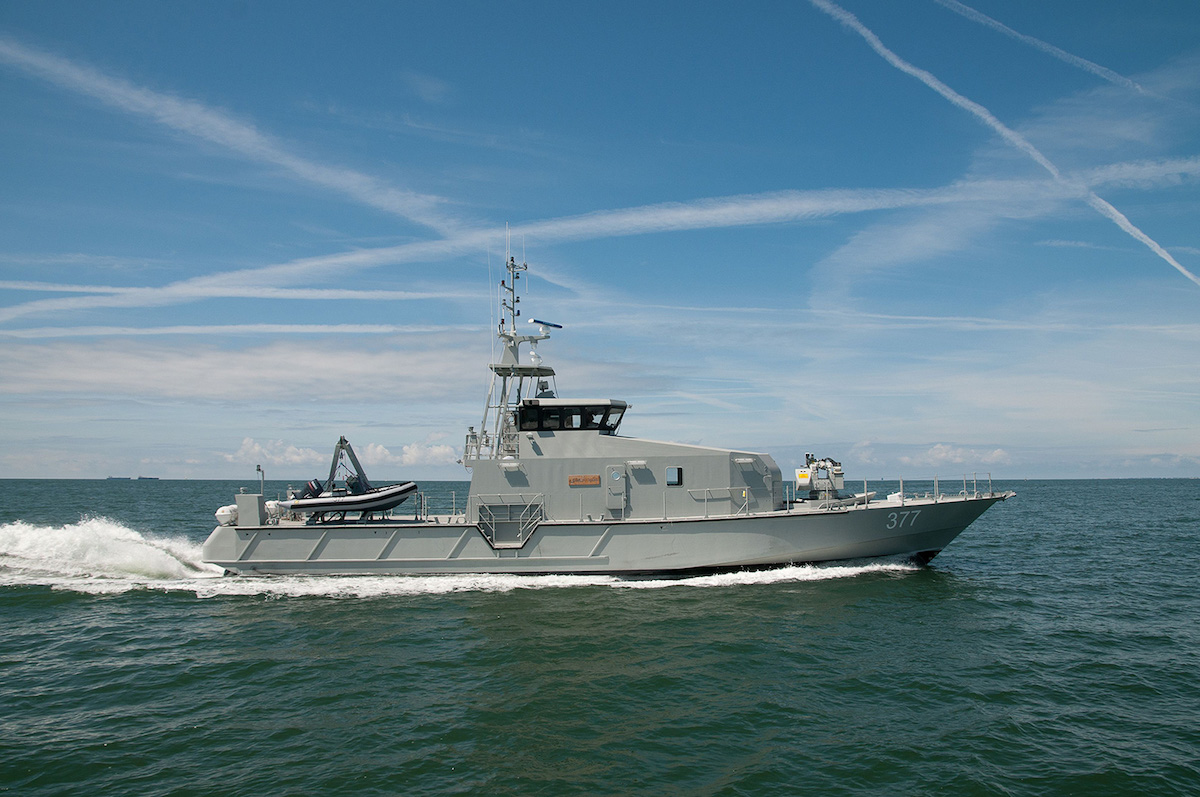
First, “The Ministry of Armed Forces of Senegal and French shipbuilder PIRIOU signed November 17 a procurement contract for three OPV 58 S for the Navy of Senegal. The vessels will be fitted with missile systems, a first for this African navy.”

Second, “The Government of Ukraine gave its green light for the procurement of 20 FPB 98 patrol vessels made by French shipyard OCEA.”

The Senegalese OPVs:

The ships for Senegal fall into that class significantly larger than the Webber class, but significantly smaller than the OPCs. They will be even a little smaller than the 210s. It would be at the lower end of a type, I have called cutter X, vessels with a crew and equipment similar to that of a Webber class FRC, but with better sea keeping and longer endurance. Specifications are:

  • Length: 62.20 meters (204′)
  • Width: 9.50 meters (31.2′)
  • Draft: 2.90 meters (9.5′)
  • Speed: 21 knots
  • Range / Endurance: 25 days, 4,500 nautical miles @ 12 knots
  • Hull / Structure: Steel / Aluminum
  • Accommodations: 48 (24 crew + 24 mission personnel)
  • Stern ramp for two RHIBs

For an Offshore Patrol Vessel, it is very well armed with:

  • A 76mm main gun on the Foc’sle
  • 4x Marte MK2/N anti-ship missiles forward, between the gun and the bridge
  • 2x 12.7mm manned manchine guns on the bridge wings
  • 2x 20mm remote weapon stations (Narwhal by Nexter) at the back of the bridge
  • A SIMBAD-RC surface to air system

The Marte MK2/N missile weighs 310 kg (682#) and is 3.85 metres (12.6′) long. The warhead weighs 70 kilogram (154 pound). The missile, has “an effective range in excess of 30 km, is a fire and forget, all weather sea skimming missile with inertial mid-course navigation through way points and active radar terminal homing. These missiles give these boats a range almost double that of the 57mm or 76mm guns.

SIMRAD-RC is a remote weapons station for launch of two Mistral missiles. Developed as a shoulder launched, Man Portable Air Defense (MANPAD) system, Mistral is a short ranged (6km) IR homing missile. It is claimed to be capable against a range of air targets as well as small surface targets.

Ukrainean OCEA FPB 98 patrol boat:

OCEA FPB 98 patrol boat (Credit: OCEA)

This is a deal, we discussed in July, when it appeared likely. I will repeat the description here.

They have a GRP hull and are powered by two 3,660 HP Caterpillar diesels using waterjets. Specs for vessels of this type sold to Algeria.

  • Displacement: 100 tons
  • Length: 31.8 meters (104’4″)
  • Beam: 6.3 meters (20’8″)
  • Draft: 1.2 meters (3’11”)
  • Speed: 30 knots
  • Range: 900 nmi @ 14 knots
  • Crew: 13

They will probably be equipped with a 20 to 30mm gun.


“Vestdavit to equip Norwegian Coast Guard’s Next Gen Polar Vessels” –News Release

Earlier we talked about the Norwegian Coast Guard’s new large (9,800 ton) ice strengthened patrol vessels.

(These will be very large, about twice the size of a Bertholf class National Security Cutter and about three times the size of the ships they will replace. Because the Norwegian Coast Guard is structured as part of their Navy, other than a single logistics ship, these will be the largest ships in the Norwegian Navy.)

Now we have a report on their choice of boat handling equipment, in the form of a news release from Vestdavit. Not surprisingly they are using Vestdavit equipment, as they have consistently used equipment from this manufacturer, but it also appears, they, like many recent designs, will provide a multiple boat hangar or garage amidships, and for this they will employ Vestdavit’s MissionEase multi-boat transfer system

Vestdavit “MissionEase” launch and recovery system

Each vessel will come complete with one telescopic TBD-10000L davit system plus two PLR-5003KV units, built to Vestdavit standards for minimum availability of 330 days a year up to upper Sea State 5, based on actual North Sea conditions 1958-2018. In line with the areas of operation envisaged, the davits will be winterized for full functionality in temperatures as low as -25deg C, as required in the Polar Code.

These systems should also permit launching of unmanned surface and sub-surface systems.

In addition,

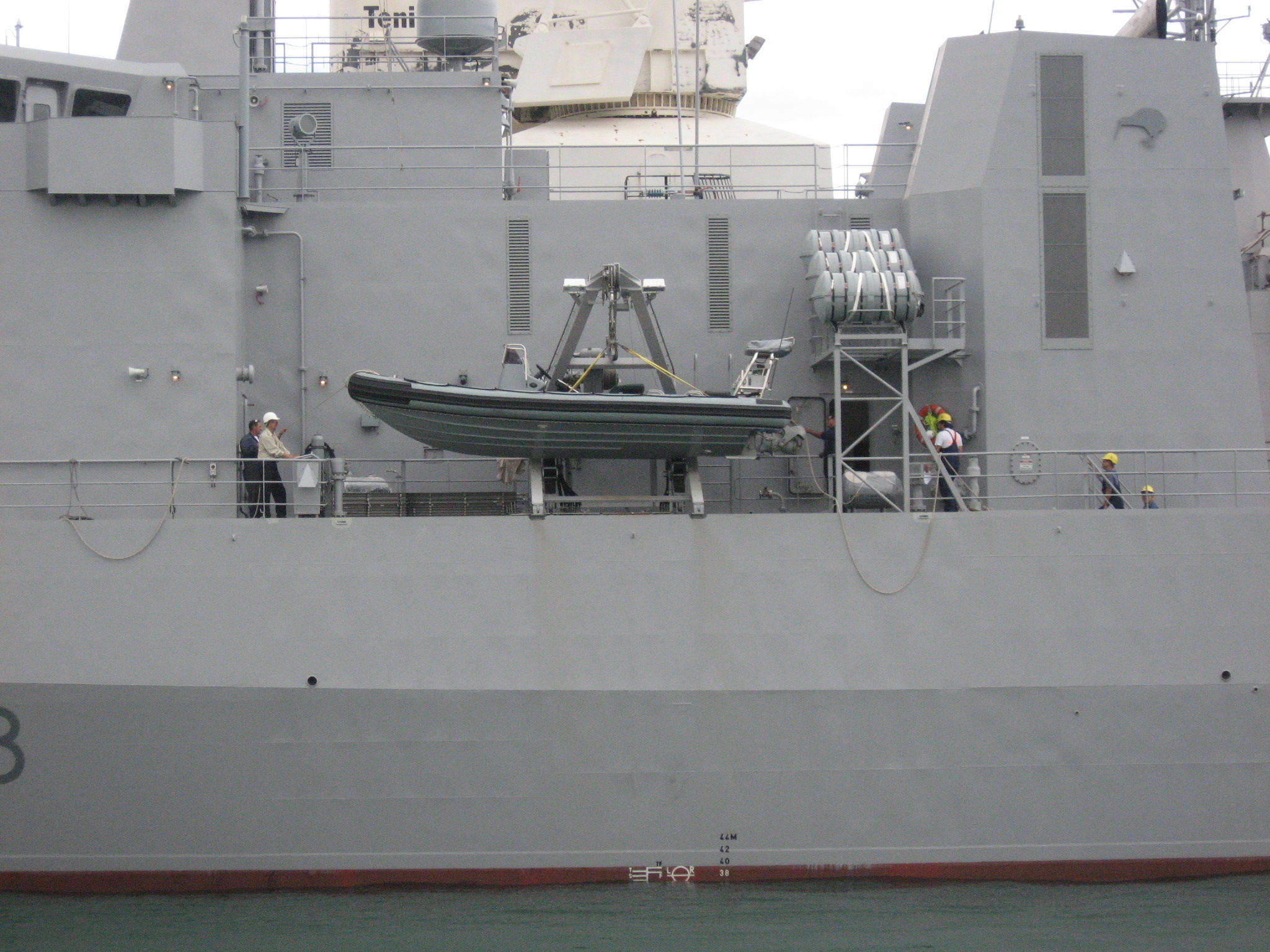
The Vestdavit PLR-5003KV units also specified within the contract are A-frame, all-steel davits with a 5 ton SWL, which will feature Vestdavit’s wave-compensation system and shock absorber system. The solution will feature 50m/min lifting and lowering speeds. The units installed are designed to handle FRBs of up to 8.5m in length..

Vestdavit A-Frame All-Steel Davit seen here on HMNZS OTAGO (P-148)

Thanks to Lee for bringing this to my attention. 

Japan Builds More XXLarge CG Cutters

Japan Coast Guard patrol vessel PLH32 Akitsushima. Photo by Kaidai

NavyRecognition is reporting that the Japanese Coast Guard is once again building very large coast guard cutters with the launch of Reimei (PLH 33).

Mitsubishi Heavy Industries (MHI) recently launched a brand new patrol vessel for the Japan Coast Guard (JCG). This vessel is a variant of the Shikishima-class, with two previous vessels built in 1992 and 2013. Two more vessels are also scheduled to be built in the future (emphasis applied–Chuck).

This class is going to be something of an oddity, because it looks like there will be at least 30 years between the commissioning of the first ship and the fifth. In fact the Japanese may be planning to replace the first ship of the class with the fifth (that is only speculation on my part, but the Japanese do not keep there ships nearly as long as the USCG. Referencing my Combat Fleets of the World from 2013, the Japan Coast Guard had no ships older than 35 years).

Before the Chinese built their very large Coast Guard cutters, the two earlier ships of this class, Shikishima (commissioned 1992) and her sister ship, Akitsushima (commissioned 2013), were largest cutters in the world, at 150.0m (492 ft), 9300 ton (full load), twice as large as Bertholf class cutters.

The South Koreans have also built some exceptionally large cutters. None of these ships have particularly large crews. Crews are about the same size or smaller than the crews of the Bertholf class. All seem to be good for about 25 knots and have facilities for two helicopters.

Armament:

The first two Japanese ships don’t have the 76mm guns found on the extremely large Chinese and South Korean cutters, but they are well armed for cutters with four gun mounts on each ship. There does seem to be some variation in the way the Japanese ships are armed–not too surprising considering the first two ships were commissioned 21 years apart, and seven years will separate this third ship from the second of the class.

20mm-76_Gatling_pic

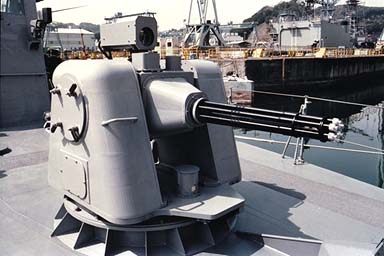
Japanese 20 mm/76 Gatling Gun. Note the camera for remote targeting. JMSDF Photograph.

Just about all Japan Coast Guard cutters have the 20mm Sea Vulcan, which uses the same 20mm guns as those in the Phalanx Close in Weapon System (CIWS) but in a simpler mount. They have a 3000 round per minute rate of fire and a reported effective range of 1,625 yards (1,490 m). The first ships of the class had two mounts forward of the bridge at the O-2 deck level.

The first two ships have two mounts for the Oerlikon 35mm. These guns have a 550 round per minute rate of fire per gun and a reported effective range against surface targets of 8,700 yards (8,000 m). The first ship has two twin mounts, but it appears the second has two simplified single mounts. If the third ship follows typical Japan Coast Guard practice, the larger mounts will continue to be in the 30 to 40mm range. If on the other hand, they mount something larger, it will mark a departure for the JCG, I would assume, in response to the increased militancy of the China Coast Guard.

In the world of Asian Coast Guards, it may simply be that their large size is their primary armament. These nations seem to regularly engage in shoving matches. In at least one case, the China Coast Guard reportedly sank a Vietnamese fishing vessel by ramming.

New OPV for the Philippines

The Philippines has a requirement for six new ocean-going Offshore Patrol Vessels, and the Austal shipyard in the Philippines is making an offer.

Their design is 81.7 meters (268 feet) in length overall, with a beam of 13.3 meters (43.6 feet), and a draft of 4 meters (13.1 feet), so, similar in size to the Bear class cutters, with perhaps slightly greater displacement. The illustration shows a ship armed with a 76mm Oto Melara Super Rapid naval gun, and two auto-cannon. It has a helicopter landing deck but no hangar.

It is apparently equipped with a stern boat ramp and boat davit starboard.

There is no information on speed, but I would guess 20 to 22 knots on a pair of diesels.

“World’s Fastest OPV”

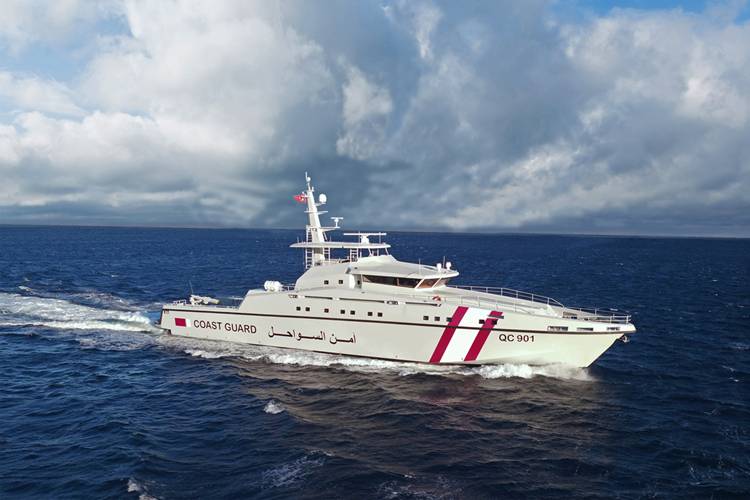
Ares 150, 48 meter OPV built for Qatar Coast Guard

Its fast, its composite construction, and its slightly longer, but lighter, than our Webber class.

MarineLink reports a cooperation between International design and engineering company BMT and the Turkish Ares shipyard (see link for more detail) resulted in an unusual vessel for the Qatar Coast Guard. (Sorry I am a little late in publishing this.)

“These boats break two important records – firstly, they have become the largest composite hull military ship to have ever been built in Turkey and secondly, with its speed of 37 nautical miles an hour (emphasis applied–Chuck), it is the world’s fastest offshore patrol vessel (OPV). It is exciting to also report that the outstanding performance of the first ARES 150 HERCULES has also led to an immediate order for a further three vessels.”

I don’t see either weapons or a boat.

Ares shipyard photo

Report to Congress on U.S. Coast Guard Cutter Procurement, 23 May 2018

OPC “Placemat”

Mr. O’Rourke has been busy, in addition to the report on Icebreakers, the latest edition of the Congressional Research Service report on Coast Guard Cutter Procurement, also by Ronald O’Rourke, was also published on 23 May, 2018. You can see it here. 

I have reproduced the summary immediately below.  Note that the price for the OPCs is already surprisingly low. 

The Coast Guard’s acquisition program of record (POR) calls for procuring 8 National Security Cutters (NSCs), 25 Offshore Patrol Cutters (OPCs), and 58 Fast Response Cutters (FRCs) as replacements for 90 aging Coast Guard high-endurance cutters, medium-endurance cutters, and patrol craft. The Coast Guard’s proposed FY2019 budget requests a total of $705 million in acquisition funding for the NSC, OPC, and FRC programs.

NSCs are the Coast Guard’s largest and most capable general-purpose cutters; they are intended to replace the Coast Guard’s 12 aged Hamilton-class high-endurance cutters. NSCs have an estimated average procurement cost of about $682 million per ship. Although the Coast Guard’s POR calls for procuring a total of 8 NSCs to replace the 12 Hamilton-class cutters, Congress through FY2018 has funded 11 NSCs, including two (the 10th and 11th) in FY2018. Six NSCs are now in service, and the seventh, eighth, and ninth are scheduled for delivery in 2018, 2019, and 2020, respectively. The Coast Guard’s proposed FY2019 budget requests $65 million in acquisition funding for the NSC program; this request does not include additional funding for a 12th NSC.

OPCs are to be smaller, less expensive, and in some respects less capable than NSCs; they are intended to replace the Coast Guard’s 29 aged medium-endurance cutters. Coast Guard officials describe the OPC program as the service’s top acquisition priority. OPCs have an estimated average procurement cost of about $391 million per ship. On September 15, 2016, the Coast Guard announced that it was awarding a contract with options for building up to nine ships in the class to Eastern Shipbuilding Group of Panama City, FL. The first OPC was funded in FY2018 and is to be delivered in 2021. The Coast Guard’s proposed FY2019 budget requests $400 million in acquisition funding for the OPC program for the construction of the second OPC (which is scheduled for delivery in 2022) and procurement of long leadtime materials (LLTM) for the third OPC (which is scheduled for delivery in 2023).

FRCs are considerably smaller and less expensive than OPCs; they are intended to replace the Coast Guard’s 49 aging Island-class patrol boats. FRCs have an estimated average procurement cost of about $58 million per boat. A total of 50 have been funded through FY2018. The 27th was commissioned into service on April 20, 2018. The Coast Guard’s proposed FY2019 budget requests $240 million in acquisition funding for the procurement of four more FRCs.

The NSC, OPC, and FRC programs pose several issues for Congress, including the following: 

  • whether to fully or partially fund the acquisition of a 12th NSC in FY2019; 
  • whether to fund the acquisition of four FRCs in FY2019, as requested, or some other number, such as six, which is the maximum number that has been acquired in some prior fiscal years; 
  • whether to use annual or multiyear contracting for procuring OPCs; 
  • the procurement rate for the OPC program; 
  • planned procurement quantities for NSCs, OPCs, and FRCs; and 
  • initial testing of the NSC.

Congress’s decisions on these programs could substantially affect Coast Guard capabilities and funding requirements, and the U.S. shipbuilding industrial base.

How the SPa was Chosen – The Trinidad and Tobago Coast Guard’s DAMEN Spa 5009 fleet

Procurement included 4x Stan Patrol 5009 Coastal Patrol Vessels (middle); 2x Fast Crew Supply 5009 Utility Vessels (top) ; 6x Interceptor DI 1102 Interceptors (bottom). Picture: DAMEN

The following is written by a guest author, a friend met on Facebook, but I think you may find it interesting, particularly to non-US readers.

How the SPa was Chosen – The Trinidad and Tobago Coast Guard’s Spa 5009 fleet by Sanjay Badri-Maharaj

The Genesis

In 2013, facing an acute shortage of operational and suitable vessels, the Government of the Republic of Trinidad and Tobago (GORTT) commissioned an operational audit of the Trinidad and Tobago Coast Guard (TTCG). This did not only involve an assessment of the existing fleet, which was in abysmal condition, but also sought to ascertain force requirements to meet the existing responsibilities as well as the projected needs of the force into the foreseeable future.

The audit team realized that despite a predilection for Offshore Patrol Vessels as priority acquisitions for both the political and military leadership, the principal weakness was in vessels designed for coastal patrol duties. The need for Coastal Patrol Vessels (CPVs) was deemed particularly acute in part because of the unsuitability of the country’s trouble-plagued fleet of Austal FPB 30 vessels for operations in the rough seas found in some parts of the country’s maritime domain.

Initial Steps

In January 2014, the Naval Assets Acquisition Implementation Team (NAAIT) was established, bringing together former and current military officers and civilian experts with a mandate to acquire vessels for the Coast Guard within a period of under two years. Using the findings of the aforementioned audit team as a guideline, the NAAIT gave priority to the acquisition of CPVs.

This, it has to be said, created a certain degree of tension with vested interests advising the GORTT who were fixated on acquiring an OPV replacement to the extent of ignoring technical advice to the contrary. The deadline for completing vessel acquisition was set at May 2015, a deadline that was to ultimately prove wholly unrealistic.

While the NAAIT formally started working in January 2014, the team had the good fortune of going to sea on a Damen SPa 4207 which visited Trinidad en route to Honduras in December 2013. In addition, shortly thereafter, the team visited the Barbados Coast Guard Headquarters to inquire as to their experiences with the type.

The naval architect assigned to NAAIT, based on the experiences at sea and the wave patterns in Trinidad’s maritime domain, suggested that the ideal length for a CPV would be between 45 and 55 metres with the SPa 4207 not being particularly suitable for the role in the TTCG. A matrix, using a proposed Concept of Operations (CONOPS) for the CPV in TTCG service was then created to assist the NAAIT in its decision-making process.

The Selection Process

There was a concerted push by lobbyists from Korean and Chinese shipbuilders for a team to visit their respective shipyards so, in January 2014, the NAAIT was dispatched to make a visit to Korea and China, followed by one to Colombia and finally to the Netherlands. While the evaluations of individual designs will of course remain confidential, the NAAIT was impressed with the manufacturing quality in Korea and the ambitions of Colombia.

In the latter case, their efforts to market a CPV to Trinidad were hamstrung by the fact that their promising CPV-46 class was as yet under construction and thus not available for evaluation. However, Colombia’s COTECMAR, impressed NAAIT with its determination, ambition and its willingness to innovate. COTECMAR’s modification of the Fassmer 80 was marketed as a possible OPV to Trinidad and attracted much positive attention. Prior to the NAAIT being formed, one such vessel visited Trinidad and while there were concerns over its top speed – only 18 knots – the lead ship of the class 20 de Julio – was seen to be of high quality and good overall capability.

Korea’s Hyundai HDP-500 was of extremely high quality but was not available for delivery in the short term. Its HDP-1000 was initially offered but soon attention shifted to the HDP-1500 which proved to be the most impressive and cost-effective OPV offered to Trinidad. However, delivery scheduling would not have met the remit of the NAAIT to acquire vessels by May 2015.

China’s designs for CPVs were deemed to be of sound design and unspectacular performance but build quality was decidedly poor and the equipment suite was decidedly sub-par. Of interest was China’s apparent belief – well-founded it later emerged – that they were guaranteed a contract for an OPV (or LRPV as the then regime in power termed the class). NAAIT was confronted, much to its surprise, with a beautiful model of an OPV in full TTCG colours with a pennant number already assigned.

Damen Gorinchem shipyards was the last to be visited. At this point, NAAIT was given presentations on the SPa 5009 design and shown two hulls with immediate availability at the Schelde naval yard. In addition, two FCS 5009s were being completed at Hai Phong in Vietnam and were also available for delivery.

This speed of delivery combined with the strong presence Damen had in the Caribbean – supplying vessels to Jamaica, Barbados, the Bahamas and the Dominican Republic – made the choice, given the deadline set for vessel acquisition almost inevitable. Despite the NAAIT advocating a limited tender being floated to all the concerned shipyards, the GORTT decided that the situation warranted a sole-select tender being issued to Damen Gorinchem to bid for the supply of four SPa 5009 patrol vessels, two FCS 5009 patrol/utility vessels and six DI 1102 interceptors. The total cost of the acquisition came to some USD 214 million, including a 5-year integrated logistics and support package inclusive of spares and training.

The FCS 5009 Patrol/Utility Vessel

The Damen SPa 5009 is an adaptation of its FCS 5009 crew-supply vessel. The latter is slightly longer and possesses a more austere equipment fit but is well suited to the task of being a utility vessel. To meet the TTCG’s requirements for a vessel capable of undertaking disaster relief operations in other parts of the Caribbean archipelago, two FCS 5009s were offered – the type having already been ordered by a petrochemical state enterprise in Trinidad. The NAAIT availed itself of the opportunity of conducting limited trials on a Cape Town built FCS 5009 “Patrol” variant in South Africa and was favourably impressed.

Two FCS 5009s were ordered, as they were available for rapid delivery – sea trials taking place in December 2014, but it was felt that the standard fit on the vessels was inadequate for the TTCG. In order to give the vessels more flexibility, the following modifications were made to the basic FCS 5009, aside from the necessary internal re-arrangements to make them suitable for quasi-military use:

1)    An adaptor for a GAM-B01 20mm gun was fitted forward. The wetness forward was not deemed an issue largely because any armed patrol duties were to be of a secondary nature to these vessels;

2)    A Voyager II FLIR system was installed to provide a modicum of additional surveillance capability;

3)    A Heila hydraulically operated knuckle-boom crane was installed which had the secondary function of being able to lower and recover a DI 1102 interceptor.

These two vessels – CG 23 TTS Point Lisas and CG 24 TTS Brighton – were delivered in the period May/ June 2015 and duly commissioned into the TTCG.

Evaluating the SPa 5009

The SPa 5009 was then in service only with the Cabo Verde Coast Guard and the NAAIT was somewhat wary of its performance characteristics. Arrangements were made for the NAAIT to visit Cabo Verde to evaluate the Guardiao SPa 5009. Operating in the Atlantic in Sea State 5, the Guardiao handled the waves remarkably well even at its maximum speed.

However, the NAAIT noted some critical deficiencies in the basic SPa 5009 design:

1)    The C32 engines, while efficient, delivered a very modest top speed

2)    The standard surveillance fit was too basic

3)    The forward area was very wet, making the operation of a manually controlled weapon difficult and thus ruling out the original intention of using TTCG GAM-B01 Oerlikons.

4)    The Guardiao carried no fixed, forward armament so there was no way to gauge whether the deck was sufficiently strengthened for a weapon;

5)    The 7.5m RHIB, deployed using a stern launch system was deemed inadequate for TTS operations.

Creating the SPa 5009 “OPVette”

The NAAIT, working closely with the TTCG, proceeded to examine the basic SPa 5009 design and turn it into a mini-OPV, dubbed an “OPVette” by one member of the NAAIT. This included a total revamp of the surveillance, armament and interdiction capabilities of the vessels and the replacement of the anaemic C32 engines with Caterpillar 3516C engines with D ratings.

This change of powerplant became a priority as it was realized that the FCS 5009s, which used Cat 3512 engines with A ratings would have been faster than a SPa 5009s with C32s. The installation of the 3516s led to a dramatic increase in speed with an average of over 30 knots being sustained by all four vessels of the class during sea trials. The downside was that on the first two vessels, some cavitation was observed on the hulls during post-trail inspection. This was rectified as a priority.

The TTCG, using its experience from the terminated BAES OPV deal (for three vessels now serving the Brazilian navy as the Amazonas class and very similar to the Batch 2 River class under delivery for the Royal Navy) insisted on the creation of a Combat Information Centre (CIC). The CIC housed displays – Transas NS4100s surveillance workstations-  showing the radar, WECDIS and FLIR input with repeaters on the bridge. It was also envisaged that the CIC would house a dedicated secure communications suite supplied by Harris. Deliveries of the Harris equipment were delayed, leading to the vessels being commissioned without this equipment being fitted.

The surveillance fit selected was a compromise using high quality civilian systems as opposed to dedicated military systems. The surveillance radar selected was the Kelvin Hughes X-Band Sharp Eye which emerged as the most cost-effective and available choice. The FLIR system chosen was the MU602CLW. A Saab R5 data link was also fitted along with a Rotheta RT-500M radio direction finder. It should be noted that the TTCG had expressed a desire for a Terma surveillance radar as fitted to the BAES OPVs. However, cost factors militated against this.

To enhance the interdiction capabilities of the SPa 5009, the standard stern-launched MST 750SR 7.5m RHIB was supplemented by a davit launched DI 1102 interceptor. While it was intended that the interceptor be launched and recovered while the mother vessel was moving, two incidents during familiarization training may have led to a rethink in this regard.

When considering choices for the weapon system, there was an attempt to look at the Israeli 25mm Typhoon system and a Reutech/Nexter combination from South Africa. Neither option proved viable. Furthermore, the TTCG desired to make use of its stock of 20mm Oerlikon ammunition. This perforce limited the choice of weapon system to one compatible with such ammunition.

The final choice fell to the Rheinmetall/ MSI Seahawk LW20A1 system. This proved to be a somewhat problematic choice as two rounds of firing trials – one in 2015 and one in 2016 – were aborted due to severe malfunctions. Even during those aborted trials, however, the accuracy of the system was excellent, but the aborted trials delayed the operationalization of the vessels’ weapons systems until late 2016.

Owing to somewhat delayed payments, the four SPa 5009s were delivered between 2015 and 2016 and were designated and named as follows: CG 25 – TTS Speyside, CG 26 – TTS Quinam, CG 27 – TTS Moruga and CG 28 – TTS Carli Bay. Each of these vessels carried a DI 1102 interceptor, with two more being deployable on CG 23 and CG 24.

Conclusion

The Damen acquisition program was the only completely successful acquisition projects undertaken during the government of Mrs. Kamla Persad-Bissessar which lasted from 2010-2015. During this time, the program faced many hurdles – some political and others fiscal – that delayed contract signing and subsequent payments.

The NAAIT would have preferred that the CPV and OPV projects be handled through a more open, albeit perhaps limited, tender process but the dual pressures of a political timeline and the urgency of the TTCG’s requirements, the sole-select tender process was approved by GORTT. Nonetheless, despite that wish, the thoroughness of the initial work by the NAAIT made the team confident that the CPV choice, at any rate, was a good one.

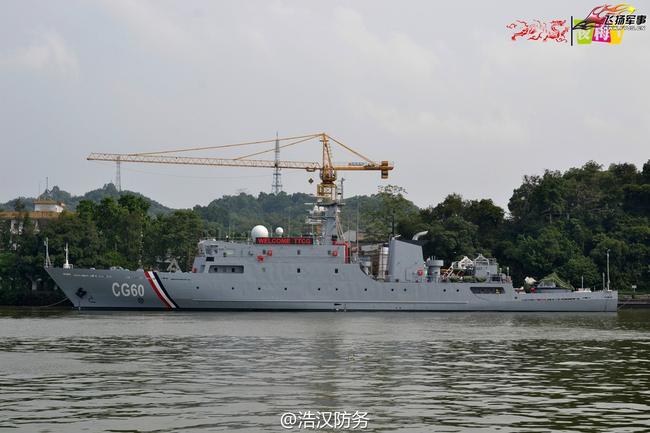
Unfortunately, the NAAIT, despite its mandate, was effectively removed from the OPV acquisition process. No tender of any kind was issued and a controversial decision to acquire a 79m vessel from China’s CSSC was undertaken. This latter vessel, now designated and named CG 60 TTS Nelson II, was delivered in late 2015. Whether the limited capability it offered was worth the price is at best debatable.
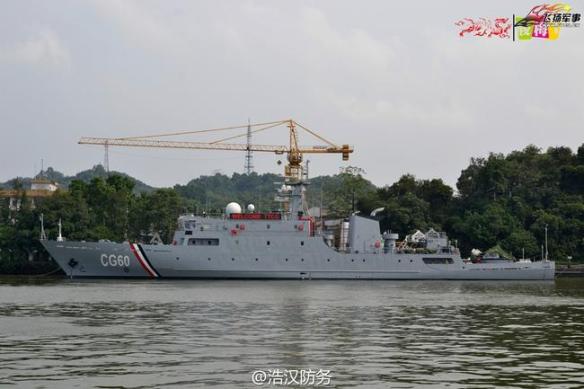
CG 60 TTS Nelson II, OPV built for Trinidad and Tobago by the Chinese

Greek and Turkish Coast Guards Collide

Greece and Turkey are both NATO, but they never gotten along very well. Apparently, they have been playing bumper boats and this 12 February 2018 incident is not the first time. The Turkish cutter is larger. We looked at her class earlier.  The Greek vessel was a Damen Stan Patrol 5509 (55 meters long and 9 metes of beam) offshore patrol vessel, which reportedly suffered significant damage to her hull. Here is a page that provides info on both classes,

As I said the Greeks and Turks have been going at each other for a while. The intentional collision below reportedly happened on January 17, 2018.

The video below was posted to YouTube May 8, 2016.

This incident occurred 24 Jan. 2014

Thanks to Luke for bringing this to my attention. 


How much would it cost to weaponize a cutter?

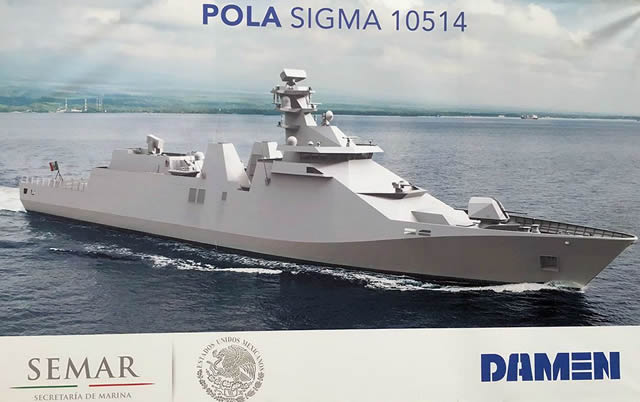
Photo: Sigma 10514 in Mexican Navy configuration, fitted with a BAE Systems Bofors 57Mk3 57mm main guna 12.7mm remote weapon system right behind it. The Mexican Navy opted for the Smart Mk2 radar by Thales. The Mexican “Long Range Patrol Vessel” will not be fitted with VLS cells but a Raytheon RAM launcher will be fitted on top of the helicopter hangar.

How much would it cost to turn one of our new construction cutters into a minimally capable frigate with at least some capability for anti-submarine, anti-surface, and self defense anti-air warfare?

I don’t have a definitive answer but we did get a good indication along with more information about Mexico’s new long range patrol vessel, a Damen 10514 design, that is close enough to our own Offshore Patrol Cutter requirements, that I thought it might have been an OPC contender.

Earlier we had an indication regarding the addition of VLS and  Evolved Sea Sparrow Missiles (ESSM) when Chile ordered $140.1M worth of equipment to arm three ships. Plus we had an earlier post based on a 2009 Congressional Budget Office study (apparently no longer available on line) that suggested costs to replace the Phalanx on NSCs with SeaRAM and to add 12 Mk56 VLS and associated equipment, which could have provided up to 24 ESSM ($68M/ship).

The Defense Security Cooperation Agency has issued a news release concerning the sale of weapons for the new Mexican patrol vessel, and the shopping list is a pretty extensive, including anti-surface, anti-air, and anti-submarine weapons.

Mexico –Harpoon Block II Missiles, RAM Missiles and MK 54 Torpedoes

Media/Public Contact: pm-cpa@state.gov
Transmittal No: 17-63

­­­WASHINGTON, Jan. 5, 2018 – The State Department has made a determination approving a possible Foreign Military Sale to Mexico of RGM-84L Harpoon Block II surface launched missiles, Block II Rolling Airframe Missile (RAM) tactical missiles and MK 54 Mod 0 lightweight torpedoes for an estimated cost of $98.4 million.  The Defense Security Cooperation Agency delivered the required certification notifying Congress of this possible sale today.

The Government of Mexico has requested to buy six (6) RGM-84L Harpoon Block II surface launched missiles, twenty-three (23) Block II Rolling Airframe Missile (RAM) tactical missiles and six (6) MK 54 Mod 0 lightweight torpedoes.  Also included are eight (8) MK 825 Mod 0 RAM Guided Missile Round Packs (GMRP) tri-pack shipping and storage containers; RAM Block 2 MK 44 Mod 4 Guided Missile Round Pack (GMRP); two (2) MK 32 Surface Vessel Torpedo Tubes (SVTT) triple tube launchers; two hundred and fifty (250) rounds of AA98 25 mm high explosive and semi-armor piercing ammunition; seven hundred and fifty (750) rounds A976 25mm target practice and tracer ammunition; four hundred and eighty (480) rounds of BA22 57mm high explosive programmable fuze ammunition; nine hundred and sixty (960) rounds of BA23 57mm practice ammunition; containers; spare and repair parts; support and test equipment; publications and technical documentation; personnel training and training equipment; U.S. Government and contractor representatives’ technical assistance; engineering and logistics support services; installation services; associated electronics and hardware to control the launch of torpedoes; and other related elements of logistics and program support.  The estimated cost is $98.4 million.

This proposed sale will support the foreign policy and national security of the United States by helping to improve the security of a strategic partner.  Mexico has been a strong partner in combating organized crime and drug trafficking organizations.  The sale of these ship-based systems to Mexico will significantly increase and strengthen its maritime capabilities.  Mexico intends to use these defense articles and services to modernize its armed forces and expand its existing naval and maritime support of national security requirements and in its efforts to combat criminal organizations.

Mexico intends to use the weapon systems on its Mexican Navy Sigma 10514 Class ship.  The systems will provide enhanced capabilities in effective defense of critical sea lanes.  The proposed sale of these systems and support will increase the Mexican Navy’s maritime partnership potential and align its capabilities with existing regional navies.  Mexico has not purchased these systems previously.  Mexico will have no difficulty absorbing this equipment into its armed forces.

The proposed sale of this equipment will not alter the basic military balance in the region.

The equipment will be provided from U.S. stocks.  There are no known offset agreements proposed in connection with this potential sale.

Implementation of this proposed sale will require annual trips to Mexico involving U.S. Government personnel and contractor representatives for technical reviews, support, and oversight for approximately two years.

There will be no adverse impact on U.S. defense readiness as a result of this proposed sale.

This notice of a potential sale is required by law and does not mean the sale has been concluded.

All questions regarding this proposed Foreign Military Sale should be directed to the State Department’s Bureau of Political Military Affairs, Office of Congressional and Public Affairs, pm-cpa@state.gov.

The big ticket items certainly made the head lines, but the ammunition for the 57mm is not cheap.

Fortunately for the Coast Guard, the Navy generally pays for our ammunition and weapon systems. The cost to the Coast Guard is installation and integration, plus primarily long term personnel and training costs.

Australia Selects OPV Design

Photographs taken during day 3 of the Royal Australian Navy International Fleet Review 2013. The Bruneian patrol vessel Darulaman moored in Sydney Harbour. Photo by Saberwyn.

The Australian Navy has announced the selection of the design for a planned program of 12 Offshore Patrol Vessels to replace the 13 active 300 ton Armidale class patrol boats.

The new ships will be built in Australia. The design is based on that of the Durussalam class, four ships built for the Brunei Navy by Lurssen in Germany. Lurssen is famous for their torpedo and missile boats. The vessels are expected to be 80 meters (262 ft) long and 13 meters  (43 ft) of beam with a draft of four meters (13 ft) with a speed of 22 knots. Unlike most of the Brunei ships, the Australian ships will be armed with a 40mm gun rather than the 57mm seen in the illustration above. The Australian OPVs are expected to have provision for three 8.4 meter boats and mission modules.

I am a bit surprised by the choice because this appears to be the least capable of the contenders in that it has no hangar, but it does double the range of the patrol boats they will replace and is more than five times the displacements, so should prove a substantial improvement over the Armidale class that really seem to have been asked to do more than  could reasonably expected of them. 

In some ways these  are the embodiment of the Cutter X concept in that they seem to have the equipment and crew of a patrol craft in a more sea worthy hull, but they have also taken the opportunity to provide more boats and a helicopter deck.

Photograph taken during day 5 of the Royal Australian Navy International Fleet Review 2013. Stern view of the Bruneian patrol vessel Darulaman, The ship’s RHIB is deployed, and the RHIB well is open. Photo by Saberwyn.

Thanks to Nicky for bringing this to my attention.