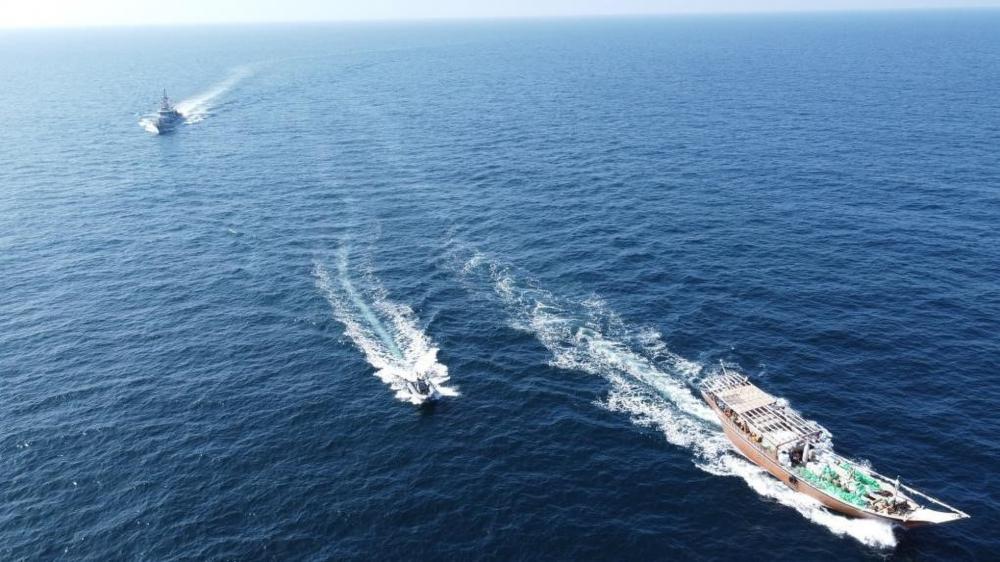
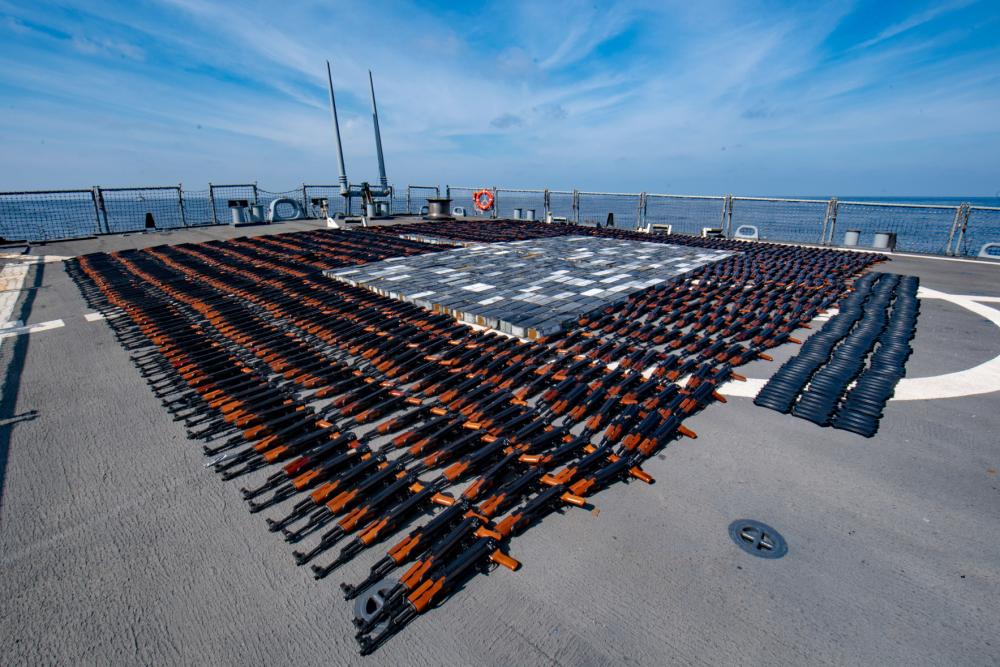
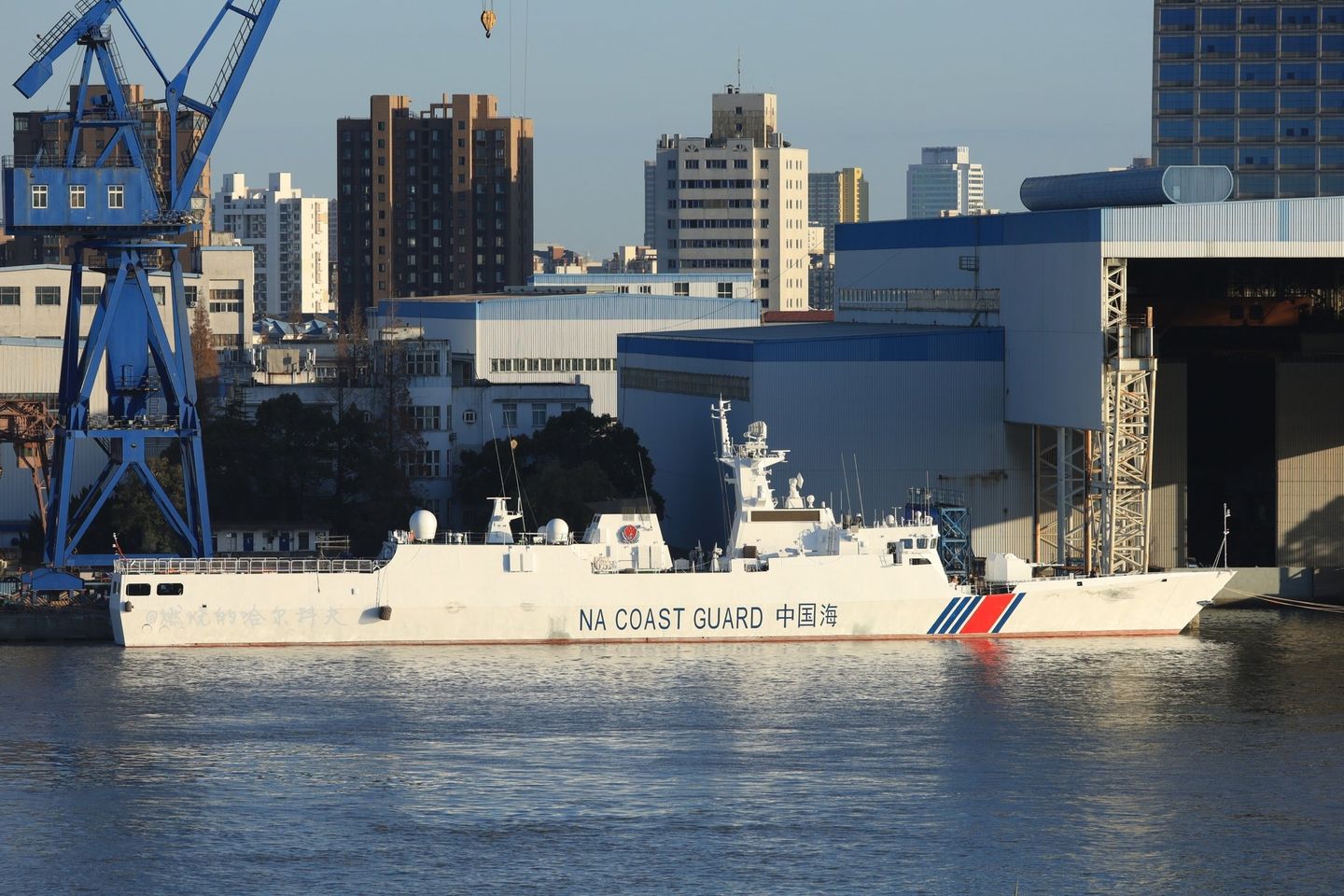
Regular readers know I have long been concerned that our cutters may not be adequately armed, if they are placed in a situation where they need to forcibly stop almost anything larger than a large cabin cruiser. It is not just that larger vessels are hard to sink. They may shoot back.
While I regard this as possible, but unlikely to occur in US waters (sort of like 9/11 was unlikely), it’s even more of concern, for countries with ongoing insurgencies, like the Philippines. Still, I don’t want to see the Coast Guard tested and found unprepared.
It becomes more likely to affect USCG personnel if they are overseas, doing counter piracy, doing counterinsurgency as we did in Vietnam, looking for weapons smugglers, or if we just stumble across terrorists enroute to their target and mistake them for drug smugglers. It also might be the work of an overconfident, vengeful drug lord.
In all probability, the situation will begin with an attempt to board a vessel of interest. It is probably most dangerous if they feign compliance, and the cutter comes close alongside. If the cutter sends a boarding party, it may be ambushed while they also attempt to disable the cutter. They would almost certainly make an effort to kill any exposed gunners.
That we might encounter small arms is a given, but I will look at other weapons, that might give them an edge, particularly if the cutter is surprised.
Any weapon that is man-portable, can be mounted on a pickup truck, or can be towed by one, can certainly be mounted on a vessel.
An aviation overwatch–fixed wing, helicopter, or UAV–could help us detect the presence of weapons, but it is not too hard to conceal weapons behind crates, in containers, or under canvas.
The most likely candidates are rocket propelled grenades, recoilless rifles/guns, heavy machine guns and autocannon, and Anti-Tank Guided Missiles (ATGM).
I will be using primarily Wikipedia and NavWeaps for reference. First, I will talk about the weapon type in general and then offer examples. Most of the examples are of Russian/Soviet or Chinese origin. They were chosen because these types seem very widely distributed and frequently fall into the hands of non-state actors.
Many of these weapons go back many decades, but that does not make them any less effective. Remember, we are still using the .50 caliber, a design that goes back to WWI.
As you go through the examples, I think you will see why I have advocated for weapons that can engage effectively from at least 4,000 yards.
Rocket Propelled Grenades:
From Wikipedia:
A rocket-propelled grenade (often abbreviated RPG) is a shoulder-fired missile weapon that launches rockets equipped with an explosive warhead. Most RPGs can be carried by an individual soldier and are frequently used as anti-tank weapons. These warheads are affixed to a rocket motor which propels the RPG towards the target, and they are stabilized in flight with fins. Some types of RPG are reloadable with new rocket-propelled grenades, while others are single-use.”
These were initially designed as anti-tank weapons but there are warheads optimized for other targets as well. Reportedly fifteen different countries have made dozens of different weapons of this type.
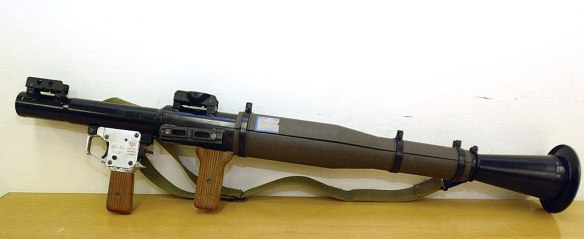
An RPG missile found in Lebanon with a manufacturing symbol of the Iranian Army displayed by the IDF intelligence branch. Photo: Israeli Defense Force
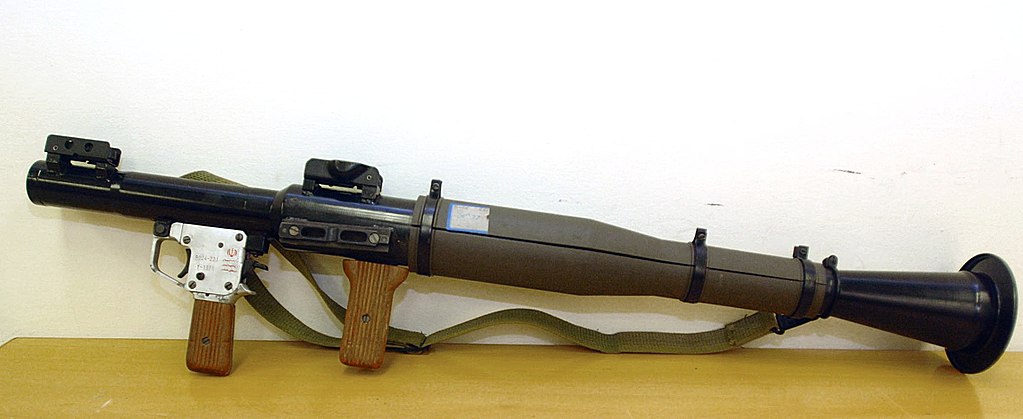
The RPG-7
The ruggedness, simplicity, low cost, and effectiveness of the RPG-7 has made it the most widely used anti-armor weapon in the world. Currently around 40 countries use the weapon; it is manufactured in several variants by nine countries. It is popular with irregular and guerrilla forces. The RPG has been used in almost all conflicts across all continents since the mid-1960s from the Vietnam War to the ongoing Syrian Civil War.
Reportedly 9,000,000 of these have been produced. After the AK-47, it may be the most ubiquitous weapon in the world. A version is even made in the US. Different projectiles are available with different warheads. Projectile weight varies from 2 kg (4.4 pounds) for the fragmentation round to 4.5 kg (9.9 pounds) for those with a thermobaric warhead. Effective range is 300 meters or about 330 yards. Accuracy is affected significantly by crosswind.
The weapon has been used by ISIS and Al Qaeda.
Recoilless Rifles/Guns:
A recoilless rifle, recoilless launcher or recoilless gun, sometimes abbreviated “RR” or “RCL” (for ReCoilLess) is a type of lightweight artillery system or man-portable launcher that is designed to eject some form of countermass such as propellant gas from the rear of the weapon at the moment of firing, creating forward thrust that counteracts most of the weapon’s recoil. This allows for the elimination of much of the heavy and bulky recoil-counteracting equipment of a conventional cannon as well as a thinner-walled barrel, and thus the launch of a relatively large projectile from a platform that would not be capable of handling the weight or recoil of a conventional gun of the same size. Technically, only devices that use spin-stabilized projectiles fired from a rifled barrel are recoilless rifles, while smoothbore variants (which can be fin-stabilized or unstabilized) are recoilless guns. This distinction is often lost, and both are often called recoilless rifles.