“Coast Guard Cutter Procurement: Background and Issues for Congress, Updated March 25, 2024” –CRS

USCGC David Duren is the first of three FRCs to be homeported in Astoria, OR

The Congressional Research Service (CRS) has again updated their “Report to Congress on Coast Guard Cutter Procurement”. (This link will always take you to the most recent edition of the report.) My last post on this evolving document was in reference to the October 19,2023 update. I have reproduced the one-page summary in full below. It gives a good picture of where we are. (The CRS report on icebreakers has also been updated.)

There have been other updates in the interim, but I have been looking forward to this one because it reports the 2024 budget as enacted into law, and (surprise, surprise) it includes two Fast Response Cutters that were not in the 2024 budget request. From page 35,

“Enacted The explanatory statement for Division C of H.R. 2882/P.L. 118-47 of March 23, 2024, provides the funding levels shown in the “Enacted” column of Table 1. The explanatory statement states that the increase of $200.0 million for the FRC program is for “no less than two Fast Response Cutters and the economic price adjustment for Fast Response Cutters funded in prior years”.”

There was a request for four additional FRCs in the Unfunded Priorities List. The House Appropriations Committee had wanted to fund four ($355M) while the Senate Appropriations Committee approved none. Apparently, they compromised. (Nice to see bipartisan support.)

Two Additional FRCs ($216M) are also in the 2025 budget request. (The appropriation amounts include addition funds for FRC program support over and above shipyard construction costs.)

If you do the math, you will see that there has been a departure from the original “Program of Record” (8 NSCs, 25 OPCs, and 58 FRCs for 91 total). The current program will provide 11 NSCs, 25 OPCs, and 67 FRCs (one of which severely damaged in a fire) for a total of 102 operations ships, 104 if we get the two additional FRCs in the FY2025 budget.

While this may look like a large gain, the number of large patrol cutters (36 over 1000 tons) is well below historical norms (=>41), while demands on the cutter fleet have grown substantially, no OPCs have been actually delivered, and the entire WMEC fleet is already well overage.


Summary
The Coast Guard’s program of record (POR), which dates to 2004, calls for procuring 8 National Security Cutters (NSCs), 25 Offshore Patrol Cutters (OPCs), and up to 71 Fast Response Cutters (FRCs) as replacements for 90 aging Coast Guard high-endurance cutters, medium-endurance cutters, and patrol craft.

National Security Cutters are the Coast Guard’s largest and most capable general-purpose cutters; they are replacing the Coast Guard’s 12 Hamilton-class high-endurance cutters. NSCs have an estimated average procurement cost of about $670 million per ship. Congress has fully funded the procurement of 11 NSCs—three more than the 8 in the Coast Guard’s POR. The Coast Guard’s proposed FY2024 budget requested $17.1 million in procurement funding for the NSC program. The Coast Guard’s proposed FY2025 budget requests $7.0 in procurement funding for the NSC program, and the Coast Guard’s FY2025 Unfunded Priorities List (UPL) includes an item for an additional $50.0 million in procurement funding for activities relating to the 11th NSC. Nine NSCs have entered service; the Coast Guard accepted delivery of the 10th on October 13, 2023, and plans to commission it into service in 2024. The 11th is under construction.

Offshore Patrol Cutters are intended to replace the Coast Guard’s 29 aged medium-endurance cutters. Coast Guard officials describe the OPC program and the Polar Security Cutter (PSC) program (which is covered in another CRS report) as the service’s highest acquisition priorities. The first four OPCs are being built by Eastern Shipbuilding Group (ESG) of Panama City, FL. The Coast Guard held a full and open competition for a new contract to build the next 11 OPCs (numbers 5 through 15). On June 30, 2022, the Coast Guard announced that it had awarded a fixed-price incentive (firm target) contract to Austal USA of Mobile, AL, to produce up to 11 offshore patrol cutters (OPCs). The Coast Guard’s proposed FY2024 budget requested $579.0 million in procurement funding for the construction of the sixth OPC and other OPC program costs. The Coast Guard’s proposed FY2025 budget requests $530.0 million in procurement funding for the construction of (once again) the sixth OPC and other OPC program costs, and states that the requested FY2024 procurement funding would now be for the construction of the fifth OPC rather than the sixth.

A June 2023 Government Accountability Office (GAO) report on the OPC program states “The OPC’s total acquisition cost estimate increased from $12.5 billion to $17.6 billion between 2012 and 2022…. In addition, the program incurred a 1.5-year delay in the delivery of the first four OPCs…. GAO also found indicators that the shipbuilder’s significant level of complex, uncompleted work may lead to further delays.”

Fast Response Cutters are considerably smaller and less expensive than OPCs; they are replacing the Coast Guard’s 49 aging Island-class patrol boats. The Coast Guard’s FY2020 budget submission estimated the total acquisition cost of the 58 cutters intended for domestic use at $3.748 billion, or an average of about $65 million each. A total of 65 FRCs have been procured through FY2023. As of March 25, 2024, 54 FRCs have been commissioned into service. The Coast Guard’s proposed FY2024 budget requested $20.0 million in procurement funding for the FRC program, and the Coast Guard’s FY2024 UPL included an item for $400.0 million in procurement funding for procuring four more FRCs at an average cost of $100 million each, to provide increased Coast Guard presence and engagement with allied and partner countries in the Indo-Pacific region. The Coast Guard’s proposed FY2025 budget requests $216.0 million in procurement funding for the FRC program for the procurement of two more FRCs for operations in the Indo-Pacific region, plus additional FRC program costs.

“BOLLINGER SHIPYARDS DELIVERS US COAST GUARD CUTTER DAVID DUREN (FRC 1156) TO U.S. COAST GUARD” –Bollinger News Release

USCGC David Duren is the first of three FRCs to be homeported in Astoria, OR

Below is a Bollinger news release.

This delivery is a little more than 16 weeks after the delivery of USCGC Melvin Bell (WPC-1155) on November 16, 2023. There are still nine more on order, and the FY 2025 budget request asks for two more. The Coast Guard has said all 65 on order will be delivered by 2025, but that seems unrealistic. Delivery rates have generally been five per year or less, and it appears there will be only three in 2024. Looks like deliveries will extend into at least 2026.

The next Fast Response Cutter, the future USCGC Florence Finch (WPC-1157) will also go to Astoria and is expected to be delivered June 13, 2024. Sector Columbia River will have to wait a bit for their third FRC since WPC-1158 is expected to go to Kodiak with delivery expected October 24, 2024.

As noted below, deliveries are made at Key West. Typically, it has been about three months from delivery to commissioning of units this class.


LOCKPORT, La., — (March 18, 2024) – Bollinger Shipyards (“Bollinger”) recently delivered the USCGC David Duren to the U.S. Coast Guard in Key West, Florida. This is the 182nd vessel Bollinger has delivered to the U.S. Coast Guard over a 35-year period and the 56th Fast Response Cutter (“FRC”) delivered under the current program.

“We’re incredibly proud to deliver the USCGC David Duren, the first of three Fast Response Cutters to be homeported in Astoria, Oregon,” said Bollinger President & CEO Ben Bordelon. “We’re confident that pound for pound, the quality and capabilities of the FRC platform are unmatched and that this vessel will outperform its mission requirements and expectations in the challenging conditions where it will operate in the Pacific Northwest. Our unique experience building for the Coast Guard is unparalleled and has shown time and time again that we successfully deliver the highest quality vessels on a reliable, aggressive production schedule. We look forward to continuing our historic partnership with the U.S. Coast Guard.”

The USCGC David Duren will be the first of three FRCs to be homeported in Sector Columbia River, which is known as “The Protectors of the Pacific Northwest.” The sector is responsible for coastal safety, security, and environmental protection, as well as protecting and securing vital infrastructure, rescuing mariners in peril at sea, enforcing federal law, maintaining navigable waterways, and responding to all hazards impacting the maritime transportation system along the Oregon coast.

As the U.S. Congress continues to debate Fiscal Year 2024 government funding, the future of the Fast Response Cutter Program remains uncertain. While the House Homeland Security Appropriations Bill included funding for four new FRCs, the Senate bill did not include funding for any new vessels. The prospect for a year-long Continuing Resolution (CR) at last year’s funding level introduces a critical level of uncertainty, as funding levels continue to lag behind the meteoric rise in raw material and input costs. The Coast Guard’s Fiscal Year 2025 Budget to Congress includes procuring two more FRCs to provide increased Coast Guard presence and engagement with allied and partner countries in the Indo-Pacific region. Last year, Adm. Linda Fagan, the Commandant of the U.S. Coast Guard, said, “The Indo-Pacific is clearly a consequential region for America’s future. The United States Indo-Pacific Strategy identifies an expanded role for the U.S. Coast Guard as a top Administration priority as we seek to ensure a region that is free and open. The U.S. Coast Guard will continue its long history of operational presence in the region with additional cutter patrols and deployable specialized forces.”

Each FRC is named for an enlisted Coast Guard hero who distinguished themselves in the line of duty. Boatswain’s Mate Master Chief David N. Duren was one of the most iconic figures in the history of Coast Guard surfmen. Considered perhaps the finest boat driver in the history of the modern Coast Guard, he is remembered by his shipmates and mentees not only for his expertise in seamanship, but also for his leadership and character. Between 1979 and 1983, Duren deployed on search and rescue cases more frequently than any other officer-in-charge and, in one year, executed over 250 cases. During this tour, Duren received two Coast Guard Medals for exceptional heroism, and the Douglas A. Munro Inspirational Leadership Award. Perhaps more remarkable was the fact that the personnel under his watch at Depoe Bay earned a total of 24 medals and awards.

ABOUT THE FAST RESPONSE CUTTER PLATFORM

The FRC is an operational “game changer,” according to senior Coast Guard officials. FRCs are consistently being deployed in support of the full range of missions within the United States Coast Guard and other branches of our Armed Services due to its exceptional performance, expanded operational reach and capabilities, and ability to transform and adapt to the mission. FRCs have conducted operations as far as the Marshall Islands—a 4,400 nautical mile trip from their homeport. Measuring in at 154 feet, FRCs have a flank speed of 28 knots, state of the art C4ISR suite (Command, Control, Communications, Computers, Intelligence, Surveillance, and Reconnaissance), and stern launch and recovery ramp for a 26-foot, over-the-horizon interceptor cutter boat.

ABOUT BOLLINGER SHIPYARDS

Bollinger Shipyards (www.bollingershipyards.com) has a 78-year as a leading designer and builder of high-performance military patrol boats and salvage vessels, research vessels, ocean-going double hull barges, offshore oil field support vessels, tugboats, rigs, lift boats, inland waterways push boats, barges, and other steel and aluminum products from its new construction shipyards as part of the U. S. industrial base. Bollinger has 13 shipyards, all strategically located throughout Louisiana and Mississippi with direct access to the Gulf of Mexico, the Mississippi River and the Intracoastal Waterway. Bollinger is the largest vessel repair company in the Gulf of Mexico region.

“Coast Guard Cutter Alert returns home to Astoria for the last time” / Change of Homeport –News Release

02.02.2024, Crewmembers of the Coast Guard Cutter Alert (WMEC 630) stand behind cocaine bales seized from a drug smuggling vessel in Eastern Pacific waters during the cutter’s last patrol out of its current homeport of Astoria, Oregon, Feb. 7, 2024. The 4,950 kg of cocaine seized is estimated to be valued at more than $143 million. (U.S. Coast Guard photo)

Note, I made an error in my original commentary. USCGC Active is still in commission and homeported in Port Angeles, Washington. I have made corrections to the text. 

Below is a U.S. Coast Guard Pacific Area news release. The news release is significant because it demonstrates that 210s are still doing useful work, despite being almost 55 years old in this particular case.

But the news release also notes that, “… the cutter will shift homeport in June to be stationed in Cape Canaveral, Florida.” After the transfer, Pacific Area will have only three WMECs, USCGC Alex Haley in Kodiak, the newly arrived 270 USCGC Harriet Lane in Hawaii, and USCGC Active in Port Angeles, WA.

When I retired in 1991 PACAREA had ten WHECs and I believe seven WMECs. With Alert’s departure, they will be down to 9 large patrol cutters, 6 NSCs and three MECs.

The first four Offshore Patrol Cutters are expected to be assigned to the Pacific Area, but they have been substantially delayed.

The next two Fast Response Cutters USCGC David Duren (WPC-1156) and USCGC Florence Finch (WPC-1157) will be homeported in Alert’s old homeport of Astoria. I would expect that the first will arrive in Astoria about the same time Alert departs.


Feb. 26, 2024

Coast Guard Cutter Alert returns home to Astoria for the last time

ASTORIA, Ore. – The U.S. Coast Guard Cutter Alert (WMEC 630) and its crew returned to their homeport, Monday, after a 59-day counter-narcotics patrol in the Eastern Pacific Ocean.

This patrol is scheduled to be the cutter’s last patrol out of its current homeport of Astoria, Oregon.

During the patrol, the Alert’s embarked helicopter crew from, the Helicopter Interdiction Tactical Squadron (HITRON), based out of Jacksonville, Florida, sighted a suspected “go-fast” vessel driving on a northerly course and alerted the cutters crew. The crew responded and launched both of its small-boat pursuit teams. Due to the vessel’s refusal to stop when ordered, the HITRON helicopter disabled the engines of the “go-fast” and monitored until the pursuit crew gained control of the vessel. Simultaneously, the second small boat team recovered dozens of bales of cocaine jettisoned into the ocean by the suspected smugglers. The crew then worked tirelessly through the night to haul in and account for all 4,950 kg of cocaine, valued at more than $143 million.

The interdiction is among the Coast Guard’s largest single interdictions in the Eastern Pacific and represents a major blow to the criminal organizations attempting to smuggle illicit narcotics through the maritime domain. Additionally, it serves as the capstone in Alert’s time in Coast Guard Pacific Area, as the cutter will shift homeport in June to be stationed in Cape Canaveral, Florida as part of the larger Coast Guard Force Alignment Initiative.

“The crew worked in the margins, and we won big in the margins,” said Cmdr. Lee Crusius, commanding officer Coast Guard Cutter Alert. “The return on investment from the Coast Guard to the American people continues to be demonstrated by our ability to project capabilities and rule of law within the maritime domain. Day in and day out, the women and men of our service are doing important business, protecting vital international interests from those who wish to subvert order.”

The smuggling of cocaine represents a large threat to not only the health of nations and rule of law, but destruction of fragile ecosystems in its manufacturing and movement.

The cutter Alert was commissioned in 1969 and is the newest of three 210-foot Reliance-class Medium Endurance cutters stationed on the West Coast. It performs a variety of missions to protect Americans and American interests in the Northern and Eastern Pacific Ocean.

For information on how to join the U.S. Coast Guard, visit GoCoastGuard.com to learn about active duty and reserve, officer, and enlisted opportunities. Information on how to apply to the U.S. Coast Guard Academy can be found at USCGA.edu.

“Research and Development Center projects continue to enhance Coast Guard mission success” –CG-9

The Coast Guard Research and Development Center workforce is based in New London, Connecticut. U.S. Coast Guard photo.

Below is a news release from the Acquisitions Directorate (CG-9). If you follow the links there is a huge amount of information.

There is a lot of ongoing work, including cooperation with 4th Fleet in their efforts to operationalize unmanned systems. I had hoped the Coast Guard was doing that, and it’s gratifying to see they in fact are.

The projects listed are wide ranging and may potentially impact every mission area.

Perhaps the biggest surprise was that they are working on detect and avoid systems for small UAS. It appears they are looking at beyond visual line of sight UAS that could be used by the Fast Response Cutters and other vessels that do not have a flight deck. Apparently, they are also looking at using Unmanned Surface Vessels (USVs) to fire warning shots, presumably to stop drug runners. Would that mean they would also use USVs for disabling fire?

They are also looking at counter UAS alternatives, at ways to operate more effectively in polar regions, maritime domain awareness, and a lot more. It’s very impressive, especially when you consider how little the Coast Guard spends on R&D.


In fiscal year 2023, the Coast Guard Research and Development Center in New London, Connecticut, supported a research portfolio of 54 projects, covering the full scope of the Coast Guard’s missions. This video highlights a few of those projects, including beyond visual line of sight unmanned aircraft system detect and avoid technology, cutter-based unmanned systems integration with the Ship Control and Navigation Training System, International Maritime Organization polar code validation through advanced simulation modeling, and laser corrosion removal.

View video here.

Related: FY24 RDT&E Project Portfolio

For more information: Research and Development Center page and Research, Development, Test & Evaluation and Innovation Program page


“Fast Response Cutter Laydown, Report to Congress, November 15, 2023” –USCG

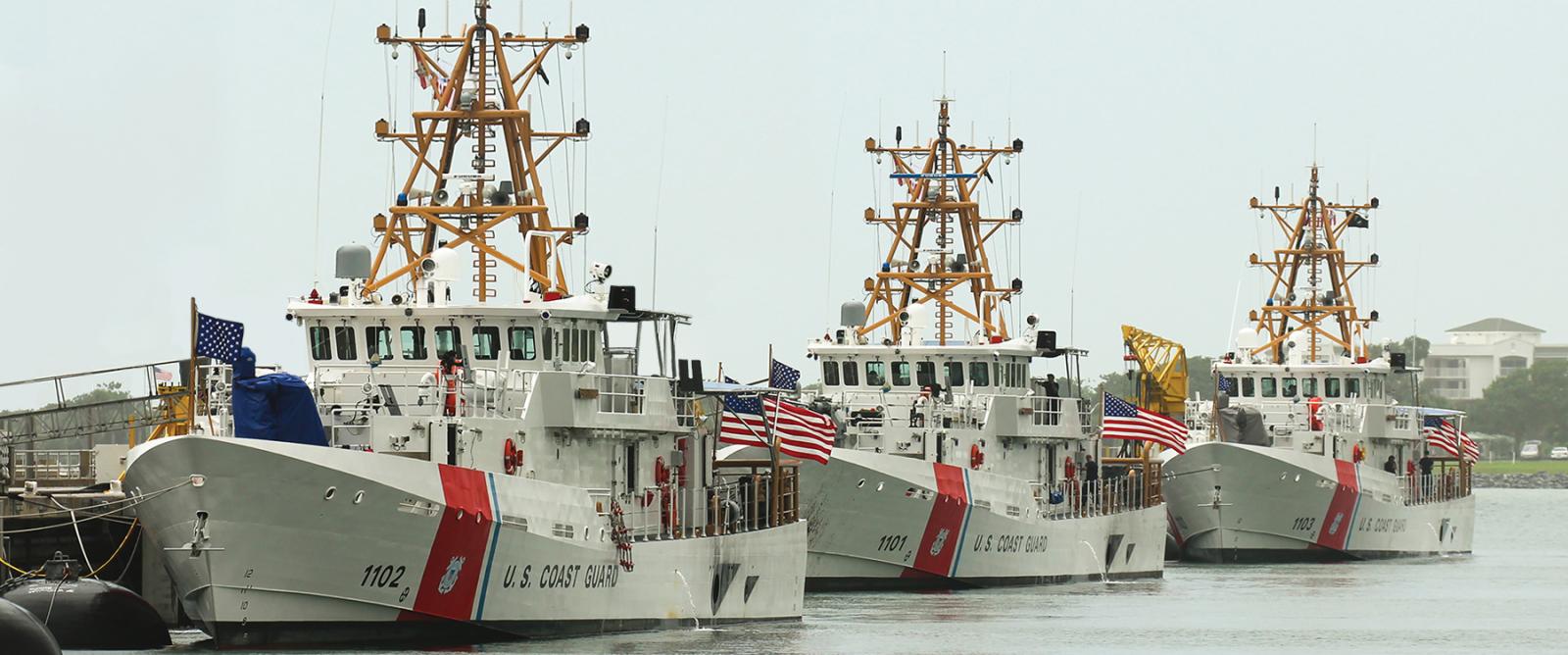
The first three fast response cutters—the USCGC Richard Etheridge (WPC-1102), Bernard C. Webber (WPC-1101), and William Flores (WPC-1103).
U.S. COAST GUARD

Just wanted to alert anyone interested to the existence of this document.

Don’t think there are any real surprises here, but homeports are a bit more complete than the Wikipedia information.

It does further clarify the fate of USCGC Benjamin Dailey (WPC-1123) that suffered a fire while in dry dock. The ship was found beyond economical repair, decommissioned, and is stored awaiting ultimate disposition. That means that the current plan is for 64 operational FRCs with a request outstanding for four more. It may mean at least one of the future FRCs will be based in Pascagoula, as a replacement.

K-LOGIR, Korean Low cOst Guided Imaging Rocket and Launcher

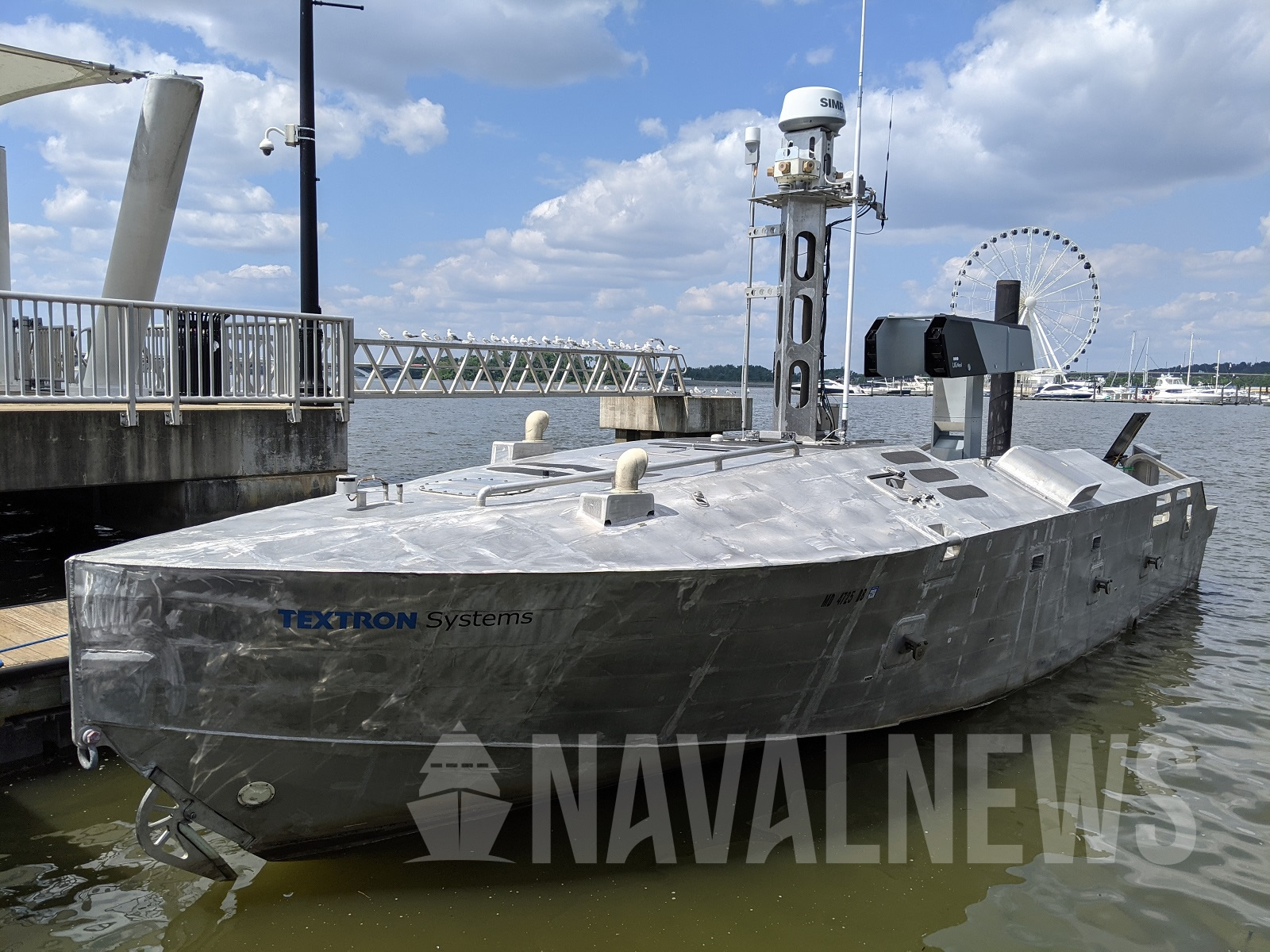
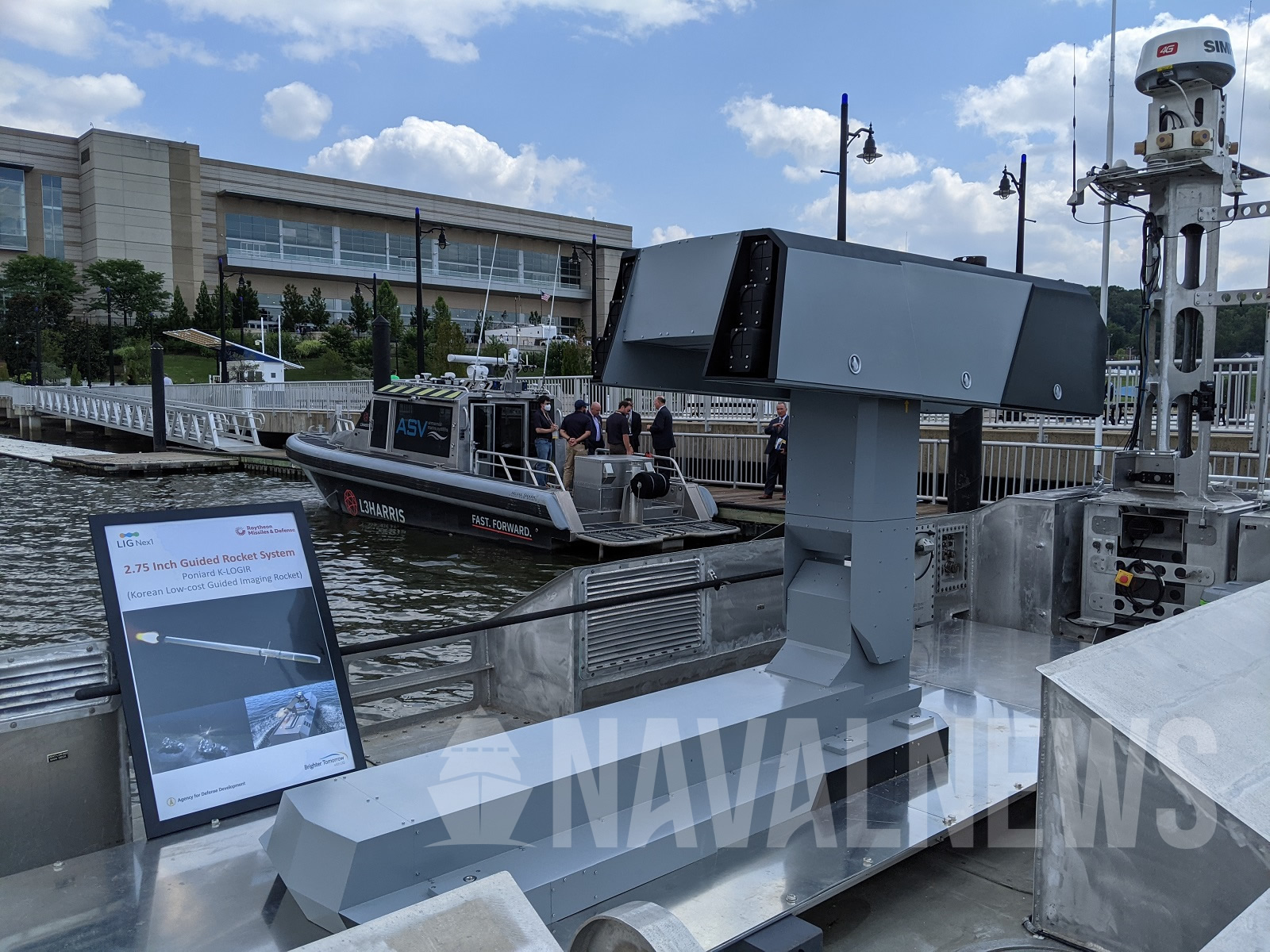
K-LOGIR launcher fitted on a Textron CUSV USV at Sea Air Space 2021. The system was showcased by Raytheon and LIG Nex1.

Naval News recently did a post highlighting a 4th Fleet live fire test combining a Korean developed fire and forget guided rocket system with the Common Uncrewed Surface Vessel (CUSV) cued to a target by a Radiosonde UAS for a fully uncrewed kill chain.

The “Poniard” Korean-Low cOst Guided Imaging Rocket (K-LOGIR) is closely related to the APKWS, both being based on the 70mm Hydra unguided rocket. Unlike the semi-active laser homing APKWS, the K-LOGIR is a fire-and-forget system allowing multiple simultaneous engagements.

Most of the reports I have read on this exercise are unclear if six missiles hit a single target or if six missiles hit six different targets, but this Defense Mirror report, “Textron’s Unmanned Boat Uses South Korean Weapon to Engage Multiple Targets.” makes it clear that multiple targets were engaged in a single salvo.

I don’t fully understand how they designate different targets for the missiles in the salvo, but it may be that they are sending them to different waypoints before they initiate their search.

The ability to engage several targets simultaneously makes this system attractive for countering surface swarm tactics like those that might be encountered by PATFORSWA, but for the Ports, Waterways, and Coastal Security mission, the APKWS’ semi-active laser homing might be a better solution, in that we are unlikely to have to engage numerous targets in a single salvo and we may want to target particular parts of an adversary’s vessel or perhaps engage low-level air targets such as UAS, helicopters, or general aviation aircraft. Presumably, APKS could be fired from the same launcher.

Textron USV fitted with LIG Next1’s Poniard guided rocket. Textron photo.

Take a look at the launcher above and below. Here it is mounted on an unmanned 39-foot boat. In the photo above you can see that it traverses and elevates. It appears to hold up to six rockets. It might be an appropriate way to arm Coast Guard patrol boats and larger cutters with APKWS, but “Vampire” might be even simpler.

K-LOGIR launcher fitted on a Textron CUSV USV at Sea Air Space 2021. The system was showcased by Raytheon and LIG Nex1.

I would really like to see 4th Fleet make more effort to publicize their experimentation efforts. I’m surprised I was not able to find a YouTube video that documented this test and I have seen no mention of it on the 4th Fleet website.

I am also curious to know if the Navy’s 39′ CUSV could be operated from the stern ramp of a National Security Cutter. Interoperability?

“Combined Maritime Forces, U.S. Coast Guard Make $21 Million Drug Seizure in the Gulf of Oman” –NAVCENT

GULF OF OMAN (Nov. 14, 2023) Illegal narcotics seized from a stateless vessel are stacked on the deck of the U.S. Coast Guard Sentinel-class fast response cutter USCGC Emlen Tunnell (WPC 1145) in the Gulf of Oman, Nov. 14. Emlen Tunnell was operating under Combined Task Force 150, one of five task forces under Combined Maritime Forces, the largest multinational naval partnership in the world. CTF 150 focuses on maritime security operations in the Gulf of Oman, Arabian Sea and Indian Ocean. (Photo by U.S. Coast Guard courtesy photo)

Below is a NAVCENT news release.


Combined Maritime Forces, U.S. Coast Guard Make $21 Million Drug Seizure in the Gulf of Oman

By U.S. Naval Forces Central Command Public Affairs | November 20, 2023

MANAMA, Bahrain —

A U.S. Coast Guard cutter crew seized about $21 million worth of illegal drugs from a stateless vessel while operating in the international waters of the Gulf of Oman, Nov. 14.

Coast Guardsmen from the Sentinel-class fast response cutter USCGC Emlen Tunnell (WPC 1145), working under the command of Combined Maritime Forces’ Combined Task Force (CTF) 150, seized 2,000 kilograms of hashish and 384 kilograms of methamphetamine from the vessel during an interdiction operation.

“This new seizure shows once again the operational effectiveness of Combined Maritime Forces assets and nations,” said French navy Capt. Yannick Bossu, CTF 150 commander. “It illustrates that nations from all around the world are committed to regional maritime security in the Indian Ocean alongside their regional partners.”

This event marks the fifth time in recent months the French-led CTF 150 has interdicted illicit narcotics at sea. In those previous operations, CTF ships seized more than 4,522 kilograms of methamphetamine, heroin, and hashish from stateless vessels during interdiction operations, with a street value of more than $94 million.

CTF 150 is one of five task forces under Combined Maritime Forces, the largest multinational naval partnership in the world. CTF 150 focuses on maritime security operations in the Gulf of Oman, Arabian Sea and Indian Ocean.

Since 2021, Combined Maritime Forces has seized more than $1 billion in illegal drugs while patrolling waters across the Middle East.

The 38-nation naval partnership upholds the international rules-based order by promoting security and stability across 3.2 million square miles of water encompassing some of the world’s most important shipping lanes.

APKWS for Counter Drone

At about $30,000 each APKWS is a low-cost way to provide a precision counter to a number of threats.

We have already seen reports of the 70mm APKWS guided rocket being used against relatively small Class 2 unmanned aerial systems.

A close-up of the modified CROWS II, a small remote weapons system mount, fitted with the LAND-LGR4 launcher and the added sensor or other system (silver/gray rather than tan). US Army

Here we have a better picture of how the system might be deployed on the PATFORSWA Webber class patrol craft.

The PATFORSWA cutters already have the air search/detection or “hunter” part of a C-UAS system. Reportedly their Mk38 systems have been upgraded to 30mm capable of firing airburst munitions that can provide close in UAS kill capability. Adding a CROWS II RWS with LAND-LGR4 launcher and a laser designator mounted on the O-1 deck, above and behind the Mk38, would allow them to begin engaging UAS and other threats at triple the effective range of the 30mm.

“U.S. Coast Guard Cutter Terrell Horne returns to home port following a 52-day multi-mission patrol in the Eastern Pacific” –CG News

PERU, 10.06.2023, Courtesy Photo, USCG District 11
The crew of the U.S. Coast Guard Cutter Terrell Horne conducts a patrol in the Eastern Pacific Ocean in support of Operation Southern Shield 2023, October 2023. The Coast Guard recently completed the first high-seas boardings and inspections off the coast of Peru under a newly adopted multi-lateral agreement to monitor fishing and transshipment operations within the South Pacific Regional Fisheries Management Organization (SPRFMO) Convention Area. (U.S. Coast Guard photo)

Below is a news release from Coast Guard News. This patrol was unusual enough to draw some special attention. It is not a typical patrol craft mission. It involved the pairing of a buoy tender with a “Fast Response Cutter” (FRC) to put two units far from their homeports. The Pacific Area has done this before in the Western Pacific, but I think this may be the first time it has been done in the Eastern Pacific off the West coast of South America. Pacific Area Webber class FRCs have previously conducted drug enforcement missions in the Eastern Pacific at least as far South as Central America. We talked about portions of this multiunit deployment earlier, “Buoy Tender, FRC, C-130 Used for International Fisheries Enforcement–Operation Southern Shield.” USCGC Alder, homeported in San Franciso, was the buoy tender involved.

The emphasis of the operation was international fisheries enforcement, but USCGC Terrell Horne still managed to do a bit of drug enforcement. I look forward to seeing the report of USCGC Alder’s portion of the operation.

09.25.2023, Courtesy Photo, USCG District 11
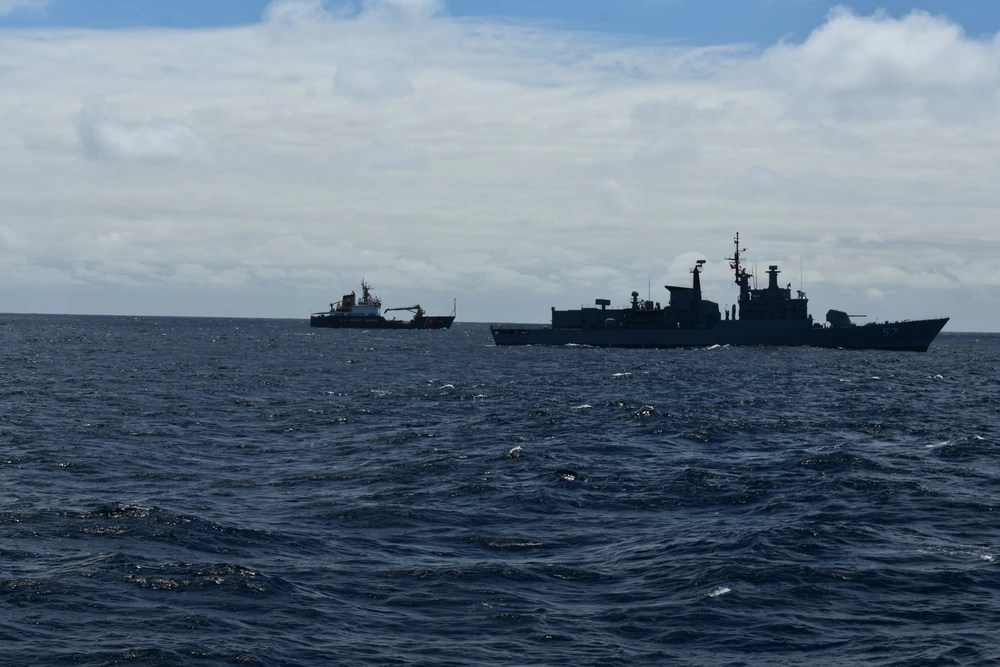
U.S. Coast Guard Cutter Alder (background) transits in formation alongside Peru BAP (Buque Armada Peruana) Bolognesi (FM-57) as it prepares for the next exercise during GALAPEX 2023, Sept.25, 2023. GALAPEX is a recurring multi-national maritime exercise led by Ecuador and included participation of delegates from Argentina, Brazil, Chile, Colombia, Costa Rica, the European Union, France, Italy, Mexico, Panama, Peru, the United Kingdom, and the United
States. (U.S. Coast Guard photo)

Nov. 8, 2023

U.S. Coast Guard Cutter Terrell Horne returns to home port following a 52-day multi-mission patrol in the Eastern Pacific

Coast Guard District Eleven

SAN PEDRO, Calif. — The U.S. Coast Guard Cutter Terrell Horne and crew returned to their home port in Los Angeles/Long Beach Tuesday after a 52-day patrol across the Eastern Pacific.

The crew of the Terrell Horne deployed in support of multiple missions, including Operations Green Flash, Albatross, Martillo, and Southern Shield, within the 11th Coast Guard District’s area of responsibility. During the patrol, Terrell Horne’s crew conducted a range of missions encompassing law enforcement, counter-drug operations, illegal, unreported, and unregulated fishing enforcement, and search and rescue operations.

“The crew of the Terrel Horne lived up to the cutter’s namesake in every way during this patrol. Operation Southern Shield allowed the cutter to showcase the versatility of the Fast Response Cutter. This operation brought a patrol boat and a buoy tender almost 4,000 nautical miles from home, conducting operations and international engagements with Mexico, Ecuador, Peru, and Costa Rica, said Chief Warrant Officer Jason Bussell, the commanding officer of the Coast Guard Cutter Terrell Horne. “The crew excelled in counter-illegal fishing missions, search and rescue, and counter-drug operations. Working alongside other Coast Guard assets, the crew was able to interdict a drug smuggling vessel and assisted in the seizure of nearly 2,000 lbs of contraband.”

The Coast Guard commissioned the Terrell Horne as the 31st Fast Response Cutter on March 22, 2019. Coast The cutter is named for Senior Chief Terrell Horne III, who died from injuries sustained while conducting maritime law enforcement operations off the California coast in December 2012. He was the executive petty officer aboard the Coast Guard Cutter Halibut at the time. For his heroic actions, the Coast Guard posthumously promoted Horne to senior chief petty officer.

For information on how to join the U.S. Coast Guard, visit GoCoastGuard.com to learn about active duty, reserve, officer and enlisted opportunities. Information on how to apply to the U.S. Coast Guard Academy can be found here.

“Coast Guard Cutter Procurement: Background and Issues for Congress, Updated Oct 19, 2023” –CRS

US Capital West Side, by Martin Falbisoner

The Congressional Research Service has again updated their “Report to Congress on Coast Guard Cutter Procurement”. (This link will always take you to the most recent edition of the report.) My last post on this evolving document was in reference to a August 30, 2022 update. I have reproduced the one-page summary in full below. It gives a good picture of where we are.

I will try to provide a little more detail after I get a chance to read the full report. Until then, remember that the full price of the ships includes much more than just the shipyard’s building costs. In addition to government furnished equipment, it includes the crew cost before the ship is accepted, their accommodations at the building site, and their training and travel. It may also include supporting shoreside infrastructure.


Summary
The Coast Guard’s program of record (POR), which dates to 2004, calls for procuring 8 National Security Cutters (NSCs), 25 Offshore Patrol Cutters (OPCs), and 65 Fast Response Cutters (FRCs) as replacements for 90 aging Coast Guard high-endurance cutters, medium-endurance cutters, and patrol craft.

National Security Cutters are the Coast Guard’s largest and most capable general-purpose cutters; they are replacing the Coast Guard’s 12 Hamilton-class high-endurance cutters. NSCs have an estimated average procurement cost of about $670 million per ship. Congress has fully funded the procurement of 11 NSCs—three more than the 8 in the Coast Guard’s POR—including the 10th and 11th in FY2018, which (like the 9th NSC) were not requested by the Coast Guard. The Coast Guard’s proposed FY2024 budget requests $17.1 million in procurement funding for the NSC program for post-delivery activities for the 10th and 11th NSCs, and for class wide activities. Nine NSCs have entered service; the Coast Guard accepted delivery of the 10th on October 13, 2023, and plans to commission it into service in 2024. The 11th is under construction.

Offshore Patrol Cutters are intended to replace the Coast Guard’s 29 aged medium-endurance cutters. Coast Guard officials describe the OPC program and the Polar Security Cutter (PSC) program (which is covered in another CRS report) as the service’s highest acquisition priorities. The first four OPCs are being built by Eastern Shipbuilding Group (ESG) of Panama City, FL. The Coast Guard held a full and open competition for a new contract to build the next 11 OPCs (numbers 5 through 15). On June 30, 2022, the Coast Guard announced that it had awarded a fixed-price incentive (firm target) contract to Austal USA of Mobile, AL, to produce up to 11 offshore patrol cutters (OPCs). The Coast Guard’s proposed FY2024 budget requests $579.0
million in procurement funding for the construction of the sixth OPC, the procurement of Long Lead Time Materials (LLTM) for the seventh OPC, and other program costs.

One oversight issue for Congress concerns substantial cost growth and schedule delays in the OPC program. A June 2023 Government Accountability Office (GAO) report on the OPC program states “The OPC’s total acquisition cost estimate increased from $12.5 billion to $17.6 billion between 2012 and 2022. The program attributes the 40 percent increase to many factors, including restructuring the stage 1 contract [for OPCs 1 through 4] and recompeting the stage 2 requirement [for OPCs 5 through 15] in response to a disruption caused by Hurricane Michael, and increased infrastructure costs for homeports and facilities, among other things. In addition, the program incurred a 1.5-year delay in the delivery of the first four OPCs due to Hurricane Michael and issues related to manufacturing the cutter’s propulsion system. GAO also found indicators that the shipbuilder’s significant level of complex, uncompleted work may lead to further delays.”

Fast Response Cutters are considerably smaller and less expensive than OPCs; they are replacing the Coast Guard’s 49 aging Island-class patrol boats. The Coast Guard’s FY2020 budget submission estimated the total acquisition cost of the 58 cutters intended for domestic use at $3.748 billion, or an average of about $65 million per cutter. A total of 65 FRCs have been procured through FY2023. As of August 10, 2023, 53 FRCs have been commissioned into service. The Coast Guard’s proposed FY2024 budget requests $20.0 million in procurement funding for the FRC program; this request does not include funding for procuring any additional FRCs. The Coast Guard’s FY2024 Unfunded Priorities List (UPL) includes, as one of its items, an unfunded priority for procuring four more FRCs (which would be the 66th through 69th in the program) for a combined procurement cost of $400.0 million, or an average of $100 million per
cutter, to provide increased Coast Guard presence and engagement with allied and partner countries in the Indo-Pacific region