“Coast Guard Cutter Munro returns home following 118-day, 23,000-mile Western Pacific patrol” –CG News

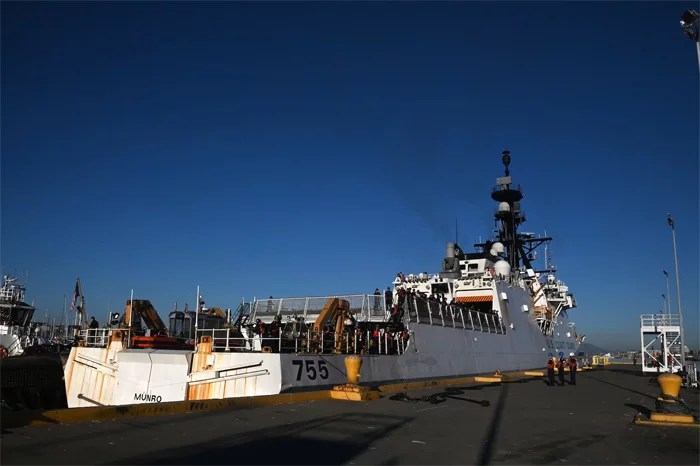
USCGC Munro returns to Alameda after Western Pacific deployment in support of the Seventh Fleet. USCG photo. 

Below is a Coast Guard News release. Notably this is the third National Security Cutter WestPac deployment this year. It provides a good summary of the cutter’s activities and touches on some interesting things happening in the Western Pacific including the Information Fusion Center in Singapore and the growing cooperation with the Japanese and S. Korean Coast Guards.

The link above includes lots more photos but I think the ones above and immediately below give a good view of the revised boat handling arrangement on the stern.
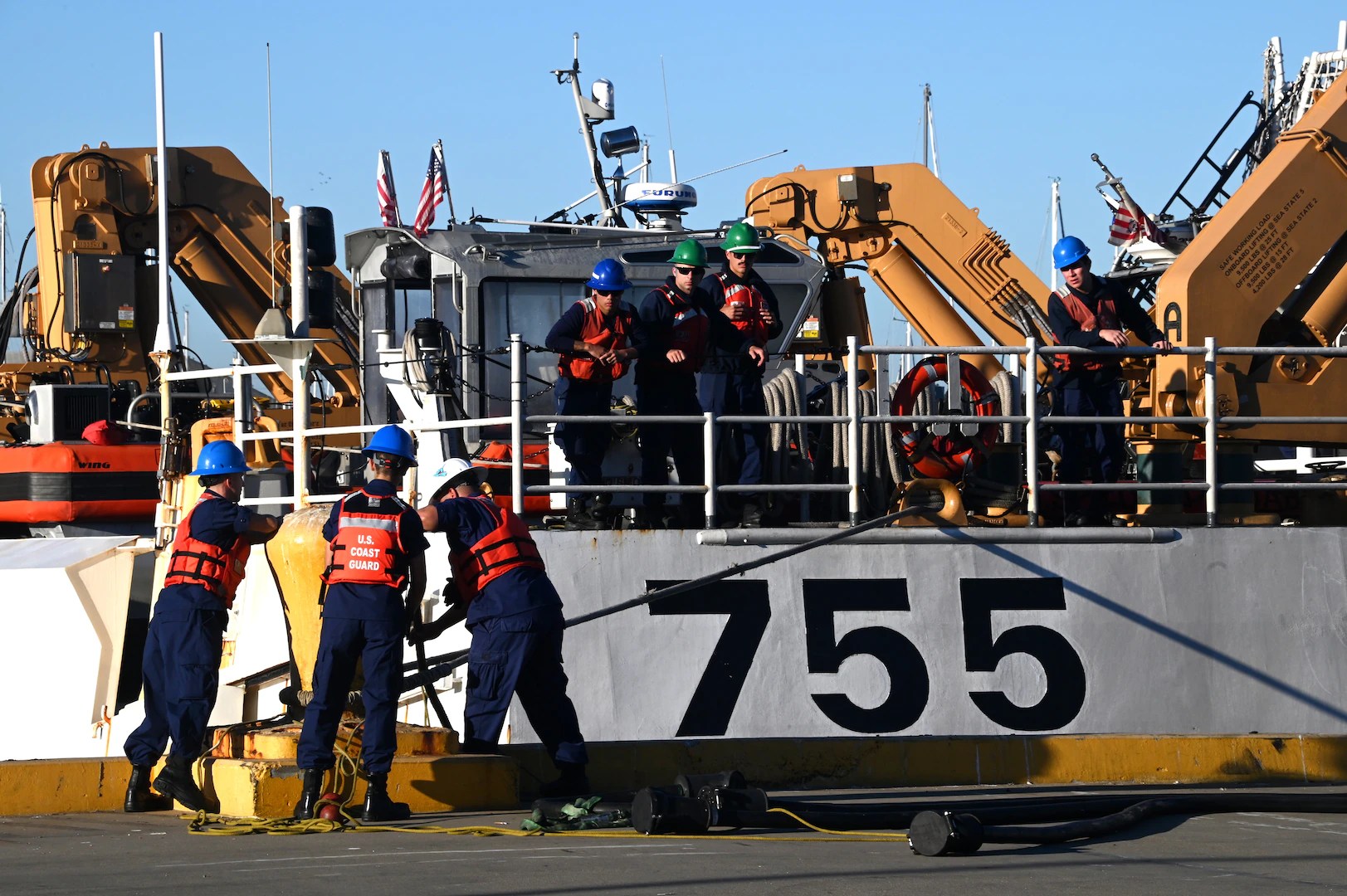
USCGC Munro, October 2023. USCG photo.

The photos below are from earlier reports linked in the news release.

Royal Navy vessel HMS Spey (P234) (foreground) conducts coordinated ship maneuvers with U.S. Coast Guard Cutter Munro (WMSL 755) Sept. 17, 2023, in the South China Sea. Munro is deployed to the Indo-Pacific to advance relationships with ally and partner nations to build a more stable, free, open and resilient region with unrestricted, lawful access to the maritime commons. (U.S. Navy photo by Chief Petty Officer Brett Cote)

(From left) U.S. Coast Guard Cutter Munro (WMSL 755), Royal Thai Navy ship HTMS Pattani (511), and Royal Thai Navy ship HTMS Klongyai (522) steam in formation during an at-sea engagement Sept. 1, 2023, in the South China Sea. Munro is deployed to the Indo-Pacific to advance relationships with ally and partner nations to build a more stable, free, open and resilient region with unrestricted, lawful access to the maritime commons. (U.S. Navy photo by Chief Petty Officer Brett Cote)


Oct. 18, 2023

Coast Guard Cutter Munro returns home following 118-day, 23,000-mile Western Pacific patrol

ALAMEDA, Calif. — The crew of U.S. Coast Guard Cutter Munro (WMSL 755) returned to their Alameda homeport Wednesday following a 23,000-mile, multi-month Western Pacific patrol operating in support of U.S. Navy’s Seventh Fleet by conducting multiple engagements with partner nations promoting a free and open Indo-Pacific.

Munro departed Alameda in June and was the Coast Guard’s third national security cutter deployed to the Indo-Pacific region this year.

The Indo-Pacific region stretches from the United States Pacific coastline to the Indian Ocean; it is home to over half of the world’s population and accounts for two-thirds of the global economy.

Throughout the 118-day patrol, Munro participated in international engagements in Japan, Republic of Korea, Malaysia, Singapore, and Brunei, and with ships at sea from the Royal Thai Navy and United Kingdom Royal Navy.

“This opportunity to work with our allies and partners throughout the Indo-Pacific increased our regional interoperability and sharpened our seamanship,” said Capt. Rula Deisher, Munro’s commanding officer. “We thoroughly enjoyed conducting professional exchanges, improving maritime capabilities, and strengthening maritime governance in the region by fostering global connectivity, facilitating cohesion and steps taken towards ensuring a free and open Indo-Pacific.”

While in Yokosuka, Japan, Munro hosted a luncheon aboard with several key members of the Japan Coast Guard to discuss Operation Solid Alliance for Peace and Prosperity with Humanity and Integrity on the Rule of law-based Engagement (SAPPHIRE). SAPPHIRE is a joint agreement between the U.S. and Japan Coast Guards signed in 2022 to enhance cooperation between the two sea services.

Munro’s crew had the opportunity to engage with members of the Korea Coast Guard (KCG) and tour the KCG’s Academy and training ship while in Gwangyang, Republic of Korea. At sea, Munro and the Korea Coast Guard vessel KCG 3011 (Badaro) conducted a joint harbor sail, including ship maneuvers and small boat operations.

Munro conducted a port call in Malaysia, the U.S. Coast Guard’s first cutter to visit the country since 2020. While there, crewmembers interacted with the Malaysian Maritime Enforcement Agency (MMEA) and conducted several subject matter expert exchanges at the MMEA’s training academy. Additionally, Munro hosted key leaders aboard for a luncheon and tour aboard the cutter.

At sea, Munro participated in the Southeast Asia Maritime Law Enforcement Initiative (SEAMLEI) in the Gulf of Thailand with Royal Thai and Malaysian Navies. SEAMLEI included mock boardings, flight operations, and formation steaming.

In Singapore, crewmembers engaged with members from the Information Fusion Center, U.S. Navy League, and Singapore Maritime & Port Authority personnel, as well as serving in a community relations event where the crew constructed desks and other furniture for a local school.

Munro’s last port call in the region was in Brunei, where the crew participated in Cooperation Afloat Readiness and Training (CARAT), the first U.S. Coast Guard asset to do so in 23 years. Munro worked with the Royal Brunei Navy, Royal Brunei Air Force, Brunei Department of Fisheries, Brunei Military Police, U.S. Marine Corps, and U.S. Navy, conducting subject matter expert exchanges and exercises. During the at-sea portion of CARAT, Munro trained with a Royal Brunei Navy Patrol Vessel, Royal Brunei Air Force S-70 helicopter, and U.S. Navy P-8, conducting shipboard maneuvers and search and rescue exercises.

Named after Signalman First Class Douglas Munro, Munro is one of four Coast Guard national security cutters homeported in Alameda. The cutter’s namesake is the Coast Guard’s only Medal of Honor recipient. He was awarded for his actions and sacrifice in the defense, rescue, and evacuation of a U.S. Marine battalion from Point Cruz at Guadalcanal in the Solomon Islands in 1942.

National security cutters are the largest and most technologically sophisticated cutters in the Coast Guard’s white-hull fleet. National security cutters can operate in the most demanding open ocean environments, including the North Pacific’s hazardous fisheries and the Southern Pacific’s vast approaches, where much of the American narcotics trafficking occurs. With robust command, control, communication, computers, intelligence, surveillance, and reconnaissance equipment, stern boat launch and aviation facilities, as well as long-endurance station keeping, national security cutters are an afloat operational-level headquarters for complex law enforcement and national security missions involving multiple Coast Guard and partner agency participation.
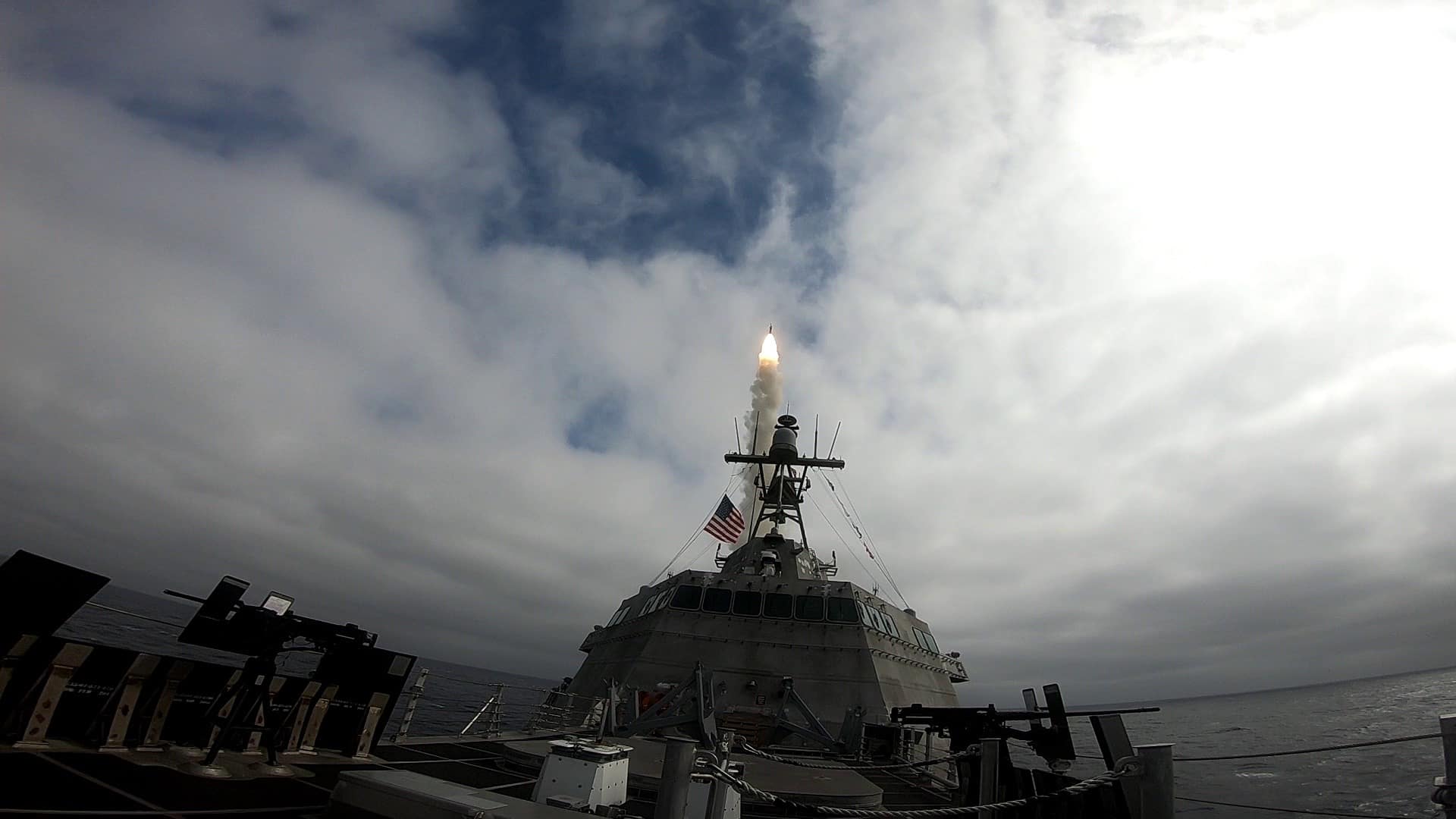
“US Navy LCS Successfully Fires SM-6 From MK 70 Payload Delivery System” –Naval News

“USS Savannah (LCS 28) conducts a live-fire demonstration in the Eastern Pacific Ocean utilizing a containerized launching system that fired an SM-6 missile from the ship at a designated target. The exercise demonstrated the modularity and lethality of Littoral Combat Ships and the ability to successfully integrate a containerized weapons system to engage a surface target. The exercise will inform continued testing, evaluation and integration of containerized weapons systems on afloat platforms.” (I note this LCS, unlike Coast Guard cutters, has ballistic protection for the crews of its .50 caliber machine guns)

Naval News reports,

US Navy Littoral Combat Ship USS Savannah (LCS 28) successfully launched an SM-6 missile from a MK 70 Mod 1 Payload Delivery System placed on the ship’s helicopter deck.

This is significant for the Coast Guard, in that this could just as easily been a cutter. In fact, in some respects the cutters are better equipped than the LCS. It could give Coast Guard cutters a wartime role that would not require a lengthy refit in the yard, assuming the Navy could provide the expertise to augment the cutter’s crew with the necessary expertise.

There are other considerations that might be limiting, but the flight decks on the National Security Cutters are 50 by 80 feet and those of the Offshore Patrol Cutters will be a similar size, so there is sufficient deck space to host several 40x8x8 foot Mk70 containers, each with four cells each of which can contain up to four missiles (ESSM and possibly others).

In this particular exercise, an SM-6 was used against a surface target. The SM-6 was originally intended to be used for long range anti-air warfare (AAW) including terminal phase ballistic missile defense. but it also has a proven capability against surface targets, including an anti-ship capability.

The Mk70 can launch any of the weapons that can be launched from Mk41 vertical launch systems, meaning they can be used against ships, aircraft, submerged submarines, or targets on land.

The system could certainly be used on cutters acting alone to attack fixed facilities ashore. Already installed sensors might permit short range use against ships and aircraft.

But perhaps more importantly, there is concern for the depth of magazines on Aegis combatants and the difficulty of underway rearming. Cooperative Engagement Capability would allow missiles mounted in Mk70 launchers on cutters and/or other vessels to be launched by Aegis capable combatants against any threat they can target. This would allow relatively unsophisticated ships armed with the Mk70 systems to serve as offboard magazines for the Aegis combatants. 

The Australians might also be looking at this for the Arafura class Offshore Patrol Vessels (OPVs) as well. In fact, it could be applied to virtually any allied OPV or ship with a flight deck more than 40 feet in length.

“CHINA IS FIGHTING THE THIRD OPIUM WAR WITH FISH” –CIMSEC

Chinese fishing vessel fleet (Photo: The Maritime Executive)

CIMSEC has an interesting take on China’s use of its Distant Waters Fishing Fleet (DWF).

“If the U.S. is serious about “Great Power Competition,” it at least needs to stop scoring “own goals” by funding and emboldening the main competitor. But from the standpoints of both defense and security, these issues cannot be overlooked or marginalized. China is using its DWF globally in a manner that accrues tremendous benefits to the Chinese armed forces.”

The US Coast Guard is certainly trying to help other nations protect their EEZs from unauthorized exploitation by Chinese Fishing Vessels, but currently many nations license Chinese exploitation of their EEZ and there is no way we can prevent the Chinese from fishing in the waters beyond national boundaries. Even if the US stopped buying Chinese caught fish, there are other ready markets. The only result would be raising the cost of fish to US consumers.

What we need are alternative competitive provider of seafood. 

We could have a true win/win by helping the Compact of Free Association States, (Federated States of Micronesia (FSM), the Republic of the Marshall Islands (RMI), and the Republic of Palau) develop distant waters fishing fleets of their own. This would help keep their interests aligned with ours. Motivate them to keep the Chinese out of their EEZ, and direct more cash flow into these small, friendly and strategically important nations.

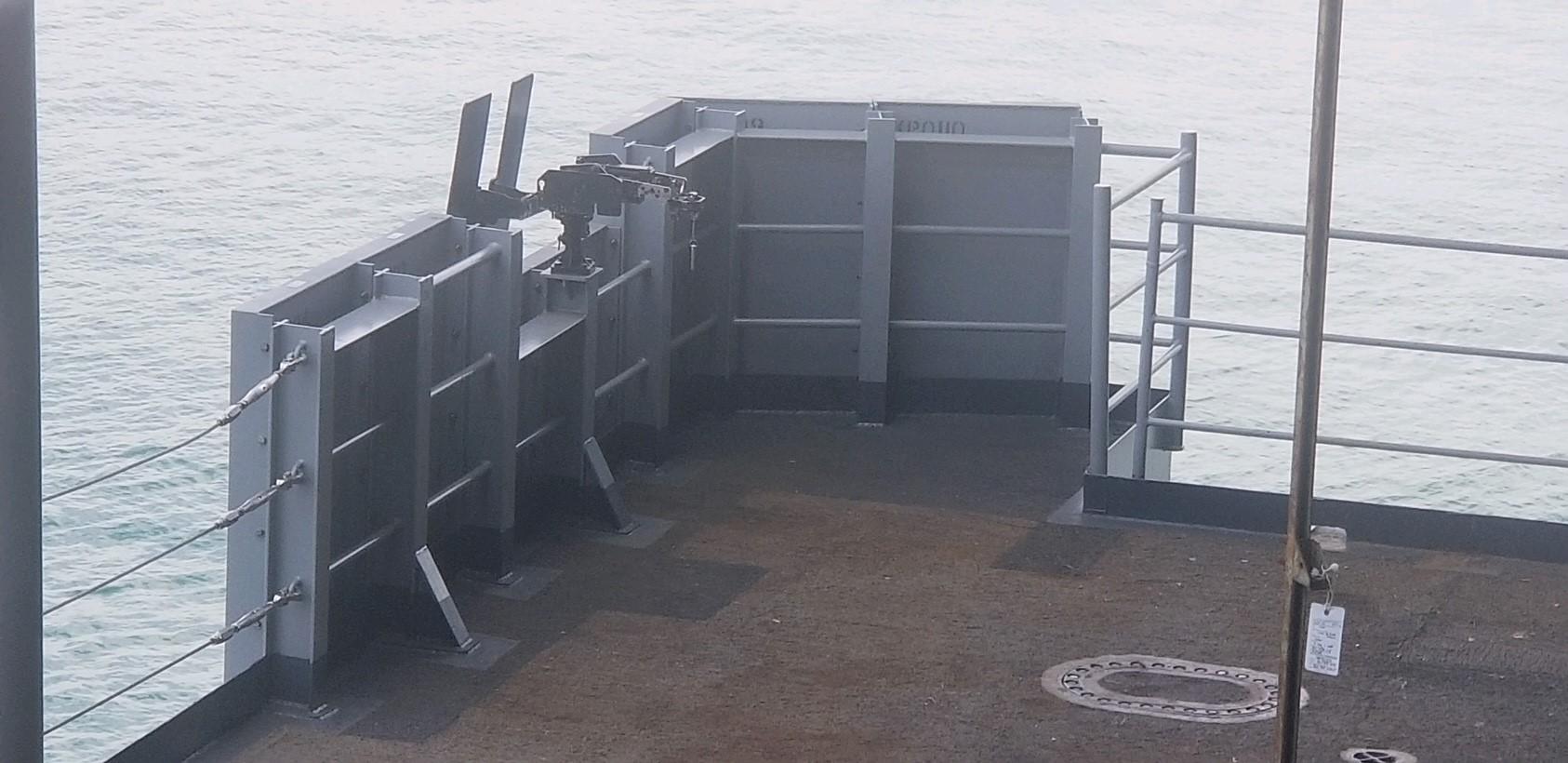
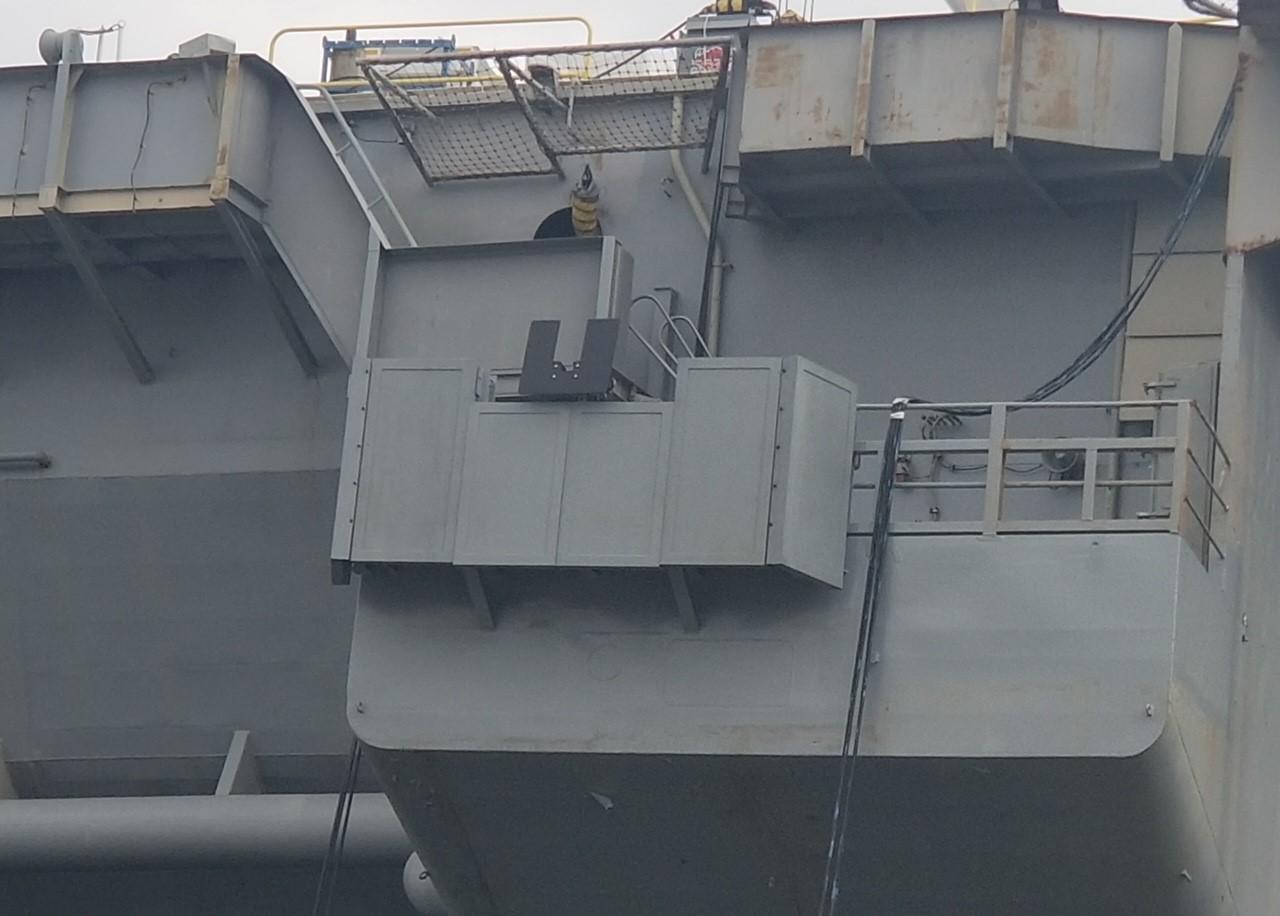
We Need the Ship to Accomplish the Mission, the Gunner Protects the Ship, So We Need to Protect the Gunner

Crew Served Weapons protection by Kinetic Protection LLC on USN CV.

I have been talking about the need to protect the gunners for our crew served gun mounts since 2013. We revised the topic in 2016, in 2019, and in 2021.

With the current Conflict in the Mid-East, there is perhaps more reason than ever to take another look.

I am particularly concerned about the need to protect gunners at crews served weapon stations (normally .50 caliber machine guns) on the PATFORSWA cutters, against the kinds of 12.7mm and 14.5mm machine guns commonly mounted on the Islamic Revolutionary Guard Corps Navy’s thousands of inshore attack craft. To me the powerful 14.5x114mm round might be regarded as the pacing threat and probably the largest weapon we could provide protection against (MIL-STD-3038 Type XI class B armor).

I would really like to see the crew served weapons replaced by remote weapons stations, but if we are not going to do that, we at least need to protect the gunners.

Crew Served Weapons protection by Kinetic Protection LLC on USN aircraft carrier. Similar protection, with modifications for intended arc of fire for the after .50 caliber gun mounts on the PATFORSWA FRCs which are mounted on the aft corners of O-1 Deck seems appropriate. This mount, on a carrier is relatively low, to allow the gunner to depress the gun, raising the inboard end of the gun, and still aim at targets close aboard to engage targets at very close range. Mounts on cutter might be higher to permit a smaller cutout since the gun would not have to be depressed at as great an angle.

I had an opportunity to talk to the CEO and representatives of Kinetic Protection, LLC who provide the only currently Navy recognized ballistic shielding for crew served weapons that meet DOD requirements (MIL STD 3038 and MIL PRF 32379).

Crew Served Weapons protection by Kinetic Protection LLC on USN aircraft carrier.

I was surprised to learn that their product is metallic rather than a composite. I was told this was because composite armor was found to deteriorate due to environmental exposure while the metallic plates have a 25 year life.

Their armor is customizable by ship class and can be bolt-on or permanently installed. It can be various lengths but currently they have been making sections 30 inches wide and 30, 35 and 60 inches long.

The armor weighs about 20 pounds per square foot so it looks like we could provide 12.5 to 14.6 sq. feet of protection (two panels 30×30 or 30×35 inches) for each of the four crew served weapons positions for a total of about 1200 pounds of additional weight. This should not be a problem, considering how many people are frequently crammed on these small ships when they are used to repatriate aliens.

While considering how to help these ships survive in conflict, there are other things we can do to make the weapons more effective, like stabilizing systems and better sights.

The USCGC Oliver Henry (WPC 1140) in Manus, Papua New Guinea, Aug. 14, 2022 (U.S. Coast Guard photo by SW3 Victor Villanueva, NMCB-FOUR). Enlarging this photo by touching on it provides a view of both the forward and after crew served mounts located on the O-1 deck and the probable location of armor to protect the gunners. It is not clear if the current aft positions would allow the weapons to point directly astern, but every effort should be made to provide maximum arcs of fire. Pipe guards could be installed to prevent guns being depressed far enough to fire into the ship or personnel on the main deck.

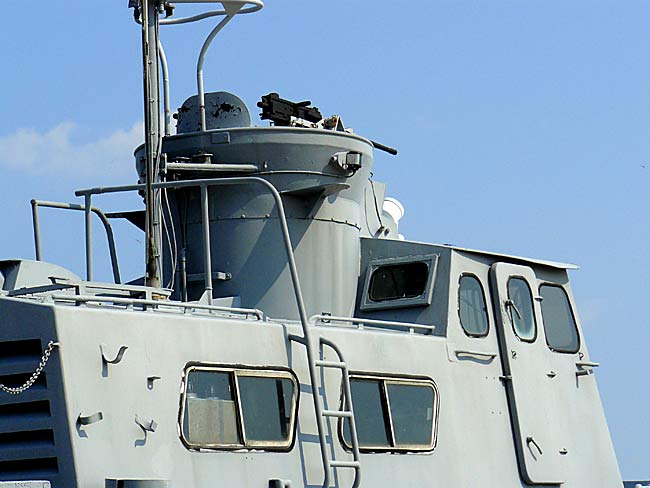
This kind of protection used to be common. I have included some examples below.

A 20mm gun tub. The steps allowed the gunner, strapped to the gun, to point the weapon from the horizon to near vertical.

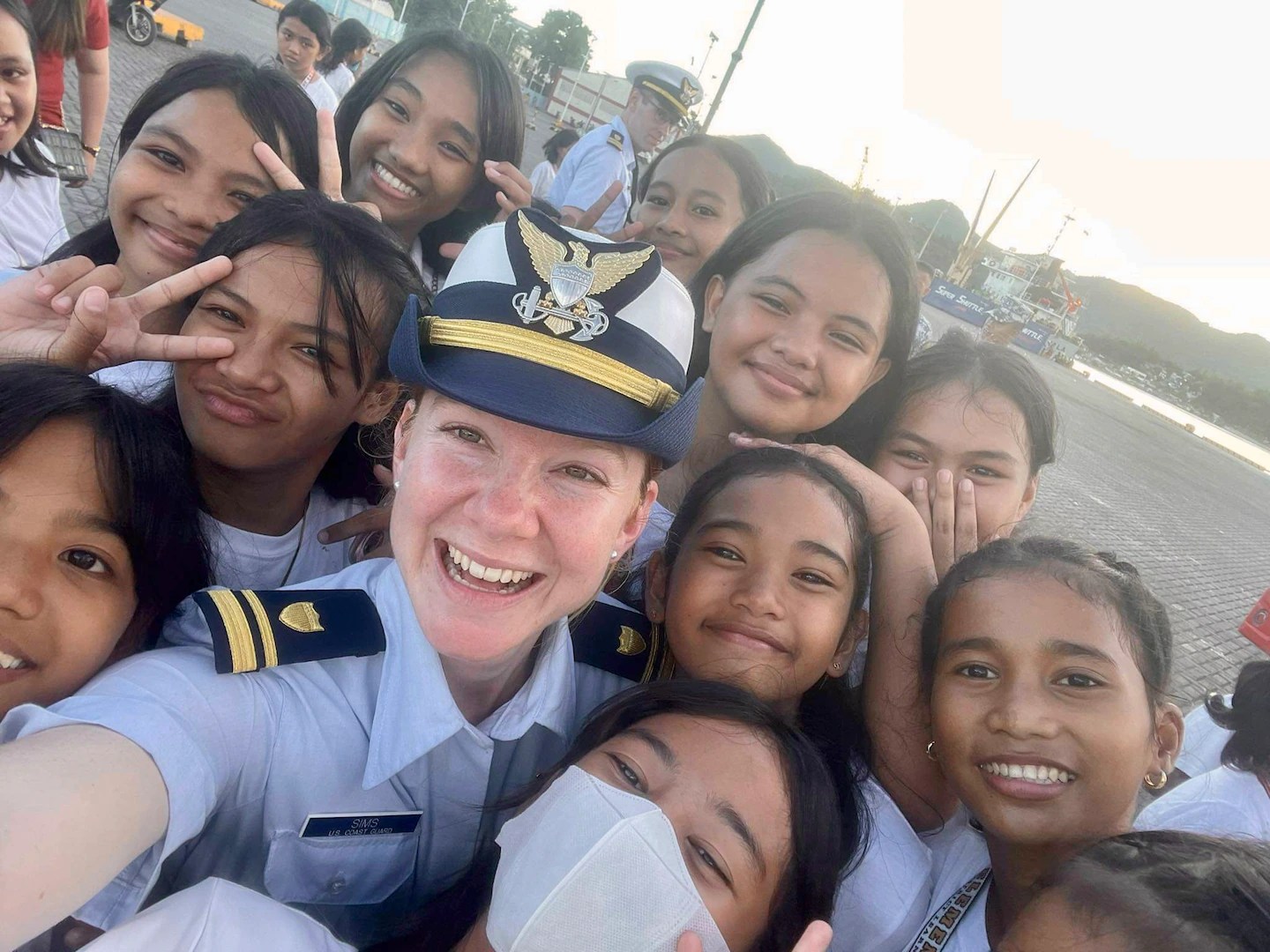
“U.S. Coast Guard strengthens historic relationship with Philippines during landmark visit to Tacloban” –USCG Forces Micronesia/Sector Guam

Below is a U.S. Coast Guard Forces Micronesia/Sector Guam news release. We seem to be pushing the little Webber class FRCs further and further. Because they are small, they are effective good will ambassadors. Clearly, they are not there to intimidate. There are more photos at the link. 

Oct. 23, 2023

U.S. Coast Guard strengthens historic relationship with Philippines during landmark visit to Tacloban

TACLOBAN, Philippines — In a historic first, the USCGC Frederick Hatch (WPC 1143) visited partners in Tacloban, Philippines, from Oct. 19 to 23, 2023, and the crew conducted engagements marking a significant milestone in the enduring relationship between the United States and the Philippines.

This visit of several days coincided with the observance of the Battle of Leyte Gulf, a crucial event in World War II history where U.S. Coast Guardsmen were a significant part of the U.S. forces and among the first to hit the beaches as the U.S. sought to retake the Philippines.

“We are deeply honored to be part of this observance and to strengthen the bond between the United States and the Philippines,” said Lt. Patrick Dreiss, commanding officer of the USCGC Frederick Hatch. “It is a privilege to bring a U.S. Coast Guard Fast Response Cutter to the Philippines for the first time and to visit the historic city of Tacloban. My crew was excited to collaborate with the Philippine Coast Guard to deepen our connections with our fellow seagoing Service and explore this unique city and island.”

An advance team from U.S. Coast Guard District 14 and U.S. Coast Guard Forces Micronesia/Sector Guam held planning meetings in collaboration with the U.S. Embassy to prepare for this visit and the Battle of Leyte Gulf observance. Discussions revolved around mutual capabilities, training opportunities, and community engagement, part of the Coast Guard’s Operation Blue Pacific mission.

While in Tacloban, the crew, with support from the Maritime Security Response Team West, hosted a subject matter expert exchange on maritime law enforcement with Philippine Coast Guard colleagues, observed the 79th Leyte Gulf Landing Anniversary, hosted local school children and government officials, held working meetings, and experienced the culture of the Eastern Visayas region of the Philippines.

“The expanded capabilities of the Fast Response Cutter represent more than just advanced technology; they symbolize the bridge of cooperation and goodwill between nations. The FRCs and their dedicated crews regularly play a pivotal role in international diplomacy. These vessels, along with their highly trained and professional crews, are ambassadors of peace and collaboration, said Capt. Nick Simmons, commander of U.S. Coast Guard Forces Micronesia/Sector Guam. “They foster understanding and trust across borders, making the seas safer not only for our own nations but for all nations that rely on the freedom of navigation and maritime security.”

This visit is part of the USCGC Frederick Hatch’s regularly scheduled expeditionary patrol as part of the ongoing Operation Blue Pacific. It follows previous interactions between the U.S. Coast Guard and the Philippine Coast Guard, including the recent arrival of the USCGC Stratton (WMSL 752) in Manila for professional exchanges and joint operations.

The visit of Pacific Area commander Vice Adm. Andrew Tiongson in April to discuss shared challenges and opportunities for partnership further exemplifies the U.S. Coast Guard’s commitment to the region. The Service’s role as a federal law enforcement agency and an armed forces branch uniquely positions the agency’s teams to conduct security cooperation operations supporting combatant commanders, upholding governance, and ensuring regional stability. Through Operation Blue Pacific, an overarching multi-mission Coast Guard endeavor, the Service seeks to promote security, safety, sovereignty, and economic prosperity in Oceania while strengthening relationships between partner nations in the Pacific.

The Tacloban visit underscores the shared strategic efforts toward a stable and prosperous Indo-Pacific and aligns with the Pacific Area Commander’s goals to prepare a ready force, generate combined effects, and uphold governance. It also supports U.S. Coast Guard District 14 and U.S. Coast Guard Forces Micronesia/Sector Guam’s commitment to be a trusted partner in Oceania and deliver operational excellence.

-USCG-

About the U.S. Coast Guard in the Pacific Region:

The U.S. Coast Guard is a vital force ensuring maritime safety, security, and stewardship across a vast Pacific expanse, spanning six continents, 71 countries, and 74 million square miles of ocean. U.S. Coast Guard Pacific Area leads coordination and integration efforts in this vast region, promoting collaboration with partners.

Within this framework, U.S. Coast Guard District 14 oversees 14 million square miles in the Central and Western Pacific, serving as the Coast Guard’s largest district with 1,750 personnel operating 25 units. Their mission includes maritime safety, resource protection, security, and national defense, making them indispensable in the Pacific.

Reporting to District 14, the U.S. Coast Guard Forces Micronesia/Sector Guam team focuses on maritime safety, security, and stewardship in Oceania. With a base in Guam and over 300 members across Guam and the Commonwealth of the Northern Mariana Islands, they maintain a strong U.S. presence in the Micronesia sub-region and adjacent areas, closely tied to local communities.

About USCGC Frederick Hatch (WPC 1143)
The Frederick Hatch is the 43rd 154-foot Sentinel-class fast response cutter named for a surfman and lighthouse keeper who was a two-time Gold Life Saving Medal recipient. The Service commissioned the ship along with its sister ships, Myrtle Hazard (WPC 1139) and Oliver Henry (WPC 1140), in Guam in July 2021. They are currently on patrol representing the United States Coast Guard in the Indo-Pacific region, fostering international cooperation and maritime security.

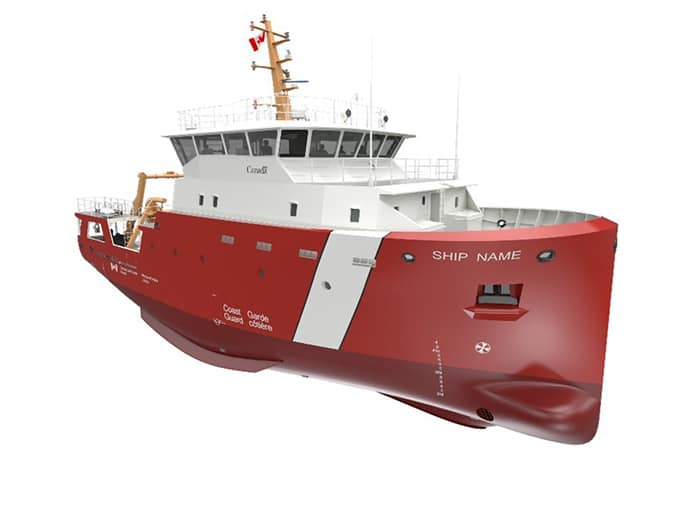
“Canada orders first hybrid Coast Guard vessel” –Marine Log

Canada’s first hybrid Coast Guard vessel. [Image: Robert Allan Ltd.]

Marine Log reports,

“Public Services and Procurement Canada has awarded Gaspé, Quebec, shipbuilder Chantier Naval Forillon a CAD 55.5 million (about US$40.5 million) contract to build Canada’s first hybrid Coast Guard vessel: the new Near-Shore Fishery Research Vessel (NSFRV). The vessel is among those that was listed when Canada announced plans, back in May, to invest about US$1.8 billion in renewing the Canadian Coast Guard’s small vessel fleet.

Its primary job is not something the US Coast Guard does. It’s not large, 32 meters (105′), and it’s not cheap, but it does incorporate a lot of interesting technology that should cut fuel costs. It gets by with a very small crew, five plus six Fisheries and Oceans scientists, but then it is not expected to do law enforcement or a lot of boat ops or boardings.

Latest Examples of Chinese Violations of the Rules of the Nautical Road and Attempted Intimidation

Naval News has the story.

Check out the wake of the China Coast Guard cutter 5203 in the first video. She clearly turned into the small Philippine supply vessel.

“Coast Guard completes third phase of Polar Star service life extension program” –CG-9

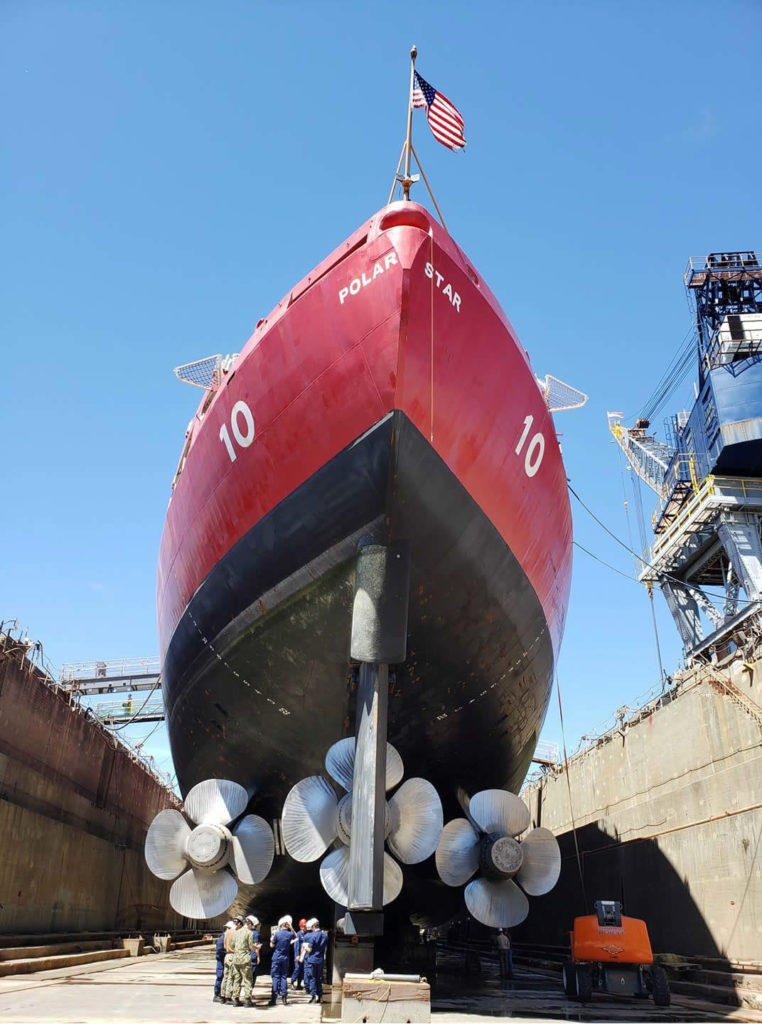
2020, As with previous Dry Docks, the three pitch propellers were removed, overhauled, and reinstalled. Photo: Official USCG Polar Star Facebook

Below is a news release from the Acquisitions Directorate (CG-9). Polar Star spent 19 weeks, almost four and a half months away from homeport in the shipyard. They did pretty much the same thing for the past two years and the plan is to continue to do it for two more years. The Service Life Extension Program (SLEP) is necessary because the Icebreaker (Polar Security Cutter) program has been so long delayed in both initiation and execution.

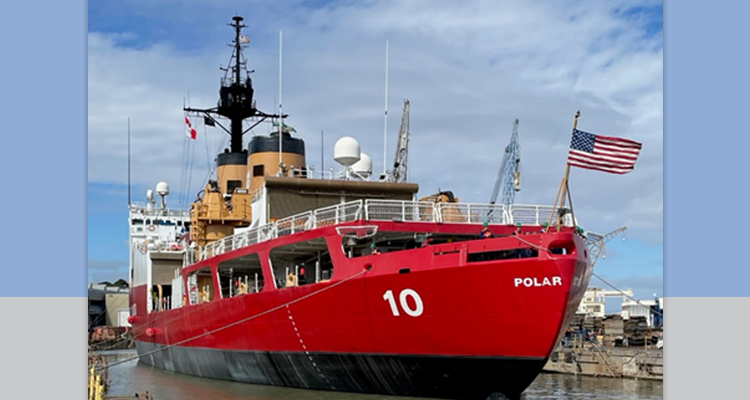
Coast Guard Cutter Polar Star undocking in Vallejo, California, after successfully completing phase three of its service life extension program. U.S. Coast Guard photo by LT Louis Simione.


The Coast Guard has completed the third of five planned phases of Coast Guard Cutter Polar Star’s service life extension program (SLEP) as part of the In-Service Vessel Sustainment Program.

Accomplished in Vallejo, California by Mare Island Dry Dock, the work encompassed a 132-day, $15.6M dry-docking evaluation along with service life extension machinery efforts. Annual maintenance accompanied SLEP funded improvements to shipboard equipment and numerous vital system upgrades for fire detection, communications and monitoring water quality.

Polar Star will return to Seattle to commence preparations for the 2024 Operation Deep Freeze deployment. The next SLEP phase is scheduled to begin in April 2024.

The Polar Star SLEP addressed targeted systems such as propulsion, communication and machinery control systems for recapitalization. Major maintenance extends the service life of Polar Star beyond that of its original design. By replacing obsolete, unsupportable or maintenance-intensive equipment, the Coast Guard is mitigating the risk of lost operational days due to unplanned maintenance or system failures. The contracted SLEP work items and recurring maintenance are taking place within a five-year, annually phased production schedule running from 2021 through 2025. Each phase is coordinated so that operational commitments will still be met.

Polar Star is the Coast Guard’s only active heavy polar icebreaker. The Coast Guard is investing in a new fleet of polar security cutters that will sustain the service’s capabilities to meet mission needs in both the Arctic and Antarctic regions.

For more information: In-Service Vessel Sustainment Program page and Polar Security Cutter Program page.

“HII AWARDED $244 MILLION CONTRACT TO INTEGRATE MINOTAUR SOFTWARE PRODUCTS INTO MARITIME PLATFORMS” –HII News Release

New Minotaur operator workstations are being installed on all HC-144Bs. Minotaur provides dramatically improved data fusion and integrates installed sensors and radar. U.S. Coast Guard photo by Aviation Engineering Warrant Officer 3 Randy Jopp.

Below is a news release from HII (Huntington Ingalls). Minotaur is being installed on all USCG fixed wing search aircraft (C-130J, C-27J, and C-144). This seems to say cutters, as well as Navy floating units and Marine units, are also being fitted with elements of the system. 


HII AWARDED $244 MILLION CONTRACT TO INTEGRATE MINOTAUR SOFTWARE PRODUCTS INTO MARITIME PLATFORMS

Contract Extends HII’s ISR Mission Support Across Domains

MCLEAN, Va., (Oct. 17, 2023) — HII (NYSE: HII) announced today that its Mission Technologies division was awarded a $244 million task order to integrate Minotaur software products into maritime platforms for the U.S. Navy, U.S. Marine Corps and U.S. Coast Guard.

HII was awarded this contract under the Department of Defense (DoD) Information Analysis Center’s (IAC) multiple-award contract (MAC) vehicle.  IAC MAC task orders are awarded by the U.S. Air Force’s 774th Enterprise Sourcing Squadron to develop and create new knowledge for the enhancement of the Defense Technical Information Center repository and the research and development and science and technology community.

Under the Naval Air Systems Command task order, HII will perform research, development, test and evaluation to facilitate the integration of Minotaur Family of Services products into the services’ maritime platforms to meet intelligence, surveillance and reconnaissance warfighting requirements.

Minotaur products support the warfighter by enhancing sensor performance and presenting data from multiple types of sensors, including radar and C5ISR equipment, into a single common operating picture and transmitting that data to other platforms and units during operations.

HII has been the first and only industry prime developer of Minotaur since the program was first awarded to industry in 2020.

The contract has a five-year period of performance, with work conducted at contractor facilities in various U.S. locations.

“HII has been at the forefront of Minotaur software development for nearly a decade,” said Andy Green, executive vice president of HII and president of Mission Technologies. “It’s a privilege to continue this mission-critical work and to concurrently deliver the advantage to three branches of the Armed Forces.”

“We are pleased that the Navy has selected this proven technology to meet the combined requirements of next-generation Navy, Marine Corps and Coast Guard ISR platforms,” said Todd Gentry, president of Mission Technologies’ C5ISR business group. “We have assembled an outstanding team and look forward to expanding our longstanding partnership with the Navy and supporting the tri-service maritime strategy.”

C5ISR
Find more information about HII’s C5ISR capabilities.

NOTE

The DoD IAC, sponsored by the Defense Technical Information Center, provides technical data management and research support for DoD and federal government users. Established in 1946, the IAC program serves the DoD science and technology and acquisition communities to drive innovation and technological developments by enhancing collaboration through integrated scientific and technical information development and dissemination for the DoD and broader science and technology community.

This material is based upon work supported by the DoD Information Analysis Center Program (DoD IAC), sponsored by the DTIC under Contract No. FA807523F0049.

Approved for Public Release, Distribution Unlimited. Any opinions, findings and conclusions or recommendations expressed in this material are those of the author(s) and do not necessarily reflect the views of the DoD.

About HII

HII is a global, all-domain defense provider. HII’s mission is to deliver the world’s most powerful ships and all-domain solutions in service of the nation, creating the advantage for our customers to protect peace and freedom around the world.

As the nation’s largest military shipbuilder, and with a more than 135-year history of advancing U.S. national security, HII delivers critical capabilities extending from ships to unmanned systems, cyber, ISR, AI/ML and synthetic training. Headquartered in Virginia, HII’s workforce is 44,000 strong. For more information, visit:

“First on CNN: US Navy warship near Yemen intercepts multiple missiles, US officials say”

USS Carney (DDG-64

CNN repoorts (one of several such reports):

Pentagon press secretary Brig. Gen. Pat Ryder confirmed that the USS Carney shot down three land attack missiles as well as several drones that were launched by Iran-backed Houthi forces in Yemen.

Presumably this refers to land based anti-ship cruise missiles.

USS Carney (DDG-64) is a Flight I Burke class guided missile destroyer. In 2016 Carney completed an upgrade with a SeaRAM rolling airframe missile launcher replacing her after Phalanx CIWS.

Reportedly Carney brought down three cruise missiles and 8 drones. Other reporting suggests Carney was in company with USS Bataan (LHD-5) which may have been the intended target.

This incident occurred in the Red Sea. PATFORSWA cutters also operate in this area.

UPDATE:

Military Times reports,

“We cannot say for certain what these missiles and drones were targeting, but they were launched from Yemen heading north along the Red Sea, potentially towards targets in Israel,” Ryder said in a Pentagon briefing. A U.S. official said they do not believe the missiles were aimed at the ship. That official spoke on condition of anonymity to discuss military operations that had not yet been announced.