“USNI News Fleet and Marine Tracker: Oct. 2, 2023”

Royal Navy vessel HMS Spey (P234) (foreground) conducts coordinated ship maneuvers with U.S. Coast Guard Cutter Munro (WMSL 755) Sept. 17, 2023, in the South China Sea. US Navy Photo

Not much new in the US Naval Institute Oct, 2nd Fleet and Marine Tracker. Still only two Navy ships operating under 4th Fleet. I don’t expect that to change much if at all. With Jacksonville based LCS being decommissioned, it may actually get worse. But the Naval Institute did give us a couple of great photos.

USCGC Healy (WAGB-20) and the Norwegian Coast Guard Vessel Svalbard sail in formation while en route to conduct joint exercises in northern Norway in the Barents Sea. US Coast Guard Photo

USCGC Healy has a long way to go to get back to her homeport, Seattle. Incidentally Svalbard, like Healy has made it to the North Pole. In 2020, when Healy was having difficulty, Svalbard took over a mission for Healy.

“MSI Defence Systems to supply MK 48 Mod 2 EOS to US Navy & US Coast Guard” –Navy Recognition

MK48 Mod2 EOS MSI-DS Electro-Optical Sight System. (Picture source: MSI Defence Systems)

Navy Recognition reports,

According to information published by the US DoD on September 29, 2023, MSI-Defence Systems has been granted a contract worth $29,263,267 for the supply of the MK 48 Mod 2 Electro-Optical Sight (EOS).

This electro-optic system is associated with the 30mm Mk38 Mod4 gun weapon system.

30mm Mk38 Mod4

As far as we know, the first Coast Guard ships to get the Mk38 Mod 4 will be the Polar Security Cutters. I am hoping we will see the weapon on some of the Offshore Patrol Cutters.

I found it interesting that this contract provides not only for the Navy and Coast Guard but also the Military Sealift Command, because, currently, none of their ships have installed weapon systems.

“This initiative is in line with the enhancement of the MK 38 Mod 4 Machine Gun System, which will benefit the Navy, Coast Guard, and Military Sealift Command.”

Navy Integrated Combat System Includes Coast Guard

Defense News services has a post, “Lockheed wins $1.1B contract to design Navy’s Integrated Combat System,” that reports,

“The U.S. Navy awarded Lockheed Martin $23 million to begin creating the Integrated Combat System that may one day connect the Navy’s and U.S. Coast Guard’s surface fleets.”

There is a good background article from US Naval institute that came out in 2020.

This is an essential element of the Navy’s planned distributed operations. It should also facilitate interoperability with current and future users of the Aegis system including Australia, Canada, Japan, Norway, Spain, and South Korea.

The National Security Cutters already have the Aegis combat system which will evolve into the integrated systems.

I have seen no indication the OPC will share this system, but it certainly should. It is to be used on unmanned craft as well, so it could probably be scaled down to work on the Webber class FRC as well.

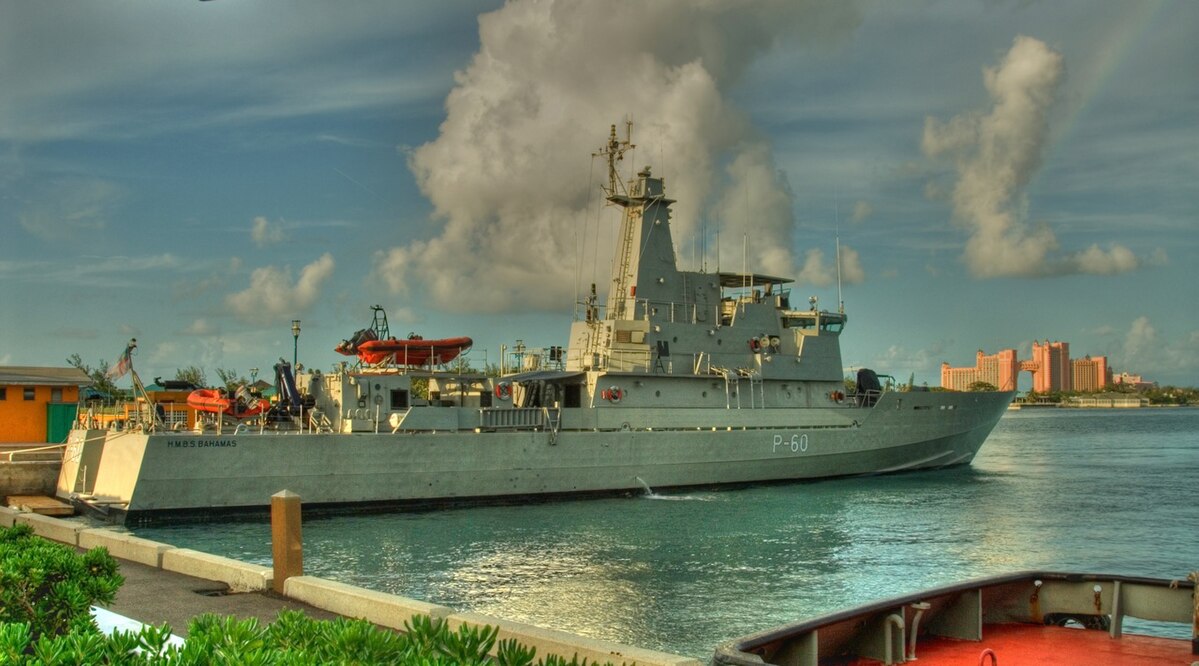
Shiprider Agreements Go Third Party, “THE CARIBBEAN Bahamas, Turks and Caicos Islands, and U.S. detain Haitian migrants in joint operation” –The Watch

HMBS Bahamas (P 60). Photo credit: “FotoDawg”

USNORTHCOM’s online magazine, “The Watch” reports,

“The Royal Bahamas Defence Force (RBDF), operating jointly with the U.S. Coast Guard and Turks and Caicos Islands personnel, intercepted a ship with 145 Haitian migrants on August 13, 2023.”

What I found surprising here was this,

“The interdiction was the second since the Bahamas and the Turks and Caicos, a British Overseas Territory, signed a ship rider agreement in 2022. The pact allows law enforcement officials from one country to conduct operations on board the vessels of another for specific law enforcement purposes, according to an RBDF Facebook post.”

The Coast Guard, off course, has lots of these bilateral agreements, but this is the first I have heard about where the USCG was not one of the parties. Perhaps the model is spreading to other partnerships.

“US Coast Guard Cutter Forward returns home following 78-day deployment in the high northern latitudes” –News Release + Second Look at Harriet Lane

Below is a news release reporting an unusual 270 foot East Coast WMEC deployment including a high latitude multi-national exercise, deployment of a Navy Unmanned Underwater Vessel (UUV), enforcing fisheries on behalf of an international organization, hosting 40 international guests at the 2023 U.S.-Pacific Island Country Summit, and helping U.S. Navy’s Afloat Training Group Atlantic develop their Arctic training program. (Note–more photos at the link above.)

In the photo above and particularly at the end of this video of the homecoming, you can also see USCGC Harriet Lane (WMEC-903), second from the left in the photo, fresh from its Service Life Extension Program (SLEP) refit, with its Mk92 firecontrol removed and her 76mm Mk75 replaced by a 25mm Mk38 (presume she did not get the newer 30mm). I think I was mistaken earlier, in thinking her AN/SLQ-32 electronic warfare system had been removed. I believe I see it still installed on the video. Harriet Lane is expected to assume duties as a dedicated Central and Western Pacific asset in the near future.

Sept. 26, 2023

US Coast Guard Cutter Forward returns home following 78-day deployment in the high northern latitudes

PORTSMOUTH, Va. – The crew of the U.S. Coast Guard Cutter Forward (WMEC 911) returned to their homeport in Portsmouth, Tuesday, following a 78-day deployment in the North Atlantic Ocean.

Throughout the deployment, Forward supported the U.S. Coast Guard’s Arctic Strategy and partnered with allied nations and agencies during Operation Nanook 2023, an annual Canadian-led military exercise to strengthen maritime objectives in the high northern latitudes.

Alongside Canadian and French forces navigating the waters of the North Atlantic Ocean, Forward’s crew performed training evolutions including towing and formation steaming, replenishment at sea, visual communications tactical signaling, and cross-deck exercises. In addition, an attached team from Coast Guard Tactical Law Enforcement Team Pacific conducted a boarding exercise with French Navy vessel BSAM Garonne to demonstrate at-sea capabilities and assist in enhancing partner training curriculums.

During the deployment, Forward also completed two living marine resources enforcement patrols. The first was carried out in support of the First Coast Guard District’s living marine resources mission. The second, conducted alongside international partners, was focused on commercial fishing vessels inspections as part of the Northwest Atlantic Fisheries Organization. The NAFO fisheries patrol ensured compliance with international fishing norms while safeguarding natural resources and preserving fish stocks, all reinforcing U.S. dedication to combatting illegal, unregulated, and unreported fishing.

Forward collaborated with embarked U.S. Navy personnel from the Unmanned Undersea Vehicle Flotilla-1 team to launch their Razorback UUV. The undersea vehicle, equipped with mapping and sonar capabilities, deployed deeper than any U.S. Navy submersible and traveled to a depth of nearly 2,000 feet (600 meters).

Members from the U.S. Navy’s Afloat Training Group Atlantic were also embarked aboard Forward to help build their service’s Arctic Vision Initiative, which will serve to inform U.S. Navy training entities of seamanship, navigation, engineering, and medical considerations necessary for operating naval vessels in the polar regions.

Forward sailed more than 10,500 nautical miles while the crew liaised with international partners through a series of port calls. Forward visited Halifax, Nova Scotia, Canada, during their Natal Day celebration to observe the province’s birthday. Crew members then traveled to Nuuk, Greenland, and completed a short visit to St. John’s, Newfoundland, Canada, before transiting back to the United States.

Forward ended the deployment by hosting several Indo-Pacific heads of state who were participating in the 2023 U.S.-Pacific Island Country Summit in Baltimore, Maryland. Approximately 40 international guests joined Forward for a tour and reception ahead of the transfer of U.S. Coast Guard Cutter Harriet Lane (WMEC 903) to a Pacific Ocean homeport.

“We had the opportunity to advance objectives of the Arctic Strategy and support the IUU Fishing Strategic Outlook,” said Cmdr. Staci Rutsch, commanding officer of Forward. “Acting as true ambassadors, we represented the nation in diplomatic engagements with NATO partners, reinforcing U.S. interests and solidifying the USCG as being the partner of choice. This crew’s ability to shift to perform highly in our non-standard missions leaves me impressed and motivated every day.”

For information on how to join the U.S. Coast Guard, visit www.GoCoastGuard.com to learn more about active duty and reserve officer and enlisted opportunities. Information on how to apply to the U.S. Coast Guard Academy can be found here.

For more, follow us on FacebookInstagram and Twitter.

“Irish Forces Raid Bulk Carrier and Find ‘Significant Quantity’ of Drugs” –gCaptain

“Irish Forces Raid Bulk Carrier and Find ‘Significant Quantity’ of Drugs”

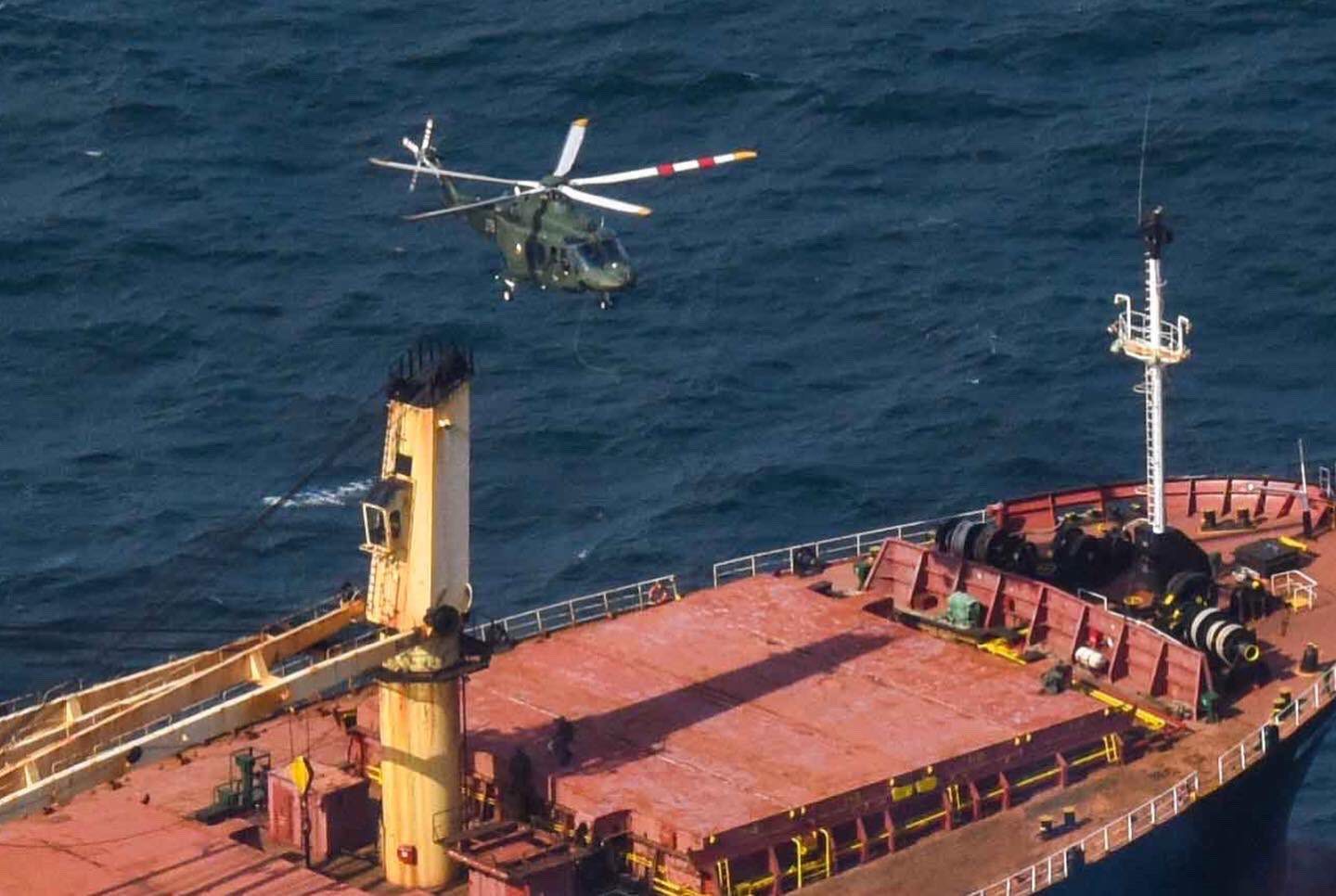
gCaptain reports, Irish forces forcibly boarded M/V Matthew and found drugs.

Found it interesting how little detail there is in this story. Did the boarding party fast rope down? Did the helo land? The accompanying video only shows the helicopter hovering nearby. No indication of the type of quantity of drugs.

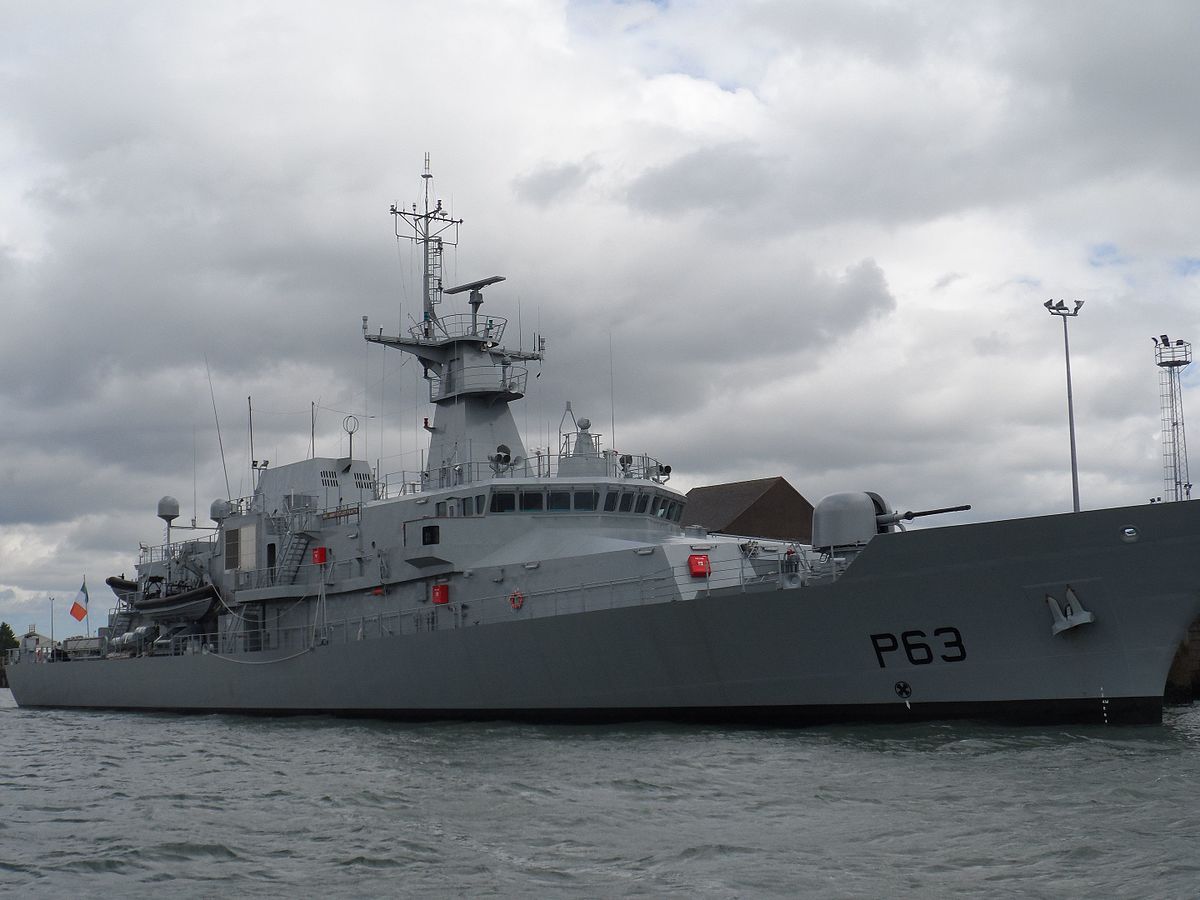
Offshore Patrol Vessel LÉ William Butler Yeats reportedly fired warning shots.

(Much more information in the comments below.)

LÉ William Butler Yeats in Cobh harbour. 24 July 2016. Photo credit Debbiesw

A-10 Attack Aircraft Drilled with PATFOSWA Cutters

A-10 Thunderbolt II Canon, McChord AFB, Washington. Photo credit. mrkoww@gmail.com

The US Naval Institute news service published a report on Sept. 25, 2023, “2 A-10 Warthogs Drill with U.S. Destroyer in Middle East Maritime Exercise.” Interestingly the story also recounted previous instances where A-10s were used in the Maritime environment, including the following,

“On April 28, a U.S. Navy P-8A Poseidon patrol aircraft, two Air Force A-10 Warthogs and three U.S. Coast Guard cutters with embarked U.S. Marine Corps joint terminal attack controllers, trained together in the Persian Gulf.”

The three cutters would have been three of the six 154 foot Webber class cutters assigned to Patrol Forces Southwest Asia (PATFORSWA).

USCGC John Scheuerman (WPC-1146) and USCGC Clarence Sutphin Jr. (WPC-1147) enroute PATFORSWA

You can draw your own conclusions about what this means for how the cutters will be used if there are hostilities with Iran, but I will offer my thoughts.

Iranian swarm tactics provide a “target rich environment,” but those targets are not of equal importance. What the A-10s would see on their own would be very confusing. Priority targets could include command ships, drone carriers, and boats armed with cruise missiles and torpedoes, before taking on the much more numerous vessels armed with only machine guns and unguided rockets that provide a screen for the more important vessels.

The cutters could provide reference points, forward observation posts, from which the P-8 and Marine terminal attack controllers could point the A-10s to the highest priority targets.

Hopefully the Marines would also bring along some extra firepower to defend the cutters as well.

Camera drone’s-eye view of IRGC boats on display, March 2023. A) The air defense boat. B) Light missile boat with Bladerunner hull. C) light missile boats on Interceptor hull. D) light missile boats on Interceptor hull (alternative design). E) Missile boat, with type of missile unclear. F) RIB, possibly explosive boat or uncrewed. G) RIB with lightweight anti-ship torpedoes, can be carried aboard a Shahid Soleimani-class missile corvette. H) Interceptor boat. I) Interceptor boat with new type of missile.

“USCGC Myrtle Hazard crew concludes 46-day patrol in the Pacific, strengthening ties and security with regional partners” –U.S. Coast Guard Forces Micronesia/Sector Guam

Mk38 on USCGC Myrtle Hazard during joint patrol with Papua New Guinea.

Below is a news release from U.S. Coast Guard Forces Micronesia/Sector Guam. Photos of the homecoming and underway operations available on the link.

Sept. 25, 2023

USCGC Myrtle Hazard crew concludes 46-day patrol in the Pacific, strengthening ties and security with regional partners

SANTA RITA, Guam — Marking the culmination of a 46-day patrol, the USCGC Myrtle Hazard (WPC 1139) crew completed a series of operations in partnership with Papua New Guinea and other regional allies, bolstering maritime security and resource management in exclusive economic zones (EEZs) and on the high seas, returning to Guam on Sept. 24, 2023.

The recent patrol operation specifically supported the Pacific Islands Forum Fisheries Agency’s annual Operation Island Chief at the outset of the patrol and the broader U.S. Coast Guard’s Operation Blue Pacific, further solidifying the U.S. commitment to resource security and regional stability.

Expanded Partnerships and Engagements

Illegal, Unreported, and Unregulated (IUU) fishing fundamentally erodes national security and exacerbates existing maritime governance gaps. This patrol significantly contributed to closing those gaps. By navigating the EEZs of the United States, the Federated States of Micronesia, and Papua New Guinea, Myrtle Hazard’s crew strengthened the rule of law at sea, which the U.S. Coast Guard is uniquely positioned to enforce.

They also made port calls in Manus Island, Rabaul, Port Moresby, Lae in Papua New Guinea, and Cairns, Australia. This visit was the first by a U.S. Coast Guard vessel to Lae, laying the foundation for future visits. These stops also facilitated engagement with agency representatives throughout Papua New Guinea, including the government of Papua New Guinea, their National Fisheries Authority and Customs Service, and the U.S. Embassy in Port Moresby. In multiple locations, the crew worked with the PNG Defence Force, and in Manus, they also hosted the deployed U.S. Navy Seabees Naval Mobile Construction Battalion THREE. The team was fortunate to observe PNG Independence Day in Lae, deepening cultural bonds.

The recent joint maritime patrol between the U.S. Coast Guard and multiple Papua New Guinea agencies was a historic step forward in U.S.-PNG relations. The collaborative operation led to advancements in maritime domain awareness and law enforcement expertise and successfully countered illegal activities like unregulated fishing. With the Western and Central Pacific Oceans being a significant source of the world’s tuna, the joint effort emphasized the mutual commitment to protect valuable marine resources. The patrol yielded six contact and observation reports, one of which led to immediate action by the PNG Fisheries Authority against a foreign fishing vessel crew for a Vessel Monitoring System violation. Additionally, four boardings of foreign fishing vessels took place to enforce regulations and deter illegal activity in PNG’s EEZ. These outcomes highlight the operation’s regional impact and set a strong foundation for future cooperation.

In Cairns, Australia, the Myrtle Hazard team engaged in memorable interactions with the Australian Royal Navy and Border Force. Notably, an all-out, full-court, officiated basketball game took place, with members from both services participating—highlighting the ever-growing camaraderie. They also spent time at the Great Barrier Reef International Marine College.

Milestone Achievements and Experiences

“Our 46-day patrol has been an exceptional journey. The sheer dedication and grit exhibited by my crew have been nothing short of remarkable,” said Lt. Jalle Merritt, commanding officer of the USCGC Myrtle Hazard. “From once-in-a-lifetime experiences like observing PNG Independence Day to earning new qualifications, this patrol signifies the hard work, joy of human connection, and increased competence we’ve gained.”

During the patrol, a line-crossing ceremony at the equator en route to Guam marked a significant rite of passage for the crew, symbolizing their transformation into more seasoned mariners.

“I had the honor of serving aboard a 110-foot Island-class patrol boat based out of Guam early in my career. Due to the platform’s capabilities, we were limited in our operational reach to Palau and portions of the Federated States of Micronesia. Today, the FRCs based here are redefining the dynamic for our Service and our regional partners,” said Capt. Nick Simmons, commander of U.S. Coast Guard Forces Micronesia/Sector Guam. “From Guam, we’ve expanded our area of operations to areas that include our partners in the Republic of Palau and the Federated States of Micronesia, but also the Republic of Marshall Islands, Papua New Guinea, Australia, and Nauru. And we have plans to reach the Philippines soon. Most FRCs are engaged in near-coastal operations, but ours are venturing farther, more frequently, substantiating the U.S. Coast Guard’s role as a significant maritime security actor across the Indo-Pacific.”

Strategic Impact

Building upon last year’s visit by a Guam-based fast response cutter crew and the recently ratified bilateral agreement with PNG, the Myrtle Hazard’s team patrolled 7,484 nautical miles, significantly bolstering maritime security and resource protection in multiple EEZs. The patrol enhanced interoperability with regional allies like PNG and Australia and advanced U.S. national priorities through targeted operations and cultural diplomacy. The patrol also contributed to the broader objectives of the PIF Forum Fisheries Agency’s annual Operation Island Chief and the U.S. Coast Guard’s Operation Blue Pacific, strengthening both bilateral and multilateral relationships in the region.

The Long View

The U.S. Coast Guard 14th District, based out of Honolulu, Hawaii, and U.S. Coast Guard Forces Micronesia/Sector Guam, continue to foster enduring partnerships with regional allies. With humanitarian Service at its core, the U.S. Coast Guard remains committed to maritime safety, security, and stewardship, solidifying its longstanding reputation in the Pacific as a trusted partner. Plans and additional patrols are already underway for further engagement with regional partners.

— USCG —

The Myrtle Hazard is the 39th 154-foot Sentinel-class FRC, named in honor of the first enlisted woman in the U.S. Coast Guard who served as an electrician and radio operator. The Guam-based cutters serve as a cornerstone for the U.S. Coast Guard’s ongoing commitment to the people of Oceania, focusing on maritime safety, security, and stewardship.

OSK Design for Proposed Danish Arctic Frigate

Below the break, you will find an OSK Design news release regarding their proposal for Arctic frigates to replace the four ship Thetis class, which performs many of the functions of coast guard cutters. Earlier reports had seemed to indicate the Thetis class would be replaced by a different design, OMT’s MPV-80, but apparently the Danish government has not yet made a choice.

The OSK Design’s Arctic frigate proposal is featured in the video above, beginning at time 5:00.

The two designs look very different. The MPV-80 is short (84 meters) and portly (17.6 meters of beam). The OSK “Arctic Frigate” has more conventional proportions but is larger than the OPC in every dimension and may be larger than the NSC.

Still, they do share some characteristics. Both feature the SH Defence “CUBE” modular system. Both are ice class designs. Both appear to be equipped with two Rheinmetall Oerlikon 35mm Millennium Guns as CIWS. 

The Danes have created some widely admired designs lately, including the Absalon class and the Iver Huitfeldt class which has evolved into the British Type 31 “Arrowhead 140” frigate also being built for Indonesia and Poland. There are not many Arctic frigate designs out there. This will be interesting. We might want to reconsider our Arctic Security Cutter requirements.


Danish naval architects OSK Design unveils latest concept for an Arctic frigate

Leaders in maritime innovation, OSK Design, is proud to introduce their latest design, the Arctic frigate, an exceptional vessel meticulously crafted for operations in the North Atlantic, High North, and Greenland regions. This multi-purpose Arctic frigate is set to redefine maritime capabilities with its significant features and capabilities. One of the notable features of the Arctic frigate is its fully operational helicopter, ready to take on a key role in its missions. This helicopter is a critical asset for Arctic operations, allowing for airborne scouting, transport, and search and rescue missions in the challenging Arctic environment.

Mission-ready versatility, arctic-ready and an exceptional mobility
The Arctic frigate is a true workhorse, designed to excel in a wide range of missions.
The Arctic frigate is classed for year-round operation in the arctic, capable of withstanding the most challenging ice conditions while maintaining optimal performance. With a length of 125 meters, a beam of 18.0 meters, a maximum draught of 6 meters, and a top speed of 23+ knots, this frigate is built for swift and agile navigation in the most unstable waters.

Equipped to handle any situation, the Arctic frigate boasts an impressive arsenal, including a gun, missile launcher, and overhead weapon systems, ensuring readiness for both offensive and defensive maneuvers. Operating in one of the harshest environments on Earth demands extraordinary capabilities.

Mission flexibility redefined
The Arctic frigate is powered by a state-of-the-art diesel-electric system (PODs), offering both efficiency and maneuverability. A crew capacity of 60-125+ depending on the task, a fully equipped helicopter, and a drone capacity for air, surface, and underwater operations ensure that the Arctic Frigate is ready for any mission. With two RHIBs (Rigid-Hulled Inflatable Boats) up to 9 meters in length and one stern-launched boat up to 12 meters, the vessel is equipped for swift and effective search and rescue missions.

The mission bay is designed to accommodate various modular systems and stores, such as the ACTAS ASW system, mine-laying modules, oil spill booms and equipment for the Arctic Standby Force, allowing for mission-specific adaptability. With its large, modularized mission bay, this vessel is adaptable for Anti-Submarine Warfare (ASW), surface and air surveillance, maintenance of sovereignty, search and rescue, disaster relief and enhanced self-defense.

With the Arctic frigate, OSK Design has designed a vessel that represents the pinnacle of maritime engineering and innovation. It is uniquely prepared to meet the demands of operations in the Arctic, offering a combination of versatility, power, and adaptability.

For more information about the Arctic frigate and OSK Design’s commitment to pushing the boundaries of maritime design, please contact Lars Povl Jensen, Head of Defence at OSK Design, Phone: +45 31 43 75 60 or mail: lpj@oskdesign.com

“U.S. Marine Corps And The New Long-Range Attack Munition” –Naval News

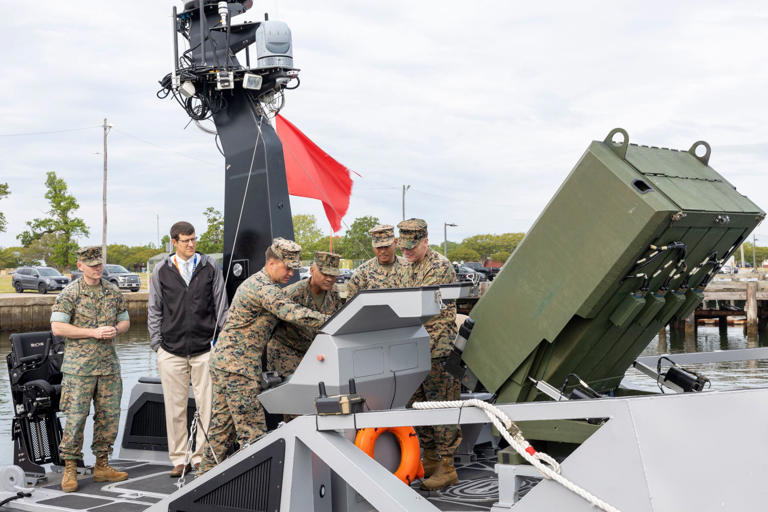
Not exactly the same, but you get the idea:   U.S. Marine Corps Lt. Gen. Brian W. Cavanaugh, the commanding general of Fleet Marine Force, Atlantic, Marine Forces Command, Marine Forces Northern Command, and Marines with 3d Marine Littoral Regiment, 3rd Marine Division, examine the manual controls to the Long Range Unmanned Surface Vessel, Joint Expeditionary Base Little Creek-Fort Story, Virginia, April 27, 2023. A LRUSV is an optionally manned vessel capable of extended travel and transporting loitering munitions that accurately track and destroy targets on sea or land. Metal Shark is designing, building, testing and implementing the LRUSV system under an other transaction authority aggrement with Marine Corps Systems Command to primarily serve as an intelligence, surveillance, and reconnaissance platform.
© Provided by The Drive

Naval News reports the Marines hope to develop a new long range loitering munition. It would take off vertically, be relatively inexpensive, be usable against both moving and fixed targets, on land or at sea, with a “minimum total payload weight capacity of 25 pounds (lbs) to include weapon seeker and warhead (but excludes fuel weight)” and have a range of about 150 nautical miles.

This might be something the Coast Guard could use. Single rounds should be effective against small, fast, highly maneuverable threats, while multiple hits might be effective against larger threats.  The relatively long range would mean it would not have to be widely distributed. A few, held as group assets, might be sufficient to deal with a terrorist threat.