“USCGC Myrtle Hazard crew concludes 46-day patrol in the Pacific, strengthening ties and security with regional partners” –U.S. Coast Guard Forces Micronesia/Sector Guam

Mk38 on USCGC Myrtle Hazard during joint patrol with Papua New Guinea.

Below is a news release from U.S. Coast Guard Forces Micronesia/Sector Guam. Photos of the homecoming and underway operations available on the link.

Sept. 25, 2023

USCGC Myrtle Hazard crew concludes 46-day patrol in the Pacific, strengthening ties and security with regional partners

SANTA RITA, Guam — Marking the culmination of a 46-day patrol, the USCGC Myrtle Hazard (WPC 1139) crew completed a series of operations in partnership with Papua New Guinea and other regional allies, bolstering maritime security and resource management in exclusive economic zones (EEZs) and on the high seas, returning to Guam on Sept. 24, 2023.

The recent patrol operation specifically supported the Pacific Islands Forum Fisheries Agency’s annual Operation Island Chief at the outset of the patrol and the broader U.S. Coast Guard’s Operation Blue Pacific, further solidifying the U.S. commitment to resource security and regional stability.

Expanded Partnerships and Engagements

Illegal, Unreported, and Unregulated (IUU) fishing fundamentally erodes national security and exacerbates existing maritime governance gaps. This patrol significantly contributed to closing those gaps. By navigating the EEZs of the United States, the Federated States of Micronesia, and Papua New Guinea, Myrtle Hazard’s crew strengthened the rule of law at sea, which the U.S. Coast Guard is uniquely positioned to enforce.

They also made port calls in Manus Island, Rabaul, Port Moresby, Lae in Papua New Guinea, and Cairns, Australia. This visit was the first by a U.S. Coast Guard vessel to Lae, laying the foundation for future visits. These stops also facilitated engagement with agency representatives throughout Papua New Guinea, including the government of Papua New Guinea, their National Fisheries Authority and Customs Service, and the U.S. Embassy in Port Moresby. In multiple locations, the crew worked with the PNG Defence Force, and in Manus, they also hosted the deployed U.S. Navy Seabees Naval Mobile Construction Battalion THREE. The team was fortunate to observe PNG Independence Day in Lae, deepening cultural bonds.

The recent joint maritime patrol between the U.S. Coast Guard and multiple Papua New Guinea agencies was a historic step forward in U.S.-PNG relations. The collaborative operation led to advancements in maritime domain awareness and law enforcement expertise and successfully countered illegal activities like unregulated fishing. With the Western and Central Pacific Oceans being a significant source of the world’s tuna, the joint effort emphasized the mutual commitment to protect valuable marine resources. The patrol yielded six contact and observation reports, one of which led to immediate action by the PNG Fisheries Authority against a foreign fishing vessel crew for a Vessel Monitoring System violation. Additionally, four boardings of foreign fishing vessels took place to enforce regulations and deter illegal activity in PNG’s EEZ. These outcomes highlight the operation’s regional impact and set a strong foundation for future cooperation.

In Cairns, Australia, the Myrtle Hazard team engaged in memorable interactions with the Australian Royal Navy and Border Force. Notably, an all-out, full-court, officiated basketball game took place, with members from both services participating—highlighting the ever-growing camaraderie. They also spent time at the Great Barrier Reef International Marine College.

Milestone Achievements and Experiences

“Our 46-day patrol has been an exceptional journey. The sheer dedication and grit exhibited by my crew have been nothing short of remarkable,” said Lt. Jalle Merritt, commanding officer of the USCGC Myrtle Hazard. “From once-in-a-lifetime experiences like observing PNG Independence Day to earning new qualifications, this patrol signifies the hard work, joy of human connection, and increased competence we’ve gained.”

During the patrol, a line-crossing ceremony at the equator en route to Guam marked a significant rite of passage for the crew, symbolizing their transformation into more seasoned mariners.

“I had the honor of serving aboard a 110-foot Island-class patrol boat based out of Guam early in my career. Due to the platform’s capabilities, we were limited in our operational reach to Palau and portions of the Federated States of Micronesia. Today, the FRCs based here are redefining the dynamic for our Service and our regional partners,” said Capt. Nick Simmons, commander of U.S. Coast Guard Forces Micronesia/Sector Guam. “From Guam, we’ve expanded our area of operations to areas that include our partners in the Republic of Palau and the Federated States of Micronesia, but also the Republic of Marshall Islands, Papua New Guinea, Australia, and Nauru. And we have plans to reach the Philippines soon. Most FRCs are engaged in near-coastal operations, but ours are venturing farther, more frequently, substantiating the U.S. Coast Guard’s role as a significant maritime security actor across the Indo-Pacific.”

Strategic Impact

Building upon last year’s visit by a Guam-based fast response cutter crew and the recently ratified bilateral agreement with PNG, the Myrtle Hazard’s team patrolled 7,484 nautical miles, significantly bolstering maritime security and resource protection in multiple EEZs. The patrol enhanced interoperability with regional allies like PNG and Australia and advanced U.S. national priorities through targeted operations and cultural diplomacy. The patrol also contributed to the broader objectives of the PIF Forum Fisheries Agency’s annual Operation Island Chief and the U.S. Coast Guard’s Operation Blue Pacific, strengthening both bilateral and multilateral relationships in the region.

The Long View

The U.S. Coast Guard 14th District, based out of Honolulu, Hawaii, and U.S. Coast Guard Forces Micronesia/Sector Guam, continue to foster enduring partnerships with regional allies. With humanitarian Service at its core, the U.S. Coast Guard remains committed to maritime safety, security, and stewardship, solidifying its longstanding reputation in the Pacific as a trusted partner. Plans and additional patrols are already underway for further engagement with regional partners.

— USCG —

The Myrtle Hazard is the 39th 154-foot Sentinel-class FRC, named in honor of the first enlisted woman in the U.S. Coast Guard who served as an electrician and radio operator. The Guam-based cutters serve as a cornerstone for the U.S. Coast Guard’s ongoing commitment to the people of Oceania, focusing on maritime safety, security, and stewardship.
OSK Design for Proposed Danish Arctic Frigate

Below the break, you will find an OSK Design news release regarding their proposal for Arctic frigates to replace the four ship Thetis class, which performs many of the functions of coast guard cutters. Earlier reports had seemed to indicate the Thetis class would be replaced by a different design, OMT’s MPV-80, but apparently the Danish government has not yet made a choice.

The OSK Design’s Arctic frigate proposal is featured in the video above, beginning at time 5:00.

The two designs look very different. The MPV-80 is short (84 meters) and portly (17.6 meters of beam). The OSK “Arctic Frigate” has more conventional proportions but is larger than the OPC in every dimension and may be larger than the NSC.

Still, they do share some characteristics. Both feature the SH Defence “CUBE” modular system. Both are ice class designs. Both appear to be equipped with two Rheinmetall Oerlikon 35mm Millennium Guns as CIWS. 

The Danes have created some widely admired designs lately, including the Absalon class and the Iver Huitfeldt class which has evolved into the British Type 31 “Arrowhead 140” frigate also being built for Indonesia and Poland. There are not many Arctic frigate designs out there. This will be interesting. We might want to reconsider our Arctic Security Cutter requirements.


Danish naval architects OSK Design unveils latest concept for an Arctic frigate

Leaders in maritime innovation, OSK Design, is proud to introduce their latest design, the Arctic frigate, an exceptional vessel meticulously crafted for operations in the North Atlantic, High North, and Greenland regions. This multi-purpose Arctic frigate is set to redefine maritime capabilities with its significant features and capabilities. One of the notable features of the Arctic frigate is its fully operational helicopter, ready to take on a key role in its missions. This helicopter is a critical asset for Arctic operations, allowing for airborne scouting, transport, and search and rescue missions in the challenging Arctic environment.

Mission-ready versatility, arctic-ready and an exceptional mobility
The Arctic frigate is a true workhorse, designed to excel in a wide range of missions.
The Arctic frigate is classed for year-round operation in the arctic, capable of withstanding the most challenging ice conditions while maintaining optimal performance. With a length of 125 meters, a beam of 18.0 meters, a maximum draught of 6 meters, and a top speed of 23+ knots, this frigate is built for swift and agile navigation in the most unstable waters.

Equipped to handle any situation, the Arctic frigate boasts an impressive arsenal, including a gun, missile launcher, and overhead weapon systems, ensuring readiness for both offensive and defensive maneuvers. Operating in one of the harshest environments on Earth demands extraordinary capabilities.

Mission flexibility redefined
The Arctic frigate is powered by a state-of-the-art diesel-electric system (PODs), offering both efficiency and maneuverability. A crew capacity of 60-125+ depending on the task, a fully equipped helicopter, and a drone capacity for air, surface, and underwater operations ensure that the Arctic Frigate is ready for any mission. With two RHIBs (Rigid-Hulled Inflatable Boats) up to 9 meters in length and one stern-launched boat up to 12 meters, the vessel is equipped for swift and effective search and rescue missions.

The mission bay is designed to accommodate various modular systems and stores, such as the ACTAS ASW system, mine-laying modules, oil spill booms and equipment for the Arctic Standby Force, allowing for mission-specific adaptability. With its large, modularized mission bay, this vessel is adaptable for Anti-Submarine Warfare (ASW), surface and air surveillance, maintenance of sovereignty, search and rescue, disaster relief and enhanced self-defense.

With the Arctic frigate, OSK Design has designed a vessel that represents the pinnacle of maritime engineering and innovation. It is uniquely prepared to meet the demands of operations in the Arctic, offering a combination of versatility, power, and adaptability.

For more information about the Arctic frigate and OSK Design’s commitment to pushing the boundaries of maritime design, please contact Lars Povl Jensen, Head of Defence at OSK Design, Phone: +45 31 43 75 60 or mail: lpj@oskdesign.com

“U.S. Marine Corps And The New Long-Range Attack Munition” –Naval News

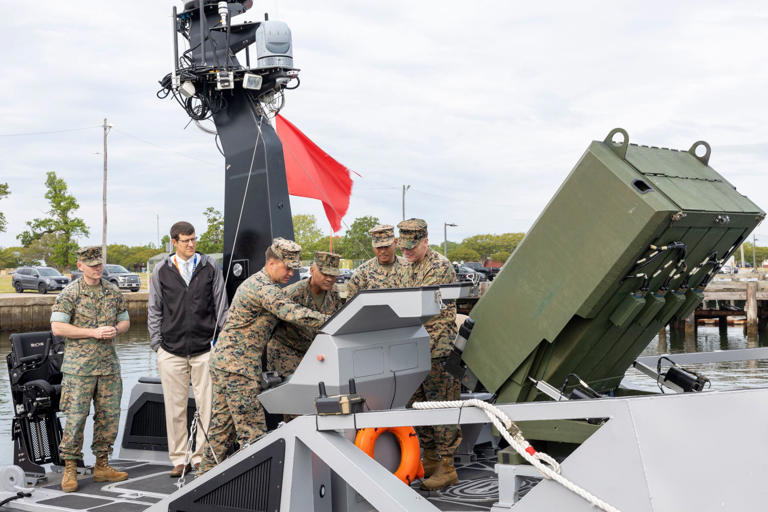
Not exactly the same, but you get the idea:   U.S. Marine Corps Lt. Gen. Brian W. Cavanaugh, the commanding general of Fleet Marine Force, Atlantic, Marine Forces Command, Marine Forces Northern Command, and Marines with 3d Marine Littoral Regiment, 3rd Marine Division, examine the manual controls to the Long Range Unmanned Surface Vessel, Joint Expeditionary Base Little Creek-Fort Story, Virginia, April 27, 2023. A LRUSV is an optionally manned vessel capable of extended travel and transporting loitering munitions that accurately track and destroy targets on sea or land. Metal Shark is designing, building, testing and implementing the LRUSV system under an other transaction authority aggrement with Marine Corps Systems Command to primarily serve as an intelligence, surveillance, and reconnaissance platform.
© Provided by The Drive

Naval News reports the Marines hope to develop a new long range loitering munition. It would take off vertically, be relatively inexpensive, be usable against both moving and fixed targets, on land or at sea, with a “minimum total payload weight capacity of 25 pounds (lbs) to include weapon seeker and warhead (but excludes fuel weight)” and have a range of about 150 nautical miles.

This might be something the Coast Guard could use. Single rounds should be effective against small, fast, highly maneuverable threats, while multiple hits might be effective against larger threats.  The relatively long range would mean it would not have to be widely distributed. A few, held as group assets, might be sufficient to deal with a terrorist threat.

“MDSU-1 DIVES THE ARCTIC WITH U.S. COAST GUARD” –Seapower

BEAFORT SEA (August 11, 2023) A military diver swims behind the icebreaker USCGC Healy (WAGB 20) during a scientific mission in the Beaufort Sea with USCG divers of Regional Dive Locker West and Navy divers of Mobile Dive and Salvage Unit (MDSU) 1 Aug. 11, 2023. Together, the Coast Guard and Navy conducted 42 military dives, totaling 656 minutes of bottom time to depths of 40 feet in the Arctic Ocean. As a component of Explosive Ordnance Disposal Group One, MDSU-1 provides ready, expeditionary, rapidly deployable mobile diving and salvage companies to conduct harbor and waterway clearance, salvage, underwater search and recovery, and underwater emergency repairs in any environment. (U.S. Navy Courtesy Photo)

The Navy Leagues online magazine, “Seapower,” reports Navy divers have deployed with USCGC Healy, now in the Beuford Sea. There was this interesting note,

“They [the Coast Guard] don’t have a decompression chamber, but they’re getting one,” said Hanson. “We let them use ours for this mission conducted for the Office of Naval Research (ONR), and we helped train the Coastguardsmen divers on the operation, maintenance and transport of a decompression chamber.”

and this nice quote,

“We’re trained to call the Coast Guard if a diver gets in trouble,” Hanson said. “But in this case, we were diving right off the side of a Coast Guard cutter, so we might have been in a super remote place, but the exact people we count on for help were right there.”

The description of diving under the ice is surprising.

“High-Risk Proposition, Why the CCP’s military-civil fusion strategy could backfire and possibly prove tragic” –Indo-Pacific Defense Forum

The Chinese-flagged Zhong Yuan Yu 16 sails near Ecuador’s Galapagos Islands in July 2021. The CCP uses thousands of distant-water fishing vessels as part of its military-civilian fusion strategy. THE ASSOCIATED PRESS

The Indo-Pacific Defense Forum discusses the implications of the Chinese People’s Republic’s military-civilian fusion strategy.

If there are hostilities between China and the US, the US Coast Guard is likely to have a lot of interaction with nominally civilian Chinese merchant and fishing vessels, but China is blurring the distinction between civilian and military.

Will we have to start hunting them down? Are they innocent or acting on behalf of the Chinese military? They might lay mines, scuttle their ship in an important channel or just report intelligence. Maybe no way to tell without boarding. Will they resist? How do we keep our boarding parties from being attacked or held hostage? Are there circumstances where sink on sight is justified? If they are unexpectedly heavily armed, can we call in backup? What about Chinese vessels in US ports?

VARD’s “Vigilance” 75 meter OPV Design

Naval News provides a bit more information on VARD’s proposal of a 75 meter OPV using the CUBE system of replaceable modules for the Canadian Navy. The discussion of the OPV begins in the video at time 3:26.

If these are to replace the 12 ship Kingston class, now 24 to 27 years old, this could be a significant program.

We talked about this proposal earlier. Canada apparently intends to deploy these well beyond the Canadian EEZ. The flight deck appears to be small and perhaps capable of operating only UAS. I still think the design generally is a little too tight, that it should be 5 to 15 meters longer and have a flight deck capable of operating a helicopter. I would also like to see a gun larger than 30mm.

Nevertheless, the CUBE system looks promising, possibly permitting an OPV to be quickly converted to meet emerging needs.

There is no indication Canada has accepted this design, but I have seen no information about competing designs.

Thanks to Lee for bringing this to my attention. 

“French-Led Combined Task Force 150 seized more illegal narcotics in the Arabian Sea” –NAVCENT

ARABIAN SEA (Sept. 7, 2023) United Kingdom Royal Navy Sailors assigned to frigate HMS Lancaster (F 229) inventory illicit drugs seized in the Arabian Sea, Sept. 7. (Photo by Courtesy photo)

Below is a news release from US Naval Forces Central Command.

5th Fleet (NAVCENT) has been doing some interesting stuff. They have assembled a coalition called “Combined Maritime Forces” that might serve as a model for operations in the South China Sea, Western Pacific, and the Eastern Pacific/Caribbean drug transit zones. Of course, the US Coast Guard is playing a part here and here.


MANAMA, Bahrain —On September 7, UK warship HMS Lancaster (F229), operating in support of the French-led Combined Task Force (CTF) 150 seized more than 450kg of illegal drugs including heroin and hashish in the Arabian Sea.

With a street value of approximately $9.5 million this is the first narcotics seizure since the French Navy took over command of CTF 150 from the UK in July. The Combined Maritime Forces (CMF) remain committed to disrupting criminal and terrorist activities by restricting their freedom of maneuver in the maritime environment.

Capt Yannick Bossu, CTF 150 Commanding officer said, “This seizure demonstrates once again the operational effectiveness of CTF 150 and illustrates the UK and France’s commitment to maritime security alongside their regional and international partners.”

Cmdr Chris Sharp, HMS Lancaster Commanding Officer remarked, “This success again demonstrates how international partners can work together in stopping illegal maritime activity which funds terrorist activity. This was a great success shared by all those involved.”

CTF 150 is one of the five operational forces of CMF, a 38-nation maritime partnership headquartered in Bahrain. CMF strengthens the maritime security in this strategic area, by countering activities that finance terrorism and international crime. This is the twelfth time that France commanded CTF 150.

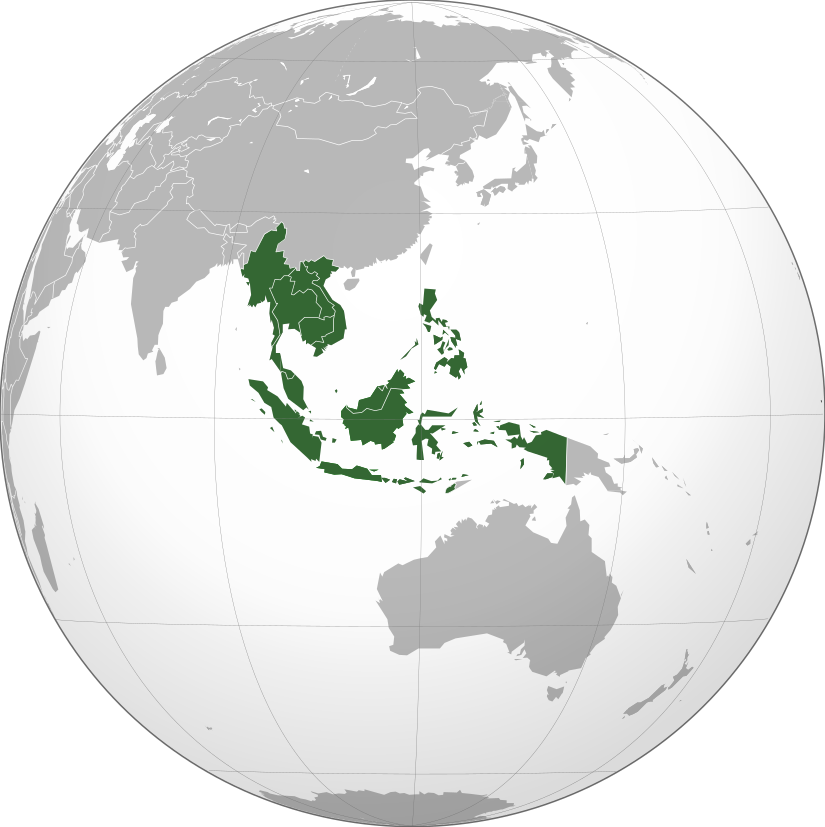
“ASEAN kicks off its first-ever joint military drills in Indonesia” –Reuters

Association of Southeast Asian Nations in orthographic projection. Credit: Addicted04

Reuters reports,

“Units from the countries of ASEAN began their first ever joint military drills in Indonesia’s South Natuna Sea amid rising geopolitical tensions between major powers and protests against China’s activities in the South China Sea…The five-day non-combat operation is aimed at developing military skills, including maritime security and patrols, and the distribution of humanitarian assistance and disaster relief, the Indonesian military said in a statement.”

This is a step toward establishment of recognized norms and cooperative law enforcement by ASEAN members in the South China Sea.

Significantly Indonesia is taking a leadership role. Indonesia seems to be the most aggressive nation in ASEAN with regard to protecting their EEZ assets.

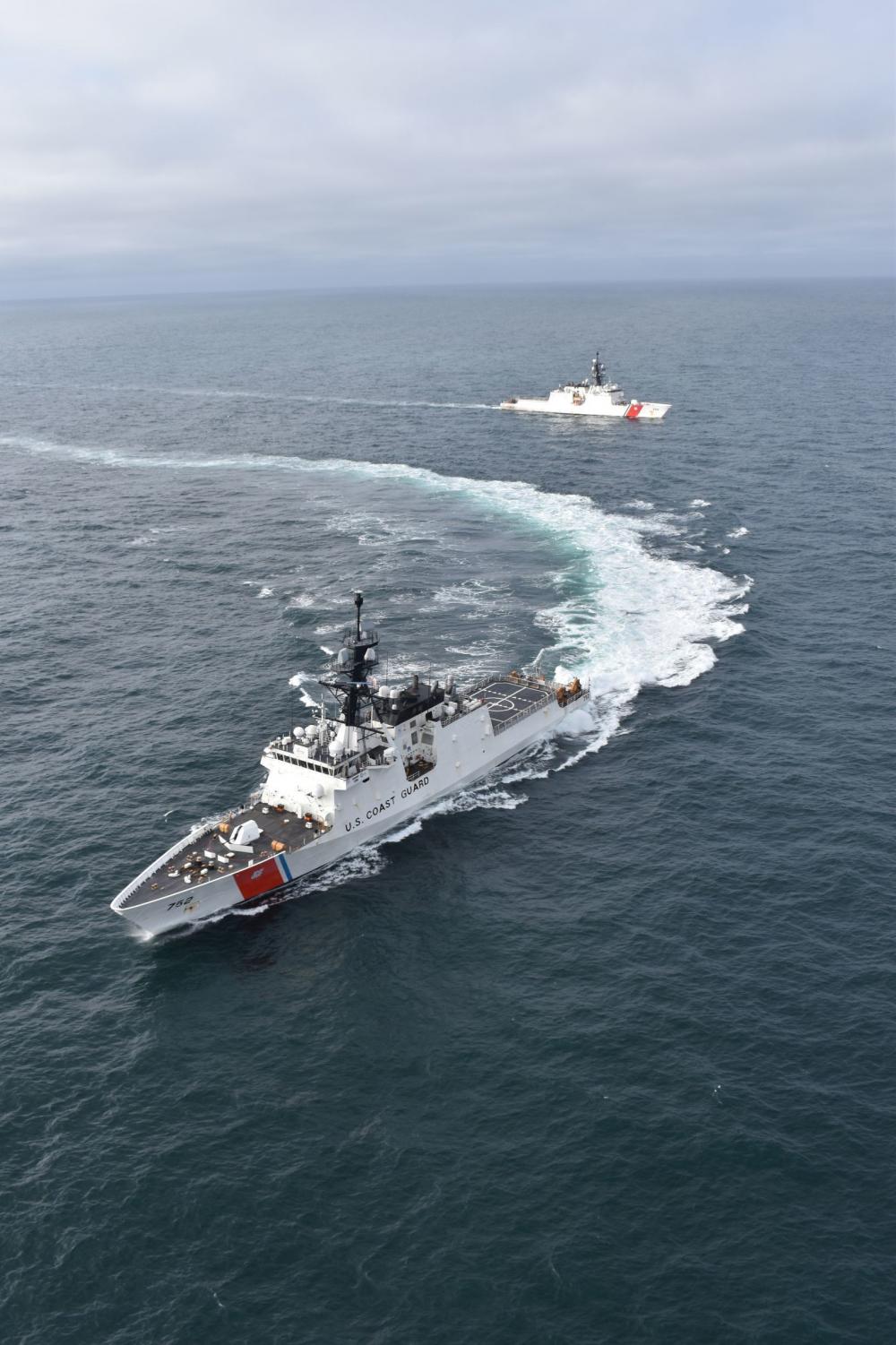
“US Coast Guard cutter provides presence during Russian military exercise in Bering Sea ” –D17

U.S. Coast Guard Cutters Stratton (WMSL 752) and Kimball (WMSL 756) steam in formation while patrolling the U.S.-Russian Maritime Boundary Line (MBL), in the Bering Sea, Sept. 26, 2022. This marked the first time two national security cutters jointly patrolled the MBL above the Arctic Circle. (U.S. Coast Guard courtesy photo).

Below is a District 17 (Alaska) News Release

Sept. 18, 2023

US Coast Guard cutter provides presence during Russian military exercise in Bering Sea

D17 Public Affairs

JUNEAU, Alaska – The crew of Coast Guard Cutter Kimball (WMSL 756), in coordination with U.S. Northern Command, provided U.S. presence during a Russian military exercise in the Bering Sea, Friday.

The Kimball patrolled in the vicinity of U.S. fishing vessels conducting their work in international waters within the U.S. exclusive economic zone (EEZ) during ongoing Russian military operations, which included the launch of a missile, approximately 300 miles southwest of St. Lawrence Island.

“Though military operations and exercises in international waters are lawful,” said Rear Adm. Megan Dean, Seventeenth Coast Guard District commander, “we will continue to ensure there are no disruptions to U.S. interests or commerce in the maritime environment around Alaska.”

On Sept. 10, an urgent warning of navigational dangers advisory message, known as a HYDROPAC, was released through the National Geospatial Agency regarding Russian military operations in the Bering Sea. The area of the HYDROPAC includes a portion of the U.S. EEZ southwest of St. Lawrence Island along the U.S./Russia Maritime Boundary Line and remains in effect through Sept. 24.

The Coast Guard notified vessels and the commercial fishing industry operating in the vicinity of the HYDROPAC, and made notifications to federal, state and tribal governments about the exercise. The Coast Guard continues to provide notifications throughout the maritime and fishing industry by all available means.

The Kimball, a 418-foot legend-class national security cutter homeported in Honolulu, Hawaii, is currently operating under the Seventeenth District’s Operation Frontier Sentinel.

Operation Frontier Sentinel is a Seventeenth Coast Guard District operation designed to meet presence with presence and ensure there are no disruptions to U.S. interests in the Alaskan maritime environment. The Coast Guard routinely patrols international waters under the service’s statutory authorities to ensure maritime safety and security of the U.S. maritime industry, to protect U.S. sovereign rights and to promote international rules-based order. Coast Guard presence ensures due regard for all lawful uses of the seas.

Group 2 VTOL UAS

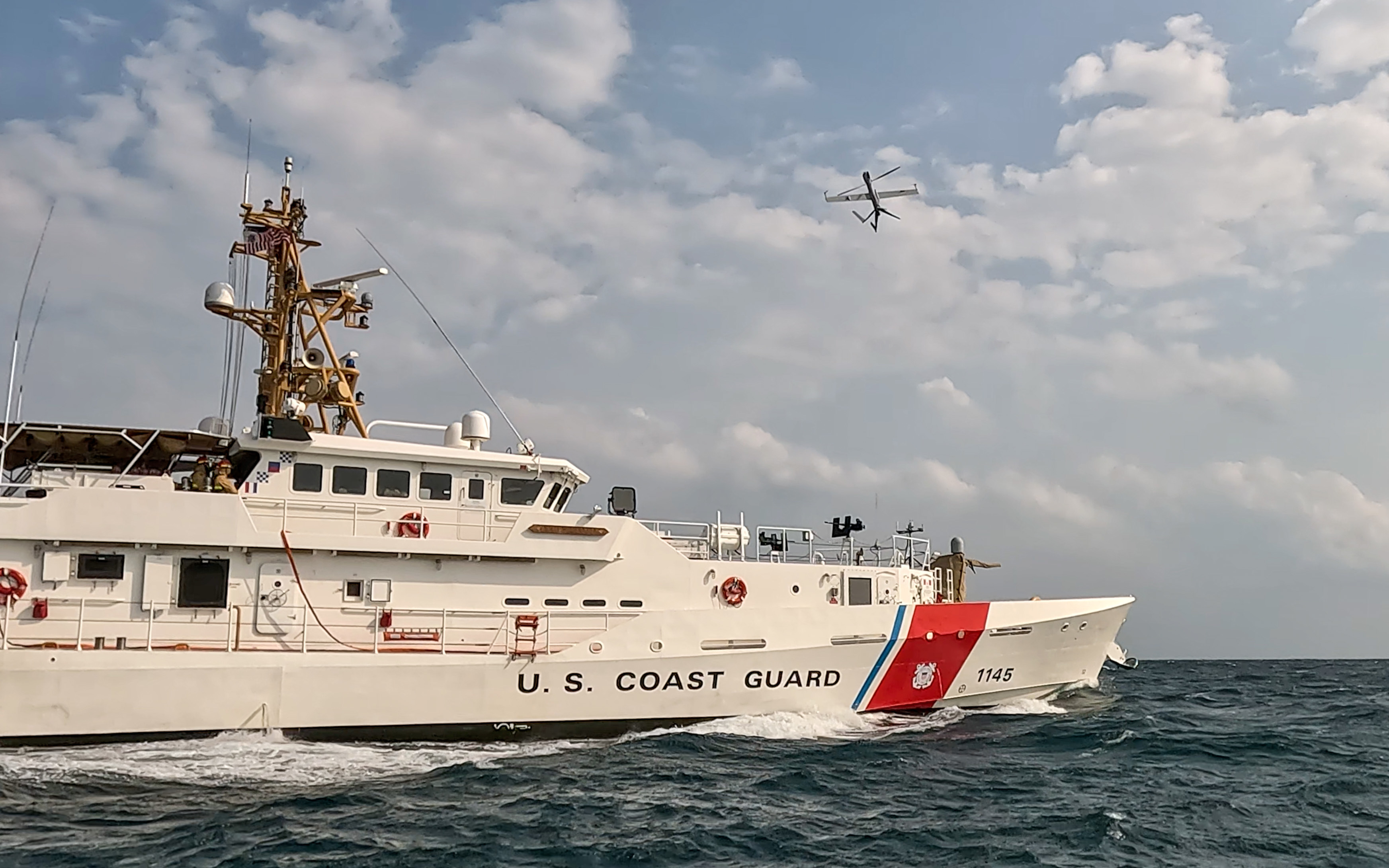
221207-N-NO146-1001 ARABIAN GULF (Dec. 7, 2022) An Aerovel Flexrotor unmanned aerial vehicle (UAV) takes off from U.S. Coast Guard fast response cutter USCGC Emlen Tunnell (WPC 1145) transiting the Arabian Gulf, Dec. 7. U.S. 5th Fleet’s Task Force 59 launched the UAV during Digital Horizon, a three-week event focused on integrating new unmanned and artificial intelligence platforms, including 10 that are in the region for the first time. (U.S. Navy photo)

We have begun to see very capable, vertical takeoff and landing (VTOL) unmanned air systems that fall into the DOD Group Two standard.

  • Weight: 21 to 55 pounds (10 to 25 kg)
  • Nominal operating altitude: <3500 feet or 1 km above ground level.
  • Speed: <250 knots

Recently Elbit Systems reported they would be providing a Group 2 VTOL to the Israeli Army, and we have the photo above of an Aerovel Flexrotor taking off from a Webber class patrol craft,

These small, unmanned air systems (UAS), which can combine sophisticated sensors and endurance of four to over 24 hours, may be better search platforms than our H-65 helicopters.

Group 2 UAS are even smaller than the Martin V-Bat. It appears, they might be able to operate from Webber class cutters. Operating UAS from the Webber class on a regular basis would provide them much of the air search advantage of larger flight deck equipped cutters.

Below is a news release on another aircraft in this class, the Edge Autonomy VXE30. The VIDAR sensor referred to in the news release, is also used on the Scan Eagle (a catapult launched Group 2 UAS) used on National Security Cutters. There is more on the unmanned VXE30 here.


Edge Autonomy’s VXE30 UAS. The VXE30 vertical take-off and landing (VTOL) solution is the latest and most advanced version of the “Stalker” series of small uncrewed aerial systems (sUAS) from Edge Autonomy.


Sentient’s AI-enabled ViDAR optical sensors soar on Edge Autonomy’s VXE30 “Stalker” UAS in successful live demonstrations

ViDAR – Sentient’s AI-enabled wide area motion imagery deployed for real-time maritime surveillance at the edge

VIRGINIA BEACH, Va. (Aug 29, 2023) – Sentient Vision Systems (Sentient) has successfully completed live demonstrations of its AI-enabled ViDAR (Visual Detection and Ranging) payload deployed on Edge Autonomy’s VXE30 UAS. The VXE30 vertical take-off and landing (VTOL) solution is the latest and most advanced version of the “Stalker” series of small uncrewed aerial systems (sUAS) from Edge Autonomy. When coupled with Sentient’s ViDAR, the VXE30 provides a passive, wide area search capability, enabling it to serve a myriad of maritime operations. The joint capability will be on display at DSEI 2023, 12-15 September in London.

ViDAR, developed by Sentient, utilizes AI; Computer Vision, and Machine Learning integrated with Electro-Optic and Infrared (EO/IR) sensors to passively detect objects that are difficult to spot by the human eye or recognize on a conventional radar. With these enhanced capabilities, Stalker will be more capable of accurately detecting and locating people, objects, and vessels (day and night) far from the operator.

ViDAR has been deployed on intelligence, surveillance, and reconnaissance missions (ISR), maritime patrol and border protection, as well as search and rescue missions since 2015. ViDAR is proven to be effective in challenging maritime conditions up to Sea State 6 (very rough with waves 13 to 20 feet high/ 4 to 6 meters).

Sentient has successfully evolved ViDAR into a compact, lightweight, low power form factor—low SWaP (size, weight, and power) — suitable for deployment on small Group 2 / NATO Class 1 UAS such as the VXE30. Its successful integration onto the VXE30 demonstrates its broad operating envelope and ability to provide unprecedented long-endurance imaging capability in contested environments all around the world.

Joshua Stinson, Edge Autonomy’s Chief Growth Officer said, “The integration of ViDAR onto the VXE30 is an essential part of our UAS deployment program. ViDAR’s passive detection system will further the VXE30’s capabilities to remain undetected in a contested environment while carrying a powerful maritime detection sensor that provides a real-time picture of the maritime domain. This capability could make all the difference in a mission’s success.”

Paul Harris, Sentient’s VP of Business Development agreed and said, “We are delighted to be working with Edge Autonomy to demonstrate how effective ViDAR is at increasing the utility of the small and agile VXE30 for the challenges of the modern battlespace. We look forward to displaying our joint capabilities at DSEI.”

With close to 4,500 systems deployed, Sentient’s AI-enabled sensor edge solutions for wide area motion imagery are proven for detection in missions worldwide.

——–ends——–

About Sentient Vision Systems www.sentientvision.com

Sentient Vision Systems specializes in passive, modular optical sensors for persistent, wide area motion imagery. Sentient’s artificial Intelligence (AI)-enabled edge solutions better detect and identify small objects in real time, on land and at sea. With more than 20 years of development in moving target indication, AI computer vision and machine learning, Sentient has deployed thousands of systems worldwide in the field of Intelligence, Surveillance, Search and Rescue, enhancing situational awareness, accelerating informed decisions, and saved numerous lives. Follow Sentient on LinkedIn , VimeoYouTube and Twitter

About Edge Autonomy www.edgeautonomy.io

Edge Autonomy is a leader in providing innovative autonomous systems, advanced optics, and resilient energy solutions to the U.S. Department of Defense, the U.S. Federal Civilian Agencies, allied governments, academic institutions, and commercial entities. Edge Autonomy draws on a 34+ year history of aerospace engineering, advanced manufacturing expertise, and technologically advanced manufacturing. With headquarters in San Luis Obispo, CA, and key production capabilities abroad, Edge Autonomy’s 400+ team members deliver results in multiple markets. Follow Edge Autonomy on LinkedInFacebook and Twitter.