220926-A-EQ028-1234 MANAMA, Bahrain Seaman Alexander Moyes lowers the Union Jack aboard USCGC Baranof (WPB 1318) during the ship’s decommissioning ceremony in Manama, Bahrain, Sept. 26, 2022. Baranof decommissioned after 34 years of service. (U.S. Army photo by Spc. Frederick Poirier)
U.S. Coast Guard decommissions Bahrain-based USCGC Baranof
Editors’ Note: To view more or download high-resolution imagery, click on the photos above.
MANAMA, Bahrain — The USCGC Baranof (WPB 1318) was decommissioned during a ceremony aboard Naval Support Activity Bahrain, Monday.
Vice Adm. Kevin Lunday, commander of U.S. Coast Guard Atlantic Area, presided over the ceremony.
“USCGC Baranof’s exemplary service to our nation is a testament to both the Island-class platform and the crews that have manned Baranof over the past 34 years,” said Lunday. “Whether it was conducting law enforcement and search and rescue in the Caribbean, or deploying to the present-day homeport of Bahrain to support U.S. Central Command, those that have manned Baranof have continually met the needs of America.”
Baranof was commissioned into service on May 20, 1988 at Coast Guard Base Miami Beach in Miami. The 18th of 49 Island-class patrol boats, Baranof received orders to the U.S. Fifth Fleet area of operations in support of Operation Iraqi Freedom in 2002. Shortly after their arrival in Bahrain, Baranof’s crew was underway conducting maritime interdiction operations in the North Arabian Gulf.
Baranof was replaced by the USCGC Clarence Sutphin Jr. (WPC 1147), which arrived at NSA Bahrain on Aug. 23, 2022. As part of the Coast Guard’s fast response cutter program, the service is acquiring 65 Sentinel-class fast response cutters, with six of those assigned to U.S. Coast Guard Patrol Forces Southwest Asia.
PATFORSWA, the Coast Guard’s largest unit outside of the United States, oversees the cutters in Bahrain. The ships are forward deployed to U.S. Fifth Fleet to help ensure maritime security and stability across the Middle East. The 154-foot long vessels feature advanced communications systems, and improved surveillance and reconnaissance equipment.
PATFORSWA, which is operationally attached to Fifth Fleet’s Commander Task Force 55, is composed of six FRCs, shoreside mission support personnel and a maritime engagement team. The unit plays a crucial role in maritime security, maritime infrastructure protection, and regional theater security cooperation. The unit also supports other U.S. Coast Guard deployable specialized forces operating throughout the Middle Eastern region.
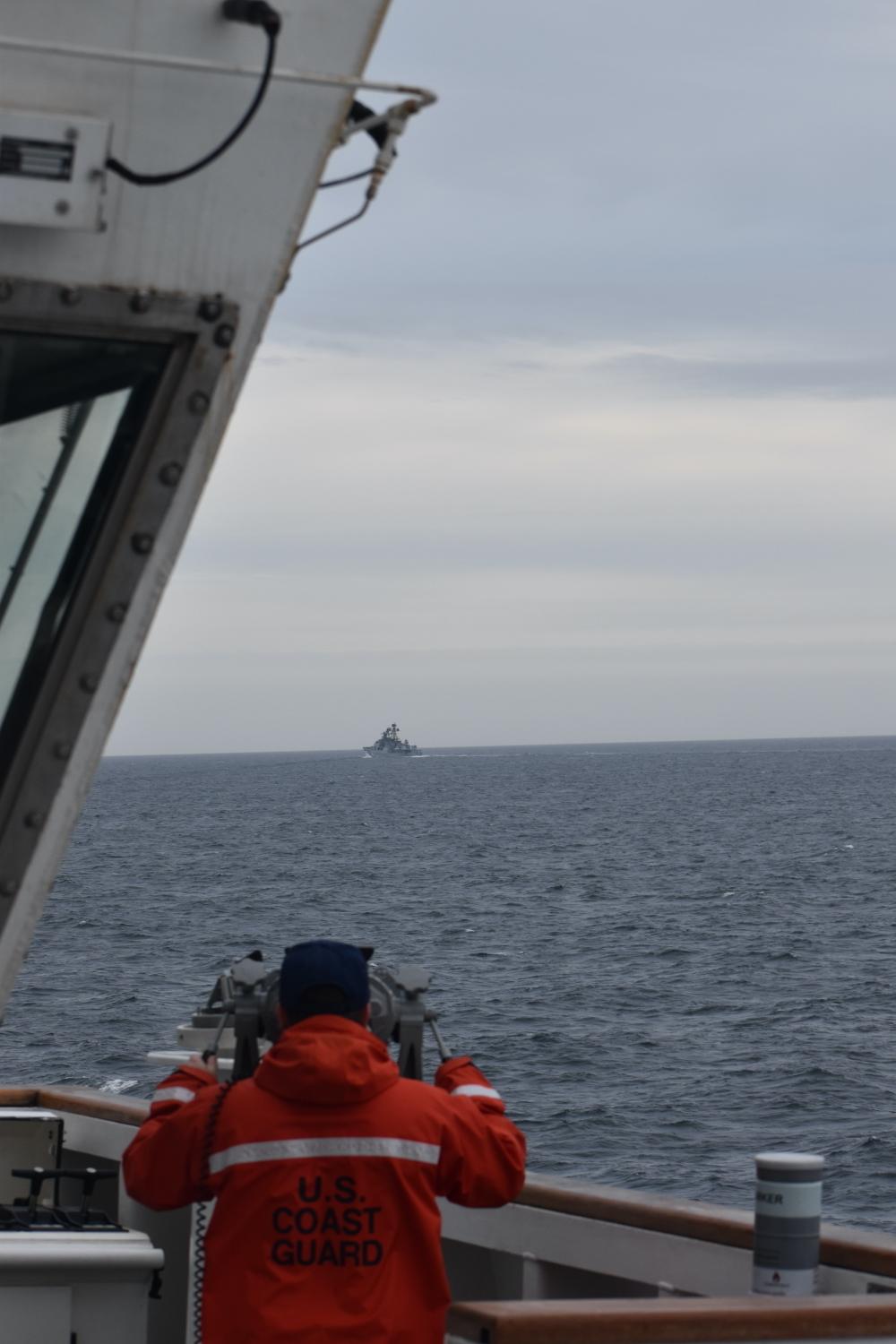
A Coast Guard Cutter Kimball crewmember observing a foreign vessel in the Bering Sea, September 19, 2022. (I believe it is a Russian Udaloy class destroyer–Chuck) The Coast Guard Cutter Kimball crew on a routine patrol in the Bering Sea encountered a People’s Republic of China Guided Missile Cruiser, Renhai CG 101, sailing approximately 75 nautical miles north of Kiska Island, Alaska.
Below is a District 17 news release (HQ Juneau). The Chinese cruiser referred to is a Type 055, NATO designation Renhai class. The USN considers it a cruiser, but it is considered by many a large destroyer.
News Release
U.S. Coast Guard 17th District Alaska
Coast Guard Cutter Kimball encounters Russia and People’s Republic of China military naval presence in Bering Sea
Editors’ Note: Click on images to download high resolution version.
JUNEAU, Alaska – The Coast Guard Cutter Kimball crew on a routine patrol in the Bering Sea encountered a People’s Republic of China Guided Missile Cruiser, Renhai CG 101, sailing approximately 75 nautical miles north of Kiska Island, Alaska, September 19, 2022.
The Kimball crew later identified two more Chinese naval vessels and four Russian naval vessels, including a Russian Federation Navy destroyer, all in a single formation with the Renhai as a combined surface action group operating in the U.S. Exclusive Economic Zone (EEZ).
As a result, the Kimball crew is now operating under Operation Frontier Sentinel, a Seventeenth Coast Guard District operation designed to meet presence with presence when strategic competitors operate in and around U.S. waters. The U.S Coast Guard’s presence strengthens the international rules-based order and promotes the conduct of operations in a manner that follows international norms. While the surface action group was temporary in nature, and Kimball observed it disperse, the Kimball will continue to monitor activities in the U.S. EEZ to ensure the safety of U.S. vessels and international commerce in the area. A Coast Guard Air Station Kodiak C-130 Hercules air crew provided support to the Kimball’s Operation Frontier Sentinel activities.
In September 2021, Coast Guard cutters deployed to the Bering Sea and North Pacific Ocean also encountered Chinese naval vessels, including a surface action group transiting approximately 50 miles off the Aleutian Island chain.
“While the formation has operated in accordance with international rules and norms,” said Rear Adm. Nathan Moore, Seventeenth Coast Guard District commander, “we will meet presence-with-presence to ensure there are no disruptions to U.S. interests in the maritime environment around Alaska.”
Kimball is a 418-foot legend-class national security cutter homeported in Honolulu, Hawaii.
The first Air Force Research Lab video above talks about a new weapon, but it is also recognition of a new threat.
Let’s talk about what is wrong with the scenario in the video, how the Coast Guard could use this new weapon, along with the “Rapid Dragon” delivery system, and why the Coast Guard not only could, but should be the agency to use this weapon against this particular threat.
“Conventional cruise missiles or hypersonic cruise missiles, low-radar cross-section cruise missiles, cruise missiles from Russia, cruise missiles from China, potentially other countries. Cruise missiles that can be launched from undersea, from 100 miles-plus off the coast. Cruise missiles from on the sea. … Cruise missiles from the air. Cruise missiles from commercial vehicles launched out of a container that can be masked as part of the commercial ship. (emphasis applied–Chuck)
The video shows a ballistic missile being preped for launch from a container. That is possible, but cruise missiles are more likely. In any case, potential actions to stop the launch would be the same.
In the video we see a Navy P-8 Maritime Patrol Aircraft monitoring the activities of a suspicious container ship. Presumably the war has not started since they don’t call for an Air Force fighter to bring in the weapon until the P-8 sees a launcher being elevated for missile launch. This is really too late to call the Air Force. Before the Air Force can get a fighter on scene, the missiles will have been launched. The aircraft monitoring the ship’s activity should be able to immediately initiate countermeasure. The P-8 Poseidon is capable of carrying Anti-Ship Cruise missiles of 725 kg (1,598 lb). It might be able to deploy the QUICKSINK weapon seen in the video which is based on a 2,000 pound bomb. It could certainly deploy a similar weapon based on the 1000 pound bomb. The problem is that, at this stage in the run-up to war, P-8s should be looking for submarines that might also launch cruise missiles, and fighter aircraft don’t have the endurance to loiter on scene waiting for something to happen. They would also be needed to intercept any cruise missiles that are launched.
In the actual sinking, this was a big bomb used against a small ship, but the key to its effectiveness what where it exploded.
The weapon is discussed here, “Air Force destroys target vessel with ship-killing JDAM.” It clearly is intended to exploit the non-compressibility of water to allow a weapon that would not normally immediately sink a ship, if it hit above the waterline, to break the ship in half.
“In a September 2021 interview with Military.com, Meeks said one of the bomb’s modifications was a redesigned nose plug. This is intended to keep the bomb from veering off in an unintended direction if it hits the water before the target, which Meeks likened to skipping a stone across the surface of a pond.”
There is additional information about the seeker here, including how it works (GPS to get to the general area, then radar, and imaging IR), expected cost (substantially less than $1M for the all up rounds bought in quantity), and range (15 miles, potentially more with range extending wing kits).
As I have pointed out numerous times, no other non-nuclear weapon equals a modern torpedo’s ability to sink a ship. Apparently the Air Force agreed and decided to develop a weapon that would kill a ship in the same way a modern torpedo does, by detonating under water, preferably below the keel, rather than by directly hitting the target above the waterline. Looking at the videos, it appears the bomb enters the water, almost vertically, close to the port side. We see the familiar lift of the center section as we have seen many times when a Mk48 torpedo is used against a surface target, after which the ship breaks in half. For comparison, here is a destroyer hit by a Mk48, and a Mk48 torpedo’s warhead contains far less explosive than a 2000 pound bomb.
The Launch Platforms:
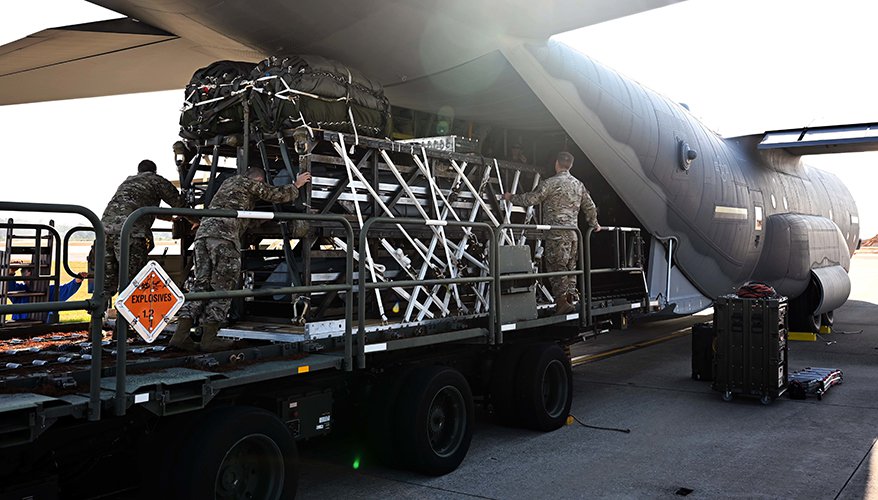
The weapon can be used on a wide variety combat aircraft. The video shows and F-35 and the actual test was done with an F-15, but there is no reason this could not In fact be dropped from a Coast Guard fixed wing using the “Rapid Dragon” concept.
It is not that the Coast Guard will necessarily be the only ones doing this mission, but the Coast Guard does seem to be particularly well suited for the purpose.
If we are to keep watch on vessels off the US coast in the run up to war, you want aircraft with long endurance. You want excellent communications. You want good electro optics so that you can watch what is happening on a ship from outside the range of shoulder launched air defense systems (MANPAD). You get all that with Coast Guard fixed wing aircraft equipped with the Minotaur system. Using Air Force’s QUICKSINK modified JDAM from the Rapid Dragon launcher means we can have a single unit that can remain on station for an extended period, observe the actions of target of interest, communicate effectively, and if necessary promptly eliminate a threat while freeing other assets like the P-8 and fighters to do jobs only they can do.
It would not be necessary for the Coast Guard to store the weapons or arm the aircraft if a agreement could be reached allowing DOD facilities to load the Rapid Dragon and weapons. Actually targeting would be done by DOD assets anyway. It appears this mission could be performed, even to our smallest fixed wing, the HC-144.
Is it doable?:
A recent report suggests that it is. Lt. Gen. James Slife, who leads Air Force Special Operations Command said, “It doesn’t require any aircraft modifications, it doesn’t require any special aircrew training.”
Might be of interest to compare the amount of ordanance used in this SINKEX. It should be recognized that this retired USN frigate was probably a larger, more resilient target than the one used in the “QUICKSINK” demonstration, but I suspect, if QUICKSINK had been used agains the frigate, the results would have been the same, though it probably would have taken the two halves of the ship longer to sink.
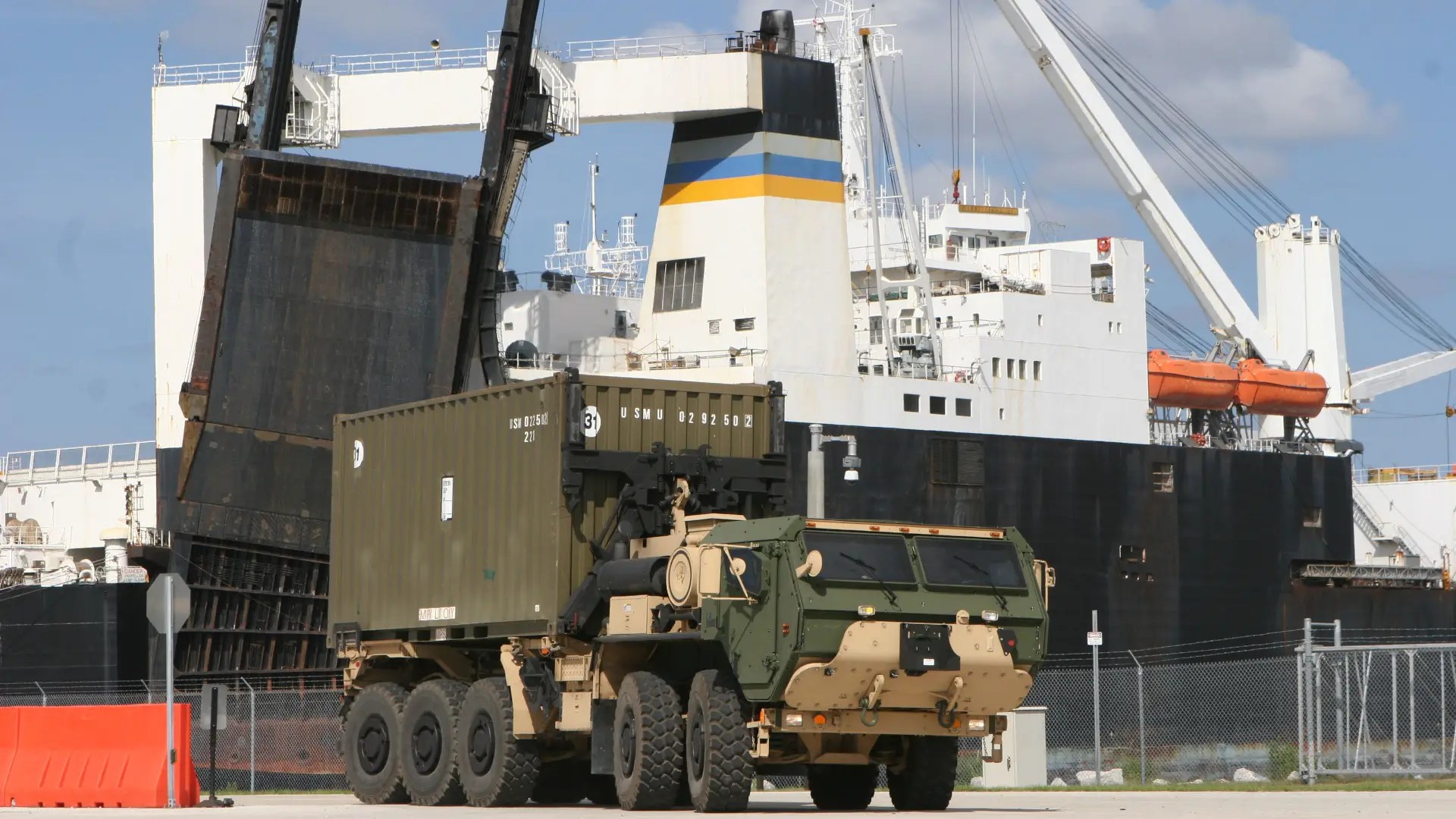
A US Marine Corps Logistics Vehicle System Replacement truck carrying a standard shipping container with a Navy logistics vessel in the background. The Navy is now working on a project to develop a containerized electronic warfare and electronic intelligence system that will work on various naval, air, and ground platforms. USMC / Lance Cpl. Shawn Valosin
The US Coast Guard has had a long history of participation in almost every armed conflict the US Navy has engaged in. But there has always been a tension between peacetime economy and effectiveness and readiness for war.
Some military systems are essential for our peacetime missions, like minimal deck guns or muti-mode radars, we would probably have them, even if we had no wartime missions.
Some military equipment we would be unlikely to have, if we had no military missions, can enhance performance of peacetime missions, like data links and electronic warfare systems. These systems are welcome.
Then there are systems that would enhance our wartime effectiveness that have little or no utility in peacetime. If they require significant training and maintenance time, they can adversely effective peacetime economy and effectiveness. There is an argument to be made that these still offer good return on investment compared with making a similar investment in DOD assets, but diverting DHS assets to support DOD missions can be a hard sell.
Ideally, we would want Coast Guard assets to do their peacetime missions without having to think about wartime missions until mobilization, but when needed, DOD would quickly and easily add capabilities and trained operating personnel.
That is not always possible, but in some cases we might be able to come close to that.
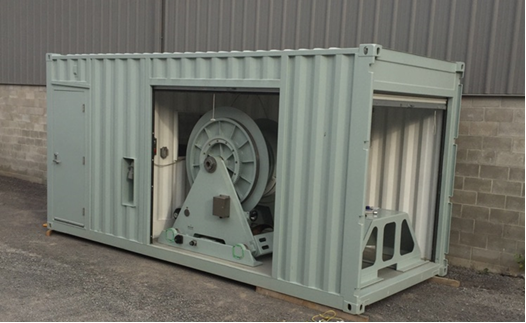
The Danes showed how to make modular naval weapon and sensor systems with their SanFlex system. Now we regularly see announcement of some new modular system. Here, here, here, here, here, here, here, here, and here.
TRAPS containerized active/passive towed array from GeoSpectrum Technologies.
Towed sonars can be containerized, here, here, and here.
What I think we need, after determining the most appropriate mission set for Coast Guard units is a determination of what:
must be permanently installed and operated by Coast Guard personnel at all times,
what can be quickly installed and operated in the event of a crisis, and
what can be added in the form of modular equipment maintained by the Navy and to be operated by Navy Reserve personnel upon mobilization.
A primary example of the latter would be an ASW helicopter. Unmanned systems also look like likely candidates for systems that could be quickly added to Coast Guard vessels.
Unmanned mine hunting and destruction equipment might be based on Coast Guard buoy tenders to allow them to look for mines in US waters, including those around Alaska, Hawaii, Guam and Saipan. In fact the Navy is making some extra LCS Mine CounterMeasures (MCM) for ships of opportunity.
If the Navy wanted Coast Guard cutters to augment Navy ASW forces, a likely mission if we have a war with China, they could become useful units by the addition of a modular version of the Navy’s towed array sonar systems and assignment of experienced ASW personnel and an MH-60R aviation detachment. We would need to have identified where we would store torpedoes, sonobuoys, and other support equipment, but those spaces could have other uses in peacetime.
U.S. Marines with Marine Aerial Refueler Transport Squadron (VMGR) 252 equip a KC-130J Hercules with AGM-114 Hellfire missiles (U.S. Marine Corps photo by Lance Cpl. Christian Cortez)
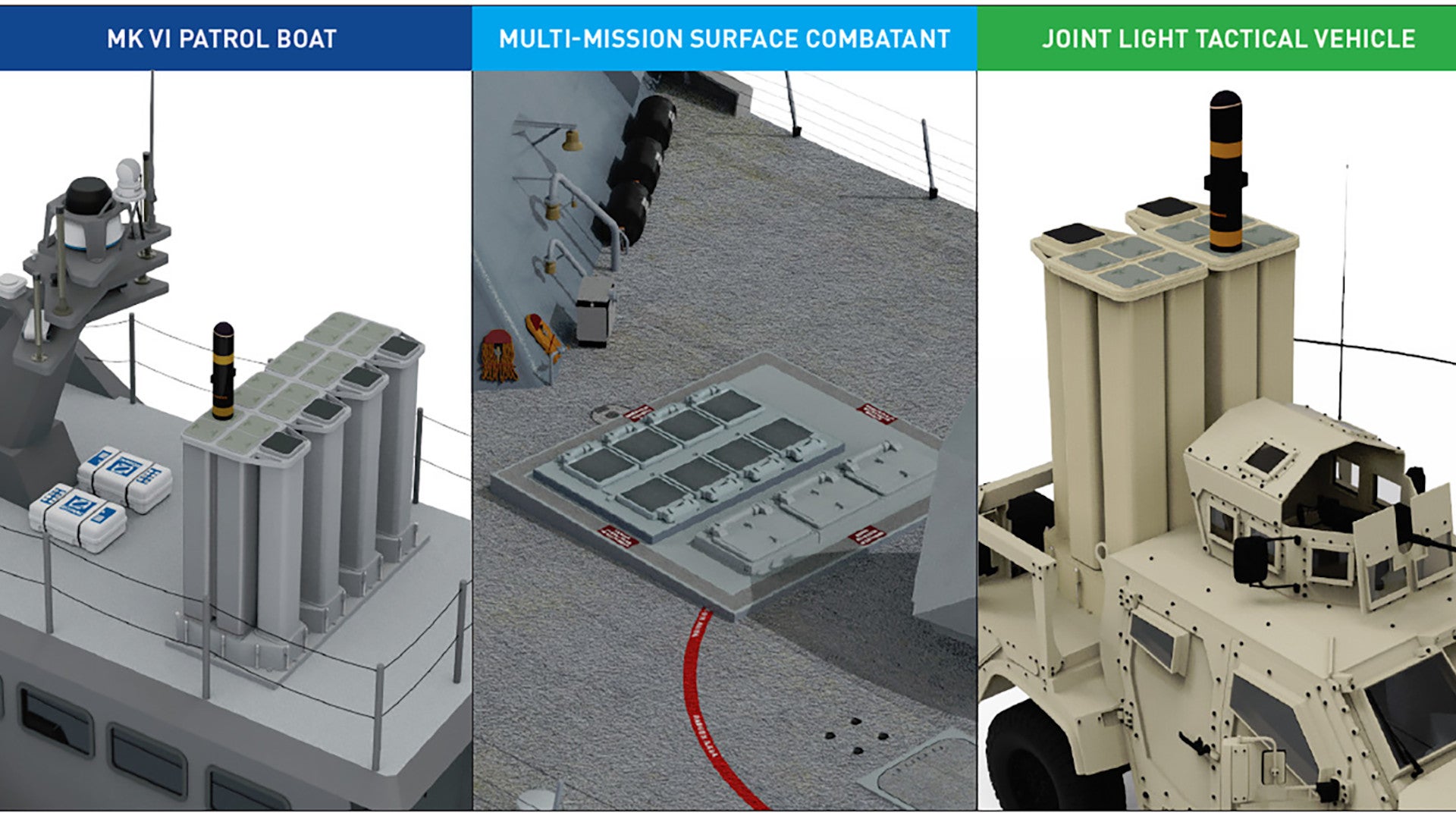
Sandbox has a good overview of the Hellfire missile’s replacement, the AGM-179 JAGM (Joint Air Ground Missile–Despite the acronym, this missile will be used surface to surface and even surface to air, as well as air to surface.)
I have for a long time pointed to the Hellfire as a missile that could provide much needed firepower if any of our vessels, down to and including patrol boats, encounter a situation where they need to forcibly stop a vessel, regardless of size, with a near 100% prospect of success against small, fast highly maneuverable targets and at least some chance of success against large ships. All with minimal chance of collateral damage.
The post notes that the AGM-114L Longbow Hellfire, the version used in vertical launchers as part of the anti-surface module on Littoral Combat Ships has been out of production since 2005, but the new missile will include the capabilities of the Longbow Hellfire as well as Semi-Active Laser Homing.
The Missile:
JAGM shares many components with the Hellfire. It has the same dimensions:
Length: 70″ (1,800mm)
Diameter: 7″ (180mm)
Weight: 180 pounds (49 kg)
Warhead: 20 pounds
Range: 8 km (almost 9,000 yards)
Launchers:
There are a number of ways the missile could be integrated into the various cutter classes.
There are stand alone single round launchers.
Launch tubes could be attached to existing Mk38 gun mounts.
We could use small vertical launch systems.
Textron Systems’ CUSV with Surface Warfare payload including a Hellfire vertical launch system, the box in the center, at SAS 2019
These weapons will be made in huge numbers, thousands per year, and in the meantime, there are thousands of Hellfires in inventory that could meet our needs. This is a weapon based on the Hellfire’s history of success and with a promising long term future. It has a small foot print, and requires minimal maintenance and training while providing the punch of a 6″ naval gun. Range is expected to be extended to 16 km.
This is doable, at modest cost, and the Navy should pay for most of it.
“169 H160M Guépards are foreseen to replace five types of helicopters in service with the French armed forces.”
These first few are not the fully militarized H160M versions. They are lightly upgraded civilian aircraft for use as SAR aircraft, including a Safran Euroflir 410 electro optical system and winching system. The aircraft are certified for night vision google use.
To improve capabilities for monitoring aircraft and vessels carrying illicit maritime cargo such as drugs, for longer periods of time and over greater distances, the Office of Naval Research-sponsored SCOUT initiative recently conducted a dynamic experimentation event at Joint Expeditionary Base Little Creek-Fort Story, Virginia, at the entrance of the Chesapeake Bay.
.
The goal of the event was to find creative solutions to pinpoint “dark targets” — aircraft or watercraft operating with little to no radio-frequency signatures — found in maritime operating areas covered by the Joint Interagency Task Force South, ONR said in a Sept. 19 release. It sought ways to use unmanned technologies to expand intelligence, surveillance and reconnaissance capabilities beyond those of traditional maritime patrol aircraft such as the P-3 Orion and P-8 Poseidon.
Notably this includes aircraft as well as surface craft.
Another nation acquiring land based Unmanned Air Systems for Maritime patrol. This time it is Thailand. The system chosen, the Hermes 900, may look a lot like the MQ-9B. that I think is currently the most logical choice for the USCG, but it is much smaller, more like the MQ-1 Predator. The Wikipedia entry for the Hermes 900 appears to indicate the UAS does not yet have a “sense and avoid” system (see the entry for Switzerland).
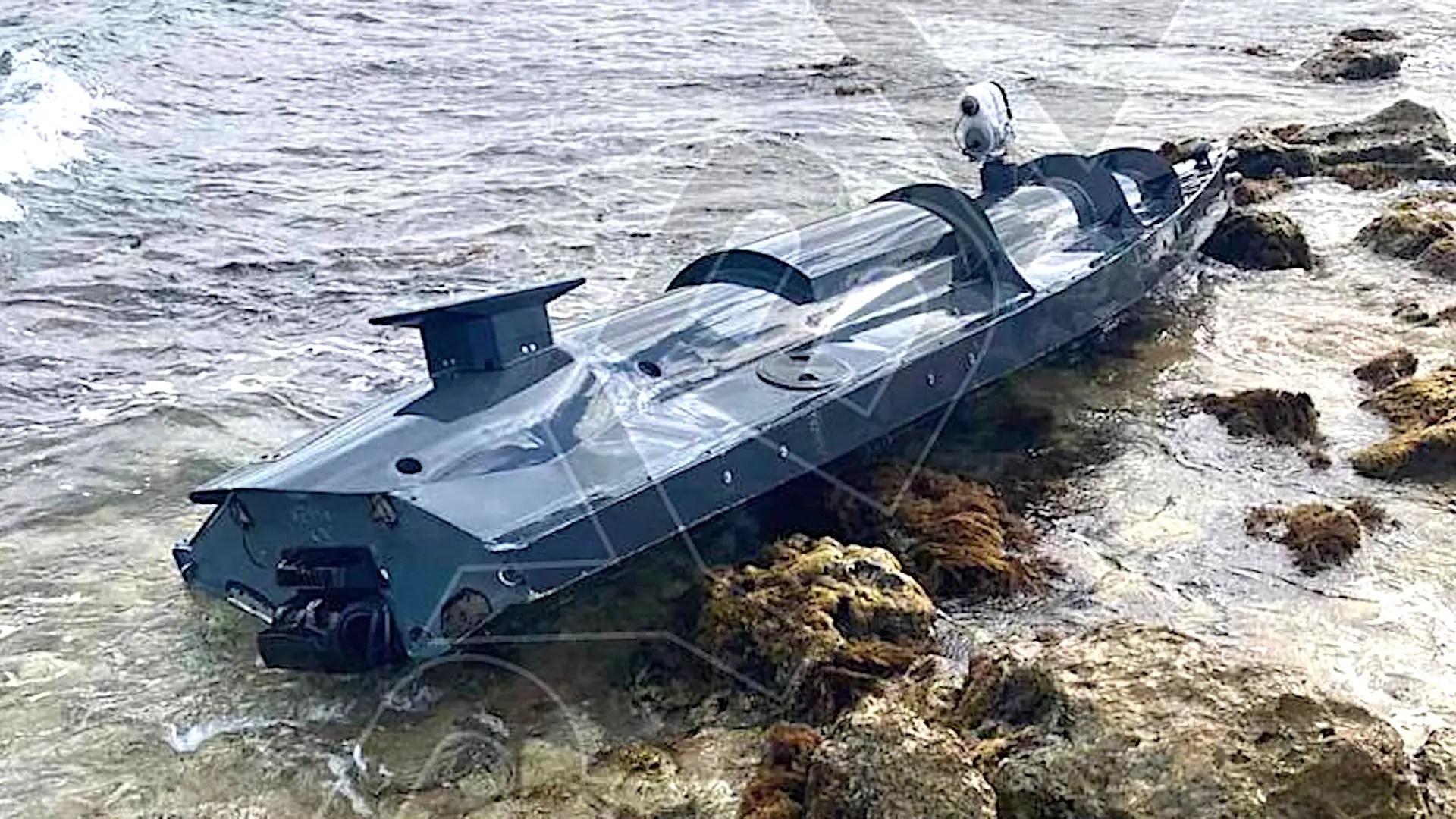
The Drive/The War Zone discusses reports of a possible suicide drone surface vessel. This looks more sophisticated than the unmanned explosive motor boats that were used by Yemen’ Houthi faction, possibly using satelite communications to allow it to be operated over much greater distance from the control station.
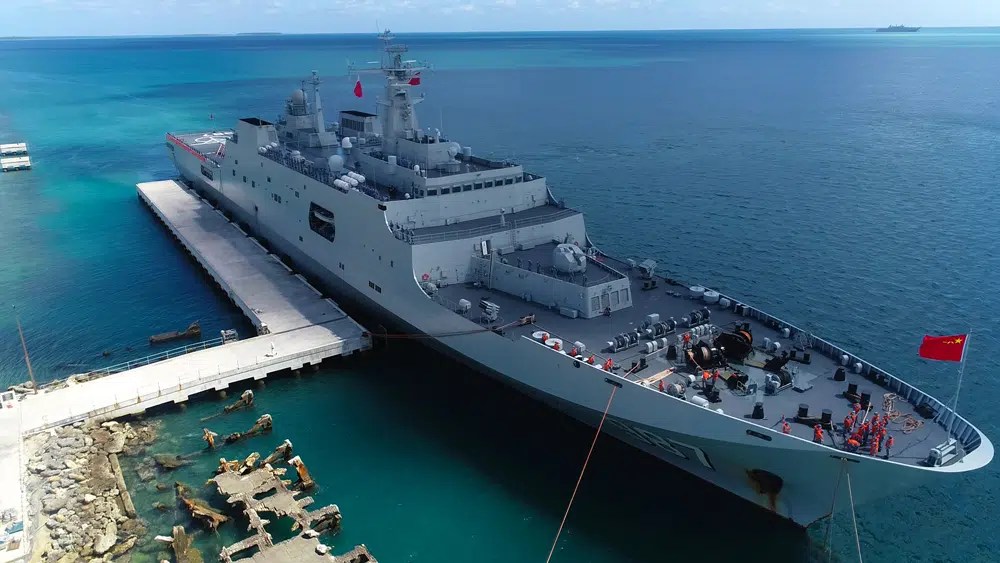
Type 071 LSD Wuzhishan of the People’s Liberation Army Navy (PLAN) alongside in Nuku’alofa, Tonga with an Australian Canberra class LHD visible in the background. (Xinhua)
The post points to visits by USS Jackson (LCS-6), the UK’s HMS Spey (P-234), Japan’s JS Kirisame (DD-104) and India’s INS Satpura (F-48).
Somehow, I suspect of all these, the Webber class WPCs, like USCGC Oliver Henry’s recent deployment, are the most welcome, non-threatening, the right scale, not showing off, just trying to help.








 Chuck Hill's CG Blog