USCG and Philippine CG Host International Maritime Law Enforcement Forum in Guam

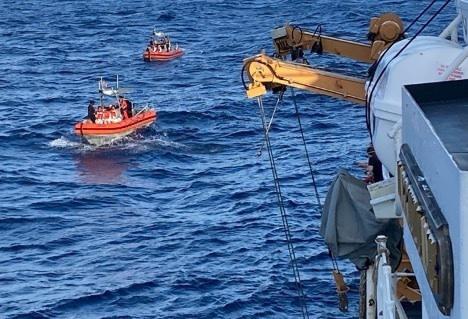
Indonesian Maritime Security Agency vessel KN Tanjung Datu, left, sails alongside U.S. Coast Guard Cutter Stratton during joint exercises in the Singapore Strait in August 2019. IMAGE CREDIT: PO1 LEVI READ/USCG

Announcement by Pacific Area regarding a significant international conference.

News Release

April 5, 2022

 MEDIA ADVISORY: US, Philippine Coast Guard representatives available for media interviews about maritime law enforcement forum in Guam

  • Who: Rear Adm. Peter W. Gautier, deputy commander, U.S. Coast Guard Pacific Area, and Rear Adm. Ronnie Gil L. Gavan, commander, Philippine Coast Guard Maritime Security and Law Enforcement Command 
  • What: Available for interviews regarding ongoing Southeast Asia Maritime Law Enforcement Forum 
  • When: 10 a.m. Wednesday, Apr 6 
  • Where: Dusit Thani Guam Resort, 1227 Pale San Vitores Road, Tumon, Guam 96913 

Editor’s note: Media planning to attend must RSVP by emailing lauren.l.jorgensen@uscg.mil no later than 1 p.m. Monday, April 4. The availability is limited to in-person interviews. Arrival instructions will be provided upon RSVP.  

TUMON, Guam – Senior leaders and policy makers from Indonesia, Malaysia, Philippines, Thailand, the United States and Vietnam are gathering virtually and in person in Tumon, Guam, this week to collaborate and expand maritime law enforcement partnerships. 

Together, the U.S. Coast Guard and Philippine Coast Guard are co-hosting the Southeast Asia Maritime Law Enforcement Initiative Commanders’ Forum Tuesday through Thursday.  

Rear Adm. Peter W. Gautier and Rear Adm. Ronnie Gil L. Gavan, representing the U.S. and Philippine Coast Guards respectively, will be available at 10 a.m. Wednesday morning for interviews about the forum with interested media. 

The intent of the annual forum is to enhance regional stability by promoting maritime safety, security cooperation, coordination and information sharing. This year, the forum is focused on counter drug trafficking; Illegal, Unreported and Unregulated Fisheries; and the strategic use of maritime domain awareness tools to counter these and other transnational security threats.  

USCGC Harriet Lane Headed for Service Life Extension Program

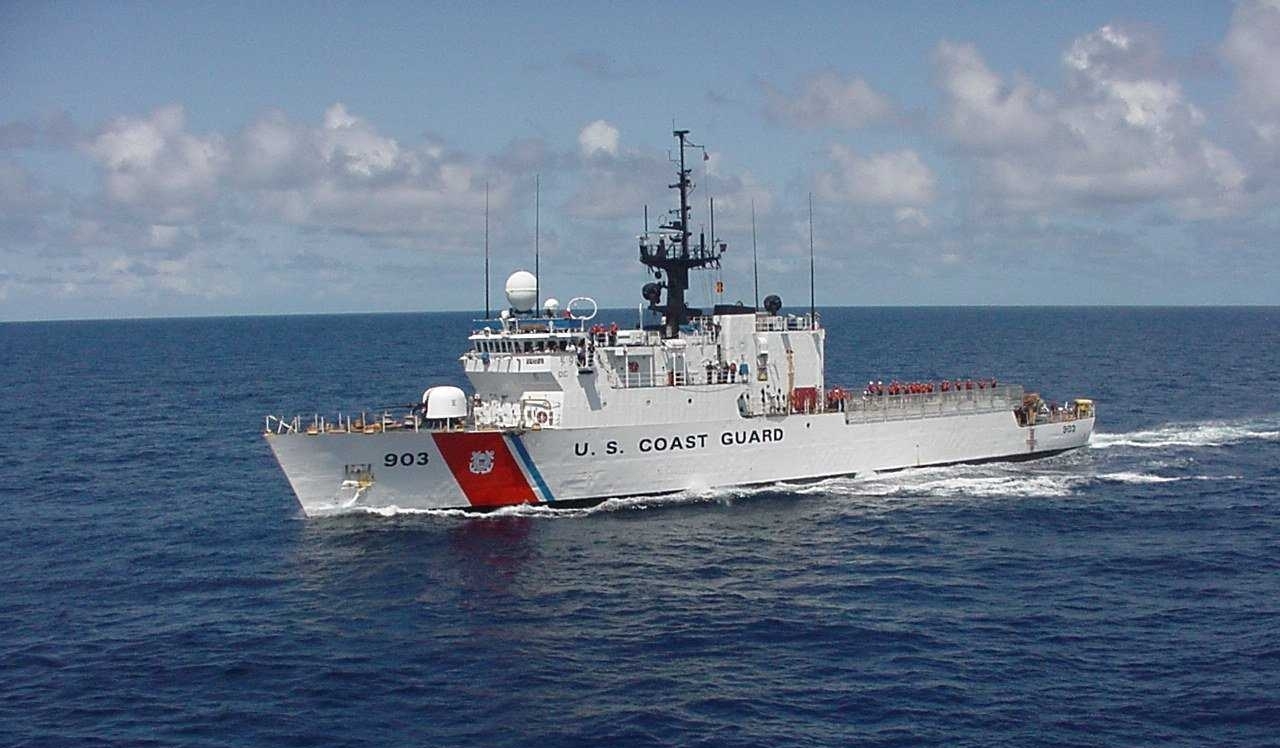
USCGC Harriet Lane (WMEC-903), March 17, 2009. US Coast Guard photo.

Below is an Atlantic Area news release. It is about a relatively routine patrol by USCGC Harriet Lane, but there is a bit of news here.

“The crew shifted gears upon return to homeport and met the next challenge of readying Harriet Lane for an important maintenance upgrade cycle…Following this patrol, the vessel will undergo a nine-month planned maintenance and upgrade period at the Coast Guard Yard in Baltimore.”

It is not apparent from the text of the news release, but apparently the cutter arrived in Curtis Bay to be SLEP on March 28. Got that from a photo caption. Sorry no idea when she returned to Portsmouth after the patrol or when she departed for the Yard.

—-Wish these news releases included departure and arrival dates—
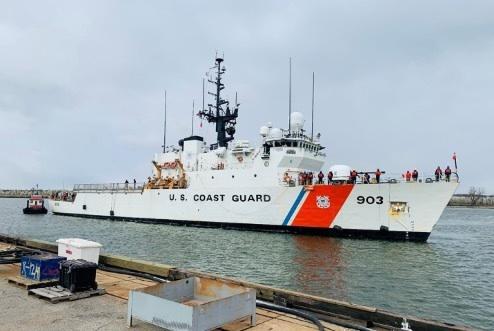
The U.S. Coast Guard Cutter Harriet Lane arrives at the Coast Guard Yard for a service life extension in Baltimore, March 28, 2022. The cutter will remain in Baltimore without the crew for approximately nine months during the overhaul project.

It appears Harriet Lane will be the first of six WMEC-270s to undergo the Service Life Extension Program (SLEP) that will keep ships of the class in service until the Offshore Patrol Cutter construction program is expected to be completed in 2038.

“WMEC SLEP includes electrical system upgrades, remanufactured main diesel engines, structural renewal for stern tube and piping, and installation of a new gun weapon system supplied by the U.S. Navy. “

There are still some unanswered questions as to what will be included in the “upgrade.” We know they will loose the 76mm Mk75 gun, replaced by a 25mm Mk38, and presumably the M92 “mini-combat” firecontrol system that also provides the ships an airsearch capability that can be used for helicopter control. Will there be a replacement multi-mode radar? Will they get only one or perhaps two Mk38 guns? Will the ships retain their electronic warfare equipment that can be use in law-enforcement operations? Will they get an Unmanned Air System? Will there be changes to the aviation support equipment to better handle the larger MH-60, as it becomes the shipboard helo of choice? Maybe CG-9 will give us an update in the not too distant future.

Harriet Lane is one of the oldest 270s, commissioned in 1984. (The newest was commissioned in 1991.) She was one of four built by Tacoma Boatbuilding, before the program was switched to Robert Derecktor Shipyard, where the last nine were built. Will all four of the Tacoma Boat built cutters go through the program?

As I noted earlier, assuming the Mk38 gun will be on the bow, it probably should be mounted on a raised platform, with a breakwater, to better protect it from water coming over the bow. It would also allow the weapon to engage targets at closer range.

News Release

USCGC Harriet Lane returns home following 50-day patrol

USCGC Harriet Lane returns home following 50-day patrolUSCGC Harriet Lane returns home following 50-day patrol
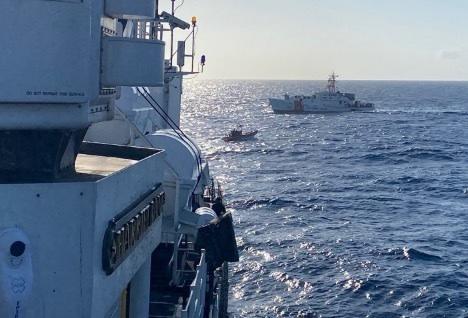
USCGC Harriet Lane returns home following 50-day patrolUSCGC Harriet Lane returns home following 50-day patrolUSCGC Harriet Lane returns home following 50-day patrol
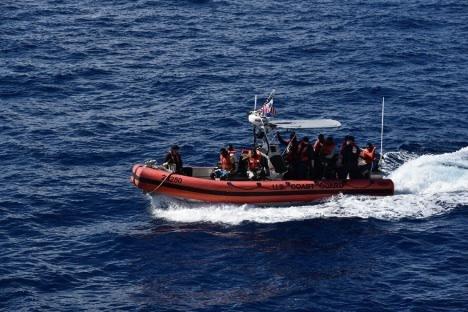
Editors’ Note: To view more or download high-resolution imagery, click on the photos above.

PORTSMOUTH, Va. — The crew of USCGC Harriet Lane (WMEC 903) returned to homeport in Portsmouth on Monday, following a 50-day patrol in the North Atlantic Ocean.

While on patrol, the Harriet Lane crew navigated over 6,559 miles along the southeastern coast of the United States, extending as far south as the northern coast of Cuba and east to The Bahamas, performing migrant interdiction and search and rescue operations in support of the U.S. Coast Guard Seventh District.

The Harriet Lane patrolled the Florida Straits to aid with a recent surge in unsafe and illegal migration by sea. The crew interdicted six unseaworthy vessels carrying approximately 467 individuals of Cuban or Haitian origin and cared for more than 520 migrants aboard the cutter during a four-week time span while awaiting logistics for repatriation.

The crew also assisted in two search and rescue cases after receiving notification of an individual stranded on Anguilla Cay, Bahamas and another case where several people were stranded in the water near Cuban territorial waters.

“I remain in awe of this steadfast crew. They answered the call on multiple occasions during our patrol, ensuring safety of life at sea while preventing illegal entry into the United States,” said Cmdr. Ben Goff, commanding officer of the Harriet Lane. “This mission can take an emotional toll, but our team stuck together and persevered through every challenge and adversity presented. The crew shifted gears upon return to homeport and met the next challenge of readying Harriet Lane for an important maintenance upgrade cycle with aplomb. We are forever grateful for the outstanding support we receive across the Coast Guard and from our loved ones at home. I’m looking forward to getting our crew well-earned downtime with friends and family.”

Following this patrol, the vessel will undergo a nine-month planned maintenance and upgrade period at the Coast Guard Yard in Baltimore.

The Harriet Lane is a 270-foot medium endurance cutter responsible for a variety of missions, including search and rescue, drug interdiction, migrant interdiction, other law enforcement and marine environmental protection.

The U.S. Coast Guard national security and medium endurance vessels homeported on the East Coast operate under the ultimate authority of the U.S. Coast Guard Atlantic Area commander located in Portsmouth, Virginia, overseeing all Coast Guard operations east of the Rocky Mountains to the Arabian Gulf.

“BEWARE BUYER’S REMORSE: WHY THE COAST GUARD NEEDS TO STEER CLEAR OF THE LCS” –CIMSEC

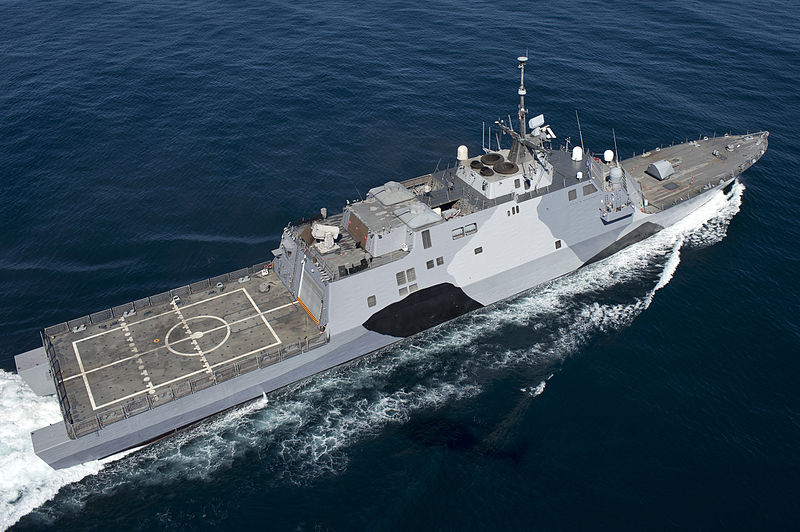
USS Freedom (LCS-1), decommissioned 29 Sept. 2021.

CIMSEC has a post, written by a serving USCG engineer, about why the Coast Guard should not take on the Navy’s unwanted Littoral Combat Ships (LCS). For this discussion, it may be important that you see the author’s qualifications.

“Lieutenant Joey O’Connell has served aboard two Coast Guard cutters as an engineer. He is currently a Medium Endurance Cutter (MEC) port engineer, planning and overseeing depot-level maintenance on the aging MEC fleet. He holds a bachelor’s degree in mechanical engineering from the U.S. Coast Guard Academy and two masters degrees—one in naval architecture and the other in mechanical engineering from the Massachusetts Institute of Technology. “

It appears the author makes a convincing case, but I would add additional caveats.

The maximum range of the Freedom class, on their installed diesels, is about one third that of the Offshore Patrol Cutter and about half that of the over 50+ year old 210 foot Reliance class WMECs. That is totally unacceptable for typical Coast Guard operations.

The semiplaning hull required to allow the Freedom class to make its exceptionally high speed does not handle rough seas well. The resulting fatigue will limit the performance of the crew, and ship’s motion can preclude helicopter and boat operations in demanding environments. Earlier evaluation found that the OPC could conduct boat and helicopter operations in conditions when the LCS could not.

While the Freedom class have spacious aviation facilities, I have seen very little about their boat handling facilities and these are a cutter’s main armament for law enforcement. They might require extensive rework. Video from USS Fort Worth (LCS-3) below:

“All Freedom Littoral Combat Ships in Commission Tapped for Early Disposal” –USNI

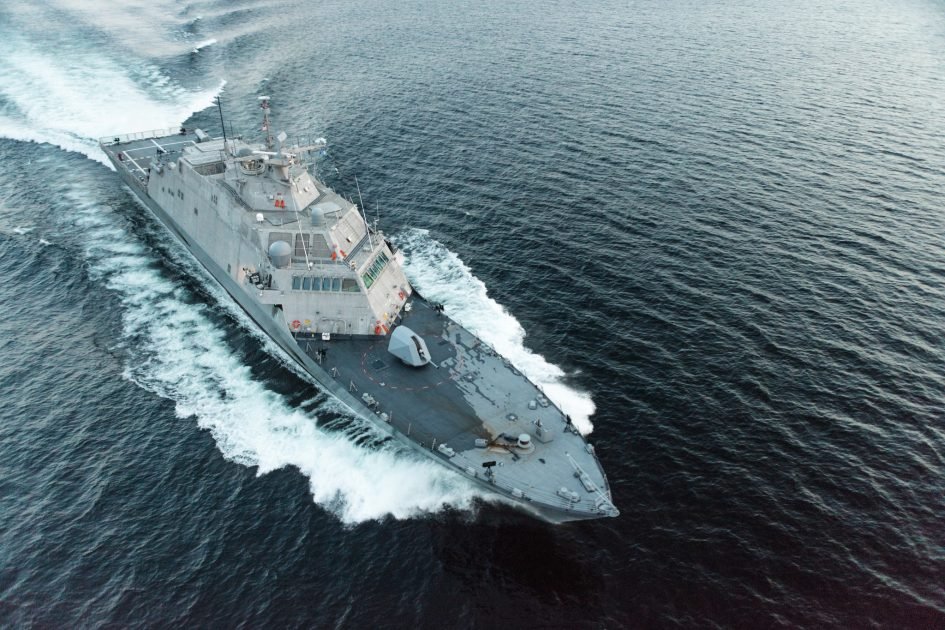
Littoral combat ship Little Rock (LCS 9) is underway during a high-speed run in Lake Michigan during acceptance trials. Lockheed Martin Photo

The US Naval Institute’s news service reports, that the Navy intends to decommission all nine currently completed and commissioned Freedom class Littoral Combat Ships (LCS) including one commissioned in 2020 and three commissioned in 2019.

Does this make any sense?

We are told the Freedom Class cost as much to maintain as a Burke class DDG. I have to wonder if we are talking total operating costs? Does that include manning? Fuel? Manning is a very large part of the operating cost of a warship, and even with two crews per ship, the manning for the Freedom class (2 x 75) is about half that of a single crewed DDG (303 to 323).

Also sighted in the report is the decision to terminate Raytheon’s AN/SQS-62 VDS program that was to be the primary sensor for the ASW mission module and was expected to equip the new FFG has been cancelled. On the FFG it will be replaced by the CAPTAS 4.

While it showed promise in early testing, the Raytheon-built AN/SQS-62 VDS suffered stability problems and had towing issues with the Freedom-class, several Navy officials have told USNI News. As a result of the poor performance, the Navy announced it had terminated the mission module on Monday.

The report seemed to suggest that because the VDS was not working, the Freedom class could not be used in the ASW role that was intended.

“With no mission module and unexpected costs for the repair to a complex combining gear for the Freedom-class ships, Navy officials said it wasn’t worth keeping the ships in commission.”

Elsewhere I have seen Navy officials quoted as saying the two decisions, while announced almost concurrently, were in fact unrelated. It also would not account for the decommissioning of nine ships because, only a third of the completed or funded Freedom class (after Freedom was decommissioned) that would have remained were expected to have the ASW mission. That meant, at most, five ASW equipped ships.

It also would not make sense because, while the CAPTAS 4 might not fit the LCS, it is only one of a family of related towed array systems. There is a lighter, modular CAPTAS 4, as well a other smaller and lighter members of the CAPTAS family, that could have given these ships a significant ASW capability. A question remains, what is to become of the Independence class LCSs that were to have been equipped with the ASW module?

These ships were built by Marinette Marine. Marinette also has the contract for the new guided missile frigate (FFG). If the Freedom class LCSs were returned to Marinette to be fixed, it might delay completion of the FFGs, which must certainly be a higher priority than fixing the Freedom Class ships. That could be a reason. Still the repairs could be done elsewhere.

One thing is for sure, this decision will save the builders of these defective ships a huge amount of money, in that they will no longer be required to fix the problems they created. Could this be the real reason?

Some good may come of this debacle:

It appears six, as yet uncompleted Freedom class LCS, will be retained. They are to be split between 4th and 5th Fleet. That probably means three in Jacksonville and three forward deployed in Bahrain. The ships in Jacksonville will probably do a lot of drug interdiction patrols for 4th Fleet. Still three ships could not continuously support more than one ship underway, whereas the norm has been two ships for some time now.

Adoption of the CAPTAS 4 may open up the possibility of use of other members of the CAPTAS family including, perhaps, application to cutters.

“Video: Couach’s New Concept Of ASW Patrol Boat” –Naval News

Naval News reports on a concept that could easily be adapted to Coast Guard patrol craft.

The report refers to this as a novel concept, but in fact, the concept of surface craft employing sprint and drift tactics with dipping sonars and ASW torpedoes was widely employed by the Soviet Union. See the, Mirka, Petya, Grisha, Pauk, and Poti class corvettes, and Turya class. These classes amounted to about 300 vessels, so the practice of employing dipping sonars on surface vessels is not a new or unique idea.

The Soviet era ships used high or medium frequency dipping sonars. The new low frequency capable technology applied to dipping sonars like the AN/AQS-22 advanced airborne low-frequency sonar (ALFS) used on the USN MH-60R ASW helicopter, has made the concept much more viable.

Basically the idea is to employ the tactics of ASW helicopters using relatively fast surface craft. Because of the range and seakeeping of the craft, this not a trans-oceanic escort strategy, but it can be effective at sanitizing choke points, harbor entrances, or other fixed areas of interest. The vessels work in teams with one or two vessels stopped, drifting and holding contact while other vessels sprint to a new position to hold contact or attack.

2023 Budget Overview and a Quick Look at the 2022 Omnibus Bill

The Coast Guard has published its supporting document for the FY2023 budget. The Budget explanation begins on page 24.

There is at least one substantial surprise,

Commercially Available Polar Icebreaker $125.0M: Supports the purchase of a commercially available polar icebreaker, including modifications and integrated logistics support required to reach initial operating capability (IOC) for Coast Guard operations. This vessel will provide a platform capable of projecting U.S. sovereignty and influence while conducting Coast Guard statutory missions in the high latitudes.” (p.29)

Despite a professed intention to go to an all H-60 helicopter fleet, there is this,

MH-65 $17.0M: Supports modernization and sustainment of the Coast Guard’s MH-65 helicopter fleet to extend the service life of the MH-65 fleet into the 2030s, enabling the Coast Guard to participate in the Department of Defense’s Future Vertical Lift program. Modernization includes reliability and sustainability improvements where obsolete components are replaced with modernized sub-systems, including an integrated cockpit and sensor suite.” (p.30)

One WMEC210 is to be decommissioned and one WMEC270 will loose its crew as it is being SLEPed (Service Life Extension Program, p35). Looks like they expect to have OPC #1 and #2 and NSC#10 operating by the end of FY2023.

Comparison of 2021, 2022, and 2023 budgets 

You can take a look at the 2022 Omnibus bill, the ‘‘Consolidated Appropriations Act, 2022’’ that was signed into law by the President on March 15 here. It is an extremely long document but still only provides the top line for major categories of the Coast Guard budget. I was only able to find them by using control F “Coast Guard.”

Below I will just list the two major discretionary spending categories. We normally see some increases by Congress over and above the budget request. Most common seem to have been the addition of funding for additional Webber class cutters and C-130J aircraft. I have not been able to identify all the additions for 2022. We do know two additional Webber class ($130M) were added. Looks like the money for a second Great Lakes Icebreaker may be included.

Operations and Support (in thousands)

  • 2021 enacted        8,485,146
  • 2022 requested     9,020,770
  • 2022 enacted        9,162,120
  • 2023 requested     9,620,029

Procurement, Construction, and Improvements (in thousands)

  • 2021 enacted        2,264,041
  • 2022 requested     1,639,100
  • 2022 enacted        2,030,100
  • 2023 requested     1,654,858


New Generation Long Range Interceptor Boats for NSCs

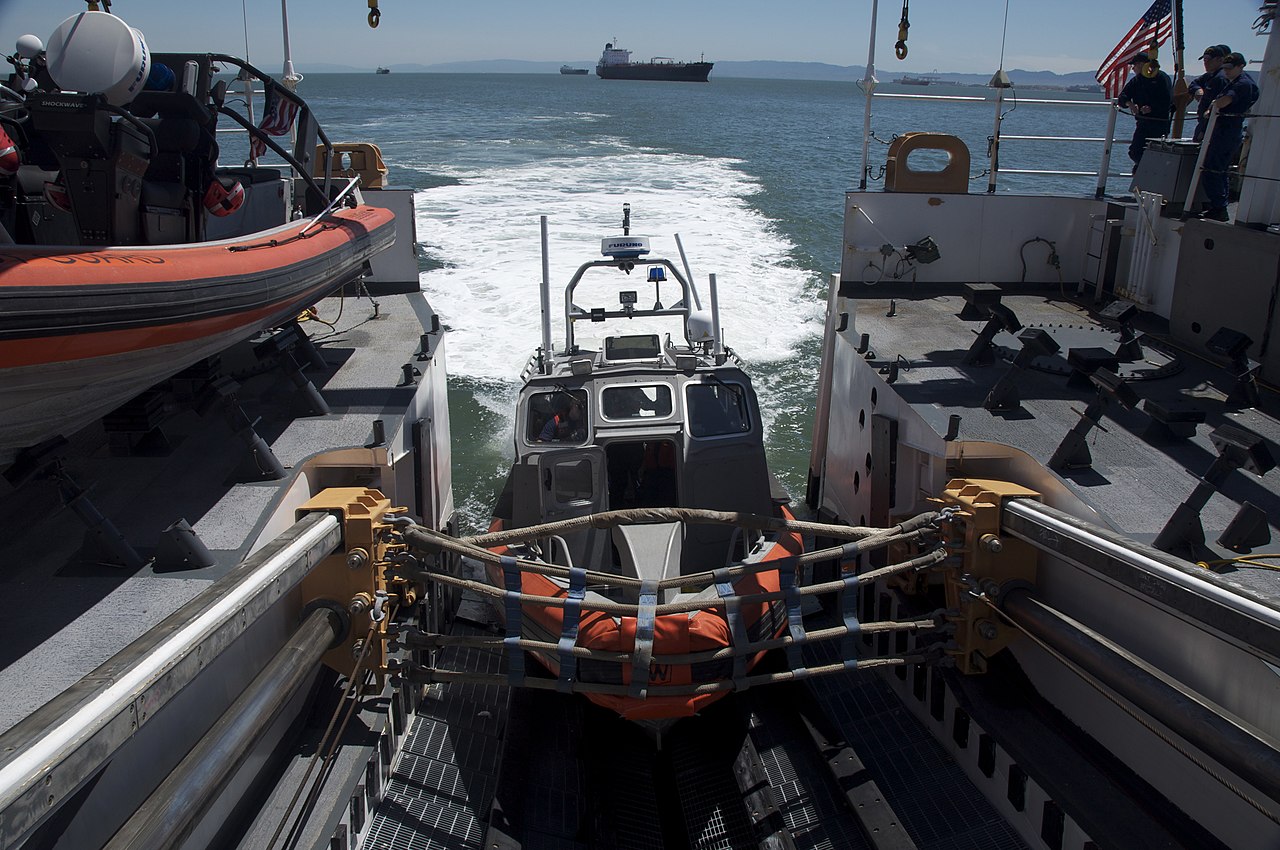
U.S. Coast Guard long range interceptor (LRI) coming aboard into the notch at the stern of U.S. Coast Guard Cutter USCGC Bertholf (WMSL-750). 12 August 2009. U.S. Coast Guard Photo ID 090812-G-3421D_212_LRI, by PO2 Jetta H. Disco

It looks like the Coast Guard is preparing to procure their third generation Long Range Interceptors for the National Security Cutters. Marine Link reports,

“On March 2 the U.S. Coast Guard updated a pre-solicitation notice, originally from November 2021, regarding purchase of 15 Long Range interceptor cutter boats. These will become the 3rd generation cutters for the expanded National Security Cutter fleet. (Search SAM.gov, use ID 70Z02322R93250001.)

“The important change updates publication of the Request for Proposal (RFP). That document was expected in January or February. Now, the expected release is April or May 2022.”

The last contract for Long Range Interceptors I was aware of was reported in 2012 for eight boats.

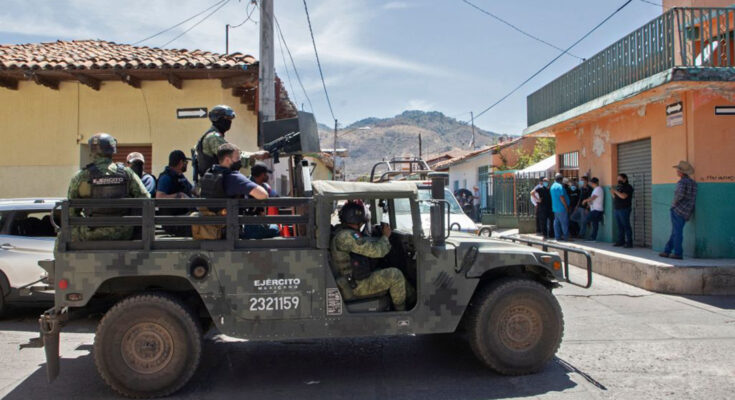
“Mexican Army finds 3 million rounds of ammo in raids” –The Watch

IMAGE CREDIT: AFP/GETTY IMAGES

A report from NORTHCOM’s on-line magazine, “The Watch” reveals just how heavily armed some criminal organizations may be.

The total amount of material seized in the Sonora raids was 2.83 million rounds, 14,722 magazines and 128 rifles of different calibers, authorities said. There were also six .50-caliber sniper rifles and 19 machine guns, of which at least 16 appeared to be belt-fed, they said.

RIMPAC 2022

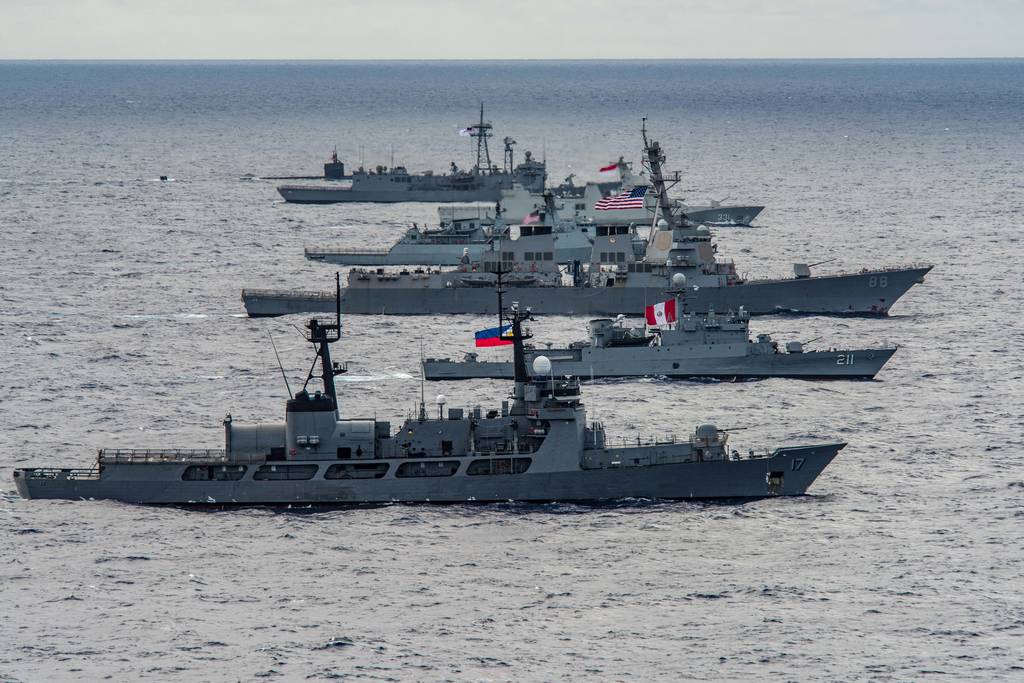
Navy ships assemble to form a multinational fleet for a photo exercise off the coast of Hawaii during the Rim of Pacific (RIMPAC) exercise on July 26, 2018. Twenty-six nations, more than 45 ships and submarines, about 200 aircraft and 25,000 personnel are participating in RIMPAC. (MC3 Dylan Kinee/U.S. Navy)

Defense News reports,

 The U.S. Navy and 26 partners and allies have concluded a final planning conference for this year’s Rim of the Pacific exercise, the largest international maritime exercise.

I have not seen dates for the exercise, but presumably July. Certainly there should be at least one NSC, an FRC, and probably one or more CG special teams in the exercise. We may see former USCG 378s from the Philippines and Vietnam.

Apparently for the first time, Taiwan is expected to participate.

Though subject to change, the plan includes 41 ships, four submarines, more than 170 aircraft and nearly 25,000 personnel from 27 countries.

There is a good chance a Coast Guard commander will head one of the task groups for a humanitarian assistance or maritime interdiction exercise.

In the 2020 RIMPAC a NSC USCGC Munro hosted a Navy MH-60S detachment.

There will almost certainly be one or two SINKEX to remind us how much ordinance it can take to sink a ship. Hopefully an NSC will be involved. Would love to see them get a chance to use the new ALaMO rounds, just don’t expect them to sink the target.


“Ukrainians claim to have destroyed large Russian warship in Berdyansk” –CNN

A screen grab of a video shared on social media of the Berdyansk port fire. via CNN

CNN reports Ukrainian claims to have destroyed the Russian Alligator class LST Orsk.  Two other Russian landing ships were damaged. My contact in Ukraine tells me the hit was by a Soviet era Tochka U missile, NATO reporting name SS-21 Scarab (no confirmation of course).