Chuck Hill's CG Blog

Chuck Hill's CG Blog

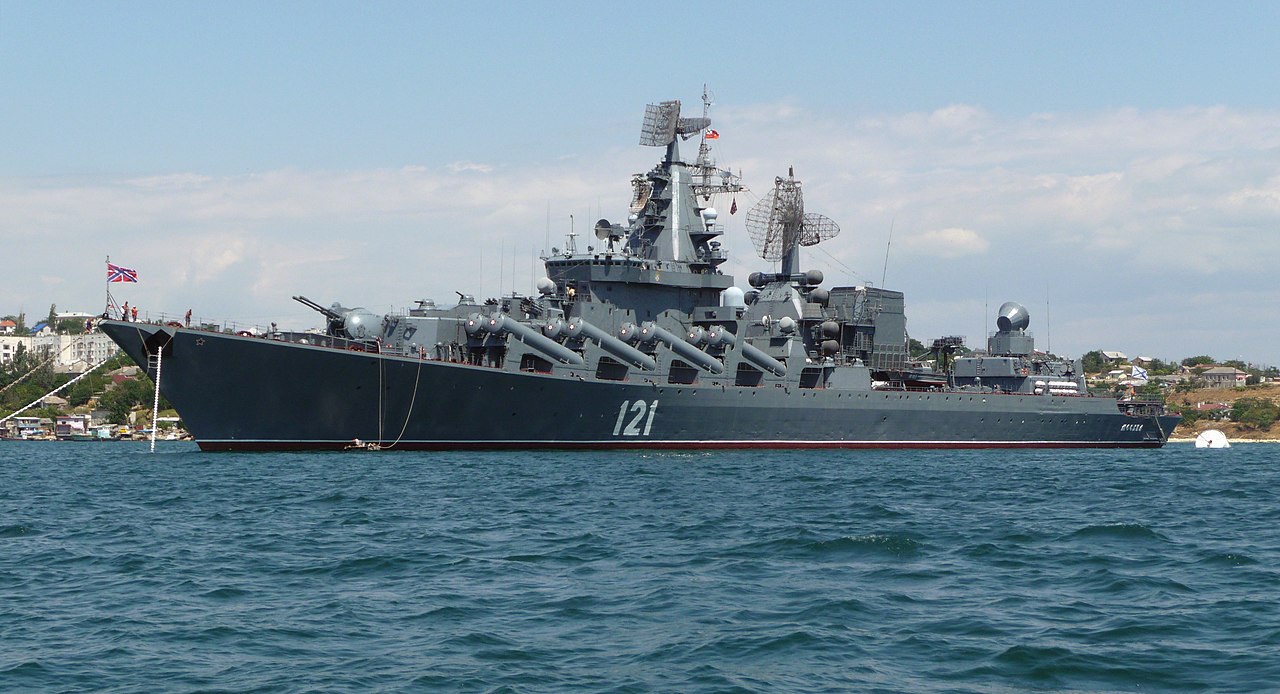
Cruiser Moskva, Flagship of Black Sea Fleet, Severely Damaged, Afire, Abandoned, Possibly Sunk

“Moskva” (“Moscow”) (ex-“Slava”, which means “Glory”) is the lead ship of the Project 1164 Atlant class of guided missile cruisers in the Russian Navy. The Project 1164 Atlant class was developed as “Aircraft carriers killer”. This warship was used in the 2008 Russia-Georgia War. The Black Sea. Sevastopol bay. This photo was taken from a boat. Photo by George Chernilevsky

I have seen several reports that the flagship of the Russian Black Sea Fleet, the 39 year old cruiser Moskva, was so severely damaged that the crew had abandoned ship. This was reportedly confirmed by the Russians according to a report from the US Naval Institute News Service.

There are also reports the ship capsized. Confirmation should come quickly. Ukraine claims they targeted the ship and struck it with two anti-ship cruise missiles. Secondary explosions followed.

“Combined Maritime Forces establishes new naval group to patrol Red Sea region” –Defense News

Royal navy frigate HMS Montrose (F 236), left, Pakistan navy frigate PNS Aslat (F 254), left center, Royal navy of Oman patrol vessel Al-Shinas (Z 21), right center, and USCGC Charles Moulthrope (WPC 1141) sail in formation during International Maritime Exercise/Cutlass Express (IMX/CE) 2022 in the Arabian Gulf, Feb. 13. (Spc. Natianna Strachen/U.S. Army)

Defense News brings us word of the formation of another combined naval task force intended to enforce rules-based behavior, this time in the Red Sea and Gulf of Aden.

It is not unlikely that the Coast Guard’s PATFORSWA will become involved in this, but more importantly, this is the latest in what looks like an emerging trend, and perhaps a way to deal with gray zone operations. It is not a military alliance against an opposing state, rather it is a law enforcement alliance of like-minded nations who wish to prevent the breakdown of order.

This seems to suggest something like my proposal for a “Combined Maritime Security Task Force, Pacific” is looking much more mainstream, if we could spread the concept from the CENTCOM area of operations to INDOPACOM and perhaps AFRICOM and apply it to Illegal, Unreported, and Unregulated fishing.

“Coast Guard to host groundbreaking ceremony at Base Boston for Fast Response Cutter pier construction” –News Release

Below is a First District news release. This is good news for those hoping to see some new cutters in New England. We have known for a while that Webber class FRCs were going to Boston, but the surprise I see here is, “…$35 million recapitalization of current Coast Guard facilities at Base Boston and acquisition of six new Fast Response Cutters (emphasis applied–Chuck) at a cost of $380 million.”

This follows the pattern we have seen lately of these vessels being clustered, rather than being widely distributed in ones and two.

Base Boston (photo above) must certainly have much to recommend it, but as a high-cost area, it seems likely it will host no large patrol cutters in the future. It was once homeport to several High Endurance Cutters. Until recently, it hosted three WMEC270s, Escanaba, Seneca, and Spencer. All three have since moved to Portsmouth, VA. We already know the Coast Guard plans to base OPCs #5 and #6 in nearby Newport R.I. at the former US Navy base, where there had been no large cutters.

Wikipedia has a good list of Webber class WPCs and their homeports. It does not reflect the addition of two more ship to the program of record, FRCs #65 and #66, in the FY2022 budget, but it does list 64 named vessels and homeports for 50 cutters including two expected to be homeported in Boston, USCGC William Chadwick (WPC-1150) and USCGC Warren Deyampert (WPC-1151), expected to arrive in the second half of 2022. Homeports are not yet identified for 16 ships. Four of those are presumably going to Boston so where are the remaining 12 going? One is each is expected to go to Seward and Sitka. Two will go to Kodiak. That leaves eight. Some may be added to already identified homeports. One of the 50 identified includes the first ship going to St. Petersburg, FL. St. Pete will likely get at least two more. Assuming that is the case that leaves six. We also know that two will go to Astoria, Oregon. That leaves four. The recent addition of two was probably with the intention of stationing them in America Samoa. Two there would only leave two which might go to previously identified homeports, so we may not see any additional homeports added.

News Release

U.S. Coast Guard 1st District Northeast

Media Advisory: Coast Guard to host groundbreaking ceremony at Base Boston for Fast Response Cutter pier construction

Editors’ Note: Media interested in attending are requested to RSVP at 617-717-9609 by 4 p.m., April 13, and should arrive no later than 9:45 a.m., Thursday.

FRC

BOSTON —The Coast Guard is scheduled to hold a media event for the Coast Guard Fast Response Cutter Homeport Groundbreaking Ceremony at Base Boston, Thursday.

WHO: Rear Adm. Thomas Allan, commander, Coast Guard First District, Massachusetts Governor Charlie Baker, Congressman Stephen Lynch, and Mayor of Boston, Michelle Wu.

WHAT: Coast Guard Fast Response Cutter Homeport Groundbreaking Ceremony

WHEN: Thursday, April 14, 2022, at 10 a.m.

WHERE: Coast Guard Base Boston, 427 Commercial Street, Boston, MA 02109

This ceremony marks the starts of a large Coast Guard investment in the Northeast with a $35 million recapitalization of current Coast Guard facilities at Base Boston and acquisition of six new Fast Response Cutters at a cost of $380 million. The FRCs are the Coast Guard’s newest cutter class replacing the Legacy Island Class Patrol Boats and will operate throughout the Coast Guard’s First District from New York, to the Canadian border. 

These cutters are designed for missions including:

  • search and rescue
  • fisheries law enforcement
  • drug and migrant interdiction
  • port, waterways, and coastal security
  • national defense

In addition, the Coast Guard will increase personnel presence in the area with 222 new Coast Guard members to crew and maintain the cutters. These new crews are expected to have an annual economic impact of $45 million on the local economy. 

“GA-ASI Selected for Japan Coast Guard RPAS Project” –News Release

MQ-9B SeaGuardian. General Atomic photo.

Below is a news release from General Atomics Aeronautical Systems, Inc. The USCG has yet to select their own shore based unmanned air system. Note, there is as yet no indication Japan Coast Guard is purchasing this system. It appears more likely they are using contractor owned and operated systems as a step toward a more comprehensive JCG owned and operated system. UAS on USCG cutters are still currently contractor owned and operated. 

GA-ASI Selected for Japan Coast Guard RPAS Project

Japan EEZ Surveillance Using SeaGuardian® RPA Scheduled to Begin in October

SAN DIEGO – 06 April 2022  General Atomics Aeronautical Systems, Inc. (GA-ASI), the global leader in Remotely Piloted Aircraft Systems (RPAS), is pleased to be selected to support the Japan Coast Guard’s (JCG) RPAS Project. Operations will feature GA-ASI’s MQ-9B SeaGuardian® and begin in October 2022.

SeaGuardian will be used to conduct wide-area maritime surveillance to support JCG’s missions, which include search and rescue, disaster response, and maritime law enforcement. This project follows a series of successful JCG flight trials in 2020 that used SeaGuardian to validate the same JCG missions in accordance with Japan’s “Policy on Strengthening the Maritime Security Systems,” using unmanned aerial vehicles to perform maritime wide-area surveillance.

“We’re proud to support the JCG’s maritime surveillance mission with our SeaGuardian UAS,” said Linden Blue, CEO of GA-ASI. “The system’s ability to provide affordable, extremely long-endurance airborne surveillance with long-range sensors in the maritime domain is unprecedented.”

SeaGuardian features a multi-mode maritime surface-search radar with an Inverse Synthetic Aperture Radar (ISAR) imaging mode, an Automatic Identification System (AIS) receiver, and High-Definition – Full-Motion Video sensor equipped with optical and infrared cameras. This sensor suite enables real-time detection and identification of surface vessels over thousands of square nautical miles and provides automatic tracking of maritime targets and correlation of AIS transmitters with radar tracks.

SkyGuardian® and SeaGuardian® are revolutionizing the long-endurance RPAS market by providing all-weather capability and full compliance with STANAG-4671 (NATO UAS airworthiness standard). This feature, along with our operationally proven, collision-avoidance radar, enables flexible operations in civil airspace.

About GA-ASI

General Atomics Aeronautical Systems, Inc. (GA-ASI), an affiliate of General Atomics, is a leading designer and manufacturer of proven, reliable, Remotely Piloted Aircraft (RPA) systems, radars, and electro-optic and related mission systems, including the Predator® RPA series and the Lynx® Multi-mode Radar. With more than seven million flight hours, GA-ASI provides long-endurance, mission-capable aircraft with integrated sensor and data link systems required to deliver persistent flight that enables situational awareness and rapid strike. The company also produces a variety of ground control stations and sensor control/image analysis software, offers pilot training and support services, and develops meta-material antennas. For more information, visit www.ga-asi.com

“Sea Air Space 2022” –Naval News Video Coverage

Below I have posted two videos by Naval News, along with the breakdown of topics that accompanied the videos on YouTube. The video of the 30mm Mk38 Mod4 with its included electro-optic fire control system is probably of most immediate interest to the Coast Guard, but the increasing tendency to containerize weapon systems is appears ready to make any cutter (and almost any other ship) a missile carrier.

  • 01:06 – Constellation-class frigate program with Fincantieri Marinette Marine
  • 04:30 – MSI Defence Mark 38 Mod 4 30mm naval gun system
  • 07:53 – Lockheed Martin’s Expeditionary Launching System
  • 09:21 – BAE Systems E-Launcher
  • 09:52 – Kongsberg NSM-HL helicopter launched naval strike missile
  • 00:43 – Kongsberg Hugin Edge UUV
  • 02:27 – General Dynamics Tethered Unmanned Aerial Systems
  • 03:36 – Shield AI’s Hivemind (V-BAT also –Chuck)
  • 05:23 – Saildrone Explorer USV
  • 06:48 – PennState’s 54″ Large Test Vehicle UUV


Mark Retiring Cruiser MK41 VLS and 5″/62 Mk45 Mod4s for Possible Future Installation on Cutters

151014-N-GR120-152
INDIAN OCEAN (Oct. 14, 2015) The guided-missile cruiser USS Normandy (CG 60) prepares to come along side for a fueling-at-sea with the aircraft carrier USS Theodore Roosevelt (CVN 71). Theodore Roosevelt is operating in the U.S. 7th Fleet area of operations as part of a worldwide deployment en route to their new home port in San Diego to complete a three-carrier homeport shift. (U.S. Navy photo by Mass Communication Specialist 3rd Class Anna Van Nuys/Released)

If we ever have another major conventional naval war, as appears increasingly likely, the Navy is going to need a lot more ships, including a lot more missile shooters. Defense News reports the Navy is considering how to add additional capability. The Navy is even considering putting missiles on cargo ships. As Rep. Elaine Luria (D-VA, Cdr. USN, ret.) pointed out, a number of cruisers equipped with MK41 VLS are being retired. The 22 remaining cruisers each have 122 Mk41 vertical launch cells as well as two 5″/62 Mk45 Mod4 guns.

Five of the cruisers have been approved for decommissioning in the 2022 budget. It is likely the remaining 17 will follow in the next few years.

I suggest that some of these VLS sets be stored and earmarked as mobilization assets for possible future installation on the National Security Cutters (NSC) should the need arise. Studies have shown that the NSCs could accept up to 16 Mk41 VLS. These VLS might be recycled to the new Constellation (FFG-62) class too, but since the planned 20 ships will only use 640 VLS, it would only require seven cruisers to donate enough VLS to arm both 20 FFG and 11 National Security Cutters.

It should not be too difficult to integrate the Mk41 VLS on the National Security Cutters since their combat systems use Aegis software.

Potential Mk41 VLS weapons load outs for tactical and strike length launchers.

In addition, it might be wise to earmark the cruisers 5″/62 Mk45/Mod4 guns for possible upgrades for both National Security and Offshore Patrol Cutters as well.

The Navy’s entire Naval Gun Fire Support (NGFS) capability is about 114 Mk45 5″ guns on 22 cruisers with two guns each and about 70 DDGs with only one gun. By the time the cruisers are gone, we may have perhaps 80 DDGs. That means the loss of about 30% of the current capability. Equipping the 36 NSCs and OPCs with 5″/62 Mod4 guns from the retiring cruisers could entirely replace the lost capability and importantly provide it in ships that are not likely to be deployed out of position to provide NGFS because they are needed elsewhere to provide AAW protection.

To ensure we can make these changes quickly when needed, it might be prudent to equip at least one ship of each class as a prototype for future upgrades. Upgrading one ship of each class would probably cost less than one FFG and would provide a template for future upgrades if necessary. The OPC prototype might attempt something like I described here.

Since this is preparation for war, the prototypes and storage of the weapons could come from the Navy’s budget.


“Nation’s sole heavy icebreaker returns to the U.S. after a 147-day Antarctic deployment” –PAC AREA

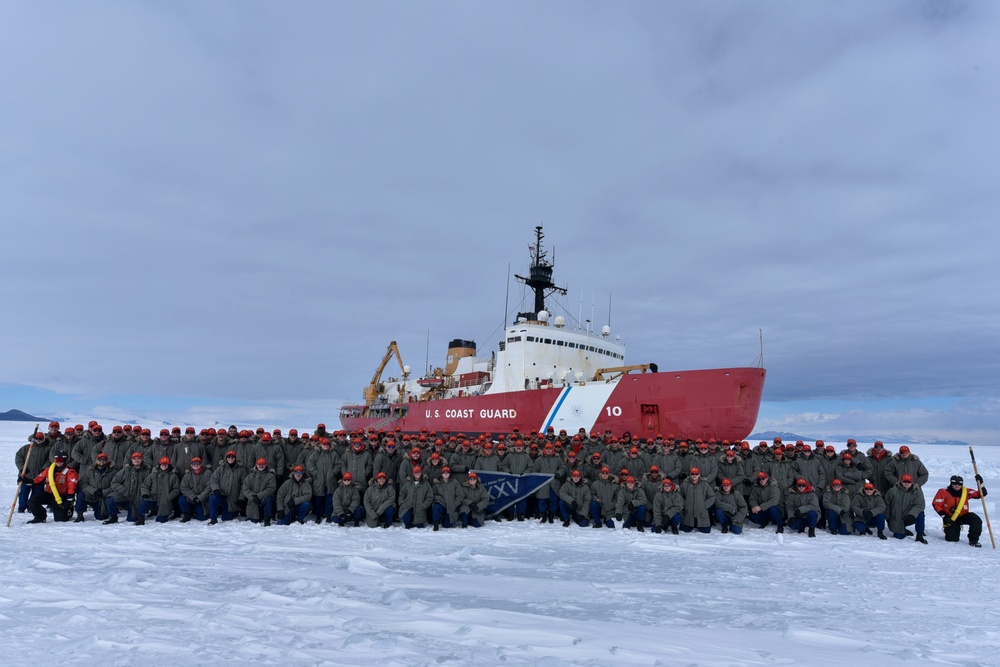
The U.S. Coast Guard Cutter Polar Star (WAGB 10) passes Alcatraz as the cutter transits the San Francisco Bay, April 4, 2022. Following their 147-day Antarctic deployment, the cutter will undergo annual maintenance in a Vallejo, California, dry dock. Photo by Sachiko Itagaki.

Below is a PACAREA news release. Once again, Polar Star will spend the majority of their inport period in Vallejo instead of their homeport, Seattle, to immediately start work on the second phase of a five-year, $75 million Service Life Extension Program.”

News Release

April 8, 2022
U.S. Coast Guard Pacific Area

Nation’s sole heavy icebreaker returns to the U.S. after a 147-day Antarctic deployment

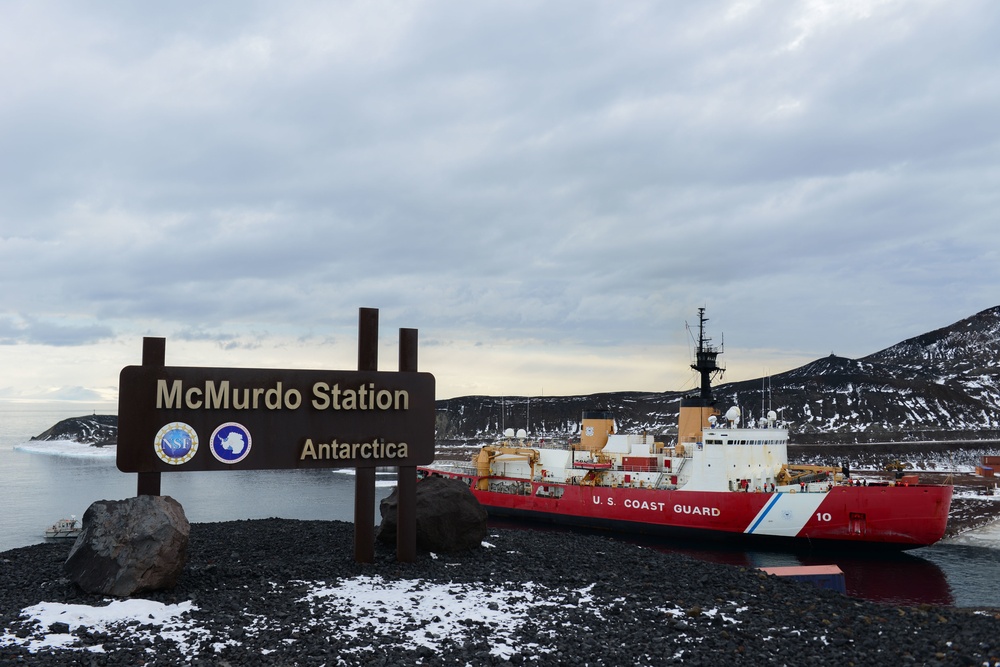
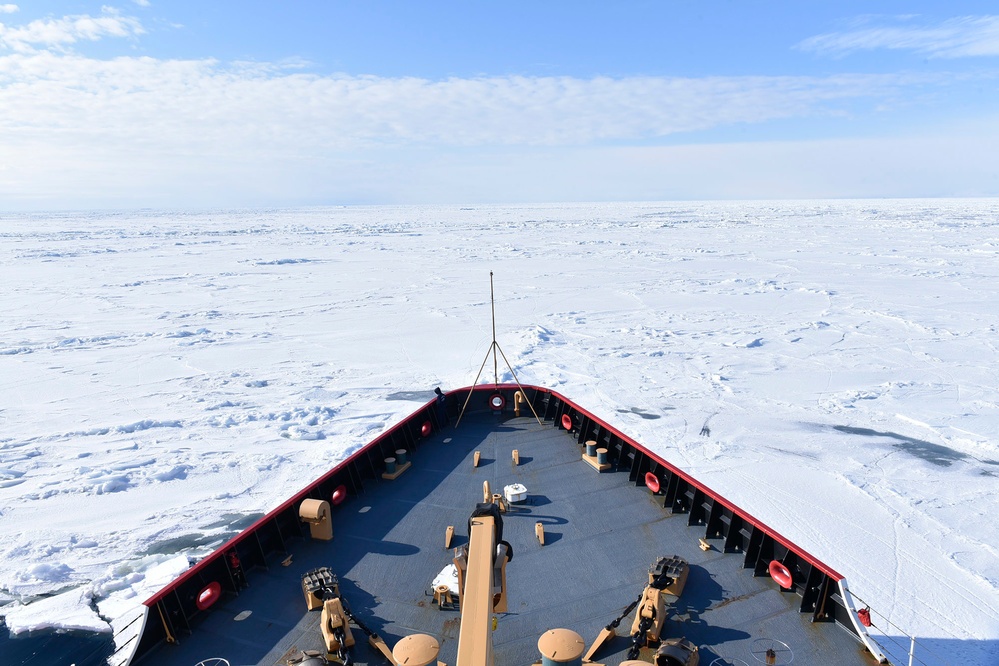
Coast Guard Cutter Polar Star moors at McMurdo Station The Coast Guard Cutter Polar Star enters the ice during transit toward Antarctica Coast Guard Cutter Polar Star (WAGB 10) crew members experience ice liberty near Antarctica

Editors’ Note: Click on images to download high resolution version.

ALAMEDA, Calif. — The 140-member crew of U.S. Coast Guard Cutter Polar Star (WAGB 10) returned to the United States and entered dry dock Friday after completing a 147-day deployment in support of the U.S. Antarctic Program and national interests in Antarctica and the Southern Hemisphere.

The Polar Star’s crew departed their Seattle homeport on Nov. 13, 2021 for the cutter’s 25th Operation Deep Freeze deployment and traveled 24,300 nautical miles to Antarctica and back.

This year marks the 66th iteration of Operation Deep Freeze, an annual joint military service mission in support of the National Science Foundation, the lead agency for the United States Antarctic Program. Since 1955, the U.S. Department of Defense and the Coast Guard have provided air and maritime support across and around the Antarctic continent.

The cutter made several international port calls including stops in Wellington and Lyttelton, New Zealand, and Hobart, Tasmania, Australia. Polar Star’s crew hosted the U.S. Ambassador to New Zealand and members of the Royal New Zealand Navy while in New Zealand.

While in Antarctica, Polar Star transited through more than 450 miles of pack ice and broke a 37-mile channel through seven-foot thick fast ice to McMurdo Station to allow the safe transit and offload of supply vessels Ocean Giant and Maersk Peary.

Polar Star also partnered with the Royal New Zealand Navy to escort the ice-capable logistics ship HMNZS Aotearoa for its first trip to McMurdo Station.

Polar Star transited to the Bay of Whales Feb. 17, setting a record for the furthest south any vessel has navigated, reaching 78 degrees 44 minutes 1.32 seconds south latitude, keeping about 500 yards from the ever shifting Ross Ice Shelf. The cutter also surveyed 396 nautical miles of the ice shelf for future navigational use.

Polar Star spent a total of 65 days in Antarctica, making it the longest Operation Deep Freeze deployment completed by a Coast Guard polar icebreaker in 18 years.

After completing operations in Antarctica, Polar Star moored in Hobart and hosted the Governor of Tasmania, Barbara Baker, and U.S. Consul General Kathleen Lively, along with several other government and military officials that are dedicated to supporting scientific efforts in Antarctica.

“I am so proud of this crew and their accomplishments,” said Capt. William Woityra, commanding officer of the Polar Star. “They overcame constant challenges to complete the mission and set records along the way. They epitomize the values on the Antarctica Service Medal: courage, sacrifice, and devotion. I can think of no better team to lead future expeditions and new icebreakers as the Coast Guard invests in Polar Security Cutters.”

Polar Star did not return to its homeport of Seattle, instead the crew proceeded directly to dry dock in Vallejo, California, to immediately start work on the second phase of a five-year, $75 million Service Life Extension Program. The Coast Guard will replace antiquated technology to ensure the longevity of the nation’s only operational heavy icebreaker while in dry dock this year, supporting the Coast Guard’s enduring commitment to Antarctic operations.

The Coast Guard has been the sole provider of the nation’s polar-icebreaking capability since 1965. Commissioned in 1976, the Polar Star is the United States’ only operational heavy icebreaker. The Coast Guard is increasing its icebreaking fleet with construction of three new Polar Security Cutters (PSC) to ensure persistent national presence and reliable access to the Polar Regions. Coast Guard Commandant Adm. Karl L. Schultz revealed the name of the first PSC – Coast Guard Cutter Polar Sentinel during his 2022 State of the Coast Guard Address.

“EXERCISE TRADEWINDS 2022: MEXICO’S AND BELIZE’S TIME TO SHINE” –CIMSEC

Mexican OPV ARM Revolucion (P-164)

Word of an upcoming SOUTHCOM exercise in the Caribbean. The US Coast Guard will undoubtably participate. Mexico is coordinating the Naval portion of the exercise which will include law enforcement and humanitarian assistance/disaster response (HA/DR).

In many ways the Mexican Navy parallels the US Coast Guard. If you would like to check out some of their resources, these previous posts may be of interest.


Admiral Linda L. Fagan Nominated to be First Woman to Serve as Commandant of the Coast Guard; Vice Adm. Steven D. Poulin as Vice Commandant

Admiral Linda L. Fagan

Below is a news release reporting the nominations for Commandant and Vice Commandant. Below that I have reproduced their official biographies. You may note their career paths. They are respectively a marine inspector and a lawyer. I am a bit surprised neither is either a cutterman or an aviator. I was impressed with Admiral Fagan’s innovative pairing of buoy tender and fast response cutter to do long range law enforcement in the Western Pacific. Both served as 1st District Commander. Both served in Joint Commands, Adm Fagan as Deputy Director of Operations for Northern Command, and VAdm. Poulin as Southern Command’s Director of Operations

News Release

U.S. Coast Guard Headquarter

MULTIMEDIA RELEASE: Admiral Linda L. Fagan Nominated to be First Woman to Serve as
Commandant of the Coast Guard

WASHINGTON, D.C. — President Joe Biden nominated Adm. Linda L. Fagan to serve as the 27th Commandant of the U.S. Coast Guard. Upon confirmation, Adm. Fagan will be the first woman to serve as Commandant of the Coast Guard.

Adm. Fagan currently serves as the 32nd Vice Commandant, having assumed the duties on June 18, 2021. The Vice Commandant is the Vice Service Chief and Chief Operating Officer, responsible for executing the Commandant’s Strategic Intent, managing internal organizational governance, and serving as the Component Acquisition Executive.

Previously, Adm. Fagan served as Commander of the Coast Guard Pacific Area overseeing operations from the Rocky Mountains to the waters off the East Coast of Africa. The Pacific Area Commander concurrently serves as Commander, Defense Force West providing Coast Guard mission support to the Department of Defense and Combatant Commanders. Adm. Fagan is the Coast Guard’s first-ever Gold Ancient Trident, as the officer with the longest service record in the Marine Safety field.

Pending confirmation, Adm. Fagan is expected to relieve the current Commandant of the Coast Guard, Adm. Karl L. Schultz, during a change of command ceremony planned for June 1, 2022 in Washington, D.C. Adm. Schultz will retire following the change of command this summer.

“Admiral Fagan is an exceptional senior Coast Guard officer and nominee, possessing the keen intellect, the depth of operational experience, and the well-honed leadership and managerial acumen to serve with distinction as our Service’s 27th Commandant,” said Adm. Schultz.

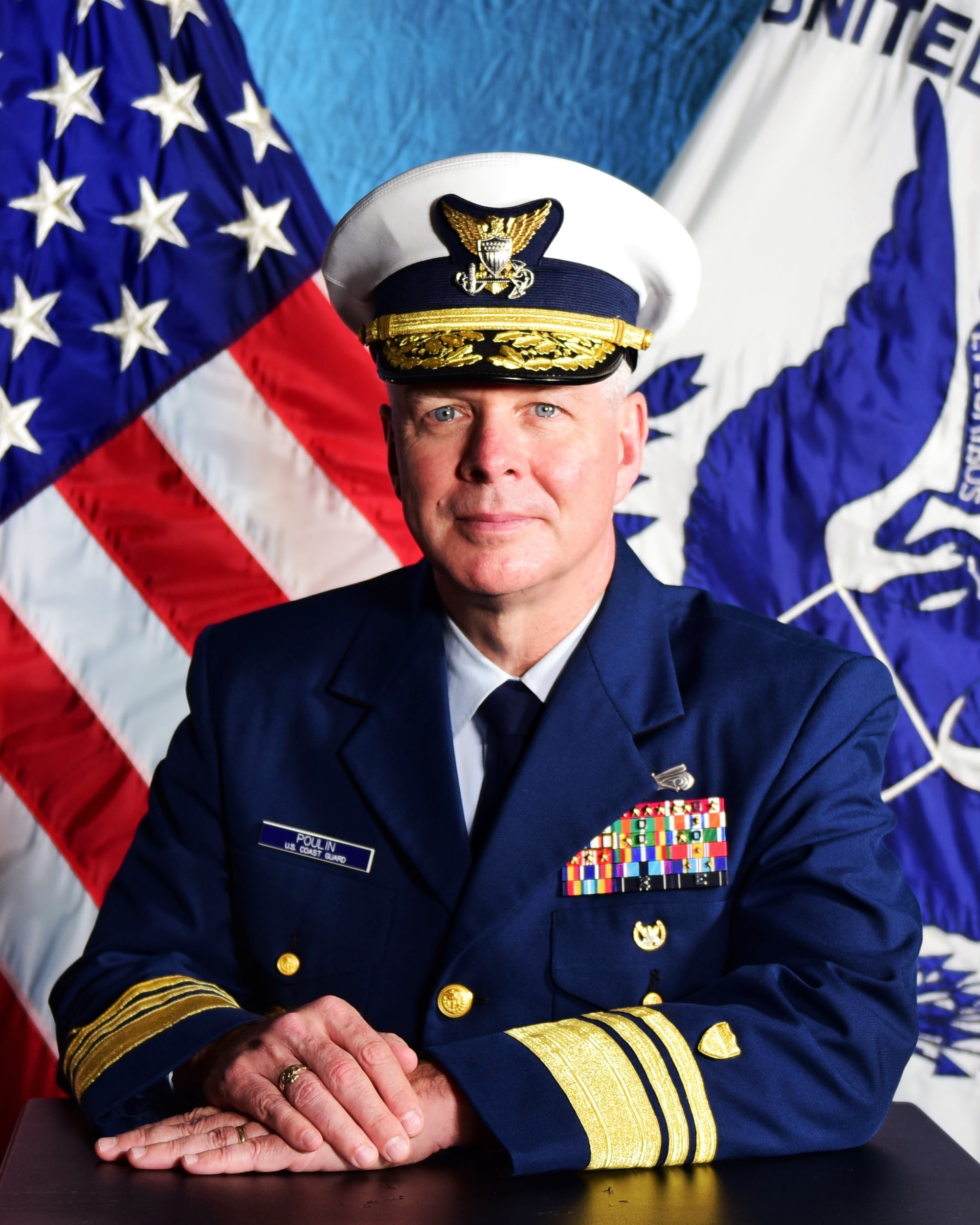
Adm. Fagan has selected and the president has nominated Vice Adm. Steven D. Poulin as the Coast Guard’s 33rd Vice Commandant. Vice Adm. Poulin currently serves as the Commander of the Coast Guard Atlantic Area and is responsible for all Coast Guard Missions from the Rocky Mountains to the Arabian Gulf. The Atlantic Area Commander concurrently serves as Commander, Coast Guard Defense Force East providing Coast Guard mission support to the Department of Defense and Combatant Commanders.

Pending confirmation, Vice Adm. Poulin is expected to relieve Adm. Fagan as Vice Commandant of the Coast Guard during a change of watch ceremony planned for May 24, 2022 in Washington, D.C.


Admiral Linda L. Fagan, Vice Commandant

She reports to Coast Guard Headquarters from a tour as the Commander, Pacific Area, and Commander, Coast Guard Defense Force West.  Prior flag assignments include Deputy Commandant for Operations, Policy, and Capability; Commander, First Coast Guard District; and a joint assignment as Deputy Director of Operations for Headquarters, United States Northern Command.

Admiral Fagan has served on all seven continents, from the snows of Ross Island, Antarctica to the heart of Africa, from Tokyo to Geneva, and in many ports along the way. Operational tours include Commander, Sector New York, more than 15 years as a Marine Inspector, and sea duty in USCGC POLAR STAR, a 399ft heavy polar icebreaker.  Staff assignments include Executive Assistant to the Commandant and Vice Commandant, and Division Chief of the Foreign and Offshore Compliance Office.

Possessing extensive interagency as well as intergovernmental experience, Admiral Fagan has worked with both the International Maritime Organization and International Labor Organization on flag state and port state issues. This work includes the development of the International Ship and Port Security Code (ISPS), and the Consolidated Maritime Labor Convention.

Admiral Fagan holds a Bachelor of Science in Marine Science degree from the U.S. Coast Guard Academy, a Master of Science in Marine Affairs degree from the University of Washington, and a Master in National Resource Strategy degree from the Industrial College of the Armed Forces. She has earned numerous personal and team awards during her 36 years of Coast Guard service.  Admiral Fagan is the longest serving active duty Marine Safety Officer, which has earned her the distinction of being the Coast Guard’s first-ever Gold Ancient Trident.


Vice Admiral Steven D. Poulin, Atlantic Area Commander

Vice Admiral Poulin assumed the duties as the Atlantic Area Commander in June 2020. He serves as the operational commander for all Coast Guard missions from the Rocky Mountains to the Arabian Gulf, spanning across five Coast Guard Districts and 40 states. In addition to his duties at Atlantic Area, he serves as Commander, Coast Guard Defense Force East, which provides Coast Guard mission support to the Department of Defense and Combatant Commanders. He also has been appointed as Director, Department of Homeland Security Joint Task Force – East, responsible for achieving the objectives of the DHS Southern Border and Approaches Campaign Plan, along with, coordination and synchronization of cross-component operations and investigations in the joint operating area.

Vice Admiral Poulin previously served as U.S. Southern Command’s Director of Operations, directing U.S. military operations across the Caribbean Basin plus Central and South America. Previously, he was Commander of the First Coast Guard District where he directed all Coast Guard missions across eight states in the Northeast, including over 2,000 miles of coastline from the U.S. – Canadian border to northern New Jersey and 1,300nm offshore.

Vice Admiral Poulin’s other flag assignments include the Judge Advocate General and Chief Counsel of the Coast Guard, where he was responsible for the delivery of all legal services in support of the Coast Guard’s missions, its units and its people. From June 2012 to April 2014, Vice Admiral Poulin served as the Director of Governmental and Public Affairs, where he was responsible for external engagement with Congress, the media and other intergovernmental entities.

From October 2010 to June 2012, Vice Admiral Poulin served as the Chief, Office of Maritime and International Law. From April 2009 to July 2010, he was the Commander of Coast Guard Sector Mobile, where he directed Coast Guard operations in Mississippi, Alabama, and the Florida panhandle. He further served as the Incident Commander for the Deepwater Horizon oil spill response operations in that same geographic area from April to October 2010. His previous operational tours include Deputy Commander, Coast Guard Sector Mobile; Deputy Commander, Coast Guard Group Galveston, TX; and Law Enforcement Officer and Assistant Operations Officer at Coast Guard Group Mobile, AL. He was assigned as a Deck Watch Officer on USCG DAUNTLESS (WMEC-624) from 1984 to 1985. Vice Admiral Poulin was also a Special Advisor for Border and Transportation Security in the Office of Vice President Cheney from 2005 to 2007. From 2003 to 2004, he was the Coast Guard’s liaison to the State Department’s Office of Ocean Affairs, where he served on U.S. delegations to myriad committees of the International Maritime Organization (IMO). He was the Legal Counsel for the Coast Guard’s Port Security Director from 2002-2003, where he helped negotiate, draft, and implement new port and maritime security requirements. From 1999-2001, he served as the Legislative Counsel in the Coast Guard’s Office of Congressional Affairs. He also served on the U.S. delegation to the Legal Committee of the IMO, from 1994-1996. From 1992-1994, he was assigned to the Coast Guard’s General Law Division.

He graduated from the U.S. Coast Guard Academy in 1984 with a Bachelor of Science in Management. He was awarded his Juris Doctor, magna cum laude, from the University of Miami School of Law in 1992. Other degrees include: Master of Law (Environmental Law), with highest honors, from the George Washington University Law School in 2002; Master of Strategic Studies from the U.S. Army War College in 2005; and Master of Public Administration from the University of South Alabama in 1989. His military decorations include the Defense Superior Service Medal (two awards), Legion of Merit (five awards), Meritorious Service Medal (four awards), Coast Guard Commendation Medal (three awards), and Coast Guard Achievement Medal.

“Coast Guard begins multi-month fisheries enforcement operation with Bermuda” –News Release

Below is a 5th District news release concerning a new level of cooperation between the USCG and Bermuda to counter Illegal, Unreported, Unregulated (IUU) fishing. This certainly makes sense, since the Bermuda and the US share the same fish stocks. No matter where overfishing of that stock occurs, it hurts both US and Bermudian fishermen and our economies.

This seems to be the latest in a trend toward pooling resources, using the ship-rider program and Law Enforcement Detachments, to enforce norms for mutual benefit. Bermuda is a British Overseas Territory that lies 559 nautical miles (1,035 km) ESE of North Carolina. Britain, along with Canada, the Netherlands, and France, has been helping the USCG’s drug interdiction efforts.

(Bermuda is a great liberty port. I have found memories. Took my family back recently. I am sure the crews will enjoy Bermudian hospitality.)

The Bermuda Coast Guard was formed in February 2020.

News Release

U.S. Coast Guard 5th District Mid-Atlantic

Coast Guard begins multi-month fisheries enforcement operation with Bermuda

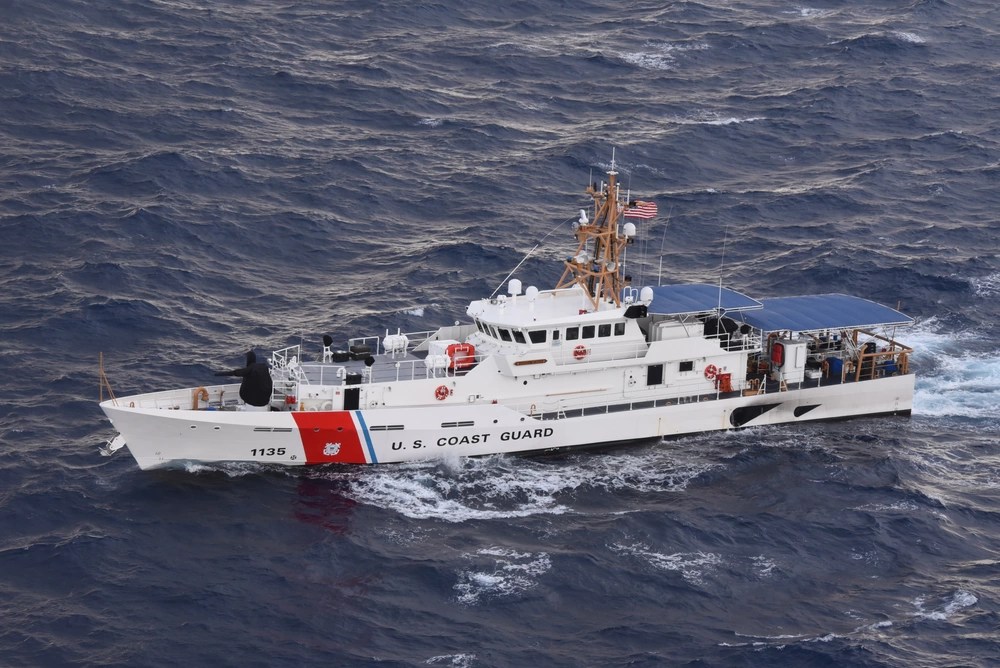
USCGC Angela McShan (WPC-1135)

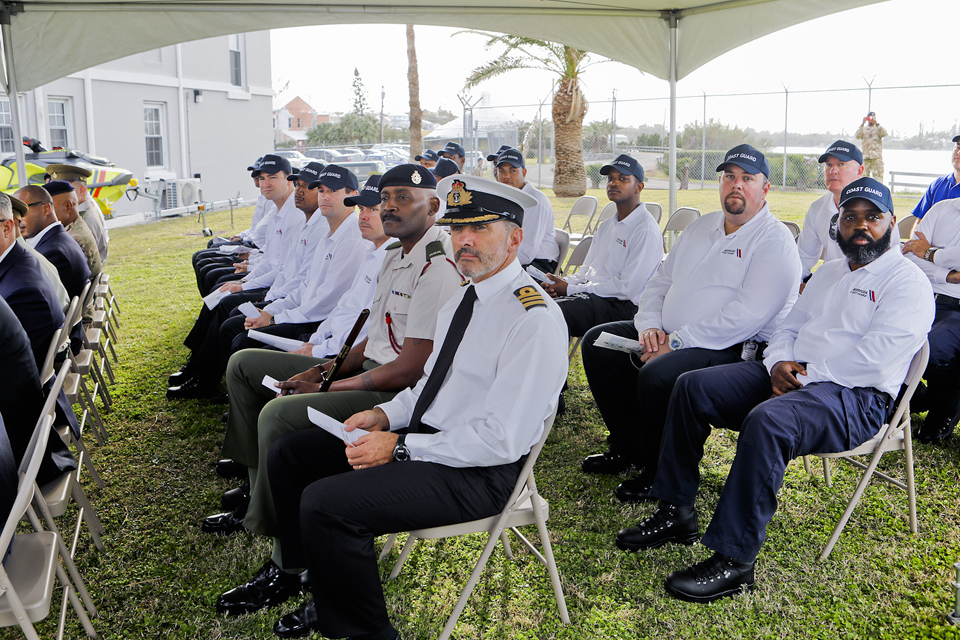
PORTSMOUTH, Va. — U.S. Coast Guard Cutter Angela McShan (WPC-1135) is scheduled to arrive in Bermuda on April 6 as part of a multi-month fisheries enforcement operation in concert with the Bermuda Department of Environment and Natural Resources, Royal Bermuda Regiment, Bermuda Coast Guard, and Bermuda Police Services. 

The cutter will be the first of four Coast Guard ships that will patrol seaward of the Bermuda Exclusive Economic Zone (EEZ), which extends 230 miles from shore. The joint operation will expand upon the long-standing U.S.-Bermuda partnership, as well as emphasize protection of the environment and living marine resources in this region. 

The operation is a result of recent meetings between Bermuda’s Deputy Governor Alison Crocket, Deputy Premier Walter Roban, Permanent Secretary in Bermuda’s Ministry of Home Affairs Rozy Azhar, United States Consul General in Bermuda Karen Grissette and Rear Admiral Laura Dickey, the U.S. Coast Guard Fifth District Commander.  The professional exchange focused on increasing efforts to counter illegal, unreported and unregulated (IUU) fishing, a global issue recently detected in the Mid-Atlantic.  

“It was an honor to meet Rear Admiral Dickey and her staff, along with the U.S. Consul and her staff,” noted Deputy Premier Roban.  “This operation begins a new chapter of cooperation with the U.S. Government in supporting illegal, unreported fishing and other unacceptable activity in our waters.  All is as a result of a meeting held with the National Climate Advisor to U.S. President Biden, Gina McCarthy, at COP26 where we discussed matters important to Bermuda and the United States.  The willingness of the United States to support Bermuda in our effort to oversee our EEZ is in step with our centuries’ long relationship as neighbors.  My gratitude on behalf of the people of Bermuda extends to the U.S. Consul’s Office in Bermuda for facilitating these meetings and the support we will get from the United States Coast Guard.”

As the worldwide demand for fish as a protein source continues to grow, IUU fishing will have a profound impact on the security of all countries with a maritime boundary. Left unenforced, IUU fishing will threaten global geo-political security, undermine maritime governance, and impact a nation’s ability to achieve domestic food security.

“We’re excited to join with Bermuda to help detect and monitor potential IUU fishing in the region,” said Rear Admiral Dickey.  “As we each work to safeguard our respective Exclusive Economic Zones, we’re fortunate to build on our long-standing relationship to partner together in this effort to protect global fish stocks and promote adherence to international rules.”

“The United States is proud to partner with Bermuda to promote security and lawful conduct in the Atlantic region,” added U.S. Consul General Karen Grissette.  “Reinforcing the United States’ security partnership with Bermuda is one of my top priorities, so I am proud to welcome these U.S. Coast Guard cutters to advance our shared interests.  This important operation is one more tangible demonstration of the close security collaboration between Bermuda and the United States.”  

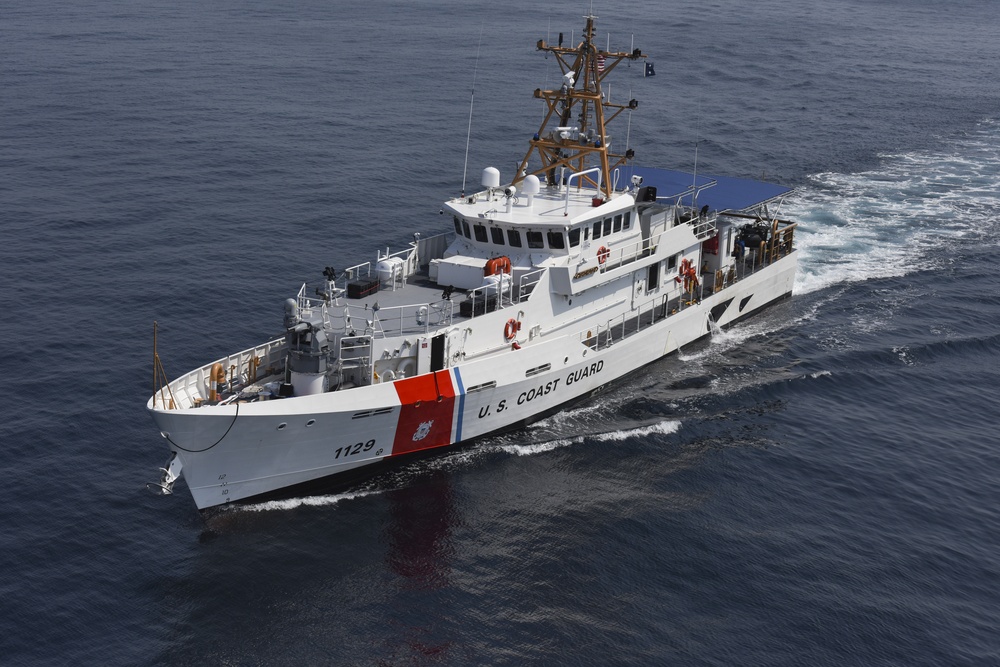
The Sentinel-class fast response cutter (WPC) is a key component of the Coast Guard’s offshore fleet that is capable of deploying independently to conduct missions that include port, waterways and coastal security, fishery patrols, search and rescue, and national defense.