“Coast Guard Cutter Munro visits Suva, Fiji, hosts shipriders during Operation Blue Pacific” –D14

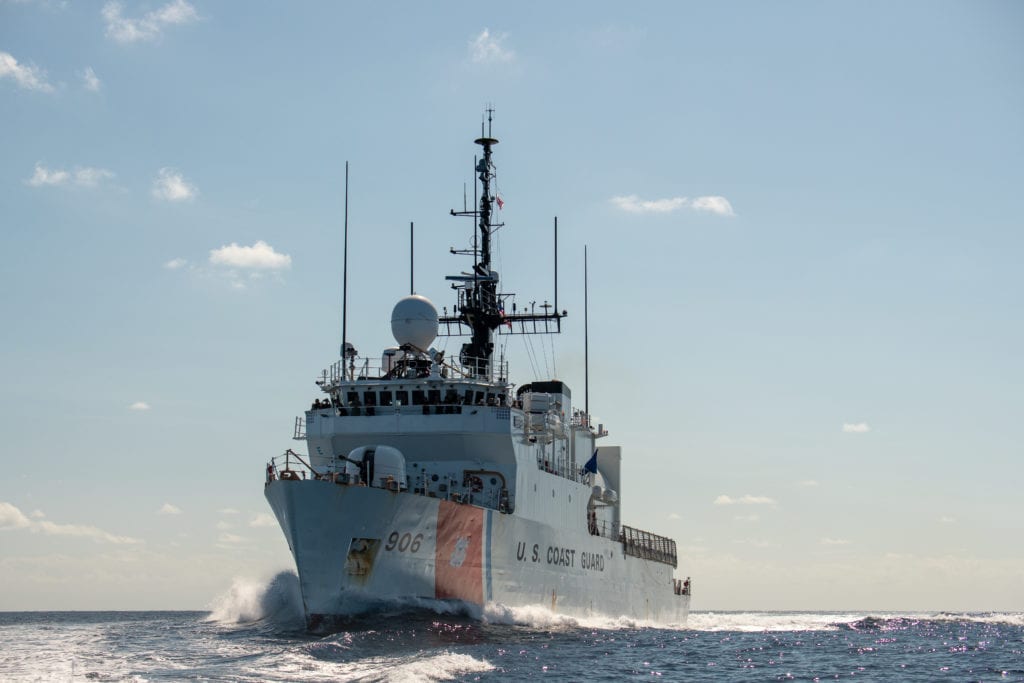
U.S. Coast Guard Cutter Munro, a 418-foot national security cutter, and its small boat transit the Gulf of Mexico, February 12, 2017. Photo: U.S. Coast Guard

Just a news release, but an interesting one, about an increasingly common type of operation. Fiji has an interesting history, take a look.

PR people, please stop reminding everyone that Munro was, “the only Coast Guardsman awarded the Congressional Medal of Honor.” Other Coast Guardsmen should have received the same recognition. Say he was a Medal of Honor recipient and briefly outline what he did, that he was killed in action rescuing Marines from an ambush on Guadalcanal.

News Release

U.S. Coast Guard 14th District Hawaii and the Pacific

Coast Guard Cutter Munro visits Suva, Fiji, hosts shipriders during Operation Blue Pacific

Editors’ Note: Click on images to download a high-resolution version.

SUVA, Fiji – The crew of U.S. Coast Guard Cutter Munro visited the Port of Suva, Fiji April 20-24, as part of Operation Blue Pacific. Prior to the port call, five Fijian shipriders representing Fiji’s Immigration Department, Ministry of Fisheries, Revenue and Customs, as well as the Fiji Navy, worked alongside the Munro’s crew to conduct fisheries boardings in Fijian waters.

During the port call, Munro’s crew hosted military and government officials from both Fiji and the U.S. during a media engagement and reception. Capt. Blake Novak, Munro’s commanding officer, visited the FMSRCC, Republic of Fiji Navy, that manages maritime surveillance and search and rescue coordination in the region. Munro crew members volunteered alongside Fiji Navy members at a local eldercare facility. Munro’s crew hosted hosted Fiji Navy members and other partners for a barbeque and ship tour Saturday. Shared interagency recreational activities during the port call included both soccer and rugby matches, and a waterfall hike.

USCGC Munro (WMSL 755) departed from Alameda, California in late March for a multi-month deployment to the South Pacific. The deployment aims to counter illegal, unreported, and unregulated, (IUU) fishing and strengthen relationships to enhance maritime sovereignty and security throughout the region.  Operation Blue Pacific’s focus is to lead and promote international efforts that uphold the principles of security, safety, sovereignty, and economic prosperity in Oceania through operations and engagements to ensure a free and open Indo-Pacific.

In November 2018, Fiji became the latest nation to sign a shiprider agreement, which allows partnering nations’ defense and law enforcement officers to embark on U.S. Coast Guard and U.S. Navy vessels to observe, protect, board and search vessels suspected of violating laws or regulations within their exclusive economic zones or on the high seas.

Fiji has an exclusive economic zone (EEZ) of around 1.3 million square kilometers.  It is difficult to protect Fiji’s sovereign rights for fishing and other economic activities over such a vast area of sea.  The shiprider program gives Fiji another tool to patrol and protect its sovereign waters.

The shiprider agreement allows cooperation between both nations to protect the fishing industry and Fijian sovereignty. This will also contribute to regional stability.

The Coast Guard is committed not only to the American people and its national interests, but also other nations, including Fiji and other the Pacific Island Countries, whose governments may be threatened or weakened by rival powers that challenge rules-based international order through inter-state aggression, economic coercion, maritime hybrid warfare, gray zone activities, and overreaching territorial claims.

As part of the U.S. National Security Strategy, the U.S. is committed to advancing a peaceful, free and open Indo-Pacific.

“We are pleased to work with Fiji to combat IUU fishing,” said Novak. “Working together, we were able to share technical expertise and ideas on how to improve safety, risk management and develop case packages for evidence preservation. IUU has replaced piracy as the leading global maritime security threat. Systemic disregard to IUU fishing normalizes illegal behavior and erodes governance structures that foster peace and stability.”

Through Operation Blue Pacific, the Coast Guard aims to strengthen relationships with like-minded nations.  Our shared efforts will improve maritime governance within Oceania, increase capacity for bilateral search-and-rescue and law enforcement and promote shared technical expertise and proficiency.

The Coast Guard combats illegal fishing and other maritime threats across the Pacific. Combating illegal fishing is part of promoting maritime governance and a rules-based international order that is essential to a free and open Indo-Pacific.

Munro was the second U.S. Coast Guard cutter to visit Fiji this year, after Coast Guard Cutter Stratton.

Commissioned in 2017, Munro is one of four Coast Guard legend class national security cutters homeported in Alameda. National security cutters are 418-feet long, 54-feet wide, and have a 4,600 long-ton displacement. They have a top speed in excess of 28 knots, a range of 12,000 nautical miles, endurance of up to 90 days and can hold a crew of up to 170. Munro is the second cutter named for Signalman First Class Douglas A. Munro, the only Coast Guardsman awarded the Congressional Medal of Honor.
Copenhagen Declaration, Blue Justice Initiative

We are seeing what appears to be growing international cooperation to curb Illegal, Unreported, and Unregulated (IUU) fishing and with it, other forms of maritime criminal activity frequently associated with it. A basis for this cooperation is found in the non-binding UN Copenhagen Declaration, Blue Justice Initiative. 48 Nations have signed on to the declaration. It is basically a letter of intent to cooperate. It is reproduced at the end of the post. Notably it has not been endorsed by the US, Canada, UK, France, Australia, New Zealand, India, or China, but this is very important to many smaller nations. I would think the US Coast Guard would be all-in on this. It certainly does not preclude the kinds of bilateral agreements the Coast Guard has with dozens of nations.

How did I learn about this Declaration?

NORTHCOM’s on-line magazine, The Watch, reported on a March 2022 meeting of the Ministerial Council of the Caribbean Regional Fisheries Mechanism (CRFM). This led me to look for more information on this organization. 

Below is the CRFM report on the meeting. Additional comments follow.


Belize City, Friday, 18 March 2022 (CRFM)—The Caribbean Regional Fisheries Mechanism (CRFM) and the Caribbean Community Implementation Agency for Crime and Security (CARICOM IMPACS) hosted a Technical Meeting on Illegal, Unreported and Unregulated (IUU) Fishing and Organized Crime in the Fishing Industry this week. It marked an important milestone in the region’s efforts to fortify the region’s response to this very challenging and costly problem, through coordinated action at both the national and regional levels, with the support of the Government of Norway and the United Nations Development Programme (UNDP) under the Blue Justice Initiative.

The CRFM, its Member States, and partner agencies both at the CARICOM and international levels committed to advancing their collaboration using modern digital technology, to strengthen the region’s response to illegal fishing and transnational organized criminal activities, such as drugs, human and small arms trafficking, trade in contraband goods, document fraud and forgery, tax crimes, and money laundering, which use commercial and recreational fishing as a cover for their activities.

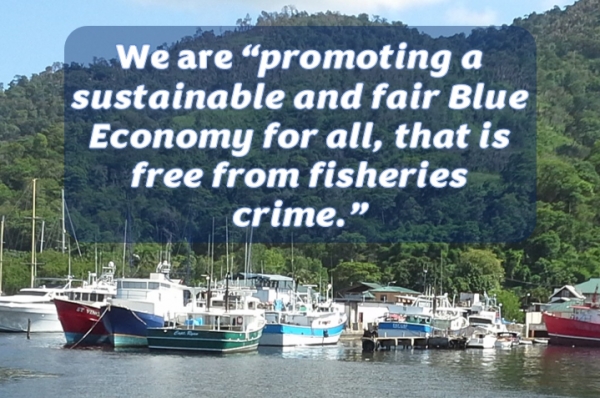
Last October, during a high-level meeting of CRFM Ministers, twelve (12) Member States signed the International Declaration on Transnational Organized Crime in the Global Fishing Industry (also known as the ‘Copenhagen Declaration’). They also endorsed the Blue Justice Initiative, which supports developing countries in operationalizing the Copenhagen Declaration, aimed at “promoting a sustainable and fair Blue Economy for all, that is free from fisheries crime.”

The CRFM and CARICOM IMPACS convened the technical meeting of senior fisheries and maritime law enforcement officers to identify priority actions to strengthen regional and international cooperation to combat and eradicate IUU fishing and transnational organized crime in the fisheries sector. The event marked an important milestone for the Caribbean region in collectively combating the scourge of crime connected with the fishing sector.

Over 90 participants from 15 Member States of the CRFM and representatives of the CARICOM Secretariat, the CRFM, CARICOM IMPACS, the Regional Security System (RSS), UNDP and the Government of Norway participated in the virtual session.

The meeting featured a diverse array of speakers who provided participants with insights on the Blue Justice Initiative and ‘Copenhagen Declaration, the UNDP Blue Resilience Project and its use of digital technology and institutional cooperation, tools and techniques to detect and analyze fisheries crime, and a general overview of fisheries crime in the Caribbean. Participants engaged in interactive sessions, as they contributed to charting the way forward.

In addressing the gathering, Hon. Saboto Caesar, Minister of Agriculture, Forestry, Fisheries, Rural Transformation, Industry and Labour, and Chair of the Ministerial Council of the Caribbean Regional Fisheries Mechanism, said: “The fight globally has increased against IUU fishing and organized crime, and Saint Vincent and the Grenadines and the Member States of the CRFM continue to honor our duty… It is our quest in the Caribbean to partner with all international agencies to ensure that we reduce criminal activities when it comes to the Blue Economy. We intend to work with regional and international partners and other friendly governments such as Norway… because every Member State in the global community must play an important role.”

CRFM Executive Director Milton Haughton noted the seriousness and impacts of illegal and criminal activities in the fisheries sector and expressed the CRFM’s appreciation for Norway’s commitment to the sustainable use of ocean resources, through the Blue Justice Initiative and the Copenhagen Declaration. He thanked the Government of Norway and the UNDP for supporting the region in its efforts to help address this intractable problem.

Important Dates:

15 October 2018:

The Copenhagen Declaration was initially adopted by 9 countries: Faroe Islands, Ghana, Indonesia, Kiribati, Namibia, Norway, Palau, Solomon Islands and Sri Lanka.

10 December 2020:

Several Ministers responsible for Fisheries from the CARICOM / CRFM Member States took part in a virtual High-Level International Blue Justice Conference that was convened by the Government of Norway. The main purpose of the Conference was to promote and advance political support for the non-binding Copenhagen Declaration on Transnational Organized Crime in the fishing industry.

 21 May 2021:

At the Fifteenth Meeting of the Ministerial Council of the CRFM, Ministers discussed the issues and recognized the need for Member States to cooperate with other affected countries to improve understanding and knowledge of the problem, identify countermeasures, and build capacity to prevent, deter and eradicate IUU fishing and transnational organized crime in the fishing industry, in the region and globally. The Ministers issued Resolution No. MC 15(6) of 2021, documenting their position.

 4 October 2021:

During a special ministerial meeting, several Ministers from the Caribbean Community responsible for Fisheries, the Blue Economy and related matters, delivered official statements endorsing The International Declaration on Transnational Organized Crime in the Global Fishing Industry (also known as the ‘Copenhagen Declaration’). They also affirmed their support for the Blue Justice Initiative, established by the Government of Norway to support implementation of the declaration. (View the proceedings and country statementshere.)

Twelve (12) CRFM Member States, The Bahamas, Belize, Grenada, Guyana, Jamaica, Montserrat, Saint Kitts and Nevis, Saint Lucia, Saint Vincent and the Grenadines, Trinidad and Tobago, Suriname, and The Turks and Caicos Islands, signed the Copenhagen Declaration on this occasion.


This in turn led me to a CRFM report of a 5-8 April Ministerial Meeting of the Organization of African, Caribbean and Pacific States (OACPS), an organization of 79 member states. Seeing this degree of widespread interest, I had to look up the declaration.


THE DECLARATION

We, the Ministers of Benin, Chile, Costa Rica, Faroe Islands, Fiji, Ghana, Greenland, Honduras, Iceland, Indonesia, Kiribati, Liberia, Maldives, Marshall Islands, Mexico, Mozambique, Myanmar, Namibia, Nauru, Nicaragua, Norway, Palau, Panama, Philippines, São Tomè and Principe, Scotland, Seychelles, Solomon Islands, South Africa, Sri Lanka, Timor Leste and Uruguay;

Encourage other Ministers to support this non-legally binding declaration.

Note the recommendations and the outcome of the 2nd International Symposium on Fisheries Crime held in Yogyakarta, Indonesia 10–11 October 2016 which was published by the United Nations Office on Drugs and Crime at the occasion of the United Nations Commission on Crime Prevention and Criminal Justice during its twenty-sixth session in Vienna 22–26 May 2017.

Recognize that our countries are dependent on the sea and its resources and the opportunities it holds for the economy, food and well-being of our population and we are determined to support a healthy and thriving fishing industry that is based on fair competition and the sustainable use of the ocean.

Are committed to work towards the fulfillment of the UN Sustainable Development Goals particularly in relation to Goal 14 on “Life Below Water” and Goal 16 on “Peace, Justice and Strong Institutions.”

Are convinced that there is a need for the world community to recognize the existence of transnational organized crime in the global fishing industry and that this activity has a serious effect on the economy, distorts markets, harms the environment and undermines human rights.

Recognize that this transnational activity includes crimes committed through the whole fisheries supply and value chain which includes illegal fishing, corruption, tax and customs fraud, money laundering, embezzlement, document fraud and human trafficking.

Recognize further the inter-continental flow of illegal fish products, illicit money and human trafficking victims in transnational organized crime cases in the global fishing industry and that all regions of the world need to cooperate when investigating such acts

Are convinced that inter-agency cooperation between relevant governmental agencies is essential at a national, regional and international level in order to prevent, combat and eradicate transnational organized crime in the global fishing industry,

Are also convinced that there is a need for international cooperation and that developing countries are particularly affected.

Recognize the particular vulnerability of small-island developing states and other Large Ocean Nations of the impact of transnational organized crime in the global fishing industry.

Are also convinced the need for continuous support on the highest level and the necessity for awareness raising on these issues through events such as the International FishCrime Symposium.

Expeditionary Sea Base USS Hershel “Woody” Williams (ESB 4) Doing Coast Guard Work off West Africa

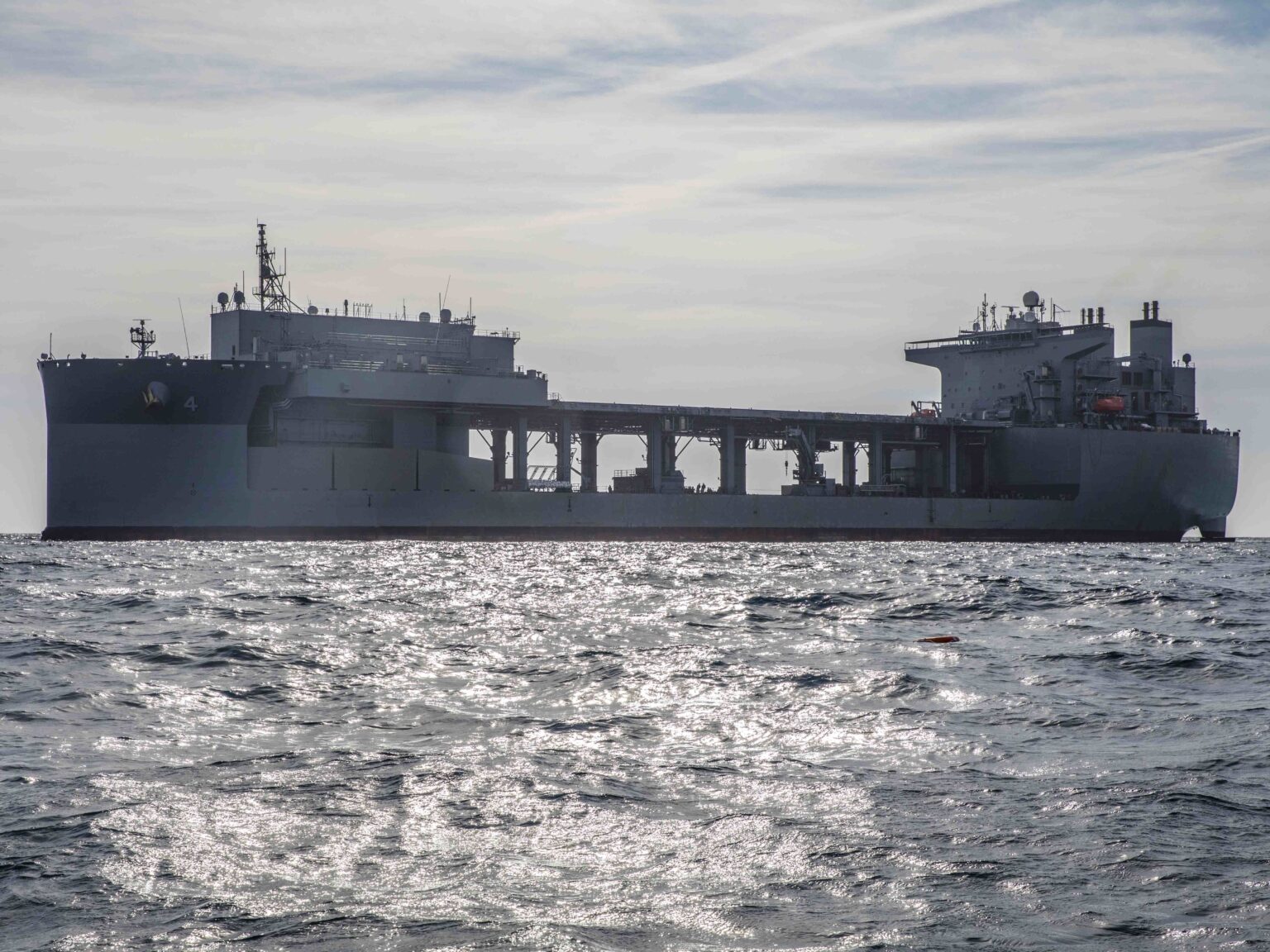
ADRIATIC SEA – (Feb. 19, 2022) The Expeditionary Sea Base USS Hershel “Woody” Williams (ESB 4) sails the Adriatic Sea, Feb. 19, 2022. Hershel “Woody” Williams is on a scheduled deployment in the U.S. Sixth Fleet area of operations in support of U.S. national interests and security in Europe and Africa. (U.S. Navy photo by Mass Communication Specialist 1st Class Fred Gray IV/Released)

The Navy League’s on-line magazine, “Seapower,” has a post, “USS Hershel ‘Woody’ Williams Completes Gulf of Guinea Maritime Security Patrol,” reporting on the activities of this newly arrived 6th Fleet asset, the “first warship permanently assigned to the U.S. Africa Command area of responsibility.”

And what was this 784 foot (239 m) ship doing?

In March, the joint U.S. and African maritime team interdicted an illegal, unregulated, and unreported fishing vessel operating in Sierra Leone’s economic exclusive zone.

In April, as part of the African Maritime Law Enforcement Partnership, the joint team, led by Cabo Verde, worked in coordination with the Maritime Analysis and Operations Centre – Narcotics, INTERPOL and Cabo Verde’s national Maritime Operations Center to conduct a compliant boarding of a Brazilian-flagged fishing vessel, which led to the seizure of approximately 6,000 kilograms of suspected cocaine with an estimated street value of more than $350 million.

The US Navy regularly hosts Coast Guard teams in the Caribbean or while operating off Central and South America. US Coast Guard cutters have operated with West African nations previously. Coast Guard teams embarked on US Navy ships have trained with West African nations, but this may be the first time US Coast Guard teams, operating from a US Navy ship, have participated in law enforcement operations on the behalf of a West African nation.

Reverse Industry Day

Just passing this along since it is easily missed on the CG-9 web site

USCG 2022 Virtual Reverse Industry Day
Date: Thursday, April 28, 2022
Time: Noon to 4 p.m. ET

Join the U.S. Coast Guard for the 2022 Virtual Reverse Industry Day, where we will be discussing topics that emphasize the importance of early engagement with industry to improve the quality of our requirements and increase the efficiency of our procurement process.

  • Session I:  Acquisition Planning – Early Industry Engagement/Program Management Office Access
  • Session II:  Developing Clear and Achievable Requirements
  • Session III:  Source Selection Debriefings

This event is being held in partnership with the Small and Emerging Contractors Forum (SECAF).  SECAF is an industry association that assists small businesses with growth strategies and provides a collaborative business network to help solve common challenges.

Registrants will receive an MS Teams meeting link prior to the event. The link will be sent to the email provided during registration, so please be sure that the information is correct. The deadline to register is April 27.

Click here to register.

For additional information, send an email to the Small Business and Industry Engagement team at openforbusiness@uscg.mil.

“Coast Guard cutters mark SLEP milestones for ISVS Program” –CG-9

U.S. Coast Guard Cutter Seneca prior to prototype SLEP

Below is an Acquisitions Directorate (CG-9) report on a couple of “In Service Vessel Sustainment” (ISVS) projects. This talks about the Polar Star, but we already knew about that. This is the first report on the WMEC270 SLEP that I can recall. It corrects my previous impression that Harriet Lane was to be the first. Seneca was the first. It also says,

Six more of the 13 in-service WMECs will undergo SLEP work, with production work starting in 2023.

I was under the impression that only six total were to be SLEPed. Does “production work starting in 2023,” mean what was done to Seneca and will be done to Harriet Lane is not a full-fledged SLEP?

If work on these two ships is “prototyping” and not “production,” it may be significant that these two cutters were built by different builders, Harriet Lane having been one of the four built by Tacoma Boat and Seneca one of the nine built by Robert Derecktor Shipyard. There may be some differences within the class.

It was anticipated that the 76mm Mk75 gun was to be removed, along with, presumably, the Mk92 fire control system, to be replaced with a Mk38 gun mount.  There is no mention of this.


Coast Guard cutters mark SLEP milestones for ISVS Program

April 21, 2022

Two Coast Guard service life extension programs (SLEP) reached milestones in early April – prototype work was completed on a 270-foot medium endurance cutter (WMEC) and Coast Guard Cutter Polar Star commenced the second phase of its SLEP work.

SLEPs address specific systems and major maintenance to extend the service life of the vessel to meet cost, schedule and performance requirements. They are part of the In-Service Vessel Sustainment Program, which conducts strategic major maintenance and recapitalization as vessels age and critical systems become obsolete, improving the reliability of Coast Guard vessels, helping control maintenance costs and increasing time spent underway.

For the WMEC SLEP, Coast Guard Cutter Seneca recently departed Coast Guard Yard April 4 for its homeport in Portsmouth, Virginia. Seneca served as a prototype for the SLEP work on the WMECs, which is a renewal of several mission-critical systems including electrical updates with new generators, switchboards and Coast Guard machinery control system software updates.

“This wraps up a successful nine-month project at Coast Guard Yard that began in July 2021 totaling over $6.4 million,” said Lt. Charles Lortz, the Project Residence Office Baltimore 270-foot WMEC SLEP section chief. “Beyond the difficulties inherent to a prototype project, the Seneca project followed an expedited planning process to more quickly deliver a more capable asset to the fleet. It was certainly noted, by all involved, that this project was charting new territory.”

Coast Guard Cutter Harriet Lane arrived at Coast Guard Yard March 28 and will undergo prototype refinements. Six more of the 13 in-service WMECs will undergo SLEP work, with production work starting in 2023. The WMEC SLEP will sustain capabilities to meet mission needs until they are replaced by offshore patrol cutters.

As Seneca was heading to its homeport, Polar Star transited from the San Francisco Bay to Mare Island Dry Dock LLC in Vallejo, California. On April 8, it commenced the second phase of SLEP work items and recurring maintenance, which is taking place over a five-year, annually phased production schedule that runs through 2025. During the second phase, Polar Star SLEP will recapitalize two engineering control systems: one will operate and control the cutter’s 75,000 shaft horsepower gas turbines and auxiliary systems while the other control system is dedicated to the diesel electric propulsion plant. When completed, Polar Star’s SLEP will have replaced a number of major systems and extended the service life of the Coast Guard’s only operational heavy icebreaker.

The Coast Guard is also investing in a new fleet of polar security cutters (PSC) that will sustain the service’s capabilities to meet mission needs in both the Arctic and Antarctic regions. The first PSC is on contract for delivery in 2025. Polar Star will stay in service until the second PSC is operational.

For more information: In-Service Vessel Sustainment Program page

“USCG’s Polar Security Cutters to Receive Mark 38 Mod 4 Guns” –Naval News

Naval News reports that the Polar Security Cutters will be armed with the new 30mm Mk38 Mod4 rather than the familiar 25mm Mk38 Mod2/3 which currently arms Webber class Fast Response Cutters.

There were a couple of additional pieces of information as well.

  • Other Coast Guard vessels will also get the Mod4.
  • There are no plans to replace existing 25mm mounts with the 30mm Mod4.

The answer on the Polar Security Cutters is probably definitive because it is still three years in the future. Presumably the Navy will use up the 25mm mounts they have already purchased before installing the Mod4. The Offshore Patrol Cutter program extends so far into the future, it is likely most of them will receive the 30mm.

I would argue, vessels for which the Mk38 is the primary armament, particularly if they have only one, should receive a higher priority for the more capable Mod4 since we know the 30mm is more effective than the 25mm, and these vessels have no more powerful alternative weapon they could employ. It appears the WMEC270 that are going through the service life extension program fall in this category.

As for upgrading existing installations, there is a strong case to be made for upgrading the PATFORSWA Webber class WPCs. The 30mm offers options that are not available for the 25mm including an airburst round that can be used against UAVs and a swimmer round that is particularly effective against swarming fast inshore attack craft, both significant threats in the Persian Gulf.

The post also refers to the possibility of mounting missiles on the mount. That possibility was discussed in more detail here. I would like to see all the 25mm guns replaced by the 30mm, but if the earlier Mk38 Mod2/3 mounts were modified to mount APKWS guided rockets or Hellfire and its successor, there would be less need for the larger caliber gun.

“SELECTION OF THE DIRECTOR OF INTERNATIONAL AFFAIRS AND FOREIGN POLICY ADVISOR (DCO-I)” –News Release

Looks like more evidence of the Coast Guard’s increasing role in international affairs and foreign military sales.

Ms. Haverstick led and completed extraordinary projects valued at over $25B between international partners, the White House, interagency, and military departments for advanced technology acquisitions.”

That sounds pretty heavy weight.

united states coast guard

R 211444Z APR 22 MID200001687843U
FM COMDT COGARD WASHINGTON DC
TO ALCOAST
BT
UNCLAS
ALCOAST 144/22
SSIC 12920
SUBJ: SELECTION OF THE DIRECTOR OF INTERNATIONAL AFFAIRS AND
FOREIGN POLICY ADVISOR (DCO-I)
1. I am pleased to announce the selection of Ms. Holly Haverstick
as the Coast Guard’s Director of International Affairs and Foreign
Policy Advisor.
2. This position serves as the Coast Guard’s key policy advisor on
the complete range of international affairs and engagement
activities. The Director is responsible for developing,
coordinating, and implementing agency strategy, policies, and
programs related to the Coast Guard’s international activities.
In addition, the Director serves as the Executive Agent for the
International Affairs Executive Steering Group (IAESG), which
develops recommended strategies, policies, and direction
regarding the Agency’s international engagement.
3. Ms. Haverstick’s 19 years of federal service have covered
international engagement, security cooperation, strategy, and
foreign military sales (FMS). She has applied her expert knowledge
of global foreign affairs issues to execute national security
priorities and led Department of Defense (DoD) efforts to
develop the 2018 Conventional Arms Transfer (CAT) policy and
associated Implementation Plan. She furthered DoD’s incorporation of
the CAT Policy into overarching security cooperation reform strategy
for the comprehensive security cooperation enterprise. In addition,
she has led U.S. efforts to win numerous multi-billion dollar
international defense competitions resulting in more capable
international partners and a more substantial U.S. defense
industrial base.
4. As the Deputy Assistant Director for Weapons with the Defense
Security Cooperation Agency (DSCA), Ms. Haverstick was responsible
for leading DSCA’s vision of effective and timely technology
security and foreign disclosure aspects of security cooperation,
where she routinely briefed Congressional staff on strategy and
technical aspects of proposed sales. In addition, Ms. Haverstick led
and completed extraordinary projects valued at over $25B between
international partners, the White House, interagency, and military
departments for advanced technology acquisitions. During a
transition for DSCA, Ms. Haverstick served as the Acting Principal
Director for Strategy where she led both military and civilian
members.
5. Ms. Haverstick will become a member of the Senior Executive
Service with the U.S. Coast Guard on 24 APR 2022.
6. USCG Executive Resources POC: Ms. Brianne Alvis
(Brianne.E.Alvis@uscg.mil).
7. ADM Karl L. Schultz, Commandant (CCG), sends.
8. Internet release is authorized.

The New Long Guns

Below is a press release from Sig Sauer, reporting that they have been awarded a contract for two closely related weapons intended to replace the M4/M4A1 carbine and the M249 Light Machinegun. Both use a new 6.8 mm round. There has been concern that the 5.56 mm round is not effective against some of the better body armor. I have not seen the M249 in Coast Guard service, but the Coast Guard does use the M4/M4A1 and the 7.62 mm M240. The new round is reportedly an improvement on both the 5.56 and 7.62mm rounds, so it would not be unreasonable to expect the new weapons to ultimately also replace the M240 in Coast Guard service. This would offer the logistical advantage of requiring only a single rifle caliber round service wide.

According to a report from National Defense, the weapons will be paired with a ruggedized advanced fire control system that increases accuracy and lethality, the XM157, which “integrates a number of advanced technologies, including a variable magnification optic (1X8), backup etched reticle, laser rangefinder, ballistic calculator, atmospheric sensor suite, compass, Intra-Soldier Wireless, visible and infrared aiming lasers and a digital display overlay.”

It probably will take some time before the Coast Guard sees these new weapons.


NEWINGTON, N.H., (April 20, 2022) – SIG SAUER is honored to be awarded the Next Generation Squad Weapons System (NGSW) Contract by the U.S. Army after a rigorous 27-month testing and evaluation process.

“The U.S. Army is taking a bold step toward command of the 21st century battlefield and SIG SAUER is immensely proud to be the selected provider for this historic revolution in infantry weapons. The fielding of the SIG SAUER Next Generation Squad Weapons System will forever change the dynamic of military engagement for America’s warfighters with American innovation and manufacturing,” began Ron Cohen, President and CEO SIG SAUER, Inc.

The SIG FURY Hybrid Ammunition (6.8 Common Cartridge), SIG-LMG (XM250), SIG MCX-SPEAR Rifle (XM5) and SIG SLX Suppressors meaningfully advance soldier weapons technology to meet the emerging requirements of the U.S. Army.

The SIG 6.8×51 FURY Hybrid Ammunition uses a patented lightweight metallic case designed to handle pressures higher than conventional ammunition, resulting in dramatically increased velocity and on-target energy in lighter weapons.

The SIG-LMG lightweight belt-fed machine gun and SIG MCX-SPEAR Rifle are purpose-built to harness the energy of the SIG FURY 6.8 Common Cartridge Ammunition enabling greater range and increased lethality while reducing the soldier’s load on the battlefield.  Both the SIG-LMG and MCX-SPEAR deliver significant weapon and technology advancements to the soldier and provide a solution for battlefield overmatch in comparison to the current M249 and M4/M4A1. 

The U.S. Army’s procurement of the NGSW System marks the beginning of an era where combat weapons are coupled with a suppressor as standard issue equipment.  The SIG SLX Suppressors are designed to reduce harmful gas backflow, sound signature and flash.  SIG SLX Suppressors feature a patented quick-detach design for easy install and removal.

“We commend U.S. Army leadership for having the vision to undertake this historic procurement process to deliver a transformational weapon system to our warfighters.  This award is the culmination of a successful collaboration between SIG SAUER and the U.S. Army, and we look forward to the continuing partnership,” concluded Cohen.

SIG SAUER is a company that is driven by innovation and we are proud to offer the advancements of the NGSW System in the SIG 277 FURY Hybrid Ammunition (the commercial variant of the SIG 6.8×51 FURY Ammunition round), SIG MCX-SPEAR Rifle, and the SIG SLX Series of Suppressors available to the consumer.  For more information about these products visit sigsauer.com.

“2021 Naval Engineering Awards Recipients Announced” –My CG

Coast Guard Cutters Emlen Tunnell and Glen Harris are moored pierside in Beirut, Lebanon, Jan. 31, 2022. The two fast response cutters are deployed to the U.S. 5th Fleet area of operations to help ensure maritime security and stability in the Middle East region. U.S. Army photo by Cpl. DeAndre Dawkins.

MyCG announced special recognition of significant Naval Engineering accomplishments in the form of awards. I would like to point out one element, in one award statement, because it is the only official statement, I have seen so far regarding upgrades to the Webber class cutters that are assigned to Patrol Forces SW Asia.

“CAPTAIN RICHARD D. POORE AWARD…Mr. Michael Parrish, Deputy Product Line Manager, Surface Forces Logistics Center (SFLC) Patrol Boat Product Line (PBPL)…He used innovative financial methods to procure $4.7 million in warfighting packages to outfit six PATFORSWA cutters to help protect the U.S. Fifth Fleet.”

Major Cutter Homeports

“Coast Guard Cutter Forward and Coast Guard Cutter Bear, homeported in Portsmouth, Virginia, finish an at-sea transfer while underway on a two-month patrol. Coast Guard Cutter Forward returned to homeport on April 10, 2021.” (U.S. Coast Guard photo)

Recently I had to look up homeports of WMECs. I found that there did not seem to be a single comprehensive up to date list. Seemed it might be useful to share the list. I have added the Bertholf class and what we know about the basing of the Offshore Patrol Cutters as well. These are not district assets, but I found it convenient to group them by homeport district. The numbers in parenthesis are the hull numbers. First some observations.

OBSERVATIONS:

The intent is to split the Bertholf class, almost evenly between the Atlantic and Pacific Areas: five (45%) to LANTAREA and six (55%) to PACAREA.

The vast majority of medium endurance cutters are assigned to LANTAREA. All 100% of the 270s and 24 (86%) of 28 total.

Despite the fact that the vast majority of the US EEZ and territorial sea (84%) falls under the Pacific Area Commander, the vast majority of large patrol cutters are based in the Atlantic Area. This is, at least in part, due to the Alien Migrant and Drug interdiction missions. It is counter intuitive, but Charleston, SC is closer to the Eastern Pacific Drug transit zones than San Diego, CA.

Once the first four OPCs reach their bases in San Pedro and Kodiak, the Pacific Area will once again have ten “high endurance cutters,” as they did before recapitalization began.

WHO BUILT THEM?:

The entire Bertholf class has been built by Huntington Ingalls of Pascagoula, MS. The lead ship was laid down in 2005 and commssioned in August 2008. The tenth is expected to be delivered 2023. The eleventh, maybe 2024.

The Bear class WMEC270s were built by two different builders. The first four ships (901-904) were built by Tacoma Boatbuilding, Tacoma, WA, with Bear laid down in August, 1979 and the last of the four commissioned in December, 1984. The remaining nine were built by Derecktor Shipbuilding, Middleton, RI. The first of these laid down June, 1982, and the last of the nine completed in March 1990.

The 16 Reliance class WMEC210s were built by four different builders, with the first laid down in May 1963 and the last commissioned August 1969, less than six years and three months later.

  • The first three, 615-617, were built by Todd Shipyards, Houston, TX.
  • The fourth, 618, by Christy Corp., Sturgeon Bay, Wis.
  • Five, 619, 620, and 628-630, were built at the Coast Guard Yard, Curtis Bay, MD.
  • Seven, 621-627, were built by American Shipbuilding, Lorain, OH.

WMEC 622 and 628 have since been transferred to Sri Lanka and Colombia respectively. All underwent a major maintenance availability at the Coast Guard Yard between 1984 and 1998.

THE FORCE LAYDOWN:

FIRST DISTRICT: 2 WMEC270s

  • US Naval Shipyard Portsmouth, Kittery, ME: two WMEC270s: Tahoma (908), Campbell (909)

FIFTH DISTRICT: 9 WMEC270s, 2 WMEC210s

  • Portsmouth, VA: 9 WMEC270s: Bear (901), Escanaba (907), Forward (911), Harriet Lane (903, currently in SLEP at CG Yard), Legare (912), Northland (904), Seneca (906) , Spencer (905), Tampa (902)
  • Virginia Beach, VA: WMEC210s: Dependable (626), Vigorous (627)

SEVENTH DISTRICT: 3 National Security Cutters (2 more under construction), 2 WMEC270s, 5 WMEC210s

  • Charleston, SC: 3 NSCs: Hamilton (753), James (754), Stone (758), (two more NSCs building: Calhoun (759), Friedman (760))
  • Naval Station Mayport: 1 WMEC210: Valiant (621)
  • Cape Canaveral: 2 WMEC210s: Confidence (619), Vigilant (617)
  • Key West: 2 WMEC270s: Mohawk (913), Thetis (910)
  • St. Petersburg: 2 WMEC210s: Resolute (620), Venturous (625)

EIGHTH DISTRICT: 4 WMEC210s

  • Pensacola: WMEC210s: Dauntless (624), Decisive (629), Diligence (616), Reliance (615)

ELEVENTH DISTRICT: 4 National Security Cutters

  • Alameda, CA: 4 NSCs: Bertholf (750), Waesche (751), Stratton (752), Munro (755)

THIRTEENTH DISTRICT: 3 WMEC210s

  • Astoria, OR: 2 WMEC210s: Alert (630), Steadfast (623)
  • Port Angeles, WA: 1 WMEC210: Active (618)

FOURTEENTH DISTRICT: 2 National Security Cutters

  • Honolulu, HI: 2 NSCs: Kimball (756), Midgett (757)

SEVENTEENTH DISTRICT

  • Kodiak, AK: 1 WMEC283: Alex Haley (WMEC-39)

OFFSHORE PATROL CUTTER HOMEPORTS

We have heard where the first six OPCs are expected to be homeported.

  • Argus (915) and Chase (916) will go to San Pedro, CA
  • Ingham (917) and Rush (918) will go to Kodiak, AK
  • Pickering (919) and Icarus (920) will go to Newport, RI