More on Surface Launch Application of APKWS

The Drive/The Warzone has a post “What Will Fire The Laser-Guided Rockets Donated To Ukraine Is Still A Mystery,” discussing how Advance Precision Kill Weapon System (APKWS) laser guided rockets might be used by Ukrainian Armed Forces. Apparently the US is providing $22.6M worth of the systems.

We have discussed possible Coast Guard use of this weapons system several times, here, here, here, here, here, and here.

The weapon is ideal for engaging small, fast, highly maneuverable surface targets, but its warhead is large enough that several hits could seriously damage larger targets. It has also been tested successfully against Unmanned Air Systems. There seems to be some indication APKWS might be mounted alongside the gun on the Mk38 mounts.

The post includes several videos including the one above that shows at least a couple of mounts including a simple ring mount and a remote weapon station. These demonstrate how small the footprint of this weapon can be.

Perhaps more importantly, it reports current and planned production figures for this weapon, that clearly show it to be common, proven, and widely available.

“… the U.S. military has a lot of 70mm rockets and buys thousands more every year. The Army alone plans to buy 60,000 unguided rockets in fiscal 2023 alone. BAE Systems, which builds the APKWS II seeker kit, is tooled to build 25,000 of them per year and is expanding production, according to its website. It has already delivered 37,000 units in six years of production.”

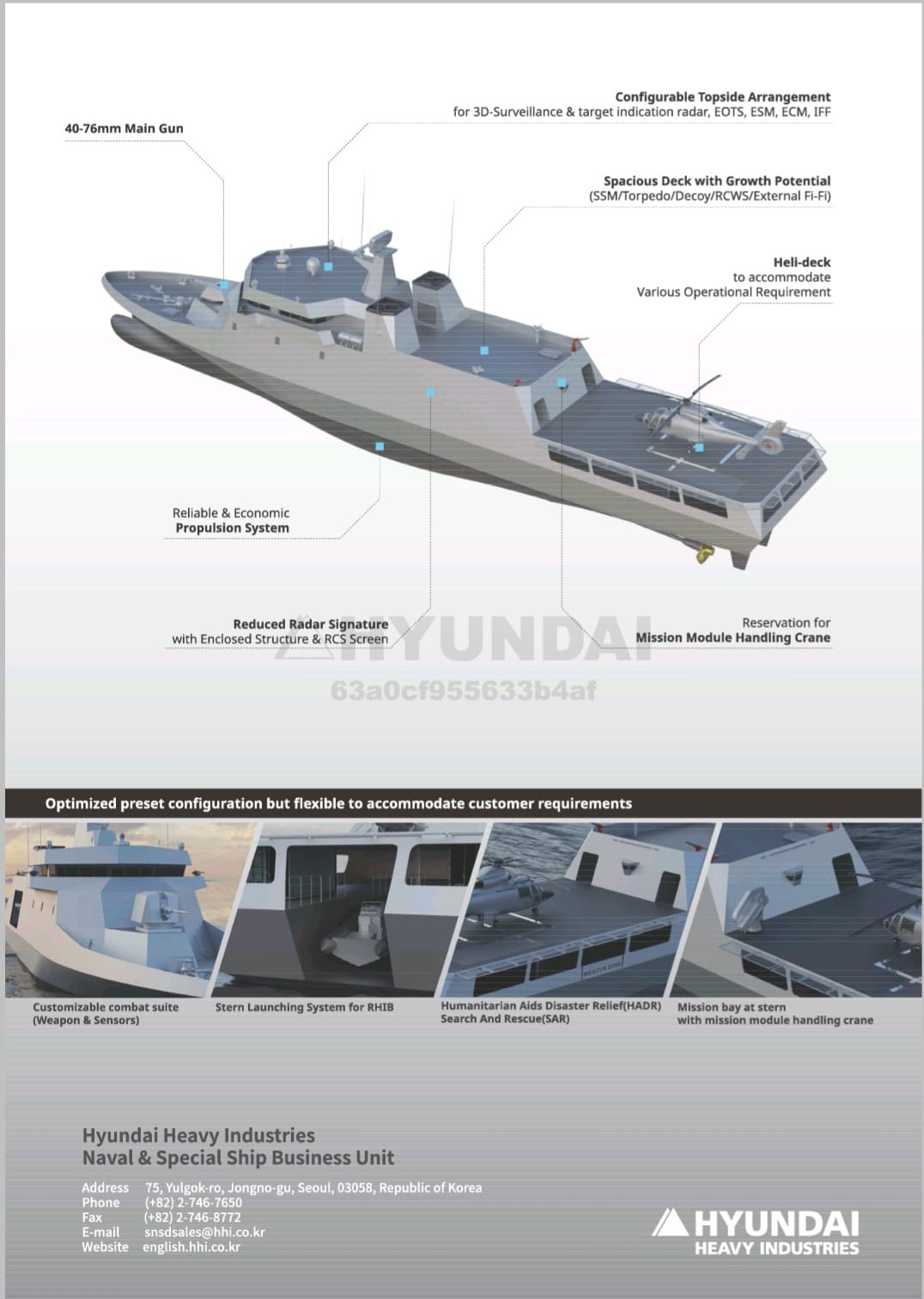
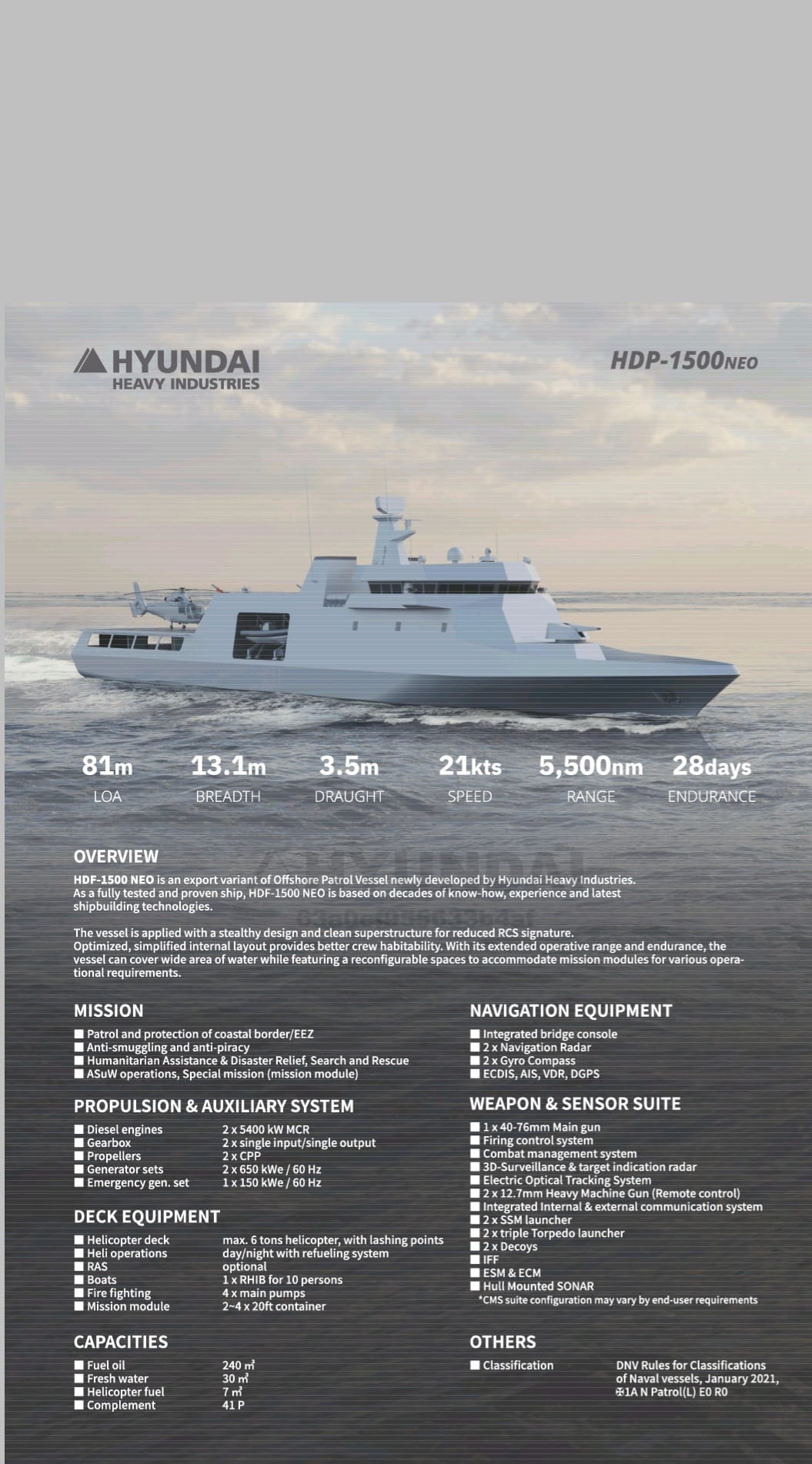
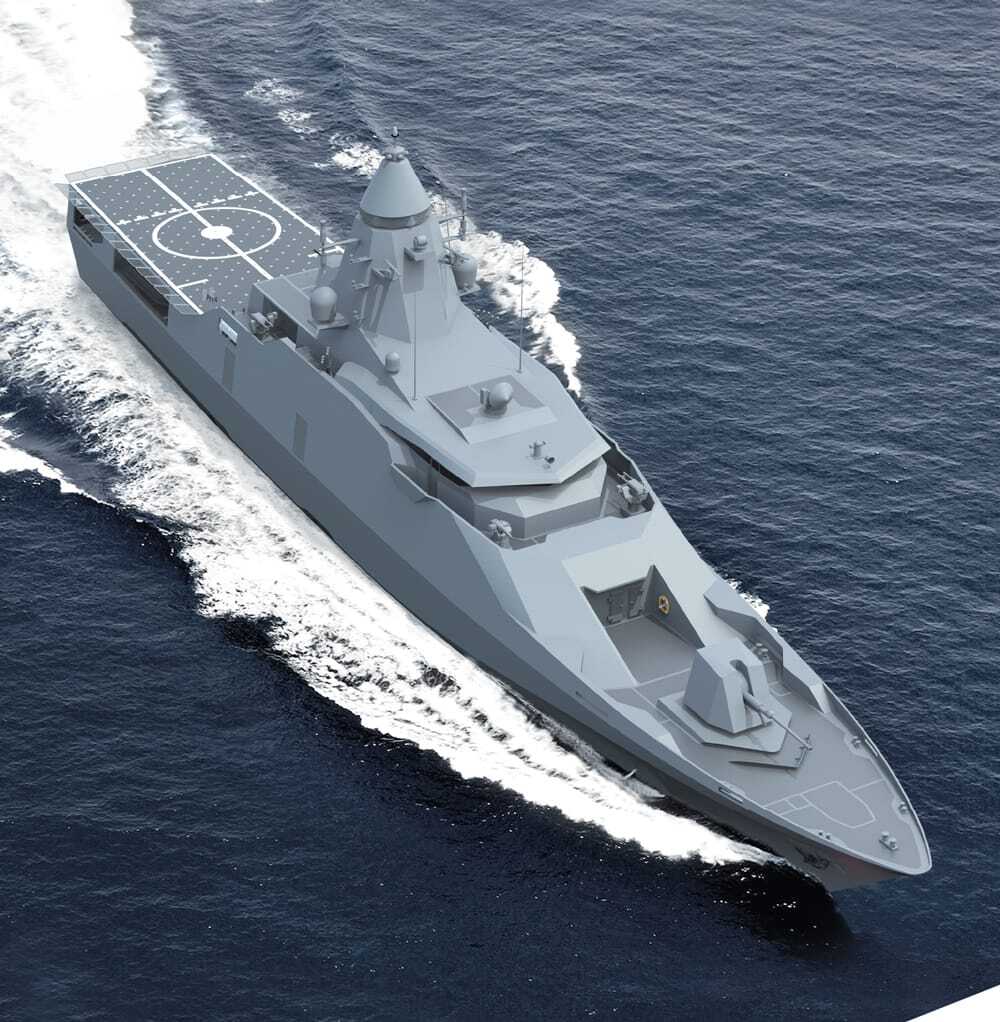
Hyundai to build 6 Philippine Navy OPVs

The Philippine News Agency has announced that Hyundai has been selected to build six Offshore Patrol Vessels for the Philippine Navy. There isn’t much detail about how they are to be equipped. The list below are just options. A length of 81 meters works out to 266 feet.

This does mean Turkey will not be building OPVs for the Philippines. The acquisition process does seem to have been a bit convoluted. Initially Austal in the Philippines was expected to build this class.


“Obangame Express 2022 Promotes Cooperation To Fight Sea Crime” –ADF Magazine

Members of the U.S. Navy share critical care techniques with the Senegalese Navy during Obangame Express 2022. U.S. NAVY

I got a reminder that the Obangame Exercise 2022 had concluded (Brazil sent an OPV), so I went looking for some information about possible Coast Guard participation. I found none, although I feel sure at least some special teams were involved.

This report from AFRICOM’s African Defense Forum does include an interesting note,

One important element of the exercise is practicing the use of SeaVision, a maritime domain awareness tool that helps professionals in the operations center track vessels at sea. Created in 2012 by the U.S., this tool is used by about 25 African countries to monitor their waters.

Is this system system something the Coast Guard uses? Is it used by our friends in Latin America? SE Asia? Sounds interesting.

“A Base in Minnesota Is the New Home of Coast Guard Cold Weather Training” –Military.com

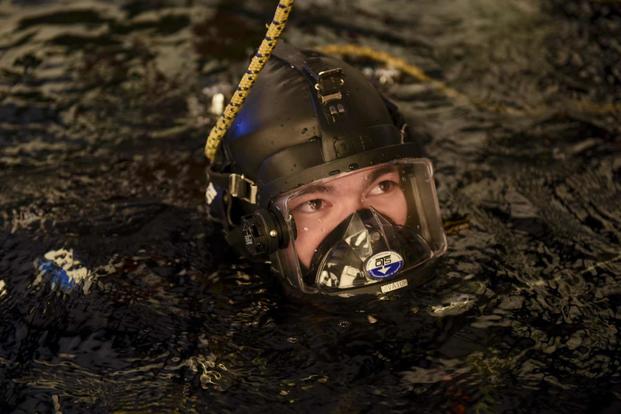
U.S. Coast Guard Petty Officer 2nd Class Ryan McManus, a student in the Cold Water Ice Diving (CWID) course, treads water on Ferrell Lake, located on Camp Ripley, Feb. 3, 2022. (U.S. Coast Guard photo by Petty Officer 3rd Class Jessica Fontenette)

Military.com has a story about the Coast Guard’s “Cold Water Ice Diving” (CWID) training program, which is also used by DOD divers, that may be of interest.

Thanks to Paul for bringing this to my attention. 

“Watch Ukrainian TB2 Striking Two Russian Raptor Assault Boats” –Naval News

Naval News brings us a report of the destruction of two small Russian patrol boats by small guided weapons launched from an unmanned aircraft.

This should not come as a surprise to anyone. The Ukrainians have been attacking Russian vehicles with guided weapons, launched from UAS since the invasion began. Hitting a boat, is, if anything, easier than hitting a particular moving vehicle on a landscape cluttered with other vehicles, buildings, trees, and various heat sources.

But perhaps for those who have not been paying attention this may be a wakeup call. I happy to be able to say it looks like the Coast Guard has recognized this as a threat to our boats in PATFORSWA.

But maybe we need to look beyond the threat of nation states. Like other effective, but relatively cheap weapons, UAVs, and particularly suicide drones, are likely end up in the hands of non-state actors, including criminal and terrorist organizations.

Turkish Built OPVs

After a long history of importing warships, about three decades ago, Turkey began to develop their indigenous defense industry, first with European assistance but now increasingly they handle all phases from design to fitting out. They are currently building corvettes and frigates and an LHD with assistance from Spain’s Navantia. They plan to build destroyers in the near future.

Turkey has begun exporting defense products. Their armed drones have become famous in the conflict in Ukraine. They are exporting corvettes to Pakistan.

Naval News reports Turkey has begun a program to build ten offshore patrol vessels (OPVs) for the Turkish Navy (video above). While the illustrations show a heavily armed vessel, the actual armament is not reported and these ships will reportedly be fitted for but not with some of these systems. Key data:

  • Overall length: 99,56 meters (327 feet).
  • Beam: 14,42 meters (47.3 feet).
  • Draft: 3,77 meters (12.4 feet).
  • Maximum speed: 24 knots.
  • Displacement: 2300 tons.

Naval News reports that Turkey is expected to build six 283 foot, 2,000 ton Offshore Patrol Vessels for the Philippines. (video above)

The Offshore Patrol Vessel (OPV) 76 / From the official website of Dearsan Shipyard

In November 2021, Overt Defense reported, this contract with Nigeria.

According to a statement released by the Nigerian Navy on November 3, a contract was struck with the Turkish Dearsan Shipyard for the purchase of two OPV 76 Class Offshore Patrol Vessels to meet the Nigerian Navy’s needs…The Offshore Patrol Ship 76 has a length of 76.80m (252′–Chuck), a width of 11m and a draft of 2.9m. The OPV is equipped with a 76mm Leonardo Super Rapid Gun, a 40mm Leonardo Light Marine Gun, two 12.7mm Stabilized Automatic Machine Guns, two 12.7mm Manual Operation Machine Guns, and two SAM SIMBAD RC short-range, anti-air self defence systems, and has a top speed of 28 knots and a range of 3,000 nautical miles.

“ROYAL AUSTRALIAN NAVY RETIRES PATROL BOAT MAITLAND” –Baird Maritime

HMAS Maitland conducts a passage exercise with USCGC Kimball during Operation Solania. Photo: Seaman Isaiah Appleton

Baird Maritime reports, the Australian Navy is retiring one of their Amidale class patrol boats, HMAS Maitland. The vessel is relatively young by USCG standards, having been commissioned in 2006. It seems the class was stressed by high tempo, long distance, alien migrant interdiction deployments. This is the third of the original 14 vessels of the class to be decommissioned. One was as a result of a fire in 2014. The second was decommissioned March 2021.

These vessels are to be replaced by a class of 12 much larger OPVs, but in the meantime, the Australian Navy is also procuring, in many ways similar, 190 foot Cape Class patrol boats. The decommissioning follows closely on the delivery of the first of these “evolved” Cape class.

“Coast Guard cutter leaves Petersburg after 32 years” –KFSK

The cutter Anacapa tied up at the Coast Guard’s mooring in Petersburg (Joe Viechnicki/KFSK)

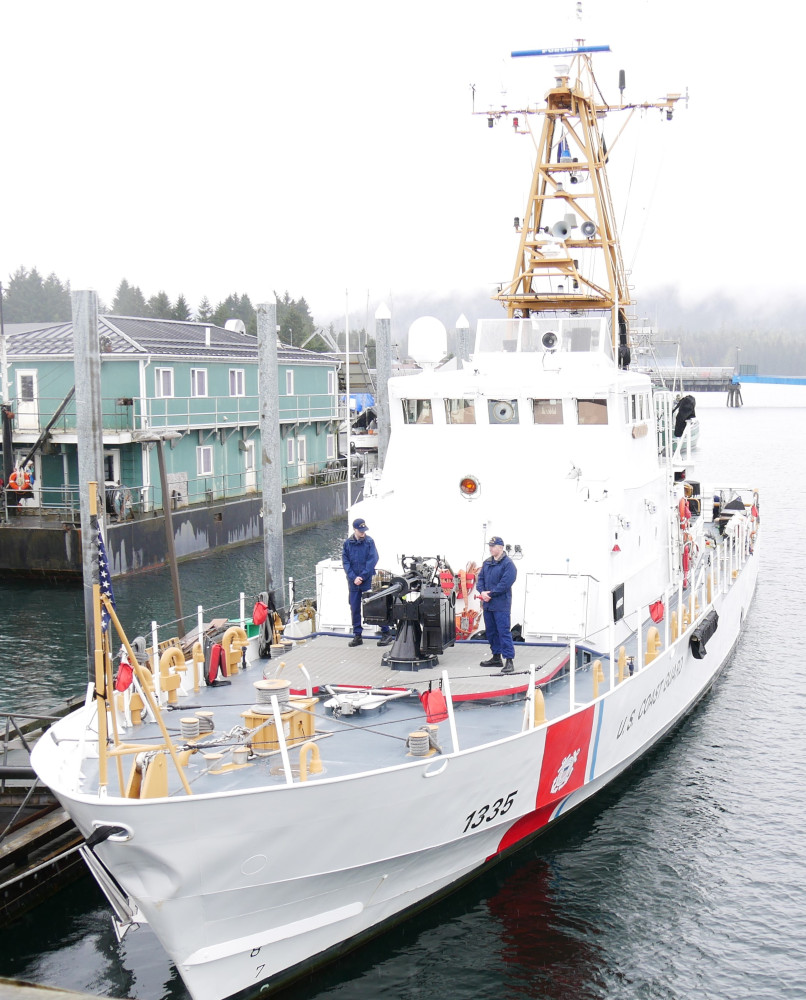
There is a very nice story by local media about the departure of USCGC Anacapa from Petersburg, AK. The 110 is not being decommissioned. She is changing homeport to Port Angeles, WA, where there will be a crew turn-over.

The Anacapa’s replacement in Petersburg is an 87-foot San Francisco-based Marine Protector class cutter called the Pike, built in 2005.

Anacapa’s engines and generators are being replaced, so looks like she will be retained a few more years.

There was an earlier post that featured Anacapa, “What Does It Take to Sink a Ship, Illustrated,” when she was tasked with sinking a derelict Japanese fishing vessel, back in 2012.

Shipboard Panoramic Electro-Optic/Infrared (SPEIR) program

L3 Harris Mk20 mod1 Electro Optic Sensor System. (Picture source Navy Recognition)

It appears the Navy has a new AI aided sensor system going into low-rate production called the “Shipboard Panoramic Electro-Optic/Infrared (SPEIR) program.” It looks like it may ultimately go on every Navy surface combatant, and that it may be scalable to make it applicable to units as small as patrol boats.

The DOD daily digest bulletin for 26 March reported,

NAVY

L3 Technologies Inc., Systems Company, Camden, New Jersey, is awarded a $205,899,580 cost-plus-incentive-fee, cost-reimbursement, firm-fixed-price, cost-plus-fixed-fee, and fixed-price incentive (firm target) contract for engineering, manufacturing, and development; engineering support labor; low rate initial production systems, and spares for the Shipboard Panoramic Electro-Optic/Infrared (SPEIR) program. This contract includes options which, if exercised, would bring the cumulative value of this contract to $593,050,756. Work will be performed in Mason, Ohio (54%); Northampton, Massachusetts (16%); Bothell, Washington (12%); Hamilton, Ontario (7%); Austin, Texas (7%); Tulsa, Oklahoma (2%); Norfolk, Virginia (1%); and various locations across the U.S., each less than 1% (1%), and is expected to be completed by November 2025. If all options are exercised, work will continue through March 2031. Fiscal 2021 research, development, test, and evaluation (Navy) funds in the amount of $11,000,000 will be obligated at time of award and will expire at the end of the current fiscal year. This contract was competitively procured via the Federal Business Opportunities website, with one offer received. The Naval Sea Systems Command, Washington, D.C., is the contracting activity (N00024-22-C-5514).

This 2017 report from Military Aerospace Electronics seems to provide insight into the program’s objectives and challenges.

This 2015 report seems to have been an earlier version with the same program, under the name CESARS, which in turn combined two earlier programs, the Shipboard Panoramic EO/IR Cueing and Surveillance System (SPECSS); and Multispectral EO/IR Countermeasures for Advanced Threats (MEIRCAT). The objectives included target acquisition, tracking, classification, identification, 3-D ranging, threat assessment, countermeasures execution, and countermeasures effectiveness monitoring against threats including cruise missiles (particularly optically guide cruise missiles that are not active emitters), small surface vessels, and Unmanned Air Systems. It would of course, also detect ships and conventional aircraft.

A major advantage of this type system is that it can provide situational awareness while allowing the ship to maintain strict EMCON (emissions control) minimizing active emissions that might be picked up by an adversary.

The good news for the Coast Guard is that, from the 2017 report,

This project also seeks to identify a family of imaging systems that could handle the situational-awareness needs of surface vessels ranging in size from a patrol craft, a frigate, a destroyer, and an aircraft carrier.

On small units, this system might provide some of the situational awareness capability provided by multi-mode radar and/or ESM on larger units, that is otherwise not available on these units.

Contract Award for the Fourth Offshore Patrol Cutter

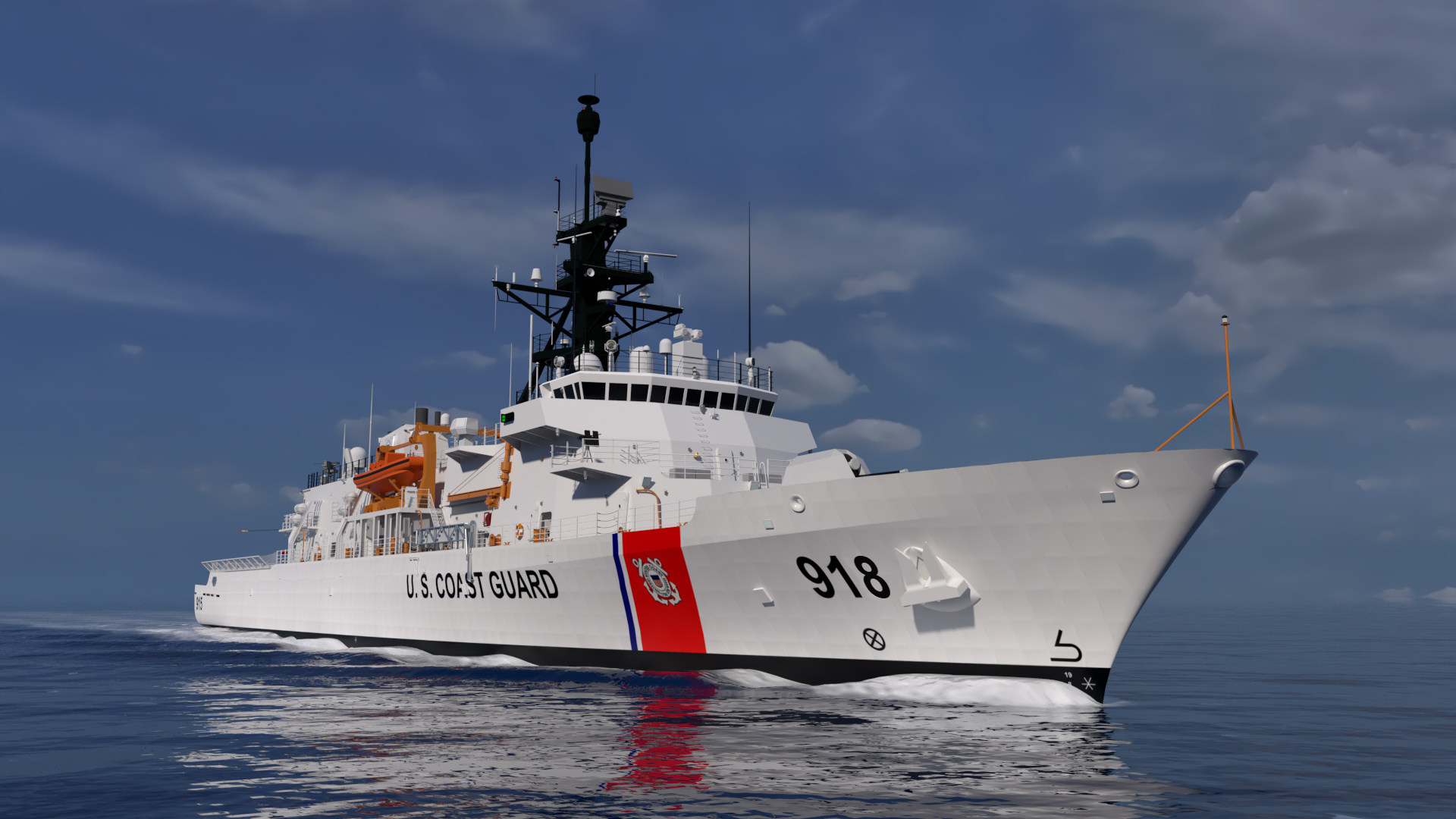
Photo: Rendering of the future USCGC RUSH (WMSM 918) provided by Eastern Shipbuilding Group, Inc. Click on the photo for a better view. 

Below is a press release from Eastern Shipbuilding Group. To review the situation, the Coast Guard is expected to make a decision in the near future regarding the award of the next batch of Offshore Patrol Cutters. Eastern is one of the competitors.

FOR IMMEDIATE RELEASE

         April 26, 2022

Eastern Shipbuilding Group, Inc. Announces Construction of the U.S. Coast Guard’s Fourth Offshore Patrol Cutter

PANAMA CITY, FL – Today, Eastern Shipbuilding Group, Inc. (ESG) announced the U.S. Coast Guard has awarded a contract to begin construction of the fourth Heritage Class offshore patrol cutter (OPC), the future USCGC RUSH (WMSM 918).

The OPC will form the backbone of the service’s future fleet around the globe. ESG has worked hard to earn this opportunity and is honored to be chosen to perform this important work for the United States. ESG, in collaboration with its partners, produced the winning design of the OPC and was awarded detail design and construction of the first hulls in 2016. The new OPC designs reflect cutting-edge technology and will replace the service’s 270-foot and 210-foot medium endurance cutters, which are becoming increasingly expensive to maintain and operate.

“This follow-on award signifies the OPC team and our partners continue to provide quality craftsmanship and unparalleled service. We have a focused vision to support the OPC Program with shipbuilding excellence and provide the country with a long-term industrial capability that can produce exceptional vessels that support national security interests,” said Joey D’Isernia, President of Eastern Shipbuilding Group, Inc.

As prime contractor, ESG has successfully achieved program goals and mitigated the impacts of COVID-19 and current supply chain challenges. It expects to christen the first vessel this year, is nearly halfway through completion of the second vessel, and will host the keel authentication of the third OPC in a few weeks. The pace of production accelerates with each vessel that comes online.

“We utilized state of the market technology, design, and construction methodologies to offer a more capable vessel than legacy assets currently in service. The innovations built into the OPCs were designed for sustainability and endurance and come from the ingenuity of the best engineers and manufacturers in the world. We thank the hundreds of partners and employees in the thirty-four states supporting us in this effort,” continued D’Isernia.

Construction is taking place at ESG’s Nelson Street Shipyard in Panama City, Florida, a facility that is optimized for multi-hull construction of the Offshore Patrol Cutter and dedicated to supporting the U.S. Coast Guard.

ESG survived the third largest U.S. hurricane in 2018 and has fully rebuilt its operational facilities. The company made many infrastructure investments from $50 million in state appropriations and economic development grants that benefit the OPC project with enhanced manufacturing capabilities and efficiencies that reduce cost and schedule risk. These infrastructure investments include an aluminum fabrication facility specifically designed to support full construction of the OPC aluminum superstructure in a covered and controlled environment. ESG has also completed launch way upgrades, upland bulkhead upgrades, construction platen expansions, and waterway deepening projects to further enhance ESG’s capability to launch and deliver two OPC sized vessels per year.

At its Allanton Shipyard, ESG has constructed a state-of-the-art C5ISR Production Facility to conduct testing and integration of navigation, communication, and command and control, equipment, and simulators on premises prior to final installation on the vessel.